


Abstract
Marine invertebrates, such as sponges, corals, mollusks and sea squirts, are appropriate climate-change descriptors on sublittoral rocks. The present study assesses the diversity, relative abundance and health condition of epibenthic invertebrates inhabiting sublittoral rocky habitats within the Natura 2000 network (Chalkidiki, north Aegean), after the 2021 marine heatwaves. Samplings were made with non-destructive techniques in autumn 2021 by diving along vertical belt transects (up to 30 m). Fourteen stations were surveyed, revealing 56 macroscopic invertebrates, 16 algae and 15 reef-associated fishes. Richness showed increased values at the deepest and steepest cliffs. Reefs were the dominant habitat type, hosting different facies of infralittoral algae and coralligenous biocenoses. Three algal (Halimeda tuna, Peyssonelia squamaria, Lithophyllum strictiforme) and 12 invertebrate (Aplysina aerophoba, Chondrilla nucula, Chondrosia reniformis, Ircinia variabilis, I. oros, Sarcotragus foetidus, Spongia officinalis, Balanophyllia europaea, Cladocora caespitosa, Pinna nobilis, Spondylus gaederopus, Microcosmus sabatieri) species were found in partial or full necrosis. According to relevant data collected about 20 years ago, the biota had higher diversity without signs of necrosis. Sarcotragus foetidus, I. variabilis, B. europaea, C. caespitosa and S. gaederopus were the most affected by necrosis species over the surveyed area. They represent appropriate climate change descriptors to assess the resilience of Mediterranean MPAs, being priority species in marine conservation.
1. Introduction
The establishment of Marine Protected Areas (MPAs) is, currently, the most widely applied management tactic to preserve marine biodiversity [1,2,3]. However, their resilience to global threats, such as climate change, is doubtful, as MPA management is oriented on local protection measures—no-take zones setting, in particular—lacking clear planning integrating synergistic multi-stressors, suitable predictive monitoring, powerful forecasting, sufficient enforcement and funding to effectively protect biodiversity [4,5]. Adaptive management is required by creating a flexible interactive decision-making framework to incorporate environmental change, biodiversity trends and knowledge gaps in setting targets and implementing specific management options [5,6,7,8,9]. Such a framework has to be recursively updated by real-time physical/abiotic data and the rigorous monitoring of appropriately selected biological indicators. Among proposed biological descriptors for coastal MPAs [10], various sessile epibenthic invertebrates, such as sponges, corals, mollusks and sea squirts, are highly recommended due to their prominent presence on sublittoral rocky shores and their sensitivity to sea warming, which is inducing mortality events [11,12,13,14,15,16,17]. Monitoring their population trends and health condition over time will provide early warning signals of the climate change effects on the marine biota, as well as valuable field data. These data will be integrated into management plans to strengthen their performance abilities and improve the resilience of coastal MPAs.
Rocky sublittoral shores represent a complex habitat type of increased biodiversity, including endemic species, along the Mediterranean Sea [18,19,20,21]. Reef habitats expand from the mediolittoral to the circalittoral zone, and they are covered by algal- or animal-dominated communities, depending on local environmental conditions [21,22]. Within the infralittoral zone, canopies of the brown algae Cystoseira spp. constitute the major biocenosis in pristine Mediterranean areas [23,24,25,26]. Among the algae thallus, several sessile epibenthic species thrive, the most dominant being, in terms of coverage, macroscopic faunal components on rocky sublittoral shores. Many of them, such as sponges [27,28,29], corals [30,31,32,33], bivalves [34,35,36] and sea-squirts [37,38], are considered ecosystem engineers [39], as they provide habitat with their physical structure, which is colonized by various other macro-invertebrates. Together with algae canopies, they create highly complex three-dimensional biogenic habitats, thereby enhancing the local biodiversity.
Owing to their structural complexity and variety, which is exploited by numerous associated algal and faunal species, sublittoral reefs are very often included within established Mediterranean MPAs to preserve the high biodiversity of those remarkable seascapes [21]. However, rocky reefs are particularly vulnerable habitats, being sensitive to various stressors, such as trampling, pollution, urbanization, fisheries, biological invasions, and climate change [21]. Sea warming, above all, is a current stressor of increasing concern, harshly affecting the Mediterranean [40,41], the eastern basin and the north Aegean Sea, in particular, with persisting marine heatwave events (MHWs) [42,43,44,45]. In 2021, successive moderate-to-strong [46] marine heatwaves affected the Aegean Sea, primarily the north sector, where surface seawater temperature (SST) anomaly was more than 1.5 °C during summertime [43]. These MHWs were persistent (>20 days) and impacted the Chalkidiki Peninsula [43], including the Special Areas of Conservation (SACs) of the Natura 2000 network, inducing mortality events [15,16,47]. Similar events were repeated in 2024 [45] and stress the need for recursive monitoring of appropriate biological descriptors.
Considering all the above, the present study aims to assess the diversity of the shallow sublittoral rocky habitats and of their sessile epibenthic inhabitants within the five SACs of Chalkidiki (north Aegean) after the 2021 MHWs by applying non-destructive techniques to reveal their spatial variability, both within and between SACs and peninsulas (Kassandra vs. Sithonia). Moreover, the current dataset was compared with a similar one, compiled two decades earlier, in order to reveal structural differences across time. The health condition of the macroscopic epibenthic organisms was also surveyed to assess the impact of MHWs and to propose appropriate monitoring biological descriptors.
The present work provides a comprehensive monitoring survey of rocky subtidal communities within an MPA network, where the reef habitat type dominates, hosting diverse benthic communities. Several sessile epibenthic species were vulnerable to the thermal stress induced by heatwaves, five among which are proposed as appropriate climate change descriptors and priority species in marine conservation, being heavily affected by severe mortality.
2. Materials and Methods
2.1. Study Area
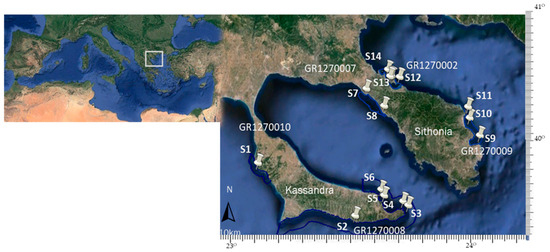
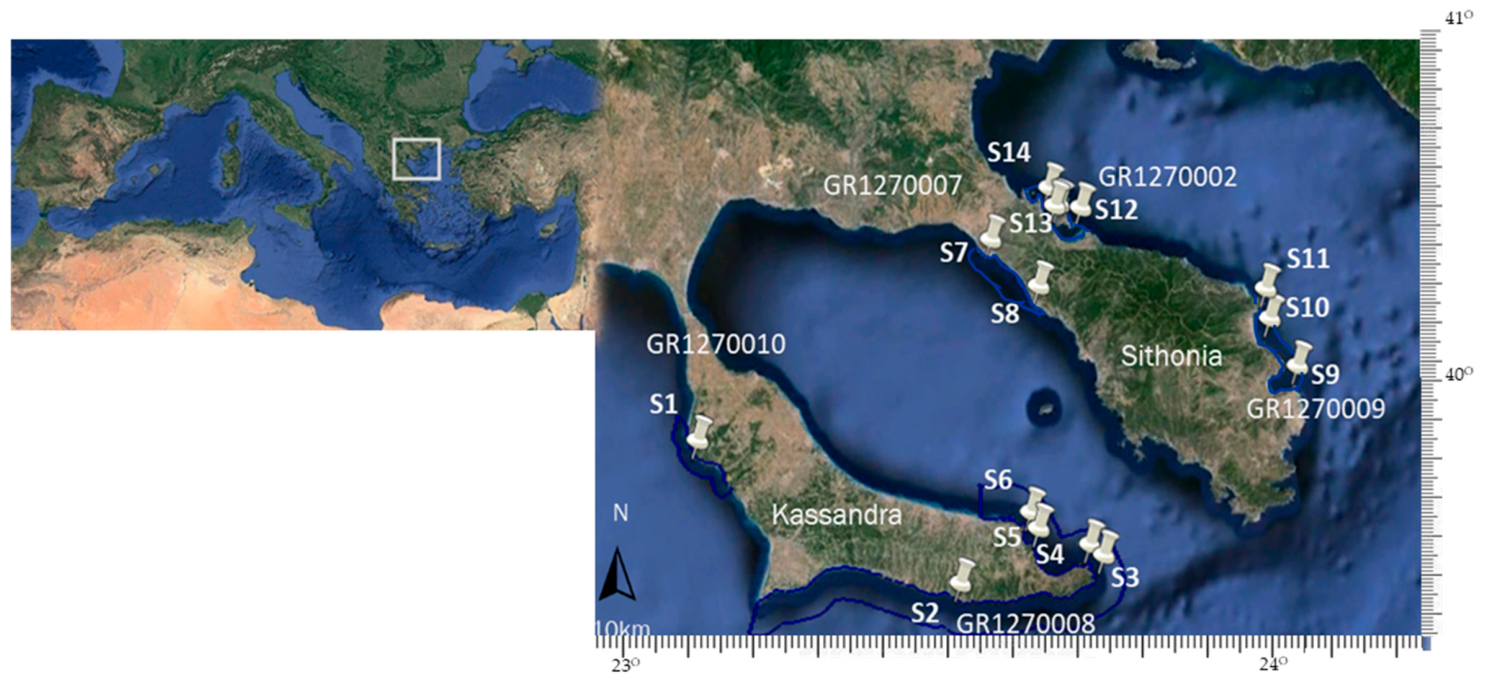
The five Special Areas of Conservation (SACs) of the Natura 2000 network established in the Chalkidiki Peninsula, north Aegean Sea, comprise the study area (Figure 1). Overall, 14 sampling sites were set, six (6) in the two SACs of Kassandra [GR1270010 “Akrotirio Pyrgos–Ormos Kypsas–Malamo”, GR1270008 “Paliouri–Akrotiri kai Thalassia Zoni”) and eight (8) in the three SACs of Sithonia (GR1270007 “Akrotirio Elia–Akrotirio Kastro–Ekvoli Ragoula”, GR1270002 “Oros Itamos–Sithonia”, GR1270009 “Platanitsi–Sykia: Akrotirio Rigas–Akrotirio Adolo”] (Figure 1). All SACs have been officially established since 2011, and the coverage areas of GR120008 and GR1270002 were expanded in 2017. Within each SAC, one and up to five sampling sites were randomly established according to the range extension of rocky substrata within (Figure 1). All sampling stations were set on costal rocky cliffs, with the exception of S13, which was set on the rocky Diaporos islet, and S10, which was set on a small fringing reef. The sea bottom consisted of either slightly (S7, S8, S9, S11), moderately (S2, S4, S10, S12, S13, S14) or steeply inclined (S3, S5, S6) cliffs, surrounded by dense Posidonia oceanica meadows. In GR1270010, the presence of hard substrata is limited, and accordingly, the only sampling site (S1) was set on large boulders.
Figure 1.
Map of the Mediterranean Sea (left) marking the study area within the grey frame, and (right) indicating the five surveyed SACs (GR1270010, GR1270008, GR1270007, GR1270002, GR1270009) bordered in blue line, and the location of sampling stations, S1 to S14, at the NATURA 2000 of Chalkidiki Peninsula (from Google Earth).
2.2. Field Sampling
Samplings were made in September (Kassandra, 10–13) and October (Sithonia, 20–22) 2021, with the aid of a motor-sailor boat (Poseidonia, LK 999), combining visual census (photography using a Sony digital still camera Cyber shot DSC RX 100 (Sony, Greece) and Ikelite housing (Ikelite, Greece), and in situ counting) with destructive collection of specimens [19,48,49]. More specifically, a series of underwater surveys was completed at each sampling station by two scientists scuba diving (three replicate dives per station) in the infralittoral zone (up to 30 m depth). The first underwater survey consisted of a 50 min dive along vertical belt transects, two (2) m wide each, to in situ recording the basal geomorphological features of the seabed (e.g., substrata type, algal or animal coverage) and the pilot macroscopic epibenthic species. These qualitative data were used to describe the typology of benthic habitats and biotic communities by applying the EUNIS habitat classification system at the lowest possible level [50,51]. Thus, biocenoses, i.e., naturally occurring communities of interacting organisms that live together in a specific geographic area or habitat, and facies, i.e., highly specific, localized subtypes of a broader habitat, usually defined by a dominant characteristic species [50,51], were described at each sampling station.
The second underwater survey consisted of two replicate 1 h dives along five vertical belt transects, two (2) m wide each, to assess the diversity, the relative abundance, and the health condition (number of individuals observed in partial or full necrosis) of the macroscopic epibenthic organisms. The length of transects was adapted to the local cliff profile in order to cover the bathymetric distribution of hard substrata over the infralittoral zone (100, 150, and 200 m on steep, moderate and slightly inclined reefs, respectively). Overall, five replicate random belt transects were completed per sampling station during the two dives. The semi-quantitative ACFOR scale of relative abundance [52,53,54,55] was applied to estimate relative abundance under the thresholds: A = abundant, a species found almost everywhere, expanding to over 40% of the surveyed area, and/or with over 50 individuals per 100 m2; C = common, a species found almost everywhere but not as dominant as in A, expanding from 20 to 40% of the surveyed area, and/or with 10 to 50 individuals per 100 m2; F = frequent, a species found in many places, expanding from 10 to 20% of the surveyed area, and/or with 5 to 10 individuals per 100 m2; O = occasional, a species found in few places, expanding to 5–10% of the surveyed area, and/or with 1 to 5 individuals per 100 m2; R = rare, a species found in one or two places, expanding to 1–5% of the surveyed area and with less than 1 individual per 100 m2.
When in situ identification of a macroscopic species was impossible, a specimen was collected, fixed in formalin solution, and identified in the laboratory under a binocular microscope/stereoscope and using relevant identification keys.
Finally, the main physical and chemical parameters (i.e., temperature, salinity, and dissolved O2) were measured once per station in the water column (from surface down to 30 m depth) using an autographic CTD recorder (SEACAT SBE19-03, Sea-Bird Scientific, Greece).
2.3. Data Analysis
Diversity was estimated as the total number of species (S) over the five replicate transects per sampling station and descriptively assessed. ACFOR relative abundance results were converted to midpoint values [56] to estimate Margalef’s richness (d), Shannon–Wiener (H′), and Pielou’s Evenness (J′) diversity indices based on log2.
A midpoint relative abundance (averaged values over transects) data matrix was constructed based on macroscopic species records per sampling station and analyzed through multivariate techniques to assess the structure of epibenthic communities [57]. Hierarchical cluster analysis and multidimensional scaling (MDS) ordination based on the Bray–Curtis similarity index were applied to visualize the biotic pattern. Species contribution to the within-group similarity and among-group dissimilarity of SAC and peninsula stations was estimated with the SIMPER (SIMilarity PERcentages) routine. ANOSIM (Analysis of Similarities) was applied to test for the effect of the geographic location of the sampling stations across SACs (5-level fixed factor) and peninsulas (2-level fixed factor) on their biodiversity. Multivariate analyses were applied considering the entire sessile biota (algae and invertebrates), as well as only invertebrates, which is the target taxonomic group of the present study.
The current dataset was compared to the same multivariate analyses as the above, with a similar previously published one [19] reporting 117 epifaunal species in total, and compiled two decades earlier, in order to reveal structural differences across time using presence–absence data [Table S1]. Both datasets were constructed using a visual census along replicate transects under a similar sampling effort; however, the former relied on quantitative data, whereas the current one relied on semi-quantitative data, and therefore, presence/absence species data were used to ensure comparability.
All statistical analyses were performed with the PRIMER-E v6 software package [58].
3. Results
3.1. Physical and Chemical Parameters of the Water Column
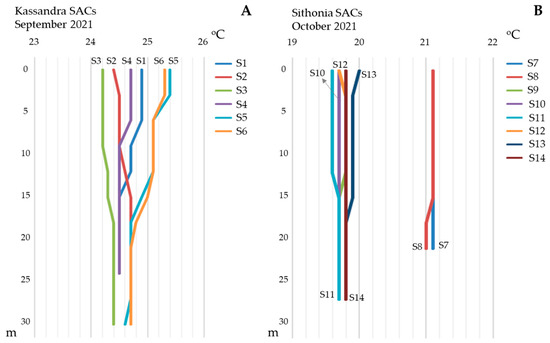
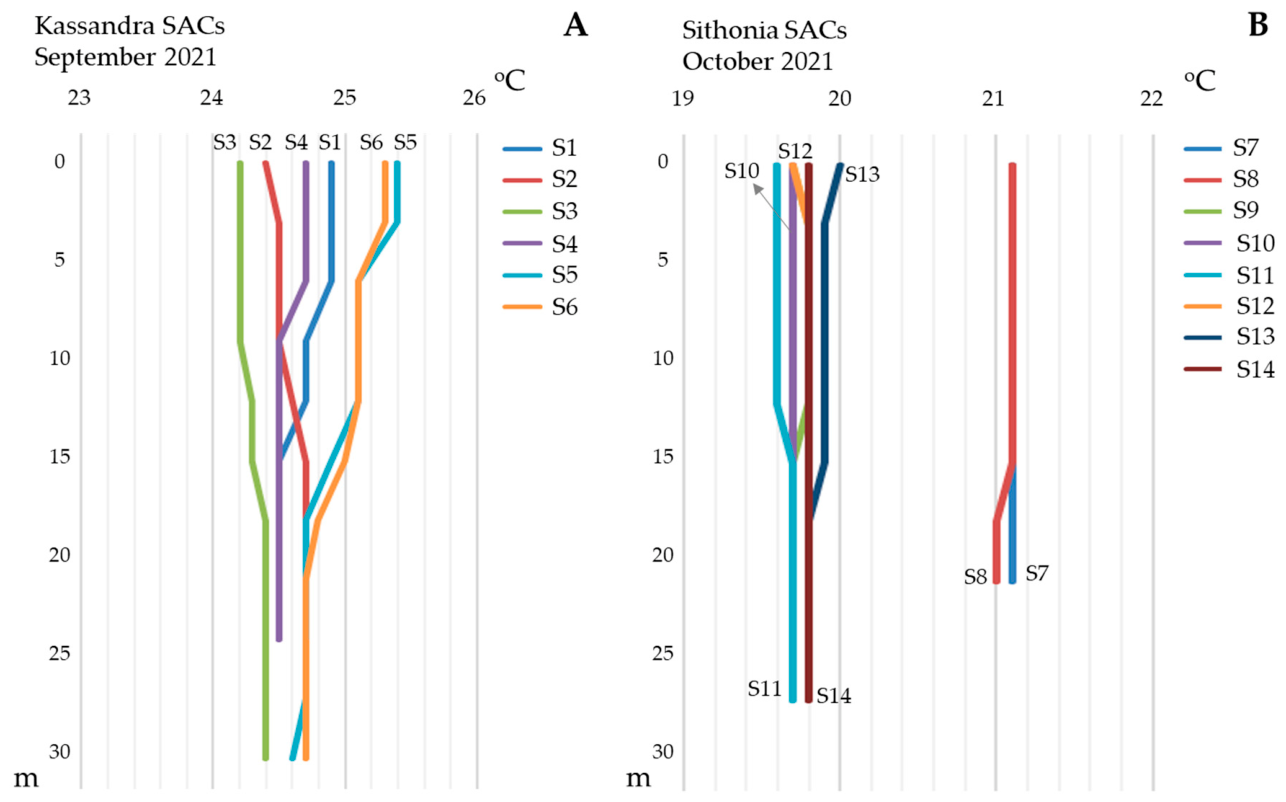
The measured physical and chemical parameters of the water column showed limited spatial variability, with the exception of seawater temperature (Figure 2) which varied between Kassandra and Sithonia sites, clearly reflecting the month of sampling. All abiotic factors were sampled about a month later in Sithonia (October), causing a drop of about 4 °C in seawater temperature values. In addition, temperature remain higher in the innermost and shallower S7 and S8 compared with the rest of the Sithonia sites (Figure 2B), reflecting the slower cooling of the water masses in this area.
Figure 2.
Vertical (0–30 m depth) variation in seawater temperature (°C) per sampling site (S1–S14) of the surveyed rocky cliffs at the NATURA 2000 SACs of Chalkidiki Peninsula. (A) Kassandra SACs, S1–S6 measured on 10–13 September 2021; (B) Sithonia SACs, S7–S14 measured on 20–22 October 2021.
Overall, temperature ranged from 19.6 to 25.4 °C, with a mean of 22.14 ± 2.35 °C (24.68 ± 0.30 °C in Kassandra sites and 20.06 ± 0.56 °C in Sithonia sites), with slight bathymetric variability. Salinity ranged from 35.82 to 36.61 psu, with an overall mean of 36 ± 0.17 psu, and dissolved oxygen ranged from 8.14 to 9.67 with an overall mean of 8.77 ± 0.4 mg/L across all sites. The water column was homogeneous at all sampling sites, along the rocky infralittoral zone and up to the seabed of each site and/or at a maximum depth of 30 m.
3.2. Typology of Benthic Habitats and Biotic Communities
According to the Habitat Directive, two main habitat types were detected: (i) reefs (ref-code 1170, stations: S1, S3–S14), and (ii) shallow submarine structures made by leaking gas (ref-code 1180, stations: S2). On reefs, according to the EUNIS benthic habitat typology, the biocenosis of Mediterranean infralittoral algae occurred in the shallower zone, i.e., up to 20 m depth, and the coralligenous biocenosis in deeper zones (Table 1). The coralligenous biocenosis was presented either as enclaves or as a well-expanded formation, depending on the sampling site. On shallow submarine structures made by leaking gas, the biocenosis of hydrothermal oozes together with the biocenosis of infralittoral algae, occurred with coralligenous enclaves (Table 1). However, this habitat type was weakly structured with very limited lithification; the consolidated sediment and the aggregated sandstones had very low profiles, forming a rather thin crusty pavement on the seabed, rather than true concrete slabs.
Table 1.
Habitat types, biocenoses and facies recorded per sampling sites (S1–S14) of the surveyed rocky cliffs at the NATURA 2000 SACs of Chalkidiki Peninsula, according to the Habitat Directive and the EUNIS typology.
The sponges Chondrilla nucula, Chondrosia reniformis and Ircinia variabilis, along with the solitary stony coral Balanophyllia europaea and Serpula worms, were the most dominant animal species in the Mediterranean infralittoral algae biocenosis in terms of relative abundance. The sponges Agelas oroides, Axinella verrucosa, Sarcotragus foetidus and Spirastrella cuncatrix, the solitary stony coral Leptopsammia pruvoti, the bivalve Spondylus gaederopus, and the tunicates Halocynthia papillosa and Microcosmus sabatieri were the most dominant invertebrate species in the coralligenous biocenosis.
3.3. Diversity and Relative Abundance of Macroscopic Epibenthic Species
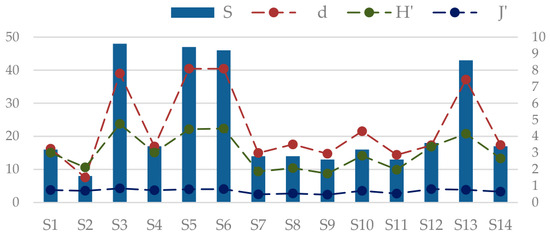
Overall, 72 epibenthic macroscopic species were recorded, 16 algal and 56 invertebrates (Table 2). Another 15 reef-associated fish species were also observed (Table 2). Richness ranged from 17 to 72 species per station (36.85 ± 20.54 species as average ± standard deviation) with increased values (66.25 ± 4.03) at the deepest and steepest cliffs (S3, S5, S6, S13). By focusing on invertebrates, the relevant richness values ranged from 8 to 49 species (average ± standard deviation 23.57 ± 14.95), with the same stations (S3, S5, S6, S13) hosting the highest diversity of epibenthic species (46.75 ± 2.06) and showing the highest values of diversity indices as well. Margalef’s richness ranged from 1.51 to 8.09 (4.51 ± 2.28), Shannon–Wiener from 1.75 to 4.76 (3.03 ± 1.05) and Pielou’s Evenness from 0.47 to 0.85 (0.69 ± 0.13); this broad range suggests increased heterogeneity in diversity between sampling sites (Figure 3).
Table 2.
List of the epibenthic macroscopic species recorded per sampling site (S1–S14) of the surveyed rocky cliffs at the NATURA 2000 SACs of Chalkidiki Peninsula, and their relative abundance based on the ACFOR scale (A = abundant, C = common, F = frequent, O = occasional, R = rare). The presence of a species is marked as Pr. For Osteichthyes, only their presence has been recorded.
Figure 3.
Species richness (S) and diversity indices (Marglef’s richness d, Shannon–Wiener H′, Pielou’s Evenness J′) calculated on the relative abundance of epibenthic macroscopic invertebrates recorded per sampling site (S1–S14) of the surveyed rocky cliffs at the NATURA 2000 SACs of Chalkidiki Peninsula (S values on primary axis, d, H′, J′ values on secondary axis).
Overall, the most dominant algal species in terms of relative abundance were Cystoseira spp., Jania rubens and Halopteris scoparia, whereas in the deeper abrupt cliffs, the corallinaceans Lithophyllum stictiforme and Peyssonelia squamaria were also very common. Considering macroscopic invertebrates, the sponges Chondrilla nucula, Chondrosia reniformis, Ircinia variabilis, Agelas oroides, Aplysina aerophoba, and Spirastrella cuncatrix, the anthozoan Balanophyllia europaea, Serpula worms, and the sea squirt Halocynthia papillosa prevailed in relative abundance (Table 2). Pisces were only qualitatively recorded; their highest diversity was censuses at S3, followed by S13 and S5. Chromis chromis, Coris julis and Serranus scriba were observed at most of the surveyed reefs covered by the infralittoral photophilic algae biocenosis, whereas Epinehelus costae and E. marginatus were only observed at coralligenous reefs.
3.4. Structure of Macroscopic Epibenthic Communities
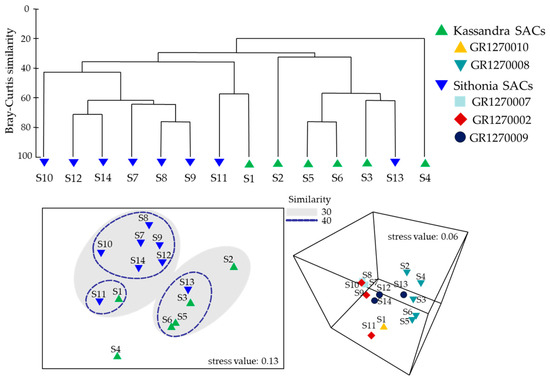
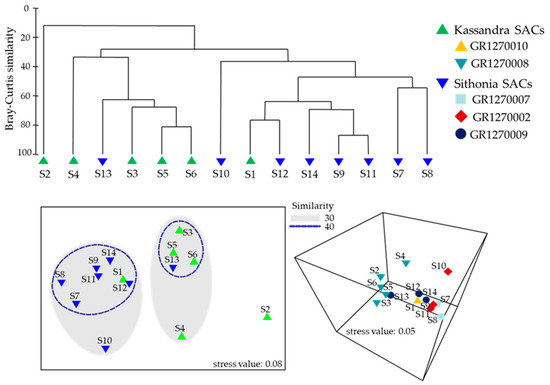
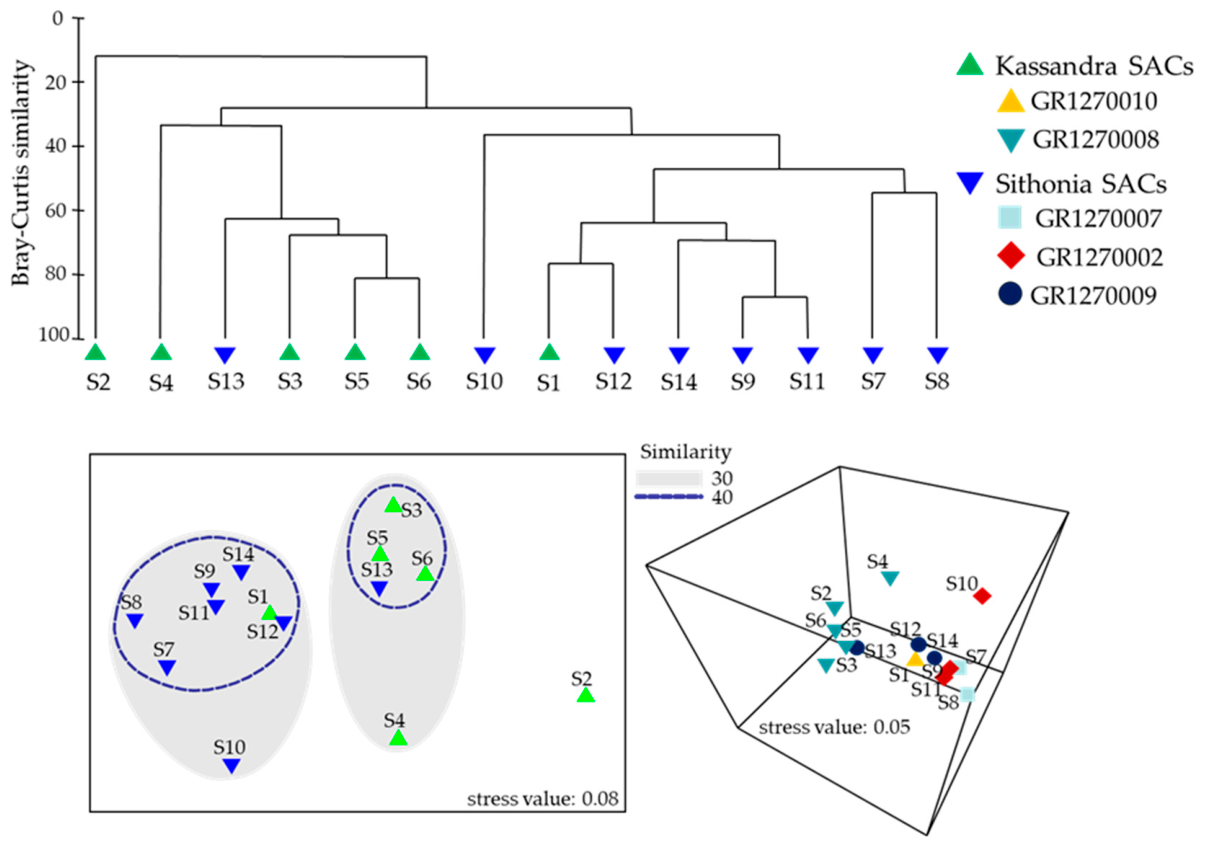
Multivariate analyses of epibenthic biota’s (algae and invertebrates) relative abundance data matrix, excluding reef-associated fishes, reveal the moderate structural homogeneity of the biotic pattern, probably reflecting the occurrence of different community facies at the surveyed sites. The discrimination of surveyed sites was mainly according to their geographic location, i.e., in Kassandra or Sithonia peninsula SACs, apart from S4, which was solely placed (Figure 4). Moreover, S1 was grouped with S11, and S13 with S3; both couples originated from different SACs and peninsulas. Overall, the impact of the peninsulas’ geographic location significantly affected the synthesis of the epibenthic organisms on the rocky cliffs (ANOSIM results R = 0.43, p = 0.002). The average similarity of Kassandra’s SAC sites reached 35.12%, with eight species contributing to 60% of the above percentage and fourteen to 80% (SIMPER results, Table 3). Likewise, the average similarity of Sithonia’s SAC sites reached 47.63%, with just two species contributing to 60%, and four to 80%, revealing the lower diversity of the epibenthos in the latter area. The dissimilarity between Kassandra’s and Sithonia’s SACs reached 70.30%, with 14 species forming 60% of this percentage, and 23 to 80% (Table 3).
Figure 4.
Hierarchical cluster analysis (top graph) and non-metric two- (left graph) and three-dimensional scaling ordination (right graph) of the sampling sites (S1–S14) at the surveyed rocky cliffs at the NATURA 2000 SACs of Chalkidiki Peninsula, based on Bray–Curtis similarity index calculated on relative abundance data of macroscopic epibenthic biota (algae and invertebrates).
Table 3.
SIMPER results, indicating the average similarity of Kassandra’s (S1–S6) and Sithonia’s SAC sites (S7–S14) of the surveyed rocky cliffs at the NATURA 2000 SACs of Chalkidiki Peninsula, and the macroscopic epibenthic species contributing to 80% of the overall in-group similarity (av. Sim.) and of the average dissimilarity among groups (av. Dis.) based on their relative abundance.
The same analyses considering only the epibenthic invertebrates gave slightly modified results (Figure 5). The macroscopic invertebrates inhabiting the biocenoses of hydrothermal oozes, infralittoral algae and the coralligenous enclaves in the hydrothermal vent habitat at S2 showed the highest dissimilarity with the rest of the reef habitat sites, which were mainly grouped according to their geographic location (i.e., Kassandra or Sithonia peninsula SACs). S1 and S13 were grouped with sites originating from different SACs and peninsulas, as in the previous analysis, including the entire epibenthic biota (algae and invertebrates), but involving different specific sites. Overall, the impact of both peninsulas’ and SACs’ geographic locations significantly affected the synthesis of the epibenthic invertebrates on the rocky cliffs (ANOSIM results R = 0.43, p = 0.003 and R = 0.33, p = 0.003, respectively). The average similarity of Kassandra’s SAC sites reached 38.28%, with five species contributing to 60% of the above percentage and nine to 80% (SIMPER results Table 4). Likewise, the average similarity of Sithonia’s SAC sites reached 46.58%, with just two species contributing to 60%, and three to 80%, revealing the lower diversity of the epibenthos in the latter area. The dissimilarity between Kassandra’s and Sithonia’s SACs reached 70.48%, with ten species forming 60% of this percentage, and 18 to 80% (Table 4). The low average similarity in Kassandra sites derives mainly from the deviation of S2 at an 89.10% dissimilarity level. This pattern is primarily due to the presence of the shrimp Thoralus cranchi, together with the snail C. rustica and serpulid worms, combined with the absence of prominent sponge (A. aerophoba, A. oroides, C. reniformis, C. nucula), coral (B. europaea) and ascidian (H. papillosa) species in the latter site.
Figure 5.
Hierarchical cluster analysis (top graph) and non-metric two- (left graph) and three-dimensional scaling ordination (right graph) of the sampling sites (S1–S14) at the surveyed rocky cliffs at the NATURA 2000 SACs of Chalkidiki Peninsula, based on Bray–Curtis similarity index calculated on relative abundance data of macroscopic epibenthic invertebrates.
Table 4.
SIMPER results, indicating the average similarity of Kassandra’s (S1–S6) and Sithonia’s SAC sites (S7–S14) of the surveyed rocky cliffs at the NATURA 2000 SACs of Chalkidiki Peninsula, and the macroscopic epibenthic invertebrates contributing to 80% of the overall in-group similarity (av. Sim.) and of the average dissimilarity among groups (av. Dis.) based on their relative abundance.
3.5. Temporal Comparison of the Structure of Macroscopic Epibenthic Communities
The historical dataset regarding the megabenthic biodiversity of the rocky cliffs of Chalkidiki Peninsula, assessed through visual census during 1997–2000, revealed the presence of 117 faunal species, 88 sessile epibenthic invertebrates and 29 reef-associated fishes (Table S1).
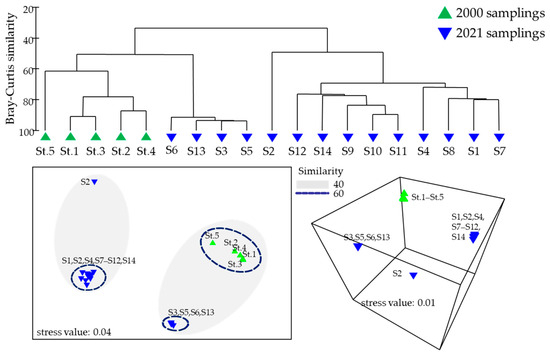
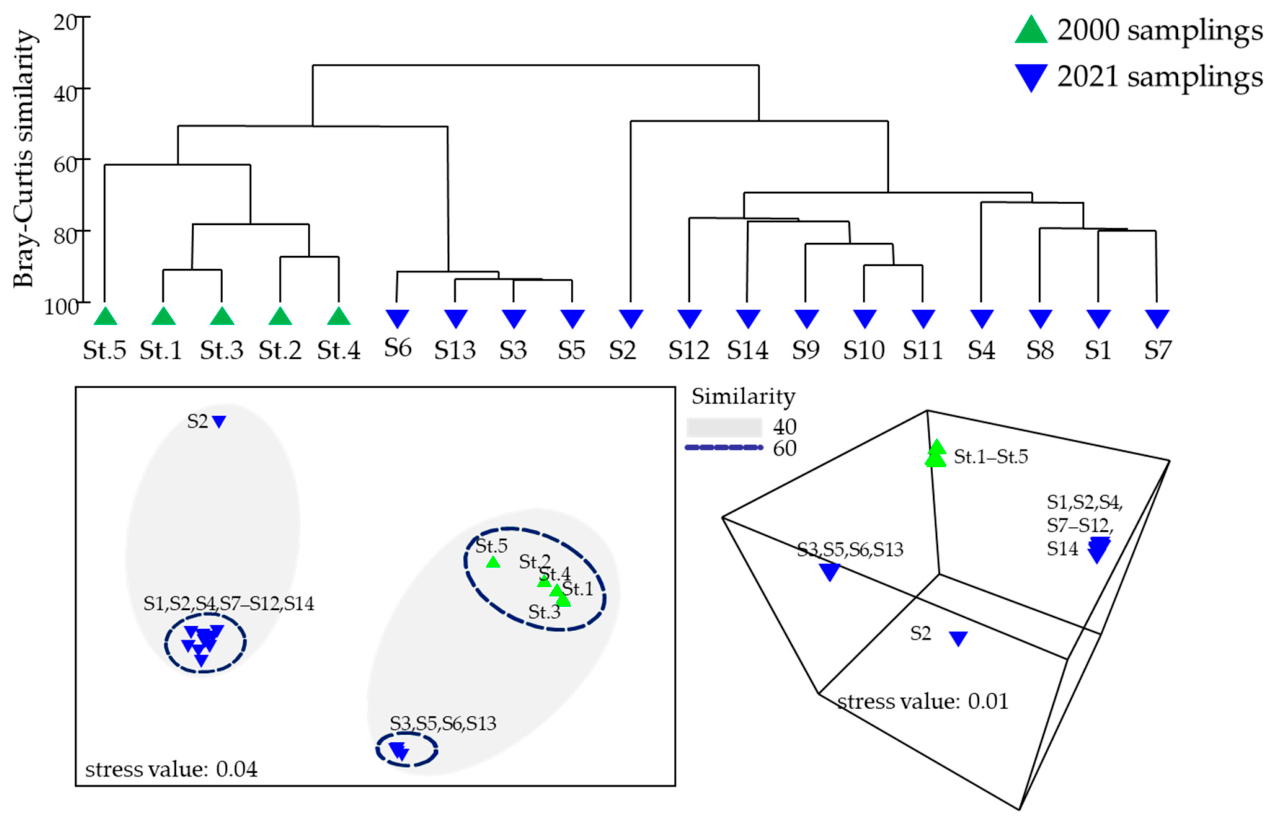
The comparison between the above dataset (2000 dataset, Table S1) with the present one (2021 samplings) based on the Bray–Curtis similarity index calculated from presence–absence data, reveal clear differences in the structure of the epibenthic communities across time (Figure 6). The discrimination of the surveyed sites was mainly according to the time of sampling; all sites sampled in 2000 were grouped together, at a clear distance from the 2021 samplings, which were further discriminated according to the geographic location of the sites. Overall, the impact of the temporal samplings significantly affected the synthesis of the epibenthic invertebrate organisms on the rocky cliffs (ANOSIM results R = 0.73, p = 0.006), whereas no significant differences were observed between the geographic location of the sampling stations (ANOSIM results R = 0.19, p = 0.65). The latter differences, which were described in the previous subsections, are probably masked by the profound temporal effect.
Figure 6.
Hierarchical cluster analysis (top graph) and non-metric two- (left graph) and three-dimensional scaling ordination (right graph) of the sampling sites sampled in 2000 (St.1–St.5) and in 2021 (S1–S14) at the surveyed rocky cliffs of Chalkidiki Peninsula, based on Bray–Curtis similarity index calculated on presence–absence data of macroscopic epibenthic invertebrates.
3.6. Health Condition of Macroscopic Epibenthic Species
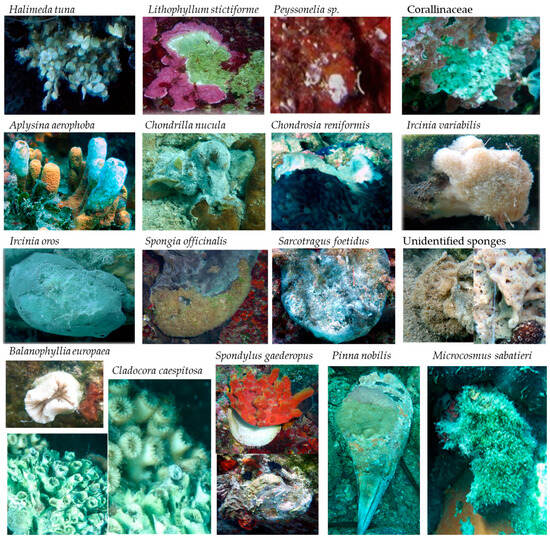
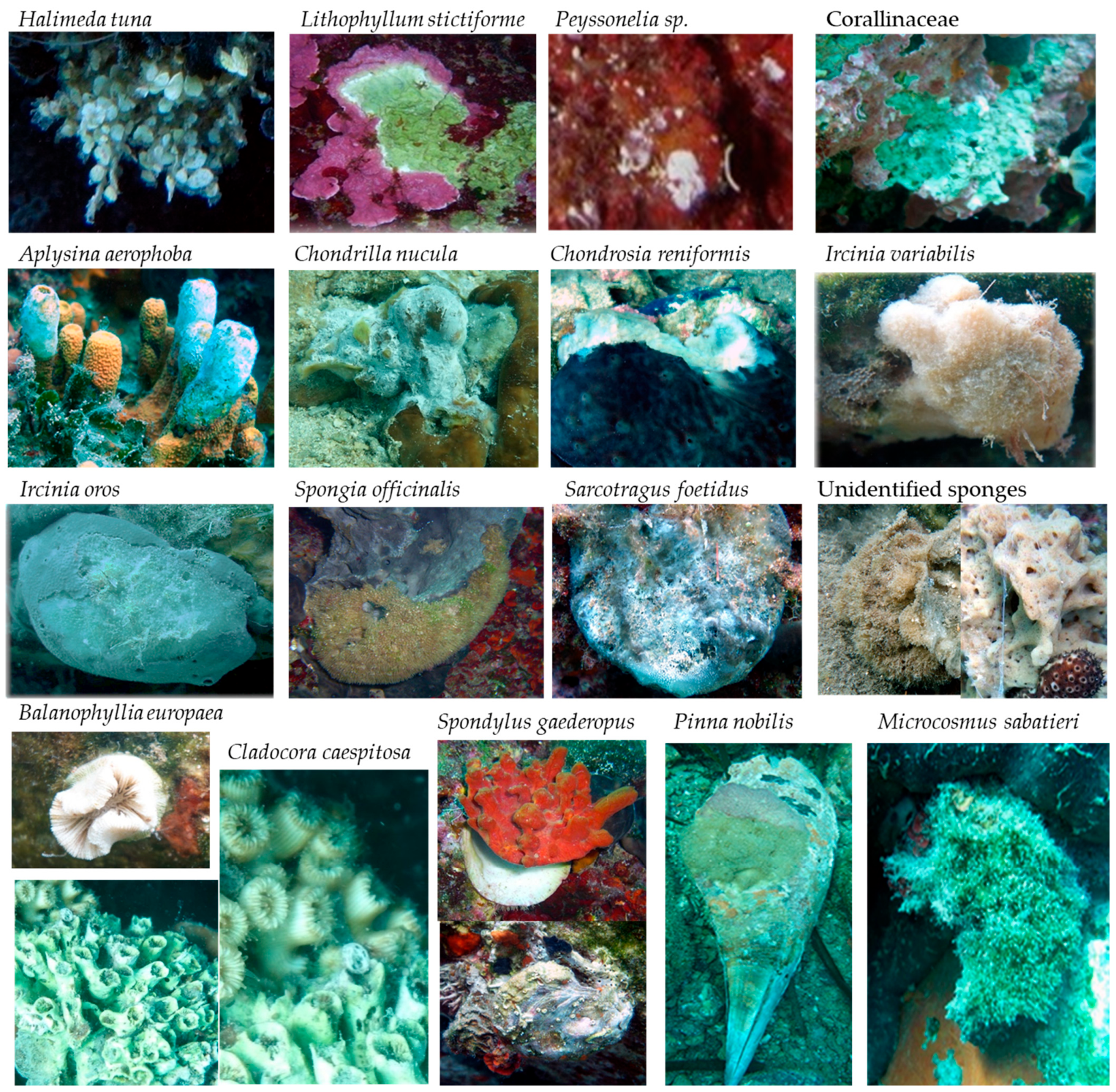
Four algal (H. tuna, Peyssonelia sp., L. strictiforme and unidentified corallinaceans) and 12 invertebrate (A. aerophoba, C. nucula, C. reniformis, I. variabilis, I. oros, S. foetidus, S. officinalis, B. europaea, C. caespitosa, P. nobilis, S. gaederopus, M. sabatieri) species were found in partial or full necrosis (Table 5, Figure 7). Regarding the critically endangered fan mussel P. nobilis, only empty/destructed shells were observed. Sarcotragus foetidus (88%), I. variabilis (68%), B. europaea (58%), C. caespitosa (39%), S. gaederopus (72%) and M. sabatieri (64%) were the most severely affected species over the surveyed SACs. According to relevant data collected about 20 years before, the biota had increased diversity without signs of necrosis.
Table 5.
Invertebrate species affected by partial of full necrosis per sampling site (S1–S14) on the surveyed rocky cliffs at the NATURA 2000 SACs of Chalkidiki Peninsula.
Figure 7.
Epibenthic macroscopic algal and invertebrate species in partial or full necrosis on the surveyed rocky cliffs at the NATURA 2000 SACs of Chalkidiki Peninsula in autumn 2021. Modified from Antoniadou et al. 2023 [15].
4. Discussion
In 2021, severe marine heatwaves (MHWs) affected the Mediterranean Sea [59]. In the study area, sea surface temperatures for three (January to March) and two (July to August) consecutive months during the cold and the warm seasons of the year, respectively, were markedly elevated, remaining approximately 1.5 °C above the 12-year monthly average [43]. The MHWs that affected the Chalkidiki Peninsula extended between 15 and 20 days [43], inducing thermal stress to the marine biota inhabiting the infralittoral zone. As a result, several species, stony corals in particular, suffered from mass mortality [15]. Similar necrotic events were reported from adjacent north Aegean areas, affecting keratose sponges and attributed to thermos-dependent Vibrio pathogens [16]. Mortality events were repeated two years later, reaching deeper zones and distressing additional species, such as the sponge Agelas oroides, the stony coral Madracis pharensis, the sea fan Eunicella spp. and the bryozoan Myriapora truncata [Antoniadou unpublished data]. Overall, MHWs impacted the marine benthic communities all over the Mediterranean Sea during recent years, driving severe mass mortality in over 25 faunal species [12,60,61,62,63,64]. It is, therefore, critical to reinforce the establishment of observational monitoring networks of appropriate biological descriptors. Such descriptors should summarize MHWs’ impacts on specific habitat types, relying on multispecies and meta-population assessments across geographic and bathymetric range.
According to the Habitat Directive, reefs include any type of hard substrata, of both mineral and biogenic origin, extending at any depth within the coastal zone [51,65,66,67]. Therefore, a variety of geological formations are considered, with rocky cliffs being among the most widely distributed habitat types in the Mediterranean. Rocky cliffs host a large number of inhabitants, representing one of the most biodiverse and structurally complex seascapes [18,19,20,21,68,69]. Overall, two biocenoses were assessed in the shallow sublittoral infralittoral zone: the biocenosis of Mediterranean infralittoral algae and the coralligenous biocenosis, which were further diversified spatially into six and two facies, respectively. Together with the biocenosis of hydrothermal oozes, expanding in the shallow thermal springs of the SAC GR1270008 (Loutra Agias Paraskevis), they highlight the increased ecological diversity of the studied area.
In the north Aegean Sea, the rocky cliffs of the Chalkidiki Peninsula have been comprehensively studied during 1997–2000 [18,19], prior to the establishment of the SACs, which happened in 2011. These efforts revealed increased biodiversity at both the ecological and taxonomical level. More specifically, the biocenoses of Mediterranean infralittoral algae and the coralligenous were described, manifesting diverse algal-dominated assemblages along the infralittoral zone. They hosted a large variety of facies and megabenthic species (117 faunal species in total), with 88 sessile invertebrates and 29 reef-associated fishes [19]. Demosponges and anthozoans, followed by sea slugs, bivalves, decapods and starfishes were the most prominent animal groups in the shallow sublittoral rocky shores of Chalkidiki Peninsula [19]. Comparing those records with the results of the present study, the faunal diversity decreased to about 40%, as only 56 invertebrates and 15 reef-associated fish species were recorded during the 2021 surveys. Demosponges and anthozoans persisted as the most dominant animal groups, in contrast to sea slugs and sea stars, which were scarcely observed. Moreover, no signs of necrosis had been witnessed prior to 2000, in contrast with the recent surveys, where 15 species were detected in partial or full necrosis. Therefore, the structure of the marine biota seems to have been severely altered. Based on those observations, the degradation of the reef habitat type is becoming evident. This decline in biodiversity may have been driven by several human activities other than MHWs, such as intensive tourism and fisheries, which constituted the main pressures over the study area prior to the establishment of the SACs.
Cliff profiles have been widely acknowledged as one of the most impactful factors driving the structure of hard substrata benthic communities and inducing their spatial variability, with vertical cliffs being the most diverse [19,68,70,71,72]. The studied communities showed moderate structural homogeneity reflecting the occurrence of different biocenoses or facies. The sampling sites were discriminated according to the habitat type, i.e., discrimination of the biocenoses of hydrothermal oozes, infralittoral algae and the coralligenous enclaves at the shallow hydrothermal vent (S2), and their geographic location, i.e., Kassandra or Sithonia peninsula and SACs, with a few exceptions explained by the different geomorphology of sites. For example, the sampling site (S1) located in GR1270010 SAC in the inner part of Kassandra, where hard substrata is limited to only large boulders, showed increased affinity with the slightly to moderately inclined and protected sites located in the inner part of Sithonia, either in Toroneos (SAC GR1270007; sites S7, S8) or Siggitikos (SAC GR1270002; sites S12, S14) gulfs, or in the engulfment of GR1270009 (sites S9, S11), having lower fetch profile. On the other hand, the moderately inclined site (S13) at Diaporos island (SAC GR1270007), with strong hydronamism [18,19], showed increased similarity with the steep (sites S3, S5, S6) to moderately (site S4) inclined and exposed sites located at the edge of Kassandra (SAC GR1270008). This pattern is in agreement with similar research, confirming the importance of inclination to the biodiversity of rocky shores [19,68,70,71,72].
The observed biotic pattern was driven by a few invertebrate species. More specifically, the sponges A. aerophoba, A. oroides, C. reniformis, C. nucula, I. variabilis, the stony corals B. europaea, C. caespitosa, serpulid worms, and the ascidian H. papillosa were the leading species. These species were absent from the hydrothermal vent area (S2), except for I. variabilis and serpulids, which were common. Agelas oroides, I. variabilis, B. europaea, serpulids and H. papillosa predominate in Kassandra sites; A. aerophoba, C. nucula and C. caespitosa predominate in Sithonia sites. Chondrosia reniformis showed increased density at both peninsulas with higher homogeneity within the surveyed sites of each peninsula, excluding the S2 site, where the species was not recorded. All these species have been previously reported among the dominant macroscopic invertebrates in the rocky cliffs of Chalkidiki [19] and are among the most widely distributed species in the rocky shores of the Aegean Sea [73]. The sponges A. aerophoba, C. reniformis, C. nucula and I. variabilis thrive in shallow, well-lit, rocky environments, whereas A. oroides prefers slightly deeper and more shaded habitats [18,74,75,76,77,78,79,80]; however, most of those species are able to live in mesophotic habitats [81] and semi-dark caves as well [82]. The stony corals B. europaea and C. caespitosa are widespread on various shallow rocky formations and sedimentary bottoms with boulders over the Mediterranean Sea [15,83,84,85]; both species prefer well-lit habitats, though they may form sparse populations in dim light conditions [86]. Serpulid worms are among the primary bioconstructors of rocky reefs and submarine caves [87,88]. They also constitute a dominant component of the sessile fauna in several facies of the Mediterranean infralittoral algae and the coralligenous biocenoses conditioned by space availability and biotic interactions [18,89]. Regarding the Mediterranean endemic sea-squirt H. papillosa, one of the most common ascidian species of the Mediterranean Sea [15,74], it seems to prefer the most exposed sites to ensure nutrition while withstanding water currents owing to its strong rhizoids [18].
All the above species, except serpulid worms and H. papillosa, were affected by partial or full necrosis during the 2021 MHWs. Moreover, another four algal (H. tuna, Peyssonelia sp., L. strictiforme, unidentified corallinaceans), three poriferan (I. oros, S. foetidus, S. officinalis), two molluscan (P. nobilis, S. gaederopus) and one ascidian (M. sabatieri) species were found in partial or full necrosis. Calcareous algae, corallinaceans and peyssoneliaceans, in particular, are suffering from necrosis under the impact of MHWs [90]. The population of the critically endangered fan mussel, P. nobilis, has been completely devastated in the Chalkidiki Peninsula since 2020, with 100% mortality reported from the area, formerly sustaining dense populations [91], and attributed to an epidemic disease boosted by sea-warming [92]. During the present survey, only dead shells were detected, mostly in the sites located at the cape area of Paliouri. As those shells had no signs of abrasion, the death of the individuals may be assumed to be recent. Sarcotragus foetidus (87%), I. variabilis (68%), B. europaea (58%), C. caespitosa (39%), S. gaederopus (72%) and M. sabatieri (64%) were the most severely affected species over the surveyed SACs, suggesting their assignment as priority species in marine conservation.
Sarcotragus foetidus suffered from intense partial or full mortality at all sampling sites; a few alive individuals were detected only at the exposed S3 site at the cape area of Paliouri. This site showed the highest biodiversity values and hosted fewer affected species/individuals, probably due to the beneficial influence of water currents that lower the thermal regime and limit MHWs [43]. A vibriosis disease massively affected S. foetidus population at the adjacent Aegean coast of Turkey in summer 2021 [16]. Another species of keratose sponge, I. variabilis, has also been severely affected in the study area. Both sponges showed similar trends, sustaining healthier populations at the most exposed sites. A mass mortality event of I. variabilis has been previously reported along the southern Adriatic and Ionian seas, also attributed to vibriosis [93]. A synergetic mechanism seems to induce Vibrio pathogens in keratose sponges probably triggered by persistent high temperature [16,93]. Spondylus gaederopus is another bivalve species heavily affected by complete necrosis over the study area. Similar events have been previously reported from the Tyrrhenian Sea, Province, and the Catalonian coasts, attributed to thermal anomalies [61,63,94] that invoke a microbial infection [95,96]. The habitat-engineering tunicate M. sabatieri has also been found in necrosis; the individuals remain attached to rocks, but the tunic softens and the mantle inside decomposes. So far, no mass mortality event has been described for the species, although its populations collapsed from western Mediterranean areas (Spanish and SE French coasts) in the mid-nineties by unknown causes [97]. Moreover, the shallow M. sabatieri populations have been collapsing in Portofino since 2000, where the species retreated to deeper environments [98]. In the Aegean Sea, the species has been intensively harvested since the eighties [97,98], but gradually affected by necrosis from 2019 up to date.
Among affected species, special attention should be given to stony corals, especially the endangered C. caespitosa, due to the formation of reef-like structures and its valuable ecological-engineering role that enhances local biodiversity [30,31,32]. Cladocora caespitosa and B. europaea are among the most widely affected species by necrosis along the Mediterranean, triggered by temperature anomalies [99]. The 2021 episode was the first large-scale event in the Aegean Sea [15]. Even though the percentage of affected C. caespitosa colonies is not as high as in other species, the absence of the species from sites where dense populations previously occurred [18,19] is of great concern for its future survival in the area. Both species sustain healthier populations at the most exposed sites, a pattern observed for most of the affected species during the present survey.
5. Conclusions
MHWs appear to be a severe threat to various benthic habitats and organisms, especially to calcium carbonate producers that suffer from episodic mass mortality events. To assess the effect of climate change on marine biodiversity, effective sentinels are required. Certain epibenthic invertebrates that are particularly vulnerable to thermal stress, such as the sponges S. foetidus, I. variabilis, the stony corals B. europaea, C. caespitosa, the bivalve S. gaederopus and the sea squirt M. sabatieri, seem to be promising options for monitoring the resilience of shallow rocky shore habitats. These species fulfil some criteria of key biotic indicators: feasible to survey, scientifically sound, reliable and replicable across sites and regions, and accordingly, they may represent appropriate climate change descriptors. However, as they are also susceptible to the synergistic or strict action of other stressors, such as hypoxia, pathogens and pollution, the development of more sophisticated biomarkers combined with precise measurements of environmental parameters is needed. Despite those limitations, monitoring their population trends, health conditions and episodic events will generate valuable data for adaptive management strategies to assess the resilience of Mediterranean MPAs and enhance their conservation potential, especially considering the widely reported synergy between climate change and other stressors in the marine environment.
Supplementary Materials
The following supporting information can be downloaded at: https://www.mdpi.com/article/10.3390/d18060382/s1, Table S1: presence (Pr) data of the epibenthic macroscopic species reported from visual census (2000 samplings) of rocky cliffs at the Chalkidiki Peninsula by Antoniadou et al. 2005 [18] and Antoniadou 2003 [100]. Stations St.1 and St.2 were located close to S5 and S6 of the SAC GR1270008, St.3 at Porto Koufo, St.4 close to S11 of the SAC GR1270009, and S5 close to S13 of the SAC GR1270002.
Author Contributions
Conceptualization, C.A.; methodology, C.A.; validation, C.A. and C.C.; formal analysis, C.A.; investigation, C.A.; resources, C.C.; data curation, C.A. and M.P.; writing—original draft preparation, C.A. and M.P.; writing—review and editing, C.A., M.P. and C.C.; visualization, C.A.; supervision, C.A.; project administration, C.C.; funding acquisition, C.C. All authors have read and agreed to the published version of the manuscript.
Funding
This research was partially funded by the Natural Environment & Climate Change Agency (Management Unit of Koroneia-Volvi, Kerkini and Thermaikos National Parks and Protected Areas of Central Macedonia, former Koronia-Volvi-Chalkidiki and Thermaikos Gulf Management Bodies) under the grants RC71618 and RC71654.
Data Availability Statement
The data presented in this study are available on request from the corresponding author. The data are not publicly available due to privacy reasons.
Acknowledgments
The authors acknowledge the captain and crew of the vessel “Posidonia” for their help during samplings, and Lydia Alvanou for general support.
Conflicts of Interest
The authors declare no conflicts of interest.
Abbreviations
The following abbreviations are used in this manuscript:
| MPAs | Marine Protected Areas |
| SACs | Special Areas of Conservation |
| MHWs | Marine Heatwaves |
References
- Claudet, J.; Fraschetti, S. Human-driven impacts on marine habitats: A regional meta-analysis in the Mediterranean Sea. Biol. Conserv. 2010, 143, 2195–2206. [Google Scholar] [CrossRef] [Scilit]
- Arkema, K.K.; Field, L.; Nelson, L.K.; Ban, N.C.; Gunn, C.; Lester, S.E. Advancing the design and management of marine protected areas by quantifying the benefits of coastal ecosystems for communities. One Earth 2024, 7, 989–1006. [Google Scholar] [CrossRef] [Scilit]
- Smith, J.G.; Lopazanski, C.; Free, C.M.; Brun, J.; Anderson, C.; Carr, M.H.; Claudet, J.; Dugan, J.E.; Eurich, J.G.; Francis, T.B.; et al. Conservation benefits of a large marine protected area network that spans multiple ecosystems. Conserv. Biol. 2025, 39, e14435. [Google Scholar] [CrossRef] [Scilit] [PubMed]
- Ziegler, S.L.; Johnson, J.M.; Brooks, R.O.; Johnston, E.M.; Mohay, J.L.; Ruttenberg, B.I.; Starr, R.M.; Waltz, G.T.; Wendt, D.E.; Hamilton, S.L. Marine protected areas, marine heatwaves, and the resilience of nearshore fish communities. Sci. Rep. 2023, 13, 1405. [Google Scholar] [CrossRef] [Scilit] [PubMed]
- Bruno, J.F.; Bates, A.E.; Cacciapaglia, C.; Pike, E.P.; Amstrup, S.C.; van Hooidonk, R.; Henson, S.A.; Aronson, R.B. Climate change threatens the world’s marine protected areas. Nat. Clim. Change 2018, 8, 499–503. [Google Scholar] [CrossRef] [Scilit]
- Tony, A.B.R. Adaptive management in context of MPAs: Challenges and opportunities for implementation. J. Nat. Conserv. 2020, 56, 125864. [Google Scholar] [CrossRef] [Scilit]
- Schmidt, D.N.; Pieraccini, M.; Evans, L. Marine Protected Areas in the context of climate change: Key challenges for coastal social-ecological systems. Philos. Trans. R. Soc. Lond. B Biol. Sci. 2022, 377, 20210131. [Google Scholar] [CrossRef] [Scilit] [PubMed]
- Lopazanski, C.; Foshay, B.; Couture, J.L.; Wagner, D.; Hannah, L.; Pidgeon, E.; Bradley, D. Principles for climate resilience are prevalent in marine protected area management plans. Conserv. Lett. 2023, 16, e12972. [Google Scholar] [CrossRef] [Scilit]
- Bryce, K.; Hunter, K.L. Enhancing climate change planning and adaptive management in marine protected areas through targets, thresholds, and social-ecological objectives. Front. Mar. Sci. 2024, 11, 1339871. [Google Scholar] [CrossRef] [Scilit]
- Fordham, D.A. Identifying species traits that predict vulnerability to climate change. Camb. Prism. Extinct. 2024, 2, e21. [Google Scholar] [CrossRef] [Scilit] [PubMed]
- Rubio-Portillo, E.; Izquierdo-Muñoz, A.; Gago, J.F.; Rosselló-Mora, R.; Antón, J.; Ramos-Esplá, A. Effects of the 2015 heat wave on benthic invertebrates in the Tabarca Marine Protected Area (southeast Spain). Mar. Environ. Res. 2016, 122, 135–142. [Google Scholar] [CrossRef] [Scilit] [PubMed]
- Rivetti, I.; Fraschetti, S.; Lionello, P.; Zambianchi, E.; Boero, F. Global warming and mass mortalities of benthic invertebrates in the Mediterranean Sea. PLoS ONE 2014, 9, e115655. [Google Scholar] [CrossRef] [Scilit] [PubMed]
- Marbà, N.; Jordà, G.; Agustí, S.; Girard, C.; Duarte, C.M. Footprints of climate change on Mediterranean Sea biota. Front. Mar. Sci. 2015, 2, 56. [Google Scholar] [CrossRef] [Scilit]
- Carlot, J.; Galobart, C.; Gómez-Gras, D.; Santamaría, J.; Golo, R.; Sini, M.; Cebrian, E.; Gerovasileiou, V.; Ponti, M.; Turicchia, E.; et al. Vulnerability of benthic trait diversity across the Mediterranean Sea following mass mortality events. Nat. Commun. 2025, 16, 1571. [Google Scholar] [CrossRef] [Scilit] [PubMed]
- Antoniadou, C.; Pantelidou, M.; Skoularikou, M.; Chintiroglou, C. Mass mortality of shallow-water temperate corals in Marine Protected Areas of the north Aegean Sea (Eastern Mediterranean). Hydrobiology 2023, 2, 311–325. [Google Scholar] [CrossRef] [Scilit]
- Dinçtürk, E.; Ondes, F.; Leria, L.; Maldonado, M. Mass mortality of the keratose sponge Sarcotragus foetidus in the Aegean Sea (Eastern Mediterranean) correlates with proliferation of Vibrio bacteria in the tissues. Front. Microbiol. 2023, 14, 1272733. [Google Scholar] [CrossRef] [Scilit] [PubMed]
- Wong, R.H.X.; Monk, J.; Perkins, N.R.; Barrett, N.S. Temporal change in the abundance and size distribution patterns of temperate deep reef sessile communities under multiple climate disturbances. Estuar. Coast. Shelf Sci. 2025, 318, 109224. [Google Scholar] [CrossRef] [Scilit]
- Antoniadou, C.; Chintiroglou, C. Biodiversity of zoobenthic hard-substrate sublittoral communities in the Eastern Mediterranean (North Aegean Sea). Estuar. Coast. Shelf Sci. 2005, 62, 637–653. [Google Scholar] [CrossRef] [Scilit]
- Antoniadou, C.; Voultsiadou, E.; Chintiroglou, C. Sublittoral megabenthos along cliffs of different profile (Aegean Sea, Eastern Mediterranean). Belg. J. Zool. 2006, 136, 69–79. [Google Scholar]
- Sala, E.; Ballesteros, E.; Dendrinos, P.; Di Franco, A.; Ferretti, F.; Foley, D.; Fraschetti, S.; Friedlander, A.; Garrabou, J.; Güçlüsoy, H.; et al. The structure of Mediterranean rocky reef ecosystems across environmental and human gradients, and conservation implications. PLoS ONE 2012, 7, e32742. [Google Scholar] [CrossRef] [Scilit] [PubMed]
- Bevilacqua, S.; Airoldi, L.; Ballesteros, E.; Benedetti-Cecchi, L.; Boero, F.; Bulleri, F.; Cebrian, E.; Cerrano, C.; Claudet, J.; Colloca, F.; et al. Mediterranean rocky reefs in the Anthropocene: Present status and future concerns. Adv. Mar. Biol. 2021, 89, 1–51. [Google Scholar] [CrossRef] [Scilit] [PubMed]
- Garrabou, J.; Ballesteros, E.; Zabala, M. Structure and dynamics of north-western Mediterranean rocky benthic communities along a depth gradient. Estuar. Coast. Shelf Sci. 2002, 55, 493–508. [Google Scholar] [CrossRef] [Scilit]
- Ballesteros, E. Structure and dynamics of the community of Cystoseira zosteroides (Turner) C. Agardh (Fucales, Phaeophyceae) in the Northwestern Mediterranean. Sci. Mar. 1990, 54, 217–229. [Google Scholar]
- Gianni, F.; Bartolini, F.; Airoldi, L.; Ballesteros, E.; Francour, P.; Guidetti, P.; Meinesz, A.; Thibaut, T.; Mangialajo, L. Conservation and restoration of marine forests in the Mediterranean Sea and the potential role of Marine Protected Areas. Adv. Oceanogr. Limnol. 2013, 4, 83–101. [Google Scholar] [CrossRef] [Scilit]
- Capdevila, P.; Hereu, B.; Riera, J.L.; Linares, C. Unravelling the natural dynamics and resilience patterns of underwater Mediterranean forests: Insights from the demography of the brown alga Cystoseira zosteroides. J. Ecol. 2016, 104, 1799–1808. [Google Scholar] [CrossRef] [Scilit]
- De Bettignies, T.; Vanalderweireldt, L.; Launay, M.; Moutardier, G.; Pasqualini, V.; Durieux, É.; Le Gall, L. The role of algae in structuring reef communities: Innovative monitoring and ecological insights within a Mediterranean conservation priority area. Front. Mar. Sci. 2025, 12, 1516792. [Google Scholar] [CrossRef] [Scilit]
- Koukouras, A.; Voultsiadou-Koukoura, E.; Chintiroglou, H.; Dounas, C. Benthic bionomy of the North Aegean Sea. III. A comparison of the macrobenthic animal assemblages associated with seven sponge species. Cah. Biol. Mar. 1985, 26, 301–319. [Google Scholar]
- Koukouras, A.; Russo, A.; Voultsiadou-Koukoura, E.; Arvanitidis, C.; Stefanidou, D. Macrofauna associated with sponge species of different morphology. Mar. Biol. 1996, 17, 569–582. [Google Scholar] [CrossRef] [Scilit]
- Goren, L.; Idan, T.; Shefer, S.; Ilan, M. Macrofauna inhabiting massive demosponges from shallow and mesophotic habitats along the Israeli Mediterranean coast. Front. Mar. Sci. 2021, 7, 612779. [Google Scholar] [CrossRef] [Scilit]
- Koukouras, A.; Kuhlmann, D.; Voultsiadou-Koukoura, E.; Vafidis, D.; Dounas, C.; Chintiroglou, C. The macrofaunal assemblage associated with the scleractinian coral Cladocora caespitosa (L.) in the Aegean Sea. Ann. Inst. Oceanogr. 1998, 72, 97–114. [Google Scholar]
- Antoniadou, C.; Chintiroglou, C. Biodiversity of zoobenthos associated with a Cladocora caespitosa bank in the North Aegean Sea. Rapp. Comm. Int. Mer. Médit. 2010, 39, 432. [Google Scholar]
- Pittaco, V.; Orlando-Bonaca, M.; Mavrič, B.; Lipej, L. Macrofauna associated with a bank of Cladocora caespitosa (Anthozoa, Scleractinia) in the Gulf of Trieste (northern Adriatic). Ann. Ser. Hist. Nat. 2014, 24, 1–14. [Google Scholar]
- Kersting, D.K.; Cefalì, M.E.; Movilla, J.; Vergotti, M.J.; Linares, C. The endangered coral Cladocora caespitosa in the Menorca Biosphere Reserve: Distribution, demographic traits and threats. Ocean. Coast. Manag. 2023, 240, 106626. [Google Scholar] [CrossRef] [Scilit]
- Chintiroglou, C.; Damianidis, P.; Antoniadou, C.; Lantzouni, M.; Vafidis, D. Macrofauna biodiversity of mussel bed assemblages in Thermaikos Gulf (northern Aegean Sea). Helgol. Mar. Res. 2004, 58, 62–70. [Google Scholar] [CrossRef] [Scilit]
- Casoli, E.; Bonifazi, A.; Ardizzone, G.; Gravina, M.F.; Russo, G.F.; Sandulli, R.; Donnarumma, L. Comparative analysis of mollusc assemblages from different hard bottom habitats in the central Tyrrhenian Sea. Diversity 2019, 11, 74. [Google Scholar] [CrossRef] [Scilit]
- Bracchetti, L.; Capriotti, M.; Fazzini, M.; Cocci, P.; Palermo, F.A. Mass mortality event of Mediterranean mussels (Mytilus galloprovincialis) in the Middle Adriatic: Potential implications of the climate crisis for marine ecosystems. Diversity 2024, 16, 130. [Google Scholar] [CrossRef] [Scilit]
- Voultsiadou, E.; Pyrounaki, M.M.; Chintiroglou, C. The habitat engineering tunicate Microcosmus sabatieri Roule, 1885 and its associated peracarid epifauna. Estuar. Coast. Shelf Sci. 2007, 74, 197–204. [Google Scholar] [CrossRef] [Scilit]
- Voultsiadou, E.; Kyrodimou, M.; Antoniadou, C.; Vafidis, D. Sponge epibionts on ecosystem-engineering ascidians: The case of Microcosmus sabatieri. Estuar. Coast. Shelf Sci. 2010, 86, 598–606. [Google Scholar] [CrossRef] [Scilit]
- Jones, C.G.; Lawton, J.H.; Shachak, M. Organisms as ecosystem engineers. Oikos 1994, 69, 373–386. [Google Scholar] [CrossRef] [Scilit] [PubMed]
- Bianchi, C.N. Biodiversity issues for the forthcoming tropical Mediterranean Sea. Hydrobiologia 2007, 580, 7–21. [Google Scholar] [CrossRef] [Scilit]
- Peleg, O.; Guy-Haim, T.; Yeruham, E.; Silverman, J.; Rilov, G. Tropicalization may invert trophic state and carbon budget of shallow temperate rocky reefs. J. Ecol. 2020, 108, 844–854. [Google Scholar] [CrossRef] [Scilit]
- Albano, P.G.; Steger, J.; Bošnjak, M.; Dunne, B.; Guifarro, Z.; Turapova, E.; Hua, Q.; Kaufman, D.S.; Rilov, G.; Zuschin, M. Native biodiversity collapse in the eastern Mediterranean. Proc. R. Soc. B 2021, 288, 20202469. [Google Scholar] [CrossRef] [Scilit] [PubMed]
- Androulidakis, Y.; Krestenitis, Y.N. Sea Surface Temperature Variability and Marine Heat Waves over the Aegean, Ionian, and Cretan Seas from 2008–2021. J. Mar. Sci. Eng. 2022, 10, 42. [Google Scholar] [CrossRef] [Scilit]
- Juza, M.; Fernández-Mora, A.; Tintoré, J. Sub-regional marine heat waves in the Mediterranean Sea from observations: Long-term surface changes, sub-surface and coastal responses. Front. Mar. Sci. 2022, 9, 785771. [Google Scholar] [CrossRef] [Scilit]
- Androulidakis, Y.; Kolovoyiannis, V.; Makris, C.; Krestenitis, Y. Evidence of 2024 summer as the warmest during the last four decades in the Aegean, Ionian, and Cretan Seas. J. Mar. Sci. Eng. 2024, 12, 2020. [Google Scholar] [CrossRef] [Scilit]
- Hobday, A.J.; Oliver, E.C.J.; Sen Gupta, A.; Benthuysen, J.A.; Burrows, M.T.; Donat, M.G.; Holbrook, N.J.; Moore, P.J.; Thomsen, M.S.; Wernberg, T.; et al. Categorizing and naming marine heatwaves. Oceanography 2018, 31, 162–173. [Google Scholar] [CrossRef] [Scilit]
- Lattos, A.; Papadopoulos, D.K.; Feidantsis, K.; Karagiannis, D.; Giantsis, I.A.; Michaelidis, B. Are marine heatwaves responsible for mortalities of farmed Mytilus galloprovincialis? A pathophysiological analysis of Marteilia infected mussels from Thermaikos Gulf, Greece. Animals 2022, 12, 2805. [Google Scholar] [CrossRef] [Scilit] [PubMed]
- De Girolamo, M.; Mazzoldi, C. The application of visual census on Mediterranean rocky habitats. Mar. Environ. Res. 2001, 51, 1–16. [Google Scholar] [CrossRef] [Scilit] [PubMed]
- Costello, M.J.; Basher, Z.; McLeod, L.; Asaad, I.; Claus, S.; Vandepitte, L.; Yasuhara, M.; Gislason, H.; Edwards, M.; Appeltans, W.; et al. Methods for the Study of Marine Biodiversity. In The GEO Handbook on Biodiversity Observation Networks; Walters, M., Scholes, R., Eds.; Springer: Cham, Switzerland, 2017; pp. 129–164. [Google Scholar] [CrossRef] [Scilit]
- EUNIS European Environment Agency (EEA). Marine Habitat Classification Review 2022. Available online: https://www.eea.europa.eu/data-and-maps/data/eunis-habitat-classification-1/eunis-marine-habitat-classification-review-2022/eunis-marine-habitat-classification-2022 (accessed on 16 December 2025).
- Tsiripidis, I.; Xystrakis, F.; Mastrogianni, A.; Antoniadou, C.; Zervas, D.; Fotiadis, G.; Paragamian, K.; Dimopoulos, P.; Bergmeier, E. Interpretation Manual of Habitat Types in Greece; Environment and Climate Change Agency (O.FY.PE.K.A.): Thessaloniki, Greece, 2025; pp. 69–76. [Google Scholar]
- Crisp, D.J.; Southward, A.J. The distribution of intertidal organisms along the coasts of the English Channel. J. Mar. Biol. Assoc. U. K. 1958, 37, 157–203. [Google Scholar] [CrossRef] [Scilit]
- Hiscock, K. Marine Nature Conservation Review: Rationale and Methods; Joint Nature Conservation Committee: Peterborough, UK, 1996; pp. 58–59. [Google Scholar]
- Firth, L.B.; Mieszkowska, N.; Grant, L.M.; Bush, L.E.; Davies, A.J.; Frost, M.T.; Moschella, P.S.; Burrows, M.T.; Cunningham, P.N.; Dye, S.R.; et al. Historical comparisons reveal multiple drivers of decadal change of an ecosystem engineer at the range edge. Ecol. Evol. 2015, 5, 3210–3222. [Google Scholar] [CrossRef] [Scilit] [PubMed]
- Vafidis, D.; Antoniadou, C.; Voulgaris, K.; Varkoulis, A.; Apostologamvrou, C. Abundance and population characteristics of the invasive sea urchin Diadema setosum (Leske, 1778) in the south Aegean Sea (eastern Mediterranean). J. Biol. Res.-Thessalon. 2021, 28, 11. [Google Scholar] [CrossRef] [Scilit] [PubMed]
- Strong, J.A.; Johnson, M. Converting SACFOR data for statistical analysis: Validation, demonstration and further possibilities. Mar. Biodivers. Rec. 2020, 13, 2. [Google Scholar] [CrossRef] [Scilit]
- Clarke, K.R.; Warwick, R.M. Changes in Marine Communities: An Approach to Statistical Analyses and Interpretation; Natural Environment Research Council: Plymouth, UK, 1994. [Google Scholar]
- Clarke, K.; Gorley, R.N. PRIMER v7: User Manual/Tutorial; PRIMER-E: Plymouth, UK, 2015. [Google Scholar]
- Pastor, F.; Khodayar, S. Marine heat waves: Characterizing a major climate impact in the Mediterranean. Sci. Total Environ. 2023, 861, 160621. [Google Scholar] [CrossRef] [Scilit] [PubMed]
- Cerrano, C.; Bavestrello, G.; Bianchi, C.N.; Cattaneo-Vietti, R.; Bava, S.; Morganti, C.; Morri, C.; Picco, P.; Sara, G.; Schiaparelli, S.; et al. A catastrophic mass mortality episode of gorgonians and other organisms in the Ligurian Sea (North-western Mediterranean), summer 1999. Ecol. Lett. 2000, 3, 284–293. [Google Scholar] [CrossRef] [Scilit]
- Garrabou, J.; Coma, R.; Bensoussan, N.; Bally, M.; Chevaldonné, P.; Cigliano, M.; Diaz, D.; Harmelin, J.G.; Gambi, M.C.; Kersting, D.K.; et al. Mass mortality in Northwestern Mediterranean rocky benthic communities: Effects of the 2003 heat wave. Glob. Change Biol. 2009, 15, 1090–1103. [Google Scholar] [CrossRef] [Scilit]
- Cebrian, E.; Uriz, M.J.; Garrabou, J.; Ballesteros, E. Sponge mass mortalities in a warming Mediterranean Sea: Are cyanobacteria-harboring species worse off? PLoS ONE 2011, 6, e20211. [Google Scholar] [CrossRef] [Scilit] [PubMed]
- Garrabou, J.; Gómez-Gras, D.; Medrano, A.; Cerrano, C.; Ponti, M.; Schlegel, R.; Bensoussan, N.; Turicchia, E.; Sini, M.; Gerovasileiou, V.; et al. Marine heatwaves drive recurrent mass mortalities in the Mediterranean Sea. Glob. Change Biol. 2022, 28, 5708–5725. [Google Scholar] [CrossRef] [Scilit] [PubMed]
- Gómez-Gras, D.; Linares, C.; López-Sanz, A.; Amate, R.; Ledoux, J.B.; Bensoussan, N.; Drap, P.; Bianchimani, O.; Marschal, C.; Torrents, O.; et al. Population collapse of habitat-forming species in the Mediterranean: A long-term study of gorgonian populations affected by recurrent marine heatwaves. Proc. R. Soc. B 2021, 288, 20212384. [Google Scholar] [CrossRef] [Scilit] [PubMed]
- Bensettiti, F.; Bioret, F.; Roland, J.; Lacoste, J.-P. Cahiers D’habitats Natura 2000. Connaissance et Gestion des Habitats et des Espèces d’Intérêt Communautaire. Tome 2—Habitats Côtiers; MEDD/MAAPAR/MNHN, Ed.; La Documentation Française: Paris, France, 2004; pp. 105–140. [Google Scholar]
- La Mesa, G.; Paglialonga, A.; Tunesi, L. Manuali per il Monitoraggio di Specie e Habitat di Interesse Comunitario (Direttiva 92/43/CEE e Direttiva 09/147/CE) in Italia: Ambiente Marino; Serie Manuali e linee guida, 190/2019; ISPRA: Roma, Italy, 2019; pp. 123–130. [Google Scholar]
- De Bettignies, T.; La Riviere, M.; Delavenne, J.; Dupre, S.; Gaudillat, V.; Janson, A.-L.; Lepareur, F.; Michez, N.; Paqiognon, G.; Schmitt, A.; et al. Interprétation Française des Habitats d’Intérêt Communautaire Marins; PatriNat (OFB-CNRS-MNHN): Paris, France, 2021; pp. 41–45. [Google Scholar]
- Rattray, A.; Andrello, M.; Asnaghi, V.; Bevilacqua, S.; Bulleri, F.; Cebrian, E.; Chiantore, M.; Claudet, J.; Deudero, S.; Evans, J.; et al. Geographic distance, water circulation and environmental conditions shape the biodiversity of Mediterranean rocky coasts. Mar. Ecol. Prog. Ser. 2016, 553, 1–11. [Google Scholar] [CrossRef] [Scilit]
- Skoularikou, M.; Antoniadou, C.; Chintiroglou, C. Sublittoral rocky habitats and megabenthic species diversity gradients along Rodopos cliff (NW Cretan Sea, south Aegean Sea). Mar. Biodivers. 2026, in press. [Google Scholar]
- Laudien, J.; Orchard, J. The significance of depth and substratum incline for the structure of a hard bottom sublittoral community in glacial Kongsfjorden (Svalbard, Arctic)—An underwater imagery approach. Polar Biol. 2012, 35, 1057–1072. [Google Scholar] [CrossRef] [Scilit]
- Piazzi, L.; Cecchi, E.; Cinti, M.F.; Marino, G.; Nicastro, A.; Pacciardi, L.; Pertusati, M.; Ria, M.; De Biasi, A.M. Coralligenous cliffs: Distribution and extent along the Tuscany coasts and spatial variability of the associated assemblages. Mediterr. Mar. Sci. 2023, 24, 314–322. [Google Scholar] [CrossRef] [Scilit]
- Rodríguez-Stepke, B.; Espinosa-León, I.M.; Valenzuela-Lobos, L.A.; De La Torriente, A.; Hüne, M. Biodiversity and spatial variation of subtidal rocky bottom communities in the west section of the Magellan Strait, Chile. Mar. Biol. Res. 2026, 22, 167–178. [Google Scholar] [CrossRef] [Scilit]
- Voultsiadou, E. Sponge diversity in the Aegean Sea: Check list and new information. Ital. J. Zool. 2005, 72, 53–64. [Google Scholar] [CrossRef] [Scilit]
- Coppari, M.; Gori, A.; Rossi, S. Size, spatial, and bathymetrical distribution of the ascidian Halocynthia papillosa in Mediterranean coastal bottoms: Benthic–pelagic coupling implications. Mar. Biol. 2014, 161, 2079–2095. [Google Scholar] [CrossRef] [Scilit]
- Costa, G.; Violi, B.; Bavestrello, G.; Pansini, M.; Bertolino, M. Aplysina aerophoba (Nardo, 1833) (Porifera, Demospongiae): An unexpected miniaturised growth form from the tidal zone of Mediterranean caves: Morphology and DNA barcoding. Eur. Zool. J. 2020, 87, 73–81. [Google Scholar] [CrossRef] [Scilit]
- Di Camillo, C.G.; Bartolucci, I.; Cerrano, C.; Bavestrello, G. Sponge disease in the Adriatic Sea. Mar. Ecol. 2013, 34, 62–71. [Google Scholar] [CrossRef] [Scilit]
- Idan, T.; Goren, L.; Shefer, S.; Ilan, M. Sponges in a changing climate: Survival of Agelas oroides in a warming Mediterranean Sea. Front. Mar. Sci. 2020, 7, 603593. [Google Scholar] [CrossRef] [Scilit]
- Bosch-Belmar, M.; Milanese, M.; Sarà, A.; Mobilia, V.; Sarà, G. Effect of acute thermal stress exposure on ecophysiological traits of the Mediterranean sponge Chondrilla nucula: Implications for climate change. Biology 2024, 13, 9. [Google Scholar] [CrossRef] [Scilit]
- Chelossi, E.; Pantile, R.; Pronzato, R.; Milanese, M.; Hentschel, U. Bacteria with antimicrobial properties isolated from the Mediterranean sponges Chondrilla nucula and Petrosia ficiformis. Aquat. Microb. Ecol. 2007, 49, 157–163. [Google Scholar] [CrossRef] [Scilit]
- Riesgo, A.; Pérez-Portela, R.; Pita, L.; Blasco, G.; Erwin, P.M.; López-Legentil, S. Population structure and connectivity in the Mediterranean sponge Ircinia fasciculata are affected by mass mortalities and hybridization. Heredity 2016, 117, 427–439. [Google Scholar] [CrossRef] [Scilit] [PubMed]
- Stamouli, C.; Gerovasileiou, V.; Voultsiadou, E. Sponges as habitat formers on mesophotic, soft-substrate seafloors of the eastern Mediterranean. J. Mar. Sci. Eng. 2025, 13, 2132. [Google Scholar] [CrossRef] [Scilit]
- Gerovasileiou, V.; Voultsiadou, E. Marine caves of the Mediterranean Sea: A sponge biodiversity reservoir within a biodiversity hotspot. PLoS ONE 2012, 7, e39873. [Google Scholar] [CrossRef] [Scilit] [PubMed]
- Zibrowius, H. Les Scléractiniaires de la Méditerranée et de l’Atlantique Nord-Oriental; Mémoires de l’Institute Océanographique: Monte Carlo, Monaco, 1980; 284p. [Google Scholar]
- Otero, M.; Numa, C.; Bo, M.; Orejas, C.; Garrabou, J.; Cerrano, C.; Kružić, P.; Antoniadou, C.; Aguilar, R.; Linares, C.; et al. Overview of the Conservation Status of Mediterranean Anthozoans; IUCN: Malaga, Spain, 2017; x + 73p. [Google Scholar]
- Kružic, P.; Guić, R.; Lipej, L.; Mavrič, B.; Gračan, R.; Ankon, P. A Cladocora caespitosa bank (National Park Mljet, Adriatic Sea) under climate and anthropogenic impacts: A 20-year survey. Mediterr. Mar. Sci. 2025, 26, 156–174. [Google Scholar] [CrossRef] [Scilit]
- Kersting, D.K.; Cebrian, E.; Verdura, J.; Ballesteros, E. A new Cladocora caespitosa population with unique ecological traits. Mediterr. Mar. Sci. 2017, 18, 38–42. [Google Scholar] [CrossRef] [Scilit]
- Casoli, E.; Bonifazi, A.; Ardizzone, G.; Gravina, M.F. How algae influence sessile marine organisms: The tube worms case of study. Estuar. Coast. Shelf Sci. 2016, 178, 12–20. [Google Scholar] [CrossRef] [Scilit]
- Sanfilippo, R.; Rosso, A.; Guido, A.; Gerovasileiou, V. Serpulid communities from two marine caves in the Aegean Sea, eastern Mediterranean. J. Mar. Biol. Assoc. U. K. 2017, 97, 1059–1068. [Google Scholar] [CrossRef] [Scilit]
- Casoli, E.; Moro, S.; Falasca, M.; Montefalcone, M.; Rizzo, L.; Teixidó, N.; Piazzi, L.; Longo, C.; Mercurio, M.; Gennaro, P.; et al. Structure and diversity patterns of coralligenous cliffs across three ecoregions in the Central-Western Mediterranean Sea. Divers. Distrib. 2024, 30, e13833. [Google Scholar] [CrossRef] [Scilit]
- Rindi, F.; Braga, J.C.; Martin, S.; Peña, V.; Le Gall, L.; Caragnano, A.; Aguirre, J. Coralline algae in a changing Mediterranean Sea: How can we predict their future, if we do not know their present? Front. Mar. Sci. 2019, 6, e723. [Google Scholar] [CrossRef] [Scilit]
- Vafidis, D.; Antoniadou, C.; Voultsiadou, E.; Chintiroglou, C. Population structure of the protected fan mussel Pinna nobilis in the south Aegean Sea (eastern Mediterranean). J. Mar. Biol. Assoc. U. K. 2014, 94, 787–796. [Google Scholar] [CrossRef] [Scilit]
- Zotou, M.; Gkrantounis, P.; Karadimou, E.; Tsirintanis, K.; Sini, M.; Poursanidis, D.; Azzolin, M.; Dailianis, T.; Kytinou, E.; Issaris, Y.; et al. Pinna nobilis in the Greek seas (NE Mediterranean): On the brink of extinction? Mediterr. Mar. Sci. 2020, 21, 575–591. [Google Scholar] [CrossRef] [Scilit]
- Stabili, L.; Cardone, F.; Alifano, P.; Tredici, S.M.; Piraino, S.; Corriero, G.; Gaino, E. Epidemic mortality of the sponge Ircinia variabilis (Schmidt, 1862) associated to proliferation of a Vibrio bacterium. Microb. Ecol. 2012, 64, 802–813. [Google Scholar] [CrossRef] [Scilit] [PubMed]
- Gambi, M.C.; Barbieri, F.; Signorelli, S.; Saggiomo, V. Mortality events along the Campania coast (Tyrrhenian Sea) in summers 2008 and 2009 and relation to thermal conditions. Biol. Mar. Mediterr. 2010, 17, 126–127. [Google Scholar]
- Meinesz, A.; Mercier, D. Sur les fortes mortalités de Spondylus gaederopus Linné observées sur les côtes de Méditerranée. Trav. Sci. Parc Natl. Port-Cros 1983, 9, 89–95. [Google Scholar]
- Bianchi, C.N.; Azzola, A.; Bertolino, M.; Betti, F.; Bo, M.; Cattaneo-Vietti, R.; Cocito, S.; Montefalcone, M.; Morri, C.; Oprandi, A.; et al. Consequences of the marine climate and ecosystem shift of the 1980-90s on the Ligurian Sea biodiversity (NW Mediterranean). Eur. Zool. J. 2019, 86, 458–487. [Google Scholar] [CrossRef] [Scilit]
- Vafidis, D.; Antoniadou, C.; Chintiroglou, C. Population dynamics, allometric relationships and reproductive status of Microcosmus sabatieri (Tunicata: Ascidiacea) in the Aegean Sea. J. Mar. Biol. Assoc. U. K. 2008, 88, 1043–1051. [Google Scholar] [CrossRef] [Scilit]
- Antoniadou, C.; Vafidis, D. First assessment of Microcosmus sabatieri (Tunicata: Ascidiacea) small-scale artisanal fishery in the South Aegean Sea (Eastern Mediterranean). Cah. Biol. Mar. 2008, 49, 97–100. [Google Scholar] [CrossRef]
- Kružić, P.; Lipej, L.; Mavrič, B.; Rodić, P. Impact of bleaching on the coral Cladocora caespitosa in the eastern Adriatic Sea. Mar. Ecol. Prog. Ser. 2014, 509, 193–202. [Google Scholar] [CrossRef] [Scilit]
- Antoniadou, C. Structure of Hard Substrate Benthic Assemblages at the Lower Infralittoral Zopne in the North Aegean Sea. Doctoral Thesis, Aristotle University of Thessaloniki, Thessaloniki, Greece, 2003. [Google Scholar]

Disclaimer/Publisher’s Note: The statements, opinions and data contained in all publications are solely those of the individual author(s) and contributor(s) and not of MDPI and/or the editor(s). MDPI and/or the editor(s) disclaim responsibility for any injury to people or property resulting from any ideas, methods, instructions or products referred to in the content. |
© 2026 by the authors. Licensee MDPI, Basel, Switzerland. This article is an open access article distributed under the terms and conditions of the Creative Commons Attribution (CC BY) license.