


Abstract
Wild bird trade poses a persistent threat to global biodiversity, highlighting the importance of long-term market monitoring for detecting changes in trade patterns and informing conservation and management. However, systematic assessments of long-term changes in physical bird markets at the city scale remain limited. Based on long-term surveys conducted in major physical bird markets in Beijing, China, from 2014 to 2026, we characterized the species composition and recorded numbers of wild birds, the representation of protected species, and their temporal variation. In total, 217 wild bird species and 29,803 individuals were recorded. Records were strongly concentrated taxonomically, with Passeriformes accounting for 89.4% of recorded species and 99.5% of recorded individuals. Twenty-eight species listed under China’s National Key Protected Wild Animals or in the Convention on International Trade in Endangered Species of Wild Fauna and Flora (CITES) Appendices were recorded, accounting for 12.9% of all recorded species and 35.7% of all recorded individuals. Seasonal patterns differed between species richness and individual records: spring had the highest cumulative number of recorded species (166 species, 76.5% of all recorded species), whereas autumn had the highest mean number of individuals recorded per survey (260.34 individuals per survey). Interannually, the number of wild birds observable in physical bird markets showed an overall declining trend. Overall, this study documents the long-term composition and temporal dynamics of wild bird records in physical bird markets in Beijing, providing a baseline for city-scale monitoring of wild bird trade and supporting the regulation of high-priority species and broader wild bird conservation and management.
1. Introduction
Wildlife trade is widely recognized as a major driver of global biodiversity loss [1,2,3]. Wild birds have long been traded for their ornamental, cultural, and economic value, including for keeping as pets, participating in songbird competitions, and collection [4]. Persistent capture and trade can intensify exploitation pressure on wild populations and facilitate the spread of non-native species and pathogens [5,6,7]. Bird trade is shaped by interacting factors, including species availability, market demand, cultural preferences, economic incentives, and regulatory frameworks. Consequently, its composition and intensity may change over time [8].
Research on wild bird trade has examined species composition, temporal dynamics, and market drivers. Some studies have explored species selectivity in relation to consumer preferences, cultural practices, and trade origins. Across 15 Neotropical countries, Romero-Vidal et al. documented widespread wildlife keeping as pets and found that birds accounted for approximately 98% of recorded individuals. Parrots were particularly prominent, representing approximately 78% of individuals despite accounting for only 32% of recorded species. This pattern may reflect their cultural appeal, including their colourful plumage and ability to mimic human speech [5]. By combining CITES trade records with avian life-history traits, Morton et al. identified associations between specific biological characteristics and the trade in captive-bred and wild-sourced birds, highlighting substantial species-level selectivity [9]. A survey of 762 bird keepers in Medan, Indonesia, found that preferences for wild-caught birds were associated with the higher prices and lower market availability of captive-bred birds, as well as consumers’ perceptions of song quality [10]. Similarly, consumers in caged-bird markets in Sumatra showed preferences for rare species [11]. Songbird competitions have also contributed to the expansion of songbird trade, with such competitions spreading to 19 countries over approximately three decades [12]. Other studies have examined changes in the scale of wild bird trade. Using global parrot trade data from 1975 to 2016, Chan et al. analysed trade networks and sourcing patterns, documenting a shift from wild-caught to captive-bred sources. They also noted that declarations of captive breeding may sometimes obscure the true origins of wild-caught individuals [13]. Panter et al. analysed CITES-listed raptor trade from 1975 to 2020 and found an overall increase in global trade, alongside a decline in trade in wild-sourced birds following the European Union’s ban on the trade in wild birds [14]. However, declining trade observed in physical markets may not reflect an equivalent reduction in overall trade. Online platforms, including social media, may facilitate transactions beyond conventional markets and make monitoring and enforcement more difficult. In Indonesia, a comparison of traditional markets with transactions on Instagram and Facebook found that large raptors appeared more frequently on online platforms than in traditional markets [15,16].
In China, field surveys of physical bird markets have provided direct evidence of market composition, recorded bird abundance, and the representation of protected species, improving our understanding of trade patterns and their potential conservation risks. Dai and Zhang recorded 206 bird species in markets in Guiyang and found that locally common species and species associated with songbird competitions constituted a substantial proportion of the market assemblage [17]. At the Daowai Flower, Bird and Fish Market in Harbin, Li et al. recorded 117 bird species and 18,729 individuals, including 108 wild bird species represented by 11,662 individuals [18]. Fiennes et al. conducted nearly monthly surveys at the Huadiwan market in Guangzhou, recording 147 bird species and more than 95,000 individuals. They found relatively high species detection rates in autumn [19]. Regulatory interventions and changes in trade channels have also received attention. Using survey data from 73 markets in China, Liang et al. evaluated a targeted enforcement intervention and found that both the number of birds recorded and the proportion of protected species declined following enforcement, whereas the proportion of captive-bred birds increased [20]. Similarly, a comparison of bird markets in Harbin before and after market regulation indicated a decline in publicly visible trade in wild birds, although some transactions may have shifted to less visible channels [21]. Zhang et al. compared surveys of 12 physical bird markets in China across two periods and documented declines of 40% in the number of wild bird species recorded and 75% in the number of individual wild birds, accompanied by an increase in the proportion of commercially captive-bred birds [22].
Previous studies have advanced our understanding of wild bird trade by examining its species composition, interannual variation, and underlying drivers. However, species composition and temporal patterns may change over longer time scales as these drivers evolve. Beijing provides a suitable setting for investigating these long-term dynamics. Its longstanding tradition of keeping caged birds may have shaped local trade preferences, resulting in trade being concentrated among a limited number of species. Beijing also lies along the East Asian–Australasian Flyway, where large numbers of migratory birds pass through in spring and autumn. Their seasonal presence may increase wild bird availability and contribute to higher species richness and abundance in markets during these seasons. Meanwhile, increasingly stringent wildlife protection policies and market regulations may have altered bird markets in Beijing, potentially contributing to a sustained decline in the visible trade in wild birds. Based on these hypotheses, this study used long-term survey data from physical bird markets in Beijing collected between 2014 and 2026 to analyse the species composition, seasonal patterns, and interannual variation in wild bird trade and explore the potential factors underlying these patterns.
2. Materials and Methods
2.1. Study Area
Between 2014 and 2026, we conducted 155 surveys of major physical bird markets in Beijing, China. Survey sites included Fuchengmen, Shahe, Shilihe, Xinguanyuan, Yazhiqiao, Yuquan Road, and other locations across the city (Appendix A Table A1). Each market visit was treated as a separate survey occasion.
2.2. Data Collection
During each survey, investigators examined accessible or visible areas of each market and recorded the species and numbers of wild birds offered for sale. Wild origin was assessed using species-specific knowledge of captive breeding, morphological characteristics, and other field evidence. Species lacking established captive-breeding practices were generally classified as wild-origin, whereas commonly traded pet species subject to large-scale captive breeding were excluded. For species with limited captive breeding, origin was assessed based on feather condition, behavior, vendor statements, and other contextual evidence. Unidentified individuals were documented through photographs or field notes and identified later using field guides or expert consultation. Individuals of uncertain origin were excluded to minimize potential overestimation of wild bird numbers.
Taxonomy and nomenclature were standardized according to A Checklist on the Classification and Distribution of the Birds of China (4th ed.) [23]. National protection status was assigned according to the 2021 List of National Key Protected Wild Animals, and CITES status was determined according to the CITES Appendices in effect as of July 2026.
2.3. Data Analysis
For annual analyses, surveys conducted in December were assigned to the following year to keep each winter season within a single annual period. Accordingly, annual periods extended from December of the preceding year through November of the focal year. Winter, spring, summer, and autumn were defined as December–February, March–May, June–August, and September–November, respectively.
Because some birds could remain in markets and be recorded on multiple survey occasions, whereas others could be sold or removed between surveys, the number of individuals recorded was not interpreted as actual trade volume. These data therefore represented counts of wild birds observable in physical bird markets at the time of each survey and were used to characterize market composition and examine seasonal and interannual variation.
Using the complete survey dataset, we summarized taxonomic composition at the order, family, and species levels. For each species, frequency of occurrence was calculated as the proportion of survey occasions on which it was recorded. At annual and seasonal scales, we calculated the cumulative number of species recorded and the mean number of individuals recorded per survey. The former was used to characterize the range of species recorded within each period, whereas the latter was used to compare mean individual counts across periods with different numbers of surveys.
3. Results
3.1. Species Composition
Between 2014 and 2026, a total of 29,803 individuals, representing 217 species, 103 genera, 33 families, and nine orders, were recorded Supplementary Table S1.
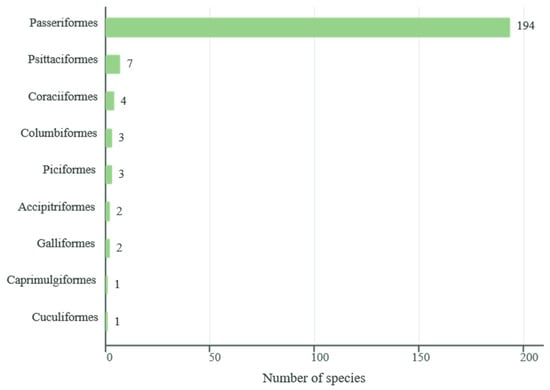
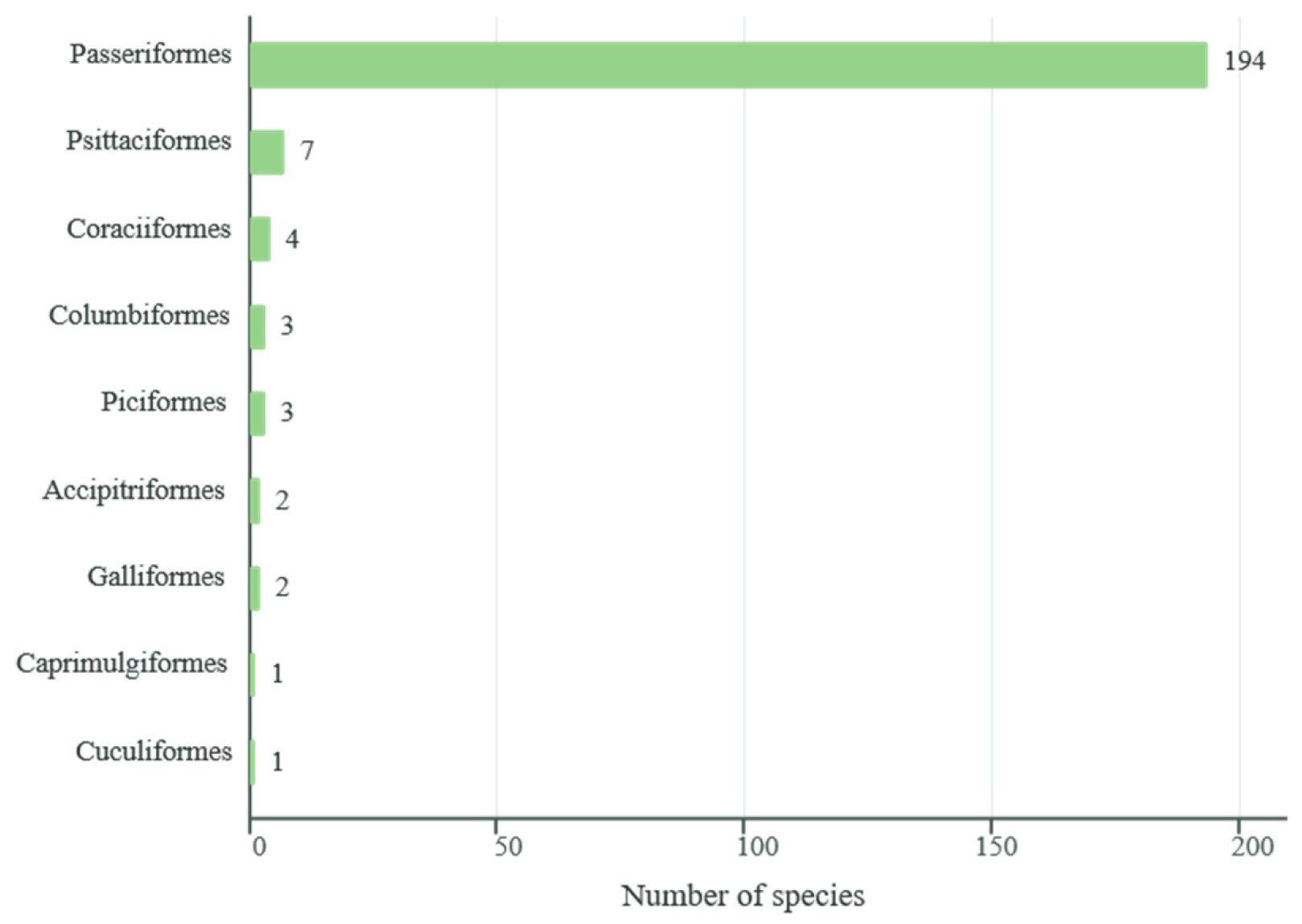
At the order level, records were strongly concentrated in Passeriformes (Figure 1). This order comprised 194 species, accounting for 89.4% of all recorded species, and 29,645 individuals, accounting for 99.5% of all recorded individuals. The other eight orders (Psittaciformes, Coraciiformes, Columbiformes, Piciformes, Accipitriformes, Galliformes, Caprimulgiformes, and Cuculiformes) accounted for 23 species (10.6%) and 158 individuals (0.5%) in total.
Figure 1.
Species composition of birds recorded in Beijing’s physical bird markets at the order level.
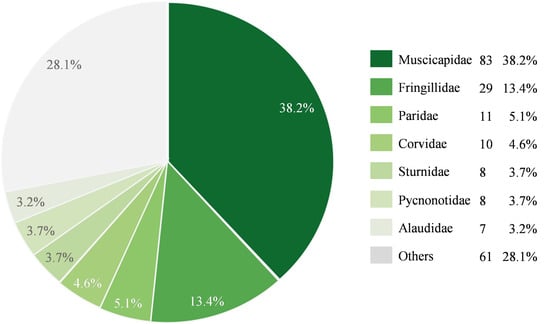
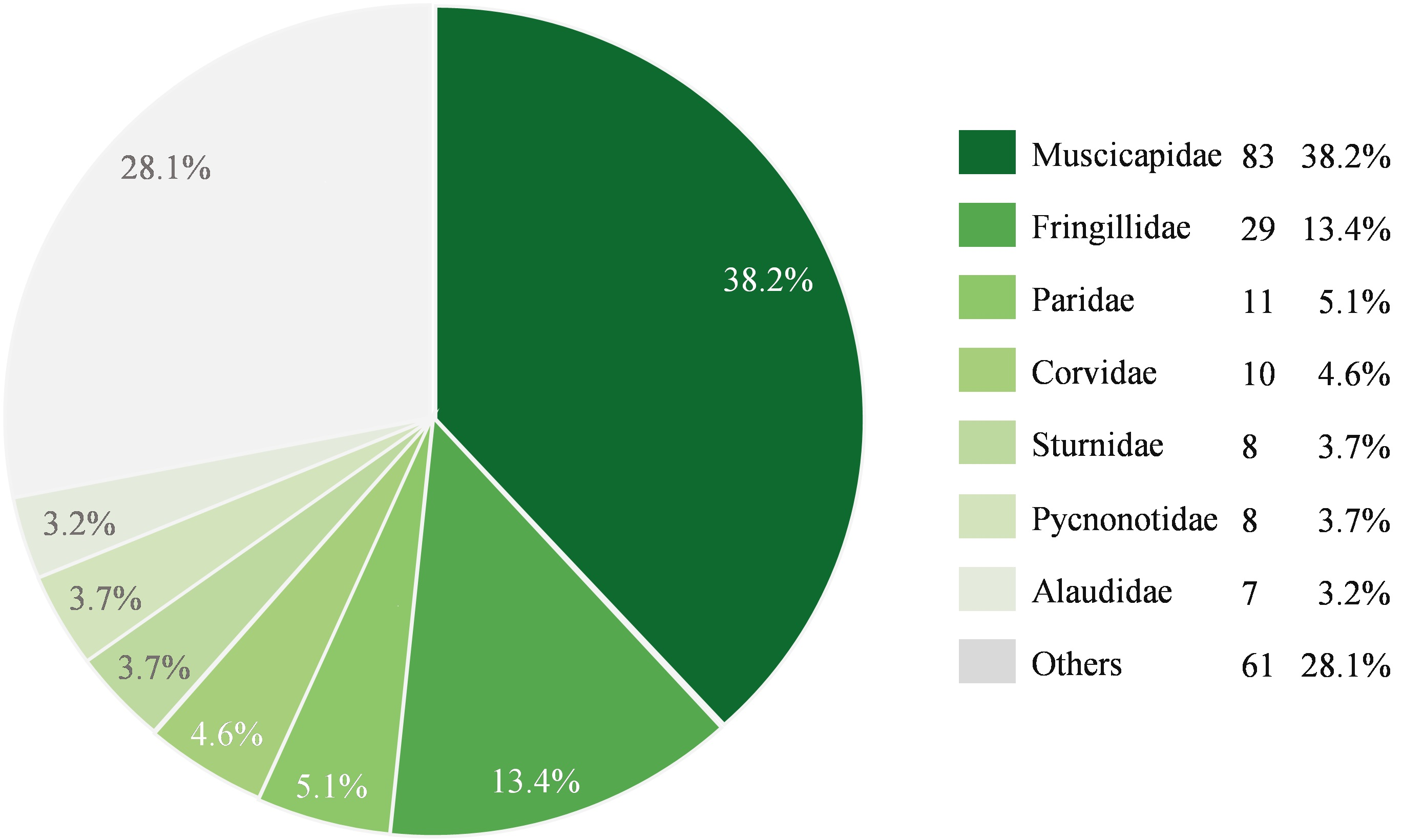
At the family level, the 10 families with the highest cumulative individual counts collectively included 167 species (77.0% of all recorded species) and accounted for 29,227 individuals (98.1% of all recorded individuals). Family-level patterns differed between species counts and cumulative individual counts: Muscicapidae contained the largest number of recorded species (83 species; 38.2%; Figure 2), whereas Paridae had the highest cumulative individual count (8854 individuals) despite comprising only 11 species.
Figure 2.
Species composition of birds recorded in Beijing’s physical bird markets at the family level.
At the species level, all 10 species with the highest cumulative individual counts belonged to Passeriformes and together accounted for 19,562 individuals, or 65.6% of all recorded individuals (Table 1). Periparus ater had the highest cumulative count (3880 individuals; 13.0%), followed by Zosterops erythropleurus (2597; 8.7%) and Spinus spinus (2452; 8.2%). Together, these three species accounted for 30.0% of all recorded individuals.
Table 1.
Top 10 bird species by cumulative number of individuals recorded.
Frequencies of occurrence among the top 10 species ranged from 22.6% to 57.4% (Table 1). Periparus ater and Spinus spinus had the highest frequency of occurrence (57.4%), whereas Passer montanus had the lowest (22.6%).
In contrast, many species were recorded in low numbers. A total of 107 species had cumulative counts of fewer than 10 individuals, representing 49.3% of all recorded species. Together, these species accounted for only 356 individuals, or 1.2% of all recorded individuals. Of these, 37 species were represented by a single individual, 23 by two individuals, and 47 by three to nine individuals. Overall, species-level records were highly uneven, with a small number of species accounting for a large proportion of cumulative individual counts, while nearly half of all recorded species were recorded in low numbers.
3.2. Nationally Protected and CITES-Listed Species
Of the 217 species recorded, 28 were nationally protected in China and/or listed in the CITES Appendices, representing 12.9% of all recorded species (Table 2). Together, these species accounted for 10,637 individuals, or 35.7% of all recorded individuals.
Table 2.
Nationally protected and CITES-listed bird species recorded in physical bird markets in Beijing.
Two Class I nationally protected species were recorded, Emberiza aureola and Liocichla omeiensis, with a combined cumulative count of 35 individuals. Twenty-one Class II nationally protected species were recorded, accounting for 10,550 individuals (35.4% of all recorded individuals). One CITES Appendix I species, Cacatua sulphurea, and 14 Appendix II species were recorded, with Appendix II species accounting for 3043 individuals.
Of these 28 species, 11 occur naturally in Beijing and accounted for 7533 individuals, whereas 17 do not naturally occur in Beijing and accounted for 3104 individuals.
3.3. Seasonal Variation
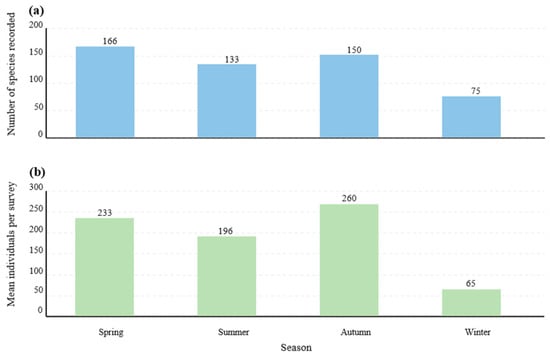
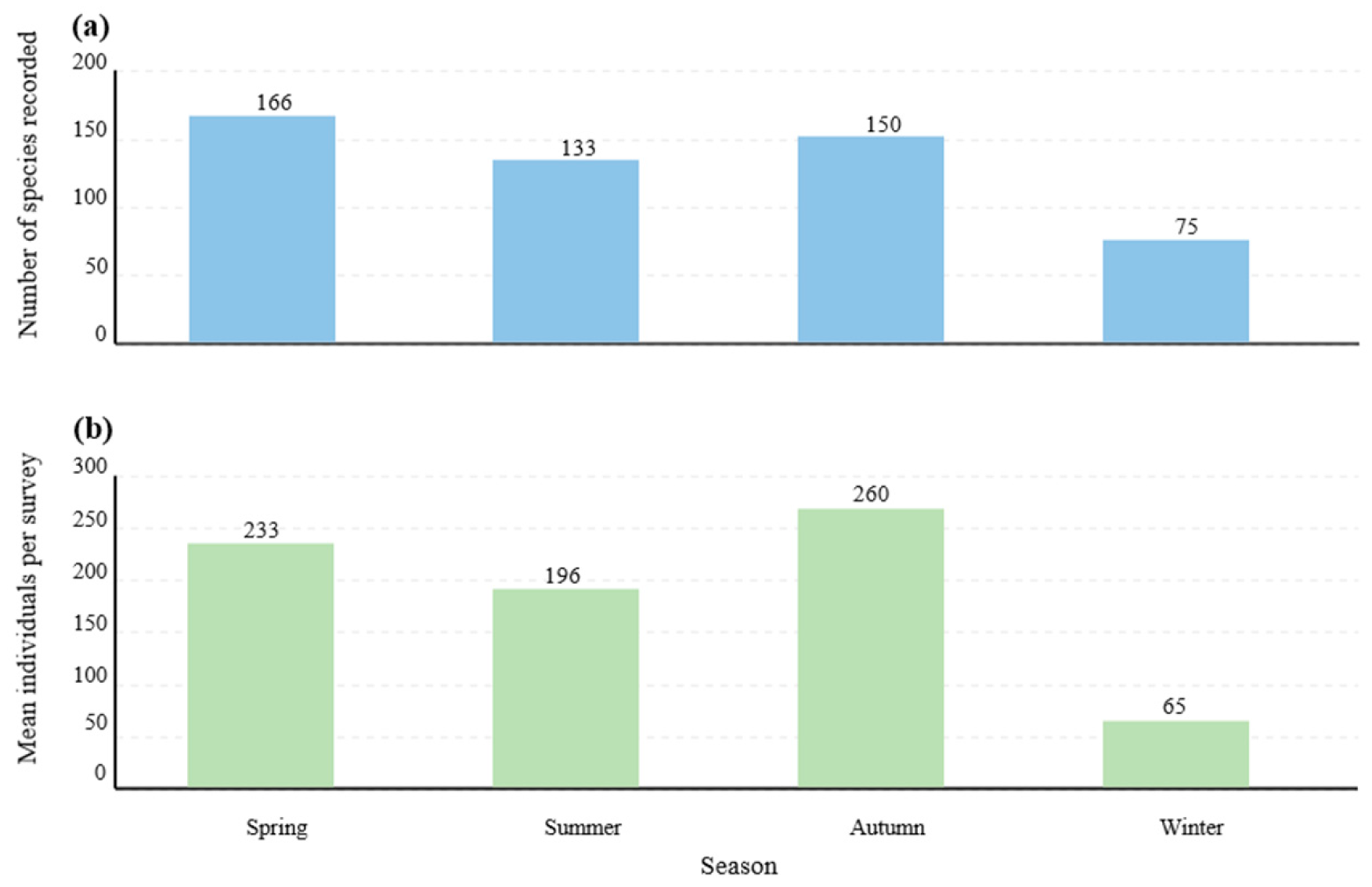
Cumulative individual counts, the cumulative number of species recorded, and the mean number of individuals recorded per survey varied among seasons. Autumn had the highest cumulative individual count (10,674 individuals), followed by spring (10,248), summer (6478), and winter (2403). Of the 217 species recorded during the study period, 166 (76.5%) were recorded in spring, compared with 150 (69.1%) in autumn, 133 (61.3%) in summer, and 75 (34.6%) in winter (Figure 3a).
Figure 3.
Seasonal variation in the number of species recorded and mean number of individuals recorded. (a) Cumulative number of species recorded; (b) mean number of individuals recorded per survey.
The mean number of individuals recorded per survey was highest in autumn (260.34 individuals per survey), followed by spring (232.91), summer (196.30), and winter (64.95) (Figure 3b). Seasonal patterns in the cumulative number of species recorded and mean individual counts per survey therefore differed, with the highest cumulative number of species recorded in spring and the highest mean individual count per survey in autumn.
3.4. Interannual Variation
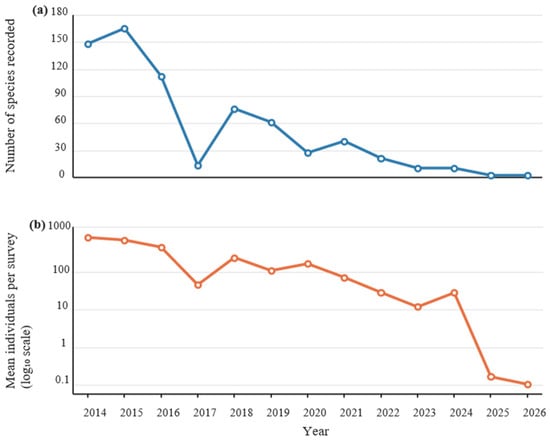
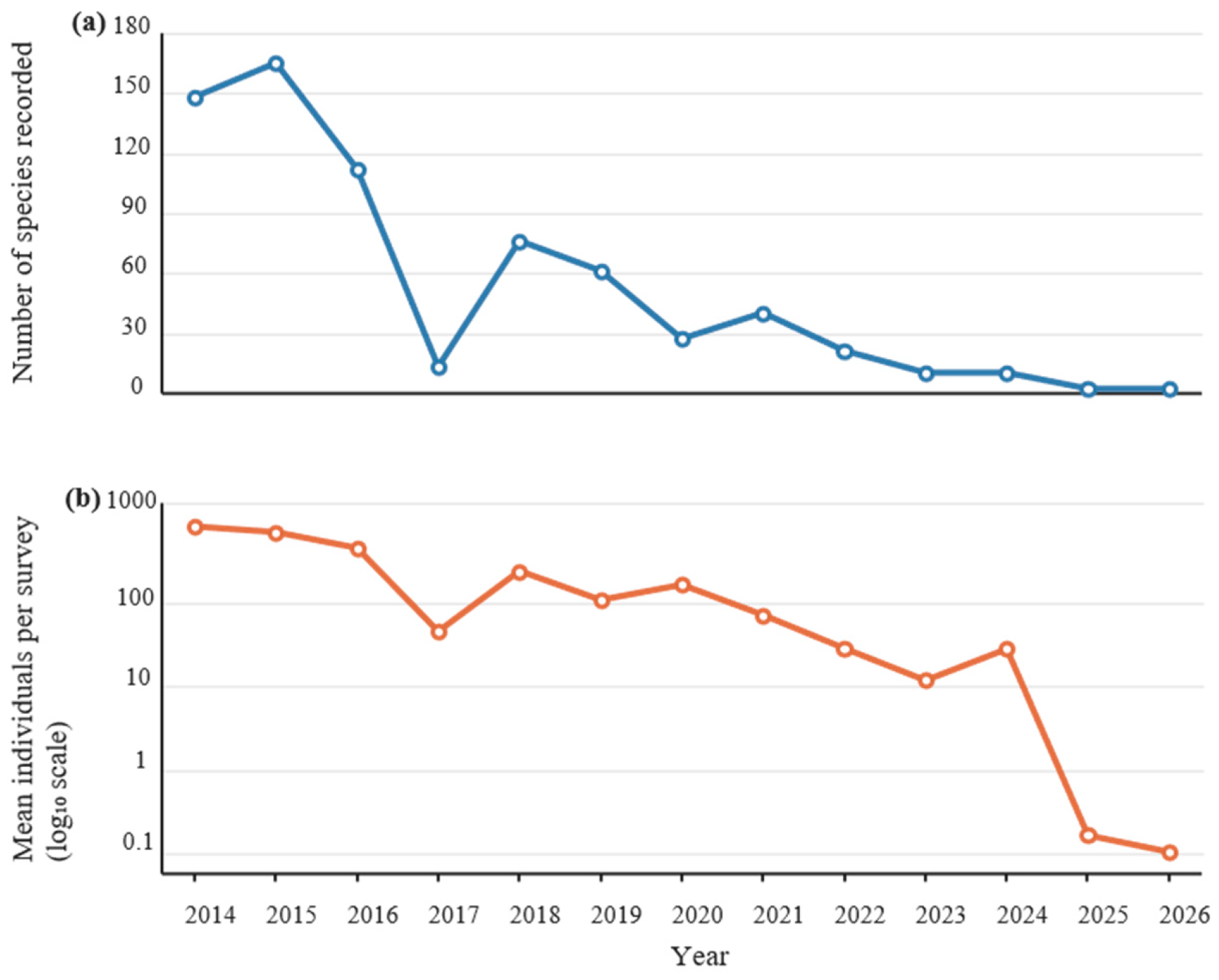
Both the annual cumulative number of species recorded and the mean number of individuals recorded per survey showed an overall decline from 2014 to 2026, with fluctuations among years. The cumulative number of species recorded peaked at 165 in 2015, declined to 13 in 2017, partially recovered in 2018–2019, and subsequently declined overall. From 2023 onward, the annual cumulative number of species recorded remained low, with only two species recorded in both 2025 and 2026 (Figure 4a).
Figure 4.
Interannual variation in the number of species recorded and mean number of individuals recorded per survey in Beijing’s physical bird markets, 2014–2026. (a) Annual cumulative number of species recorded; (b) mean number of individuals recorded per survey.
The mean number of individuals recorded per survey declined from 522.88 in 2014 to 0.09 in 2026, with temporary increases in 2018 and 2020 before remaining at relatively low levels in subsequent years (Figure 4b).
4. Discussions
4.1. Selectivity in Market Composition
Although 217 species were recorded between 2014 and 2026, wild bird records in Beijing’s physical bird markets were strongly concentrated within Passeriformes. This order accounted for 89.4% of all recorded species and 99.5% of all recorded individuals, and all 10 species with the highest cumulative individual counts also belonged to Passeriformes. This pattern is consistent with bird-trade studies in Asia and elsewhere, where cage-bird markets are often dominated by small passerines, particularly songbirds, potentially reflecting cultural preferences, song value, and differences in keeping costs among species [10,12,24,25].
This concentration was also evident at the species level. The 10 species with the highest cumulative individual counts accounted for 65.6% of all recorded individuals, whereas 49.3% of recorded species had cumulative counts of fewer than 10 individuals and together accounted for only 1.2% of all recorded individuals. Individual records were therefore concentrated in a relatively small number of species, alongside a large number of species recorded in low numbers. Several species with high cumulative individual counts also had high frequencies of occurrence, indicating that their prominence reflected repeated occurrence across survey occasions rather than a few isolated high-count records. Overall, the survey results showed that wild bird records in Beijing’s physical bird markets were highly unevenly distributed among species, with recorded individuals concentrated in a small number of Passeriformes species. This pattern is consistent with the hypothesis that market composition is selective and trade records are concentrated in a subset of species.
4.2. Conservation and Ecological Security Risks
The occurrence of nationally protected and CITES-listed species in physical bird markets indicates that birds subject to domestic protection and/or international trade controls remained present in visible market trade during the study period. Although their presence alone does not demonstrate population-level impacts, it highlights continuing conservation and enforcement concerns associated with the capture, transport, and sale of protected or trade-regulated species [26].
The occurrence of species that do not naturally occur in Beijing also suggests cross-regional movement of birds through physical markets. For species transported beyond their natural ranges, particularly introduced species capable of surviving under local conditions, escape or intentional release could pose ecological and biosecurity risks, including establishment and spread, competition with native species, and potential pathogen transmission [27].
4.3. Implications of Seasonal Variation for Monitoring
Wild bird records in Beijing’s physical bird markets showed clear seasonal variation, with both species records and individual counts generally higher in spring and autumn than in summer and winter. This pattern is consistent with our hypothesis that wild bird trade in Beijing is more active during spring and autumn. Beijing lies within the East Asian–Australasian Flyway, and the large-scale movement of migratory birds during spring and autumn may increase opportunities for some species to be captured, transported, and subsequently appear in physical markets. However, this seasonal pattern may also be influenced by seasonal differences in market demand, enforcement intensity, and survey coverage, and the drivers underlying this pattern require further investigation [28].
From a monitoring and management perspective, these seasonal patterns may help inform the timing of surveillance and enforcement activities. While routine year-round monitoring remains important, increasing survey and inspection effort during the spring and autumn migration periods could improve the detection of seasonal changes in market composition and of species of conservation concern [17].
4.4. Drivers of the Decline in Visible Market Records
Consistent with our hypothesis, both the annual cumulative number of species recorded and the mean number of individuals recorded per survey in Beijing’s physical bird markets showed an overall decline between 2014 and 2026. This trend may reflect the combined effects of multiple factors.
Changes in wildlife-protection policy and enforcement may have contributed to this decline. During the study period, wildlife-protection regulations at both national and municipal levels were progressively strengthened through revisions to protected-species lists, tighter restrictions on capture and trade, and clearer legal responsibilities for illegal transport and sale (Appendix A Table A2). These changes may have increased the legal risks associated with the illegal acquisition and open sale of wild birds. Enforcement also intensified through targeted wildlife-protection campaigns, actions focused on migratory birds and other wildlife, and greater scrutiny of transport and other stages of the trade chain. Together, these measures may have increased the likelihood that illegal circulation and open sale of wild birds would be detected and penalized [20,29].
Changes in public attitudes and pet-consumption preferences may also have contributed to the decline in visible market records. Demand for cage birds can be influenced by song, appearance, rarity, availability, and local keeping traditions, and previous studies have identified consumer preferences and market demand as important drivers of wild bird trade [11]. Growing public attention to wildlife conservation, public-health concerns, and illegal wildlife trade may have reduced demand for wild-sourced animals among some consumers. At the same time, diversification of pet choices and greater availability of captive-bred birds may have provided alternatives to wild-sourced birds, further reducing demand in physical markets.
Social participation may have reinforced these changes. Bird-protection organizations, wildlife volunteers, and birdwatchers in Beijing have contributed to bird conservation through monitoring, reporting suspected violations, and public outreach, potentially complementing formal enforcement. Such activities may increase the likelihood that illegal capture and trade are detected while also strengthening public awareness of wild bird conservation, thereby placing additional constraints on openly visible illegal trade.
A decline in records from physical markets, however, does not necessarily imply a corresponding decline in wild bird trade as a whole. Previous studies have shown that, as enforcement pressure and the risks of open trading increase, wildlife trade may shift from traditional physical markets to online platforms, social networks, or other less visible channels [30,31,32]. The decline observed here may therefore reflect both a reduction in trading activity and a shift toward less visible forms of trade. Future assessments should integrate physical-market surveys with data on online trade, enforcement records, and source tracing to better distinguish changes in overall trade activity from changes in the channels through which trade occurs.
5. Conclusions
Based on surveys of physical bird markets in Beijing conducted from 2014 to 2026, this study provides a long-term assessment of the species composition, seasonal patterns, and interannual changes in visible wild bird trade in Beijing.
Wild bird records in Beijing’s physical markets were highly unevenly distributed among species, with recorded individuals concentrated in a small number of Passeriformes species. Seasonally, the numbers of species and individuals recorded were generally higher in spring and autumn than in summer and winter, suggesting that visible wild bird trade in physical markets was more active during the spring and autumn migration seasons. In addition, the scale of wild bird trade in Beijing’s physical markets declined overall during the study period.
These findings also provide an empirical basis for improving conservation policies and enforcement actions. Future conservation efforts could develop a priority species list based on species composition and frequency of occurrence. This list could guide anti-poaching efforts and market inspections. Given the higher levels of market records in spring and autumn, surveillance and enforcement should also be strengthened during these migration seasons to combat illegal wild bird trade. Future studies should combine physical-market surveys with online trade data and quantify the effects of factors such as wildlife legislation, policy implementation, and enforcement actions, thereby helping to clarify changes in species composition and temporal patterns, as well as their underlying drivers.
Supplementary Materials
The following supporting information can be downloaded at: https://www.mdpi.com/article/10.3390/d18110683/s1, Table S1. Bird species and individual counts.
Author Contributions
Conceptualization, X.L. and Z.L.; methodology, X.L. and Z.L.; investigation, Z.L., Q.W., W.M. and W.Y.; data curation, Z.L.; formal analysis, Z.L.; writing—original draft preparation, Z.L.; writing—review and editing, X.L., Q.W.; supervision, X.L.; project administration, X.L. All authors have read and agreed to the published version of the manuscript.
Funding
This work was supported by the National Key Research and Development Program of China (Grant No. 2022YFF1301405).
Data Availability Statement
The data presented in this study are available from the corresponding author upon reasonable request.
Acknowledgments
During the preparation of this manuscript, the authors used ChatGPT (OpenAI, GPT-5.6 Sol) for language editing and English-language refinement. The authors have reviewed and edited the output and take full responsibility for the content of this publication.
Conflicts of Interest
The authors declare no conflicts of interest. The funders had no role in the design of the study; in the collection, analyses, or interpretation of data; in the writing of the manuscript; or in the decision to publish the results.
Appendix A
Table A1.
Locations and geographic coordinates of survey sites in Beijing, China.
Table A2.
Legal and policy documents relevant to wild bird trade in Beijing.
References
- Rosen, G.E.; Smith, K.F. Summarizing the Evidence on the International Trade in Illegal Wildlife. EcoHealth 2010, 7, 24–32. [Google Scholar] [CrossRef] [Scilit] [PubMed]
- T Sas-Rolfes, M.; Challender, D.W.S.; Hinsley, A.; Veríssimo, D.; Milner-Gulland, E.J. Illegal Wildlife Trade: Scale, Processes, and Governance. Annu. Rev. Environ. Resour. 2019, 44, 201–228. [Google Scholar] [CrossRef] [Scilit]
- Scheffers, B.R.; Oliveira, B.F.; Lamb, I.; Edwards, D.P. Global Wildlife Trade across the Tree of Life. Science 2019, 366, 71–76. [Google Scholar] [CrossRef] [Scilit] [PubMed]
- Donald, P.F.; Fernando, E.; Brown, L.; Busana, M.; Butchart, S.H.M.; Chng, S.; De La Colina, A.; Ferreira, J.M.; Jain, A.; Jones, V.R.; et al. Assessing the Global Prevalence of Wild Birds in Trade. Conserv. Biol. 2024, 38, e14350. [Google Scholar] [CrossRef] [Scilit] [PubMed]
- Romero-Vidal, P.; Blanco, G.; Barbosa, J.M.; Carrete, M.; Hiraldo, F.; Pacífico, E.C.; Rojas, A.; Bermúdez-Cavero, A.O.; Díaz-Luque, J.A.; León-Pérez, R.; et al. The Widespread Keeping of Wild Pets in the Neotropics: An Overlooked Risk for Human, Livestock and Wildlife Health. People Nat. 2024, 6, 1023–1035. [Google Scholar] [CrossRef] [Scilit]
- Karesh, W.B.; Cook, R.A.; Bennett, E.L.; Newcomb, J. Wildlife Trade and Global Disease Emergence. Emerg. Infect. Dis. 2005, 11, 1000–1002. [Google Scholar] [CrossRef] [Scilit] [PubMed]
- Harris, J.B.C.; Tingley, M.W.; Hua, F.; Yong, D.L.; Adeney, J.M.; Lee, T.M.; Marthy, W.; Prawiradilaga, D.M.; Sekercioglu, C.H.; Suyadi; et al. Measuring the Impact of the Pet Trade on Indonesian Birds. Conserv. Biol. 2017, 31, 394–405. [Google Scholar] [CrossRef] [Scilit] [PubMed]
- Ribeiro, J.; Reino, L.; Schindler, S.; Strubbe, D.; Vall-llosera, M.; Araújo, M.B.; Capinha, C.; Carrete, M.; Mazzoni, S.; Monteiro, M.; et al. Trends in Legal and Illegal Trade of Wild Birds: A Global Assessment Based on Expert Knowledge. Biodivers. Conserv. 2019, 28, 3343–3369. [Google Scholar] [CrossRef] [Scilit]
- Morton, O.; Scheffers, B.R.; Haugaasen, T.; Edwards, D.P. Association of Reproductive Traits with Captive- versus Wild-sourced Birds in Trade. Conserv. Biol. 2023, 37, e14076. [Google Scholar] [CrossRef] [Scilit] [PubMed]
- Burivalova, Z.; Lee, T.M.; Hua, F.; Lee, J.S.H.; Prawiradilaga, D.M.; Wilcove, D.S. Understanding Consumer Preferences and Demography in Order to Reduce the Domestic Trade in Wild-Caught Birds. Biol. Conserv. 2017, 209, 423–431. [Google Scholar] [CrossRef] [Scilit]
- Krishna, V.V.; Darras, K.; Grass, I.; Mulyani, Y.A.; Prawiradilaga, D.M.; Tscharntke, T.; Qaim, M. Wildlife Trade and Consumer Preference for Species Rarity: An Examination of Caged-Bird Markets in Sumatra. Environ. Dev. Econ. 2019, 24, 339–360. [Google Scholar] [CrossRef] [Scilit]
- Mirin, B.H.; Klinck, H. Bird Singing Contests: Looking Back on Thirty Years of Research on a Global Conservation Concern. Glob. Ecol. Conserv. 2021, 30, e01812. [Google Scholar] [CrossRef] [Scilit]
- Chan, D.T.C.; Poon, E.S.K.; Wong, A.T.C.; Sin, S.Y.W. Global Trade in Parrots—Influential Factors of Trade and Implications for Conservation. Glob. Ecol. Conserv. 2021, 30, e01784. [Google Scholar] [CrossRef] [Scilit]
- Panter, C.T.; Jones, G.C.A.; White, R.L. Trends in the Global Trade of Live CITES-Listed Raptors: Trade Volumes, Spatiotemporal Dynamics and Conservation Implications. Biol. Conserv. 2023, 284, 110216. [Google Scholar] [CrossRef] [Scilit]
- Nijman, V.; Ardiansyah, A.; Langgeng, A.; Hendrik, R.; Hedger, K.; Foreman, G.; Morcatty, T.Q.; Siriwat, P.; Van Balen, S.; Eaton, J.A.; et al. Illegal Wildlife Trade in Traditional Markets, on Instagram and Facebook: Raptors as a Case Study. Birds 2022, 3, 99–116. [Google Scholar] [CrossRef] [Scilit]
- Nijman, V.; Ardiansyah, A.; Siriwat, P.; Birot, H.; Winnasis, S.; Damianou, E.; Imron, M.A.; Langgeng, A.; Lewis, B.; Nekaris, K.A.-I. Wildlife Trade and the Establishment of Invasive Alien Species in Indonesia: Management, Policy, and Regulation of the Commercial Sale of Songbirds. Biol. Invasions 2022, 24, 2905–2916. [Google Scholar] [CrossRef] [Scilit]
- Dai, C.; Zhang, G. Status of Local Bird Trade in Guiyang City during the Breeding Season. Sichuan J. Zool. 2015, 34, 306–311. [Google Scholar] [CrossRef]
- Li, X.; Xiang, C.; Liu, X.; Liu, R.; Xing, X. Bird Market Trade Threatens Wild Birds: A Case Study of the Daowai Bird and Flower Market in Harbin. Sichuan J. Zool. 2019, 38, 438–444. [Google Scholar] [CrossRef]
- Fiennes, S.; Zhang, M.; Sun, F.; Lee, T.M. Understanding Retail Dynamics of a Regionally Important Domestic Bird Market in Guangzhou, China. Conserv. Sci. Pract. 2021, 3, e487. [Google Scholar] [CrossRef] [Scilit]
- Liang, Z.; Hu, S.; Zhong, J.; Wei, Q.; Ruan, X.; Zhang, L.; Lee, T.M.; Liu, Y. Nationwide Law Enforcement Impact on the Pet Bird Trade in China. Proc. Natl. Acad. Sci. USA 2024, 121, e2321479121. [Google Scholar] [CrossRef] [Scilit] [PubMed]
- Xiang, C.; Chen, R.; Liu, R.; Liu, X.; Li, X.; Fu, C.; Xing, X. Analysis of Changes in Wild Bird Sales in the Daowai Bird Market from the Perspectives of Regulation and Consumer Demand. Sichuan J. Zool. 2021, 40, 210–219. [Google Scholar] [CrossRef]
- Zhang, J.; Shi, J.; Zhang, R.; Wei, Q.; Cao, Y. Surveys of Live Bird Markets in China: Revealing Patterns to Inform Policies. Biol. Conserv. 2025, 307, 111188. [Google Scholar] [CrossRef] [Scilit]
- Zheng, G. (Ed.) A Checklist on the Classification and Distribution of the Birds of China, 4th ed.; Science Press: Beijing, China, 2023. [Google Scholar]
- De Oliveira, W.S.L.; Borges, A.K.M.; De Faria Lopes, S.; Vasconcellos, A.; Alves, R.R.N. Illegal Trade of Songbirds: An Analysis of the Activity in an Area of Northeast Brazil. J. Ethnobiol. Ethnomed. 2020, 16, 16. [Google Scholar] [CrossRef] [Scilit] [PubMed]
- Haukka, A.; Jürgens, J.; Staerk, J.; Lehikoinen, A.; Bruslund, S.; Santangeli, A. Aesthetic Values Predict Bird Trade, but the Association Varies across Product Types and Trade Regions. Biol. Conserv. 2026, 313, 111572. [Google Scholar] [CrossRef] [Scilit]
- Nijman, V.; Langgeng, A.; Birot, H.; Imron, M.A.; Nekaris, K.A.I. Wildlife Trade, Captive Breeding and the Imminent Extinction of a Songbird. Glob. Ecol. Conserv. 2018, 15, e00425. [Google Scholar] [CrossRef] [Scilit]
- Dingle, C.; Allcock, J.A.; Tilley, H.B.; Ng, S.O.; Eaton, J.; Shepherd, C.R.; Leupen, B. An Assessment of the Ongoing Live Bird Trade in Hong Kong, an Asian Wildlife Trade Hub. Glob. Ecol. Conserv. 2026, 67, e04144. [Google Scholar] [CrossRef] [Scilit]
- Wang, J.; Luo, L.; Sun, S. Analysis and Countermeasures of Illegal Trade and Hunting of Wild Bird in Shaanxi. Chin. J. Wildl. 2021, 42, 266–270. [Google Scholar] [CrossRef]
- Miller, A.; Ahmad, A.; Haq, A.N.; Indart, H.; Setiabudi, I.; Mulyawarman, A.; Ferdiansyah, H.; Sartika, I.; Budaya Hudikusuma, H.; Sagita, N.; et al. Evaluating the Impacts of Law Enforcement and Market Outreach Campaigns on the Indonesian Caged Bird Trade in Kalimantan. Glob. Ecol. Conserv. 2026, 67, e04193. [Google Scholar] [CrossRef] [Scilit]
- Neto, A.I.S.; Fraga, R.E.; Schiavetti, A. Tradition and Trade: Culture and Exploitation of Avian Fauna by a Rural Community Surrounding Protected Areas in the South of Bahia’s State, Northeastern Brazil. J. Ethnobiol. Ethnomed. 2022, 18, 12. [Google Scholar] [CrossRef] [Scilit] [PubMed]
- Xu, J.; Gibson, L.; Jiang, A. Characterizing China’s Illegal Trade in Avifauna on Social Media. Integr. Conserv. 2025, 4, 616–626. [Google Scholar] [CrossRef] [Scilit]
- Siriwat, P.; Nijman, V. Wildlife Trade Shifts from Brick-and-Mortar Markets to Virtual Marketplaces: A Case Study of Birds of Prey Trade in Thailand. J. Asia-Pac. Biodivers. 2020, 13, 454–461. [Google Scholar] [CrossRef] [Scilit] [PubMed]

Disclaimer/Publisher’s Note: The statements, opinions and data contained in all publications are solely those of the individual author(s) and contributor(s) and not of MDPI and/or the editor(s). MDPI and/or the editor(s) disclaim responsibility for any injury to people or property resulting from any ideas, methods, instructions or products referred to in the content. |
© 2026 by the authors. Licensee MDPI, Basel, Switzerland. This article is an open access article distributed under the terms and conditions of the Creative Commons Attribution (CC BY) license.