


Abstract
Wildlife damage can impose both material and non-monetary burdens on residents living near protected areas. Although associations between perceived wildlife damage and conservation attitudes are well documented, less is known about whether threat- and fairness-based appraisals provide distinct information beyond perceived damage itself. Using a non-probability survey of 513 residents across 20 villages in and around the Wuyishan City section of Wuyishan National Park, southeastern China, we examined associations among tangible and intangible damage perceptions, risk perception, relative deprivation, and wildlife conservation attitudes (overall stated support for protecting locally common damage-causing wildlife). Risk perception represented a threat-based appraisal, whereas relative deprivation represented a fairness-based appraisal reflecting perceived unfair disadvantage in conservation burdens and recognition relative to others. Latent structural and interaction models were further used to examine whether these associations varied with compensation evaluation and community participation. Both tangible and intangible damage perceptions were positively associated with risk perception and relative deprivation. In turn, both appraisals were negatively associated with wildlife conservation attitudes, and each retained a distinct association with attitudes when modeled jointly. Tangible damage perception also retained a significant negative direct association with conservation attitudes, whereas the corresponding direct association for intangible damage perception was nonsignificant. All four indirect associations through risk perception and relative deprivation were negative. The association between tangible damage perception and relative deprivation was weaker at higher compensation evaluation, whereas the association between intangible damage perception and risk perception was weaker at higher community participation. The corresponding negative conditional indirect associations were also smaller in magnitude. Distinguishing threat- from fairness-based appraisals may help clarify the potentially complementary roles of compensation procedures and community participation in national park governance. Given the cross-sectional design, the estimated indirect associations should be interpreted as statistical pathways rather than evidence of temporal or causal mediation.
1. Introduction
Protected areas remain central to global biodiversity commitments [1,2], and the Kunming–Montreal Global Biodiversity Framework combines an area-based conservation target with requirements for effective management, ecological representation, connectivity, and equitable governance [1]. Meeting these governance commitments requires attention to people living within and near protected and conserved areas [1]. For these communities, wildlife recovery can bring coexistence challenges where animals and human activities share the same landscapes [3,4]. Human–wildlife conflict (HWC) consequently presents challenges for governance as well as species conservation [5,6]. Understanding residents’ stated support for wildlife protection—their conservation attitudes—is relevant to addressing these challenges, particularly where conservation burdens and benefits are unevenly experienced [7,8].
For households living at the forest edge, the costs of coexistence take more than one form. Material losses include crop and livestock damage, damaged facilities, and expenditure on prevention or repair [9,10]. Less visible burdens include psychological strain, time spent guarding crops, restricted movement, and disrupted sleep [11,12,13]. Reviews of attitudes toward damage-causing wildlife indicate that monetary losses alone provide an incomplete account of residents’ responses [9,14,15]. Kansky et al.’s Wildlife Tolerance Model (WTM) is a conceptual model that relates experience with a particular species to perceived tangible and intangible costs and benefits and, in turn, to tolerance, understood as the willingness and capacity to live with that species [16]. In their South African baboon (Papio ursinus) case study, intangible costs were associated with tolerance, whereas tangible costs were not significantly associated with it [16]. More recent research in Namibian communal conservancies identified empathy and intangible benefits as prominent correlates of tolerance [17]. These findings establish that the meaning of coexistence extends beyond measurable loss. They also motivate a more specific question: how are tangible and intangible damage associated with conservation support, and what judgments help account for those associations?
Research on risk acceptance and conservation governance offers complementary explanations. Bruskotter and Wilson’s hazard-acceptance model (HAM) emphasizes perceived risks and benefits, alongside trust, affect, and perceived control, in explaining tolerance for large carnivores [18]; research on black bears (Ursus americanus) likewise links perceived risk to acceptance [19]. Like WTM, HAM addresses responses to particular species. Complementing this species-focused research, a survey of small-scale fishers across 11 Mediterranean marine protected areas found that perceptions of governance and social impacts were more strongly associated with support for those protected areas than perceived ecological effectiveness [7]. A recent review of human–wildlife conflict research also identified a justice gap between actors affected by conflict and those empowered to respond [8]. Together, these studies establish the relevance of anticipated harm and conservation governance, but leave open whether perceived risk and unfair comparative disadvantage each add information about conservation support when modeled jointly alongside tangible and intangible damage. Risk perception concerns judgments of future harm [20], whereas relative deprivation concerns perceived unfair disadvantage in burdens and recognition relative to others [21]. A cost-based account identifies burdens without distinguishing anticipated harm from unfairness, while considering either appraisal alone cannot assess the contribution of the other. Examining both appraisals together therefore addresses whether anticipated threat and comparative unfairness each retain a distinct association with conservation attitudes after accounting for perceived damage and the other appraisal.
A related question concerns the governance conditions under which perceived damage is associated with these appraisals. Ravenelle and Nyhus’s global review of compensation programs found that negative assessments centered largely on administration, whereas positive assessments more often concerned outcomes [22]. Research in India similarly highlights the importance of payment procedures and access to compensation [23,24]. Participation is also uneven: Ward et al. identified barriers to household involvement in protected-area governance [25], while Reed et al. linked variation in engagement outcomes to context, process design, and power relations [26]. This evidence establishes the relevance of governance quality but leaves open whether residents’ evaluations of compensation and their participation condition particular damage–appraisal associations. Here, compensation evaluation concerns perceived coverage, information access, and fairness of local arrangements, while community participation concerns involvement in conservation activities and management processes. Compensation arrangements may provide recognition of material loss, while participation may offer information and coordination around recurring non-monetary burdens. We therefore examine whether the tangible damage–relative deprivation association varies with compensation evaluation and whether the intangible damage–risk perception association varies with community participation.
These questions are pertinent to China’s national parks, where conservation governance intersects with local production in inhabited landscapes [27,28]. In Wuyishan National Park, forest-edge communities depend on activities such as tea (Camellia sinensis) and moso bamboo (Phyllostachys edulis) cultivation, and park institutions shape access to and use of local resources [29,30]. This overlap makes Wuyishan a relevant setting for examining how residents interpret wildlife-related burdens in terms of anticipated threat and perceived unfairness, alongside their assessments of compensation arrangements and involvement in conservation management.
We examine these questions using a non-probability survey of 513 residents across 20 villages in and around the Wuyishan City section of Wuyishan National Park. Consistent with the oral explanation given during the survey, wildlife refers here to wild animals that could damage residents’ crops and fields. Conservation attitudes denote general stated support for protecting locally damage-causing wildlife rather than species-specific tolerance. First, we ask whether risk perception and relative deprivation each retain an association with attitudes when modeled jointly alongside damage perceptions. Second, we examine whether tangible and intangible damage show different direct and indirect association patterns. Third, we test whether compensation evaluation and community participation moderate the specified damage–appraisal links and their corresponding indirect associations. The study’s contribution is to assess what threat and fairness appraisals add to accounts based on perceived damage alone and whether each remains informative when the other is included. It also examines compensation evaluation and participation as conditions of two specified damage–appraisal associations, linking the distinction between material and non-monetary burdens to questions about local governance.
2. Theoretical Framework and Research Hypotheses
We develop an appraisal-based conceptual framework informed by research on wildlife tolerance. In the WTM, tolerance concerns a person’s willingness and capacity to bear the costs of living with a particular species. Kansky et al. related experience with that species to perceived tangible and intangible costs and benefits and, in turn, to tolerance, testing the model with urban baboons on the Cape Peninsula, South Africa [16]. In that case, intangible costs were associated with tolerance, whereas tangible costs did not have a statistically significant association [16]. Bruskotter and Wilson’s hazard-acceptance model (HAM) likewise concerns acceptance of particular large carnivores and emphasizes perceived risks and benefits, with trust, perceived control, and affect as additional influences [18]. WTM and HAM serve here as conceptual reference models. They motivate attention to damage-related experience and anticipated harm; appraisal theory [31] and relative deprivation research [21] provide the basis for distinguishing judgments of future threat from judgments of unfair comparative disadvantage. Including both appraisals allows us to examine whether each is associated with conservation attitudes conditional on perceived damage and the other appraisal. Compensation evaluation and community participation are hypothesized to condition different links between damage perception and appraisal.
2.1. Tangible and Intangible Damage Perceptions and Wildlife Conservation Attitudes
Households experience wildlife damage in two forms, and this distinction matters for how they interpret it. Tangible damage perception (TDP) refers to a resident’s assessment of the material losses that wildlife activity has imposed on the household: damage to crops, tea plants, and moso bamboo; losses of poultry and livestock; damage to fences and irrigation equipment; lost income; and expenditure on replanting or repair [9,10]. Intangible damage perception (IDP) refers here to perceived non-monetary burdens of living with wildlife: psychological strain, time spent on prevention or response, restrictions on daily movement, and disrupted sleep [11,32]. These burdens may be poorly represented in records of direct material loss. Both TDP and IDP concern perceived household burdens [33].
Wildlife conservation attitudes (WCA) refer here to residents’ overall stated support for protecting locally damage-causing wildlife in Wuyishan National Park. Although not tied to a single species, this construct is defined in relation to a specific object (locally damage-causing wildlife) and a specific setting (an inhabited national park), and it is captured through four concrete expressions of support rather than one generic question. Following the attitude–behavior literature, we treat this stated support as a policy-relevant evaluation of the conservation objective rather than as a predictor of specific behaviors, for which measures would need to be matched in target, action, context, and time [34]. In inhabited protected areas, conservation benefits tend to be widely distributed while costs are concentrated among affected households, and how residents perceive the distribution of these burdens can shape their support [35,36]. Wildlife damage can make these household burdens salient [37]; for example, residents may interpret damage to a tea plot or repeated nights spent guarding crops as costs associated with protection, and such interpretations may be reflected in stated support [33].
The two forms are not expected to behave identically. Material loss can be counted and named, so it is readily attributed to a cause; the burdens of coexistence are diffuse and habitual, and households may not connect them to conservation policy in the same explicit way [11,16]. Findings in the literature are mixed. Residents with modest measurable losses are sometimes firmly opposed to protection, while households with heavy losses sometimes remain supportive [14,38]. Both forms can represent household burdens associated with pursuing a wider conservation objective [35,36]. As a baseline expectation, both are therefore expected to be negatively associated with conservation attitudes. Material losses and repeated non-monetary disruption may also be associated with support through immediate practical strain or affective reactions that are not fully captured by expected future risk or comparative unfairness [11,31]. These possible processes motivate testing whether either form of perceived damage retains a negative association with attitudes after both appraisals are included.
H1a.
Tangible damage perception has a negative direct association with wildlife conservation attitudes after accounting for risk perception and relative deprivation.
H1b.
Intangible damage perception has a negative direct association with wildlife conservation attitudes after accounting for risk perception and relative deprivation.
2.2. Indirect Associations Through Risk Perception
Appraisal theory provides a basis for considering how residents interpret damage when evaluating wildlife protection. It proposes that judgments about an event’s implications for personal well-being help shape responses to that event [31]. Risk perception (RP) is one such judgment. It concerns the perceived likelihood, severity, uncertainty, and controllability of future harm [20,39], and need not correspond directly to measured incident frequency: perceived controllability, familiarity, and dread can also be relevant to risk judgments [20,40]. Past damage may provide salient information for such judgments [41,42]. For example, a household recalling bamboo losses may judge future damage more likely because that experience is readily available in memory [41].
The two forms of damage may be associated with this appraisal for different reasons. Tangible losses indicate that a household and its land can be affected by wildlife-related harm [43]. Intangible burdens, such as guarding at night, disrupted sleep, or restricted movement, may make potential threats salient even when no material loss occurs [11,12]. IDP concerns experienced burdens, whereas RP concerns judgments of future harm.
The expected association between risk perception and attitudes is grounded in research on hazard acceptance. In research on large carnivores, perceived risks and benefits help explain tolerance, while perceived control and trust in management can also matter [18]; research on black bears likewise links perceived risk to acceptance [19]. Where wildlife is perceived as a persistent threat to livelihood or safety, residents may regard protection as allowing that threat to continue, providing a reason to expect lower support [9,43]. Taken together, these findings suggest that both forms of damage should be positively associated with risk perception, which should in turn be negatively associated with attitudes. These expected associations provide a basis for hypothesizing an indirect association through risk perception for each form of damage [31,44].
H2a.
Tangible damage perception is positively associated with risk perception.
H2b.
Intangible damage perception is positively associated with risk perception.
H3.
Risk perception is negatively associated with wildlife conservation attitudes.
H4a.
A negative indirect association between tangible damage perception and wildlife conservation attitudes is expected through risk perception.
H4b.
A negative indirect association between intangible damage perception and wildlife conservation attitudes is expected through risk perception.
2.3. Indirect Associations Through Relative Deprivation
Risk is not the only judgment residents form about their situation. Relative deprivation (RD) refers to perceived disadvantage relative to a relevant comparison, accompanied by an appraisal that the disadvantage is undeserved [21,45]. This literature also emphasizes affective responses such as resentment. Our RD items focus on comparative conservation burdens, insufficient recognition, and perceived unfair treatment; they do not separately measure resentment. RD is therefore interpreted as a fairness-based appraisal of perceived disadvantage rather than a measured emotional mechanism. Possible comparison referents in a national park include less-affected neighbors, households benefiting from tourism, and people outside the area who enjoy conservation benefits while experiencing fewer local costs [8,46].
Both forms of damage may provide grounds for such a comparison, though not in the same way. Tangible losses may be compared with losses experienced by other households and with perceived access to compensation or support [37,47]. Intangible burdens may also be unevenly experienced and less readily recognized in compensation or management responses [13]. Residents who perceive their daily burdens as insufficiently acknowledged may consequently report unfair disadvantage even without a certified material loss.
Judgments of unfair treatment may concern the legitimacy of management institutions and arrangements [48,49]. To connect this appraisal to wildlife conservation attitudes, we propose that residents who attribute unfair burdens to protection arrangements may also express lower overall support for the protection objective [7,50]. Residents may disapprove of management while continuing to value wildlife conservation. Research in the same national park links residents’ judgments about distributive, procedural, and interactional justice to support for tourism development [51]. That study provides contextual support for considering fairness in this setting. Relative deprivation is thus expected to constitute a second appraisal route from perceived damage to conservation attitudes, examined alongside risk perception so that the association of each appraisal with attitudes is estimated while accounting for the other.
H5a.
Tangible damage perception is positively associated with relative deprivation.
H5b.
Intangible damage perception is positively associated with relative deprivation.
H6.
Relative deprivation is negatively associated with wildlife conservation attitudes.
H7a.
A negative indirect association between tangible damage perception and wildlife conservation attitudes is expected through relative deprivation.
H7b.
A negative indirect association between intangible damage perception and wildlife conservation attitudes is expected through relative deprivation.
2.4. The Moderating Role of Compensation Evaluation
Neither appraisal is formed in a governance vacuum. Compensation, insurance, and related payments are the instruments most widely used to address wildlife damage, and China has rapidly expanded their use alongside the recovery of wildlife populations, although coverage, assessment standards, and funding arrangements still differ considerably across provinces [52]. Their record is mixed, with reviews identifying implementation difficulties including delays, opaque criteria, burdensome claim procedures, and partial settlements [22,24]. Residents may assess a scheme through their own encounters with it, accounts from others, or information available locally. Here, compensation evaluation (CE) concerns perceived coverage, access to information, and fairness of implementation [24,47].
Compensation is directly relevant to tangible loss because payments may offset assessed damage. From the perspectives of legitimacy and recognition [48,49], credible compensation arrangements may also signal acknowledgment of affected households’ burdens. Both considerations motivate a possible link to fairness appraisal. Where a claim is settled promptly at a rate the household considers reasonable, the household may have less reason to conclude that its neighbors, tourism operators, or the wider public enjoy a more favorable balance of benefits and costs; a similar inference may follow from credible accounts of how other claims are handled [37,47]. Conversely, compensation perceived as delayed, arbitrary, or inadequate may reinforce perceptions that household burdens are insufficiently recognized [24,48].
Compensation may also shape trust or perceived security, but payment after damage does not by itself remove exposure to future incidents [18,52]. We therefore focus the hypothesized buffering role of compensation evaluation on the tangible damage–relative deprivation link and on the indirect association running through that link.
H8.
More favorable compensation evaluation weakens the positive association between tangible damage perception and relative deprivation.
H9.
More favorable compensation evaluation weakens the negative indirect association between tangible damage perception and wildlife conservation attitudes through relative deprivation.
2.5. The Moderating Role of Community Participation
Community participation (CP) concerns residents’ involvement in conservation activities and management processes. It includes involvement in monitoring, reporting, patrols, and training, as well as opportunities to contribute to local management decisions. These activities provide a basis for examining residents’ access to information and opportunities to contribute to collective responses [53,54]. The relevance of participation depends partly on whether involvement is substantive or nominal [26,54]. Substantive involvement may provide information, coordination, and opportunities to express concerns, which could be relevant to judgments of uncertainty and controllability.
Research on hazard acceptance identifies perceived control and trust as relevant to risk judgments [18,19]. These findings suggest that information and perceived control may help explain variation in the association between non-monetary burdens and risk perception. For example, guarding crops at night may be especially burdensome when residents lack information or coordinated support [11]. If participation provides timely information, a clear contact for reporting incidents, or opportunities to coordinate responses, residents experiencing similar burdens may judge future harm as more predictable or manageable [54,55,56].
We focus the hypothesis on the intangible damage–risk perception link because information, predictability, and agency may be relevant to how recurring non-monetary burdens are interpreted as indications of future threat [55,56].
H10.
Higher levels of community participation weaken the positive association between intangible damage perception and risk perception.
H11.
Greater community participation weakens the negative indirect association between intangible damage perception and wildlife conservation attitudes through risk perception.
The study’s hypothesized pathways are summarized in Figure 1.
Figure 1.
Hypothesized conceptual framework developed for this study, informed by the Wildlife Tolerance Model [16], hazard-acceptance research [18], appraisal theory [31], and relative deprivation research [21]. Note. Solid arrows indicate hypothesized direct association paths, and dashed arrows indicate hypothesized moderating paths.
3. Materials and Methods
3.1. Study Area
This study was conducted in the Wuyishan City section of Wuyishan National Park in southeastern China. The national park spans the border between Fujian and Jiangxi Provinces and covers 1279.82 km2. It primarily protects mid-subtropical evergreen broadleaved forest and associated vertical vegetation zones and supports diverse wildlife [57]. It was among the first five national parks formally established in China [27].
Communities sampled within and near the Wuyishan City section occupy boundary zones, park gateways, forest edges, and areas used for agriculture or forestry [58]. Tea and moso bamboo cultivation, forest understory production, agritourism, and ecotourism are important to local livelihoods [29]. Production sites and everyday activities consequently overlap with wildlife habitat [30]. Wildlife-related impacts may involve crops, tea plants, moso bamboo, livestock and poultry, facilities used in production, or household property. Existing governance arrangements in the area include community development initiatives, collaborative management programs, ecological compensation, wildlife-related injury insurance, and compensation for property and livelihood losses [30,52,59]. These measures, together with residents’ close dependence on land-based livelihoods and frequent interactions with wildlife, provide an important context for understanding how local households evaluate compensation arrangements and participate in community activities.
3.2. Questionnaire Design and Construct Measurement
The questionnaire items were developed based on previous research on HWC, wildlife tolerance, risk perception, relative deprivation, environmental justice, compensation, and community participation [16,21,22]. They were then adapted to the local context of the Wuyishan City section, including tea and moso bamboo production, agricultural and forestry activities, forest-edge residence, ecotourism, wildlife encounters, and national park management. The draft was reviewed by experts for content relevance and clarity, then pilot-tested with residents similar to the target respondents; minor wording revisions were made based on their feedback. Before finalization, the items were rechecked for clarity, conceptual distinctiveness among constructs, and consistency in measurement direction.
The final questionnaire comprised 28 items measuring seven constructs: tangible damage perception (TDP), intangible damage perception (IDP), risk perception (RP), relative deprivation (RD), compensation evaluation (CE), community participation (CP), and wildlife conservation attitudes (WCA). Responses were recorded on a five-point Likert scale from 1 (strongly disagree) to 5 (strongly agree). All items were positively keyed, so higher scores indicated stronger endorsement of each construct: greater perceived damage, risk, or relative deprivation; more favorable compensation evaluation; greater participation; or more positive conservation attitudes. Table 1 lists the measurement items and related literature.
Table 1.
Constructs, measurement items, and references.
Perceived damage was measured along two complementary dimensions. The first, tangible damage perception (TDP), captures the material consequences of living with wildlife: losses to crops, tea plants, and bamboo; injury to livestock and poultry; damage to property and facilities; reduced livelihood income; and the added costs of replanting, repairs, and replacement. The second, intangible damage perception (IDP), captures the non-monetary burdens that accompany these losses, namely sustained psychological strain, additional time spent on guarding and incident response, restrictions on movement, and disrupted sleep. Both dimensions differ from risk perception (RP), which is oriented toward future harm rather than burdens already experienced. The four IDP items were treated as reflective indicators of a single underlying experience, residents’ overall burden of living with wildlife, so the model examines their shared variation rather than treating them as an additive checklist.
Two constructs capture the appraisal pathways through which residents interpret damage. Risk perception (RP) concerns the likelihood and severity of future damage, as well as its uncertainty and the limited ability of individual households to control it. Relative deprivation (RD) captures the sense of being disadvantaged relative to others, bearing an unfair share of the costs of conservation, and lacking adequate recognition or fair treatment. A third construct, compensation evaluation (CE), records residents’ assessments of the local compensation arrangements, including their clarity, adequacy, accessibility, and fairness. CE was conceptualized as a system-level evaluation. The questionnaire did not record respondents’ claims histories, including applications, payments, or rejected claims.
The outcome construct, wildlife conservation attitudes (WCA), measures general support for protecting wildlife in Wuyishan National Park through four related expressions: recognition of its ecological and cultural value, support for the relevant laws and management measures, willingness to accept some personal cost, and support for long-term coexistence. The item content draws on Kansky et al.’s meta-analysis of responses to damage-causing mammals [14], which informs the value, support, and tolerance dimensions captured here. The items were adapted from these conceptual foundations to the local context and, as with IDP, specified as reflective indicators of a broad evaluative orientation.
The written items referred to wildlife in general rather than to named species, so investigators explained orally when distributing the questionnaires that the term referred to wild animals capable of damaging crops and fields. Respondents were not asked to identify a particular animal. WCA therefore captures general stated support for protecting this category of wildlife.
3.3. Data Collection
Fieldwork was conducted in July 2025 among residents of communities within and around the Wuyishan City section. Data collection followed a two-stage non-probability design combining purposive village selection with recruitment through household visits and public-space intercepts within villages. First, a village list was compiled, and 20 administrative villages were selected to capture variation in wildlife-conflict contexts: forest-edge settlements at the human–wildlife habitat interface, park gateway communities with tourism activity, and villages with different dominant livelihoods, including tea and moso bamboo cultivation, agriculture and livestock production, tourism and services, and off-farm employment. Probability proportional-to-size selection was not used given the mountainous settlement pattern. Table A1 reports the achieved analytical sample in each of the 20 villages.
Second, three trained investigators recruited respondents through household visits and public-space intercept interviews in the selected villages. The oral explanation of the wildlife referent described in Section 3.2 was provided during questionnaire distribution. Household visits included only one adult respondent per household to avoid collecting duplicate household information. During public-space recruitment, investigators sought variation in gender, age, and livelihood type within each village sample. Eligible respondents were at least 18 years old, were long-term residents of the area, were familiar with their household’s production and daily circumstances, and lived where wildlife activity could affect residents. Prior economic loss was not required: the sample included residents reporting material losses and those mainly reporting potential exposure, psychological pressure, or disruption to daily life. Before participation, surveyors explained the study purpose, the voluntary nature of the interview, confidentiality protections, and the right to decline or withdraw; informed consent was obtained. No household contributed more than one respondent, including among public-space intercept recruits. The basis for exemption from ethical review and the informed-consent statement are provided at the end of the manuscript.
A total of 547 questionnaires were returned. During screening, 34 were excluded: 23 because one or more of the 28 items in the core latent-variable modules were missing, or key demographic information needed to establish basic respondent characteristics was absent, and 11 because apparently contradictory extreme responses within a construct, together with surveyor notes, indicated arbitrary responding. The remaining 513 questionnaires were analyzed, representing a retention rate of 93.78% among returned questionnaires.
3.4. Data Analysis
All analyses were conducted in R version 4.5.1 (R Core Team, R Foundation for Statistical Computing, Vienna, Austria). Confirmatory factor analysis (CFA), latent-variable structural equation models (SEMs), and the product-indicator latent interaction model were estimated using lavaan version 0.6-21 (Yves Rosseel, Ghent University, Ghent, Belgium) [60]. Reliability analyses were performed with psych version 2.6.5 (William Revelle, Northwestern University, Evanston, IL, USA), while sandwich version 3.1-1 and lmtest version 0.9-40 (Achim Zeileis, University of Innsbruck, Innsbruck, Austria) were used for the secondary heteroskedasticity-consistent observed-score analyses. The retained 513-case analytical dataset contained no missing values; all 513 cases were included in the analyses. Descriptive statistics included means (M), standard deviations (SD), skewness, and excess kurtosis. These indicators suggested only modest deviations from univariate normality (Table A2). Mardia’s test was nonsignificant for multivariate skewness (p = 0.508) but indicated a departure for multivariate kurtosis (p = 0.002). Given the five response categories and modest univariate departures, the items were treated as approximately continuous in the primary analyses [61]. These models used maximum likelihood (ML) estimation with a Wishart likelihood and Huber–White sandwich standard errors (SEs). The chi-square statistics and fit indices—comparative fit index (CFI), Tucker–Lewis index (TLI), root mean square error of approximation (RMSEA), and standardized root mean square residual (SRMR)—were conventional unscaled values.
Procedural measures were used to limit the risk of common method bias, and potential common method variance was assessed statistically [62]. These measures included anonymous participation, neutral wording, and the separation of items measuring different constructs. Statistical diagnostics comprised Harman’s single-factor test using unrotated principal component analysis (PCA); a comparison of a one-factor CFA model with the hypothesized seven-factor measurement model; a full-collinearity variance inflation factor (VIF) assessment; and an orthogonal equal-loading latent method-factor sensitivity model. Admissibility was assessed before the method-factor model was interpreted. The seven-factor CFA specified TDP, IDP, RP, RD, CE, CP, and WCA as correlated latent constructs. Reliability and convergent validity were evaluated using standardized factor loadings, Cronbach’s α, McDonald’s ω, composite reliability (CR), and average variance extracted (AVE) [63]. Discriminant validity was assessed using the Fornell–Larcker criterion and the heterotrait–monotrait (HTMT) ratio [63,64]; percentile 95% confidence intervals (CIs) for HTMT were obtained from 5000 whole-village bootstrap resamples.
After the measurement model demonstrated acceptable fit, reliability, and validity, a five-factor latent structural model was fitted to test H1a–H7b. The structural equations were RP ~ TDP + IDP, RD ~ TDP + IDP, and WCA ~ TDP + IDP + RP + RD, with TDP and IDP allowed to covary. H1a, H1b, H2a, H2b, H3, H5a, H5b, and H6 were evaluated using maximum-likelihood Wishart estimates with Huber–White sandwich standard errors; both unstandardized coefficients (b) and fully standardized coefficients (β) are reported. H4a, H4b, H7a, and H7b were evaluated within the same latent SEM. In each of 5000 respondent-level bootstrap resamples, the complete latent model was refitted, and specific indirect, total indirect, and total associations were calculated from the corresponding unstandardized path coefficients. The 95% confidence intervals were bias-corrected (BC), not bias-corrected and accelerated; no bootstrap p values were generated [65]. The indirect estimates represent cross-sectional path associations and do not establish temporal ordering or causal mediation. The baseline core SEM and integrated interaction model fixed the RP–RD residual covariance to zero after conditioning on TDP and IDP; the CFA allowed their overall latent correlation. Sensitivity analyses freed this residual covariance (Section 4.7).
H8 and H10 were examined simultaneously in an integrated double-mean-centered product-indicator latent interaction model [66]. The matched product indicators were TDP1 × CE1, TDP2 × CE3, TDP3 × CE2, and TDP4 × CE4 for the TDP × CE interaction and IDP1 × CP3, IDP2 × CP1, IDP3 × CP4, and IDP4 × CP2 for the IDP × CP interaction. The model included the constituent latent main effects and both interaction terms. Inference for the interaction terms used unstandardized maximum-likelihood Wishart estimates with Huber–White sandwich standard errors. Fully standardized coefficients from the product-indicator model are also reported. Simple slopes were evaluated at the latent moderator mean and at one standardized latent SD below and above that mean. The range within which each first-stage slope differed from zero was assessed across a ±3 latent-SD window. The interaction model also included CE and CP as main effects in the WCA equation. TDP, IDP, CE, and CP covaried freely; the two interaction factors covaried with one another and were specified as orthogonal to those four main-effect factors.
H9 and H11 were evaluated using conditional indirect associations and indices of moderated mediation derived from the same integrated latent interaction model. For each of 5000 respondent-level bootstrap resamples, the double-mean-centered product indicators were reconstructed and the complete model was refitted. Conditional indirect associations and indices of moderated mediation were calculated from the corresponding unstandardized coefficients [67].
Sensitivity analyses included a fully adjusted latent-variable SEM in which gender, age, education, annual household income, and four livelihood dummy variables were added to the RP, RD, and WCA equations. Gender was coded female = 1 and male = 0. Age was recorded in years and standardized. Education and annual household income were each coded from 1 to 5 in ascending order and standardized. Main livelihood was represented by four dummy variables for agriculture/livestock, tourism/service, off-farm employment, and mixed livelihoods, with tea/bamboo farming as the reference category. An ordinary diagonally weighted least squares (DWLS) analysis of the raw ordered indicators was used as an ordinal-item sensitivity analysis. Respondents were nested in 20 villages (21–31 retained respondents each). As an additional sensitivity analysis for within-village dependence, 5000 bootstrap samples were generated by drawing 20 entire villages with replacement, retaining all respondents in each selected village. The full core and integrated interaction latent models were refitted in every sample, with product indicators reconstructed after resampling; bias-corrected 95% intervals were calculated from the resulting estimates. The original point estimates, ordinary Huber–White standard errors, and respondent-level bootstrap intervals in Section 4.3, Section 4.4, Section 4.5 and Section 4.6 are retained for continuity; those standard errors and intervals do not account for within-village dependence. Final interval-based hypothesis decisions were checked against the whole-village BC 95% intervals: support required an interval excluding zero in the hypothesized direction. These checks cover the core direct and specific indirect associations, both interaction terms, and the H9/H11 indices.
The secondary observed-score sensitivity analyses used the seven construct mean scores. For each respondent, each construct score was calculated as the unweighted mean of its four positively keyed items. The resulting seven construct mean scores were then standardized using the full-sample mean and sample standard deviation. Three ordinary least squares (OLS) equations paralleled the primary structural equations: zRP = zTDP + zIDP, zRD = zTDP + zIDP, and zWCA = zTDP + zIDP + zRP + zRD. Two additional interaction models were zRD = zTDP + zIDP + zCE + (zTDP × zCE) and zRP = zTDP + zIDP + zCP + (zIDP × zCP), with each product formed from the corresponding standardized construct mean scores. All OLS models included an intercept and were estimated with heteroskedasticity-consistent type 3 (HC3) standard errors and two-sided 95% confidence intervals [68]. Because these models do not control for measurement error, they were used solely as secondary observed-score sensitivity analyses and not for the final assessment of hypotheses.
Two targeted checks followed the primary analyses. First, because WCA3 explicitly measures willingness to bear costs, the five-factor and integrated interaction models were refitted with WCA1, WCA2, and WCA4 as the WCA indicators. For each model, the reduced measurement and structural specifications were refitted in 5000 whole-village bootstrap resamples; interaction product indicators were rebuilt after each resample, and bias-corrected 95% intervals were calculated for the focal paths and indirect associations. Second, to describe the in-sample contribution of the parallel appraisals, three models nested within the primary five-factor SEM fixed RP → WCA, RD → WCA, or both paths to zero. The 20-item measurement model, damage-to-appraisal paths, and direct TDP/IDP → WCA paths were retained throughout. Conventional unscaled Wishart-ML chi-square and latent WCA R2 were compared descriptively; the likelihood-ratio differences were not treated as village-adjusted tests or evidence of predictive superiority.
4. Results
4.1. Sample Characteristics and Descriptive Statistics
Sample characteristics are summarized in Table 2. Among respondents, 263 were male (51.3%) and 250 were female (48.7%). Mean age was 47.79 years (SD = 12.13); the two largest age groups were 40–49 years (30.6%) and 50–59 years (27.1%).
Table 2.
Sociodemographic characteristics of respondents (N = 513).
Respondents also represented a range of livelihoods. Tea or moso bamboo production accounted for 27.5% of the sample, agriculture or livestock farming for 21.4%, tourism or service work for 19.5%, off-farm employment for 16.6%, and mixed livelihoods for 15.0%.
Mean scores for the seven constructs clustered near the scale midpoint of 3, ranging from 2.821 to 3.420 (Table A2). WCA had the highest mean (M = 3.420, SD = 0.979). CE (M = 3.139, SD = 1.016) and RP (M = 3.041, SD = 0.999) were slightly above the midpoint, whereas IDP (M = 2.961, SD = 1.016), RD (M = 2.930, SD = 1.008), TDP (M = 2.850, SD = 1.018), and CP (M = 2.821, SD = 1.007) were slightly below it.
4.2. Common Method Variance and Measurement Model
Potential common method variance and the reliability and validity of the measurement model were assessed before fitting the structural models. The first unrotated component in Harman’s single-factor test explained 29.37% of the total variance. The one-factor CFA showed poor fit, whereas the hypothesized seven-factor model reproduced the covariance structure substantially better (Table A3). The maximum full-collinearity VIF was 1.894. The orthogonal equal-loading method-factor model converged and was admissible; both the estimated equal method loading and the average method variance were effectively zero. Taken together, the diagnostics did not suggest that a single common factor dominated the data.
The seven-factor measurement model showed acceptable overall fit (χ2(329) = 613.118, p < 0.001, χ2/df = 1.864, CFI = 0.959, TLI = 0.952, RMSEA = 0.041, 90% CI [0.036, 0.046], SRMR = 0.032). Standardized factor loadings ranged from 0.690 to 0.813. Cronbach’s α values ranged from 0.831 to 0.855, McDonald’s ω values from 0.833 to 0.856, and CR values from 0.833 to 0.856. AVE values ranged from 0.555 to 0.597 and exceeded 0.50 for every construct (Table 3). No Heywood cases were detected. These results supported the internal consistency and convergent validity of the seven constructs.
Table 3.
Reliability and convergent validity of the measurement model.
For each construct, the square root of AVE exceeded the absolute values of its latent correlations with the other constructs. TDP, IDP, RP, and RD were negatively correlated with WCA, whereas CE and CP were positively correlated with WCA (Table 4). All HTMT estimates were below 0.85 (maximum = 0.653), and none of their 5000-resample percentile 95% confidence intervals included 1 (Table A5). Together, these results supported the empirical distinctiveness of the seven constructs.
Table 4.
Latent correlations and the Fornell–Larcker criterion.
4.3. Structural Model and Direct Associations
Once the measurement model had demonstrated acceptable fit, reliability, and validity, the primary five-factor latent structural model was estimated. The model showed acceptable fit (χ2(161) = 287.179, p < 0.001, χ2/df = 1.784, CFI = 0.974, TLI = 0.970, RMSEA = 0.039, 90% CI [0.032, 0.046], SRMR = 0.030). The direct association between TDP and WCA was negative and statistically significant (b = −0.229, robust SE = 0.092, z = −2.502, p = 0.012, β = −0.157), supporting H1a. The estimated direct association between IDP and WCA was close to zero and not statistically significant (b = −0.017, robust SE = 0.093, z = −0.179, p = 0.858, β = −0.011); H1b was therefore not supported. TDP was positively associated with RP (b = 0.459, robust SE = 0.077, z = 5.975, p < 0.001, β = 0.325), supporting H2a. IDP was also positively associated with RP (b = 0.721, robust SE = 0.075, z = 9.627, p < 0.001, β = 0.511), supporting H2b. TDP was positively associated with RD (b = 0.708, robust SE = 0.080, z = 8.840, p < 0.001, β = 0.509), supporting H5a. IDP was also positively associated with RD (b = 0.438, robust SE = 0.070, z = 6.267, p < 0.001, β = 0.315), supporting H5b. RP was negatively associated with WCA (b = −0.442, robust SE = 0.080, z = −5.546, p < 0.001, β = −0.427), supporting H3. RD was also negatively associated with WCA (b = −0.292, robust SE = 0.070, z = −4.180, p < 0.001, β = −0.278), supporting H6 (Table 5). Figure 2 presents the standardized structural paths.
Table 5.
Direct associations from the primary latent-variable SEM.
Figure 2.
Standardized paths in the primary latent structural model. Note. β = standardized coefficient. Solid arrows indicate statistically significant paths, and the dashed arrow indicates the nonsignificant path. *** p < 0.001; * p < 0.05.
4.4. Latent Indirect Associations
The hypothesized indirect associations were evaluated within the same five-factor latent SEM as the direct paths reported in Table 5. The complete latent model was refitted in each of 5000 respondent-level bootstrap resamples. The bias-corrected 95% confidence intervals for all four specific indirect associations excluded zero (Table 6). The corresponding whole-village intervals are reported in Table A6.
Table 6.
Bootstrap estimates of latent indirect associations from the primary SEM.
For TDP, the indirect association with WCA through RP was negative (b = −0.203, bootstrap SE = 0.049, BC 95% CI [−0.312, −0.121]), supporting H4a. The indirect association through RD was also negative (b = −0.207, bootstrap SE = 0.052, BC 95% CI [−0.316, −0.112]), supporting H7a. For IDP, the indirect association with WCA through RP was negative (b = −0.319, bootstrap SE = 0.066, BC 95% CI [−0.457, −0.198]), supporting H4b. The indirect association through RD was also negative (b = −0.128, bootstrap SE = 0.039, BC 95% CI [−0.215, −0.064]), supporting H7b.
The total indirect associations were b = −0.409 for TDP (BC 95% CI [−0.577, −0.270]) and b = −0.447 for IDP (BC 95% CI [−0.625, −0.295]). Combining these with the corresponding direct associations from the same latent model yielded total associations of b = −0.639 for TDP (BC 95% CI [−0.805, −0.477]) and b = −0.463 for IDP (BC 95% CI [−0.613, −0.310]).
4.5. Latent Interaction Associations
The two hypothesized interactions were evaluated simultaneously in an integrated double-mean-centered product-indicator latent interaction model. This model showed acceptable fit (χ2(573) = 893.805, p < 0.001, χ2/df = 1.560, CFI = 0.957, TLI = 0.953, RMSEA = 0.033, 90% CI [0.029, 0.037], SRMR = 0.037). Table 7 reports the interaction estimates.
Table 7.
Latent interaction estimates and hypothesis tests.
The TDP × CE latent interaction was negatively associated with RD (b = −0.259, robust SE = 0.064, z = −4.024, p < 0.001, 95% CI [−0.385, −0.133], β = −0.181). The unstandardized positive simple slope relating TDP to RD decreased from 0.946 at low CE to 0.686 at the latent mean and 0.427 at high CE (Figure 3a). H8 was supported.
Figure 3.
Estimated unstandardized simple slopes from the integrated latent interaction model for (a) tangible damage perception in relation to relative deprivation at low, mean, and high levels of compensation evaluation and (b) intangible damage perception in relation to risk perception at low, mean, and high levels of community participation.
The IDP × CP latent interaction was negatively associated with RP (b = −0.225, robust SE = 0.062, z = −3.655, p < 0.001, 95% CI [−0.346, −0.104], β = −0.156). The unstandardized positive simple slope relating IDP to RP decreased from 0.929 at low CP to 0.704 at the latent mean and 0.479 at high CP (Figure 3b). H10 was supported.
4.6. Latent Conditional Indirect Associations and Moderated Mediation
Conditional indirect associations and indices of moderated mediation were obtained from the same integrated latent interaction model used to estimate the interactions in Table 7. Table 8 summarizes the conditional estimates. Latent means were zero under the centered covariance-structure identification, and simple slopes were evaluated at standardized latent moderator values of −1, 0, and +1. In each of 5000 respondent-level bootstrap resamples, the product indicators were reconstructed and the complete model was refitted. The whole-village sensitivity intervals for these conditional associations are reported in Table A6.
Table 8.
Latent conditional indirect associations and indices of moderated mediation.
The negative indirect association between TDP and WCA through RD was largest in magnitude at low CE (M − 1 SD; b = −0.257, bootstrap SE = 0.069, BC 95% CI [−0.405, −0.133]). The estimate was b = −0.187 at the latent mean (bootstrap SE = 0.052, BC 95% CI [−0.299, −0.096]) and b = −0.116 at high CE (M + 1 SD; bootstrap SE = 0.043, BC 95% CI [−0.217, −0.050]). The index of moderated mediation was 0.071 (bootstrap SE = 0.024, BC 95% CI [0.033, 0.128]), supporting H9. Within the ±3 SD range examined, the first-stage slope ceased to be statistically significant at CE values above +1.671 SD relative to the latent mean.
The negative indirect association between IDP and WCA through RP was largest in magnitude at low CP (M − 1 SD; b = −0.394, bootstrap SE = 0.087, BC 95% CI [−0.578, −0.243]). The estimate was b = −0.299 at the latent mean (bootstrap SE = 0.068, BC 95% CI [−0.452, −0.186]) and b = −0.203 at high CP (M + 1 SD; bootstrap SE = 0.061, BC 95% CI [−0.347, −0.109]). The index of moderated mediation was 0.096 (bootstrap SE = 0.032, BC 95% CI [0.042, 0.164]), supporting H11. Within the ±3 SD range examined, the first-stage slope ceased to be statistically significant at CP values above +1.937 SD relative to the latent mean.
4.7. Robustness and Sensitivity Analyses
The robustness and sensitivity analyses comprised a fully adjusted latent structural model, an ordinal-item estimator sensitivity analysis, and secondary observed-score OLS models. Additional checks allowed the RP–RD residual covariance to be freely estimated and used whole-village resampling for the latent models. The final targeted checks omitted WCA3 and compared models with constrained appraisal-to-attitude paths.
The fully adjusted latent SEM added gender, age, education, annual household income, and four livelihood dummy variables to each of the RP, RD, and WCA equations. The adjusted model showed acceptable fit (χ2(297) = 443.188, p < 0.001, χ2/df = 1.492, CFI = 0.970, TLI = 0.965, RMSEA = 0.031, 90% CI [0.025, 0.037], SRMR = 0.030).
After covariate adjustment, all eight core path estimates retained their original directions. The TDP–WCA path remained statistically significant (b = −0.216, p = 0.017), whereas the IDP–WCA path remained nonsignificant (b = −0.021, p = 0.823). The conclusions for H2a, H2b, H3, H5a, H5b, and H6 were unchanged (Table A7).
The ordinary DWLS sensitivity analysis supported the same seven hypothesized direct paths as the primary maximum-likelihood model with a Wishart likelihood. H1a, H2a, H2b, H3, H5a, H5b, and H6 remained statistically significant in their hypothesized directions. The IDP–WCA path was close to zero and nonsignificant under DWLS (b = 0.004, p = 0.948), consistent with the decision not to support H1b (Table A8).
As secondary observed-score sensitivity checks, OLS models based on standardized construct mean scores were estimated with HC3 heteroskedasticity-consistent standard errors. All eight core coefficients retained the directions observed in the primary latent-variable SEM, and all eight conclusions regarding statistical significance were unchanged: the seven hypothesized direct paths were significant, whereas IDP → WCA remained nonsignificant (b = −0.067, HC3 SE = 0.043, p = 0.122). Both interaction coefficients retained the negative directions observed in the latent interaction model (TDP × CE → RD: b = −0.137, HC3 SE = 0.034, p < 0.001; IDP × CP → RP: b = −0.126, HC3 SE = 0.032, p < 0.001). Full results are reported in Table A9.
Freeing the RP–RD residual covariance in the five-factor model yielded χ2(160) = 287.072, compared with χ2(161) = 287.179 when it was fixed to zero (unscaled likelihood-ratio Δχ2(1) = 0.107, p = 0.744). The estimated residual covariance was 0.022 under unit residual-variance identification. No direct-path estimate changed by more than 0.003, and the hypothesis decisions were unchanged. Freeing the same covariance in the integrated interaction model gave χ2(572) = 893.787 versus χ2(573) = 893.805 when fixed to zero (unscaled Δχ2(1) = 0.017, p = 0.895); the residual covariance was 0.009, and no structural path changed by more than 0.001.
Across 5000 whole-village resamples, the bias-corrected 95% intervals for all seven supported core direct paths and all four specific indirect paths excluded zero; IDP → WCA remained nonsignificant (Table A6). The TDP → WCA interval was [−0.367, −0.081], whereas the IDP → WCA interval was [−0.158, 0.145]. The interaction intervals were [−0.348, −0.133] for TDP × CE → RD and [−0.328, −0.133] for IDP × CP → RP. The moderated-mediation indices also excluded zero (H9 and H11; Table A6). All 5000 refits were admissible for each latent model; the original hypothesis decisions were therefore unchanged when entire villages, rather than respondents, were resampled.
When WCA3 was excluded, the remaining WCA1, WCA2, and WCA4 items had Cronbach’s α = 0.796. The reduced five-factor model yielded χ2(143) = 268.169. In 5000 whole-village resamples, the interval-based conclusions for the seven originally supported core direct paths and all four specific indirect paths were unchanged. In particular, TDP → WCA remained negative (b = −0.278, BC 95% CI [−0.416, −0.127]), whereas IDP → WCA remained nonsignificant (b = −0.009, BC 95% CI [−0.137, 0.158]); both RP → WCA and RD → WCA remained negative. The four specific indirect intervals also excluded zero (Table A10).
The integrated latent interaction model without WCA3 yielded χ2(539) = 849.610. The TDP × CE → RD interaction remained negative (b = −0.258, village-bootstrap BC 95% CI [−0.348, −0.142]), as did IDP × CP → RP (b = −0.225, BC 95% CI [−0.332, −0.133]). The H9 and H11 indices remained positive (H9: b = 0.071, BC 95% CI [0.032, 0.126]; H11: b = 0.092, BC 95% CI [0.038, 0.166]); the intervals for their conditional indirect associations at low, mean, and high moderator levels remained negative and excluded zero (Table A10). All 5000 refits were admissible in each reduced model. Thus, the interval-based conclusions persisted for the remaining conservation-value, policy-support, and coexistence items, after excluding WCA3’s measure of stated cost tolerance.
In the original 20-item core SEM, the parallel-appraisal model had WCA R2 = 0.532 and χ2(161) = 287.179. Fixing both appraisal-to-WCA paths to zero reduced WCA R2 to 0.451 and increased chi-square by 56.962 (2 df). Retaining RP → WCA alone gave R2 = 0.505 and Δχ2(1) = 19.376; retaining RD → WCA alone gave R2 = 0.464 and Δχ2(1) = 42.420. These unscaled, in-sample comparisons indicate that each appraisal path contributes information conditional on damage perceptions and the other path. The corresponding direct paths also retained whole-village intervals excluding zero (Table A6).
5. Discussion and Conclusions
5.1. Discussion
5.1.1. Two Appraisal Routes from Perceived Damage to Conservation Attitudes
Tangible and intangible damage perceptions both showed negative total associations with conservation attitudes, but their direct and indirect patterns differed. For tangible damage, the two specific indirect associations through risk perception and relative deprivation were similar in magnitude; for intangible damage, the point estimate for the route through risk perception was larger in magnitude. Both appraisal–attitude paths remained significant when estimated simultaneously. The additional contribution of both appraisals is illustrated by the descriptive comparisons in Section 4.7: WCA R2 was 0.451 with both appraisal–attitude paths fixed to zero, 0.505 with only the risk path retained, 0.464 with only the deprivation path retained, and 0.532 with both retained. Each appraisal therefore supplied information conditional on damage and the other appraisal in this sample. Appraisal theory holds that responses to an event depend less on the event itself than on the meaning assigned to its implications for personal well-being [31,44], and Eklund et al. similarly show that individuals navigate human–wildlife conflict situations through their own interpretations [69]. The two routes correspond to two questions residents appear to consider: whether coexistence will continue to harm them, and whether conservation burdens and recognition are distributed fairly. Households reporting comparable damage may differ in which concern dominates.
The contrasting association patterns for the two forms of damage are informative. Material losses can be itemized, compared with what neighbors have lost, and weighed against compensation that a household knows about or expects [37,47], so they provide grounds for both expecting further harm and judging comparative disadvantage. The non-monetary burdens of coexistence, such as guarding fields at night, keeping children closer to home after dusk, or rearranging travel to a plot, are instead diffuse and recurring, and their costs persist beyond any single incident [11,13]. These burdens are closely tied to uncertainty, limited controllability, and feelings of dread, which is consistent with the larger indirect association through risk perception for intangible damage and with the risk-as-feelings account [20,40,70]. The findings connect WTM’s attention to tangible and intangible costs [16] with HAM’s emphasis on perceived risk [18,19], while examining whether comparative unfairness supplies additional information within the same damage–attitude model. In the Cape Peninsula baboon case, intangible costs were associated with tolerance while tangible costs were not [16], and in Namibian conservancies empathy and intangible benefits were the strongest correlates of tolerance [17]. In Wuyishan, intangible damage showed indirect associations through both appraisals, while tangible damage also retained a significant direct association. These differences may reflect variation in local institutions, particularly the availability and credibility of compensation, and in livelihood dependence on the land.
Intangible damage had no significant direct association with attitudes after accounting for both appraisals, but showed negative indirect associations, especially through risk perception. This pattern is consistent with the wider literature on the non-material costs of coexistence [13]. The significant direct path for tangible damage, by contrast, suggests an additional association beyond both appraisals, potentially reflecting immediate practical strain or an explicit attribution of loss to conservation policy [11,31]. Taken together, the direct and indirect associations suggest that the meaning assigned to damage helps explain conservation support alongside perceived damage itself.
5.1.2. Risk Perception, Relative Deprivation, and the Level of Conservation Support
Both appraisals were negatively associated with conservation attitudes, and the estimated standardized association was larger in magnitude for risk perception than for relative deprivation. The larger estimated association for threat judgments is consistent with research on the risk-as-feelings account and the affect heuristic, which shows that vivid and immediate anticipations of harm can shape evaluations more forcefully than deliberative comparisons [20,40,70], and with hazard-acceptance research linking perceived risk to acceptance of wildlife [18,19]. The continued significance of relative deprivation alongside risk perception matters as well: fairness judgments retained an independent association after threat was accounted for, which is in line with environmental-justice and conservation-governance work showing that the distribution of costs, recognition of burdens, and fair treatment are central to local support [7,8,50]. The joint associations support considering anticipated harm and perceived unfairness as distinguishable, potentially related concerns. This distinction suggests complementary management priorities: addressing anticipated harm and perceived unfair disadvantage.
The mean conservation-attitude score was above the scale midpoint, indicating that respondents, on average, expressed support for protection alongside the burdens they reported. This pattern can be understood as conditional coexistence: residents endorsed the value of wildlife and the goal of long-term coexistence while differing over how its costs should be distributed and managed. This is consistent with meta-analytic evidence that attitudes toward damage-causing wildlife are generally more favorable than narratives of conflict imply [14,15], and with the observation that residents distinguish support for the principle of protection from willingness to bear additional costs, the dimension captured by WCA3. The relevance of fairness judgments in this setting also converges with research in the same national park linking distributive, procedural, and interactional justice to support for tourism development [51]. The outcomes differ, but the two studies suggest that perceptions of how residents are treated, alongside the threats they anticipate, deserve a central place in explanations of conservation-related support.
5.1.3. Conditional Associations with Compensation Evaluation and Community Participation
The positive association between tangible damage and relative deprivation was weaker among respondents with more favorable compensation evaluations, with the simple slope falling from 0.946 at low evaluation to 0.427 at high evaluation and the corresponding negative indirect association diminishing accordingly. One possible interpretation is that favorable compensation evaluations reflect recognition of household losses. From legitimacy and recognition-based perspectives, arrangements that are clear, accessible, and perceived as fair may signal that affected households’ losses are recognized and taken seriously [46,48,49], which is consistent with the emphasis on procedural and distributive equity in research on Giant Panda National Park [50] and with field research on compensation administration [24,52]. The attenuation was substantial, with the slope roughly halved, yet the conditional indirect association remained distinguishable from zero at high compensation evaluation, indicating a weaker but still present association between material loss and perceived unfairness at higher compensation evaluation.
Community participation showed a parallel pattern in the intangible damage–risk perception association, whose simple slope declined from 0.929 at low participation to 0.479 at high participation. A possible explanation is that substantive involvement provides information, coordination, and a measure of agency over the situation: residents who can report encounters, obtain timely information, and contribute to collective responses may experience recurring burdens as more predictable and more manageable [54,55,56]. The role of social trust and knowledge in risk judgments supports this interpretation [56]. The quality of participation may be important, as research distinguishes substantive engagement from nominal inclusion [26,54]. These findings provide a basis for evaluating how specific participation arrangements relate to perceived risk and conservation support.
Together, the two interactions indicate that the specified damage–appraisal associations vary with compensation evaluation and community participation. Compensation may address fairness concerns surrounding material loss, while participation may address uncertainty and limited controllability surrounding recurring non-monetary burdens [11,25,52]. This pattern suggests that governance responses could be designed around both the burdens residents experience and their appraisals of those burdens. An integrated governance approach could combine material redress, opportunities for voice and coordination, and attention to anticipated harm.
5.1.4. Governance Implications and Broader Relevance
Clearer eligibility and assessment criteria, accessible information on claims, and transparent feedback channels may help address fairness-related concerns associated with wildlife damage.
For recurring non-monetary burdens such as time spent guarding crops, disrupted sleep, and restricted movement, access to information, incident reporting, coordination, and channels for expressing concerns may help address residents’ perceptions of risk. Management responses may therefore be more appropriately targeted when they distinguish whether residents’ concerns center primarily on anticipated threat, perceived unfairness, or both.
The broader relevance of this framework lies in the distinction between threat- and fairness-based appraisals. Wildlife species, livelihood systems, compensation arrangements, and opportunities for participation differ across inhabited protected areas, but managers elsewhere may face similar questions about whether conservation burdens are experienced mainly as future threats, unfairly distributed costs, or a combination of the two. The framework therefore offers a way to diagnose locally salient concerns and to align governance responses with those concerns, while allowing specific measures to be adapted to local ecological and institutional conditions. This diagnostic approach is also relevant to area-based conservation targets: recent trend analyses indicate that most Asian countries are unlikely to meet their protected-area biodiversity targets without faster, better-governed expansion [71], reinforcing the case for sustaining local support within parks that are already inhabited.
5.1.5. Research Limitations
The cross-sectional design cannot establish the temporal ordering of damage, appraisals, and attitudes. Reciprocal relationships remain possible: residents with less favorable attitudes may recall or report greater damage and unfairness. Shared influences such as prior exposure, livelihood dependence, or institutional trust may also contribute. Longitudinal surveys following households through incidents and claims processes, together with quasi-experimental studies of proposed interventions, could examine temporal order and evaluate changes in burdens and support.
The purposive selection of 20 villages and recruitment through household visits and public-space intercepts without known inclusion probabilities limit statistical generalization beyond the sample. The whole-village bootstrap addresses within-cluster dependence but cannot correct for non-probability recruitment. Probability-based and comparative multi-site designs would strengthen assessment of the framework’s applicability beyond this setting.
The reflective IDP and WCA factors summarize shared variation across their items. Alternative multidimensional measures could distinguish individual burdens and expressions of support more precisely. The oral explanation provided during fieldwork established a damage-related referent, but respondents may still have had different animals in mind. Stated support does not constitute behavioral evidence. Omitting perceived benefits, agency trust, and personal control also limits full comparison with species-specific WTM and HAM applications. All constructs were self-reported by the same respondent. Although the procedural and statistical diagnostics did not indicate that common method variance dominated the data, it cannot be ruled out. Combining self-reports with independent records would help address several of these limitations together.
Linking compensation evaluations to verified claims and payment records could distinguish firsthand experience from vicarious judgment and assess whether the moderation pattern also holds among actual recipients.
5.2. Conclusions
Among 513 surveyed residents in and around the Wuyishan City section of Wuyishan National Park, tangible and intangible damage perceptions were associated with less favorable conservation attitudes through statistical indirect associations involving risk perception and relative deprivation. The study’s empirical contribution is that threat and fairness appraisals each supplied additional information about stated conservation support after accounting for perceived damage and the other appraisal. A negative direct association remained for tangible damage, whereas the remaining direct association for intangible damage was nonsignificant. The positive tangible damage–relative deprivation association was weaker at higher compensation evaluation, whereas the positive intangible damage–risk perception association was weaker at higher community participation.
The practical contribution lies in identifying concerns that can inform the design and evaluation of local responses. In the Wuyishan City section, park managers, village representatives, and compensation administrators could jointly test clearer claims procedures, accessible channels for resident feedback and risk information, and routine recording of non-monetary burdens alongside material losses. Evaluation should examine actual claims experience, daily burdens, and conservation support over time. Managers in other inhabited conservation landscapes can use the same questions to assess future threat and perceived unfairness, adapting the measures and proposed responses to local species, livelihoods, and institutions.
Supplementary Materials
The following supporting information can be downloaded at https://www.mdpi.com/article/10.3390/d18100636/s1: Table S1: De-identified survey dataset of 513 residents from Wuyishan National Park.
Author Contributions
Conceptualization, B.Z., D.C. and X.Q.; methodology, B.Z., D.C. and Z.L.; investigation, B.Z., D.C. and Z.L.; writing—original draft preparation, B.Z. and D.C.; writing—review and editing, B.Z., D.C. and X.Q.; supervision, Z.L. and X.Q. All authors have read and agreed to the published version of the manuscript.
Funding
This research was funded by the Fujian Provincial Special Project for Basic Research of Public Welfare Research Institutes (Grant No. 2023R1040), the Youth Project of the Fujian Provincial Social Science Foundation (Grant No. FJ2026C116), the General Program of the National Natural Science Foundation of China (Grant No. 42271297), and the Research Start-up Fund of Putian University (Grant No. 2024158).
Institutional Review Board Statement
Ethical review was not required for this anonymous, non-interventional questionnaire study under Article 32, item (2) of the Measures for the Ethical Review of Life Sciences and Medical Research Involving Human Participants, jointly issued on 18 February 2023 by China’s National Health Commission, Ministry of Education, Ministry of Science and Technology, and State Administration of Traditional Chinese Medicine. The study used anonymized information and data, caused no physical harm, and involved neither sensitive personal information nor commercial interests. The official text is available on the Chinese Government website: https://www.gov.cn/zhengce/zhengceku/2023-02/28/content_5743658.htm (accessed on 18 June 2025).
Informed Consent Statement
Informed consent was obtained from all participants before participation. Surveyors explained the study purpose, the voluntary nature of participation, confidentiality protections, and participants’ right to decline or withdraw.
Data Availability Statement
The data from the study have been uploaded as Supplementary Materials.
Acknowledgments
We thank the investigators and households who participated in the survey.
Conflicts of Interest
The authors declare no conflicts of interest.
Abbreviations
The following abbreviations are used in this manuscript:
| AVE | average variance extracted |
| BC | bias-corrected |
| CE | compensation evaluation |
| CFA | confirmatory factor analysis |
| CFI | comparative fit index |
| CI | confidence interval |
| CP | community participation |
| CR | composite reliability |
| DWLS | diagonally weighted least squares |
| HC3 | heteroskedasticity-consistent type 3 |
| HTMT | heterotrait–monotrait ratio |
| HWC | human–wildlife conflict |
| IDP | intangible damage perception |
| M | mean |
| ML | maximum likelihood |
| OLS | ordinary least squares |
| PCA | principal component analysis |
| RD | relative deprivation |
| RMSEA | root mean square error of approximation |
| RMB | renminbi |
| RP | risk perception |
| SD | standard deviation |
| SE | standard error |
| SEM | structural equation model |
| SRMR | standardized root mean square residual |
| TDP | tangible damage perception |
| TLI | Tucker–Lewis index |
| VIF | variance inflation factor |
| WCA | wildlife conservation attitudes |
Appendix A
Table A1.
Retained questionnaires by village in the Wuyishan City section.
Table A2.
Descriptive statistics and distributional diagnostics for construct mean scores and individual indicators.
Table A3.
Diagnostics of potential common method variance.
Table A4.
Standardized factor loadings and reliability statistics.
Table A5.
Heterotrait–monotrait ratios and bootstrap confidence intervals.
Table A6.
Whole-village bootstrap sensitivity of latent paths and indirect associations.
Table A7.
Core structural paths before and after covariate adjustment in the latent SEM.
Table A8.
Estimator sensitivity of the core latent structural paths.
Table A9.
Secondary observed-score OLS sensitivity analyses using standardized construct mean scores.
Table A10.
Whole-village bootstrap sensitivity with the WCA3 cost-tolerance item excluded.
References
- Fajardo, J.; Bingham, H.C.; Brockington, D.; Chaplin-Kramer, R.; Fitzsimons, J.A.; Fleischman, F.; Frechette, A.; Garrett, R.D.; Hazin, C.; Kuemmerle, T.; et al. Social implications of the 30×30 global conservation target. Nat. Commun. 2026, 17, 4067. [Google Scholar] [CrossRef] [Scilit] [PubMed]
- Maxwell, S.L.; Cazalis, V.; Dudley, N.; Hoffmann, M.; Rodrigues, A.S.L.; Stolton, S.; Visconti, P.; Woodley, S.; Kingston, N.; Lewis, E.; et al. Area-based conservation in the twenty-first century. Nature 2020, 586, 217–227. [Google Scholar] [CrossRef] [Scilit] [PubMed]
- Chapron, G.; Kaczensky, P.; Linnell, J.D.C.; von Arx, M.; Huber, D.; Andrén, H.; López-Bao, J.V.; Adamec, M.; Álvares, F.; Anders, O.; et al. Recovery of large carnivores in Europe’s modern human-dominated landscapes. Science 2014, 346, 1517–1519. [Google Scholar] [CrossRef] [Scilit] [PubMed]
- König, H.J.; Kiffner, C.; Kramer-Schadt, S.; Fürst, C.; Keuling, O.; Ford, A.T. Human–wildlife coexistence in a changing world. Conserv. Biol. 2020, 34, 786–794. [Google Scholar] [CrossRef] [Scilit] [PubMed]
- Nyhus, P.J. Human–wildlife conflict and coexistence. Annu. Rev. Environ. Resour. 2016, 41, 143–171. [Google Scholar] [CrossRef] [Scilit]
- Dickman, A.J. Complexities of conflict: The importance of considering social factors for effectively resolving human–wildlife conflict. Anim. Conserv. 2010, 13, 458–466. [Google Scholar] [CrossRef] [Scilit]
- Bennett, N.J.; Di Franco, A.; Calò, A.; Nethery, E.; Niccolini, F.; Milazzo, M.; Guidetti, P. Local support for conservation is associated with perceptions of good governance, social impacts, and ecological effectiveness. Conserv. Lett. 2019, 12, e12640. [Google Scholar] [CrossRef] [Scilit]
- Alba-Patiño, D.; Martín-López, B.; Delibes-Mateos, M.; Requena-Mullor, J.M.; Castro, A.J. Environmental justice gaps in human–wildlife conflict research from a social-ecological systems perspective. Biol. Conserv. 2025, 312, 111515. [Google Scholar] [CrossRef] [Scilit]
- Kansky, R.; Knight, A.T. Key factors driving attitudes towards large mammals in conflict with humans. Biol. Conserv. 2014, 179, 93–105. [Google Scholar] [CrossRef] [Scilit]
- Madhusudan, M.D. Living amidst large wildlife: Livestock and crop depredation by large mammals in the interior villages of Bhadra Tiger Reserve, South India. Environ. Manag. 2003, 31, 466–475. [Google Scholar] [CrossRef] [Scilit] [PubMed]
- Barua, M.; Bhagwat, S.A.; Jadhav, S. The hidden dimensions of human–wildlife conflict: Health impacts, opportunity and transaction costs. Biol. Conserv. 2013, 157, 309–316. [Google Scholar] [CrossRef] [Scilit]
- Jadhav, S.; Barua, M. The elephant vanishes: Impact of human–elephant conflict on people’s wellbeing. Health Place 2012, 18, 1356–1365. [Google Scholar] [CrossRef] [Scilit] [PubMed]
- Thondhlana, G.; Redpath, S.M.; Vedeld, P.O.; van Eeden, L.; Pascual, U.; Sherren, K.; Murata, C. Non-material costs of wildlife conservation to local people and their implications for conservation interventions. Biol. Conserv. 2020, 246, 108578. [Google Scholar] [CrossRef] [Scilit]
- Kansky, R.; Kidd, M.; Knight, A.T. Meta-analysis of attitudes toward damage-causing mammalian wildlife. Conserv. Biol. 2014, 28, 924–938. [Google Scholar] [CrossRef] [Scilit] [PubMed]
- Barmoen, M.; Bærum, K.M.; Mathiesen, K.E. Living with wolves: A worldwide systematic review of attitudes. Ambio 2024, 53, 1414–1432. [Google Scholar] [CrossRef] [Scilit] [PubMed]
- Kansky, R.; Kidd, M.; Knight, A.T. A wildlife tolerance model and case study for understanding human wildlife conflicts. Biol. Conserv. 2016, 201, 137–145. [Google Scholar] [CrossRef] [Scilit]
- Kansky, R.; Kidd, M. Putting yourself in an animal’s shoes—Empathy and intangible benefits drive tolerance towards wildlife in Namibian communal conservancies. Biol. Conserv. 2024, 293, 110588. [Google Scholar] [CrossRef] [Scilit]
- Bruskotter, J.T.; Wilson, R.S. Determining where the wild things will be: Using psychological theory to find tolerance for large carnivores. Conserv. Lett. 2014, 7, 158–165. [Google Scholar] [CrossRef] [Scilit]
- Zajac, R.M.; Bruskotter, J.T.; Wilson, R.S.; Prange, S. Learning to live with black bears: A psychological model of acceptance. J. Wildl. Manag. 2012, 76, 1331–1340. [Google Scholar] [CrossRef] [Scilit]
- Slovic, P. Perception of risk. Science 1987, 236, 280–285. [Google Scholar] [CrossRef] [Scilit] [PubMed]
- Smith, H.J.; Pettigrew, T.F.; Pippin, G.M.; Bialosiewicz, S. Relative deprivation: A theoretical and meta-analytic review. Pers. Soc. Psychol. Rev. 2012, 16, 203–232. [Google Scholar] [CrossRef] [Scilit] [PubMed]
- Ravenelle, J.; Nyhus, P.J. Global patterns and trends in human–wildlife conflict compensation. Conserv. Biol. 2017, 31, 1247–1256. [Google Scholar] [CrossRef] [Scilit] [PubMed]
- Ogra, M.; Badola, R. Compensating human–wildlife conflict in protected-area communities: Ground-level perspectives from Uttarakhand, India. Hum. Ecol. 2008, 36, 717–729. [Google Scholar] [CrossRef] [Scilit]
- Karanth, K.K.; Gupta, S.; Vanamamalai, A. Compensation payments, procedures and policies towards human–wildlife conflict management: Insights from India. Biol. Conserv. 2018, 227, 383–389. [Google Scholar] [CrossRef] [Scilit]
- Ward, C.; Holmes, G.; Stringer, L. Perceived barriers to and drivers of community participation in protected-area governance. Conserv. Biol. 2018, 32, 437–446. [Google Scholar] [CrossRef] [Scilit] [PubMed]
- Reed, M.S.; Vella, S.; Challies, E.; de Vente, J.; Frewer, L.; Hohenwallner-Ries, D.; Huber, T.; Neumann, R.K.; Oughton, E.A.; Sidoli del Ceno, J.; et al. A theory of participation: What makes stakeholder and public engagement in environmental management work? Restor. Ecol. 2018, 26, S7–S17. [Google Scholar] [CrossRef] [Scilit]
- Zang, Z.; Guo, Z.; Fan, X.; Han, M.; Du, A.; Xu, W.; Ouyang, Z. Assessing the performance of the pilot national parks in China. Ecol. Indic. 2022, 145, 109699. [Google Scholar] [CrossRef] [Scilit]
- He, S.; Jiao, W. Adapting traditional industries to national park management: A conceptual framework and insights from two Chinese cases. J. Clean. Prod. 2022, 367, 133007. [Google Scholar] [CrossRef] [Scilit]
- Wang, B.; He, S.; Min, Q.; Yang, X. Conflict or coexistence? Synergies between nature conservation and traditional tea industry development in Wuyishan National Park, China. Front. Sustain. Food Syst. 2023, 6, 991847. [Google Scholar] [CrossRef] [Scilit]
- He, S.; Su, Y.; Cheng, H. Coordinating community resource use and conservation: An institutional diagnostic practice in the Wuyishan National Park. J. Environ. Manag. 2022, 317, 115508. [Google Scholar] [CrossRef] [Scilit] [PubMed]
- Moors, A.; Ellsworth, P.C.; Scherer, K.R.; Frijda, N.H. Appraisal theories of emotion: State of the art and future development. Emot. Rev. 2013, 5, 119–124. [Google Scholar] [CrossRef] [Scilit]
- Ogra, M.V. Human–wildlife conflict and gender in protected area borderlands: A case study of costs, perceptions, and vulnerabilities from Uttarakhand (Uttaranchal), India. Geoforum 2008, 39, 1408–1422. [Google Scholar] [CrossRef] [Scilit]
- Bennett, N.J. Using perceptions as evidence to improve conservation and environmental management. Conserv. Biol. 2016, 30, 582–592. [Google Scholar] [CrossRef] [Scilit] [PubMed]
- Ajzen, I.; Fishbein, M. Attitude–behavior relations: A theoretical analysis and review of empirical research. Psychol. Bull. 1977, 84, 888–918. [Google Scholar] [CrossRef]
- Bennett, N.J.; Dearden, P. Why local people do not support conservation: Community perceptions of marine protected area livelihood impacts, governance and management in Thailand. Mar. Policy 2014, 44, 107–116. [Google Scholar] [CrossRef] [Scilit]
- Martin, A.; McGuire, S.; Sullivan, S. Global environmental justice and biodiversity conservation. Geogr. J. 2013, 179, 122–131. [Google Scholar] [CrossRef] [Scilit]
- Braczkowski, A.R.; O’Bryan, C.J.; Lessmann, C.; Rondinini, C.; Crysell, A.P.; Gilbert, S.; Stringer, M.; Gibson, L.; Biggs, D. The unequal burden of human–wildlife conflict. Commun. Biol. 2023, 6, 182. [Google Scholar] [CrossRef] [Scilit] [PubMed]
- Naughton-Treves, L.; Grossberg, R.; Treves, A. Paying for tolerance: Rural citizens’ attitudes toward wolf depredation and compensation. Conserv. Biol. 2003, 17, 1500–1511. [Google Scholar] [CrossRef] [Scilit]
- Gore, M.L.; Wilson, R.S.; Siemer, W.F.; Wieczorek Hudenko, H.; Clarke, C.E.; Sol Hart, P.; Maguire, L.A.; Muter, B.A. Application of risk concepts to wildlife management: Special issue introduction. Hum. Dimens. Wildl. 2009, 14, 301–313. [Google Scholar] [CrossRef] [Scilit]
- Slovic, P.; Finucane, M.L.; Peters, E.; MacGregor, D.G. Risk as analysis and risk as feelings: Some thoughts about affect, reason, risk, and rationality. Risk Anal. 2004, 24, 311–322. [Google Scholar] [CrossRef] [Scilit] [PubMed]
- Tversky, A.; Kahneman, D. Availability: A heuristic for judging frequency and probability. Cogn. Psychol. 1973, 5, 207–232. [Google Scholar] [CrossRef] [Scilit]
- Gore, M.L.; Knuth, B.A.; Curtis, P.D.; Shanahan, J.E. Campground manager and user perceptions of risk associated with negative human–black bear interactions. Hum. Dimens. Wildl. 2007, 12, 31–43. [Google Scholar] [CrossRef] [Scilit]
- Wang, S.W.; Macdonald, D.W. Livestock predation by carnivores in Jigme Singye Wangchuck National Park, Bhutan. Biol. Conserv. 2006, 129, 558–565. [Google Scholar] [CrossRef] [Scilit]
- Folkman, S.; Lazarus, R.S.; Dunkel-Schetter, C.; DeLongis, A.; Gruen, R.J. Dynamics of a stressful encounter: Cognitive appraisal, coping, and encounter outcomes. J. Personal. Soc. Psychol. 1986, 50, 992–1003. [Google Scholar] [CrossRef] [PubMed]
- Crosby, F. A model of egoistical relative deprivation. Psychol. Rev. 1976, 83, 85–113. [Google Scholar] [CrossRef]
- Martin, A.; Coolsaet, B.; Corbera, E.; Dawson, N.M.; Fraser, J.A.; Lehmann, I.; Rodriguez, I. Justice and conservation: The need to incorporate recognition. Biol. Conserv. 2016, 197, 254–261. [Google Scholar] [CrossRef] [Scilit]
- Agarwala, M.; Kumar, S.; Treves, A.; Naughton-Treves, L. Paying for wolves in Solapur, India and Wisconsin, USA: Comparing compensation rules and practice to understand the goals and politics of wolf conservation. Biol. Conserv. 2010, 143, 2945–2955. [Google Scholar] [CrossRef] [Scilit]
- Tyler, T.R. Psychological perspectives on legitimacy and legitimation. Annu. Rev. Psychol. 2006, 57, 375–400. [Google Scholar] [CrossRef] [Scilit] [PubMed]
- Schlosberg, D. Reconceiving environmental justice: Global movements and political theories. Environ. Polit. 2004, 13, 517–540. [Google Scholar] [CrossRef] [Scilit]
- Zhang, Y.; Zhang, Y.; Vanclay, F. The playing out of distributional, procedural and recognitional equity and the acceptance of protected areas by local people: Evidence from the Giant Panda National Park, China. Biol. Conserv. 2024, 292, 110561. [Google Scholar] [CrossRef] [Scilit]
- Liu, Y.; Yu, P.; Zhang, X.; Zhang, X.; Zhang, Y. Exploring Community Residents’ Intentions to Support for Tourism in China’s National Park: A Two-Stage Structural Equation Modeling–Artificial Neural Network Approach. Land 2025, 14, 2210. [Google Scholar] [CrossRef] [Scilit]
- Wang, W.; Wronski, T.; Yang, L. The status of wildlife damage compensation in China. Animals 2024, 14, 292. [Google Scholar] [CrossRef] [Scilit] [PubMed]
- Ostrom, E. A general framework for analyzing sustainability of social–ecological systems. Science 2009, 325, 419–422. [Google Scholar] [CrossRef] [Scilit] [PubMed]
- Reed, M.S. Stakeholder participation for environmental management: A literature review. Biol. Conserv. 2008, 141, 2417–2431. [Google Scholar] [CrossRef] [Scilit]
- Bandura, A. Self-efficacy: Toward a unifying theory of behavioral change. Psychol. Rev. 1977, 84, 191–215. [Google Scholar] [CrossRef] [PubMed]
- Siegrist, M.; Cvetkovich, G. Perception of hazards: The role of social trust and knowledge. Risk Anal. 2000, 20, 713–720. [Google Scholar] [CrossRef] [Scilit] [PubMed]
- Fan, X.; Zang, Z.; Tang, J.; Zhao, L.; Xu, W.; Ouyang, Z. Ecological integrity assessment system for Wuyishan National Park. Ecol. Indic. 2025, 178, 113910. [Google Scholar] [CrossRef] [Scilit]
- He, S.; Gallagher, L.; Su, Y.; Wang, L.; Cheng, H. Identification and assessment of ecosystem services for protected area planning: A case in rural communities of Wuyishan national park pilot. Ecosyst. Serv. 2018, 31, 169–180. [Google Scholar] [CrossRef] [Scilit]
- Chen, S.; Sun, X.; Su, S. A Study of the Mechanism of Community Participation in Resilient Governance of National Parks: With Wuyishan National Park as a Case. Sustainability 2021, 13, 10090. [Google Scholar] [CrossRef] [Scilit]
- Rosseel, Y. lavaan: An R package for structural equation modeling. J. Stat. Softw. 2012, 48, 1–36. [Google Scholar] [CrossRef] [Scilit]
- Rhemtulla, M.; Brosseau-Liard, P.É.; Savalei, V. When can categorical variables be treated as continuous? A comparison of robust continuous and categorical SEM estimation methods under suboptimal conditions. Psychol. Methods 2012, 17, 354–373. [Google Scholar] [CrossRef] [Scilit] [PubMed]
- Podsakoff, P.M.; MacKenzie, S.B.; Lee, J.-Y.; Podsakoff, N.P. Common method biases in behavioral research: A critical review of the literature and recommended remedies. J. Appl. Psychol. 2003, 88, 879–903. [Google Scholar] [CrossRef] [Scilit] [PubMed]
- Fornell, C.; Larcker, D.F. Evaluating structural equation models with unobservable variables and measurement error. J. Mark. Res. 1981, 18, 39–50. [Google Scholar] [CrossRef] [Scilit]
- Henseler, J.; Ringle, C.M.; Sarstedt, M. A new criterion for assessing discriminant validity in variance-based structural equation modeling. J. Acad. Mark. Sci. 2015, 43, 115–135. [Google Scholar] [CrossRef] [Scilit]
- Preacher, K.J.; Hayes, A.F. Asymptotic and resampling strategies for assessing and comparing indirect effects in multiple mediator models. Behav. Res. Methods 2008, 40, 879–891. [Google Scholar] [CrossRef] [Scilit] [PubMed]
- Lin, G.C.; Wen, Z.; Marsh, H.W.; Lin, H.S. Structural equation models of latent interactions: Clarification of orthogonalizing and double-mean-centering strategies. Struct. Equ. Model. 2010, 17, 374–391. [Google Scholar] [CrossRef] [Scilit]
- Hayes, A.F. An index and test of linear moderated mediation. Multivar. Behav. Res. 2015, 50, 1–22. [Google Scholar] [CrossRef] [Scilit] [PubMed]
- Long, J.S.; Ervin, L.H. Using heteroscedasticity consistent standard errors in the linear regression model. Am. Stat. 2000, 54, 217–224. [Google Scholar] [CrossRef] [Scilit]
- Eklund, A.; Waldo, Å.; Johansson, M.; Frank, J. Navigating “Human Wildlife Conflict” situations from the individual’s perspective. Biol. Conserv. 2023, 283, 110117. [Google Scholar] [CrossRef] [Scilit]
- Loewenstein, G.F.; Weber, E.U.; Hsee, C.K.; Welch, N. Risk as feelings. Psychol. Bull. 2001, 127, 267–286. [Google Scholar] [CrossRef] [Scilit] [PubMed]
- Farhadinia, M.S.; Waldron, A.; Kaszta, Ż.; Eid, E.; Hughes, A.; Ambarlı, H.; Al-Hikmani, H.; Buuveibaatar, B.; Gritsina, M.A.; Haidir, I.; et al. Current trends suggest most Asian countries are unlikely to meet future biodiversity targets on protected areas. Commun. Biol. 2022, 5, 1221. [Google Scholar] [CrossRef] [Scilit] [PubMed]
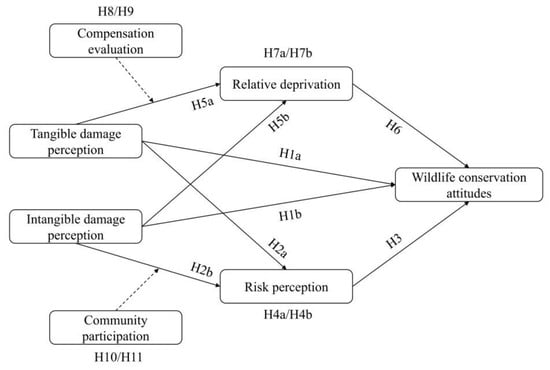
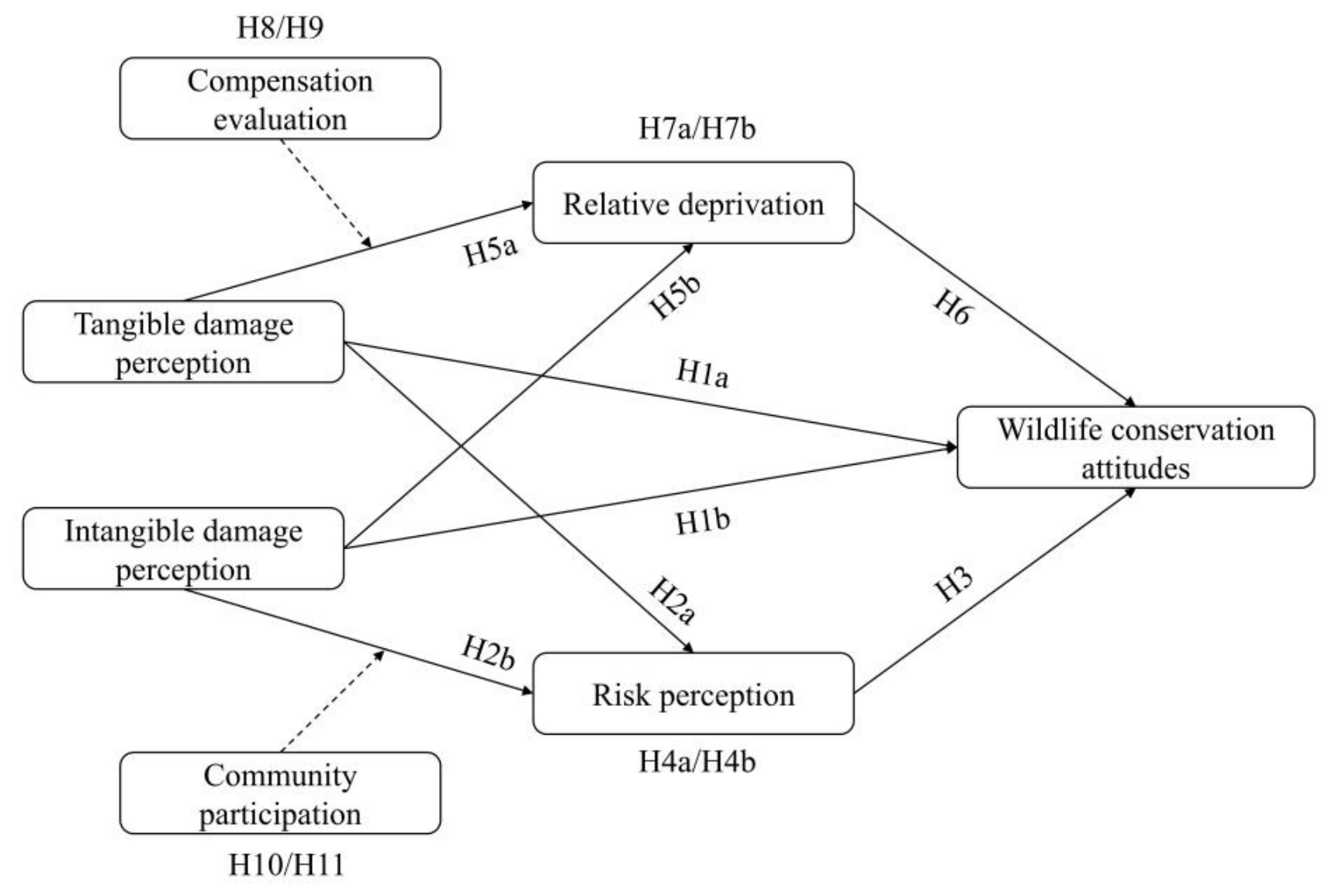
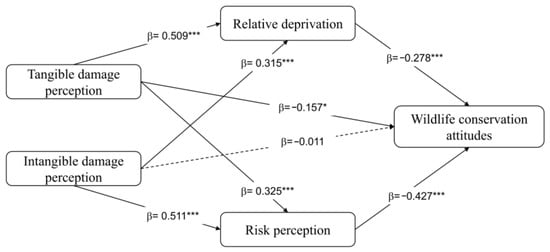
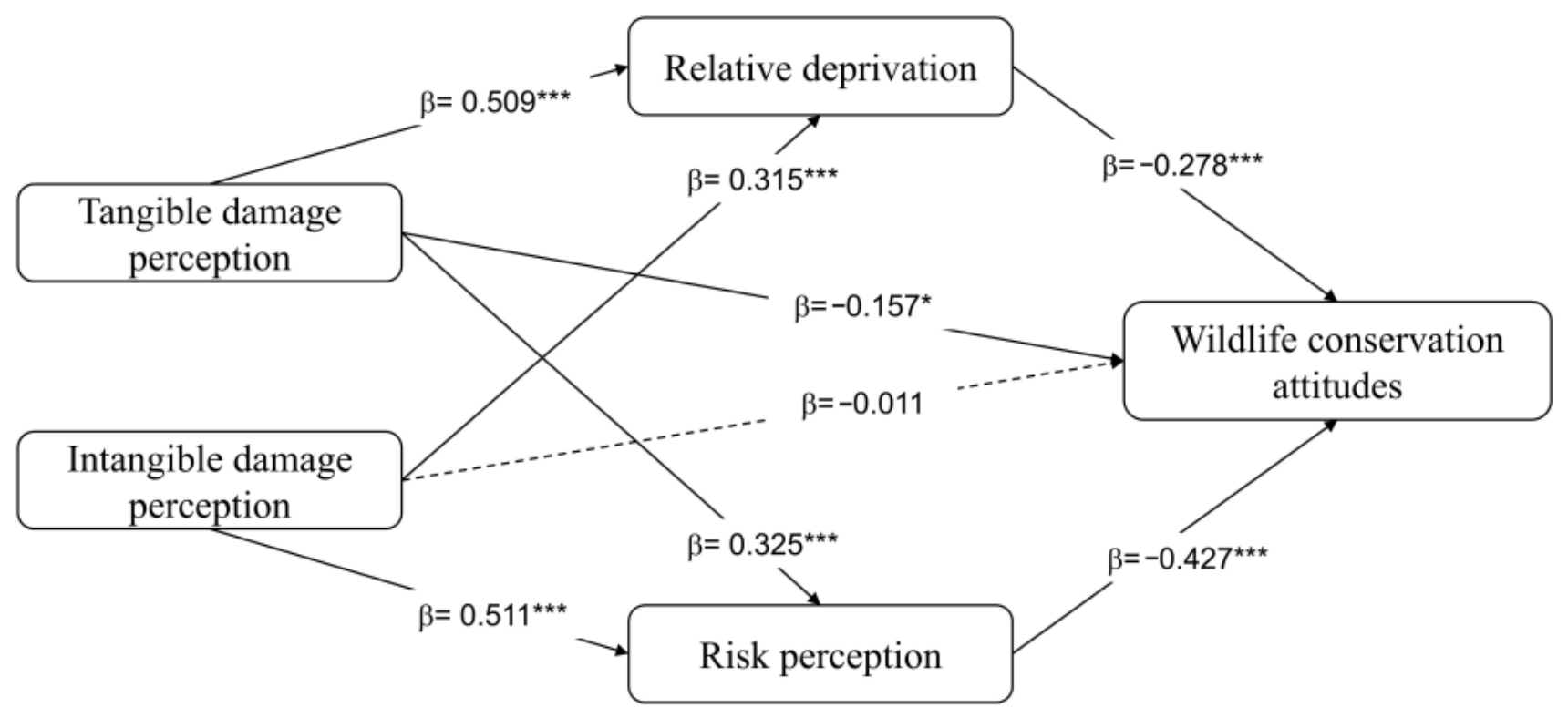
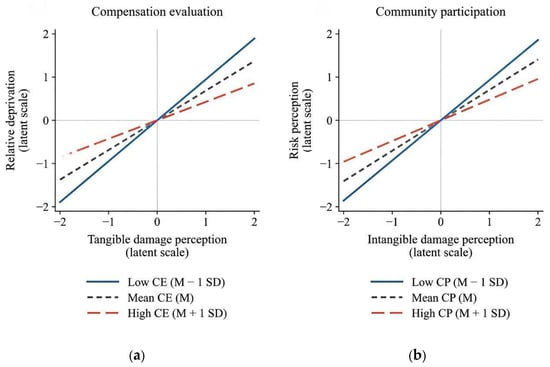
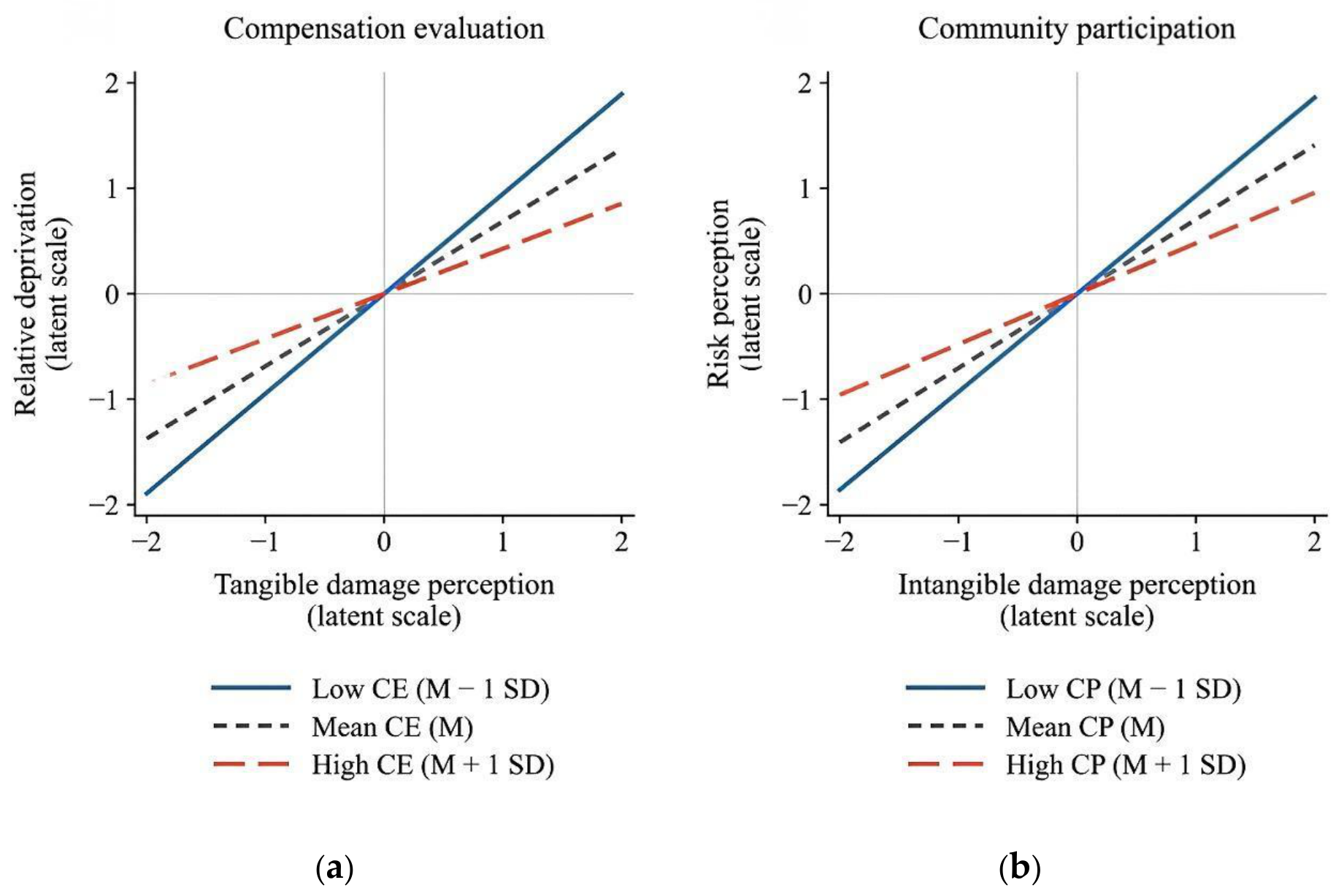

Disclaimer/Publisher’s Note: The statements, opinions and data contained in all publications are solely those of the individual author(s) and contributor(s) and not of MDPI and/or the editor(s). MDPI and/or the editor(s) disclaim responsibility for any injury to people or property resulting from any ideas, methods, instructions or products referred to in the content. |
© 2026 by the authors. Licensee MDPI, Basel, Switzerland. This article is an open access article distributed under the terms and conditions of the Creative Commons Attribution (CC BY) license.