


Abstract
This study aimed to determine ectoparasite diversity and document host–ectoparasite associations in wild birds and mammals admitted to the Kafkas University Wildlife Conservation, Rescue, Rehabilitation, Application and Research Center in northeastern Türkiye. A total of 300 wild animals (187 birds and 113 mammals) were systematically examined, and collected ectoparasites were identified morphologically using relevant taxonomic keys. Ectoparasites were detected in 51 animals (17.0%; 95% CI: 13.2–21.7%), comprising 40 birds (21.4%) and 11 mammals (9.7%) from 19 host species. Morphological examination identified 24 ectoparasite taxa belonging to five major groups: Phthiraptera, Siphonaptera, Ixodida, Mesostigmata, and Diptera. Phthiraptera showed the greatest taxonomic diversity, with 13 taxa, followed by Ixodida with six taxa. Mixed infestations were recorded in 10 animals, representing 19.6% of infested hosts and 3.3% of all animals examined. Noteworthy host associations included Colpocephalum turbinatum on the rock pigeon (Columba livia) and Crataerina pallida on the common swift (Apus apus). These findings expand current knowledge of the ectoparasite fauna and host associations of wild animals in Türkiye and highlight the value of wildlife rehabilitation centres as surveillance points for ectoparasite diversity and wildlife health.
1. Introduction
Wild animals host a taxonomically diverse range of ectoparasitic arthropods, including lice, fleas, ticks, mites, and dipteran flies. These organisms exhibit varying degrees of host specificity and form complex ecological associations with their hosts [1,2]. Ectoparasite infestations may adversely affect host health and physiological condition, although their effects vary among host species, parasite taxa, and ecological conditions. Studies of wild mammals and birds have reported associations between ectoparasite infestation and haematological or serum biochemical parameters. However, these relationships may vary among host species and ecological conditions, and parasite burden may sometimes reflect an already compromised physiological state rather than being its sole cause [3,4].
Ectoparasite communities may be influenced by host identity, physiological condition, co-infestations, and local environmental factors [5,6]. Documenting their diversity and host associations is therefore important for characterising regional parasite fauna and supporting wildlife health surveillance [7,8]. Regional parasitological investigations involving other wildlife groups, including studies of amphibian helminth communities, have also contributed to understanding parasite diversity and geographical patterns of host–parasite associations [9,10]. Although these studies concern endoparasites and are only indirectly related to the present ectoparasitological context, they provide a broader regional perspective on parasite diversity. More directly relevant ectoparasitological studies of wild birds and mammals have documented ectoparasite diversity, geographical distribution, and host–parasite associations across different host groups [11,12,13].
Studies on the ectoparasites of wild animals in Türkiye have generally focused on particular host groups, geographical areas, or ectoparasite taxa. Research on wild birds has predominantly concentrated on chewing lice, with records from species such as common buzzards (Buteo buteo), long-legged buzzards (Buteo rufinus), and white storks (Ciconia ciconia), although ticks, mites, and dipteran ectoparasites have also been reported from different parts of the country [14,15,16,17]. Studies conducted in eastern Türkiye, including investigations around Lake Kuyucuk in Kars and along the Aras River in Iğdır, have documented considerable chewing-louse diversity and numerous host–parasite associations in wild birds [14,18]. Ectoparasites have also been reported from several wild mammal species, including red foxes (Vulpes vulpes), grey wolves (Canis lupus), badgers (Meles spp.), and stone martens (Martes foina) in Türkiye [13,19]. Nevertheless, integrated surveys simultaneously examining multiple ectoparasite groups in both wild birds and mammals remain scarce, particularly in northeastern Türkiye.
Therefore, this study aimed to determine ectoparasite diversity and document host–ectoparasite associations in wild birds and mammals admitted to the Kafkas University Wildlife Conservation, Rescue, Rehabilitation, Application and Research Center in northeastern Türkiye. Specifically, the objectives were to identify the ectoparasite taxa detected in the examined animals, determine infestation prevalence in wild birds and mammals, document single and mixed infestations, and characterise the observed host–ectoparasite associations. This study was designed as a descriptive and exploratory survey of ectoparasite diversity and host associations in wild birds and mammals.
2. Materials and Methods
2.1. Ethical Approval and Permissions
Ethical approval was obtained from the Kafkas University Local Ethics Committee for Animal Experiments (approval no. KAÜ-HADYEK/2022-180), and research permission was granted by the General Directorate of Nature Conservation and National Parks, Ministry of Agriculture and Forestry of the Republic of Türkiye (permit no. E-21264211-288.04-8093489). All animals had been admitted to the wildlife rescue and rehabilitation centre for reasons unrelated to the study, and none was captured specifically for research purposes.
2.2. Study Area and Animals
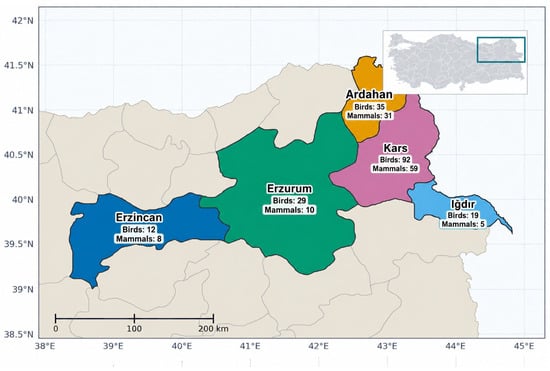
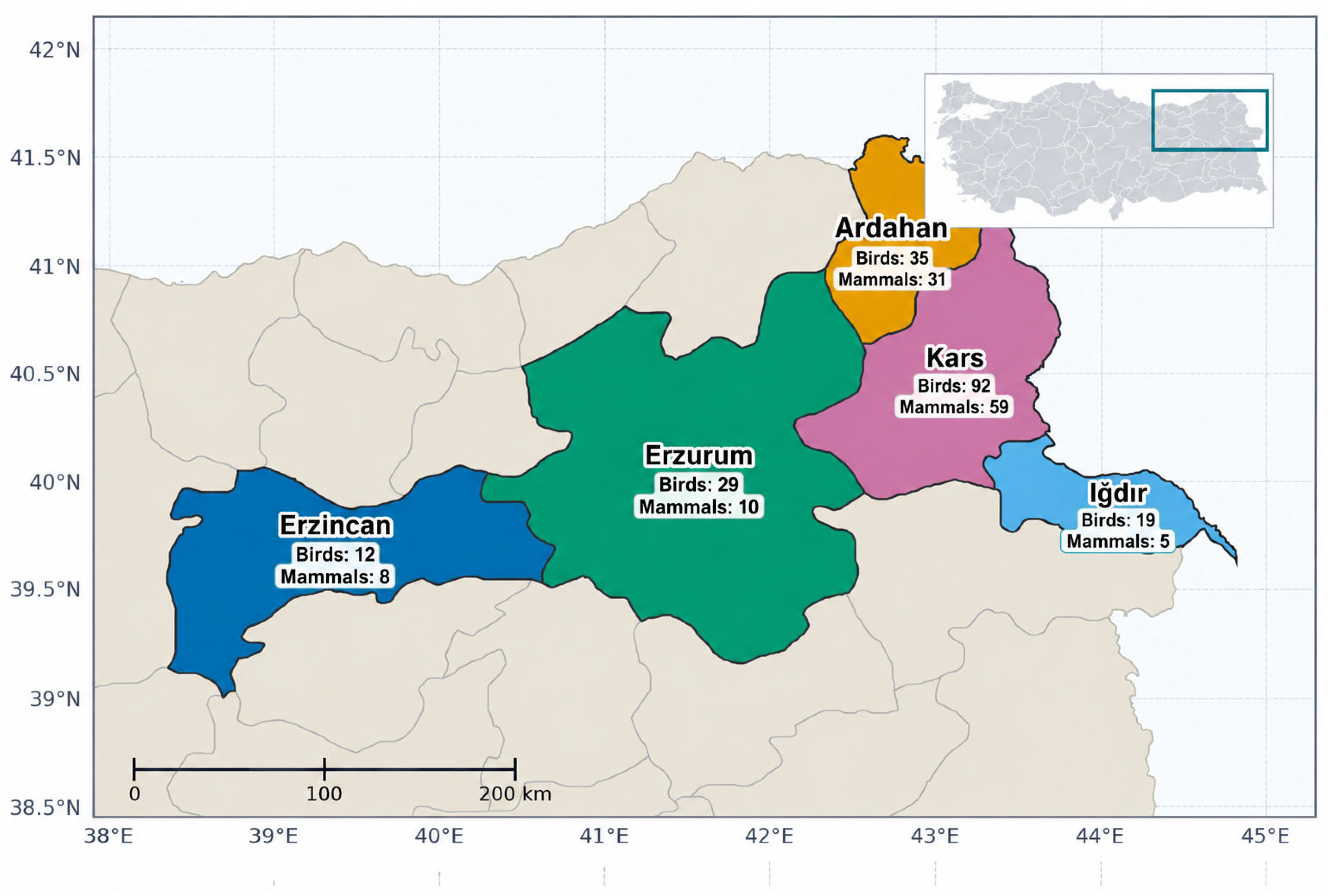
This study was conducted between March 2023 and March 2025 at the Kafkas University Wildlife Conservation, Rescue, Rehabilitation, Application and Research Center in Kars, northeastern Türkiye. The animals were admitted to the rehabilitation centre due to injuries, illnesses, or other circumstances requiring rescue or rehabilitation, independently of the present study. Only live animals available for ectoparasitological examination were included in the study. A total of 300 individual wild animals originating from the provinces of Kars, Ardahan, Erzurum, Erzincan, and Iğdır were examined for ectoparasites (Figure 1). The examined animals comprised 187 wild birds and 113 wild mammals. Host species were identified by members of the research team based on their external morphological characteristics.
Figure 1.
Geographical distribution of the wild animals examined in northeastern Türkiye. The numbers of birds and mammals examined in each province are shown separately, including both ectoparasite-positive and ectoparasite-negative animals (187 birds and 113 mammals; n = 300).
2.3. Examination and Collection of Ectoparasites
The skin, hair coat, or plumage of each animal, as appropriate, was systematically inspected, with the hair or feathers parted manually to detect ectoparasites. Each animal was transported individually in a separate container or cage and was not kept in contact with other animals during rescue and transport. Upon arrival at the rehabilitation centre, ectoparasitological examination was performed before any other clinical or therapeutic procedure. All animals were examined alive on the day of admission to the rehabilitation centre, and ectoparasite specimens were collected before the administration of any antiparasitic or other therapeutic treatment. Ticks, lice, fleas, mites, adult flies, and myiasis-associated dipteran larvae were removed using fine-tipped forceps. The myiasis-associated dipteran larvae were collected from traumatic soft-tissue wounds associated with tissue loss and were therefore considered secondary wound-associated myiasis. The specimens were transferred to labelled tubes containing 70% ethyl alcohol (Honeywell Specialty Chemicals Seelze GmbH, Seelze, Germany) and transported to the parasitology laboratory for further examination. Host species, sample number, collection date, and geographical origin were recorded for each animal.
2.4. Preparation and Morphological Identification
The preparation and morphological examination procedures were performed according to the ectoparasite group. Tick and adult fly specimens were examined and identified on the day of collection. Louse, flea, and mite specimens were examined after the completion of the appropriate clearing, mounting, and drying procedures. Tick specimens were examined directly under a stereomicroscope (Leica M651, Leica Microsystems Ltd., Heerbrugg, Switzerland) and identified based on their morphological characteristics using the relevant taxonomic keys and descriptions [20,21,22]. Following preparation, mite specimens were examined microscopically and identified using relevant morphological descriptions [23].
Louse and flea specimens were cleared in 10% potassium hydroxide (KOH; AFG Scientific, AFG Bioscience LLC, Northbrook, IL, USA). Lice were maintained in 10% KOH for approximately 24 h, whereas fleas were maintained for approximately 36 h. The cleared specimens were washed with distilled water and dehydrated by passage through successive 70%, 90%, and absolute ethanol solutions. Following dehydration, the specimens were mounted between glass slides and coverslips using Canada balsam (SERVA Electrophoresis GmbH, Heidelberg, Germany) and dried in an incubator (M5040B, Elektro-mag, Istanbul, Türkiye) at 37 °C for approximately 5–7 weeks. After complete drying, the mounted specimens were examined under a light microscope (Eclipse E600, Nikon Corporation, Tokyo, Japan). Lice were identified using the keys, descriptions, and host-association data provided [2], together with relevant taxonomic revisions for Degeeriella [24], Colpocephalum and Kurodaia [25,26,27], Laemobothrion [28], Columbicola [29], and Craspedorrhynchus platystomus [30]. Additional host- and taxon-specific descriptions were consulted when required [31,32,33,34,35]. Flea specimens were identified using the relevant morphological keys and descriptions [36,37].
Adult fly specimens and myiasis-associated larvae were identified by evaluating their relevant morphological characteristics. When necessary, larval specimens were cleared and mounted on microscope slides before examination. Identification was performed using relevant taxonomic literature [38,39]. All ectoparasite specimens were identified to the lowest possible taxonomic level according to their preservation status and developmental stage. Species-level identification was not possible for some specimens because the morphological structures required for species differentiation were damaged or worn, preventing reliable identification. The collected Hyalomma specimens were engorged nymphs, which complicated morphological identification at the species level. Although Hyalomma nymphs can be identified to species, species-level identification could not be confirmed for these specimens using the morphological examination performed in this study. Therefore, they were conservatively identified at the genus level.
2.5. Data Analysis
Ectoparasite prevalence was calculated as the percentage of infested animals among all animals examined, with the 95% confidence interval estimated using the Wilson score method. Prevalence in birds and mammals was compared using a two-sided Fisher’s exact test, and the odds ratio and its 95% confidence interval were calculated using the Wald method on the logarithmic scale. Statistical significance was set at p < 0.05. Analyses were performed using Python version 3.12.13 with SciPy version 1.17.0. A mixed infestation was defined as the occurrence of two or more ectoparasite taxa on the same host individual. Host–ectoparasite associations were evaluated using a binary bipartite network in which host species and ectoparasite taxa constituted the two node sets, and the presence of a recorded association was represented by an edge. Network connectance was calculated as the proportion of observed associations relative to all possible host–ectoparasite associations, and host degree was defined as the number of ectoparasite taxa associated with each host species. Network metrics were calculated from the binary presence–absence matrix, whereas link widths in the network visualization were scaled according to the number of infested host individuals recorded for each host–ectoparasite association. Host–ectoparasite associations and taxon frequencies were visualised using a bipartite network and a bar chart, respectively, generated with Matplotlib version 3.10.8.
3. Results
3.1. Overall Infestation and Host Composition
Of the 300 wild animals examined, 51 were found to be infested with at least one ectoparasite taxon, corresponding to an overall prevalence of 17.0% (95% CI: 13.2–21.7%). Ectoparasites were detected in 40 of 187 wild birds (21.4%) and 11 of 113 wild mammals (9.7%). Prevalence was significantly higher in birds than in mammals (odds ratio = 2.52, 95% CI: 1.24–5.15; two-sided Fisher’s exact test, p = 0.011). A total of 434 ectoparasite specimens were counted, including 178 Dermanyssus gallinae mites collected from a single common kestrel (Falco tinnunculus). The avian hosts included the Eurasian goshawk (Accipiter gentilis), common buzzard (Buteo buteo), long-legged buzzard (Buteo rufinus), western marsh harrier (Circus aeruginosus), hen harrier (Circus cyaneus), common kestrel (Falco tinnunculus), white stork (Ciconia ciconia), common swift (Apus apus), golden eagle (Aquila chrysaetos), eastern imperial eagle (Aquila heliaca), Eurasian eagle-owl (Bubo bubo), black kite (Milvus migrans), chukar partridge (Alectoris chukar), and rock pigeon (Columba livia). The mammalian hosts comprised the red fox (Vulpes vulpes), grey wolf (Canis lupus), Eurasian badger (Meles meles), Eurasian lynx (Lynx lynx), and brown bear (Ursus arctos).
3.2. Diversity and Distribution of Ectoparasites
Morphological examination identified 24 ectoparasite taxa belonging to five major groups: Phthiraptera, Siphonaptera, Ixodida, Mesostigmata, and Diptera. Phthiraptera was the most taxonomically diverse group, comprising 13 taxa: Laemobothrion maximum (Scopoli, 1763), Ardeicola ciconiae (Linnaeus, 1758), Neophilopterus incompletus (Denny, 1842), Dennyus hirundinis (Linnaeus, 1761), Trichodectes melis (Fabricius, 1805), Colpocephalum zebra Burmeister, 1838, Colpocephalum nanum Piaget, 1890, Colpocephalum turbinatum Denny, 1842, Columbicola columbae (Linnaeus, 1758), Degeeriella fulva (Giebel, 1874), Degeeriella sp., Kurodaia fulvofasciata (Piaget, 1880), and Craspedorrhynchus platystomus (Burmeister, 1838).
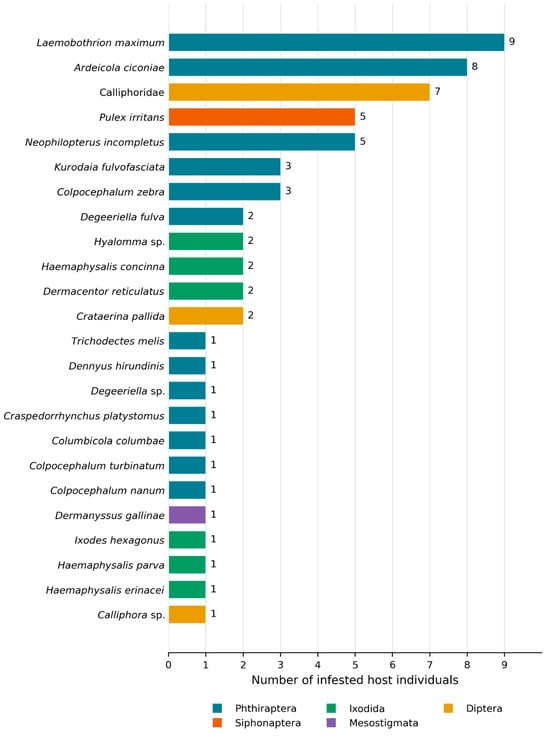
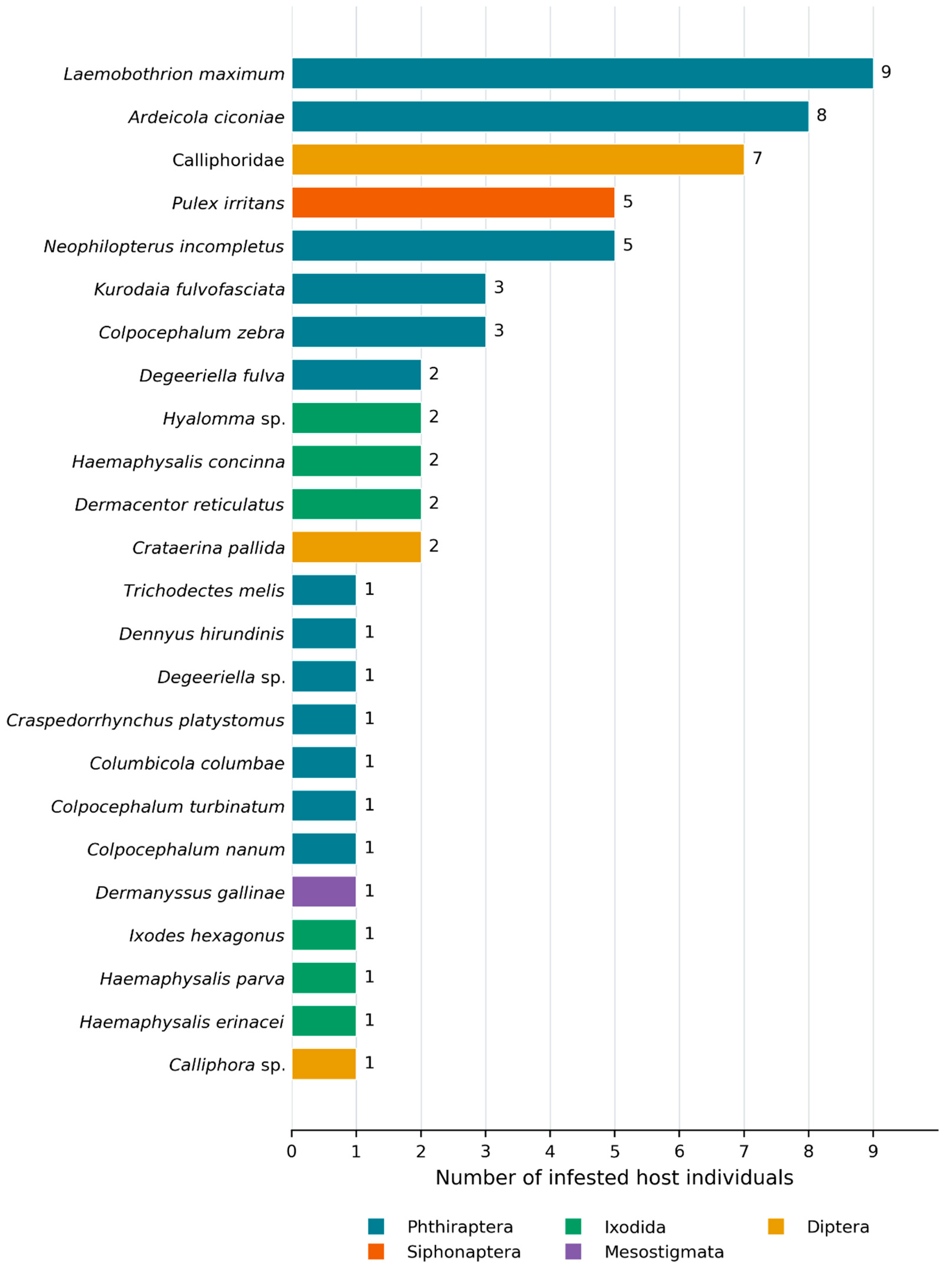
Siphonaptera was represented by a single species, Pulex irritans Linnaeus, 1758. Six tick taxa were identified: Dermacentor reticulatus (Fabricius, 1794), Ixodes hexagonus Leach, 1815, Haemaphysalis erinacei Pavesi, 1884, Haemaphysalis concinna C.L. Koch, 1844, Haemaphysalis parva (Neumann, 1897), and nymphal specimens of Hyalomma sp. Mesostigmata was represented by Dermanyssus gallinae (De Geer, 1778). The dipteran taxa consisted of Crataerina pallida (Olivier in Latreille, 1811), Calliphora sp., and myiasis-associated larvae identified only to the family level as Calliphoridae. The frequency of occurrence of each ectoparasite taxon, based on the number of infested host individuals, is shown in Figure 2.
Figure 2.
Frequency of ectoparasite taxa detected in the examined wild animals, expressed as the number of infested host individuals. Colours indicate the major ectoparasite groups.
3.3. Host–Ectoparasite Associations
Host–ectoparasite associations determined in the present study are presented in Table 1. Lice were predominantly associated with wild birds, whereas fleas were detected exclusively in wild mammals. Adult ticks were collected from wild mammals, while nymphal specimens of Hyalomma sp. were recorded from wild birds. Adult dipteran ectoparasites and calliphorid larvae were recorded exclusively in wild birds. The mite Dermanyssus gallinae was detected on a common kestrel.
Table 1.
Infestation status and ectoparasite taxa detected according to wild animal host species.
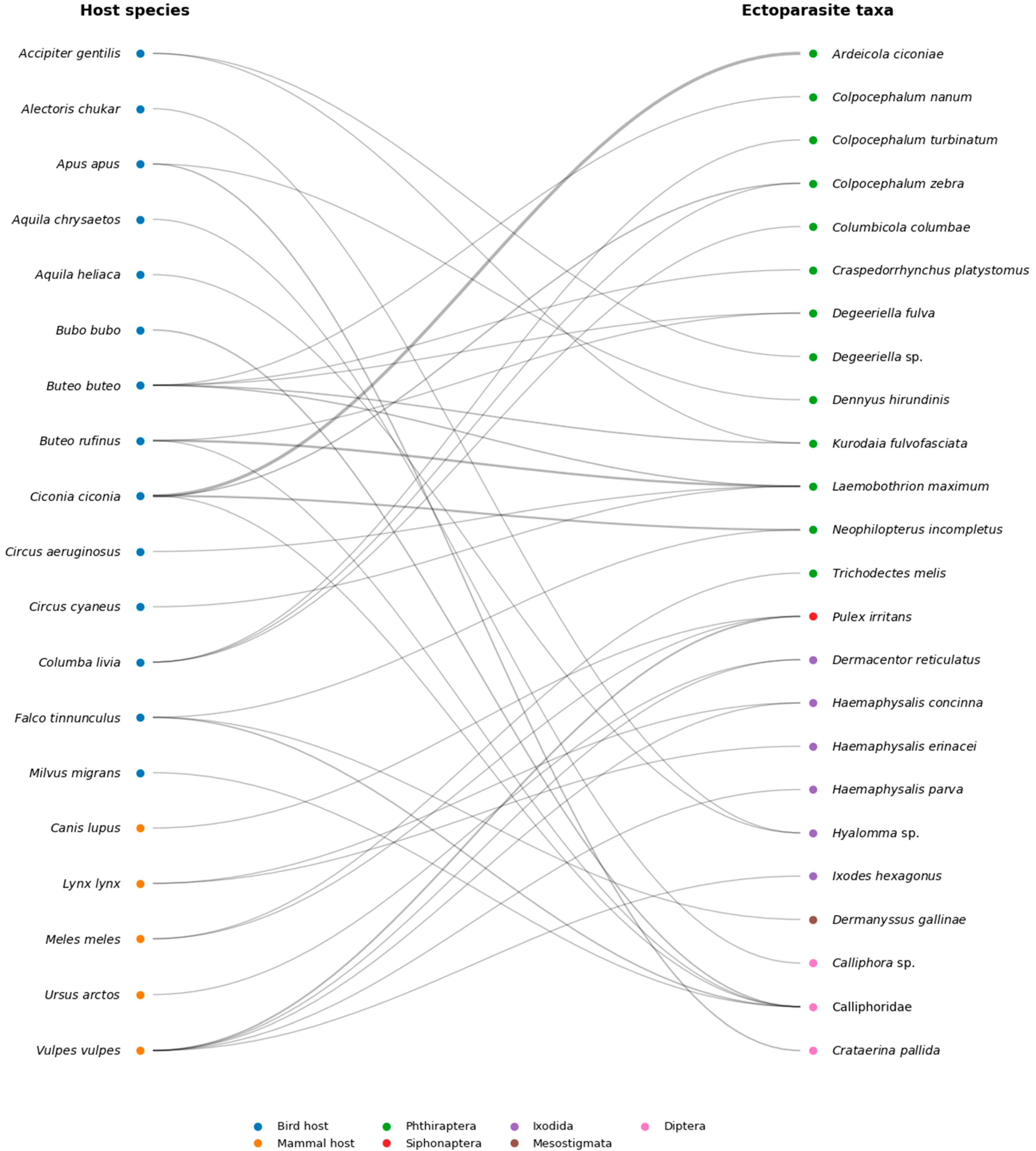
The binary host–ectoparasite network comprised 19 host species, 24 ectoparasite taxa, and 40 observed associations, corresponding to an overall connectance of 0.088. The mean host degree was 2.11 ectoparasite taxa per positive host species. The highest host degrees were recorded for Buteo buteo and Vulpes vulpes, each of which was associated with five ectoparasite taxa, followed by Ciconia ciconia with four taxa. Calliphoridae larvae showed the broadest host distribution and were recorded from five avian host species, followed by Laemobothrion maximum, which occurred on four avian hosts, and Pulex irritans, which was detected on three mammalian hosts. Fourteen of the 24 ectoparasite taxa (58.3%) were recorded from only one host species within the present dataset. These comprised eight Phthiraptera taxa (Ardeicola ciconiae, Dennyus hirundinis, Trichodectes melis, Colpocephalum nanum, C. turbinatum, Columbicola columbae, Degeeriella sp., and Craspedorrhynchus platystomus), three Ixodida taxa (Ixodes hexagonus, Haemaphysalis erinacei, and H. parva), one mesostigmatid mite (Dermanyssus gallinae), and two Diptera taxa (Crataerina pallida and Calliphora sp.). These records indicate occurrence on a single host species within the examined sample and should not be interpreted as evidence of strict host specificity.
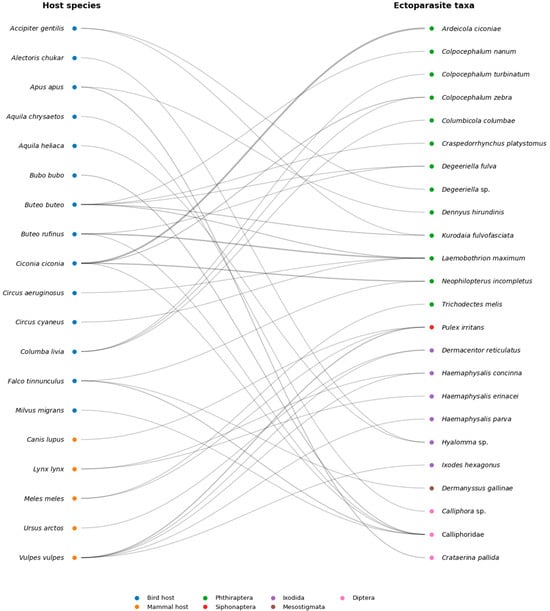
At the host-species level, the greatest ectoparasite richness was recorded in the common buzzard and red fox, each of which was associated with five ectoparasite taxa. The white stork was associated with four taxa. Among the lice, Laemobothrion maximum had the broadest host range and was detected in four avian species: B. rufinus, B. buteo, Circus aeruginosus, and C. cyaneus. Pulex irritans was the most widely distributed ectoparasite among mammals and was recorded in V. vulpes, C. lupus, and M. meles. The overall pattern of host–ectoparasite associations is visualised as a bipartite network in Figure 3.
Figure 3.
Bipartite network illustrating the associations between wild host species and ectoparasite taxa detected in the present study. Host species are shown on the left and ectoparasite taxa on the right. Link width is proportional to the number of infested host individuals recorded for each association. Colours indicate the major ectoparasite groups.
3.4. Mixed Ectoparasite Infestations
Mixed ectoparasite infestations, defined as the simultaneous occurrence of two or more ectoparasite taxa on the same individual animal, were detected in 10 animals. These cases represented 19.6% of the infested animals and 3.3% of all animals examined. Nine animals harboured two ectoparasite taxa, whereas one animal harboured three taxa. The remaining 41 infested animals (80.4%) harboured a single ectoparasite taxon. Although three chewing-louse species were recorded from white storks overall, the individual white storks with mixed infestations each harboured two louse species, as detailed in Table 2. Additional supporting information, including the host-level summary, binary host–ectoparasite associations, mixed infestation records, and the ectoparasite taxon list, is provided in Tables S1–S4.
Table 2.
Mixed ectoparasite infestations detected in individual wild animals.
4. Discussion
The present study documented 24 ectoparasite taxa across 19 wild bird and mammal host species in northeastern Türkiye, with infestation prevalence being significantly higher in birds than in mammals. Previous studies in Türkiye have generally focused on particular host groups or ectoparasite taxa [15,34,40,41]. By examining birds and mammals within the same centre-based framework, this study provides an integrated regional account of ectoparasite diversity and host associations.
The predominance of lice among avian hosts is consistent with previous surveys of injured, rescued, and migratory birds, in which Phthiraptera represented a major component of the ectoparasite fauna [42,43]. In contrast, fleas and most adult ticks in the present study were associated with mammals, resembling the pattern reported from wild mammals examined at another rehabilitation centre in Türkiye [41].
Among the avian hosts, the common buzzard exhibited the greatest louse richness, with five taxa. All have previously been reported from B. buteo in Türkiye [34,44], and four—Degeeriella fulva, Craspedorrhynchus platystomus, Colpocephalum nanum, and Laemobothrion maximum—were recently documented from this host in Romania [45]. The occurrence of D. fulva and L. maximum on the long-legged buzzard also agrees with previous records from Türkiye [34,44], further supporting the close association of these lice with accipitrid hosts.
The three chewing lice detected on the white stork—Neophilopterus incompletus, Ardeicola ciconiae, and Colpocephalum zebra—have previously been reported from this host in Türkiye [31,44,46]. Although three chewing-louse species were recorded from white storks overall, mixed infestations in individual white storks involved only two louse species, as shown in Table 2. The same assemblage has also been documented in white stork nestlings in northeastern Algeria [47], supporting the close association of these lice with C. ciconia across geographical regions.
Colpocephalum turbinatum was detected on the rock pigeon. The previous record identified from Türkiye was obtained from the common buzzard rather than C. livia [48], whereas the association with C. livia has been documented in Iran and Algeria [49,50]. Although the route of acquisition cannot be determined from the present data, possible explanations may include parasite transfer associated with predator–prey interactions or contact between domestic and free-ranging pigeons. Therefore, the present finding may represent the first documented record of C. turbinatum on C. livia in Türkiye.
The detection of Dennyus hirundinis on the common swift agrees with previous records from Türkiye [32,35]. In contrast, the obligate, blood-feeding hippoboscid fly Crataerina pallida, which is closely associated with common swifts and their nests [51,52], has not previously been documented in Türkiye. To the best of our knowledge, the present finding represents the first national record of C. pallida.
Trichodectes melis was detected on the Eurasian badger in the present study. This louse is associated with badgers of the genus Meles, including both European and Caucasian badgers [40]. In Türkiye, T. melis was first reported from a Caucasian badger (Meles canescens) admitted to the same wildlife rehabilitation centre in Kars [33]. The present finding documents this association in M. meles and confirms the continued occurrence of T. melis in northeastern Türkiye.
Pulex irritans was the only flea species identified in the present study and was detected on the red fox, grey wolf, and Eurasian badger. In Türkiye, P. irritans has previously been recorded from red foxes and grey wolves [41,53], while its occurrence on grey wolves and Eurasian badgers has also been documented in Romania [54]. The detection of P. irritans on M. meles adds to its documented host spectrum in Türkiye and, together with the other records, supports its broad host range among wild carnivores.
Six tick taxa were identified, with all adult ticks collected from wild mammals. The red fox exhibited the greatest tick richness, harbouring Dermacentor reticulatus, Ixodes hexagonus, Haemaphysalis concinna, and Haemaphysalis parva. Previous records of I. hexagonus and H. parva from red foxes in Türkiye support these associations [41,53], while the detection of H. erinacei on the Eurasian lynx agrees with an earlier molecularly confirmed record [55]. Previous studies of brown bears in Türkiye documented Hyalomma marginatum, Rhipicephalus turanicus, Ixodes ricinus, H. parva, and H. erinacei, but not D. reticulatus [56,57]. Thus, the present finding may represent the first documented record of D. reticulatus on the brown bear in Türkiye.
Nymphal specimens of Hyalomma sp. were detected on the eastern imperial eagle and chukar partridge. Immature Hyalomma ticks have previously been collected from wild birds in Türkiye, including passerines examined in the Kızılırmak Delta [16,58]. The association with A. chukar is also supported by a molecularly confirmed record of immature H. marginatum from this host in Iran [59], although the specimens examined here could be identified only to the genus level. These findings extend the documented occurrence of immature Hyalomma to both raptor and galliform hosts in northeastern Türkiye.
A heavy infestation involving 178 Dermanyssus gallinae mites was detected on a common kestrel. This obligate haematophagous mite has previously been recorded in common kestrel nests in Slovakia, supporting its association with this raptor and its nesting environment [60]. Unlike the previous nest-based record, the present finding documents direct infestation of F. tinnunculus by D. gallinae in northeastern Türkiye. The collection of 178 D. gallinae mites from a single common kestrel is noteworthy because this haematophagous mite may adversely affect host health when present in substantial numbers. Previous studies, primarily involving poultry, have associated heavy infestations with skin irritation, physiological stress, and blood loss that may lead to anaemia [61,62]. However, the clinical impact of the infestation in the present case could not be determined because haematological parameters and infestation-related clinical signs were not specifically evaluated. Therefore, these potential effects should not be assumed to have occurred in the examined kestrel. Nevertheless, a substantial ectoparasite burden may warrant closer clinical monitoring during rehabilitation and consideration of ectoparasite control before release.
Dipteran larvae belonging to the family Calliphoridae were detected on five avian hosts: the long-legged buzzard, common kestrel, white stork, Eurasian eagle-owl, and black kite, whereas Calliphora sp. was identified on the golden eagle. In Türkiye, traumatic myiasis caused by C. vicina and Lucilia sericata has previously been documented in the peregrine falcon and long-legged buzzard, respectively [63]. In Egypt, C. vicina larvae were recorded from the steppe eagle, whereas L. sericata larvae were detected on the white stork [43]. These records demonstrate the occurrence of calliphorid myiasis in diverse avian hosts; however, because most larvae in the present study could be identified only to the family level, direct species-level comparisons were not possible.
Several ectoparasite taxa identified in the present study may also have implications for public health. Among the recorded ticks, Dermacentor reticulatus is a recognized vector of several pathogens, including zoonotic Rickettsia species [64], whereas Ixodes hexagonus has demonstrated the ability to transmit Borrelia burgdorferi under experimental conditions [65]. Haemaphysalis concinna has also been associated with various tick-borne pathogens of potential zoonotic importance [66]. In addition, Pulex irritans can feed on humans, although experimental evidence indicates relatively low efficiency in transmitting Yersinia pestis [67]. Dermanyssus gallinae may cause dermatitis in humans, while its potential role in pathogen transmission requires further investigation [61]. Potential human exposure may occur through bites from infected ectoparasites during wildlife handling, rehabilitation activities, or contact with environments shared by wildlife and humans. However, the present study focused exclusively on morphological identification and did not investigate pathogen carriage. Therefore, the detection of these ectoparasites should not be interpreted as evidence of pathogen circulation or zoonotic transmission in the study area.
Mixed infestations were detected in 10 animals, corresponding to 19.6% of the infested hosts and 3.3% of all animals examined. These 10 individuals represented eight distinct host species, with mixed infestations occurring in two common buzzards, two white storks, and one individual from each of the remaining six host species. Nine animals harboured two ectoparasite taxa, whereas one common buzzard was simultaneously infested with three louse species. Comparable co-infestations with multiple chewing-louse species have been documented in wild birds from the Aras Basin, including a common starling carrying three louse species [35]. In the present study, mixed infestations involved not only multiple louse species on birds but also flea–tick and louse–flea combinations on mammals, indicating simultaneous exposure to ectoparasites with different life histories. However, the clinical consequences of these mixed infestations could not be evaluated because host-health variables were not assessed. The observed network connectance (0.088) indicates that only 8.8% of the theoretically possible host–ectoparasite associations were recorded. This finding describes the structure of the observed network; however, differences in sample sizes among host species limit its interpretation in terms of host specificity.
Because the animals were admitted opportunistically to a rehabilitation centre because of injury, disease, or other circumstances, the prevalence estimates should be interpreted as centre-based findings and should not be extrapolated to free-ranging wildlife populations. Unequal sample sizes among host species also limited robust interspecific comparisons. Expanding future surveys to multiple rehabilitation centres and geographic areas, while increasing and balancing host sample sizes, would improve the representativeness of the findings. Although ectoparasite collection was performed before treatment, the possibility of ectoparasite transfer associated with the rehabilitation environment cannot be completely excluded. Therefore, the recorded host–ectoparasite associations should be interpreted in the context of the centre-based sampling design. In addition, damaged or poorly preserved specimens could not always be identified to species level, limiting taxonomic resolution for some records. For specimens that could not be identified to species level morphologically, molecular approaches such as DNA barcoding may provide greater taxonomic resolution in future studies. Nevertheless, the systematic examination of wild birds and mammals enabled ectoparasites from five major groups to be documented within the same regional framework. The diversity of associations recorded, including potentially new national records, highlights the value of wildlife rehabilitation centres as practical surveillance points for documenting ectoparasite fauna and detecting previously unreported host associations.
5. Conclusions
Of the 300 wild animals examined, 51 (17.0%) were infested with at least one ectoparasite taxon, with prevalence being significantly higher in birds than in mammals. The study documented 24 ectoparasite taxa belonging to Phthiraptera, Siphonaptera, Ixodida, Mesostigmata, and Diptera, demonstrating substantial ectoparasite diversity and a broad range of host associations. The records of Colpocephalum turbinatum on Columba livia, Crataerina pallida on Apus apus, and Dermacentor reticulatus on Ursus arctos potentially expand current knowledge of the ectoparasite fauna and host associations in Türkiye. Although the findings represent a centre-based sample, they provide valuable regional baseline data and highlight the role of wildlife rehabilitation centres as practical surveillance points for ectoparasite diversity and wildlife health. Systematic use of ectoparasite data collected at wildlife rehabilitation centres could support broader One Health surveillance efforts across the Palearctic region.
Supplementary Materials
The following supporting information can be downloaded at: https://www.mdpi.com/article/10.3390/d18100614/s1. Table S1: Host-level summary of infestation status and ectoparasite taxa detected in the examined wild animals; Table S2: Binary host–ectoparasite associations recorded in the study; Table S3: Mixed ectoparasite infestations detected in individual wild animals; Table S4: List of ectoparasite taxa identified in the study.
Author Contributions
Conceptualization, N.Ö. and B.S.; methodology, N.Ö., N.A., M.C., M.E.I. and B.B.; investigation, N.Ö., B.S., N.A., M.C., M.E.I. and B.B.; formal analysis, N.Ö., M.C., M.E.I. and B.B.; data curation, N.Ö.; visualization, N.Ö. and M.C.; writing—original draft preparation, N.Ö.; writing—review and editing, B.S., N.A., M.C., M.E.I. and B.B.; supervision, B.S.; project administration, B.S. All authors have read and agreed to the published version of the manuscript.
Funding
This research was funded by the Scientific Research Projects Coordination Unit of Kafkas University under project number 2023-TS-32. The funder had no role in the design of the study; in the collection, analysis, or interpretation of the data; in the writing of the manuscript; or in the decision to publish the results.
Institutional Review Board Statement
The animal study protocol was approved by the Kafkas University Local Ethics Committee for Animal Experiments (approval no. KAÜ-HADYEK/2022-180). Research permission was granted by the General Directorate of Nature Conservation and National Parks, Ministry of Agriculture and Forestry of the Republic of Türkiye (permit no. E-21264211-288.04-8093489).
Informed Consent Statement
Not applicable.
Data Availability Statement
Data supporting the central findings of this article are contained within the article and the accompanying Supplementary Material. All prepared and mounted ectoparasite specimens examined in this study are retained in the Parasitology Laboratory, Faculty of Veterinary Medicine, Kafkas University, and are available for examination upon reasonable request.
Conflicts of Interest
The authors declare no conflicts of interest.
References
- Hopla, C.E.; Durden, L.A.; Keirans, J.E. Ectoparasites and classification. Rev. Sci. Tech. (Int. Off. Epizoot.) 1994, 13, 985–1017. [Google Scholar] [CrossRef] [Scilit]
- Price, R.D.; Hellenthal, R.; Palma, R.; Johnson, K.; Clayton, D.H. The Chewing Lice: World Checklist and Biological Overview; Illinois Natural History Survey Special Publication: Champaign, IL, USA, 2003. [Google Scholar]
- Webster, K.N.; Hill, N.J.; Burnett, L.; Deane, E.M. Ectoparasite infestation patterns, haematology and serum biochemistry of urban-dwelling common brushtail possums. Wildl. Biol. 2014, 20, 206–216. [Google Scholar] [CrossRef] [Scilit]
- Hanssen, S.A.; Sonne, C.; Bustnes, J.O.; Schnug, L.; Bourgeon, S.; Ballesteros, M.; Eulaers, I.; Moum, T.; Johnsen, T.V.; Kjelgaard-Hansen, M.; et al. Anti-parasite treatment and blood biochemistry in raptor nestlings. Can. J. Zool. 2017, 95, 685–693. [Google Scholar] [CrossRef] [Scilit]
- Carvalho, J.; Serrano, E.; Pettorelli, N.; Granados, J.E.; Habela, M.A.; Olmeda, S.; Fonseca, C.; Pérez, J.M. Sarcoptes scabiei infestation does not alter the stability of ectoparasite communities. Parasites Vectors 2016, 9, 379. [Google Scholar] [CrossRef] [Scilit]
- Gebrezgiher, G.B.; Makundi, R.H.; Katakweba, A.A.S.; Belmain, S.R.; Lyimo, C.M.; Meheretu, Y. Arthropod Ectoparasites of Two Rodent Species Occurring in Varied Elevations on Tanzania’s Second Highest Mountain. Biology 2023, 12, 394. [Google Scholar] [CrossRef] [Scilit]
- Ozioko, K.U.; Okoye, C.I.; Ubachukwu, P.O.; Agbu, R.A.; Ezewudo, B.I.; Ezea, C.O. Prevalence assessment of ectoparasitic arthropods among commonly consumed wildlife in Nsukka, southeast Nigeria. Bull. Natl. Res. Cent. 2021, 45, 4. [Google Scholar] [CrossRef] [Scilit]
- Brennan, R.N.; Paulson, S.L.; Escobar, L.E. Estimating pathogen-spillover risk using host-ectoparasite interactions. Ecol. Evol. 2024, 14, e11509. [Google Scholar] [CrossRef] [Scilit]
- Kirillov, A.A.; Chikhlyaev, I.V.; Kirillova, N.Y.; Ruchin, A.B.; Fayzulin, A.I. Helminths of the Pelophylax esculentus Complex (Anura, Amphibia) in the Middle Volga Region (Russia). Diversity 2026, 18, 245. [Google Scholar] [CrossRef] [Scilit]
- Chikhlyaev, I.V.; Ruchin, A.B. Ecological Analysis and Biodiversity of the Helminth Community of the Pool Frog Pelophylax lessonae (Amphibia: Anura) from Floodplain and Forest Water Bodies. Diversity 2022, 14, 247. [Google Scholar] [CrossRef] [Scilit]
- Tomás, A.; Palma, R.L.; Rebelo, M.T.; da Fonseca, I.P. Chewing lice (Phthiraptera) from wild birds in southern Portugal. Parasitol. Int. 2016, 65, 295–301. [Google Scholar] [CrossRef] [Scilit]
- Gutiérrez López, R.; González, M.A.; López-Mercadal, J.; Escandell, R.; García-Febrero, O.; Triay, R.; Coll, E.; García, M.; Bernal, I.; Talabante, C.; et al. Diversity of obligate ectoparasites and parasitism patterns in wild birds of the Balearic Islands: New chewing lice records for Spain. Parasitology 2026, 153, 148–158. [Google Scholar] [CrossRef] [Scilit]
- Girişgin, A.O.; Çimenlikaya, N.; Bah, S.A.; Aydın, L.; Girişgin, O. Türkiye’de bazı yabani memelilerde bulunan dış parazit türlerinin ilk kayıtları. Uludağ Üniv. Vet. Fakültesi Derg. 2018, 37, 133–136. [Google Scholar] [CrossRef] [Scilit]
- Dik, B.; Şekercioğlu, C.; Kırpık, M.; İnak, S.; Uslu, S. Chewing lice (Phthiraptera) species found on Turkish shorebirds (Charadriiformes). Kafkas Üniv. Vet. Fakültesi Derg. 2010, 16, 867–874. [Google Scholar] [CrossRef] [Scilit]
- Girisgin, A.O.; Dik, B.; Girisgin, O. Chewing lice (Phthiraptera) species of wild birds in northwestern Turkey with a new host record. Int. J. Parasitol. Parasites Wildl. 2013, 2, 217–221. [Google Scholar] [CrossRef] [Scilit]
- Keskin, A.; Erciyas-Yavuz, K. Ticks (Acari: Ixodidae) Parasitizing Passerine Birds in Turkey With New Records and New Tick-Host Associations. J. Med. Entomol. 2019, 56, 156–161. [Google Scholar] [CrossRef] [Scilit]
- Dik, B.; Kandir, E.H. Ectoparasites in some wild birds (Aves) in Turkey. Prog. Nutr. 2021, 23, e2021261. [Google Scholar] [CrossRef]
- Dik, B.; Şekercioğlu, Ç.H.; Kırpık, M.A. Chewing Lice (Phthiraptera) Species Found On Birds Along the Aras River, Iğdir, Eastern Turkey. Kafkas Univ. Vet. Fak. Derg. 2011, 17, 567–573. [Google Scholar] [CrossRef] [Scilit]
- Keskin, A.; Dik, B. First data on the ectoparasites (fleas, ticks, and lice) of the stone marten, Martes foina (Erxleben) in Turkey. Arthropods 2023, 12(3), 141–147. [Google Scholar]
- Estrada-Peña, A.; Bouattour, A.; Camicas, J.; Walker, A. Ticks of Domestic Animals in the Mediterranean Region; University of Zaragoza: Zaragoza, Spain, 2004. [Google Scholar]
- Walker, A.R.; Bouattour, A.; Camicas, J.-L.; Estrada-Peña, A.; Horak, I.G.; Latif, A.A.; Pegram, R.G.; Preston, P.M. Ticks of Domestic Animals in Africa: A Guide to Identification of Species; Bioscience Reports Edinburgh: Edinburgh, UK, 2003. [Google Scholar]
- Estrada-Peña, A.; Pfäffle, M.; Baneth, G.; Kleinerman, G.; Petney, T.N. Ixodoidea of the Western Palaearctic: A review of available literature for identification of species. Ticks Tick-Borne Dis. 2017, 8, 512–525. [Google Scholar] [CrossRef] [Scilit]
- Wall, R.; Shearer, D. Veterinary Ectoparasites: Biology, Pathology and Control, 2nd ed.; Blackwell Science: Oxford, UK, 2001. [Google Scholar]
- Clay, T. Revisions of Mallophaga Genera. Degeeriella from the Falconiformes; Bulletin of the British Museum (Natural History) Entomology: London, UK, 1958. [Google Scholar]
- Price, R.D.; Beer, J.R. Species of Colpocephalum (Mallophaga: Menoponidae) Parasitic upon the Falconiformes. Can. Entomol. 1963, 95, 731–763. [Google Scholar] [CrossRef] [Scilit]
- Price, R.D.; Beer, J.R. The genus Kurodaia (Mallophaga: Menoponidae) from the Falconiformes, with elevation of the subgenus Falcomenopon to generic rank. Ann. Entomol. Soc. Am. 1963, 56, 379–385. [Google Scholar] [CrossRef] [Scilit]
- Price, R.D.; Beer, J.R. The Colpocephalum (Mallophaga: Menoponidae) of the Ciconiiformes. Ann. Entomol. Soc. Am. 1965, 58, 111–131. [Google Scholar] [CrossRef] [Scilit]
- Nelson, R.C.; Price, R.D. The Laemobothrion (Mallophaga: Laemobothriidae) of the Falconiformes. J. Med. Entomol. 1965, 2, 249–257. [Google Scholar] [CrossRef] [Scilit][Green Version]
- Adams, R.J.; Price, R.D.; Clayton, D.H. Taxonomic revision of Old World members of the feather louse genus Columbicola (Phthiraptera: Ischnocera), including descriptions of eight new species. J. Nat. Hist. 2005, 39, 3545–3618. [Google Scholar] [CrossRef] [Scilit]
- Dik, B.; Halajian, A.; Turner, M. The morphology of Craspedorrhynchus platystomus (Burmeister, 1838), a louse commonly found on the long-legged buzzard Buteo rufinus (Phthiraptera: Ischnocera: Philopteridae). Turk. J. Zool. 2013, 37, 739–745. [Google Scholar] [CrossRef] [Scilit]
- Dik, B.; Uslu, U. Mallophaga (Insecta) species occurring on storks (Ciconia ciconia Linnaeus, 1758). Turk. Parazitolojii Derg. 2006, 30, 220–225. [Google Scholar]
- Karataş, A.; Göçmen, B.; Karataş, A. A new record for Turkish lice fauna: Dennyus hirundinis (Linnaeus, 1761) (Mallophaga: Menoponidae). Turk. Parazitolojii Derg. 2008, 32, 77–78. [Google Scholar]
- Taşçı, G.T.; Erkilic, E.E.; Aydın, N.P.; Uzlu, E. First Report of Trichodectes melis (Phthiraptera, Trichodectidae) from the Eurasian Badger Meles canescens (Carnivora, Mustelidae) in Turkey. Kafkas Üniv. Vet. Fakültesi Derg. 2017, 23, 1015–1017. [Google Scholar] [CrossRef] [Scilit]
- Dik, B.; Naz, S.; Sajid, M. Data on the chewing lice (Phthiraptera) parasitizing the accipitrid birds (Accipitriformes) in Turkey. J. Anim. Health Prod. 2022, 10, 443–453. [Google Scholar]
- Dik, B.; Çoban, A.; Kırpık, M.A.; Keskin, A.; Çatalkaya, B.; Çoban, E.; Şekercioğlu, Ç.H. Lice (Phthiraptera, Amblycera, Ischnocera) collected on the birds in the Aras basin in Iğdır Province, Türkiye with new records and new host associations. Parasitol. Res. 2024, 123, 100. [Google Scholar] [CrossRef] [Scilit]
- Hopkins, G.H.; Rothschild, M. An Illustrated Catalogue of the Rothschild Collection of Fleas (Siphonaptera) in the British Museum (Natural History): Coptopsyllidae, Vermipsyllidae, Stephanocircidae, Ischnopsyllidae, Hypsophtalmidae and Xiphiopsyllidae/by GHE Hopkins & Miriam Rothschild; Trustees of the British Museum (Natural History): London, UK, 1956; Volume II. [Google Scholar]
- Hopkins, G.H.E.; Rothschild, M. An Illustrated Catalogue of the Rothschild Collection of Fleas (Siphonaptera) in the British Museum (Natural History); Trustees of the British Museum (Natural History): London, UK, 1953; Volume I. [Google Scholar]
- Séguy, E. Les Insectes Parasites de L’homme et des Animaux Domestiques; P. Lechevalier: Paris, France, 1924. [Google Scholar]
- Zumpt, F. Myiasis in man and animals in the Old World. A Textbook for Physicians, Veterinarians and Zoologists; Butterworth & Co. (Publishers) Ltd.: London, UK, 1965.
- Dik, B. Notes on Lice (Psocodea: Phthiraptera) Species in Domestic and Wild Mammals in Türkiye: Some Corrections and New Additions. Int. J. Med. Parasitol. Epidemiol. Sci. 2024, 5, 37–40. [Google Scholar] [CrossRef] [Scilit]
- Dik, B.; Kandir, E.H. A Study on Ectoparasites of the Some Wild Mammals (Mammalia) and Reptiles (Reptilia) in Türkiye. Kocatepe Vet. J. 2023, 16, 513–520. [Google Scholar] [CrossRef] [Scilit]
- Girişgin, O.; Girişgin, A.; Cimenlikaya, N.; Saygin, B. A survey of the ectoparasites found on wild birds in northwest Turkey. Indian J. Anim. Res. 2023, 57, 1059–1065. [Google Scholar] [CrossRef] [Scilit]
- Riad, S.A. Ectoparasites associated with migratory birds, eastern desert, red sea, Egypt. Egypt. Acad. J. Biol. Sci. B Zool. 2022, 14, 19–33. [Google Scholar] [CrossRef] [Scilit]
- İnci, A.; Dik, B.; Kibar, M.; Yildirim, A.; Düzlü, Ö. Chewing lice (Phthiraptera) species on wild birds in Cappadocia region, Turkey. Turk. Parazitolojii Derg. 2010, 34, 174–178. [Google Scholar] [CrossRef] [Scilit]
- Gherman, C.M.; D’Amico, G.; Hołówka, K.A.; Brudaşcă, F.G.; Burduhos, P.; Bulacu, A.; Ionescu, D.-T.; Hornok, S.; Sándor, A.D. Chewing Lice (Phthiraptera: Amblycera, Ischnocera) of the Common Buzzards (Buteo buteo) in Romania: Host Age and Habitat Jointly Determine Lice Infestation. Pathogens 2026, 15, 193. [Google Scholar] [CrossRef] [Scilit]
- Göz, Y.; Dik, B.; Orunç Kilinç, Ö.; Yilmaz, A.B.; Aslan, L. Chewing lice (Phthiraptera: Amblycera, Ischnocera) on several species of wild birds around the lake Van Basin, Van, eastern Turkey. Kafkas Üniv. Vet. Fakültesi Derg. 2015, 21, 333–338. [Google Scholar] [CrossRef] [Scilit]
- Touati, L.; Athamnia, M.; Nedjah, R.; Boucheker, A.; Samraoui, F.; El-Serehy, H.A.; Samraoui, B. Composition and Distribution on a Host of Avian Lice of White Storks in North-Eastern Algeria. Diversity 2022, 14, 77. [Google Scholar] [CrossRef] [Scilit]
- Eren, G.; Özkoç, Ö.Ü.; Acici, M. Contributions to the knowledge of the diversity of the chewing lice fauna in Turkey. Turk. J. Zool. 2022, 46, 444–455. [Google Scholar] [CrossRef] [Scilit]
- Dik, B.; Halajian, A. Chewing lice (phthiraptera) of several species of wild birds in iran, with new records. J. Arthropod-Borne Dis. 2013, 7, 83–89. [Google Scholar]
- Semmar, A.; Bendjoudi, D.; Dik, B.; Marniche, F.; Chenchouni, H. Ectoparasite prevalence and new records of bird lice (Insecta: Phthiraptera) in dove and pigeon species (Aves: Columbidae) in Algeria. Comp. Immunol. Microbiol. Infect. Dis. 2025, 124, 102421. [Google Scholar] [CrossRef] [Scilit]
- Petersen, D.S.; Kreuter, N.; Heepe, L.; Büsse, S.; Wellbrock, A.H.J.; Witte, K.; Gorb, S.N. Holding tight to feathers-structural specializations and attachment properties of the avian ectoparasite Crataerina pallida (Diptera, Hippoboscidae). J. Exp. Biol. 2018, 221, jeb179242. [Google Scholar] [CrossRef] [Scilit]
- Walker, M.; Rotherham, I. Characteristics of Crataerina pallida (Diptera: Hippoboscidae) populations; a nest ectoparasite of the common swift, Apus apus (Aves: Apodidae). Exp. Parasitol. 2010, 126, 451–455. [Google Scholar] [CrossRef] [Scilit]
- Aydın, M.F.; Balkaya, I.; Aktaş, M.; Dumanlı, N. Tick (Ixodoidea) and flea (Siphonaptera) species on three red foxes (Vulpes vulpes) in Erzurum province. Turk. Parazitolojii Derg. 2011, 35, 110–113. [Google Scholar] [CrossRef] [Scilit]
- Deak, G.; Ionică, A.M.; Péter, Á.; Sándor, A.D.; Matei, I.A.; D’Amico, G.; Liénard, E.; Gherman, C.M.; Mihalca, A.D.; Bouhsira, E. Fleas of wild carnivores in Romania: Diversity, distribution, and host-associations. Parasites Vectors 2024, 17, 148. [Google Scholar] [CrossRef] [Scilit]
- Orkun, Ö. Description of a novel Babesia sp. genotype from a naturally infected Eurasian lynx (Lynx lynx) in Anatolia, Turkey, with remarks on its morphology and phylogenetic relation to other piroplasmid species. Ticks Tick-Borne Dis. 2022, 13, 102026. [Google Scholar] [CrossRef] [Scilit]
- Kirman, R.; Akyüz, M.; Doğan, V. Trichodectes pinguis (Phthiraptera: Ischnocera: Trichodectidae) and Haemaphysalis erinacei (Acari: Ixodida: Ixodidae) infestation on brown bears in Erzurum province. Vet. J. Kastamonu Univ. 2023, 2, 39–43. [Google Scholar]
- Orkun, Ö.; Emir, H. Identification of tick-borne pathogens in ticks collected from wild animals in Turkey. Parasitol. Res. 2020, 119, 3083–3091. [Google Scholar] [CrossRef] [Scilit]
- Keskin, A.; Erciyas-Yavuz, K. A Preliminary Investigation on Ticks (Acari: Ixodidae) Infesting Birds in Kızılırmak Delta, Turkey. J. Med. Entomol. 2016, 53, 217–220. [Google Scholar] [CrossRef] [Scilit]
- Hosseini-Chegeni, A.; Asadi, M.; Tavakoli, M. The record of Alveonasus canestrinii and Hyalomma marginatum (Acari: Ixodoidea) parasitizing partridge, Alectoris chukar (Aves: Phasianidae) in Iran. Int. J. Acarol. 2019, 45, 512–515. [Google Scholar] [CrossRef] [Scilit]
- Kaľavský, M.; Fenďa, P.; Holecová, M. Arthropods in the nests of the Common Kestrel (Falco tinnunculus). Raptor J. 2009, 3, 29–33. [Google Scholar] [CrossRef] [Scilit][Green Version]
- Schiavone, A.; Pugliese, N.; Otranto, D.; Samarelli, R.; Circella, E.; De Virgilio, C.; Camarda, A. Dermanyssus gallinae: The long journey of the poultry red mite to become a vector. Parasites Vectors 2022, 15, 29. [Google Scholar] [CrossRef] [Scilit]
- Sigognault Flochlay, A.; Thomas, E.; Sparagano, O. Poultry red mite (Dermanyssus gallinae) infestation: A broad impact parasitological disease that still remains a significant challenge for the egg-laying industry in Europe. Parasites Vectors 2017, 10, 357. [Google Scholar] [CrossRef] [Scilit]
- Dik, B.; Uslu, U.; Isik, N. Myiasis in animals and humanbeings in Turkey. Kafkas Üniv. Vet. Fakültesi Derg. 2012, 18, 37–42. [Google Scholar] [CrossRef] [Scilit]
- Földvári, G.; Široký, P.; Szekeres, S.; Majoros, G.; Sprong, H. Dermacentor reticulatus: A vector on the rise. Parasites Vectors 2016, 9, 314. [Google Scholar] [CrossRef] [Scilit]
- Eisen, L. Vector competence studies with hard ticks and Borrelia burgdorferi sensu lato spirochetes: A review. Ticks Tick-Borne Dis. 2020, 11, 101359. [Google Scholar] [CrossRef] [Scilit]
- Liu, J.; Han, X.-Y.; Ye, R.-Z.; Xu, Q.; Wang, X.-Y.; Li, Z.-H.; Sun, Y.; Song, K.; Wang, B.-Y.; Wang, S.-S.; et al. An integrated data analysis reveals distribution, hosts, and pathogen diversity of Haemaphysalis concinna. Parasites Vectors 2024, 17, 92. [Google Scholar] [CrossRef] [Scilit]
- Miarinjara, A.; Bland, D.M.; Belthoff, J.R.; Hinnebusch, B.J. Poor vector competence of the human flea, Pulex irritans, to transmit Yersinia pestis. Parasites Vectors 2021, 14, 317. [Google Scholar] [CrossRef] [Scilit]

Disclaimer/Publisher’s Note: The statements, opinions and data contained in all publications are solely those of the individual author(s) and contributor(s) and not of MDPI and/or the editor(s). MDPI and/or the editor(s) disclaim responsibility for any injury to people or property resulting from any ideas, methods, instructions or products referred to in the content. |
© 2026 by the authors. Licensee MDPI, Basel, Switzerland. This article is an open access article distributed under the terms and conditions of the Creative Commons Attribution (CC BY) license.