
Article

Is the Northern Goshawk an Efficient Bioindicator of Avian Abundance and Species Richness in Urban Environments?

1
Institute of Agricultural and Environmental Sciences, Estonian University of Life Sciences, Kreutzwaldi 5D, 51006 Tartu, Estonia
2
Faculty of Biology, University of Białystok, Ciołkowskiego 1J, 15-245 Białystok, Poland
*
Author to whom correspondence should be addressed.
Diversity 2023, 15(6), 749; https://doi.org/10.3390/d15060749
Submission received: 30 April 2023 / Revised: 31 May 2023 / Accepted: 5 June 2023 / Published: 7 June 2023
(This article belongs to the Special Issue Conservation and Ecology of Raptors)

Abstract

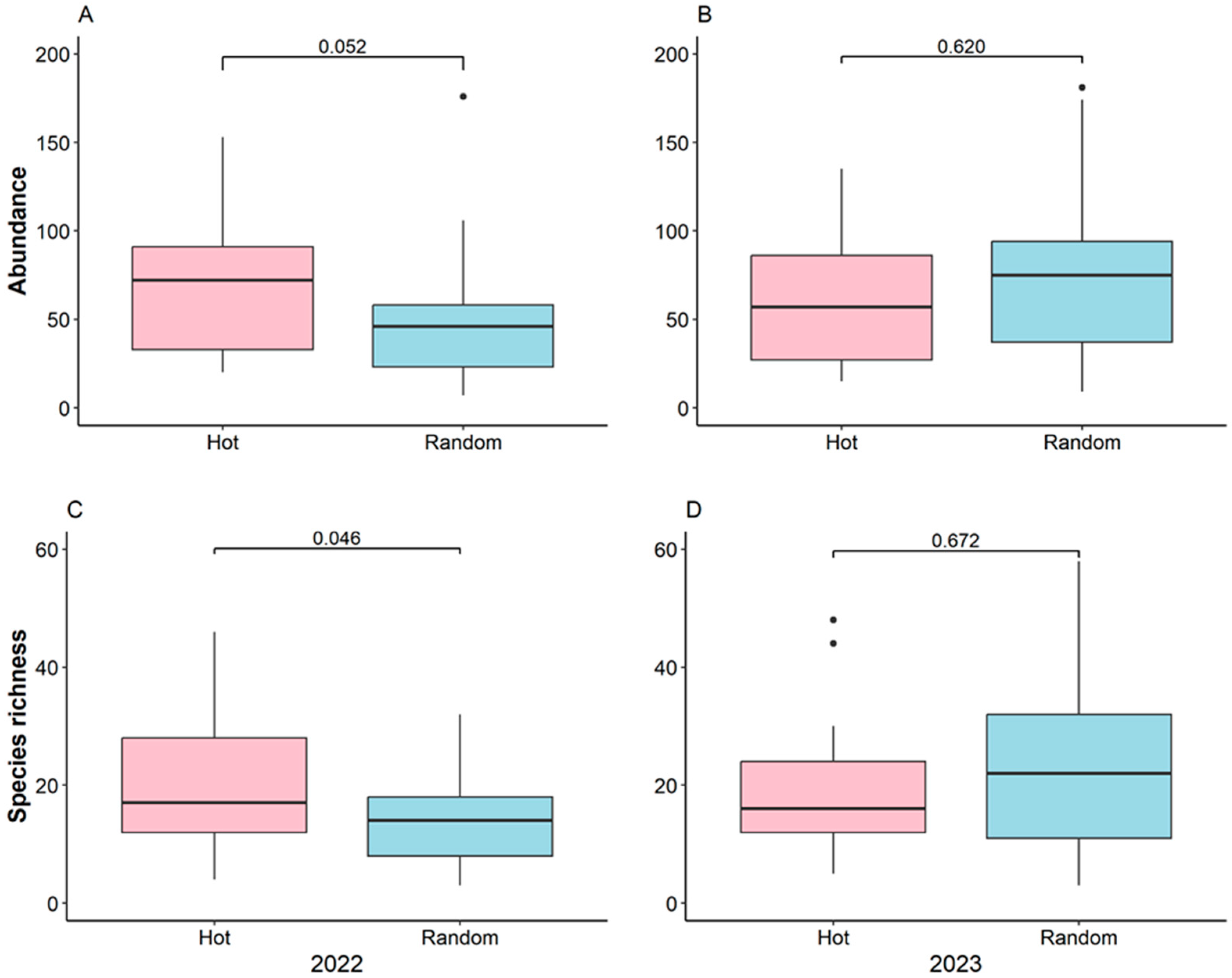
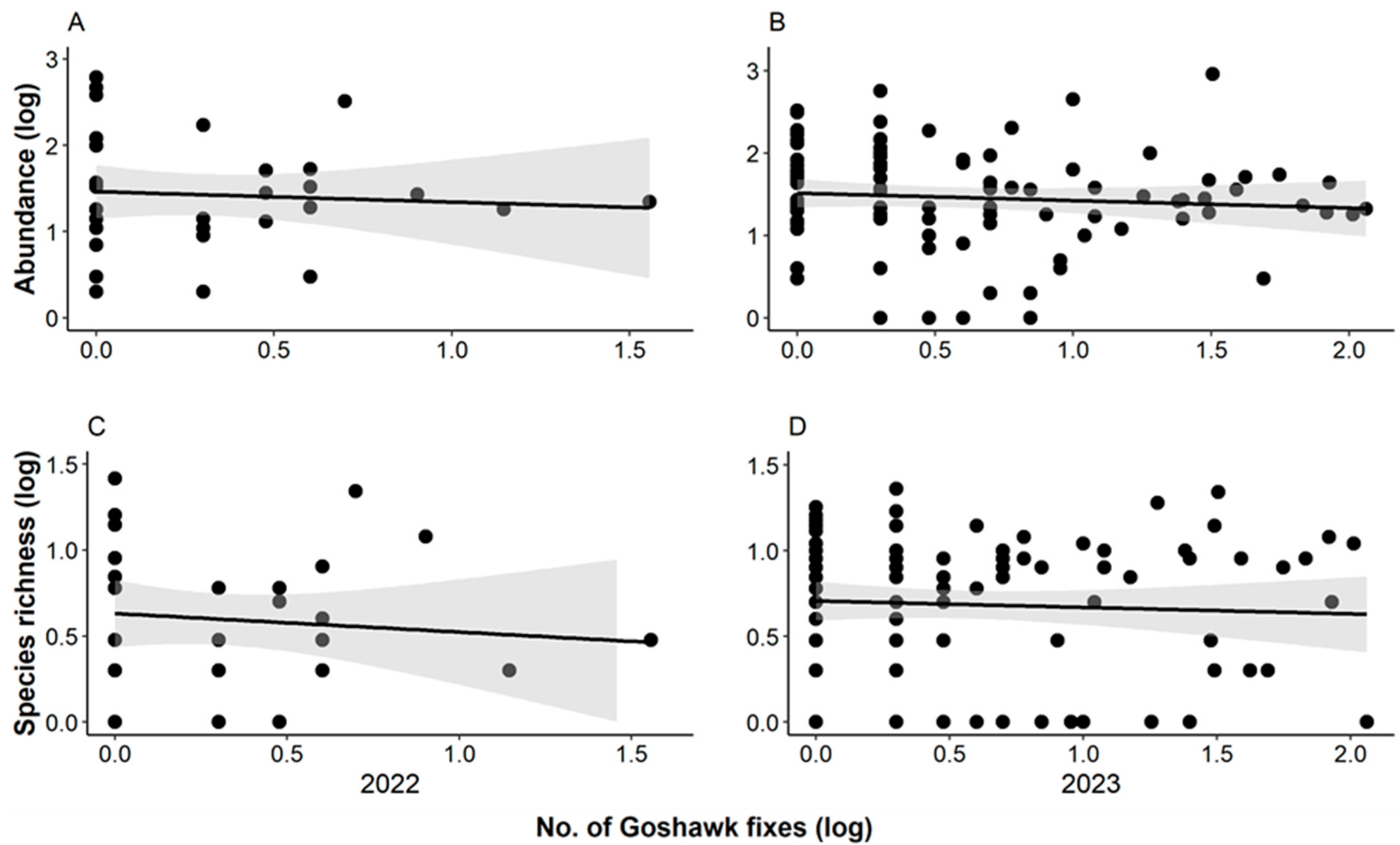
Monitoring of biodiversity in expanding urban areas is an essential part of wildlife conservation. There is evidence that raptors, such as Northern Goshawks (Accipiter gentilis), are effective bioindicator species in urban areas, however, their relationship with other bird populations is not clearly established. We asked whether activity patterns of Goshawks are a reliable indicator of wintering bird abundance and diversity in urban ecosystems. We tracked the movement of eight GPS-tagged Goshawks in the city of Tartu (Estonia) and analysed the numbers and diversity of birds in the same area using direct mapping and occasional data obtained from birdwatchers. The direct mapping approach revealed that the number of birds and avian species richness were higher in Goshawk activity hotspots than at random sites in 2022, however, no such differences were detected in 2023. Analysis of occasional citizen-collected data showed no effect of avian abundance nor species richness on the distribution of Goshawk activity. These results suggested that the movements of Goshawks may indicate the abundance and diversity of its prey, however, this relationship depends on the detection methodology. Hence, raptors are a promising bioindicator in urban environments, but results should be interpreted with caution, particularly when using citizen-collected data.
Keywords: bioindicator species; bird abundance; bird diversity; birds of prey; citizen science; GPS telemetry; raptors; sentinel species; urban biodiversity bioindicator species; bird abundance; bird diversity; birds of prey; citizen science; GPS telemetry; raptors; sentinel species; urban biodiversity