


Abstract
Gene therapy is reshaping the therapeutic paradigm in hemophilia by enabling sustained endogenous clotting factor production after a single administration. This approach moves disease management beyond lifelong replacement therapy. While clinical trials have demonstrated marked reductions in bleeding rates and treatment burden, real-world implementation has revealed emerging complexities. These include interindividual variability in transgene expression reflected by a progressive reduction in circulating FVIII or FIX activity over time, uncertainty regarding the long-term durability of expression, immune-mediated constraints, and episodes of transaminase elevation. This review addresses a critical transition point in the field: the shift from proof-of-concept efficacy toward integration of gene therapy into long-term hemophilia care. We examine determinants of therapeutic stability, host–vector immune interactions, and mechanisms underlying loss or fluctuation of expression, with emphasis on monitoring strategies and post-therapy management pathways. Immunogenic processes affecting vector transduction, hepatocellular responses, and transgene persistence are discussed alongside current approaches to immune modulation. This review uniquely focuses on post-gene therapy clinical integration rather than vector design or trial outcomes. Beyond direct factor correction, evolving therapeutic concepts targeting coagulation rebalancing and immune regulation are considered within a systems-based framework. Psychosocial adaptation and patient-reported outcomes are also explored, underscoring that therapeutic success extends beyond hemostatic control. In aggregate, these perspectives position gene therapy not as a singular curative event but as a component of an evolving, biologically integrated management strategy. Long-term follow-up translational research (LTFU) and coordinated global efforts will be essential to optimize durability, safety, and equitable access.
1. Introduction
Hemophilia is a hereditary bleeding disorder characterized by deficiency or dysfunction of clotting factor VIII (hemophilia A) or factor IX (hemophilia B) and is historically associated with recurrent bleeding, progressive joint damage, and long-term disability [1,2]. Although regular replacement therapy has transformed hemophilia from a fatal condition into a chronic, manageable disease, treatment remains dependent on lifelong intravenous administration and does not address the underlying genetic defect.
The development of gene therapy has introduced a novel therapeutic paradigm based on sustained endogenous production of the missing clotting factor following a single administration. Clinical studies have demonstrated significant reductions in bleeding frequency and treatment burden, positioning gene therapy as a major advance in hemophilia management [1]. However, long-term durability of expression, interindividual variability in response, and immune-mediated limitations remain important unresolved issues [3].
Most existing reviews have focused primarily on vector design, trial outcomes, and proof-of-concept efficacy [4]. While Herzog et al. comprehensively covered capsid engineering and phase 1/2 efficacy, they devoted minimal attention to the 5–10 year post-infusion management questions that now dominate clinical practice [5]. In contrast, the clinical integration of gene therapy into long-term hemophilia care—including management of variable responses, durability monitoring, immune-related complications, and post-therapy treatment pathways—remains less comprehensively addressed. As gene therapy transitions from clinical trials to routine practice, these aspects are becoming increasingly relevant to patient management [6,7].
This narrative review was based on literature retrieved from PubMed, Scopus, and Google Scholar using predefined keywords related to gene therapy and hemophilia (e.g., “hemophilia gene therapy”, “factor VIII”, “factor IX”, “AAV vectors”, “Roctavian”, “Hemgenix”, “long-term outcomes”, and “immune response”). The search was limited to publications from 2021 to 2025. All article types, including original studies, preclinical studies, clinical trials, and review articles, were considered based on titles and abstracts.
This review therefore provides a clinically oriented and translational perspective on gene therapy in hemophilia, focusing on its real-world clinical integration and strategies for post-therapy management. In addition, we discuss quality-of-life outcomes, psychosocial adaptation, and emerging therapeutic concepts extending beyond direct factor replacement, placing gene therapy within the evolving framework of hemophilia care.
2. Gene Therapy in Hemophilia
2.1. Mechanisms of AAV Gene Therapy in Hemophilia
Gene therapy for hemophilia is based on liver-directed delivery of a functional factor VIII (FVIII) or factor IX (FIX) gene to enable endogenous production of the missing clotting factor [8,9]. Current clinical strategies primarily employ adeno-associated viral (AAV) vectors due to their hepatotropism, favorable safety profile, and ability to mediate long-term transgene expression [10,11,12].
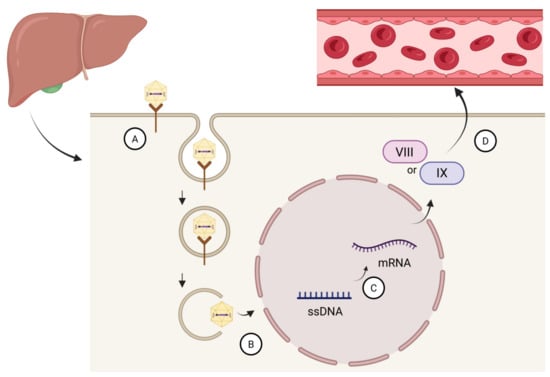
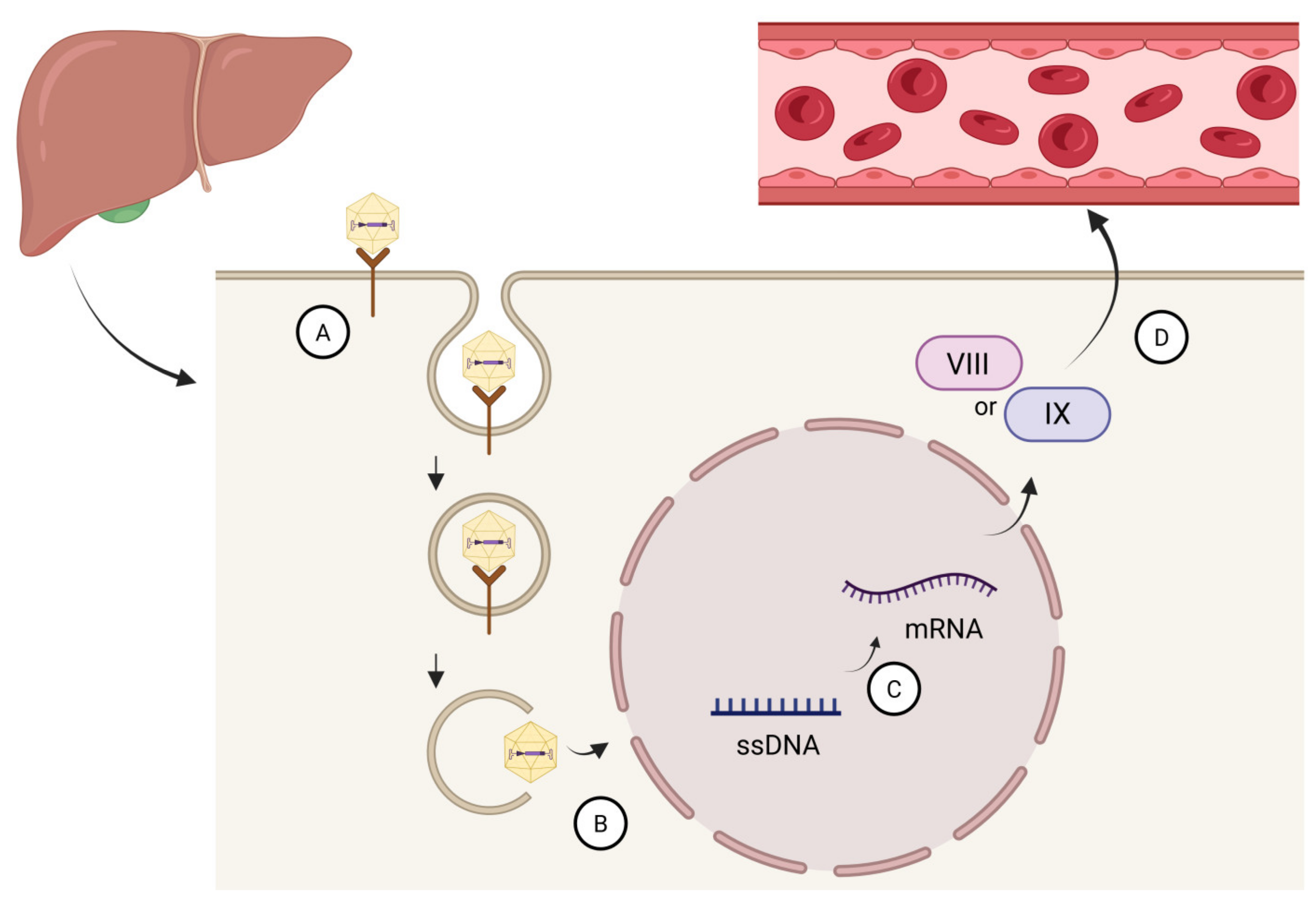
Following systemic administration, AAV vectors bind to specific cell surface receptors and are internalized by hepatocytes. After endosomal escape, the vector genome is transported to the nucleus, where it persists predominantly as episomal DNA rather than integrating into the host genome. This episomal persistence supports sustained transcription of the therapeutic transgene while minimizing the risk of insertional mutagenesis (Figure 1) [10,12,13].
Figure 1.
Conceptual framework of AAV-mediated gene therapy in hemophilia. (A) Binding of the adeno-associated viral (AAV) vector to the hepatocyte surface receptor and cellular uptake of the vector. (B) Intracellular trafficking of the AAV vector and delivery of the vector genome to the nucleus. (C) After entry into the nucleus, the single-stranded AAV genome undergoes second-strand synthesis to form double-stranded DNA. (D) Transcription and translation of the therapeutic transgene lead to intracellular production of clotting factor VIII or IX, followed by its secretion into the circulation, restoring hemostasis.
2.2. Vector Design Considerations
Vector design is a critical determinant of therapeutic performance. Expression cassettes include liver-specific promoters to enhance hepatocyte-restricted transcription and reduce off-target expression. Codon optimization and regulatory elements are incorporated to improve transcriptional efficiency and protein production [14]. In hemophilia A, the use of B-domain-deleted FVIII constructs enables packaging within the limited AAV genome capacity, whereas hemophilia B gene therapy often utilizes high-activity FIX variants (e.g., FIX-Padua) to enhance functional output at lower expression levels [15,16].
2.3. Dose–Response and Determinants of Expression
Dose–response relationships are a central feature of AAV-mediated gene transfer. Higher vector doses generally correlate with increased transgene expression but are also associated with a greater risk of immune-mediated hepatocellular responses. Consequently, therapeutic dosing represents a balance between achieving sufficient factor activity and minimizing immunogenicity [17].
AAV vectors do not support efficient re-administration due to the development of anti-capsid neutralizing antibodies. Therefore, current treatment paradigms rely on single-dose strategies and emphasize patient selection based on pre-existing immunity. Long-term expression durability depends on hepatocyte stability, immune tolerance, and transcriptional regulation of the episomal transgene [18,19]. This platform-based framework underpins current clinical gene therapy approaches in hemophilia and informs ongoing efforts to optimize vector design, dosing strategies, and immune management.
3. Immunological Determinants of Gene Therapy Outcomes
3.1. Immune Barriers to AAV-Mediated Gene Transfer
Immunogenicity is a major determinant of the efficacy and durability of AAV-mediated gene therapy in hemophilia. Immune responses may target the viral capsid, transduced hepatocytes, or the transgene product, affecting both initial transduction and long-term expression [20,21,22].
3.2. Adaptive Immune Responses and Loss of Expression
Pre-existing anti-AAV neutralizing antibodies (NAbs) reduce vector entry into hepatocytes and represent a key eligibility limitation. Post-infusion adaptive immune responses can be broadly divided into two mechanistically distinct components: capsid-specific T cell responses and transgene-specific T cell responses. Capsid-specific T cell responses arise when peptides derived from the viral vector capsid are processed and presented on MHC class I molecules by transduced hepatocytes shortly after vector administration. Activated CD8+ T cells recognize these capsid-derived epitopes and eliminate transduced hepatocytes, leading to increased serum aminotransferase activity and a subsequent decrease in transgene expression, whereas transgene-specific T cell responses are directed against peptides derived from the therapeutic protein encoded by the transgene. Transgene-specific CD8+ T cells can attack and destroy cells expressing the therapeutic protein, but the response occurs later and is more persistent [5]. In addition to these adaptive immune mechanisms, innate immune components such as Kupffer cells contribute to early vector detection and antigen presentation, while regulatory T cells (Tregs) can modulate immune tolerance and influence the persistence of transgene expression [23]. Therefore, early detection and immunomodulatory intervention are essential to preserve expression [22].
Immune responses directed against the transgene product (FVIII/FIX) are less frequent than with exogenous replacement therapy but remain clinically relevant, especially in patients with limited prior immune tolerance.
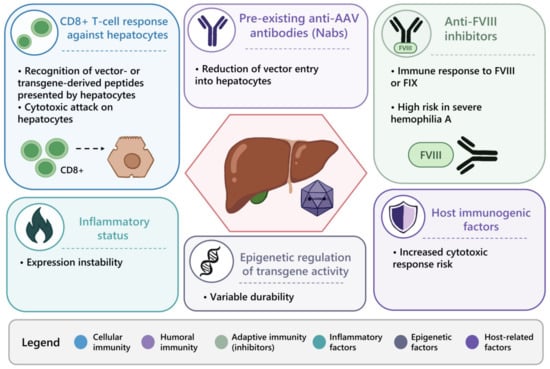
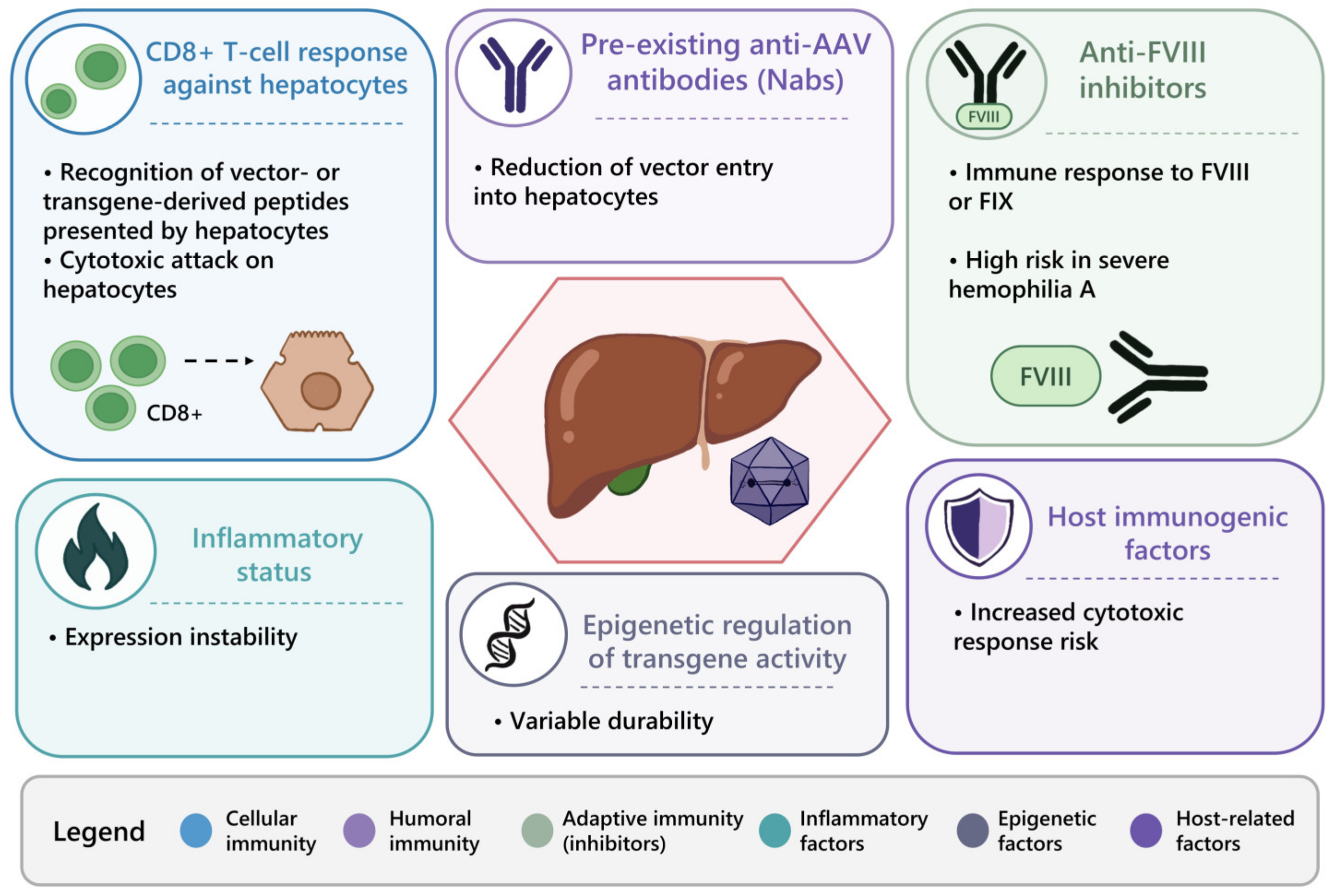
Long-term expression stability may also be influenced by host immunogenetic factors, inflammatory status, and epigenetic regulation of transgene activity, which together shape the risk of immune-mediated expression decline and are reflected in clinically observable patterns (Figure 2) [24]. These mechanisms provide a conceptual framework for interpreting post-therapy fluctuations in factor activity and guiding clinical monitoring.
Figure 2.
Key immunological barriers in hemophilia gene therapy. The figure summarizes the main factors influencing gene therapy outcomes, including the CD8+ T cell response to transduced hepatocytes, preexisting anti-AAV antibodies limiting vector delivery, and the development of anti-FVIII inhibitors. Additional factors, such as inflammatory status, epigenetic regulation, and host immunogenetic factors, contribute to the variability and persistence of transgene expression.
3.3. Clinical Monitoring and Immunomodulatory Strategies
Immunological determinants of gene therapy outcomes should be considered within a dynamic host–vector interaction framework. Monitoring markers include anti-AAV NAb titers, liver enzyme levels, T-cell activation profiles, and inhibitor testing. Management strategies focus on immunomodulation, most commonly corticosteroids, to prevent immune-mediated loss of expression. Key mechanisms, clinical markers, and management approaches are summarized in Table 1. Further translational research is required to optimize immune monitoring, refine patient selection, and improve vector design to enhance durability and safety.
Table 1.
Immunological determinants of gene therapy outcomes in hemophilia and corresponding clinical management strategies.
3.4. Emerging Perspectives: Microbiome Considerations
While hemophilia is defined by a deficiency of clotting factors, increasing attention has been directed toward putative systemic inflammatory and immune mechanisms that may influence disease expression and treatment outcomes. The gut microbiome, a central regulator of immune homeostasis, has emerged as a potential contributor to these processes [31]. However, this remains a hypothesis-generating area, and direct evidence in hemophilia is limited.
Chronic low-grade inflammation is frequently observed in patients with hemophilia, particularly in the context of recurrent joint bleeding and synovial damage [32]. Gut dysbiosis has been associated with systemic inflammatory activation through increased intestinal permeability and translocation of microbial products such as lipopolysaccharides (LPS) [33]. However, evidence linking these mechanisms specifically to hemophilia-related joint pathology remains limited. While such pathways may be relevant to systemic inflammation, their role in the development or progression of hemophilic arthropathy has not yet been established.
The microbiome may also influence immune tolerance mechanisms relevant to hemophilia treatment. Early-life microbiota composition has been implicated in shaping immune responses to therapeutic proteins, raising the hypothesis that microbiome-related factors could modulate the risk of inhibitor development [34,35,36].
Potential microbiome-targeted interventions, including dietary modification and probiotic strategies aimed at restoring microbial balance, are being explored in inflammatory and immune-mediated conditions [37,38,39]. Their relevance to hemophilia and gene therapy remains speculative and requires dedicated translational research.
At present, the microbiome should be considered a potential modifier of inflammatory tone and immune responsiveness rather than a confirmed determinant of clinical outcomes. Further studies are needed to determine whether these hypothesis-generating associations translate into clinically meaningful effects in hemophilia, including interactions with gene therapy–induced immune mechanisms (Table 2).
Table 2.
Potential links between the gut microbiome and disease-modifying pathways in hemophilia.
4. Clinical Translation of AAV Gene Therapy
4.1. Clinical Trial Outcomes and Approved Therapies
Over the past decade, clinical translation of AAV-mediated gene therapy has progressed rapidly in both hemophilia B and hemophilia A. Early clinical development focused on hemophilia B, as the smaller size of the factor IX gene facilitated efficient AAV packaging and contributed to more predictable expression profiles. Phase 1/2 studies demonstrated durable, stable FIX expression at therapeutically meaningful levels over long-term follow-up (3–5 years), accompanied by substantial reductions in annual bleeding rates (0.14) and bleeding cessation in a subset of patients, as shown in a phase 2b study of etranacogene dezaparvovec with sustained FIX activity (40–45%) maintained over 5 years [40]. The incorporation of high-activity FIX variants, such as FIX-Padua, has further enhanced therapeutic efficacy by enabling clinically meaningful FIX activity at lower expression levels.
Subsequent development in hemophilia A required the use of B-domain-deleted FVIII constructs to accommodate AAV genome capacity. Advances in vector engineering, promoter optimization, and dose selection have led to sustained FVIII expression and marked reductions in bleeding frequency in clinical studies [41,42,43,44].
Valoctocogene roxaparvovec (Roctavian), an AAV5-based gene therapy delivering a B-domain-deleted FVIII transgene to hepatocytes, has received regulatory approval in the United States and the European Union for adults with severe hemophilia A (Appendix A). A single administration can result in sustained FVIII expression, reduced annual bleeding rates, and discontinuation of routine prophylaxis in many patients [7]. Similarly, etranacogene dezaparvovec (Hemgenix), a liver-directed AAV-based therapy for hemophilia B utilizing the FIX-Padua variant, has demonstrated stable FIX activity, major reductions in bleeding episodes, and cessation of prophylaxis in a substantial proportion of treated individuals (Appendix A) [45].
4.2. Determinants of Clinical Response
From a clinical perspective, liver-directed expression is central to therapeutic success, as hepatocytes enable systemic secretion of clotting factors. However, dosing strategies require a balance between achieving adequate factor activity and minimizing immune-mediated hepatocellular responses, reflected by the association between higher vector doses and transaminase elevations. In addition, the high upfront cost of gene therapy, coupled with variability in reimbursement frameworks, contributes to substantial disparities in global access and may limit its widespread implementation in routine clinical practice. These disparities are especially evident in low- and middle-income countries, where structural, economic, and healthcare system constraints markedly limit equitable access to gene therapy.
4.3. Limitations and Barriers to Clinical Implementation
Despite these advances, several factors limit routine clinical implementation. Durability of expression remains variable, and a gradual decline in factor levels has been observed in some patients during extended follow-up, with FVIII activity decreasing from initial post-treatment of 40–60% to 15–20% over 2–7 years [46]. Because AAV administration induces durable anti-capsid immunity, current paradigms rely on a single-dose strategy, and loss of expression cannot be corrected through simple re-dosing. Additional barriers include pre-existing anti-AAV antibodies, high upfront treatment costs, restricted eligibility criteria, and the need for close monitoring of hepatic and immune-related adverse events. These limitations underscore that gene therapy, although transformative, remains a complex intervention requiring careful patient selection, structured follow-up, and long-term outcome monitoring.
Ongoing clinical research focuses on improved vector design, optimized dosing, and mitigation of immune responses to sustain expression. Despite robust phase 3 efficacy and safety data, real-world evidence remains limited. Preliminary data from post-commercialization cohorts and international registries are beginning to inform implementation, patient selection, and outcome variability [47]. Extended follow-up and real-world data are essential to define durability, long-term safety, and optimal integration into individualized hemophilia care (Table 3).
Table 3.
Key challenges in clinical implementation of gene therapy in hemophilia.
5. Individualized Management After Gene Therapy
5.1. Heterogeneity of Clinical Response and Expression Durability
Clinical responses to gene therapy in hemophilia are heterogeneous, with variability in the level and durability of transgene expression among treated individuals. Not all patients achieve optimal or sustained factor activity, and gradual decline in expression has been observed in a subset during long-term follow-up. These scenarios necessitate individualized post-gene therapy management strategies to maintain effective hemostatic control [7].
Although gene therapy aims to reduce or eliminate the need for replacement therapy, integration with established treatment modalities may be required in selected clinical situations. Conventional hemophilia care models, centered on prophylaxis and on-demand factor administration, remain relevant when endogenous factor levels are insufficient to ensure adequate bleed protection.
5.2. Post-Therapy Monitoring and Triggers for Intervention
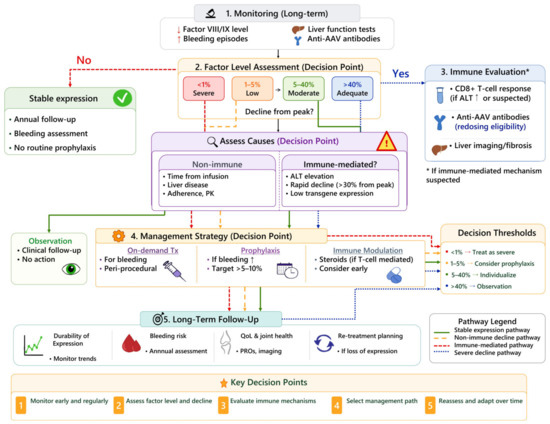
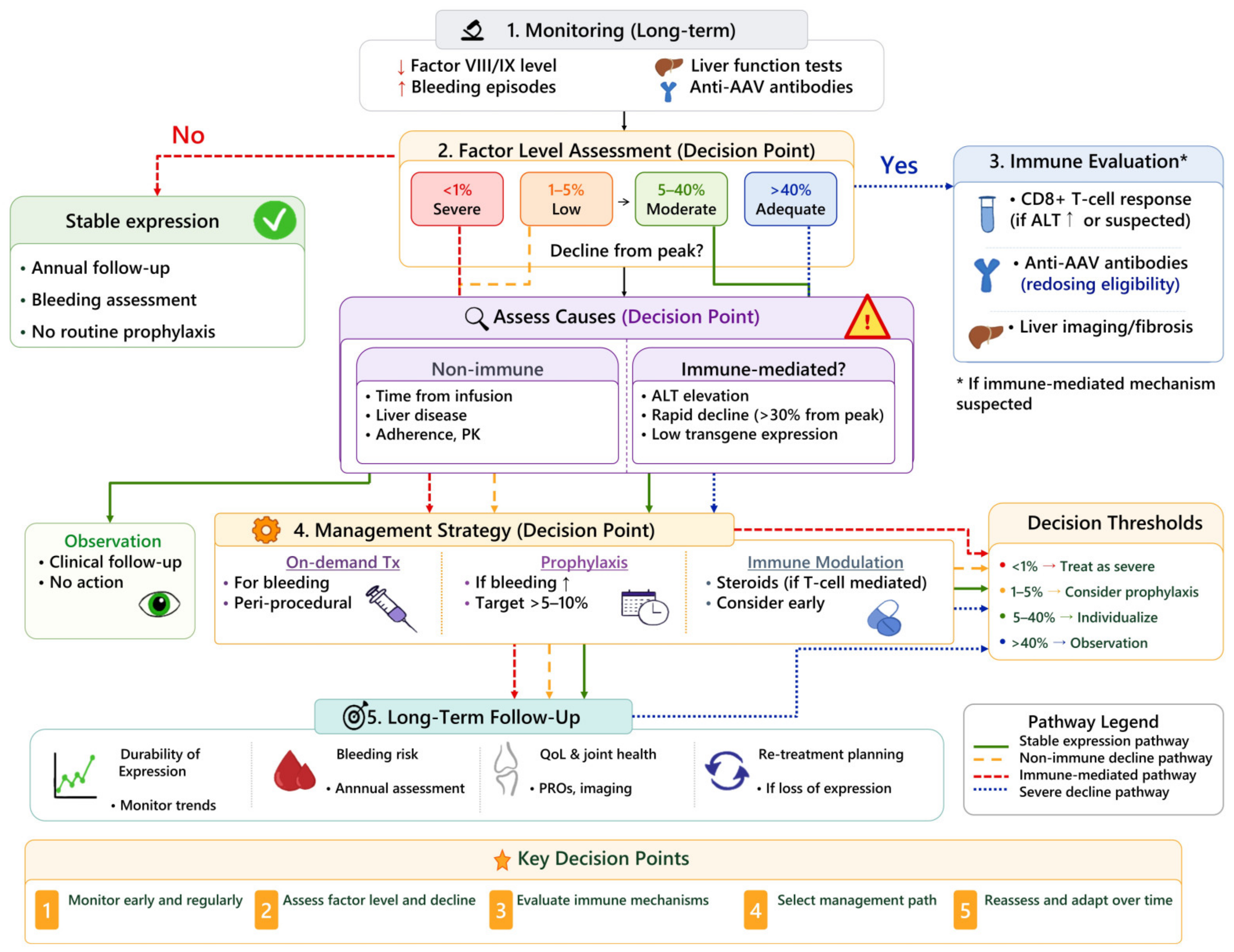
Regular monitoring of factor activity after gene therapy is therefore essential, as early post-treatment expression does not necessarily predict long-term durability. Clinical decision-making should be guided not only by factor activity levels, but also by bleeding phenotype, as the relationship between transgene expression and bleeding outcomes may be non-linear. Declining factor levels may require implementation of supportive therapeutic strategies (Table 4) [45,48,49].
Table 4.
Management strategies for suboptimal or non-durable response after gene therapy.
5.3. Management of Suboptimal or Declining Response
Suboptimal or non-durable responses to gene therapy represent an important area for systematic investigation. Comprehensive data collection on expression durability, anti-vector immune responses, bleeding outcomes, and subsequent therapeutic interventions is essential for improving long-term management [54]. The identification of predictive biomarkers may facilitate risk stratification and guide clinical decision-making, particularly in the context of declining transgene expression or consideration of re-treatment strategies. International collaboration through patient registries and research networks will be critical for generating sufficiently robust datasets to inform evidence-based care pathways. These efforts support the development of personalized strategies aimed at maintaining hemostatic protection and quality of life in patients with heterogeneous responses to gene therapy [54,55].
Clinical decision-making after gene therapy should integrate factor activity, bleeding phenotype, longitudinal expression dynamics, and patient-specific risk factors (Figure 3).
Figure 3.
Clinical decision-making framework after gene therapy in hemophilia, integrating factor activity, bleeding phenotype, longitudinal expression dynamics, and patient-specific risk factors. The symbol “↑ indicates increase; ↓ indicates decrease.”
7. Emerging Therapeutic Targets Beyond Factor Correction
Although factor replacement and gene transfer of FVIII or FIX remain central strategies in hemophilia management, increasing attention is directed toward therapeutic approaches that restore hemostatic balance without direct correction of the primary factor deficiency [63,64]. These strategies reflect a broader systems-based understanding of coagulation regulation and immune modulation.
7.1. Rebalancing Hemostasis
Rebalancing strategies target natural anticoagulant pathways to enhance thrombin generation independently of factor levels. Therapies reducing antithrombin activity and agents targeting tissue factor pathway inhibitor (TFPI) exemplify this approach. These strategies are particularly relevant for patients with inhibitors and illustrate a paradigm in which coagulation is restored through modulation of regulatory pathways rather than direct factor replacement [63,64,65,66].
7.2. Gene Editing Approaches
Emerging gene-based technologies extend beyond episomal gene addition. Genome editing strategies, including CRISPR/Cas9-mediated approaches, aim to achieve stable genomic modification of coagulation-related genes or regulators. These approaches may enable more controlled and durable correction while potentially reducing limitations related to vector persistence and immune responses. Notably, in vivo CRISPR-based gene editing for hemophilia B has recently entered early-phase human clinical trials, representing a key step toward durable genomic correction [67,68].
7.3. Immunomodulatory Strategies
Immune responses remain critical determinants of therapeutic outcomes in hemophilia. Strategies aimed at improving immune tolerance, such as modulation of adaptive immune pathways, control of anti-vector immunity, and induction of regulatory immune mechanisms represent an important area of investigation. These approaches may reduce inhibitor formation, stabilize transgene expression, and broaden eligibility for advanced therapeutic platforms [69,70].
7.4. Microbiome–Immune Interactions
The gut microbiome is increasingly recognized as a regulator of systemic immune tone and inflammatory balance. Alterations in microbial composition may affect immune responses and chronic inflammatory processes, potentially affecting disease expression and therapeutic responses. Although evidence in hemophilia remains limited, microbiome-related immune modulation represents a potential adjunct area for future research [32,33,34,35].
7.5. Closing Perspective
In aggregate, these emerging directions indicate a shift from isolated correction of coagulation factor deficiency toward integrated modulation of coagulation balance, immune regulation, and systemic inflammatory processes. Future therapeutic paradigms in hemophilia are therefore likely to combine hemostatic correction with targeted control of immunological mechanisms, reflecting an increasingly personalized and systems-oriented approach to disease management (Table 6).
Table 6.
Emerging therapeutic directions beyond factor replacement.
8. Summary
Gene therapy has reshaped the therapeutic landscape of hemophilia by enabling sustained endogenous production of the missing clotting factor following a single administration. This transition from lifelong replacement therapy toward durable biological correction represents a major advance in the management of this hereditary bleeding disorder.
Clinical studies have demonstrated marked reductions in bleeding frequency and treatment burden. However, variability in transgene expression, uncertainty regarding long-term durability, and immune-mediated limitations remain key challenges. These factors underscore the need to integrate gene therapy into structured care models incorporating patient selection, monitoring, and individualized post-therapy management, rather than viewing it as a definitive cure.
Immunological mechanisms are central determinants of therapeutic outcomes, influencing vector transduction efficiency, expression stability, and treatment eligibility. Understanding host–vector interactions and refining immunomodulatory strategies are therefore critical for improving durability and expanding clinical applicability.
Beyond direct factor correction, evolving therapeutic concepts aim to modulate coagulation balance, immune responses, and systemic inflammatory pathways. Rebalancing strategies, gene editing technologies, and tolerance-oriented approaches illustrate a broader shift toward systems-based management of hemophilia. Improvements in quality of life are substantial, yet psychosocial adaptation and ongoing support remain important components of comprehensive care.
The results should be interpreted in light of several limitations, including the absence of extended follow-up data, heterogeneity among the included studies, and the lack of randomized controlled trials in certain areas.
In conclusion, gene therapy represents a transition from replacement-based treatment to biologically integrated therapeutic paradigms. Continued translational research, longitudinal outcome data, and international collaboration will be essential to optimize durability, safety, and equitable access, ensuring that the full clinical potential of gene therapy can be realized.
Author Contributions
Conceptualization, A.S., A.W. (Andrzej Wasilewski), A.W. (Amelia Wawrzkiewicz), A.K. and E.W.; methodology, A.S., A.W. (Andrzej Wasilewski), A.W. (Amelia Wawrzkiewicz), A.K. and E.W.; visualization, A.W. (Amelia Wawrzkiewicz) and A.K.; writing—original draft preparation, A.S.; writing—review and editing, A.S., A.W. (Andrzej Wasilewski), A.W. (Amelia Wawrzkiewicz), A.K. and E.W. All authors have read and agreed to the published version of the manuscript.
Funding
This research received no external funding.
Institutional Review Board Statement
Not applicable.
Informed Consent Statement
Not applicable.
Data Availability Statement
No new data were created or analyzed in this study. Data sharing is not applicable to this article.
Acknowledgments
During the preparation of this manuscript, the authors used BioRender (https://biorender.com) to prepare figures (accessed on 26 April 2026).
Conflicts of Interest
The authors declare no conflicts of interest.
Appendix A
Table A1.
Approved gene therapies for hemophilia and their mechanisms of action.
References
- Mendell, J.R.; Al-Zaidy, S.A.; Rodino-Klapac, L.R.; Goodspeed, K.; Gray, S.J.; Kay, C.N.; Boye, S.L.; Boye, S.E.; George, L.A.; Salabarria, S.; et al. Current Clinical Applications of In Vivo Gene Therapy with AAVs. Mol. Ther. 2021, 29, 464–488. [Google Scholar] [CrossRef] [Scilit]
- Chowdary, P.; Carcao, M.; Kenet, G.; Pipe, S.W. Haemophilia. Lancet 2025, 405, 736–750. [Google Scholar] [CrossRef] [Scilit]
- Nathwani, A.C. Gene Therapy for Hemophilia. Hematol. Am. Soc. Hematol. Educ. Program. 2019, 2019, 1–8. [Google Scholar] [CrossRef] [Scilit]
- Suarez-Amaran, L.; Song, L.; Tretiakova, A.P.; Mikhail, S.A.; Samulski, R.J. AAV vector development, back to the future. Mol. Ther. 2025, 33, 1903–1936. [Google Scholar] [CrossRef] [Scilit]
- Herzog, R.W.; Kaczmarek, R.; High, K.A. Gene therapy for hemophilia—From basic science to first approvals of “one-and-done” therapies. Mol. Ther. 2025, 33, 2015–2034. [Google Scholar] [CrossRef] [Scilit] [PubMed]
- Ay, C.; Reinisch, A. Gene therapy: Principles, challenges and use in clinical practice. Wien. Klin. Wochenschr. 2025, 137, 261–271. [Google Scholar] [CrossRef] [Scilit]
- Samelson-Jones, B.J.; Small, J.C.; George, L.A. Roctavian gene therapy for hemophilia A. Blood Adv. 2024, 8, 5179–5189. [Google Scholar] [CrossRef] [Scilit] [PubMed]
- Chernyi, N.; Gavrilova, D.; Saruhanyan, M.; Oloruntimehin, E.; Karabelsky, A.; Bezsonov, E.; Malogolovkin, A. Recent Advances in Gene Therapy for Hemophilia: Projecting the Perspectives. Biomolecules 2024, 14, 854. [Google Scholar] [CrossRef] [Scilit]
- Pang, X.; Fu, J.; Zhou, Z.; Tang, N.; Lau, C.; Wen, Y.; Chen, P.; Zhao, J.; Xue, H. Recent Advances in Gene Therapy for Hemophilia. Clin. Appl. Thromb. Hemost. 2025, 2022, 569–578. [Google Scholar] [CrossRef] [Scilit] [PubMed]
- Chuecos, M.A.; Lagor, W.R. Liver directed adeno-associated viral vectors to treat metabolic disease. J. Inherit. Metab. Dis. 2024, 47, 22–40. [Google Scholar] [CrossRef] [Scilit]
- Kaczmarek, R.; Miesbach, W.; Ozelo, M.C.; Chowdary, P. Current and emerging gene therapies for haemophilia A and B. Haemophilia 2024, 3, 12–20. [Google Scholar] [CrossRef] [Scilit]
- Kim, J.; Kurial, S.N.; Choksi, P.K.; Nunez, M.; Lunow-Luke, T.; Bartel, J.; Driscoll, J.; Her, C.L.; Dhillon, S.; Yue, W.; et al. AAV capsid prioritization in normal and steatotic human livers maintained by machine perfusion. Nat. Biotechnol. 2025, 43, 1966–1978. [Google Scholar] [CrossRef] [Scilit] [PubMed]
- Dalwadi, D.A.; Calabria, A.; Tiyaboonchai, A.; Posey, J.; Naugler, W.E.; Montini, E.; Grompe, M. AAV integration in human hepatocytes. Mol. Ther. 2021, 29, 2898–2909. [Google Scholar] [CrossRef] [Scilit]
- Shoti, J.; Qing, K.; Srivastava, A. Development of an AAV DNA-based synthetic vector for the potential gene therapy of hemophilia in children. Front. Microbiol. 2022, 6, 1033615. [Google Scholar] [CrossRef] [Scilit]
- Wolf, D.D.; Singh, K.; Chuah, M.K.; Vanden Driessche, T. Hemophilia Gene Therapy: The End of the Beginning? Hum. Gene Ther. 2023, 34, 782–792. [Google Scholar] [CrossRef] [Scilit]
- Cuker, A.; Kavakli, K.; Frenzel, L.; Wang, J.; Astermark, J.; Cerqueira, M.H.; Iorio, A.; Katsarou-Fasouli, O.; Klamroth, R.; Shapiro, A.D. BENEGENE-2 Trial Investigators Gene Therapy with Fidanacogene Elaparvovec in Adults with Hemophilia B. N. Engl. J. Med. 2024, 391, 1108–1118. [Google Scholar] [CrossRef] [Scilit] [PubMed]
- Rajwade, A.; Liu, S.; Kumar, M.; Ghobrial, A.; Hahn, S.; Shah, D.K. Investigation of dose-exposure-response relationship for adeno-associated virus-mediated delivery of antibody genes. J. Pharmacol. Exp. Ther. 2025, 392, 103601. [Google Scholar] [CrossRef] [Scilit] [PubMed]
- Muhuri, M.; Levy, D.I.; Schulz, M.; McCarty, D.; Gao, G. Durability of transgene expression after rAAV gene therapy. Mol. Ther. 2022, 30, 1364–1380. [Google Scholar] [CrossRef] [Scilit]
- Nathwani, A.C. Gene therapy for hemophilia. Hematol. Am. Soc. Hematol. Educ. Program. 2022, 2022, 569–578. [Google Scholar] [CrossRef] [Scilit]
- Reiss, U.M.; Davidoff, A.M.; Tuddenham, E.G.; Chowdary, P.; McIntosh, J.; Muczynski, V.; Journou, M.; Simini, G.; Ireland, L.; Mohamed, S.; et al. Sustained Clinical Benefit of AAV Gene Therapy in Severe Hemophilia B. N. Engl. J. Med. 2025, 392, 2226–2234. [Google Scholar] [CrossRef] [Scilit]
- Piccolo, P.; Brunetti-Pierri, N. Current and Emerging Issues in Adeno-Associated Virus Vector-Mediated Liver-Directed Gene Therapy. Hum. Gene Ther. 2025, 36, 77–87. [Google Scholar] [CrossRef] [Scilit]
- Ertl, H.C. Immunogenicity and toxicity of AAV gene therapy. Front. Immunol. 2022, 13, 975803. [Google Scholar] [CrossRef] [Scilit] [PubMed]
- Mingozzi, F.; High, K.A. Immune responses to AAV vectors: Overcoming barriers to successful gene therapy. Blood 2013, 122, 23–36. [Google Scholar] [CrossRef] [Scilit] [PubMed]
- Maina, A.; Foster, G.R. Hepatitis after gene therapy, what are the possible causes? J. Viral Hepat. 2024, 31, 14–20. [Google Scholar] [CrossRef] [Scilit] [PubMed]
- Batty, P.; Lillicrap, D. Advances and challenges for hemophilia gene therapy. Hum. Mol. Genet. 2019, 28, R95–R101. [Google Scholar] [CrossRef] [Scilit]
- Schulz, M.; Levy, D.I.; Petropoulos, C.J.; Bashirians, G.; Winburn, I.; Mahn, M.; Somanathan, S.; Cheng, S.H.; Byrne, B.J. Binding and neutralizing anti-AAV antibodies: Detection and implication for rAAV-mediated gene therapy. Mol. Ther. 2023, 31, 616–630. [Google Scholar] [CrossRef] [Scilit]
- Gorovits, B.; Azadeh, M.; Buchlis, G.; Fiscella, M.; Harrison, T.; Havert, M.; Janetzki, S.; Jawa, V.; Long, B.; Mahnke, Y.D.; et al. Evaluation of Cellular Immune Response to Adeno-Associated Virus-Based Gene Therapy. AAPS J. 2023, 25, 47. [Google Scholar] [CrossRef] [Scilit]
- Pupo, A.; Fernández, A.; Low, S.H.; François, A.; Suárez-Amarán, L.; Samulski, R.J. AAV vectors: The Rubik’s cube of human gene therapy. Mol. Ther. 2022, 30, 3515–3541. [Google Scholar] [CrossRef] [Scilit]
- Mingot-Castellano, M.E.; Pardos-Gea, J.; Haya, S.; Bastida-Bermejo, J.M.; Tàssies, D.; Marco-Rico, A.; Núñez, R.; García-Candel, F.; de Mora, M.-C.F.-S.; Soto, I.; et al. Management of aquired hemophilia A: Results from the Spanish registry. Blood Adv. 2021, 5, 3821–3829. [Google Scholar] [CrossRef] [Scilit]
- Rodríguez-Merchán, E.C.; De Pablo-Moreno, J.A.; Liras, A. Gene Therapy in Hemophilia: Recent Advances. Int. J. Mol. Sci. 2021, 22, 7647. [Google Scholar] [CrossRef] [Scilit]
- Yang, W.; Cong, Y. Gut microbiota-derived metabolites in the regulation of host immune responses and immune-related diseases. Cell Mol. Immunol. 2021, 18, 866–877. [Google Scholar] [CrossRef] [Scilit] [PubMed]
- O’Mahony, B.; Dunn, A.L.; Leavitt, A.D.; Peyvandi, F.; Ozelo, M.C.; Mahlangu, J.; Peerlinck, K.; Wang, J.-D.; Lowe, G.C.; Tan, C.W.; et al. Healt-related quality of life following valoctocogene roxaparvovec gene therapy for severe hemophilia A in the phase 3 trial GENEr8-1. J. Thromb. Haemost. 2023, 21, 3450–3462. [Google Scholar] [CrossRef] [Scilit]
- An, L.; Wirth, U.; Koch, D.; Schirren, M.; Drefs, M.; Koliogiannis, D.; Nieß, H.; Andrassy, J.; Guba, M.; Bazhin, A.V.; et al. The Role of Gut-Derived Lipopolysaccharides and the Intestinal Barrier in Fatty Liver Diseases. J. Gastrointest. Surg. 2022, 26, 671–683. [Google Scholar] [CrossRef] [Scilit]
- Sehgal, K.; Khanna, S. Gut microbiome and Clostridioides difficile infection: A closer look at the microscopic interface. Ther. Adv. Gastroenterol. 2021, 14, 1756284821994736. [Google Scholar] [CrossRef] [Scilit]
- Kumar, S.R.; Wang, X.; Avuthu, N.; Bertolini, T.B.; Terhorst, C.; Guda, C.; Daniell, H.; Herzog, R.W. Role of Small Intestine and Gut Microbiome in Plant-Based Oral Tolerance for Hemophilia. Front. Immunol. 2020, 11, 844. [Google Scholar] [CrossRef] [Scilit] [PubMed]
- Tarrant, J.; Cormier, M.; Nesbitt, K.; Dwyer, C.; Hough, C.; Lillicrap, D. Gut dysbiosis modulates the immune response to the factor VIII in murine hemophilia A. Blood Adv. 2020, 4, 2644–2655. [Google Scholar] [CrossRef] [Scilit]
- Feng, J.J.; Maddirala, N.R.; Fleur, A.S.; Zhou, F.; Yu, D.; Wei, F.; Zhang, Y. Gut Microbiome and Immune System Crosstalk in Chronic Inflammatory Diseases: A Narrative Review of Mechanisms and Therapeutic Opportunities. Microorganisms 2025, 13, 2516. [Google Scholar] [CrossRef] [Scilit] [PubMed]
- Zhang, Y.; Fleur, A.S.; Feng, H. The development of live biotherapeutics against Clostridiodes difficile infection towards reconstituting gut microbiota. Gut Microbes 2022, 14, 2052698. [Google Scholar] [CrossRef] [Scilit]
- Zheng, D.; Liwinski, T.; Elinav, E. Interaction between microbiota and immunity in health and disease. Cell Res. 2020, 30, 492–506. [Google Scholar] [CrossRef] [Scilit]
- Von Drygalski, A.; Gomez, E.; Giermasz, A.; Castaman, G.; Key, N.S.; Lattimore, S.U.; Leebeek, F.W.G.; Miesbach, W.A.; Recht, M.; Monahan, P.E.; et al. Completion of phase 2b trial of etranacogene dezaparvovec gene therapy in patients with hemophilia B over 5 years. Blood Adv. 2025, 9, 3543–3552. [Google Scholar] [CrossRef] [Scilit]
- Batty, P.; Lillicrap, D. Gene therapy for hemophilia: Current status and laboratory consequences. Int. J. Lab. Hematol. 2021, 43, 117–123. [Google Scholar] [CrossRef] [Scilit]
- Harrison, P.T.; Friedmann, T. Cost of gene therapy. Gene Ther. 2023, 30, 737, Erratum in Gene Ther. 2024, 31, 195–196.. [Google Scholar] [CrossRef] [Scilit] [PubMed]
- Salzman, R.; Cook, F.; Hunt, T.; Malech, H.L.; Reilly, R.; Foss-Campbell, B.; Barrett, D. Addressing the Value of Gene Therapy and Enhancing Patient Access to Transformative Treatments. Mol. Ther. 2018, 26, 2717–2726. [Google Scholar] [CrossRef] [Scilit] [PubMed]
- Hussain, M.S.; Maqbool, M.; Arab, M.M.; Rana, A.J.; Ashique, S.; Khan, Y.; Jakhmola, V.; Gupta, G. Transforming Hemophilia Management: Lessons from Gene Therapy Clinical Trials. Mol. Biotechnol. 2026, 68, 1597–1608. [Google Scholar] [CrossRef] [Scilit] [PubMed]
- Pipe, S.W.; Leebeek, F.W.; Recht, M.; Key, N.S.; Castaman, G.; Miesbach, W.; Lattimore, S.; Peerlinck, K.; Van der Valk, P.; Coppens, M.; et al. Gene Therapy with Etranacogene Dezaparvovec for Hemophilia B. N. Engl. J. Med. 2023, 388, 706–718. [Google Scholar] [CrossRef] [Scilit]
- Fong, S.; Swystun, L.L.; Batty, P.; Lillicrap, D. Translational insights from nonclinical studies of AAV gene therapies for hemophilia: Mechanisms underpinning variability and durability of gene expression. Ther. Adv. Hematol. 2026, 17, 20406207251406537. [Google Scholar] [CrossRef] [Scilit]
- GENEr8-GTR: A Retrospective Cohort Study of Patients Treated with ROCTAVIANTM (Valoctocogene Roxaparvovec): An Analysis of Patient Registries (BMN 270-801). Available online: https://catalogues.ema.europa.eu/node/3388/methodological-aspects (accessed on 26 April 2026).
- Doshi, B.S.; Arruda, V.R. Gene therapy for hemophilia: What does the future hold? Ther. Adv. Hematol. 2018, 9, 273–293. [Google Scholar] [CrossRef] [Scilit]
- Gross, D.A.; Tedesco, N.; Leborgne, C.; Ronzitti, G. Overcoming the Challenges Imposed by Humoral Immunity to AAV Vectors to Achieve Safe and Efficient Gene Transfer in Seropositive Patients. Front. Immunol. 2022, 13, 857276. [Google Scholar] [CrossRef] [Scilit]
- Bolous, N.S.; Bhatt, N.; Bhakta, N.; Neufeld, E.J.; Davidoff, A.M.; Reiss, U.M. Gene Therapy and Hemophilia: Where Do We Go from Here? J. Blood Med. 2022, 6, 559–580. [Google Scholar] [CrossRef] [Scilit]
- Lambert, T.; Benson, G.; Dolan, G.; Hermans, C.; Jiménez-Yuste, V.; Ljung, R.; Morfini, M.; Zupančić-Šalek, S.; Santagostino, E. Practical aspects of extended half-life products for the treatment of haemophilia. Ther. Adv. Hematol. 2018, 9, 295–308. [Google Scholar] [CrossRef] [Scilit]
- Oldenburg, J.; Mahlangu, J.N.; Kim, B.; Schmitt, C.; Callaghan, M.U.; Young, G.; Santagostino, E.; Kruse-Jarres, R.; Negrier, C.; Kessler, C.; et al. Emicizumab Prophylaxis in Hemophilia A with Inhibitors. N. Engl. J. Med. 2017, 377, 809–818. [Google Scholar] [CrossRef] [Scilit] [PubMed]
- Jiménez-Yuste, V. Non-factor Therapies for Hemophilia: Achievements and Perspectives. Semin. Thromb. Hemost. 2025, 51, 23–27. [Google Scholar] [CrossRef] [Scilit]
- Puetz, J.; Soucie, J.M.; Kempton, C.L.; Monahan, P.E. Prevalent inhibitors in haemophilia B subjects enrolled in the Universal Data Collection database. Haemophilia 2014, 20, 25–31. [Google Scholar] [CrossRef] [Scilit]
- Dolan, G.; Benson, G.; Bowyer, A.; Eichler, H.; Hermans, C.; Jiménez-Yuste, V.; Ljung, R.; Pollard, D.; Santagostino, E.; Šalek, S.Z. Principles of care for acquired hemophilia. Eur. J. Haematol. 2021, 106, 762–773. [Google Scholar] [CrossRef] [Scilit]
- Escobar, M.A.; Leissinger, C.; Young, G. Hemophilia A: Strategies for Improving Long-Term Holistic Management, Adherence, and Quality of Life. J. Adv. Pract. Oncol. 2022, 13, 7–20. [Google Scholar] [CrossRef] [Scilit]
- Perolla, A.; Kalaja, B. Improving Hemophilia Care in Low- and Middle-Income Countries: Addressing Challenges and Enhancing Quality of Life. Cureus 2024, 16, e62817. [Google Scholar] [CrossRef] [Scilit] [PubMed]
- Leavitt, A.D.; Mahlangu, J.; Raheja, P.; Symington, E.; Quon, D.V.; Giermasz, A.; Fernández, M.F.L.; Kenet, G.; Lowe, G.; Key, N.S.; et al. Efficacy, safety, and quality of life 4 years after valoctocogene roxaparvovec gene transfer for severe hemophilia A in the phase 3 GENEr8-1 trial. Res. Pract. Thromb. Haemost. 2024, 8, 102615. [Google Scholar] [CrossRef] [Scilit] [PubMed]
- Hart, D.P.; Branchford, B.R.; Hendry, S.; Ledniczky, R.; Sidonio, R.F., Jr.; Négrier, C.; Kim, M.; Rice, M.; Minshall, M.; Arcé, C. Optimizing language for effective communication of gene therapy concepts with hemophilia patients: A qualitative study. Orphanet J. Rare Dis. 2021, 28, 16–189. [Google Scholar] [CrossRef] [Scilit]
- Peyvandi, A.; Cutica, I.; Garagiola, I.; Peyvandi, F. A Comprehensive Approach: Addressing Psychological Needs in Gene Therapy for Haemophilia. Haemophilia 2025, 32, 15–19. [Google Scholar] [CrossRef] [Scilit]
- Ramakrishnan, G.S.; Ragendran, S.S.; Venkatachalam, G.P.; Rajan, J.; Periyakaruppan, G.M.; Muthupillai, H.V.; Wilson, B. Nurses at the helm of transforming lives in the shadows of Hemophilia. Bioinformation 2025, 21, 2639–2642. [Google Scholar] [CrossRef] [Scilit]
- Davun, S.; Altaş, Z.M.; Batman, M.; Karavuş, M.; Baykara, M.M.; Doğan, B.; Salehin, N.; Kayauman, S.; Demirel, A.C.; Hıdıroğlu, S. Problems faced by people with hemophilia aged 18–35 years in social life: A qualitative study. Expert. Rev. Hematol. 2025, 18, 249–256. [Google Scholar] [CrossRef] [Scilit]
- Lewandowska, M.; Nasr, S.; Shapiro, A.D. Emerging therapies in hemophilia: Improving Equitable Access to Care. J. Blood Med. 2025, 16, 95–115. [Google Scholar] [CrossRef] [Scilit] [PubMed]
- Aymonnier, K.; Kawecki, C.; Arocas, V.; Boulaftali, Y.; Bouton, M.C. Serpins, New Therapeutic Targets for Hemophilia. Thromb. Haemost. 2021, 121, 261–269. [Google Scholar] [CrossRef] [Scilit] [PubMed]
- Pasi, K.J.; Lissitchkov, T.; Mamonov, V.; Mant, T.; Timofeeva, M.; Bagot, C.; Chowdary, P.; Georgiev, P.; Gercheva-Kyuchukova, L.; Madigan, K.; et al. Targeting of antithrombin in haemophilia A or B with investigational siRNA therapeutic fitusiran—Results of the phase 1 inhibitor cohrt. J. Thromb. Haemost. 2021, 19, 1436–1446. [Google Scholar] [CrossRef] [Scilit]
- Mahlangu, J.N.; Lamas, J.L.; Morales, J.C.; Malan, D.R.; Zupančić Šalek, S.; Wang, M.; Boggio, L.N.; Hegemann, I.; Mital, A.; Cardinal, M.; et al. A phase 1b/2 clinical study of marstacimab, targeting human tissue factor pathway inhibitor, in haemophilia. Br. J. Haematol. 2023, 200, 229–239. [Google Scholar] [CrossRef] [Scilit]
- Sosnowska-Sienkiewicz, P.; Januszkiewicz-Lewandowska, D. How Close Are We to Achieve Durable and Efficacious Gene Therapy for Hemophilia A and B? Genes 2025, 16, 1200. [Google Scholar] [CrossRef] [Scilit] [PubMed]
- Alayoubi, A.M.; Khawaji, Z.Y.; Mohammed, M.A.; Mercier, F.E. CRISPR-Cas9 system: A novel and promising era of genotherapy for beta-hemoglobinopathies, hematological malignancy, and hemophilia. Ann. Hematol. 2024, 103, 1805–1817. [Google Scholar] [CrossRef] [Scilit]
- Oomen, I.; Camelo, R.M.; Rezende, S.M.; Voorberg, J.; Mancuso, M.E.; Oldenburg, J.; Carcao, M.; Matino, D.; Lillicrap, D.; Fischer, K.; et al. Determinants of successful immune tolerance induction in hemophilia A: Systematic review and meta-analysis. Res. Pract. Thromb. Haemost. 2022, 7, 100020. [Google Scholar] [CrossRef] [Scilit]
- Hart, D.P.; Alamelu, J.; Bhatnagar, N.; Biss, T.; Collins, P.W.; Hall, G.; Hay, C.; Liesner, R.; Makris, M.; Mathias, M.; et al. Immune tolerance induction in severe haemophilia A: A UKHCDO inhibitor and paediatric working party consensus update. Haemophilia 2021, 27, 932–937. [Google Scholar] [CrossRef] [Scilit]
- European Commission. ROCTAVIAN, INN-Valoctogene Roxaparvovec. Available online: https://ec.europa.eu/health/documents/community-register/2022/20220824156641/anx_156641_pl.pdf (accessed on 26 April 2026).
- European Commission. Hemgenix; INN-Etranacogene Dezaparvovec. Available online: https://ec.europa.eu/health/documents/community-register/2023/20230220158273/anx_158273_pl.pdf (accessed on 26 April 2026).
- European Commission. Beqvez, INN-Fidanacogene Elaparvovec. Available online: https://ec.europa.eu/health/documents/community-register/2025/20250515166307/anx_166307_pl.pdf (accessed on 26 April 2026).
- European Commission. Hemblibra, INN-Emicizumab. Available online: https://ec.europa.eu/health/documents/community-register/2023/20230123158288/anx_158288_pl.pdf (accessed on 26 April 2026).
- Castaman, G.; Jimenez-Yuste, V.; Mahlangu, J. Concizumab, a Non-Replacement Therapy for Persons with Hemophilia with Inhibitors. J. Clin. Med. 2025, 14, 2961. [Google Scholar] [CrossRef] [Scilit]
- European Commission. Alhemo, INN-Concizumab. Available online: https://www.ema.europa.eu/pl/documents/product-information/alhemo-epar-product-information_pl.pdf (accessed on 26 April 2026).
- European Commission. Hympavzi, INN-Marstacimab. Available online: https://ec.europa.eu/health/documents/community-register/2024/20241118164412/anx_164412_pl.pdf (accessed on 26 April 2026).
- U.S. Food and Drug Administration. Label. Available online: https://www.accessdata.fda.gov/drugsatfda_docs/label/2025/219019s000lbl.pdf (accessed on 26 April 2026).
- Kerwash, E.; Malamatari, M.; Johnston, J.D. Altuvoct: Innovative Medicinal Products Benefit from Innovative Approaches to Regulatory Assessment. Life 2025, 15, 848. [Google Scholar] [CrossRef] [Scilit]
- European Commission. Altuvoct, INN-Efanesoctocog Alfa. Available online: https://www.ema.europa.eu/pl/documents/product-information/altuvoct-epar-product-information_pl.pdf (accessed on 26 April 2026).

Disclaimer/Publisher’s Note: The statements, opinions and data contained in all publications are solely those of the individual author(s) and contributor(s) and not of MDPI and/or the editor(s). MDPI and/or the editor(s) disclaim responsibility for any injury to people or property resulting from any ideas, methods, instructions or products referred to in the content. |
© 2026 by the authors. Licensee MDPI, Basel, Switzerland. This article is an open access article distributed under the terms and conditions of the Creative Commons Attribution (CC BY) license.