


Abstract
Sensorineural hearing loss (SNHL) is primarily caused by damage to and the apoptosis of inner ear hair cells (HCs), along with the degeneration of spiral ganglion neurons (SGNs), resulting in a substantial burden on patients, their families, and healthcare systems. Few medications are currently approved by the Food and Drug Administration (FDA) for the treatment of SNHL. SNHL arises from a complex interaction between genetic and environmental influences, although the underlying mechanisms are not yet fully understood. Various pathological processes contribute to SNHL, including genetic predisposition, oxidative stress, apoptosis, immune and inflammatory responses, mitochondrial dysfunction, impaired autophagy, dysregulation of ion homeostasis, hormonal imbalances, metabolic syndrome, and human cytomegalovirus infection. Recently, numerous pharmacological candidates targeting these pathogenic pathways have been developed. Nevertheless, the majority remain in the preclinical research phase, and translating experimental findings into successful clinical treatments remains challenging. This review provides a comprehensive summary of pharmacological strategies for SNHL, highlighting advances in the understanding of their mechanisms of action and clinical potential, with an emphasis on novel therapeutic agents for the treatment of hearing loss (HL).:
1. Introduction
The World Health Organization’s 2021 World Hearing Report reveals that hearing loss (HL) affects more than 1.5 billion people globally, impacting people of all ages. Globally, 466 million individuals are estimated to have moderate-to-severe bilateral sensorineural hearing loss (SNHL), with approximately 800,000 individuals in China experiencing severe-to-profound hearing impairment. HL often occurs alongside tinnitus, cognitive decline, and dementia [1]. These conditions collectively hinder communication, diminishing quality of life and impacting both physical and mental health [2,3]. Additionally, HL is associated with an increased risk of depression [4] and overall mortality [5], contributing to a significant socioeconomic and healthcare burden [6].
HL is generally categorized into the conductive, sensorineural, and mixed types. Among these, SNHL is the most common type and results from various congenital and acquired causes, such as hereditary hearing loss (HHL) [7,8], noise exposure [6,9], trauma [10], ototoxic drugs [11], unhealthy lifestyle habits, viral infections [12], chemical exposure [13,14], and age-related hearing loss (ARHL) [15,16]. However, few effective treatments are currently available for SNHL.
The development of SNHL is linked to a complex interplay of genetic, cellular, and molecular processes. Genetic mutations, oxidative stress, inflammatory signaling, impaired autophagy, mitochondrial dysfunction, apoptosis, and the dysregulation of ion homeostasis all participate in the pathological process of SNHL. Key factors contributing to the injury and death of cochlear hair cells (HCs) include the overproduction of reactive oxygen species (ROS) and the subsequent oxidative stress, as well as intracellular inflammatory responses.
Despite major advances in understanding the molecular basis of SNHL, only a handful of biological treatments or FDA-approved medications are currently available to address disabling HL or regenerate sensory HCs in the mammalian cochlea. Consequently, there is an urgent need to develop therapeutic approaches to either prevent cochlear HC degeneration or stimulate HC regeneration in the adult mammalian cochlea in vivo. This review examines the current drug discovery landscape for SNHL, highlighting its etiology, pathogenesis, and specific therapeutic strategies.
2. Etiology of SNHL
SNHL is caused by damage to the cochlear sensory epithelium or auditory nerve, which disrupts the conversion of mechanical sound vibrations into neural signals, leading to HL ranging from mild to profound. The causes of SNHL are diverse and include both congenital and acquired factors. Congenital forms include cochlear malformations, auditory nerve deficiencies, and internal auditory canal abnormalities [17]. Acquired SNHL is caused by a range of environmental and physiological factors, including ototoxic drugs, noise exposure, aging, bacterial and viral infections, and systemic diseases; among these, ototoxic drugs, noise exposure, and aging are particularly well studied.
2.1. Congenital Causes
Hereditary factors account for the majority of congenital SNHL cases after ruling out prenatal infections. These factors are divided into syndromic and non-syndromic [18]. Over 400 genetic disorders are known to cause this. Among infectious causes, congenital cytomegalovirus (cCMV) remains the leading cause of congenital SNHL. Despite decades of research, reliable markers capable of predicting which children with cCMV will develop SNHL, experience further deterioration, or present with late-onset HL have not yet been identified. Other congenital infections associated with SNHL include rubella, toxoplasmosis, and herpesvirus infection. In addition, atypical development of the inner ear structures, such as the cochlea, during fetal development can lead to congenital SNHL.
2.2. Acquired Causes
ARHL, commonly known as presbycusis, is the leading cause of SNHL in adults and generally emerges between the ages of 50 and 70 years, with its prevalence almost doubling each decade. Although genetics are a major factor in ARHL, environmental factors—including noise exposure, ototoxic medications, and heavy metal toxicity—also significantly influence its progression. Disease progression is further influenced by lifestyle factors such as smoking, alcohol use, dietary habits, and metabolic disorders [16]. In presbycusis, HL usually begins with high-frequency sounds and gradually affects mid- and low-frequency sounds, ultimately reducing overall quality of life [19]. The pathological alterations associated with ARHL involve the permanent degeneration of various auditory components, including sensory HCs, primary afferent neurons, the stria vascularis (SV), the lateral wall, and the central auditory system [20,21,22,23]. According to histopathological findings from human temporal bones and related audiometric data, ARHL is categorized into sensory, neural, strial, and cochlear conductive presbycusis [24]. The first three categories are collectively termed SNHL. However, most patients with ARHL exhibit a combination of multiple pathologies rather than a single distinct type. Furthermore, lesions in the central auditory pathway, in addition to peripheral cochlear pathology, may significantly contribute to ARHL development [25]. Nonetheless, research on the coordinated function of the cochlea remains limited. Studies have shown that signaling pathways associated with aging are common among various parts of the cochlea. Advances in spatial transcriptomics and single-cell sequencing could reveal molecular relationships among HCs, the SV, and spiral ganglion neurons (SGNs), potentially suggesting novel therapeutic strategies for ARHL prevention and treatment.
Noise-induced hearing loss (NIHL) is another significant type of acquired SNHL caused by exposure to loud sounds, resulting in permanent damage to the cochlea. NIHL typically presents as bilateral HL and represents one of the leading occupational health concerns [26,27]. Globally, approximately 16% of disabling HL in adults is attributed to occupational noise exposure. Prolonged exposure to sound levels exceeding 85 dB is a well-established cause of acquired SNHL, although a single extreme noise event may also result in sudden, immediate HL. Although cochlear pathophysiology has been extensively studied, the specific molecular mechanisms underlying NIHL remain unclear, and no standard treatment has been established. These limitations arise from difficulties in imaging and the impossibility of performing biopsies in human subjects. Consequently, animal models, particularly mouse models, are commonly used. Clinically, NIHL is characterized as either a temporary threshold shift (TTS), in which hearing can be restored, or a permanent threshold shift, which results in permanent hearing impairment. Histopathological research has identified key features of NIHL, including the loss of outer hair cells (OHCs), degeneration of the auditory nerve, and synaptic dysfunction. Recent findings indicate that oxidative stress and inflammation play significant roles in NIHL, emphasizing the potential benefits of antioxidants and anti-inflammatory drugs. With the increasing occurrence of NIHL resulting from workplace noise and personal audio devices, it has become a significant public health issue.
Ototoxic drug-induced hearing loss (DIHL) is also a significant clinical challenge, causing irreversible HL in more than half a million individuals annually. Ototoxicity describes damage to the inner ear caused by drugs. Although the exact number of approved ototoxic drugs remains unknown, estimates range from 150 to 600 [28], with around 200 drugs frequently cited in the literature. According to a comprehensive review by Rizk et al. in 2020, 194 systemically administered drugs were linked to ototoxicity [29], including anticancer agents, aminoglycoside and non-aminoglycoside antibiotics, and antimalarial medications, resulting in an estimated 20 million new HL cases globally each year [30]. The most extensively studied ototoxic agents include aminoglycosides [31] and platinum-based antineoplastics [32], likely because of their widespread clinical application. These essential medications induce permanent HL in over 50% of treated patients [33]. During the last decade, there have been notable advances in the development of preclinical models of ototoxicity, the assessment of potential protective therapies, and the formulation of clinical grading scales for DIHL that are highly sensitive and specific.
Vascular compromise resulting from the terminal blood supply of the cochlea is widely accepted as a principal mechanism underlying sudden sensorineural hearing loss (SSNHL) [34]. Factors such as atherosclerosis, inflammation, and metabolic disorders are also believed to contribute to various forms of SNHL. SSNHL is a unique condition characterized by a rapid HL of at least 30 dB across three consecutive frequencies within 72 h [35]. Unlike presbycusis, SSNHL may be treated with a combination of steroid therapy and hyperbaric oxygen [36]. In pediatric patients, progressive SNHL is linked to genetic disorders or chronic infections, whereas fluctuating HL may be caused by Meniere’s disease or endolymphatic hydrops [26].
Numerous viral and bacterial infections can also damage the inner ear and result in SNHL, including meningitis, mumps, measles, scarlet fever, syphilis, Lassa fever, rubella, toxoplasmosis, herpesvirus infections, and coronavirus disease 2019 (COVID-19). In addition, Borrelia burgdorferi has been reported among patients with SNHL and warrants investigation when no other etiology is identified [37]. Other disorders associated with SNHL include autoimmune inner ear disease (AIED), traumatic injury, neoplastic and retrocochlear lesions, cochlear and labyrinthine disorders, metabolic and vascular diseases, systemic autoimmune conditions, Paget’s disease of bone, multiple sclerosis, and radiation-induced inner ear injury.
3. Mechanisms of SNHL
SNHL stems from diverse pathophysiological mechanisms, reflecting the heterogeneity of its underlying etiologies. Consequently, further research is needed to identify new molecular and cellular pathways involved in deafness.
3.1. Genetic Factors
HHL is primarily caused by genetic mutations. Factors commonly associated with this type of HL include mutations in coding and noncoding genes (Figure 1). Coding gene mutations include those in CDH23 [38], GAIP interacting protein 3 [39], GJB2 [40], SLC26A4 [41], mitochondrial 12S rRNA [42], GJB3 [43], CACNA1D [44,45], OTOF [46], DFNB59 [47], KCNQ [48,49], mtDNA [50], MYO7A [51], MYO6 [52], MYO15A [53], TMC1 [54], VGlut3 [55], and STRC [56]. Noncoding gene mutations include those in the miR-183 family [57], Rubie [58,59,60], GDF6 [61,62], EBLN3P [63], and Mirg [64]. Although advances in next-generation sequencing technologies have accelerated the identification of HL-associated genes, substantial challenges remain in the discovery of novel genes.
Figure 1.
Gene mutations in hereditary deafness. Created with Figdraw, Chaoyong, T. (2026) https://www.figdraw.com/#/paint_canvas_v2?canva=2574721 (accessed on 1 September 2026).
3.2. Oxidative Stress
Oxidative stress is a pivotal etiological factor in SNHL, primarily arising from the mitochondria as toxic byproducts of cellular metabolism (Figure 2). The high metabolic activity of OHCs, inner hair cells (IHCs), the SV, and SGNs makes them particularly vulnerable to ROS-induced damage. Among these structures, OHCs located in the basal cochlear turns are especially susceptible [65]. Excessive ROS production, which is exacerbated by ototoxic drugs, compromises cellular permeability and mitochondrial integrity, ultimately resulting in HC damage [66]. Both cisplatin and aminoglycosides contribute to excessive ROS generation, amplifying oxidative stress and promoting apoptotic cell death [67,68]. In addition, several mutations in mitochondrial 12S rRNA genes, such as A1555G, ΔT961CN, and C1494T, increase the affinity for aminoglycoside antibiotics, resulting in impaired mitochondrial protein synthesis and enhanced ROS production [69]. In ARHL, Fus1 is a mitochondrial protein that is encoded by nuclear genes and expressed ubiquitously. Loss of Fus1 disrupts mitochondrial function and increases ROS production [70]. In addition, damaged OHCs exhibit abnormal mitochondrial morphology, reduced mitochondrial membrane potential, and lower calcium levels, all of which indicate mitochondrial dysfunction [71]. In NIHL, excessive noise can damage mtDNA, cause abnormal mitochondrial gene expression, and decrease ATP levels, leading to mitochondrial dysfunction and increased ROS levels [72]. ROS-mediated mitochondrial damage activates apoptotic pathways, which are the primary mechanism responsible for HL induced by aminoglycosides [66]. Antioxidants mitigate oxidative damage and protect cochlear cells. For example, N-acetylcysteine alleviated cisplatin-induced cochlear toxicity in animal models [73]. Forskolin, another antioxidant, decreased noise-induced OHC loss and alleviated NIHL by inhibiting the ROS/AMPKα-dependent pathway [74]. Supplementing with antioxidants has shown protective benefits in ARHL. Vitamin C decreased cellular aging in House Ear Institute-Organ of Corti 1 (HEI-OC1) cells by blocking the ROS/NF-κB signaling pathway [75]. In addition, C57BL/6J mice consuming a diet rich in antioxidants, specifically alpha-lipoic acid and coenzyme Q10, exhibited a delay in the progression of ARHL [76]. Future research focused on elucidating the interactive mechanisms between oxidative stress and other pathophysiological factors is essential for advancing our understanding of the pathogenesis of SNHL. Such investigations may identify novel, therapeutically relevant targets, representing a promising and high-priority direction for ongoing scientific inquiry.
Figure 2.
Mitochondrial ROS-mediated oxidative stress in SNHL. Created with Figdraw, Chaoyong, T. (2026) https://www.figdraw.com/#/paint_canvas_v2?canva=2574689 (accessed on 1 September 2026).
3.3. Pyroptosis and Cochlear Inflammation
The overproduction of inflammatory mediators triggered by noise exposure [77], aging [78], or medications [68] can disrupt metabolism and cause cell death in the cochlea, resulting in permanent damage to the inner ear. The blood–labyrinth barrier (BLB), a network of small blood vessels in the SV on the outer wall of the cochlea, isolates the cochlear environment from the bloodstream, protecting inner ear tissues from toxins in the blood. The cochlea’s intrinsic immune system is activated when BLB function is compromised by factors such as noise exposure, aging, and infections. Inflammatory cells are recruited and inflammatory factors are released following this activation, which then triggers downstream apoptotic signaling pathways. These pathways lead to the apoptosis of HCs, worsening the disruption of the cochlear microenvironment and potentially resulting in SNHL (Figure 3).
Figure 3.
Cochlear microenvironment disruption. Created with Figdraw, Chaoyong, T. (2026) https://www.figdraw.com/#/paint_canvas_v2?canva=2574717 (accessed on 1 September 2026).
Pyroptosis is an inflammatory type of programmed cell death characterized by cell swelling, the formation of membrane pores, and the release of intracellular substances. This process is typically initiated through inflammasome activation and executed by gasdermin D (GSDMD) [79]. Recent studies have shown that pyroptosis plays a role in SNHL. For example, following cisplatin treatment in rats, there was an observed increase in GSDMD expression observed in the marginal cells of the inner ear, along with cell deformation and membrane damage, suggesting pyroptosis [80]. Moreover, Pou4f3 gene mutation has been shown to promote cochlear pyroptosis through activation of the NLRP3/Caspase-3/GSDME signaling pathway in mice with cisplatin-induced hearing loss (CIHL) [81]. In the context of ARHL, piceatannol inhibited both pyroptosis and inflammation by modulating the Caspase-11–GSDMD pathway, suggesting its therapeutic potential [82]. Similarly, melatonin alleviated pyroptosis in SNHL through the MT-1,2/Nrf2 (NFE2L2)/ROS/NLRP3 signaling pathway [83]. Although research on pyroptosis in hearing disorders remains limited, these findings highlight its role in the pathological mechanisms underlying SNHL pathogenesis. Inflammation is a substantial contributor to the progression of SNHL, where elevated inflammatory responses can exacerbate cochlear damage [84,85]. Therapeutic strategies targeting this pathway can alleviate cochlear lesions by modulating the inflammatory response and inhibiting pyroptosis. For instance, piceatannol counteracted ARHL by inhibiting cellular pyroptosis and inflammation by the Caspase-11–GSDMD pathway [86]. Although the role of pyroptosis in hearing protection needs further evaluation, targeting this pathway represents a promising new therapeutic target for SNHL.
3.4. Autophagy
Autophagy has emerged as a critical cellular self-repair and protection mechanism in the context of HL (Figure 4), recently attracting considerable attention [87,88]. Autophagy exerts a dual effect within the inner ear. Moderate autophagic activity protects cochlear HCs against drug-induced ototoxicity, noise-induced damage, and ARHL, whereas excessive autophagy can lead to HC loss through the activation of apoptotic pathways and pathological alterations [13]. Autophagy is integral to cochlear development. Comparative studies in young and aged mice have shown a marked decrease in autophagic activity in aging tissues and organs [89]. Autophagy-related protein 9A (ATG9A), an essential regulator of autophagosome formation, interacts with the nuclear translocation of transcription factor EB (TFEB). Curcumin analog C1 reduced the damage to HCs and delayed ARHL progression in C57BL/6 mice by promoting nuclear localization of TFEB [90]. Moreover, inhibiting FOXG1 significantly decreased autophagic activity in HCs, resulting in ROS accumulation and initiating apoptosis. Conversely, aspirin enhanced FOXG1 expression, regulated autophagy and mitochondrial function, and promoted the survival of aging HCs [91,92]. These findings support the therapeutic potential of modulating autophagy in ARHL [92]. Peroxiredoxin 1 (PRDX1) enhanced autophagy through activation of the PTEN/AKT signaling pathway in SGNs exposed to cisplatin, thereby reducing ROS accumulation and limiting cisplatin-induced cell death. In contrast, PRDX1 deficiency aggravated SGN damage [93]. Autophagy plays a pivotal role in the mitigation of the pathological effects of NIHL. Pejvakin promotes peroxisome-mediated autophagy by directly recruiting LC3B-II, thereby protecting auditory HCs from oxidative stress [94].
Figure 4.
Autophagy modulation in HL. Created with Figdraw, Chaoyong, T. (2026) https://www.figdraw.com/#/paint_canvas_v2?canva=2575840 (accessed on 2 September 2026).
Furthermore, studies have highlighted the critical function of autophagy in cochlear HC development, differentiation, and survival [93,95]. As a protective mechanism, autophagy helps mitigate the damage caused by NIHL and DIHL. Mechanistic target of rapamycin (mTOR), a serine/threonine protein kinase, regulates autophagy. The inhibition of mTOR by rapamycin activates autophagy and protects against NIHL [96]. Noise-induced oxidative stress results in HC death, and enhancement of autophagy via rapamycin reduces the number of cells undergoing apoptosis, thereby mitigating HL [74]. Furthermore, TFEB overexpression activated autophagy in cochlear HCs, alleviating cisplatin-induced apoptosis [97]. Mitophagy, a selective form of autophagy targeting damaged mitochondria, can be enhanced with specific agonists which have been shown to rescue NIHL or kanamycin-induced HL [98]. Autophagy is essential for the development of cochlear HCs, and the FOX family of nuclear transcription factors modulates the transcription of various antioxidant and developmental genes.
3.5. Ferroptosis
Ferroptosis, a recently discovered form of regulated cell death, has garnered considerable attention because of its association with oxidative stress and lipid peroxidation. The core mechanism underlying ferroptosis is excessive iron-dependent ROS production, leading to lipid peroxidation and subsequent membrane damage [99]. Thus, ROS not only directly damage HCs but also contribute to HC death by inducing ferroptosis (Figure 5). This process plays a crucial role in cochlear HC damage, as evidenced by studies showing that neomycin-induced injury in HEI-OC1 cells and cochlear HCs is accompanied by increased intracellular Fe2+ accumulation and enhanced lipid peroxidation [100]. Cisplatin-induced HEI-OC1 cell damage is characterized by increased lipid peroxidation, increased iron accumulation, and decreased mitochondrial membrane potential [101]. Because lipid peroxidation is driven by ROS, the depletion of glutathione (GSH) and subsequent inactivation of glutathione peroxidase 4 (GPX4) are key factors driving this form of ferroptotic cell death. Metabolomic studies have revealed remarkable alterations in GSH metabolism and arachidonic acid metabolic pathways following cisplatin administration in mice, suggesting that excessive ROS production impairs antioxidant levels and inhibits GPX4 and GSH biosynthesis [102]. Furthermore, gentamicin-induced ferroptosis in HEI-OC1 cells has been linked to activation of the p53/SLC7A11/GPX4 signaling pathway [103]. In addition to GPX4, other molecules, such as Acyl-CoA synthetase long-chain family member 4 (ACSL4) and NFE2-like BZIP transcription factor 2 (NRF2), play pivotal roles in regulating oxidative stress and ferroptosis pathways. ACSL4 is essential for the biosynthesis of polyunsaturated fatty acids, utilizing arachidonic acid as a substrate, and is therefore a key enzyme in arachidonic acid-dependent ferroptosis. Metabolomic analyses have demonstrated significant activation of arachidonic acid metabolism in cisplatin-treated HCs [104]. The accumulated Fe2+ also interacts with autophagic processes, ultimately leading to ferroptosis. Excessive ferritinophagy promotes the release of intracellular Fe2+ from autophagosomes, thereby accelerating lipid peroxidation and ferroptosis [105]. Nuclear receptor coactivator 4 (NCOA4) plays a crucial role in ferritinophagy recognition, and cisplatin treatment has been shown to activate NCOA4-mediated ferritinophagy, leading to ROS-induced lipid peroxidation and iron accumulation [106]. Although these findings have substantially improved current understanding of ferroptosis in HL, the precise molecular mechanisms underlying ferritinophagy in cochlear tissues remain unclear and warrant further investigation.
Figure 5.
Ferroptosis in cochlear HC injury and protective interventions. Created with Figdraw, Chaoyong, T. (2026) https://www.figdraw.com/#/paint_canvas_v2?canva=2576784 (accessed on 2 September 2026).
Ferroptosis is not only a considerable contributor to HC damage but can also be mitigated by antioxidants. The inhibition of GPX4-dependent ferroptosis reduced CIHL in C57BL/6J mice [107]. FSP1, a critical regulator of ferroptosis, exerts protective effects through activation of coenzyme Q10, and coenzyme Q10 supplementation delayed age-related high-frequency HL in rats [108]. Liproxstatin-1, an aromatic amine antioxidant, protected cochlear HCs from aminoglycoside-induced ototoxicity by inhibiting ferroptosis in the cochlear tissues [100]. Similarly, ivacaftor, a cystic fibrosis transmembrane conductance regulator modulator, showed potential for treating NIHL by enhancing Nrf2 expression and restoring redox homeostasis in sensory HCs [109]. Additionally, pharmacological agents that increase nicotinamide adenine dinucleotide (NAD+) production may suppress ferroptosis by reducing ROS accumulation and enhancing antioxidant capacity, thereby protecting against both degenerative and aminoglycoside-induced HL [84,110].
3.6. Apoptosis
Apoptosis is a tightly regulated form of programmed cell death that is essential for maintaining normal organismal growth and homeostasis. This mechanism is controlled by several genes related to apoptosis, such as Bcl-2 and p53, along with a series of proteolytic enzymes, especially caspases. Apoptosis is regulated through three interconnected pathways: the intrinsic (mitochondrial) pathway, the extrinsic (death receptor) pathway, and the endoplasmic reticulum (ER) stress pathway [111,112]. Members of the Bcl-2 protein family, including Bcl-2, Bcl-w, Bax, Bak, Bid, and Bad, play a substantial role in the regulation of apoptosis [113]. For example, RG108 has demonstrated potential for preventing CIHL by reducing oxidative stress and suppressing mitochondria-dependent apoptosis [114]. The c-Jun N-terminal kinase (JNK) cascade links cellular stress and apoptosis. Aminoglycoside exposure activates the JNK pathway and induces apoptosis in cochlear cells. Consequently, JNK cascade inhibitors, including CEP-1347 and estradiol, effectively reduced HC loss following gentamicin administration [115]. In NIHL, strong acoustic exposure alters cochlear mitogen-activated protein kinase (MAPK) phosphorylation, which is linked to HC death. Under intense noise exposure, the phosphorylation of JNK in the organ of Corti increases, resulting in enhanced phosphorylation of c-Jun. Notably, mice harboring mutations at the c-Jun phosphorylation site exhibit partial resistance to noise trauma [116]. Collectively, these findings demonstrate that HC apoptosis is a key contributor to HL [40,112,117,118,119,120,121,122,123,124,125], suggesting that therapeutic inhibition of apoptosis-related signaling pathways may provide an effective strategy for preserving cochlear function (Figure 6).
Figure 6.
Apoptosis in SNHL. Created with Figdraw, Chaoyong, T. (2026) https://www.figdraw.com/#/paint_canvas_v2?canva=2576708 (accessed on 2 September 2026).
3.7. Necroptosis
Necroptosis plays a role in HL and cochlear damage caused by aging [126,127,128], ototoxic medications such as cisplatin and aminoglycosides [129,130], ouabain [131,132], noise exposure [133], viral infection [134], and ER stress [126,135]. In the majority of cases, activation of the classical RIPK1–RIPK3–MLKL signaling pathway results in injury to HCs or SGNs. Increased expression and/or phosphorylation of RIPK1, RIPK3, or MLKL has been detected in the cochlea of aged mice [128], specifically within the organ of Corti (OC) and SGNs subjected to cisplatin treatment [130], in SGNs exposed to ouabain [131,132], following noise exposure [133], and during ER stress-induced cell death in cochlear explants [126]. RIPK3 inhibition attenuates ouabain-induced HL and reduces the noise-induced necrotic degeneration of OHC nuclei, whereas RIPK3 overexpression exacerbates ouabain-induced injury [131,133]. In HL caused by viral infections, virus-infected supporting cells (SCs) and greater epithelial ridge cells generate tumor necrosis factor-related apoptosis-inducing ligand (TRAIL), which activates death receptors (DRs) DR4 and DR5 on HCs, thereby triggering HC necroptosis [134] (Figure 7).
Figure 7.
Necroptosis in SNHL. Created with Figdraw, Chaoyong, T. (2026) https://www.figdraw.com/#/paint_canvas_v2?canva=2576722 (accessed on 2 September 2026).
3.8. Interactions of Cell Death Pathways
Cell death modalities do not operate as independent execution programs; rather, they function as a dynamically interconnected network, with oxidative stress and mitochondrial dysfunction serving as a common upstream driver layer. Reactive oxygen species (ROS) generated by agents such as cisplatin, aminoglycosides, noise, or aging compromise mitochondrial integrity, thereby activating apoptotic, ferroptotic, pyroptotic, and necroptotic pathways. Nevertheless, under certain etiological conditions, these pathways may assume distinct hierarchical roles. In the context of cisplatin-induced ototoxicity, apoptosis and ferroptosis function as primary or concurrent execution pathways. In contrast, pyroptosis dependent on GSDMD/GSDME and necroptosis mediated by RIPK1–RIPK3–MLKL primarily exacerbate inflammation and secondary damage. Additionally, NCOA4-mediated ferritinophagy serves as a direct crosstalk node between autophagy and ferroptosis. Regarding aminoglycoside-induced injury, reactive oxygen species (ROS)-mediated mitochondrial damage that triggers apoptosis is the main mechanism, with p53/SLC7A11/GPX4-dependent ferroptosis acting as an alternative pathway and necroptosis contributing in a context-dependent manner. In cases of noise-induced hearing loss, apoptosis is the predominant early execution pathway, while RIPK3-dependent necroptosis and pyroptosis function as secondary amplifiers. Furthermore, autophagy linked to mTOR/TFEB is primarily protective in this context. In age-related hearing loss (ARHL), autophagy exhibits a temporal and dualistic nature, where the nuclear translocation of transcription factor EB (TFEB) initially serves a protective role. However, excessive autophagy can lead to the loss of hair cells, in conjunction with Caspase-11–GSDMD-mediated pyroptosis, FSP1/coenzyme Q10-associated ferroptosis, and RIPK1–RIPK3–MLKL-driven necroptosis. These interactions delineate the positioning of master regulators at distinct therapeutic levels: NRF2 operates at the intersection of redox balance, ferroptosis, and pyroptosis; p53 functions at the crossroads of apoptosis and ferroptosis; TFEB is pivotal at the autophagy–lysosome interface; and RIPK3 is crucial for the execution of necroptosis. Consequently, therapeutic interventions should be tailored to the specific etiology and stage of the condition, focusing on key regulatory nodes rather than isolated pathways.
4. Drug Discovery for SNHL
Advances in understanding the pathogenic mechanisms of deafness have facilitated mechanism-directed preclinical and clinical studies aimed at identifying targeted therapeutics for distinct subtypes of SNHL. Consequently, this mechanism-informed approach to therapeutic development constitutes a pivotal and rapidly evolving frontier in auditory neuroscience.
4.1. Gene Therapy
Genetic factors account for up to 60% of congenital HL and affect approximately 26 million people globally [136,137]. To date, more than 300 genes have been implicated in HHL [138]. Recent advances in CRISPR/Cas-based genome-editing technologies have accelerated the development of gene therapies for HHL. These therapeutic approaches include gene replacement, gene suppression, and gene editing, all of which aim to restore or modify defective genetic material and have emerged as promising disease-modifying or potentially curative strategies (Table 1). The inner ear is particularly amenable to gene therapy because its enclosed, fluid-filled structure facilitates localized delivery while minimizing drug leakage [139]. An early clinical trial (ClinicalTrials.gov: NCT02132130) evaluated adenovirus-mediated ATOH1 gene therapy in adults with severe-to-profound HL caused by the destruction of inner ear HCs (www.clinicaltrials.gov (accessed on 3 November 2026)). Since then, substantial progress has been achieved in both basic and translational research, particularly in the development of adeno-associated virus (AAV)-mediated gene therapies [55,140,141,142,143,144,145,146,147]. Numerous studies have demonstrated therapeutic efficacy in animal models targeting deafness-associated genes, including Slc17a8, Gjb2, Gjb6, Kcnq1, Pjvk, Tmc1, Otof, Strc, Syne4, Myo6, Kcnq4, Pcdh15, Atp2b2, Cabp2, Ush1c, and Tmprss3 [139,148,149,150,151]. Currently, autosomal recessive deafness 9 (DFNB9) represents one of the subtypes for which gene therapy has progressed to clinical evaluation [46,143,144,152,153,154,155]; another subtype is GJB2-associated HL. Furthermore, we have systematically compiled a comprehensive table of all HHL gene therapies currently undergoing clinical trials that is registered in the National Library of Medicine’s (NLM) database (www.clinicaltrials.gov (accessed on 3 November 2026)) and the Chinese Clinical Trial Register (ChiCTR) database (https://www.chictr.org.cn (accessed on 3 November 2026)), as shown in Table 2. To date, eight clinical trials investigating AAV-mediated gene therapy for DFNB9 have been registered. Notably, RRG-003, evaluated in the ChiCTR2200063181 trial conducted at the Eye and ENT Hospital of Fudan University, became the first DFNB9 gene therapy to enter clinical testing in 2022 and demonstrated the restoration of hearing following treatment [156]. Subsequently, additional investigational therapies, including OTOV101N+OTOV101C, DB-OTO, AK-OTOF, and SENS-501, have also reported encouraging improvements in hearing outcomes (www.clinicaltrials.gov (accessed on 3 November 2026)) [157,158]. DB-OTO, now renamed Otarmeni, restored hearing in patients with OTOF-related deafness, with hearing sensitivity returning to normal levels in three of twelve treated individuals [157]. Based on these findings, the US FDA granted accelerated approval to Otarmeni, making it the first approved in vivo gene therapy for children and adult patients with severe-to-profound and profound SNHL (any frequency > 90 dB HL) associated with OTOF-associated HL [159]. Preliminary data are encouraging, with 75% of evaluable participants—children with molecularly confirmed biallelic OTOF variants enrolled in early-phase trials—achieving the primary hearing endpoint at 24 weeks [157]. Regeneron has also announced that the therapy will be provided free of charge to eligible patients in the US. Critical factors for evaluation included gene size; the timing of cochlear degeneration; the principal cell types expressing the target gene; the availability of appropriate animal models; the efficacy of AAV-mediated delivery in these models; and the severity, onset, and prevalence of the corresponding human hearing disorder. Based on these criteria, TMPRSS3, PCDH15, and TMC1 have been identified as particularly strong candidates for future clinical translation. Other genes, including LOXHD1 and MYO6, also satisfy most of these criteria, although gene replacement attempts in mouse models have not yet been reported, making them attractive candidates for future investigation [156]. In November 2025, the world’s first clinical trial targeting GJB2-associated HL (ChiCTR2500111936) was registered in China to evaluate the safety, tolerability, and preliminary efficacy of EHT201. This landmark study represents a pivotal transition of GJB2 gene therapy from preclinical investigation to clinical application and precision medicine [160]. In addition, postnatal AAV.Anc80L65-mediated delivery of SLC26A4 has demonstrated substantial hearing recovery and reduced endolymphatic sac dilation in animal models [161]. Gene therapy for the majority of HHL remains in its preclinical development phase. Successful clinical translation hinges on resolving several key scientific and translational challenges, including the selection of optimal gene delivery strategies, the validation of clinically predictive animal models, the identification of therapeutically advantageous intervention windows, the precise delineation of target patient subpopulations, the demonstration of sustained functional benefits, the rigorous evaluation of short- and long-term safety, the quantification of auditory and speech-language functional recovery, and the assessment of therapeutic affordability and equitable access.
Table 1.
Representative research into gene therapy in animal models of human HHL.
Table 2.
HHL gene therapies in clinical trials.
4.2. Pharmacologic Treatments
Although few effective drugs are currently available for the widespread treatment of HL, numerous preclinical and clinical trials have been conducted, with various agents demonstrating promising therapeutic potential (Table 3). Based on their mechanisms of action, these compounds can generally be classified as antioxidants, anti-inflammatory agents, autophagy modulators, and regulators of ferroptosis and apoptosis. Because oxidative stress is considered a central pathogenic mechanism driving SNHL, therapeutic strategies targeting oxidative stress have received considerable research attention. Ototopic administration is generally preferred for the efficient treatment of most ear diseases. However, this route presents several challenges, including the small size and narrow space of the ear, the delicate nature of cochlear structures, and the difficulty of transporting therapeutic agents across the tympanic membrane [229]. In clinical trials, systemic drug delivery is typically achieved via oral administration or injection. This therapeutic approach alleviates or improves hearing by enhancing inner ear microcirculation and providing neurotrophic support [230]. In preclinical research, drug administration methods were variable, with intratympanic delivery representing the most frequently used approach. HEI-OC1 cells have been widely utilized for cytotoxicity assays and the screening of protective compounds. However, these cells exhibit significant limitations, including the absence of a mature hair cell phenotype, mechanotransduction (MET) functionality, organotypic architecture, stable drug–response profiles, and the expression of prestin [231,232,233]. Consequently, cellular protection in this model does not establish preservation or restoration of auditory function. Current experimental pharmacotherapies primarily target the protection or restoration of hearing following damage affecting inner and outer HCs, SGNs, and the SCs [234]. Therefore, elucidating novel pathological mechanisms, developing targeted therapeutics against these mechanisms, optimizing drug-delivery strategies, and engineering advanced biomaterials to enhance therapeutic efficacy constitute pivotal research priorities for the foreseeable future.
In 2023, Joey Lye et al. reviewed the major therapeutic strategies for HL and summarized the key trials and studies [235]. Building on this foundation, we summarized clinical trials that are registered in the National Library of Medicine’s (NLM) database (www.clinicaltrials.gov (accessed on 3 November 2026)) and the Chinese Clinical Trial Register (ChiCTR) database (https://www.chictr.org.cn (accessed on 3 November 2026)) in recent years in this rapidly evolving field (Table 4). Wilson et al. reported that steroids had a statistically significant effect on the recovery of hearing in patients with moderate hearing loss [236]. The limited efficacy of corticosteroids across the diverse etiologies of SNHL has driven the search for therapeutics targeting alternative pathways. In addition, combining intratympanic steroid therapy with systemic steroid treatment did not provide additional benefits in treating severe and profound SSNHL [237]. Although effective pharmacological therapies for SNHL remain limited, clinical development has continued to accelerate. One approach that has attracted considerable research interest and investment involves regenerating HCs through the transdifferentiation of SCs. The development of small-molecule compounds and gene therapies aims to activate signaling pathways that lead to the transdifferentiation of SCs into HCs. To date, sodium thiosulfate (STS) has been approved for the prevention of cisplatin-induced ototoxicity [238]. STS exerts its protective effect by forming a covalent bond with cisplatin and rendering it inactive. Thus far, intravenously administered STS remains the only novel hearing-protective drug approved by the US FDA during the past two decades of research into hearing therapeutics [239].
Table 3.
Overview of studies employing drug therapy strategy to treat SNHL.
Table 4.
Current clinical trials of drug interventions for inner ear hearing disorders.
4.3. Chinese Herbal Medicine (CHM) Treatment
CHM, which is widely available and readily accessible throughout China, has shown promising therapeutic potential for the management of SNHL, with a favorable safety profile and lower treatment costs than conventional western therapies. In traditional Chinese medicine (TCM), HL is related to the dysfunction of multiple organ systems, particularly the kidney. Consequently, many herbal medicines are traditionally prescribed to nourish the kidney and other organs to treat hearing impairment. CHM is a traditional treatment for SNHL and has shown beneficial effects in both experimental and clinical settings.
Over the past few decades, substantial research has investigated the therapeutic potential of CHM for preventing and treating SNHL. This review summarizes the available evidence on CHM, including active ingredients, single-herb extracts, and prescriptions, that have demonstrated significant protective effects against HL in preclinical (Table 5) and clinical trials (Table 6). To date, several TCMs have been applied in clinical practice. Erlongjiaonang has been reported to reduce inflammation and inner ear HC damage to treat HL [282]. The efficacy of Astragalus injection in treating sudden deafness may be attributed to its antioxidant properties [283]. Doluperine® has been used as an adjunctive therapy to improve HL in patients with diabetes-related HL. [284]. Ginkgo biloba extract (EGb 761) has demonstrated protective effects against cisplatin-induced ototoxicity [285]. N-acetylcysteine (NAC) has been associated with improved hearing outcomes in patients with sudden deafness; however, current evidence does not support its effectiveness in preventing noise- or ototoxicity-induced HL [286]. Fucong Tablets are clinically used to treat auditory dysfunctions, including presbycusis, NIHL, sudden deafness, and tinnitus [287]. Tongqi Powder is primarily indicated for sudden deafness associated with qi stagnation and blood stasis syndrome [288]. Yiyuancong has been registered in the National Library of Medicine’s (NLM) database (www.clinicaltrials.gov (accessed on 5 November 2026)) as a treatment for SSNHL (NCT07505667). Collectively, several CHMs have demonstrated promising therapeutic effects in preclinical and clinical trials of SNHL. TCMs represent a rich reservoir of bioactive compounds, many of which remain underexplored regarding their mechanistic potential and clinical applicability in auditory disorders.
Table 5.
Effects of CHM in animal models of SNHL.
Table 6.
Effects of CHM against SNHL in clinical trials.
4.4. Translational Bottlenecks in Regeneration-Directed Therapies
Interventions aimed at generating new hair cells within the cochleae of young rodents have not yielded sustained recovery in adult mammals nor clinically significant improvements in humans. This can be attributed to several factors. Firstly, the species-specific biology of supporting cells, such as the downregulation of GATA3, impedes ATOH1-driven regeneration in mice, rats, macaques, and humans [404,405]. Secondly, developmental windows close in a layered manner, exemplified by the decline in Wnt responsiveness following β-catenin stabilization, despite similar levels of accumulation [406,407]. Lastly, endpoints that are not congruent with the biology of regeneration, such as the 12-week pure-tone average endpoint (−0.46 dB) used in the Phase IIa LY3056480 trial, may fail to detect patchy or delayed regenerative effects [408].
5. Conclusions and Future Perspectives
Currently, several well-known theories have been proposed regarding SNHL, mainly including the oxidative stress theory, vascular damage theory, and metabolic damage theory. This review consolidates the mechanisms involved in SNHL, including genetic factors, oxidative stress and HC damage, pyroptosis and inflammation in the cochlea, autophagy, ferroptosis affecting HCs, apoptosis, necroptosis, and other mechanisms. Despite these efforts, fully understanding the mechanisms of SNHL remains challenging because of its complex causes, disease processes, and pathological differences among various types of HL.
Gene-based correction has transitioned from theoretical promise to clinical validation in hereditary SNHL. Early-phase clinical trials targeting OTOF deficiency, including SENS-501 and DB-OTO, have demonstrated clinically meaningful improvements in auditory function, with no serious treatment-related adverse events reported [157,158]. For individuals with biallelic OTOF mutations, these findings suggest a paradigm shift: rather than bypassing cochlear dysfunction via electrical stimulation (as with cochlear implants), biological restoration of synaptic transmission is attainable. Based on findings from multiple clinical trials, future studies should aim to improve patient selection criteria, safety assessments, efficacy measures, and follow-up procedures. To improve the representativeness and reliability of data, trial designs should be broadened to include multicenter international studies involving a wider range of patient populations. In addition, these trials should aim to standardize research methodologies and establish consensus on treatment guidelines and evaluation criteria.
Despite these encouraging advances, few small-molecule drugs are available for treating SNHL, and the clinical efficacy of existing agents is variable. Consequently, identifying novel drug targets and developing more effective therapeutic molecules are warranted. The studies analyzed here suggest that new pharmacological interventions are being introduced to alleviate HL caused by cochlear damage associated with noise exposure, aging, and ototoxic agents.
Current therapeutic strategies support the potential of CHMs to mitigate HL by improving microcirculation at the blood–labyrinth barrier (BLB) and enhancing cochlear blood flow. The potential benefits of CHM agents extend to a multitarget approach affecting various inner ear auditory structures, mediated by increased cochlear blood flow and antioxidant, anti-inflammatory, antiapoptotic, and neuroprotective activities. Consequently, CHMs have been proposed as a significant source for drug discovery; however, rigorous double-blind clinical trials are necessary to assess the effectiveness and potential side effects of their primary active ingredients.
The limited regenerative capacity of humans compared to rodents does not indicate that regeneration is unfeasible; rather, it highlights a discrepancy in the model, target, and endpoint. Rodent models fail to accurately replicate the mature state of human supporting cells, particularly in aspects such as GATA3 downregulation and enhancer decommissioning. Current interventions often address only one of the numerous sequential checkpoints, and the endpoints are misaligned with respect to the temporal and spatial dimensions of epithelial reconstruction. Progress in this field requires the development of platforms incorporating human-relevant supporting cells, strategies that address multiple checkpoints, and endpoints that are congruent with underlying mechanisms, rather than those derived from cytoprotection and gene-replacement paradigms.
In the future, the treatment of SNHL may transition from theoretical possibility to tangible clinical reality, as causal, biology-driven interventions for SNHL are becoming increasingly achievable. Realizing their full therapeutic potential will require coordinated investment in mechanistic discovery, biomarker qualification, delivery engineering, adaptive clinical trial ecosystems, and cross-sectoral regulatory alignment.
Author Contributions
Writing—original draft preparation, C.T. and F.L.; writing—review and editing, C.T., F.L., Y.Y., Z.D., W.L., X.A., B.C., M.Q. and J.C.; supervision, D.Z.; project administration, D.Z.; funding acquisition, C.T., F.L., Y.Y., M.Q. and D.Z. All authors have read and agreed to the published version of the manuscript.
Funding
This study was supported by the National Natural Science Foundation of China (grant number 82571312, 82401352, 82401349), the Natural Science Foundation of Shaanxi (2024SF-ZDCYL-01-16, 2024PT-07), the Research Promotion project from Xijing Hospital (2024XJSZ01, XJZT24CY06, XJZT26CX05), and the Partner Laboratory (2023HB009).
Data Availability Statement
No new data were created or analyzed in this study. Data sharing is not applicable to this article.
Conflicts of Interest
The authors declare no conflicts of interest.
Abbreviations
The following abbreviations are used in this manuscript:
| ARHL | Age-related hearing loss |
| AIED | Autoimmune inner ear disease |
| ACSL4 | Acyl-CoA synthetase long-chain family member 4 |
| ATG9A | Autophagy-related protein 9A |
| AAV | Adeno-associated virus |
| apoVs | apoptotic cells and vesicles |
| BLB | Blood–labyrinth barrier |
| cCMV | congenital cytomegalovirus |
| COVID-19 | Coronavirus disease 2019 |
| CHM | Chinese Herbal Medicine |
| CIHL | Cisplatin-induced hearing loss |
| DIHL | Drug-induced hearing loss |
| DRs | Death receptors |
| ER | Endoplasmic reticulum |
| FDA | Food and Drug Administration |
| GSDMD | Gasdermin D |
| GPX4 | Glutathione peroxidase 4 |
| HL | Hearing loss |
| HHL | Hereditary hearing loss |
| HCs | Hair cells |
| HEI-OC1 | House Ear Institute-Organ of Corti 1 |
| ISSNHL | Idiopathic sudden sensorineural hearing loss |
| IHCs | Inner hair cells |
| IV | Intravenou injection |
| i.m. | intramuscular |
| JNK | c-Jun N-terminal kinase |
| MAPK | Mitogen-activated protein kinase |
| NIHL | Noise-induced hearing loss |
| NRF2 | NFE2-like BZIP transcription factor 2 |
| NCOA4 | Nuclear receptor coactivator 4 |
| NAD+ | Nicotinamide adenine dinucleotide |
| N/A | Not available |
| NAC | N-acetyl-cysteine |
| OHCs | Outer hair cells |
| OC | Organ of Corti |
| PRDX1 | Peroxiredoxin 1 |
| ROS | Reactive oxygen species |
| SNHL | Sensorineural hearing loss |
| SGNs | Spiral ganglion neurons |
| SV | Stria vascularis |
| SSNHL | Sudden sensorineural hearing loss |
| SCs | Supporting cells |
| STS | Sodium thiosulfate |
| TRAIL | Tumor necrosis factor-related apoptosis-inducing ligand |
| TTS | Temporary threshold shift |
| TFEB | Transcription factor EB |
| TCMs | Traditional Chinese medicines |
References
- Jafari, Z.; Kolb, B.E.; Mohajerani, M.H. Age-related hearing loss and tinnitus, dementia risk, and auditory amplification outcomes. Ageing Res. Rev. 2019, 56, 100963. [Google Scholar] [CrossRef] [Scilit] [PubMed]
- Choi, Y.; Go, J.; Chung, J.W. Association Between Hearing Level and Mental Health and Quality of Life in Adults Aged >40 Years. J. Audiol. Otol. 2024, 28, 52–58. [Google Scholar] [CrossRef] [Scilit] [PubMed]
- Saperstein, A.M.; Subhan, B.A.; Golub, J.S.; Medalia, A. Hearing Loss in Older People With Schizophrenia: Audiologic Characteristics and Association With Psychosocial Functioning. Am. J. Geriatr. Psychiatry 2024, 32, 489–496. [Google Scholar] [CrossRef] [Scilit] [PubMed]
- Lu, Z.; Yu, D.; Wang, L.; Fu, P. Association between depression status and hearing loss among older adults: The role of outdoor activity engagement. J. Affect. Disord. 2024, 345, 404–409. [Google Scholar] [CrossRef] [Scilit] [PubMed]
- Ahn, J.H.; Yang, J.S.; Jung, J.; Kang, S.; Jung, S.J. Association between hearing loss and suicidal ideation: Discrepancy between pure tone audiometry and subjective hearing level. J. Affect. Disord. 2024, 344, 495–502. [Google Scholar] [CrossRef] [Scilit] [PubMed]
- GBD 2019 Hearing Loss Collaborators. Hearing loss prevalence and years lived with disability, 1990–2019: Findings from the Global Burden of Disease Study 2019. Lancet 2021, 397, 996–1009. [Google Scholar] [CrossRef] [Scilit] [PubMed]
- Korver, A.M.; Smith, R.J.; Van Camp, G.; Schleiss, M.R.; Bitner-Glindzicz, M.A.; Lustig, L.R.; Usami, S.I.; Boudewyns, A.N. Congenital hearing loss. Nat. Rev. Dis. Primers 2017, 3, 16094. [Google Scholar] [CrossRef] [Scilit] [PubMed]
- Sheffield, A.M.; Smith, R.J.H. The Epidemiology of Deafness. Cold Spring Harb. Perspect. Med. 2019, 9, a033258. [Google Scholar] [CrossRef] [Scilit] [PubMed]
- Sliwinska-Kowalska, M.; Zaborowski, K. WHO Environmental Noise Guidelines for the European Region: A Systematic Review on Environmental Noise and Permanent Hearing Loss and Tinnitus. Int. J. Environ. Res. Public Health 2017, 14, 1139. [Google Scholar] [CrossRef] [Scilit] [PubMed]
- Baumgartner, J.E.; Baumgartner, L.S.; Baumgartner, M.E.; Moore, E.J.; Messina, S.A.; Seidman, M.D.; Shook, D.R. Progenitor cell therapy for acquired pediatric nervous system injury: Traumatic brain injury and acquired sensorineural hearing loss. Stem Cells Transl. Med. 2021, 10, 164–180. [Google Scholar] [CrossRef] [Scilit] [PubMed]
- Guo, J.; Chai, R.; Li, H.; Sun, S. Protection of Hair Cells from Ototoxic Drug-Induced Hearing Loss. Adv. Exp. Med. Biol. 2019, 1130, 17–36. [Google Scholar] [CrossRef] [Scilit] [PubMed]
- Hu, H.; Lin, X.; Fan, L.; Fang, L.; Zhou, J.; Gao, H. Acupuncture treatment for COVID-19-associated sensorineural hearing loss and tinnitus. QJM 2023, 116, 605–607. [Google Scholar] [CrossRef] [Scilit] [PubMed]
- Zhou, H.; Qian, X.; Xu, N.; Zhang, S.; Zhu, G.; Zhang, Y.; Liu, D.; Cheng, C.; Zhu, X.; Liu, Y.; et al. Disruption of Atg7-dependent autophagy causes electromotility disturbances, outer hair cell loss, and deafness in mice. Cell Death Dis. 2020, 11, 913. [Google Scholar] [CrossRef] [Scilit] [PubMed]
- Shokoohi, R.; Khazaei, M.; Karami, M.; Seidmohammadi, A.; Berijani, N.; Khotanlou, H.; Torkshavand, Z. The relationship between chronic exposure to arsenic through drinking water and hearing function in exposed population aged 10-49 years: A cross-sectional study. Ecotoxicol. Environ. Saf. 2021, 211, 111939. [Google Scholar] [CrossRef] [Scilit] [PubMed]
- Keithley, E.M. Pathology and mechanisms of cochlear aging. J. Neurosci. Res. 2020, 98, 1674–1684. [Google Scholar] [CrossRef] [Scilit] [PubMed]
- Bowl, M.R.; Dawson, S.J. Age-Related Hearing Loss. Cold Spring Harb. Perspect. Med. 2019, 9, a033217. [Google Scholar] [CrossRef] [Scilit] [PubMed]
- Shekdar, K.V.; Bilaniuk, L.T. Imaging of Pediatric Hearing Loss. Neuroimaging Clin. N. Am. 2019, 29, 103–115. [Google Scholar] [CrossRef] [Scilit] [PubMed]
- Berrettini, S.; Ravecca, F.; Sellari-Franceschini, S.; Matteucci, F.; Ursino, F. Progressive sensorineural hearing loss in childhood. Acta Otorhinolaryngol. Ital. 1998, 18, 13–20. [Google Scholar] [PubMed]
- Cosh, S.; Helmer, C.; Delcourt, C.; Robins, T.G.; Tully, P.J. Depression in elderly patients with hearing loss: Current perspectives. Clin. Interv. Aging 2019, 14, 1471–1480. [Google Scholar] [CrossRef] [Scilit] [PubMed]
- Yang, C.H.; Schrepfer, T.; Schacht, J. Age-related hearing impairment and the triad of acquired hearing loss. Front. Cell Neurosci. 2015, 9, 276. [Google Scholar] [CrossRef] [Scilit] [PubMed]
- Tawfik, K.O.; Klepper, K.; Saliba, J.; Friedman, R.A. Advances in understanding of presbycusis. J. Neurosci. Res. 2020, 98, 1685–1697. [Google Scholar] [CrossRef] [Scilit] [PubMed]
- Eckert, M.A.; Harris, K.C.; Lang, H.; Lewis, M.A.; Schmiedt, R.A.; Schulte, B.A.; Steel, K.P.; Vaden, K.I., Jr.; Dubno, J.R. Translational and interdisciplinary insights into presbyacusis: A multidimensional disease. Hear. Res. 2021, 402, 108109. [Google Scholar] [CrossRef] [Scilit] [PubMed]
- Lang, H.; Noble, K.V.; Barth, J.L.; Rumschlag, J.A.; Jenkins, T.R.; Storm, S.L.; Eckert, M.A.; Dubno, J.R.; Schulte, B.A. The Stria Vascularis in Mice and Humans Is an Early Site of Age-Related Cochlear Degeneration, Macrophage Dysfunction, and Inflammation. J. Neurosci. 2023, 43, 5057–5075. [Google Scholar] [CrossRef] [Scilit] [PubMed]
- Schuknecht, H.F.; Gacek, M.R. Cochlear pathology in presbycusis. Ann. Otol. Rhinol. Laryngol. 1993, 102, 1–16. [Google Scholar] [CrossRef] [Scilit] [PubMed]
- Welsh, L.W.; Welsh, J.J.; Healy, M.P. Central presbycusis. Laryngoscope 1985, 95, 128–136. [Google Scholar] [CrossRef] [Scilit] [PubMed]
- Newsted, D.; Rosen, E.; Cooke, B.; Beyea, M.M.; Simpson, M.T.W.; Beyea, J.A. Approach to hearing loss. Can. Fam. Physician 2020, 66, 803–809. [Google Scholar] [PubMed]
- Chen, K.H.; Su, S.B.; Chen, K.T. An overview of occupational noise-induced hearing loss among workers: Epidemiology, pathogenesis, and preventive measures. Environ. Health Prev. Med. 2020, 25, 65. [Google Scholar] [CrossRef] [Scilit] [PubMed]
- Reynard, P.; Thai-Van, H. Drug-induced hearing loss: Listening to the latest advances. Therapie 2024, 79, 283–295. [Google Scholar] [CrossRef] [Scilit] [PubMed]
- Rizk, H.G.; Lee, J.A.; Liu, Y.F.; Endriukaitis, L.; Isaac, J.L.; Bullington, W.M. Drug-Induced Ototoxicity: A Comprehensive Review and Reference Guide. Pharmacotherapy 2020, 40, 1265–1275. [Google Scholar] [CrossRef] [Scilit] [PubMed]
- Prasad, K.; Borre, E.D.; Dillard, L.K.; Ayer, A.; Der, C.; Bainbridge, K.E.; McMahon, C.M.; Tucci, D.L.; Wilson, B.S.; Schmidler, G.D.S.; et al. Priorities for hearing loss prevention and estimates of global cause-specific burdens of hearing loss: A systematic rapid review. Lancet Glob. Health 2024, 12, e217–e225. [Google Scholar] [CrossRef] [Scilit] [PubMed]
- Jiang, M.; Karasawa, T.; Steyger, P.S. Aminoglycoside-Induced Cochleotoxicity: A Review. Front. Cell Neurosci. 2017, 11, 308. [Google Scholar] [CrossRef] [Scilit] [PubMed]
- Lee, S.; Cha, J.; Kim, J.Y.; Son, G.M.; Kim, D.K. Detection of unknown ototoxic adverse drug reactions: An electronic healthcare record-based longitudinal nationwide cohort analysis. Sci. Rep. 2021, 11, 14045. [Google Scholar] [CrossRef] [Scilit] [PubMed]
- World Health Organization. World Report on Hearing. 2021. Available online: https://iris.who.int/handle/10665/339913 (accessed on 1 September 2026).
- Tripathi, P.; Deshmukh, P. Sudden Sensorineural Hearing Loss: A Review. Cureus 2022, 14, e29458. [Google Scholar] [CrossRef] [Scilit] [PubMed]
- Michels, T.C.; Duffy, M.T.; Rogers, D.J. Hearing Loss in Adults: Differential Diagnosis and Treatment. Am. Fam. Physician 2019, 100, 98–108. [Google Scholar] [PubMed]
- Chandrasekhar, S.S.; Tsai Do, B.S.; Schwartz, S.R.; Bontempo, L.J.; Faucett, E.A.; Finestone, S.A.; Hollingsworth, D.B.; Kelley, D.M.; Kmucha, S.T.; Moonis, G.; et al. Clinical Practice Guideline: Sudden Hearing Loss (Update). Otolaryngol. Head. Neck Surg. 2019, 161, S1–S45. [Google Scholar] [CrossRef] [Scilit] [PubMed]
- Bhattarai, A.; Shah, S.; Bhattarai, M.; Dhakal, G.; Tharu, S.; Khadka, M.; Sharma, P.; Kharel, A.; Paudel, B.S.; Subedi, P.; et al. Borrelia burgdorferi Infection Is Worth Screening to Investigate Sensorineural Hearing Loss Etiology: A Systematic Review. Health Sci. Rep. 2025, 8, e70974. [Google Scholar] [CrossRef] [Scilit] [PubMed]
- Liu, S.; Li, S.; Zhu, H.; Cheng, S.; Zheng, Q.Y. A mutation in the cdh23 gene causes age-related hearing loss in Cdh23(nmf308/nmf308) mice. Gene 2012, 499, 309–317. [Google Scholar] [CrossRef] [Scilit] [PubMed]
- Li, X.; Shi, L.; Wang, L. A review of the mechanisms underlying the role of the GIPC3 gene in hereditary deafness. Front. Synaptic Neurosci. 2022, 14, 1101587. [Google Scholar] [CrossRef] [Scilit] [PubMed]
- Wang, Y.; Jin, Y.; Zhang, Q.; Xiong, Y.; Gu, X.; Zeng, S.; Chen, W. Research progress in delineating the pathological mechanisms of GJB2-related hearing loss. Front. Cell Neurosci. 2023, 17, 1208406. [Google Scholar] [CrossRef] [Scilit] [PubMed]
- Maciaszczyk, K.; Lewinski, A. Phenotypes of SLC26A4 gene mutations: Pendred syndrome and hypoacusis with enlarged vestibular aqueduct. Neuro Endocrinol. Lett. 2008, 29, 29–36. [Google Scholar] [PubMed]
- Ma, J.; Ma, X.; Lin, K.; Huang, R.; Bi, X.; Ming, C.; Li, L.; Li, X.; Li, G.; Zhao, L.; et al. Genetic screening of a Chinese cohort of children with hearing loss using a next-generation sequencing panel. Hum. Genom. 2023, 17, 1. [Google Scholar] [CrossRef] [Scilit] [PubMed]
- Wingard, J.C.; Zhao, H.B. Cellular and Deafness Mechanisms Underlying Connexin Mutation-Induced Hearing Loss—A Common Hereditary Deafness. Front. Cell Neurosci. 2015, 9, 202. [Google Scholar] [CrossRef] [Scilit] [PubMed]
- Saidia, A.R.; Ruel, J.; Bahloul, A.; Chaix, B.; Venail, F.; Wang, J. Current Advances in Gene Therapies of Genetic Auditory Neuropathy Spectrum Disorder. J. Clin. Med. 2023, 12, 738. [Google Scholar] [CrossRef] [Scilit] [PubMed]
- Brandt, A.; Striessnig, J.; Moser, T. CaV1.3 channels are essential for development and presynaptic activity of cochlear inner hair cells. J. Neurosci. 2003, 23, 10832–10840. [Google Scholar] [CrossRef] [Scilit] [PubMed]
- Roux, I.; Safieddine, S.; Nouvian, R.; Grati, M.; Simmler, M.C.; Bahloul, A.; Perfettini, I.; Le Gall, M.; Rostaing, P.; Hamard, G.; et al. Otoferlin, defective in a human deafness form, is essential for exocytosis at the auditory ribbon synapse. Cell 2006, 127, 277–289. [Google Scholar] [CrossRef] [Scilit] [PubMed]
- Delmaghani, S.; del Castillo, F.J.; Michel, V.; Leibovici, M.; Aghaie, A.; Ron, U.; Van Laer, L.; Ben-Tal, N.; Van Camp, G.; Weil, D.; et al. Mutations in the gene encoding pejvakin, a newly identified protein of the afferent auditory pathway, cause DFNB59 auditory neuropathy. Nat. Genet. 2006, 38, 770–778. [Google Scholar] [CrossRef] [Scilit] [PubMed]
- Feng, Y.; Hu, S.; Zhao, S.; Chen, M. Recent advances in genetic etiology of non-syndromic deafness in children. Front. Neurosci. 2023, 17, 1282663. [Google Scholar] [CrossRef] [Scilit] [PubMed]
- Rivas, A.; Francis, H.W. Inner ear abnormalities in a Kcnq1 (Kvlqt1) knockout mouse: A model of Jervell and Lange-Nielsen syndrome. Otol. Neurotol. 2005, 26, 415–424. [Google Scholar] [CrossRef] [Scilit] [PubMed]
- Tang, K.; Gao, Z.; Han, C.; Zhao, S.; Du, X.; Wang, W. Screening of mitochondrial tRNA mutations in 300 infants with hearing loss. Mitochondrial DNA A DNA Mapp. Seq. Anal. 2019, 30, 345–350. [Google Scholar] [CrossRef] [Scilit] [PubMed]
- Acharya, P.; Thapa, G.; Liao, X.; Matoo, S.; Graves, M.J.; Atallah, S.Y.; Tipirneni, A.K.; Nguyen, T.; Chhabra, N.M.; Maschack, J.; et al. Select autosomal dominant DFNA11 deafness variants activate Myo7A targeting in epithelial cells. J. Cell Sci. 2025, 138, jcs263982. [Google Scholar] [CrossRef] [Scilit] [PubMed]
- Seki, Y.; Yasuda, S.P.; Hou, X.; Tahara, K.; Prakhongcheep, O.; Takahashi, A.; Miyasaka, Y.; Takebayashi, H.; Kikkawa, Y. Dominant effect of a single amino acid mutation in the motor domain of myosin VI on hearing in mice. Exp. Anim. 2025, 74, 251–263. [Google Scholar] [CrossRef] [Scilit] [PubMed]
- Morovvati, S.; Sarband, M.M.; Doostmohammadi, S.; Rayat, S.; Emamdjomeh, H.; Farhadi, M.; Asghari, A.; Garshasbi, M.; Falah, M. The clinical and genetic spectrum of twenty-six individuals with hearing loss affected by MYO15A variants. Sci. Rep. 2025, 15, 14320. [Google Scholar] [CrossRef] [Scilit] [PubMed]
- Beurg, M.; Konrad, D.E.; Fettiplace, R. Hair cell apoptosis and deafness in Tmc1 mutations. Proc. Natl. Acad. Sci. USA 2025, 122, e2425215122. [Google Scholar] [CrossRef] [Scilit] [PubMed]
- Akil, O.; Seal, R.P.; Burke, K.; Wang, C.; Alemi, A.; During, M.; Edwards, R.H.; Lustig, L.R. Restoration of hearing in the VGLUT3 knockout mouse using virally mediated gene therapy. Neuron 2012, 75, 283–293. [Google Scholar] [CrossRef] [Scilit] [PubMed]
- Laurent, S.; Vannier, A.; Gehrig, C.; Abramowicz, M.; Paoloni-Giacobino, A.; Cao Van, H.; Guipponi, M. Improved variant detection using long-read sequencing and optical mapping: Illustration in STRC-related hearing loss. Eur. J. Med. Genet. 2025, 73, 104986. [Google Scholar] [CrossRef] [Scilit] [PubMed]
- Lewis, M.A.; Di Domenico, F.; Ingham, N.J.; Prosser, H.M.; Steel, K.P. Hearing impairment due to Mir183/96/182 mutations suggests both loss and gain of function effects. Dis. Model. Mech. 2020, 14, dmm047225. [Google Scholar] [CrossRef] [Scilit] [PubMed]
- Ushakov, K.; Koffler-Brill, T.; Rom, A.; Perl, K.; Ulitsky, I.; Avraham, K.B. Genome-wide identification and expression profiling of long non-coding RNAs in auditory and vestibular systems. Sci. Rep. 2017, 7, 8637. [Google Scholar] [CrossRef] [Scilit] [PubMed]
- Roberts, K.A.; Abraira, V.E.; Tucker, A.F.; Goodrich, L.V.; Andrews, N.C. Mutation of Rubie, a novel long non-coding RNA located upstream of Bmp4, causes vestibular malformation in mice. PLoS ONE 2012, 7, e29495. [Google Scholar] [CrossRef] [Scilit] [PubMed]
- Lezirovitz, K.; Vieira-Silva, G.A.; Batissoco, A.C.; Levy, D.; Kitajima, J.P.; Trouillet, A.; Ouyang, E.; Zebarjadi, N.; Sampaio-Silva, J.; Pedroso-Campos, V.; et al. A rare genomic duplication in 2p14 underlies autosomal dominant hearing loss DFNA58. Hum. Mol. Genet. 2020, 29, 1520–1536. [Google Scholar] [CrossRef] [Scilit] [PubMed]
- Johnson, K.R.; Gagnon, L.H.; Tian, C.; Longo-Guess, C.M.; Low, B.E.; Wiles, M.V.; Kiernan, A.E. Deletion of a Long-Range Dlx5 Enhancer Disrupts Inner Ear Development in Mice. Genetics 2018, 208, 1165–1179. [Google Scholar] [CrossRef] [Scilit] [PubMed]
- Bademci, G.; Abad, C.; Cengiz, F.B.; Seyhan, S.; Incesulu, A.; Guo, S.; Fitoz, S.; Atli, E.I.; Gosstola, N.C.; Demir, S.; et al. Long-range cis-regulatory elements controlling GDF6 expression are essential for ear development. J. Clin. Investig. 2020, 130, 4213–4217. [Google Scholar] [CrossRef] [Scilit] [PubMed]
- Jiang, W.; Peng, A.; Chen, Y.; Pang, B.; Zhang, Z. Long non-coding RNA EBLN3P promotes the recovery of the function of impaired spiral ganglion neurons by competitively binding to miR-204-5p and regulating TMPRSS3 expression. Int. J. Mol. Med. 2020, 45, 1851–1863. [Google Scholar] [CrossRef] [Scilit] [PubMed]
- Luo, X.; Hu, Y.; Zhou, X.; Zhang, C.; Feng, M.; Yang, T.; Yuan, W. Potential roles for lncRNA Mirg/Foxp1 in an ARHL model created using C57BL/6J mice. Hear. Res. 2023, 438, 108859. [Google Scholar] [CrossRef] [Scilit] [PubMed]
- Tan, W.J.T.; Song, L. Role of mitochondrial dysfunction and oxidative stress in sensorineural hearing loss. Hear. Res. 2023, 434, 108783. [Google Scholar] [CrossRef] [Scilit] [PubMed]
- Tan, W.J.T.; Vlajkovic, S.M. Molecular Characteristics of Cisplatin-Induced Ototoxicity and Therapeutic Interventions. Int. J. Mol. Sci. 2023, 24, 16545. [Google Scholar] [CrossRef] [Scilit] [PubMed]
- Yu, D.; Gu, J.; Chen, Y.; Kang, W.; Wang, X.; Wu, H. Current Strategies to Combat Cisplatin-Induced Ototoxicity. Front. Pharmacol. 2020, 11, 999. [Google Scholar] [CrossRef] [Scilit] [PubMed]
- Kros, C.J.; Steyger, P.S. Aminoglycoside- and Cisplatin-Induced Ototoxicity: Mechanisms and Otoprotective Strategies. Cold Spring Harb. Perspect. Med. 2019, 9, a033548. [Google Scholar] [CrossRef] [Scilit] [PubMed]
- Guan, M.X. Mitochondrial 12S rRNA mutations associated with aminoglycoside ototoxicity. Mitochondrion 2011, 11, 237–245. [Google Scholar] [CrossRef] [Scilit] [PubMed]
- Uzhachenko, R.; Shimamoto, A.; Chirwa, S.S.; Ivanov, S.V.; Ivanova, A.V.; Shanker, A. Mitochondrial Fus1/Tusc2 and cellular Ca2(+) homeostasis: Tumor suppressor, anti-inflammatory and anti-aging implications. Cancer Gene Ther. 2022, 29, 1307–1320. [Google Scholar] [CrossRef] [Scilit] [PubMed]
- Perkins, G.; Lee, J.H.; Park, S.; Kang, M.; Perez-Flores, M.C.; Ju, S.; Phillips, G.; Lysakowski, A.; Gratton, M.A.; Yamoah, E.N. Altered Outer Hair Cell Mitochondrial and Subsurface Cisternae Connectomics Are Candidate Mechanisms for Hearing Loss in Mice. J. Neurosci. 2020, 40, 8556–8572. [Google Scholar] [CrossRef] [Scilit] [PubMed]
- Chen, J.W.; Ma, P.W.; Yuan, H.; Wang, W.L.; Lu, P.H.; Ding, X.R.; Lun, Y.Q.; Yang, Q.; Lu, L.J. mito-TEMPO Attenuates Oxidative Stress and Mitochondrial Dysfunction in Noise-Induced Hearing Loss via Maintaining TFAM-mtDNA Interaction and Mitochondrial Biogenesis. Front. Cell Neurosci. 2022, 16, 803718. [Google Scholar] [CrossRef] [Scilit] [PubMed]
- Wang, W.; Chen, E.; Ding, X.; Lu, P.; Chen, J.; Ma, P.; Lu, L. N-acetylcysteine protect inner hair cells from cisplatin by alleviated celluar oxidative stress and apoptosis. Toxicol. Vitr. 2022, 81, 105354. [Google Scholar] [CrossRef] [Scilit] [PubMed]
- Wu, F.; Xiong, H.; Sha, S. Noise-induced loss of sensory hair cells is mediated by ROS/AMPKalpha pathway. Redox Biol. 2020, 29, 101406. [Google Scholar] [CrossRef] [Scilit] [PubMed]
- Xu, B.; Wang, G.; Xu, L.; Ding, L.; Li, S.; Han, Y. Vitamin C ameliorates D-galactose-induced senescence in HEI-OC1 cells by inhibiting the ROS/NF-kappaB pathway. Mol. Biol. Rep. 2024, 51, 1157. [Google Scholar] [CrossRef] [Scilit] [PubMed]
- Someya, S.; Xu, J.; Kondo, K.; Ding, D.; Salvi, R.J.; Yamasoba, T.; Rabinovitch, P.S.; Weindruch, R.; Leeuwenburgh, C.; Tanokura, M.; et al. Age-related hearing loss in C57BL/6J mice is mediated by Bak-dependent mitochondrial apoptosis. Proc. Natl. Acad. Sci. USA 2009, 106, 19432–19437. [Google Scholar] [CrossRef] [Scilit] [PubMed]
- Vethanayagam, R.R.; Yang, W.; Dong, Y.; Hu, B.H. Toll-like receptor 4 modulates the cochlear immune response to acoustic injury. Cell Death Dis. 2016, 7, e2245. [Google Scholar] [CrossRef] [Scilit] [PubMed]
- Frye, M.D.; Yang, W.; Zhang, C.; Xiong, B.; Hu, B.H. Dynamic activation of basilar membrane macrophages in response to chronic sensory cell degeneration in aging mouse cochleae. Hear. Res. 2017, 344, 125–134. [Google Scholar] [CrossRef] [Scilit] [PubMed]
- Rao, Z.; Zhu, Y.; Yang, P.; Chen, Z.; Xia, Y.; Qiao, C.; Liu, W.; Deng, H.; Li, J.; Ning, P.; et al. Pyroptosis in inflammatory diseases and cancer. Theranostics 2022, 12, 4310–4329. [Google Scholar] [CrossRef] [Scilit] [PubMed]
- Yu, W.; Zong, S.; Zhou, P.; Wei, J.; Wang, E.; Ming, R.; Xiao, H. Cochlear Marginal Cell Pyroptosis Is Induced by Cisplatin via NLRP3 Inflammasome Activation. Front. Immunol. 2022, 13, 823439. [Google Scholar] [CrossRef] [Scilit] [PubMed]
- Yu, R.; Wang, K.; Luo, W.; Jiang, H. Knockdown and mutation of Pou4f3 gene mutation promotes pyroptosis of cochleae in cisplatin-induced deafness mice by NLRP3/caspase-3/GSDME pathway. Toxicology 2022, 482, 153368. [Google Scholar] [CrossRef] [Scilit] [PubMed]
- Yang, X.; Wu, Y.; Zhang, M.; Zhang, L.; Zhao, T.; Qian, W.; Zhu, M.; Wang, X.; Zhang, Q.; Sun, J.; et al. Piceatannol protects against age-related hearing loss by inhibiting cellular pyroptosis and inflammation through regulated Caspase11-GSDMD pathway. Biomed. Pharmacother. 2023, 163, 114704. [Google Scholar] [CrossRef] [Scilit] [PubMed]
- Zheng, Y.; Gao, N.; Zhang, W.; Ma, R.; Chi, F.; Gao, Z.; Cong, N. Melatonin Alleviates the Oxygen-Glucose Deprivation/Reperfusion-Induced Pyroptosis of HEI-OC1 Cells and Cochlear Hair Cells via MT-1,2/Nrf2 (NFE2L2)/ROS/NLRP3 Pathway. Mol. Neurobiol. 2023, 60, 629–642. [Google Scholar] [CrossRef] [Scilit] [PubMed]
- Bermudez-Munoz, J.M.; Celaya, A.M.; Hijazo-Pechero, S.; Wang, J.; Serrano, M.; Varela-Nieto, I. G6PD overexpression protects from oxidative stress and age-related hearing loss. Aging Cell 2020, 19, e13275. [Google Scholar] [CrossRef] [Scilit] [PubMed]
- Dai, D.; Chen, C.; Lu, C.; Guo, Y.; Li, Q.; Sun, C. Apoptosis, autophagy, ferroptosis, and pyroptosis in cisplatin-induced ototoxicity and protective agents. Front. Pharmacol. 2024, 15, 1430469. [Google Scholar] [CrossRef] [Scilit] [PubMed]
- Wu, L.; Chen, M.; Li, M.; Wang, Y.; Li, Y.; Zheng, L.; Ke, Z.; Liu, K.; Qiao, Y.; Shi, X. Oridonin alleviates kanamycin-related hearing loss by inhibiting NLRP3/caspase-1/gasdermin D-induced inflammasome activation and hair cell pyroptosis. Mol. Immunol. 2022, 149, 66–76. [Google Scholar] [CrossRef] [Scilit] [PubMed]
- Li, J.; Liu, C.; Muller, U.; Zhao, B. Autophagy proteins are essential for aminoglycoside-induced hearing loss. Autophagy 2023, 19, 1599–1600. [Google Scholar] [CrossRef] [Scilit] [PubMed]
- Liu, H.; Kuang, H.; Wang, Y.; Bao, L.; Cao, W.; Yu, L.; Qi, M.; Wang, R.; Yang, X.; Ye, Q.; et al. MSC-derived exosomes protect auditory hair cells from neomycin-induced damage via autophagy regulation. Biol. Res. 2024, 57, 3. [Google Scholar] [CrossRef] [Scilit] [PubMed]
- Guo, R.; Xu, Y.; Xiong, W.; Wei, W.; Qi, Y.; Du, Z.; Gong, S.; Tao, Z.; Liu, K. Autophagy-Mediated Synaptic Refinement and Auditory Neural Pruning Contribute to Ribbon Synaptic Maturity in the Developing Cochlea. Front. Mol. Neurosci. 2022, 15, 850035. [Google Scholar] [CrossRef] [Scilit] [PubMed]
- He, W.; Wu, F.; Xiong, H.; Zeng, J.; Gao, Y.; Cai, Z.; Pang, J.; Zheng, Y. Promoting TFEB nuclear localization with curcumin analog C1 attenuates sensory hair cell injury and delays age-related hearing loss in C57BL/6 mice. Neurotoxicology 2023, 95, 218–231, Erratum in Neurotoxicology 2024, 102, 121–122. [Google Scholar] [CrossRef] [Scilit] [PubMed]
- He, Z.H.; Zou, S.Y.; Li, M.; Liao, F.L.; Wu, X.; Sun, H.Y.; Zhao, X.Y.; Hu, Y.J.; Li, D.; Xu, X.X.; et al. The nuclear transcription factor FoxG1 affects the sensitivity of mimetic aging hair cells to inflammation by regulating autophagy pathways. Redox Biol. 2020, 28, 101364. [Google Scholar] [CrossRef] [Scilit] [PubMed]
- He, Z.H.; Li, M.; Fang, Q.J.; Liao, F.L.; Zou, S.Y.; Wu, X.; Sun, H.Y.; Zhao, X.Y.; Hu, Y.J.; Xu, X.X.; et al. FOXG1 promotes aging inner ear hair cell survival through activation of the autophagy pathway. Autophagy 2021, 17, 4341–4362. [Google Scholar] [CrossRef] [Scilit] [PubMed]
- Liu, W.; Xu, L.; Wang, X.; Zhang, D.; Sun, G.; Wang, M.; Wang, M.; Han, Y.; Chai, R.; Wang, H. PRDX1 activates autophagy via the PTEN-AKT signaling pathway to protect against cisplatin-induced spiral ganglion neuron damage. Autophagy 2021, 17, 4159–4181. [Google Scholar] [CrossRef] [Scilit] [PubMed]
- Defourny, J.; Aghaie, A.; Perfettini, I.; Avan, P.; Delmaghani, S.; Petit, C. Pejvakin-mediated pexophagy protects auditory hair cells against noise-induced damage. Proc. Natl. Acad. Sci. USA 2019, 116, 8010–8017. [Google Scholar] [CrossRef] [Scilit] [PubMed]
- Fujimoto, C.; Iwasaki, S.; Urata, S.; Morishita, H.; Sakamaki, Y.; Fujioka, M.; Kondo, K.; Mizushima, N.; Yamasoba, T. Autophagy is essential for hearing in mice. Cell Death Dis. 2017, 8, e2780. [Google Scholar] [CrossRef] [Scilit] [PubMed]
- He, Z.; Guo, L.; Shu, Y.; Fang, Q.; Zhou, H.; Liu, Y.; Liu, D.; Lu, L.; Zhang, X.; Ding, X.; et al. Autophagy protects auditory hair cells against neomycin-induced damage. Autophagy 2017, 13, 1884–1904. [Google Scholar] [CrossRef] [Scilit] [PubMed]
- Li, Z.; Yao, Q.; Tian, Y.; Jiang, Y.; Xu, M.; Wang, H.; Xiong, Y.; Fang, J.; Lu, W.; Yu, D.; et al. Trehalose protects against cisplatin-induced cochlear hair cell damage by activating TFEB-mediated autophagy. Biochem. Pharmacol. 2022, 197, 114904. [Google Scholar] [CrossRef] [Scilit] [PubMed]
- Zhang, Y.; Fang, Q.; Wang, H.; Qi, J.; Sun, S.; Liao, M.; Wu, Y.; Hu, Y.; Jiang, P.; Cheng, C.; et al. Increased mitophagy protects cochlear hair cells from aminoglycoside-induced damage. Autophagy 2023, 19, 75–91. [Google Scholar] [CrossRef] [Scilit] [PubMed]
- Stockwell, B.R. Ferroptosis turns 10: Emerging mechanisms, physiological functions, and therapeutic applications. Cell 2022, 185, 2401–2421. [Google Scholar] [CrossRef] [Scilit] [PubMed]
- Zheng, Z.; Tang, D.; Zhao, L.; Li, W.; Han, J.; Hu, B.; Nie, G.; He, Y. Liproxstatin-1 Protects Hair Cell-Like HEI-OC1 Cells and Cochlear Hair Cells against Neomycin Ototoxicity. Oxid. Med. Cell Longev. 2020, 2020, 1782659, Erratum in Oxid. Med. Cell Longev. 2021, 2021, 9873282. [Google Scholar] [CrossRef] [Scilit] [PubMed]
- Mei, H.; Zhao, L.; Li, W.; Zheng, Z.; Tang, D.; Lu, X.; He, Y. Inhibition of ferroptosis protects House Ear Institute-Organ of Corti 1 cells and cochlear hair cells from cisplatin-induced ototoxicity. J. Cell Mol. Med. 2020, 24, 12065–12081. [Google Scholar] [CrossRef] [Scilit] [PubMed]
- Ramkumar, V.; Mukherjea, D.; Dhukhwa, A.; Rybak, L.P. Oxidative Stress and Inflammation Caused by Cisplatin Ototoxicity. Antioxidants 2021, 10, 1919. [Google Scholar] [CrossRef] [Scilit] [PubMed]
- Li, Y.; Xu, H.; Shi, J.; Li, C.; Li, M.; Zhang, X.; Xue, Q.; Qiu, J.; Cui, L.; Sun, Y.; et al. Regulation of the p53/SLC7A11/GPX4 Pathway by Gentamicin Induces Ferroptosis in HEI-OC1 Cells. Otol. Neurotol. 2024, 45, 947–953. [Google Scholar] [CrossRef] [Scilit] [PubMed]
- He, F.; Huang, X.; Wei, G.; Lin, X.; Zhang, W.; Zhuang, W.; He, W.; Zhan, T.; Hu, H.; Yang, H. Regulation of ACSL4-Catalyzed Lipid Peroxidation Process Resists Cisplatin Ototoxicity. Oxid. Med. Cell Longev. 2022, 2022, 3080263. [Google Scholar] [CrossRef] [Scilit] [PubMed]
- Ajoolabady, A.; Aslkhodapasandhokmabad, H.; Libby, P.; Tuomilehto, J.; Lip, G.Y.H.; Penninger, J.M.; Richardson, D.R.; Tang, D.; Zhou, H.; Wang, S.; et al. Ferritinophagy and ferroptosis in the management of metabolic diseases. Trends Endocrinol. Metab. 2021, 32, 444–462. [Google Scholar] [CrossRef] [Scilit] [PubMed]
- Jian, B.; Pang, J.; Xiong, H.; Zhang, W.; Zhan, T.; Su, Z.; Lin, H.; Zhang, H.; He, W.; Zheng, Y. Autophagy-dependent ferroptosis contributes to cisplatin-induced hearing loss. Toxicol. Lett. 2021, 350, 249–260. [Google Scholar] [CrossRef] [Scilit] [PubMed]
- Liu, Z.; Zhang, H.; Hong, G.; Bi, X.; Hu, J.; Zhang, T.; An, Y.; Guo, N.; Dong, F.; Xiao, Y.; et al. Inhibition of Gpx4-mediated ferroptosis alleviates cisplatin-induced hearing loss in C57BL/6 mice. Mol. Ther. 2024, 32, 1387–1406. [Google Scholar] [CrossRef] [Scilit] [PubMed]
- Hosseini, L.; Majdi, A.; Sadigh-Eteghad, S.; Farajdokht, F.; Ziaee, M.; Rahigh Aghsan, S.; Farzipour, M.; Mahmoudi, J. Coenzyme Q10 ameliorates aging-induced memory deficits via modulation of apoptosis, oxidative stress, and mitophagy in aged rats. Exp. Gerontol. 2022, 168, 111950. [Google Scholar] [CrossRef] [Scilit] [PubMed]
- Wu, F.; Hu, R.; Huang, X.; Lou, J.; Cai, Z.; Chen, G.; Zhao, W.; Xiong, H.; Sha, S.H.; Zheng, Y. CFTR potentiator ivacaftor protects against noise-induced hair cell loss by increasing Nrf2 and reducing oxidative stress. Biomed. Pharmacother. 2023, 166, 115399. [Google Scholar] [CrossRef] [Scilit] [PubMed]
- Fang, J.; Wu, H.; Zhang, J.; Mao, S.; Shi, H.; Yu, D.; Chen, Z.; Su, K.; Xing, Y.; Dong, H.; et al. A reduced form of nicotinamide riboside protects the cochlea against aminoglycoside-induced ototoxicity by SIRT1 activation. Biomed. Pharmacother. 2022, 150, 113071. [Google Scholar] [CrossRef] [Scilit] [PubMed]
- Szegezdi, E.; Logue, S.E.; Gorman, A.M.; Samali, A. Mediators of endoplasmic reticulum stress-induced apoptosis. EMBO Rep. 2006, 7, 880–885. [Google Scholar] [CrossRef] [Scilit] [PubMed]
- Igney, F.H.; Krammer, P.H. Death and anti-death: Tumour resistance to apoptosis. Nat. Rev. Cancer 2002, 2, 277–288. [Google Scholar] [CrossRef] [Scilit] [PubMed]
- Aniogo, E.C.; George, B.P.A.; Abrahamse, H. Role of Bcl-2 Family Proteins in Photodynamic Therapy Mediated Cell Survival and Regulation. Molecules 2020, 25, 5308. [Google Scholar] [CrossRef] [Scilit] [PubMed]
- He, Y.; Zheng, Z.; Liu, C.; Li, W.; Zhao, L.; Nie, G.; Li, H. Inhibiting DNA methylation alleviates cisplatin-induced hearing loss by decreasing oxidative stress-induced mitochondria-dependent apoptosis via the LRP1-PI3K/AKT pathway. Acta Pharm. Sin. B 2022, 12, 1305–1321. [Google Scholar] [CrossRef] [Scilit] [PubMed]
- Nakamagoe, M.; Tabuchi, K.; Uemaetomari, I.; Nishimura, B.; Hara, A. Estradiol protects the cochlea against gentamicin ototoxicity through inhibition of the JNK pathway. Hear. Res. 2010, 261, 67–74. [Google Scholar] [CrossRef] [Scilit] [PubMed]
- Hill, K.; Yuan, H.; Wang, X.; Sha, S.H. Noise-Induced Loss of Hair Cells and Cochlear Synaptopathy Are Mediated by the Activation of AMPK. J. Neurosci. 2016, 36, 7497–7510, Erratum in J. Neurosci. 2017, 37, 7795. [Google Scholar] [CrossRef] [Scilit] [PubMed]
- Op de Beeck, K.; Schacht, J.; Van Camp, G. Apoptosis in acquired and genetic hearing impairment: The programmed death of the hair cell. Hear. Res. 2011, 281, 18–27. [Google Scholar] [CrossRef] [Scilit] [PubMed]
- Frisina, R.D.; Ding, B.; Zhu, X.; Walton, J.P. Age-related hearing loss: Prevention of threshold declines, cell loss and apoptosis in spiral ganglion neurons. Aging 2016, 8, 2081–2099. [Google Scholar] [CrossRef] [Scilit] [PubMed]
- Kerr, J.F.; Wyllie, A.H.; Currie, A.R. Apoptosis: A basic biological phenomenon with wide-ranging implications in tissue kinetics. Br. J. Cancer 1972, 26, 239–257. [Google Scholar] [CrossRef] [Scilit] [PubMed]
- Borse, V.; Al Aameri, R.F.H.; Sheehan, K.; Sheth, S.; Kaur, T.; Mukherjea, D.; Tupal, S.; Lowy, M.; Ghosh, S.; Dhukhwa, A.; et al. Epigallocatechin-3-gallate, a prototypic chemopreventative agent for protection against cisplatin-based ototoxicity. Cell Death Dis. 2017, 8, e2921. [Google Scholar] [CrossRef] [Scilit] [PubMed]
- Hu, B.H.; Henderson, D.; Nicotera, T.M. Involvement of apoptosis in progression of cochlear lesion following exposure to intense noise. Hear. Res. 2002, 166, 62–71. [Google Scholar] [CrossRef] [Scilit] [PubMed]
- Ohinata, Y.; Miller, J.M.; Altschuler, R.A.; Schacht, J. Intense noise induces formation of vasoactive lipid peroxidation products in the cochlea. Brain Res. 2000, 878, 163–173. [Google Scholar] [CrossRef] [Scilit] [PubMed]
- Hu, B.H.; Cai, Q.; Manohar, S.; Jiang, H.; Ding, D.; Coling, D.E.; Zheng, G.; Salvi, R. Differential expression of apoptosis-related genes in the cochlea of noise-exposed rats. Neuroscience 2009, 161, 915–925. [Google Scholar] [CrossRef] [Scilit] [PubMed]
- Nicotera, T.M.; Hu, B.H.; Henderson, D. The caspase pathway in noise-induced apoptosis of the chinchilla cochlea. J. Assoc. Res. Otolaryngol. 2003, 4, 466–477. [Google Scholar] [CrossRef] [Scilit] [PubMed]
- Vicente-Torres, M.A.; Schacht, J. A BAD link to mitochondrial cell death in the cochlea of mice with noise-induced hearing loss. J. Neurosci. Res. 2006, 83, 1564–1572. [Google Scholar] [CrossRef] [Scilit] [PubMed]
- Su, Z.; Liu, Y.; Zhang, W.; Liang, W.; Chen, Y.; Cao, J.; Liu, Y.; Zheng, Y.; Li, Q. Endoplasmic reticulum stress-induced necroptosis promotes cochlear inflammation: Implications for age-related hearing loss. Exp. Gerontol. 2024, 189, 112401. [Google Scholar] [CrossRef] [Scilit] [PubMed]
- Yang, Z.; Zhang, Y.; Yang, S.; Ding, Y.; Qu, Y. Low-Dose Resveratrol Inhibits RIPK3-Mediated Necroptosis and Delays the Onset of Age-Related Hearing Loss. Front. Pharmacol. 2022, 13, 910308. [Google Scholar] [CrossRef] [Scilit] [PubMed]
- Lyu, A.R.; Kim, T.H.; Park, S.J.; Shin, S.A.; Jeong, S.H.; Yu, Y.; Huh, Y.H.; Je, A.R.; Park, M.J.; Park, Y.H. Mitochondrial Damage and Necroptosis in Aging Cochlea. Int. J. Mol. Sci. 2020, 21, 2505. [Google Scholar] [CrossRef] [Scilit] [PubMed]
- Ruhl, D.; Du, T.T.; Wagner, E.L.; Choi, J.H.; Li, S.; Reed, R.; Kim, K.; Freeman, M.; Hashisaki, G.; Lukens, J.R.; et al. Necroptosis and Apoptosis Contribute to Cisplatin and Aminoglycoside Ototoxicity. J. Neurosci. 2019, 39, 2951–2964. [Google Scholar] [CrossRef] [Scilit] [PubMed]
- Choi, M.J.; Kang, H.; Lee, Y.Y.; Choo, O.S.; Jang, J.H.; Park, S.H.; Moon, J.S.; Choi, S.J.; Choung, Y.H. Cisplatin-Induced Ototoxicity in Rats Is Driven by RIP3-Dependent Necroptosis. Cells 2019, 8, 409. [Google Scholar] [CrossRef] [Scilit] [PubMed]
- Wang, X.; Mao, X.; Liang, K.; Chen, X.; Yue, B.; Yang, Y. RIP3-mediated necroptosis was essential for spiral ganglion neuron damage. Neurosci. Lett. 2021, 744, 135565. [Google Scholar] [CrossRef] [Scilit] [PubMed]
- Wang, X.; Wang, Y.; Ding, Z.J.; Yue, B.; Zhang, P.Z.; Chen, X.D.; Chen, X.; Chen, J.; Chen, F.Q.; Chen, Y.; et al. The role of RIP3 mediated necroptosis in ouabain-induced spiral ganglion neurons injuries. Neurosci. Lett. 2014, 578, 111–116. [Google Scholar] [CrossRef] [Scilit] [PubMed]
- Zheng, H.W.; Chen, J.; Sha, S.H. Receptor-interacting protein kinases modulate noise-induced sensory hair cell death. Cell Death Dis. 2014, 5, e1262. [Google Scholar] [CrossRef] [Scilit] [PubMed]
- Hayashi, Y.; Suzuki, H.; Nakajima, W.; Uehara, I.; Tanimura, A.; Himeda, T.; Koike, S.; Katsuno, T.; Kitajiri, S.I.; Koyanagi, N.; et al. Virus-infection in cochlear supporting cells induces audiosensory receptor hair cell death by TRAIL-induced necroptosis. PLoS ONE 2021, 16, e0260443. [Google Scholar] [CrossRef] [Scilit] [PubMed]
- Kishino, A.; Hayashi, K.; Maeda, M.; Jike, T.; Hidai, C.; Nomura, Y.; Oshima, T. Caspase-8 Regulates Endoplasmic Reticulum Stress-Induced Necroptosis Independent of the Apoptosis Pathway in Auditory Cells. Int. J. Mol. Sci. 2019, 20, 5896. [Google Scholar] [CrossRef] [Scilit] [PubMed]
- Morton, C.C.; Nance, W.E. Newborn hearing screening—A silent revolution. N. Engl. J. Med. 2006, 354, 2151–2164. [Google Scholar] [CrossRef] [Scilit] [PubMed]
- Disease, G.B.D.; Injury, I.; Prevalence, C. Global, regional, and national incidence, prevalence, and years lived with disability for 354 diseases and injuries for 195 countries and territories, 1990–2017: A systematic analysis for the Global Burden of Disease Study 2017. Lancet 2018, 392, 1789–1858. [Google Scholar] [CrossRef] [Scilit] [PubMed]
- University of Iowa. Welcome to the Hereditary Hearing Loss Homepage. 8 April 2026. Available online: https://hereditaryhearingloss.org/ (accessed on 1 September 2026).
- Jiang, L.; Wang, D.; He, Y.; Shu, Y. Advances in gene therapy hold promise for treating hereditary hearing loss. Mol. Ther. 2023, 31, 934–950. [Google Scholar] [CrossRef] [Scilit] [PubMed]
- Lentz, J.J.; Jodelka, F.M.; Hinrich, A.J.; McCaffrey, K.E.; Farris, H.E.; Spalitta, M.J.; Bazan, N.G.; Duelli, D.M.; Rigo, F.; Hastings, M.L. Rescue of hearing and vestibular function by antisense oligonucleotides in a mouse model of human deafness. Nat. Med. 2013, 19, 345–350. [Google Scholar] [CrossRef] [Scilit] [PubMed]
- Zuris, J.A.; Thompson, D.B.; Shu, Y.; Guilinger, J.P.; Bessen, J.L.; Hu, J.H.; Maeder, M.L.; Joung, J.K.; Chen, Z.Y.; Liu, D.R. Cationic lipid-mediated delivery of proteins enables efficient protein-based genome editing in vitro and in vivo. Nat. Biotechnol. 2015, 33, 73–80. [Google Scholar] [CrossRef] [Scilit] [PubMed]
- Gao, X.; Tao, Y.; Lamas, V.; Huang, M.; Yeh, W.H.; Pan, B.; Hu, Y.J.; Hu, J.H.; Thompson, D.B.; Shu, Y.; et al. Treatment of autosomal dominant hearing loss by in vivo delivery of genome editing agents. Nature 2018, 553, 217–221. [Google Scholar] [CrossRef] [Scilit] [PubMed]
- Al-Moyed, H.; Cepeda, A.P.; Jung, S.; Moser, T.; Kugler, S.; Reisinger, E. A dual-AAV approach restores fast exocytosis and partially rescues auditory function in deaf otoferlin knock-out mice. EMBO Mol. Med. 2019, 11, EMMM201809396. [Google Scholar] [CrossRef] [Scilit] [PubMed]
- Akil, O.; Dyka, F.; Calvet, C.; Emptoz, A.; Lahlou, G.; Nouaille, S.; Boutet de Monvel, J.; Hardelin, J.P.; Hauswirth, W.W.; Avan, P.; et al. Dual AAV-mediated gene therapy restores hearing in a DFNB9 mouse model. Proc. Natl. Acad. Sci. USA 2019, 116, 4496–4501. [Google Scholar] [CrossRef] [Scilit] [PubMed]
- Yeh, W.H.; Shubina-Oleinik, O.; Levy, J.M.; Pan, B.; Newby, G.A.; Wornow, M.; Burt, R.; Chen, J.C.; Holt, J.R.; Liu, D.R. In vivo base editing restores sensory transduction and transiently improves auditory function in a mouse model of recessive deafness. Sci. Transl. Med. 2020, 12, eaay9101. [Google Scholar] [CrossRef] [Scilit] [PubMed]
- Zheng, Z.; Li, G.; Cui, C.; Wang, F.; Wang, X.; Xu, Z.; Guo, H.; Chen, Y.; Tang, H.; Wang, D.; et al. Preventing autosomal-dominant hearing loss in Bth mice with CRISPR/CasRx-based RNA editing. Signal Transduct. Target. Ther. 2022, 7, 79. [Google Scholar] [CrossRef] [Scilit] [PubMed]
- Xiao, Q.; Xu, Z.; Xue, Y.; Xu, C.; Han, L.; Liu, Y.; Wang, F.; Zhang, R.; Han, S.; Wang, X.; et al. Rescue of autosomal dominant hearing loss by in vivo delivery of mini dCas13X-derived RNA base editor. Sci. Transl. Med. 2022, 14, eabn0449. [Google Scholar] [CrossRef] [Scilit] [PubMed]
- Petit, C.; Bonnet, C.; Safieddine, S. Deafness: From genetic architecture to gene therapy. Nat. Rev. Genet. 2023, 24, 665–686. [Google Scholar] [CrossRef] [Scilit] [PubMed]
- Zhang, L.; Wang, W.; Kim, S.M.; Wang, J.; Zhou, B.; Kong, W.; Zheng, J.; Lin, X. Virally Mediated Connexin 26 Expression in Postnatal Scala Media Significantly and Transiently Preserves Hearing in Connexin 30 Null Mice. Front. Cell Dev. Biol. 2022, 10, 900416, Erratum in Front. Cell Dev. Biol. 2022, 10, 969989. [Google Scholar] [CrossRef] [Scilit] [PubMed]
- Tao, Y.; Lamas, V.; Du, W.; Zhu, W.; Li, Y.; Whittaker, M.N.; Zuris, J.A.; Thompson, D.B.; Rameshbabu, A.P.; Shu, Y.; et al. Treatment of monogenic and digenic dominant genetic hearing loss by CRISPR-Cas9 ribonucleoprotein delivery in vivo. Nat. Commun. 2023, 14, 4928. [Google Scholar] [CrossRef] [Scilit] [PubMed]
- Du, W.; Ergin, V.; Loeb, C.; Huang, M.; Silver, S.; Armstrong, A.M.; Huang, Z.; Gurumurthy, C.B.; Staecker, H.; Liu, X.; et al. Rescue of auditory function by a single administration of AAV-TMPRSS3 gene therapy in aged mice of human recessive deafness DFNB8. Mol. Ther. 2023, 31, 2796–2810. [Google Scholar] [CrossRef] [Scilit] [PubMed]
- Yasunaga, S.; Grati, M.; Cohen-Salmon, M.; El-Amraoui, A.; Mustapha, M.; Salem, N.; El-Zir, E.; Loiselet, J.; Petit, C. A mutation in OTOF, encoding otoferlin, a FER-1-like protein, causes DFNB9, a nonsyndromic form of deafness. Nat. Genet. 1999, 21, 363–369. [Google Scholar] [CrossRef] [Scilit] [PubMed]
- Tang, H.; Wang, H.; Wang, S.; Hu, S.W.; Lv, J.; Xun, M.; Gao, K.; Wang, F.; Chen, Y.; Wang, D.; et al. Hearing of Otof-deficient mice restored by trans-splicing of N- and C-terminal otoferlin. Hum. Genet. 2023, 142, 289–304. [Google Scholar] [CrossRef] [Scilit] [PubMed]
- Xue, Y.; Tao, Y.; Wang, X.; Wang, X.; Shu, Y.; Liu, Y.; Kang, W.; Chen, S.; Cheng, Z.; Yan, B.; et al. RNA base editing therapy cures hearing loss induced by OTOF gene mutation. Mol. Ther. 2023, 31, 3520–3530. [Google Scholar] [CrossRef] [Scilit] [PubMed]
- Wang, H.; Chen, Y.; Lv, J.; Cheng, X.; Cao, Q.; Wang, D.; Zhang, L.; Zhu, B.; Shen, M.; Xu, C.; et al. Bilateral gene therapy in children with autosomal recessive deafness 9: Single-arm trial results. Nat. Med. 2024, 30, 1898–1904. [Google Scholar] [CrossRef] [Scilit] [PubMed]
- Carlson, R.J.; Taiber, S.; Rubinstein, J.T. Gene Therapy for Hearing Loss: Which Genes Next? Otol. Neurotol. 2025, 46, 239–247. [Google Scholar] [CrossRef] [Scilit] [PubMed]
- Valayannopoulos, V.; Bance, M.; Carvalho, D.S.; Greinwald, J.H., Jr.; Harvey, S.A.; Ishiyama, A.; Landry, E.C.; Lowenheim, H.; Lustig, L.R.; Manrique, M.; et al. DB-OTO Gene Therapy for Inherited Deafness. N. Engl. J. Med. 2026, 394, 1074–1083. [Google Scholar] [CrossRef] [Scilit] [PubMed]
- CGTlive. Sensorion Finishes Enrolling Patients in Second Cohort of Its Phase 1/2 Trial for Congenital Deafness Gene Therapy SENS-501. 7 August 2025. Available online: https://www.cgtlive.com/view/sensorion-finishes-enrolling-patients-second-cohort-phase-trial-congenital-deafness-gene-therapy-sens-501 (accessed on 1 September 2026).
- U.S. Food and Drug Administration. DB-OTO 2026 [updated 23 April 2026]. Available online: https://www.fda.gov/news-events/press-announcements/fda-approves-first-ever-gene-therapy-treatment-genetic-hearing-loss-under-national-priority-voucher (accessed on 1 September 2026).
- Shu, Y. A Study of the Safety, Tolerability, and Preliminary Efficacy of EHT201 in Subjects of GJB2 Mutation-associated Hearing Loss. Available online: https://www.chictr.org.cn/showproj.html?proj=294444 (accessed on 1 September 2026).
- Tsai, Y.H.; Wu, P.Y.; Chuang, Y.C.; Huang, C.Y.; Takeda, H.; Hibino, H.; Wu, C.C.; Cheng, Y.F. Postnatal Slc26a4 gene therapy improves hearing and structural integrity in a hereditary hearing loss model. J. Clin. Investig. 2026, 136, e193812. [Google Scholar] [CrossRef] [Scilit] [PubMed]
- Rankovic, V.; Vogl, C.; Dorje, N.M.; Bahader, I.; Duque-Afonso, C.J.; Thirumalai, A.; Weber, T.; Kusch, K.; Strenzke, N.; Moser, T. Overloaded Adeno-Associated Virus as a Novel Gene Therapeutic Tool for Otoferlin-Related Deafness. Front. Mol. Neurosci. 2020, 13, 600051. [Google Scholar] [CrossRef] [Scilit] [PubMed]
- Zhang, L.; Wang, H.; Xun, M.; Tang, H.; Wang, J.; Lv, J.; Zhu, B.; Chen, Y.; Wang, D.; Hu, S.; et al. Preclinical evaluation of the efficacy and safety of AAV1-hOTOF in mice and nonhuman primates. Mol. Ther. Methods Clin. Dev. 2023, 31, 101154, Erratum in Mol. Ther. Methods Clin. Dev. 2025, 33, 101575. [Google Scholar] [CrossRef] [Scilit] [PubMed]
- Qi, J.; Zhang, L.; Tan, F.; Zhang, Y.; Zhou, Y.; Zhang, Z.; Wang, H.; Yu, C.; Jiang, L.; Liu, J.; et al. Preclinical Efficacy And Safety Evaluation of AAV-OTOF in DFNB9 Mouse Model And Nonhuman Primate. Adv. Sci. 2024, 11, e2306201, Erratum in Adv. Sci. 2025, 12, e2416185. [Google Scholar] [CrossRef] [Scilit] [PubMed]
- Wang, H.; Xun, M.; Tang, H.; Zhao, J.; Hu, S.; Zhang, L.; Lv, J.; Wang, D.; Chen, Y.; Liu, J.; et al. Hair cell-specific Myo15 promoter-mediated gene therapy rescues hearing in DFNB9 mouse model. Mol. Ther. Nucleic Acids 2024, 35, 102135. [Google Scholar] [CrossRef] [Scilit] [PubMed]
- Hu, S.W.; Lv, J.; Wang, Z.; Tang, H.; Wang, H.; Wang, F.; Wang, D.; Zhang, J.; Zhang, L.; Cao, Q.; et al. Engineering of the AAV-Compatible Hair Cell-Specific Small-Size Myo15 Promoter for Gene Therapy in the Inner Ear. Research 2024, 7, 0341. [Google Scholar] [CrossRef] [Scilit] [PubMed]
- Maeda, Y.; Fukushima, K.; Nishizaki, K.; Smith, R.J. In vitro and in vivo suppression of GJB2 expression by RNA interference. Hum. Mol. Genet. 2005, 14, 1641–1650. [Google Scholar] [CrossRef] [Scilit] [PubMed]
- Iizuka, T.; Kamiya, K.; Gotoh, S.; Sugitani, Y.; Suzuki, M.; Noda, T.; Minowa, O.; Ikeda, K. Perinatal Gjb2 gene transfer rescues hearing in a mouse model of hereditary deafness. Hum. Mol. Genet. 2015, 24, 3651–3661, Erratum in Hum. Mol. Genet. 2019, 28, 2458. [Google Scholar] [CrossRef] [Scilit] [PubMed]
- Yu, Q.; Wang, Y.; Chang, Q.; Wang, J.; Gong, S.; Li, H.; Lin, X. Virally expressed connexin26 restores gap junction function in the cochlea of conditional Gjb2 knockout mice. Gene Ther. 2014, 21, 71–80. [Google Scholar] [CrossRef] [Scilit] [PubMed]
- Guo, J.; Ma, X.; Skidmore, J.M.; Cimerman, J.; Prieskorn, D.M.; Beyer, L.A.; Swiderski, D.L.; Dolan, D.F.; Martin, D.M.; Raphael, Y. GJB2 gene therapy and conditional deletion reveal developmental stage-dependent effects on inner ear structure and function. Mol. Ther. Methods Clin. Dev. 2021, 23, 319–333. [Google Scholar] [CrossRef] [Scilit] [PubMed]
- Zhao, X.; Liu, H.; Liu, H.; Cai, R.; Wu, H. Gene Therapy Restores Auditory Functions in an Adult Vglut3 Knockout Mouse Model. Hum. Gene Ther. 2022, 33, 729–739. [Google Scholar] [CrossRef] [Scilit] [PubMed]
- Miwa, T.; Minoda, R.; Ise, M.; Yamada, T.; Yumoto, E. Mouse otocyst transuterine gene transfer restores hearing in mice with connexin 30 deletion-associated hearing loss. Mol. Ther. 2013, 21, 1142–1150. [Google Scholar] [CrossRef] [Scilit] [PubMed]
- Crispino, G.; Galindo Ramirez, F.; Campioni, M.; Zorzi, V.; Praetorius, M.; Di Pasquale, G.; Chiorini, J.A.; Mammano, F. In vivo genetic manipulation of inner ear connexin expression by bovine adeno-associated viral vectors. Sci. Rep. 2017, 7, 6567. [Google Scholar] [CrossRef] [Scilit] [PubMed]
- Pan, B.; Askew, C.; Galvin, A.; Heman-Ackah, S.; Asai, Y.; Indzhykulian, A.A.; Jodelka, F.M.; Hastings, M.L.; Lentz, J.J.; Vandenberghe, L.H.; et al. Gene therapy restores auditory and vestibular function in a mouse model of Usher syndrome type 1c. Nat. Biotechnol. 2017, 35, 264–272. [Google Scholar] [CrossRef] [Scilit] [PubMed]
- Ponnath, A.; Depreux, F.F.; Jodelka, F.M.; Rigo, F.; Farris, H.E.; Hastings, M.L.; Lentz, J.J. Rescue of Outer Hair Cells with Antisense Oligonucleotides in Usher Mice Is Dependent on Age of Treatment. J. Assoc. Res. Otolaryngol. 2018, 19, 1–16. [Google Scholar] [CrossRef] [Scilit] [PubMed]
- Lentz, J.J.; Pan, B.; Ponnath, A.; Tran, C.M.; Nist-Lund, C.; Galvin, A.; Goldberg, H.; Robillard, K.N.; Jodelka, F.M.; Farris, H.E.; et al. Direct Delivery of Antisense Oligonucleotides to the Middle and Inner Ear Improves Hearing and Balance in Usher Mice. Mol. Ther. 2020, 28, 2662–2676. [Google Scholar] [CrossRef] [Scilit] [PubMed]
- Vijayakumar, S.; Depreux, F.F.; Jodelka, F.M.; Lentz, J.J.; Rigo, F.; Jones, T.A.; Hastings, M.L. Rescue of peripheral vestibular function in Usher syndrome mice using a splice-switching antisense oligonucleotide. Hum. Mol. Genet. 2017, 26, 3482–3494. [Google Scholar] [CrossRef] [Scilit] [PubMed]
- Wang, L.; Kempton, J.B.; Jiang, H.; Jodelka, F.M.; Brigande, A.M.; Dumont, R.A.; Rigo, F.; Lentz, J.J.; Hastings, M.L.; Brigande, J.V. Fetal antisense oligonucleotide therapy for congenital deafness and vestibular dysfunction. Nucleic Acids Res. 2020, 48, 5065–5080. [Google Scholar] [CrossRef] [Scilit] [PubMed]
- Hastings, M.L.; Brigande, J.V. Fetal gene therapy and pharmacotherapy to treat congenital hearing loss and vestibular dysfunction. Hear. Res. 2020, 394, 107931. [Google Scholar] [CrossRef] [Scilit] [PubMed]
- Chang, Q.; Wang, J.; Li, Q.; Kim, Y.; Zhou, B.; Wang, Y.; Li, H.; Lin, X. Virally mediated Kcnq1 gene replacement therapy in the immature scala media restores hearing in a mouse model of human Jervell and Lange-Nielsen deafness syndrome. EMBO Mol. Med. 2015, 7, 1077–1086. [Google Scholar] [CrossRef] [Scilit] [PubMed]
- Delmaghani, S.; Defourny, J.; Aghaie, A.; Beurg, M.; Dulon, D.; Thelen, N.; Perfettini, I.; Zelles, T.; Aller, M.; Meyer, A.; et al. Hypervulnerability to Sound Exposure through Impaired Adaptive Proliferation of Peroxisomes. Cell 2015, 163, 894–906. [Google Scholar] [CrossRef] [Scilit] [PubMed]
- Lu, Y.C.; Tsai, Y.H.; Chan, Y.H.; Hu, C.J.; Huang, C.Y.; Xiao, R.; Hsu, C.J.; Vandenberghe, L.H.; Wu, C.C.; Cheng, Y.F. Gene therapy with a synthetic adeno-associated viral vector improves audiovestibular phenotypes in Pjvk-mutant mice. JCI Insight 2022, 7, e152941. [Google Scholar] [CrossRef] [Scilit] [PubMed]
- Kim, M.A.; Cho, H.J.; Bae, S.H.; Lee, B.; Oh, S.K.; Kwon, T.J.; Ryoo, Z.Y.; Kim, H.Y.; Cho, J.H.; Kim, U.K.; et al. Methionine Sulfoxide Reductase B3-Targeted In Utero Gene Therapy Rescues Hearing Function in a Mouse Model of Congenital Sensorineural Hearing Loss. Antioxid. Redox Signal 2016, 24, 590–602. [Google Scholar] [CrossRef] [Scilit] [PubMed]
- Emptoz, A.; Michel, V.; Lelli, A.; Akil, O.; Boutet de Monvel, J.; Lahlou, G.; Meyer, A.; Dupont, T.; Nouaille, S.; Ey, E.; et al. Local gene therapy durably restores vestibular function in a mouse model of Usher syndrome type 1G. Proc. Natl. Acad. Sci. USA 2017, 114, 9695–9700. [Google Scholar] [CrossRef] [Scilit] [PubMed]
- Lahlou, G.; Calvet, C.; Simon, F.; Michel, V.; Alciato, L.; Plion, B.; Boutet de Monvel, J.; Lecomte, M.J.; Beraneck, M.; Petit, C.; et al. Extended time frame for restoring inner ear function through gene therapy in Usher1G preclinical model. JCI Insight 2024, 9, e169504. [Google Scholar] [CrossRef] [Scilit] [PubMed]
- Isgrig, K.; Shteamer, J.W.; Belyantseva, I.A.; Drummond, M.C.; Fitzgerald, T.S.; Vijayakumar, S.; Jones, S.M.; Griffith, A.J.; Friedman, T.B.; Cunningham, L.L.; et al. Gene Therapy Restores Balance and Auditory Functions in a Mouse Model of Usher Syndrome. Mol. Ther. 2017, 25, 780–791, Erratum in Mol. Ther. 2022, 30, 975. [Google Scholar] [CrossRef] [Scilit] [PubMed]
- Chien, W.W.; Isgrig, K.; Roy, S.; Belyantseva, I.A.; Drummond, M.C.; May, L.A.; Fitzgerald, T.S.; Friedman, T.B.; Cunningham, L.L. Gene Therapy Restores Hair Cell Stereocilia Morphology in Inner Ears of Deaf Whirler Mice. Mol. Ther. 2016, 24, 17–25. [Google Scholar] [CrossRef] [Scilit] [PubMed]
- Gyorgy, B.; Sage, C.; Indzhykulian, A.A.; Scheffer, D.I.; Brisson, A.R.; Tan, S.; Wu, X.; Volak, A.; Mu, D.; Tamvakologos, P.I.; et al. Rescue of Hearing by Gene Delivery to Inner-Ear Hair Cells Using Exosome-Associated AAV. Mol. Ther. 2017, 25, 379–391. [Google Scholar] [CrossRef] [Scilit] [PubMed]
- Dulon, D.; Papal, S.; Patni, P.; Cortese, M.; Vincent, P.F.; Tertrais, M.; Emptoz, A.; Tlili, A.; Bouleau, Y.; Michel, V.; et al. Clarin-1 gene transfer rescues auditory synaptopathy in model of Usher syndrome. J. Clin. Investig. 2018, 128, 3382–3401. [Google Scholar] [CrossRef] [Scilit] [PubMed]
- Geng, R.; Omar, A.; Gopal, S.R.; Chen, D.H.; Stepanyan, R.; Basch, M.L.; Dinculescu, A.; Furness, D.N.; Saperstein, D.; Hauswirth, W.; et al. Modeling and Preventing Progressive Hearing Loss in Usher Syndrome III. Sci. Rep. 2017, 7, 13480. [Google Scholar] [CrossRef] [Scilit] [PubMed]
- Gyorgy, B.; Meijer, E.J.; Ivanchenko, M.V.; Tenneson, K.; Emond, F.; Hanlon, K.S.; Indzhykulian, A.A.; Volak, A.; Karavitaki, K.D.; Tamvakologos, P.I.; et al. Gene Transfer with AAV9-PHP.B Rescues Hearing in a Mouse Model of Usher Syndrome 3A and Transduces Hair Cells in a Non-human Primate. Mol. Ther. Methods Clin. Dev. 2019, 13, 1–13. [Google Scholar] [CrossRef] [Scilit] [PubMed]
- Ivanchenko, M.V.; Hanlon, K.S.; Hathaway, D.M.; Klein, A.J.; Peters, C.W.; Li, Y.; Tamvakologos, P.I.; Nammour, J.; Maguire, C.A.; Corey, D.P. AAV-S: A versatile capsid variant for transduction of mouse and primate inner ear. Mol. Ther. Methods Clin. Dev. 2021, 21, 382–398. [Google Scholar] [CrossRef] [Scilit] [PubMed]
- Mendia, C.; Peineau, T.; Zamani, M.; Felgerolle, C.; Yahiaoui, N.; Christophersen, N.; Papal, S.; Maudoux, A.; Maroofian, R.; Patni, P.; et al. Clarin-2 gene supplementation durably preserves hearing in a model of progressive hearing loss. Mol. Ther. 2024, 32, 800–817. [Google Scholar] [CrossRef] [Scilit] [PubMed]
- Lau, S.C.; Grati, M.; Isgrig, K.; Sinan, M.; Calabro, K.R.; Zhu, J.; Ishibashi, Y.; Ozgur, Z.; Wafa, T.; Belyantseva, I.A.; et al. Dual-AAV vector-mediated expression of MYO7A improves vestibular function in a mouse model of Usher syndrome 1B. Mol. Ther. Methods Clin. Dev. 2023, 30, 534–545. [Google Scholar] [CrossRef] [Scilit] [PubMed]
- Schott, J.W.; Huang, P.; Morgan, M.; Nelson-Brantley, J.; Koehler, A.; Renslo, B.; Buning, H.; Warnecke, A.; Schambach, A.; Staecker, H. Third-generation lentiviral gene therapy rescues function in a mouse model of Usher 1B. Mol. Ther. 2023, 31, 3502–3519. [Google Scholar] [CrossRef] [Scilit] [PubMed]
- Ryu, J.; Statz, J.P.; Chan, W.; Burch, F.C.; Brigande, J.V.; Kempton, B.; Porsov, E.V.; Renner, L.; McGill, T.; Burwitz, B.J.; et al. CRISPR/Cas9 editing of the MYO7A gene in rhesus macaque embryos to generate a primate model of Usher syndrome type 1B. Sci. Rep. 2022, 12, 10036. [Google Scholar] [CrossRef] [Scilit] [PubMed]
- Pan, X.; Huang, P.; Ali, S.S.; Renslo, B.; Hutchinson, T.E.; Erwin, N.; Greenberg, Z.; Ding, Z.; Li, Y.; Warnecke, A.; et al. CRISPR-Cas9 Engineered Extracellular Vesicles for the Treatment of Dominant Progressive Hearing Loss. bioRxiv 2023. [Google Scholar] [CrossRef] [Scilit] [PubMed]
- Kim, M.A.; Kim, S.H.; Ryu, N.; Ma, J.H.; Kim, Y.R.; Jung, J.; Hsu, C.J.; Choi, J.Y.; Lee, K.Y.; Wangemann, P.; et al. Gene therapy for hereditary hearing loss by SLC26A4 mutations in mice reveals distinct functional roles of pendrin in normal hearing. Theranostics 2019, 9, 7184–7199. [Google Scholar] [CrossRef] [Scilit] [PubMed]
- Takeda, H.; Miwa, T.; Kim, M.Y.; Choi, B.Y.; Orita, Y.; Minoda, R. Prenatal electroporation-mediated gene transfer restores Slc26a4 knock-out mouse hearing and vestibular function. Sci. Rep. 2019, 9, 17979. [Google Scholar] [CrossRef] [Scilit] [PubMed]
- Yoshimura, H.; Shibata, S.B.; Ranum, P.T.; Moteki, H.; Smith, R.J.H. Targeted Allele Suppression Prevents Progressive Hearing Loss in the Mature Murine Model of Human TMC1 Deafness. Mol. Ther. 2019, 27, 681–690. [Google Scholar] [CrossRef] [Scilit] [PubMed]
- Shibata, S.B.; Ranum, P.T.; Moteki, H.; Pan, B.; Goodwin, A.T.; Goodman, S.S.; Abbas, P.J.; Holt, J.R.; Smith, R.J.H. RNA Interference Prevents Autosomal-Dominant Hearing Loss. Am. J. Hum. Genet. 2016, 98, 1101–1113. [Google Scholar] [CrossRef] [Scilit] [PubMed]
- Askew, C.; Rochat, C.; Pan, B.; Asai, Y.; Ahmed, H.; Child, E.; Schneider, B.L.; Aebischer, P.; Holt, J.R. Tmc gene therapy restores auditory function in deaf mice. Sci. Transl. Med. 2015, 7, 295ra108. [Google Scholar] [CrossRef] [Scilit] [PubMed]
- Gyorgy, B.; Nist-Lund, C.; Pan, B.; Asai, Y.; Karavitaki, K.D.; Kleinstiver, B.P.; Garcia, S.P.; Zaborowski, M.P.; Solanes, P.; Spataro, S.; et al. Allele-specific gene editing prevents deafness in a model of dominant progressive hearing loss. Nat. Med. 2019, 25, 1123–1130. [Google Scholar] [CrossRef] [Scilit] [PubMed]
- Nist-Lund, C.A.; Pan, B.; Patterson, A.; Asai, Y.; Chen, T.; Zhou, W.; Zhu, H.; Romero, S.; Resnik, J.; Polley, D.B.; et al. Improved TMC1 gene therapy restores hearing and balance in mice with genetic inner ear disorders. Nat. Commun. 2019, 10, 236, Erratum in Nat. Commun. 2019, 10, 734. [Google Scholar] [CrossRef] [Scilit] [PubMed]
- Wu, J.; Solanes, P.; Nist-Lund, C.; Spataro, S.; Shubina-Oleinik, O.; Marcovich, I.; Goldberg, H.; Schneider, B.L.; Holt, J.R. Single and Dual Vector Gene Therapy with AAV9-PHP.B Rescues Hearing in Tmc1 Mutant Mice. Mol. Ther. 2021, 29, 973–988. [Google Scholar] [CrossRef] [Scilit] [PubMed]
- Marcovich, I.; Baer, N.K.; Shubina-Oleinik, O.; Eclov, R.; Beard, C.W.; Holt, J.R. Optimized AAV Vectors for TMC1 Gene Therapy in a Humanized Mouse Model of DFNB7/11. Biomolecules 2022, 12, 914. [Google Scholar] [CrossRef] [Scilit] [PubMed]
- Iwasa, Y.; Klimara, M.J.; Yoshimura, H.; Walls, W.D.; Omichi, R.; West, C.A.; Shibata, S.B.; Ranum, P.T.; Smith, R.J. Mutation-agnostic RNA interference with engineered replacement rescues Tmc1-related hearing loss. Life Sci. Alliance 2023, 6, e202201592. [Google Scholar] [CrossRef] [Scilit] [PubMed]
- Ratzan, E.M.; Lee, J.; Madison, M.A.; Zhu, H.; Zhou, W.; Geleoc, G.S.G.; Holt, J.R. TMC function, dysfunction, and restoration in mouse vestibular organs. Front. Neurol. 2024, 15, 1356614. [Google Scholar] [CrossRef] [Scilit] [PubMed]
- Pauzuolyte, V.; Patel, A.; Wawrzynski, J.R.; Ingham, N.J.; Leong, Y.C.; Karda, R.; Bitner-Glindzicz, M.; Berger, W.; Waddington, S.N.; Steel, K.P.; et al. Systemic gene therapy rescues retinal dysfunction and hearing loss in a model of Norrie disease. EMBO Mol. Med. 2023, 15, e17393. [Google Scholar] [CrossRef] [Scilit] [PubMed]
- Wu, X.; Zhang, L.; Li, Y.; Zhang, W.; Wang, J.; Cai, C.; Lin, X. Gene therapy via canalostomy approach preserves auditory and vestibular functions in a mouse model of Jervell and Lange-Nielsen syndrome type 2. Nat. Commun. 2021, 12, 697. [Google Scholar] [CrossRef] [Scilit] [PubMed]
- Taiber, S.; Gwilliam, K.; Hertzano, R.; Avraham, K.B. The Genomics of Auditory Function and Disease. Annu. Rev. Genom. Hum. Genet. 2022, 23, 275–299. [Google Scholar] [CrossRef] [Scilit] [PubMed]
- Taiber, S.; Cohen, R.; Yizhar-Barnea, O.; Sprinzak, D.; Holt, J.R.; Avraham, K.B. Neonatal AAV gene therapy rescues hearing in a mouse model of SYNE4 deafness. EMBO Mol. Med. 2021, 13, e13259. [Google Scholar] [CrossRef] [Scilit] [PubMed]
- Oestreicher, D.; Picher, M.M.; Rankovic, V.; Moser, T.; Pangrsic, T. Cabp2-Gene Therapy Restores Inner Hair Cell Calcium Currents and Improves Hearing in a DFNB93 Mouse Model. Front. Mol. Neurosci. 2021, 14, 689415. [Google Scholar] [CrossRef] [Scilit] [PubMed]
- Shubina-Oleinik, O.; Nist-Lund, C.; French, C.; Rockowitz, S.; Shearer, A.E.; Holt, J.R. Dual-vector gene therapy restores cochlear amplification and auditory sensitivity in a mouse model of DFNB16 hearing loss. Sci. Adv. 2021, 7, eabi7629. [Google Scholar] [CrossRef] [Scilit] [PubMed]
- Isgrig, K.; Cartagena-Rivera, A.X.; Wang, H.J.; Grati, M.; Fernandez, K.A.; Friedman, T.B.; Belyantseva, I.A.; Chien, W. Combined AAV-mediated gene replacement therapy improves auditory function in a mouse model of human DFNB42 deafness. Mol. Ther. 2023, 31, 2783–2795. [Google Scholar] [CrossRef] [Scilit] [PubMed]
- Jeng, J.Y.; Carlton, A.J.; Goodyear, R.J.; Chinowsky, C.; Ceriani, F.; Johnson, S.L.; Sung, T.C.; Dayn, Y.; Richardson, G.P.; Bowl, M.R.; et al. AAV-mediated rescue of Eps8 expression in vivo restores hair-cell function in a mouse model of recessive deafness. Mol. Ther. Methods Clin. Dev. 2022, 26, 355–370. [Google Scholar] [CrossRef] [Scilit] [PubMed]
- Xue, Y.; Hu, X.; Wang, D.; Li, D.; Li, Y.; Wang, F.; Huang, M.; Gu, X.; Xu, Z.; Zhou, J.; et al. Gene editing in a Myo6 semi-dominant mouse model rescues auditory function. Mol. Ther. 2022, 30, 105–118. [Google Scholar] [CrossRef] [Scilit] [PubMed]
- Noh, B.; Rim, J.H.; Gopalappa, R.; Lin, H.; Kim, K.M.; Kang, M.J.; Gee, H.Y.; Choi, J.Y.; Kim, H.H.; Jung, J. In vivo outer hair cell gene editing ameliorates progressive hearing loss in dominant-negative Kcnq4 murine model. Theranostics 2022, 12, 2465–2482. [Google Scholar] [CrossRef] [Scilit] [PubMed]
- Cui, C.; Wang, D.; Huang, B.; Wang, F.; Chen, Y.; Lv, J.; Zhang, L.; Han, L.; Liu, D.; Chen, Z.Y.; et al. Precise detection of CRISPR-Cas9 editing in hair cells in the treatment of autosomal dominant hearing loss. Mol. Ther. Nucleic Acids 2022, 29, 400–412. [Google Scholar] [CrossRef] [Scilit] [PubMed]
- Liu, L.; Zou, L.; Li, K.; Hou, H.; Hu, Q.; Liu, S.; Li, J.; Song, C.; Chen, J.; Wang, S.; et al. Template-independent genome editing in the Pcdh15(av-3j) mouse, a model of human DFNB23 nonsyndromic deafness. Cell Rep. 2022, 40, 111061. [Google Scholar] [CrossRef] [Scilit] [PubMed]
- Ivanchenko, M.V.; Hathaway, D.M.; Klein, A.J.; Pan, B.; Strelkova, O.; De-la-Torre, P.; Wu, X.; Peters, C.W.; Mulhall, E.M.; Booth, K.T.; et al. Mini-PCDH15 gene therapy rescues hearing in a mouse model of Usher syndrome type 1F. Nat. Commun. 2023, 14, 2400. [Google Scholar] [CrossRef] [Scilit] [PubMed]
- Peters, C.W.; Hanlon, K.S.; Ivanchenko, M.V.; Zinn, E.; Linarte, E.F.; Li, Y.; Levy, J.M.; Liu, D.R.; Kleinstiver, B.P.; Indzhykulian, A.A.; et al. Rescue of hearing by adenine base editing in a humanized mouse model of Usher syndrome type 1F. Mol. Ther. 2023, 31, 2439–2453. [Google Scholar] [CrossRef] [Scilit] [PubMed]
- Gu, X.; Hu, X.; Wang, D.; Xu, Z.; Wang, F.; Li, D.; Li, G.L.; Yang, H.; Li, H.; Zuo, E.; et al. Treatment of autosomal recessive hearing loss via in vivo CRISPR/Cas9-mediated optimized homology-directed repair in mice. Cell Res. 2022, 32, 699–702. [Google Scholar] [CrossRef] [Scilit] [PubMed]
- Tao, Y.; Liu, X.; Yang, L.; Chu, C.; Tan, F.; Yu, Z.; Ke, J.; Li, X.; Zheng, X.; Zhao, X.; et al. AAV-ie-K558R mediated cochlear gene therapy and hair cell regeneration. Signal Transduct. Target. Ther. 2022, 7, 109. [Google Scholar] [CrossRef] [Scilit] [PubMed]
- Zhu, W.; Du, W.; Rameshbabu, A.P.; Armstrong, A.M.; Silver, S.; Kim, Y.; Wei, W.; Shu, Y.; Liu, X.; Lewis, M.A.; et al. Targeted genome editing restores auditory function in adult mice with progressive hearing loss caused by a human microRNA mutation. Sci. Transl. Med. 2024, 16, eadn0689. [Google Scholar] [CrossRef] [Scilit] [PubMed]
- Aaron, K.A.; Pekrun, K.; Atkinson, P.J.; Billings, S.E.; Abitbol, J.M.; Lee, I.A.; Eltawil, Y.; Chen, Y.S.; Dong, W.; Nelson, R.F.; et al. Selection of viral capsids and promoters affects the efficacy of rescue of Tmprss3-deficient cochlea. Mol. Ther. Methods Clin. Dev. 2023, 30, 413–428. [Google Scholar] [CrossRef] [Scilit] [PubMed]
- Jiang, L.Y.; Cheng, X.T.; Lv, J.; Chen, Y.X.; Chen, X.Y.; Zhai, R.Q.; Zhang, L.Q.; Han, L.; Zhang, Y.L.; Zhang, J.H.; et al. Multicentre gene therapy for OTOF-related deafness followed up to 2.5 years. Nature 2026, 653, 1170–1177. [Google Scholar] [CrossRef] [Scilit] [PubMed]
- Qi, J.Y.; Tan, F.Z.; Zhang, L.Y.; Lu, L.; Zhang, S.Z.; Zhai, Y.B.; Lu, Y.C.; Qian, X.Y.; Dong, W.X.; Zhou, Y.Y.; et al. AAV-Mediated Gene Therapy Restores Hearing in Patients with DFNB9 Deafness. Adv. Sci. 2024, 11, 2306788, Erratum in Adv. Sci. 2025, 12, e2504047. [Google Scholar] [CrossRef] [Scilit] [PubMed]
- Mader, K.; Lehner, E.; Liebau, A.; Plontke, S.K. Controlled drug release to the inner ear: Concepts, materials, mechanisms, and performance. Hear. Res. 2018, 368, 49–66. [Google Scholar] [CrossRef] [Scilit] [PubMed]
- Liao, A.H.; Wang, C.H.; Weng, P.Y.; Lin, Y.C.; Wang, H.; Chen, H.K.; Liu, H.L.; Chuang, H.C.; Shih, C.P. Ultrasound-induced microbubble cavitation via a transcanal or transcranial approach facilitates inner ear drug delivery. JCI Insight 2020, 5, e132880. [Google Scholar] [CrossRef] [Scilit] [PubMed]
- Kalinec, G.; Thein, P.; Park, C.; Kalinec, F. HEI-OC1 cells as a model for investigating drug cytotoxicity. Hear. Res. 2016, 335, 105–117. [Google Scholar] [CrossRef] [Scilit] [PubMed]
- Cederroth, C.R. Loss of aminoglycoside sensitivity in HEI-OC1 cells? Hear. Res. 2012, 292, 83–85, author response p. 86. [Google Scholar] [CrossRef] [Scilit] [PubMed]
- Walters, B.J.; Diao, S.; Zheng, F.; Walters, B.J.; Layman, W.S.; Zuo, J. Pseudo-immortalization of postnatal cochlear progenitor cells yields a scalable cell line capable of transcriptionally regulating mature hair cell genes. Sci. Rep. 2015, 5, 17792, Erratum in Sci. Rep. 2016, 6, 21708. [Google Scholar] [CrossRef] [Scilit] [PubMed]
- Foster, A.C.; Jacques, B.E.; Piu, F. Hearing loss: The final frontier of pharmacology. Pharmacol. Res. Perspect. 2022, 10, e00970. [Google Scholar] [CrossRef] [Scilit] [PubMed]
- Lye, J.; Delaney, D.S.; Leith, F.K.; Sardesai, V.S.; McLenachan, S.; Chen, F.K.; Atlas, M.D.; Wong, E.Y.M. Recent Therapeutic Progress and Future Perspectives for the Treatment of Hearing Loss. Biomedicines 2023, 11, 3347. [Google Scholar] [CrossRef] [Scilit] [PubMed]
- Wilson, W.R.; Byl, F.M.; Laird, N. The efficacy of steroids in the treatment of idiopathic sudden hearing loss. A double-blind clinical study. Arch. Otolaryngol. 1980, 106, 772–776. [Google Scholar] [CrossRef] [Scilit] [PubMed]
- Aliyeva, A.; Edizer, D.T. Efficacy of intratympanic steroid therapy for severe and profound sudden sensorineural hearing loss. Am. J. Otolaryngol. 2024, 45, 104170. [Google Scholar] [CrossRef] [Scilit] [PubMed]
- Brock, P.R.; Maibach, R.; Childs, M.; Rajput, K.; Roebuck, D.; Sullivan, M.J.; Laithier, V.; Ronghe, M.; Dall’Igna, P.; Hiyama, E.; et al. Sodium Thiosulfate for Protection from Cisplatin-Induced Hearing Loss. N. Engl. J. Med. 2018, 378, 2376–2385. [Google Scholar] [CrossRef] [Scilit] [PubMed]
- Jiam, N.T.; Rauch, S.D. Inner ear therapeutics and the war on hearing loss: Systemic barriers to success. Front. Neurosci. 2023, 17, 1169122. [Google Scholar] [CrossRef] [Scilit] [PubMed]
- Lautermann, J.; McLaren, J.; Schacht, J. Glutathione protection against gentamicin ototoxicity depends on nutritional status. Hear. Res. 1995, 86, 15–24. [Google Scholar] [CrossRef] [Scilit] [PubMed]
- Kopke, R.; Slade, M.D.; Jackson, R.; Hammill, T.; Fausti, S.; Lonsbury-Martin, B.; Sanderson, A.; Dreisbach, L.; Rabinowitz, P.; Torre, P., 3rd; et al. Efficacy and safety of N-acetylcysteine in prevention of noise induced hearing loss: A randomized clinical trial. Hear. Res. 2015, 323, 40–50. [Google Scholar] [CrossRef] [Scilit] [PubMed]
- Orgel, E.; Knight, K.R.; Chi, Y.Y.; Malvar, J.; Rushing, T.; Mena, V.; Eisenberg, L.S.; Rassekh, S.R.; Ross, C.J.D.; Scott, E.N.; et al. Intravenous N-Acetylcysteine to Prevent Cisplatin-Induced Hearing Loss in Children: A Nonrandomized Controlled Phase I Trial. Clin. Cancer Res. 2023, 29, 2410–2418. [Google Scholar] [CrossRef] [Scilit] [PubMed]
- Rosenhall, U.; Skoog, B.; Muhr, P. Treatment of military acoustic accidents with N-Acetyl-L-cysteine (NAC). Int. J. Audiol. 2019, 58, 151–157. [Google Scholar] [CrossRef] [Scilit] [PubMed]
- Yamasoba, T.; Pourbakht, A.; Sakamoto, T.; Suzuki, M. Ebselen prevents noise-induced excitotoxicity and temporary threshold shift. Neurosci. Lett. 2005, 380, 234–238. [Google Scholar] [CrossRef] [Scilit] [PubMed]
- Rommelspacher, H.; Bera, S.; Brommer, B.; Ward, R.; Kwiatkowska, M.; Zygmunt, T.; Theden, F.; Usekes, B.; Eren, N.; Nieratschker, M.; et al. A single dose of AC102 restores hearing in a guinea pig model of noise-induced hearing loss to almost prenoise levels. Proc. Natl. Acad. Sci. USA 2024, 121, e2314763121. [Google Scholar] [CrossRef] [Scilit] [PubMed]
- Seidman, M.D. Effects of dietary restriction and antioxidants on presbyacusis. Laryngoscope 2000, 110, 727–738. [Google Scholar] [CrossRef] [Scilit] [PubMed]
- Paksoy, M.; Ayduran, E.; Sanli, A.; Eken, M.; Aydin, S.; Oktay, Z.A. The protective effects of intratympanic dexamethasone and vitamin E on cisplatin-induced ototoxicity are demonstrated in rats. Med. Oncol. 2011, 28, 615–621. [Google Scholar] [CrossRef] [Scilit] [PubMed]
- Villani, V.; Zucchella, C.; Cristalli, G.; Galie, E.; Bianco, F.; Giannarelli, D.; Carpano, S.; Spriano, G.; Pace, A. Vitamin E neuroprotection against cisplatin ototoxicity: Preliminary results from a randomized, placebo-controlled trial. Head. Neck 2016, 38, E2118–E2121. [Google Scholar] [CrossRef] [Scilit] [PubMed]
- Hatano, M.; Uramoto, N.; Okabe, Y.; Furukawa, M.; Ito, M. Vitamin E and vitamin C in the treatment of idiopathic sudden sensorineural hearing loss. Acta Otolaryngol. 2008, 128, 116–121. [Google Scholar] [CrossRef] [Scilit] [PubMed]
- Kapoor, N.; Mani, K.V.; Shyam, R.; Sharma, R.K.; Singh, A.P.; Selvamurthy, W. Effect of vitamin E supplementation on carbogen-induced amelioration of noise induced hearing loss in man. Noise Health 2011, 13, 452–458. [Google Scholar] [CrossRef] [Scilit] [PubMed]
- Wang, J.; Lloyd Faulconbridge, R.V.; Fetoni, A.; Guitton, M.J.; Pujol, R.; Puel, J.L. Local application of sodium thiosulfate prevents cisplatin-induced hearing loss in the guinea pig. Neuropharmacology 2003, 45, 380–393. [Google Scholar] [CrossRef] [Scilit] [PubMed]
- Xiao, W.; He, K.; Yu, C.; Zhou, Z.; Xia, L.; Xie, S.; Li, H.; Zhang, M.; Zhang, Z.; Luo, P.; et al. Space Station-like Composite Nanoparticles for Co-Delivery of Multiple Natural Compounds from Chinese Medicine and Hydrogen in Combating Sensorineural Hearing Loss. Mol. Pharm. 2023, 20, 3987–4006. [Google Scholar] [CrossRef] [Scilit] [PubMed]
- Song, W.; Zhang, L.; Cui, X.; Wang, R.; Ma, J.; Xu, Y.; Jin, Y.; Wang, D.; Lu, Z. Nobiletin alleviates cisplatin-induced ototoxicity via activating autophagy and inhibiting NRF2/GPX4-mediated ferroptosis. Sci. Rep. 2024, 14, 7889. [Google Scholar] [CrossRef] [Scilit] [PubMed]
- Mansour, M.; El Ezz, T.A.A.; Fattoh, F.N.; Abouelfadl, D.M.; Gad, H.A. Delineating the usage of dexamethasone-loaded cubosomes as a therapeutic armamentarium for hearing loss versus its protective effect: In-vitro and in-vivo animal study. J. Drug Deliv. Sci. Technol. 2021, 61, 102244. [Google Scholar] [CrossRef] [Scilit]
- Chen, D.; Li, Z.; Zhou, Q.; Chen, Y.; Yang, L.; Tan, J.; Zeng, X.; Li, P. Impacts of different methylprednisolone administration routes in patients with sudden hearing loss or Meniere’s disease. J. Otol. 2020, 15, 149–154. [Google Scholar] [CrossRef] [Scilit] [PubMed]
- Vambutas, A.; Lesser, M.; Mullooly, V.; Pathak, S.; Zahtz, G.; Rosen, L.; Goldofsky, E. Early efficacy trial of anakinra in corticosteroid-resistant autoimmune inner ear disease. J. Clin. Investig. 2014, 124, 4115–4122. [Google Scholar] [CrossRef] [Scilit] [PubMed]
- Paciello, F.; Pisani, A.; Rolesi, R.; Escarrat, V.; Galli, J.; Paludetti, G.; Grassi, C.; Troiani, D.; Fetoni, A.R. Noise-Induced Cochlear Damage Involves PPAR Down-Regulation through the Interplay between Oxidative Stress and Inflammation. Antioxidants 2021, 10, 1188. [Google Scholar] [CrossRef] [Scilit] [PubMed]
- Satirer, O.; Henes, J.; Henes, M.; Benseler, S.M.; Kuemmerle-Deschner, J.B. Pregnancy outcomes after maternal and paternal anti-IL-1 treatment exposure in cryopyrin-associated periodic syndromes (CAPS). Rheumatology 2025, 64, 5481–5486. [Google Scholar] [CrossRef] [Scilit] [PubMed]
- Dinarello, C.A. Treatment of Inflammatory Diseases with IL-1 Blockade. Curr. Otorhinolaryngol. Rep. 2018, 6, 1–14. [Google Scholar] [CrossRef] [Scilit] [PubMed]
- Chen, M.B.; Li, M.H.; Wu, L.Y.; Wang, R.; Long, X.; Zhang, L.; Sun, W.; Guo, W.W.; Pan, Y.; Zhang, Y.S.; et al. Oridonin employs interleukin 1 receptor type 2 to treat noise-induced hearing loss by blocking inner ear inflammation. Biochem. Pharmacol. 2023, 210, 115457. [Google Scholar] [CrossRef] [Scilit] [PubMed]
- Li, M.; Zhang, Y.; Qiu, S.; Zhuang, W.; Jiang, W.; Wang, C.; Zhang, S.; Zhou, Z.; Sun, T.; Ke, Z.; et al. Oridonin ameliorates noise-induced hearing loss by blocking NLRP3 - NEK7 mediated inflammasome activation. Int. Immunopharmacol. 2021, 95, 107576. [Google Scholar] [CrossRef] [Scilit] [PubMed]
- Tran, N.T.; Kim, B.J.; Kim, M.; Jang, P.G.; Jinhee, H.; Yang, J.; Kim, J.A.; Park, J.Y.; Paik, J.H.; Kim, Y.; et al. Therapeutic Potential of 1-(1,2,3,5,6,7-Hexahydro-s-indacen-4-yl)-3-[4-(2-hydroxypropan-2-yl)furan-2-yl]sulfonylurea (MCC950), a Potent Agent for Improving Autoinflammatory Hearing Loss in Mice with Myeloid Cell-Specific Conditional Expression of Mutant Nucleotide-Binding Oligomerization Domain, Leucine-Rich Repeat, and Pyrin Domain-Containing Protein 3 (Nlrp3). ACS Pharmacol. Transl. Sci. 2026, 9, 947–953. [Google Scholar] [CrossRef] [Scilit] [PubMed]
- Chen, X.; Chen, Z.; Li, M.; Guo, W.; Yuan, S.; Xu, L.; Lin, C.; Shi, X.; Chen, W.; Yang, S. Tranylcypromine upregulates Sestrin 2 expression to ameliorate NLRP3-related noise-induced hearing loss. Neural Regen. Res. 2025, 20, 1483–1494. [Google Scholar] [CrossRef] [Scilit] [PubMed]
- Murillo-Cuesta, S.; Seoane, E.; Cervantes, B.; Zubeldia, J.M.; Varela-Nieto, I. NLRP3 inflammasome and hearing loss: From mechanisms to therapies. J. Neuroinflammation 2025, 22, 225. [Google Scholar] [CrossRef] [Scilit] [PubMed]
- Cho, S.I.; Jo, E.R.; Song, H. Urolithin A attenuates auditory cell senescence by activating mitophagy. Sci. Rep. 2022, 12, 7704. [Google Scholar] [CrossRef] [Scilit] [PubMed]
- Li, H.; Song, Y.; He, Z.; Chen, X.; Wu, X.; Li, X.; Bai, X.; Liu, W.; Li, B.; Wang, S.; et al. Meclofenamic Acid Reduces Reactive Oxygen Species Accumulation and Apoptosis, Inhibits Excessive Autophagy, and Protects Hair Cell-Like HEI-OC1 Cells From Cisplatin-Induced Damage. Front. Cell Neurosci. 2018, 12, 139. [Google Scholar] [CrossRef] [Scilit] [PubMed]
- Kim, S.J.; Park, C.; Han, A.L.; Youn, M.J.; Lee, J.H.; Kim, Y.; Kim, E.S.; Kim, H.J.; Kim, J.K.; Lee, H.K.; et al. Ebselen attenuates cisplatin-induced ROS generation through Nrf2 activation in auditory cells. Hear. Res. 2009, 251, 70–82. [Google Scholar] [CrossRef] [Scilit] [PubMed]
- Liang, Z.; Zhang, T.; Zhan, T.; Cheng, G.; Zhang, W.; Jia, H.; Yang, H. Metformin alleviates cisplatin-induced ototoxicity by autophagy induction possibly via the AMPK/FOXO3a pathway. J. Neurophysiol. 2021, 125, 1202–1212. [Google Scholar] [CrossRef] [Scilit] [PubMed]
- Pham, T.N.M.; Jeong, S.Y.; Kim, D.H.; Park, Y.H.; Lee, J.S.; Lee, K.W.; Moon, I.S.; Choung, S.Y.; Kim, S.H.; Kang, T.H.; et al. Protective Mechanisms of Avocado Oil Extract Against Ototoxicity. Nutrients 2020, 12, 947. [Google Scholar] [CrossRef] [Scilit] [PubMed]
- Wu, T.Y.; Lin, J.N.; Luo, Z.Y.; Hsu, C.J.; Wang, J.S.; Wu, H.P. 2,3,4’,5-Tetrahydroxystilbene-2-O-beta-D-Glucoside (THSG) Activates the Nrf2 Antioxidant Pathway and Attenuates Oxidative Stress-Induced Cell Death in Mouse Cochlear UB/OC-2 Cells. Biomolecules 2020, 10, 465. [Google Scholar] [CrossRef] [Scilit] [PubMed]
- Lee, C.H.; Jeon, J.; Lee, S.M.; Kim, S.Y. Pravastatin Administration Alleviates Kanamycin-Induced Cochlear Injury and Hearing Loss. Int. J. Mol. Sci. 2022, 23, 4524. [Google Scholar] [CrossRef] [Scilit] [PubMed]
- Lu, P.H.; Ma, P.W.; Wang, W.L.; Gao, W.; Chen, J.W.; Yuan, H.; Ding, X.R.; Lun, Y.Q.; Liang, R.; Li, S.Y.; et al. Deferoxamine protects cochlear hair cells and hair cell-like HEI-OC1 cells against tert-butyl hydroperoxide-induced ototoxicity. Biochim. Biophys. Acta Mol. Basis Dis. 2024, 1870, 167024. [Google Scholar] [CrossRef] [Scilit] [PubMed]
- Ma, P.W.; Wang, W.L.; Chen, J.W.; Yuan, H.; Lu, P.H.; Gao, W.; Ding, X.R.; Lun, Y.Q.; Liang, R.; He, Z.H.; et al. Treatment with the Ferroptosis Inhibitor Ferrostatin-1 Attenuates Noise-Induced Hearing Loss by Suppressing Ferroptosis and Apoptosis. Oxid. Med. Cell Longev. 2022, 2022, 3373828. [Google Scholar] [CrossRef] [Scilit] [PubMed]
- Pham, T.B.; Boussaty, E.C.; Currais, A.; Maher, P.; Schubert, D.R.; Manor, U.; Friedman, R.A. Attenuation of Age-Related Hearing Impairment in Senescence-Accelerated Mouse Prone 8 (SAMP8) Mice Treated with Fatty Acid Synthase Inhibitor CMS121. J. Mol. Neurosci. 2023, 73, 307–315. [Google Scholar] [CrossRef] [Scilit] [PubMed]
- Jin, L.; Yu, X.; Zhou, X.; Li, G.; Li, W.; He, Y.; Li, H.; Shen, X. The miR-182-5p/GPX4 Pathway Contributes to Sevoflurane-Induced Ototoxicity via Ferroptosis. Int. J. Mol. Sci. 2024, 25, 6774. [Google Scholar] [CrossRef] [Scilit] [PubMed]
- Gao, X.; Mao, H.; Zhao, L.; Li, X.; Liao, Y.; Li, W.; Li, H.; Chen, Y. Nuciferine Protects Cochlear Hair Cells from Ferroptosis through Inhibiting NCOA4-Mediated Ferritinophagy. Antioxidants 2024, 13, 714. [Google Scholar] [CrossRef] [Scilit] [PubMed]
- Zhang, L.; Song, W.; Li, H.; Cui, X.; Ma, J.; Wang, R.; Xu, Y.; Li, M.; Bai, X.; Wang, D.; et al. 4-octyl itaconate alleviates cisplatin-induced ferroptosis possibly via activating the NRF2/HO-1 signalling pathway. J. Cell Mol. Med. 2024, 28, e18207, Erratum in J. Cell Mol. Med. 2026, 30, e71086. [Google Scholar] [CrossRef] [Scilit] [PubMed]
- Huo, Q.; Chen, C.; Liao, J.; Zeng, Q.; Nie, G.; Zhang, B. Application of self-assembly palladium single-atom nanozyme over polyoxometalates in protection against neomycin-induced hearing loss by inhibiting ferroptosis. Biomaterials 2024, 311, 122665. [Google Scholar] [CrossRef] [Scilit] [PubMed]
- Kayyali, M.N.; Wooltorton, J.R.A.; Ramsey, A.J.; Lin, M.; Chao, T.N.; Tsourkas, A.; O’Malley, B.W., Jr.; Li, D. A novel nanoparticle delivery system for targeted therapy of noise-induced hearing loss. J. Control Release 2018, 279, 243–250. [Google Scholar] [CrossRef] [Scilit] [PubMed]
- Zhang, M.; Liu, W.; Ding, D.; Salvi, R. Pifithrin-alpha suppresses p53 and protects cochlear and vestibular hair cells from cisplatin-induced apoptosis. Neuroscience 2003, 120, 191–205. [Google Scholar] [CrossRef] [Scilit] [PubMed]
- Kurihara, S.; Fujioka, M.; Hirabayashi, M.; Yoshida, T.; Hosoya, M.; Nagase, M.; Kato, F.; Ogawa, K.; Okano, H.; Kojima, H.; et al. Otic Organoids Containing Spiral Ganglion Neuron-like Cells Derived from Human-induced Pluripotent Stem Cells as a Model of Drug-induced Neuropathy. Stem Cells Transl. Med. 2022, 11, 282–296. [Google Scholar] [CrossRef] [Scilit] [PubMed]
- Chen, X.H.; Li, H.T.; Luo, Y.Z.; Zheng, W.W. Effect of Deafness Capsule Combined with Dexamethasone in Treatment of Sudden Deafness and Its Effects on Cellular Immunity, Humoral Immune Function and Blood Rheology. J. Chin. Arch. Tradit. Chin. Med. 2018, 36, 2301–2304. [Google Scholar] [CrossRef]
- Xiong, M.; He, Q.; Lai, H.; Wang, J. Astragaloside IV inhibits apoptotic cell death in the guinea pig cochlea exposed to impulse noise. Acta Otolaryngol. 2012, 132, 467–474. [Google Scholar] [CrossRef] [Scilit] [PubMed]
- Tajdini, A.; Karimi Yazdi, A.; Ravand, H.; Sahebi, L. The Use of Herbal Medicine in Sudden Sensorineural Hearing Loss in Diabetic Patients. Iran. J. Otorhinolaryngol. 2023, 35, 207–215. [Google Scholar] [CrossRef] [PubMed]
- Dias, M.A.; Sampaio, A.L.; Venosa, A.R.; Meneses Ede, A.; Oliveira, C.A. The chemopreventive effect of Ginkgo biloba extract 761 against cisplatin ototoxicity: A pilot study. Int. Tinnitus J. 2015, 19, 12–19. [Google Scholar] [CrossRef] [Scilit] [PubMed]
- Bai, X.; Wang, M.; Niu, X.; Yu, H.; Yue, J.X.; Sun, Y. Effect of N-acetyl-cysteine treatment on sensorineural hearing loss: A meta-analysis. World J. Otorhinolaryngol. Head. Neck Surg. 2022, 8, 205–212. [Google Scholar] [CrossRef] [Scilit] [PubMed]
- Xiang, H.; Peng, B. An experimental study on the efficacy of Fucong Tablet in delaying hearing loss in aged C57BL/6J mice and its pharmacological mechanism via determining content changes of calcium-binding protein in cochlear nucleus. Chin. J. Otorhinolaryngol. Integr. Med. 2024, 32, 161–167. [Google Scholar]
- Wang, G.B. Modified Tongqi San and Tongqiao Huoxue decoction combined with auricular Acupuncture in the treatment of sensorineural deafness. Guangxi Zhongyiyao 2022, 45, 5–7. [Google Scholar]
- Yang, R.; Xu, S.; Zhang, X.; Zheng, X.; Liu, Y.; Jiang, C.; Liu, J.; Shang, X.; Fang, S.; Zhang, J.; et al. Cyclocarya paliurus triterpenoids attenuate glomerular endothelial injury in the diabetic rats via ROCK pathway. J. Ethnopharmacol. 2022, 291, 115127. [Google Scholar] [CrossRef] [Scilit] [PubMed]
- Qian, Y.; Zheng, Y.; Jin, J.; Wu, X.; Xu, K.; Dai, M.; Niu, Q.; Zheng, H.; He, X.; Shen, J. Immunoregulation in Diabetic Wound Repair with a Photoenhanced Glycyrrhizic Acid Hydrogel Scaffold. Adv. Mater. 2022, 34, e2200521. [Google Scholar] [CrossRef] [Scilit] [PubMed]
- Chen, L.; Liu, Y.; Li, Y.; Yin, W.; Cheng, Y. Anti-Cancer Effect of Sesquiterpene and Triterpenoids from Agarwood of Aquilaria sinensis. Molecules 2022, 27, 5350. [Google Scholar] [CrossRef] [Scilit] [PubMed]
- Su, H.G.; Peng, X.R.; Shi, Q.Q.; Huang, Y.J.; Zhou, L.; Qiu, M.H. Lanostane triterpenoids with anti-inflammatory activities from Ganoderma lucidum. Phytochemistry 2020, 173, 112256. [Google Scholar] [CrossRef] [Scilit] [PubMed]
- Cho, H.M.; Ha, T.K.; Doan, T.P.; Dhodary, B.; An, J.P.; Lee, B.W.; Yang, J.L.; Oh, W.K. Neuroprotective Effects of Triterpenoids from Camellia japonica against Amyloid beta-Induced Neuronal Damage. J. Nat. Prod. 2020, 83, 2076–2086. [Google Scholar] [CrossRef] [Scilit] [PubMed]
- Xiong, M.; Lai, H.; He, Q.; Wang, J. Astragaloside IV attenuates impulse noise-induced trauma in guinea pig. Acta Otolaryngol. 2011, 131, 809–816. [Google Scholar] [CrossRef] [Scilit] [PubMed]
- Habtemariam, S. Antioxidant and Anti-inflammatory Mechanisms of Neuroprotection by Ursolic Acid: Addressing Brain Injury, Cerebral Ischemia, Cognition Deficit, Anxiety, and Depression. Oxid. Med. Cell Longev. 2019, 2019, 8512048. [Google Scholar] [CrossRef] [Scilit] [PubMed]
- Di, Y.; Xu, T.; Tian, Y.; Ma, T.; Qu, D.; Wang, Y.; Lin, Y.; Bao, D.; Yu, L.; Liu, S.; et al. Ursolic acid protects against cisplatin-induced ototoxicity by inhibiting oxidative stress and TRPV1-mediated Ca2+-signaling. Int. J. Mol. Med. 2020, 46, 806–816. [Google Scholar] [CrossRef] [Scilit] [PubMed]
- Yu, H.H.; Hur, J.M.; Seo, S.J.; Moon, H.D.; Kim, H.J.; Park, R.K.; You, Y.O. Protective effect of ursolic acid from Cornus officinalis on the hydrogen peroxide-induced damage of HEI-OC1 auditory cells. Am. J. Chin. Med. 2009, 37, 735–746. [Google Scholar] [CrossRef] [Scilit] [PubMed]
- Leung, K.W.; Wong, A.S. Pharmacology of ginsenosides: A literature review. Chin. Med. 2010, 5, 20. [Google Scholar] [CrossRef] [Scilit] [PubMed]
- Tian, C.J.; Kim, S.W.; Kim, Y.J.; Lim, H.J.; Park, R.; So, H.S.; Choung, Y.H. Red ginseng protects against gentamicin-induced balance dysfunction and hearing loss in rats through antiapoptotic functions of ginsenoside Rb1. Food Chem. Toxicol. 2013, 60, 369–376. [Google Scholar] [CrossRef] [Scilit] [PubMed]
- Fujita, K.; Hakuba, N.; Hata, R.; Morizane, I.; Yoshida, T.; Shudou, M.; Sakanaka, M.; Gyo, K. Ginsenoside Rb1 protects against damage to the spiral ganglion cells after cochlear ischemia. Neurosci. Lett. 2007, 415, 113–117. [Google Scholar] [CrossRef] [Scilit] [PubMed]
- Chen, X.M.; Ji, S.F.; Liu, Y.H.; Xue, X.M.; Xu, J.; Gu, Z.H.; Deng, S.L.; Liu, C.D.; Wang, H.; Chang, Y.M.; et al. Ginsenoside Rd Ameliorates Auditory Cortex Injury Associated With Military Aviation Noise-Induced Hearing Loss by Activating SIRT1/PGC-1alpha Signaling Pathway. Front. Physiol. 2020, 11, 788. [Google Scholar] [CrossRef] [Scilit] [PubMed]
- Jeong, H.J.; Choi, Y.; Kim, M.H.; Kang, I.C.; Lee, J.H.; Park, C.; Park, R.; Kim, H.M. Rosmarinic acid, active component of Dansam-Eum attenuates ototoxicity of cochlear hair cells through blockage of caspase-1 activity. PLoS ONE 2011, 6, e18815. [Google Scholar] [CrossRef] [Scilit] [PubMed]
- Fetoni, A.R.; Paciello, F.; Rolesi, R.; Eramo, S.L.; Mancuso, C.; Troiani, D.; Paludetti, G. Rosmarinic acid up-regulates the noise-activated Nrf2/HO-1 pathway and protects against noise-induced injury in rat cochlea. Free Radic. Biol. Med. 2015, 85, 269–281. [Google Scholar] [CrossRef] [Scilit] [PubMed]
- Fetoni, A.R.; Eramo, S.L.M.; Di Pino, A.; Rolesi, R.; Paciello, F.; Grassi, C.; Troiani, D.; Paludetti, G. The Antioxidant Effect of Rosmarinic Acid by Different Delivery Routes in the Animal Model of Noise-Induced Hearing Loss. Otol. Neurotol. 2018, 39, 378–386. [Google Scholar] [CrossRef] [Scilit] [PubMed]
- White, C.M.; Pasupuleti, V.; Roman, Y.M.; Li, Y.; Hernandez, A.V. Oral turmeric/curcumin effects on inflammatory markers in chronic inflammatory diseases: A systematic review and meta-analysis of randomized controlled trials. Pharmacol. Res. 2019, 146, 104280. [Google Scholar] [CrossRef] [Scilit] [PubMed]
- Samarghandian, S.; Azimi-Nezhad, M.; Farkhondeh, T.; Samini, F. Anti-oxidative effects of curcumin on immobilization-induced oxidative stress in rat brain, liver and kidney. Biomed. Pharmacother. 2017, 87, 223–229. [Google Scholar] [CrossRef] [Scilit] [PubMed]
- Xue, B.; Zhang, Y.; Xu, M.; Wang, C.; Huang, J.; Zhang, H.; Meng, S.; Xie, M.; Tao, A.; Li, X. Curcumin-Silk Fibroin Nanoparticles for Enhanced Anti-Candida albicans Activity In Vitro and In Vivo. J. Biomed. Nanotechnol. 2019, 15, 769–778. [Google Scholar] [CrossRef] [Scilit] [PubMed]
- Elbadawy, M.; Hayashi, K.; Ayame, H.; Ishihara, Y.; Abugomaa, A.; Shibutani, M.; Hayashi, S.M.; Hazama, S.; Takenouchi, H.; Nakajima, M.; et al. Anti-cancer activity of amorphous curcumin preparation in patient-derived colorectal cancer organoids. Biomed. Pharmacother. 2021, 142, 112043. [Google Scholar] [CrossRef] [Scilit] [PubMed]
- Yan, Z.; Dai, Y.; Fu, H.; Zheng, Y.; Bao, D.; Yin, Y.; Chen, Q.; Nie, X.; Hao, Q.; Hou, D.; et al. Curcumin exerts a protective effect against premature ovarian failure in mice. J. Mol. Endocrinol. 2018, 60, 261–271. [Google Scholar] [CrossRef] [Scilit] [PubMed]
- Abd-Elhakim, Y.M.; Abdel-Motal, S.M.; Malhat, S.M.; Mostafa, H.I.; Ibrahim, W.M.; Beheiry, R.R.; Moselhy, A.A.A.; Said, E.N. Curcumin attenuates gentamicin and sodium salicylate ototoxic effects by modulating the nuclear factor-kappaB and apoptotic pathways in rats. Environ. Sci. Pollut. Res. Int. 2022, 29, 89954–89968. [Google Scholar] [CrossRef] [Scilit] [PubMed]
- Liu, Y.; Wu, H.; Zhang, F.; Yang, J.; He, J. Resveratrol upregulates miR-455-5p to antagonize cisplatin ototoxicity via modulating the PTEN-PI3K-AKT axis. Biochem. Cell Biol. 2021, 99, 385–395. [Google Scholar] [CrossRef] [Scilit] [PubMed]
- Lee, C.H.; Kim, K.W.; Lee, S.M.; Kim, S.Y. Dose-Dependent Effects of Resveratrol on Cisplatin-Induced Hearing Loss. Int. J. Mol. Sci. 2020, 22, 113. [Google Scholar] [CrossRef] [Scilit] [PubMed]
- Garcia-Alcantara, F.; Murillo-Cuesta, S.; Pulido, S.; Bermudez-Munoz, J.M.; Martinez-Vega, R.; Milo, M.; Varela-Nieto, I.; Rivera, T. The expression of oxidative stress response genes is modulated by a combination of resveratrol and N-acetylcysteine to ameliorate ototoxicity in the rat cochlea. Hear. Res. 2018, 358, 10–21. [Google Scholar] [CrossRef] [Scilit] [PubMed]
- Xiong, H.; Ou, Y.; Xu, Y.; Huang, Q.; Pang, J.; Lai, L.; Zheng, Y. Resveratrol Promotes Recovery of Hearing following Intense Noise Exposure by Enhancing Cochlear SIRT1 Activity. Audiol. Neurootol. 2017, 22, 303–310. [Google Scholar] [CrossRef] [Scilit] [PubMed]
- Muderris, T.; Yar Saglam, A.S.; Unsal, D.; Mulazimoglu, S.; Sevil, E.; Kayhan, H. Efficiency of resveratrol in the prevention and treatment of age-related hearing loss. Exp. Ther. Med. 2022, 23, 40. [Google Scholar] [CrossRef] [Scilit] [PubMed]
- Pyun, J.H.; Kang, S.U.; Hwang, H.S.; Oh, Y.T.; Kang, S.H.; Lim, Y.A.; Choo, O.S.; Kim, C.H. Epicatechin inhibits radiation-induced auditory cell death by suppression of reactive oxygen species generation. Neuroscience 2011, 199, 410–420. [Google Scholar] [CrossRef] [Scilit] [PubMed]
- Lee, J.S.; Kang, S.U.; Hwang, H.S.; Pyun, J.H.; Choung, Y.H.; Kim, C.H. Epicatechin protects the auditory organ by attenuating cisplatin-induced ototoxicity through inhibition of ERK. Toxicol. Lett. 2010, 199, 308–316. [Google Scholar] [CrossRef] [Scilit] [PubMed]
- Zong, Y.; Chen, F.; Li, S.; Zhang, H. (-)-Epigallocatechin-3-gallate (EGCG) prevents aminoglycosides-induced ototoxicity via anti-oxidative and anti-apoptotic pathways. Int. J. Pediatr. Otorhinolaryngol. 2021, 150, 110920. [Google Scholar] [CrossRef] [Scilit] [PubMed]
- Paciello, F.; Fetoni, A.R.; Mezzogori, D.; Rolesi, R.; Di Pino, A.; Paludetti, G.; Grassi, C.; Troiani, D. The dual role of curcumin and ferulic acid in counteracting chemoresistance and cisplatin-induced ototoxicity. Sci. Rep. 2020, 10, 1063, Erratum in Sci. Rep. 2020, 10, 16468. [Google Scholar] [CrossRef] [Scilit] [PubMed]
- Paciello, F.; Di Pino, A.; Rolesi, R.; Troiani, D.; Paludetti, G.; Grassi, C.; Fetoni, A.R. Anti-oxidant and anti-inflammatory effects of caffeic acid: In vivo evidences in a model of noise-induced hearing loss. Food Chem. Toxicol. 2020, 143, 111555. [Google Scholar] [CrossRef] [Scilit] [PubMed]
- Yu, X.; Man, R.; Li, Y.; Yang, Q.; Li, H.; Yang, H.; Bai, X.; Yin, H.; Li, J.; Wang, H. Paeoniflorin protects spiral ganglion neurons from cisplatin-induced ototoxicity: Possible relation to PINK1/BAD pathway. J. Cell Mol. Med. 2019, 23, 5098–5107. [Google Scholar] [CrossRef] [Scilit] [PubMed]
- Umugire, A.; Choi, Y.; Lee, S.; Cho, H.H. Efficiency of antioxidant Avenanthramide-C on high-dose methotrexate-induced ototoxicity in mice. PLoS ONE 2022, 17, e0266108. [Google Scholar] [CrossRef] [Scilit] [PubMed]
- Umugire, A.; Nam, Y.S.; Nam, Y.E.; Choi, Y.M.; Choi, S.M.; Lee, S.; Cho, J.H.; Cho, H.H. Protective Effect of Avenanthramide-C on Auditory Hair Cells against Oxidative Stress, Inflammatory Cytokines, and DNA Damage in Cisplatin-Induced Ototoxicity. Int. J. Mol. Sci. 2023, 24, 2947. [Google Scholar] [CrossRef] [Scilit] [PubMed]
- Umugire, A.; Lee, S.; Kim, D.; Choi, M.; Kim, H.S.; Cho, H.H. Avenanthramide-C prevents noise- and drug-induced hearing loss while protecting auditory hair cells from oxidative stress. Cell Death Discov. 2019, 5, 115. [Google Scholar] [CrossRef] [Scilit] [PubMed]
- Hu, X.J. Protective capability of Astragalus (Huangqi) on auditory function in a rat model of estrogen deficiency. Chin. Med. J. 2019, 132, 106–108. [Google Scholar] [CrossRef] [Scilit] [PubMed]
- Xiong, M.; He, Q.; Wang, J.; Lai, H. Astragalosides reduce cisplatin ototoxicity in guinea pigs. ORL J. Otorhinolaryngol. Relat. Spec. 2011, 73, 131–136. [Google Scholar] [CrossRef] [Scilit] [PubMed]
- Hong, B.N.; Shin, S.W.; Nam, Y.H.; Shim, J.H.; Kim, N.W.; Kim, M.C.; Nuankaew, W.; Kwak, J.H.; Kang, T.H. Amelioration of Sensorineural Hearing Loss through Regulation of Trpv1, Cacna1h, and Ngf Gene Expression by a Combination of Cuscutae Semen and Rehmanniae Radix Preparata. Nutrients 2023, 15, 1773. [Google Scholar] [CrossRef] [Scilit] [PubMed]
- Rezaee, R.; Momtazi, A.A.; Monemi, A.; Sahebkar, A. Curcumin: A potentially powerful tool to reverse cisplatin-induced toxicity. Pharmacol. Res. 2017, 117, 218–227. [Google Scholar] [CrossRef] [Scilit] [PubMed]
- Wu, X.; Li, X.; Song, Y.; Li, H.; Bai, X.; Liu, W.; Han, Y.; Xu, L.; Li, J.; Zhang, D.; et al. Allicin protects auditory hair cells and spiral ganglion neurons from cisplatin—Induced apoptosis. Neuropharmacology 2017, 116, 429–440. [Google Scholar] [CrossRef] [Scilit] [PubMed]
- Yang, H.; Zong, T.; Liu, J.; Wang, D.; Gong, K.; Yin, H.; Zhang, W.; Xu, T.; Yang, R. Rutin Attenuates Gentamycin-induced Hair Cell Injury in the Zebrafish Lateral Line via Suppressing STAT1. Mol. Neurobiol. 2024, 61, 9548–9561. [Google Scholar] [CrossRef] [Scilit] [PubMed]
- Wen, K.; Fang, X.; Yang, J.; Yao, Y.; Nandakumar, K.S.; Salem, M.L.; Cheng, K. Recent Research on Flavonoids and their Biomedical Applications. Curr. Med. Chem. 2021, 28, 1042–1066. [Google Scholar] [CrossRef] [Scilit] [PubMed]
- Spencer, J.P. Food for thought: The role of dietary flavonoids in enhancing human memory, learning and neuro-cognitive performance. Proc. Nutr. Soc. 2008, 67, 238–252. [Google Scholar] [CrossRef] [Scilit] [PubMed]
- Zhu, R.Z.; Li, B.S.; Gao, S.S.; Seo, J.H.; Choi, B.M. Luteolin inhibits H(2)O(2)-induced cellular senescence via modulation of SIRT1 and p53. Korean J. Physiol. Pharmacol. 2021, 25, 297–305. [Google Scholar] [CrossRef] [Scilit] [PubMed]
- Kara, M.; Turkon, H.; Karaca, T.; Guclu, O.; Uysal, S.; Turkyilmaz, M.; Demirtas, S.; Derekoy, F.S. Evaluation of the protective effects of hesperetin against cisplatin-induced ototoxicity in a rat animal model. Int. J. Pediatr. Otorhinolaryngol. 2016, 85, 12–18. [Google Scholar] [CrossRef] [Scilit] [PubMed]
- Zhang, Z.; Lam, T.N.; Zuo, Z. Radix Puerariae: An overview of its chemistry, pharmacology, pharmacokinetics, and clinical use. J. Clin. Pharmacol. 2013, 53, 787–811. [Google Scholar] [CrossRef] [Scilit] [PubMed]
- Qu, J.; Liao, Y.H.; Kou, Z.Z.; Wei, Y.Y.; Huang, J.; Chen, J.; Yanagawa, Y.; Wu, S.X.; Shi, M.; Li, Y.Q. Puerarin alleviates noise-induced hearing loss via affecting PKCgamma and GABAB receptor expression. J. Neurol. Sci. 2015, 349, 110–116. [Google Scholar] [CrossRef] [Scilit] [PubMed]
- Gundogdu, R.; Erkan, M.; Aydin, M.; Sonmez, M.F.; Vural, A.; Kokoglu, K.; Karabulut, D.; Sahin, M.I. Assessment of the Effectiveness of Quercetin on Cisplatin-Induced Ototoxicity in Rats. J. Int. Adv. Otol. 2019, 15, 229–236. [Google Scholar] [CrossRef] [Scilit] [PubMed]
- Dogan, R.; Sjostrand, A.P.; Yenigun, A.; Karatas, E.; Kocyigit, A.; Ozturan, O. Influence of Ginkgo Biloba extract (EGb 761) on expression of IL-1 Beta, IL-6, TNF-alfa, HSP-70, HSF-1 and COX-2 after noise exposure in the rat cochlea. Auris Nasus Larynx 2018, 45, 680–685. [Google Scholar] [CrossRef] [Scilit] [PubMed]
- Han, H.; Dong, Y.; Ma, X. Dihydromyricetin Protects Against Gentamicin-Induced Ototoxicity via PGC-1alpha/SIRT3 Signaling in vitro. Front. Cell Dev. Biol. 2020, 8, 702. [Google Scholar] [CrossRef] [Scilit] [PubMed]
- Lu, X.; Deng, T.; Dong, H.; Han, J.; Yu, Y.; Xiang, D.; Nie, G.; Hu, B. Novel Application of Eupatilin for Effectively Attenuating Cisplatin-Induced Auditory Hair Cell Death via Mitochondrial Apoptosis Pathway. Oxid. Med. Cell Longev. 2022, 2022, 1090034. [Google Scholar] [CrossRef] [Scilit] [PubMed]
- Hu, Y.; Ma, X. Icariin Treatment Protects Against Gentamicin-Induced Ototoxicity via Activation of the AMPK-SIRT3 Pathway. Front. Pharmacol. 2021, 12, 620741. [Google Scholar] [CrossRef] [Scilit] [PubMed]
- Du, H.; Zhou, X.; Shi, L.; Xia, M.; Wang, Y.; Guo, N.; Hu, H.; Zhang, P.; Yang, H.; Zhu, F.; et al. Shikonin Attenuates Cochlear Spiral Ganglion Neuron Degeneration by Activating Nrf2-ARE Signaling Pathway. Front. Mol. Neurosci. 2022, 15, 829642. [Google Scholar] [CrossRef] [Scilit] [PubMed]
- Fatima Heredia, R.; Riestra-Ayora, J.I.; Yanes-Diaz, J.; Thuissard Vasallo, I.J.; Andreu-Vazquez, C.; Sanz-Fernandez, R.; Sanchez-Rodriguez, C. Cocoa Polyphenols Prevent Age-Related Hearing Loss and Frailty in an In Vivo Model. Antioxidants 2023, 12, 1994. [Google Scholar] [CrossRef] [Scilit] [PubMed]
- Del Mar Rivas-Chacon, L.; Yanes-Diaz, J.; de Lucas, B.; Riestra-Ayora, J.I.; Madrid-Garcia, R.; Sanz-Fernandez, R.; Sanchez-Rodriguez, C. Preventive Effect of Cocoa Flavonoids via Suppression of Oxidative Stress-Induced Apoptosis in Auditory Senescent Cells. Antioxidants 2022, 11, 1450. [Google Scholar] [CrossRef] [Scilit] [PubMed]
- Xiong, M.; Zhu, Y.; Lai, H.; Fu, X.; Deng, W.; Yang, C.; He, Q.; Zheng, G. Radix astragali inhibits the down-regulation of connexin 26 in the stria vascularis of the guinea pig cochlea after acoustic trauma. Eur. Arch. Otorhinolaryngol. 2015, 272, 2153–2160. [Google Scholar] [CrossRef] [Scilit] [PubMed]
- Xiong, M.; He, Q.; Lai, H.; Huang, W.; Wang, L.; Yang, C.; Wang, J. Radix Astragali injection enhances recovery from acute acoustic trauma. Acta Otolaryngol. 2011, 131, 1069–1073. [Google Scholar] [CrossRef] [Scilit] [PubMed]
- Guo, X.; Bai, X.; Li, L.; Li, J.; Wang, H. Forskolin protects against cisplatin-induced ototoxicity by inhibiting apoptosis and ROS production. Biomed. Pharmacother. 2018, 99, 530–536. [Google Scholar] [CrossRef] [Scilit] [PubMed]
- Kim, H.G.; Oh, S.M.; Kim, N.W.; Shim, J.H.; Nam, Y.H.; Nguyen, T.N.; Lee, M.H.; Lee, D.Y.; Kang, T.H.; Baek, N.I. Three New Phthalide Glycosides from the Rhizomes of Cnidium officinale and Their Recovery Effect on Damaged Otic Hair Cells in Zebrafish. Molecules 2021, 26, 7034. [Google Scholar] [CrossRef] [Scilit] [PubMed]
- Li, D.; Zhao, H.; Xu, P.; Lin, Q.; Zhao, T.; Li, C.; Cui, Z.K.; Tian, G. Polydatin activates the Nrf2/HO-1 signaling pathway to protect cisplatin-induced hearing loss in guinea pigs. Front. Pharmacol. 2022, 13, 887833. [Google Scholar] [CrossRef] [Scilit] [PubMed]
- Kim, M.S.; Kwak, S.; Baek, H.; Li, Z.; Choe, S.K.; Song, K. Protective Effect of Yang Mi Ryung(R) Extract on Noise-Induced Hearing Loss in Mice. Evid.-Based Complement Altern. Med. 2017, 2017, 9814836, Erratum in Evid.-Based Complement. Altern. Med. 2021, 2021, 4535713. [Google Scholar] [CrossRef] [Scilit] [PubMed]
- Latoni, J.; Shivapuja, B.; Seidman, M.D.; Quirk, W.S. Pentoxifylline maintains cochlear microcirculation and attenuates temporary threshold shifts following acoustic overstimulation. Acta Otolaryngol. 1996, 116, 388–394. [Google Scholar] [CrossRef] [Scilit] [PubMed]
- Lamm, K.; Arnold, W. The effect of blood flow promoting drugs on cochlear blood flow, perilymphatic pO(2) and auditory function in the normal and noise-damaged hypoxic and ischemic guinea pig inner ear. Hear. Res. 2000, 141, 199–219. [Google Scholar] [CrossRef] [Scilit] [PubMed]
- Tanigawa, T.; Shibata, R.; Kondo, K.; Katahira, N.; Kambara, T.; Inoue, Y.; Nonoyama, H.; Horibe, Y.; Ueda, H.; Murohara, T. Soybean beta-Conglycinin Prevents Age-Related Hearing Impairment. PLoS ONE 2015, 10, e0137493. [Google Scholar] [CrossRef] [Scilit] [PubMed]
- Yu, Y.; Hu, B.; Bao, J.; Mulvany, J.; Bielefeld, E.; Harrison, R.T.; Neton, S.A.; Thirumala, P.; Chen, Y.; Lei, D.; et al. Otoprotective Effects of Stephania tetrandra S. Moore Herb Isolate against Acoustic Trauma. J. Assoc. Res. Otolaryngol. 2018, 19, 653–668. [Google Scholar] [CrossRef] [Scilit] [PubMed]
- Zhang, Q.; Wu, Y.; Yu, Y.; Niu, Y.; Fang, Q.; Chen, X.; Qi, J.; Zhang, C.; Wu, G.; Su, K.; et al. Tetrandrine Prevents Neomycin-Induced Ototoxicity by Promoting Steroid Biosynthesis. Front. Bioeng. Biotechnol. 2022, 10, 876237. [Google Scholar] [CrossRef] [Scilit] [PubMed]
- Zhang, Y.; An, Y.H.; Yang, N.; Wang, W.; Liu, R.R.; Gao, R.; Zhou, Y.P. PLC1 and H2O2 Mediated the Allelopathic Effect of Oridonin on Root Growth in Arabidopsis thaliana. J. Plant Growth Regul. 2022, 41, 1174–1186. [Google Scholar] [CrossRef] [Scilit]
- Liu, H.G.; Dong, Y.F.; Wang, S.Z. Clinical effect of sodium tanshinone IIA sulfonate injection combined with batroxobin injection on patients with sudden deafness. Chin. Tradit. Pat. Med. 2025, 47, 1398–1401. [Google Scholar]
- Mohammadkhani, G.; Pourbakht, A.; Khanavi, M.; Faghihzadeh, S. Protective effect of silymarin on noise-induced hearing loss in Guinea pigs. Iran. Red. Crescent Med. J. 2013, 15, e8890. [Google Scholar] [CrossRef] [Scilit] [PubMed]
- Tavanai, E.; Mohammadkhani, G.; Farahani, S.; Jalaie, S. Protective Effects of Silymarin Against Age-Related Hearing Loss in an Aging Rat Model. Indian. J. Otolaryngol. Head. Neck Surg. 2019, 71, 1248–1257. [Google Scholar] [CrossRef] [Scilit] [PubMed]
- Cho, S.I.; Lee, J.E.; Do, N.Y. Protective effect of silymarin against cisplatin-induced ototoxicity. Int. J. Pediatr. Otorhinolaryngol. 2014, 78, 474–478. [Google Scholar] [CrossRef] [Scilit] [PubMed]
- Draz, E.I.; Abdin, A.A.; Sarhan, N.I.; Gabr, T.A. Neurotrophic and antioxidant effects of silymarin comparable to 4-methylcatechol in protection against gentamicin-induced ototoxicity in guinea pigs. Pharmacol. Rep. 2015, 67, 317–325. [Google Scholar] [CrossRef] [Scilit] [PubMed]
- Jiang, K.L.; Wang, T.; Zhao, Z.R.; Zhou, L.; Jiang, H.L.; Shen, N.; Wu, D.Q.; Huang, X.S. Salidroside attenuates cisplatin-induced ototoxicity: An experimental study. J. Biomed. Nanotechnol. 2023, 19, 600–612. [Google Scholar] [CrossRef] [Scilit]
- Lu, X.; Yin, N.; Chen, C.; Zhou, Y.; Ji, L.; Zhang, B.; Hu, H. Mangiferin alleviates cisplatin-induced ototoxicity in sensorineural hearing loss. Biomed. Pharmacother. 2024, 178, 117174. [Google Scholar] [CrossRef] [Scilit] [PubMed]
- Qiu, L.; Li, H.; Li, B.; Ek, J.; Zhang, X.; Chen, Y.; Shao, Z.; Zhang, J.; Zhang, J.; Lin, H.; et al. Sevoflurane exposure in early life: Mitochondrial dysfunction and neurotoxicity in immature rat brains without long-term memory loss. Sci. Rep. 2024, 14, 28747. [Google Scholar] [CrossRef] [Scilit] [PubMed]
- Long, M.; Smouha, E.E.; Qiu, D.; Li, F.; Johnson, F.; Luft, B. Flavanoid of Drynaria fortunei protects against gentamicin ototoxicity. Phytother. Res. 2004, 18, 609–614. [Google Scholar] [CrossRef] [Scilit] [PubMed]
- Liu, J.; Tang, J. Effects of pomegranate extract in supplementing gonadotropin-releasing hormone therapy on idiopathic central precocious puberty in Chinese girls: A randomized, placebo-controlled, double-blind clinical trial. Food Funct. 2017, 8, 695–700. [Google Scholar] [CrossRef] [Scilit] [PubMed]
- Rodriguez, I.; Nam, Y.H.; Shin, S.W.; Seo, G.J.; Kim, N.W.; Nuankaew, W.; Kim, D.H.; Park, Y.H.; Lee, H.Y.; Peng, X.H.; et al. Effects of Castanopsis echinocarpa on Sensorineural Hearing Loss via Neuronal Gene Regulation. Nutrients 2024, 16, 2716. [Google Scholar] [CrossRef] [Scilit] [PubMed]
- Oliveira, K.; Dos Anjos, L.M.; Araujo, A.P.S.; Luz, W.L.; Kauffmann, N.; Braga, D.V.; da Conceicao Fonseca Passos, A.; de Moraes, S.A.S.; de Jesus Oliveira Batista, E.; Herculano, A.M. Ascorbic acid prevents chloroquine-induced toxicity in inner glial cells. Toxicol. Vitr. 2019, 56, 150–155. [Google Scholar] [CrossRef] [Scilit] [PubMed]
- Zadrozniak, M.; Szymanski, M.; Luszczki, J.J. N-Acetyl-L-cysteine Affects Ototoxicity Evoked by Amikacin and Furosemide Either Alone or in Combination in a Mouse Model of Hearing Threshold Decrease. Int. J. Mol. Sci. 2023, 24, 7596. [Google Scholar] [CrossRef] [Scilit] [PubMed]
- Li, H.; Oh, S.H.; Shin, H.C.; Suh, M.W. Intratympanic Administration of Dieckol Prevents Ototoxic Hearing Loss. Mar. Drugs 2022, 20, 622. [Google Scholar] [CrossRef] [Scilit] [PubMed]
- Ozdemir, D.; Ozgur, A.; Kalkan, Y.; Terzi, S.; Tumkaya, L.; Yilmaz, A.; Celiker, M.; Dursun, E. The protective effects of whortleberry extract against cisplatin-induced ototoxicity in rats. Braz. J. Otorhinolaryngol. 2019, 85, 55–62. [Google Scholar] [CrossRef] [Scilit] [PubMed]
- Kapusuz, Z.; Ozkiris, M.; Kala, M.; Saydam, L. Protective role of bilberry extract against Cisplatin induced ototoxicity in rats. Indian. J. Otolaryngol. Head. Neck Surg. 2013, 65, 339–344. [Google Scholar] [CrossRef] [Scilit] [PubMed]
- Francis, S.P.; Kramarenko, I.I.; Brandon, C.S.; Lee, F.S.; Baker, T.G.; Cunningham, L.L. Celastrol inhibits aminoglycoside-induced ototoxicity via heat shock protein 32. Cell Death Dis. 2011, 2, e195. [Google Scholar] [CrossRef] [Scilit] [PubMed]
- Ma, W.; Hu, J.; Cheng, Y.; Wang, J.; Zhang, X.; Xu, M. Ginkgolide B protects against cisplatin-induced ototoxicity: Enhancement of Akt-Nrf2-HO-1 signaling and reduction of NADPH oxidase. Cancer Chemother. Pharmacol. 2015, 75, 949–959. [Google Scholar] [CrossRef] [Scilit] [PubMed]
- Kumus, O.; Olgun, Y.; Mungan Durankaya, S.; Aktas, S.; Kirkim, G.; Sutay, S. Oleuropein Effect on Noise-Induced Hearing Loss. J. Int. Adv. Otol. 2022, 18, 118–124. [Google Scholar] [CrossRef] [Scilit] [PubMed]
- Tian, X.; Liang, T.; Liu, Y.; Ding, G.; Zhang, F.; Ma, Z. Extraction, Structural Characterization, and Biological Functions of Lycium Barbarum Polysaccharides: A Review. Biomolecules 2019, 9, 389. [Google Scholar] [CrossRef] [Scilit] [PubMed]
- Liu, Q.; Li, Y.; Hu, L.; Wang, D. Lycium barbarum polysaccharides attenuate cisplatin-induced hair cell loss in rat cochlear organotypic cultures. Int. J. Mol. Sci. 2011, 12, 8982–8992. [Google Scholar] [CrossRef] [Scilit] [PubMed]
- Sahin, M.; Kaya, A.; Aytekin, A.; Akay, E.; Ozcan, I. Tetramethylpyrazine Attenuates Radiation-Induced Ototoxicity in a Rat Model. Audiol. Neurootol. 2023, 28, 427–435. [Google Scholar] [CrossRef] [Scilit] [PubMed]
- Su, C.Y.; Ming, Q.L.; Rahman, K.; Han, T.; Qin, L.P. Salvia miltiorrhiza: Traditional medicinal uses, chemistry, and pharmacology. Chin. J. Nat. Med. 2015, 13, 163–182. [Google Scholar] [CrossRef] [Scilit] [PubMed]
- Shi, L.; An, Y.; Wang, A.; Gao, Q.; Yang, Y. The protective effect of Salvia miltiorrhiza on gentamicin-induced ototoxicity. Am. J. Otolaryngol. 2014, 35, 171–179. [Google Scholar] [CrossRef] [Scilit] [PubMed]
- Xu, O.; Liu, Y.; Li, X.; Yang, Y.; Zhang, Z.; Wang, N.; Zhang, Y.; Lu, H. Protective effects of Salvia miltiorrhiza against cisplatin-induced ototoxicity in guinea pigs. Am. J. Otolaryngol. 2011, 32, 228–234. [Google Scholar] [CrossRef] [Scilit] [PubMed]
- Singh, B.; Kaur, P.; Gopichand; Singh, R.D.; Ahuja, P.S. Biology and chemistry of Ginkgo biloba. Fitoterapia 2008, 79, 401–418. [Google Scholar] [CrossRef] [Scilit] [PubMed]
- Eisvand, F.; Razavi, B.M.; Hosseinzadeh, H. The effects of Ginkgo biloba on metabolic syndrome: A review. Phytother. Res. 2020, 34, 1798–1811. [Google Scholar] [CrossRef] [Scilit] [PubMed]
- Yang, T.H.; Young, Y.H.; Liu, S.H. EGb 761 (Ginkgo biloba) protects cochlear hair cells against ototoxicity induced by gentamicin via reducing reactive oxygen species and nitric oxide-related apoptosis. J. Nutr. Biochem. 2011, 22, 886–894. [Google Scholar] [CrossRef] [Scilit] [PubMed]
- Esen, E.; Ozdogan, F.; Gurgen, S.G.; Ozel, H.E.; Baser, S.; Genc, S.; Selcuk, A. Ginkgo biloba and Lycopene are Effective on Cisplatin Induced Ototoxicity? J. Int. Adv. Otol. 2018, 14, 22–26. [Google Scholar] [CrossRef] [Scilit] [PubMed]
- Sjostrand, A.P.; Dogan, R.; Kocyigit, A.; Karatas, E.; Budak, B.B.; Ozturan, O. Therapeutic efficacy of Ginkgo biloba for early-period noise-induced hearing loss: An experimental animal study. Am. J. Otolaryngol. 2016, 37, 416–424. [Google Scholar] [CrossRef] [Scilit] [PubMed]
- Fu, J.; Wang, Z.; Huang, L.; Zheng, S.; Wang, D.; Chen, S.; Zhang, H.; Yang, S. Review of the botanical characteristics, phytochemistry, and pharmacology of Astragalus membranaceus (Huangqi). Phytother. Res. 2014, 28, 1275–1283. [Google Scholar] [CrossRef] [Scilit] [PubMed]
- Zhang, R.X.; Li, M.X.; Jia, Z.P. Rehmannia glutinosa: Review of botany, chemistry and pharmacology. J. Ethnopharmacol. 2008, 117, 199–214. [Google Scholar] [CrossRef] [Scilit] [PubMed]
- Yu, H.H.; Kim, Y.H.; Jung, S.Y.; Shin, M.K.; Park, R.K.; So, H.S.; Kim, K.Y.; Lee, D.H.; You, Y.O. Rehmannia glutinosa activates intracellular antioxidant enzyme systems in mouse auditory cells. Am. J. Chin. Med. 2006, 34, 1083–1093. [Google Scholar] [CrossRef] [Scilit] [PubMed]
- Yu, H.H.; Seo, S.J.; Kim, Y.H.; Lee, H.Y.; Park, R.K.; So, H.S.; Jang, S.L.; You, Y.O. Protective effect of Rehmannia glutinosa on the cisplatin-induced damage of HEI-OC1 auditory cells through scavenging free radicals. J. Ethnopharmacol. 2006, 107, 383–388. [Google Scholar] [CrossRef] [Scilit] [PubMed]
- Chauhan, N.S.; Sharma, V.; Thakur, M.; Dixit, V.K. Curculigo orchioides: The black gold with numerous health benefits. Zhong Xi Yi Jie He Xue Bao 2010, 8, 613–623. [Google Scholar] [CrossRef] [Scilit] [PubMed]
- Kang, T.H.; Hong, B.N.; Jung, S.Y.; Lee, J.H.; So, H.S.; Park, R.; You, Y.O. Curculigo orchioides protects cisplatin-induced cell damage. Am. J. Chin. Med. 2013, 41, 425–441. [Google Scholar] [CrossRef] [Scilit] [PubMed]
- Hong, B.N.; You, Y.O.; Kang, T.H. Curculigo orchioides, natural compounds for the treatment of noise-induced hearing loss in mice. Arch. Pharm. Res. 2011, 34, 653–659. [Google Scholar] [CrossRef] [Scilit] [PubMed]
- Dong, Y.; Guo, C.R.; Ding, Y.; Zhang, Y.; Song, H.Y.; Peng, Y.T.; Zhang, T.; Shi, J.R. Effects of Erlong Zuoci decoction on the age-related hearing loss in C57BL/6J mice. J. Ethnopharmacol. 2016, 181, 59–65. [Google Scholar] [CrossRef] [Scilit] [PubMed]
- Liu, Q.; Li, N.; Yang, Y.; Yan, X.; Dong, Y.; Peng, Y.; Shi, J. Prediction of the Molecular Mechanisms Underlying Erlong Zuoci Treatment of Age-Related Hearing Loss via Network Pharmacology-Based Analyses Combined with Experimental Validation. Front. Pharmacol. 2021, 12, 719267. [Google Scholar] [CrossRef] [Scilit] [PubMed]
- Dong, Y.; Cao, B.Y.; Wang, J.; Ding, D.L.; Han, Z.F.; Shi, J.R. Effects of Erlong Zuoci pill and its disassembled prescriptions on gentamicin-induced ototoxicity model in vitro. Chin. J. Integr. Med. 2010, 16, 258–263. [Google Scholar] [CrossRef] [Scilit] [PubMed]
- Xuan, Y.; Ding, D.; Xuan, W.; Huang, L.; Tang, J.; Wei, Y.; Chen, S.; Hamblin, M.R. A traditional Chinese medicine compound (Jian Er) for presbycusis in a mouse model: Reduction of apoptosis and protection of cochlear sensorineural cells and hearing. Int. J. Herb. Med. 2018, 6, 127–135. [Google Scholar] [PubMed]
- Zou, L.Y. Clinical study on Erlong Zuoci pills for presbycusis. J. New Chin. Med. 2020, 52, 25–27. [Google Scholar] [CrossRef]
- Xuan, W.J.; Lan, Y.Y.; Wang, C. Clinical observation on treatment of 40 senilis of high frequency tinnitus with combination of Chinese Drug and masking method. Chin. J. Otorhinolaryngol. Integ Med. 2001, 9, 131–132. [Google Scholar]
- Zhai, S.; Fang, Y.; Yang, W.; Gu, R.; Han, D.; Yang, S. Clinical investigation on the beneficial effects of the Chinese medicinal herb Gushen Pian on sensorineural deafness and tinnitus. Cell Biochem. Biophys. 2013, 67, 785–793. [Google Scholar] [CrossRef] [Scilit] [PubMed]
- Xiong, M.; He, Q.; Lai, H.; Huang, W.; Wang, L.; Yang, C. Radix astragali injection enhances recovery from sudden deafness. Am. J. Otolaryngol. 2012, 33, 523–527. [Google Scholar] [CrossRef] [Scilit] [PubMed]
- Ye, K.F. Treating 86 cases of Ménière’s syndrome with Wu Ling San. J. New Chin. Med. 1999, 31, 43–44. [Google Scholar]
- Okada, K.; Ishimoto, S.; Fujimaki, Y.; Yamasoba, T. Trial of Chinese medicine Wu-Ling-San for acute low-tone hearing loss. ORL J. Otorhinolaryngol. Relat. Spec. 2012, 74, 158–163. [Google Scholar] [CrossRef] [Scilit] [PubMed]
- Walters, B.J.; Coak, E.; Dearman, J.; Bailey, G.; Yamashita, T.; Kuo, B.; Zuo, J. In Vivo Interplay between p27, GATA3, ATOH1, and POU4F3 Converts Non-sensory Cells to Hair Cells in Adult Mice. Cell Rep. 2017, 19, 307–320. [Google Scholar] [CrossRef] [Scilit] [PubMed]
- Wang, T.; Ling, A.H.; Billings, S.E.; Hosseini, D.K.; Vaisbuch, Y.; Kim, G.S.; Atkinson, P.J.; Sayyid, Z.N.; Aaron, K.A.; Wagh, D.; et al. Single-cell transcriptomic atlas reveals increased regeneration in diseased human inner ear balance organs. Nat. Commun. 2024, 15, 4833. [Google Scholar] [CrossRef] [Scilit] [PubMed]
- Zhang, X.Y.; Su, Z.; Guan, D.M.; Liu, X.H.; Xie, H. Evolutionary constraints impose multiple checkpoints that block mammalian sensory hair cell regeneration. Front. Cell Dev. Biol. 2026, 14, 1835217. [Google Scholar] [CrossRef] [Scilit] [PubMed]
- Mcgovern, M.M.; Cox, B.C. Hearing restoration through hair cell regeneration: A review of recent advancements and current limitations. Hear. Res. 2025, 461, 109256. [Google Scholar] [CrossRef] [Scilit] [PubMed]
- Schilder, A.G.M.; Wolpert, S.; Saeed, S.; Middelink, L.M.; Edge, A.S.B.; Blackshaw, H.; Pastiadis, K.; Bibas, A.G.; Arram, E.; Bilhet, A.; et al. A phase I/IIa safety and efficacy trial of intratympanic gamma-secretase inhibitor as a regenerative drug treatment for sensorineural hearing loss. Nat. Commun. 2024, 15, 1896. [Google Scholar] [CrossRef] [Scilit] [PubMed]
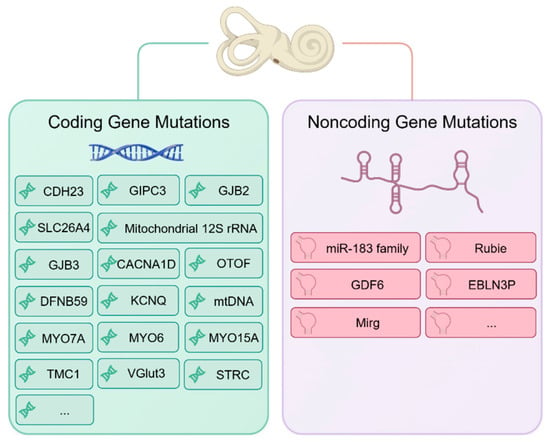
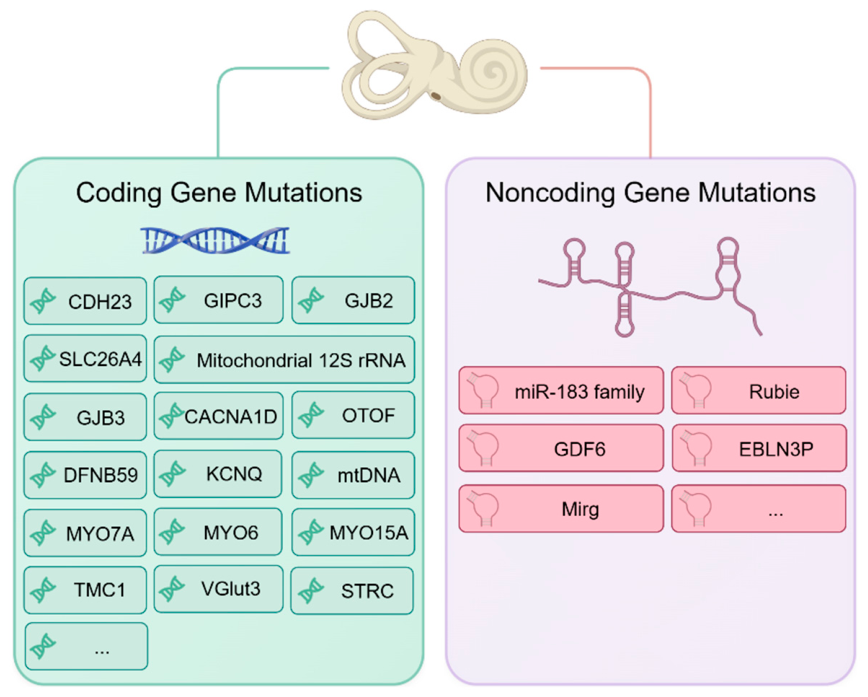
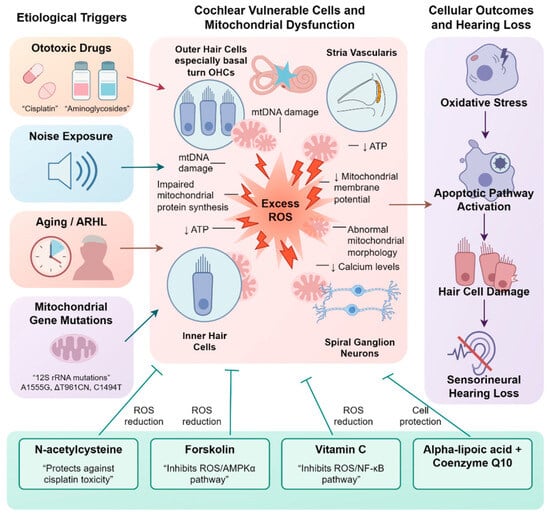
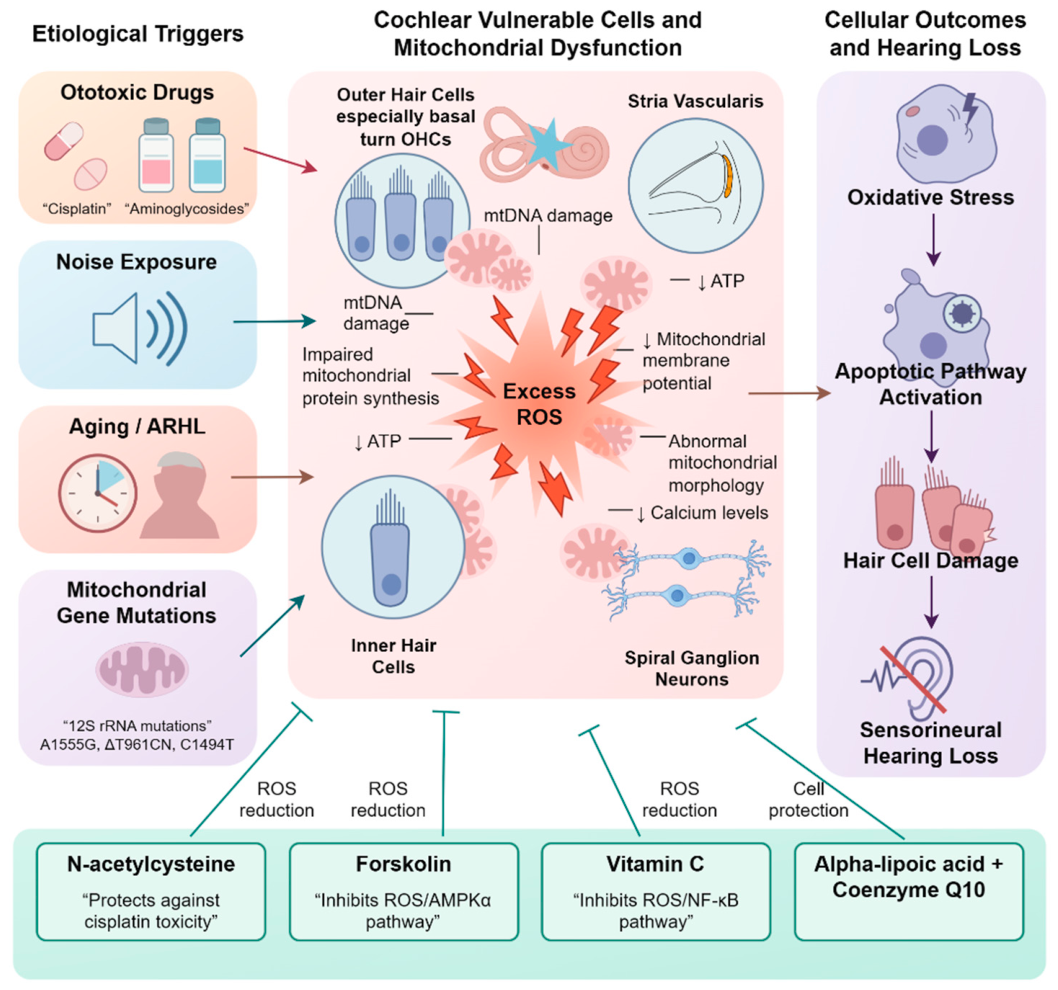
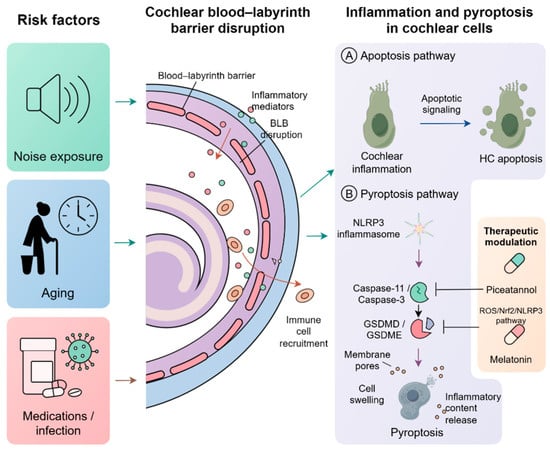
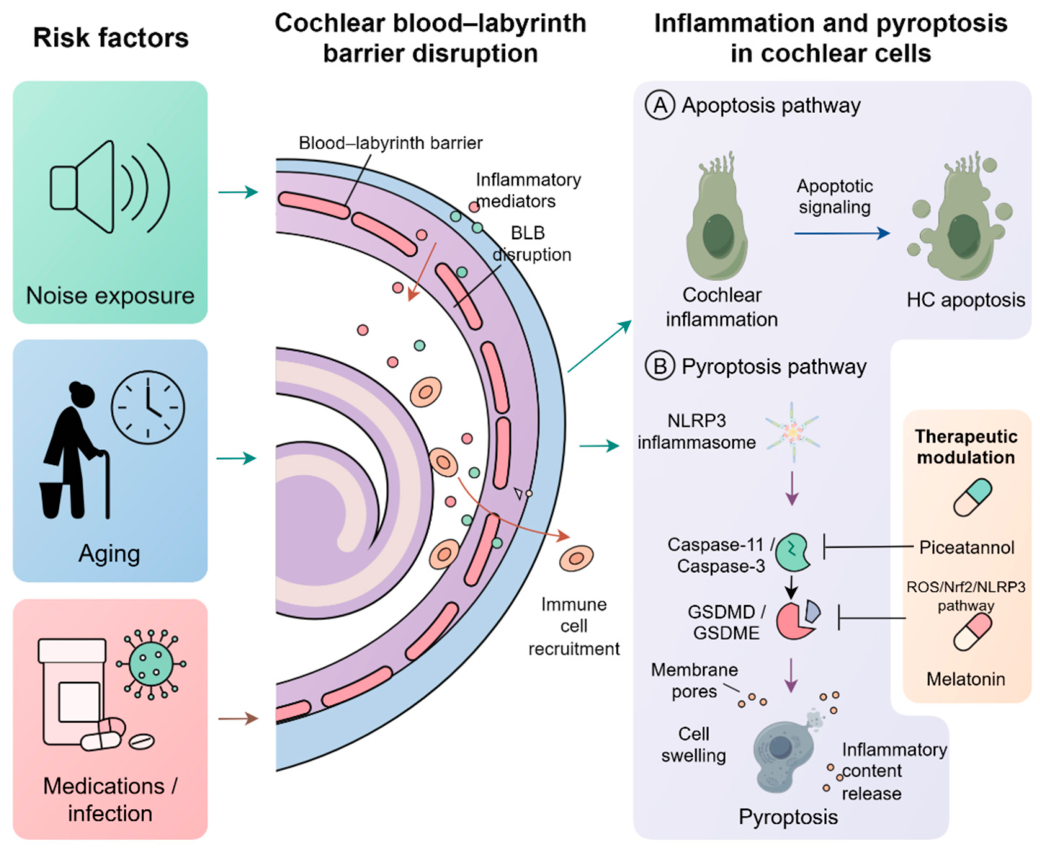
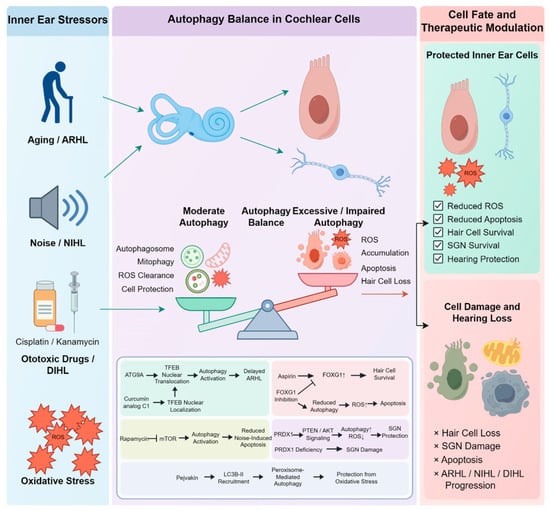
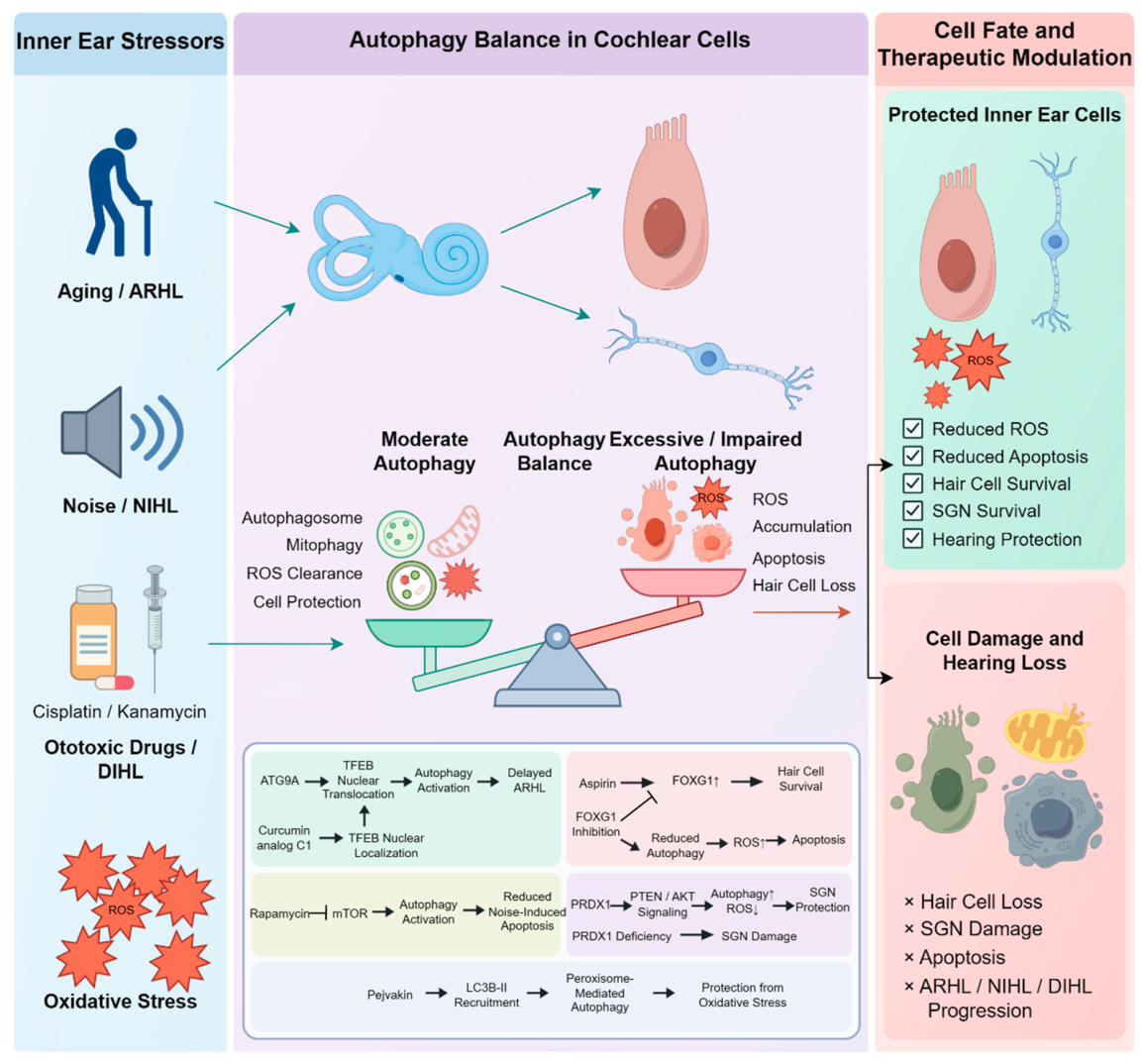
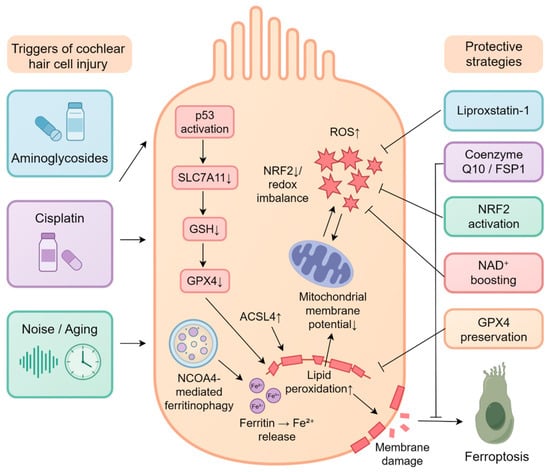
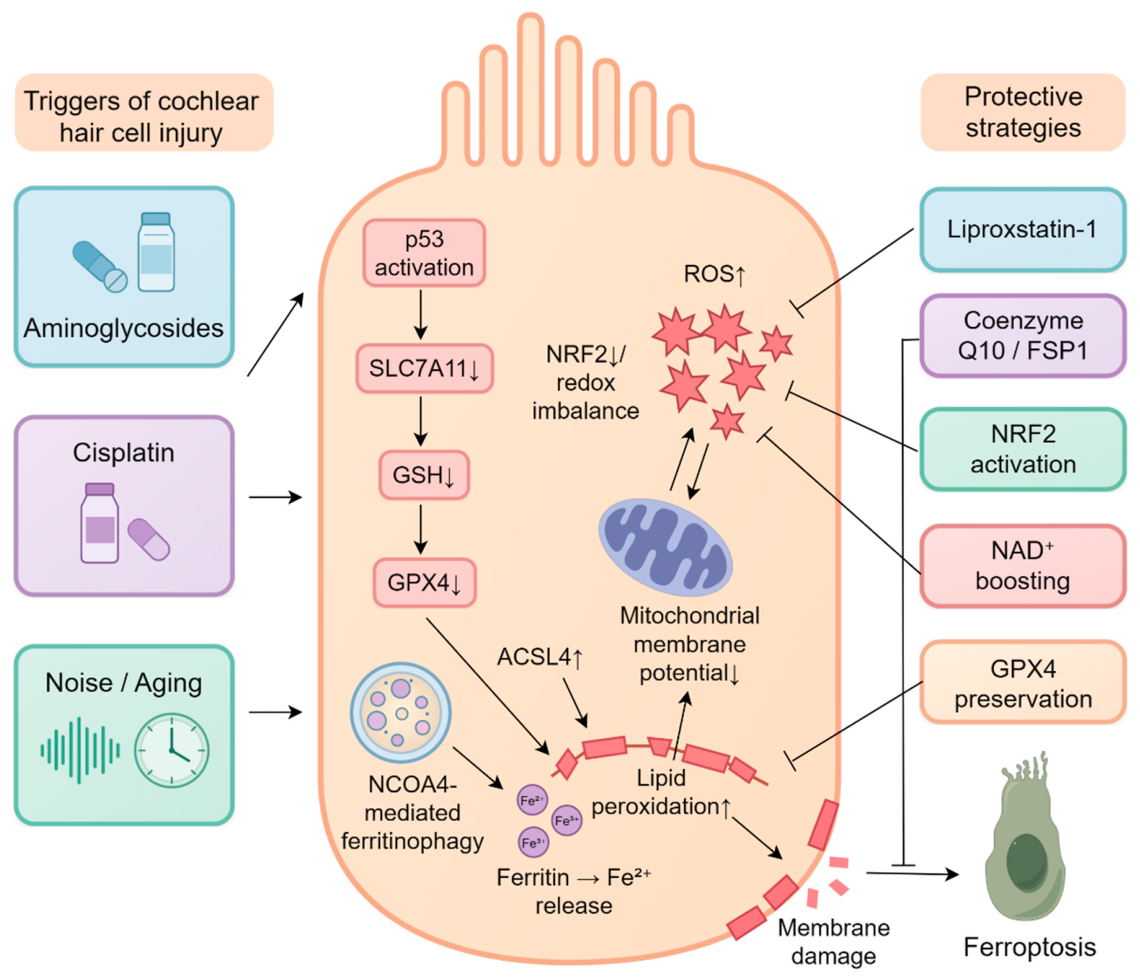
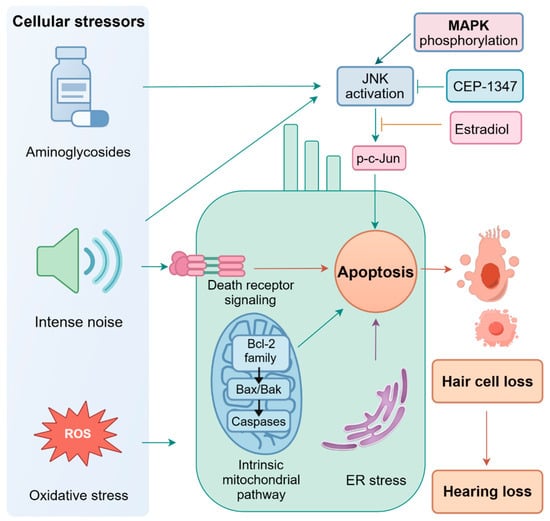
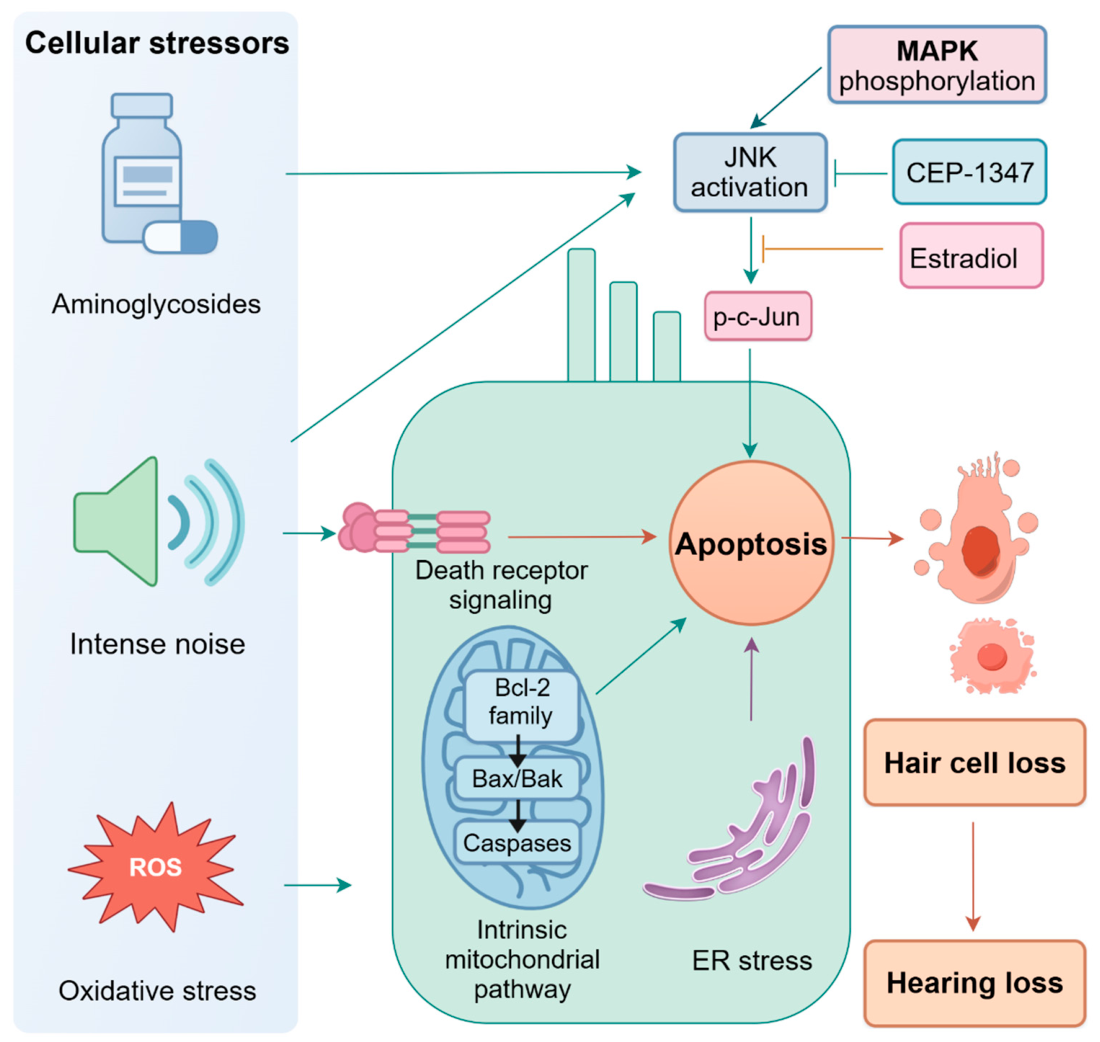
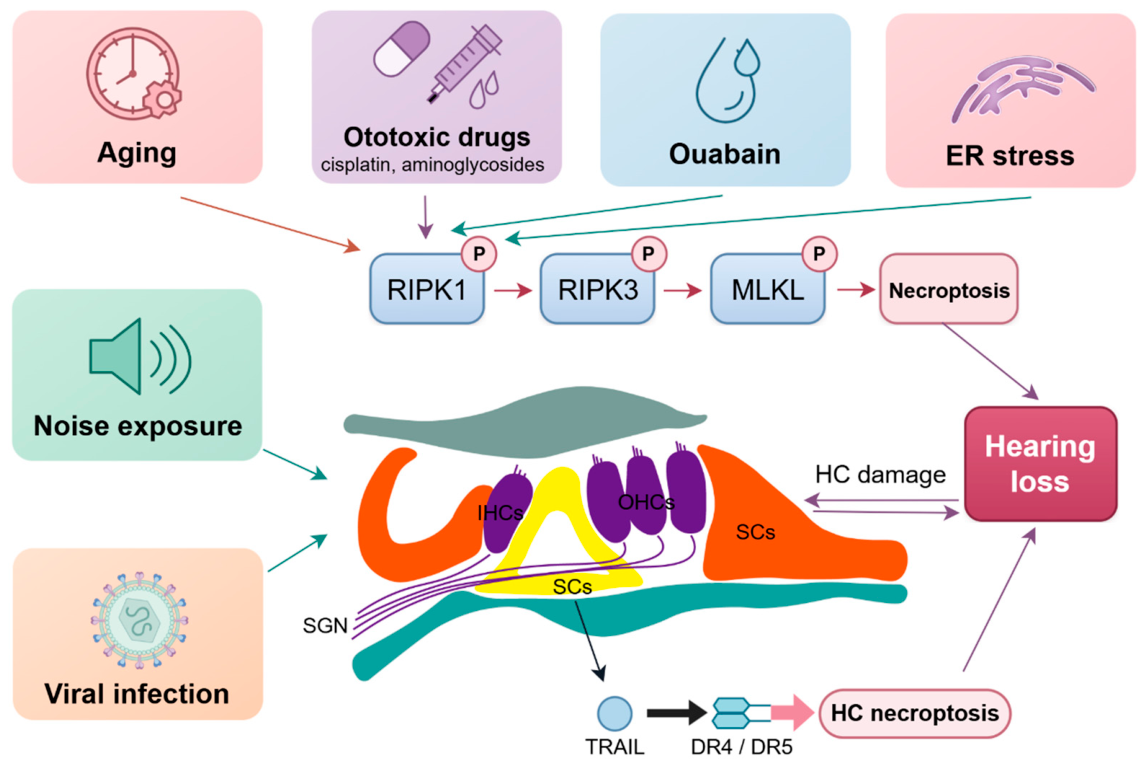

Disclaimer/Publisher’s Note: The statements, opinions and data contained in all publications are solely those of the individual author(s) and contributor(s) and not of MDPI and/or the editor(s). MDPI and/or the editor(s) disclaim responsibility for any injury to people or property resulting from any ideas, methods, instructions or products referred to in the content. |
© 2026 by the authors. Licensee MDPI, Basel, Switzerland. This article is an open access article distributed under the terms and conditions of the Creative Commons Attribution (CC BY) license.