


Abstract
Motilin (Mln), as a key gastrointestinal hormone, has been demonstrated to significantly stimulate feeding in mammals. However, its mechanism of appetite regulation in fish remains unclear. To explore the mechanism of Mln in regulating the appetite of Yangtze sturgeon Acipenser dabryanus, fish received a single intraperitoneal injection of 90 ng/g Mln-NH2 or PBS (n = 3 biological replicates per group; one whole brain per fish). Whole-brain tissue was collected at 1 h post-injection and subjected to RNA-seq and qPCR. The results revealed that a total of 2759 differentially expressed genes (DEGs) were identified following motilin injection, among which 969 were up-regulated and 1790 were down-regulated. GO annotation analysis and KEGG enrichment analysis revealed that these DEGs were significantly enriched in signaling pathways closely associated with feeding regulation, such as neuroactive ligand–receptor interaction, purine metabolism and pyrimidine metabolism. Further analysis of 10 key appetite-regulating factors revealed that Mln significantly up-regulated orexin receptor type 2-like (ox2r), adiponectin receptor protein 1 (adpnr), gamma-aminobutyric acid type B receptor subunit 2-like (gabab-r), galanin receptor type 1-like (galr), dopamine receptor D5a (drd5a) and neuropeptide VF precursor (npvf) mRNA expression levels and down-regulated alpha-2C adrenergic receptor-like (adra2c), pro-opiomelanocortin (pomc), thyroglobulin (tg) and 5-hydroxytryptamine receptor 2A-like (htr2a) mRNA expression levels, p < 0.05. The results of this experiment showed that the motilin injection is associated with the changes in the mRNA expression of appetite-regulating factor. This lays the foundation for exploring the appetite regulation and physiological functions of the Yangtze sturgeon Acipenser dabryanus.
1. Introduction
Organisms possess the ability to regulate feeding, which involves two phases: the appetitive and the consummatory phases. They are all enhanced due to hunger and food consumption [1]. In fish, feeding regulation is a complex process governed by the central nervous system, and the brain and hypothalamus are regulatory centers. In particular, the brain, which integrates hormonal signals from peripheral tissues, and the hormones either stimulate or suppress appetite [2]. During the process of artificial aquaculture, feeding regulation plays an important role in the growth and development of fish. Due to significant physiological differences, the feeding regulation mechanisms of fish differ from those of mammals, particularly in energy balance, feeding behavior, and endocrine regulation [3]. However, research on the specific mechanisms remains limited and needs further investigation. Research on the mechanisms regulating fish feeding behavior is not only important for fish physiology studies, but also for improving feeding practices in aquaculture and conserving endangered species.
Motilin (Mln) is one of the gastrointestinal hormones, a substance capable of causing gastric contractions. It was first discovered by Brown in the canine gastrointestinal tract [4], and subsequently isolated from the porcine duodenal mucosa [5]. The tissue distribution of Mln and its role in stimulating gastrointestinal motility have been studied in mammals and birds. Mln acts within the duodenum of species including humans, rabbits, dogs, cats, monkeys, and sheep, stimulating gastrointestinal motility in a region-specific manner [6]. In pheasants, Mln is highly expressed in the duodenum, jejunum, and ileum, and can induce gastrointestinal contractions by directly acting on the smooth muscle of the small intestine and indirectly acting on the enteric cholinergic nerves of the proventriculus [7]. In addition to promoting gastrointestinal motility, Mln has also been proven to have a relationship with promoting food intake in humans. Administration of Mln peptide induced a premature gastric phase III contraction accompanied by a rise in hunger ratings, and the plasma motilin levels correlated with hunger [8]. Additionally, intravenous injection of the Mln receptor agonist erythromycin significantly stimulated food intake in volunteers compared with placebo [9]. Research on Mln in fish is extremely scarce, with its presence reported only in species such as zebrafish Danio rerio (Hamilton 1822) [10], Japanese medaka Oryzias latipes (Temminck & Schlegel 1846) [11], spotted sea bass Lateolabrax maculatus (McClelland 1843) [12], and lobe-finned fish Latimeria chalumnae Smith 1939 [13]. These studies have focused on sequence identification and expression analysis, but the mechanisms of regulating feeding remain unclear. Research on the physiological functions of Mln, particularly its molecular mechanisms affecting feeding regulation, remains largely unexplored in fish species.
The Yangtze sturgeon Acipenser dabryanus Duméril 1869 is a unique species of the Yangtze River. In recent years, due to extensive human fishing and the destruction of its natural habitats, its population has declined sharply, and it has been declared extinct in the wild. To protect Acipenser dabryanus resources, China has been conducting restocking activities since 2013, and the species have achieved full artificial reproduction. Currently, the Acipenser dabryanus population is primarily sustained through the establishment of sustainable captive populations and artificial conservation, laying the foundation for the restoration of its natural populations and future conservation. During the artificial breeding and development process, poor feeding efficiency has significantly restricted the growth and development of Acipenser dabryanus juveniles, substantially reducing the extent of its population recovery. Therefore, understanding the regulatory mechanisms of energy absorption and consumption in Acipenser dabryanus is important for the recovery and development of its population. Previously, our team demonstrated that Mln promotes feeding in Acipenser dabryanus [14], but its specific regulatory mechanism remains unclear. In this study, after a single intraperitoneal injection of 90 ng/g Mln to Acipenser dabryanus, we conducted transcriptomic analysis of brain tissue from Acipenser dabryanus to detect changes in the mRNA expression of various appetite-regulating factors and validated by qPCR. This study examines the whole-brain transcriptome 1 h after a single intraperitoneal dose of 90 ng/g, but the previous study examined feeding behavior after Mln injection. All experimental fish, RNA samples and sequencing data analyzed in this study were newly collected. There was no reuse of data from previous studies. Our proposed scientific hypothesis is that intraperitoneal injection of Mln is associated with the mRNA expression of appetite-related genes in the brain of Acipenser dabryanus. The aim of this study is providing a transcriptomic basis for the effect of stimulating appetite. Meanwhile, the study further expands the range of indicators for detecting changes in Acipenser dabryanus appetite. This serves to monitor whether artificial breeding conditions meet the nutritional requirements of Acipenser dabryanus, provides theoretical support for regulating their appetite, and forms the basis of improving transition feeding outcomes and optimizing conservation strategies for Acipenser dabryanus.
2. Results
2.1. Transcriptional Sequencing
After conducting transcriptional sequencing on six samples, the control group produced 47,172,364, 46,137,752 and 46,708,648 clean reads respectively, and the experimental group produced 45,555,874, 49,487,998 and 43,519,206 clean reads respectively. The sequencing results of both the Ctrl group (P1, P2, P3) and Mln group (M1, M2, M3) had a Q30 of at least 92.41%, and the error rate of both groups was ≤0.0269%. The clean reads were mapped to the Acipenser ruthenus reference genome, with total mapping rates ranging from 58.70% to 64.13% across all samples. The GC content in the measured sequences was approximately 46%. (Table 1).
Table 1.
Quality statistics for each sequencing sample.
2.2. Principal Component Analysis of Samples
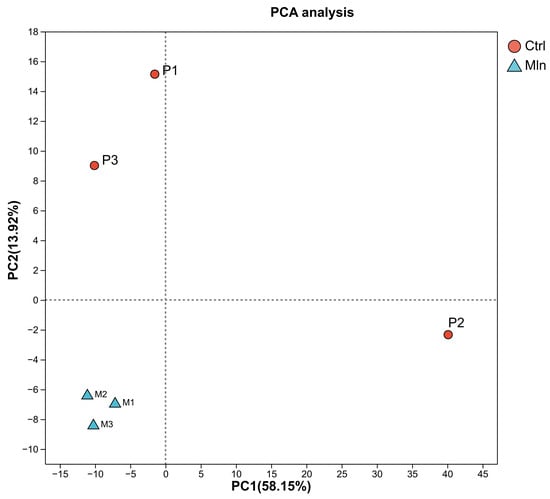
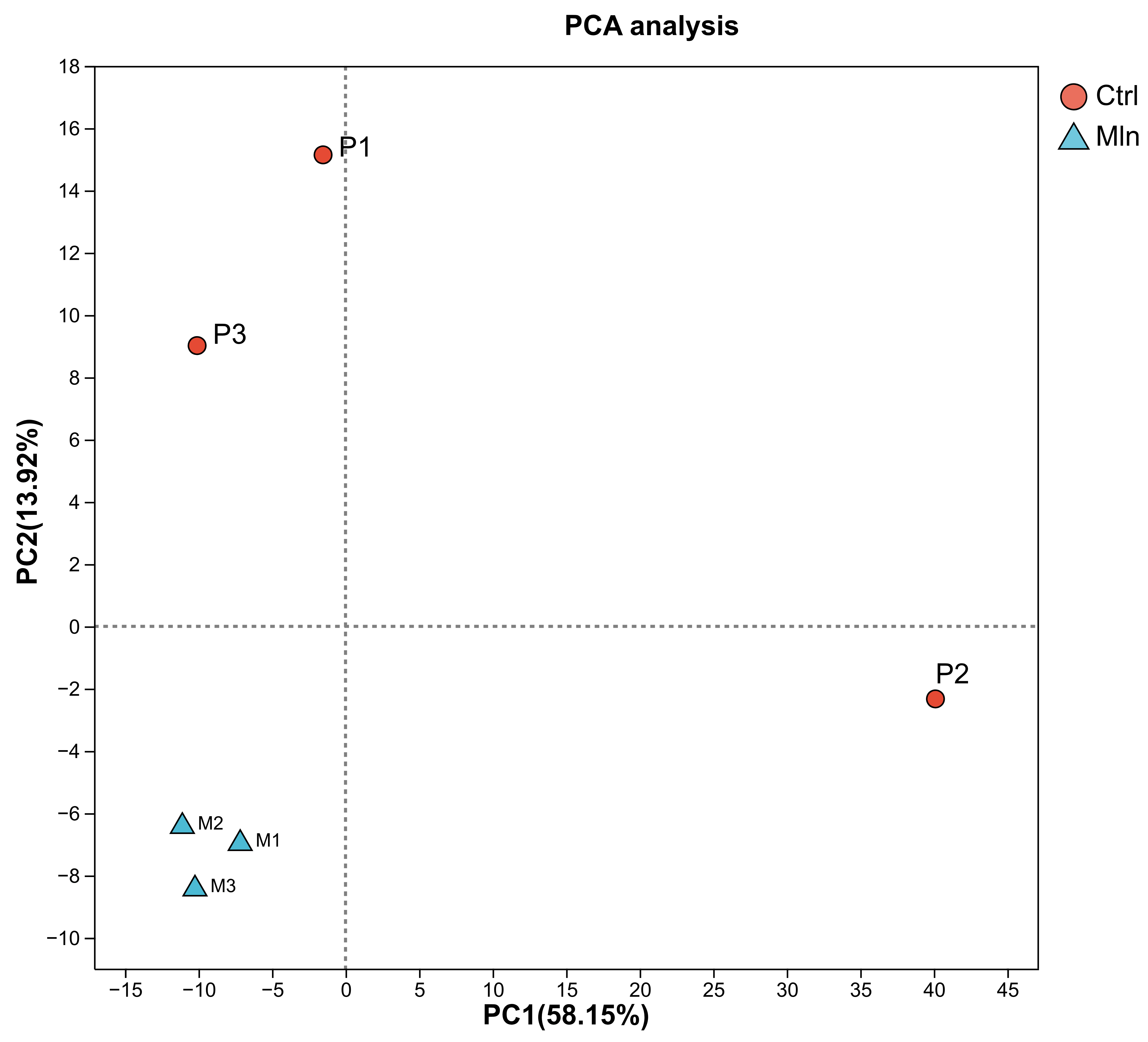
To assess the reproducibility and intergroup differences in transcriptomic samples from the brain tissue of Acipenser dabryanus after intraperitoneal injection of motilin, this study performed PCA on three biological replicate samples each from the Ctrl group and the Mln group. The results indicate that the PC1 and the PC2 explain 58.15% and 13.92% of the total variance respectively. The Ctrl group and the Mln group showed a clear separation trend. The three biological replicates of the Ctrl group were relatively dispersed in space. The three biological replicates of the Mln group exhibited a higher degree of clustering (Figure 1).
Figure 1.
PCA analysis of Yangtze sturgeon following intraperitoneal injection of Mln. (P. Control group M. Mln group).
2.3. Identification of Differentially Expressed Genes and Functional Enrichment Analysis
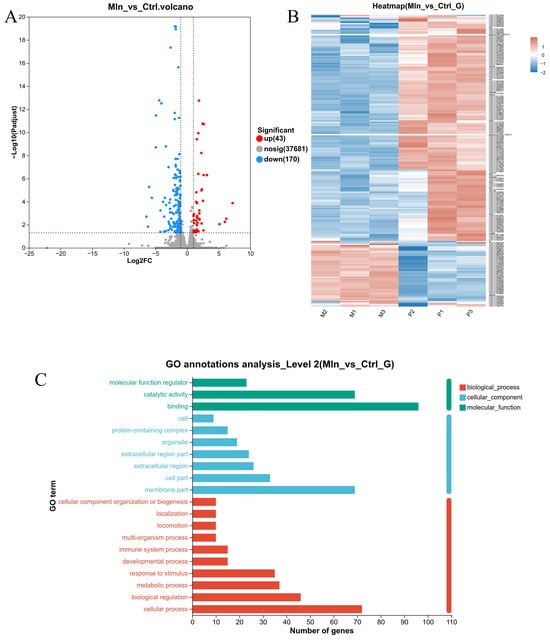
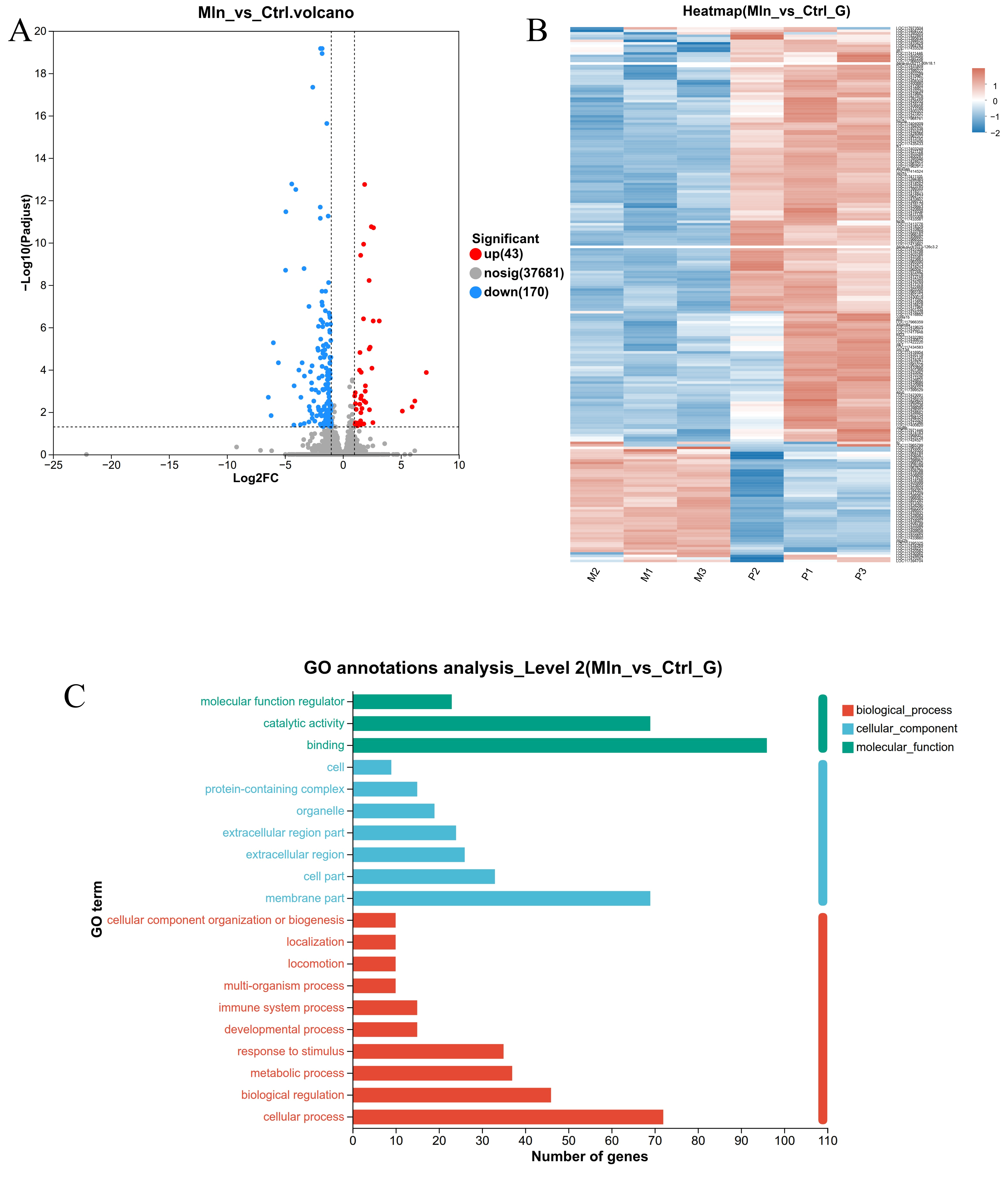
Through the analysis of the expression levels of the transcriptional gene in the brain of Acipenser dabryanus after Mln injection, it was found that there were 2759 differentially expressed genes. Among them, there were 969 up-regulated genes and 1790 down-regulated genes.
Analysis of GO annotations showed that three terms were enriched in molecular function, such as binding and catalytic activity. Seven terms were enriched in cellular components, especially in membrane part. Ten terms were enriched in biological processes, including cellular process, biological regulation and metabolic process (Figure 2A–C).
Figure 2.
Analysis of DEGs. (A) Volcano plot of DEGs; (B) cluster analysis heatmap; (C) intergroup different gene GO analysis diagram.
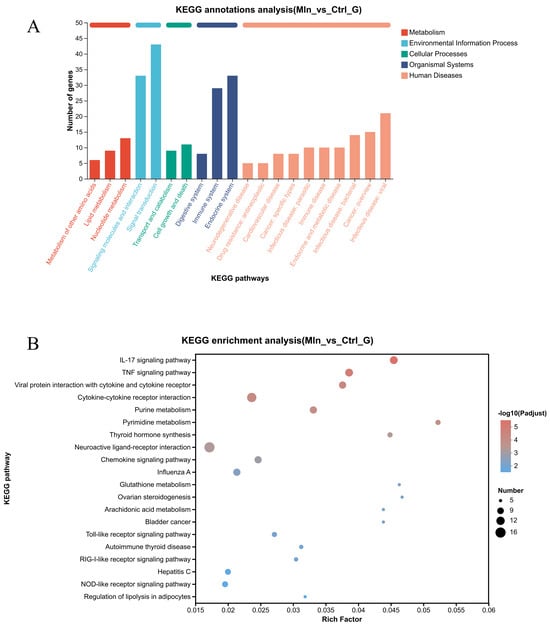
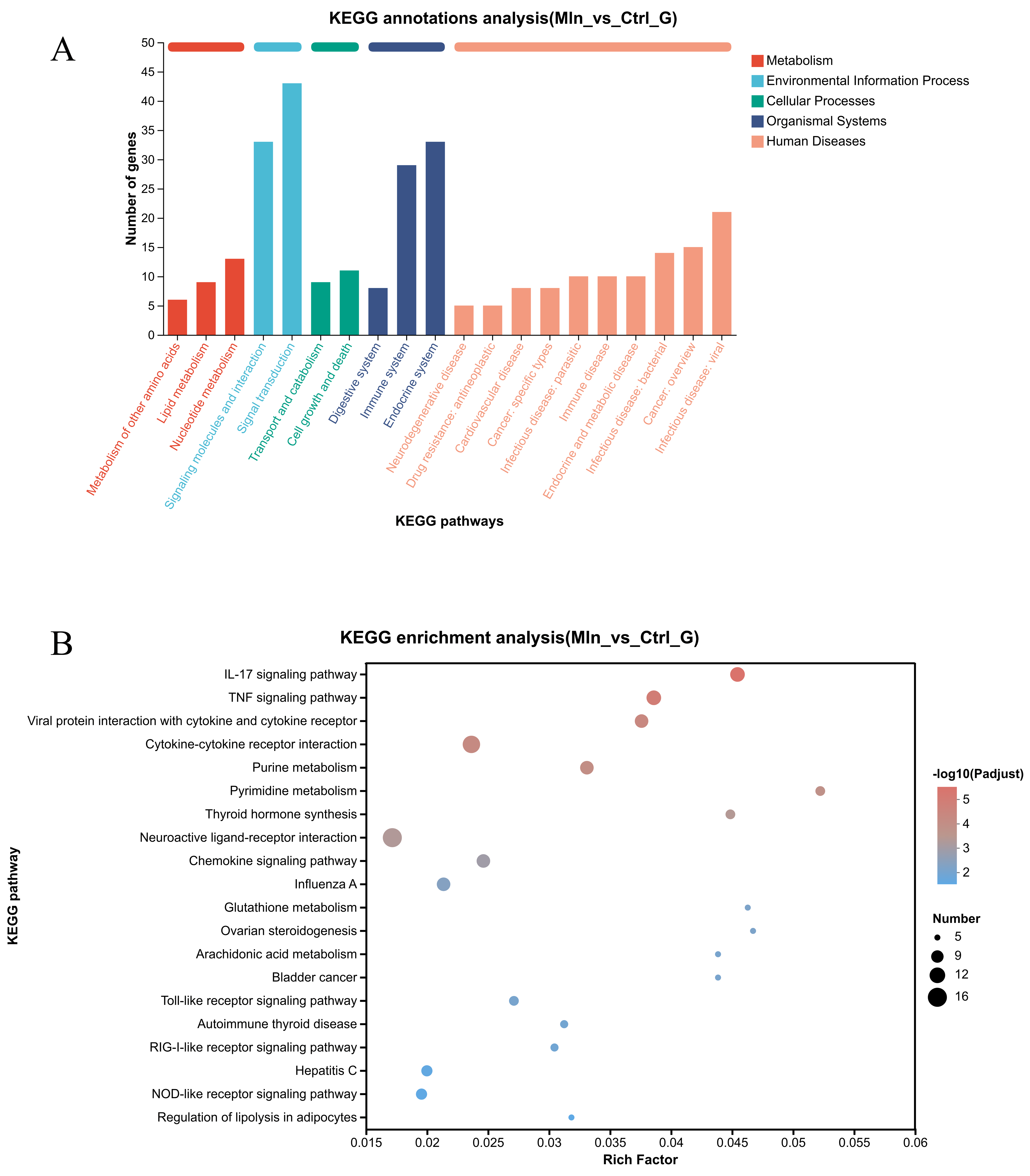
KEGG pathway annotation results showed that differentially expressed genes are primarily involved in five major categories: metabolism, environmental information processing, cellular processes, organic systems, and disease. Among these, signal transduction, endocrine system, neuroactive ligand–receptor interaction, purine metabolism and pyrimidine metabolism had a high degree of relevance to the experimental purpose. Additionally, DEGs were also rich in the immune system, chemokine signaling pathway and so on (Figure 3A,B, Table 2).
Figure 3.
Analysis of KEGG annotation and enrichment. (A) KEGG annotation of DEGs; (B). results of DEG enrichment.
Table 2.
Enrichment statistics of the functional pathways.
2.4. The Effects of Mln on Appetite Factor Expression
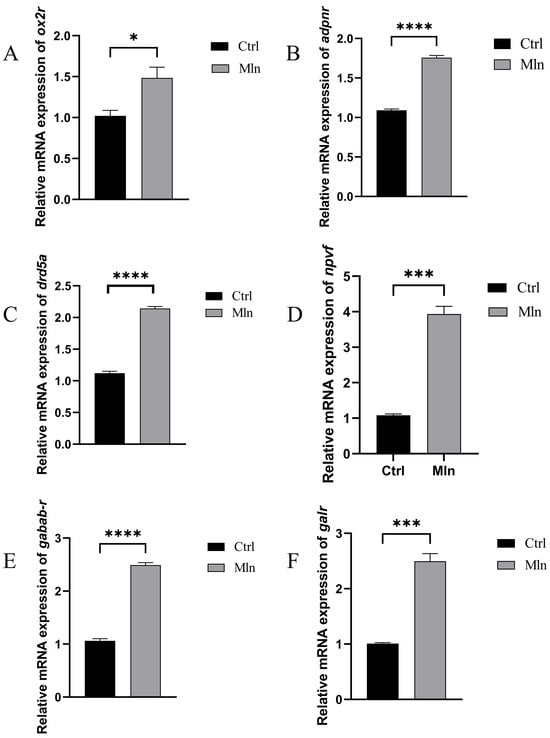
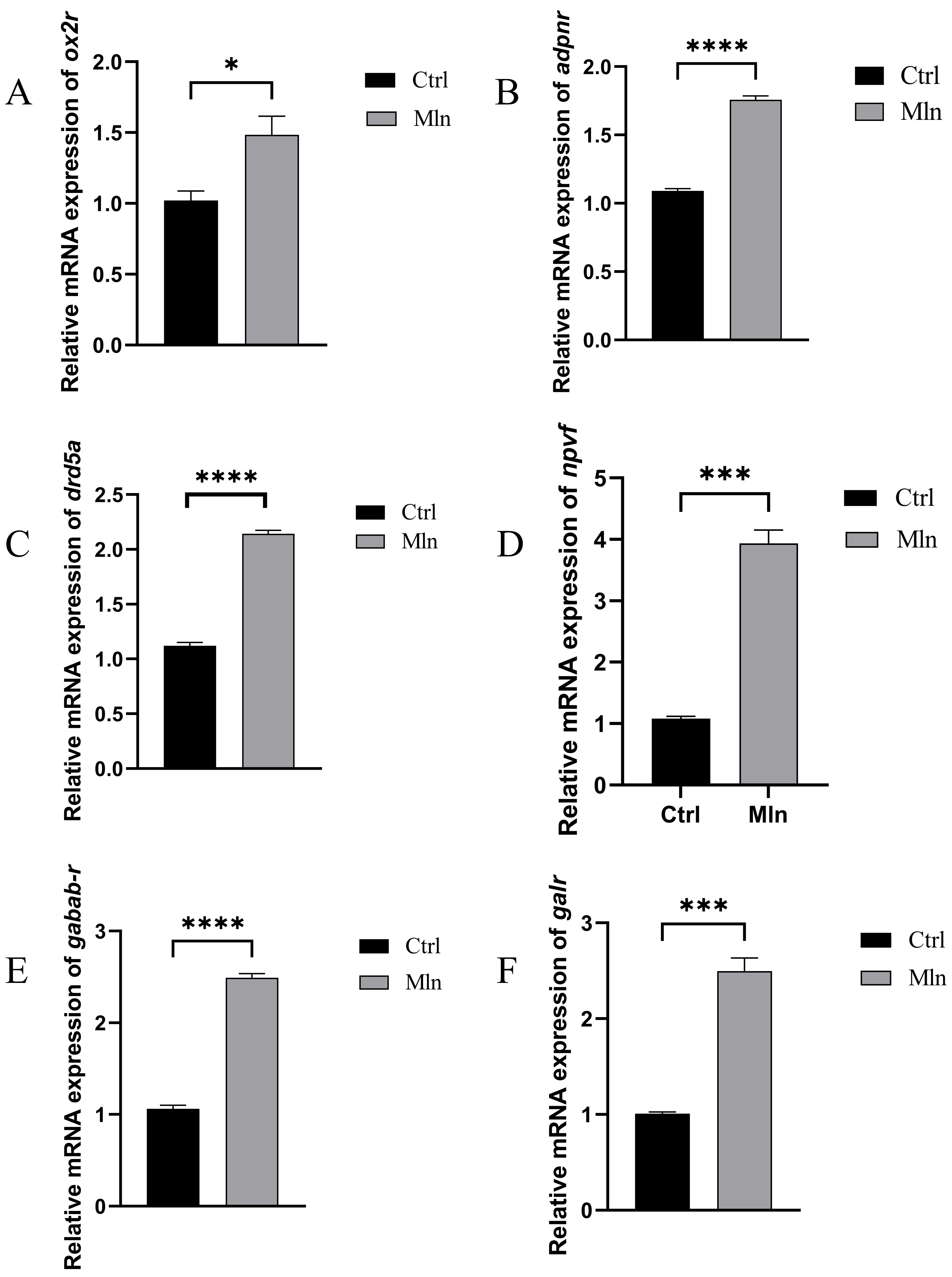
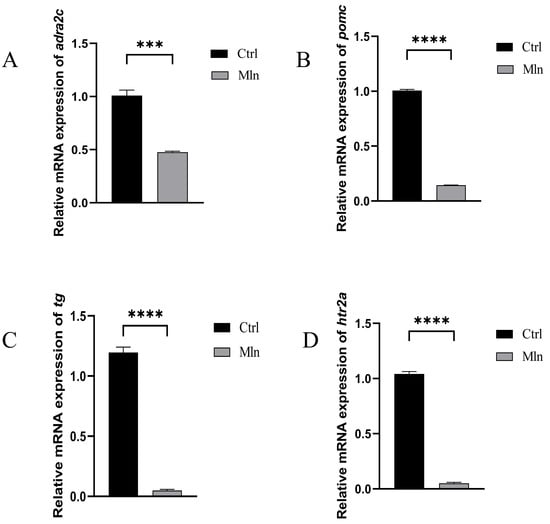
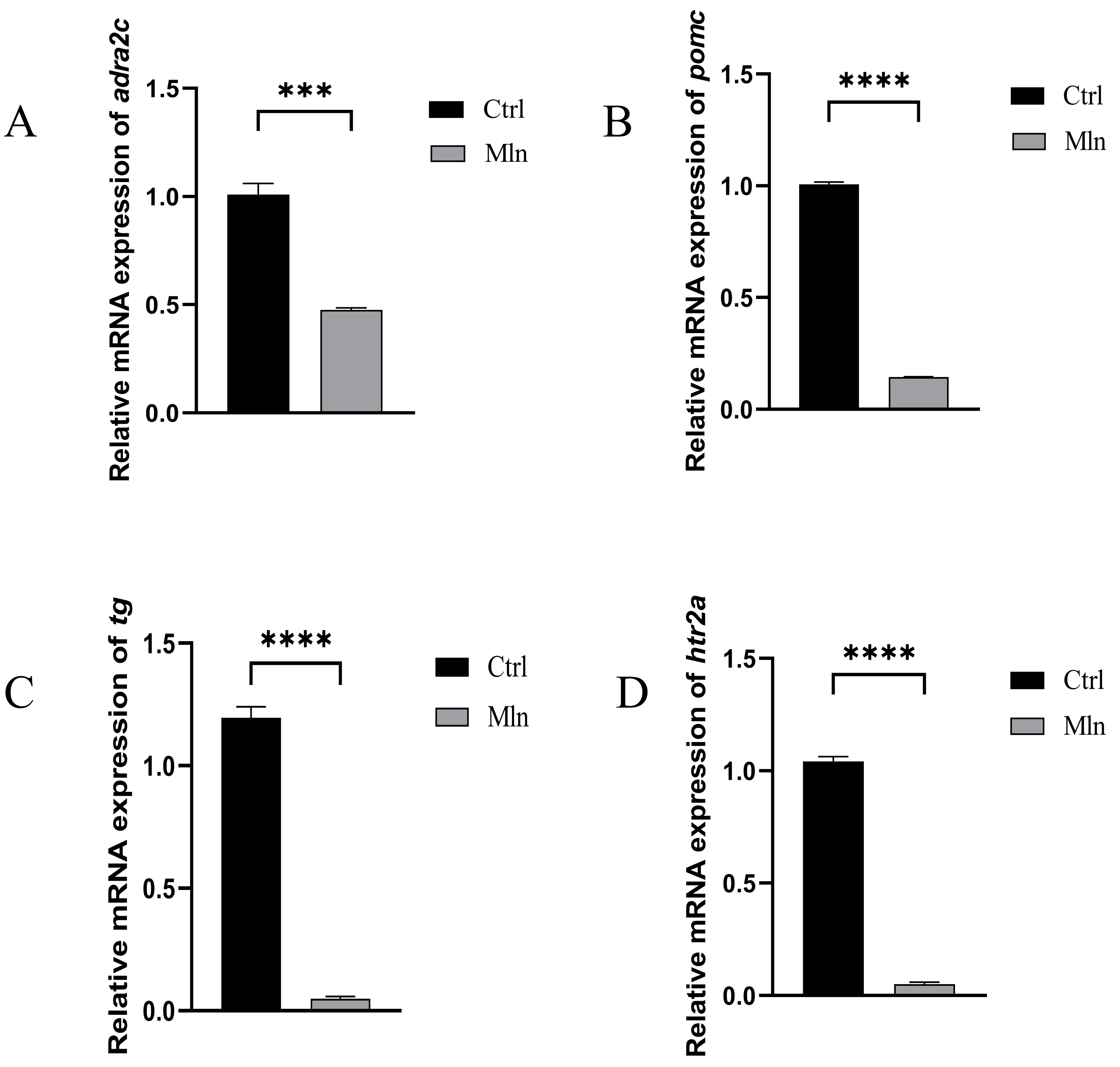
After i.p. injection of Mln, based on KEGG pathway enrichment analysis of the Acipenser dabryanus transcriptome and previous research on appetite factors, we selected ox2r, adpnr, gabab-r, galr, drd5a, npvf, adra2c, pomc, tg, and htr2a and conducted qPCR validation on them. Results showed that ox2r, adpnr, gabab-r, galr, drd5a, and npvf were significantly up-regulated (Figure 4A–F), while adra2c, pomc, tg, and htr2a were significantly down-regulated (Figure 5A–D).
Figure 4.
Quantitative expression of appetite-related up-regulated genes. (The up-regulated genes including ox2r (A); adpnr (B); drd5a (C); npvf (D); gabab-r (E); galr (F). The experimental data are presented as mean ± SEM (n = 3) and were normalized to β-actin and EF-1α by 2-ΔΔCt method. The data were analyzed by Student’s t-tests to test the significance of the differences between the two sets of data. p < 0.05 is marked with *, p < 0.001 is marked with ***, p <0.0001 is marked with ****).
Figure 5.
Quantitative expression of appetite-related down-regulated genes. (The down-regulated genes including adra2c (A); pomc (B); tg (C); htr2a (D). The experimental data were presented as mean ± SEM (n = 3) and were normalized to β-actin and EF−1α by 2-ΔΔCt method. The data were analyzed by Student’s t-tests to test the significance of the differences between the two sets of data. p < 0.001 is marked with ***, p <0.0001 is marked with ****).
3. Discussion
Mln, as an appetite-regulating hormone, governs gastric contractions and other functions. Its appetite-stimulating effects have been documented in humans [8,9], but its role in fish remains largely unexplored. Our preliminary research demonstrated that Mln can promote food intake by reducing the expression of appetite-suppressing factors in Acipenser dabryanus [14], but the specific mechanism requires further investigation. This study further investigates the gene expression response mechanism through whole-brain transcriptomic sequencing combined with qPCR results.
The brain is recognized as a key regulatory center for appetite control, integrating a complex network of signals. Through a core circuit formed by the hypothalamus and brainstem, it integrates hormonal signals from peripheral sites to regulate the excitation and inhibition of appetite [2]. Therefore, brain tissue was selected for transcriptomic analysis following motilin injection. We identified 2759 DEGs in the brain following Mln injection; GO enrichment revealed that these DEGs were primarily involved in cellular processes, biological regulation, and metabolic activities—especially at the three sites: the membrane, the binding, and the catalytic activity. Enrichment in the membrane suggests that Mln may influence the expression of receptors or channel proteins on cell membranes, which are often key components in neural signal reception, transduction, and intercellular communication, thereby affecting appetite regulation. Enrichment in binding and catalytic activity indicates that Mln may affect signal transduction and metabolic regulation processes within the brain by regulating a series of genes associated with molecular binding and catalytic reactions. Through KEGG pathway analysis, the DEGs were primarily clustered in signal transduction, endocrine system and immune system. Among them, signal transduction and endocrine system are closely related to Mln regulatory functions. The activation of the immune system may be associated with a stress response after intraperitoneal injection. This stress response involves the monitoring and removal of external substances. Similar dominant immune enrichment has been reported in a transcriptomic study of aquatic invertebrates under acute environmental challenge [15]. In that study, apoptosis and innate-immunity pathways were the main functional terms identified. This supports the interpretation that the immune signal observed here is a common feature of acute responses rather than an appetite-specific effect. However, the study design has to be considered when interpreting these DEGs. This study analyzed only a single dose (90 ng/g), a single sampling time point (1 h), and three biological replicates per group. Because whole-brain RNA integrates signals from all brain regions, the present data describe an acute, whole-brain response and cannot resolve dose-, time- or region-dependent changes. In addition, reads were mapped to the Acipenser ruthenus reference genome rather than that of Acipenser dabryanus; although the two species are closely related, the use of a heterologous reference may reduce mapping efficiency and affect gene quantification, annotation and DEG identification. Studies investigating feeding regulation through transcriptomics in fish are relatively scarce, particularly concerning Mln, which has not yet been reported, while research exists on other appetite factors. In Acipenser dabryanus, after weaning treatment, KEGG pathways-enriched included neuroactive ligand–receptor interaction, the PI3K/Akt signaling pathway and the adipocytokine signaling pathway [16]. I.p. injection of exogenous recombinant and weaning treatment affected signal transduction neuroactive ligand–receptor interaction, similar to the results of this experiment. In juvenile Spinibarbus hollandi, after fasting and refeeding, differentially expressed genes were significantly enriched in signal transduction, endocrine system and metabolism related KEGG categories [17]. Although these studies differ from ours in treatment, their results support that feeding regulation in fish is associated with signal transduction, the endocrine system and so on.
We identified 10 factors closely associated with appetite regulation and validated their mRNA expression trends via qPCR. Among these, six genes showed significant upregulation: ox2r, adpnr, gabab-r, galr, drd5a, and npvf. Ox2r, adpnr, drd5a, gabab-r and galr are all hormone receptors. In goldfish Carassius auratus (L. 1758), it can increase brain ox expression and feeding behavior after intracranial injection of 100 ng/g thyrotropin-releasing hormone [18]. In Siberian sturgeon Acipenser baerii Brandt 1869, adiponectin has been demonstrated to promote feeding, and its hypothalamic mRNA levels significantly decreasing after feeding, consistent with the pattern of changes in appetite-stimulating factors [19]. The conclusions drawn from these research are consistent with the results of this experiment. Drd5a is dopamine receptor. In mice, dopamine signaling deficiency can cause mice to be unable to initiate feeding and even lead to death [20]. In starvation experiments across different growth lines of grass carp Ctenopharyngodon idella (Valenciennes 1844), drd5 expression was significantly down-regulated [21]. However, our results indicate that drd5a is an appetite-promoting factor and its expression was up-regulated. In American Black Bass Micropterus salmoides (Lacepède 1802), intracranial injection of gaba significantly increased food intake and improved carbohydrate utilization efficiency [22]. In Acipenser baerii, fasting significantly up-regulated gal expression in the brains, thereby promoting food intake [23], consistent with our experimental results. Npvf is neuropeptide. To date, there have been no reports of npvf affecting fish feeding regulation. In broiler chickens, npvf has been reported to inhibit feeding via intracerebroventricular injection [24], but in this study, the expression of it was significantly up-regulated. In summary, intraperitoneal injection of Mln is associated with increasing the expression levels of appetite-stimulating factors or key receptors such as ox2r, adpnr, gabab-r, and galr. The observed changes in drd5a and npvf differ from that of previous studies. The opposite results may be due to species-specific or physiological state-specific factors. They could also be because of the difference in the experimental method. The study about grass carp used a starvation experiment, and the study about broiler chickens used central injection, while this study used peripheral injection. However, this study examined only a single time point; the result showing the upregulation of npvf expression has certain limitations. Mln was administered peripherally, so a direct action on the brain was not demonstrated. The increase in receptor mRNA may reflect either activation of the corresponding pathway or a compensatory response, rather than increased receptor signaling. And the qPCR validation used the same RNA samples as the sequencing, so it means the qPCR results cannot serve as independent biological replication. Nevertheless, these explanations remain speculative. Due to the contrary result, it cannot be directly stated that drd5a and npvf are the factors that enhance the appetite of Acipenser ruthenus and the actual role in feeding regulation requires further functional investigation.
Four genes were significantly down-regulated: adra2c, pomc, tg, and htr2a. In rats, systemic or intracerebroventricular injection of glucose stimulates pomc expression and suppressing agrp/npy expression, thereby reducing appetite [25]. In Ctenopharyngodon idella, restricted feeding was carried out to reduce their sense of fullness, and the expression levels of leptin and pomc were significantly decreased. As a result, the appetite of Ctenopharyngodon idella with reduced fullness increased [26]. Moreover, our preliminary studies have demonstrated that i.p. injection of Mln reduces pomc expression [14]. These findings suggest that Mln may stimulate appetite, at least in part, through the downregulation of pomc expression. Adra2c has been scarcely studied in fish species, with research primarily focusing on its pharmacological effects in Danio rerio, but it was only studied for its neuroendocrine effects [27]. Adra2c can be a DA functional receptor and it exerted its effects by regulating adenylate cyclase activity and ERK1/2 phosphorylation [28]. It is worth noting that DA can regulate intestinal function [29]. But the role of appetite regulation in fish remains unclear. Tg encodes thyroglobulin, a thyroid hormone precursor glycoprotein. Research on the relationship between tg and fish feeding regulation is limited. In Carassius auratus, blood tg levels showed no significant changes across fasting, normal feeding, and overfeeding groups, indicating that circulating thyroid hormone concentrations do not serve as direct regulatory signals for appetite. But overfeeding activates the hypothalamic–pituitary–thyroid axis, potentially consuming excess energy by elevating the basal metabolic rate and indirectly suppressing appetite demand [30]. According to this, the decreased expression of tg mRNA does not directly indicate its effect on appetite. Further research is needed. Htr2a is the 5-hydroxytryptamine (5-HT) 2A receptor. In mammals, 5-HT is associated with anorexia [31]. Among fish species, 5-HT plays a role in regulating emotional changes, spontaneous swimming activities, food intake, stress responses and other behaviors. The expression of it can inhibit fish feeding [32]. And studies have shown that 5-HT can regulate fish feeding behavior by influencing intestinal activity and digestive functions [33]. In rainbow trout Oncorhynchus mykiss (Walbaum 1792), the i.p. injection of 5-HT receptor agonist reduced appetite [34]. To sum up, intraperitoneal injection of Mln was associated with reducing the expression levels of adra2c, pomc, and htr2a. Whether the decline in tg expression is related to appetite regulation still requires further investigation.
In our previous work [14], we confirmed the orexigenic effect of Mln in Acipenser dabryanus and examined some appetite-related candidate genes by qPCR, but transcriptome sequencing and analysis of brain tissue were not performed in that study. Compared with our previous study focusing on a small number of candidate genes, the current transcriptome analysis gives a global picture of brain gene changes after Mln administration. Combining candidate-gene validation and transcriptome profiling, we identified changes in mRNA levels of appetite-related factors, as well as signaling pathways that were not found in our previous study.
Overall, this study represents the first systematic analysis of brain transcriptional responses to Mln in Acipenser dabryanus, and these transcriptomic findings extend our knowledge of the molecular network underlying Mln-regulated feeding in Acipenser dabryanus. However, protein levels and downstream signaling were not measured in this study, and future work with receptor-specific reagents and functional assays will be required to establish whether these transcriptional changes translate into altered receptor function.
4. Materials and Methods
4.1. Fish
The artificially bred third-generation Acipenser dabryanus used in this experiment were provided by the Fisheries Research Institute of Sichuan Academy of Agricultural Sciences (Yibin, Sichuan) and were raised in fish tanks at the Aquaculture Laboratory of Sichuan Agricultural University. Prior to the experiment, the sturgeon was acclimated in tanks at 21 ± 3 °C for at least two weeks to adapt to the environment. During the entire rearing process, continuous aeration and natural light were maintained. The sturgeon was fed 3% of its body weight with a sturgeon commercial diet at 14:00 daily, uneaten feed was removed 1 h after feeding, and one-third of the water was replaced with aerated water.
4.2. Intraperitoneal Injection
For the intraperitoneal injection experiment, 36 Acipenser dabryanus (61.6 ± 8.6 g) were divided into two groups randomly (three replicate tanks each group, six fish each tank) and body weights within each group were relatively uniform. Before the formal injection experiment, the fish were acclimated under laboratory conditions for two weeks, fed commercial sturgeon feed daily at 14:00 at a ration of 3% of their body weight. To minimize stress responses in Acipenser dabryanus, the experimental fish were anesthetized with 0.01% MS-222, weighed, and intraperitoneally injected with PBS for adaptation daily at 13:30 for 2 days prior to peptide administration. During the formal experiment, the experimental group (Mln group) of Acipenser dabryanus received intraperitoneal injection of 90 ng/g Mln-NH2 (the Mln-NH2 was synthesized by Shanghai Bootech BioScience & Technology Co., Ltd. (Bootech, Shanghai, China). The peptide was diluted in PBS to a concentration of 100 ng/μL for injection. And the control group (Ctrl group) of Acipenser dabryanus were injected intraperitoneally with PBS. All injections were performed using 1 mL syringes. The injection was performed prior to the scheduled daily feeding. One hour after injection, the fish were anesthetized and brain tissue was collected.
4.3. Sample Collection
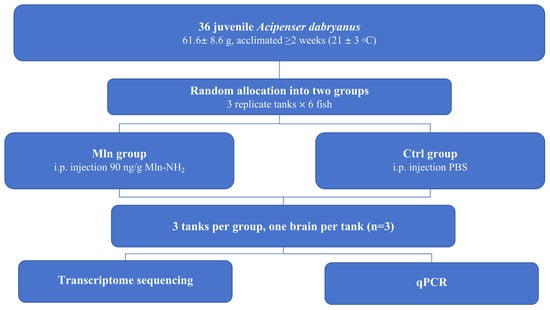
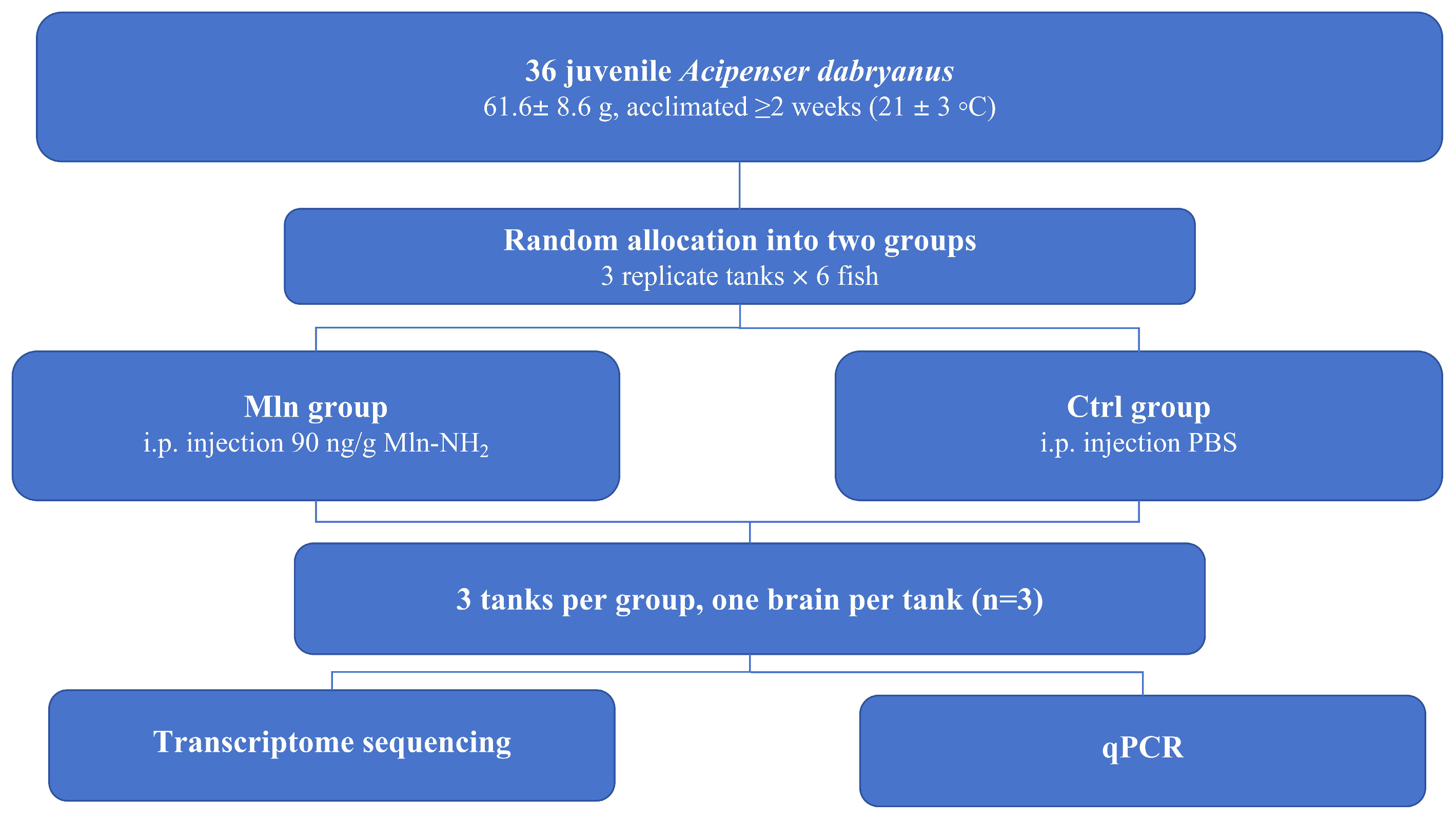
For the tissue collection experiment, the experimental Acipenser dabryanus were anesthetized with 0.01% MS-222 and the whole-brain tissue was sampled. The samples were divided into two groups: the Ctrl group and the Mln group and there were three brains in each group. One brain was collected from each of three tanks per group (n = 3 tanks per group; one brain per tank), and brains were not pooled. They were frozen into liquid nitrogen and kept at −80 °C for transcriptome sequencing and qPCR assays (Figure 6). The sample collection and qPCR were conducted without knowledge of group identity. The remaining 15 fish in each group were used for other experiments and were not used for transcriptome sequencing and qPCR.
Figure 6.
Experimental design and sampling workflow.
4.4. Transcriptome Sequencing and Analysis
The brain tissues of the Yangtze River sturgeon were selected for transcriptome sequencing. Total RNA was extracted from the whole brain with TRIzol® Reagent and the quality of RNA was assessed with 5300 Bioanalyzer (Agilent, Santa Clara, CA, USA) and an ND-2000 (NanoDrop Technologies, Wilmington, DE, USA). Samples used for library construction had a total amount >1 µg, a concentration ≥30 ng/µL and an RQN >6.5. mRNA was enriched by poly (A) selection with oligo (dT) beads and fragmented to approximately 300 bp, and double-stranded cDNA was synthesized with random hexamers. During the synthesis of the second-strand cDNA, dUTP was incorporated and removed with UDG before PCR enrichment, which can get strand-specific libraries. After quantification with Qubit 4.0, paired-end 2 × 150 bp libraries were sent to Meiji Biotechnology Company for library construction and sequencing using the Illumina HiSeq™ 2500 platform (Illumina, San Diego, CA, USA), with the Acipenser ruthenus (GCF_010645085.1) genome as the reference. Because Acipenser dabryanus lacks a high-quality, publicly available complete reference genome, reads were mapped to the Acipenser ruthenus reference genome.
The quality of raw sequencing reads was assessed using the FastQC method, and low-quality bases were filtered out by using Trimmomatic (version 0.39). The reference genome and annotation files of Acipenser ruthenus were downloaded from the NCBI database, and genome completeness was evaluated using BUSCO. Clean reads after quality control were aligned to the reference genome using HISAT2 software (version 2.2.1), and sorted BAM files were generated using SAMtools (version 1.9). Gene-level read counts were quantified with featureCounts, and FPKM values were only used for plotting. Differentially expressed genes (DEGs) between the control and motilin-treated groups were analyzed using DESeq2 (v1.38.3) and EdgeR (v3.40.2), and the final DEG list is the overlap of the DESeq2 and EdgeR. The screening criteria were: FDR ≤ 0.05 (BH correction) and |log2 (Fold Change)| ≥ 1. GO and KEGG annotation information of DEGs was extracted from the reference genome annotation file. Significant enrichment analyses of GO terms and KEGG pathways were performed to identify biological functions and pathways associated with DEGs.
4.5. qPCR
Total RNA was extracted from the brain according to the RNA isolation kit instruction manual (Sangon Biotech, Shanghai, China). The purity and concentration of RNA were detected by electrophoresis and nucleic acid protein analyzer. RNA was reversed into cDNA according to the instructions of PrimeScript™RT reagent Kit (Takara, Dalian, China). To detect the mRNA expression levels of Mln and its receptor in Acipenser dabryanus, corresponding qPCR primers (Table 3) were designed using primer premier 5.0 software based on the Acipenser ruthenus transcriptome database, including thyroglobulin (tg), pro-opiomelanocortin (pomc), orexin receptor type 2-like (ox2r), adiponectin receptor protein 1 (adpnr), dopamine receptor D5a (drd5a), alpha-2C adrenergic receptor-like (adra2c), neuropeptide VF precursor (npvf), galanin receptor type 1-like (galr), gamma-aminobutyric acid type B receptor subunit 2-like (gabab-r) and 5-hydroxytryptamine receptor 2A-like (htr2a).
Table 3.
qPCR primer sequence.
The β-actin and EF-1α were the reference genes. The mRNA expression levels of key appetite factors were detected by quantitative real-time qPCR technology. The qPCR cycles are as follows: 95 °C, 3 min for initial denaturation; 95 °C, 15 s (40 cycles); and a gene-specific annealing temperature (59–64 °C) for 30 s [35]. The qPCR reaction mixture (10 μL) consisted of 5 μL of 2× Taq SYBR Green qPCR Premix, 3.2 μL of ddH2O, 1 μL of cDNA template, and 0.4 μL each of the forward and reverse primers. No-template controls and no-reverse transcriptase controls were included in each RT-qPCR run. The standard curve parameters of these primers were amplification efficiency (98.6–100.8%) and R2 (0.972 < R2 < 0.992). The target gene transcription levels were normalized against the geometric mean Ct value of two reference genes and were calculated through the 2−ΔΔCt method. All reactions were set up with three technical repetitions.
4.6. Statistical Analysis
Experimental data were presented as mean ± SEM. The data of the experimental results were statistically analyzed by using IBM SPSS Statistics 27. The data were analyzed by Student’s t-tests after testing the normality to test the significance of the differences between the two sets of data, and the experimental data used the Spearman coefficient to assess the correlation between qPCR and the selected DEGs. p < 0.05 was considered to be statistically significant.
Author Contributions
Conceived and designed the experiments, X.Z.; Performed the experiments, R.X. and N.T.; Analyzed the data, R.X., G.C. and H.S.; Contributed reagents/materials/analysis tools, Z.L., X.Z. and B.Z.; Wrote the manuscript, G.C.; Revised the manuscript, X.Z., N.T., Y.Z. and H.S. All authors have read and agreed to the published version of the manuscript.
Funding
This study was supported by Sichuan Science and Technology Program (2026NSFSC0140), Sichuan Academy of Agricultural Sciences 10 + 9 Independent Innovation and Expansion Research Program (“10 + 9” ZZCX-113) and Start-up funding for scientific research of Sichuan Agricultural University (No. 2122996039).
Institutional Review Board Statement
All animal experiments were approved by the Sichuan Agricultural University Animal Care and Use Committee (approval number DKY-2022302158, approved on 12 October 2022).
Informed Consent Statement
Not applicable.
Data Availability Statement
The data presented in this study are openly available in the NCBI Sequence Read Archive (SRA) at https://www.ncbi.nlm.nih.gov/sra/PRJNA1560332 (accessed on 12 November 2026), and the accession number is PRJNA1560332.
Conflicts of Interest
The authors declare that there are no known competing financial interests or personal relationships that could influence the work reported in this paper.
References
- Keen-Rhinehart, E.; Ondek, K.; Schneider, J.E. Neuroendocrine regulation of appetitive ingestive behavior. Front. Neurosci. 2013, 7, 213. [Google Scholar] [CrossRef] [Scilit] [PubMed]
- Abdalla, M.M.I. Central and peripheral control of food intake. Endocr. Regul. 2017, 51, 52–70. [Google Scholar] [CrossRef] [Scilit] [PubMed]
- Volkoff, H. The Neuroendocrine Regulation of Food Intake in Fish: A Review of Current Knowledge. Front. Neurosci. 2016, 10, 540. [Google Scholar] [CrossRef] [Scilit] [PubMed]
- Brown, J.C. Presence of a gastric motor-stimulating property in duodenal extracts. Gastroenterology 1967, 52, 225–229. [Google Scholar] [CrossRef] [Scilit]
- Brown, J.C.; Cook, M.A.; Dryburgh, J.R. Motilin, a gastric motor activity stimulating polypeptide: The complete amino acid sequence. Can. J. Biochem. 1973, 51, 533–537. [Google Scholar] [CrossRef] [Scilit] [PubMed]
- Kitazawa, T.; Kaiya, H. Motilin Comparative Study: Structure, Distribution, Receptors, and Gastrointestinal Motility. Front. Endocrinol. 2021, 12, 700884. [Google Scholar] [CrossRef] [Scilit] [PubMed]
- Zhang, S.Y.; Kaiya, H.; Teraoka, H.; Kitazawa, T. Pheasant motilin, its distribution and gastrointestinal contractility-stimulating action in the pheasant. Gen. Comp. Endocrinol. 2021, 314, 113897. [Google Scholar] [CrossRef] [Scilit] [PubMed]
- Tack, J.; Deloose, E.; Ang, D.; Scarpellini, E.; Vanuytsel, T.; Van Oudenhove, L.; Depoortere, I. Motilin-induced gastric contractions signal hunger in man. Gut 2016, 65, 214–224. [Google Scholar] [CrossRef] [Scilit] [PubMed]
- Deloose, E.; Vos, R.; Janssen, P.; Van den Bergh, O.; Van Oudenhove, L.; Depoortere, I.; Tack, J. The motilin receptor agonist erythromycin stimulates hunger and food intake through a cholinergic pathway. Am. J. Clin. Nutr. 2016, 103, 730–737. [Google Scholar] [CrossRef] [Scilit] [PubMed]
- Liu, Y.; Li, S.S.; Huang, X.G.; Lu, D.Q.; Liu, X.C.; Ko, W.H.; Zhang, Y.; Cheng, C.H.K.; Lin, H.R. Identification and characterization of a motilin-like peptide and its receptor in teleost. Gen. Comp. Endocrinol. 2013, 186, 85–93. [Google Scholar] [CrossRef] [Scilit] [PubMed]
- Azuma, M.; Konno, N.; Sakata, I.; Koshimizu, T.A.; Kaiya, H. Molecular characterization and distribution of motilin and motilin receptor in the Japanese medaka Oryzias latipes. Cell Tissue Res. 2024, 397, 61–76. [Google Scholar] [CrossRef] [Scilit] [PubMed]
- Zhou, Y.Y.; Qi, X.; Wen, H.S.; Zhang, K.Q.; Zhang, X.Y.; Li, J.; Li, Y.; Fan, H.Y. Identification, expression analysis, and functional characterization of motilin and its receptor in spotted sea bass (Lateolabrax maculatus). Gen. Comp. Endocrinol. 2019, 277, 38–48. [Google Scholar] [CrossRef] [Scilit] [PubMed]
- Li, H.Z.; Wang, Y.F.; Zheng, Y.S.; Liu, Y.L.; Xu, Z.G.; Guo, Z.Y. The ghrelin receptor GHSR has two efficient agonists in the lobe-finned fish Latimeria chalumnae. Biochem. Biophys. Res. Commun. 2023, 679, 110–115. [Google Scholar] [CrossRef] [Scilit] [PubMed]
- Tang, N.; Li, Y.; Li, Y.Z.; Xu, S.Q.; Wang, M.; Wang, B.; Liu, Y.L.; Zhang, S.P.; Wu, H.W.; Zhang, X.; et al. Motilin, a Novel Orexigenic Factor, Involved in Feeding Regulation in Yangtze Sturgeon (Acipenser dabryanus). Biomolecules 2024, 14, 433. [Google Scholar] [CrossRef] [Scilit] [PubMed]
- Li, Z.; Bao, X.K.; Liu, X.M.; Wang, Y.J.; Zhu, X.Y.; Zhang, Y.W.; Wang, Z.W.; Maslennikov, S.; Whiteside, M.; Wang, W.J.; et al. Transcriptome analysis provides preliminary insights into the response of Sepia esculenta to high salinity stress. Agric. Commun. 2024, 2, 100064. [Google Scholar] [CrossRef] [Scilit]
- Wang, B.; Tang, N.; Chen, S.H.; Zhang, X.; Chen, D.F.; Li, Z.Q.; Zhou, B. Exploration of Appetite Regulation in Yangtze Sturgeon (Acipenser dabryanus) During Weaning. Int. J. Mol. Sci. 2025, 26, 950. [Google Scholar] [CrossRef] [Scilit] [PubMed]
- Yang, Y.; Zhou, H.Q.; Shu, H.; Zhong, D.M.; Zhang, M.Q.; Xia, J.H. Effect of fasting and subsequent refeeding on the transcriptional profiles of brain in juvenile Spinibarbus hollandi. PLoS ONE 2019, 14, e0214589. [Google Scholar] [CrossRef] [Scilit] [PubMed]
- Abbott, M.; Volkoff, H. Thyrotropin Releasing Hormone (TRH) in goldfish (Carassius auratus): Role in the regulation of feeding and locomotor behaviors and interactions with the orexin system and cocaine- and amphetamine regulated transcript (CART). Horm. Behav. 2011, 59, 236–245. [Google Scholar] [CrossRef] [Scilit] [PubMed]
- Tang, N.; Li, Y.; Li, Y.Z.; Liu, Y.L.; Zhang, S.P.; Xu, S.Q.; Wang, M.; Wang, B.; Chen, H.; Zhang, X.; et al. Molecular cloning, expression and appetite regulation function of adiponectin in Siberian sturgeon (Acipenser baerii). Int. J. Biol. Macromol. 2022, 214, 360–369. [Google Scholar] [CrossRef] [Scilit] [PubMed]
- Sotak, B.N.; Hnasko, T.S.; Robinson, S.; Kremer, E.J.; Palmiter, R.D. Dysregulation of dopamine signaling in the dorsal striatum inhibits feeding. Brain Res. 2005, 1061, 88–96. [Google Scholar] [CrossRef] [Scilit] [PubMed]
- Ye, W.D.; Shi, M.J.; Chen, S.J.; Duan, Y.; Jiang, Y.X.; Cheng, Y.Y.; Zhang, W.T.; Chen, J.J.; Wang, Y.P.; Xia, X.Q. Transcriptome analysis revealed the existence of family-specific regulation of growth traits in grass carp. Genomics 2023, 115, 110706. [Google Scholar] [CrossRef] [Scilit] [PubMed]
- Ma, J.M.; Yang, Y.B.; Ding, H.; Tan, Q.Y.; Song, Y.J.; Shen, H.C.; Ai, Q.H.; Zhao, C.Y.; Dewangan, N.K.; Xu, C. γ-aminobutyric acid improves the growth performance, food intake and glucose homeostasis of Micropterus salmoides fed high-carbohydrate diets. Aquac. Rep. 2024, 38, 102350. [Google Scholar] [CrossRef] [Scilit]
- Zhang, X.; Chen, S.H.; Wu, H.W.; Tian, Z.Z.; Tang, N.; Liu, Y.L.; Tang, P.; Hu, Q.; Li, Y.Z.; Kang, Q.; et al. Galanin, a central appetite factor, affects appetite signals in the hypothalamus and promotes feeding in Siberian sturgeon (Acipenser baerii Brandt). Aquaculture 2023, 563, 739012. [Google Scholar] [CrossRef] [Scilit]
- Hamidi, B.; Zendehdel, M.; Vazir, B.; Asghari, A. The Effect of the Central Administration of the Neuropeptide VF on Feed Intake and Its Possible Interactions with Glutamate and Opioid Systems in Broiler Chicken. Int. J. Pept. Res. Ther. 2022, 28, 101. [Google Scholar] [CrossRef] [Scilit]
- Zhang, J.; Zhou, Y.T.; Chen, C.; Yu, F.Y.; Wang, Y.; Gu, J.; Ma, L.A.; Ho, G.Y. ERK1/2 mediates glucose-regulated POMC gene expression in hypothalamic neurons. J. Mol. Endocrinol. 2015, 54, 125–135. [Google Scholar] [CrossRef] [Scilit] [PubMed]
- Gong, Y.L.; Chen, W.J.; Han, D.; Zhu, X.M.; Yang, Y.X.; Jin, J.Y.; Liu, H.K.; Xie, S.Q. Effects of food restriction on growth, body composition and gene expression related in regulation of lipid metabolism and food intake in grass carp. Aquaculture 2017, 469, 28–35. [Google Scholar] [CrossRef] [Scilit]
- Ruuskanen, J.O.; Peitsaro, N.; Kaslin, J.V.M.; Panula, P.; Scheinin, M. Expression and function of alpha-adrenoceptors in zebrafish: Drug effects, mRNA and receptor distributions. J. Neurochem. 2005, 94, 1559–1569. [Google Scholar] [CrossRef] [Scilit] [PubMed]
- Sánchez-Soto, M.; Casadó-Anguera, V.; Yano, H.; Bender, B.J.; Cai, N.-S.; Moreno, E.; Canela, E.I.; Cortés, A.; Meiler, J.; Casadó, V.; et al. A2A- and α2C-Adrenoceptors as Potential Targets for Dopamine and Dopamine Receptor Ligands. Mol. Neurobiol. 2018, 55, 8438–8454. [Google Scholar] [CrossRef] [Scilit] [PubMed]
- Anderson, G.; Noorian, A.; Taylor, G.; Anitha, M.; Bernhard, D.; Srinivasan, S.; Greene, J. Loss of enteric dopaminergic neurons and associated changes in colon motility in an MPTP mouse model of Parkinson’s disease. Exp. Neurol. 2007, 207, 4–12. [Google Scholar] [CrossRef] [Scilit] [PubMed]
- Deal, C.K.; Volkoff, H. Response of the thyroid axis and appetite-regulating peptides to fasting and overfeeding in goldfish (Carassius auratus). Mol. Cell. Endocrinol. 2021, 528, 111229. [Google Scholar] [CrossRef] [Scilit] [PubMed]
- Yan, P.; Gao, B.; Wang, S.Q.; Wang, S.D.; Li, J.; Song, M.F. Association of 5-HTR2A-1438A/G polymorphism with anorexia nervosa and bulimia nervosa: A meta-analysis. Neurosci. Lett. 2021, 755, 135918. [Google Scholar] [CrossRef] [Scilit] [PubMed]
- Li, H.X.; Liu, Y.; Zhang, X.; Wang, J.; Hu, Y.; Ma, Z. Research progress on effects of 5-hydroxytryptamine (5-HT) and its receptors on behavior and physiology of fishes: A review. J. Dalian Ocean Univ. 2022, 37, 174–182. [Google Scholar] [CrossRef]
- Jonnakuty, C.; Gragnoli, C. What do we know about serotonin? J. Cell. Physiol. 2008, 217, 301–306. [Google Scholar] [CrossRef] [Scilit] [PubMed]
- Maceira, J.J.P.; Mancebo, M.J.; Aldegunde, M. The involvement of 5-HT-like receptors in the regulation of food intake in rainbow trout (Oncorhynchus mykiss). Comp. Biochem. Physiol. C-Toxicol. Pharmacol. 2014, 161, 1–6. [Google Scholar] [CrossRef] [Scilit] [PubMed]
- Lin, F.J.; Wu, H.W.; Chen, H.; Xin, Z.M.; Yuan, D.Y.; Wang, T.; Liu, J.; Gao, Y.D.; Zhang, X.; Zhou, C.W.; et al. Molecular and physiological evidences for the role in appetite regulation of apelin and its receptor APJ in Ya-fish (Schizothorax prenanti). Mol. Cell. Endocrinol. 2014, 396, 46–57. [Google Scholar] [CrossRef] [Scilit] [PubMed]

Disclaimer/Publisher’s Note: The statements, opinions and data contained in all publications are solely those of the individual author(s) and contributor(s) and not of MDPI and/or the editor(s). MDPI and/or the editor(s) disclaim responsibility for any injury to people or property resulting from any ideas, methods, instructions or products referred to in the content. |
© 2026 by the authors. Licensee MDPI, Basel, Switzerland. This article is an open access article distributed under the terms and conditions of the Creative Commons Attribution (CC BY) license.