


Abstract
To investigate the physiological responses of Onychostoma sima juveniles to stocking density in recirculating aquaculture systems, a 10-week rearing trial was conducted with three density treatments: low-density group (0.07 kg/m3), medium-density group (0.28 kg/m3) and high-density group (0.56 kg/m3). Growth performance, physiological-biochemical parameters and hepatic untargeted metabolomics were integrated for comprehensive analysis. The final body weight, weight gain, specific growth rate and mass gain rate were significantly higher in the low and medium-density groups than in the high-density group, with no significant differences between the low and medium-density groups. Alanine aminotransferase activity was markedly lower in the high-density group relative to the low and medium-density groups, whereas no difference was found between the latter two groups. Aspartate aminotransferase activity was significantly lower in the high-density group than in the low-density group. Triglyceride and total cholesterol concentrations were significantly reduced in the medium and high-density groups compared with the low-density group, and these two groups did not differ significantly. Superoxide dismutase and catalase activities declined significantly as stocking density increased. The high-density group showed significantly higher glutathione peroxidase activity, lysozyme activity and heat shock protein 70 content than the low and medium-density groups, while no difference was detected between the low and medium-density groups. Cortisol and malondialdehyde levels did not differ across all treatments, suggesting that high-density rearing did not trigger overt oxidative damage in O. sima. Hepatic metabolomics further demonstrated that high-density culture mainly disturbed lipid metabolism, amino acid metabolism and endocrine-related signaling pathways. Phospholipids and oxidized lipids acted as core metabolites linking growth phenotype, oxidative homeostasis and immune response. Collectively, according to multi-indicator evaluation, the stocking density of 0.07~0.28 kg/m3 was optimal for O. sima juveniles with initial body weight of (1.77 ± 0.02) g under present experimental conditions. This finding provides theoretical references for intensive recirculating aquaculture of this species.
1. Introduction
As a global aquaculture powerhouse, China’s aquaculture sector contributes substantially to the supply of high-quality aquatic protein and the stability of rural employment. Driven by the rapid upgrading of breeding facilities and intelligent aquaculture technologies, modern aquaculture is trending toward intensified and high-efficiency production systems [1]. Stocking density represents a critical manageable environmental factor that balances aquaculture output and economic returns; thus, increasing rearing density is widely adopted to improve production efficiency. Nevertheless, excessively high stocking density induces crowding stress in cultured fish, which adversely affects fish growth and development, aquatic environmental stability, and animal health and welfare. Numerous studies have explored density-dependent responses and optimal stocking regimes for major commercial fish species, including Siniperca chuatsi [2], Acipenser sinensis [3], Oncorhynchus mykiss [4], Piaractus brachypomus [5], Mystus cavasius [6], Ictalurus punctatus [7], Pelteobagrus vachellii [8], Micropterus salmoides [9], Ctenopharyngodon idella [10], Acanthopagrus schlegelii [11], and Acipenser baerii [12]. Cumulative evidence has confirmed that stocking density is tightly coupled with fish growth performance and feed utilization. High-density culture triggers competition for food and habitat, suppresses feeding activity and feed conversion efficiency, and ultimately constrains somatic growth in fish [3,4]. Moreover, crowding stress induces wide-ranging physiological and biochemical changes, including variations in serum cortisol, antioxidant enzyme activities, heat shock proteins, lysozyme and immunoglobulins, which jointly govern the stress tolerance and immune competence of fish [12,13]. Prior research further reveals that chronic crowding stress suppresses sex hormone secretion, disrupts gonadal development, and may even lead to irreversible impairment of fish reproductive performance [3]. Overall, adaptive capacity and optimal stocking density are species-specific traits and further depend on developmental stage, body size, and rearing environment.
Onychostoma sima, a cyprinid fish endemic to the Yangtze River basin, belongs to the genus Onychostoma, family Cyprinidae, order Cypriniformes. This demersal species distributes extensively across the Yangtze main stream and its major tributaries, including the Min Rivers, Tuo Rivers and Jialing River. O. sima possesses robust environmental adaptability and desirable production traits such as fast growth, tender texture and palatable flesh, rendering it a commercially important freshwater species popular among local communities [14]. To date, available studies regarding O. sima have primarily centered on embryonic developmental characteristics [15], dietary nutrition and filet quality assessment [16,17], swimming performance [18], as well as physiological metabolic responses triggered by starvation stress [19]. Nevertheless, systematic investigations into the rearing of O. sima within recirculating aquaculture systems (RAS) are still scarce. Given the need to develop intensive rearing models for O. sima, it is critical to determine the optimal stocking density for RAS operation.
To fill this research gap, the present study was carried out in recirculating aquaculture facilities to evaluate how graded stocking densities modulate multiple phenotypic and physiological traits of juvenile O. sima, including growth performance, feed efficiency, hepatic biochemical profiles, antioxidant enzyme activities and immune stress status. On this basis, the optimal stocking density was determined. Furthermore, untargeted metabolomics was applied to dissect density-induced changes in hepatic metabolic landscapes. Integrated pathway enrichment analysis against public bioinformatic resources was implemented to identify core metabolic cascades that connect density responses with growth and physiological variations in O. sima. Collectively, this study offers fundamental experimental evidence and mechanistic clues for forthcoming research deciphering the molecular regulatory networks underlying high stocking density responses in this commercially valuable fish species.
2. Results
2.1. Growth Performance
The growth performance of O. sima in different stocking densities is presented in Table 1. After the feeding trial, no significant difference in survival rate was observed among all density groups (p > 0.05). Stocking density significantly affected the growth performance of O. sima. FBW, WG, MGR and SGR did not differ significantly between the OL and OM groups (p > 0.05), whereas these parameters were significantly higher than those of the high-density OH group (p < 0.05). In addition, FCR showed no significant difference between the OL and OM groups (p > 0.05), but was markedly lower than that of the OH group (p < 0.05). The FR showed no significant differences in different treatment groups (p > 0.05). Final biomass density increased significantly with the increase in initial stocking density (p < 0.05).
Table 1.
Effects of stocking density on growth performance of O. sima (n = 3).
2.2. Biochemical Composition
The whole-body biochemical composition of O. sima across different stocking density groups is summarized in Table 2. Whole-body crude protein, crude lipid and ash contents did not differ significantly among the experimental groups (p > 0.05). Nevertheless, whole-body crude protein and ash levels tended to increase numerically as stocking density increased, while crude lipid content declined gradually. For body moisture content, no significant difference was observed between the OM and OH groups (p > 0.05), whereas both groups exhibited significantly higher moisture levels than the OL group (p < 0.05).
Table 2.
Effects of stocking density on biochemical composition of O. sima (%, n = 3).
2.3. Hepatic Biochemical Indices
The hepatic biochemical indices of O. sima across different stocking density groups are presented in Table 3. Hepatic activities of alanine aminotransferase (ALT) and aspartate aminotransferase (AST), together with hepatic contents of total cholesterol (TC) and triglyceride (TG), were significantly altered by stocking density. Hepatic ALT activity did not differ significantly between the OL and OM groups (p > 0.05), whereas both groups possessed significantly higher ALT activity than the OH group (p < 0.05).
Table 3.
Effects of stocking density on alanine aminotransferase, aspartate aminotransferase, triglyceride, total cholesterol and very low-density lipoprotein in liver. (n = 3).
For hepatic AST activity, no significant differences were detected between the OL and OM groups, as well as between the OM and OH groups (p > 0.05). Nevertheless, the OL group exhibited significantly higher AST activity than the OH group (p < 0.05).
In terms of hepatic lipid metabolites, the contents of total cholesterol (TC) and triglyceride (TG) did not differ significantly between the OM and OH groups (p > 0.05), whereas both groups exhibited significantly lower levels than the OL group (p < 0.05). Additionally, the content of very low-density lipoprotein (VLDL) did not differ significantly across all experimental groups (p > 0.05).
2.4. Hepatic Antioxidant Capacity
Stocking density significantly affected the hepatic antioxidant capacity of O. sima, as detailed in Table 4. Superoxide dismutase (SOD) activity decreased significantly as stocking density increased (p < 0.05). No significant differences in glutathione peroxidase (GPx) activity and total antioxidant capacity (T-AOC) were detected between the OL and OM groups (p > 0.05), whereas both groups exhibited significantly lower GPx activity and T-AOC than the OH group (p < 0.05). For hepatic catalase (CAT) activity, no significant difference was observed between the OL and OM treatments (p > 0.05), whereas the OL group showed markedly higher CAT activity than the OH group (p < 0.05). In addition, the malondialdehyde (MDA) content did not differ significantly across all experimental groups (p > 0.05).
Table 4.
Effects of stocking density on hepatic Superoxide dismutase, catalase, glutathione peroxidase, malondialdehyde and total antioxidant capacity. (n = 3).
2.5. Hepatic Immune and Stress Indices
As shown in Table 5, no significant differences in immunoglobulin M (IgM) and cortisol contents were detected across all experimental groups (p > 0.05). The levels of heat shock protein 70 (Hsp70) and lysozyme did not differ significantly between the OL and OM groups (p > 0.05), whereas both parameters were significantly lower in these two groups relative to the OH group (p < 0.05).
Table 5.
Effects of stocking density on cortisol, immunoglobulin M, heat shock protein 70, and lysozyme in liver. (n = 3).
2.6. Hepatic Metabolomic Analysis
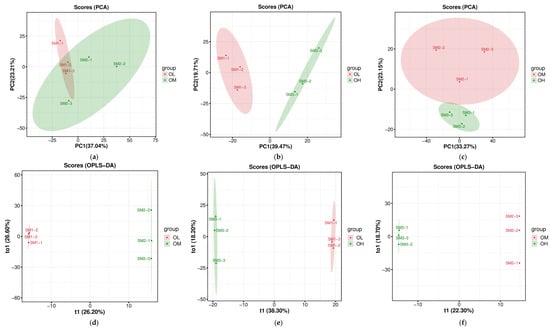
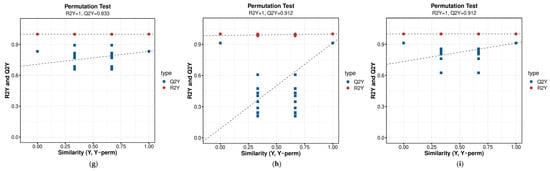
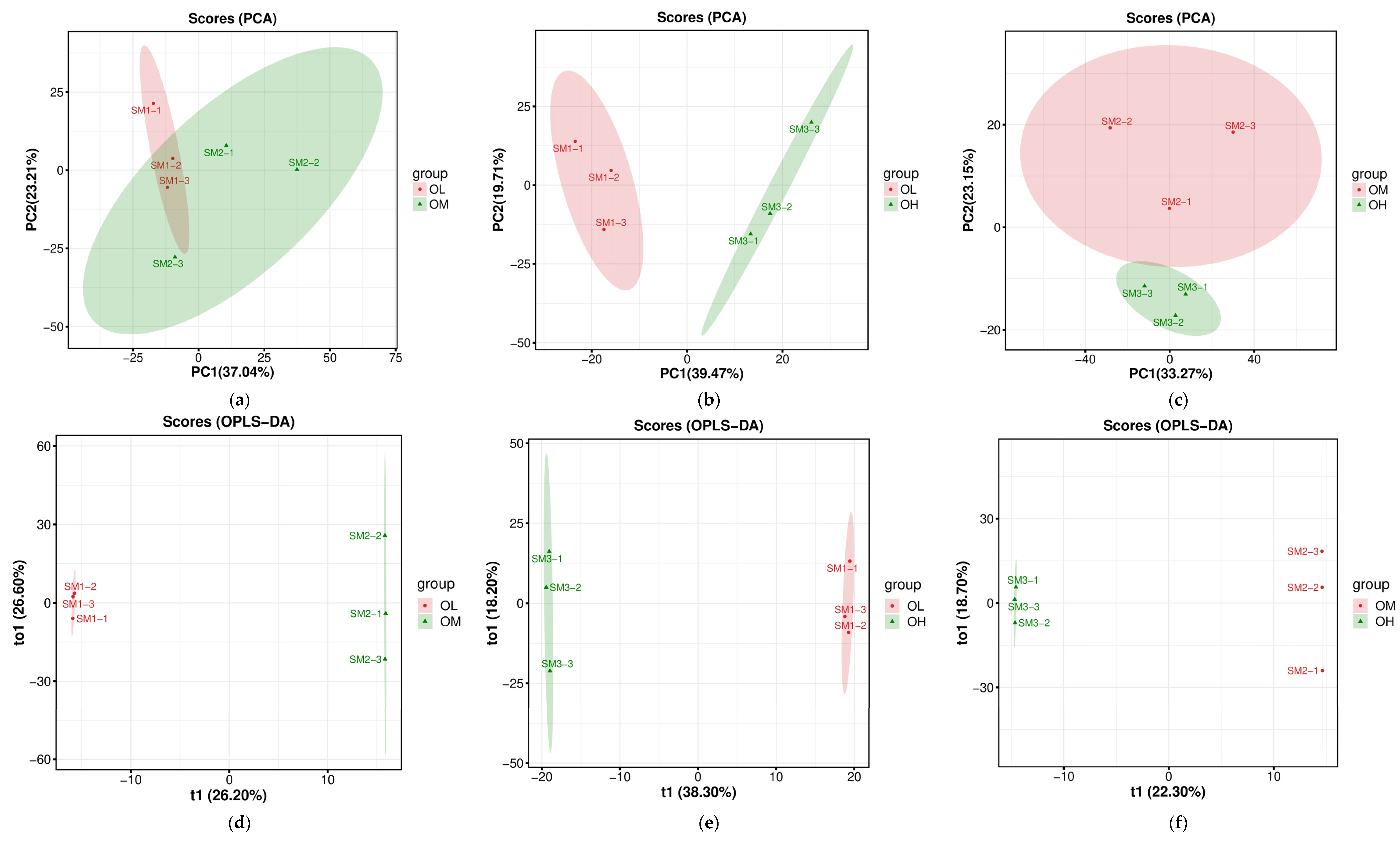
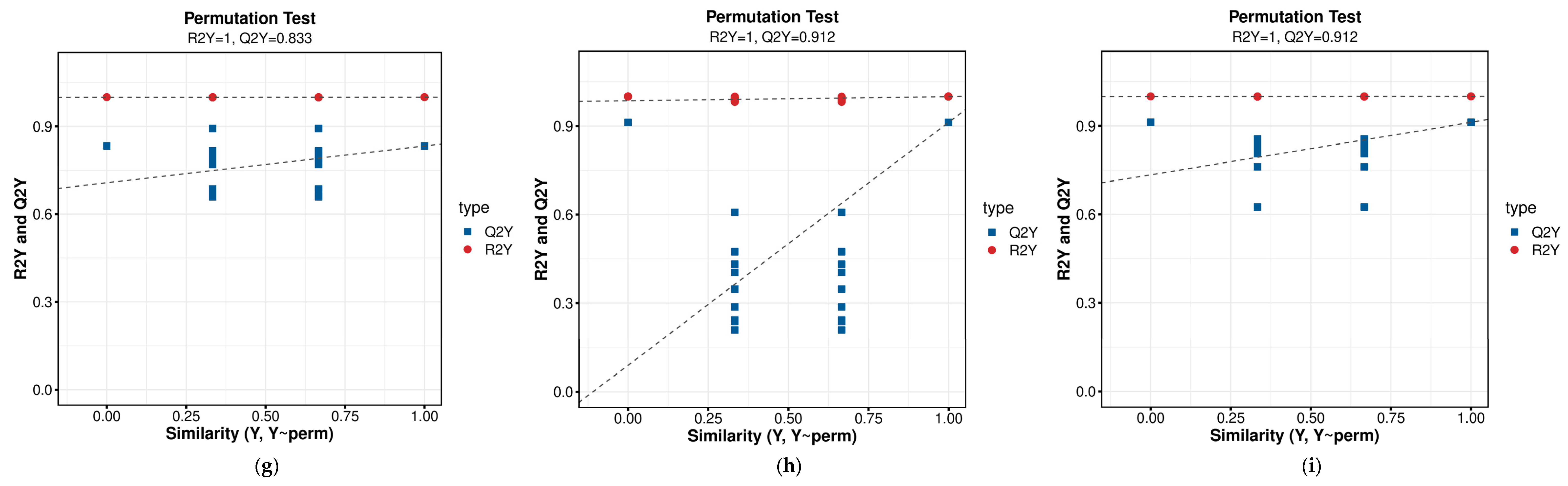
UPLC-MS/MS analysis was performed to characterize the metabolic profiles of O. sima reared at different stocking densities. Unsupervised principal component analysis (PCA) was applied to explore the metabolic signatures of the OL, OM and OH groups. Partial overlap of confidence ellipses was observed between the OL and OM groups, whereas clear separation was detected between OL and OH, as well as between OM and OH (Figure 1a–c). OPLS-DA models were further constructed to maximize intergroup variation. The OPLS-DA score plots showed complete separation between each pair of groups, indicating marked differences in metabolome composition (Figure 1d–f). Permutation tests confirmed the robustness of all OPLS-DA models, with Q2Y values of 0.833 (OL vs. OM), 0.912 (OL vs. OH) and 0.912 (OM vs. OH). All permuted Q2 values were lower than the original Q2Y, demonstrating the absence of overfitting. These models were therefore suitable for the subsequent screening of differential metabolites (Figure 1g–i).
Figure 1.
PCA (a–c), OPLS-DA (d–f), and permutation test (g–i) of the differently expressed metabolites (DEMs) in treatments (n = 3). Dots of the same color in PCA indicates samples from the same group. The horizontal coordinate represents the permutation retention, the vertical coordinate presents the values of R2 (red dots) and Q2 (blue dots), and the two dashed lines represent the regression line of R2 and Q2, respectively. The R2 and Q2 in the upper right corner represent the permutation retention equal to 1.
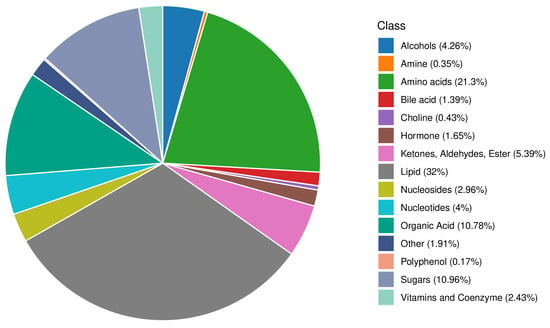
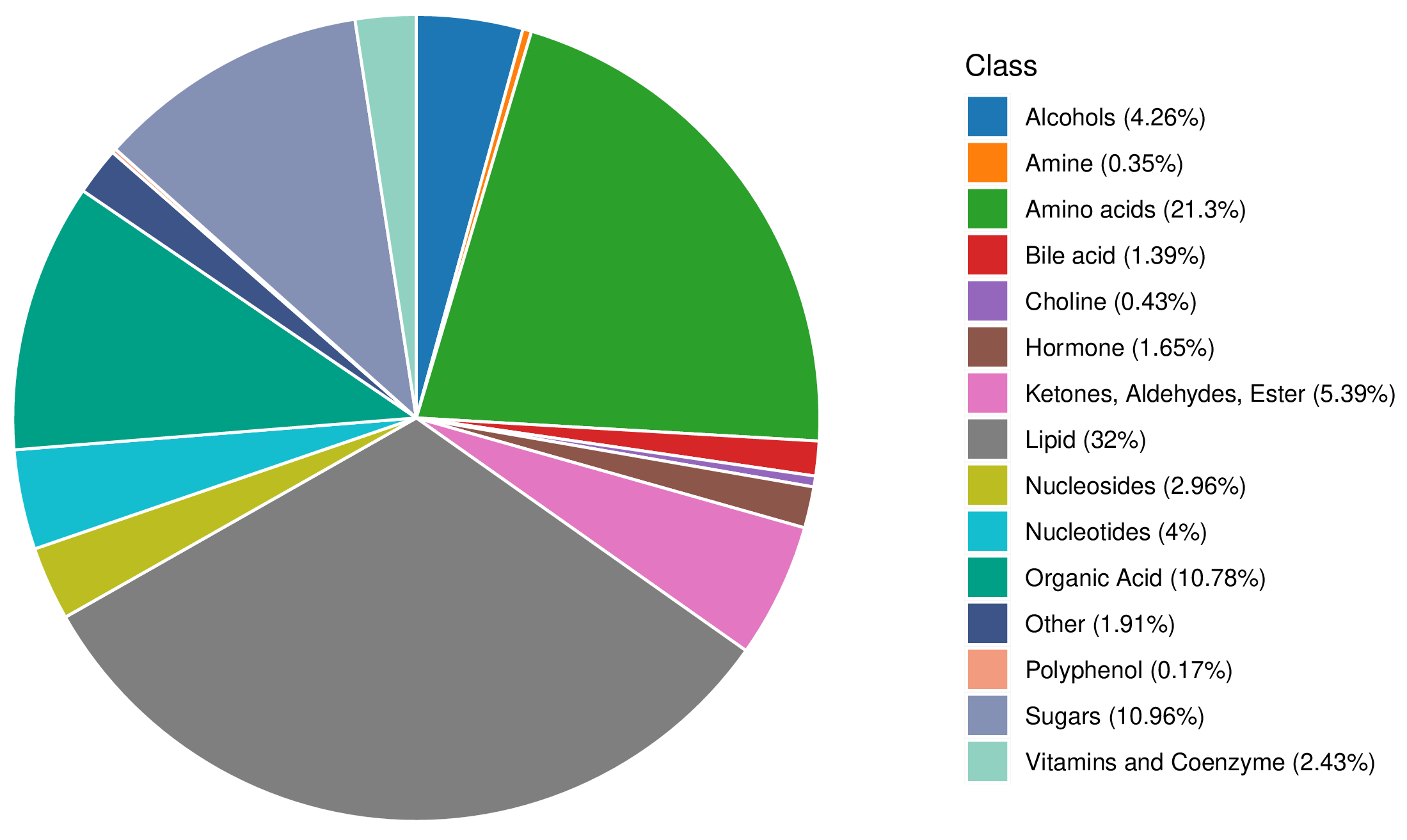
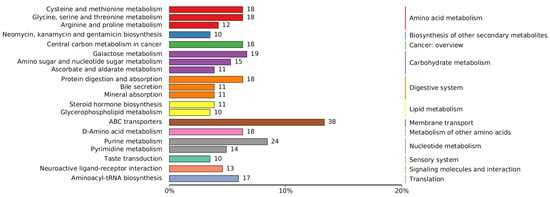
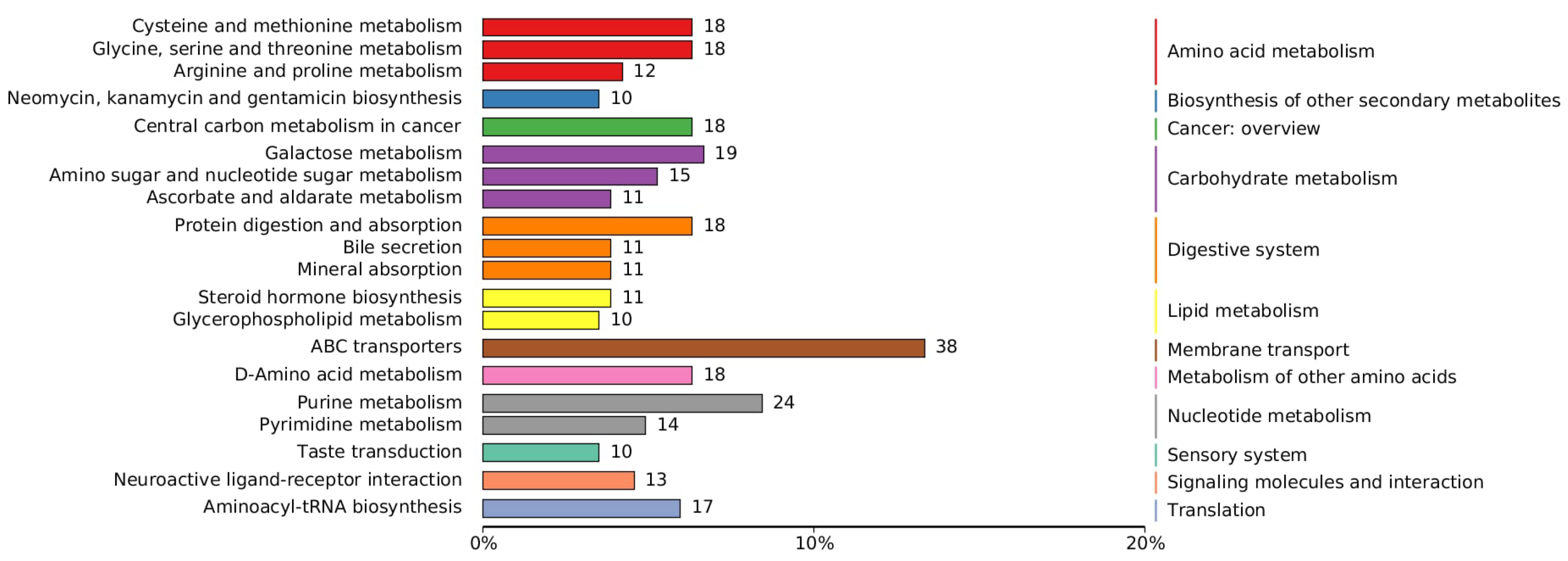
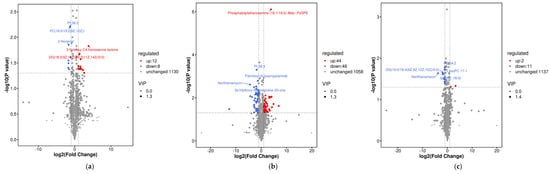
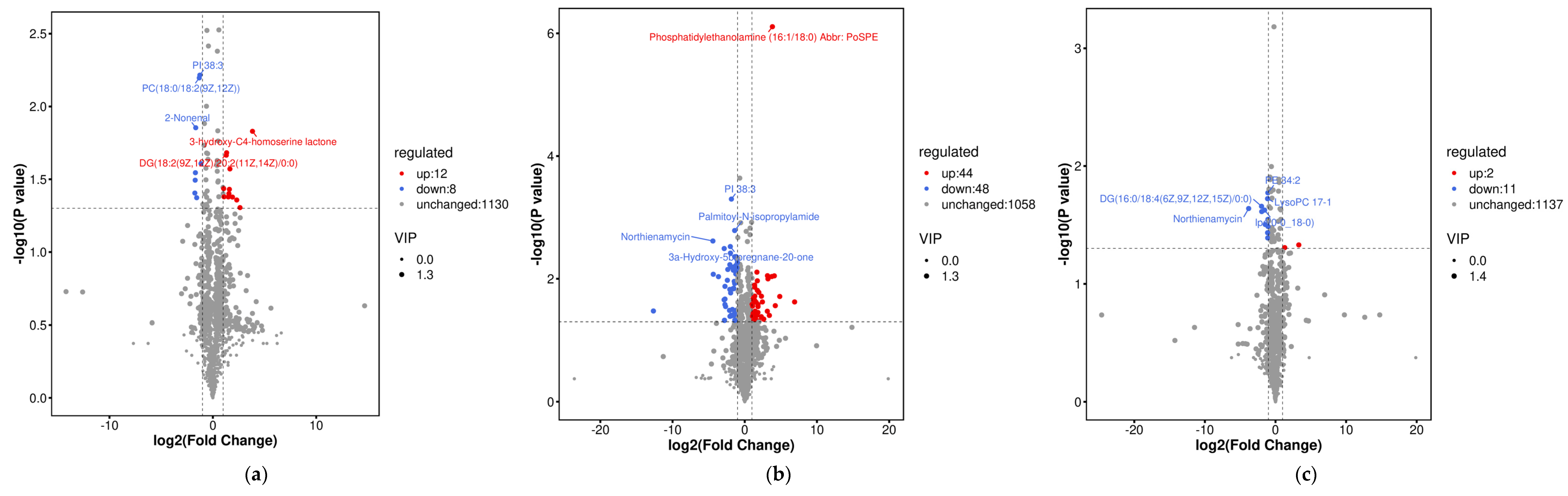
In total, 1150 annotated metabolites were identified, these belonged to multiple classes, including amino acids, lipids, organic acids, sugars, ketones, aldehydes, ester, alcohols, nucleotides. The significantly enriched metabolic pathways spanned diverse biological modules, including amino acid metabolism, carbohydrate metabolism, lipid metabolism, nucleotide metabolism, membrane transport, digestive system, and signaling molecules and interaction (Figure 2 and Figure 3). Among these metabolites, 20 were identified as significantly differential metabolites (SDMs) between the OL and OM groups, including N-Arachidonoylglycine, 1-Methyltryptophan, and xanthurenic acid, 2-nonenal, among others. Of these, 12 metabolites were significantly upregulated and 8 were significantly downregulated (Figure 4a). Hierarchical clustering revealed distinct metabolic signatures between the two groups. Most lipids accumulated in OL group, whereas amino acid derivatives were markedly elevated in OM group (Figure S1A). These SDMs were mainly enriched in five pathways: the prolactin signaling pathway, ovarian steroidogenesis, glycerolipid metabolism, tryptophan metabolism, and steroid hormone biosynthesis (Table 6). A total of 92 SDMs were identified between the OL and OH groups, of which 44 were significantly upregulated and 48 were significantly downregulated (Figure 4b). The SDMs included N-Arachidonoylglycine, estrone, glucosylgalactosyl hydroxylysine, linoleic-acid-amide, PE(16:1e/14-HDoHE) and others (Figure S1B). Hierarchical clustering of differential metabolites revealed clear grouping by experimental treatment. High-density culture triggered lipid metabolic reprogramming and further disturbed amino acid metabolism and glycoconjugate biosynthesis. KEGG pathway enrichment analysis revealed that these SDMs were mainly enriched in pathways associated with lipid metabolism, amino acid metabolism, and endocrine signaling. Representative pathways included D-amino acid metabolism, steroid hormone biosynthesis, fatty acid elongation, fatty acid degradation, and the renin–angiotensin system, among others. Among these, the D-amino acid metabolism pathway harbored the greatest number of mapped differential metabolites, whereas the fatty acid elongation pathway exhibited a higher enrichment factor, indicating marked functional perturbation of this pathway (Table 7). Moreover, 13 SDMs were identified between the OM and OH groups, of which 2 were significantly upregulated and 11 were significantly downregulated (Figure 4c and Figure S1C). In comparison, steroid hormone biosynthesis was the primary enriched pathway for these differential metabolites (Table 8).
Figure 2.
Pie chart showing the proportional distribution of identified metabolites grouped by chemical class. Lipids represented the most abundant class among all annotated metabolites.
Figure 3.
Summary of KEGG classification showing the functional distribution of differential metabolites. Entries within the same box denote hierarchical KEGG pathway annotations corresponding to KEGG pathway level 2 and level 3. The bar length indicates the number of metabolites annotated to each pathway.
Figure 4.
Volcano plot of differential metabolites. Dot size reflects VIP values from OPLS-DA. Red: up-regulated; blue: down-regulated; gray: no significant change. (a) OL vs. OM; (b) OL vs. OH; (c) OM vs. OH.
Table 6.
KEGG pathways enriched by differential metabolites between the OL and OM group.
Table 7.
KEGG pathways enriched by differential metabolites between the OL and OH group.
Table 8.
KEGG pathways enriched by differential metabolites between the OM and OH group.
2.7. Correlation Analysis of Growth Performance, Physiological Indices and Hepatic Metabolites
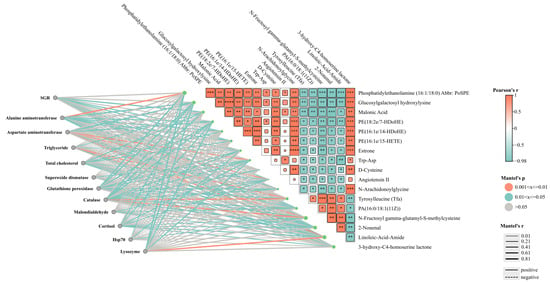
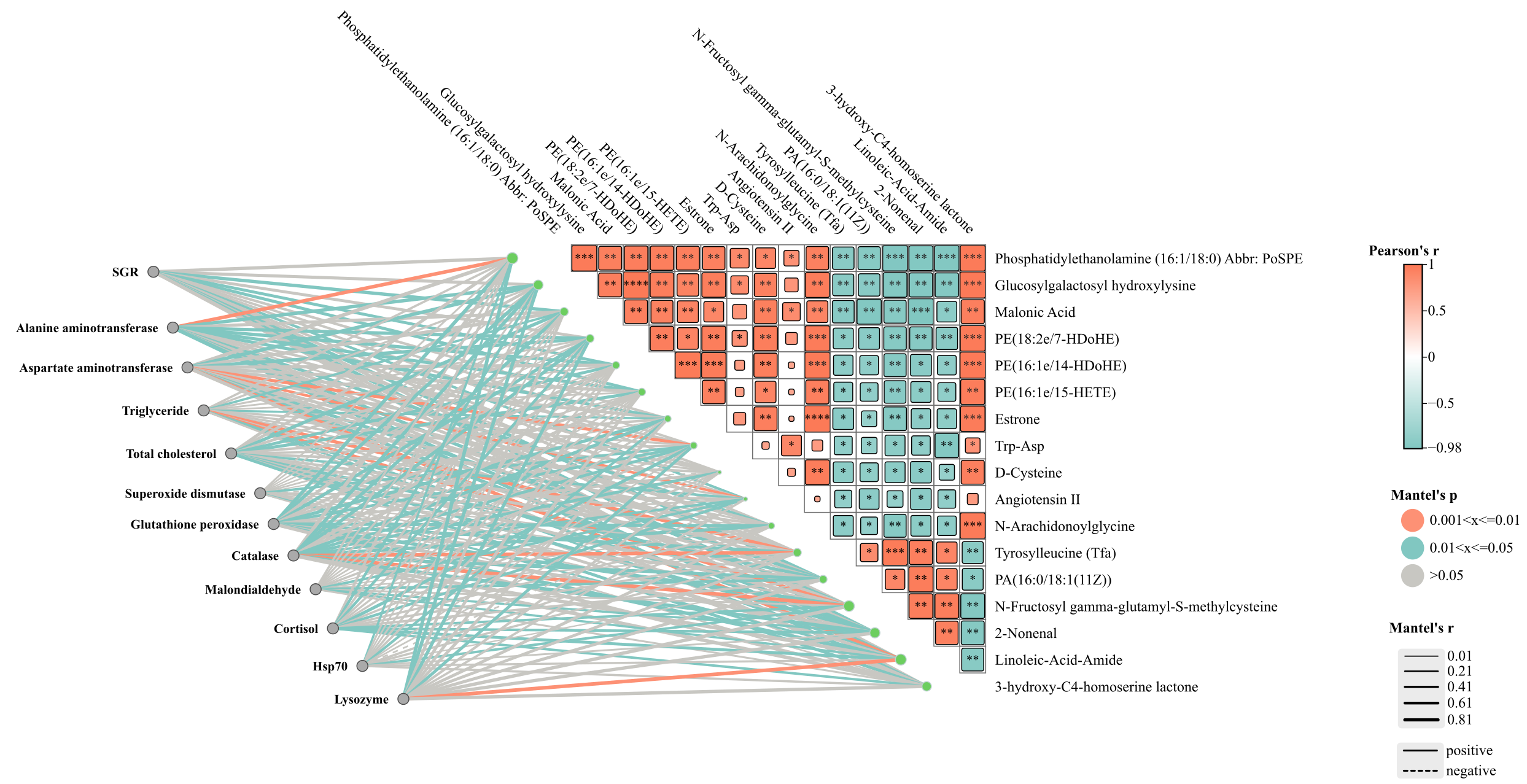
In the present study, 17 differential metabolites were selected based on VIP values. Combined Mantel test and Pearson correlation analysis were performed to construct a correlation network linking physiological and biochemical indices with these differential metabolites, thereby systematically characterizing the associations among growth performance, hepatic injury status, antioxidant capacity, stress response, immune activity, and metabolic profiles (Figure 5). SGR showed extensive and significant positive correlations with malonic acid, PE(16:1e/14-HDoHE), PE(16:1e/15-HETE), and glucosylgalactosyl hydroxylysine. ALT and AST were predominantly negatively correlated with the aforementioned phospholipids, as well as estrone, angiotensin II, 2-nonenal, linoleic acid amide, and multiple amino acid derivatives and modified amino peptides (Trp-Asp, D-cysteine, tyrosylleucine, N-arachidonoylglycine, PA(16:0/18:1(11Z)), and N-fructosyl gamma-glutamyl-S-methylcysteine). Triglyceride was significantly positively correlated with Tfa and N-fructosyl-γ-glutamyl-S-methylcysteine. Total cholesterol was significantly positively correlated with PoSPE, glucosylgalactosyl hydroxylysine, and malonic acid. SOD, GPx, CAT and MDA exhibited extensive significant negative correlations with PoSPE, multiple oxidized PE lipids, estrone, angiotensin II, amino acid derivatives, and small lipid signaling molecules. Cortisol, Hsp70 and lysozyme showed significant negative correlations with differential metabolites including estrone, angiotensin II, amino acid derivatives, and 2-nonenal.
Figure 5.
Correlation analysis between growth-related physiological indices and hepatic metabolites. The left panel shows the correlation network diagram, and the right panel presents the corresponding correlation heatmap. Lines in the network represent pairwise Pearson correlation coefficients. Red lines indicate positive correlations, and cyan lines indicate negative correlations; line thickness reflects the magnitude of correlation coefficients. In the heatmap, color represents Pearson’s correlation coefficient (r): red for positive correlation and cyan for negative correlation. The significance of correlation is marked by asterisks, where * p < 0.05, ** p < 0.01, *** p < 0.001, **** p < 0.0001. Non-significant correlations are shown in gray.
3. Discussion
3.1. High Stocking Density Negatively Affected the Growth Performance of O. sima
In intensive aquaculture systems, stocking density is a critical factor governing production costs, yield and economic returns, and it also exerts profound effects on fish health and welfare. In the present study, high stocking density significantly inhibited the growth performance of O. sima, including reduced body weight increase rate and specific growth rate, which is consistent with previous findings in Micropterus salmoides [20], Acipenser baerii [12], Dicologoglossa cuneata [21], Pelteobagrus vachellii [8], and Acipenser sinensis [3]. Additionally, the feed coefficient in the high-density group was significantly higher than that in the medium- and low-density groups. Previous studies have demonstrated that under high stocking density conditions, intensified competition for space and feed increases locomotor energy expenditure. Additional energy is required to cope with such rearing conditions, which triggers a reallocation of energy away from somatic growth toward basic survival maintenance and defensive responses. This trade-off ultimately leads to suppressed growth performance and an increased feed coefficient [3]. Consistent with the conclusions of Birolo et al. in largemouth bass [20], the present study showed that feed conversion ratio increased under high-density intensive culture, reflecting altered feed utilization associated with growth depression in fish. Nevertheless, several studies have reported that stocking density exhibited no significant influence on fish growth, as observed in Nibea albiflora [22] and genetically improved Oreochromis niloticus [23]. For some gregarious fish species, low rearing density may even reduce feed intake and result in slower growth [24]. Furthermore, no significant difference in survival rate was detected among different density groups in this study, which is in agreement with previous studies on Acipenser sinensis [3], Lates calcarifer [25], Clarias gariepinus [26], and hybrid sturgeon [12].
3.2. Stocking Density Significantly Affected Hepatic Lipid Metabolic Profiles and ALT/AST Activities of O. sima
Hepatic alanine aminotransferase (ALT) and aspartate aminotransferase (AST) are abundant core aminotransferases in fish liver and are widely recognized as critical biomarkers for assessing hepatic protein metabolism status [27]. In the present study, hepatic ALT and AST activities were significantly lower in the high-density group than in the low- and medium-density groups, indicating that high stocking density suppressed hepatic protein metabolic activity. Such inhibition of protein metabolism under crowding condition may partially account for the retarded growth of O. sima observed in the high-density group.
Hepatic triglyceride (TG) and total cholesterol (TC) contents are key indicators reflecting hepatic lipid metabolism in fish. In this study, significantly lower hepatic TG and TC levels were observed in the high-density group relative to the low-density group, which is consistent with previous findings in Acipenser sinensis [3] and Pelteobagrus vachellii [8]. It is speculated that high-density culture inhibited the synthesis or uptake of hepatic triglycerides and cholesterol in fish. However, inconsistent results have been documented in other fish studies. For instance, elevated stocking density promotes hepatic TG and TC accumulation in Megalobrama amblycephala [28], Takifugu rubripes [29], and Cyprinus carpio [30], thereby altering hepatic lipid metabolism. Such interspecific differences in lipid metabolic responses to density stress are likely attributable to species-specific physiological traits and divergent metabolic strategies among aquatic organisms [30].
3.3. High Stocking Density Exerted Significant Modulatory Effects on the Hepatic Antioxidant Status and Immune Responses of O. sima
Antioxidant enzymes, including Superoxide dismutase (SOD), catalase (CAT), and glutathione peroxidase (GPx), are core components of the biological antioxidant system that scavenge excess reactive oxygen species and safeguard cells against oxidative injury. High-density rearing frequently disturbs hepatic antioxidant homeostasis in fish. Previous studies have demonstrated species-specific antioxidant responses under high stocking density conditions, as reported in Siniperca chuatsi [2], Pelteobagrus vachellii [8], and Litopenaeus vannamei [31]. In our study, high stocking density suppressed hepatic SOD and CAT activities in O. sima, reducing the capacity for reactive oxygen species scavenging. In contrast, GPx activity and T-AOC were significantly higher in the high-density group than in the low- and medium-density groups, suggesting that high-density rearing triggered GPx-dominant antioxidant responses to counteract oxidative damage and sustain redox homeostasis. No significant difference in hepatic malondialdehyde (MDA) content was observed across all density groups, further confirming that high-density rearing did not trigger severe oxidative damage in O. sima. These results agree with earlier reports on hybrid sturgeon [12], Scophthalmus maximus [32], and Pelteobagrus vachellii [8], showing that fish can mitigate oxidative injury and stabilize cellular homeostasis via differential regulation of antioxidant enzymes. Nonetheless, higher hepatic MDA levels were detected under increased stocking density in Micropterus salmoides and Cyprinus carpio var. Jian [33,34]. Taken together, these divergent responses reveal species-specific antioxidant regulatory patterns in fish under high-density rearing.
3.4. The Relationship Between Stocking Density and Immune and Stress Indicators
Heat shock protein 70 (Hsp70) serves as an essential molecular chaperone involved in diverse physiological processes, such as the repair of damaged intracellular proteins, immune recognition, and cellular apoptosis, to safeguard organisms against unfavorable environmental challenges [35]. In general, adverse environmental conditions, pollutants, and pathogen infection can markedly upregulate Hsp70 expression in aquatic animals [36,37]. In this study, the high-density group exhibited significantly higher Hsp70 levels than the low- and medium-density groups, consistent with previous observations in hybrid sturgeon [12], Oncorhynchus mykiss [38], and Scophthalmus maximus [32]. This finding indicated that high stocking density upregulated Hsp70 expression in O. sima, where Hsp70 exerts a protective role in preventing or mitigating hepatic oxidative damage.
Cortisol is a well-recognized endocrine biomarker in fish, and increased cortisol concentrations are often recorded under intensive crowding conditions [39]. For O. sima, no significant intergroup difference in cortisol content was observed across all treatments in the present study. Together with stable MDA levels among groups, these findings further confirm that high-density rearing did not induce substantial oxidative damage in O. sima, which agreed with earlier reports on Pelteobagrus vachellii [8]. Consistent with the activated protective mechanism, the non-specific immune system of O. sima also exhibited positive adaptive responses under high stocking density conditions.
Lysozyme (LZM) is a core non-specific immune enzyme in aquatic organisms with antibacterial, anti-inflammatory, and antiviral functions, and its activity is positively associated with fish immune competence [40]. In the present study, LZM activity was significantly higher in the high-density group than in the low- and medium-density groups. In Lateolabrax japonicus, serum LZM activity first increased and then decreased with the elevation of stocking density [41]. Conversely, increased stocking density significantly suppresses LZM activity in Pelteobagrus fulvidraco [42], Cyprinus carpio [43], and Pelteobagrus vachellii [8]. These divergent LZM responses to crowding conditions are primarily attributable to interspecific physiological disparities and species-specific immune regulatory strategies.
Immunoglobulin M (IgM) is the predominant immunoglobulin in teleost fish and plays an indispensable role in systemic immune defense [44]. In this study, no significant difference in IgM content was detected among all density groups, which differed from previous findings in Oreochromis niloticus [45]. Dina et al. reported that high-density culture reduced serum IgM levels in tilapia, which was attributed to excessive reactive oxygen species accumulation and impaired antioxidant defense under persistent crowding stress [45]. By contrast, a study on Ictalurus punctatus showed that high-density culture induced more than six-fold increase in serum IgM content relative to the low-density group, implying that elevated IgM synthesis serves as a positive immune strategy to counteract density stress [46]. The stable IgM levels observed in O. sima, we speculate that bioactive substances including glutathione peroxidase (GPx) and lysozyme exert physiological functions to counteract high-density conditions and maintain organismal homeostasis.
3.5. Correlations Among Growth Performance, Physiological Indices and Hepatic Metabolites Under High-Density Condition
In this study, 1150 annotated metabolites were identified. Among these, 92 SDMs were detected between the OL and OH groups, including N-arachidonoylglycine, estrone, glucosylgalactosyl hydroxylysine, linoleic acid amide, PE(16:1e/14-HDoHE), and others. These metabolites were mainly enriched in pathways associated with lipid metabolism, amino acid metabolism, and endocrine signaling. We performed an integrated analysis linking differential metabolites to indicators of growth, hepatic protein–lipid metabolism, antioxidant capacity, and immunity. The analysis revealed that SGR was positively correlated with phosphatidylethanolamine (PoSPE), malonic acid, glucosylgalactosyl hydroxylysine, and multiple oxidized phospholipids including PE(18:2e/7-HDoHE) and PE(16:1e/14-HDoHE), implying that the superior growth performance observed in the low-density group was accompanied by higher abundances of these lipids and organic acids. In contrast, hepatic ALT and AST were predominantly negatively correlated with the aforementioned phospholipids, as well as estrone, angiotensin II, 2-nonenal, linoleic acid amide, and diverse amino acid derivatives and modified peptides. These findings suggest that hepatic integrity was maintained under high-density rearing, precisely because elevated levels of these metabolites may confer hepatoprotection against density-associated cellular injury.
Antioxidant indicators (SOD, GPx, CAT) and the oxidative-damage marker MDA showed consistent negative associations with PoSPE, oxidized PEs, estrone, angiotensin II, and other differential metabolites, demonstrating that elevated oxidative injury was closely linked to reduced abundances of these metabolic molecules. Collectively, these correlative relationships suggested that high-density rearing perturbed hepatic lipid and amino acid homeostasis. We hypothesize that when organisms allocate considerable metabolic resources to defensive and immune responses, the biosynthesis of growth-favorable lipid and peptide metabolites is impaired, which in turn leads to growth retardation and disrupted hepatic function.
4. Materials and Methods
4.1. Experimental Conditions and Design
The experiment was conducted from August to October 2025 at the Silin Fish Breeding and Releasing Station located in the Wujiang River. Before the formal trial, experimental fish were temporarily reared in a recirculating aquaculture system (RAS). The culture tanks were 2.0 m in diameter with an effective water volume of 2.5 m3. During the rearing period, the water quality parameters were maintained as follows: water temperature of 25–27 °C, pH of 7.0–8.0, dissolved oxygen ≥ 6 mg/L, ammonium nitrogen ≤ 0.01 mg/L, and nitrite ≤ 0.05 mg/L.
Based on previous studies, ecological characteristics, body size, and practical culture experience of Onychostoma sima, three stocking density treatments were established in the present study: low density (OL, 0.07 kg/m3, 40 ind./m3), medium density (OM, 0.28 kg/m3, 160 ind./m3), and high density (OH, 0.56 kg/m3, 320 ind./m3). Each treatment was performed in triplicate. Healthy juvenile fish with uniform body size (initial body weight: 1.77 ± 0.02 g) were randomly distributed into experimental tanks. Fish were fed to satiation twice daily at 9:00 and 16:00 during the 10-week culture trial. A commercial feed (Tongwei No. 198) was used, with the nutritional composition as follows: crude protein 34.0%, crude lipid 4.0%, crude ash 15.0%, and crude fiber 12.0%, the manufacturer is Tongwei Group Co., Ltd. (Chengdu, China). Fish mortality was recorded daily during the experimental period.
4.2. Sample Collection
At the end of the 10-week feeding trial, all fish were fasted for 24 h before sampling. The total number and final body weight of fish in each tank were recorded for growth performance calculation. Ten fish were randomly selected from each tank, anesthetized with 100 mg/L MS-222, and dissected to obtain liver tissues, samples within each tank were pooled as one biological replicate. The liver samples were homogenized, transferred into centrifuge tubes, and stored at −80 °C for subsequent biochemical analysis and metabolomic profiling. The liver metabolomic samples from the low-, medium-, and high-density groups were coded as SM1, SM2, and SM3, respectively. Additionally, 20 fish per tank were collected for whole-body biochemical composition determination.
4.3. Determination of Indicators
4.3.1. Biochemical Composition
The moisture content of fish samples was determined by drying the samples to constant weight in a drying oven at 105 °C for 16 h. The crude protein content was measured using the Kjeldahl method, the crude lipid content was determined by the Soxhlet extraction method, and the crude ash content was quantified by high temperature combustion in a muffle furnace.
4.3.2. Hepatic Biochemical Parameters
Hepatic biochemical indices, including triglyceride (TG), total cholesterol (TC), very low-density lipoprotein (VLDL), alanine aminotransferase (ALT), aspartate aminotransferase (AST), Superoxide dismutase (SOD), glutathione peroxidase (GSH-Px), catalase (CAT), total antioxidant capacity (T-AOC), cortisol, malondialdehyde (MDA), immunoglobulin M (IgM), and lysozyme (LZM), were determined using commercial assay kits purchased from Nanjing Jiancheng Bioengineering Institute (Nanjing, China). The main instruments included a microplate reader (Multiskan FC, Thermo Fisher Scientific, Waltham, MA, USA), a UV-Vis spectrophotometer (NanoDrop 2000C, Thermo Fisher Scientific), and a centrifuge (5424R, Eppendorf, Hamburg, Germany). All detection procedures were strictly performed in accordance with the manufacturer’s instructions.
4.3.3. Metabolite Detection and Analysis
Sample preparation and extraction: Dissolve 30 mg of the freeze-dried sample in 1.0 mL of a solution (methanol:acetonitrile:H2O = 1:2:1), then vortex for 30 s. The above solution was crushed using a mixer mill with a bead for 10 min at 45 Hz, and sonicate in an ice water bath for 10 min. Each sample was kept at −20 °C for 1 h. Subsequent centrifugation was performed at 4 °C and 12,000 rpm over 15 min. An aliquot of 300 μL supernatant was passed through a 0.22 μm filter and collected in a 2 mL vial. Equal volumes of 10 μL withdrawn from all samples were blended to constitute pooled QC samples ahead of UPLC-MS/MS acquisition.
Data-acquisition system: The platform comprises an ultra-performance liquid chromatograph (UPLC, ExionLC AD, AB Sciex, Framingham, MA, USA) coupled with a tandem mass spectrometer (MS/MS, QTRAP 6500+, AB Sciex).
Data detection and analysis: Analyst 1.6.3 software was used for mass spectral data processing. Raw peak areas were normalized to total peak area before downstream analyses. PCA and Spearman’s correlation analysis were used to assess intra-sample reproducibility and QC stability. Fold changes were calculated across groups, and Student’s t-test was used to compute the p-value for each metabolite. OPLS-DA models were built with the R ropls package, followed by 200 permutation tests for model validation. VIP values were obtained via multiple cross-validation. Differential metabolites were screened by combining fold change, p-value and OPLS-DA VIP, with criteria of FC > 2, p < 0.05 and VIP > 1. Annotated metabolites were queried against the KEGG compound database for classification and pathway information. Hypergeometric tests were used to calculate the enrichment significance of differential metabolites in KEGG pathways.
4.4. Calculation Formulas for Growth Performance
The growth performance of Onychostoma sima was evaluated by survival rate (SR), mass gain rate (MGR), specific growth rate (SGR), feeding rate (FR), and feed conversion ratio (FCR). The corresponding calculation formulas were as follows:
where N0 is the initial fish number, Nt is the final fish number, W0 is the initial average body weight, Wt is the final average body weight, M is the total dry feed intake, Q is the total diet intake, P0 s the initial body weight, Pt s the final body weight, and D represents the total culture days.
SR(%) = 100 × (Nt)/N0
MGR(%) = 100 × (Wt − W0)/W0
SGR(%/d) = 100 × (lnWt − lnW0)/D
FR(%/d) = 100 × Q/[(P0 + Pt)/2 × D]
FCR = M/(Wt − W0)
4.5. Data Analysis
All statistical analyses were performed using IBM SPSS 22.0 statistical software. Levene’s test was used to assess homogeneity of variance, and the Shapiro–Wilk test was applied to examine normality, a significance threshold of p > 0.05 was adopted as the criterion for normal distribution. One-way analysis of variance (ANOVA) was conducted at a significance level of 0.05 when the assumptions of normality and homogeneity of variance were satisfied, followed by Duncan’s multiple comparison analysis. For datasets that failed the normality test or showed heterogeneous variance, the Kruskal–Wallis H test with post hoc pairwise comparisons was adopted. Differences were considered statistically significant at p < 0.05. Using SPSS software to analyze the correlation between growth performance indicators, physiological indicators, and metabolites. Mantel test was done in Chiplot (www.chiplot.online/).
5. Conclusions
The present study demonstrated that high stocking density significantly suppressed the growth performance of O. sima juveniles, perturbed protein and lipid metabolism, and altered oxidative homeostasis without evident oxidative injury. High-density rearing primarily modulated lipid metabolism, amino acid metabolism, and endocrine-related signaling pathways. We hypothesize that lipid metabolic reprogramming, together with steroids and amino acid derivatives, mediates the trade-offs among growth regulation, oxidative homeostasis, and defensive immune responses. Collectively, under the experimental conditions of this study, stocking densities ranging from 0.07 to 0.28 kg/m3 supported favorable growth performance and physiological welfare for O. sima juveniles with an initial body weight of (1.77 ± 0.02) g.
Supplementary Materials
The following supporting information can be downloaded at: https://www.mdpi.com/article/10.3390/ijms272310703/s1.
Author Contributions
C.W. and H.-T.Z. designed the experiments. C.W., J.-N.W. and Q.S. conducted the experiments, analyzed the experimental data and wrote the paper. H.L., D.-L.W., Q.L. and G.T. helped with the data analysis. C.W., F.C. and Y.Y. reviewed and revised the paper. All authors have read and agreed to the published version of the manuscript.
Funding
This work was supported by Fish Breeding and Operation Outsourcing Service Contract for the Fish Propagation and Releasing Station of Silin Power Plant (2025–2028) (1103D202500034).
Institutional Review Board Statement
The animal study protocol was approved by the Animal Care and Ethics Committee of Institute of Hydroecology, Ministry of Water Resources & Chinese Academy of Sciences (project identification code: IHB/LL/2021025; date of approval: 27 July 2022).
Informed Consent Statement
Not applicable.
Data Availability Statement
The additional data supporting the manuscript are available from the corresponding author upon request.
Acknowledgments
We would like to thank Yuan-zhi Du and Wei Liu for helping us to feeding the fish. Thanks Guizhou Wujiang Hydropower Development Co., Ltd. Silin Power Plant for supporting this program.
Conflicts of Interest
The authors declare no conflicts of interest.
References
- Liu, S.J.; Li, G.D.; Liu, H.Z.; Hao, J.; Chen, J. Current development status of aquaculture equipment in China. J. Fish. China 2023, 47, 119615. [Google Scholar]
- Lu, K.; Zhang, Y.P.; Liang, X.F.; Tang, S.L. The influence of stocking density on the growth, blood biochemistry, and antioxidant capacity indicators of Chinese perch (Siniperca chuatsi). Acta Hydrobiol. Sin. 2023, 47, 473–478. [Google Scholar]
- Guan, M.; Zhang, D.Z.; Shu, D.; Zhu, X. Effects of stocking density on growth performance, biochemical indexes, and gonadal development of Chinese sturgeon (Acipenser sinensis). J. Fish. Sci. China 2023, 30, 25–36. [Google Scholar]
- Rasheed, N.; Manchi, R.; Sharma, P.; Nityanand, P.; Pandey, P.K.; Suresh, A.V.; Angel, G.; Chadha, N.-K.; Sawant, P.B.B.; Pandey, A.; et al. Stocking density affects growth, feed utilisation, metabolism, welfare and associated mRNA transcripts in liver and muscle of rainbow trout more pronouncedly than dietary fish meal inclusion level. Aquaculture 2025, 596, 741717. [Google Scholar] [CrossRef] [Scilit]
- Ananias, I.M.; Silva, S.S.; Souza, A.S.; Santos, F.A.C.; Silva, N.C.S.; Vieira, I.M.; Costa, S.T.; Finamor, I.A.; Bressan, C.A.; Pavanato, M.A.; et al. Effects of stocking density on growth, oxidative status, purinergic responses, and gill morphometry of Piaractus brachypomus in recirculating aquaculture system (RAS). Aquaculture 2026, 626, 744398. [Google Scholar] [CrossRef] [Scilit]
- Jewel, M.A.S.; Ara, J.; Haque, M.A.; Hossain, M.A.; Noor, N.M.; Das, S.K. Effect of stocking density on the growth, body composition, and blood parameters of cage-reared Gangetic mystus catfish (Mystus cavasius). Aquac. Rep. 2023, 28, 101428. [Google Scholar] [CrossRef] [Scilit]
- Pai, M.; Verma, A.K.; Krishnani, K.K.; Varghese, T.; Hittinahalli, C.M.; John, V.C.; Debroy, S. Effects on the productivity, haematological indices, and carcass quality of Nile tilapia reared at different stocking densities in a hybrid biofloc-RAS. Aquaculture 2025, 596, 741756. [Google Scholar] [CrossRef] [Scilit]
- Hu, X.N.; Wu, X.B.; Zhu, Y.J.; Chen, S.Q.; Shi, Z.; Zhang, Y.S.; Wang, L.; Li, X.L.; Li, X.M. Effects of stocking density on growth performance and physiological and biochemical parameters of Pelteobagrus vachelli juvenile. South China Fish. Sci. 2025, 21, 141–148. [Google Scholar]
- Zhang, Q.; Hou, J.; Yang, J.; Liao, W.; Lu, J.; He, X. Captive density on the growth performance and health status of largemouth black bass (Micropterus salmoides). Acta Hydrobiol. Sin. 2022, 46, 671–678. [Google Scholar]
- Dong, L.; Xie, S.; Zhou, L.; Lu, X.; Tian, J.; Yu, L.; Wen, H.; Xiao, J.; Jiang, M. Dietary protein source and stocking density on growth performance, body composition and serum biochemical parameters of grass carp (Ctenopharyngodon idellus). Acta Hydrobiol. Sin. 2023, 47, 217–226. [Google Scholar]
- Sun, P.; Yuan, X.; Gao, X.D.; Ling, J.; Jiang, Y. Reduced rearing density improved the growth and welfare of Acanthopagrus schlegelii: An integrated analysis using transcriptomics and metabolomic. Aquac. Rep. 2024, 38, 102344. [Google Scholar] [CrossRef] [Scilit]
- Zhao, D.; Cheng, C.; Xiao, M.; Zhu, M.; Li, L.; Mei, F.; Zha, Y.; Jian, S. Effects of stocking density on growth, antioxidant enzyme activity and related gene expression of juvenile Siberian hybrid sturgeon [Acipenser baerii (♀) × A. schrenckii (♂)]. J. Fish. China 2022, 46, 1582–1592. [Google Scholar]
- Xu, Q.; Yuan, J.; Ni, M.; Zou, S.; Liu, M.; Gu, Z. Comparative study on phenotypic characteristics, health status and muscle nutritional quality of largemouth bass (Micropterus salmoides) under different depuration time and stocking density. J. Fish. China 2025, 49, 019614. [Google Scholar]
- Ding, R. Fishology of Sichuan, 1st ed.; Sichuan Science and Technology Press: Chengdu, China, 1994; pp. 332–334. [Google Scholar]
- Li, Y.; Zhang, Y.; Xie, B.; Tan, J.; He, X.; Liu, B.; Xue, Z.; Tan, G.; Yan, Z. Observations on the embryonic and larval development of Varicorhinus(Onychostoma) simus. J. Southwest Norm. Univ. (Nat. Sci.) 2006, 31, 142–147. [Google Scholar]
- Zhou, X.; Zheng, S.; Wu, Q.; Xiang, X.; Chen, J. Evaluation of Nutritive Quality and Nutritional Components in Ongchostoma sima. J. Southwest Norm. Univ. (Nat. Sci.) 2007, 29, 123–128. [Google Scholar]
- Zhou, X.; Xiang, X.; Li, D.; Chen, J.; Wang, W. On suitable nutrient content and optimum energy-protein ratio in formulation diets for juvenile Onychostoma sima. J. Southwest Norm. Univ. (Nat. Sci.) 2013, 38, 80–86. [Google Scholar]
- Yan, G.J.; He, X.K.; Cao, Z.; Fu, S. The trade-off between steady and unsteady swimming performance in six cyprinids at two temperatures. J. Therm. Biol. 2012, 37, 424–431. [Google Scholar] [CrossRef] [Scilit]
- Chen, C.; Li, S.; Li, Z.; Xu, F.; Huang, Y. Transcriptome and metabolome integration to analyse physiological and metabolic regulation strategies under starvation stress in Onychostoma sima. Chin. J. Anim. Nutr. 2025, 37, 6281–6290. [Google Scholar]
- Birolo, M.; Trabacchin, V.; Sambo, P.; Triolone, S.; Nicoletto, C. Impact of Stocking Density on Growth, Feeding Behavior, and Flesh Quality of Largemouth Bass (Micropterus salmoides) in Coupled Aquaponic Systems. Fishes 2025, 10, 552. [Google Scholar] [CrossRef] [Scilit]
- Herrera, M.; Vargas-Chaco, L.; Hachero, I.; Ruiz-Jarabo, I.; Rodiles, A.; Navas, J.; Mancera, J.M. Physiological responses of juvenile wedge sole Dicologoglossa cuneata (Moreau) to high stocking density. Aquac. Res. 2009, 40, 790–797. [Google Scholar] [CrossRef] [Scilit]
- Xue, B.; Lou, B.; Xu, D.D.; Shi, H.; Mao, G.M.; Cheng, G.M.; Zhan, W. Impact of density stress on growth, metabolism and non-specific immunity of juvenile Nibea albiflora. Prog. Fish. Sci. 2013, 34, 45–51. [Google Scholar]
- Wang, Y.Y.; Xu, P.; Nie, Z.J. Growth, digestive enzymes activities, serum biochemical parameters and antioxidant status of juvenile genetically improved farmed tilapia (Oreochromis niloticus) reared at different stocking densities in in-pond raceway recirculating culture system. Aquac. Res. 2019, 50, 1338–1347. [Google Scholar] [CrossRef] [Scilit]
- Li, D.P.; Zhuang, P.; Yan, A.S.; Wang, M.X.; Zhang, L.Z. The influences of illumination, water current and stocking density on feeding, behavior and growth in juvenile Acipenser schrenckii. J. Fish. China 2004, 28, 54–61. [Google Scholar]
- Le Boucher, R.; Chung, W.Q.; Ng, J.K.L.; Tan, L.S.E.; Lee, C.S. Balancing Stocking Density and Feed Intake for Barramundi (Lates calcarifer) Raised in Recirculating Aquaculture Systems. Aquac. Res. 2024, 2024, 2264274. [Google Scholar] [CrossRef] [Scilit]
- Oké, V.; Goosen, N.J. The effect of stocking density on profitability of African catfish (Clarias gariepinus) culture in extensive pond systems. Aquaculture 2019, 507, 385–392, Correction in Aquaculture 2019, 511, 734270. [Google Scholar] [CrossRef] [Scilit]
- Liu, G.; Ye, Z.Y.; Liu, D.Z.; Zhao, J.; Sivaramasamy, E.; Deng, Y.L.; Zhu, S.M. Influence of stocking density on growth, digestive enzyme activities, immune responses, antioxidant of Oreochromis niloticus fingerlings in biofloc systems. Fish. Shellfish Immunol. 2018, 81, 416–422. [Google Scholar] [CrossRef] [Scilit] [PubMed]
- Wang, Y.W.; Zhu, J.; Ge, X.P.; Sun, S.; Su, Y.; Li, B.; Hou, Y.; Ren, M. Effects of stocking density on the growth performance, digestive enzyme activities, antioxidant resistance, and intestinal microflora of blunt snout bream (Megalobrama amblycephala) juveniles. Aquac. Res. 2019, 50, 236–246. [Google Scholar] [CrossRef] [Scilit]
- Zhang, X.; Liang, M.Q.; Wei, Y.L.; Liao, Z.B.; Zhang, Q.G.; Xu, H.G. Effects of dietary protein content and stocking density on growth performance, nitrogen excretion, and relevant biochemical parameters of juvenile Takifugu rubripes. Prog. Fish. Sci. 2021, 42, 74–83. [Google Scholar]
- Diao, W.; Jia, R.; Hou, Y.; Gong, J.; Zhang, L.; Li, B.; Zhu, J. Effects of Different Stocking Densities on the Growth, Antioxidant Status, and Intestinal Bacterial Communities of Carp in the Rice–Fish Co-Culture System. Fishes 2024, 9, 244. [Google Scholar] [CrossRef] [Scilit]
- Yuan, H.; Xie, M.H.; Hu, N.J.; Zheng, Y.D.; Hou, C.H.; Tan, B.P.; Shi, L.L.; Zhang, S. Growth, immunity and transcriptome response to different stocking densities in Litopenaeus vanname. Fish. Shellfish Immunol. 2023, 139, 108924. [Google Scholar] [CrossRef] [Scilit] [PubMed]
- Liu, B.L.; Jia, R.; Han, C.; Huang, B.; Lei, J.-L. Effects of stocking density on antioxidant status, metabolism and immune response in juvenile turbot (Scophthalmus maximus). Comp. Biochem. Physiol.-Part C Toxicol. Pharmacol. 2016, 190, 1–8. [Google Scholar] [CrossRef] [Scilit] [PubMed]
- Xie, Y.X.; Yang, X.M.; Kaneko, G.; Liang, J.N.; Wen, L.T.; Li, Y.J.; Ao, Q.W.; Huang, L.M.; Li, P.; Min, W.W.; et al. Effects of different stocking densities and feeding frequencies on growth, physiological and biochemical indexes, and intestinal microflora of largemouth bass (Micropterus salmoides) under land-based round pond. Aquaculture 2024, 580, 740385. [Google Scholar] [CrossRef] [Scilit]
- Chen, G.F.; Xu, J.; Yuan, J.; Li, H.T.; Gou, D.; Wu, M.; Yang, Q.H.; Jiang, J. The protective effect of dietary extract of Astragalus membranaceus on the high stocking density, copper and trichlorfon in Jian carp (Cyprinus carpio var. Jian). Aquac. Rep. 2024, 37, 102226. [Google Scholar] [CrossRef] [Scilit]
- Jun, Q.; Yang, H.; Wang, H.; Didlyn, K.M.; He, J.; Xu, P. Physiological responses and HSP70 mRNA expression in GIFT tilapia juveniles, Oreochromis niloticus under short-term crowding. Aquac. Res. 2015, 46, 335–345. [Google Scholar] [CrossRef] [Scilit]
- Geng, Y.; Gai, Y.; Zhang, Y.; Zhao, S.; Jiang, A.; Li, X.; Deng, K.; Zhang, F.; Tan, L.; Song, L. Genome-wide identification and interaction analysis of turbot heat shock protein 40 and 70 families suggest the mechanism of chaperone proteins involved in immune response after bacterial infection. Int. J. Mol. Sci. 2024, 25, 7963. [Google Scholar] [CrossRef] [Scilit] [PubMed]
- Parsell, D.A.; Lindquist, S. The function of heat-shock proteins in stress tolerance: Degradation and reactivation of damaged proteins. Annu. Rev. Genet. 1993, 27, 437–496. [Google Scholar] [CrossRef] [Scilit]
- Zahedi, S.; Akbarzadeh, A.; Mehrzad, J.; Noori, A.; Harsij, M. Effect of stocking density on growth performance, plasma biochemistry and muscle gene expression in rainbow trout (Oncorhynchus mykiss). Aquaculture 2019, 498, 271–278. [Google Scholar] [CrossRef] [Scilit]
- Hoseini, S.M.; Aydın, B.; Hoseinifar, S.H.; Moonmanee, T.; Doan, H.V. Dietary Artemisia, Artemisia annua, supplementation improves common carp welfare under high stocking density. Aquac. Res. 2022, 53, 3494–3503. [Google Scholar] [CrossRef] [Scilit]
- Wang, L.N.; Li, L.; Chen, J.; Li, D.P.; Hou, J.; Guo, H.H.; Shen, J.Z. Long-term crowding stress causes compromised nonspecificimmunity and increases apoptosis of spleen in grass carp (Ctenopharyngodon idella). Fish. Shellfish Immunol. 2018, 80, 540–545. [Google Scholar] [CrossRef] [Scilit] [PubMed]
- Wang, C.Q.; Xiang, Z.W.; Li, B.S.; Wang, X.Y.; Hao, T.T.; Song, Z.D.; Sun, Y.Z.; Li, P.Y.; Li, L.; Huang, B.S.; et al. Effects of different stocking density on the growth performance, digestive enzyme activities, non-specific immunity and anti-stress ability of Lateolabrax japonicus. Prog. Fish. Sci. 2026, 47, 116–125. [Google Scholar]
- Diao, W.X.; Jia, R.; Hou, Y.R.; Dong, Y.; Li, B.; Zhu, J. Effects of stocking density on the growth performance, physiological parameters, antioxidant status and lipid metabolism of Pelteobagrus fulvidraco in the integrated rice-fish farming system. Animals 2023, 13, 1721. [Google Scholar] [CrossRef] [Scilit] [PubMed]
- Adineh, H.; Naderi, M.; Khademi Hamidi, M.; Harsij, M. Biofloc technology improves growth, innate immune responses, oxidative status, and resistance to acute stress in common carp (Cyprinus carpio) under high stocking density. Fish. Shellfish Immunol. 2019, 95, 440–448. [Google Scholar] [CrossRef] [Scilit] [PubMed]
- Cordero, H.; Morcillo, P.; Meseguer, J.; Cuesta, A.; Esteban, M.A. Effects of Shewanella putrefaciens on innate immunity and cytokine expression profile upon high stocking density of gilthead seabream specimens. Fish. Shellfish Immunol. 2016, 51, 33–40. [Google Scholar] [CrossRef] [Scilit] [PubMed]
- Dina, A.M.; Hoda, A.S.E.; Mohamed, H.R.; Hassaan, M.S. Protecting deleterious effects of high stocking density of Nile tilapia, Oreochromis niloticus using dietary microalgae Golenkinia longispicula: Growth, immune-oxidative markers and associated gene expression. Aquaculture 2024, 581, 740430. [Google Scholar] [CrossRef] [Scilit]
- Mohamed, M.R.; Li, D.P.; Tian, X.; Onxayvieng, K.; Tang, R. Physiological responses of channel catfish (Ictalurus punctatus) reared at different stocking densities in a recirculating aquaculture system. Aquaculture 2022, 557, 738329. [Google Scholar] [CrossRef] [Scilit]

Disclaimer/Publisher’s Note: The statements, opinions and data contained in all publications are solely those of the individual author(s) and contributor(s) and not of MDPI and/or the editor(s). MDPI and/or the editor(s) disclaim responsibility for any injury to people or property resulting from any ideas, methods, instructions or products referred to in the content. |
© 2026 by the authors. Licensee MDPI, Basel, Switzerland. This article is an open access article distributed under the terms and conditions of the Creative Commons Attribution (CC BY) license.