


Abstract
Water availability within the soil–plant continuum is a major determinant of crop growth and productivity. However, the mechanisms linking soil water conditions to coordinated molecular, developmental and physiological responses remain incompletely understood. This review examines the connections among molecular signaling, root hydraulics, and rhizosphere processes with particular attention to how these components interact to regulate plant water relations. We discuss how roots perceive changes in water availability through hydraulic and osmotic signals, abscisic acid (ABA), calcium-dependent, and redox pathways, and how transport is regulated by aquaporins, apoplastic barriers, xylem hydraulics and stomatal responses. We further examine root-system plasticity, rhizosheath formation, osmotic adjustment, and rhizosphere processes involving mucilage, root exudates, and microbial associations that can influence water acquisition. Responses to salinity, waterlogging, and combined or sequential stresses are also considered. Finally, we discuss the potential of multi-omics, crop breeding, and genome editing to support crop improvement. By linking molecular mechanism with intermediate hydraulic and physiological traits, this review highlights the importance of distinguishing experimentally supported mechanisms from correlative associations and identifying the measurements needed to establish their relevance to crop performance, yield, and water-use efficiency under field conditions.
1. Introduction
Water availability is a defining constraint on agricultural production. The amount and distribution of water in the rooting zone influence plant water status, stomatal behaviour, carbon assimilation, growth, and ultimately yield. These relationships are becoming more difficult to manage as climate change alters not only precipitation totals but also its timing and variability. Crops may encounter drought, salinity, episodic waterlogging, or transitions between these conditions within a single growing season [1,2,3]. Although these stresses differ in their physical and chemical causes, they can affect overlapping processes, including cellular water relations, ion balance, hormone signaling, and growth regulation. Plant responses therefore depend not only on stress identity, but also on its intensity, duration, developmental timing, and sequence [4,5].
Research over recent decades has clarified several components of plant water relations. The core ABA signaling pathway is now well established: ABA perception by PYR/PYL/RCAR receptors regulates clade A protein phosphatases and SNF1-related protein (SnRK2) kinases, enabling plants to adjust gene expression and physiological processes during water deficit [6,7,8,9]. At the same time, water transport is increasingly understood as a regulated process rather than a passive consequence of tissue anatomy. Aquaporins can be controlled through gating, phosphorylation, trafficking, and other post-translational mechanisms, allowing changes in membrane water permeability over relatively short timescales [10,11]. Research has also expanded beyond the plant itself. Root mucilage, exudates, microbial communities, and mycorrhizal associations can influence the physical and biological conditions surrounding roots, affecting how water is retained, accessed, and acquired [12,13].
These advances have not translated uniformly into improved crop performance. One reason is that mechanisms identified in model plants or controlled environments do not always operate in the same way across crop species, developmental stages, or field conditions. Aquaporin responses, for example, vary among isoforms, tissues, species, and levels of water deficit; transcript abundance alone cannot establish whether a channel is active or whether its activity improves whole-plant water status [10,11]. Hormonal responses can support stress acclimation while also restricting growth, making their effects dependent on timing and intensity. Root traits that improve water capture in pots may perform differently in structured soils, where water and nutrients are distributed unevenly [5,14,15]. More generally, many crop studies identify associations between molecular responses and stress tolerance without demonstrating that the proposed mechanism directly causes the observed phenotype. Systems biology, high-throughput root and canopy phenotyping, and precision genome editing can help bridge this gap when candidate mechanisms are connected to physiological measurements and then validated in relevant soils and multi-environment field trials.
Accordingly, this review evaluates proposed mechanisms in relation to the type and strength of evidence available. We distinguish experimentally supported causal relationships from physiological observations and correlative associations and consider whether molecular changes are linked to measurable changes in plant water relations and function. We also distinguish mechanisms established in model species or controlled environments from those validated in crops and field settings, because evidence for a molecular mechanism alone does not demonstrate improved crop performance.
A useful way to address these limitations is to consider plant–soil water interactions as a connected sequence. Soil properties and water distribution define the conditions experienced by roots. Roots perceive and respond to these conditions through hydraulic, osmotic, hormonal, calcium, and redox pathways. These signals regulate water transport, root growth, and shoot responses, while root activity can in turn alter the rhizosphere. The resulting effects on water acquisition and use emerge at the whole-plant level and ultimately influence crop performance. No single molecular component determines this outcome in isolation; its contribution depends on the surrounding soil environment, the other components of the plant’s hydraulic system, and the stress trajectory. This integrated framework links environmental drivers and soil conditions with plant responses across molecular, physiological, and developmental scales, ultimately shaping crop water-use efficiency, yield, and stress resilience (Figure 1).
Figure 1.
Conceptual overview of the coupled plant–soil water systems in agricultural environments. Environmental drivers, including drought, heat, salinity, and waterlogging, influence soil properties and the spatial and temporal distribution of available water. Root and whole-plant traits, molecular signalling pathways, and rhizosphere processes interact within the plant–soil water continuum to influence water status, photosynthetic activity, growth, yield, and stress responses. Their outcomes depend on genotype, developmental stage, soil conditions, management and stress history. Potential benefits may involve trade-offs, including those between water conservation and carbon assimilation.
This review follows that sequence from root perception to crop-level application. Section 2 examines hydraulic, osmotic, hormonal, calcium, and redox signaling. Section 3 addresses the regulation of water transport including aquaporins, apoplastic barriers, xylem hydraulics, and stomatal control. Section 4 and Section 5 consider root-system development and plasticity, followed by osmotic adjustment and metabolic reprogramming. Section 6 discusses redox regulation, systemic signaling, and stress memory, while Section 7 focuses on rhizosphere processes. Section 8 considers salinity, waterlogging, and combined or sequential stresses, and discusses their implications for crop improvement and future research.
2. Soil Water Sensing and Signaling
Plants do not respond to soil drying through a single receptor or signaling pathway. Instead, they integrate changes in water potential with local hydraulic conditions, osmotic status, hormone signaling, and developmental cues. These inputs operate at different spatial and temporal scales. A rapid decline in root water status can alter shoot physiology before substantial changes in gene expression occur, whereas sustained water deficit engages hormone-dependent regulation, growth adjustment, and changes in root architecture. The relative contribution of each process depends on the rate and severity of drying, the plant’s developmental stage, and the soil environment.
This distinction matters when interpreting molecular responses. A transcript induced in droughted roots may reflect direct perception of local water deficit, a change in root hydraulics, ABA accumulation, or a signal arriving from the shoot. These possibilities cannot be distinguished through expression analysis alone. Mechanistic interpretation therefore requires physiological measurements and, where possible, targeted manipulation of the relevant tissue or signaling pathway.
2.1. Hydraulic and Osmotic Sensing
Roots experience changes in water availability as shifts in soil water potential and in the hydraulic conditions governing water entry into the root. These changes can generate both hydraulic and chemical signals. Hydraulic signals arise from changes in water status and pressure and can be transmitted through the plant’s water-conducting network. Chemical signals, including ABA and other mobile compounds, alter physiological activity through transport and signaling pathways. At the plasma membrane, OSCA1 has been identified in Arabidopsis thaliana as a hyperosmolality-gated Ca2+ permeable channel that contributes to osmotic Ca2+ signaling in guard cells and roots [16]. A distinct early signaling mechanism involves B2, B3 and B4 subfamilies of Raf-like kinases, which act upstream of SnRK2 kinases and mediate their rapid activation in response to osmotic stress [17]. These findings identify complementary components of early osmotic-stress signaling rather than a single universal sensing pathway. Their relative contributions and interactions with ABA signaling may vary according to tissue and stress conditions.
Evidence supports a role for hydraulic communication in the rapid coordination of root and shoot responses. Experiments that altered root water status while separating hydraulic from chemical transmission showed that changes in root water relations can influence stomatal behaviour more rapidly than would be expected from the movement of solutes alone [18]. Chemical signaling becomes increasingly important as water deficit persists, although the contribution of root-derived versus shoot-derived ABA depends on the experimental and physiological context [19,20].
The distinction between hydraulic and chemical signals should not be treated as an absolute separation. Rather, they represent interacting components of plant communication. Rapid changes in water status can initiate an early response, while ABA and other signals sustain or modify that response as stress develops. In parallel, shoot-derived signals can feed back to roots and alter hydraulic conductance, demonstrating that the regulation of water uptake is not determined solely by local soil conditions [20,21].
For this reason, studies that associate a particular gene with drought perception should distinguish among local sensing, downstream signaling, and systemic responses. Grafting, pressure-probe approaches, tissue-specific manipulation, and simultaneous measurements of water status and gene expression can help resolve these alternatives. Without such evidence, the role of a candidate gene in sensing remains provisional.
2.2. Hydrotropism and Root Growth
Soil water is rarely distributed uniformly, and roots must adjust their growth to exploit spatially heterogeneous water resources. Hydrotropism, the directional growth of roots in response to a moisture gradient, provides one mechanism through which plants respond to this heterogeneity. Hydrotropic bending involves mechanisms that differ from those underlying gravitropism. In Arabidopsis, water-gradient perception and subsequent differential growth involve root-cap-associated signaling and cortical growth processes; hydrotropic curvature is not simply a consequence of the asymmetric auxin redistribution associated with gravitropism [22,23,24]. This distinction is important because roots must integrate competing directional cues while growing through soil. The MIZ1 and MIZ2 loci have been implicated in hydrotropic responses (Table 1). MIZ1 is required for normal hydrotropic bending, whereas MIZ2, which is associated with vesicle trafficking, links the response to cellular processes involved in growth regulation [25]. Calcium and reactive oxygen species (ROS) signaling, together with aquaporin-mediated water transport, have also been associated with hydrotropic responses [26,27]. These findings suggest that moisture-directed growth involves the coordination of environmental perception, intracellular signaling, and local growth regulation rather than on a single molecular switch.
Table 1.
Molecular components and signalling modules involved in plant–soil water interactions. Representative genes and proteins are grouped according to their principal roles in water perception, signalling, transport, root development, osmotic adjustment, redox regulation, stress memory, and rhizosphere interactions. The evidence supporting individual functions varies among species, tissues, and environmental conditions; the listed components should therefore not be interpreted as universally validated determinants of crop performance.
Hydrotropic responses have also been investigated in crop species, including maize, where the region involved in water-gradient perception has been examined in primary roots [28]. However, the extent to which hydrotropic competence contributes to field performance remains unclear. In agricultural soil, water gradients coexist with mechanical resistance, nutrient heterogeneity, and spatial variation in aeration. Consequently, growth responses observed in a simplified experimental gradient may not directly predict root behaviour under field conditions [44,45]. High-throughput root phenotyping under heterogeneous soil conditions could help assess this potential by quantifying root angle, depth, branching patterns and spatial soil exploration alongside water extraction from different soil layers. Such approaches can support genotype screening, although field validation remains necessary because soil structure, mechanical resistance and nutrient distribution may influence root development and genotype performance.
Hydrotropism should therefore be considered a potentially relevant component of root plasticity, rather than a proven stand-alone determinant of drought tolerance. Its agronomic importance will depend on whether moisture-directed growth improves access to available water under realistic soil conditions and whether that benefit is maintained without compromising other functions, such as nutrient acquisition or anchorage.
2.3. ABA Signaling
Abscisic acid is a central regulator of plant responses to water deficit. Its core signaling pathway is well established. ABA binds members of the PYR/PYL/RCAR receptor family, promoting inhibition of clade A protein phosphatases (PP2Cs). This relieves repression of SnRK2 kinases, allowing them to activate downstream targets involved in stomatal regulation and stress-responsive gene expression [6,7]. The pathway is not simply an on/off switch. Receptor family members differ in their contributions to ABA responses, and genetic analyses indicate that they help determine the sensitivity and magnitude of physiological and transcriptional responses [46,47]. Such functional partitioning allows plants to regulate distinct outputs, including stomatal closure and broader changes in gene expression. OST1/SnRK2.6 and related SnRK2 kinases act as important downstream effectors. These kinases integrate ABA-dependent signals with other inputs, including osmotic stress, and regulate guard-cell processes that control stomatal aperture [8]. Their functions extend beyond stomatal closure to growth and development, however, which creates a challenge for crop engineering. Manipulation of a central stress-signaling component may improve one response while producing unwanted effects on growth or developmental timing [48,49].
Post-translational regulation provides an additional layer of control. Persulfidation of SnRK2.6 has been implicated in hydrogen sulfide-mediated regulation of ABA signaling in guard cells [50]. Phosphorylation, protein turnover and ubiquitin-dependent regulation can also alter the abundance, stability or activity of components in the ABA network, including receptor sensitivity and signaling duration. These mechanisms are isoform- and context-dependent; their presence should not be taken to mean that every ABA response is regulated identically. Their functional importance is best tested by combining modification-specific measurements with receptor/kinase perturbation and downstream physiological outputs [9,46,47,51,52].
Structural and functional studies of ABA receptors, PP2Cs, and SnRK2 kinases provide a foundation for understanding the pathway’s regulation and for considering targeted manipulation [9,52,53]. For crop applications, the central question is not simply whether ABA signaling can be enhanced, but whether its timing, tissue specificity, and intensity can be adjusted to improve water conservation without imposing excessive growth penalties.
2.4. Calcium-Redox Crosstalk
Changes in water potential and ionic conditions can induce cytosolic calcium signals. These signals contain information in their amplitude, duration, frequency, and location. Calcium-binding proteins and their interacting kinases decode this information and connect it to downstream processes, including ion transport, gene expression, and growth regulation.
The calcineurin B-like (CBL) proteins and CBL-interacting protein kinases (CIPKs) form an important plant signaling network. Genetic and physiological studies have linked several CBL-CIPK components to osmotic and salt stress responses, including regulation of ion transport systems involved in sodium and potassium homeostasis [29,30,31,32]. Dehydration and salinity share an early osmotic component, but salinity additionally imposes ion-specific toxicity. The SOS3/CBL4-SOS2/CIPK24-SOS1 module provides a well-characterized example of this distinction: calcium-dependent activation of SOS2 promotes SOS1-mediated Na+ extrusion, thereby contributing to cellular ion homeostasis under salinity [32]. Thus, although calcium-dependent signaling participates in responses to both stresses, the SOS pathway should be understood primarily as a salt-responsive ion-homeostasis mechanism rather than a generic drought-signaling pathway. These pathways also participate in the balance between stress acclimation and growth, helping explain why persistent activation of stress responses may carry developmental costs [54].
Calcium signaling also intersects with redox regulation. In guard cells, ROS production involving respiratory burst oxidase homologues RBOHD and RBOHF contributes to ABA-induced stomatal closure [34]. Cellular redox status can influence this response, while ROS-dependent processes can also affect calcium signaling. These interactions are therefore better understood as interconnected feedback networks rather than a single linear pathway. The evidence therefore supports an integrated model in which ABA, calcium, and redox signals jointly regulate physiological responses. However, the relative importance of individual components varies among tissues and stress conditions. Claims that a particular calcium or ROS pathway is a universal water-deficit sensor should be avoided unless direct evidence establishes that role.
2.5. Root–Shoot Signaling
Water deficit is often spatially uneven: roots may experience drying before leaves show a substantial decline in water status. Plants must therefore communicate information between organs and coordinate local responses with whole-plant water balance. Root-derived ABA transported through the xylem has long been proposed as a signal promoting stomatal closure. Evidence supports chemical communication during sustained drying, but the contribution of ABA synthesized in roots versus ABA produced or redistributed in shoots remains context-dependent. Hydraulic signals can also move rapidly through the plant and may precede measurable changes in xylem ABA [18]. Current evidence is therefore consistent with complementary hydraulic and chemical pathways whose relative contributions depend on the rate and severity of water deficit [19,20,21]. Another component of root-to-shoot communication involves the peptide CLE25. Under dehydration stress, CLE25 is induced in root vascular tissues and transported to the shoots, where its perception by BAM receptor kinases promotes NCED3 expression and ABA accumulation, contributing to stomatal closure in Arabidopsis. This pathway provides a molecularly defined example of peptide-mediated long-distance signaling alongside hydraulic and ABA-related communication. However, its contribution to water regulation and its potential agronomic relevance remain to be established in crop species [55].
Communication is bidirectional. Signals originating in shoots can alter root hydraulic conductance through regulation of aquaporins, sometimes on short timescales. This feedback means that root water uptake is influenced by both the soil environment and the physiological state of the shoot. Under waterlogging, root-derived chemical signals, including ethylene-related signals and 1-aminocyclopropane-1-carboxylic acid (ACC), can also coordinate shoot responses such as epinasty and hyponastic growth [56]. A complete understanding of long-distance signaling requires more than identifying a mobile molecule or a responsive gene. Studies should, where feasible, combine measurements of root and shoot water status, hydraulic conductance, xylem-sap composition, and tissue-specific responses. Such integrated approaches are needed to determine which signals dominate under particular crop, soil, and stress conditions. Together, these pathways illustrate how local water-status signals and long-distance communication coordinate plant responses to soil water deficit (Figure 2).
Figure 2.
Molecular and signaling pathways involved in plant water sensing and response. The diagram integrates hydraulic and osmotic perception, ABA and calcium signaling, redox regulation, stomatal control, aquaporin-mediated water transport, osmotic adjustment, stress memory, endodermal barriers, and rhizosphere interactions. Plasma-membrane PIPs are major contributors to cellular water permeability, whereas TIPs and NIPs exhibit diverse, isoform-dependent substrate specificities. These pathways and transport processes interact to regulate plant water relations and physiological and developmental responses to changing soil water availability.
3. Regulation of Plant Water Transport
Water acquisition and transport depend on the coordinated properties of root tissues, cell membranes, xylem conduits, and stomata. These components regulate different parts of the soil–plant water pathway, and their effects are interdependent. Root membrane permeability influences water entry; apoplastic barriers determine the routes available for radial transport; xylem anatomy and function constrain long-distance movement; and stomata regulate the demand for water imposed by transpiration.
The practical implication is that water-use efficiency cannot be improved reliably by manipulating a single transport component in isolation. A change that reduces water loss may also restrict carbon assimilation, while an increase in root water uptake may not improve performance if shoot demand exceeds the plant’s hydraulic capacity. Crop-level outcomes depend on the balance between water supply and demand under the relevant environment.
3.1. Aquaporins and Membrane Water Transport
Aquaporins facilitate water movement across biological membranes. Plasma membrane intrinsic proteins (PIPs) are particularly important in regulating water transport in roots and leaves, but their contribution cannot be inferred from transcript abundance alone. Channel activity is affected by protein abundance, phosphorylation, pH, divalent cations, heteromerization, ubiquitination, and membrane trafficking [10,11]. In Arabidopsis PIP2;1, phosphorylation of C-terminal Ser280 has been associated with regulation of channel gating, whereas Ser283 is important for trafficking to the plasma membrane; these specific residues illustrate how modification can affect both pore activity and channel localization, but should not be generalized to every PIP isoform [57,58]. Structural studies have identified mechanisms through which phosphorylation and protonation can alter aquaporin conformation and pore opening [59].
Aquaporins can be regulated in both directions. Under salt stress, dephosphorylation and internalization of PIPs can reduce root hydraulic conductivity. In other contexts, particular aquaporins are required for recovery of hydraulic function after stress removal [11]. ROS-dependent signaling and PIP modification have also been linked to stress-induced changes in root water transport. Ethylene can regulate water transport through phosphorylation of PIP2;1, providing a connection between hormone signaling and root hydraulic function [60].
These examples illustrate why aquaporin regulation should not be summarized as a simple increase or decrease in expression during drought. The same isoform may show increased transcript abundance while its protein is internalized or functionally closed. Transcription, protein abundance, localization, channel activity, and whole-root hydraulic conductivity are related but distinct measurements [61]. Species and environmental differences further complicate interpretation. Aquaporin responses vary among plant species and can differ with drought severity, time of day, root type, and recovery stage [62]. Aquaporins regulation is also coupled to nutrient acquisition. In Arabidopsis, nitrate accumulation and the high-affinity nitrate transporter NRT2.1 have been linked to coordinated changes in PIP abundance and root hydraulic conductivity; PIP1;1 has been implicated in lateral root development and nitrate uptake under low nitrate availability [63,64,65]. These findings support a functional link between radial water movement and nutrient acquisition, but they do not imply that every nitrate transporter directly gates an aquaporin or that the same regulatory relationship has been demonstrated in all crops.
For crop improvement, aquaporins are therefore potential targets, but not universal ones. Their value depends on identifying the relevant isoform, tissue, developmental stage, and stress regime, and demonstrating that manipulation improves whole-plant water relations without restricting growth or nutrient uptake.
3.2. Apoplastic Barriers and Radial Water Movement
Water moves radially through roots via interconnected pathways that include cell-to-cell transport across membranes and movement through cell walls and intercellular spaces. The relative contribution of these pathways is influenced by the endodermis and, in some species, the exodermis. Casparian strips and suberin lamellae restrict apoplastic movement and help regulate the entry of water and solutes into the vascular system [33]. Barrier development is not identical across species or root regions. The timing and position of Casparian strip formation, exodermal development, and suberization vary with root anatomy and environmental conditions. Plants can also respond to disruption of the diffusion barrier, indicating that barrier integrity is subject to regulation rather than being solely a passive structural property [66,67]. Under salinity, enhanced formation and continuity of root apoplastic barriers, including the Casparian strip and suberin lamellae, can restrict Na+ movement toward the stele and reduce shoot Na+ accumulation, thereby contributing to salt exclusion and tolerance [68,69,70].
For water relations, stronger barriers can have both benefits and costs. Increased suberization may reduce uncontrolled apoplastic flow and limit the entry of potentially harmful ions. At the same time, it can reduce radial hydraulic conductance and constrain water uptake when soil water is available. The outcome depends on the location and extent of barrier formation, the properties of the soil, and the plant’s demand for water. Consequently, the goal should not be to maximize root suberization. Instead, the relevant question is whether the spatial and developmental pattern of barrier formation improves water and ion regulation under a particular stress regime. Evidence from controlled conditions should be interpreted cautiously until the effect is confirmed in crop plants growing in heterogeneous soils.
3.3. Xylem Hydraulics and Resistance to Embolism
The xylem transports water under tension. Its capacity to maintain water movement as water potential declines is therefore a central component of drought response. Xylem vulnerability to embolism varies substantially among species and determines the range of water potentials over which plants can maintain hydraulic function [71,72]. Recent comparative studies further show that stomatal closure, hydraulic conductivity loss, tissue dehydration, and embolism do not follow a universal sequence, emphasizing that hydraulic dysfunction develops dynamically rather than as an instantaneous event. In crops such as maize, embolism accumulated during prolonged drought and remained detectable during subsequent recovery, with the extent of embolism constraining the recovery of transpiration and photosynthesis [73]. Evidence for post-drought embolism refilling is likewise species- and method-dependent, and recent non-destructive imaging has challenged assumptions of rapid refilling in some species [74]. Previous cavitation–refilling cycles have been reported to reduce subsequent embolism resistance in some taxa, a phenomenon termed “cavitation fatigue,” but this response is not universal and may depend on the extent of prior embolism and the degree of hydraulic recovery. In annual crops, residual embolism or incomplete recovery during a single growing season may directly constrain grain filling and final yield; in perennials, repeated seasonal cycles may allow damage to accumulate across years, although cambial growth, new xylem production and species-specific repair capacity can modify that legacy. Direct comparisons between annual crops and perennial systems remain limited, so this contrast should be treated as a testable framework rather than a universal rule.
The consequences of embolism depend on its extent and location. Once hydraulic impairment exceeds a critical level, water transport may decline sharply, limiting transpiration and increasing the risk of tissue dehydration. Xylem anatomy, vessel structure, and leaf hydraulic properties are among the traits associated with vulnerability, but the relationship between any single anatomical feature and whole-plant drought performance is not universal [75,76].
Hydraulic damage can also influence recovery after drought. The degree of embolism and other hydraulic impairment may affect the return of photosynthesis and growth following rewatering [77]. For agricultural systems, this means that drought response should be evaluated not only by the ability to maintain function during stress, but also by the capacity to recover after water becomes available. Xylem vulnerability is therefore an important component of drought strategy, but it should be interpreted alongside rooting depth, stomatal regulation, leaf area, and the timing of water deficit. A trait that improves survival under severe dehydration may not necessarily maximize yield under intermittent or moderate drought. The broader framework of xylem vulnerability remains central to understanding these differences.
3.4. Stomatal Regulation and Intrinsic Water-Use Efficiency
Stomata regulate the exchange of carbon dioxide and water vapour between leaves and the atmosphere. Their behaviour strongly influences intrinsic water-use efficiency (iWUE), commonly expressed as the ratio of net carbon assimilation to stomatal conductance. However, higher iWUE does not automatically imply higher crop yield or greater seasonal water productivity. Its agronomic value depends on whether carbon assimilation is maintained and whether water saved at one stage can be used productively later.
Genetic and phosphorylation-site studies have demonstrated that altered H+-ATPase activity modifies stomatal responses. The AHA2 result should not be read as evidence that AHA2 alone is the universal ABA-closure switch: its contribution depends on the experimental system and its interaction with other guard-cell transport and signaling components. Conversely, phosphorylation of the C-terminal regulatory domain of AHA1 is required for normal light-induced proton pumping and stomatal opening [78,79,80].
Stomatal development also affects water-use traits. Stomatal density, size, and response kinetics influence the potential rate of gas exchange, while the consequences of altering these traits depend on leaf anatomy and the environment. Modelling approaches that incorporate guard-cell dynamics can help evaluate the expected effects of changes in stomatal traits. Molecular regulators of stomatal development have been identified. GTL1, for example, has been linked to drought tolerance and water-use efficiency through regulation of stomatal density and the SDD1 pathway [81]. Natural variation in ZmIRX15A has also been associated with stomatal density and water-use traits in maize [35]. Drought-induced changes in stomatal development have been reported in cotton, illustrating that developmental plasticity can contribute to water-use responses [82]. These findings make stomatal traits relevant to breeding, but their value must be assessed in relation to photosynthetic capacity, canopy development, and yield under target environments.
Stomatal regulation is functionally coupled to the plant’s hydraulic supply. Aquaporins and other components of the hydraulic pathway influence the capacity to deliver water to leaves, while stomata regulate the demand created by transpiration. A plant may conserve water by closing stomata, but sustained closure can also limit carbon gain and biomass accumulation. Conversely, maintaining high stomatal conductance may support photosynthesis while increasing the risk of hydraulic stress when soil water becomes limiting.
Improving crop water-use efficiency therefore requires coordinated regulation of water supply and demand rather than the independent optimization of a single trait [83]. The appropriate balance will vary with crop species, soil water availability, atmospheric demand, developmental stage, and the timing of stress. In practice, traits should be evaluated using both physiological measurements and agronomic outcomes, including biomass, yield, and seasonal water use.
4. Root System Architecture and Plasticity
Root system architecture determines which soil volumes a plant can explore and therefore influences access to water and nutrients. Under water deficit, the relevant trait is not necessarily a larger root system, but an architecture suited to the spatial distribution of resources. Deep roots may improve access to water stored in lower soil layers, whereas shallow, highly branched roots can be advantageous when rainfall or irrigation is concentrated near the surface. Root angle, branching, elongation, and the distribution of fine roots therefore contribute to drought response in ways that depend on soil depth, texture, and water availability [5,14].
Root architecture is also developmentally plastic (Table 2). Plants modify root growth in response to water status, nutrient availability, and hormonal signals. Auxin transport and signaling regulate lateral root initiation and elongation, while cytokinin, ABA, ethylene, and strigolactones contribute to the coordination of root growth with environmental conditions. These pathways do not operate independently: changes in hormone balance can alter the allocation of growth among root classes, while local water and nutrient conditions influence where new roots are initiated.
Table 2.
Root and whole-plant traits influencing crop water relations. Representative physiological traits and associated molecular determinants are summarized alongside their potential effects on water acquisition, transport and use, together with the supporting evidence and its limitations. Trait contribution depends on soil structure, water distribution, crop development and stress conditions; molecular associations alone do not establish improved field performance.
The agronomic significance of root traits is consequently context-dependent. A root system that explores a larger soil volume may improve water capture, but it can also require greater carbon investment. Likewise, increased root length does not necessarily translate into greater water uptake if roots occupy dry or mechanically resistant soil. Root architecture must therefore be evaluated together with hydraulic conductance, soil properties, and the timing of water deficit. In wheat, genetic and physiological studies have identified mechanisms controlling root architecture and transpiration efficiency, providing a basis for combining architectural and physiological traits in crop improvement [93]. Broader analyses of cereal root variation similarly emphasize the importance of evaluating root traits in relation to the target environment rather than treating one architecture as universally favorable.
4.1. Root Architectural Plasticity and Crop Adaptation
Root responses to water deficit involve changes in elongation, branching density, growth angle, and the relative investment in shallow and deep roots. These responses can alter the volume and distribution of soil explored by the plant. Their effects depend on the pattern of water availability: a deeper root system may be beneficial where water remains available below the drying surface layer, but it may offer little advantage in shallow soils or where subsoil constraints restrict root penetration.
The genetic basis of root architecture is complex. Individual loci may influence particular components of the phenotype, but root-system performance emerges from interactions among root classes, developmental stage, soil structure, and resource distribution. Quantitative trait loci (QTLs) associated with grain yield under drought have been identified in rice, including loci whose effects differ with drought severity and growth stage [94,95,96]. These findings show that root-related and whole-plant drought traits can be genetically dissected, but they also highlight the difficulty of transferring a trait effect across environments.
A central challenge is to distinguish traits that improve water acquisition from traits that merely accompany a stress response. Greater root biomass, for example, may reflect successful resource capture, but it can also represent an increase in carbon allocation that does not improve yield. Similarly, a change in root-to-shoot ratio is not itself evidence of improved drought tolerance. Stronger evidence comes from linking root traits to water extraction from defined soil layers, plant water status, growth or yield, and performance under the relevant stress trajectory.
For breeding, the objective should be to assemble root traits that complement the target production environment. Deep rooting, lateral root proliferation, and root growth plasticity may each be useful, but their value depends on soil depth, rainfall pattern, irrigation strategy, nutrient distribution, and the crop’s developmental timing. Root traits should therefore be selected and validated as components of a whole-plant strategy rather than as isolated indicators of drought tolerance.
4.2. Root Hairs, Mucilage, and Rhizosheath Formation
The root does more than penetrate soil; it modifies the soil immediately surrounding it. Root hairs and mucilage contribute to the formation of the rhizosheath, a layer of soil particles that adheres to the root surface. This root-associated soil can differ from bulk soil in water retention, aggregation, and hydraulic contact with the root. The rhizosheath has therefore attracted interest as a trait that may support water and nutrient acquisition under drying conditions [86].
Mucilage is a complex mixture of polysaccharides and other compounds released by roots. Its effects depend on composition, concentration, soil texture, and the degree of drying. Experimental work has shown that mucilage can facilitate water uptake in dry soils, in part by influencing the hydraulic relationship between roots and surrounding soil [97]. Other studies demonstrate that mucilage alters rhizosphere water-retention characteristics and rheological properties, indicating that its effects cannot be reduced to a simple increase in soil water content [12,98].
The formation and function of the rhizosheath are dynamic. As soil dries, mucilage composition and physical properties of can change, affecting soil particles adhesion and hydraulic contact. Severe desiccation can produce drying hysteresis: after drying, mucilage may rewet less readily or show reduced wettability, so its effects during a later wetting cycle need not mirror its effects during initial drying. The extent of this response depends on mucilage chemistry, soil texture, drying intensity and the duration of the dry period; it should therefore be measured rather than assumed to be uniformly beneficial [42,97,98]. The rhizosheath has been proposed as an adaptive trait for improving water and phosphorus acquisition [87,99]. However, its contribution to crop performance should not be inferred solely from rhizosheath size or mass. A larger rhizosheath may indicate stronger soil adhesion, but it does not necessarily demonstrate increased water uptake or yield. More informative assessments would connect rhizosheath properties with soil hydraulic measurements, root water uptake, nutrient acquisition, and plant performance under realistic drying cycles.
These traits are potentially valuable because they operate at the soil–root interface, where small changes in hydraulic contact may influence water acquisition. Yet their agronomic effects are likely to depend on soil type, crop species, root age, and water regime. Further work should therefore determine which physical or chemical properties of mucilage and rhizosheath formation are most predictive of plant performance and whether those properties can be selected reliably in crop populations.
5. Osmotic Adjustment and Metabolic Responses
As water potential declines, plant cells must maintain sufficient turgor to support metabolism, membrane function, and growth. Osmotic adjustment contributes through the accumulation of solutes that lower cellular osmotic potential. Compatible solutes including proline, glycine betaine, trehalose, soluble sugars, polyols, and cyclitols can contribute to osmotic adjustment and may stabilize proteins and membranes [4,88,89]. Their roles depend on concentration, cellular location, and contribution to total osmotic potential. High proline or other solute concentrations should not automatically be interpreted as tolerance: they may reflect active acclimation but can also indicate more severe dehydration or sustained metabolic injury. Solute abundance should therefore be interpreted alongside leaf or root water potential, osmotic potential, turgor, growth, and recovery; where possible, the contribution of the measured solute to total osmotic potential should be estimated.
5.1. Compatible Solutes and Maintenance of Cellular Water Relations
Proline, glycine betaine, trehalose, and soluble carbohydrates are among the most widely studied compatible solutes in plants. Their accumulation is regulated through changes in biosynthesis, degradation, transport, and substrate availability [89,100]. In wheat, genotypic differences in drought-related osmotic adjustment have been associated with differences in soluble sugars and proline [101]. During seed germination, proline and trehalose show different responses to low osmotic potential, indicating that compositable solutes are regulated in a stage and compound dependent manner [36,100,102]. These observations support the involvement of compatible solutes in water-deficit responses, but they do not establish that any one compound is sufficient to confer tolerance. Solute accumulation may be part of a larger metabolic adjustment involving carbon allocation, nitrogen metabolism, antioxidant capacity, and growth regulation. Its contribution is also constrained by the energetic and biochemical costs of synthesis [89,100]. This limitation has become evident in metabolic-engineering studies. Increasing the production of a compatible solute does not always lead to a proportional improvement in stress performance. Redirecting carbon or metabolic intermediates into glycine betaine or trehalose-related pathways can alter carbon partitioning and growth-related metabolism, particularly when pathway activity is not appropriately matched to tissue, developmental stage, or stress intensity [89,102]. Although improved performance has been reported in some systems, including through manipulation of trehalose-6-phosphate and glycine betaine metabolism [90,103].
5.2. Metabolic Costs, Stress Severity, and Crop Performance
Metabolic reprogramming during water deficit extends beyond compatible-solute synthesis. Plants alter carbon and nitrogen metabolism, energy allocation, and the balance between growth and maintenance. These changes may help sustain cellular function during stress, but they can also constrain biomass accumulation. The relationship between stress protection and growth is therefore central to interpreting metabolic responses [89,100]. One important distinction is between stress avoidance, stress tolerance, and recovery. A plant that maintains higher water status through root access or stomatal regulation may accumulate fewer stress-associated metabolites because it experiences less dehydration. Another plant may accumulate substantial quantities of compatible solutes yet still show lower growth because the stress was more severe. A third may tolerate temporary dehydration but recover slowly after rewatering. These outcomes should not be grouped under a single measure of drought tolerance [104].
Reviews of genetic-engineering approaches emphasize that stress-related targets do not translate consistently from controlled experiments to crop performance, outcomes depend on genotype, developmental context, target dosage and environment [105,106]. This limitation is illustrated by the distinction between laboratory or seedling-stage validation and field-level benefit. For instance, CRISPR/Cas9 editing of rice OsRR22 has improved salinity tolerance in defined genetic backgrounds, and a later hybrid-rice study reported a yield advantage under a specified saline treatment, but neither result establishes a general improvement in drought tolerance or water-use efficiency [107]. Regulatory genes may provide broader benefits than individual biosynthetic enzymes, but pleiotropic effects and performance across environments still require evaluation.
For crop improvement, metabolic traits should therefore be assessed within a physiological framework. Measurements of compatible-solute abundance should be paired with plant water status and growth, while yield and seasonal water use should be evaluated under relevant field conditions. The goal is not to maximize the accumulation of a particular metabolite, but to identify metabolic adjustments that support water relations and maintain productive growth at an acceptable cost.
6. Redox Regulation, Systemic Signaling, and Stress Memory
Water deficit and salinity alter cellular redox balance and can increase the production of reactive oxygen species (ROS). ROS are often described as damaging by-products of stress, but this view is incomplete. At controlled levels and in appropriate cellular locations, ROS also participate in signaling, influencing gene expression, hormone responses, stomatal behaviour, and acclimation. Their effects depend on the identity of the ROS, the site and timing of production, and the capacity of antioxidant systems to regulate their accumulation [37,108,109]. The redox response is not necessarily proportional to stress severity. Both increases and decreases in antioxidant activity have been reported under drought, reflecting differences in species, tissue, stress duration, and acclimation state [4,109]. A whole-tissue ROS measurement may therefore conceal opposing changes among organelles or cell types. It may also fail to distinguish a transient signaling event from sustained oxidative injury. This complexity is important when evaluating redox-related mechanisms. Increased expression of an antioxidant enzyme does not, by itself, demonstrate that ROS levels declined or that the plant became more tolerant. Similarly, increased ROS abundance does not necessarily indicate damage. Mechanistic interpretation requires measurements that distinguish production, scavenging, redox state, and downstream physiological effects [109,110].
6.1. ROS Production, Scavenging, and Redox Homeostasis
ROS production and scavenging are coordinated through enzymatic and non-enzymatic systems. Enzymes such as catalases, ascorbate peroxidases, glutathione peroxidases, and peroxiredoxins contribute to ROS removal or redox regulation, while the glutathione and ascorbate systems help maintain cellular redox balance. The relative contribution of these systems varies among compartments and stress conditions.
The balance between ROS production and scavenging determines whether ROS act primarily as signals or contribute to oxidative damage. This balance is dynamic: a transient increase may participate in acclimation, whereas sustained accumulation can damage proteins, lipids, and nucleic acids. Conversely, excessive scavenging could attenuate signaling required for appropriate stress responses. Redox homeostasis should therefore not be equated with the complete elimination of ROS [37,109].
Metabolites can also influence the redox environment. Flavonoids, for example, have been associated with improved drought responses through regulation of ROS homeostasis in quinoa [108] and maize seedlings [111]. Such findings illustrate the interaction between secondary metabolism and redox regulation, but the specific contribution of a metabolite depends on the experimental context and should not be generalized without mechanistic evidence.
A recurring limitation in the literature is the use of bulk ROS abundance or antioxidant enzyme activity as a proxy for redox signaling. Bulk tissue measurements alone are insufficient to distinguish signaling from oxidative injury because they do not identify the ROS, subcellular source, local timing or downstream dependence. Stronger evidence pairs chemically selective assays or compartment-targeted biosensors with targeted perturbation and a relevant physiological output; antioxidant-enzyme activity should be reported as a component of redox capacity, not as a direct measurement of ROS concentration [109,110].
6.2. ROS Waves and Systemic Acquired Acclimation
ROS can also participate in long-distance signaling. Work on systemic acquired acclimation demonstrated that ROS-associated signals can propagate from an initially stimulated region into distal tissues, allowing plants to coordinate responses beyond the site of the original stress [39,112]. The ROS wave is commonly understood as a self-propagating process involving ROS production and intercellular signaling rather than the simple diffusion of a single ROS molecule over long distances. This distinction matters because ROS differ in their chemical reactivity and lifetime. Hydrogen peroxide can participate in signaling over longer distances than highly reactive species such as hydroxyl radicals, but its movement and effects remain constrained by cellular membranes, scavenging systems, and the local redox environment [38]. A propagating ROS-associated response therefore involves regulated production and signaling across tissues, not unrestricted movement of ROS throughout the plant [38,112].
Systemic signaling can alter the responsiveness of distal tissues to subsequent stress. Such acclimation may involve changes in antioxidant capacity, hormone signaling, gene expression, and physiological regulation. However, systemic ROS signaling should not be treated as interchangeable with every form of long-distance communication. Hydraulic signals, hormones, electrical signals, and mobile metabolites may contribute in parallel, and their relative importance depends on the initiating stimulus and plant system.
The agronomic significance of systemic acclimation remains an important question. A response that improves the performance of distal leaves in a controlled experiment may not necessarily improve crop yield under field conditions. The value of systemic signaling will depend on whether it produces a durable and beneficial adjustment without excessive metabolic cost or growth restriction [39,100].
6.3. Stress Memory and the Limits of Molecular Priming
Plants can respond differently to a subsequent stress after prior exposure. This phenomenon is often described as stress memory or priming, although the terms refer to related but not identical processes. Priming generally describes a state in which prior exposure alters the response to a later challenge, whereas stress memory emphasizes the persistence of information from an earlier stress episode [40,108].
Memory-like responses can involve physiological, transcriptional, metabolic, and epigenetic changes [40,41]. DNA methylation, histone modifications, and small-RNA-associated pathways have been investigated as possible contributors to the persistence of stress responses. Components of DNA methylation and RNA-directed DNA methylation pathways, including MET1 and CMT3-related processes, have been discussed in relation to stress-associated epigenetic regulation. However, the presence of an epigenetic change does not automatically establish that it encodes a functional memory or that the effect persists across generations. A convincing demonstration of stress memory requires more than showing that a previously stressed plant responds differently. The response should be distinguished from residual injury, altered developmental stage, or persistent changes in resource status. Ideally, studies should establish the duration of the effect, its dependence on the initial stress, and whether the altered response improves performance during a subsequent challenge [40].
For crops, the relevant question is whether priming or memory can provide a reproducible advantage under realistic stress sequences. Repeated drought, drought followed by heat, or transitions between drought and rewatering may produce responses that differ from those observed after a single stress event. The direction and magnitude of the effect may also depend on genotype, developmental stage, and the interval between stress episodes. Stress memory is therefore a promising area for understanding acclimation, but its application requires careful separation of mechanism from phenotype. Epigenetic or transcriptional signatures should be linked to a measurable physiological benefit, and that benefit should be evaluated under the conditions in which the crop is expected to grow.
7. Rhizosphere as a Dynamic Water-Related Environment
The rhizosphere is not simply the soil volume surrounding a root; it is a biologically and physically dynamic interface in which root growth, water movement, soil structure, and microbial activity interact. Water uptake depends not only on the hydraulic properties of the root itself but also on whether water can move through the surrounding soil and remain in contact with absorbing surfaces. As soil dries, the hydraulic continuity between soil and root may weaken, while changes in root exudation, mucilage, microbial activity, and root architecture can modify the local environment. These processes are particularly important in heterogeneous soils, where bulk soil water content may not accurately represent the water available to individual root segments [43,97]. A rhizosphere perspective links plant water relations with soil physical processes and biological interactions. It helps explain why similar root traits can produce different outcomes across soil types and why controlled substrate results may not translate directly to field conditions. The relevant variables include soil texture and structure, organic matter, microbial composition, root developmental stage, and severity of drying [97].
7.1. Rhizosphere Hydraulics, Soil–Root Contact, and Water Availability
Water must move through the soil toward the root surface before it can enter root tissues and contribute to transpiration. The rate of this movement is governed by soil hydraulic conductivity, which generally declines sharply as soil dries. Even when some water remains in the soil, its movement toward the root may become too slow to meet transpiration demand. This creates a distinction between the amount of water present and the rate at which that water can be delivered to the root. Root water uptake is therefore constrained by both soil water potential and the hydraulic conductance of the soil surrounding the absorbing root [43,85,97].
The rhizosphere may differ substantially from bulk soil because roots alter its physical and chemical properties. Root growth can compress soil immediately adjacent to the root, while root hairs and mucilage can modify the contact between the root surface and soil particles. During drying, shrinkage and loss of contact may create gaps around roots, increasing resistance to water movement. Such effects are likely to be especially important in soils that undergo substantial volume changes or develop strong gradients in water potential. Under these conditions, root hydraulic traits alone may not fully explain differences in water uptake among genotypes.
Root hairs can increase the effective surface area available for water and nutrient acquisition and may help maintain contact with soil beyond the immediate root surface. Their contribution, however, depends on soil structure, root-hair length and density, and the distribution of water around the root. A larger absorbing surface does not necessarily guarantee greater water uptake if the surrounding soil has become hydraulically disconnected or if water delivery is too slow. Root-hair traits should therefore be considered alongside soil hydraulic properties and the spatial pattern of root growth. Root-derived mucilage can alter soil wettability and the physical properties of the root–soil interface. Depending on its composition and the surrounding soil, it may help preserve contact during drying, but severe desiccation can reduce wettability during rewetting (drying hysteresis). Because these effects depend on soil texture, mucilage chemistry and drying history, the hydraulic consequences should be assessed through repeated drying–rewetting cycles rather than inferred from mucilage quantity alone [42,97,98].
The rhizosheath—the soil that remains attached to roots after excavation—provides a visible manifestation of interactions among root hairs, mucilage, soil particles, and microbial products. A well-developed rhizosheath may indicate strong root–soil association, but its size alone is not a direct measure of water uptake or drought tolerance. Rhizosheath formation can be influenced by soil type and experimental conditions, and its effects on plant performance require direct assessment. Measurements of rhizosheath mass or root adherence should therefore be paired with physiological traits such as root water uptake, plant water status, and growth under defined soil moisture conditions [42].
These considerations highlight the importance of measuring water relations at the scale where uptake occurs. Bulk soil moisture measurements may conceal local depletion around active roots, while whole-root hydraulic measurements may not capture variation among root classes or along the root axis [84,97]. Combining spatially resolved soil moisture measurements with root architecture, root hydraulic conductance, and plant water status can help distinguish whether a genotype maintains uptake through deeper exploration, greater absorbing surface, improved soil–root contact, or altered internal transport. Such approaches are needed to identify which rhizosphere traits contribute meaningfully to crop performance under field-relevant water limitation.
7.2. Root Exudates, Microbial Communities, and Mycorrhizal Associations
Roots release a diverse range of compounds into the surrounding soil, including sugars, amino acids, organic acids, phenolics, and mucilage-associated substances. These exudates can influence microbial activity, nutrient availability, soil aggregation, and interactions between roots and soil organisms [84,99,113,114]. Their composition and release are affected by plant genotype, developmental stage, nutrient status, and environmental conditions. Under water limitation, changes in exudation may alter the local microbial environment, but the direction and magnitude of these effects depend on the plant–soil context.
Rhizosphere microorganisms can affect plant water relations through several potential routes. Microbial activity may influence soil aggregation and pore structure, alter nutrient availability, or affect root growth and stress signaling [92,115]. Some microorganisms produce extracellular polymeric substances that can contribute to soil particle binding and water retention at the microscale. Others may modify root development or hormonal signaling, potentially changing the distribution and activity of absorbing roots. These mechanisms provide plausible links between microbial community composition and plant water acquisition, but evidence of microbial presence or increased abundance alone does not demonstrate improved water uptake or drought tolerance.
A critical distinction is required between microbial effects on plant growth and microbial effects specifically mediated through water relations. Improved biomass under water limitation may arise from enhanced nutrient acquisition, altered development, or changes in stress responses rather than from increased soil water availability or root hydraulic conductance. Studies seeking to establish a water-related mechanism should therefore measure relevant intermediate traits, such as soil water retention, root architecture, root hydraulic properties, plant water status, or transpiration. Without such measurements, claims about microbial enhancement of water-use efficiency may remain associative.
Arbuscular mycorrhizal fungi can extend the effective soil volume explored by plants through extraradical hyphae and may influence nutrient acquisition, soil aggregation, and plant responses to water deficit [114]. Their contribution to water relations is nevertheless variable. The importance of hyphal water transport relative to root uptake may differ with soil conditions, fungal identity, host species, and the experimental system. Mycorrhizal associations can also alter plant carbon allocation and nutrient status, which may indirectly affect growth and water use. Thus, a positive growth response in mycorrhizal plants should not automatically be interpreted as evidence that fungal hyphae supplied substantial additional water [114].
The plant’s carbon investment in exudation and symbiosis is also relevant. Maintaining microbial associations and producing root-derived compounds require resources, and these costs may become consequential when photosynthesis is restricted by drought. A microbial interaction that benefits seedlings in a controlled environment may not provide the same advantage in mature crops exposed to fluctuating field conditions. The outcome can depend on the timing of colonization, soil fertility, indigenous microbial communities, and the intensity and duration of water deficit. Evaluation should therefore include both benefits and costs over an appropriate developmental period.
For crop improvement, the central challenge is to identify reproducible plant–microbe interactions that function across relevant soils and management systems. Candidate microbial inoculants should be assessed in non-sterile soils and, where possible, across multiple environments. Experiments should distinguish the contribution of the introduced organism from changes in the resident microbiome and should establish whether the observed response is mediated by water relations, nutrition, or broader stress signaling. In parallel, plant traits that support beneficial rhizosphere interactions may be considered in breeding, but their value should be demonstrated through measurable effects on crop performance rather than inferred from microbial diversity or colonization alone [13,92,115].
Together, rhizosphere hydraulics and biological interactions demonstrate that plant water acquisition is a property of the coupled soil–root system. Root traits, exudation, mucilage, and microbial associations can modify this interface, although their effects depend on soil properties and environmental conditions. This systems perspective provides a foundation for understanding plant responses to salinity, waterlogging, and combined stresses, under which the physical and biological conditions surrounding roots can change substantially. The major root traits and associated processes influencing water uptake, transport, and crop performance are summarized in Figure 3.
Figure 3.
Root traits and processes influencing water relations in crops. Root-system architecture, hydraulic conductivity, root hairs and rhizosheath formation, osmotic adjustment, rhizosphere interactions, and aerenchyma and radial oxygen-loss (ROL) barriers are illustrated as distinct but interacting components of root water relations and stress adaptation. Their effects on water acquisition, transport and plant performance depend on soil properties, water distribution, crop species and genotype, and the physiological and developmental context.
8. Stress Complexity and Translation to Crop Improvement
The value of mechanistic understanding is ultimately determined by whether it helps explain and improve crop performance under realistic agricultural conditions. In the field, plants rarely experience a single, constant stress. Water availability changes over time and across soil profiles, while salinity, transient waterlogging, heat, nutrient limitation, and atmospheric demand may occur together or sequentially. These conditions can alter the relationships among root development, water transport, stomatal regulation, osmotic adjustment, and redox signaling. Consequently, traits that improve performance under one stress regime may have limited value or may impose costs under another. This complexity does not diminish the importance of molecular and physiological research. Rather, it defines the conditions under which mechanistic knowledge must be tested. A useful crop-improvement framework should connect molecular responses to intermediate physiological traits, then to growth, yield, and resource-use outcomes across relevant environments. It should also distinguish mechanisms that are broadly conserved from those whose effects depend on species, genotype, developmental stage, soil conditions, or stress history.
8.1. Combined and Sequential Stress
Waterlogging and drought are often treated as contrasting conditions, but both can disrupt plant water relations [38,91]. During waterlogging, oxygen diffusion through soil declines, restricting root respiration and potentially impairing ATP-dependent processes that support membrane function, nutrient uptake, and root hydraulic activity. Root water uptake may decrease even when the soil is saturated because the physiological capacity of roots to absorb and transport water is compromised. The resulting reduction in shoot water supply can produce symptoms that resemble drought, illustrating that water availability in the soil does not necessarily translate into effective water acquisition by the plant.
The response to waterlogging depends on its duration, severity, and timing, as well as on soil properties and plant developmental stage. In tolerant crops and wetland-adapted species, aerenchyma can facilitate internal oxygen movement, while radial oxygen-loss (ROL) barriers can help retain oxygen along portions of the root and support oxygen delivery to distal tissues. These adaptations are not universal across crops, and their benefits depend on the balance between root aeration, nutrient acquisition and the cost of maintaining specialized tissues [91].
Salinity imposes a different but overlapping set of constraints. Dissolved salts lower the osmotic potential of soil water, making water uptake more difficult even when the soil contains substantial moisture. As exposure continues, ion accumulation may also disturb cellular homeostasis, impair photosynthesis, and accelerate senescence. Salt adaptation therefore combines early osmotic responses with ion exclusion, transport and compartmentation. The SOS3/CBL4–SOS2/CIPK24–SOS1 module contributes to Na+ extrusion, HKT transporters can limit Na+ delivery to sensitive shoot tissues in specific crops, and NHX exchangers contribute to intracellular ion compartmentation. These functions are distinct and their benefits depend on crop genotype, tissue, salt dose and exposure duration [32,116,117].
The interaction between salinity and water limitation is particularly important in irrigated agriculture, where evaporation and inadequate drainage can promote salt accumulation in the root zone. Under these conditions, plant performance depends not only on cellular tolerance but also on root distribution, soil water movement, salt transport, and management practices such as irrigation scheduling and leaching. A genotype that maintains growth under a controlled salt treatment may not necessarily perform similarly in a field where salinity varies with depth, irrigation history, and soil texture. Mechanistic studies should therefore characterize both the salinity regime and the associated soil water conditions.
Combined and sequential stresses create further complexity [41,108]. For instance, drought followed by heat, recovery from drought followed by waterlogging, or a drought period interrupted by a salinity pulse may produce responses different from those under isolated or simultaneous treatments. Previous stress can alter stomatal behaviour, root growth, osmotic adjustment, antioxidant capacity, and subsequent stress responsiveness; it may improve later acclimation, but it can also leave hydraulic injury or reduce growth [39,40,41]. Experiments should therefore specify stress order, intensity, duration, recovery interval and developmental stage, and should measure both the response during each episode and final yield or water productivity.
The same caution applies when interpreting stress memory or priming. A response that persists after an initial stress should not automatically be considered beneficial memory. Evidence of functional memory requires demonstrating that prior exposure changes the response to a later challenge and that this change has a measurable consequence for plant performance. Molecular or transcriptional persistence alone may identify a candidate mechanism, but it does not establish agronomic benefit. Studies should assess both the immediate cost of the initial exposure and the outcome of the subsequent stress.
These examples underline the need to move beyond single-stress experiments without abandoning mechanistic resolution. Carefully designed combinations and sequences can identify which processes are shared across stresses and which are specific to particular environmental conditions. For crop applications, the most informative experiments will connect stress history and soil conditions to root function, plant water status, recovery, and final productivity.
8.2. Translating Mechanisms into Crop Improvement
Translating plant–soil water mechanisms into crop improvement requires identifying traits that are both biologically meaningful and practically measurable. Molecular markers and candidate genes can help characterize variation in signaling or development, but their value depends on whether the associated phenotype is stable and contributes to performance under target environments. Similarly, a physiological trait may be useful in selection only if it can be measured reliably and if its relationship with yield or resource use is sufficiently consistent [35,100,105].
Root system architecture illustrates this challenge. Deeper rooting may improve access to water stored in deeper soil layers, but its value depends on the depth and distribution of available water, soil compaction, and the timing of crop demand. A larger root system may increase soil exploration but can also require additional carbon and may not improve water uptake when water is unavailable or soil hydraulic conductivity is low. The objective is therefore not simply to maximize root biomass or rooting depth, but to identify root configurations suited to the target soil profile and production system [84].
Aquaporins and other components of root hydraulic regulation offer another potential route for improvement. Their expression and activity can influence root water transport, yet the relationship between increased hydraulic conductance and crop performance is not straightforward. Greater water uptake may support growth when soil water is available, but it may also increase water use and accelerate depletion under prolonged drought. Conversely, restricting water loss or uptake may conserve water but reduce carbon assimilation and yield. The agronomic value of hydraulic traits must therefore be evaluated in relation to the timing of water availability, atmospheric demand, and the crop’s growth strategy [100].
Water-use efficiency also requires careful interpretation. Intrinsic water-use efficiency, commonly related to carbon assimilation relative to stomatal conductance, is not equivalent to whole-plant or field-scale water-use efficiency. A plant may show improved intrinsic efficiency while producing less biomass, or it may achieve greater yield by using more water over the season. At the field scale, water-use efficiency depends on yield, evapotranspiration, soil evaporation, irrigation inputs, and the definition of water productivity being applied. Studies should state which metric is used and avoid treating different scales of efficiency as interchangeable.
Crop improvement should also consider the interaction between genotype and management. Irrigation scheduling, planting density, nutrient supply, soil organic matter, and drainage can alter the expression and value of plant traits. A genotype with a particular root architecture may perform well under deficit irrigation but show little advantage under full irrigation, or its response may depend on soil texture. Breeding and agronomic management should therefore be treated as complementary rather than separate approaches [100,118]. The objective is to match crop traits with the water regime and soil conditions in which they will be deployed. The principal root and whole-plant traits relevant to crop water relations, together with their expected effects and the limitations of the supporting evidence, are summarized in Table 2.
Crop-level examples illustrate the different stages of translation from candidate mechanisms to agronomic outcomes. These include deeper rooting associated with DRO1 in rice [119,120], natural variation in the maize ZmIRX15A locus associated with stomatal traits and water-use efficiency [35], field application of a trehalose-6-phosphate precursor in wheat [103], HKT1;5-mediated Na+ exclusion in rice [117], and CRISPR/Cas9 editing of OsRR22 for salinity tolerance [107]. However, the measured outcomes differ among these examples, and evidence of improved yield, ion homeostasis or stress tolerance should not be interpreted as evidence of improved water-use efficiency unless an appropriate WUE metric was directly measured. These examples and their reported outcomes are summarized in Table 3.
Table 3.
Crop-level examples linking plant–soil water mechanisms and interventions to measured physiological and agronomic outcomes. Representative examples from rice, maize and wheat illustrate the intermediate processes assessed and the reported effects on yield, ion homeostasis, stress tolerance or water-use-related traits. The table distinguishes outcomes directly measured in the cited studies from those not established, particularly where improved water-use efficiency was not directly demonstrated.
High-throughput phenotyping and molecular approaches can support this process, but they should be linked to field-relevant outcomes. Root imaging, remote sensing, soil moisture monitoring, and physiological measurements can help characterize variation across scales. Genomic, transcriptomic, proteomic, and metabolomic data may identify candidate pathways, but multi-omics integration is most informative when it is connected to measured phenotypes and tested across independent material or environments. Correlations among molecular features and stress responses should be treated as hypotheses for functional validation, not as proof of causal mechanisms [105,109].
A crop-level genome-editing example illustrates both the promise and the current limits of translation. CRISPR/Cas9 editing of the rice response-regulator gene OsRR22 produced transgene-free lines with enhanced seedling-stage salinity tolerance; subsequent work combined edited parental lines with a third-generation hybrid-rice system and reported improved performance, including higher grain yield, under a defined saline field/pool treatment [107]. This is evidence for a specific salt-tolerance application, not evidence of improved drought tolerance or water-use efficiency: the reported studies did not establish a general WUE benefit, and the result should be evaluated across additional soils, seasons and management regimes before broad recommendation. A practical translation pathway should proceed through several connected stages: identifying a mechanism under controlled conditions; determining its physiological consequences; testing its contribution across genotypes and stress regimes; evaluating performance in soil and field environments; and establishing whether the associated trait can be incorporated into breeding or management strategies. This sequence helps prevent promising laboratory observations from being presented prematurely as ready-to-deploy agricultural solutions. The progression from mechanistic understanding to physiological validation and field-level application is summarized in Figure 4.
Figure 4.
Translation workflow from plant–soil water mechanisms to crop improvement. Unlike Figure 1, which presents the conceptual overview of the coupled plant–soil water system, Figure 4 outlines a research and validation workflow linking soil water conditions with root perception and signaling, physiological and developmental responses, and whole-plant and crop outcomes under drought, salinity, waterlogging, and combined or sequential stresses. Multi-omics, crop breeding, genome editing, and integrated field phenotyping represent complementary approaches that can support different stages of this process. Potential improvements in biomass, yield, water-use efficiency and stress resilience require validation under relevant soil and field conditions, using replicated trials and clearly defined water-use metrics.
8.3. Research Priorities
A central limitation in plant–soil water research is the difficulty of connecting measurements made at different scales. Molecular studies often focus on particular genes, proteins, or signaling pathways, whereas agronomic studies measure biomass, yield, or water productivity. The intermediate processes that connect these scales such as root hydraulic conductance, local soil water depletion, root–soil contact, and whole-plant water status are not always measured in the same experiment. This limits the ability to determine how a molecular response contributes to crop performance.
Future studies should therefore combine mechanistic and physiological measurements wherever feasible. For example, a study of aquaporin regulation would be strengthened by assessing root hydraulic properties and plant water status, while a study of root architecture would benefit from information about soil water distribution and the depth from which water is acquired. Similarly, microbial treatments should be evaluated using measurements that distinguish effects on water relations from effects on nutrient acquisition or general growth. Such integration can clarify the causal pathway between a proposed mechanism and the observed phenotype.
A second priority is improving environmental characterization. Soil water content alone is insufficient to describe the conditions experienced by roots, particularly in heterogeneous soils or during rapid drying. Soil water potential, hydraulic conductivity, texture, structure, salinity, and the spatial distribution of roots can all influence water acquisition. Reporting these variables, together with stress intensity and duration, would improve reproducibility and help explain differences among studies. Greater attention to experimental context is especially important when comparing results from hydroponics, pots, growth chambers, and field trials.
A third priority is evaluating mechanisms across developmental stages and stress histories. Traits that support establishment may not have the same effects during flowering or grain filling, when water demand and sensitivity to stress can differ. Likewise, responses to a single stress episode may not predict performance under recurrent or combined stresses. Experiments should include relevant developmental windows and, where appropriate, recovery periods or sequential stress treatments. This would help distinguish short-term protection from sustained effects on growth and productivity [40,41].
A fourth priority is distinguishing correlation from causation. Gene expression, metabolite abundance, microbial community composition, and stress-associated phenotypes can vary together without one necessarily causing the other. Stronger evidence comes from combining targeted perturbation or genetic variation with direct measurements of the proposed intermediate process and an appropriate physiological or agronomic outcome. Where such evidence is unavailable, conclusions should be framed as associations or candidate mechanisms rather than established causal explanations.
Finally, crop translation requires evaluation across environments. Controlled experiments remain essential for resolving mechanisms, but field performance is shaped by variation in soil, weather, management, and biotic interactions. Multi-environment testing can reveal whether a trait is broadly useful, condition-specific, or associated with trade-offs. It can also help identify the environments in which a mechanism is most likely to contribute to improved water productivity or yield stability.
9. Conclusions
Plant water relations are governed by interactions among soil properties, root perception and development, internal water transport, shoot regulation, and rhizosphere processes. As discussed in this review, these components collectively determine how plants acquire, transport, conserve, and use water under changing environmental conditions. Root architecture, hydraulic conductance, stomatal regulation, osmotic adjustment, redox signaling, and microbial associations can all contribute to plant performance, but their effects depend on soil conditions, crop developmental stage, stress intensity, and previous stress exposure. No single trait is therefore likely to provide a universal solution to water limitation. A major challenge for future research is to establish clear links between molecular mechanisms, measurable physiological processes, and crop performance. This requires combining targeted genetic or biochemical approaches with measurements of root hydraulics, plant water status, water uptake, and gas exchange. Candidate traits should also be evaluated across realistic soil profiles, developmental stages, and combined or sequential stresses, including recovery. Their agronomic value ultimately needs to be confirmed through field studies across different environments, with both beneficial and neutral or negative outcomes considered. Reliable progress will also depend on consistent reporting of soil properties, soil water potential, stress intensity and duration, crop genotype and developmental stage, hydraulic and gas-exchange measurements, and clearly defined water-use-efficiency metrics, together with biomass or yield. These measurements would help distinguish improvements in water acquisition from water conservation and clarify their consequences for crop productivity. We propose that traits enhancing water acquisition will improve yield only when sufficient accessible soil water is available to meet crop demand, whereas water-conservation traits will benefit seasonal productivity when the conserved water can support growth during later, more critical developmental stages. Integrating molecular understanding with whole-plant physiology and field validation will therefore be essential for translating advances in plant–soil water research into more reliable strategies for sustainable crop production.
Author Contributions
Conceptualization, H.I. and Y.C.; writing—original draft preparation, H.I.; writing—review and editing, H.I., Y.C. and S.T.R. All authors have read and agreed to the published version of the manuscript.
Funding
This research received no external funding.
Data Availability Statement
No new data were created or analyzed in this review. Data sharing is not applicable.
Conflicts of Interest
The authors declare no conflicts of interest.
References
- Wang, W.; Vinocur, B.; Altman, A. Plant Responses to Drought, Salinity and Extreme Temperatures: Towards Genetic Engineering for Stress Tolerance. Planta 2003, 218, 1–14. [Google Scholar] [CrossRef] [Scilit] [PubMed]
- Gupta, B.; Huang, B. Mechanism of Salinity Tolerance in Plants: Physiological, Biochemical, and Molecular Characterization. Int. J. Genom. 2014, 2014, 701596. [Google Scholar] [CrossRef] [Scilit] [PubMed]
- Mukarram, M.; Choudhary, S.; Kurjak, D.; Petek, A.; Khan, M.M.A. Drought: Sensing, Signalling, Effects and Tolerance in Higher Plants. Physiol. Plant. 2021, 172, 1291–1300. [Google Scholar] [CrossRef] [Scilit] [PubMed]
- Iqbal, H.; Yaning, C.; Waqas, M.; Shareef, M.; Raza, S.T. Differential Response of Quinoa Genotypes to Drought and Foliage-Applied H2O2 in Relation to Oxidative Damage, Osmotic Adjustment and Antioxidant Capacity. Ecotoxicol. Environ. Saf. 2018, 164, 344–354. [Google Scholar] [CrossRef] [Scilit] [PubMed]
- Karlova, R.; Boer, D.; Hayes, S.; Testerink, C. Root Plasticity under Abiotic Stress. Plant Physiol. 2021, 187, 1057–1070. [Google Scholar] [CrossRef] [Scilit] [PubMed]
- Ng, L.M.; Melcher, K.; Teh, B.T.; Xu, H.E. Abscisic Acid Perception and Signaling: Structural Mechanisms and Applications. Acta Pharmacol. Sin. 2014, 35, 567–584. [Google Scholar] [CrossRef] [Scilit] [PubMed]
- Santiago, J.; Dupeux, F.; Betz, K.; Antoni, R.; Gonzalez-Guzman, M.; Rodriguez, L.; Márquez, J.A.; Rodriguez, P.L. Structural Insights into PYR/PYL/RCAR ABA Receptors and PP2Cs. Plant Sci. 2012, 182, 3–11. [Google Scholar] [CrossRef] [Scilit] [PubMed]
- Yoshida, R.; Umezawa, T.; Mizoguchi, T.; Takahashi, S.; Takahashi, F.; Shinozaki, K. The Regulatory Domain of SRK2E/OST1/SnRK2. 6 Interacts with ABI1 and Integrates Abscisic Acid (ABA) and Osmotic Stress Signals Controlling Stomatal Closure in Arabidopsis. J. Biol. Chem. 2006, 281, 5310–5318. [Google Scholar] [CrossRef] [Scilit] [PubMed]
- Zhang, X.; Zhang, Q.; Xin, Q.; Yu, L.; Wang, Z.; Wu, W.; Jiang, L.; Wang, G.; Tian, W.; Deng, Z. Complex Structures of the Abscisic Acid Receptor PYL3/RCAR13 Reveal a Unique Regulatory Mechanism. Structure 2012, 20, 780–790. [Google Scholar] [CrossRef] [Scilit] [PubMed]
- Chaumont, F.; Tyerman, S.D. Aquaporins: Highly Regulated Channels Controlling Plant Water Relations. Plant Physiol. 2014, 164, 1600–1618. [Google Scholar] [CrossRef] [Scilit] [PubMed]
- Kapilan, R.; Vaziri, M.; Zwiazek, J.J. Regulation of Aquaporins in Plants under Stress. Biol. Res. 2018, 51, 4. [Google Scholar] [CrossRef] [Scilit] [PubMed]
- Carminati, A.; Zarebanadkouki, M.; Kroener, E.; Ahmed, M.A.; Holz, M. Biophysical Rhizosphere Processes Affecting Root Water Uptake. Ann. Bot. 2016, 118, 561–571. [Google Scholar] [CrossRef] [Scilit] [PubMed]
- Bandopadhyay, S.; Li, X.; Bowsher, A.W.; Last, R.L.; Shade, A. Disentangling Plant-and Environment-Mediated Drivers of Active Rhizosphere Bacterial Community Dynamics during Short-Term Drought. Nat. Commun. 2024, 15, 6347. [Google Scholar] [CrossRef] [Scilit] [PubMed]
- Koevoets, I.T.; Venema, J.H.; Elzenga, J.T.M.; Testerink, C. Roots Withstanding Their Environment: Exploiting Root System Architecture Responses to Abiotic Stress to Improve Crop Tolerance. Front. Plant Sci. 2016, 7, 1335. [Google Scholar] [CrossRef] [Scilit] [PubMed]
- Maurel, C.; Nacry, P. Root Architecture and Hydraulics Converge for Acclimation to Changing Water Availability. Nat. Plants 2020, 6, 744–749. [Google Scholar] [CrossRef] [Scilit] [PubMed]
- Yuan, F.; Yang, H.; Xue, Y.; Kong, D.; Ye, R.; Li, C.; Zhang, J.; Theprungsirikul, L.; Shrift, T.; Krichilsky, B. OSCA1 Mediates Osmotic-Stress-Evoked Ca2+ Increases Vital for Osmosensing in Arabidopsis. Nature 2014, 514, 367–371. [Google Scholar] [CrossRef] [Scilit] [PubMed]
- Lin, Z.; Li, Y.; Zhang, Z.; Liu, X.; Hsu, C.-C.; Du, Y.; Sang, T.; Zhu, C.; Wang, Y.; Satheesh, V. A RAF-SnRK2 Kinase Cascade Mediates Early Osmotic Stress Signaling in Higher Plants. Nat. Commun. 2020, 11, 613. [Google Scholar] [CrossRef] [Scilit] [PubMed]
- Christmann, A.; Weiler, E.W.; Steudle, E.; Grill, E. A Hydraulic Signal in Root-to-shoot Signalling of Water Shortage. Plant J. 2007, 52, 167–174. [Google Scholar] [CrossRef] [Scilit] [PubMed]
- Li, H.; Testerink, C.; Zhang, Y. How Roots and Shoots Communicate through Stressful Times. Trends Plant Sci. 2021, 26, 940–952. [Google Scholar] [CrossRef] [Scilit] [PubMed]
- Huntenburg, K.; Puértolas, J.; de Ollas, C.; Dodd, I.C. Bi-directional, Long-distance Hormonal Signalling between Roots and Shoots of Soil Water Availability. Physiol. Plant. 2022, 174, e13697. [Google Scholar] [CrossRef] [Scilit] [PubMed]
- Shabala, S.; White, R.G.; Djordjevic, M.A.; Ruan, Y.-L.; Mathesius, U. Root-to-Shoot Signalling: Integration of Diverse Molecules, Pathways and Functions. Funct. Plant Biol. 2015, 43, 87–104. [Google Scholar] [CrossRef] [Scilit] [PubMed]
- Dietrich, D.; Pang, L.; Kobayashi, A.; Fozard, J.A.; Boudolf, V.; Bhosale, R.; Antoni, R.; Nguyen, T.; Hiratsuka, S.; Fujii, N. Root Hydrotropism Is Controlled via a Cortex-Specific Growth Mechanism. Nat. Plants 2017, 3, 17057. [Google Scholar] [CrossRef] [Scilit] [PubMed]
- Dietrich, D. Hydrotropism: How Roots Search for Water. J. Exp. Bot. 2018, 69, 2759–2771. [Google Scholar] [CrossRef] [Scilit] [PubMed]
- Wexler, Y.; Schroeder, J.I.; Shkolnik, D. Hydrotropism Mechanisms and Their Interplay with Gravitropism. Plant J. 2024, 118, 1732–1746. [Google Scholar] [CrossRef] [Scilit] [PubMed]
- Miyazawa, Y.; Takahashi, H. Molecular Mechanisms Mediating Root Hydrotropism: What We Have Observed since the Rediscovery of Hydrotropism. J. Plant Res. 2020, 133, 3–14. [Google Scholar] [CrossRef] [Scilit] [PubMed]
- Eapen, D.; Barroso, M.L.; Ponce, G.; Campos, M.E.; Cassab, G.I. Hydrotropism: Root Growth Responses to Water. Trends Plant Sci. 2005, 10, 44–50. [Google Scholar] [CrossRef] [Scilit] [PubMed]
- Cassab, G.I.; Eapen, D.; Campos, M.E. Root Hydrotropism: An Update. Am. J. Bot. 2013, 100, 14–24. [Google Scholar] [CrossRef] [Scilit] [PubMed]
- Wang, Y.; Afeworki, Y.; Geng, S.; Kanchupati, P.; Gu, M.; Martins, C.; Rude, B.; Tefera, H.; Kim, Y.; Ge, X. Hydrotropism in the Primary Roots of Maize. New Phytol. 2020, 226, 1796–1808. [Google Scholar] [CrossRef] [Scilit] [PubMed]
- Pandey, G.K. Emergence of a Novel Calcium Signaling Pathway in Plants: CBL-CIPK Signaling Network. Physiol. Mol. Biol. Plants 2008, 14, 51–68. [Google Scholar] [CrossRef] [Scilit] [PubMed]
- Manik, S.N.; Shi, S.; Mao, J.; Dong, L.; Su, Y.; Wang, Q.; Liu, H. The Calcium Sensor CBL-CIPK Is Involved in Plant’s Response to Abiotic Stresses. Int. J. Genom. 2015, 2015, 493191. [Google Scholar] [CrossRef] [Scilit] [PubMed]
- Thoday-Kennedy, E.L.; Jacobs, A.K.; Roy, S.J. The Role of the CBL–CIPK Calcium Signalling Network in Regulating Ion Transport in Response to Abiotic Stress. Plant Growth Regul. 2015, 76, 3–12. [Google Scholar] [CrossRef] [Scilit]
- Manishankar, P.; Wang, N.; Köster, P.; Alatar, A.A.; Kudla, J. Calcium Signaling during Salt Stress and in the Regulation of Ion Homeostasis. J. Exp. Bot. 2018, 69, 4215–4226. [Google Scholar] [CrossRef] [Scilit] [PubMed]
- Calvo-Polanco, M.; Ribeyre, Z.; Dauzat, M.; Reyt, G.; Hidalgo-Shrestha, C.; Diehl, P.; Frenger, M.; Simonneau, T.; Muller, B.; Salt, D.E. Physiological Roles of Casparian Strips and Suberin in the Transport of Water and Solutes. New Phytol. 2021, 232, 2295–2307. [Google Scholar] [CrossRef] [Scilit] [PubMed]
- Munemasa, S.; Muroyama, D.; Nagahashi, H.; Nakamura, Y.; Mori, I.C.; Murata, Y. Regulation of Reactive Oxygen Species-Mediated Abscisic Acid Signaling in Guard Cells and Drought Tolerance by Glutathione. Front. Plant Sci. 2013, 4, 472. [Google Scholar] [CrossRef] [Scilit] [PubMed]
- Zhang, K.; Xue, M.; Qin, F.; He, Y.; Zhou, Y. Natural Polymorphisms in ZmIRX15A Affect Water-use Efficiency by Modulating Stomatal Density in Maize. Plant Biotechnol. J. 2023, 21, 2560–2573. [Google Scholar] [CrossRef] [Scilit] [PubMed]
- Queiroz, R.J.; Cazetta, J.O. Proline and Trehalose in Maize Seeds Germinating under Low Osmotic Potentials. Rev. Bras. DE Eng. Agríc. E Ambient. 2016, 20, 22–28. [Google Scholar] [CrossRef] [Scilit]
- Sood, M. Reactive Oxygen Species (ROS): Plant Perspectives on Oxidative Signalling and Biotic Stress Response. Discov. Plants 2025, 2, 187. [Google Scholar] [CrossRef] [Scilit]
- Iqbal, H.; Yaning, C.; Raza, S.T.; Karim, S.; Shareef, M.; Waqas, M. From Lab to Field: Harnessing H2O2-mediated Upregulation of Plant Capacities under Abiotic Stresses. Physiol. Plant. 2025, 177, e70488. [Google Scholar] [CrossRef] [Scilit] [PubMed]
- Zaman, W.; Ayaz, A. Rapid Whole-Plant Signalling Under Compound Environmental Stresses: Systemic Integration, Stomatal Coordination and Stress Memory. Plant Cell Environ. 2026, 49, 9976–9990. [Google Scholar] [CrossRef] [Scilit] [PubMed]
- Rahman, M.M.; Keya, S.S.; Bulle, M.; Ahsan, S.; Rahman, M.A.; Roni, M.S.; Al Noor, M.M.; Hasan, M. Past Trauma, Better Future: How Stress Memory Shapes Plant Adaptation to Drought. Funct. Plant Biol. 2025, 52, FP24355. [Google Scholar] [CrossRef] [Scilit] [PubMed]
- Jiang, Z.; van Zanten, M.; Sasidharan, R. Mechanisms of Plant Acclimation to Multiple Abiotic Stresses. Commun. Biol. 2025, 8, 655. [Google Scholar] [CrossRef] [Scilit] [PubMed]
- Akale, A.; Abdalla, M.; Koehler, T.; Sauer, A.M.; Diamantopoulos, E.; Ahmed, M.A. Root Mucilage Enhances Plant Water Use under Combined Soil and Atmospheric Drought. Ann. Bot. 2025, 136, 1131–1142. [Google Scholar] [CrossRef] [Scilit] [PubMed]
- Cai, G.; Liu, S.; Sha, S.; Zhou, W.; Ahmed, M.A. When Do Root Hairs Matter for Water Uptake? Root Hair Traits to Enhance Plant Water Use and Drought Resilience under Contrasting Soil Textures. Crop Environ. 2026, 5, 100120. [Google Scholar] [CrossRef] [Scilit]
- Sharma, S.; Bennett, M.J.; Mehra, P. Roles of Hormones in Regulating Root Growth–Water Interactions. J. Exp. Bot. 2025, 76, 1987–1995. [Google Scholar] [CrossRef] [Scilit] [PubMed]
- Dwyer, W.P.; Torres-Martínez, H.H.; Dinneny, J.R. Shaping with Water: Linking Moisture Perception to Development in Plant Roots. BMC Biol. 2026, 24, 36. [Google Scholar] [CrossRef] [Scilit] [PubMed]
- Gonzalez-Guzman, M.; Pizzio, G.A.; Antoni, R.; Vera-Sirera, F.; Merilo, E.; Bassel, G.W.; Fernández, M.A.; Holdsworth, M.J.; Perez-Amador, M.A.; Kollist, H. Arabidopsis PYR/PYL/RCAR Receptors Play a Major Role in Quantitative Regulation of Stomatal Aperture and Transcriptional Response to Abscisic Acid. Plant Cell 2012, 24, 2483–2496. [Google Scholar] [CrossRef] [Scilit] [PubMed]
- Dittrich, M.; Mueller, H.M.; Bauer, H.; Peirats-Llobet, M.; Rodriguez, P.L.; Geilfus, C.-M.; Carpentier, S.C.; Al Rasheid, K.A.; Kollist, H.; Merilo, E. The Role of Arabidopsis ABA Receptors from the PYR/PYL/RCAR Family in Stomatal Acclimation and Closure Signal Integration. Nat. Plants 2019, 5, 1002–1011. [Google Scholar] [CrossRef] [Scilit] [PubMed]
- Chong, L.; Xu, R.; Ku, L.; Zhu, Y. Beyond Stress Response: OST1 Opening Doors for Plants to Grow. Stress Biol. 2022, 2, 44. [Google Scholar] [CrossRef] [Scilit] [PubMed]
- Hasan, M.M.; Liu, X.-D.; Waseem, M.; Guang-Qian, Y.; Alabdallah, N.M.; Jahan, M.S.; Fang, X.-W. ABA Activated SnRK2 Kinases: An Emerging Role in Plant Growth and Physiology. Plant Signal. Behav. 2022, 17, 2071024. [Google Scholar] [CrossRef] [Scilit] [PubMed]
- Chen, S.; Jia, H.; Wang, X.; Shi, C.; Wang, X.; Ma, P.; Wang, J.; Ren, M.; Li, J. Hydrogen Sulfide Positively Regulates Abscisic Acid Signaling through Persulfidation of SnRK2. 6 in Guard Cells. Mol. Plant 2020, 13, 732–744. [Google Scholar] [CrossRef] [Scilit] [PubMed]
- Bueso, E.; Rodriguez, L.; Lorenzo-Orts, L.; Gonzalez-Guzman, M.; Sayas, E.; Muñoz-Bertomeu, J.; Ibanez, C.; Serrano, R.; Rodriguez, P.L. The Single-subunit RING-type E3 Ubiquitin Ligase RSL 1 Targets PYL 4 and PYR 1 ABA Receptors in Plasma Membrane to Modulate Abscisic Acid Signaling. Plant J. 2014, 80, 1057–1071. [Google Scholar] [CrossRef] [Scilit] [PubMed]
- Zhang, X.L.; Jiang, L.; Xin, Q.; Liu, Y.; Tan, J.X.; Chen, Z.Z. Structural Basis and Functions of Abscisic Acid Receptors PYLs. Front. Plant Sci. 2015, 6, 88. [Google Scholar] [CrossRef] [Scilit] [PubMed]
- Hirayama, T.; Umezawa, T. The PP2C–SnRK2 Complex: The Central Regulator of an Abscisic Acid Signaling Pathway. Plant Signal. Behav. 2010, 5, 160–163. [Google Scholar] [PubMed]
- Mao, J.; Mo, Z.; Yuan, G.; Xiang, H.; Visser, R.G.; Bai, Y.; Liu, H.; Wang, Q.; van der Linden, C.G. The CBL-CIPK Network Is Involved in the Physiological Crosstalk between Plant Growth and Stress Adaptation. Plant Cell Environ. 2023, 46, 3012–3022. [Google Scholar] [CrossRef] [Scilit] [PubMed]
- Takahashi, F.; Suzuki, T.; Osakabe, Y.; Betsuyaku, S.; Kondo, Y.; Dohmae, N.; Fukuda, H.; Yamaguchi-Shinozaki, K.; Shinozaki, K. A Small Peptide Modulates Stomatal Control via Abscisic Acid in Long-Distance Signalling. Nature 2018, 556, 235–238. [Google Scholar] [CrossRef] [Scilit] [PubMed]
- Jackson, M.B. Long-distance Signalling from Roots to Shoots Assessed: The Flooding Story. J. Exp. Bot. 2002, 53, 175–181. [Google Scholar] [CrossRef] [Scilit] [PubMed]
- Di Pietro, M.; Vialaret, J.; Li, G.-W.; Hem, S.; Prado, K.; Rossignol, M.; Maurel, C.; Santoni, V. Coordinated Post-Translational Responses of Aquaporins to Abiotic and Nutritional Stimuli in Arabidopsis Roots. Mol. Cell. Proteom. 2013, 12, 3886–3897. [Google Scholar] [CrossRef] [Scilit] [PubMed]
- Prak, S.; Hem, S.; Boudet, J.; Viennois, G.; Sommerer, N.; Rossignol, M.; Maurel, C.; Santoni, V. Multiple Phosphorylations in the C-Terminal Tail of Plant Plasma Membrane Aquaporins: Role in Subcellular Trafficking of AtPIP2; 1 in Response to Salt Stress. Mol. Cell. Proteom. 2008, 7, 1019–1030. [Google Scholar] [CrossRef] [Scilit]
- Törnroth-Horsefield, S.; Wang, Y.; Hedfalk, K.; Johanson, U.; Karlsson, M.; Tajkhorshid, E.; Neutze, R.; Kjellbom, P. Structural Mechanism of Plant Aquaporin Gating. Nature 2006, 439, 688–694. [Google Scholar] [CrossRef] [Scilit] [PubMed]
- Qing DongJin, Q.D.; Yang Zhu, Y.Z.; Li MingZhe, L.M.; Wong WaiShing, W.W.; Guo GuangYu, G.G.; Liu ShiChang, L.S.; Guo HongWei, G.H.; Li Ning, L.N. Quantitative and Functional Phosphoproteomic Analysis Reveals That Ethylene Regulates Water Transport via the C-Terminal Phosphorylation of Aquaporin PIP2; 1 in Arabidopsis. Mol. Plant 2016, 9, 158–174. [Google Scholar] [CrossRef] [Scilit] [PubMed]
- Yang, C.; Medison, M.B.; Li, Y.; Shi, Y.; Medison, R.G.; Liu, H.; Wang, Y. Transcriptional and Post-Translational Regulation of Aquaporins in Plants. Stress Biol. 2026, 6, 27. [Google Scholar] [CrossRef] [Scilit] [PubMed]
- Rodríguez-Gamir, J.; Xue, J.; Clearwater, M.J.; Meason, D.F.; Clinton, P.W.; Domec, J. Aquaporin Regulation in Roots Controls Plant Hydraulic Conductance, Stomatal Conductance, and Leaf Water Potential in Pinus Radiata under Water Stress. Plant Cell Environ. 2019, 42, 717–729. [Google Scholar] [CrossRef] [Scilit] [PubMed]
- Li, G.; Tillard, P.; Gojon, A.; Maurel, C. Dual Regulation of Root Hydraulic Conductivity and Plasma Membrane Aquaporins by Plant Nitrate Accumulation and High-Affinity Nitrate Transporter NRT2. 1. Plant Cell Physiol. 2016, 57, 733–742. [Google Scholar] [CrossRef] [Scilit] [PubMed]
- Garcia-Gomez, P.; Olmos-Ruiz, R.; Nicolas-Espinosa, J.; Carvajal, M. Effects of Low Nitrogen Supply on Biochemical and Physiological Parameters Related to Nitrate and Water, Involving Nitrate Transporters and Aquaporins in Citrus Macrophylla. Plant Biol. 2023, 25, 944–955. [Google Scholar] [CrossRef] [Scilit] [PubMed]
- Schley, T.R.; Zhu, T.; Geist, B.; Crabos, A.; Dietrich, D.; Alandes, R.A.; Bennett, M.; Nacry, P.; Schäffner, A.R. The Arabidopsis PIP1; 1 Aquaporin Represses Lateral Root Development and Nitrate Uptake under Low Nitrate Availability. Plant Cell Environ. 2025, 48, 1500–1513. [Google Scholar] [CrossRef] [Scilit] [PubMed]
- Wang, P.; Calvo-Polanco, M.; Reyt, G.; Barberon, M.; Champeyroux, C.; Santoni, V.; Maurel, C.; Franke, R.B.; Ljung, K.; Novak, O. Surveillance of Cell Wall Diffusion Barrier Integrity Modulates Water and Solute Transport in Plants. Sci. Rep. 2019, 9, 4227. [Google Scholar] [CrossRef] [Scilit] [PubMed]
- Iqbal, H.; Yaning, C.; Waqas, M.; Beeckman, T.; Niinemets, Ü.; Geilfus, C.-M. Gaseous Cues Regenerate the Periderm. Plant Commun. 2025, 6, 101576. [Google Scholar] [CrossRef] [Scilit] [PubMed]
- Gao, Y.-Q.; Su, Y.; Chao, D.-Y. Exploring the Function of Plant Root Diffusion Barriers in Sealing and Shielding for Environmental Adaptation. Nat. Plants 2024, 10, 1865–1874. [Google Scholar] [CrossRef] [Scilit] [PubMed]
- Kim, Y.; Kim, B.; Kang, J.; Bae, S.; Yoon, H.; Shin, H.; Lee, J.; Paek, N.; Kang, K. ONAC005 Enhances Salt Stress Tolerance by Promoting Suberin Deposition in Root Endodermis. Plant J. 2025, 123, e70469. [Google Scholar] [CrossRef] [Scilit] [PubMed]
- Liu, L.; Wei, X.; Guo, J.; Yuan, F.; Wang, B. WRKY71 Regulates Lignin Biosynthesis Genes, Promoting Apoplastic Barrier Formation and Enhancing Salt Exclusion in Roots. Plant Stress 2026, 20, 101309. [Google Scholar] [CrossRef] [Scilit]
- Fickle, J.C.; Anderegg, W.R. Ring-specific Vulnerability to Embolism Reveals Accumulation of Damage in the Xylem. New Phytol. 2025, 246, 2046. [Google Scholar] [CrossRef] [Scilit] [PubMed]
- Salomón, R.L.; Wu, H.; López, R.; Martinez-Arias, C.; Sobrino-Plata, J.; Torres-Ruiz, J.M.; Pita, P.; Rodríguez-Calcerrada, J. The Sequence of Drought-Driven Stomatal Closure, Stem Xylem Embolism, Dehydration, and Aquaporin Gene Expression Differs Among Species. Physiol. Plant. 2025, 177, e70619. [Google Scholar] [CrossRef] [Scilit] [PubMed]
- Allen, B.S.; Stewart, J.J.; Polutchko, S.K.; Ocheltree, T.W.; Gleason, S.M. Long-term in Vivo Observation of Maize Leaf Xylem Embolism, Transpiration and Photosynthesis during Drought and Recovery. Plant Cell Environ. 2025, 48, 4114–4125. [Google Scholar] [CrossRef] [Scilit] [PubMed]
- Stewart, J.J.; Allen, B.S.; Polutchko, S.K.; Hunter, C.; Ocheltree, T.W.; Gleason, S.M. No Evidence of Xylem Embolism Refilling during Recovery from Drought Stress in Intact Sunflowers. J. Exp. Bot. 2026, 77, erag294. [Google Scholar] [CrossRef] [Scilit] [PubMed]
- Markesteijn, L.; Poorter, L.; Paz, H.; Sack, L.; Bongers, F. Ecological Differentiation in Xylem Cavitation Resistance Is Associated with Stem and Leaf Structural Traits. Plant Cell Environ. 2011, 34, 137–148. [Google Scholar] [CrossRef] [Scilit] [PubMed]
- Vilagrosa, A.; Chirino, E.; Peguero-Pina, J.-J.; Barigah, T.S.; Cochard, H.; Gil-Pelegrin, E. Xylem Cavitation and Embolism in Plants Living in Water-Limited Ecosystems. In Plant Responses to Drought Stress: From Morphological to Molecular Features; Springer: Berlin/Heidelberg, Germany, 2012; pp. 63–109. [Google Scholar]
- Tonet, V.; Brodribb, T.; Bourbia, I. Variation in Xylem Vulnerability to Cavitation Shapes the Photosynthetic Legacy of Drought. Plant Cell Environ. 2024, 47, 1160–1170. [Google Scholar] [CrossRef] [Scilit] [PubMed]
- Pei, D.; Hua, D.; Deng, J.; Wang, Z.; Song, C.; Wang, Y.; Wang, Y.; Qi, J.; Kollist, H.; Yang, S. Phosphorylation of the Plasma Membrane H+-ATPase AHA2 by BAK1 Is Required for ABA-Induced Stomatal Closure in Arabidopsis. Plant Cell 2022, 34, 2708–2729. [Google Scholar] [CrossRef] [Scilit] [PubMed]
- Fuji, S.; Yamauchi, S.; Sugiyama, N.; Kohchi, T.; Nishihama, R.; Shimazaki, K.; Takemiya, A. Light-Induced Stomatal Opening Requires Phosphorylation of the C-Terminal Autoinhibitory Domain of Plasma Membrane H+-ATPase. Nat. Commun. 2024, 15, 1195. [Google Scholar] [CrossRef] [Scilit] [PubMed]
- Hayashi, Y.; Fukatsu, K.; Takahashi, K.; Kinoshita, S.N.; Kato, K.; Sakakibara, T.; Kuwata, K.; Kinoshita, T. Phosphorylation of Plasma Membrane H+-ATPase Thr881 Participates in Light-Induced Stomatal Opening. Nat. Commun. 2024, 15, 1194. [Google Scholar] [CrossRef] [Scilit] [PubMed]
- Yoo, C.Y.; Pence, H.E.; Jin, J.B.; Miura, K.; Gosney, M.J.; Hasegawa, P.M.; Mickelbart, M.V. The Arabidopsis GTL1 Transcription Factor Regulates Water Use Efficiency and Drought Tolerance by Modulating Stomatal Density via Transrepression of SDD1. Plant Cell 2010, 22, 4128–4141. [Google Scholar] [CrossRef] [Scilit] [PubMed]
- Dubey, R.; Pandey, B.K.; Sawant, S.V.; Shirke, P.A. Drought Stress Inhibits Stomatal Development to Improve Water Use Efficiency in Cotton. Acta Physiol. Plant. 2023, 45, 30. [Google Scholar] [CrossRef] [Scilit]
- Ali, B.; Hafeez, A.; Imin, N. Water Use Efficiency in Cereal Crops: Stomatal, Hydraulic, Biochemical Mechanisms, and Translational Strategies for Improvement. Photosynth. Res. 2026, 164, 44. [Google Scholar] [CrossRef] [Scilit] [PubMed]
- Wang, Y.; Xu, K.; Chen, S.; Hang, S.; Li, T.; Cheng, H.; Luo, L.; Chen, L. Molecular and Genetic Regulation of Crop Root System Architecture in Drought Resilience. Plants 2026, 15, 1048. [Google Scholar] [CrossRef] [Scilit] [PubMed]
- Cai, G.; Ahmed, M.A.; Abdalla, M.; Carminati, A. Root Hydraulic Phenotypes Impacting Water Uptake in Drying Soils. Plant Cell Environ. 2022, 45, 650–663. [Google Scholar] [PubMed]
- Cheraghi, M.; Mousavi, S.M.; Zarebanadkouki, M. Functions of Rhizosheath on Facilitating the Uptake of Water and Nutrients under Drought Stress: A Review. Plant Soil 2023, 491, 239–263. [Google Scholar] [CrossRef] [Scilit]
- Aslam, M.M.; Karanja, J.K.; Dodd, I.C.; Waseem, M.; Weifeng, X. Rhizosheath: An Adaptive Root Trait to Improve Plant Tolerance to Phosphorus and Water Deficits? Plant Cell Environ. 2022, 45, 2861–2874. [Google Scholar] [CrossRef] [Scilit] [PubMed]
- Kahraman, M.; Sevim, G.; Bor, M. The Role of Proline, Glycinebetaine, and Trehalose in Stress-Responsive Gene Expression. In Osmoprotectant-Mediated Abiotic Stress Tolerance in Plants: Recent Advances and Future Perspectives; Springer: Berlin/Heidelberg, Germany, 2019; pp. 241–256. [Google Scholar]
- Li, N.; Li, J.; Xie, J.; Rui, W.; Pu, K.; Gao, Y.; Wang, T.; Zhang, M. Glycine Betaine and Plant Abiotic Stresses: Unravelling Physiological and Molecular Responses. Plant Sci. 2025, 355, 112479. [Google Scholar] [CrossRef] [Scilit] [PubMed]
- Mo, B.; Chen, X.; Yang, J.; Chen, L.; Guo, W.; Wu, S.; Peng, X.; Zhang, Z. Engineering of Photorespiration-dependent Glycine Betaine Biosynthesis Improves Photosynthetic Carbon Fixation and Panicle Architecture in Rice. J. Integr. Plant Biol. 2025, 67, 979–992. [Google Scholar] [CrossRef] [Scilit] [PubMed]
- Manghwar, H.; Hussain, A.; Alam, I.; Khoso, M.A.; Ali, Q.; Liu, F. Waterlogging Stress in Plants: Unraveling the Mechanisms and Impacts on Growth, Development, and Productivity. Environ. Exp. Bot. 2024, 224, 105824. [Google Scholar] [CrossRef] [Scilit]
- Han, M.; Han, Y.; Liu, X.; Li, G.; Li, P. Rhizosphere Microbiomes Altered by Environmental Stresses and Agronomic Practices: Implications for Plant Adaptation and Soil Biogeochemical Processes. Plant Stress 2025, 18, 101062. [Google Scholar] [CrossRef] [Scilit]
- Kulkarni, M.; Soolanayakanahally, R.; Ogawa, S.; Uga, Y.; Selvaraj, M.G.; Kagale, S. Drought Response in Wheat: Key Genes and Regulatory Mechanisms Controlling Root System Architecture and Transpiration Efficiency. Front. Chem. 2017, 5, 106. [Google Scholar] [CrossRef] [Scilit] [PubMed]
- Dixit, S.; Swamy, B.M.; Vikram, P.; Ahmed, H.; Sta Cruz, M.; Amante, M.; Atri, D.; Leung, H.; Kumar, A. Fine Mapping of QTLs for Rice Grain Yield under Drought Reveals Sub-QTLs Conferring a Response to Variable Drought Severities. Theor. Appl. Genet. 2012, 125, 155–169. [Google Scholar] [CrossRef] [Scilit] [PubMed]
- Sandhu, N.; Singh, A.; Dixit, S.; Sta Cruz, M.T.; Maturan, P.C.; Jain, R.K.; Kumar, A. Identification and Mapping of Stable QTL with Main and Epistasis Effect on Rice Grain Yield under Upland Drought Stress. BMC Genet. 2014, 15, 63. [Google Scholar] [CrossRef] [Scilit] [PubMed]
- Andleeb, T.; Shah, T.; Nawaz, R.; Munir, I.; Munsif, F.; Jalal, A. QTL Mapping for Drought Stress Tolerance in Plants. In Salt and Drought Stress Tolerance in Plants: Signaling Networks and Adaptive Mechanisms; Springer: Berlin/Heidelberg, Germany, 2020; pp. 383–403. [Google Scholar]
- Abdalla, M.; Carminati, A.; Cai, G.; Ahmed, M.A. Mucilage Facilitates Root Water Uptake under Edaphic Stress: First Evidence at the Plant Scale. Ann. Bot. 2025, 136, 987–996. [Google Scholar] [CrossRef] [Scilit] [PubMed]
- Naveed, M.; Ahmed, M.A.; Benard, P.; Brown, L.K.; George, T.S.; Bengough, A.; Roose, T.; Koebernick, N.; Hallett, P. Surface Tension, Rheology and Hydrophobicity of Rhizodeposits and Seed Mucilage Influence Soil Water Retention and Hysteresis. Plant Soil 2019, 437, 65–81. [Google Scholar] [CrossRef] [Scilit] [PubMed]
- Jiang, Y.; Hou, L.; Ding, F.; Whalen, J.K. Root Mucilage: Chemistry and Functions in Soil. Encycl. Soils Environ. 2023, 1, 332–342. [Google Scholar] [CrossRef] [Scilit]
- Franco-Navarro, J.D.; Padilla, Y.G.; Álvarez, S.; Calatayud, Á.; Colmenero-Flores, J.M.; Gómez-Bellot, M.J.; Hernández, J.A.; Martínez-Alcalá, I.; Penella, C.; Pérez-Pérez, J.G. Advancements in Water-Saving Strategies and Crop Adaptation to Drought: A Comprehensive Review. Physiol. Plant. 2025, 177, e70332. [Google Scholar] [CrossRef] [Scilit] [PubMed]
- Guizani, A.; Askri, H.; Amenta, M.L.; Defez, R.; Babay, E.; Bianco, C.; Rapaná, N.; Finetti-Sialer, M.; Gharbi, F. Drought Responsiveness in Six Wheat Genotypes: Identification of Stress Resistance Indicators. Front. Plant Sci. 2023, 14, 1232583. [Google Scholar] [CrossRef] [Scilit] [PubMed]
- Fichtner, F. Trehalose 6-phosphate–a Central Regulator at the Crossroads of Sugar Signalling, Metabolism, and Development. New Phytol. 2025, 248, 2243–2250. [Google Scholar] [CrossRef] [Scilit] [PubMed]
- Griffiths, C.A.; Xue, X.; Miret, J.A.; Salvagiotti, F.; Acevedo-Siaca, L.G.; Gimeno, J.; Reynolds, M.P.; Hassall, K.L.; Halsey, K.; Puranik, S. Membrane-Permeable Trehalose 6-Phosphate Precursor Spray Increases Wheat Yields in Field Trials. Nat. Biotechnol. 2026, 44, 316–325. [Google Scholar] [CrossRef] [Scilit] [PubMed]
- Vadez, V.; Grondin, A.; Chenu, K.; Henry, A.; Laplaze, L.; Millet, E.J.; Carminati, A. Crop Traits and Production under Drought. Nat. Rev. Earth Environ. 2024, 5, 211–225. [Google Scholar] [CrossRef] [Scilit]
- Tuncel, A.; Pan, C.; Clem, J.S.; Liu, D.; Qi, Y. CRISPR–Cas Applications in Agriculture and Plant Research. Nat. Rev. Mol. Cell Biol. 2025, 26, 419–441. [Google Scholar] [CrossRef] [Scilit] [PubMed]
- Zamir, H.; Shabir, M.; Alotaibi, M.S.; Zulfiqar, U.; Karamatova, G.; Sapaeva, G.; Gururani, M.A.; Korai, S.K. CRISPR/Cas Editing for Abiotic Stress Resilience in Wheat: Target Readiness, Dosage Constraints, and Field Translation. Plant Stress 2026, 23, 101515. [Google Scholar] [CrossRef] [Scilit]
- Sheng, X.; Ai, Z.; Tan, Y.; Hu, Y.; Guo, X.; Liu, X.; Sun, Z.; Yu, D.; Chen, J.; Tang, N. Novel Salinity-Tolerant Third-Generation Hybrid Rice Developed via CRISPR/Cas9-Mediated Gene Editing. Int. J. Mol. Sci. 2023, 24, 8025. [Google Scholar] [CrossRef] [Scilit] [PubMed]
- Iqbal, H.; Yaning, C.; Waqas, M.; Raza, S.T.; Shareef, M.; Ahmad, Z. Salinity and Exogenous H2O2 Improve Gas Exchange, Osmoregulation, and Antioxidant Metabolism in Quinoa under Drought Stress. Physiol. Plant. 2023, 175, e14057. [Google Scholar] [CrossRef] [Scilit] [PubMed]
- Shi, W.; Wang, L.; Liu, W.; Bai, M. Reactive Oxygen Species and Phytohormone Signalling: Redox Modifications Shaping Plant Growth and Stress Acclimation. Plant Cell Environ. 2026, 49, 9480–9504. [Google Scholar] [CrossRef] [Scilit] [PubMed]
- Ugalde, J.M.; Meyer, A.J. Genetically Encoded Biosensors as Gateways to Retrograde Redox Signalling in Live Plants. J. Exp. Bot. 2025, 76, 3722–3737. [Google Scholar] [CrossRef] [Scilit] [PubMed]
- Li, B.; Fan, R.; Sun, G.; Sun, T.; Fan, Y.; Bai, S.; Guo, S.; Huang, S.; Liu, J.; Zhang, H. Flavonoids Improve Drought Tolerance of Maize Seedlings by Regulating the Homeostasis of Reactive Oxygen Species. Plant Soil 2021, 461, 389–405. [Google Scholar] [CrossRef] [Scilit]
- Myers, R.J.; Peláez-Vico, M.Á.; Fichman, Y. Functional Analysis of Reactive Oxygen Species-driven Stress Systemic Signalling, Interplay and Acclimation. Plant Cell Environ. 2024, 47, 2842–2851. [Google Scholar] [CrossRef] [Scilit] [PubMed]
- Singh, S.S.; Singh, N.S.; Lamare, E.; Devi, N.R.; Devi, S.A.; Kaguijenliu, R.; Takum, B.; Upadhyay, K.K.; Tripathi, S.K. Drought Mitigation in Plants through Root Exudate-Mediated Rhizosphere Interactions: Opportunities for Future Research. Curr. Plant Biol. 2025, 43, 100504. [Google Scholar] [CrossRef] [Scilit]
- Musella, P.; Declerck, S.; Ponette, Q.; Lalaymia, I. Fungal Highways to Water: Mechanisms of Drought Tolerance in Arbuscular and Ectomycorrhizal Symbioses. Mycorrhiza 2026, 36, 41. [Google Scholar] [CrossRef] [Scilit] [PubMed]
- Taglialegna, A. Microbial Allies in Plant Defence against Drought: Microbiome. Nat. Rev. Microbiol. 2025, 23, 471. [Google Scholar] [CrossRef] [Scilit] [PubMed]
- Badavath, H.; Saski, C.A. Plant Adaptation to Salinity: Physiological Pathways and Prospects for Crop Improvement—A Review. Genes 2026, 17, 253. [Google Scholar] [CrossRef] [Scilit] [PubMed]
- Kobayashi, N.I.; Yamaji, N.; Yamamoto, H.; Okubo, K.; Ueno, H.; Costa, A.; Tanoi, K.; Matsumura, H.; Fujii-Kashino, M.; Horiuchi, T. OsHKT1; 5 Mediates Na+ Exclusion in the Vasculature to Protect Leaf Blades and Reproductive Tissues from Salt Toxicity in Rice. Plant J. 2017, 91, 657–670. [Google Scholar] [CrossRef] [Scilit] [PubMed]
- Zhang, Y.; Wu, X.; Wang, X.; Dai, M.; Peng, Y. Crop Root System Architecture in Drought Response. J. Genet. Genom. 2025, 52, 4–13. [Google Scholar] [CrossRef] [Scilit] [PubMed]
- Uga, Y.; Sugimoto, K.; Ogawa, S.; Rane, J.; Ishitani, M.; Hara, N.; Kitomi, Y.; Inukai, Y.; Ono, K.; Kanno, N. Control of Root System Architecture by DEEPER ROOTING 1 Increases Rice Yield under Drought Conditions. Nat. Genet. 2013, 45, 1097–1102. [Google Scholar] [CrossRef] [Scilit] [PubMed]
- Arai-Sanoh, Y.; Takai, T.; Yoshinaga, S.; Nakano, H.; Kojima, M.; Sakakibara, H.; Kondo, M.; Uga, Y. Deep Rooting Conferred by DEEPER ROOTING 1 Enhances Rice Yield in Paddy Fields. Sci. Rep. 2014, 4, 5563. [Google Scholar] [CrossRef] [Scilit] [PubMed]
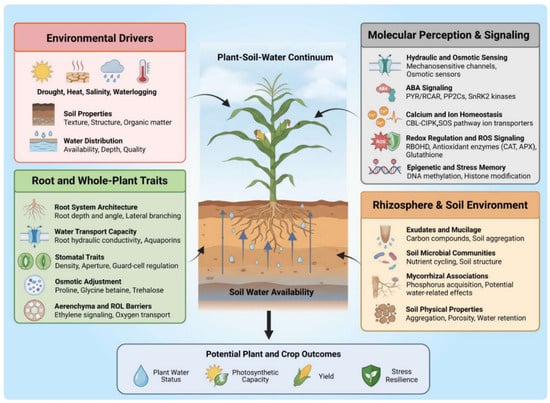
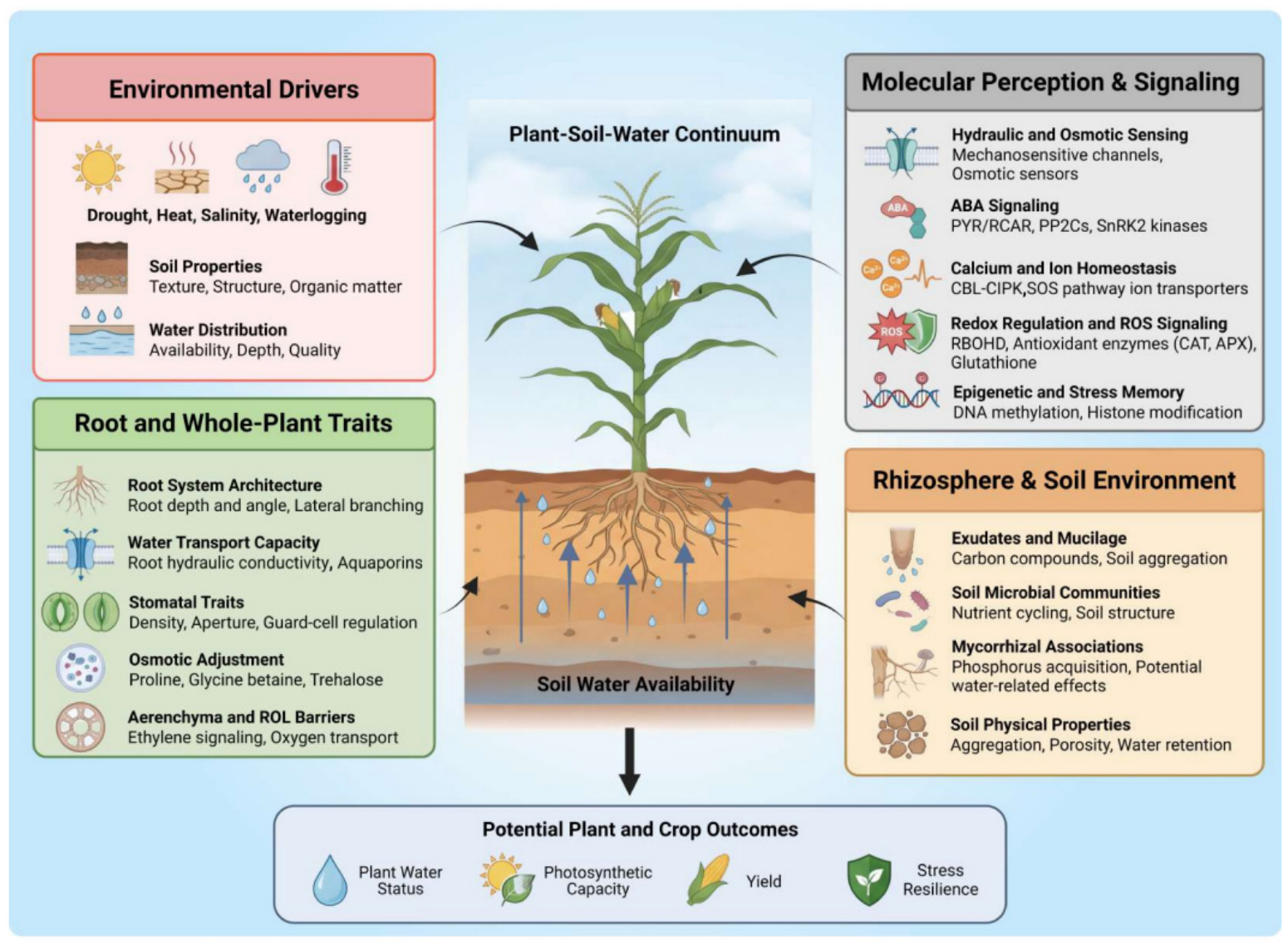
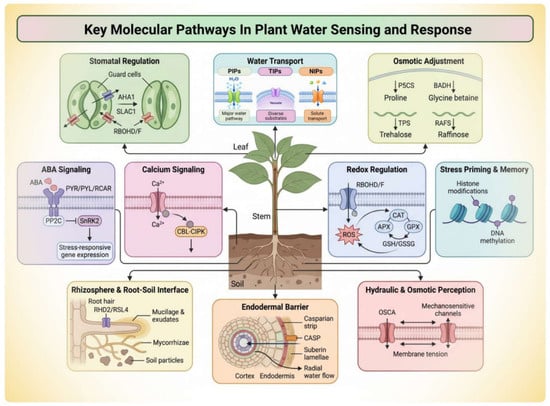
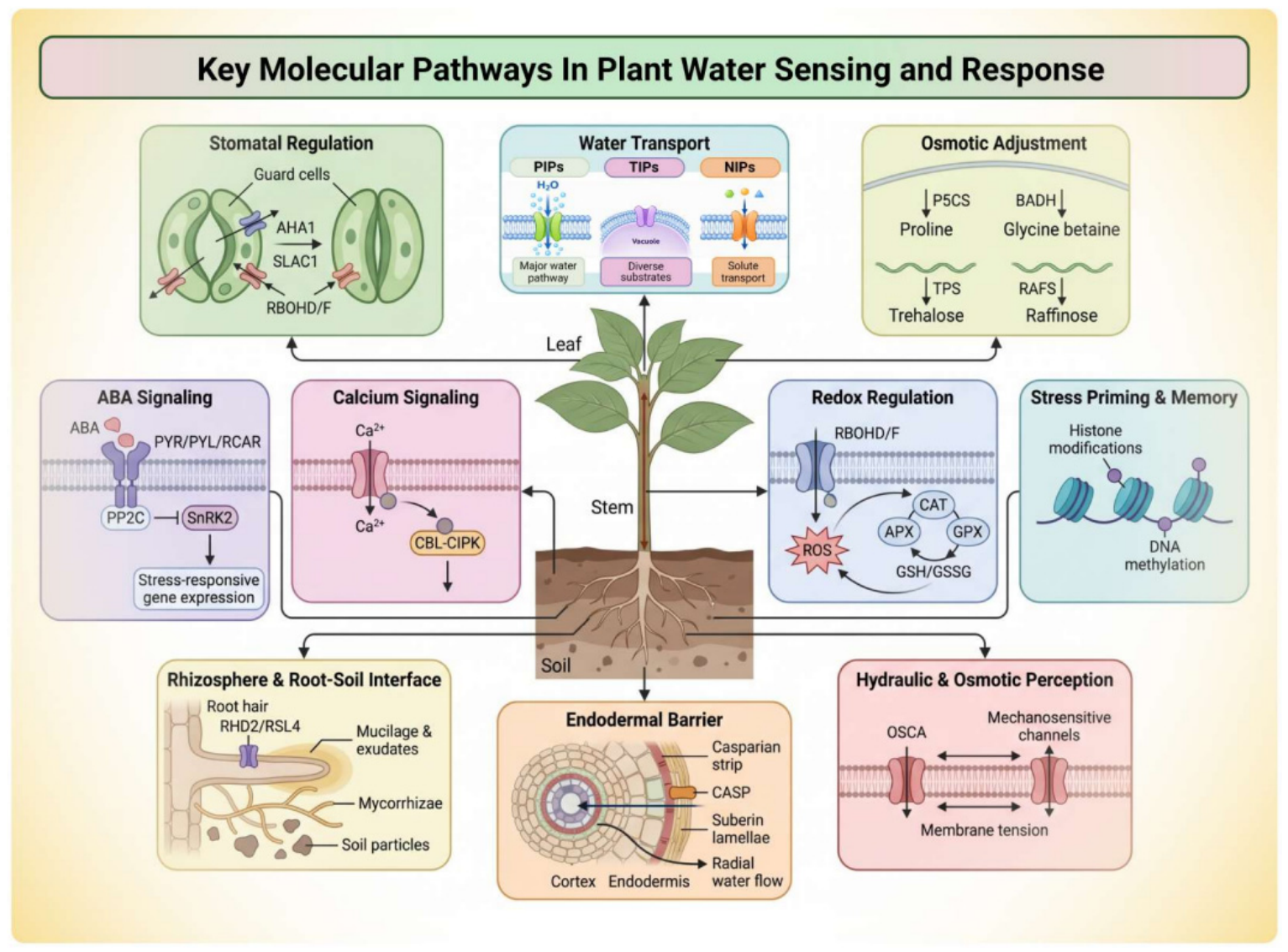
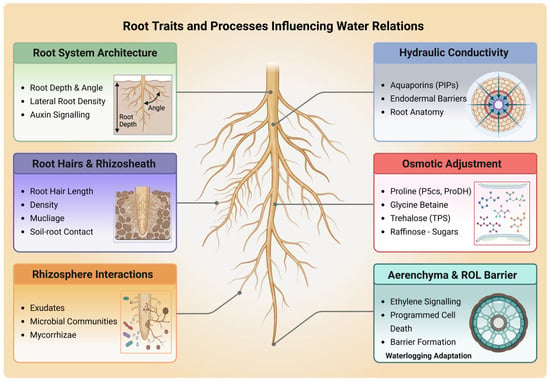
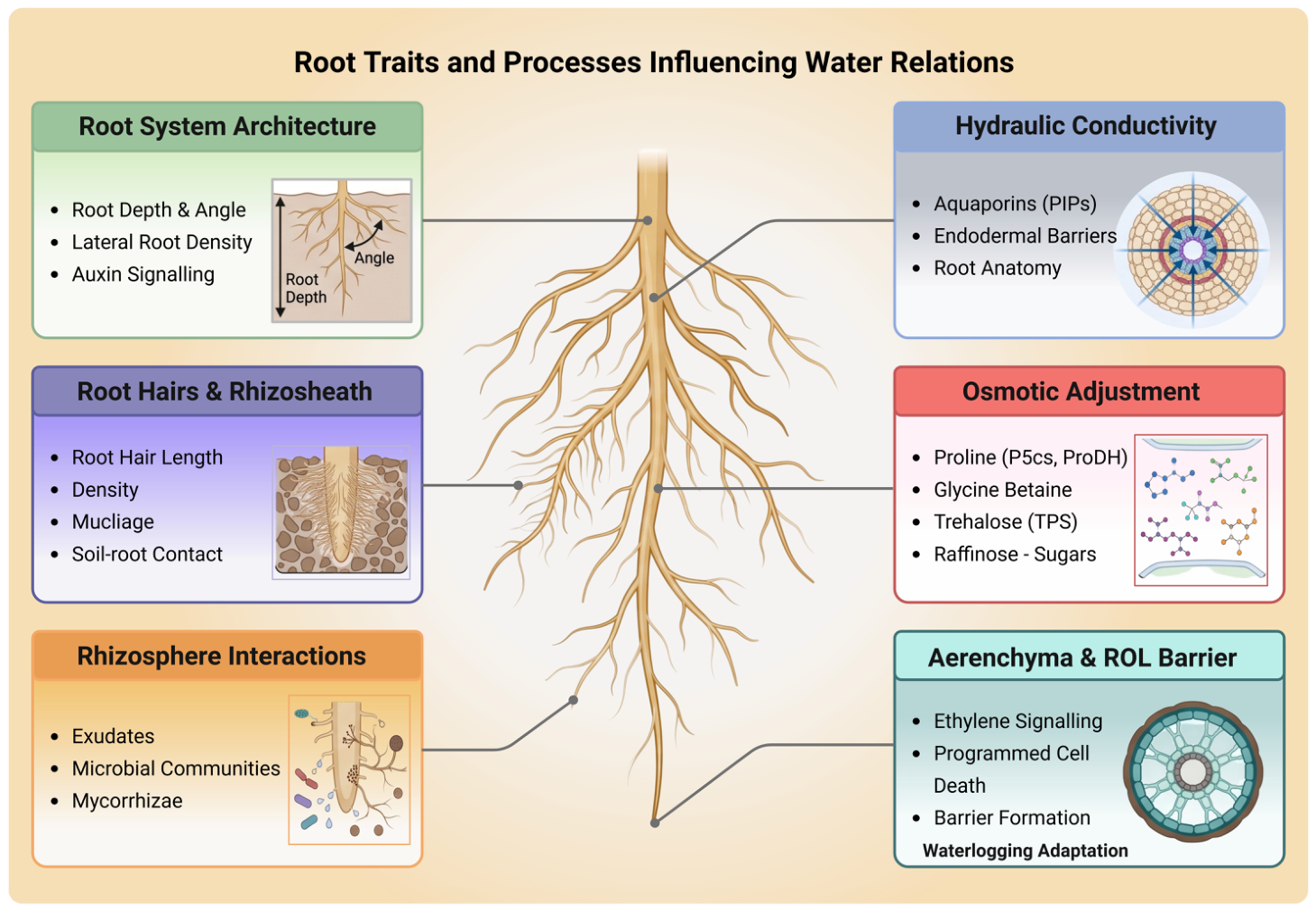
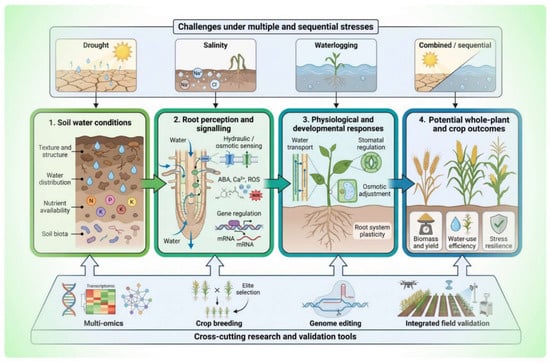
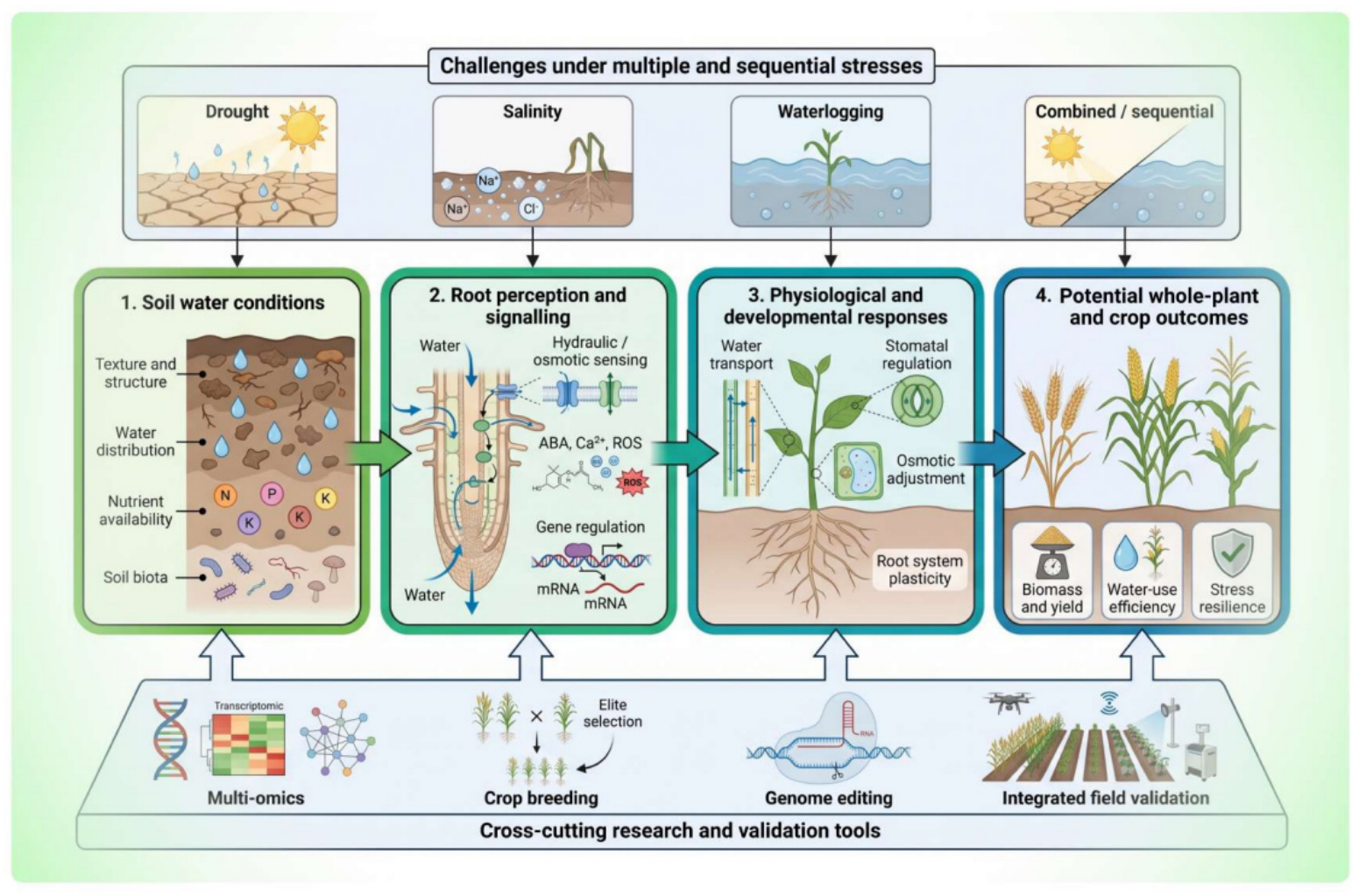

Disclaimer/Publisher’s Note: The statements, opinions and data contained in all publications are solely those of the individual author(s) and contributor(s) and not of MDPI and/or the editor(s). MDPI and/or the editor(s) disclaim responsibility for any injury to people or property resulting from any ideas, methods, instructions or products referred to in the content. |
© 2026 by the authors. Licensee MDPI, Basel, Switzerland. This article is an open access article distributed under the terms and conditions of the Creative Commons Attribution (CC BY) license.