


Abstract
The TCP (Teosinte branched 1/Cycloidea/Proliferating) gene family comprises plant-specific transcription factors essential for regulating growth, development, and environmental adaptation. Utilizing the high-quality ‘Rui Youpan 1’ (‘RYP1’) reference genome, we conducted a comprehensive genome-wide identification and characterization of the TCP family in peach (Prunus persica). We identified 20 PpTCP genes and systematically evaluated their physicochemical properties, chromosomal distribution, phylogeny, gene architecture, and promoter cis-regulatory elements. Notably, the enrichment of abscisic acid-responsive elements (ABREs) in their promoters suggests a significant role in abiotic stress signaling. Integrated RNA-seq and RT-qPCR analyses identified six putative candidates (PpTCP3, 5, 6, 11, 14, and 15) with pronounced differential expression under drought conditions. Subcellular localization confirmed that all tested PpTCPs function within the nucleus. Moreover, the results of STRING-based computer simulations predicting protein–protein interactions indicate that PpTCP3 and PpTCP5 interact with key hormone pathways and stress-related transcription factors (TFs), including auxin signaling and strigolactone signaling.
1. Introduction
Peach (Prunus persica (L.) Batsch) is a globally vital temperate fruit crop, with the 2022 global production exceeding 25 million tons and a market valuation surpassing $22.5 billion USD in 2022 according to data from the Food and Agriculture Organization of the United Nations. Originating in China over two million years ago, the species possesses a rich evolutionary history and diverse germplasm [1]. Recent breakthroughs in high-throughput sequencing have yielded several high-quality genome assemblies [2,3,4,5], establishing peach as a premier model for Rosaceae functional genomics. While fruit sweetness, governed primarily by sucrose, which constitutes approximately 75% of soluble sugars in peach, is a defining agronomic trait [6], it remains highly sensitive to environmental pressures. It is important to note that external drought conditions may have a detrimental effect on the sugar content of fruits, thereby impacting their quality. This has been observed in peach, smooth-pit peach, and pomegranates [7,8,9,10]. Consequently, we hypothesise that the analysis of the mechanisms underlying peach drought tolerance is imperative for maintaining stable yields and enhancing fruit quality.
The TCP gene family, named after its founding members Teosinte branched 1, Cycloidea, and Proliferating cell nuclear antigen factor [11,12,13], is classified into two major groups based on the conserved TCP domain: Class I (PCF or TCP-P) [14,15] and class II (TCP-C) [16]. These transcription factors serve as developmental switches [17,18,19,20] and stress integrators [21], including drought [22], salt stress [23], and low-temperature [24]. In Arabidopsis, TCP14 and TCP15 modulate axillary branching [25] and pollen wall integrity [26], while the TCP8/15/21/22/23 cluster regulates cell proliferation via KNOX1 suppression [27]. Similarly, TCP16 is indispensable for early pollen development [28], a role mirrored by GhCYC2 in gerbera [29] and HaCYC2c in sunflower [30]. In chrysanthemum (Chrysanthemum morifolium), the photoperiod-dependent flowering in chrysanthemum is modulated by a novel regulatory module in which CmTCP7 functions as a floral repressor, and its upstream transcriptional regulator CmARF3 promotes flowering by directly repressing CmTCP7 expression [31]. In Physalis, the heterometric expression of an LBD gene via LBD-TCP assembly serves as a regulatory mechanism that governs the size of floral organs and the weight of fruits [32]. Beyond development, TCPs facilitate physiological adaptations. For instance, AtTCP3 modulates auxin biosynthesis by repressing CYP83B1/SUR2 [33]. In rice, OsTCP21 acts as a negative regulator of cold signaling [34], whereas OsPCF2 enhances salinity and drought tolerance by directly activating the OsNHX1 promoter [35].
The expansion of genomic data has allowed for the systematic identification of TCP families in various taxa, including Cenchrus [36], Elymus sibiricus [37], oat [38], Chrysanthemum indicum [39], Betula platyphylla [40], Brassica napus L. [41], Vigna radiata [42], Pogostemon cablin [5], and Brassica juncea [43]. While previous studies in peach have primarily examined TCP expression during fruit ripening [44], their involvement in the drought response remains poorly understood. In this study, we leveraged the ‘RYP1’ genome to re-evaluate the peach TCP family, providing a detailed analysis of their structural characteristics and transcriptional responses to drought. Our findings offer new insights into the regulatory networks governing drought resilience in peach and identify promising genetic targets for crop improvement.
2. Results
2.1. Identification and Chromosomal Distribution of Peach TCP Genes
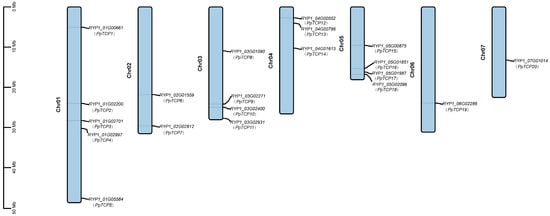
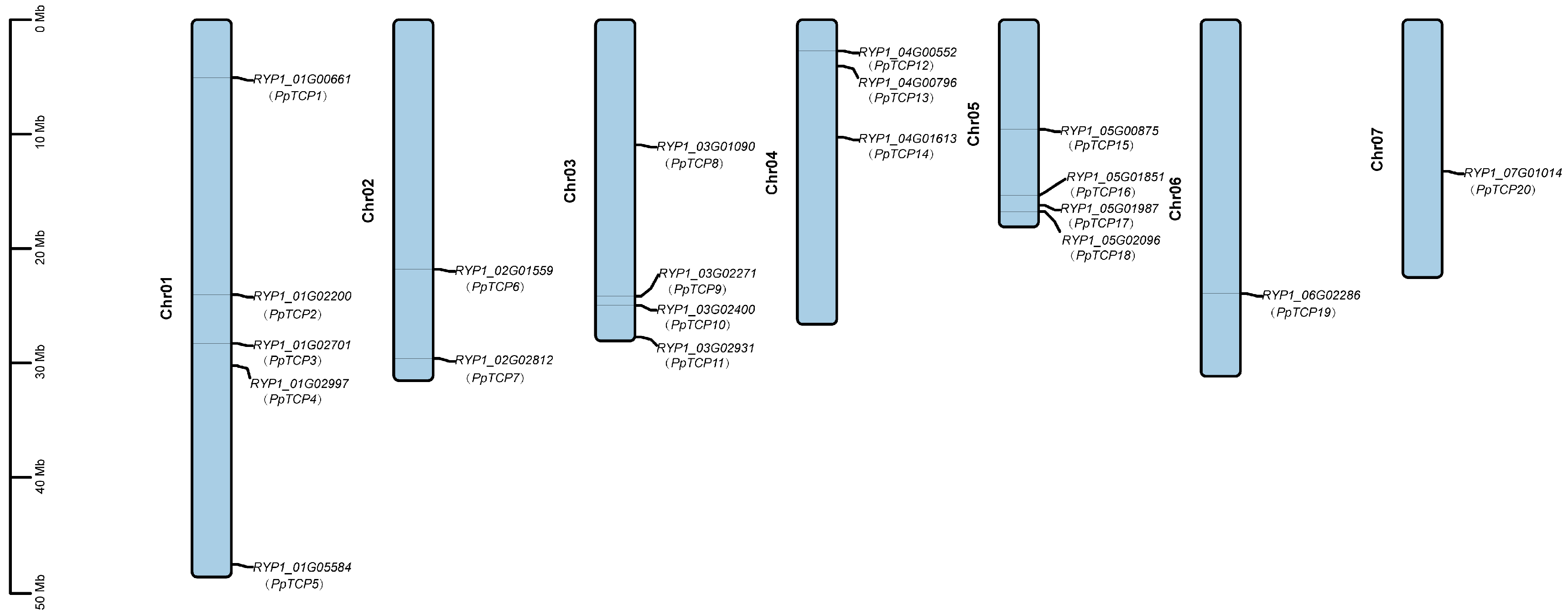
A genome-wide screening of the ‘RYP1’ peach genome identified 20 TCP genes, designated PpTCP1 through PpTCP20 based on their chromosomal positions (Table 1; Figure 1). Corresponding gene IDs in the LOVE II genome are provided in Table S1. Physicochemical analysis of the predicted proteins revealed amino acid lengths ranging from 192 (PpTCP8) to 603 residues (PpTCP5), with molecular weights spanning 24.77 kDa to 63.10 kDa (Table 1). Instability index values ranged from 43.90 (PpTCP8) to 74.06 (PpTCP12) and 14 of the 20 members exceeded a threshold of 50.00. While aliphatic indices were generally high, ranging from 51.44 (PpTCP5) to 86.16 (PpTCP20), all members exhibited a negative grand average of hydropathy (GRAVY) scores. This indicates a hydrophilic nature, consistent with their functional roles in aqueous environments such as the nucleoplasm [45,46,47].
Table 1.
Molecular characteristics of PpTCP genes in peach.
Figure 1.
Chromosomal distribution of PpTCP genes in peach. Gene names on the right of each chromosome indicate their relative positions. The scale bar on the left denotes linkage group length in Megabases (Mb).
Given that TCP transcription factors are typically nuclear-localized, we hypothesize that the PpTCP family operates within the nucleus [48,49]. These 20 genes are unevenly distributed across seven chromosomes (Figure 1). Chromosome 01 (Chr01) contains the highest density with five members (PpTCP1–5), followed by Chr03 and Chr05 with four genes each. Chr04 harbors three genes, Chr02 contains two, and Chr06 and Chr07 each possess a single member. No TCP genes were detected on Chr08, and notably, no tandem duplication events were observed. The diverse structural profile and asymmetrical distribution suggest that the PpTCP family has undergone significant evolutionary specialization or functional diversification within the peach genome.
2.2. Phylogenetic Classification of PpTCP Genes
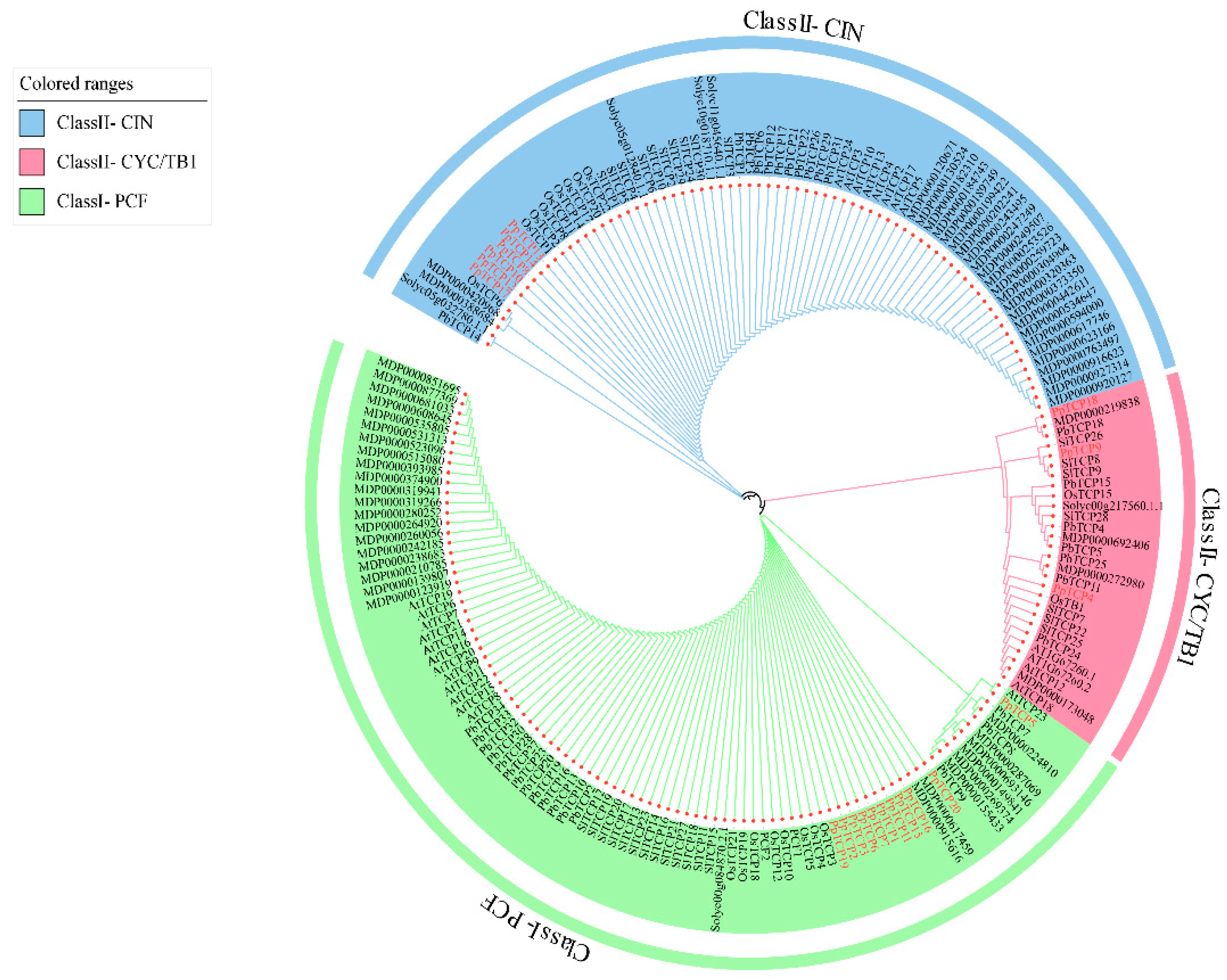
To elucidate evolutionary relationships, a Maximum Likelihood phylogenetic tree was constructed using TCP protein sequences from Arabidopsis thaliana, Oryza sativa, Solanum lycopersicum, Malus domestic, Pyrus bretschneideri and P. persica (Figure 2) [50]. The 20 peach TCPs were categorized into three distinct clades: Class I-PCF (11 genes), Class II-CIN (6 genes), and Class II-CYC/TB1 (3 genes). The PCF clade is the largest, representing 55% of the family, which likely reflects its broad involvement in growth, development, and stress adaptation [11,51].
Evolutionary clustering revealed that P. persica is most closely related to P. bretschneideri (pear) and M. domestica (apple). For instance, PpTCP18 clustered tightly with apple MDP0000219838 and pear PbTCP18 within the CYC/TB1 clade [52]. The apple ortholog (annotated as MD06G1211100 in the GDDH13 assembly) is a known homolog of BRANCHED1 (BRC1), a key regulator that inhibits shoot branching [53]. Similarly, PpTCP9 showed high homology with tomato SlTCP8 and SlTCP9, both involved in lateral shoot regulation [54]. In the PCF clade, PpTCP5 clustered with AtTCP23, which is known to modulate flowering time and vegetative development [55].
Figure 2.
Phylogenetic analysis of TCP proteins across six plant species. Clades are color-coded: Class I (PCF), Class II-CIN, and Class II-CYC/TB1. The 20 peach proteins are highlighted in red. A Maximum Likelihood (ML) phylogenetic tree [50] was constructed using MEGA 7.0 [56] with 1000 bootstrap replicates.
2.3. Gene Architecture and Conserved Domains
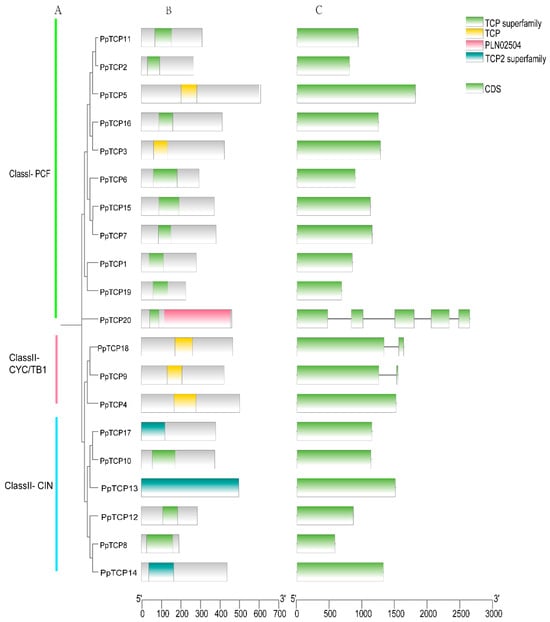
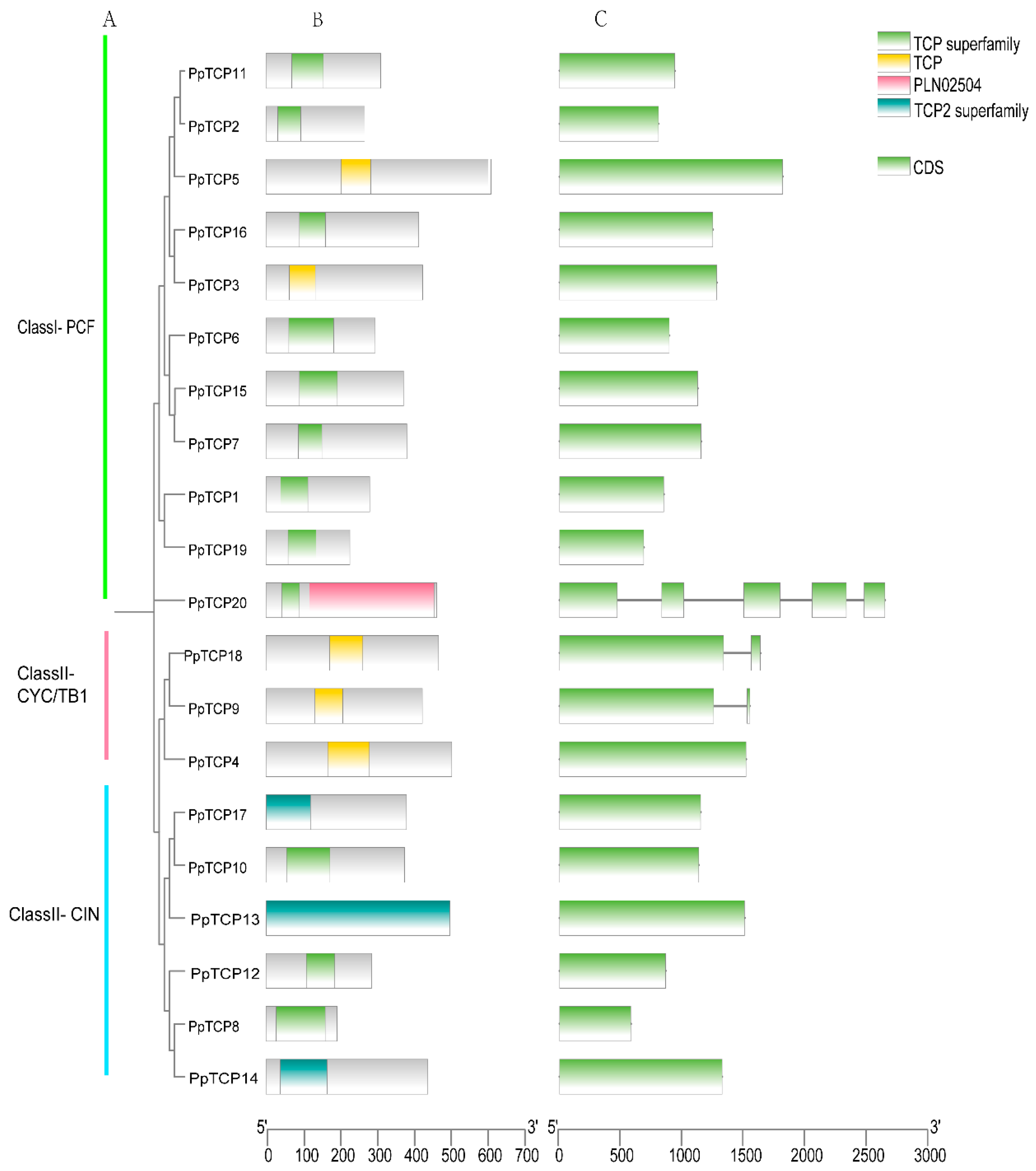
The structural organization of the PpTCP family is illustrated in Figure 3. Phylogenetic grouping (Figure 3A) aligns with the multi-species analysis, confirming the division into PCF, CYC/TB1, and CIN clades. All identified members harbor the signature TCP or TCP2 superfamily domain, confirming their evolutionary conservation (Figure 3B).
Figure 3.
Structural and domain analysis of peach PpTCP proteins. (A) ML phylogenetic tree of PpTCPs. (B) Conserved domain architecture: TCP superfamily (green), core TCP domain (yellow), PLN02504 (pink), and TCP2 superfamily (blue). (C) Exon–intron organization; green boxes represent CDS regions.
Gene structure analysis (Figure 3C) showed that members within the same subfamily share highly similar exon–intron patterns. In total, 17 of the 20 PpTCP genes are intronless, consisting of a single coding sequence (CDS), a dominant trait in this family. This single-CDS architecture is strictly maintained in 10 members of the PCF clade and all 6 members of the CIN clade. The only exception in the PCF clade is PpTCP20, which contains five exons and four introns. Within the CYC/TB1 clade, PpTCP4 follows the single-CDS model, while PpTCP18 and PpTCP19 each possess two CDSs, one of which appears truncated.
2.4. Sequence Alignment and Motif Composition of PpTCP Genes
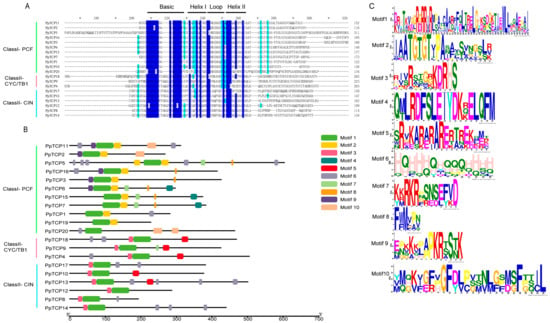
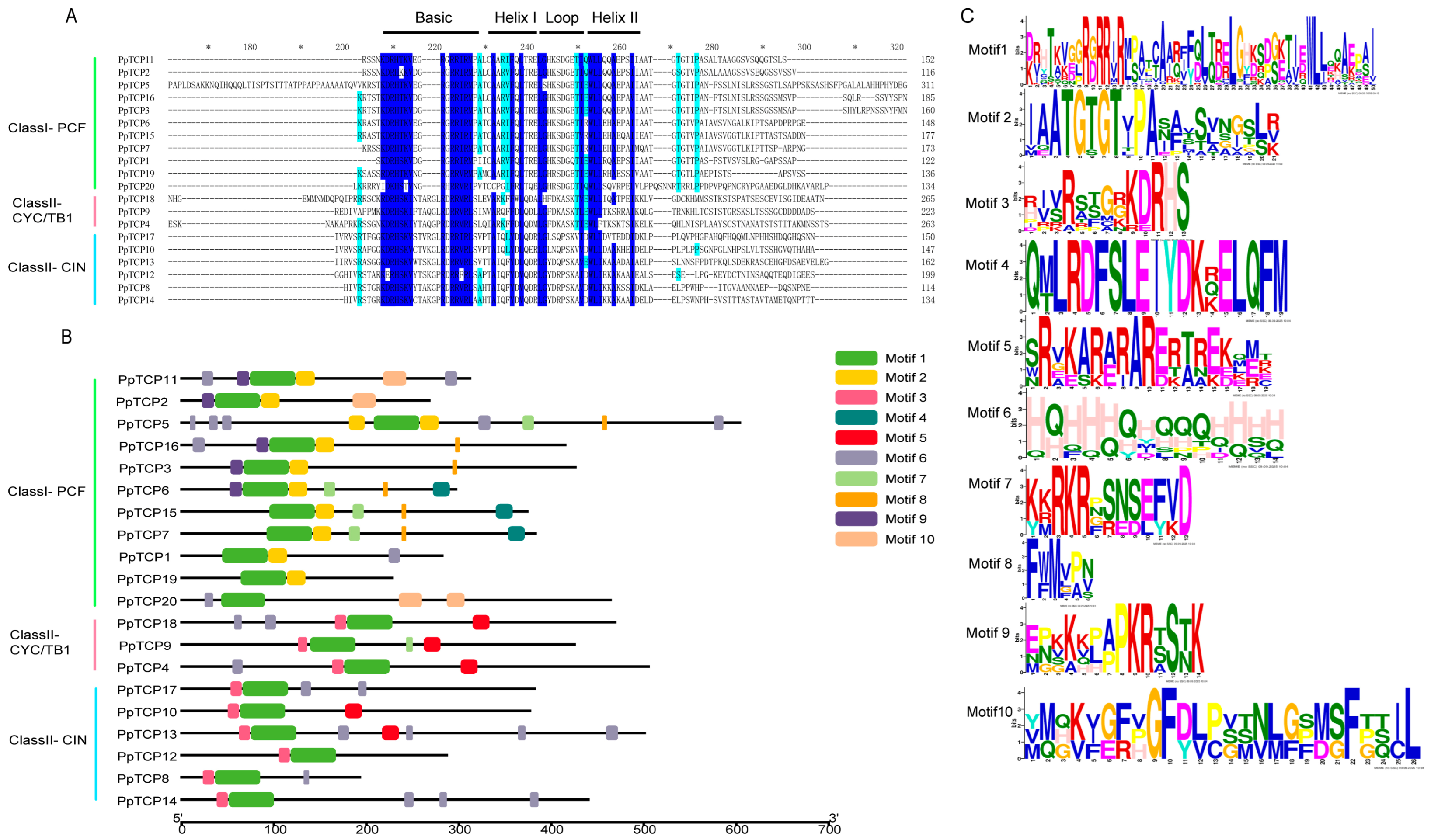
To define the structural characteristics of PpTCPs, we performed multiple sequence alignments of their deduced amino acids (Figure 4A). All members harbor a centrally located, putative TCP domain characterized by a basic helix–loop–helix (bHLH) architecture. Sequence conservation was notably higher within the PCF clade compared to the other two subgroups; specifically, PCF members exhibit a distinct four-amino acid deletion within the basic region (Figure 4A). The Helix I domain is enriched with conserved glycine (G) and phenylalanine (F) residues, while Helix II is defined by a high frequency of tryptophan (W) and leucine (L), the latter forming a characteristic LXXLL motif (Figure 4A).
Figure 4.
Structural and motif analysis of the PpTCP family. (A) Multiple sequence alignment highlighting the conserved bHLH-type TCP domains. The basic helix–loop–helix structure is indicated above the sequences. The asterisk (*) indicates every tenth amino acid position in the alignment. (B) Distribution of 10 conserved motifs within PpTCP proteins, with unique color-coded boxes representing each motif. (C) Logo analysis of identified motifs generated via MEME. Bit height represents the conservation level of each amino acid residue at specific positions. Protein sequence lengths are indicated by the scale bar. Comprehensive MEME parameters are detailed in the Section 4.
Using the MEME suite, we identified 10 conserved motifs across the family (Figure 4B,C). Motif distribution patterns were largely clade-specific, reflecting evolutionary divergence. Motif 1, corresponding to the essential bHLH domain, is universally conserved across all 20 PpTCPs, underscoring its functional indispensability (Figure 4B,C). Conversely, motifs 2, 8, and 10 are unique to the PCF clade, though motif 2 was notably absent in PpTCP20. Within Class II, motifs 3 and 5 are restricted to the CYC/TB1 and CIN clades; while motif 3 is a shared hallmark of both, motif 5 is exclusive to the CYC/TB1 clade, appearing only sporadically in CIN members PpTCP10 and PpTCP13 (Figure 4B). Such variations in motif architecture suggest that these clades have likely diverged to fulfill specialized regulatory roles.
2.5. Promoter Cis-Element and Collinearity Analysis
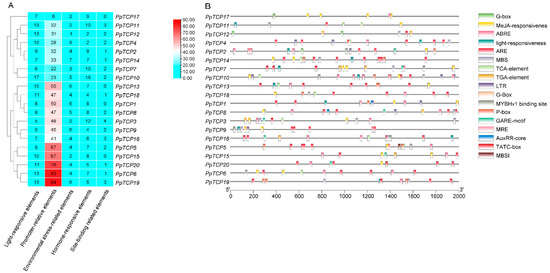
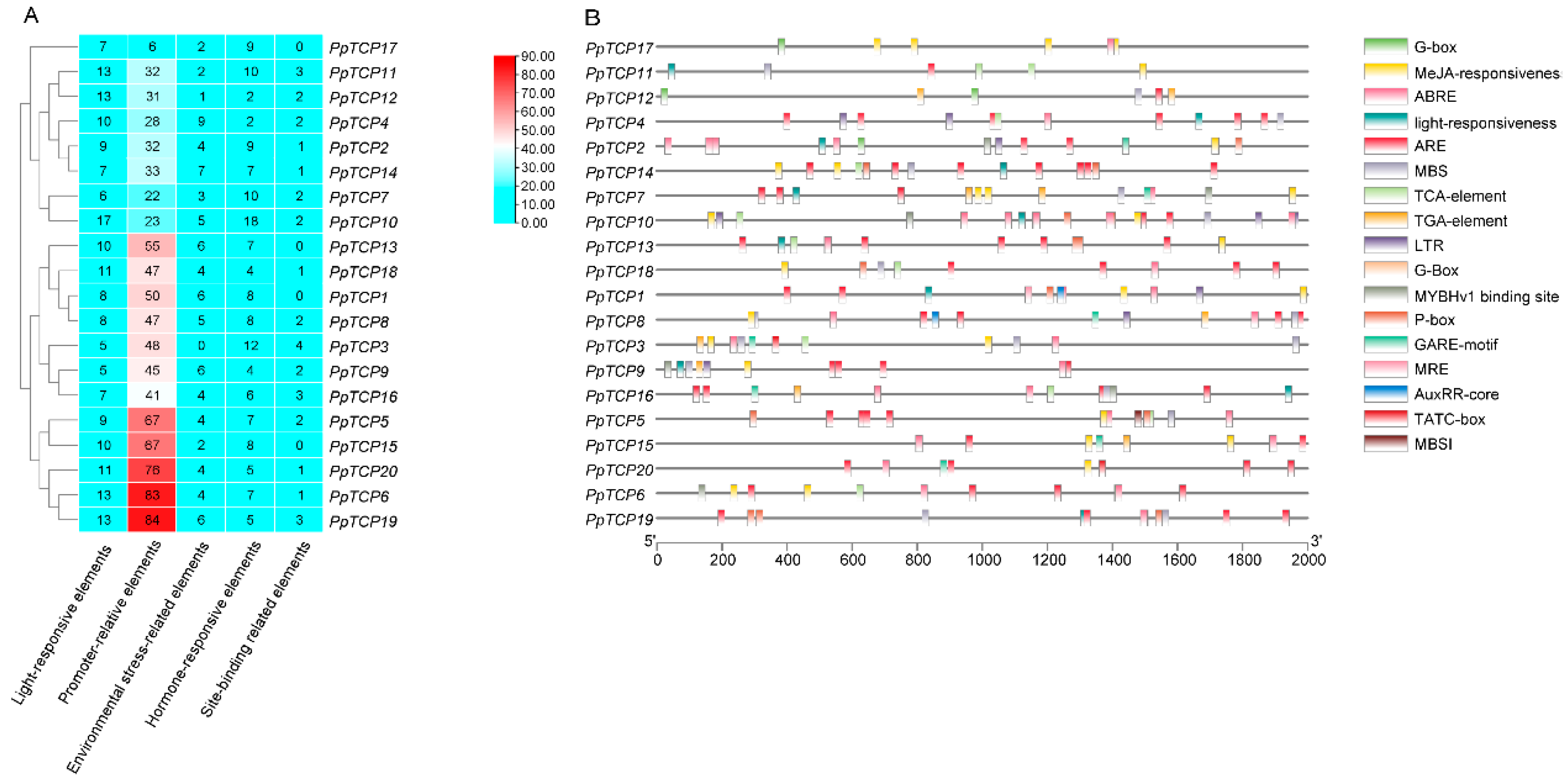
To investigate the transcriptional regulation of PpTCP genes, we analyzed the 2000 bp promoter regions upstream of their start codons. The PpTCP promoters are enriched with cis-acting elements associated with light signaling, hormone sensitivity, and environmental stress (Figure 5A). Core transcriptional machinery, such as TATA and CAAT boxes, was present in all members, alongside diverse light-responsive motifs including Sp1, Gap-box, ACE, and GA-motifs (Figure 5A,B; Table S2). Among hormone-related elements, methyl jasmonate (MeJA)-responsive motifs (CGTCA and TGACG) were the most frequent, followed by abscisic acid (ABA)-responsive elements (ABREs) [57,58]. Although ABREs were not the most numerous, their broad distribution is significant, occurring in the promoters of 18 members (excluding PpTCP12 and PpTCP14) (Figure 5A,B; Table S2). While the presence of these elements may suggest a potential involvement of the PpTCP family in hormone-mediated signaling, it is important to note that these are computational predictions that require experimental validation.
Figure 5.
Analysis of cis-regulatory elements in PpTCP promoters. (A) Quantitative distribution of five distinct classes of cis-elements identified within each PpTCP promoter. (B) Map of non-light-responsive regulatory elements generated using TBtools v2.486 [59], illustrating the precise location, category, and abundance of motifs within the promoter regions.
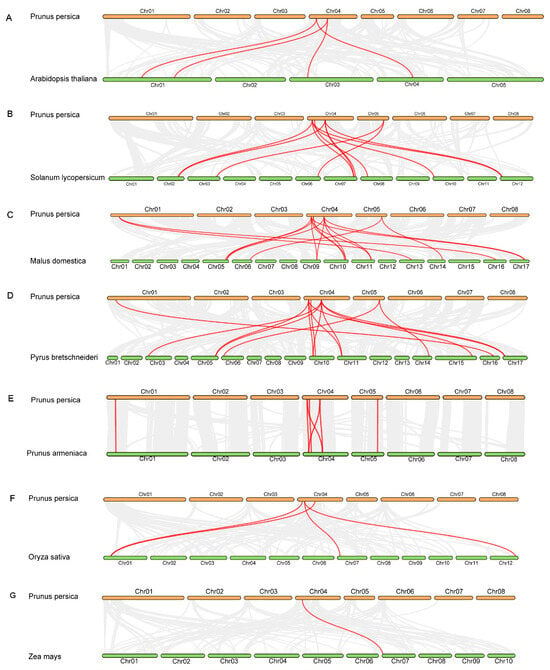
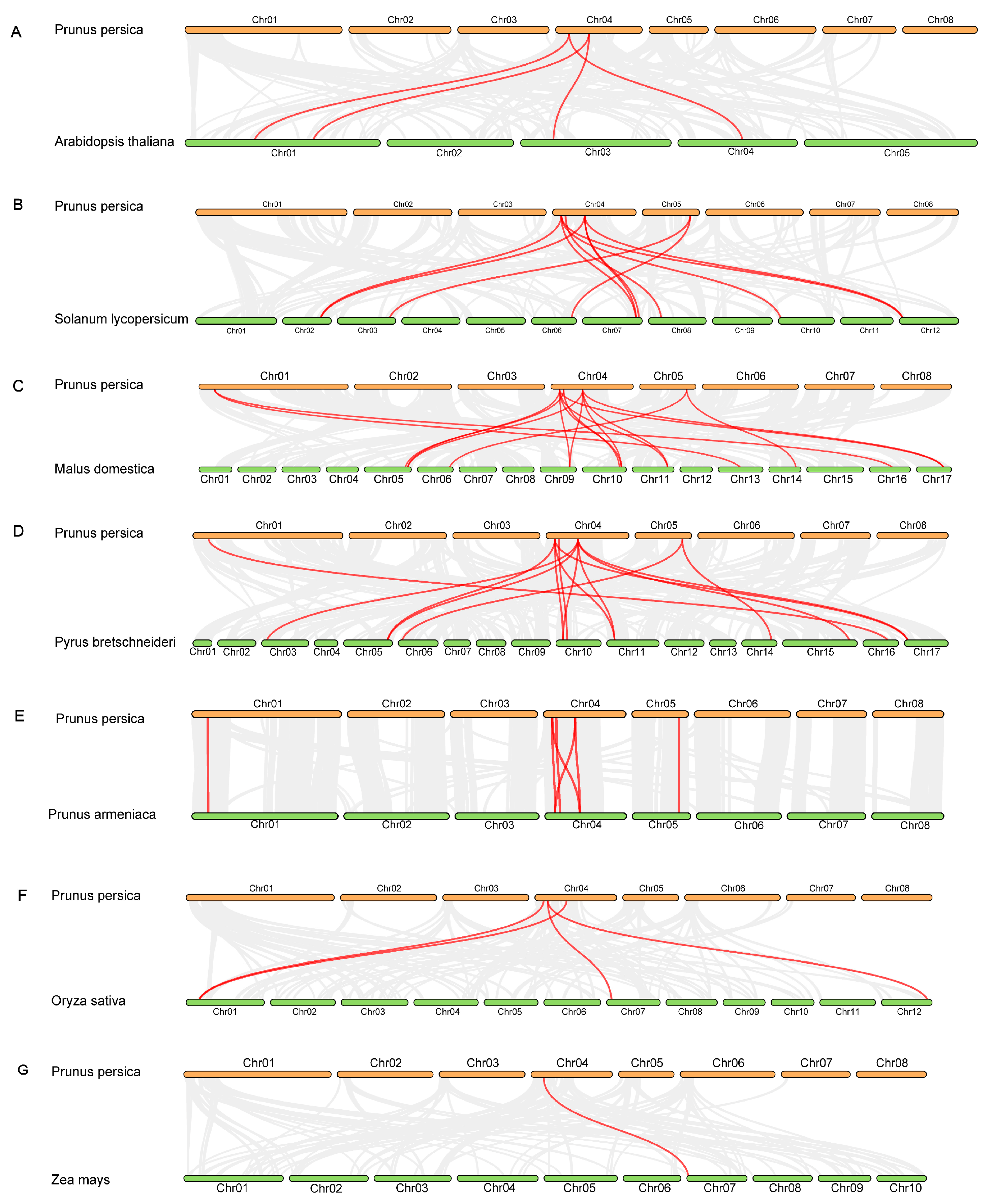
We further conducted a genome-wide collinearity analysis to trace the evolutionary history of PpTCPs relative to seven other species (A. thaliana, S. lycopersicum, M. domestica, P. bretschneideri, Prunus armeniaca, O. sativa, and Z. mays). Peach TCPs exhibited the highest synteny with M. domestica (17 orthologous pairs), followed by P. bretschneideri (14 pairs), S. lycopersicum (11 pairs) and P. armeniaca (7 pairs) (Figure 6), reinforcing the phylogenetic trends observed earlier. In contrast, only four orthologous pairs were identified with A. thaliana and O. sativa, and a single pair with Z. mays. This high degree of collinearity among Rosaceae species may be indicative of genomic positional conservation and evolutionary conservation among Rosaceae species. Notably, dicotyledonous plants showed substantially closer genomic affinity to peach than monocots. Interestingly, no collinear TCP pairs were identified on peach chromosomes 2, 3, 6, and 7 across the seven-species comparison.
Figure 6.
Synteny analysis of TCP genes between peach and seven representative species. Comparative genomics between P. persica and A. thaliana (A), S. lycopersicum (B), M. domestica (C), P. bretschneideri (D), P. armeniaca (E), O. sativa (F), and Z. mays (G). Chromosomes of P. persica are shown in orange, and chromosomes of other species are displayed in green. Gray lines indicate general syntenic blocks, while red lines highlight specific orthologous TCP gene pairs between peach and the reference genomes.
2.6. Expression Profiling of PpTCP Genes Under Drought Stress
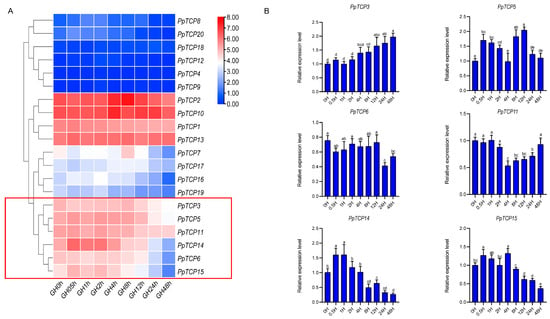
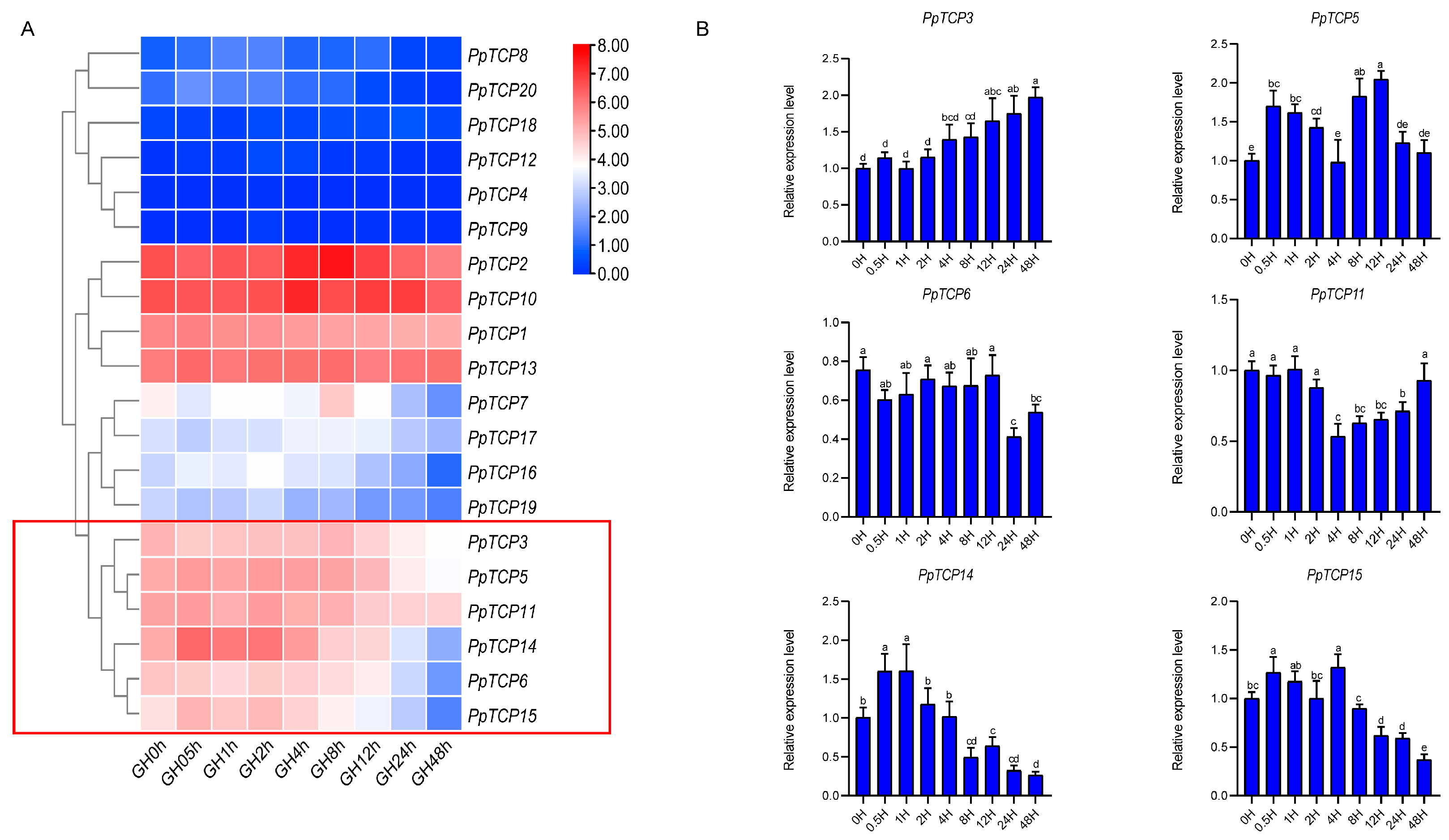
To determine the transcriptional dynamics of PpTCPs during water deficit, we integrated RNA-seq profiling with RT-qPCR validation. Transcriptomic analysis of peach fruits subjected to drought over a 48-h period revealed that, while the majority of the 20 PpTCP genes remained stable, a specific subset showed acute sensitivity [60]. PpTCP3, 5, and 11 were rapidly induced during the early stages of stress before gradually declining, whereas PpTCP6, 14, and 15 were progressively downregulated as stress prolonged (Figure 7A).
Figure 7.
Transcriptional dynamics of PpTCP genes under drought stress. (A) Heatmap illustrating expression profiles of 20 PpTCP genes over a 48-h drought time-course (0, 0.5, 1, 2, 4, 8, 12, 24, and 48 h). The red box highlights six putative candidates (PpTCP3, 5, 6, 11, 14, and 15) with significant expression shifts. (B) RT-qPCR validation of the six putative candidate genes. Relative expression was calculated using the 2−△△Ct method, confirming the reliability of the transcriptomic data. Error bar represented the SD (n = 3). Different letters (a–e) indicate significant differences between means as determined by ANOVA followed by Duncan’s multiple range test (p < 0.05).
RT-qPCR validation of these six differentially expressed genes (DEGs) confirmed that their expression trends align closely with the RNA-seq data (Figure 7B). With the exception of PpTCP3 and 5, most tested genes showed significant downregulation by the 24-h mark, a trend most evident in PpTCP14 and 15. Notably, PpTCP14 and 15 exhibited a sharp, transient peak just 0.5 h after the onset of stress. The robust and expeditious responses manifested by PpTCP3\5\14\15 imply that these four genes may contribute to the response to external drought stress signals in peach.
2.7. Subcellular Localization and Protein–Protein Interaction Analysis
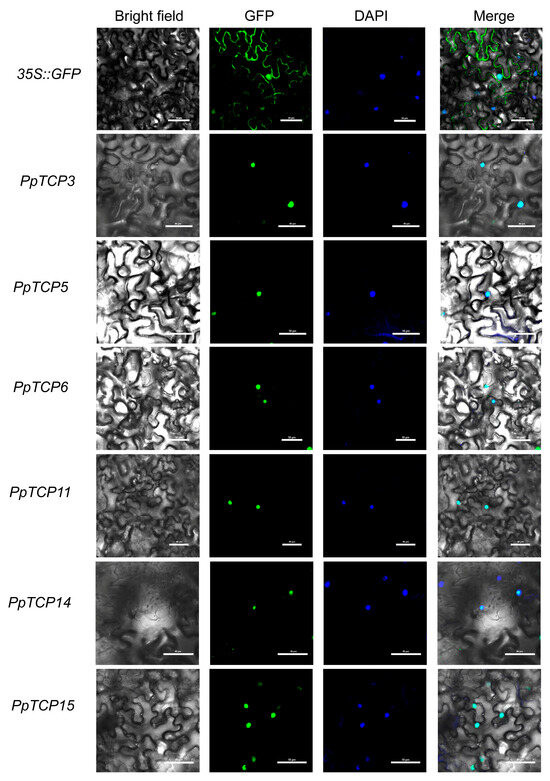
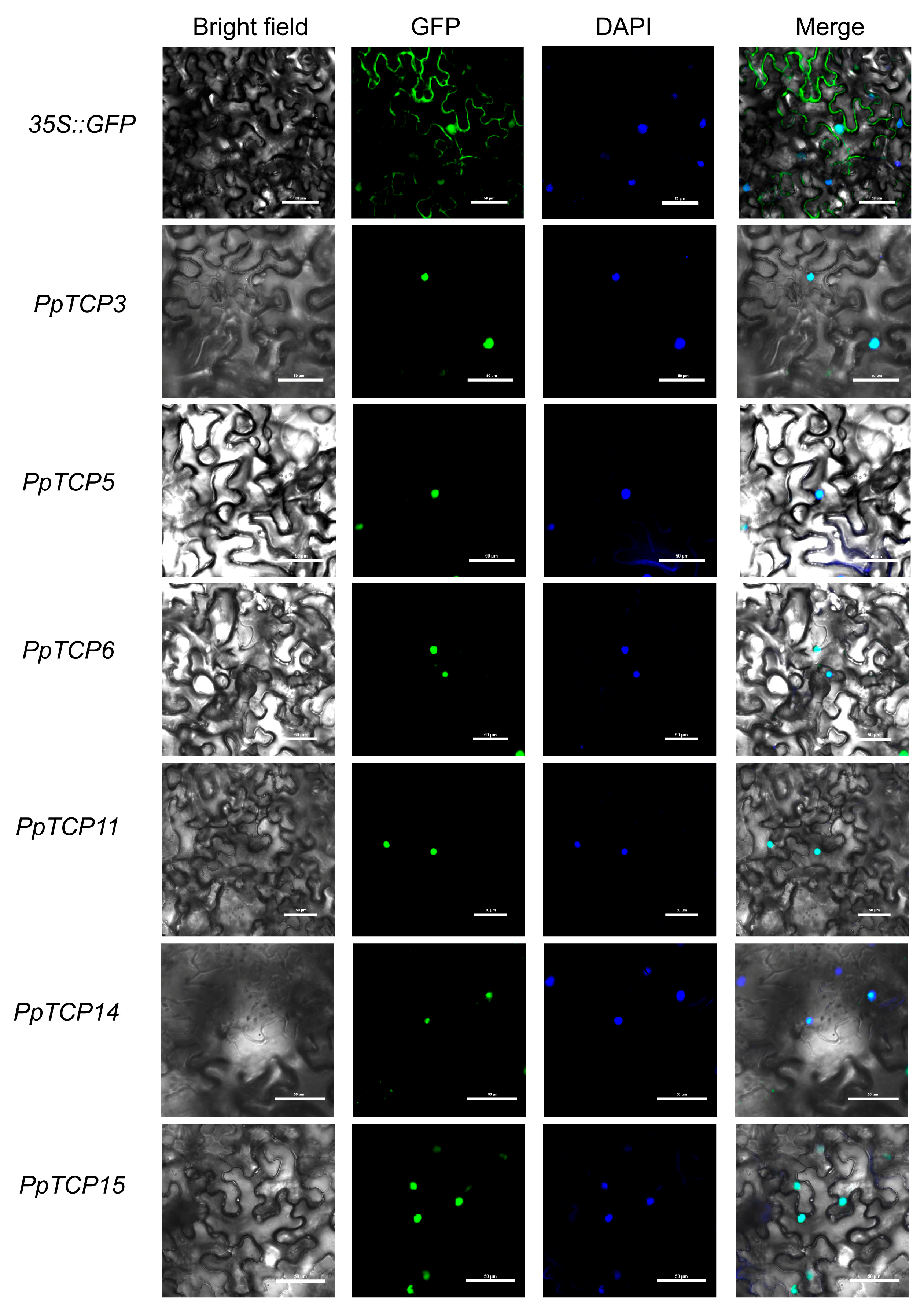
To determine the functional sites of the six putative candidate PpTCPs (PpTCP3, 5, 6, 11, 14, and 15), we fused their coding sequences to the N-terminus of enhanced green fluorescent protein (eGFP) under the constitutive CaMV 35S promoter. These constructs were transiently expressed in Nicotiana benthamiana leaves via Agrobacterium-mediated transformation. This was followed by confocal microscopy, complemented by DAPI nuclear staining. As seen in Figure 8, 35S::GFP was localized in the nucleus and cytoplasm. And the GFP signals emitted by the six PpTCP-eGFP fusion proteins were detected in the nucleus and overlapped with the DAPI staining. These results confirm that these transcription factors are localized to and function within the nuclear compartment.
Figure 8.
Subcellular localization of six PpTCP fusion proteins in N. benthamiana leaves. The GFP signal (green) represents the localization of the PpTCP-eGFP fusions, while DAPI (blue) marks the nuclei. Scale bars = 50 μm.
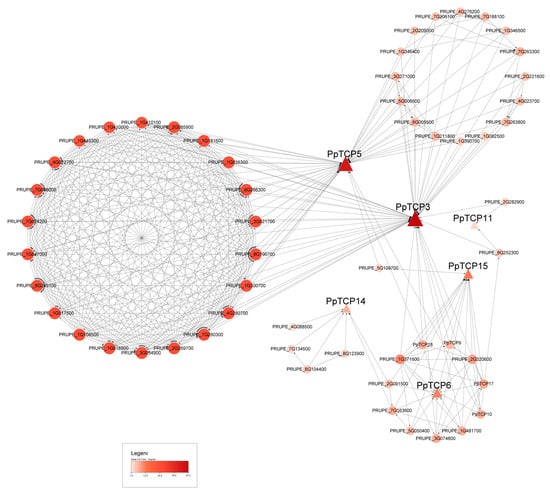
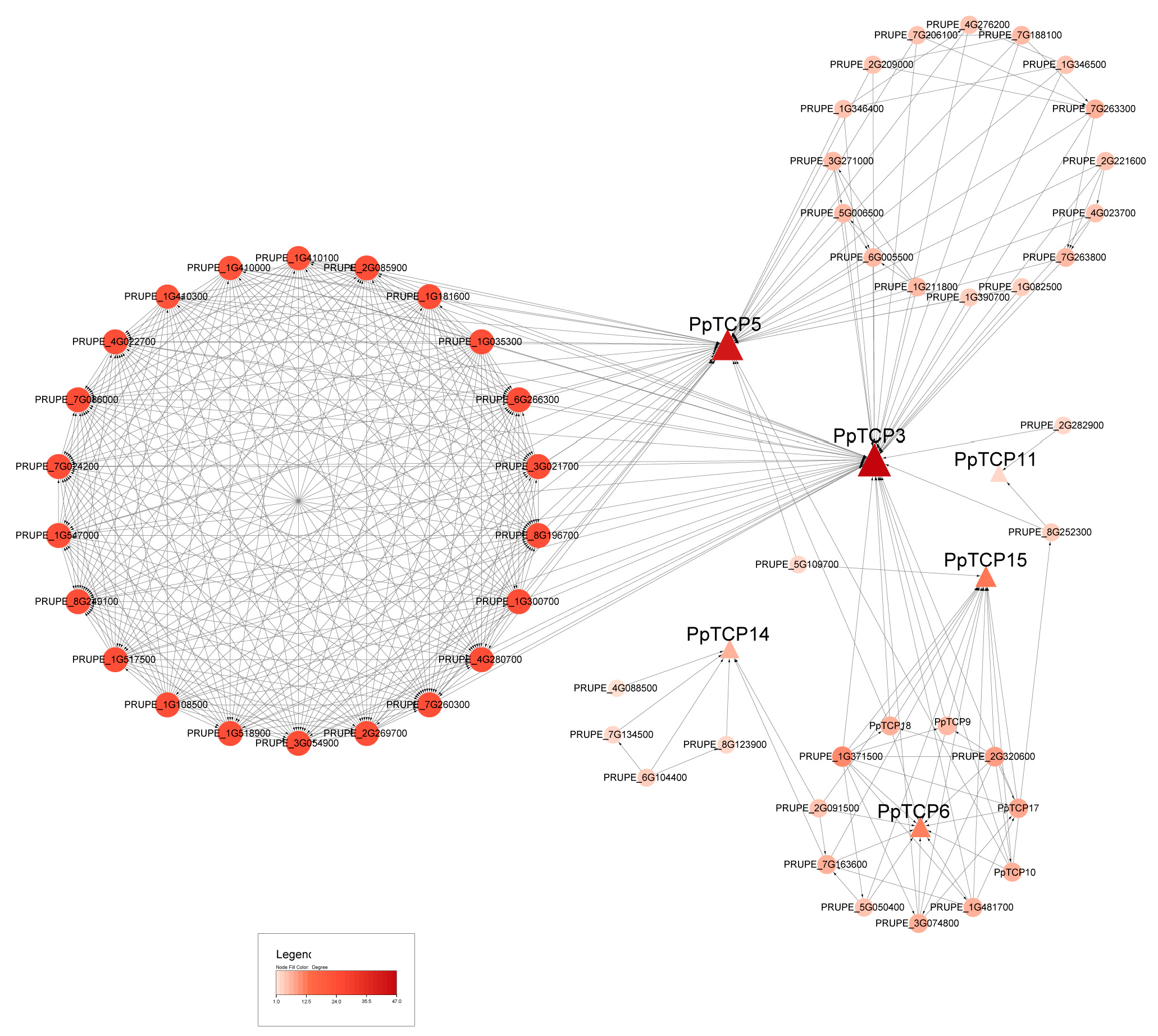
To further explore the regulatory landscape of these putative candidates, we constructed a predicted protein–protein interaction (PPI) network using the STRING database [61] and visualized the results in Cytoscape 3.10.4. Analysis using the CytoHubba 0.1 degree algorithm revealed distinct topological roles for each protein (Figure 9; Table S3). Among the six putative candidates, PpTCP3 exhibited the highest connectivity with 47 predicted partners, and PpTCP5 was identified as another highly connected node. In contrast, PpTCP6, PpTCP14, and PpTCP15 were positioned within discrete, moderately connected modules, pointing toward potentially more specialized functions, whereas PpTCP11 showed the lowest connectivity with only two predicted partners. Table S4 presents a range of potential functional annotations for the predicted interacting proteins.
Figure 9.
Protein–protein interaction (PPI) network for putative candidate PpTCPs. Interactions were retrieved from the STRING database (confidence score ≥ 0.500) and visualized in Cytoscape [62]. The six putative candidate PpTCPs are represented by triangular nodes. Node size and color intensity (from yellow to dark red) are proportional to the degree of connectivity, with larger, redder nodes indicating higher numbers of interacting partners.
PpTCP3 emerged as the primary central hub with 47 predicted partners, suggesting it acts as a master regulator within a dense core signaling module. PpTCP5 was identified as a secondary prominent node, likely serving as a critical bridge that links the central core to peripheral subnetworks and facilitates crosstalk between different molecular complexes. In contrast, PpTCP6, 14, and 15 were situated within discrete, moderately connected modules, pointing toward more specialized, context-dependent functions. PpTCP11 exhibited the lowest connectivity with only two predicted partners. This tiered regulatory architecture provides a roadmap for future investigations into how TCP transcription factors coordinately govern peach development and environmental adaptation. Detailed functional annotations for the interacting proteins are provided in Table S4.
3. Discussion
While the TCP transcription factor family has been extensively characterized in diverse plant species, research in peach has largely been confined to its role in fruit ripening and bud endodormancy [44]. This leaves its broader involvement in vegetative development and stress adaptation largely unexplored. In this study, we leveraged the high-quality “RYP1” reference genome [4] to perform a comprehensive re-annotation and systematic characterization of the peach TCP family, specifically evaluating its transcriptional dynamics under drought stress. We identified 20 PpTCP family members, a count that aligns with previous reports [44] and confirms the stability of the TCP gene set across different peach genomic assemblies.
Phylogenetic reconstruction categorized the 20 PpTCP proteins into the two canonical plant classes: Class I (PCF clade) and Class II, with the latter further divided into CYC/TB1 and CIN sub-clades (Figure 2). This topology mirrors the conserved evolutionary structure observed in maize [63], suggesting that the regulatory logic of TCP genes has been strictly maintained across divergent plant lineages. Our analysis showed that PpTCP genes share the highest homology with those in apple and pear, reinforcing the close evolutionary proximity of these Rosaceae genera and their recent divergence from a common ancestor [64]. Furthermore, genome-wide collinearity analysis revealed higher synteny between peach and other Rosaceae species than with Brassicaceae or Poaceae (Figure 6).
Comparative genomic synteny analysis between peach and seven other species (A. thaliana, S. lycopersicum, M. domestica, P. bretschneideri, P. armeniaca, O. sativa, and Z. mays) further elucidated the evolutionary history of the PpTCP family (Figure 6). The higher frequency of PpTCP homologs within Rosaceae compared to Brassicaceae and Poaceae underscores the close phylogenetic proximity of these species. This functional conservation throughout evolution likely mirrors speciation patterns, suggesting that cross-species TCP research is vital for decoding plant evolutionary trajectories. Furthermore, physicochemical profiling indicated that all PpTCP proteins are hydrophilic (Table 1), possessing high hydration capacities [45,47]. This trait aligns with their demonstrated nuclear localization (Figure 8), facilitating their essential roles in transcriptional regulation. Similar nuclear-targeting patterns have been documented in Gossypium hirsutum [65], B. platyphylla [40], and sweet cherry [66].
Transcription factors (TFs) govern gene expression by binding to specific cis-acting elements [67], with the diversity of these sites dictating their regulatory scope [68]. Our analysis identified a broad spectrum of cis-regulatory motifs within the PpTCP promoters, including essential transcriptional elements (TATA and CAAT boxes) and various light-responsive motifs such as Sp1, Gap-Box, ACE, and GA-motifs (Figure 5A,B; Table S2). Additionally, the abundance of hormone-responsive elements across all 20 PpTCP genes (Figure 5A,B; Table S2) mirrors findings in legumes [69] and Setaria italica and Setaria viridis [70]. These observations raise the possibility that the PpTCP family may act as a potential hub integrating photosynthesis, hormonal signaling, and developmental adaptations to environmental stress. However, it should be emphasized that these inferences are derived from in silico promoter analysis and do not constitute direct evidence of transcriptional regulation by the corresponding hormones. Experimental validation is required to determine whether these cis-elements are functionally relevant in the context of stress responses. Notably, the promoters of PpTCP14—a rapidly drought-responsive candidate gene—lack ABREs, suggesting that its drought-induced expression may be mediated through ABA-independent pathways or via alternative regulatory elements not captured by current prediction algorithms.
Building on this structural foundation, we evaluated the transcriptional dynamics of the PpTCP family under simulated drought. Six members (PpTCP3, 5, 6, 11, 14, and 15) exhibited significant differential expression, identifying them as primary drought-responsive putative candidates (Figure 7). To explore their underlying molecular mechanisms, we used the STRING database to construct a protein–protein interaction (PPI) network (Figure 9). The high connectivity of PpTCP3 and PpTCP5 within this network highlights their potential as master regulators. Functional annotation of these interacting partners (Table S4) revealed associations with key hormone pathways and stress-related TFs, including auxin signaling (PRUPE_1G481700, 3G074800, 8G252300) [71] and strigolactone signaling (PRUPE_1G410000) [72]. Notably, one interactor (PRUPE_2G091500) is an ortholog of the Arabidopsis stress-responsive NAC factor ANAC078 [73]. These data also suggest that different TCP members may physically interact to coordinately regulate specific biological pathways.
In summary, the present findings provide a comprehensive characterization of the peach PpTCP gene family and offer preliminary insights into its potential involvement in drought-associated transcriptional responses. PpTCP3 and PpTCP5 may participate in the regulatory networks underlying stress adaptation. However, it should be emphasized that these inferences are derived from transcriptomic and in silico analyses, and further experimental validation is required to confirm their biological functions and regulatory mechanisms. Subsequent research endeavors will concentrate on elucidating the specific roles of these putative candidate genes in stress responses and their potential influence on fruit quality. These findings may serve as a foundation for identifying molecular targets that could contribute to the breeding of improved peach varieties.
4. Materials and Methods
4.1. Plant Materials and Drought Treatment
The peach cultivar ‘Rui Youpan 1’ (‘RYP1’), cultivated in Pinggu District, Beijing, China, served as the experimental material. Peach tree cuttings were collected during the first rapid growth stage. Cuttings bearing fruits of similar size were placed in Hoagland medium (Coolaber, Beijing, China) for overnight preculture. Subsequently, the precultured peach cuttings were transferred to Hogland medium containing 300 mM mannitol to establish osmotic stress conditions. Fruits were harvested from the branches at 0 h, 0.5 h, 1 h, 2 h, 4 h, 8 h, 12 h, 24 h, and 48 h after the 300 mM mannitol treatment and immediately stored at −80 °C until used for RT-qPCR analysis [61]. In the experiment simulating osmotic stress on fruit-bearing branches, three fruits were collected at each time point as biological replicates.
4.2. Identification and Physicochemical Characterization of PpTCP Genes
Candidate TCP genes in the ‘RYP1’ genome were identified using the Simple HMM Search tool in TBtools II [60], employing the TCP domain profile (PF03634) retrieved from the InterPro database. Predicted protein sequences were cross-validated using SMART v10 and NCBI-CDD v3.21; sequences lacking the characteristic TCP domain or identified as redundant were excluded. Ultimately, 20 PpTCP genes were confirmed. Physicochemical properties, including molecular weight and isoelectric points, were calculated using the Protein Pairwise Similarity Matrix tool in TBtools. Chromosomal coordinates for all PpTCP members were mapped based on ‘RYP1’ genomic annotation data.
4.3. Phylogenetic, Structural, and Conserved Domain Analysis
TCP protein sequences from A. thaliana, O. sativa, S. lycopersicum, M. domestic and P. bretschneideri were obtained from the Plant TFDB database. A Maximum Likelihood (ML) phylogenetic tree [50] was constructed using MEGA 7.0 [57], incorporating sequences from A. thaliana (AtTCPs), O. sativa (OsTCPs), S. lycopersicum (SlTCPs), P. bretschneideri (PbTCPs), M. domestica (MdTCPs), and P. persica (PpTCPs) with 1000 bootstrap replicates. The resulting phylogeny was visualized via iTOL 7.6 [74]. Gene architecture was characterized using the Visualize Gene Structure function in TBtools v2.486. Conserved domains were identified using NCBI Batch-CD-Search and visualized using the Domain Pattern tool in TBtools v2.486.
4.4. Multiple Sequence Alignment and Motif Discovery
Multiple sequence alignments of PpTCP proteins were performed in MEGA 7.0 and refined using GeneDoc 2.7 [75]. Conserved motifs were identified using the MEME suite, with the maximum number of motifs set to 10 and all other parameters at default settings [76]. Motif patterns were subsequently visualized using TBtools v2.486.
4.5. Promoter Cis-Acting Element Prediction and Collinearity Analysis
For each PpTCP gene, the 2000 bp genomic sequence upstream of the start codon (CDS) was extracted using the TBtools sequence toolkit. Regulatory cis-elements were predicted using PlantCare [77], followed by statistical filtering and visualization in TBtools. For collinearity analysis, genomic and annotation files for A. thaliana (TAIR), O. sativa, Zea mays, S. lycopersicum, P. bretschneideri, and M. domestica (NCBI) were utilized. Syntenic blocks and orthologous TCP pairs between these species and peach were identified using the One Step MCScanX-Super Fast algorithm and visualized via the Dual Synteny Plot function in TBtools.
4.6. Expression Profiling and RT-qPCR Validation
Transcriptomic data from peach fruits (0–48 h of drought time-course) were used to quantify PpTCP expression levels. Total RNA was extracted using the RNAprep Pure Plant Kit (TIANGEN, Beijing, China). RNA concentration, purity, and integrity were assessed using NanoDrop 2000 (Thermo Fisher Scientific, Waltham, MA, USA) and Agilent Bioanalyzer 2100 (Agilent Technologies, Santa Clara, CA, USA). For RNA-seq, 27 cDNA libraries (three biological replicates per nine time points) were constructed using the Hieff NGS Ultima Dual-mode mRNA Library Prep Kit for Illumina (Yeasen Biotechnology, Shanghai, China) and sequenced on the Illumina NovaSeq platform in PE150 mode. After quality filtering, 168.73 Gb of clean data was generated, with Q30 ≥ 93.35% for all samples. Clean reads were aligned to the peach reference genome (Prunus persica v2.0.a1.genome.fa) using HISAT2 2.2.1 tools soft [78], with mapping ratios of 93.12–94.89%. Gene expression was quantified as FPKM using StringTie [79]. Differential expression analysis was performed using DESeq2 [80] with |log2FC| ≥ 1 and FDR < 0.01 as the threshold. We performed sequencing using Biomarker Technologies Co., Ltd. (Beijing, China). RT-qPCR primers (Table S5) were designed via NCBI Primer-BLAST (https://blast.ncbi.nlm.nih.gov/Blast.cgi, accessed on 16 July 2026) and PpActin (Prupe.6G163400) was selected as the reference gene. Reactions (20 μL) contained 2 μL cDNA, 0.4 μL of each primer (10 μM), 10 μL Universal SYBR qPCR Master Mix (Vazyme), and 7.2 μL ddH2O. Three biological replicates and four technical replicates were performed per sample. Relative expression was calculated using the 2−△△Ct method with statistical significance determined by one-way ANOVA multiple comparisons in GraphPad Prism 8.0.
4.7. Subcellular Localization and PPI Network Prediction
The CDS of each selected PpTCP (excluding the stop codon) was cloned into the pCAMBIA-super-1300-eGFP vector under the control of the CaMV 35S promoter. Constructs were verified using SnapGene V6.0.2 [81]. A. tumefaciens strain GV3101 carrying either the recombinant or empty vector was infiltrated into 5-week-old N. benthamiana leaves using an infiltration buffer (200 mM MES, pH 5.6; 1 M MgCl2; 100 μM acetosyringone) [82].
Plants were kept in darkness overnight, followed by 24 h of low-light cultivation. GFP signals and DAPI-stained nuclei were visualized using a Nikon A1 confocal laser scanning microscope (Nikon, Tokyo, Japan) and analyzed with NIS-Elements Viewer 5.21. Finally, protein–protein interaction (PPI) networks were predicted using STRING 12.0 and visualized in Cytoscape [62].
Supplementary Materials
The following supporting information can be downloaded at: https://www.mdpi.com/article/10.3390/ijms27156860/s1.
Author Contributions
Y.J. and Y.Y. conducted the experiments and wrote the manuscript. Z.X. and Y.X. assisted with the experiments. Y.T. cultured the plant materials. Y.S. assisted with the data analysis. H.X. was responsible for the overall concept, experimental designs, and manuscript preparation. All authors have read and agreed to the published version of the manuscript.
Funding
This study was supported by the Special Program for Innovation (Grant No. KJCX20240408) of the Beijing Academy of Agriculture and Forestry Sciences (BAAFS), the Project supported by the BAAFS Foundation for Distinguished Scholars (Grant No. JKPY2026001), the Innovation Capacity Building Foundation (Grant No. KJCX20240303) of the Beijing Academy of Agriculture and Forestry Sciences (BAAFS).
Institutional Review Board Statement
Not applicable.
Informed Consent Statement
Not applicable.
Data Availability Statement
The raw data supporting the conclusions of this article will be made available by the authors on request.
Conflicts of Interest
The authors declare no conflict of interest.
Abbreviations
| Abbreviation | Full Name |
| ABA | Abscisic acid |
| ABRE | ABA-responsive element |
| bHLH | Basic helix–loop–helix |
| CaMV | Cauliflower mosaic virus |
| CDS | Coding sequence |
| CIN | CINCINNATA (TCP class II subclade) |
| CYC/TB1 | CYCLOIDEA/TEOSINTE BRANCHED 1 (TCP class II subclade) |
| eGFP | Enhanced green fluorescent protein |
| GRAVY | Grand average of hydropathicity |
| MeJA | Methyl jasmonate |
| MEME | Multiple EM for Motif Elicitation |
| ML | Maximum likelihood |
| PCF | PROLIFERATING CELL FACTOR (TCP class I) |
| PPI | Protein–protein interaction |
| RT-qPCR | Reverse transcription quantitative polymerase chain reaction |
| RNA-seq | RNA sequencing |
| STRING | Search Tool for the Retrieval of Interacting Genes/Proteins |
| TCP | Teosinte branched 1/Cycloidea/Proliferating cell nuclear antigen factor |
References
- Yu, Y.; Fu, J.; Xu, Y.; Zhang, J.; Ren, F.; Zhao, H.; Tian, S.; Guo, W.; Tu, X.; Zhao, J.; et al. Genome re-sequencing reveals the evolutionary history of peach fruit edibility. Nat. Commun. 2018, 9, 5404. [Google Scholar] [CrossRef] [Scilit] [PubMed]
- Verde, I.; Abbott, A.G.; Scalabrin, S.; Jung, S.; Shu, S.; Marroni, F.; Zhebentyayeva, T.; Dettori, M.T.; Grimwood, J.; Cattonaro, F.; et al. The high-quality draft genome of peach (Prunus persica) identifies unique patterns of genetic diversity, domestication and genome evolution. Nat. Genet. 2013, 45, 487–494. [Google Scholar] [CrossRef] [Scilit] [PubMed]
- Yu, Y.; Guan, J.; Xu, Y.; Ren, F.; Zhang, Z.; Yan, J.; Fu, J.; Guo, J.; Shen, Z.; Zhao, J.; et al. Population-scale peach genome analyses unravel selection patterns and biochemical basis underlying fruit flavor. Nat. Commun. 2021, 12, 3604. [Google Scholar] [CrossRef] [Scilit] [PubMed]
- Guan, J.; Xu, Y.; Yu, Y.; Fu, J.; Ren, F.; Guo, J.; Zhao, J.; Jiang, Q.; Wei, J.; Xie, H. Genome structure variation analyses of peach reveal population dynamics and a 1.67 Mb causal inversion for fruit shape. Genome Biol. 2021, 22, 13. [Google Scholar] [CrossRef] [Scilit] [PubMed]
- Liang, Y.; Peng, X.; Zhang, Y.; Xie, S.; Huang, Q.; Yang, L.; Su, C.; Lai, H.; Wu, W. Genome-wide identification of TCP gene family and functional analysis of PcTCP8 gene related to trichome development in Pogostemon cablin. Plant Physiol. Biochem. 2025, 229, 110570. [Google Scholar] [CrossRef] [Scilit] [PubMed]
- Cirilli, M.; Bassi, D.; Ciacciulli, A. Sugars in peach fruit: A breeding perspective. Hortic. Res. 2016, 3, 15067. [Google Scholar] [CrossRef] [Scilit] [PubMed]
- Alimohammadi, R.; Mousavi, A.; Tatari, M. Research on Deficit Irrigation During Different Stages of Peach Fruit Growth via Surface and Subsurface Drip Irrigation Systems. Appl. Fruit Sci. 2025, 67, 395. [Google Scholar] [CrossRef] [Scilit]
- Galindo, A.; Calín-Sánchez, Á.; Griñán, I.; Rodríguez, P.; Cruz, Z.N.; Girón, I.F.; Corell, M.; Martínez-Font, R.; Moriana, A.; Carbonell-Barrachina, A.A.; et al. Water stress at the end of the pomegranate fruit ripening stage produces earlier harvest and improves fruit quality. Sci. Hortic. 2017, 226, 68–74. [Google Scholar] [CrossRef] [Scilit]
- Liu, Q.; Feng, B.; Han, L.; Wang, D.; Liu, K.; Wang, X.; Hou, N.; Wang, L.; Zheng, X.; Lian, X.; et al. PpZAT10 inhibits PpTST1 expression to regulate sugar accumulation in peach (Prunus persica) fruit. Plant Sci. 2026, 367, 113099. [Google Scholar] [CrossRef] [Scilit] [PubMed]
- Li, J.; Lei, P.; Jiang, Y.; Ji, X.; Meng, F. PmRad23d Interacts with PmSRC2 and PmCAR4 to Mediate the Abscisic Acid-Dependent Drought Response in Prunus mira Koehne. Plant Cell Environ. 2025, 48, 4178–4195. [Google Scholar] [CrossRef] [Scilit] [PubMed]
- Kosugi, S.; Ohashi, Y. PCF1 and PCF2 specifically bind to cis elements in the rice proliferating cell nuclear antigen gene. Plant Cell 1997, 9, 1607–1619. [Google Scholar] [CrossRef] [Scilit] [PubMed]
- Cubas, P.; Lauter, N.; Doebley, J.; Coen, E. The TCP domain: A motif found in proteins regulating plant growth and development. Plant J. 2002, 18, 215–222. [Google Scholar] [CrossRef] [Scilit] [PubMed]
- Doebley, J.; Stec, A.; Hubbard, L. The evolution of apical dominance in maize. Nature 1997, 386, 485–488. [Google Scholar] [CrossRef] [Scilit] [PubMed]
- Kosugi, S.; Ohashi, Y. DNA binding and dimerization specificity and potential targets for the TCP protein family. Plant J. 2002, 30, 337–348. [Google Scholar] [CrossRef] [Scilit] [PubMed]
- Cubas, P. Role of TCP genes in the evolution of key morphological characters in Angiosperms. Dev. Genet. Plant Evol. 2002, 65, 247–266. [Google Scholar] [CrossRef] [Scilit]
- Navaud, O.; Dabos, P.; Carnus, E.; Tremousaygue, D.; Hervé, C. TCP Transcription Factors Predate the Emergence of Land Plants. J. Mol. Evol. 2007, 65, 23–33. [Google Scholar] [CrossRef] [Scilit] [PubMed]
- Manassero, N.G.U.; Viola, I.L.; Welchen, E.; Gonzalez, D.H. TCP transcription factors: Architectures of plant form. Biomol. Concepts 2013, 4, 111–127. [Google Scholar] [CrossRef] [Scilit] [PubMed]
- Efroni, I.; Blum, E.; Goldshmidt, A.; Eshed, Y. A Protracted and Dynamic Maturation Schedule UnderliesArabidopsisLeaf Development. Plant Cell 2008, 20, 2293–2306. [Google Scholar] [CrossRef] [Scilit] [PubMed]
- Ori, N.; Cohen, A.R.; Etzioni, A.; Brand, A.; Yanai, O.; Shleizer, S.; Menda, N.; Amsellem, Z.; Efroni, I.; Pekker, I.; et al. Regulation of LANCEOLATE by miR319 is required for compound-leaf development in tomato. Nat. Genet. 2007, 39, 787–791. [Google Scholar] [CrossRef] [Scilit] [PubMed]
- Koyama, T.; Furutani, M.; Tasaka, M.; Ohme-Takagi, M. TCP Transcription Factors Control the Morphology of Shoot Lateral Organs via Negative Regulation of the Expression of Boundary-Specific Genes inArabidopsis. Plant Cell 2007, 19, 473–484. [Google Scholar] [CrossRef] [Scilit] [PubMed]
- Martín-Trillo, M.; Cubas, P. TCP genes: A family snapshot ten years later. Trends Plant Sci. 2010, 15, 31–39. [Google Scholar] [CrossRef] [Scilit] [PubMed]
- Yao, Y.; Dong, L.; Fu, X.; Zhao, L.; Wei, J.; Cao, J.; Sun, Y.; Liu, J. HrTCP20 dramatically enhance drought tolerance of sea buckthorn (Hippophae rhamnoides L). by mediating the JA signaling pathway. Plant Physiol. Biochem. 2022, 174, 51–62. [Google Scholar] [CrossRef] [Scilit] [PubMed]
- Chong, X.; Liu, Y.; Li, P.; Wang, Y.; Zhou, T.; Chen, H.; Wang, H. Heterologous Expression of Chrysanthemum TCP Transcription Factor CmTCP13 Enhances Salinity Tolerance in Arabidopsis. Plants 2024, 13, 2118. [Google Scholar] [CrossRef] [Scilit] [PubMed]
- Zhang, H.; Shang, X.; Zhou, N.; Han, Z.; Zhang, C.; Ma, Y.; Fang, W. The effective role of CsTCP5 and CsTCP18 transcription factors from Camellia sinensis (L.) O. Kuntze under drought and low-temperature. Beverage Plant Res. 2023, 3, 29. [Google Scholar] [CrossRef] [Scilit]
- Gastaldi, V.; Nicolas, M.; Muñoz-Gasca, A.; Cubas, P.; Gonzalez, D.H.; Lucero, L. Class I TCP transcription factors TCP14 and TCP15 promote axillary branching in Arabidopsis by counteracting the action of Class II TCP BRANCHED1. New Phytol. 2024, 243, 1810–1822. [Google Scholar] [CrossRef] [Scilit] [PubMed]
- Xiong, S.X.; Zhong, X.; Jia, Q.S.; Yang, N.Y.; Han, Y.; Zhang, Z.L.; Xu, X.F.; Zhu, J.; Zhang, C.; Yang, Z.N. TEK and other AHL proteins interact with TCP14/15 to regulate pollen wall formation in Arabidopsis. Plant J. 2025, 124, e70583. [Google Scholar] [CrossRef] [Scilit] [PubMed]
- Aguilar-Martínez, J.A.; Sinha, N. Analysis of the role of Arabidopsis class I TCP genes AtTCP7, AtTCP8, AtTCP22, and AtTCP23 in leaf development. Front. Plant Sci. 2013, 4, 406. [Google Scholar] [CrossRef] [Scilit] [PubMed]
- Takeda, T.; Amano, K.; Ohto, M.-a.; Nakamura, K.; Sato, S.; Kato, T.; Tabata, S.; Ueguchi, C. RNA Interference of the Arabidopsis Putative Transcription Factor TCP16 Gene Results in Abortion of Early Pollen Development. Plant Mol. Biol. 2006, 61, 165–177. [Google Scholar] [CrossRef] [Scilit] [PubMed]
- Broholm, S.K.; Tähtiharju, S.; Laitinen, R.A.; Albert, V.A.; Teeri, T.H.; Elomaa, P. A TCP domain transcription factor controls flower type specification along the radial axis of the Gerbera (Asteraceae) inflorescence. Proc. Natl. Acad. Sci. USA 2008, 105, 9117–9122. [Google Scholar] [CrossRef] [Scilit] [PubMed]
- Fambrini, M.; Salvini, M.; Pugliesi, C. A transposon-mediate inactivation of a CYCLOIDEA-like gene originates polysymmetric and androgynous ray flowers in Helianthus annuus. Genetica 2012, 139, 1521–1529. [Google Scholar] [CrossRef] [Scilit] [PubMed]
- Tian, C.; Zhai, L.; Wang, J.; Zhu, W.; Shi, C.; Jiang, J.; Zhao, K.; Li, F.; Zhou, L.; Song, A.; et al. CmARF3-CmTCP7 module regulates flowering time in chrysanthemum (Chrysanthemum morifolium). Hortic. Res. 2025, 12, uhaf095. [Google Scholar] [CrossRef] [Scilit] [PubMed]
- Li, Q.; Wu, L.; Li, J.; Cao, Q.; Gong, P.; Wang, L.; Xu, N.; He, C. Heterometric expression of an LBD gene via LBD-TCP assembly regulates floral organ size and fruit weight in Physalis. Hortic. Res. 2025, 12, uhaf211. [Google Scholar] [CrossRef] [Scilit] [PubMed]
- Bak, S.; Tax, F.E.; Feldmann, K.A.; Galbraith, D.W.; Feyereisen, R. CYP83B1, a cytochrome P450 at the metabolic branch point in auxin and indole glucosinolate biosynthesis in Arabidopsis. Plant Cell 2001, 13, 101–111. [Google Scholar] [CrossRef] [Scilit] [PubMed]
- Wang, S.T.; Sun, X.L.; Hoshino, Y.; Yu, Y.; Jia, B.; Sun, Z.W.; Sun, M.Z.; Duan, X.B.; Zhu, Y.M. MicroRNA319 positively regulates cold tolerance by targeting OsPCF6 and OsTCP21 in rice (Oryza sativa L.). PLoS ONE 2014, 9, e91357. [Google Scholar] [CrossRef] [Scilit] [PubMed]
- Almeida, D.M.; Gregorio, G.B.; Oliveira, M.M.; Saibo, N.J.M. Five novel transcription factors as potential regulators of OsNHX1 gene expression in a salt tolerant rice genotype. Plant Mol. Biol. 2016, 93, 61–77. [Google Scholar] [CrossRef] [Scilit] [PubMed]
- Ke, S.; He, X.; Zhang, M.; Luo, L.; Chen, Y.; Cui, Y.; Huang, Y. Genome-wide identification and stress-responsive expression profiling of the TCP gene family in Cenchrus fungigraminus under drought and cold stress. BMC Genom. 2025, 26, 626. [Google Scholar] [CrossRef] [Scilit] [PubMed]
- Liu, T.; Peng, J.; Dong, Z.; Liu, Y.; Wu, J.; Xiong, Y.; Zhang, C.; Yan, L.; Yu, Q.; You, M.; et al. Genome-Wide Exploration and Characterization of the TCP Gene Family’s Expression Patterns in Response to Abiotic Stresses in Siberian Wildrye (Elymus sibiricus L.). Int. J. Mol. Sci. 2025, 26, 1925. [Google Scholar] [CrossRef] [Scilit] [PubMed]
- Nie, J.; Zhao, H.; Guo, X.; Zhang, T.; Han, B.; Liu, H. Genome-wide identification of oat TCP gene family and expression patterns under abiotic stress. Front. Genet. 2025, 16, 1533562. [Google Scholar] [CrossRef] [Scilit] [PubMed]
- Huang, L.; Bin, J.; Zhang, Y.; Hai, W.; Zeng, R.; Xie, L.; Zhang, Z.; Wei, Q. Genome-wide characterization of Chrysanthemum indicum TCP genes reveals a positive role for CiTCP23 in salt response tolerance. Ind. Crops Prod. 2025, 225, 120567. [Google Scholar] [CrossRef] [Scilit]
- Guo, S.; Xu, Y.; Zhou, Y.; Liu, R.; Wang, Y.; Yao, L.; Azam, S.M.; Ma, H.; Liu, X.; Cao, S.; et al. Systematic Analysis of the Betula platyphylla TCP Gene Family and Its Expression Profile Identifies Potential Key Candidate Genes Involved in Abiotic Stress Responses. Plants 2025, 14, 880. [Google Scholar] [CrossRef] [Scilit] [PubMed]
- Xu, X.; Zhang, X.; Fan, Y.; Zhou, H.; Pu, X. Genome-wide identification and expression analysis of the TCP transcription factor family and its response to abiotic stress in rapeseed (Brassica napus L.). 3 Biotech 2025, 15, 119. [Google Scholar] [CrossRef] [Scilit] [PubMed]
- Wang, Z.-W.; Li, G.; Li, R.-Z.; Tian, R.-M.; Liu, M.; Chen, X.; Hou, S.; Zhao, J.-Y.; Yang, Y.-Y.; Xie, K.; et al. Genome-wide analysis of the TCP transcription factor family in mung bean and its dynamic regulatory network under salt stress. Front. Plant Sci. 2025, 16, 1602810. [Google Scholar] [CrossRef] [Scilit] [PubMed]
- Heng, S.; Li, M.; Zhao, R.; Cao, B.; Zeng, W.; Mao, G.; Xing, F.; Lian, S.; Zhang, S. Genome-wide identification of TCP gene family and gene editing of BjTCP18 genes increases branching in Brassica juncea. Funct. Integr. Genom. 2025, 25, 234. [Google Scholar] [CrossRef] [Scilit] [PubMed]
- Guo, Z.-H.; Shu, W.-S.; Cheng, H.-Y.; Wang, G.-M.; Qi, K.-J.; Zhang, S.-L.; Gu, C. Expression Analysis of TCP Genes in Peach Reveals an Involvement of PpTCP.A2 in Ethylene Biosynthesis During Fruit Ripening. Plant Mol. Biol. Report. 2018, 36, 588–595. [Google Scholar] [CrossRef] [Scilit]
- Kyte, J.; Doolittle, R.F. A simple method for displaying the hydropathic character of a protein. J. Mol. Biol. 1982, 157, 105–132. [Google Scholar] [CrossRef] [Scilit] [PubMed]
- Spits, M.; Janssen, L.J.; Voortman, L.M.; Kooij, R.; Neefjes, A.C.M.; Ovaa, H.; Neefjes, J. Homeostasis of soluble proteins and the proteasome post nuclear envelope reformation in mitosis. J. Cell Sci. 2019, 132, jcs225524. [Google Scholar] [CrossRef] [Scilit] [PubMed]
- van der Zanden, S.Y.; Jongsma, M.L.M.; Neefjes, A.C.M.; Berlin, I.; Neefjes, J. Maintaining soluble protein homeostasis between nuclear and cytoplasmic compartments across mitosis. Trends Cell Biol. 2023, 33, 18–29. [Google Scholar] [CrossRef] [Scilit] [PubMed]
- Wang, Y.; Cao, Y.; Qin, G. Multifaceted roles of TCP transcription factors in fate determination. New Phytol. 2024, 245, 95–101. [Google Scholar] [CrossRef] [Scilit] [PubMed]
- Leubner, G.; Li, L.; Li, D.; Gao, D.; Chen, X.; Fu, X.; Xiao, W.; Liu, X.; Wang, X.; Zhang, Z.; et al. Transcription factor TCP20 regulates peach bud endodormancy by inhibiting DAM5/DAM6 and interacting with ABF2. J. Exp. Bot. 2020, 71, 1585–1597. [Google Scholar] [CrossRef] [Scilit] [PubMed]
- Fu, W.; Zhao, L.; Qiu, W.; Xu, X.; Ding, M.; Lan, L.; Qu, S.; Wang, S. Whole-genome resequencing identifies candidate genes and allelic variation in the MdNADP-ME promoter that regulate fruit malate and fructose contents in apple. Plant Commun. 2024, 5, 100973. [Google Scholar] [CrossRef] [Scilit] [PubMed]
- Viola, I.L.; Alem, A.L.; Jure, R.M.; Gonzalez, D.H. Physiological Roles and Mechanisms of Action of Class I TCP Transcription Factors. Int. J. Mol. Sci. 2023, 24, 5437. [Google Scholar] [CrossRef] [Scilit] [PubMed]
- Tabarelli, M.; Malnoy, M.; Janik, K. Chasing Consistency: An Update of the TCP Gene Family of Malus × Domestica. Genes 2022, 13, 1696. [Google Scholar] [CrossRef] [Scilit] [PubMed]
- Ma, J.; Xie, L.; Zhao, Q.; Sun, Y.; Zhang, D. Cyclanilide Induces Lateral Bud Outgrowth by Modulating Cytokinin Biosynthesis and Signalling Pathways in Apple Identified via Transcriptome Analysis. Int. J. Mol. Sci. 2022, 23, 581. [Google Scholar] [CrossRef] [Scilit] [PubMed]
- Cui, L.; Zheng, F.; Jia, L.; Hu, F.; Ai, G.; Ye, J.; Wang, T.; Wang, Z.; Hong, Z.; Larkin, R.M.; et al. SPL13 controls tomato lateral branch outgrowth by regulating brassinosteroid biosynthesis and signal transduction. Hortic. Res. 2026, 13, uhag007. [Google Scholar] [CrossRef] [Scilit] [PubMed]
- Balsemão-Pires, E.; Andrade, L.R.; Sachetto-Martins, G. Functional study of TCP23 in Arabidopsis thaliana during plant development. Plant Physiol. Biochem. 2013, 67, 120–125. [Google Scholar] [CrossRef] [Scilit] [PubMed]
- Edgar, R.C. MUSCLE: Multiple sequence alignment with high accuracy and high throughput. Nucleic Acids Res. 2004, 32, 1792–1797. [Google Scholar] [CrossRef] [Scilit] [PubMed]
- Hattori, T.; Totsuka, M.; Hobo, T.; Kagaya, Y.; Yamamoto-Toyoda, A. Experimentally determined sequence requirement of ACGT-containing abscisic acid response element. Plant Cell Physiol. 2002, 43, 136–140. [Google Scholar] [CrossRef] [Scilit] [PubMed]
- Shen, Q.J.; Casaretto, J.A.; Zhang, P.; Ho, T.H. Functional definition of ABA-response complexes: The promoter units necessary and sufficient for ABA induction of gene expression in barley (Hordeum vulgare L.). Plant Mol. Biol. 2004, 54, 111–124. [Google Scholar] [CrossRef] [Scilit] [PubMed]
- Chen, C.; Chen, H.; Zhang, Y.; Thomas, H.R.; Frank, M.H.; He, Y.; Xia, R. TBtools: An Integrative Toolkit Developed for Interactive Analyses of Big Biological Data. Mol. Plant 2020, 13, 1194–1202. [Google Scholar] [CrossRef] [Scilit] [PubMed]
- Jing, Y.; Liu, Y.; Xu, Y.; Su, Y.; Tian, Y.; Ge, X.; Yu, Y.; Li, J.; Xie, H. Genome-wide identification and functional characterization of six ERD6-like genes involved in soluble sugar accumulation and response to drought in peach (Prunus persica). Plant Physiol. Biochem. 2026, 232, 111173. [Google Scholar] [CrossRef] [Scilit] [PubMed]
- Szklarczyk, D.; Morris, J.H.; Cook, H.; Kuhn, M.; Wyder, S.; Simonovic, M.; Santos, A.; Doncheva, N.T.; Roth, A.; Bork, P.; et al. The STRING database in 2017: Quality-controlled protein–protein association networks, made broadly accessible. Nucleic Acids Res. 2017, 45, D362–D368. [Google Scholar] [CrossRef] [Scilit] [PubMed]
- Shannon, P.; Markiel, A.; Ozier, O.; Baliga, N.S.; Wang, J.T.; Ramage, D.; Amin, N.; Schwikowski, B.; Ideker, T. Cytoscape: A Software Environment for Integrated Models of Biomolecular Interaction Networks. Genome Res. 2003, 13, 2498–2504. [Google Scholar] [CrossRef] [Scilit] [PubMed]
- Ding, S.; Cai, Z.; Du, H.; Wang, H. Genome-Wide Analysis of TCP Family Genes in Zea mays L. Identified a Role for ZmTCP42 in Drought Tolerance. Int. J. Mol. Sci. 2019, 20, 2762. [Google Scholar] [CrossRef] [Scilit] [PubMed]
- Bálint, B.; Hegedüs, B.; Merényi, Z.; Nagy, L.G. Novel phylogenetic methods are needed for understanding gene function in the era of mega-scale genome sequencing. Nucleic Acids Res. 2020, 48, 2209–2219. [Google Scholar] [CrossRef] [Scilit] [PubMed]
- Li, W.; Li, D.-D.; Han, L.-H.; Tao, M.; Hu, Q.-Q.; Wu, W.-Y.; Zhang, J.-B.; Li, X.-B.; Huang, G.-Q. Genome-wide identification and characterization of TCP transcription factor genes in upland cotton (Gossypium hirsutum). Sci. Rep. 2017, 7, 10118. [Google Scholar] [CrossRef] [Scilit] [PubMed]
- Chen, C.; Zhang, Y.; Chen, Y.; Chen, H.; Gong, R. Sweet cherry TCP gene family analysis reveals potential functions of PavTCP1, PavTCP2 and PavTCP3 in fruit light responses. BMC Genom. 2024, 25, 3. [Google Scholar] [CrossRef] [Scilit] [PubMed]
- Zhao, X.; Yang, J.; Li, G.; Sun, Z.; Hu, S.; Chen, Y.; Guo, W.; Hou, H. Genome-wide identification and comparative analysis of the WRKY gene family in aquatic plants and their response to abiotic stresses in giant duckweed (Spirodela polyrhiza). Genomics 2021, 113, 1761–1777. [Google Scholar] [CrossRef] [Scilit] [PubMed]
- Lei, P.; Wei, X.; Gao, R.; Huo, F.; Nie, X.; Tong, W.; Song, W. Genome-wide identification of PYL gene family in wheat: Evolution, expression and 3D structure analysis. Genomics 2021, 113, 854–866. [Google Scholar] [CrossRef] [Scilit] [PubMed]
- Ling, L.; Zhang, W.; An, Y.; Du, B.; Wang, D.; Guo, C. Genome-wide analysis of the TCP transcription factor genes in five legume genomes and their response to salt and drought stresses. Funct. Integr. Genom. 2020, 20, 537–550. [Google Scholar] [CrossRef] [Scilit] [PubMed]
- Xiong, W.; Zhao, Y.; Gao, H.; Li, Y.; Tang, W.; Ma, L.; Yang, G.; Sun, J. Genomic characterization and expression analysis of TCP transcription factors in Setaria italica and Setaria viridis. Plant Signal. Behav. 2022, 17, 2075158. [Google Scholar] [CrossRef] [Scilit] [PubMed]
- Jing, S.; Li, Y.; Zhu, L.; Su, J.; Yang, T.; Liu, B.; Ma, B.; Ma, F.; Li, M.; Zhang, M. Transcriptomics and metabolomics reveal effect of arbuscular mycorrhizal fungi on growth and development of apple plants. Front. Plant Sci. 2022, 13, 1052464. [Google Scholar] [CrossRef] [Scilit] [PubMed]
- Wu, S.; Zhou, A.; Hiugano, K.; Yoda, A.; Xie, X.; Yamane, K.; Miura, K.; Nomura, T.; Li, Y. Identification of a Prunus MAX1 homolog as a unique strigol synthase. New Phytol. 2023, 239, 1819–1833. [Google Scholar] [CrossRef] [Scilit] [PubMed]
- Yabuta, Y.; Morishita, T.; Kojima, Y.; Maruta, T.; Nishizawa-Yokoi, A.; Shigeoka, S. Identification of recognition sequence of ANAC078 protein by the cyclic amplification and selection of targets technique. Plant Signal. Behav. 2010, 5, 695–697. [Google Scholar] [CrossRef] [Scilit] [PubMed]
- Letunic, I.; Bork, P. Interactive Tree of Life (iTOL) v6: Recent updates to the phylogenetic tree display and annotation tool. Nucleic Acids Res. 2024, 52, W78–W82. [Google Scholar] [CrossRef] [Scilit] [PubMed]
- Li, S.; Ou, B.; Lv, Y.; Gan, T.; Zhao, H.; Liu, W. VP39 of Spodoptera litura multicapsid nucleopolyhedrovirus cannot efficiently rescue the nucleocapsid assembly of vp39-null Autographa californica multiple nucleopolyhedrovirus. Virol. J. 2021, 18, 81. [Google Scholar] [CrossRef] [Scilit] [PubMed]
- Bailey, T.L.; Johnson, J.; Grant, C.E.; Noble, W.S. The MEME Suite. Nucleic Acids Res. 2015, 43, W39–W49. [Google Scholar] [CrossRef] [Scilit] [PubMed]
- Lescot, M.; Déhais, P.; Thijs, G.; Marchal, K.; Moreau, Y.; Van de Peer, Y.; Rouzé, P.; Rombauts, S. PlantCARE, a database of plant cis-acting regulatory elements and a portal to tools for in silico analysis of promoter sequences. Nucleic Acids Res. 2002, 30, 325–327. [Google Scholar] [CrossRef] [Scilit] [PubMed]
- Kim, D.; Langmead, B.; Salzberg, S.L. HISAT: A fast spliced aligner with low memory requirements. Nat. Methods 2015, 12, 357–360. [Google Scholar] [CrossRef] [Scilit] [PubMed]
- Pertea, M.; Pertea, G.M.; Antonescu, C.M.; Chang, T.C.; Mendell, J.T.; Salzberg, S.L. StringTie enables improved reconstruction of a transcriptome from RNA-seq reads. Nat. Biotechnol. 2015, 33, 290–295. [Google Scholar] [CrossRef] [Scilit] [PubMed]
- Love, M.I.; Huber, W.; Anders, S. Moderated estimation of fold change and dispersion for RNA-seq data with DESeq2. Genome Biol. 2014, 15, 550. [Google Scholar] [CrossRef] [Scilit] [PubMed]
- Wang, C.; Jia, X.; Wei, M.; Yan, J.; Sun, Q.; Long, S.; Zheng, M.; Shi, Y.; Jiang, G.; Zhao, Y.; et al. Discovery of Novel Diagnostic Biomarkers for Common Pathogenic Nocardia Through Pan-Genome and Comparative Genome Analysis, with Preliminary Validation. Pathogens 2025, 14, 35. [Google Scholar] [CrossRef] [Scilit] [PubMed]
- Sparkes, I.A.; Runions, J.; Kearns, A.; Hawes, C. Rapid, transient expression of fluorescent fusion proteins in tobacco plants and generation of stably transformed plants. Nat. Protoc. 2006, 1, 2019–2025. [Google Scholar] [CrossRef] [Scilit] [PubMed]

Disclaimer/Publisher’s Note: The statements, opinions and data contained in all publications are solely those of the individual author(s) and contributor(s) and not of MDPI and/or the editor(s). MDPI and/or the editor(s) disclaim responsibility for any injury to people or property resulting from any ideas, methods, instructions or products referred to in the content. |
© 2026 by the authors. Licensee MDPI, Basel, Switzerland. This article is an open access article distributed under the terms and conditions of the Creative Commons Attribution (CC BY) license.