


Abstract
Postoperative wound complications remain a major cause of morbidity, prolonged hospitalization, increased healthcare costs, and reduced quality of life. While traditional wound dressings functioned primarily as passive barriers against contamination and exudate, advances in wound biology have transformed surgical wound management. Tissue repair is now recognized as a dynamic immunometabolic process involving coordinated interactions among immune cells, stromal populations, extracellular matrix remodeling, mechanotransduction, mitochondrial function, redox balance, microbial ecology, and bioelectrical signaling. Consequently, modern wound dressings are increasingly designed as bioactive systems capable of actively modulating the wound microenvironment. Recent developments in biomaterials science, immunoengineering, nanotechnology, extracellular vesicle biology, bioelectronics, and artificial intelligence have enabled the creation of advanced wound platforms, including stimuli-responsive hydrogels, immunomodulatory biomaterials, nanozyme-based dressings, conductive scaffolds, oxygen-generating matrices, extracellular vesicle-loaded systems, and biosensor-integrated interfaces. Therapeutic strategies are progressively shifting from antimicrobial-focused approaches toward immune-regenerative modulation targeting chronic inflammation, mitochondrial dysfunction, ferroptosis, cellular senescence, and impaired mechanobiological signaling. This review examines emerging surgical wound dressings from mechanistic, translational, and biomaterial perspectives, highlighting current innovations, translational challenges, and future directions. Collectively, these technologies may enable intelligent therapeutic systems capable of sensing and directing tissue regeneration in real time.
1. Introduction
Surgical wound healing represents one of the most intricate regenerative processes in human physiology. Successful restoration of tissue integrity requires tightly coordinated interactions among inflammatory mediators, innate and adaptive immune cells, fibroblasts, endothelial populations, extracellular matrix components, and metabolic signaling pathways [1,2]. Disruption of these finely regulated processes may result in delayed healing, chronic inflammation, excessive fibrosis, wound dehiscence, or surgical site infection (SSI), ultimately compromising postoperative recovery and long-term clinical outcomes [3,4].
Despite substantial progress in perioperative antimicrobial prophylaxis, minimally invasive surgery, and critical care medicine, wound-related complications remain a major global healthcare burden [5,6,7]. Surgical site infections alone account for a considerable proportion of postoperative morbidity, prolonged hospitalization, reoperation, and mortality [8,9,10]. Beyond systemic antimicrobial prophylaxis, local antimicrobial biomaterial strategies have emerged as valuable adjuncts for infection prevention. In a single-center clinical study, Kaczmarek et al. demonstrated that incorporating a gentamicin-collagen sponge into a multicomponent prevention strategy was safe, effective, and cost-effective for reducing infections in cardiac implantable electronic devices, supporting the clinical utility of localized antimicrobial delivery systems in high-risk surgical settings [11].
The burden is particularly pronounced in patients with diabetes mellitus, obesity, peripheral vascular disease, chronic kidney disease, malignancy, and immunosuppressive conditions [12]. Moreover, aging populations and increasing prevalence of metabolic disorders continue to exacerbate the incidence of impaired wound healing worldwide [13,14].
Conventional wound dressings, including gauze, hydrocolloids, and absorptive materials, were primarily developed to provide mechanical protection and moisture balance [15,16]. Although these materials provide basic wound coverage, they inadequately address the complex biological processes underlying postoperative tissue repair. Increasing evidence indicates that wound healing is fundamentally governed by dynamic immunological, metabolic, microbiological, and mechanobiological interactions rather than simple structural closure alone.
This evolving understanding has driven a major paradigm shift in wound dressing design. Modern wound dressings are increasingly conceptualized as biologically interactive therapeutic systems engineered to actively regulate inflammation, oxidative stress, angiogenesis, cellular metabolism, extracellular matrix remodeling, and microbial homeostasis [17,18]. The convergence of biomaterials science, nanotechnology, regenerative medicine, bioelectronics, and systems biology has therefore generated a new generation of “smart” wound platforms capable of interacting directly with wound physiology.
Importantly, recent advances have further revealed that pathological wound healing is strongly associated with dysregulated immunometabolism, mitochondrial dysfunction, ferroptotic cell death, senescence-associated secretory phenotypes, and maladaptive mechanotransduction [19,20,21]. Consequently, future wound dressings may derive their therapeutic efficacy not merely from antimicrobial activity or moisture retention but from precise modulation of the biological networks governing tissue regeneration.
Importantly, the emerging paradigm in regenerative wound management increasingly suggests that failure of tissue repair arises not merely from inadequate wound coverage or microbial contamination, but from insufficient control over the immunometabolic architecture governing tissue regeneration [22]. In this context, advanced wound dressings are progressively evolving from passive biomaterials toward biologically interactive regulatory systems capable of dynamically modulating inflammatory signaling, mitochondrial homeostasis, mechanotransduction, cellular metabolism, and intercellular communication. Consequently, the future of surgical wound management may depend less on structural wound protection and more on precise spatiotemporal regulation of the molecular networks that determine regenerative competence.
This review examines emerging advanced wound dressings within the context of precision regenerative surgery, emphasizing recent mechanistic discoveries, bioadaptive biomaterial strategies, and translational challenges shaping the future of wound therapeutics.
The conceptual evolution of surgical wound dressings reflects a broader transition in regenerative medicine from passive tissue protection toward dynamic biological regulation of the wound microenvironment. Early wound dressings primarily functioned as mechanical barriers designed to provide moisture absorption and physical protection. However, advances in biomaterials science, immunology, nanotechnology, and bioelectronics have progressively transformed wound dressings into multifunctional therapeutic platforms capable of modulating inflammatory signaling, oxidative stress, angiogenesis, mechanotransduction, and regenerative cellular communication. As illustrated in Figure 1, contemporary wound engineering increasingly integrates adaptive biosensing, immunometabolic regulation, and precision-responsive therapeutic systems, reflecting the emergence of next-generation bioadaptive interfaces designed to actively direct tissue repair processes.
Figure 1.
Evolution of advanced wound dressings. The figure illustrates the transition from conventional passive dressings toward bioactive, immunomodulatory, stimuli-responsive, and biosensor-integrated wound platforms. Emerging technologies increasingly combine regenerative biomaterials, real-time monitoring, and precision therapeutic approaches to actively support tissue repair and wound healing. Abbreviations: pH—potential of hydrogen. Created with www.BioRender.com by Urbanowicz T., ID: FL-PUB-20260620-MRGU3H).
A central premise of this review is that the next major advance in surgical wound management will not arise from incremental improvement of occlusion, antimicrobial activity, or exudate control alone, but from programmable regulation of regenerative competence. In this framework, impaired wound healing is interpreted as a failure of coordinated biological control involving immune-cell plasticity, mitochondrial bioenergetics, redox balance, extracellular matrix mechanics, vascular adaptation, microbial ecology, and bioelectrical signaling. Advanced dressings should therefore be evaluated not simply as protective materials, but as regulatory interfaces capable of restoring the molecular, cellular, and biophysical conditions required for tissue regeneration. This perspective provides the conceptual basis for integrating immunometabolic reprogramming, bioadaptive biomaterials, intelligent biosensing, and precision-regenerative surgery into a unified therapeutic paradigm.
The aim of this review is to critically evaluate emerging advanced wound dressing technologies for surgical wound management, focusing on three converging areas: immunometabolic reprogramming, bioadaptive biomaterials, and intelligent regenerative interfaces. We discuss current mechanistic insights, translational evidence, clinical limitations, and future directions for precision regenerative wound care.
Although this review is framed around postoperative and precision surgical wound management, much of the mechanistic evidence derives from chronic wound models, including diabetic, ischemic, venous, and pressure wounds. These models do not fully reproduce acute surgical wounds; however, they provide relevant insight into persistent inflammation, impaired angiogenesis, mitochondrial dysfunction, microbial dysbiosis, senescence, and maladaptive mechanotransduction, which also contribute to complicated postoperative healing. Therefore, chronic wound evidence is interpreted here as a translational framework rather than direct clinical equivalence.
2. Immunobiology and Immunometabolism of Surgical Wound Healing
2.1. Beyond Classical Inflammation
The traditional classification of wound healing into hemostatic, inflammatory, proliferative, and remodeling phases inadequately reflects the biological complexity underlying tissue repair. Rather than a linear cascade, wound healing is now understood as a highly integrated and continuously adaptive process involving reciprocal communication among immune cells, stromal compartments, vascular networks, extracellular matrix structures, and metabolic signaling systems.
Immediately following surgical injury, platelet activation initiates coagulation cascades and provisional fibrin matrix formation while simultaneously releasing growth factors including platelet-derived growth factor (PDGF), transforming growth factor-β (TGF-β), epidermal growth factor (EGF), and vascular endothelial growth factor (VEGF) [23,24,25]. Neutrophils subsequently infiltrate the wound microenvironment and mediate antimicrobial defense through reactive oxygen species (ROS), neutrophil extracellular traps (NETs), and proteolytic enzymes [26,27,28]. However, excessive neutrophilic persistence contributes to collateral tissue injury and chronic inflammatory activation.
Macrophages are central regulators of wound healing [29,30]. Pro-inflammatory M1 macrophages dominate early inflammatory stages and mediate pathogen clearance by activating nitric oxide synthase, secreting tumor necrosis factor α (TNF-α), producing interleukin 1β (IL-1β), and generating ROS [31,32]. Transition toward reparative M2 phenotypes is subsequently required for angiogenesis, extracellular matrix deposition, fibroblast activation, and tissue remodeling [33,34,35]. Failure of appropriate macrophage polarization is increasingly recognized as a primary driver of chronic wound pathology.
Nevertheless, the classical M1/M2 macrophage polarization paradigm likely represents a substantial oversimplification of the highly dynamic immune heterogeneity observed within wound microenvironments [36]. Recent single-cell transcriptomic analyses have identified multiple intermediate and context-dependent macrophage activation states exhibiting overlapping inflammatory, reparative, metabolic, and angiogenic phenotypes that cannot be adequately classified within binary polarization frameworks [37,38]. These findings suggest that future immunomodulatory biomaterials may require more precise regulation of spatially and temporally evolving immune cell states rather than simply promoting generalized M2 polarization.
Importantly, macrophage function is closely linked to metabolic state. M1 macrophages rely predominantly on glycolytic metabolism, whereas M2 phenotypes favor oxidative phosphorylation and fatty acid oxidation. This emerging concept of immunometabolism has become central to contemporary wound biology.
2.2. Immunometabolic Reprogramming and Mitochondrial Dysfunction
Recent evidence suggests that metabolic dysregulation may play a more central role in impaired wound healing than previously appreciated [39,40,41]. Hypoxia, oxidative stress, ischemia–reperfusion injury, hyperglycemia, and mitochondrial dysfunction collectively contribute to pathological inflammatory persistence and regenerative failure.
Mitochondria function not only as bioenergetic organelles but also as critical regulators of innate immunity, apoptosis, ROS signaling, and inflammasome activation [42,43,44]. Excessive mitochondrial ROS production promotes endothelial dysfunction, fibroblast senescence, and chronic inflammatory signaling through nuclear factor kappa B (NF-κB) and NOD-, LRR-, and pyrin domain-containing protein 3 (NLRP3 inflammasome) activation [45,46]. Simultaneously, impaired oxidative phosphorylation reduces the availability of adenosine triphosphate (ATP), which is necessary for cellular migration, collagen synthesis, and angiogenesis [47,48].
Hypoxia-inducible factor-1α (HIF-1α), AMP-activated protein kinase (AMPK), mammalian target of rapamycin (mTOR), and PI3K/Akt signaling pathways have emerged as major regulators of wound immunometabolism [49,50,51,52,53,54,55]. Consequently, biomaterials capable of modulating local metabolic environments may represent highly promising therapeutic platforms.
Emerging hydrogel systems incorporating oxygen-generating nanoparticles, ROS-scavenging nanozymes, and mitochondrial-targeted antioxidants are increasingly being designed to restore metabolic homeostasis within ischemic or chronic wound microenvironments [56,57].
Accumulating evidence increasingly supports the concept that chronic wounds represent states of persistent immunometabolic dysfunction rather than isolated inflammatory lesions. Sustained glycolytic macrophage activation, mitochondrial fragmentation, ATP depletion, impaired oxidative phosphorylation, and excessive mitochondrial ROS production collectively generate a self-perpetuating pathological microenvironment characterized by angiogenic failure, fibroblast senescence, extracellular matrix degradation, and defective epithelial regeneration. Importantly, these findings suggest that future wound dressings may require the capacity to dynamically modulate cellular metabolism itself, including mitochondrial bioenergetics, redox equilibrium, and nutrient-sensitive signaling pathways, rather than functioning solely as anti-inflammatory or antimicrobial platforms.
To better contextualize the biological complexity underlying surgical wound repair, the major phases of wound healing and their associated molecular abnormalities are summarized in Table 1. Importantly, pathological wound healing is increasingly recognized as a consequence of dysregulated interactions among inflammatory signaling pathways, oxidative stress responses, extracellular matrix remodeling, mitochondrial dysfunction, and immune cell polarization. Understanding these mechanistic alterations is essential for the rational design of next-generation biomaterials capable of targeting specific pathological microenvironmental disturbances rather than functioning solely as passive wound coverings.
Table 1.
Biological Phases of Surgical Wound Healing and Associated Molecular Dysregulation.
2.3. Hierarchical Control of Wound Regeneration
Wound repair may be conceptualized as a hierarchical biological control system in which successful tissue restoration depends on coordinated regulation across multiple interdependent levels. At the most basic level, wound dressings must provide structural protection, moisture balance, and microbial containment. At a second level, they should regulate excessive inflammation and oxidative injury. More advanced systems operate at the immunometabolic level by restoring macrophage plasticity, mitochondrial function, nutrient-sensitive signaling, and redox equilibrium. A further level involves control of mechanobiological and extracellular matrix cues, including stiffness, viscoelasticity, integrin signaling, Yes-associated protein and transcriptional coactivator with PDZ-binding motif (YAP/TAZ) activation, and fibroblast mechanical memory. At the highest level, regenerative competence requires integration of angiogenesis, epithelial migration, stromal remodeling, bioelectrical signaling, and resolution of pathological immune activation.
This hierarchical framework clarifies why many conventional and even bioactive dressings produce incomplete clinical benefit, as presented in Table 2. Materials that act only at the level of microbial control or passive protection may be insufficient in wounds dominated by mitochondrial dysfunction, persistent macrophage activation, senescence, ischemia, or maladaptive mechanotransduction. Conversely, next-generation bioadaptive dressings should be designed to intervene at several regulatory levels simultaneously. Such a model also enables more rational matching of biomaterial platforms to wound phenotypes, thereby prioritizing redox-responsive systems in oxidatively injured wounds, oxygen-generating matrices in ischemic wounds, immunomodulatory scaffolds in chronically inflamed wounds, and mechanoresponsive hydrogels in fibrotic or scar-prone surgical wounds.
Table 2.
Hierarchical regulatory model of advanced wound dressings.
3. Immuno-Instructive Biomaterials and Macrophage Reprogramming
One of the most important conceptual developments in advanced wound engineering involves the emergence of immuno-instructive biomaterials specifically designed to direct host immune responses toward regenerative phenotypes.
Unlike conventional dressings that passively isolate tissue, immunomodulatory biomaterials actively interact with immune cells through surface chemistry, mechanical properties, ionic release, ligand presentation, and degradation kinetics. These interactions profoundly influence macrophage polarization, inflammatory cytokine profiles, fibroblast behavior, and angiogenic signaling.
Surface nanotopography and matrix stiffness have particularly significant immunological consequences. Softer viscoelastic matrices often promote anti-inflammatory macrophage phenotypes, whereas rigid fibrotic microenvironments favor persistent inflammatory activation and fibroblast differentiation into contractile myofibroblasts. Consequently, mechanically adaptive biomaterials capable of dynamically modulating tissue stiffness have attracted substantial interest.
Recent advances in mechanoimmunology have further demonstrated that the mechanical properties of the extracellular matrix directly regulate innate immune programming and regenerative outcomes [81]. Matrix stiffness, viscoelasticity, cytoskeletal tension, and integrin-mediated mechanotransduction influence macrophage polarization, fibroblast activation, and angiogenic signaling through pathways involving YAP/TAZ, focal adhesion kinase, Piezo1, and nuclear mechanosensing systems [82,83,84]. Excessively rigid microenvironments promote persistent inflammatory activation and fibrotic remodeling, whereas mechanically adaptive matrices may facilitate regenerative immune phenotypes and scar attenuation [85,86]. Accordingly, future biomaterials may increasingly be engineered not only for biochemical functionality but also for precise control of mechanical signaling within the wound microenvironment.
Magnesium-based biomaterials, zwitterionic polymers, arginine-functionalized matrices, and (interleukin-4) IL-4-loaded hydrogels have all demonstrated the ability to promote M2 macrophage polarization while suppressing excessive TNF-α and IL-1β signaling [87,88]. Importantly, these systems may reduce pathological fibrosis while simultaneously enhancing angiogenesis and tissue remodeling.
The growing recognition that wound healing is fundamentally an immune-regulated process has shifted biomaterial design away from purely antimicrobial strategies toward restoration of immune homeostasis [89,90].
Chronic wound pathology is increasingly recognized as a self-sustaining immunometabolic disorder driven by reciprocal interactions among persistent inflammation, mitochondrial dysfunction, oxidative stress, extracellular matrix degradation, fibroblast senescence, angiogenic failure, and microbial dysbiosis. Rather than functioning as isolated pathological events, these processes form highly interconnected regulatory networks that perpetuate regenerative failure and tissue instability. Importantly, contemporary biomaterial strategies are progressively designed to target multiple pathological nodes simultaneously through immunomodulation, redox regulation, metabolic reprogramming, extracellular matrix remodeling, and regenerative signaling delivery. As illustrated in Figure 2, advanced wound dressings are evolving toward systems-level therapeutic platforms that dynamically interact with the biological architecture of chronic wound microenvironments to restore tissue homeostasis and regenerative competence.
Figure 2.
Immunometabolic drivers of chronic wound pathology and biomaterial-based therapeutic targets. The figure summarizes the major biological processes involved in chronic wound progression and the principal biomaterial strategies developed to regulate inflammation, oxidative stress, mitochondrial dysfunction, extracellular matrix remodeling, angiogenesis, and microbial imbalance, thereby supporting tissue regeneration. Abbreviations: ATP, adenosine triphosphate; ECM, extracellular matrix; MMPs, matrix metalloproteinases; ROS, reactive oxygen species. Created with www.BioRender.com by Urbanowicz T., ID: FL-PUB-20260620-TLMYU8).
Because dysregulated inflammation represents a central driver of impaired tissue repair, increasing attention has focused on the development of biomaterials capable of actively modulating immune responses within the wound microenvironment. Table 3 summarizes the principal immunomodulatory strategies currently investigated in advanced wound engineering, highlighting their molecular targets, signaling pathways, and regenerative consequences. Importantly, these findings illustrate the ongoing paradigm shift from antimicrobial-centered wound management toward immune-regenerative therapeutic modulation.
Table 3.
Immunomodulatory Mechanisms of Advanced Wound Dressings.
As illustrated in Figure 3, contemporary immuno-instructive biomaterials are increasingly engineered to integrate immunological, biochemical, and biomechanical cues in order to dynamically reprogram the wound microenvironment toward functional tissue regeneration.
Figure 3.
Interactions between biomaterial properties, mechanotransduction pathways, and regenerative cellular responses. The figure illustrates how biomaterial characteristics influence cellular signaling pathways that regulate immune responses, fibroblast behavior, angiogenesis, extracellular matrix remodeling, and tissue repair. Coordinated modulation of these processes may promote regenerative healing while reducing inflammation and fibrosis. Abbreviations: Ca2+, calcium ion; ECM, extracellular matrix; MAPK, mitogen-activated protein kinase; NF-κB, nuclear factor kappa B; YAP/TAZ, Yes-associated protein/transcriptional coactivator with PDZ-binding motif. Created with www.BioRender.com by Urbanowicz T., ID: FL-PUB-20260620-48XY31).
Despite promising immunoregulatory effects in preclinical studies, precise control of macrophage polarization remains challenging, as excessive immunosuppression may impair antimicrobial defense and increase susceptibility to infection.
4. Smart Dressing Platforms as Bioadaptive Therapeutic Microenvironments
Hydrogels are among the most extensively investigated platforms in advanced wound engineering, owing to their structural resemblance to the native extracellular matrix and their exceptional physicochemical tunability [103,104,105].
However, contemporary hydrogel systems have evolved far beyond simple moisture-retaining materials. Modern hydrogels are increasingly designed as dynamic bioresponsive systems capable of immunoregulation [106,107], redox modulation [68,108,109], electrical conductivity [69,70], oxygen generation [71], stimuli-responsive drug release [72], and biosensor integration [73,74].
The rapid expansion of advanced biomaterials research has led to a diverse range of wound-dressing platforms with distinct structural, immunological, and regenerative properties. As summarized in Table 4, contemporary wound biomaterials increasingly integrate multifunctional capabilities including controlled therapeutic release, immunomodulation, redox regulation, electrical conductivity, and regenerative signaling. Comparative evaluation of these platforms is particularly important given the substantial differences in translational maturity, biological performance, manufacturing complexity, and clinical applicability among currently emerging systems.
Table 4.
Advanced Biomaterial Platforms in Surgical Wound Healing.
4.1. Hydrogels as Dynamic Regenerative Matrices
Stimuli-responsive hydrogels constitute one of the most transformative developments in wound biomaterials research [75,76]. These systems dynamically respond to pathological wound-associated signals, including acidic pH, elevated ROS concentrations, hyperglycemia, inflammatory cytokines, protease overexpression, and hypoxia.
Responsive systems enable highly localized, temporally controlled therapeutic delivery while minimizing systemic toxicity.
ROS-responsive hydrogels [77,78,79] are particularly promising because oxidative stress represents a major contributor to endothelial dysfunction, fibroblast senescence, and chronic inflammation. However, complete elimination of ROS may impair physiological antimicrobial signaling and angiogenesis. Consequently, modern hydrogel systems increasingly aim to restore redox equilibrium rather than indiscriminately suppress oxidative pathways.
From a biomaterial design perspective, the key distinction lies between indiscriminate ROS elimination and redox modulation [80]. Full ROS-scavenging dressings may reduce oxidative injury but can also suppress ROS-dependent antimicrobial defense, angiogenic signaling, and cell migration. In contrast, ROS-responsive hydrogels, catalytic nanozymes, and oxygen-regulating matrices are designed to buffer excessive oxidative stress while preserving physiological redox signaling. This supports a homeostatic design strategy rather than maximal suppression of antioxidants. Representative redox-regulatory biomaterial strategies are summarized in Table 5.
Table 5.
Comparative Approaches to Redox Homeostasis in Advanced Wound Dressings.
As outlined in Table 6, these systems exploit wound-associated biochemical and biophysical abnormalities—including oxidative stress, hypoxia, protease overexpression, pH alterations, and hyperglycemia—to achieve highly localized and temporally regulated therapeutic delivery. Such bioresponsive platforms may substantially improve therapeutic precision while minimizing systemic toxicity and off-target biological effects.
Table 6.
Stimuli-Responsive Smart Dressings and Their Therapeutic Functions.
Recent advances in systems biology, immunometabolism, mechanobiology, and regenerative medicine have identified several emerging molecular and cellular pathways that may represent highly promising therapeutic targets in next-generation wound engineering. As summarized in Table 7, these pathways extend beyond conventional antimicrobial and angiogenic strategies and increasingly involve regulation of ferroptosis, mitochondrial dysfunction, mechanotransduction, cellular senescence, inflammasome activation, trained immunity, and microbiome–host signaling interactions. Targeting these interconnected biological systems may substantially expand the therapeutic capabilities of future regenerative biomaterials.
Table 7.
Emerging Biological Targets in Precision-Regenerative Wound Healing.
Despite encouraging preclinical results, hydrogel systems face challenges, including batch-to-batch variability, sterilization requirements, limited mechanical durability, and a lack of high-quality randomized clinical trials. Most published studies remain confined to animal models, limiting assessment of long-term clinical effectiveness.
Antioxidant Paradox
Reactive oxygen species (ROS) occupy a paradoxical position in wound healing. While excessive ROS accumulation contributes to endothelial dysfunction, mitochondrial injury, inflammasome activation, fibroblast senescence, and extracellular matrix degradation, physiological ROS signaling remains essential for antimicrobial defense, angiogenesis, cell migration, and tissue regeneration. Consequently, complete elimination of ROS may be as detrimental as uncontrolled oxidative stress. This concept has important implications for biomaterial design. Early antioxidant wound dressings were largely developed to maximize ROS scavenging capacity; however, indiscriminate suppression of oxidative signaling may inadvertently impair normal regenerative processes and delay tissue repair. In contrast, contemporary redox-responsive biomaterials increasingly aim to modulate rather than abolish oxidative activity. For example, ROS-responsive hydrogels can selectively release therapeutic agents under conditions of excessive oxidative stress, whereas catalytic nanozyme systems based on cerium oxide or manganese dioxide continuously buffer pathological ROS while preserving physiological signaling thresholds. Such approaches seek to restore redox homeostasis rather than achieve complete neutralization of antioxidants. This shift from ROS elimination toward dynamic redox regulation reflects a broader transition in regenerative biomaterials from pathway inhibition to restoration of biological balance within the wound microenvironment. The principal strategies currently investigated for redox modulation in advanced wound dressings are summarized in Table 8.
Table 8.
Redox-Regulatory Biomaterial Strategies in Advanced Wound Dressings.
4.2. Electrospun Nanofibers and Extracellular Matrix-Mimetic Scaffolds
Electrospinning technology has emerged as a highly versatile approach for fabricating biomimetic wound dressings that closely replicate the nanoscale architecture of the native extracellular matrix. Electrospun nanofibers provide high surface-area-to-volume ratios, interconnected porous networks, favorable oxygen diffusion, and excellent opportunities for incorporation of therapeutic cargo, including growth factors, extracellular vesicles, antimicrobial agents, nucleic acids, and bioactive nanoparticles.
Nanotechnology has transformed regenerative wound engineering by enabling precise spatiotemporal control over therapeutic delivery, cellular signaling, and antimicrobial activity.
Electrospun nanofibrous scaffolds closely mimic native collagen architecture and provide favorable microenvironments for fibroblast adhesion, endothelial migration, oxygen diffusion, and extracellular matrix organization [124,125]. Importantly, nanoscale structural properties—including fiber alignment, conductivity, stiffness gradients, and porosity—directly influence mechanotransduction pathways involving integrins, focal adhesion kinase (FAK), and YAP/TAZ signaling.
The integration of extracellular vesicles, antimicrobial peptides, conductive polymers, oxygen carriers, and RNA therapeutics within electrospun matrices has further transformed nanofibrous scaffolds into multifunctional regenerative interfaces.
Increasing evidence additionally suggests that chronic wound progression is strongly influenced by complex microbial ecosystem dynamics rather than simple bacterial contamination alone. Polymicrobial biofilms interact extensively with host immune pathways, metabolic signaling networks, and extracellular matrix remodeling processes, thereby contributing to persistent inflammation, antibiotic resistance, angiogenic impairment, and regenerative failure [126,127,131]. Importantly, conventional antimicrobial wound strategies frequently fail to adequately address these highly organized microbial communities. Consequently, emerging biomaterial platforms are increasingly being designed to modulate wound microbiome ecology through anti-biofilm nanoparticles, bacteriophage delivery systems, quorum-sensing interference, and microbiome-regulatory therapeutic approaches aimed at restoring microbial homeostasis rather than indiscriminately eliminating bacterial populations.
Recent developments have enabled the fabrication of multifunctional nanofibrous systems incorporating conductive polymers, oxygen-generating particles, extracellular vesicles, antimicrobial peptides, and immunomodulatory agents. Such hybrid platforms increasingly serve as bioactive regenerative interfaces that simultaneously provide structural support and biological regulation.
4.3. Nanozyme-Based Redox-Regulating Systems
Oxidative stress is a central pathological feature of chronic and impaired wound healing. Excessive reactive oxygen species (ROS) contribute to endothelial dysfunction, mitochondrial injury, inflammasome activation, fibroblast senescence, and extracellular matrix degradation. However, complete elimination of ROS may impair physiological antimicrobial defense, angiogenesis, and cellular signaling, creating what has been termed the “antioxidant paradox”.
Nanozymes [122,132] represent another rapidly emerging area. Unlike conventional antioxidants, nanozymes possess catalytic, enzyme-like activity that continuously scavenges ROS and modulates oxidative injury. Cerium oxide, platinum, manganese dioxide, and iron-based nanozymes exhibit superoxide dismutase- and catalase-like functions that may reduce chronic inflammatory damage while preserving physiological redox signaling.
Nevertheless, concerns regarding nanoparticle accumulation, biosafety, long-term toxicity, immune over-suppression, and biodegradation remain incompletely resolved and require careful translational investigation.
Despite their considerable therapeutic potential, nanomaterial-based wound systems remain associated with several unresolved biosafety concerns. Long-term nanoparticle accumulation, unpredictable biodegradation kinetics, macrophage overactivation, oxidative DNA injury, and potential systemic dissemination continue to represent important translational limitations. Furthermore, nanoscale physicochemical properties, including particle size, surface charge, morphology, and aggregation behavior, substantially influence cellular uptake and immunological responses. Consequently, future translational development of nanoengineered wound dressings will require rigorous long-term biosafety characterization together with standardized evaluation of nanomaterial–host interactions under clinically relevant conditions.
Contemporary nanozyme design increasingly emphasizes restoring redox balance rather than indiscriminately eliminating ROS. Redox-responsive nanozyme systems may therefore preserve physiological ROS-dependent regenerative signaling while preventing pathological oxidative injury. This approach better reflects the complex biological role of ROS during tissue repair and illustrates the broader transition from pathway inhibition toward homeostatic regulation in regenerative biomaterial engineering.
Long-term biodistribution, biodegradation, and nanotoxicity remain incompletely characterized. Regulatory pathways for nanozyme-based wound products are also not fully established.
4.4. Conductive Biomaterials and Bioelectrical Regeneration
Growing evidence indicates that endogenous bioelectrical signaling plays a critical role in tissue repair, influencing keratinocyte migration, angiogenesis, fibroblast activation, stem cell recruitment, and immune cell behavior. Tissue injury disrupts physiological electrical gradients, potentially contributing to delayed healing and impaired regeneration.
Beyond biochemical signaling, growing evidence demonstrates that biomaterial-mediated regulation of tissue repair is profoundly influenced by mechanical and biophysical interactions within the wound microenvironment. Matrix stiffness, viscoelasticity, nanotopography, electrical conductivity, and surface chemistry collectively regulate cellular behavior through highly integrated mechanotransduction pathways involving integrins, focal adhesion kinase (FAK), cytoskeletal remodeling, Piezo1 mechanosensors, calcium signaling, and YAP/TAZ-mediated nuclear mechanosensing [133,134]. These pathways directly influence macrophage polarization, fibroblast activation, endothelial migration, extracellular matrix organization, and stem cell fate determination, thereby governing the balance between regenerative healing and pathological fibrosis.
Conductive biomaterials, including graphene, MXenes, PEDOT:PSS, and polypyrrole, additionally facilitate restoration of endogenous bioelectrical signaling disrupted during tissue injury [135,136]. Bioelectrical stimulation has been shown to enhance keratinocyte migration, endothelial activation, angiogenesis, and mitochondrial ATP production.
The most advanced systems are now evolving toward closed-loop regenerative platforms in which biosensor feedback autonomously regulates therapeutic delivery. Such systems may ultimately enable responsive antibiotic release, adaptive oxygen generation, programmable anti-inflammatory signaling, and electrically stimulated angiogenesis.
Despite encouraging preclinical results, clinical translation remains limited by manufacturing complexity, long-term biocompatibility considerations, device integration challenges, and regulatory requirements. Nevertheless, conductive wound interfaces are increasingly regarded as an important component of future intelligent regenerative systems capable of integrating biosensing, therapeutic delivery, and adaptive bioelectrical stimulation.
5. Emerging Molecular Targets in Precision-Regenerative Wound Healing—Ferroptosis-Targeted Biomaterials
Ferroptosis, an iron-dependent form of lipid peroxidation-driven cell death, has recently emerged as a highly relevant mechanism in chronic wound pathology [137,138]. Excessive ferroptotic signaling contributes to endothelial injury, mitochondrial collapse, impaired angiogenesis, and inflammatory amplification.
Recent studies have demonstrated that matrix metalloproteinase (MMP)-responsive hydrogels incorporating ferroptosis inhibitors significantly improve angiogenesis and tissue regeneration in diabetic wound models [139]. These findings suggest that future wound dressings may increasingly function as metabolic and cell-death regulatory systems rather than merely structural biomaterials.
6. Extracellular Vesicle Engineering and Acellular Regenerative Therapies
Mesenchymal stem cell-derived extracellular vesicles (EVs), particularly exosomes, have emerged as highly promising acellular regenerative therapeutics [140,141]. These nanoscale vesicles contain bioactive cargo, including microRNAs, proteins, lipids, and signaling molecules that can recapitulate many of the therapeutic effects of parent stem cells.
Compared with live-cell transplantation, EV-based therapies offer several advantages [142,143], including reduced tumorigenic potential, improved biosafety, easier storage, lower immunogenicity, and greater translational scalability.
Recent studies [144,145,146,147] demonstrate that exosome-loaded hydrogels significantly enhance angiogenesis, collagen organization, re-epithelialization, and wound closure compared with exosomes or hydrogels alone. Current research directions increasingly focus on: programmable EV release, hypoxia-preconditioned exosomes, engineered exosomal cargo, and hybrid EV–hydrogel systems.
However, major translational challenges persist, including EV isolation standardization, cargo heterogeneity, rapid in vivo clearance, and lack of GMP-compliant manufacturing protocols.
Extracellular vesicle-based therapeutics have emerged as one of the most promising acellular regenerative strategies in modern wound engineering. By enabling targeted modulation of intercellular signaling without the limitations of live-cell transplantation, extracellular vesicles offer substantial translational potential for precision regenerative medicine. Table 9 summarizes the major extracellular vesicle sources, bioactive cargo profiles, biomaterial carriers, regenerative effects, and translational limitations currently associated with EV-based wound healing platforms.
Table 9.
Extracellular Vesicle-Based Biomaterial Platforms in Regenerative Wound Healing.
Although extracellular vesicle-loaded dressings show substantial regenerative potential, standardization of EV isolation, potency testing, storage stability, and regulatory classification remains unresolved. Current evidence is largely preclinical, and robust human data remain scarce.
7. Bioelectronic and Intelligent Wound Interfaces
The integration of flexible electronics into wound dressings has generated a new generation of intelligent bioelectronic interfaces capable of real-time physiological monitoring and adaptive therapeutic response [158,159,160]. Modern bioelectronic dressings can continuously assess wound pH, oxygen saturation, glucose concentration, lactate levels, inflammatory cytokines, bacterial metabolites, and local temperature fluctuations.
Importantly, such parameters frequently change before overt clinical manifestations of infection or wound deterioration become apparent.
These developments represent a profound conceptual shift toward autonomous regenerative medicine.
The convergence of biomaterials science, flexible bioelectronics, biosensor engineering, wireless communication technologies, and artificial intelligence has enabled the emergence of highly sophisticated wound interfaces that continuously monitor and dynamically regulate the wound microenvironment. Unlike conventional dressings that provide static therapeutic support, next-generation bioadaptive systems increasingly serve as closed-loop regenerative platforms that integrate real-time biochemical sensing with responsive therapeutic delivery. These systems may detect pathological alterations in pH, oxidative stress, oxygen tension, inflammatory cytokines, glucose concentration, bacterial metabolites, and exudate composition before overt clinical deterioration becomes apparent. As illustrated in Figure 4, intelligent wound dressings are progressively evolving toward autonomous therapeutic interfaces capable of adaptive immunomodulation, precision drug delivery, oxygen generation, anti-biofilm regulation, and personalized regenerative control through continuous feedback-guided wound management.
Figure 4.
Stimuli-responsive biomaterials for precision wound management. The figure summarizes how adaptive biomaterial systems dynamically regulate wound healing in response to local microenvironmental changes. Abbreviations: AI, artificial intelligence; ATP, adenosine triphosphate; pH, potential of hydrogen; ROS, reactive oxygen species. Created with www.BioRender.com by Urbanowicz T., ID: FL-PUB-20260620-4IO4B0).
8. Mechanobiology, Senescence, and Emerging Frontiers
Mechanobiological signaling has emerged as a major determinant of wound fibrosis, regeneration, and scar quality [161,162]. Matrix stiffness, viscoelasticity, and cellular traction forces directly regulate fibroblast differentiation, macrophage activation, and angiogenic signaling through mechanotransduction pathways including YAP/TAZ, integrin signaling, and focal adhesion kinase activation.
Simultaneously, cellular senescence has become increasingly recognized as a major driver of chronic wound pathology. Senescent fibroblasts and endothelial cells exhibit senescence-associated secretory phenotypes (SASP) characterized by chronic inflammatory cytokine release, protease overexpression, and impaired regenerative capacity [163,164,165].
Recent evidence increasingly suggests that cellular senescence represents not merely a consequence of impaired wound healing, but an active pathogenic driver of chronic regenerative failure. Senescent cells accumulate within chronic wound environments and secrete complex senescence-associated secretory phenotypes (SASP) characterized by persistent inflammatory cytokines, matrix-degrading proteases, oxidative mediators, and pro-fibrotic signaling molecules. These factors amplify immune dysregulation, impair stem cell function, and perpetuate extracellular matrix degradation. Consequently, senolytic biomaterials and senescence-modulating therapeutic platforms may emerge as highly promising strategies for restoration of regenerative competence in chronic and postoperative wounds.
Accordingly, senolytic biomaterials and mechanoresponsive hydrogels capable of regulating fibroblast mechanical memory may represent highly promising avenues for the future.
Additional emerging strategies include microbiome-engineered wound therapeutics, bacteriophage-loaded dressings, mitochondrial transfer technologies, clustered regularly interspaced short palindromic repeats (CRISPR)-enabled regenerative biomaterials, and AI-guided predictive wound analytics.
Biological Controversies and Unresolved Questions
Several major biological uncertainties remain unresolved and should temper the interpretation of preclinical success. First, although macrophage polarization is frequently described using the M1/M2 framework, this binary model does not adequately capture the dynamic, tissue-specific, and metabolically heterogeneous immune states observed during wound repair. Biomaterials designed merely to “promote M2 polarization” may therefore oversimplify the immune requirements for functional regeneration. The therapeutic objective should be immune-state resolution and regenerative coordination rather than indiscriminate induction of a single macrophage phenotype.
Second, the causal role of ferroptosis, senescence, and mitochondrial dysfunction in impaired wound healing remains incompletely defined. These mechanisms are strongly associated with chronic and metabolically compromised wounds, but their relative contributions may vary substantially depending on ischemia, diabetes, infection, age, and surgical context. Third, excessive antioxidant or anti-inflammatory activity may paradoxically impair normal healing because moderate ROS generation and transient inflammation are required for antimicrobial defense, angiogenic signaling, and cellular recruitment. These considerations indicate that next-generation dressings should restore biological balance rather than globally suppress individual pathways.
Finally, the clinical significance of highly sophisticated technologies such as extracellular vesicle-loaded hydrogels, nanozyme dressings, and intelligent bioelectronic interfaces remains to be established in rigorous human studies. Many platforms show impressive effects in small-animal models, yet translation is constrained by species-specific healing mechanisms, limited reproducibility, manufacturing complexity, cost, and uncertain regulatory classification. The field, therefore, requires a shift from proof-of-concept innovation toward comparative effectiveness, standardized potency testing, and clinically meaningful outcome validation.
9. Clinical Translation and Current Evidence
Despite substantial advances in biomaterial engineering, translation of advanced wound dressings into routine clinical practice remains limited. Most evidence derives from preclinical studies, while human data are largely confined to early-phase clinical investigations.
9.1. Existing Clinical Evidence
A relatively few advanced wound-dressing systems have successfully progressed to robust clinical implementation. Current human evidence remains dominated by early-phase trials, pilot translational studies, and small-cohort investigations rather than large, multicenter, randomized studies [166,167,168,169]. Nevertheless, several advanced biomaterial platforms have demonstrated encouraging therapeutic outcomes in chronic wounds, diabetic ulcers, ischemic injuries, and postoperative wound management. Table 10 summarizes representative clinical and translational studies investigating emerging wound-dressing technologies, along with their major therapeutic outcomes, translational limitations, and current stages of clinical development.
Table 10.
Representative Clinical Studies Investigating Advanced Wound Dressings and Regenerative Biomaterials.
Although advanced wound dressings have shown substantial mechanistic promise, their clinical translation remains uneven. Most human evidence is still derived from small, heterogeneous studies with variable wound etiologies, inconsistent endpoints, short follow-up, and limited mechanistic biomarker integration. Moreover, many platforms demonstrate superiority in preclinical models but fail to provide robust comparative data against optimized standard care in real-world surgical populations. Cost-effectiveness, reimbursement feasibility, sterilization stability, batch-to-batch reproducibility, long-term biosafety, and regulatory classification remain major barriers to implementation. These limitations are particularly relevant for nanozyme-based systems, extracellular vesicle-loaded scaffolds, smart bioelectronic dressings, and oxygen-generating matrices, where clinical validation remains substantially less mature than preclinical development. Therefore, future trials should prioritize multicenter randomized designs, standardized wound-healing endpoints, patient stratification, mechanistic biomarkers, health-economic analyses, and longer follow-up to determine whether bioadaptive wound platforms provide clinically meaningful advantages beyond conventional advanced dressings.
9.2. Translational Barriers
Although accumulating clinical evidence supports the therapeutic potential of several advanced wound dressing platforms, translation from experimental systems to routine clinical practice remains challenging. Many technologies that demonstrate promising regenerative effects in preclinical models fail to achieve widespread adoption due to limitations related to manufacturing, reproducibility, cost, scalability, and clinical validation. Moreover, substantial heterogeneity among wound types, patient populations, biomaterial compositions, and outcome measures complicates direct comparison between studies. Understanding these translational barriers is essential for a realistic assessment of the future clinical impact of advanced regenerative dressings.
9.3. Regulatory Challenges
Beyond scientific and technological limitations, regulatory considerations represent a major determinant of successful clinical implementation. Contemporary wound dressings increasingly combine biomaterials, biologically active agents, extracellular vesicles, biosensors, and digital monitoring systems, creating products that may not fit easily within traditional regulatory frameworks. The resulting complexity affects product classification, safety evaluation, manufacturing requirements, quality control, and approval pathways. Consequently, regulatory challenges have emerged as one of the principal obstacles to the translation of next-generation wound technologies from laboratory research into clinical practice.
9.4. Future Clinical Trials
Addressing both translational and regulatory limitations will require a new generation of well-designed clinical investigations. While numerous preclinical studies have demonstrated encouraging biological effects, high-quality human evidence remains comparatively limited for many advanced wound platforms. Future clinical trials should therefore move beyond simple wound-closure endpoints and incorporate mechanistic biomarkers, patient stratification strategies, health-economic analyses, and long-term regenerative outcomes. Such studies will be critical for determining which technologies provide meaningful clinical benefit and for establishing evidence-based frameworks for precision wound management.
10. Current Controversies and Unresolved Challenges
Despite extraordinary progress in regenerative biomaterials research, several fundamental biological and translational controversies remain unresolved. Although macrophage-directed immunomodulation is widely regarded as therapeutically beneficial, excessive promotion of reparative M2 phenotypes may paradoxically contribute to pathological fibrosis and aberrant extracellular matrix deposition. Similarly, while antioxidant biomaterials effectively reduce oxidative injury, excessive ROS suppression may impair physiological antimicrobial defense and angiogenic signaling required for effective tissue repair. Extracellular vesicle-based therapies additionally face major challenges associated with cargo heterogeneity, donor variability, rapid in vivo clearance, and lack of standardized isolation protocols. Conductive bioelectronic dressings introduce further concerns regarding long-term biocompatibility, device integration stability, signal drift, and potential immune activation associated with chronic electronic interfaces. Moreover, substantial discrepancies between preclinical animal models and human wound physiology continue to limit translational reproducibility. Collectively, these unresolved issues highlight the need for more mechanistically integrated and clinically standardized approaches in future wound biomaterials research.
Ultimately, the future of surgical wound dressings may lie not in the development of increasingly complex wound coverings, but in the emergence of adaptive immunometabolic interfaces capable of dynamically regulating the biological architecture of tissue regeneration itself.
The future trajectory of regenerative wound engineering is increasingly moving beyond isolated biomaterial innovation toward integrated precision-regenerative ecosystems capable of simultaneously modulating immune signaling, metabolism, mechanobiology, microbial ecology, vascular function, and tissue-specific regenerative responses across multiple biological scales. Emerging advances in spatial multi-omics, bioelectronics, artificial intelligence, programmable biomaterials, extracellular vesicle engineering, robotic wound management, and regenerative biofabrication collectively suggest that future wound therapeutics may evolve into highly adaptive systems capable of continuously sensing, predicting, and dynamically regulating tissue repair processes in real time. As illustrated in Figure 5, next-generation wound healing strategies are expected to increasingly integrate systems biology, computational medicine, bioengineering, and precision therapeutics into coordinated regenerative platforms designed not only to accelerate wound closure but to restore functional tissue architecture and long-term tissue homeostasis.
Figure 5.
Components of intelligent wound-management systems. The figure summarizes the concept of closed-loop wound management, which relies on real-time monitoring and individualized therapeutic regulation. Abbreviation: pH, potential of hydrogen. Created with www.BioRender.com by Urbanowicz T., ID: FL-PUB-20260620-6Q7GA7).
11. Translational Relevance of Chronic Wound Models to Surgical Wound Healing
Contemporary wound management strategies increasingly recognize that impaired tissue repair represents a biologically heterogeneous process strongly influenced by patient-specific immunological, metabolic, vascular, microbiological, and mechanical factors. Although many mechanistic insights discussed in this review originate from studies performed in diabetic, venous, and pressure ulcer models, several biological processes—including macrophage polarization, oxidative stress, mitochondrial dysfunction, mechanotransduction, angiogenesis, and extracellular matrix remodeling—are shared across chronic and postoperative wound environments. Nevertheless, important differences exist. Surgical wounds are typically acute injuries characterized by predictable healing trajectories and lower microbial burden, whereas chronic wounds are marked by persistent inflammation, ischemia, senescence, and biofilm formation. Consequently, direct translation of chronic wound biomaterial strategies into surgical wound management requires careful clinical validation.
Accordingly, next-generation regenerative biomaterials are increasingly being designed as precision-responsive therapeutic systems integrating biomarker-guided drug delivery, adaptive biosensing, programmable immunomodulation, and real-time physiological monitoring. Artificial intelligence-assisted wound analytics, predictive computational modeling, and digital wound phenotyping may additionally enable dynamic adjustment of therapeutic strategies according to evolving wound biology during the healing process. Collectively, these developments suggest that the future of surgical wound management may increasingly depend on the integration of regenerative biomaterials with personalized systems medicine approaches capable of continuously interpreting and modulating patient-specific tissue repair responses.
Based on the presented data, we propose biomarker-guided selection of advanced wound dressing different strategies as presented in Table 11.
Table 11.
Biomarker-guided selection of advanced wound dressing platforms.
12. Translational Readiness of Advanced Wound Dressing Technologies
A major limitation of the current wound biomaterials field is the imbalance between experimental innovation and translational maturity. Hydrogels, antimicrobial dressings, and selected extracellular matrix-based platforms have achieved partial clinical adoption because their manufacturing, sterilization, storage, and regulatory pathways are comparatively well established. In contrast, extracellular vesicle systems, nanozyme-based dressings, ferroptosis-targeted biomaterials, and closed-loop bioelectronic interfaces remain at earlier stages of development despite strong mechanistic appeal. Their clinical translation requires not only demonstration of biological efficacy but also reproducible manufacturing, batch-release criteria, long-term biosafety data, cost-effectiveness, and clear regulatory classification.
A technology-readiness perspective is therefore essential when evaluating the future impact of advanced wound dressings. Platforms that appear mechanistically sophisticated may not necessarily be closest to clinical implementation, whereas simpler biomaterials with robust manufacturability and clear endpoints may reach patients sooner. The most clinically successful systems are likely to be those that combine biological specificity with practical feasibility, including ease of use in surgical workflows, compatibility with sterilization, stability during storage, affordability, and measurable superiority over existing standards of care.
Although numerous advanced wound-dressing technologies have demonstrated promising regenerative and immunomodulatory effects in preclinical studies, their translation into routine clinical practice remains highly variable. Differences in manufacturing complexity, regulatory requirements, scalability, biosafety profiles, and the availability of clinical evidence continue to influence the readiness of individual platforms for clinical adoption. The current translational status of major emerging wound-dressing technologies, together with the principal barriers limiting their implementation, is summarized in Table 12.
Table 12.
Translational readiness and barriers to emerging wound-dressing platforms.
13. Translational Challenges and Clinical Perspectives
Despite extraordinary scientific progress, major translational barriers continue to limit widespread clinical implementation of advanced wound dressings.
Importantly, a major limitation in regenerative wound engineering involves the persistent discrepancy between highly promising preclinical outcomes and comparatively modest clinical translation success. Many advanced biomaterial platforms demonstrate substantial regenerative efficacy in controlled experimental models yet fail to reproduce equivalent therapeutic benefit in clinically heterogeneous human wounds characterized by complex systemic comorbidities, polymicrobial colonization, impaired vascularization, metabolic dysregulation, and prolonged inflammatory activation. Furthermore, substantial biological differences between murine and human wound healing—including the dominant role of wound contraction in rodent models versus re-epithelialization in human tissue repair—continue to limit translational predictability. These discrepancies highlight the urgent need for clinically relevant experimental models capable of more accurately recapitulating human wound pathophysiology. Despite considerable progress in advanced wound biomaterials, several important barriers continue to limit their widespread clinical adoption. These include a lack of large multicenter randomized clinical trials, challenges related to scalable manufacturing and sterilization, unresolved long-term biosafety concerns, complex regulatory approval pathways, and uncertainties regarding cost-effectiveness in routine clinical practice.
Combination products integrating biomaterials, biologics, nanoparticles, and bioelectronics face particularly challenging approval pathways. Additionally, discrepancies between preclinical animal models and human wound physiology frequently hinder translational reproducibility. Future advances in regenerative wound care will depend on the establishment of standardized biomaterial characterization protocols, implementation of Good Manufacturing Practice (GMP)-compliant production processes, comprehensive long-term biosafety assessment, and the design of robust clinically relevant trials capable of demonstrating therapeutic efficacy and translational value. Finally, we propose a novel roadmap for the next decade of precision-regenerative wound dressing development, as presented in Table 13.
Table 13.
Roadmap for the next-decade development of precision-regenerative wound dressings.
Most advanced wound dressing platforms remain supported primarily by preclinical evidence. Major limitations include limited randomized human trials, lack of standardized wound phenotyping, heterogeneity of animal models, insufficient head-to-head comparisons between biomaterial classes, incomplete long-term biosafety data for nanomaterials and bioelectronics, and unclear regulatory pathways for combination products. Future studies should prioritize clinically meaningful endpoints, biomarker-guided patient selection, standardized potency assays, and direct comparison with established wound-care standards.
14. Conclusions
The field of wound dressings is undergoing a profound transformation. Materials originally developed as passive barriers are increasingly engineered to actively participate in tissue repair by modulating inflammation, cellular metabolism, angiogenesis, extracellular matrix remodeling, and host–microenvironment interactions. Advances in biomaterials science, immunology, nanotechnology, bioelectronics, and regenerative medicine have generated a broad spectrum of innovative therapeutic platforms with the potential to improve surgical wound management.
At the same time, our understanding of wound healing has evolved considerably. Impaired healing is now recognized as a consequence of complex disturbances involving immune regulation, mitochondrial function, oxidative stress, mechanotransduction, cellular senescence, and microbial ecology. Consequently, the therapeutic objective is shifting from simple infection control or moisture maintenance toward restoration of a regenerative microenvironment capable of supporting coordinated tissue repair. In this context, immunomodulatory biomaterials, stimuli-responsive hydrogels, extracellular vesicle-based systems, nanozyme platforms, and intelligent bioelectronic dressings represent particularly promising directions.
Despite these advances, the distance between experimental innovation and routine clinical application remains substantial. Most emerging technologies continue to rely on preclinical evidence, while issues related to manufacturing, standardization, regulatory approval, long-term safety, and cost-effectiveness remain incompletely resolved. Future progress will depend not only on the development of increasingly sophisticated biomaterials but also on rigorous clinical validation and a better understanding of which patients are most likely to benefit from specific therapeutic approaches.
Ultimately, the next generation of wound dressings will likely be defined not by their physical properties alone, but by their ability to interact dynamically with the biological processes that govern tissue regeneration. Whether these technologies can translate into meaningful improvements in surgical outcomes remains one of the most important challenges for regenerative medicine in the coming decade.
Author Contributions
Conceptualization, T.U., A.M., J.C.-P., G.M.R., C.P., E.G., A.H., M.R., M.K., P.S., M.J. and Z.K.; investigation, T.U., A.M., J.C.-P., G.M.R., C.P., E.G., A.H., M.R., M.K., P.S., M.J. and Z.K.; resources, T.U., A.M., J.C.-P., G.M.R., C.P., E.G., A.H., M.R., M.K., P.S., M.J. and Z.K.; writing—original draft preparation, T.U.; writing—review and editing, T.U., A.M., J.C.-P., G.M.R., C.P., E.G., A.H., M.R., M.K., P.S., M.J. and Z.K.; supervision, Z.K.; project administration, T.U. All authors have read and agreed to the published version of the manuscript.
Funding
This research received no external funding.
Institutional Review Board Statement
Not applicable.
Informed Consent Statement
Not applicable.
Data Availability Statement
No new data were created or analyzed in this study. Data sharing is not applicable to this article.
Acknowledgments
During the preparation of this manuscript, the authors used AI tools including www.BioRender.com for graphics creation and Grammarly (version 1.170.1.0) for language correction. The AI tools were not involved in any part of methodological and scientific content of the manuscript. The www.BioRender.com created graphical abstract ID is FL-PUB-20260620-WWZH99 (by: tk.urbanowicz@gmail.com).
Conflicts of Interest
The authors declare no conflicts of interest.
Abbreviations
The following abbreviations are used in this manuscript:
| AI | Artificial Intelligence |
| Akt | Protein Kinase B |
| AMPK | AMP-Activated Protein Kinase |
| ATP | Adenosine Triphosphate |
| CRISPR | Clustered Regularly Interspaced Short Palindromic Repeats |
| ECM | Extracellular Matrix |
| EGF | Epidermal Growth Factor |
| EV | Extracellular Vesicle |
| FAK | Focal Adhesion Kinase |
| FGF | Fibroblast Growth Factor |
| GMP | Good Manufacturing Practice |
| GPX4 | Glutathione Peroxidase 4 |
| HIF-1α | Hypoxia-Inducible Factor 1 Alpha |
| IL-1β | Interleukin-1 Beta |
| IL-4 | Interleukin-4 |
| IL-6 | Interleukin-6 |
| MMP | Matrix Metalloproteinase |
| MMPs | Matrix Metalloproteinases |
| mTOR | Mammalian Target of Rapamycin |
| MSC | Mesenchymal Stem Cell |
| NETs | Neutrophil Extracellular Traps |
| NF-κB | Nuclear Factor Kappa B |
| NLRP3 | NOD-, LRR-, and Pyrin Domain-Containing Protein 3 |
| Nrf2 | Nuclear Factor Erythroid 2–Related Factor 2 |
| PDGF | Platelet-Derived Growth Factor |
| PEDOT | Poly(3,4-ethylenedioxythiophene)(styrenesulfonate) |
| PI3K | Phosphoinositide 3-Kinase |
| ROS | Reactive Oxygen Species |
| SASP | Senescence-Associated Secretory Phenotype |
| SSI | Surgical Site Infection |
| STAT6 | Signal Transducer and Activator of Transcription 6 |
| TGF-β | Transforming Growth Factor Beta |
| TIMPs | Tissue Inhibitors of Metalloproteinases |
| TNF-α | Tumor Necrosis Factor Alpha |
| VEGF | Vascular Endothelial Growth Factor |
| YAP/TAZ | Yes-Associated Protein/Transcriptional Coactivator with PDZ-Binding Motif |
References
- Jin, C.; Jin, Y.; Ding, Z.; Nuch, K.S.; Han, M.; Shim, J.; Chien, P.N.; Heo, C.Y. Cellular and Molecular Mechanisms of Wound Repair: From Biology to Therapeutic Innovation. Cells 2025, 14, 1850. [Google Scholar] [CrossRef] [Scilit] [PubMed]
- Landén, N.X.; Li, D.; Ståhle, M. Transition from inflammation to proliferation: A critical step during wound healing. Cell. Mol. Life Sci. 2016, 73, 3861–3885. [Google Scholar] [CrossRef] [Scilit] [PubMed]
- Hom, D.B.; Davis, M.E. Reducing Risks for Poor Surgical Wound Healing. Facial Plast. Surg. Clin. North Am. 2023, 31, 171–181. [Google Scholar] [CrossRef] [Scilit] [PubMed]
- Guo, S.; Dipietro, L.A. Factors affecting wound healing. J. Dent. Res. 2010, 89, 219–229. [Google Scholar] [CrossRef] [Scilit] [PubMed]
- Javed, H.; Olanrewaju, O.A.; Owusu, F.A.; Saleem, A.; Pavani, P.; Tariq, H.; Ortiz, B.S.V.; Ram, R.; Varrassi, G. Challenges and Solutions in Postoperative Complications: A Narrative Review in General Surgery. Cureus 2023, 15, e50942. [Google Scholar] [CrossRef] [Scilit] [PubMed]
- Sen, C.K. Human Wound and Its Burden: Updated 2020 Compendium of Estimates. Adv. Wound Care 2021, 10, 281–292. [Google Scholar] [CrossRef] [Scilit]
- Ding, X.; Tang, Q.; Xu, Z.; Xu, Y.; Zhang, H.; Zheng, D.; Wang, S.; Tan, Q.; Maitz, J.; Maitz, P.K.; et al. Challenges and innovations in treating chronic and acute wound infections: From basic science to clinical practice. Burn. Trauma 2022, 21, 10tkac014. [Google Scholar] [CrossRef] [Scilit] [PubMed]
- Birhanu, A.; Amare, H.H.; G/Mariam, M.; Girma, T.; Tadesse, M.; Assefa, D.G. Magnitude of surgical site infection and determinant factors among postoperative patients, A cross sectional study. Ann. Med. Surg. 2022, 83, 104324–1043230. [Google Scholar] [CrossRef] [Scilit]
- Zhu, S.; Yang, X.; Zhang, P.; Chen, C. Operating room-related risk factors for surgical site infection in general surgeries: A retrospective cohort study. Medicine 2025, 104, e44565. [Google Scholar] [CrossRef] [Scilit] [PubMed]
- Andersen, B.M. Prevention of Postoperative Wound Infections. Prev. Control Infect. Hosp. 2018, 2018, 377–437. [Google Scholar] [CrossRef] [Scilit]
- Kaczmarek, K.; Strzelecki, A.; Ptaszyński, P.; Wranicz, J.K.; Cygankiewicz, I. The safety, efficacy, and cost-effectiveness of gentamycin-collagen sponge in multicomponent prevention strategy of cardiac implantable electronic device infections—A single-center experience. Kardiol. Pol. 2021, 79, 1079–1085. [Google Scholar] [CrossRef] [Scilit] [PubMed]
- Dasari, N.; Jiang, A.; Skochdopole, A.; Chung, J.; Reece, E.M.; Vorstenbosch, J.; Winocour, S. Updates in Diabetic Wound Healing, Inflammation, and Scarring. Semin. Plast. Surg. 2021, 35, 153–158. [Google Scholar] [CrossRef] [Scilit] [PubMed]
- Zhang, K.; Ma, Y.; Luo, Y.; Song, Y.; Xiong, G.; Ma, Y.; Sun, X.; Kan, C. Metabolic diseases and healthy aging: Identifying environmental and behavioral risk factors and promoting public health. Front. Public Health 2023, 11, 1253506–1253516. [Google Scholar] [CrossRef] [Scilit] [PubMed]
- Sen, C.K. Human Wound and Its Burden: Updated 2022 Compendium of Estimates. Adv. Wound Care 2023, 12, 657–670. [Google Scholar] [CrossRef] [Scilit]
- Kujath, P.; Michelsen, A. Wounds—From physiology to wound dressing. Dtsch. Ärztebl. Int. 2008, 105, 239–248. [Google Scholar] [CrossRef] [Scilit] [PubMed]
- Brumberg, V.; Astrelina, T.; Malivanova, T.; Samoilov, A. Modern Wound Dressings: Hydrogel Dressings. Biomedicines 2021, 9, 1235. [Google Scholar] [CrossRef] [Scilit] [PubMed]
- Tatarusanu, S.M.; Lupascu, F.G.; Profire, B.S.; Szilagyi, A.; Gardikiotis, I.; Iacob, A.T.; Caluian, I.; Herciu, L.; Giscă, T.C.; Baican, M.C. Modern Approaches in Wounds Management. Polymers 2023, 15, 3648. [Google Scholar] [CrossRef] [Scilit] [PubMed]
- Marszalik, K.; Polak, M.; Knapczyk-Korczak, J.; Berniak, K.; Ibrahim, M.N.G.; Su, Q.; Li, X.; Ding, B.; Stachewicz, U. Skin Regeneration and Wound Healing by Plant Protein-Based Electrospun Fiber Scaffolds and Patches for Tissue Engineering Applications. Macromol. Rapid Commun. 2025, 46, e2500196. [Google Scholar] [CrossRef] [Scilit] [PubMed]
- Riaz, M.; Iqbal, M.Z.; Klar, A.S.; Biedermann, T. Immunomodulatory Mechanisms of Chronic Wound Healing: Translational and Clinical Relevance. MedComm 2025, 6, e70378. [Google Scholar] [CrossRef] [Scilit] [PubMed]
- Eming, S.A.; Murray, P.J.; Pearce, E.J. Metabolic orchestration of the wound healing response. Cell Metab. 2021, 33, 1726–1743. [Google Scholar] [CrossRef] [Scilit] [PubMed]
- Peña, O.A.; Martin, P. Cellular and molecular mechanisms of skin wound healing. Nat. Rev. Mol. Cell Biol. 2024, 25, 599–616. [Google Scholar] [CrossRef] [Scilit] [PubMed]
- Eming, S.A.; Martin, P.; Tomic-Canic, M. Wound repair and regeneration: Mechanisms, signaling, and translation. Sci. Transl. Med. 2014, 6, 265sr6. [Google Scholar] [CrossRef] [Scilit] [PubMed]
- Opneja, A.; Kapoor, S.; Stavrou, E.X. Contribution of platelets, the coagulation and fibrinolytic systems to cutaneous wound healing. Thromb. Res. 2019, 179, 56–63. [Google Scholar] [CrossRef] [Scilit] [PubMed]
- Valluru, M.; Staton, C.A.; Reed, M.W.; Brown, N.J. Transforming Growth Factor-β and Endoglin Signaling Orchestrate Wound Healing. Front. Physiol. 2011, 2, 89–101. [Google Scholar] [CrossRef] [Scilit] [PubMed]
- Ligi, D.; Croce, L.; Mosti, G.; Raffetto, J.D.; Mannello, F. Chronic Venous Insufficiency: Transforming Growth Factor-β Isoforms and Soluble Endoglin Concentration in Different States of Wound Healing. Int. J. Mol. Sci. 2017, 18, 2206. [Google Scholar] [CrossRef] [Scilit] [PubMed]
- Rubenich, D.S.; de Souzam, P.O.; Omizzollo, N.; Lenz, G.S.; Sevigny, J.; Braganhol, E. Neutrophils: Fast and furious-the nucleotide pathway. Purinergic Signal. 2021, 17, 371–383. [Google Scholar] [CrossRef] [Scilit] [PubMed]
- Wang, G.; Yang, F.; Zhou, W.; Xiao, N.; Luo, M.; Tang, Z. The initiation of oxidative stress and therapeutic strategies in wound healing. Biomed. Pharmacother. 2023, 157, 114004–114016. [Google Scholar] [CrossRef] [Scilit] [PubMed]
- Asunama, A.S.R.; Nambi, N.; Radhakrishnan, L.; Prasad, M.K.; Ramkumar, K.M. Neutrophil Migration is a Crucial Factor in Wound Healing and the Pathogenesis of Diabetic Foot Ulcers: Insights into Pharmacological Interventions. Curr. Vasc. Pharmacol. 2024. epub ahead of print. [Google Scholar] [CrossRef] [Scilit] [PubMed]
- Gao, J.; Zhu, D.; Wang, J.; Khan, M.I.U.; Zhang, A.; Wen, X.; Li, Q.; Jin, P.; Shen, C. Macrophage efferocytosis promotes inflammation resolution and accelerates wound healing. Commun. Biol. 2026, 9, 613–631. [Google Scholar] [CrossRef] [Scilit] [PubMed]
- Yu, C.; Feng, Q.; Liao, Y.; Tan, M.; Zhao, Y.; Chen, L.; Zhang, W.; Lin, C.; Zeng, R.; Al-Smadi, F.; et al. Polysaccharide-engineered mitochondria reprogram macrophages to resolve diabetic wound inflammation and promote repair. Bioact. Mater. 2026, 63, 484–505. [Google Scholar] [CrossRef] [Scilit] [PubMed]
- Hind, L.E.; Lurier, E.B.; Dembo, M.; Spiller, K.L.; Hammer, D.A. Effect of M1–M2 Polarization on the Motility and Traction Stresses of Primary Human Macrophages. Cell. Mol. Bioeng. 2016, 9, 455–465. [Google Scholar] [CrossRef] [Scilit] [PubMed]
- Li, M.; Wang, M.; Wen, Y.; Zhang, H.; Zhao, G.N.; Gao, Q. Signaling pathways in macrophages: Molecular mechanisms and therapeutic targets. MedComm 2023, 4, e349. [Google Scholar] [CrossRef] [Scilit] [PubMed]
- Yan, L.; Wang, J.; Cai, X.; Liou, Y.C.; Shen, H.M.; Hao, J.; Huang, C.; Luo, G.; He, W. Macrophage plasticity: Signaling pathways, tissue repair, and regeneration. MedComm 2024, 5, e658. [Google Scholar] [CrossRef] [Scilit] [PubMed]
- Mao, J.; Qian, S.; Zhao, Q.; Zhao, B.; Lu, B.; Zhang, L.; Mao, X.; Zhang, Y.; Cui, W.; Sun, X. Balancing macrophage polarization via stem cell-derived apoptotic bodies for diabetic wound healing. Med 2024, 5, 148–168. [Google Scholar] [CrossRef] [Scilit] [PubMed]
- Audu, C.O.; Melvin, W.J.; Joshi, A.D.; Wolf, S.J.; Moon, J.Y.; Davis, F.M.; Barrett, E.C.; Mangum, K.D.; Deng, H.; Xing, X.; et al. Macrophage-specific inhibition of the histone demethylase JMJD3 decreases STING and pathologic inflammation in diabetic wound repair. Cell. Mol. Immunol. 2022, 19, 1251–1262. [Google Scholar] [CrossRef] [Scilit] [PubMed]
- DiPietro, L.A.; Wilgus, T.A.; Koh, T.J. Macrophages in Healing Wounds: Paradoxes and Paradigms. Int. J. Mol. Sci. 2021, 22, 950. [Google Scholar] [CrossRef] [Scilit] [PubMed]
- Ji, Y.; Li, X.; Yao, X.; Sun, J.; Yi, J.; Shen, Y.; Chen, B.; Sun, H. Macrophage polarization: Molecular mechanisms, disease implications, and targeted therapeutic strategies. Front. Immunol. 2025, 16, 1732718–1732754. [Google Scholar] [CrossRef] [Scilit] [PubMed]
- Qi, X.; Hou, S.; Xie, S.; Chen, J. Integrative single-cell and spatial transcriptomic analysis reveals lipid metabolism-mediated macrophage heterogeneity during colorectal cancer liver metastasis progression. J. Transl. Med. 2025, 24, 117–134. [Google Scholar] [CrossRef] [Scilit] [PubMed]
- Gong, X.; Zhao, Q.; Zhang, H.; Liu, R.; Wu, J.; Zhang, N.; Zou, Y.; Zhao, W.; Huo, R.; Cui, R. The Effects of Mesenchymal Stem Cells-Derived Exosomes on Metabolic Reprogramming in Scar Formation and Wound Healing. Int. J. Nanomed. 2024, 19, 9871–9887. [Google Scholar] [CrossRef] [Scilit]
- Ondrey, F.G.; Hom, D.B. Effects of nutrition on wound healing. Otolaryngol. Head Neck Surg. 1994, 110, 557–559. [Google Scholar] [CrossRef] [Scilit] [PubMed]
- Luo, H.; Yu, X.; Sun, T.; Sun, Z.; Zhao, T.; Li, C.; Volponi, A.A.; Flores-Borja, F.; Sun, H.; An, Z. Macrophage-derived IL-1β directs fibroblast progenitor cell fate via metabolic reprogramming in wound healing. Commun. Biol. 2025, 8, 1291–1308. [Google Scholar] [PubMed]
- Banoth, B.; Cassel, S.L. Mitochondria in innate immune signaling. Transl. Res. 2018, 202, 52–68. [Google Scholar] [CrossRef] [Scilit] [PubMed]
- Weinberg, S.E.; Chandel, N.S. Mitochondria reactive oxygen species signaling-dependent immune responses in macrophages and T cells. Immunity 2025, 58, 1904–1921. [Google Scholar] [CrossRef] [Scilit] [PubMed]
- Zhong, Y.L.; Xu, C.Q.; Li, J.; Liang, Z.Q.; Wang, M.M.; Ma, C.; Jia, C.L.; Cao, Y.B.; Chen, J. Mitochondrial dynamics and metabolism in macrophages for cardiovascular disease: A review. Phytomedicine 2025, 140, 156620. [Google Scholar] [CrossRef] [Scilit] [PubMed]
- Jomova, K.; Raptova, R.; Alomar, S.Y.; Alwasel, S.H.; Nepovimova, E.; Kuca, K.; Valko, M. Reactive oxygen species, toxicity, oxidative stress, and antioxidants: Chronic diseases and aging. Arch. Toxicol. 2023, 97, 2499–2574. [Google Scholar] [CrossRef] [Scilit] [PubMed]
- De Luca, F.; Camporeale, V.; Leccese, G.; Cuttano, R.; Troise, D.; Infante, B.; Stallone, G.; Netti, G.S.; Ranieri, E. From Senescent Cells to Systemic Inflammation: The Role of Inflammaging in Age-Related Diseases and Kidney Dysfunction. Cells 2025, 14, 1831. [Google Scholar] [CrossRef] [Scilit] [PubMed]
- Cannito, S.; Giardino, I.; d’Apolito, M.; Pettoello-Mantovani, M.; Scaltrito, F.; Mangieri, D.; Piscazzi, A. The Multifaceted Role of Mitochondria in Angiogenesis. Int. J. Mol. Sci. 2025, 26, 7960. [Google Scholar] [CrossRef] [Scilit] [PubMed] [PubMed Central]
- Ahmad Jamil, H.; Abdul Karim, N. Mitochondrial homeostasis: Exploring their impact on skin disease pathogenesis. Biomed. Pharmacother. 2025, 189, 118349–118363. [Google Scholar] [CrossRef] [Scilit] [PubMed]
- Narayanan, S.; Eliasson Angelstig, S.; Xu, C.; Grünler, J.; Zhao, A.; Zhu, W.; Xu Landén, N.; Ståhle, M.; Zhang, J.; Ivan, M.; et al. HypoxamiR-210 accelerates wound healing in diabetic mice by improving cellular metabolism. Commun. Biol. 2020, 3, 768–779. [Google Scholar] [CrossRef] [Scilit] [PubMed]
- Teng, Y.; Fan, Y.; Ma, J.; Lu, W.; Liu, N.; Chen, Y.; Pan, W.; Tao, X. The PI3K/Akt Pathway: Emerging Roles in Skin Homeostasis and a Group of Non-Malignant Skin Disorders. Cells 2021, 10, 1219. [Google Scholar] [CrossRef] [Scilit] [PubMed]
- Roy, T.; Boateng, S.T.; Uddin, M.B.; Banang-Mbeumi, S.; Yadav, R.K.; Bock, C.R.; Folahan, J.T.; Siwe-Noundou, X.; Walker, A.L.; King, J.A.; et al. The PI3K-Akt-mTOR and Associated Signaling Pathways as Molecular Drivers of Immune-Mediated Inflammatory Skin Diseases: Update on Therapeutic Strategy Using Natural and Synthetic Compounds. Cells 2023, 12, 1671. [Google Scholar] [CrossRef] [Scilit] [PubMed]
- Jere, S.W.; Houreld, N.N.; Abrahamse, H. Role of the PI3K/AKT (mTOR and GSK3β) signalling pathway and photobiomodulation in diabetic wound healing. Cytokine Growth Factor Rev. 2019, 50, 52–59. [Google Scholar] [CrossRef] [Scilit] [PubMed]
- Liu, J.; Yan, J.; Qi, S.; Zhang, J.; Zhang, X.; Zhao, Y. The PI3K/AKT/mTOR pathway in scar remodeling and keloid formation: Mechanisms and therapeutic perspectives. Front. Pharmacol. 2025, 16, 1678953–1678988. [Google Scholar] [CrossRef] [Scilit] [PubMed]
- Acosta-Martinez, M.; Cabail, M.Z. The PI3K/Akt Pathway in Meta-Inflammation. Int. J. Mol. Sci. 2022, 23, 15330. [Google Scholar] [CrossRef] [Scilit] [PubMed]
- Liu, Z.; Fang, Y. Wound healing and signaling pathways. Open Life Sci. 2025, 20, 20251166–20251179. [Google Scholar] [CrossRef] [Scilit] [PubMed]
- Liu, J.; Han, X.; Zhang, T.; Tian, K.; Li, Z.; Luo, F. Reactive oxygen species (ROS) scavenging biomaterials for anti-inflammatory diseases: From mechanism to therapy. J. Hematol. Oncol. 2023, 16, 116–150. [Google Scholar] [CrossRef] [Scilit] [PubMed]
- He, J.; Chen, J.; Liu, T.; Qin, F.; Wei, W. Research Progress of Multifunctional Hydrogels in Promoting Wound Healing of Diabetes. Int. J. Nanomed. 2025, 20, 7549–7578. [Google Scholar] [CrossRef] [Scilit]
- Rodrigues, M.; Kosaric, N.; Bonham, C.A.; Gurtner, G.C. Wound Healing: A Cellular Perspective. Physiol. Rev. 2019, 99, 665–706. [Google Scholar] [CrossRef] [Scilit] [PubMed]
- Liang, Y.; He, J.; Guo, B. Functional Hydrogels as Wound Dressing to Enhance Wound Healing. ACS Nano 2021, 15, 12687–12722. [Google Scholar] [CrossRef] [Scilit] [PubMed]
- Krzyszczyk, P.; Schloss, R.; Palmer, A.; Berthiaume, F. The Role of Macrophages in Acute and Chronic Wound Healing and Interventions to Promote Pro-wound Healing Phenotypes. Front. Physiol. 2018, 9, 419–441. [Google Scholar] [CrossRef] [Scilit] [PubMed]
- Zhao, H.; Huang, J.; Li, Y.; Lv, X.; Zhou, H.; Wang, H.; Xu, Y.; Wang, C.; Wang, J.; Liu, Z. ROS-scavenging hydrogel to promote healing of bacteria infected diabetic wounds. Biomaterials 2020, 258, 120286–120296. [Google Scholar] [CrossRef] [Scilit] [PubMed]
- Wilkinson, H.N.; Hardman, M.J. Wound healing: Cellular mechanisms and pathological outcomes. Open Biol. 2020, 10, 200223–200237. [Google Scholar] [CrossRef] [Scilit] [PubMed]
- Adhikari, B.; Stager, M.A.; Krebs, M.D. Cell-instructive biomaterials in tissue engineering and regenerative medicine. J. Biomed. Mater. Res. A. 2023, 111, 660–681. [Google Scholar] [CrossRef] [Scilit] [PubMed]
- Xue, M.; Jackson, C.J. Extracellular Matrix Reorganization During Wound Healing and Its Impact on Abnormal Scarring. Adv. Wound Care 2015, 4, 119–136. [Google Scholar] [CrossRef] [Scilit]
- Pakshir, P.; Hinz, B. The big five in fibrosis: Macrophages, myofibroblasts, matrix, mechanics, and miscommunication. Matrix Biol. 2018, 68–69, 81–93. [Google Scholar] [CrossRef] [Scilit] [PubMed]
- Sharma, R.; Hruska, J.; Peter, L.; Randlova, K.; Kuca, K. Trends in the Treatment of Chronic Wounds. Curr. Med. Chem. 2025, 32, 5370–5396. [Google Scholar] [CrossRef] [Scilit] [PubMed]
- Sun, H.; Pulakat, L.; Anderson, D.W. Challenges and New Therapeutic Approaches in the Management of Chronic Wounds. Curr. Drug Targets 2020, 21, 1264–1275. [Google Scholar] [CrossRef] [Scilit] [PubMed]
- Wu, J.S.; Huang, H.Y.; Wang, L.L.; Chen, W.J.; Yuan, Q.; Li, X.Q.; Ni, K.J.; He, J.; Zhao, S.Y.; Chen, X.X.; et al. Redox-responsive chitosan hydrogel releases mitochondria-targeted fullerenol to reprogram M1/M2 macrophage balance for diabetic wound healing. J. Control. Release 2026, 390, 114506–114518. [Google Scholar] [CrossRef] [Scilit] [PubMed]
- Kościelniak, P.; Więckowska, A.; Karbarz, M.; Kaniewska, K. Nanocomposite hydrogel for skin motion sensing—An antifreezing, nanoreinforced hydrogel with decorated AuNP as a multicrosslinker. J. Colloid Interface Sci. 2024, 674, 392–404. [Google Scholar] [CrossRef] [Scilit] [PubMed]
- Skovroinski, E.; de Oliveira, R.J.; Galembeck, A. Fast self-healing and rebuildable polyphosphate-based metallo-gels with mixed ionic-electronic conductivity. J. Colloid Interface Sci. 2019, 533, 216–226. [Google Scholar] [CrossRef] [Scilit] [PubMed]
- Yang, Z.; Ren, K.; Chen, Y.; Quanji, X.; Cai, C.; Yin, J. Oxygen-Generating Hydrogels as Oxygenation Therapy for Accelerated Chronic Wound Healing. Adv. Healthc. Mater. 2024, 13, e2302391. [Google Scholar] [CrossRef] [Scilit] [PubMed]
- Yu, H.; Gao, R.; Liu, Y.; Fu, L.; Zhou, J.; Li, L. Stimulus-Responsive Hydrogels as Drug Delivery Systems for Inflammation Targeted Therapy. Adv. Sci. 2024, 11, e2306152. [Google Scholar] [CrossRef] [Scilit] [PubMed]
- Tavakoli, J.; Tang, Y. Hydrogel Based Sensors for Biomedical Applications: An Updated Review. Polymers 2017, 9, 364. [Google Scholar] [CrossRef] [Scilit] [PubMed]
- Quazi, M.Z.; Hwang, J.; Song, Y.; Park, N. Hydrogel-Based Biosensors for Effective Therapeutics. Gels 2023, 9, 545. [Google Scholar] [CrossRef] [Scilit] [PubMed]
- Jia, J.; Wang, X.; Zhang, T.; Sun, Q.; Yang, S.; Wu, W. Stimuli-responsive hydrogels based on cascade reactions: A novel strategy to promote the efficient repair of diabetic wounds. Theranostics 2026, 16, 3105–3135. [Google Scholar] [CrossRef] [Scilit] [PubMed]
- Yun, M.; Langford, L.; Russell, L.; Ndiforamang, N.; Zhang, A.; Bai, W. Emerging stimuli-responsive hydrogels for enhancing chronic wound healing. RSC Appl. Polym. 2025, 4, 53–82. [Google Scholar] [CrossRef] [Scilit] [PubMed]
- Pu, M.; Cao, H.; Zhang, H.; Wang, T.; Li, Y.; Xiao, S.; Gu, Z. ROS-responsive hydrogels: From design and additive manufacturing to biomedical applications. Mater. Horiz. 2024, 11, 3721–3746. [Google Scholar] [CrossRef] [Scilit] [PubMed]
- Zhu, Y.; Xiu, Z.; Jiang, X.; Zhang, H.; Li, X.; Feng, Y.; Li, B.; Cai, R.; Li, C.; Tao, G. Injectable hydrogels with ROS-triggered drug release enable the co-delivery of antibacterial agent and anti-inflammatory nanoparticle for periodontitis treatment. J. Nanobiotechnol. 2025, 23, 205–236. [Google Scholar] [CrossRef] [Scilit] [PubMed]
- Cao, J.; Zhang, X.; Guo, J.; Wu, J.; Lin, L.; Lin, X.; Mu, J.; Huang, T.; Zhu, M.; Ma, L.; et al. An engineering-reinforced extracellular vesicle-integrated hydrogel with an ROS-responsive release pattern mitigates spinal cord injury. Sci. Adv. 2025, 11, eads3398. [Google Scholar] [CrossRef] [Scilit] [PubMed]
- Yao, Y.; Zhang, H.; Wang, Z.; Ding, J.; Wang, S.; Huang, B.; Ke, S.; Gao, C. Reactive oxygen species (ROS)-responsive biomaterials mediate tissue microenvironments and tissue regeneration. J. Mater. Chem. B. 2019, 7, 5019–5037. [Google Scholar] [CrossRef] [Scilit] [PubMed]
- Son, B. Regulation of Tissue Regeneration by Immune Microenvironment-Fibroblast Interactions. Int. J. Mol. Sci. 2025, 26, 11950. [Google Scholar] [CrossRef] [Scilit] [PubMed]
- Nam, H.; Yu, G.; Ahn, S.I.; Nam, S. Mechanical regulation of metabolism, epigenetics, and their interplay. npj Biomed. Innov. 2026, 3, 5–24. [Google Scholar] [CrossRef] [Scilit] [PubMed]
- Jia, F.; Xia, X.; Song, Y.; Chen, Y.; Pang, J.; Zhang, X.; Xu, Q. Nanomedicine guiding mitochondrial function in the treatment of cardiovascular diseases: Mechanisms, latest developments, and clinical translation. Ageing Res. Rev. 2026, 118, 103135–103164. [Google Scholar] [CrossRef] [Scilit] [PubMed]
- Zhang, W.; Wang, M.; Ma, P.; Lin, J. Redox-Active Nanozymes in Metabolic Modulation for Precision Therapeutics. Adv. Healthc. Mater. 2026, 15, e02110. [Google Scholar] [CrossRef] [Scilit] [PubMed]
- da Rocha-Azevedo, B.; Ho, C.H.; Grinnell, F. Fibroblast cluster formation on 3D collagen matrices requires cell contraction dependent fibronectin matrix organization. Exp. Cell Res. 2013, 319, 546–555. [Google Scholar] [CrossRef] [Scilit] [PubMed]
- Liang, H.; Liu, J. From inflammatory activation to fibrotic remodeling: The central role of macrophage heterogeneity in frozen shoulder. Front. Immunol. 2026, 17, 1732435–1732461. [Google Scholar] [CrossRef] [Scilit] [PubMed]
- He, T.; Xiao, Y.; Guo, Z.; Shi, Y.; Tan, Q.; Huang, Y.; Xie, H. Modulation of Macrophage Function by Bioactive Wound Dressings with an Emphasis on Extracellular Matrix-Based Scaffolds and Nanofibrous Composites. Pharmaceutics 2023, 15, 794. [Google Scholar] [CrossRef] [Scilit] [PubMed]
- Lu, P.; Ruan, D.; Huang, M.; Tian, M.; Zhu, K.; Gan, Z.; Xiao, Z. Harnessing the potential of hydrogels for advanced therapeutic applications: Current achievements and future directions. Signal Transduct. Target. Ther. 2024, 9, 166–232. [Google Scholar] [CrossRef] [Scilit] [PubMed]
- Larouche, J.; Sheoran, S.; Maruyama, K.; Martino, M.M. Immune Regulation of Skin Wound Healing: Mechanisms and Novel Therapeutic Targets. Adv. Wound Care 2018, 7, 209–231. [Google Scholar] [CrossRef] [Scilit]
- Wang, Y.; Vizely, K.; Li, C.Y.; Shen, K.; Shakeri, A.; Khosravi, R.; Smith, J.R.; Alteza, E.A.I.I.; Zhao, Y.; Radisic, M. Biomaterials for immunomodulation in wound healing. Regen. Biomater. 2024, 11, rbae032–rbae054. [Google Scholar] [CrossRef] [Scilit] [PubMed]
- Spiller, K.L.; Nassiri, S.; Witherel, C.E.; Anfang, R.R.; Ng, J.; Nakazawa, K.R.; Yu, T.; Vunjak-Novakovic, G. Sequential delivery of immunomodulatory cytokines to facilitate the M1-to-M2 transition of macrophages and enhance vascularization of bone scaffolds. Biomaterials 2015, 37, 194–207. [Google Scholar] [CrossRef] [Scilit] [PubMed]
- Reeves, A.R.; Spiller, K.L.; Freytes, D.O.; Vunjak-Novakovic, G.; Kaplan, D.L. Controlled release of cytokines using silk-biomaterials for macrophage polarization. Biomaterials 2015, 73, 272–283. [Google Scholar] [CrossRef] [Scilit] [PubMed]
- Li, H.; Wei, S.; Ling, Q.; Wang, R.; Liu, T.; Yu, H.; Zhao, P.; Zhang, K.; Bian, L.; Liao, W. Nanozyme-Reinforced Hydrogel Spray as a Reactive Oxygen Species-Driven Oxygenator to Accelerate Diabetic Wound Healing. Adv. Mater. 2025, 37, e2504829. [Google Scholar] [CrossRef] [Scilit] [PubMed]
- Zhou, H.; He, Z.; Cao, Y.; Chu, L.; Liang, B.; Yu, K.; Deng, Z. An injectable magnesium-loaded hydrogel releases hydrogen to promote osteoporotic bone repair via ROS scavenging and immunomodulation. Theranostics 2024, 14, 3739–3759. [Google Scholar] [CrossRef] [Scilit] [PubMed]
- Díez-Tercero, L.; Delgado, L.M.; Bosch-Rué, E.; Perez, R.A. Evaluation of the immunomodulatory effects of cobalt, copper and magnesium ions in a pro inflammatory environment. Sci. Rep. 2021, 11, 11707–11720. [Google Scholar] [CrossRef] [Scilit] [PubMed]
- Lv, W.; Wang, Y.; Fu, H.; Liang, Z.; Huang, B.; Jiang, R.; Wu, J.; Zhao, Y. Recent advances of multifunctional zwitterionic polymers for biomedical application. Acta Biomater. 2024, 181, 19–45. [Google Scholar] [CrossRef] [Scilit] [PubMed]
- Moayedi, S.; Xia, W.; Lundergan, L.; Yuan, H.; Xu, J. Zwitterionic Polymers for Biomedical Applications: Antimicrobial and Antifouling Strategies toward Implantable Medical Devices and Drug Delivery. Langmuir 2024, 40, 23125–23145. [Google Scholar] [CrossRef] [Scilit] [PubMed]
- Zhang, Y.; Li, M.; Wang, Y.; Han, F.; Shen, K.; Luo, L.; Li, Y.; Jia, Y.; Zhang, J.; Cai, W.; et al. Exosome/metformin-loaded self-healing conductive hydrogel rescues microvascular dysfunction and promotes chronic diabetic wound healing by inhibiting mitochondrial fission. Bioact. Mater. 2023, 26, 323–336. [Google Scholar] [CrossRef] [Scilit] [PubMed]
- Yang, Y.; Zhang, J.; Wu, S.; Deng, Y.; Wang, S.; Xie, L.; Li, X.; Yang, L. Exosome/antimicrobial peptide laden hydrogel wound dressings promote scarless wound healing through miR-21-5p-mediated multiple functions. Biomaterials 2024, 308, 122558–122576. [Google Scholar] [CrossRef] [Scilit] [PubMed]
- Huang, C.; Dong, L.; Zhao, B.; Lu, Y.; Huang, S.; Yuan, Z.; Luo, G.; Xu, Y.; Qian, W. Anti-inflammatory hydrogel dressings and skin wound healing. Clin. Transl. Med. 2022, 12, e1094. [Google Scholar] [CrossRef] [Scilit] [PubMed]
- Yu, X.; Liu, Z.; Yu, Y.; Qian, C.; Lin, Y.; Jin, S.; Wu, L.; Li, S. Hesperetin promotes diabetic wound healing by inhibiting ferroptosis through the activation of SIRT3. Phytother. Res. 2024, 38, 1478–1493. [Google Scholar] [CrossRef] [Scilit] [PubMed]
- Lu, W.; Li, X.; Wang, Z.; Zhao, C.; Li, Q.; Zhang, L.; Yang, S. Mesenchymal stem cell-derived extracellular vesicles accelerate diabetic wound healing by inhibiting NET-induced ferroptosis of endothelial cells. Int. J. Biol. Sci. 2024, 20, 3515–3529. [Google Scholar] [CrossRef] [Scilit] [PubMed]
- Wong, J.H.M.; Chang, J.J.; Owh, C.; Tan, Y.L.; Lin, Q.; Ow, V.; Sim, B.; Leow, Y.; Goh, R.; Loh, X.J. Dynamic Covalent Hydrogels for Wound Healing. Annu. Rev. Chem. Biomol. Eng. 2025, 16, 93–117. [Google Scholar] [CrossRef] [Scilit] [PubMed]
- Chen, J.; Liu, S.; Tang, Y.; Guan, X.; Wang, Y.; Li, Q.; Fu, S. Curcumin-loaded hydrogels promote skin wound healing. Soft Matter 2025, 21, 7184–7203. [Google Scholar] [CrossRef] [Scilit] [PubMed]
- Chhillar, A.; Jaiswal, A. Hyaluronic Acid-Based Self-Healing Hydrogels for Diabetic Wound Healing. Adv. Healthc. Mater. 2025, 14, e2404255. [Google Scholar] [CrossRef] [Scilit] [PubMed]
- Qian, Y.; Zheng, Y.; Jin, J.; Wu, X.; Xu, K.; Dai, M.; Niu, Q.; Zheng, H.; He, X.; Shen, J. Immunoregulation in Diabetic Wound Repair with a Photoenhanced Glycyrrhizic Acid Hydrogel Scaffold. Adv. Mater. 2022, 34, e2200521. [Google Scholar] [CrossRef] [Scilit] [PubMed]
- He, F.; Xu, P.; Zhu, Z.; Zhang, Y.; Cai, C.; Zhang, Y.; Shao, J.; Jin, F.; Li, Q.; You, J.; et al. Inflammation-Responsive Hydrogel Accelerates Diabetic Wound Healing through Immunoregulation and Enhanced Angiogenesis. Adv. Healthc. Mater. 2025, 14, e2400150. [Google Scholar] [CrossRef] [Scilit] [PubMed]
- Zhou, Q.; Zhuang, Y.; Deng, X.; Jiang, W.; Wang, X.; Yuan, C.; Lin, K. Hydrogel-Based ROS-Regulating Strategy: Reprogramming the Oxidative Stress Imbalance in Advanced Diabetic Wound Repair. Adv. Mater. 2026, 38, e12719. [Google Scholar] [CrossRef] [Scilit] [PubMed]
- Zhang, S.; Ge, G.; Li, W.; Dong, J.; Hu, X.; Qin, Y.; Zhang, P.; Bai, J.; Zhang, W.; Su, Z.; et al. Sr-MOF-based hydrogel promotes diabetic tissue regeneration through simultaneous antimicrobial and antiinflammatory properties. Mater. Today Bio. 2025, 32, 101906–101926. [Google Scholar] [CrossRef] [Scilit] [PubMed]
- Schäfer, M.; Werner, S. Oxidative stress in normal and impaired wound repair. Pharmacol. Res. 2008, 58, 165–171. [Google Scholar] [CrossRef] [Scilit] [PubMed]
- Qin, S.; Zhang, H.; Li, H.; Feng, Y.; Zhao, X.; Zheng, X.; Xu, J.; Cai, X.; Zhou, X.; Wen, J. ROS-responsive nanocomposite hydrogel dressing accelerates diabetic wound healing through modulation of the inflammatory microenvironment. Int. J. Pharm. 2025, 678, 125727–125742. [Google Scholar] [CrossRef] [Scilit] [PubMed]
- Huang, Y.; Ren, J.; Qu, X. Nanozymes: Classification, Catalytic Mechanisms, Activity Regulation, and Applications. Chem. Rev. 2019, 119, 4357–4412. [Google Scholar] [CrossRef] [Scilit] [PubMed]
- Zeng, Y.; Yan, C.; Chen, G.; Chen, Z.; Wang, F. Advances in oxygen-releasing matrices for regenerative engineering applications. Med. Biol. Eng. Comput. 2025, 63, 2537–2552. [Google Scholar] [CrossRef] [Scilit] [PubMed]
- Cai, W.; Mao, S.; Wang, Y.; Gao, B.; Zhao, J.; Li, Y.; Chen, Y.; Zhang, D.; Yang, J.; Yang, G. An Engineered Hierarchical Hydrogel with Immune Responsiveness and Targeted Mitochondrial Transfer to Augmented Bone Regeneration. Adv. Sci. 2024, 11, e2406287. [Google Scholar] [CrossRef] [Scilit]
- Borcherding, N.; Brestoff, J.R. The power and potential of mitochondria transfer. Nature 2023, 623, 283–291. [Google Scholar] [CrossRef] [Scilit] [PubMed]
- He, X.T.; Li, X.; Zhang, M.; Tian, B.M.; Sun, L.J.; Bi, C.S.; Deng, D.K.; Zhou, H.; Qu, H.L.; Wu, C.; et al. Role of molybdenum in material immunomodulation and periodontal wound healing: Targeting immunometabolism and mitochondrial function for macrophage modulation. Biomaterials 2022, 283, 121439–121460. [Google Scholar] [CrossRef] [Scilit] [PubMed]
- Maduka, C.V.; Makela, A.V.; Tundo, A.; Ural, E.; Stivers, K.B.; Kuhnert, M.M.; Alhaj, M.; Apu, E.H.; Ashammakhi, N.; Hankenson, K.D.; et al. Regulating the proinflammatory response to composite biomaterials by targeting immunometabolism. Bioact. Mater. 2024, 40, 64–73. [Google Scholar] [CrossRef] [Scilit] [PubMed]
- Guo, Y.-L.; Niu, W.-J.; Jiao, H.-R.; Li, Y.-P.; Xu, C.; Zhou, X.; Wang, J. Crosstalk between oxidative stress and inflammatory pathways: Natural therapeutic approaches for diabetic wound healing. World J. Diabetes 2025, 16, 111400–111420. [Google Scholar] [CrossRef] [Scilit] [PubMed]
- Kant, V.; Sharma, M.; Jangir, B.L.; Kumar, V. Acceleration of wound healing by quercetin in diabetic rats requires mitigation of oxidative stress and stimulation of the proliferative phase. Biotech. Histochem. 2022, 97, 461–472. [Google Scholar] [CrossRef] [Scilit] [PubMed]
- Jiang, T.; Chen, W.; Lu, C.; Yang, J.; Zeng, Z.; Li, W.; Liu, H.; Huang, N.; Chen, Y.; Liu, W. A Multifunctional Nanozyme Integrating Antioxidant, Antimicrobial and Pro-Vascularity for Skin Wound Management. Int. J. Nanomed. 2024, 19, 3217–3232. [Google Scholar] [CrossRef] [Scilit]
- Qian, W.; Li, R.; Zheng, X.; Li, Y.; Xiong, H.; Zhang, Y.; Lei, D.; Shi, Q.; Xie, Y.; Zhou, Y.; et al. Multifunctional NIR-Triggered Nanozyme-Based Microneedles for Synergistic Eradication of MRSA and Enhanced Wound Healing. Adv. Sci. 2025, 12, e10774. [Google Scholar] [CrossRef] [Scilit] [PubMed]
- Lv, K.; Zhang, S.; Yao, Z.; Zhou, C.; Xu, J. Nanozymes for Accelerating the Foot Wound Healing: A Review. Int. J. Nanomed. 2025, 20, 8907–8934. [Google Scholar] [CrossRef] [Scilit]
- Xing, S.; Liu, B.; He, L.; Feng, S.; Nan, K.; Di, D.; Gao, Y.; Wang, S.; Zhao, Y.; Zhao, Q. Nanozymes in infected wound therapy: Catalytic mechanisms, rational design and combination therapy. Acta Biomater. 2025, 205, 1–25. [Google Scholar] [CrossRef] [Scilit] [PubMed]
- Yue, X.; Wang, Z.; Shi, H.; Wu, R.; Feng, Y.; Yuan, L.; Hou, S.; Song, X.; Liu, L. Silk fibroin-based piezoelectric nanofibrous scaffolds for rapid wound healing. Biomater. Sci. 2023, 11, 5232–5239. [Google Scholar] [CrossRef] [Scilit] [PubMed]
- Pezeshki-Modaress, M.; Mirzadeh, H.; Zandi, M.; Rajabi-Zeleti, S.; Sodeifi, N.; Aghdami, N.; Mofrad, M.R.K. Gelatin/chondroitin sulfate nanofibrous scaffolds for stimulation of wound healing: In-vitro and in-vivo study. J. Biomed. Mater. Res. A 2017, 105, 2020–2034. [Google Scholar] [CrossRef] [Scilit] [PubMed]
- Arasu, A. Polymicrobial biofilms: Biological insights and emerging directions in drug discovery. Future Microbiol. 2025, 20, 1323–1344. [Google Scholar] [CrossRef] [Scilit] [PubMed]
- Nithyanand, P.; Boya, B.R.; Lee, J.H.; Lee, J. Polymicrobial Biofilms: Interkingdom Interactions, Resistance and Therapeutic Strategies. Microb. Biotechnol. 2025, 18, e70218. [Google Scholar] [CrossRef] [Scilit] [PubMed]
- Wu, Y.; Wang, Y.; Long, L.; Hu, C.; Kong, Q.; Wang, Y. A spatiotemporal release platform based on pH/ROS stimuli-responsive hydrogel in wound repairing. J. Control. Release 2022, 341, 147–165. [Google Scholar] [CrossRef] [Scilit] [PubMed]
- Wang, Y.; Wu, Y.; Long, L.; Yang, L.; Fu, D.; Hu, C.; Kong, Q.; Wang, Y. Inflammation-Responsive Drug-Loaded Hydrogels with Sequential Hemostasis, Antibacterial, and Anti-Inflammatory Behavior for Chronically Infected Diabetic Wound Treatment. ACS Appl. Mater. Interfaces 2021, 13, 33584–33599. [Google Scholar] [CrossRef] [Scilit] [PubMed]
- Deng, X.; Wu, Y.; Tang, Y.; Ge, Z.; Wang, D.; Zheng, C.; Zhao, R.; Lin, W.; Wang, G. Microenvironment-responsive smart hydrogels with antibacterial activity and immune regulation for accelerating chronic wound healing. J. Control. Release 2024, 368, 518–532. [Google Scholar] [CrossRef] [Scilit] [PubMed]
- Black, C.; Wakeman, C.A. Host niche-specific challenges hindering the treatment of polymicrobial infections. J. Bacteriol. 2025, 207, e0014225. [Google Scholar] [CrossRef] [Scilit] [PubMed]
- Shan, J.; Che, J.; Song, C.; Zhao, Y. Emerging antibacterial nanozymes for wound healing. Smart Med. 2023, 2, e20220025. [Google Scholar] [CrossRef] [Scilit] [PubMed]
- Mierke, C.T. Extracellular Matrix Cues Regulate Mechanosensing and Mechanotransduction of Cancer Cells. Cells 2024, 13, 96. [Google Scholar] [CrossRef] [Scilit] [PubMed]
- Lucariello, M.; Valicenti, M.L.; Giannoni, S.; Donati, L.; Armentano, I.; Morena, F.; Martino, S. Mechanobiology in Action: Biomaterials, Devices, and the Cellular Machinery of Force Sensing. Biomolecules 2025, 15, 848. [Google Scholar] [CrossRef] [Scilit] [PubMed]
- Yan, S.; Guo, Y.; Zhang, J.; Li, Y.; Shao, J.; Liu, K. PEDOT:PSS in peripheral nerve injury repair: Electrical stimulation, neural interfaces, and neural regenerative mechanisms. Mater. Today Bio. 2025, 36, 102729. [Google Scholar] [CrossRef] [Scilit] [PubMed]
- Ławkowska, K.; Pokrywczyńska, M.; Koper, K.; Kluth, L.A.; Drewa, T.; Adamowicz, J. Application of Graphene in Tissue Engineering of the Nervous System. Int. J. Mol. Sci. 2021, 23, 33. [Google Scholar] [CrossRef] [Scilit] [PubMed]
- Wang, T.; Zheng, Y.; Zhang, J.; Wu, Z. Targeting ferroptosis promotes diabetic wound healing via Nrf2 activation. Heliyon 2024, 10, e37477. [Google Scholar] [CrossRef] [Scilit] [PubMed] [PubMed Central]
- Zhang, W.; He, H.; Chen, S.; Xie, S.; Tong, X.; Ding, X.; Li, Y.; Xian, S.; Huang, R.; Xia, Z.; et al. Research progress on the role and mechanisms of ferroptosis in diabetic wound repair. Cell Death Discov. 2025, 11, 515–525. [Google Scholar] [CrossRef] [Scilit] [PubMed]
- Lin, C.; Hu, Y.; Lin, Z.; Du, L.; Hu, Y.; Ouyang, L.; Xie, X.; Cheng, P.; Liao, J.; Lu, L.; et al. MMP-9 responsive hydrogel promotes diabetic wound healing by suppressing ferroptosis of endothelial cells. Bioact. Mater. 2024, 43, 240–254. [Google Scholar] [CrossRef] [Scilit] [PubMed]
- Manzoor, T.; Farooq, N.; Sharma, A.; Shiekh, P.A.; Hassan, A.; Dar, L.A.; Nazir, J.; Godha, M.; Sheikh, F.A.; Gugjoo, M.B.; et al. Exosomes in nanomedicine: A promising cell-free therapeutic intervention in burn wounds. Stem Cell Res. Ther. 2024, 15, 355–374. [Google Scholar] [CrossRef] [Scilit] [PubMed]
- Liu, J.L.; Kang, D.L.; Mi, P.; Xu, C.Z.; Zhu, L.; Wei, B.M. Mesenchymal Stem Cell Derived Extracellular Vesicles: Promising Nanomedicine for Cutaneous Wound Treatment. ACS Biomater. Sci. Eng. 2023, 9, 531–541. [Google Scholar] [CrossRef] [Scilit] [PubMed]
- Che Shaffi, S.; Hairuddin, O.N.; Mansor, S.F.; Syafiq, T.M.F.; Yahaya, B.H. Unlocking the Potential of Extracellular Vesicles as the Next Generation Therapy: Challenges and Opportunities. Tissue Eng. Regen. Med. 2024, 21, 513–527. [Google Scholar] [CrossRef] [Scilit] [PubMed]
- Kumar, M.A.; Baba, S.K.; Sadida, H.Q.; Marzooqi, S.A.; Jerobin, J.; Altemani, F.H.; Algehainy, N.; Alanazi, M.A.; Abou-Samra, A.B.; Kumar, R.; et al. Extracellular vesicles as tools and targets in therapy for diseases. Signal Transduct. Target. Ther. 2024, 9, 27–69. [Google Scholar] [CrossRef] [Scilit] [PubMed]
- Li, Q.; Gong, S.; Yao, W.; Yang, Z.; Wang, R.; Yu, Z.; Wei, M. Exosome loaded genipin crosslinked hydrogel facilitates full thickness cutaneous wound healing in rat animal model. Drug Deliv. 2021, 28, 884–893. [Google Scholar] [CrossRef] [Scilit] [PubMed]
- Li, G.; Lei, M. Exosome-Infused Scaffolding Systems in Chronic Wound Healing: Advances, Challenges, and Future Perspectives. J. Biomed. Mater. Res. B Appl. Biomater. 2026, 114, e70045. [Google Scholar] [CrossRef] [Scilit] [PubMed]
- Szunerits, S.; Chuang, E.Y.; Yang, J.C.; Boukherroub, R.; Burnouf, T. Platelet extracellular vesicles-loaded hydrogel bandages for personalized wound care. Trends Biotechnol. 2025, 43, 1627–1641. [Google Scholar] [CrossRef] [Scilit] [PubMed]
- Shi, S.; Ou, X.; Wang, Q.; Zhang, L. Macrophage-Derived Extracellular Vesicles: A Novel Therapeutic Alternative for Diabetic Wound. Int. J. Nanomed. 2025, 20, 5763–5777. [Google Scholar] [CrossRef] [Scilit]
- Ding, J.-Y.; Chen, M.-J.; Wu, L.-F.; Shu, G.-F.; Fang, S.-J.; Li, Z.-Y.; Chu, X.-R.; Li, X.-K.; Wang, Z.-G.; Ji, J.-S. Mesenchymal stem cell-derived extracellular vesicles in skin wound healing: Roles, opportunities and challenges. Mil. Med. Res. 2023, 10, 36–65. [Google Scholar] [CrossRef] [Scilit] [PubMed]
- Zhang, B.; Bi, Y.; Wang, K.; Guo, X.; Liu, Z.; Li, J.; Wu, M. Stem Cell-Derived Extracellular Vesicles: Promising Therapeutic Opportunities for Diabetic Wound Healing. Int. J. Nanomed. 2024, 19, 4357–4375. [Google Scholar] [CrossRef] [Scilit]
- Wang, H.; Bai, Z.; Qiu, Y.; Kou, J.; Zhu, Y.; Tan, Q.; Chen, C.; Mo, R. Empagliflozin-Pretreated MSC-Derived Exosomes Enhance Angiogenesis and Wound Healing via PTEN/AKT/VEGF Pathway. Int. J. Nanomed. 2025, 20, 5119–5136. [Google Scholar] [CrossRef] [Scilit] [PubMed]
- Jia, Q.; Zhao, H.; Wang, Y.; Cen, Y.; Zhang, Z. Mechanisms and applications of adipose-derived stem cell-extracellular vesicles in the inflammation of wound healing. Front. Immunol. 2023, 14, 1214757. [Google Scholar] [CrossRef] [Scilit] [PubMed]
- Amengual-Tugores, A.M.; Ráez-Meseguer, C.; Forteza-Genestra, M.A.; Monjo, M.; Ramis, J.M. Extracellular Vesicle-Based Hydrogels for Wound Healing Applications. Int. J. Mol. Sci. 2023, 24, 4104. [Google Scholar] [CrossRef] [Scilit] [PubMed]
- Zhu, Y.; Yang, H.; Xue, Z.; Tang, H.; Chen, X.; Liao, Y. Mesenchymal stem cells-derived small extracellular vesicles and apoptotic extracellular vesicles for wound healing and skin regeneration: A systematic review and meta-analysis of preclinical studies. J. Transl. Med. 2025, 23, 364–385. [Google Scholar] [CrossRef] [Scilit] [PubMed]
- Yang, J.; Chen, Z.; Pan, D.; Li, H.; Shen, J. Umbilical Cord-Derived Mesenchymal Stem Cell-Derived Exosomes Combined Pluronic F127 Hydrogel Promote Chronic Diabetic Wound Healing and Complete Skin Regeneration. Int. J. Nanomed. 2020, 15, 5911–5926. [Google Scholar] [CrossRef] [Scilit] [PubMed]
- Wu, S.; Zhou, Z.; Li, Y.; Wu, R.; Jiang, J. Pretreatment of Human Umbilical Cord Mesenchymal Stem Cell-Derived Exosomes with Quercetin Enhances the Healing of Diabetic Skin Wounds by Modulating Host-Microbiota Interactions. Int. J. Nanomed. 2024, 19, 12557–12581. [Google Scholar] [CrossRef] [Scilit] [PubMed]
- Babatunde, K.A.; Babatunde, O.F.; Ahmed, A.; Salgado-Pabon, W.; Beebe, D.J.; Kerr, S.C. Neutrophil Macrophage Crosstalk via Extracellular Vesicles Drives Reverse Migration in a Fully Human Model of Wound Healing. Adv. Sci. 2025, 12, e01036. [Google Scholar] [CrossRef] [Scilit]
- Yazicioglu, S.; Arslan, T.S.; Erdoğan, Y.K.; Ercan, B.; Arslan, Y.E.; Derkus, B. M2-Macrophage-Derived Extracellular Vesicles-Functionalized Acellular Dermal Matrix as a New-Generation Immunoregulatory and Angio-Inductive Construct for Skin Tissue Engineering. Macromol. Biosci. 2026, 26, e00500. [Google Scholar] [CrossRef] [Scilit] [PubMed]
- Schorger, K.; Yang, H.Y.; Kim, S.; Luka, G.; Pirzada, S.; Baniya, P.; Gallegos, A.; Feng-Liu, W.; Tebyani, M.; Figuerres, S.; et al. A multi therapy bioelectronic wound dressing. npj Biomed. Innov. 2026, 3, 26–35. [Google Scholar] [CrossRef] [Scilit] [PubMed]
- Garland, N.T.; Song, J.W.; Ma, T.; Kim, Y.J.; Vázquez-Guardado, A.; Hashkavayi, A.B.; Ganeshan, S.K.; Sharma, N.; Ryu, H.; Lee, M.K.; et al. A Miniaturized, Battery-Free, Wireless Wound Monitor That Predicts Wound Closure Rate Early. Adv. Healthc. Mater. 2023, 12, e2301280. [Google Scholar] [CrossRef] [Scilit] [PubMed]
- Xiao, J.; Lu, W.; Li, Z.; Zhang, S.; Zhu, X.; Yuan, J.; Gan, D.; Shen, J.; Wang, M. A photothermal-enhanced thermoelectric nanosheet incorporated with zwitterionic hydrogels for wound repair and bioelectronics. Acta Biomater. 2025, 200, 610–628. [Google Scholar] [CrossRef] [Scilit] [PubMed]
- Kuehlmann, B.; Bonham, C.A.; Zucal, I.; Prantl, L.; Gurtner, G.C. Mechanotransduction in Wound Healing and Fibrosis. J. Clin. Med. 2020, 9, 1423. [Google Scholar] [CrossRef] [Scilit] [PubMed]
- Yin, J.; Zhang, S.; Yang, C.; Wang, Y.; Shi, B.; Zheng, Q.; Zeng, N.; Huang, H. Mechanotransduction in skin wound healing and scar formation: Potential therapeutic targets for controlling hypertrophic scarring. Front. Immunol. 2022, 13, 1028410–1028427. [Google Scholar] [CrossRef] [Scilit] [PubMed]
- Zheng, J.; Wang, S.; Sun, J.; Lv, J. Dermal Fibroblast Senescence: The Central Hub of Skin Aging-From Intrinsic Dysfunction to Microenvironmental Remodeling. Int. J. Mol. Sci. 2026, 27, 1653. [Google Scholar] [CrossRef] [Scilit] [PubMed]
- Elder, S.S.; Emmerson, E. Senescent cells and macrophages: Key players for regeneration? Open Biol. 2020, 10, 200309–200327. [Google Scholar] [CrossRef] [Scilit] [PubMed]
- Nan, L.; Guo, P.; Hui, W.; Xia, F.; Yi, C. Recent advances in dermal fibroblast senescence and skin aging: Unraveling mechanisms and pioneering therapeutic strategies. Front. Pharmacol. 2025, 16, 1592596–1592611. [Google Scholar] [CrossRef] [Scilit] [PubMed]
- Deng, X.; Gould, M.; Ali, M.A. A review of current advancements for wound healing: Biomaterial applications and medical devices. J. Biomed. Mater. Res. B Appl. Biomater. 2022, 110, 2542–2573. [Google Scholar] [CrossRef] [Scilit] [PubMed]
- Talebi, M.; Ghale, R.A.; Asl, R.M.; Tabandeh, F. Advancements in characterization and preclinical applications of hyaluronic acid-based biomaterials for wound healing: A review. Carbohydr. Polym. Technol. Appl. 2025, 9, 100706, Correction in Carbohydr. Polym. Technol. Appl. 2026, 14, 101035. [Google Scholar] [CrossRef] [Scilit]
- Qian, L.; Fang, J.; He, Y.; Ni, M.; Sun, Y.; Chen, S. Clinical Evaluation of a Novel Synthetic Nanofiber Wound Matrix for the Treatment of Chronic Wounds. Int. Wound J. 2026, 23, e70908. [Google Scholar] [CrossRef] [Scilit] [PubMed]
- Wu, Y.F.; Sheu, S.Y.; Cheng, N.C.; Cheng, C.M. Promising Biomarkers for Chronic Wound Healing: A Pilot Cohort Study on Wound Cytokines and a Novel Biofilm Detection Kit for Predicting 90-Day Outcomes. Wound Repair Regen. 2025, 33, e70100. [Google Scholar] [CrossRef] [Scilit] [PubMed]
- Leaper, D. Appropriate use of silver dressings in wounds: International consensus document. Int. Wound J. 2012, 9, 461–464. [Google Scholar] [CrossRef] [Scilit] [PubMed]
- Lo, S.F.; Hayter, M.; Chang, C.J.; Hu, W.Y.; Lee, L.L. A systematic review of silver-releasing dressings in the management of infected chronic wounds. J. Clin. Nurs. 2008, 17, 1973–1985. [Google Scholar] [PubMed]
- Dissemond, J.; Böttrich, J.G.; Braunwarth, H.; Hilt, J.; Wilken, P.; Münter, K.C. Evidence for silver in wound care—Meta-analysis of clinical studies from 2000–2015. Dermatology 2014, 228, 237–246. [Google Scholar] [CrossRef] [Scilit] [PubMed]
- Zhao, X.; Wu, H.; Guo, B.; Dong, R.; Qiu, Y.; Ma, P.X. Antibacterial anti-oxidant electroactive injectable hydrogel as self-healing wound dressing with hemostasis and adhesiveness for cutaneous wound healing. Biomaterials 2017, 122, 34–47. [Google Scholar] [PubMed]
- Boateng, J.S.; Matthews, K.H.; Stevens, H.N.; Eccleston, G.M. Wound healing dressings and drug delivery systems: A review. J. Pharm. Sci. 2008, 97, 2892–2923. [Google Scholar] [CrossRef] [Scilit] [PubMed]
- Dhivya, S.; Padma, V.V.; Santhini, E. Wound dressings—A review. Biomedicine 2015, 5, 22–28. [Google Scholar] [CrossRef] [Scilit] [PubMed]
- Zhao, S.; Hu, X.; Zhao, Y.; Zhang, Y.; Jin, Y.; Hua, F.; Xu, Y.; Ding, W. Hydrogel-based therapies for diabetic foot ulcers: Recent developments and clinical implications. Burn. Trauma 2025, 13, tkae084. [Google Scholar] [CrossRef] [Scilit]
- Steed, D.L. Diabetic Ulcer Study Group. Clinical evaluation of recombinant human platelet-derived growth factor for the treatment of lower extremity diabetic ulcers. J. Vasc. Surg. 1995, 21, 71–81. [Google Scholar] [PubMed]
- Robson, M.C.; Phillips, L.G.; Thomason, A.; Altrock, B.W.; Pence, P.C.; Heggers, J.P.; Johnston, A.F.; McHugh, T.P.; Anthony, M.S.; Robson, L.E. Recombinant human platelet-derived growth factor-BB for the treatment of chronic pressure ulcers. Ann. Plast. Surg. 1992, 29, 193–201. [Google Scholar] [CrossRef] [Scilit] [PubMed]
- Barrientos, S.; Brem, H.; Stojadinovic, O.; Tomic-Canic, M. Clinical application of growth factors and cytokines in wound healing. Wound Repair Regen. 2014, 22, 569–578. [Google Scholar] [CrossRef] [Scilit] [PubMed]
- Shi, Q.; Qian, Z.; Liu, D.; Sun, J.; Wang, X.; Liu, H.; Xu, J.; Guo, X. GMSC-derived exosomes combined with a chitosan/silk hydrogel sponge accelerates wound healing in diabetic rats. Front. Physiol. 2017, 8, 904–920. [Google Scholar] [CrossRef] [Scilit] [PubMed]
- Wang, C.; Wang, M.; Xu, T.; Zhang, X.; Lin, C.; Gao, W.; Xu, H.; Lei, B.; Mao, C. Engineering bioactive self-healing antibacterial exosomes hydrogel for promoting chronic diabetic wound healing and complete skin regeneration. Theranostics 2019, 9, 65–76, Correction in Theranostics 2021, 11, 10174–10175. [Google Scholar] [CrossRef] [Scilit] [PubMed]
- Hu, Y.; Rao, S.S.; Wang, Z.X.; Cao, J.; Tan, Y.J.; Luo, J.; Li, H.M.; Zhang, W.S.; Chen, C.Y.; Xie, H. Exosomes from human umbilical cord blood accelerate cutaneous wound healing through miR-21-3p-mediated promotion of angiogenesis and fibroblast function. Theranostics 2018, 8, 169–184. [Google Scholar] [PubMed]
- Mostafalu, P.; Tamayol, A.; Rahimi, R.; Ochoa, M.; Khalilpour, A.; Kiaee, G.; Yazdi, I.K.; Bagherifard, S.; Dokmeci, M.R.; Ziaie, B.; et al. Smart Bandage for Monitoring and Treatment of Chronic Wounds. Small 2018, 2018, e1703509. [Google Scholar] [CrossRef] [Scilit]
- Zhou, X.; Yu, X.; You, T.; Zhao, B.; Dong, L.; Huang, C.; Zhou, X.; Xing, M.; Qian, W.; Luo, G. 3D Printing-Based Hydrogel Dressings for Wound Healing. Adv. Sci. 2024, 11, e2404580. [Google Scholar] [CrossRef] [Scilit] [PubMed]
- Song, Z.; Zhou, S.; Qin, Y.; Xia, X.; Sun, Y.; Han, G.; Shu, T.; Hu, L.; Zhang, Q. Flexible and Wearable Biosensors for Monitoring Health Conditions. Biosensors 2023, 13, 630. [Google Scholar] [CrossRef] [Scilit] [PubMed]
- Guan, Y.; Niu, H.; Liu, Z.; Dang, Y.; Shen, J.; Zayed, M.; Ma, L.; Guan, J. Sustained oxygenation accelerates diabetic wound healing by promoting epithelialization and angiogenesis and decreasing inflammation. Sci. Adv. 2021, 7, eabj0153. [Google Scholar] [CrossRef] [Scilit] [PubMed]
- Gholipourmalekabadi, M.; Zhao, S.; Harrison, B.S.; Mozafari, M.; Seifalian, A.M. Oxygen-Generating Biomaterials: A New, Viable Paradigm for Tissue Engineering? Trends Biotechnol. 2016, 34, 1010–1021. [Google Scholar] [CrossRef] [Scilit] [PubMed]
- Tandara, A.A.; Mustoe, T.A. Oxygen in wound healing—More than a nutrient. World J. Surg. 2004, 28, 294–300. [Google Scholar] [CrossRef] [Scilit] [PubMed]
- Ganesan, O.; Orgill, D.P. An Overview of Recent Clinical Trials for Diabetic Foot Ulcer Therapies. J. Clin. Med. 2024, 13, 7655. [Google Scholar] [CrossRef] [Scilit] [PubMed]
- Mangoni, M.L.; McDermott, A.M.; Zasloff, M. Antimicrobial peptides and wound healing: Biological and therapeutic considerations. Exp. Dermatol. 2016, 25, 167–173. [Google Scholar] [CrossRef] [Scilit] [PubMed]
- Gomes, A.; Teixeira, C.; Ferraz, R.; Prudêncio, C.; Gomes, P. Wound-healing peptides for treatment of chronic diabetic foot ulcers and other infected skin injuries. Molecules 2017, 22, 1743. [Google Scholar] [CrossRef] [Scilit] [PubMed]
- Mahlapuu, M.; Håkansson, J.; Ringstad, L.; Björn, C. Antimicrobial peptides: An emerging category of therapeutic agents. Front. Cell Infect. Microbiol. 2016, 6, 194–206. [Google Scholar] [CrossRef] [Scilit] [PubMed]
- Kai, D.; Prabhakaran, M.P.; Jin, G.; Ramakrishna, S. Guided orientation of cardiomyocytes on electrospun aligned nanofibers for cardiac tissue engineering. J. Biomed. Mater. Res. B Appl. Biomater. 2011, 98, 379–386. [Google Scholar] [CrossRef] [Scilit] [PubMed]
- Xue, J.; Wu, T.; Dai, Y.; Xia, Y. Electrospinning and electrospun nanofibers: Methods, materials, and applications. Chem. Rev. 2019, 119, 5298–5415. [Google Scholar] [CrossRef] [Scilit] [PubMed]
- Augustine, R.; Kalarikkal, N.; Thomas, S. Electrospun PCL membranes incorporated with biosynthesized silver nanoparticles as antibacterial wound dressings. Appl. Nanosci. 2016, 6, 337–344. [Google Scholar] [CrossRef] [Scilit] [PubMed]
- Sarpong, C.; Larson, J.M.; Oh, I.; Devisetti, N.; Gupta, S. Advancements in Smart Wound Dressings: Leveraging Sensor Technology for Real-Time Wound Monitoring and Management. Plast. Surg. 2026. online ahead of print. [Google Scholar]
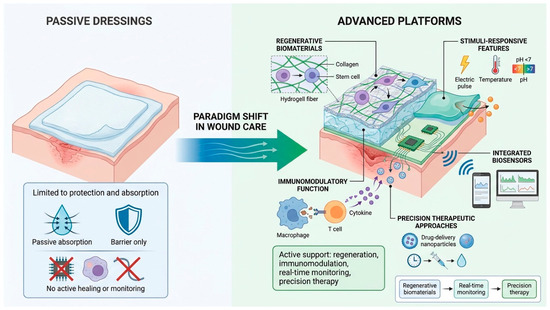
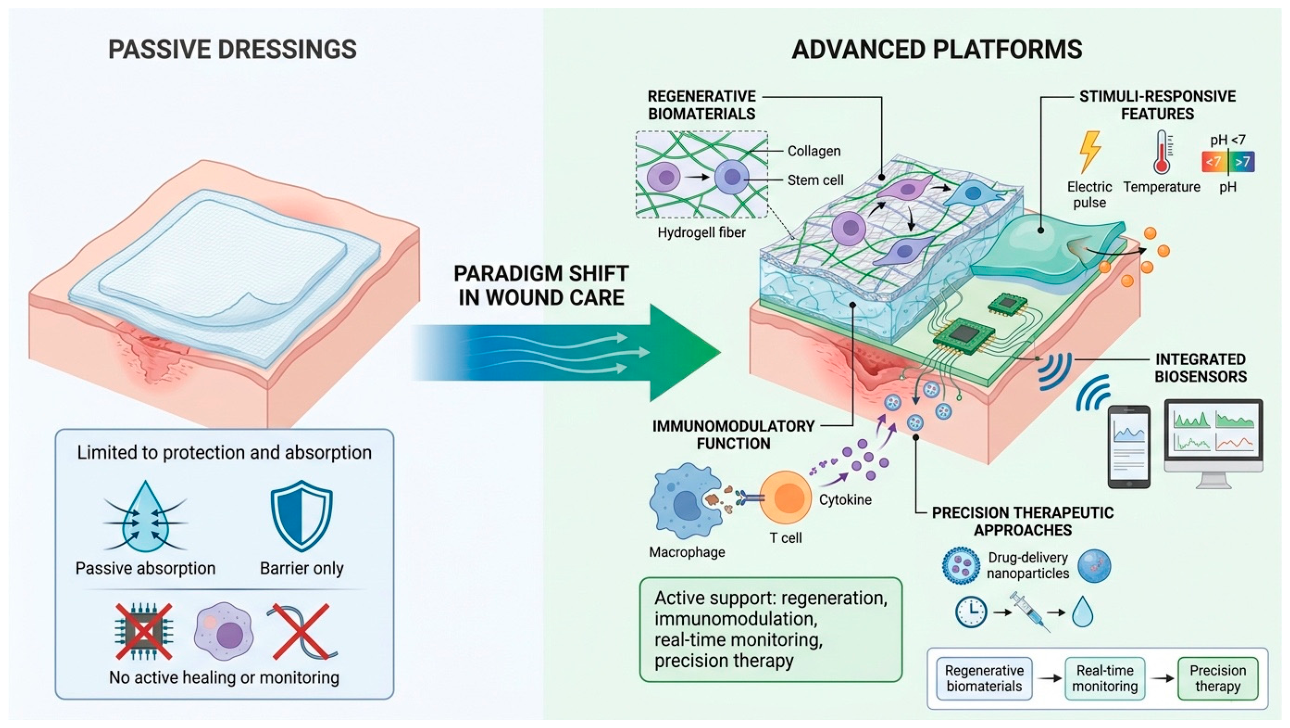
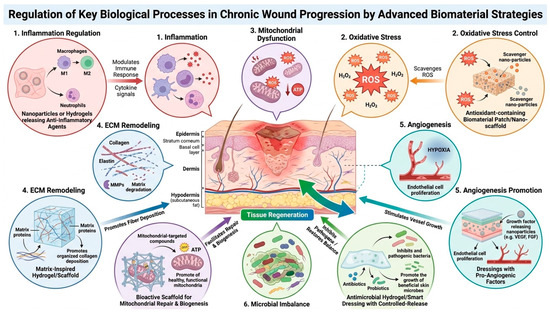
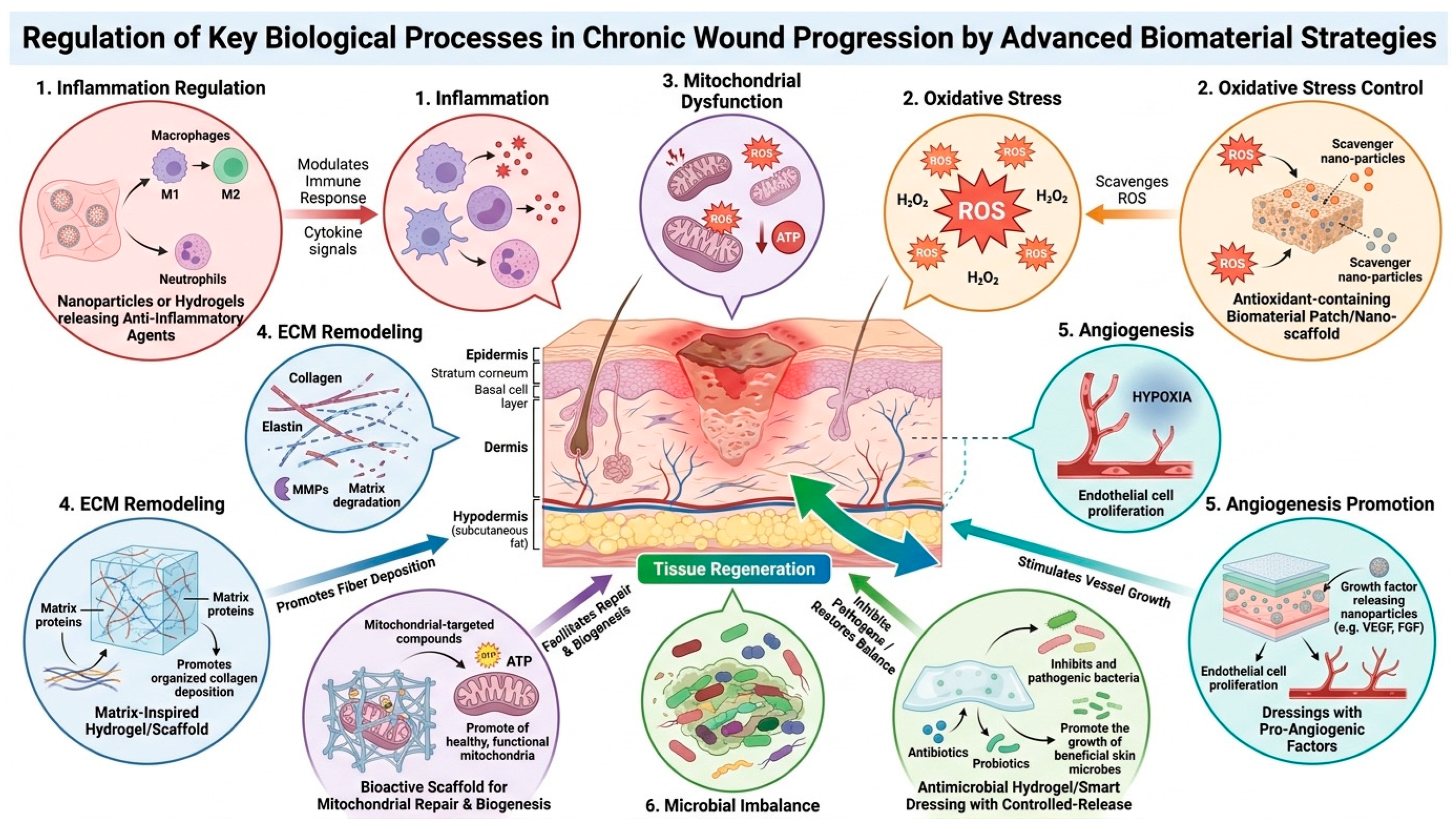
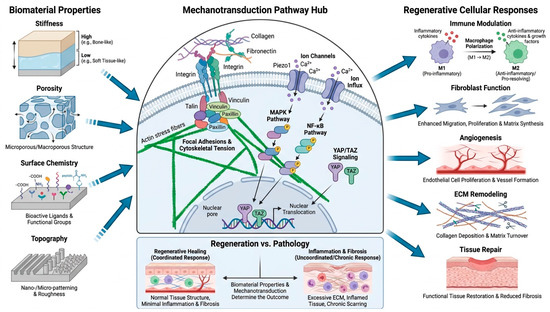
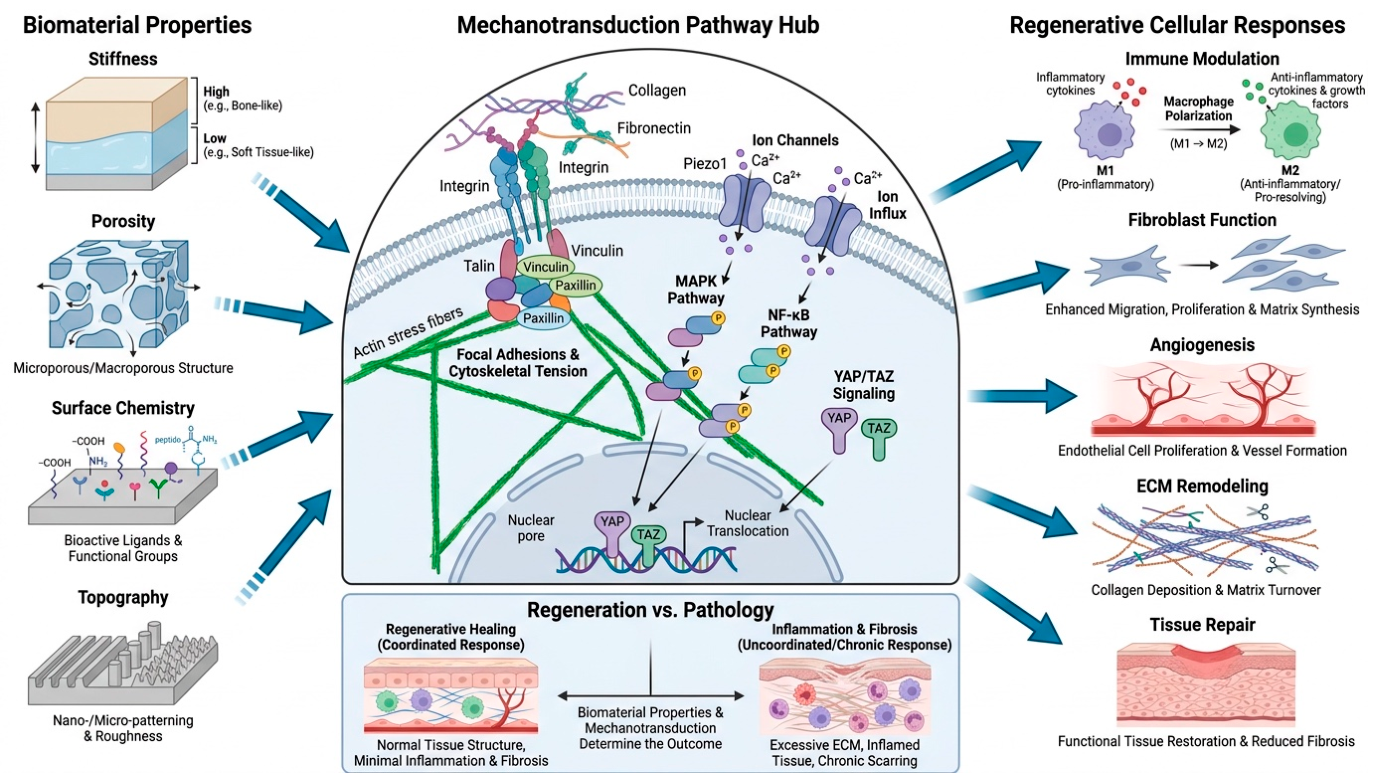
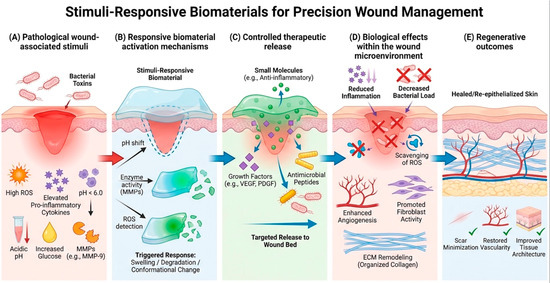
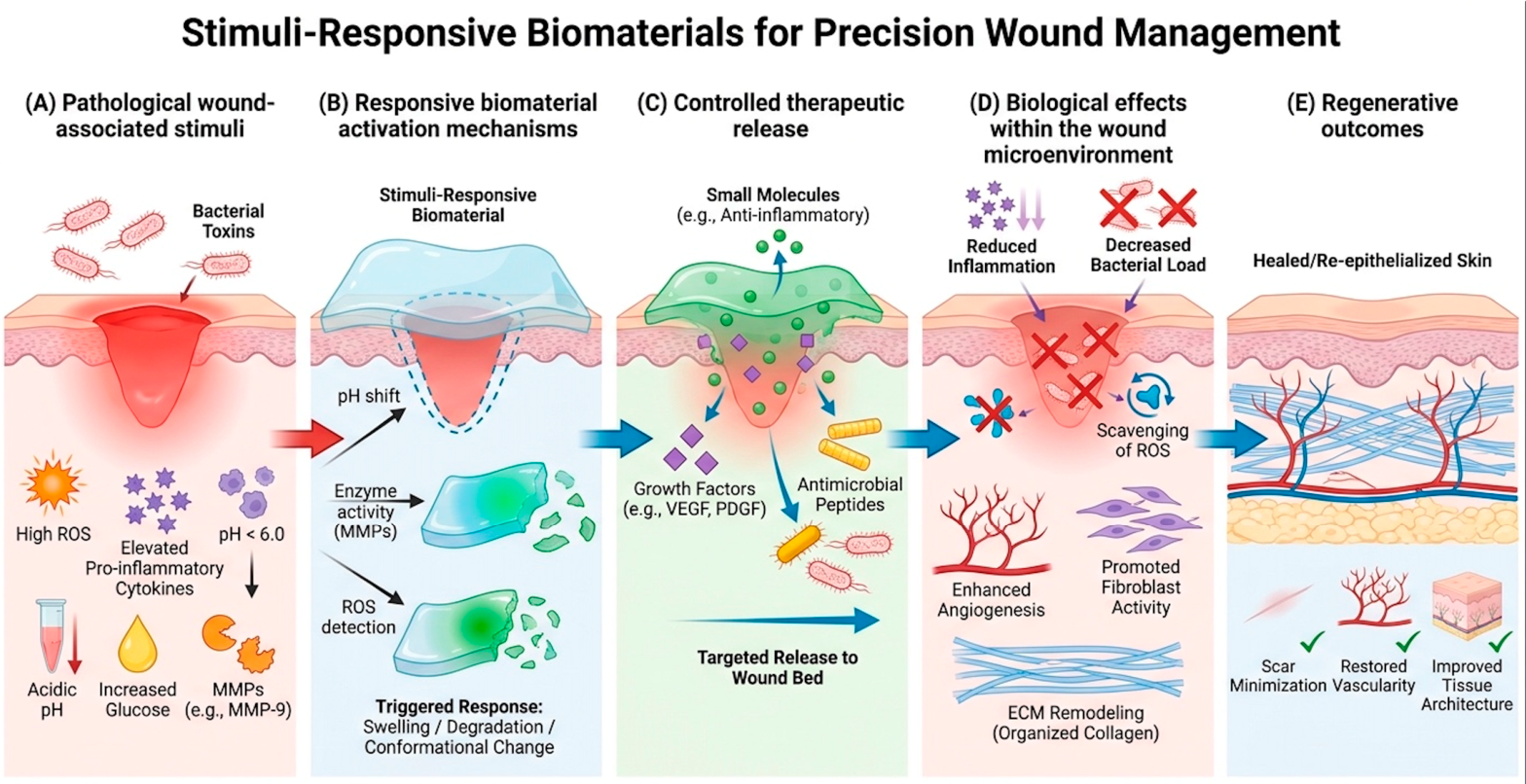
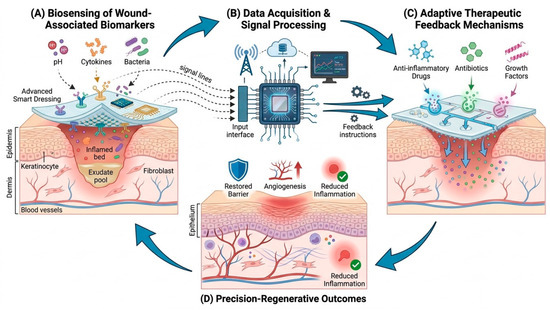
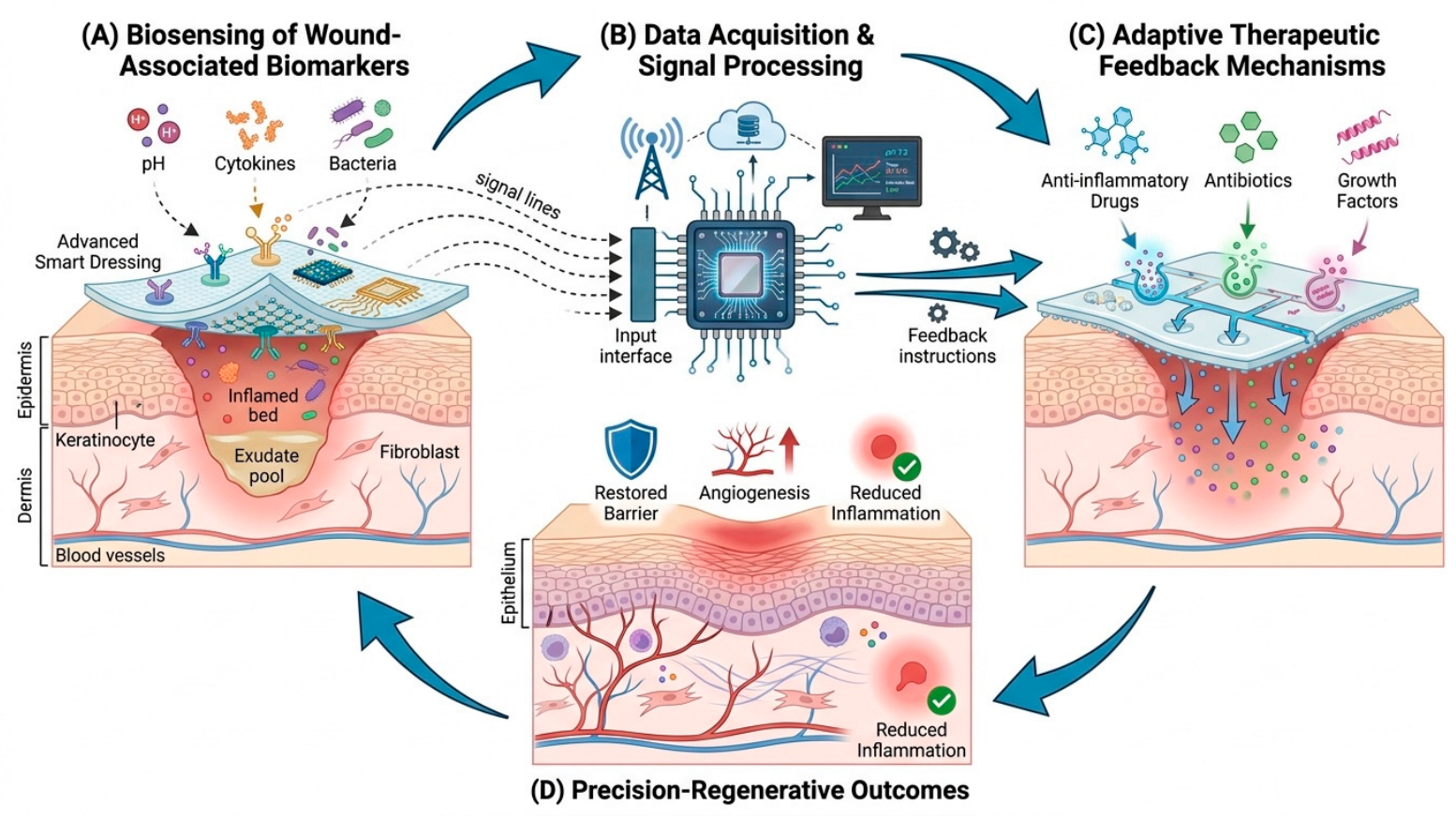

Disclaimer/Publisher’s Note: The statements, opinions and data contained in all publications are solely those of the individual author(s) and contributor(s) and not of MDPI and/or the editor(s). MDPI and/or the editor(s) disclaim responsibility for any injury to people or property resulting from any ideas, methods, instructions or products referred to in the content. |
© 2026 by the authors. Licensee MDPI, Basel, Switzerland. This article is an open access article distributed under the terms and conditions of the Creative Commons Attribution (CC BY) license.