


Abstract
Among the transcriptional dependencies that sustain leukemic identity in acute myeloid leukemia (AML), the menin–KMT2A chromatin complex has emerged as a central regulatory node. The scaffold protein menin, encoded by MEN1, facilitates transcriptional activation of HOX and MEIS family genes during normal hematopoietic development. In AML, this physiologic and developmentally regulated role is co-opted to sustain constitutive HOX/MEIS-driven programs that block differentiation and maintain leukemic potential. Although dependency on menin is most clearly established in KMT2A-rearranged and NPM1-mutated AML, this vulnerability appears to arise from a shared transcriptional state characterized by persistent HOX activation rather than from any single genetic alteration. Pharmacologic disruption of the menin-KMT2A interaction collapses stemness-associated transcriptional networks, promotes myeloid differentiation, and attenuates leukemic self-renewal. Clinical activity observed with menin inhibitors provides translational validation of this dependency and establishes menin inhibition as a differentiation-based therapeutic strategy. In this review, we examine the molecular basis of menin-dependent transcriptional regulation in AML and its implications for therapeutic targeting with menin inhibitors and resistance to therapy.
1. Introduction
Nucleophosmin 1 (NPM1) mutated acute myeloid leukemia (AML) is among the most common AML subtypes, present in 30–35% of newly diagnosed cases [1,2]. While less common and occurring in 5–15% of adult AML cases, Lysine Methyltransferase 2A (KMT2A)-rearranged (KMT2Ar) AML is associated with dismal outcomes especially in the relapsed/refractory (R/R) setting [3,4,5,6]. Both AML subtypes converge on the aberrant activation of transcriptional programs involving the HOXA (homeobox A) cluster genes and MEIS1 (myeloid ecotropic viral integration site 1) [7,8,9,10]. Menin, a scaffold protein encoded by MEN1, operates within the KMT2A, formerly known as MLL1, chromatin complex. The interaction of menin with the N-terminus of KMT2A is central to HOXA and MEIS1 expression and subsequent leukemogenesis [11,12]. While AML classification has been largely defined and treated according to specific mutations and molecular alterations, accumulating evidence has shown that the leukemic stem cell epigenetic signature can be mutation-independent, with several genetically distinct mutations converging on a shared HOXA and MEIS1 transcription cluster [8,13,14], with menin at the center of this activation. In this context, genetic lesions function less as isolated determinants of leukemic behavior and more as gateways into a shared transcription circuit that defines and maintains AML identity.
A long history of scientific discoveries in leukemia laid the foundation for the clinical development of menin inhibitors. Almost 15 years after the discovery of a t(4;11) translocation in acute lymphoblastic leukemia (ALL) in 1977 [15,16], several other translocations involving chromosome 11q23 were identified in both ALL and AML. These rearrangements produce breakpoint junctions within 11q23 that disrupt a gene spanning this region. This gene was named MLL [17,18,19], known today as KMT2A. Subsequent functional studies provided insight into the biological role of this gene. In mouse models lacking Mll, expression of Hoxa-7 and Hoxa-9 was essentially abrogated, demonstrating that KMT2A is required for activation of HOXA gene expression [20,21]. These findings led to the hypothesis that aberrant KMT2A fusion proteins could drive oncogenesis and leukemic transformation [20,21]. In the early 2000s, gene expression profiling studies further established that leukemias harboring KMT2A rearrangement exhibit a distinct transcriptional signature characterized by aberrant activation of HOXA cluster genes and the MEIS1 cofactor [22,23,24]. A few years later, menin was identified as a core component of the KMT2A complex, with its deletion causing loss of KMT2A activity [25,26]. Shortly thereafter, additional work revealed that the menin–KMT2A interaction is required for KMT2A-driven leukemogenesis [27]. In the early 2010s, structural studies identified the binding interface between menin and the KMT2A protein [28,29,30], opening the door to the development of small-molecule inhibitors targeting the menin–KMT2A interaction [31]. The therapeutic relevance of this strategy became increasingly apparent when subsequent epigenomic studies revealed that the HOXA transcription program is not restricted to KMT2Ar AML but is shared across several AML subtypes, including the relatively common subtype of NPM1-mutated (NPM1m) AML [32,33,34]. These discoveries ultimately paved the way for the development of small-molecule menin inhibitors, a detailed discussion of these therapeutic advances will be revisited in Section 5. Before addressing the translational implications of targeting menin, we will first consider the biological foundations that established menin as a central regulator of leukemogenic transcriptional programs.
Accordingly, in this review, we examine the molecular basis of menin interactions with genes such as KMT2A and NPM1, how these interactions upregulate the HOXA and MEIS1 downstream pathways, and how these mechanisms explain the therapeutic benefits of targeted menin inhibition and the emergence of resistance.
2. Menin in Normal Hematopoiesis
2.1. MEN1 Protein Structure and Function
Menin is known to be a tumor suppressor scaffold protein that is linked to multiple endocrine neoplasia 1 (MEN1) syndrome. In humans, MEN1, a gene located on chromosome 11q13, comprises nine introns and ten exons and produces multiple transcript variants with 5′-UTR heterogeneity, though these encode the same menin protein. Menin is a predominantly nuclear α-helical, 610-amino acid protein with its core containing three tetratricopeptide repeat (TPR) motifs flanked by additional helical bundles [35]. The crystal structure of menin reveals a curved, hand-like conformation composed of distinct structural domains. The N-terminal region forms an extended β-hairpin and contributes to a transglutaminase-like domain resembling a “thumb,” while the central portion adopts a “palm” configuration that contains a deep binding pocket accommodating KMT2A-derived peptides, and the C-terminal region resembles “finger”-like projections that harbor nuclear localization signals [28,29,36]. This structural organization enables menin to function as a scaffold protein, mediating interactions not only with KMT2A but also with additional partners involved in transcriptional regulation and tumor suppression, including JunD, SMAD3, and MYC [35,36,37,38,39]. Importantly, although menin classically functions as a tumor suppressor in endocrine tissues, it serves as a critical oncogenic cofactor in leukemogenesis.
2.2. Menin-KMT2A Chromatin Complex
As mentioned above, menin interacts with many proteins, including KMT2A, a large protein central to normal development and hematopoiesis [40,41]. Menin influences KMT2A interaction with DNA, and the menin-KMT2A chromatin complex is essential for the sustained transcriptional activation of the HOXA cluster genes and MEIS1 [11,25,27,42].
Menin functions as an adaptor protein that bridges the H3K4 histone methyltransferase KMT2A to chromatin. The menin-KMT2A complex methylates H3K4 at the HOXA9 locus, leading to the transcription of HOXA genes [43,44,45]. In addition to its interaction with KMT2A, menin associates with other epigenetic regulators, including protein arginine methyltransferase 5 (PRMT5) and the H3K9 methyltransferase (SUV39H1), as well as multiple transcription factors, thereby participating in diverse chromatin-modifying and transcriptional complexes [43,44,45]. HOXA proteins regulate normal hematopoiesis through coordinated transcriptional programs that maintain stem and progenitor cell integrity, control lineage commitment, and establish the epigenetic framework of blood development [46,47]. HOXA9 plays a central role in sustaining hematopoietic stem cells (HSC) by promoting proliferation and self-renewal, further amplified by cooperative positive feedback loops involving other HOXA genes that reinforce overall HOXA cluster expression [48,49,50,51], and HOXA9 is tightly regulated with MEIS1 [52].
Hence, the menin-KMT2A-HOXA axis plays a critical role in early hematopoietic development and stem cell maintenance. Its role in mature hematopoiesis appears less critical, whereas a greater dependence is more characteristic of leukemic states [27]. Dysregulated activation of this pathway can lead to leukemogenic transformation and AML development [8,22,53].
3. HOXA/MEIS1 in AML: Menin Dependency
3.1. HOXA9/MEIS1 Axis in Leukemic Self-Renewal
HOXA9 and MEIS1 are key regulators of HSC self-renewal and are controlled by upstream regulators, including the menin–KMT2A interaction, which is particularly important in leukemic contexts. Aberrant activation of the menin–KMT2A complex disrupts the temporal control over HOXA gene networks and supports leukemogenesis [54]. The progression and maintenance of these leukemic profiles is dependent on MEIS1 co-activity with HOXA9 [55,56]. In experimental models, dysregulated HOXA9 expression promotes leukemic self-renewal in part through repression of the Ink4a/b locus and activation of pro-survival pathways, including BCL2- and IGF1-related programs [49,51,57,58]. MEIS1 is vital to HOXA9 function; it localizes to HOXA9-preactivated enhancers and maintains the leukemic transcription program by suppressing granulocytic differentiation, thereby supporting indefinite self-renewal [59,60]. With this intricate network of genetic interaction, aberrant HOXA9 expression, at the core of this network, is associated with clinically aggressive disease features and poor patient outcomes in AML, including decreased survival, higher risk of relapse, and poor treatment response [61,62,63,64].
3.2. Genotype as Proxy for Transcriptional Dependency
HOXA9 serves as a central transcription node in AML (Figure 1), where multiple upstream distinct genetic alterations ultimately converge on its activation. The genetic alterations driving AML through HOXA dysregulation can be either KMT2A-dependent or KMT2A-independent [8]. However, it is worth noting that not all AML subtypes exhibit HOXA9 overexpression [63]. KMT2A rearrangement (KMT2Ar) is a recurrent chromosomal abnormality in AML, characterized by fusion of the KMT2A gene with one of more than 100 different partners identified, with each partner distinctly influencing the leukemia phenotype and severity [65,66]. In this section, we delineate how distinct genetic alterations in AML converge upon a shared transcriptional dependency centered on HOXA/MEIS1 activation, and we summarize the mechanistic role of menin within this regulatory axis.
Figure 1.
HOXA9/MEIS1 driven leukemogenesis in acute myeloid leukemia.
3.2.1. KMT2A-Rearranged AML
KMT2A rearrangements generate fusion oncoproteins that enforce persistent transcription of HOXA9 and MEIS1 [67]. These fusions (e.g., KMT2A::AF9, KMT2A::ENL, KMT2A::AF10) retain the N-terminal KMT2A domain that mediates interaction with menin, which is required for chromatin recruitment [68]. The fusion complexes occupy broad regions across the HOXA locus and promote transcription through coordinated epigenetic remodeling, including H3K4 methylation and DOT1L-mediated H3K79 methylation. Disruption of the menin–KMT2A interaction results in rapid downregulation of HOXA/MEIS1 expression and promotes leukemic differentiation, underscoring the strong dependence of this subtype on the menin-KMT2A axis [69,70,71,72,73].
3.2.2. NPM1-Mutated AML
NPM1 mutations are recurrent frameshift alterations predominantly involving exon 12 that produce two critical C-terminal changes: (i) loss of the nucleolar localization signal and (ii) acquisition of a novel nuclear export signal (NES). Wild-type NPM1 is only weakly exported by the export protein Chromosomal Maintenance 1 (CRM1) under physiologic conditions, whereas mutant NPM1 (NPM1c) forms efficient complexes with CRM1 as a consequence of the acquired NES. The most common NPM1 mutations disrupt tryptophan residues at positions 288 and 290 (or W290 alone), residues required for nucleolar retention [74,75]. Mutants retaining W288 consistently pair with stronger NES motifs, suggesting selective pressure favoring maximal cytoplasmic accumulation [75]. The frameshift generates a leucine-rich C-terminal NES [76], enabling efficient recognition by the nuclear export receptor XPO1/CRM1 and active cytoplasmic transport [77].
Despite its predominant cytoplasmic localization, a residual nucleoplasmic fraction of NPM1c retains direct chromatin binding at leukemogenic loci, including active promoters within the HOXA/B clusters and MEIS1, where it co-occupies chromatin with KMT2A [9,34,78,79,80]. NPM1c sustains transcriptional activation in part through inhibition of histone deacetylase (HDAC) activity and maintenance of activating histone modifications [9,33,81]. These interactions contribute to the formation of a transcriptional hub that recruits RNA polymerase II to target genes. Targeted degradation of NPM1c results in rapid loss of RNA polymerase II occupancy and activating histone marks at these loci [9,78]. The leukemic state is highly dependent on cytoplasmic NPM1c. Loss of NPM1c from the cytoplasm—either through nuclear relocalization via XPO1 inhibition (e.g., selinexor) or through targeted degradation—leads to rapid downregulation of HOX gene expression, induction of myeloid differentiation, and prolonged survival in murine leukemia models [7].
Additionally, NPM1c reshapes CTCF-dependent topologically associated domains (TADs), altering three-dimensional chromatin architecture to promote activation of HOX genes and reprogram cell cycle regulatory networks [82].
3.2.3. NUP98 Fusions
NUP98 fusions, most commonly NUP98::HOXA9 and NUP98::NSD1, are recurrent gene fusions in AML. These fusions function as aberrant transcription factors in AML by combining the intrinsically disordered Phe-Gly (FG)-repeat domain of NUP98 with partner proteins involved in transcriptional regulation. The FG repeats act as potent transactivation domains that recruit CBP/p300 and other coactivators, driving transcriptional activation of HOX-responsive genes [83]. In the case of NUP98::HOXA9, chromatin-prebound CRM1 (XPO1) contributes to selective recruitment of the fusion protein to HOXA cluster regions, leading to sustained HOXA9 and MEIS1 activation [84,85,86]. In the case of NUP98::NSD1, fusion-mediated recruitment of NSD1 enforces H3K36 methylation and an active chromatin state while preventing EZH2-driven repression at the HOXA locus, thereby sustaining aberrant HOXA7/HOXA9/MEIS1 expression during differentiation [87,88]. NUP98 fusion proteins engage epigenetic machinery to stabilize the leukemic program. They physically require wild-type KMT2A and menin to localize to HOX promoters and maintain leukemogenesis, and menin inactivation reverses the transcriptional program driven by NUP98 fusions [89,90,91]. Therefore, due to the role of menin in the KMT2A–HOXA9 axis, menin inhibition is being explored as an emerging treatment option for AML patients with NUP98 fusions [92,93,94].
3.2.4. Other Genetic Alterations
Beyond these major alterations, multiple less common genetic variations utilize the HOXA9/MEIS1 pathway, either in a KMT2A-dependent or independent manner. KMT2A-dependent alterations include NUP214 rearrangements [95], MN1 overexpression [96,97,98], UBTF tandem duplications [99,100], CALM::AF10 fusions [101,102], and MOZ fusions [103,104]. Despite their diverse upstream mechanisms, these KMT2A-dependent alterations, whether through direct activation or through loss of repression, converge on the common outcome of sustained HOXA9/MEIS1 expression. HOXA expression signature itself resembles that of hematopoietic stem/progenitor cells (HSPCs), but it is aberrantly maintained during differentiation [32].
4. Molecular Mechanisms of Menin Inhibition
Considering the critical role that menin plays in sustaining KMT2A/menin-dependent leukemogenesis, therapeutic inhibition of the menin–KMT2A interaction has emerged as a promising treatment strategy for AML and ALL (Figure 2). Menin inhibition disrupts the menin–KMT2A interaction, thereby disassembling KMT2A complexes from the HOXA9 loci. This leads to the collapse of HOXA9/MEIS1-driven transcription and downregulation of other menin–KMT2A dependent factors [31]. Hence, menin inhibition promotes cell-cycle arrest, induces myeloid differentiation, reduces clonogenic potential, and, in some contexts, enhances apoptosis [31].
Figure 2.
Mechanism of action of menin inhibitors.
Beyond HOXA downregulation, menin inhibition can also disrupt the maintenance of leukemic identity. For example, the menin–KMT2A fusion interaction has been found to prevent the binding of a KMT2C/KMT2D–UTX chromatin regulatory complex to target gene promoters, thus blocking activation of differentiation-associated and tumor suppressive programs [105]. Menin inhibition releases this block, allowing KMT2C/KMT2D–UTX to activate these tumor suppressive genes. Moreover, menin blockade also induces expression of human endogenous retroviral elements and upregulation of interferon-stimulated genes, which enhance major histocompatibility complex II (MHC-II) presentation in KMT2Ar and NPM1m AML cells and facilitate T-cell mediated clearance [106]. Collectively, these effects lead to collapse of leukemic stem cell transcriptional programs and shift transcriptional reprogramming toward myeloid differentiation, forming the basis for the clinical development of selective menin inhibitors for several genetically defined AML subtypes, including KMT2Ar, NPM1m, and NUP98r AML, among others.
5. Clinical Translation as Proof of Mechanism
From there on, compelling evidence of the antileukemic efficacy of these menin inhibitors began to emerge. Landmark preclinical studies published in 2020 showed that the small-molecule menin inhibitors VTP-50469 and MI-3454 induced differentiation, promoted apoptosis in susceptible models, and led to leukemia regression or remission in patient-derived xenograft models of KMT2Ar and NPM1m AML, with relative sparing of normal hematopoiesis [69,107,108]. Clinical development proceeded in parallel through the AUGMENT-101 study of revumenib (SNDX-5613) and the KOMET-001 study of ziftomenib (KO-539). Early and subsequent trial data demonstrated clinically meaningful activity in heavily pretreated R/R KMT2Ar and NPM1m AML, including complete remissions (CR) and measurable residual disease (MRD) negativity in responding patients [109,110,111]. These advances led to accelerated U.S. FDA approval of revumenib for R/R acute leukemia with a KMT2Ar in November 2024 [112], followed in 2025 by expansion of the revumenib approval and the first approval for ziftomenib in R/R AML with susceptible NPM1 mutations [113,114]. Building on these regulatory approvals, ongoing studies are evaluating additional menin inhibitors, earlier-line use, combination regimens with various drugs including venetoclax and hypomethylating agents, and activity in other HOXA/MEIS1-dependent leukemic genotypes. In this section, we discuss menin-inhibitors, both approved and in development, and review their mechanisms of action, clinical activity, contraindications, and safety profiles (Table 1).
Table 1.
Efficacy and Safety of menin inhibitor monotherapy in clinical trials.
5.1. Revumenib
Revumenib (SNDX-5613) is an oral small-molecule menin inhibitor evaluated in the pivotal AUGMENT-101 phase 1/2 study (NCT04065399) in heavily pretreated R/R acute leukemias (AML or ALL) harboring KMT2Ar or NPM1m [110,115,117]. Revumenib monotherapy demonstrated clinical activity across cohorts. The clinical efficacy results and adverse event profile are summarized in Table 1.
In 97 efficacy-evaluable pediatric and adult patients with R/R KMT2Ar acute leukemia treated at the recommended phase 2 dose (RP2D), revumenib achieved a composite CR (CR + CRh) rate of 23% and an overall response rate (ORR) of 63%, with MRD negativity by flow cytometry in 61% of responders [115]. The median time to response was 1.9 months, and the median duration of response (DoR) was 6.4 months. Approximately 40% of responding patients subsequently underwent allogeneic hematopoietic stem cell transplantation (alloSCT), while those who did not proceed to alloSCT had a median overall survival (OS) of 8.0 months.
In a separate NPM1m cohort (n = 64) treated at the same dose, revumenib produced a CR + CRh rate of 23% and an ORR of 47%, with MRD negativity in 64% of responders and a median DoR of 4.7 months [117]. Similarly, 40% of responders proceeded to alloSCT. Among patients previously exposed to venetoclax, revumenib achieved a CR + CRh rate of 17% and an ORR of 41% [117].
From a safety standpoint, revumenib has a manageable toxicity profile, although attention to drug–drug interactions and QTc monitoring is required. Revumenib is a CYP3A4 substrate, and dose adjustments are recommended with concomitant strong CYP3A4 inhibitors (such as azole antifungals) [110,122]. The emergence of differentiation syndrome (DS) in early trials was interpreted as clinical evidence that menin inhibition can reverse the differentiation block central to KMT2Ar and NPM1m leukemias [65], and QT prolongation was identified as a dose-limiting toxicity [110]. Based on the FDA label for revumenib (n = 241 patients), DS occurred in 25% of patients (all grades), with grade 3/4 in 12% and fatal DS in 2 patients (<1%) [122]. QTc prolongation occurred in 36% of patients, with grade 3 in 15% and grade 4 in 2% [122].
Other commonly reported adverse events included nausea (48%), bleeding (48%), neutropenic fever (37%), diarrhea (29%), and infection (29%) [122]. Serious adverse events occurred in 76% of patients, including infection, neutropenic fever, DS, and serious hemorrhage [122]. Despite these toxicities, most events were manageable with supportive care, monitoring, and dose modification. Dose interruption was required in close to 50% of patients, most commonly for QTc prolongation, infection, neutropenic fever, and DS [122]. Despite class-related toxicities such as DS and QTc prolongation, the safety profile of revumenib is manageable relative to its clinical activity, supporting its U.S. FDA approval in November 2024 for R/R KMT2Ar acute leukemia and in October 2025 for R/R NPM1m AML.
5.2. Ziftomenib
The activity of ziftomenib (KO-539), another oral small-molecule menin inhibitor, was evaluated in the phase 1b/2 KOMET-001 trial (NCT04067336) in patients with R/R AML [118]. The RP2D of 600 mg once daily does not require modification in the setting of concomitant azole antifungals and, unlike revumenib, appears to have a more favorable drug–drug interaction profile [118]. However, QT prolongation remains a labeled risk.
In the pivotal phase 2 expansion cohort of 92 heavily pretreated adults with NPM1m AML, single-agent ziftomenib produced a composite CR rate of 22% and an ORR of 33%. Median DoR was 4.6 months, with a median OS of 6.6 months across the cohort [123]. Patients who achieved remission had substantially improved outcomes, with a median OS of 16.4 months. Responses were observed regardless of FLT3 or IDH co-mutations and were maintained in patients previously treated with venetoclax-based regimens. Among individuals achieving CR or CRh (CR with partial hematologic recovery), approximately 61% achieved MRD negativity. These results paved the way for U.S. FDA approval of ziftomenib for R/R NPM1m AML [124].
A smaller phase 1 cohort of KMT2Ar AML (n = 20) demonstrated an ORR of 20% and CR/CRh rate of 10%, with a similar DoR [118]. The rate and severity of DS led to halting enrollment for KMT2Ar AML. Since then, development has increasingly focused on combination strategies, including ongoing studies evaluating ziftomenib with standard therapies such as venetoclax and hypomethylating agents, intensive 7 + 3 chemotherapy, and gilteritinib (KOMET-007, NCT05735184).
5.3. Bleximenib
Bleximenib/JNJ-75276617, an oral, selective menin inhibitor, downregulates the expression of key leukemogenic genes including MEIS1 and FLT3 [125]. Beyond direct antileukemic effects, bleximenib promotes epigenetic activation of CIITA, resulting in increased MHC class I and II expression and enhanced T-cell–mediated killing of leukemic blasts [126]. Bleximenib binds menin at a site distinct from revumenib and retains activity in models harboring MEN1 resistance mutations, such as M327I and T349M [125].
Clinically, bleximenib monotherapy has been evaluated in a phase 1 cAMeLot-1 trial (NCT04811560) in R/R KMT2Ar and NPM1m acute leukemias. Preliminary data have shown a CR/CRh rate and ORR in the range of 35% and 50% respectively [120]. Adverse events include DS, neutropenia, and thrombocytopenia, while only one grade 3 QTc prolongation event was observed [120].
5.4. Enzomenib
Enzomenib (DSP-5336) is another oral menin inhibitor being studied in the ongoing phase 1/2 study (NCT04988555). Among patients with KMT2Ar leukemia (n = 22), the ORR was 59%, with CR/CRh achieved in 23%. In those with NPM1m AML (n = 13), the ORR was 54%, including CR/CRh in 23%. Responses occurred rapidly with a median of 1 month. Enzomenib therapy was associated with a relatively low incidence of DS (11%), and azole antifungal coadministration did not significantly impact drug exposure [121].
5.5. Other Emerging Agents
Several other menin inhibitors are in early-stage preclinical and clinical development. Efforts focus on improving durability, mitigating QTc prolongation, limiting CYP3A4 interactions, and overcoming resistance mutations. These agents include BMF-219, a covalent menin inhibitor (COVALENT-101, NCT05153330) [127] and BN104, a non-covalent menin inhibitor with encouraging early activity and manageable toxicity (NCT06052813) [128]. Although clinical data for these newer menin inhibitors remain limited, preclinical studies suggest that several compounds may improve compared to earlier agents by retaining activity against acquired MEN1 resistance mutations and by reducing QTc prolongation [129,130,131,132,133]. Whether these advantages translate into clinically meaningful benefit will require further validation in human studies.
5.6. Clinical Considerations When Interpreting Menin Inhibitor Trial Data
Given that menin inhibitors first entered human clinical investigation less than a decade ago and the first FDA approvals have only occurred within the past two years, the bulk of the available data is derived from early-phase, single-arm, and non-randomized clinical trials. These trials are inherently susceptible to selection bias, small sample sizes, and heterogeneity in patient populations. Cross-trial comparisons between different menin inhibitors should therefore be approached with caution, where differences in efficacy or toxicity may reflect differences in trial design and eligibility rather than true pharmacologic distinctions among agents. Randomized comparative studies and longer-term follow-up will be required to definitively establish the relative efficacy and safety profiles of menin inhibitors in AML.
Moreover, despite the emerging data generated from clinical trials in progress, identifying a single preferred menin inhibitor for all settings and in all patients will likely prove near-impossible. We envision a new reality in HOXA-driven AML where there is an embarrassment of riches just like in chronic myeloid leukemia and ABL-tyrosine kinase inhibitors. Those decisions will need to account for patient comorbidities, preferred dosing schedules, concomitant medications (especially acid suppressants and azole antifungals), AML subtype, goals of therapy (palliative versus curative), and, down the line, the combination backbone. While current data suggest comparable efficacy across the drug class, the meaningful distinctions to date relate to toxicity and drug–drug interactions, and these are likely to change as we learn more about these agents.
6. Toxicity
As discussed with the individual agents, menin inhibitors demonstrate an overall manageable safety profile, with several toxicities reflecting either on-target differentiation biology or molecule-specific pharmacologic effects. DS, a class-defining toxicity resulting from rapid leukemic blast maturation, occurs in approximately 10–20% of patients receiving menin inhibitor monotherapy and is generally managed with corticosteroids and temporary treatment interruption when recognized early (Figure 3) [117,118]. Although combination regimens may influence the kinetics of differentiation, DS remains an important toxicity across studies [118]. QTc prolongation represents a more agent-specific adverse effect, most prominently associated with revumenib, where largely low-grade events have been reported and are managed with electrocardiographic monitoring, electrolyte optimization, and avoidance of concomitant QT-prolonging medications [115]. In contrast, other menin inhibitors such as ziftomenib, bleximenib, and enzomenib have demonstrated minimal clinically significant QTc effects [118,120,121]. Hematologic toxicities, particularly neutropenia and thrombocytopenia, are most pronounced when menin inhibitors are combined with venetoclax-based regimens and typically require dose adjustments, growth factor support, and modified venetoclax schedules. Other nonhematologic adverse events, including gastrointestinal symptoms, fatigue, and mild transaminase elevations, are generally low-grade and rarely lead to treatment discontinuation. Overall, with appropriate monitoring and supportive care, the toxicity profile of menin inhibitors appears manageable and consistent with their mechanism of action.
Figure 3.
Proposed algorithm for identification, prevention, and management of menin inhibitor- associated differentiation syndrome. aPTT, activated partial thromboplastin time; ALT, alanine aminotransferase; AST, aspartate aminotransferase; BAL, bronchoalveolar lavage; BID, twice daily; BMI, body mass index; BNP, B-type natriuretic peptide; BP, blood pressure; CBC, complete blood count; CRP, C-reactive protein; CT, computed tomography; DS, differentiation syndrome; ECG, electrocardiogram; IV, intravenous; KMT2Ar, KMT2A rearrangement; LDH, lactate dehydrogenase; PO, by mouth/orally; PT, prothrombin time; QD, once daily; q6h, every 6 h; q12h, every 12 h; WBC, white blood cell count. * Special clinical considerations within the proposed algorithm.
7. Mechanisms of Resistance to Menin Inhibitors
Despite encouraging clinical activity, acquired resistance to menin inhibition has emerged as an important therapeutic challenge. Reported mechanisms include alterations affecting the menin protein itself as well as adaptive pathways that allow leukemic cells to bypass menin–KMT2A-dependent transcriptional programs (Figure 4).
Figure 4.
Overview of the molecular mechanisms of resistance to menin inhibitors.
7.1. On-Target Resistance
The primary on-target resistance mechanism is the acquisition of somatic MEN1 mutations that create steric clashes impairing menin inhibitor binding while preserving the menin–KMT2A interaction [134,135]. This phenomenon has been most clearly documented in the setting of revumenib exposure, where MEN1 mutations emerged in ~40% of patients receiving monotherapy, with recurrent hotspots at M327 (M327I/V), G331 (G331R/D), T349M, and S160 (S160C/T) [110,135]. Similar MEN1 mutations were reproduced in xenograft models in response to different menin inhibitors, supporting their emergence through therapy-driven selection rather than stochastic background alteration [136]. With other menin inhibitors, resistance mutations have been less frequently reported. In the KOMET-001 trial, only one patient receiving ziftomenib developed a known resistance mutation (MEN1 M327I) [118], while bleximenib, enzomenib, and other agents have not yet had MEN1 resistance mutations reported in published trial data. However, this apparent difference should be interpreted with caution given the more recent introduction and less mature clinical data of these agents compared to revumenib. In vitro, ziftomenib retains biochemical activity against certain MEN1 variants (G331R and T349M) but not against M327I or M327V. Mutations affecting M327 are particularly disruptive, impairing binding of multiple menin inhibitors, while other mutations may confer differential resistance across compounds [118,136]. Identification of the specific MEN1 mutation may eventually help inform menin inhibitor selection as molecular profiling becomes more widely available and resistance patterns across inhibitors, doses, and combinations are better characterized.
7.2. Off-Target Resistance
While on-target resistance directly compromises inhibitor binding through mutations at the menin-drug interface, resistance to menin inhibition can also arise through off-target transcriptional and epigenetic adaptation rather than menin mutations, enabling leukemic cells to bypass KMT2A-dependent transcriptional programs despite preserved drug-target engagement [137,138]. In this setting, the inhibitor remains pharmacologically active at its target-site, but downstream leukemogenic expression is maintained through alternative mechanisms, rendering menin inhibition insufficient.
7.2.1. KMT2A-Independent Resistance Through Transcriptional and Epigenetic Adaptation
One mechanism involves disruption of polycomb repressive complexes (PRC), particularly the non-canonical PRC1.1 complex [139,140]. PRC1.1, composed of proteins including BCOR, RING1B, KDM2B, and PCGF1, plays an important role in hematopoietic regulation and HOXA9-associated transcriptional programs [141]. Loss-of-function mutations in this complex have been associated with adverse prognosis in AML [142]. In this context, depletion of PRC1.1 components such as PCGF1 or BCOR can promote activation of alternative HOXA9/MEIS1-independent leukemogenic pathways, including MYC-dependent pathways [138,140].
Moreover, epigenetic alterations affecting components of the tumor-suppressive KMT2C/KMT2D–UTX complex can impair activation of differentiation associated transcriptional program following menin inhibition or chemotherapy, thereby attenuating therapeutic response and indicating that AML survival can be maintained independently of the canonical HOX axis [105].
The histone acetyltransferase KAT7, which cooperates with the menin–KMT2A complex to sustain oncogenic transcription, may also contribute to resistance when its activity persists despite menin inhibition [143,144].
7.2.2. Clonal Evolution and Cooperating Mutations
Clonal evolution represents another important mechanism of acquired resistance to menin inhibition in KMT2Ar and NPM1m leukemias. In heavily pretreated disease, leukemic cells may acquire cooperating mutations that drive proliferation independent of the original KMT2A-driven transcriptional program, resulting in attenuated sensitivity to menin inhibitors compared with earlier disease [144]. Consequently, leukemic persistence can occur despite on-target drug activity.
Genomic analyses reveal the emergence of cooperating mutations affecting RAS signaling and TP53 pathways as well as chromatin regulators such as KMT2C and KMT2D which may enable subclones to proliferate outside of the menin–KMT2A-dependent programs [118,144]. Moreover, the intrinsic clonal heterogeneity of KMT2Ar AML permits the selection and expansion of resistant subpopulations harboring mutations in the aforementioned signaling pathways [145]. Loss of TP53 may further contribute to resistance by impairing p53–dependent apoptotic programs and promoting an apoptosis-resistant state characterized by dysregulation of BCL2 family proteins and increased dependence on MCL1 [146].
Collectively, these findings suggest that resistance to menin inhibition may arise through the expansion of genetically diverse subclones that bypass dependence on the menin–KMT2A–HOXA transcriptional axis, supporting the rationale for earlier use of menin inhibitors and rational combination strategies to evade clonal evolution [144].
7.3. Overcoming Resistance to Menin Inhibitors
Several strategies are being explored to overcome resistance to menin inhibition. A recent case report provided the first clinical evidence that switching from revumenib to bleximenib may have activity in a patient who developed an emergent MEN1 M327I mutation after prolonged revumenib therapy [147]. However, larger studies are needed to determine whether menin inhibitor switching can reliably overcome on-target resistance. Combination therapy represents another promising approach to mitigating or circumventing resistance to menin inhibitors and is discussed in detail in Section 8.
8. Combination Strategies in Menin Inhibition: Mechanism and Application
Given the remarkable clinical activity of menin inhibitor monotherapy in R/R AML, considerable effort has focused on developing rational combination strategies to enhance efficacy and circumvent resistance. Several combination regimens are currently in clinical trials. Available efficacy and safety data are summarized in Table 2. These combinations can be broadly grouped based on the strength of the supporting evidence. The most clinically advanced strategies pair menin inhibitors with venetoclax, with or without hypomethylating agents (HMAs), or with intensive chemotherapy backbones. Ongoing trials such as SAVE, KOMET-007, and cAMeLot-2 highlight the efficacy of these combinations compared to other regimens. A second set of combinations that has less mature clinical data yet remains promising involves FLT3 inhibitor combinations. Multiple ongoing phase 1 trials are exploring FLT3 inhibitor combinations with menin inhibitors, with or without chemotherapy backbones. Other combinations such as CDK6 inhibitors [105] or agents that target epigenetic and transcriptional co-dependencies [148] are supported only by preclinical data so far.
Table 2.
Selected clinical trials of menin inhibitor-based combination regimens with intensive chemotherapy or venetoclax/hypomethylating agents.
Beyond enhancing antileukemic activity and accelerating response, combination strategies may also influence the biological consequences of menin inhibition, particularly the dynamics of leukemic differentiation. The addition of different combinations may modify this process by accelerating leukemic cytoreduction or enhancing apoptotic clearance of differentiating cells. Consistent with this hypothesis, emerging clinical data suggest that the incidence and severity of DS in several combination regimens may differ from that observed with menin inhibitor monotherapy, although cross-trial comparisons remain limited. At the same time, combination regimens introduce overlapping and additive toxicities including myelosuppression, hepatotoxicity, QTc prolongation, and infectious complications. These toxicities warrant careful evaluation as these strategies move into broader clinical use.
8.1. Combinations with Hypomethylating Agents and Venetoclax
The triplet combination of menin inhibitors, HMAs, and the oral BCL2 inhibitor venetoclax exhibits synergistic activity through complementary and largely non-overlapping mechanisms [162]. Menin inhibition reduces the expression of anti-apoptotic proteins such as BCL2 while promoting leukemic cell differentiation [162]. HMAs enhance apoptotic susceptibility by inducing the pro-apoptotic mediator NOXA, thereby priming leukemic cells for cell death [163]. Venetoclax, one of the most studied partners of menin inhibitors [164], then directly targets the residual BCL2 activity, further lowering the apoptotic threshold and facilitating mitochondrial apoptosis [165,166,167].
Accordingly, several trials are in progress evaluating the combinations of various menin inhibitors with venetoclax and HMA combinations, as summarized in Table 2 [149,152,156,159,161]. Early clinical experience suggests improved clinical and hematologic responses with manageable toxicity profiles. These findings support planned and ongoing phase 3 trials assessing the potential of triplet regimens of menin inhibitors, venetoclax, and HMAs to enhance therapeutic efficacy, mitigate resistance, and most importantly, improve clinical outcomes [168].
8.2. Combinations with Chemotherapy
Combining menin inhibitors with intensive induction chemotherapy is biologically attractive in NPM1m and KMT2Ar AML, as cytotoxic chemotherapy provides rapid disease debulking while menin inhibition suppresses the leukemia-sustaining HOXA/MEIS1 transcriptional program. The most mature frontline dataset comes from the phase 1a/b KOMET-007 study, in which ziftomenib combined with 7 + 3 induction demonstrated encouraging remission and MRD negativity rates, supporting advancement into the registrational phase 3 KOMET-017 trial [154]. Revumenib is also being evaluated with intensive induction and consolidation chemotherapy [153]. Additional menin inhibitors, including bleximenib, are planned for evaluation in combination with intensive chemotherapy [169]. Early clinical data on these combinations are summarized in Table 2.
8.3. Combinations with FLT3 Inhibitors
FLT3 inhibitors represent another class of agents being studied in combination with menin inhibitors. FLT3 mutations frequently co-occur in NPM1m AML and at a lower frequency in KMT2Ar AML [4,5,170]. In preclinical models, menin and FLT3 inhibitor combinations showed promising results [171,172], leading to more current clinical trials testing menin inhibitors with FLT3 inhibitors, presented in Table 3.
Table 3.
Current clinical trials of menin inhibitor-based combination regimens with FLT3 inhibitors.
8.4. Combinations with IDH Inhibitors
IDH1/2 mutations also frequently co-occur in NPM1m AML [170], and preclinical studies demonstrate that the combination of menin inhibitors with IDH inhibitors (ivosidenib or enasidenib) results in synergistic antileukemic activity [173]. Clinical data evaluating the combination remain limited to date.
9. Summary and Future Directions
Menin inhibitors have established menin dependence as a therapeutically actionable vulnerability in AML, particularly in leukemias driven by KMT2A rearrangements and NPM1 mutations. Across clinical studies, these agents have demonstrated meaningful antileukemic activity with a generally manageable safety profile, supporting menin inhibition as an important emerging treatment strategy. Their clinical benefit in the R/R setting has been particularly notable, where responses may provide disease control or serve as a bridge to allogeneic stem cell transplantation.
Looking ahead, the next phase in the development of menin inhibitors will focus on their integration earlier in the disease course, most often as part of combination therapy. To date, combination regimens incorporating menin inhibitors in patients with ND AML have shown particularly encouraging clinical outcomes. In the R/R setting, the availability of menin inhibitors has already transformed the therapeutic landscape for many patients, frequently providing an effective bridge to subsequent therapies or alloSCT. As the field advances, MRD-guided strategies may further refine patient selection and facilitate more personalized treatment approaches.
Another important priority will be to better understand and overcome mechanisms of resistance to menin inhibitors, particularly those involving epigenetic alterations and clonal evolution. Although suppression of the HOXA9/MEIS1 transcriptional program represents a central component of the mechanism of action of menin inhibitors, it does not fully account for the spectrum of clinical responses observed. Other genomic and transcriptional regulators are likely to influence menin-dependent leukemic programs and may contribute to both sensitivity and resistance. Identifying these factors could play an important role in treatment selection, sequencing, and monitoring. Ultimately, the future of menin-directed therapy will depend not only on improving the drugs themselves, but also on defining when to use them, in whom they are most effective, and how to best integrate them into a broader framework of biologically informed and patient-centered AML care.
Author Contributions
Conceptualization, A.N.S. and A.A.-K.; methodology, A.N.S. and A.T.; software, A.N.S., M.R. and A.T.; resources, A.N.S. and A.A.-K.; data curation, A.T. and A.N.S.; writing—original draft preparation, A.T. and M.R.; writing—review and editing, A.A.-K. and A.N.S.; visualization, M.R. and A.T.; supervision, A.A.-K. and A.N.S. All authors have read and agreed to the published version of the manuscript.
Funding
This research received no external funding.
Data Availability Statement
No new data were created or analyzed in this study. Data sharing is not applicable to this article.
Acknowledgments
A.N.S. is the recipient of the Robert A. Winn Excellence in Clinical Trials Award. Elements of the graphical illustration were generated using an artificial intelligence-assisted image generation tool and curated by the authors.
Conflicts of Interest
A.T., M.R., and A.A.K. have no relevant conflicts of interest to disclose. A.N.S. receives research funding (to institution) from Kura Oncology, Daiichi-Sankyo, and Chordia Therapeutics. A.N.S. receives research funding (to institution) from Gilead Sciences (through the Robert A. Winn Excellence in Clinical Trials Award). A.N.S. has consulted for Novartis Pharmaceuticals and Servier (paid to institution).
References
- Falini, B.; Mecucci, C.; Tiacci, E.; Alcalay, M.; Rosati, R.; Pasqualucci, L.; Starza, R.L.; Diverio, D.; Colombo, E.; Santucci, A.; et al. Cytoplasmic Nucleophosmin in Acute Myelogenous Leukemia with a Normal Karyotype. N. Engl. J. Med. 2005, 352, 254–266, Erratum in N. Engl. J. Med. 2005, 352, 740.. [Google Scholar] [CrossRef] [Scilit]
- Papaemmanuil, E.; Gerstung, M.; Bullinger, L.; Gaidzik, V.I.; Paschka, P.; Roberts, N.D.; Potter, N.E.; Heuser, M.; Thol, F.; Bolli, N.; et al. Genomic Classification and Prognosis in Acute Myeloid Leukemia. N. Engl. J. Med. 2016, 374, 2209–2221. [Google Scholar] [CrossRef] [Scilit]
- Petersen, L.M.; Sainger, R.; Sanchez, P.; Burke, J.; Wemmer, J.D.; Patay, B.; Miller, J.E. A Systematic, Evidence-Based Workflow for Classifying KMT2A Fusions in Acute Myeloid Leukemia. J. Mol. Diagn. 2025, 27, 989–1002. [Google Scholar] [CrossRef] [Scilit]
- Batayneh, O.; Moein, M.; Naji, N.S.; Patel, A.; Mandava, A.R.; Goodman, A.; Ross, J.S.; Ho, C.; Marcus, C.; Zhou, Z.; et al. Characterizing KMT2A Rearrangement in Acute Myeloid Leukemia: A Comprehensive Genomic Study. Cancers 2026, 18, 161. [Google Scholar] [CrossRef] [Scilit]
- Bataller, A.; Goulart, H.E.; Issa, G.C.; DiNardo, C.D.; Daver, N.; Kadia, T.; Bazinet, A.; Bouligny, I.M.; Senapati, J.; Haddad, F.G.; et al. Characteristics and outcomes of newly diagnosed acute myeloid Leukemia with KMT2A rearrangements. Leukemia 2025, 39, 1640–1649. [Google Scholar] [CrossRef] [Scilit] [PubMed]
- Issa, G.C.; Zarka, J.; Sasaki, K.; Qiao, W.; Pak, D.; Ning, J.; Short, N.J.; Haddad, F.; Tang, Z.; Patel, K.P.; et al. Predictors of outcomes in adults with acute myeloid leukemia and KMT2A rearrangements. Blood Cancer J. 2021, 11, 162. [Google Scholar] [CrossRef] [Scilit] [PubMed]
- Brunetti, L.; Gundry, M.C.; Sorcini, D.; Guzman, A.G.; Huang, Y.-H.; Ramabadran, R.; Gionfriddo, I.; Mezzasoma, F.; Milano, F.; Nabet, B.; et al. Mutant NPM1 Maintains the Leukemic State through HOX Expression. Cancer Cell 2018, 34, 499–512.e499. [Google Scholar] [CrossRef] [Scilit] [PubMed]
- Huang, W.; Zhang, F.; Zhang, Z.; Wang, Q.; Chen, S. Dysregulation of HOXA genes in acute myeloid leukemia and targeted therapy. NPJ Precis. Oncol. 2025, 9, 396. [Google Scholar] [CrossRef] [Scilit]
- Uckelmann, H.J.; Haarer, E.L.; Takeda, R.; Wong, E.M.; Hatton, C.; Marinaccio, C.; Perner, F.; Rajput, M.; Antonissen, N.J.C.; Wen, Y.; et al. Mutant NPM1 Directly Regulates Oncogenic Transcription in Acute Myeloid Leukemia. Cancer Discov. 2023, 13, 746–765. [Google Scholar] [CrossRef] [Scilit]
- Zeisig, B.B.; Milne, T.; García-Cuéllar, M.P.; Schreiner, S.; Martin, M.E.; Fuchs, U.; Borkhardt, A.; Chanda, S.K.; Walker, J.; Soden, R.; et al. Hoxa9 and Meis1 are key targets for MLL-ENL-mediated cellular immortalization. Mol. Cell. Biol. 2004, 24, 617–628. [Google Scholar] [CrossRef] [Scilit]
- Kühn, M.W.M.; Ganser, A. The Menin story in acute myeloid leukaemia—The road to success. Br. J. Haematol. 2024, 205, 812–814. [Google Scholar] [CrossRef] [Scilit]
- Maillard, I.; Hess, J.L. The role of menin in hematopoiesis. Adv. Exp. Med. Biol. 2009, 668, 51–57. [Google Scholar] [CrossRef] [Scilit]
- Jung, N.; Dai, B.; Gentles, A.J.; Majeti, R.; Feinberg, A.P. An LSC epigenetic signature is largely mutation independent and implicates the HOXA cluster in AML pathogenesis. Nat. Commun. 2015, 6, 8489. [Google Scholar] [CrossRef] [Scilit]
- Wong, P.; Iwasaki, M.; Somervaille, T.C.; So, C.W.; Cleary, M.L. Meis1 is an essential and rate-limiting regulator of MLL leukemia stem cell potential. Genes. Dev. 2007, 21, 2762–2774. [Google Scholar] [CrossRef] [Scilit] [PubMed]
- Oshimura, M.; Freeman, A.I.; Sandberg, A.A. Chromosomes and causation of human cancer and leukemia. XXVI. Binding studies in acute lymphoblastic leukemia (ALL). Cancer 1977, 40, 1161–1172. [Google Scholar] [CrossRef] [Scilit] [PubMed]
- Van den Berghe, H.; David, G.; Broeckaert-Van Orshoven, A.; Louwagie, A.; Verwilghen, R.; Casteels-Van Daele, M.; Eggermont, E.; Eeckels, R. A new chromosome anomaly in acute lymphoblastic leukemia (ALL). Hum. Genet. 1979, 46, 173–180. [Google Scholar] [CrossRef] [Scilit]
- Ziemin-van der Poel, S.; McCabe, N.R.; Gill, H.J.; Espinosa, R., 3rd; Patel, Y.; Harden, A.; Rubinelli, P.; Smith, S.D.; LeBeau, M.M.; Rowley, J.D.; et al. Identification of a gene, MLL, that spans the breakpoint in 11q23 translocations associated with human leukemias. Proc. Natl. Acad. Sci. USA 1991, 88, 10735–10739, Erratum in Proc. Natl. Acad. Sci. USA 1992, 89, 4220. [Google Scholar] [CrossRef] [Scilit] [PubMed]
- McCabe, N.R.; Burnett, R.C.; Gill, H.J.; Thirman, M.J.; Mbangkollo, D.; Kipiniak, M.; van Melle, E.; Ziemin-van der Poel, S.; Rowley, J.D.; Diaz, M.O. Cloning of cDNAs of the MLL gene that detect DNA rearrangements and altered RNA transcripts in human leukemic cells with 11q23 translocations. Proc. Natl. Acad. Sci. USA 1992, 89, 11794–11798. [Google Scholar] [CrossRef] [Scilit]
- Gu, Y.; Cimino, G.; Alder, H.; Nakamura, T.; Prasad, R.; Canaani, O.; Moir, D.T.; Jones, C.; Nowell, P.C.; Croce, C.M.; et al. The (4;11)(q21;q23) chromosome translocations in acute leukemias involve the VDJ recombinase. Proc. Natl. Acad. Sci. USA 1992, 89, 10464–10468. [Google Scholar] [CrossRef] [Scilit]
- Yu, B.D.; Hess, J.L.; Horning, S.E.; Brown, G.A.J.; Korsmeyer, S.J. Altered Hox expression and segmental identity in Mll-mutant mice. Nature 1995, 378, 505–508. [Google Scholar] [CrossRef] [Scilit]
- Domer, P.H.; Fakharzadeh, S.S.; Chen, C.S.; Jockel, J.; Johansen, L.; Silverman, G.A.; Kersey, J.H.; Korsmeyer, S.J. Acute mixed-lineage leukemia t(4;11)(q21;q23) generates an MLL-AF4 fusion product. Proc. Natl. Acad. Sci. USA 1993, 90, 7884–7888. [Google Scholar] [CrossRef] [Scilit]
- Armstrong, S.A.; Staunton, J.E.; Silverman, L.B.; Pieters, R.; den Boer, M.L.; Minden, M.D.; Sallan, S.E.; Lander, E.S.; Golub, T.R.; Korsmeyer, S.J. MLL translocations specify a distinct gene expression profile that distinguishes a unique leukemia. Nat. Genet. 2002, 30, 41–47. [Google Scholar] [CrossRef] [Scilit]
- Ferrando, A.A.; Armstrong, S.A.; Neuberg, D.S.; Sallan, S.E.; Silverman, L.B.; Korsmeyer, S.J.; Look, A.T. Gene expression signatures in MLL-rearranged T-lineage and B-precursor acute leukemias: Dominance of HOX dysregulation. Blood 2003, 102, 262–268. [Google Scholar] [CrossRef] [Scilit] [PubMed]
- Rozovskaia, T.; Feinstein, E.; Mor, O.; Foa, R.; Blechman, J.; Nakamura, T.; Croce, C.M.; Cimino, G.; Canaani, E. Upregulation of Meis1 and HoxA9 in acute lymphocytic leukemias with the t(4 : 11) abnormality. Oncogene 2001, 20, 874–878. [Google Scholar] [CrossRef] [Scilit]
- Yokoyama, A.; Wang, Z.; Wysocka, J.; Sanyal, M.; Aufiero, D.J.; Kitabayashi, I.; Herr, W.; Cleary, M.L. Leukemia proto-oncoprotein MLL forms a SET1-like histone methyltransferase complex with menin to regulate Hox gene expression. Mol. Cell. Biol. 2004, 24, 5639–5649. [Google Scholar] [CrossRef] [Scilit]
- Hughes, C.M.; Rozenblatt-Rosen, O.; Milne, T.A.; Copeland, T.D.; Levine, S.S.; Lee, J.C.; Hayes, D.N.; Shanmugam, K.S.; Bhattacharjee, A.; Biondi, C.A. Menin associates with a trithorax family histone methyltransferase complex and with the hoxc8 locus. Mol. Cell 2004, 13, 587–597. [Google Scholar] [CrossRef] [Scilit] [PubMed]
- Yokoyama, A.; Somervaille, T.C.; Smith, K.S.; Rozenblatt-Rosen, O.; Meyerson, M.; Cleary, M.L. The menin tumor suppressor protein is an essential oncogenic cofactor for MLL-associated leukemogenesis. Cell 2005, 123, 207–218. [Google Scholar] [CrossRef] [Scilit]
- Murai, M.J.; Chruszcz, M.; Reddy, G.; Grembecka, J.; Cierpicki, T. Crystal structure of menin reveals binding site for mixed lineage leukemia (MLL) protein. J. Biol. Chem. 2011, 286, 31742–31748. [Google Scholar] [CrossRef] [Scilit] [PubMed]
- Huang, J.; Gurung, B.; Wan, B.; Matkar, S.; Veniaminova, N.A.; Wan, K.; Merchant, J.L.; Hua, X.; Lei, M. The same pocket in menin binds both MLL and JUND but has opposite effects on transcription. Nature 2012, 482, 542–546. [Google Scholar] [CrossRef] [Scilit]
- Grembecka, J.; Belcher, A.M.; Hartley, T.; Cierpicki, T. Molecular basis of the mixed lineage leukemia-menin interaction: Implications for targeting mixed lineage leukemias. J. Biol. Chem. 2010, 285, 40690–40698. [Google Scholar] [CrossRef] [Scilit]
- Grembecka, J.; He, S.; Shi, A.; Purohit, T.; Muntean, A.G.; Sorenson, R.J.; Showalter, H.D.; Murai, M.J.; Belcher, A.M.; Hartley, T.; et al. Menin-MLL inhibitors reverse oncogenic activity of MLL fusion proteins in leukemia. Nat. Chem. Biol. 2012, 8, 277–284. [Google Scholar] [CrossRef] [Scilit]
- Spencer, D.H.; Young, M.A.; Lamprecht, T.L.; Helton, N.M.; Fulton, R.; O’Laughlin, M.; Fronick, C.; Magrini, V.; Demeter, R.T.; Miller, C.A.; et al. Epigenomic analysis of the HOX gene loci reveals mechanisms that may control canonical expression patterns in AML and normal hematopoietic cells. Leukemia 2015, 29, 1279–1289. [Google Scholar] [CrossRef] [Scilit]
- Kühn, M.W.; Song, E.; Feng, Z.; Sinha, A.; Chen, C.W.; Deshpande, A.J.; Cusan, M.; Farnoud, N.; Mupo, A.; Grove, C.; et al. Targeting Chromatin Regulators Inhibits Leukemogenic Gene Expression in NPM1 Mutant Leukemia. Cancer Discov. 2016, 6, 1166–1181. [Google Scholar] [CrossRef] [Scilit]
- Mullighan, C.G.; Kennedy, A.; Zhou, X.; Radtke, I.; Phillips, L.A.; Shurtleff, S.A.; Downing, J.R. Pediatric acute myeloid leukemia with NPM1 mutations is characterized by a gene expression profile with dysregulated HOX gene expression distinct from MLL-rearranged leukemias. Leukemia 2007, 21, 2000–2009. [Google Scholar] [CrossRef] [Scilit] [PubMed]
- Dhiman, S.; Dhillon, V.; Balasubramanian, S.K. Targeting Menin in Acute Myeloid Leukemia: Therapeutic Advances and Future Directions. Cancers 2024, 16, 3743. [Google Scholar] [CrossRef] [Scilit]
- Matkar, S.; Thiel, A.; Hua, X. Menin: A scaffold protein that controls gene expression and cell signaling. Trends Biochem. Sci. 2013, 38, 394–402. [Google Scholar] [CrossRef] [Scilit] [PubMed]
- Heppner, C.; Bilimoria, K.Y.; Agarwal, S.K.; Kester, M.; Whitty, L.J.; Guru, S.C.; Chandrasekharappa, S.C.; Collins, F.S.; Spiegel, A.M.; Marx, S.J.; et al. The tumor suppressor protein menin interacts with NF-kappaB proteins and inhibits NF-kappaB-mediated transactivation. Oncogene 2001, 20, 4917–4925. [Google Scholar] [CrossRef] [Scilit] [PubMed]
- Scacheri, P.C.; Davis, S.; Odom, D.T.; Crawford, G.E.; Perkins, S.; Halawi, M.J.; Agarwal, S.K.; Marx, S.J.; Spiegel, A.M.; Meltzer, P.S.; et al. Genome-wide analysis of menin binding provides insights into MEN1 tumorigenesis. PLoS Genet. 2006, 2, e51. [Google Scholar] [CrossRef] [Scilit]
- Zhang, H. Menin expression is regulated by transforming growth factor beta signaling in leukemia cells. Chin. Med. J. 2011, 124, 1556–1562. [Google Scholar]
- Krivtsov, A.V.; Armstrong, S.A. MLL translocations, histone modifications and leukaemia stem-cell development. Nat. Rev. Cancer 2007, 7, 823–833. [Google Scholar] [CrossRef] [Scilit]
- Artinger, E.L.; Mishra, B.P.; Zaffuto, K.M.; Li, B.E.; Chung, E.K.; Moore, A.W.; Chen, Y.; Cheng, C.; Ernst, P. An MLL-dependent network sustains hematopoiesis. Proc. Natl. Acad. Sci. USA 2013, 110, 12000–12005. [Google Scholar] [CrossRef] [Scilit]
- Thiel, A.T.; Feng, Z.; Pant, D.K.; Chodosh, L.A.; Hua, X. The trithorax protein partner menin acts in tandem with EZH2 to suppress C/EBPα and differentiation in MLL-AF9 leukemia. Haematologica 2013, 98, 918–927. [Google Scholar] [CrossRef] [Scilit]
- Milne, T.A.; Hughes, C.M.; Lloyd, R.; Yang, Z.; Rozenblatt-Rosen, O.; Dou, Y.; Schnepp, R.W.; Krankel, C.; Livolsi, V.A.; Gibbs, D.; et al. Menin and MLL cooperatively regulate expression of cyclin-dependent kinase inhibitors. Proc. Natl. Acad. Sci. USA 2005, 102, 749–754. [Google Scholar] [CrossRef] [Scilit]
- Wang, P.; Lin, C.; Smith, E.R.; Guo, H.; Sanderson, B.W.; Wu, M.; Gogol, M.; Alexander, T.; Seidel, C.; Wiedemann, L.M.; et al. Global analysis of H3K4 methylation defines MLL family member targets and points to a role for MLL1-mediated H3K4 methylation in the regulation of transcriptional initiation by RNA polymerase II. Mol. Cell. Biol. 2009, 29, 6074–6085. [Google Scholar] [CrossRef] [Scilit] [PubMed]
- Chen, Y.X.; Yan, J.; Keeshan, K.; Tubbs, A.T.; Wang, H.; Silva, A.; Brown, E.J.; Hess, J.L.; Pear, W.S.; Hua, X. The tumor suppressor menin regulates hematopoiesis and myeloid transformation by influencing Hox gene expression. Proc. Natl. Acad. Sci. USA 2006, 103, 1018–1023. [Google Scholar] [CrossRef] [Scilit] [PubMed]
- Abuhantash, M.; Collins, E.M.; Thompson, A. Role of the HOXA cluster in HSC emergence and blood cancer. Biochem. Soc. Trans. 2021, 49, 1817–1827. [Google Scholar] [CrossRef] [Scilit] [PubMed]
- Huang, Y.; Sitwala, K.; Bronstein, J.; Sanders, D.; Dandekar, M.; Collins, C.; Robertson, G.; MacDonald, J.; Cezard, T.; Bilenky, M.; et al. Identification and characterization of Hoxa9 binding sites in hematopoietic cells. Blood 2012, 119, 388–398. [Google Scholar] [CrossRef] [Scilit]
- Hu, Y.L.; Passegué, E.; Fong, S.; Largman, C.; Lawrence, H.J. Evidence that the Pim1 kinase gene is a direct target of HOXA9. Blood 2007, 109, 4732–4738. [Google Scholar] [CrossRef] [Scilit]
- Brumatti, G.; Salmanidis, M.; Kok, C.H.; Bilardi, R.A.; Sandow, J.J.; Silke, N.; Mason, K.; Visser, J.; Jabbour, A.M.; Glaser, S.P.; et al. HoxA9 regulated Bcl-2 expression mediates survival of myeloid progenitors and the severity of HoxA9-dependent leukemia. Oncotarget 2013, 4, 1933–1947. [Google Scholar] [CrossRef] [Scilit]
- Zhong, X.; Prinz, A.; Steger, J.; Garcia-Cuellar, M.P.; Radsak, M.; Bentaher, A.; Slany, R.K. HoxA9 transforms murine myeloid cells by a feedback loop driving expression of key oncogenes and cell cycle control genes. Blood Adv. 2018, 2, 3137–3148. [Google Scholar] [CrossRef] [Scilit]
- Steger, J.; Füller, E.; Garcia-Cuellar, M.P.; Hetzner, K.; Slany, R.K. Insulin-like growth factor 1 is a direct HOXA9 target important for hematopoietic transformation. Leukemia 2015, 29, 901–908. [Google Scholar] [CrossRef] [Scilit]
- Hu, Y.L.; Fong, S.; Ferrell, C.; Largman, C.; Shen, W.F. HOXA9 modulates its oncogenic partner Meis1 to influence normal hematopoiesis. Mol. Cell. Biol. 2009, 29, 5181–5192. [Google Scholar] [CrossRef] [Scilit]
- Thorsteinsdottir, U.; Kroon, E.; Jerome, L.; Blasi, F.; Sauvageau, G. Defining Roles for HOX and MEIS1 Genes in Induction of Acute Myeloid Leukemia. Mol. Cell. Biol. 2001, 21, 224–234. [Google Scholar] [CrossRef] [Scilit] [PubMed]
- Alharbi, R.A.; Pettengell, R.; Pandha, H.S.; Morgan, R. The role of HOX genes in normal hematopoiesis and acute leukemia. Leukemia 2013, 27, 1000–1008. [Google Scholar] [CrossRef] [Scilit]
- Wang, G.G.; Pasillas, M.P.; Kamps, M.P. Persistent Transactivation by Meis1 Replaces Hox Function in Myeloid Leukemogenesis Models: Evidence for Co-Occupancy of Meis1-Pbx and Hox-Pbx Complexes on Promoters of Leukemia-Associated Genes. Mol. Cell. Biol. 2006, 26, 3902–3916. [Google Scholar] [CrossRef] [Scilit] [PubMed]
- Collins, C.T.; Hess, J.L. Role of HOXA9 in leukemia: Dysregulation, cofactors and essential targets. Oncogene 2016, 35, 1090–1098. [Google Scholar] [CrossRef] [Scilit] [PubMed]
- Collins, C.; Wang, J.; Miao, H.; Bronstein, J.; Nawer, H.; Xu, T.; Figueroa, M.; Muntean, A.G.; Hess, J.L. C/EBPα is an essential collaborator in Hoxa9/Meis1-mediated leukemogenesis. Proc. Natl. Acad. Sci. USA 2014, 111, 9899–9904. [Google Scholar] [CrossRef] [Scilit]
- Smith, L.-L.; Yeung, J.; Zeisig, B.B.; Popov, N.; Huijbers, I.; Barnes, J.; Wilson, A.J.; Taskesen, E.; Delwel, R.; Gil, J.; et al. Functional Crosstalk between Bmi1 and MLL/Hoxa9 Axis in Establishment of Normal Hematopoietic and Leukemic Stem Cells. Cell Stem Cell 2011, 8, 649–662. [Google Scholar] [CrossRef] [Scilit]
- Calvo, K.R.; Knoepfler, P.S.; Sykes, D.B.; Pasillas, M.P.; Kamps, M.P. Meis1a suppresses differentiation by G-CSF and promotes proliferation by SCF: Potential mechanisms of cooperativity with Hoxa9 in myeloid leukemia. Proc. Natl. Acad. Sci. USA 2001, 98, 13120–13125. [Google Scholar] [CrossRef] [Scilit]
- Wang, Z.; Iwasaki, M.; Ficara, F.; Lin, C.; Matheny, C.; Wong, S.H.K.; Smith, K.S.; Cleary, M.L. GSK-3 Promotes Conditional Association of CREB and Its Coactivators with MEIS1 to Facilitate HOX-Mediated Transcription and Oncogenesis. Cancer Cell 2010, 17, 597–608. [Google Scholar] [CrossRef] [Scilit]
- Aryal, S.; Lu, R. HOXA9 Regulome and Pharmacological Interventions in Leukemia. Adv. Exp. Med. Biol. 2024, 1459, 405–430. [Google Scholar] [CrossRef] [Scilit]
- Andreeff, M.; Ruvolo, V.; Gadgil, S.; Zeng, C.; Coombes, K.; Chen, W.; Kornblau, S.; Barón, A.E.; Drabkin, H.A. HOX expression patterns identify a common signature for favorable AML. Leukemia 2008, 22, 2041–2047. [Google Scholar] [CrossRef] [Scilit]
- Drabkin, H.A.; Parsy, C.; Ferguson, K.; Guilhot, F.; Lacotte, L.; Roy, L.; Zeng, C.; Baron, A.; Hunger, S.P.; Varella-Garcia, M.; et al. Quantitative HOX expression in chromosomally defined subsets of acute myelogenous leukemia. Leukemia 2002, 16, 186–195. [Google Scholar] [CrossRef] [Scilit]
- Xie, F.; Zhang, T.J.; Zhang, X.L.; Xu, Z.J.; Qiao, L.; Wang, Y.; Zhao, Y.J.; Qian, J.; Zhou, J.D. Identification of HOXA9 methylation as an epigenetic biomarker predicting prognosis and guiding treatment choice in acute myeloid leukemia. BMC Cancer 2025, 25, 215. [Google Scholar] [CrossRef] [Scilit]
- Issa, G.C.; Ravandi, F.; DiNardo, C.D.; Jabbour, E.; Kantarjian, H.M.; Andreeff, M. Therapeutic implications of menin inhibition in acute leukemias. Leukemia 2021, 35, 2482–2495. [Google Scholar] [CrossRef] [Scilit]
- Meyer, C.; Kowarz, E.; Hofmann, J.; Renneville, A.; Zuna, J.; Trka, J.; Ben Abdelali, R.; Macintyre, E.; De Braekeleer, E.; De Braekeleer, M.; et al. New insights to the MLL recombinome of acute leukemias. Leukemia 2009, 23, 1490–1499. [Google Scholar] [CrossRef] [Scilit]
- Milne, T.A.; Martin, M.E.; Brock, H.W.; Slany, R.K.; Hess, J.L. Leukemogenic MLL fusion proteins bind across a broad region of the Hox a9 locus, promoting transcription and multiple histone modifications. Cancer Res. 2005, 65, 11367–11374. [Google Scholar] [CrossRef] [Scilit]
- Yamagata, K.; Shino, M.; Aikawa, Y.; Fujita, S.; Kitabayashi, I. Tip60 activates Hoxa9 and Meis1 expression through acetylation of H2A.Z, promoting MLL-AF10 and MLL-ENL acute myeloid leukemia. Leukemia 2021, 35, 2840–2853. [Google Scholar] [CrossRef] [Scilit]
- Krivtsov, A.V.; Evans, K.; Gadrey, J.Y.; Eschle, B.K.; Hatton, C.; Uckelmann, H.J.; Ross, K.N.; Perner, F.; Olsen, S.N.; Pritchard, T.; et al. A Menin-MLL Inhibitor Induces Specific Chromatin Changes and Eradicates Disease in Models of MLL-Rearranged Leukemia. Cancer Cell 2019, 36, 660–673.e611. [Google Scholar] [CrossRef] [Scilit]
- Stein, E.M.; Tallman, M.S. Mixed lineage rearranged leukaemia: Pathogenesis and targeting DOT1L. Curr. Opin. Hematol. 2015, 22, 92–96. [Google Scholar] [CrossRef] [Scilit]
- Chen, C.-W.; Koche, R.P.; Sinha, A.U.; Deshpande, A.J.; Zhu, N.; Eng, R.; Doench, J.G.; Xu, H.; Chu, S.H.; Qi, J.; et al. DOT1L inhibits SIRT1-mediated epigenetic silencing to maintain leukemic gene expression in MLL-rearranged leukemia. Nat. Med. 2015, 21, 335–343. [Google Scholar] [CrossRef] [Scilit]
- Biswas, D.; Milne, T.A.; Basrur, V.; Kim, J.; Elenitoba-Johnson, K.S.; Allis, C.D.; Roeder, R.G. Function of leukemogenic mixed lineage leukemia 1 (MLL) fusion proteins through distinct partner protein complexes. Proc. Natl. Acad. Sci. USA 2011, 108, 15751–15756. [Google Scholar] [CrossRef] [Scilit]
- Zhang, H.; Zhou, B.; Qin, S.; Xu, J.; Harding, R.; Tempel, W.; Nayak, V.; Li, Y.; Loppnau, P.; Dou, Y.; et al. Structural and functional analysis of the DOT1L-AF10 complex reveals mechanistic insights into MLL-AF10-associated leukemogenesis. Genes Dev. 2018, 32, 341–346. [Google Scholar] [CrossRef] [Scilit]
- Falini, B.; Bolli, N.; Shan, J.; Martelli, M.P.; Liso, A.; Pucciarini, A.; Bigerna, B.; Pasqualucci, L.; Mannucci, R.; Rosati, R.; et al. Both carboxy-terminus NES motif and mutated tryptophan(s) are crucial for aberrant nuclear export of nucleophosmin leukemic mutants in NPMc+ AML. Blood 2006, 107, 4514–4523. [Google Scholar] [CrossRef] [Scilit]
- Bolli, N.; Nicoletti, I.; De Marco, M.F.; Bigerna, B.; Pucciarini, A.; Mannucci, R.; Martelli, M.P.; Liso, A.; Mecucci, C.; Fabbiano, F.; et al. Born to be exported: COOH-terminal nuclear export signals of different strength ensure cytoplasmic accumulation of nucleophosmin leukemic mutants. Cancer Res. 2007, 67, 6230–6237. [Google Scholar] [CrossRef] [Scilit]
- Mariano, A.R.; Colombo, E.; Luzi, L.; Martinelli, P.; Volorio, S.; Bernard, L.; Meani, N.; Bergomas, R.; Alcalay, M.; Pelicci, P.G. Cytoplasmic localization of NPM in myeloid leukemias is dictated by gain-of-function mutations that create a functional nuclear export signal. Oncogene 2006, 25, 4376–4380. [Google Scholar] [CrossRef] [Scilit]
- Arregi, I.; Falces, J.; Olazabal-Herrero, A.; Alonso-Mariño, M.; Taneva, S.G.; Rodríguez, J.A.; Urbaneja, M.A.; Bañuelos, S. Leukemia-Associated Mutations in Nucleophosmin Alter Recognition by CRM1: Molecular Basis of Aberrant Transport. PLoS ONE 2015, 10, e0130610. [Google Scholar] [CrossRef] [Scilit]
- Wang, X.Q.D.; Fan, D.; Han, Q.; Liu, Y.; Miao, H.; Wang, X.; Li, Q.; Chen, D.; Gore, H.; Himadewi, P.; et al. Mutant NPM1 Hijacks Transcriptional Hubs to Maintain Pathogenic Gene Programs in Acute Myeloid Leukemia. Cancer Discov. 2023, 13, 724–745. [Google Scholar] [CrossRef] [Scilit]
- Khan, I.; Amin, M.A.; Eklund, E.A.; Gartel, A.L. Regulation of HOX gene expression in AML. Blood Cancer J. 2024, 14, 42. [Google Scholar] [CrossRef] [Scilit]
- Woolthuis, C.M.; Han, L.; Verkaik-Schakel, R.N.; van Gosliga, D.; Kluin, P.M.; Vellenga, E.; Schuringa, J.J.; Huls, G. Downregulation of MEIS1 impairs long-term expansion of CD34+ NPM1-mutated acute myeloid leukemia cells. Leukemia 2012, 26, 848–853. [Google Scholar] [CrossRef] [Scilit]
- Mill, C.P.; Fiskus, W.; Das, K.; Davis, J.A.; Birdwell, C.E.; Kadia, T.M.; DiNardo, C.D.; Daver, N.; Takahashi, K.; Sasaki, K.; et al. Causal linkage of presence of mutant NPM1 to efficacy of novel therapeutic agents against AML cells with mutant NPM1. Leukemia 2023, 37, 1336–1348. [Google Scholar] [CrossRef] [Scilit]
- Lai, Q.; Hamamoto, K.; Luo, H.; Zaroogian, Z.; Zhou, C.; Lesperance, J.; Zha, J.; Qiu, Y.; Guryanova, O.A.; Huang, S.; et al. NPM1 mutation reprograms leukemic transcription network via reshaping TAD topology. Leukemia 2023, 37, 1732–1736. [Google Scholar] [CrossRef] [Scilit]
- Kasper, L.H.; Brindle, P.K.; Schnabel, C.A.; Pritchard, C.E.; Cleary, M.L.; van Deursen, J.M. CREB binding protein interacts with nucleoporin-specific FG repeats that activate transcription and mediate NUP98-HOXA9 oncogenicity. Mol. Cell Biol. 1999, 19, 764–776. [Google Scholar] [CrossRef] [Scilit]
- Takeda, A.; Sarma, N.J.; Abdul-Nabi, A.M.; Yaseen, N.R. Inhibition of CRM1-mediated nuclear export of transcription factors by leukemogenic NUP98 fusion proteins. J. Biol. Chem. 2010, 285, 16248–16257. [Google Scholar] [CrossRef] [Scilit]
- Oka, M.; Mura, S.; Yamada, K.; Sangel, P.; Hirata, S.; Maehara, K.; Kawakami, K.; Tachibana, T.; Ohkawa, Y.; Kimura, H.; et al. Chromatin-prebound Crm1 recruits Nup98-HoxA9 fusion to induce aberrant expression of Hox cluster genes. eLife 2016, 5, e09540. [Google Scholar] [CrossRef] [Scilit]
- Calvo, K.R.; Sykes, D.B.; Pasillas, M.P.; Kamps, M.P. Nup98-HoxA9 immortalizes myeloid progenitors, enforces expression of Hoxa9, Hoxa7 and Meis1, and alters cytokine-specific responses in a manner similar to that induced by retroviral co-expression of Hoxa9 and Meis1. Oncogene 2002, 21, 4247–4256. [Google Scholar] [CrossRef] [Scilit]
- Fang, Y.; Tang, Y.; Zhang, Y.; Pan, Y.; Jia, J.; Sun, Z.; Zeng, W.; Chen, J.; Yuan, Y.; Fang, D. The H3K36me2 methyltransferase NSD1 modulates H3K27ac at active enhancers to safeguard gene expression. Nucleic Acids Res. 2021, 49, 6281–6295. [Google Scholar] [CrossRef] [Scilit]
- Wang, G.G.; Cai, L.; Pasillas, M.P.; Kamps, M.P. NUP98-NSD1 links H3K36 methylation to Hox-A gene activation and leukaemogenesis. Nat. Cell Biol. 2007, 9, 804–812. [Google Scholar] [CrossRef] [Scilit]
- Xu, H.; Valerio, D.G.; Eisold, M.E.; Sinha, A.; Koche, R.P.; Hu, W.; Chen, C.-W.; Chu, S.H.; Brien, G.L.; Park, C.Y.; et al. NUP98 Fusion Proteins Interact with the NSL and MLL1 Complexes to Drive Leukemogenesis. Cancer Cell 2016, 30, 863–878. [Google Scholar] [CrossRef] [Scilit]
- Miao, H.; Chen, D.; Ropa, J.; Purohit, T.; Kim, E.; Sulis, M.-L.; Ferrando, A.; Cierpicki, T.; Grembecka, J. Combination of menin and kinase inhibitors as an effective treatment for leukemia with NUP98 translocations. Leukemia 2024, 38, 1674–1687. [Google Scholar] [CrossRef] [Scilit]
- Rasouli, M.; Blair, H.; Troester, S.; Szoltysek, K.; Cameron, R.; Ashtiani, M.; Krippner-Heidenreich, A.; Grebien, F.; McGeehan, G.; Zwaan, C.M.; et al. The MLL-Menin Interaction is a Therapeutic Vulnerability in NUP98-rearranged AML. Hemasphere 2023, 7, e935. [Google Scholar] [CrossRef] [Scilit]
- Heikamp, E.B.; Henrich, J.A.; Perner, F.; Wong, E.M.; Hatton, C.; Wen, Y.; Barwe, S.P.; Gopalakrishnapillai, A.; Xu, H.; Uckelmann, H.J.; et al. The menin-MLL1 interaction is a molecular dependency in NUP98-rearranged AML. Blood 2022, 139, 894–906. [Google Scholar] [CrossRef] [Scilit]
- Michmerhuizen, N.L.; Klco, J.M.; Mullighan, C.G. Mechanistic insights and potential therapeutic approaches for NUP98-rearranged hematologic malignancies. Blood 2020, 136, 2275–2289. [Google Scholar] [CrossRef] [Scilit]
- Boussi, L.; Cai, S.F.; Stein, E.M. Advances in menin inhibition in acute myeloid leukemia. Trends Cancer 2025, 11, 889–900. [Google Scholar] [CrossRef] [Scilit]
- Van Vlierberghe, P.; van Grotel, M.; Tchinda, J.; Lee, C.; Beverloo, H.B.; van der Spek, P.J.; Stubbs, A.; Cools, J.; Nagata, K.; Fornerod, M.; et al. The recurrent SET-NUP214 fusion as a new HOXA activation mechanism in pediatric T-cell acute lymphoblastic leukemia. Blood 2008, 111, 4668–4680. [Google Scholar] [CrossRef] [Scilit]
- Riedel, S.S.; Haladyna, J.N.; Bezzant, M.; Stevens, B.; Pollyea, D.A.; Sinha, A.U.; Armstrong, S.A.; Wei, Q.; Pollock, R.M.; Daigle, S.R.; et al. MLL1 and DOT1L cooperate with meningioma-1 to induce acute myeloid leukemia. J. Clin. Investig. 2016, 126, 1438–1450. [Google Scholar] [CrossRef] [Scilit]
- Heuser, M.; Yun, H.; Berg, T.; Yung, E.; Argiropoulos, B.; Kuchenbauer, F.; Park, G.; Hamwi, I.; Palmqvist, L.; Lai, C.K.; et al. Cell of origin in AML: Susceptibility to MN1-induced transformation is regulated by the MEIS1/AbdB-like HOX protein complex. Cancer Cell 2011, 20, 39–52. [Google Scholar] [CrossRef] [Scilit]
- Libbrecht, C.; Xie, H.M.; Kingsley, M.C.; Haladyna, J.N.; Riedel, S.S.; Alikarami, F.; Lenard, A.; McGeehan, G.M.; Ernst, P.; Bernt, K.M. Menin is necessary for long term maintenance of meningioma-1 driven leukemia. Leukemia 2021, 35, 1405–1417. [Google Scholar] [CrossRef] [Scilit]
- Barajas, J.M.; Rasouli, M.; Umeda, M.; Hiltenbrand, R.; Abdelhamed, S.; Mohnani, R.; Arthur, B.; Westover, T.; Thomas, M.E., 3rd; Ashtiani, M.; et al. Acute myeloid leukemias with UBTF tandem duplications are sensitive to menin inhibitors. Blood 2024, 143, 619–630. [Google Scholar] [CrossRef] [Scilit]
- Barajas, J.M.; Umeda, M.; Contreras, L.; Khanlari, M.; Westover, T.; Walsh, M.P.; Xiong, E.; Yang, C.; Otero, B.; Arribas-Layton, M.; et al. UBTF tandem duplications in pediatric myelodysplastic syndrome and acute myeloid leukemia: Implications for clinical screening and diagnosis. Haematologica 2024, 109, 2459–2468. [Google Scholar] [CrossRef] [Scilit]
- Okada, Y.; Jiang, Q.; Lemieux, M.; Jeannotte, L.; Su, L.; Zhang, Y. Leukaemic transformation by CALM-AF10 involves upregulation of Hoxa5 by hDOT1L. Nat. Cell Biol. 2006, 8, 1017–1024, Erratum in Nat. Cell Biol. 2006, 8, 1178. [Google Scholar] [CrossRef] [Scilit]
- Conway, A.E.; Haldeman, J.M.; Wechsler, D.S.; Lavau, C.P. A critical role for CRM1 in regulating HOXA gene transcription in CALM-AF10 leukemias. Leukemia 2015, 29, 423–432. [Google Scholar] [CrossRef] [Scilit]
- Katsumoto, T.; Ogawara, Y.; Yamagata, K.; Aikawa, Y.; Goitsuka, R.; Nakamura, T.; Kitabayashi, I. MOZ is critical for the development of MOZ/MLL fusion-induced leukemia through regulation of Hoxa9/Meis1 expression. Blood Adv. 2022, 6, 5527–5537. [Google Scholar] [CrossRef] [Scilit] [PubMed]
- Shima, H.; Yamagata, K.; Aikawa, Y.; Shino, M.; Koseki, H.; Shimada, H.; Kitabayashi, I. Bromodomain-PHD finger protein 1 is critical for leukemogenesis associated with MOZ-TIF2 fusion. Int. J. Hematol. 2014, 99, 21–31. [Google Scholar] [CrossRef] [Scilit]
- Soto-Feliciano, Y.M.; Sánchez-Rivera, F.J.; Perner, F.; Barrows, D.W.; Kastenhuber, E.R.; Ho, Y.J.; Carroll, T.; Xiong, Y.; Anand, D.; Soshnev, A.A.; et al. A Molecular Switch between Mammalian MLL Complexes Dictates Response to Menin-MLL Inhibition. Cancer Discov. 2023, 13, 146–169. [Google Scholar] [CrossRef] [Scilit]
- Fetsch, V.; Schwöbel, L.; Ozyerli-Goknar, E.; Stell, A.V.; Punta, M.; Plenge, T.; Klaus, T.; Gupta, M.K.; Andrieux, G.; Shoumariyeh, K.; et al. Menin inhibition enhances graft-versus-leukemia effects by T-cell activation and endogenous retrovirus induction in AML. Blood 2026, 147, 584–601. [Google Scholar] [CrossRef] [Scilit] [PubMed]
- Uckelmann, H.J.; Kim, S.M.; Wong, E.M.; Hatton, C.; Giovinazzo, H.; Gadrey, J.Y.; Krivtsov, A.V.; Rücker, F.G.; Döhner, K.; McGeehan, G.M.; et al. Therapeutic targeting of preleukemia cells in a mouse model of NPM1 mutant acute myeloid leukemia. Science 2020, 367, 586–590. [Google Scholar] [CrossRef] [Scilit]
- Klossowski, S.; Miao, H.; Kempinska, K.; Wu, T.; Purohit, T.; Kim, E.; Linhares, B.M.; Chen, D.; Jih, G.; Perkey, E.; et al. Menin inhibitor MI-3454 induces remission in MLL1-rearranged and NPM1-mutated models of leukemia. J. Clin. Investig. 2020, 130, 981–997. [Google Scholar] [CrossRef] [Scilit]
- Wang, E.S.; Altman, J.K.; Pettit, K.; De Botton, S.; Walter, R.P.; Fenaux, P.; Burrows, F.; Tomkinson, B.E.; Martell, B.; Fathi, A.T. Preliminary Data on a Phase 1/2A First in Human Study of the Menin-KMT2A (MLL) Inhibitor KO-539 in Patients with Relapsed or Refractory Acute Myeloid Leukemia. Blood 2020, 136, 7–8. [Google Scholar] [CrossRef] [Scilit]
- Issa, G.C.; Aldoss, I.; DiPersio, J.; Cuglievan, B.; Stone, R.; Arellano, M.; Thirman, M.J.; Patel, M.R.; Dickens, D.S.; Shenoy, S.; et al. The menin inhibitor revumenib in KMT2A-rearranged or NPM1-mutant leukaemia. Nature 2023, 615, 920–924. [Google Scholar] [CrossRef] [Scilit]
- Fathi, A.; Wang, E.; Issa, G.; Altman, J.; Montesinos, P.; de Botton, S.; Walter, R.; Pettit, K.; Patnaik, M.; Kremyanskaya, M.; et al. P504: Updated data for ziftomenib in patients with NPM1-mutated relapsed or refractory acute myeloid leukemia. HemaSphere 2023, 7, e19161da. [Google Scholar] [CrossRef] [Scilit]
- FDA Approves Revumenib for Relapsed or Refractory Acute Leukemia with a KMT2A Translocation. Available online: https://www.fda.gov/drugs/resources-information-approved-drugs/fda-approves-revumenib-relapsed-or-refractory-acute-leukemia-kmt2a-translocation (accessed on 28 February 2026).
- FDA Approves Ziftomenib for Relapsed or Refractory Acute Myeloid Leukemia with a NPM1 Mutation. Available online: https://www.fda.gov/drugs/resources-information-approved-drugs/fda-approves-ziftomenib-relapsed-or-refractory-acute-myeloid-leukemia-npm1-mutation (accessed on 28 February 2026).
- FDA Approves Revumenib for Relapsed or Refractory Acute Myeloid Leukemia with a Susceptible NPM1 Mutation. Available online: https://www.fda.gov/drugs/resources-information-approved-drugs/fda-approves-revumenib-relapsed-or-refractory-acute-myeloid-leukemia-susceptible-npm1-mutation (accessed on 28 February 2026).
- Issa, G.C.; Aldoss, I.; Thirman, M.J.; DiPersio, J.; Arellano, M.; Blachly, J.S.; Mannis, G.N.; Perl, A.; Dickens, D.S.; McMahon, C.M.; et al. Menin Inhibition with Revumenib for KMT2A-Rearranged Relapsed or Refractory Acute Leukemia (AUGMENT-101). J. Clin. Oncol. 2025, 43, 75–84. [Google Scholar] [CrossRef] [Scilit]
- Aldoss, I.; Issa, G.C.; Blachly, J.S.; Thirman, M.J.; Mannis, G.N.; Arellano, M.L.; DiPersio, J.F.; Traer, E.; Zwaan, C.M.; Shukla, N.; et al. Updated Results and Longer Follow-up from the AUGMENT-101 Phase 2 Study of Revumenib in All Patients with Relapsed or Refractory (R/R) KMT2Ar Acute Leukemia. Blood 2024, 144, 211. [Google Scholar] [CrossRef] [Scilit]
- Arellano, M.L.; Thirman, M.J.; DiPersio, J.F.; Heiblig, M.; Stein, E.M.; Schuh, A.C.; Žučenka, A.; de Botton, S.; Grove, C.S.; Mannis, G.N.; et al. Menin inhibition with revumenib for NPM1-mutated relapsed or refractory acute myeloid leukemia: The AUGMENT-101 study. Blood 2025, 146, 1065–1077. [Google Scholar] [CrossRef] [Scilit] [PubMed]
- Wang, E.S.; Issa, G.C.; Erba, H.P.; Altman, J.K.; Montesinos, P.; DeBotton, S.; Walter, R.B.; Pettit, K.; Savona, M.R.; Shah, M.V.; et al. Ziftomenib in relapsed or refractory acute myeloid leukaemia (KOMET-001): A multicentre, open-label, multi-cohort, phase 1 trial. Lancet Oncol. 2024, 25, 1310–1324, Erratum in Lancet Oncol. 2024, 25, e542. [Google Scholar] [CrossRef] [Scilit] [PubMed]
- Wang, E.S.; Montesinos, P.; Issa, G.C.; Foran, J.M.; Erba, H.P.; Rodríguez-Arbolí, E.; Fedorov, K.; Heiblig, M.; Heidel, F.; Altman, J.K.; et al. Ziftomenib in relapsed/refractory (R/R) NPM1-mutant acute myeloid leukemia (AML): Phase 1b/2 clinical activity and safety results from the pivotal KOMET-001 study. J. Clin. Oncol. 2025, 43, 6506. [Google Scholar] [CrossRef] [Scilit]
- Searle, E.; Recher, C.; Abdul-Hay, M.; Abedin, S.; Aldoss, I.; Pierola, A.A.; Alonso-Dominguez, J.M.; Chevallier, P.; Cost, C.; Daskalakis, N.; et al. Bleximenib Dose Optimization and Determination of RP2D from a Phase 1 Study in Relapsed/Refractory Acute Leukemia Patients with KMT2A and NPM1 Alterations. Blood 2024, 144, 212. [Google Scholar] [CrossRef] [Scilit]
- Zeidner, J.F.; Yuda, J.; Watts, J.M.; Levis, M.J.; Erba, H.P.; Fukushima, K.; Shima, T.; Palmisiano, N.D.; Wang, E.S.; Borate, U.; et al. Phase 1 Results: First-in-Human Phase 1/2 Study of the Menin-MLL Inhibitor Enzomenib (DSP-5336) in Patients with Relapsed or Refractory Acute Leukemia. Blood 2024, 144, 212. [Google Scholar] [CrossRef] [Scilit]
- Pharmaceuticals, S. REVUFORJ (Revumenib) Tablets: Full Prescribing Information. Available online: https://cms.syndax.com/wp-content/uploads/Revuforj-full-prescribing-info.pdf (accessed on 8 March 2026).
- Wang, E.S.; Montesinos, P.; Foran, J.; Erba, H.; Rodríguez-Arbolí, E.; Fedorov, K.; Heiblig, M.; Heidel, F.H.; Altman, J.K.; Baer, M.R.; et al. Ziftomenib in Relapsed or Refractory NPM1-Mutated AML. J. Clin. Oncol. 2025, 43, 3381–3390. [Google Scholar] [CrossRef] [Scilit]
- KOMZIFTI (Ziftomenib) Prescribing Information. Available online: https://kuraoncology.com/wp-content/uploads/prescribinginformation.pdf (accessed on 10 March 2026).
- Kwon, M.C.; Thuring, J.W.; Querolle, O.; Dai, X.; Verhulst, T.; Pande, V.; Marien, A.; Goffin, D.; Wenge, D.V.; Yue, H.; et al. Preclinical efficacy of the potent, selective menin-KMT2A inhibitor JNJ-75276617 (bleximenib) in KMT2A- and NPM1-altered leukemias. Blood 2024, 144, 1206–1220. [Google Scholar] [CrossRef] [Scilit]
- Hogeling, S.M.; Lê, D.M.; La Rose, N.; Kwon, M.C.; Wierenga, A.T.J.; Van den Heuvel, F.A.J.; Van den Boom, V.; Kuchnio, A.; Philippar, U.; Huls, G.; et al. Bleximenib, the novel menin-KMT2A inhibitor JNJ-75276617, impairs long-term proliferation and immune evasion in acute myeloid leukemia. Haematologica 2025, 110, 1278–1291. [Google Scholar] [CrossRef] [Scilit] [PubMed]
- Lancet, J.; Ravandi, F.; Montesinos, P.; Barrientos, J.C.; Badar, T.; Alegre, A.; Bashey, A.; Bergua Burgues, J.M.; Brunetti, L.; Curran, E.K.; et al. Covalent Menin Inhibitor Bmf-219 in Patients with Relapsed or Refractory (R/R) Acute Leukemia (AL): Preliminary Phase 1 Data from the Covalent-101 Study. Blood 2023, 142, 2916. [Google Scholar] [CrossRef] [Scilit]
- Wu, D.; Wang, Y.; Chen, S.; Li, Y.; Huang, R.; Ren, J.; Guo, X.; Li, Y.; Sun, M.; Wei, X.; et al. A First-in-Human Phase 1/2 Study of the Menin-KMT2A(MLL1) Inhibitor BN104 in Adult Patients with Relapsed or Refractory Acute Leukemia. Blood 2024, 144, 2879. [Google Scholar] [CrossRef] [Scilit]
- Hertlein, E.; Abdul-Aziz, A.; Lerma, J.; Furby, C.; Long, M.; Johnstone, M. The novel menin inhibitor ZE63-0302 has an impressive safety profile and unique chemistry that suggests improved efficacy against resistance mutations. EHA Libr. 2024, 422, S130. [Google Scholar]
- Cheng, M.; Ge, L.; Gao, Z.; Zhong, Z.; Jiang, A.; Zhang, W.; Hu, J.; Jiang, S.; Li, N.; Yang, N.; et al. Abstract 2113: HMPL-506, a novel, highly potent and differentiated menin-MLL inhibitor for the treatment of MLL-rearrangedand NPM1mutant acute leukemia in preclinical models. Cancer Res. 2024, 84, 2113. [Google Scholar] [CrossRef] [Scilit]
- Numata, M.; Haginoya, N.; Shiroishi, M.; Hirata, T.; Sato-Otsubo, A.; Yoshikawa, K.; Takata, Y.; Nagase, R.; Kashimoto, Y.; Suzuki, M.; et al. A novel Menin-MLL1 inhibitor, DS-1594a, prevents the progression of acute leukemia with rearranged MLL1 or mutated NPM1. Cancer Cell Int. 2023, 23, 36. [Google Scholar] [CrossRef] [Scilit]
- Chen, C.X.-J.; Wan, Z.; Bai, Y.; Liu, X.; Bao, J. Abstract 1419: RCZY-711, a novel, highly potent, and orally bioavailable menin-MLL inhibitor with superior efficacy in preclinical acute leukemia models. Cancer Res. 2025, 85, 1419. [Google Scholar] [CrossRef] [Scilit]
- Li, X.; Hao, T.; Li, H.; Lu, C.; Cheng, S.; Xu, X.; Luo, H.; Liu, X.; Luo, H.; Sun, Y. Abstract 1752: SY-13380, a novel menin-MLL inhibitor, exhibits efficacy against resistant mutations and anti-tumor activity for MLL-rearranged and NPM1-mutant acute myeloid leukemia in pre-clinical models. Cancer Res. 2025, 85, 1752. [Google Scholar] [CrossRef] [Scilit]
- Ray, J.; Clegg, B.; Grembecka, J.; Cierpicki, T. Drug-resistant menin variants retain high binding affinity and interactions with MLL1. J. Biol. Chem. 2024, 300, 107777. [Google Scholar] [CrossRef] [Scilit]
- Perner, F.; Stein, E.M.; Wenge, D.V.; Singh, S.; Kim, J.; Apazidis, A.; Rahnamoun, H.; Anand, D.; Marinaccio, C.; Hatton, C.; et al. MEN1 mutations mediate clinical resistance to menin inhibition. Nature 2023, 615, 913–919. [Google Scholar] [CrossRef] [Scilit]
- Bourgeois, W.; Cutler, J.; Rice, H.E.; Regalado, B.; Wenge, D.V.; Perner, F.; Doench, J.G.; McGeehan, J.M.; Armstrong, S.A. Discerning the Landscape of Menin Inhibitor Resistance. Blood 2024, 144, 724. [Google Scholar] [CrossRef] [Scilit]
- Perner, F.; Rahnamoun, H.; Wenge, D.V.; Xiong, Y.; Apazidis, A.; Anand, D.; Hatton, C.; Wen, Y.; Gu, S.; Liu, X.S.; et al. S125: Non-genetic resistance to menin inhibition in AML is reversible by perturbation of KAT6A. HemaSphere 2023, 7, e6233123. [Google Scholar] [CrossRef] [Scilit]
- Zhou, X.; Zhang, L.; Aryal, S.; Moreira, S.; Veasey, V.; Hope, K.J.; Lu, R. Decoding the Epigenetic Drivers of Menin-MLL Inhibitor Resistance in KMT2A-Rearranged Acute Myeloid Leukemia. Blood 2023, 142, 587. [Google Scholar] [CrossRef] [Scilit]
- Heikamp, E.B.; Martucci, C.; Henrich, J.A.; Neel, D.S.; Mahendra-Rajah, S.; Rice, H.; Wenge, D.V.; Perner, F.; Wen, Y.; Hatton, C.; et al. NUP98 fusion proteins and KMT2A-MENIN antagonize PRC1.1 to drive gene expression in AML. Cell Rep. 2024, 43, 114901. [Google Scholar] [CrossRef] [Scilit] [PubMed]
- Zhou, X.; Zhang, L.; Aryal, S.; Veasey, V.; Tajik, A.; Restelli, C.; Moreira, S.; Zhang, P.; Zhang, Y.; Hope, K.J.; et al. Epigenetic regulation of noncanonical menin targets modulates menin inhibitor response in acute myeloid leukemia. Blood 2024, 144, 2018–2032. [Google Scholar] [CrossRef] [Scilit] [PubMed]
- Nakajima-Takagi, Y.; Oshima, M.; Takano, J.; Koide, S.; Itokawa, N.; Uemura, S.; Yamashita, M.; Andoh, S.; Aoyama, K.; Isshiki, Y.; et al. Polycomb repressive complex 1.1 coordinates homeostatic and emergency myelopoiesis. eLife 2023, 12, e83004. [Google Scholar] [CrossRef] [Scilit] [PubMed]
- Damm, F.; Chesnais, V.; Nagata, Y.; Yoshida, K.; Scourzic, L.; Okuno, Y.; Itzykson, R.; Sanada, M.; Shiraishi, Y.; Gelsi-Boyer, V. BCOR and BCORL1 mutations in myelodysplastic syndromes and related disorders. Blood J. Am. Soc. Hematol. 2013, 122, 3169–3177. [Google Scholar] [CrossRef] [Scilit]
- Gordon, S.J.V.; Perner, F.; MacPherson, L.; Fennell, K.A.; Wenge, D.V.; Bourgeois, W.; Klaus, T.; Plenge, T.; Murat, A.; Petrovic, J.; et al. Catalytic Inhibition of KAT6/KAT7 Enhances the Efficacy and Overcomes Primary and Acquired Resistance to Menin Inhibitors in MLL Leukemia. Cancer Discov. 2025, 15, 2117–2138. [Google Scholar] [CrossRef] [Scilit]
- Mahdavi, L.; Alikarami, F.; Goodrow, H.; Lenard, A.; Riedel, S.S.; Libbrecht, C.; Bowser, I.; Tasian, S.K.; Falkenstein, C.D.; Manning, B.; et al. Upfront menin-inhibitor resistance in multiply pretreated leukemias. Exp. Hematol. 2026, 153, 105268. [Google Scholar] [CrossRef] [Scilit]
- Alati, C.; Molica, M.; Pitea, M.; Marafioti, V.; Porto, G.; Policastro, G.; Bilardi, E.; Utano, G.; Giordano, L.; Sgarlata, A.; et al. Menin Inhibition in Acute Myeloid MLL Rearranged Leukemias: A New Target for Precision Care. Cancers 2026, 18, 637. [Google Scholar] [CrossRef] [Scilit]
- D’Souza, J.; Leung, C.; Ballapuram, A.; Lin, A.S.; Batingana, A.R.; Lamble, A.; Ries, R.; Morales, C.; Cottonham, C.; Gona, P.; et al. TP53 inactivation confers resistance to the menin inhibitor revumenib in Acute Myeloid Leukemia. Blood 2025, 146, 3470. [Google Scholar] [CrossRef] [Scilit]
- Chin, K.K.; Abdul-Hay, M.; Shukla, M.; Geyer, M.B.; Tamari, R.; Ko, K.H.; Xiao, W.; Stein, E.M.; Cai, S.F. Overcoming MEN1-mediated resistance with menin inhibitor switching in KMT2A-rearranged acute myeloid leukemia. Leukemia 2026. [Google Scholar] [CrossRef] [Scilit]
- Fiskus, W.; Mill, C.P.; Birdwell, C.; Davis, J.A.; Das, K.; Boettcher, S.; Kadia, T.M.; DiNardo, C.D.; Takahashi, K.; Loghavi, S.; et al. Targeting of epigenetic co-dependencies enhances anti-AML efficacy of Menin inhibitor in AML with MLL1-r or mutant NPM1. Blood Cancer J. 2023, 13, 53. [Google Scholar] [CrossRef] [Scilit]
- Zeidner, J.F.; Lin, T.L.; Welkie, R.L.; Curran, E.; Koenig, K.; Stock, W.; Madanat, Y.F.; Swords, R.; Baer, M.R.; Blum, W.; et al. Azacitidine, Venetoclax, and Revumenib for Newly Diagnosed NPM1-Mutated or KMT2A-Rearranged AML. J. Clin. Oncol. 2025, 43, 2606–2615. [Google Scholar] [CrossRef] [Scilit]
- Shukla, N.; Guest, E.; Tasian, S.; Breese, E.; Schafer, J.; DiPersio, G.; Issa, G.; Silverman, B.; Stieglitz, B.; Pollard, J. Safety and activity of revumenib in combination with fludarabine/cytarabine (FLA) in patients with relapsed/refractory acute leukemias. HemaSphere 2024, 8, e104. [Google Scholar]
- Jen, W.-Y.; DiNardo, C.; Short, N.; Farhat, A.; El Hajjar, G.; Zhang, B.; Duose, D.; Daver, N.; Kadia, T.; Cuglievan, B.; et al. Phase II Study of the all-oral combination of revumenib (SNDX-5613) with decitabine/cedazuridine (ASTX727) and venetoclax (SAVE) in newly diagnosed AML. Blood 2025, 146, 47. [Google Scholar] [CrossRef] [Scilit]
- Issa, G.C.; Cuglievan, B.; Daver, N.; DiNardo, C.D.; Farhat, A.; Short, N.J.; McCall, D.; Pike, A.; Tan, S.; Kammerer, B.; et al. Phase I/II Study of the All-Oral Combination of Revumenib (SNDX-5613) with Decitabine/Cedazuridine (ASTX727) and Venetoclax (SAVE) in R/R AML. Blood 2024, 144, 216. [Google Scholar] [CrossRef] [Scilit]
- Mims, A.; Wei, L.; McLaughlin, E.; Jain, J.; Zeidner, J.; Odenike, O.; Venugopal, S.; Blachly, J.; Duong, V.; Patel, A.; et al. Revumenib in combination with intensive induction and consolidation for newly diagnosed patients with NPM1-mutated or KMT2A-rearranged Acute Myeloid Leukemia: Preliminary results from the Phase 1b etctn 10596 study. Blood 2025, 146, 5206. [Google Scholar] [CrossRef] [Scilit]
- Zeidan, A.M.; Wang, E.; Fathi, A.; Roboz, G.; Madanat, Y.; Strickland, S.; Balasubramanian, S.; Mangan, J.; Pratz, K.; Advani, A. AML-732: Ziftomenib Combined With Intensive Induction Chemotherapy (7+ 3) in Newly Diagnosed NPM1-m or KMT2A-r Acute Myeloid Leukemia (AML): Updated Phase 1a/b Results From KOMET-007. Clin. Lymphoma Myeloma Leuk. 2025, 25, S452–S453. [Google Scholar] [CrossRef] [Scilit]
- Roboz, G.; Wang, E.; Fathi, A.; Erba, H.; Pratz, K.; Guru Murthy, G.S.; Alsfeld, L.; Blachly, J.; Naqvi, K.; Issa, G.; et al. Ziftomenib in combination with venetoclax and azacitidine in newly diagnosed NPM1-m acute myeloid leukemia: Phase 1b results from KOMET-007. Blood 2025, 146, 766. [Google Scholar] [CrossRef] [Scilit]
- Issa, G.; Fathi, A.; Zeidan, A.; Erba, H.; Roboz, G.; Altman, J.; Pratz, K.; Juckett, M.; Lin, T.; Balasubramanian, S.K.; et al. Ziftomenib in combination with venetoclax and azacitidine in relapsed/refractory NPM1-m or KMT2A-r acute myeloid leukemia: Updated phase 1a/b safety and clinical activity results from KOMET-007. Blood 2025, 146, 764. [Google Scholar] [CrossRef] [Scilit]
- Goldberg, A.D.; Corum, D.; Ahsan, J.; Nie, K.; Kozlek, T.; Leoni, M.; Dale, S. Komet-008: A Phase 1 Study to Determine the Safety and Tolerability of Ziftomenib Combinations for the Treatment of KMT2A-Rearranged or NPM1-Mutant Relapsed/Refractory Acute Myeloid Leukemia. Blood 2023, 142, 1553. [Google Scholar] [CrossRef] [Scilit]
- Döhner, H.; Schuh, A.; Recher, C.; O’Nions, J.; Aldoss, I.; Alfonso-Pierola, A.; Allred, A.; Alonso-Dominguez, J.M.; Barreyro, L.; Bories, P.; et al. Bleximenib in combination with intensive chemotherapy: A phase 1b study in newly diagnosed Acute Myeloid Leukemia with KMT2A or NPM1 alterations. Blood 2025, 146, 5199. [Google Scholar] [CrossRef] [Scilit]
- Wei, A.H.; Reyner, J.E.; Garciaz, S.; Aldoss, I.; Piérola, A.A.; Allred, A.; Dominguez, J.M.A.; Barreyro, L.; Bories, P.; Daskalakis, N. AML-418: Recommended phase 2 dose (RP2D) determination of bleximenib in combination with venetoclax+azacitidine (VEN+AZA): Phase Ib study in Newly Diagnosed (ND) and relapsed/refractory (R/R) acute myeloid leukemia (AML) with KMT2A or NPM1 alterations. Clin. Lymphoma Myeloma Leuk. 2025, 25, S423–S424. [Google Scholar] [CrossRef] [Scilit]
- O’Nions, J.; Wei, A.; Esteve, J.; Aldoss, I.; Alfonso-Pierola, A.; Allred, A.; Alonso-Dominguez, J.M.; Barreyro, L.; Bories, P.; Daskalakis, N.; et al. Phase 1b study of bleximenib in combination with venetoclax in Acute Myeloid Leukemia with KMT2A or NPM1 alterations. Blood 2025, 146, 5200. [Google Scholar] [CrossRef] [Scilit]
- Watts, J.; Borate, U.; Levis, M.; Abaza, Y.; Wang, E.; Zeidner, J.; Cai, H.; Xu, B.; Robson, P.; Watanabe, A.; et al. Preliminary data from the ongoing Phase 1 study of the menin-MLL inhibitor enzomenib (DSP-5336) in combination with venetoclax and azacitidine in patients with relapsed or refractory Acute Myeloid Leukemia. Blood 2025, 146, 765. [Google Scholar] [CrossRef] [Scilit]
- Konopleva, M.; Pollyea, D.A.; Potluri, J.; Chyla, B.; Hogdal, L.; Busman, T.; McKeegan, E.; Salem, A.H.; Zhu, M.; Ricker, J.L. Efficacy and biological correlates of response in a phase II study of venetoclax monotherapy in patients with acute myelogenous leukemia. Cancer Discov. 2016, 6, 1106–1117. [Google Scholar] [CrossRef] [Scilit]
- Jin, S.; Cojocari, D.; Purkal, J.J.; Popovic, R.; Talaty, N.N.; Xiao, Y.; Solomon, L.R.; Boghaert, E.R.; Leverson, J.D.; Phillips, D.C. 5-Azacitidine Induces NOXA to Prime AML Cells for Venetoclax-Mediated Apoptosis. Clin. Cancer Res. 2020, 26, 3371–3383. [Google Scholar] [CrossRef] [Scilit]
- Pollyea, D.A.; Amaya, M.; Strati, P.; Konopleva, M.Y. Venetoclax for AML: Changing the treatment paradigm. Blood Adv. 2019, 3, 4326–4335. [Google Scholar] [CrossRef] [Scilit]
- Carter, B.Z.; Tao, W.; Mak, P.Y.; Ostermann, L.B.; Mak, D.; McGeehan, G.; Ordentlich, P.; Andreeff, M. Menin inhibition decreases Bcl-2 and synergizes with venetoclax in NPM1/FLT3-mutated AML. Blood 2021, 138, 1637–1641. [Google Scholar] [CrossRef] [Scilit]
- Fiskus, W.; Boettcher, S.; Daver, N.; Mill, C.P.; Sasaki, K.; Birdwell, C.E.; Davis, J.A.; Takahashi, K.; Kadia, T.M.; DiNardo, C.D.; et al. Effective Menin inhibitor-based combinations against AML with MLL rearrangement or NPM1 mutation (NPM1c). Blood Cancer J. 2022, 12, 5. [Google Scholar] [CrossRef] [Scilit]
- Rausch, J.; Dzama, M.M.; Dolgikh, N.; Stiller, H.L.; Bohl, S.R.; Lahrmann, C.; Kunz, K.; Kessler, L.; Echchannaoui, H.; Chen, C.W.; et al. Menin inhibitor ziftomenib (KO-539) synergizes with drugs targeting chromatin regulation or apoptosis and sensitizes acute myeloid leukemia with MLL rearrangement or NPM1 mutation to venetoclax. Haematologica 2023, 108, 2837–2843. [Google Scholar] [CrossRef] [Scilit]
- Jabbour, E.; Sallman, D.; Briseno-Toomey, D.; Guttke, C.D.; Huang, X.; Dillon, R.; Ferrante, L.; Ikezoe, T.; Langlois, A.; Loefgren, C. Camelot-2: A phase 3 randomized, double-blind, placebo-controlled, study of bleximenib, venetoclax and azacitidine for the treatment of participants with newly diagnosed Acute Myeloid Leukemia harboring KMT2A rearrangements or NPM1 mutations, who are ineligible for intensive chemotherapy. Blood 2025, 146, 3429. [Google Scholar]
- Raaijmakers, M.; Döhner, H.; Breems, D.; Byrd, J.; Döhner, K.; Esteve, J.; Gjertsen, B.; Gradowska, P.; Huls, G.A.; Kaare, A.; et al. Bleximenib or placebo in combination with standard induction and consolidation therapy followed by maintenance for the treatment of patients with newly diagnosed KMT2A-rearranged or NPM1-mutant Acute Myeloid Leukemia eligible for intensive chemotherapy: A double-blind Phase 3 study (HOVON 181 AML/AMLSG 37-25). Blood 2025, 146, 1654. [Google Scholar] [CrossRef] [Scilit]
- Batayneh, O.; Moein, M.; Goodman, A.; Desai, D.; Pavlick, D.; Marcus, C.; Ho, C.; Madison, R.; Huang, R.S.P.; Ross, J.S.; et al. A Comprehensive Genomic Analysis of Nucleophosmin (NPM1) in Acute Myeloid Leukemia. Cancers 2025, 17, 2710. [Google Scholar] [CrossRef] [Scilit]
- Dzama, M.M.; Steiner, M.; Rausch, J.; Sasca, D.; Schönfeld, J.; Kunz, K.; Taubert, M.C.; McGeehan, G.M.; Chen, C.W.; Mupo, A.; et al. Synergistic targeting of FLT3 mutations in AML via combined menin-MLL and FLT3 inhibition. Blood 2020, 136, 2442–2456. [Google Scholar] [CrossRef] [Scilit]
- Miao, H.; Kim, E.; Chen, D.; Purohit, T.; Kempinska, K.; Ropa, J.; Klossowski, S.; Trotman, W.; Danet-Desnoyers, G.; Cierpicki, T.; et al. Combinatorial treatment with menin and FLT3 inhibitors induces complete remission in AML models with activating FLT3 mutations. Blood 2020, 136, 2958–2963. [Google Scholar] [CrossRef] [Scilit]
- Yoon, J.J.; Miao, H.; Purohit, T.; Chen, D.; Cierpicki, T.; Grembecka, J. Combination of Menin and IDH Mutant Inhibition in Acute Myeloid Leukemia. Blood 2022, 140, 5946. [Google Scholar] [CrossRef] [Scilit]
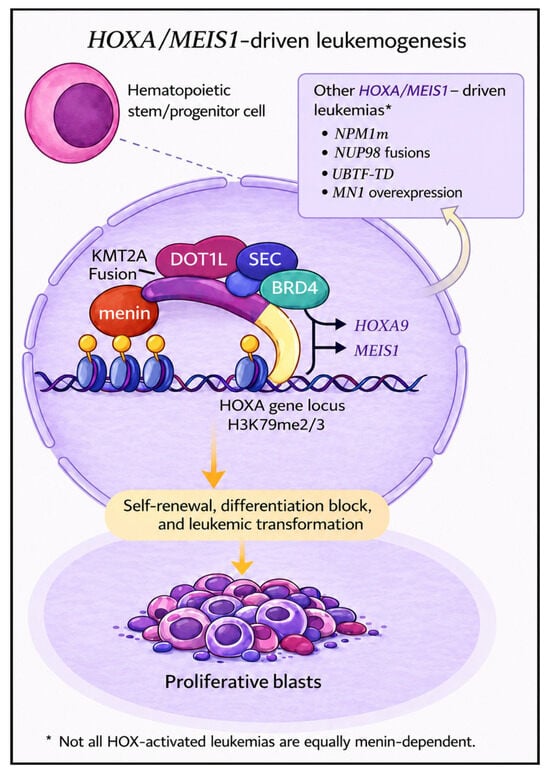
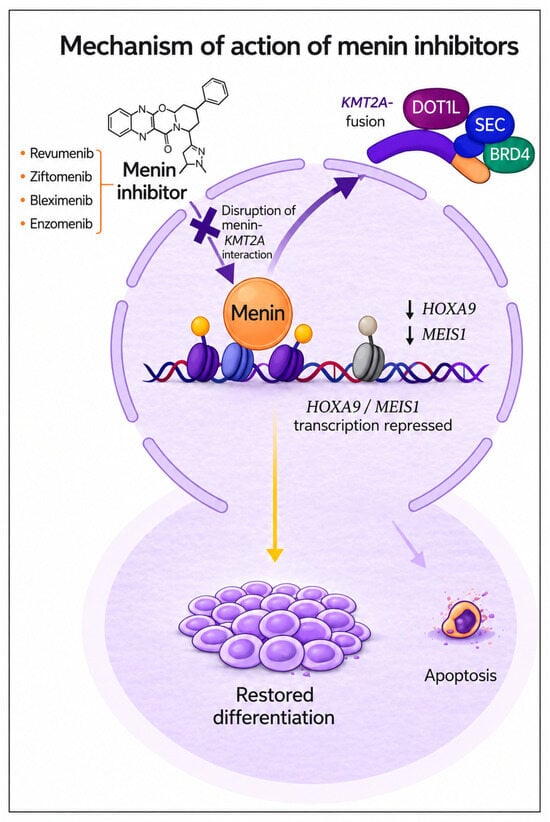
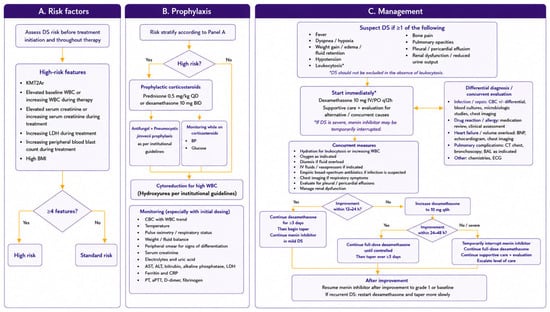
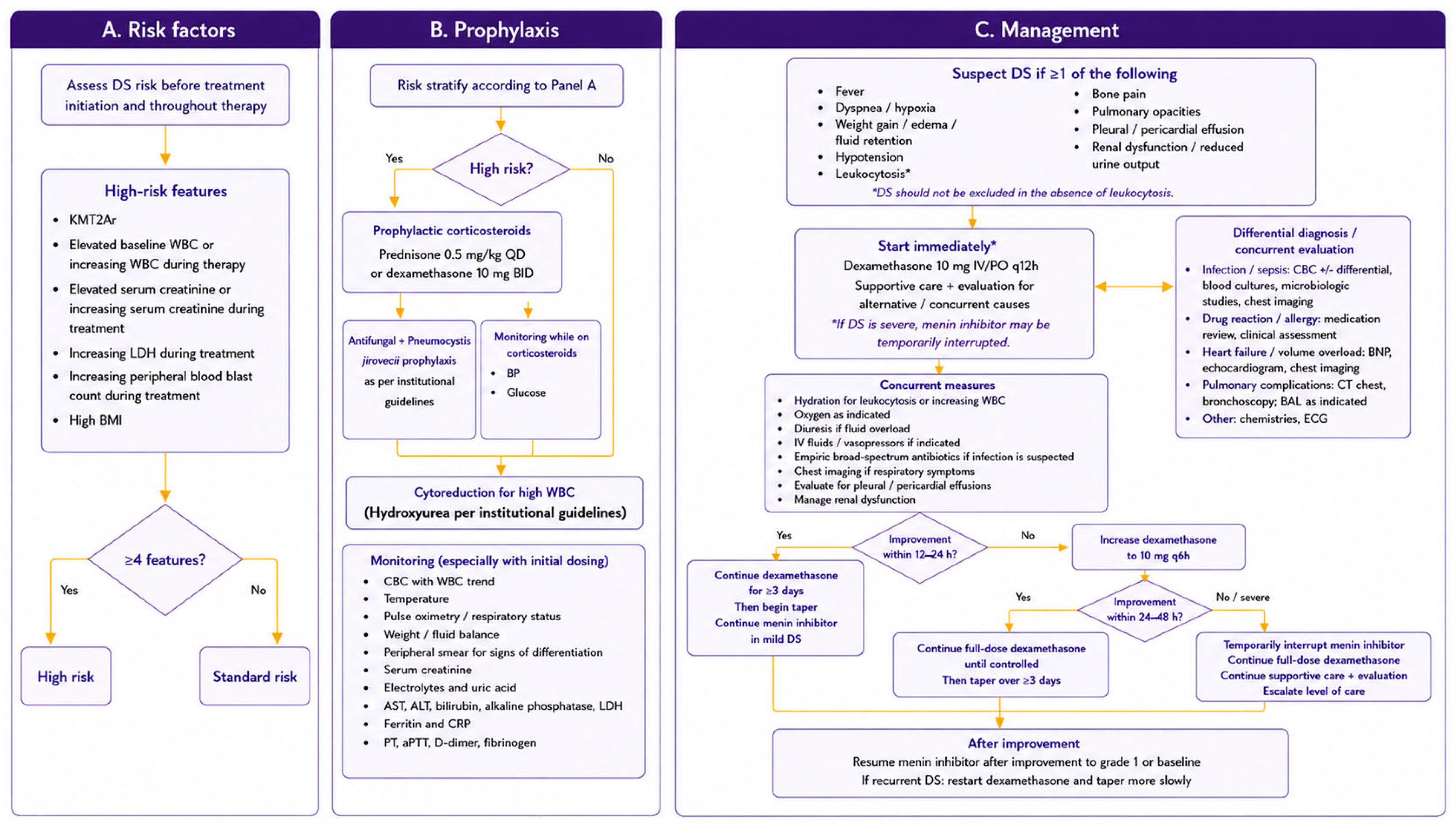
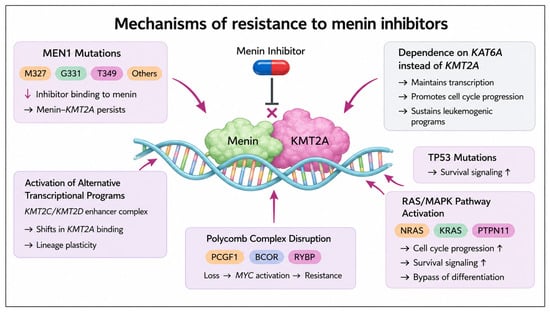
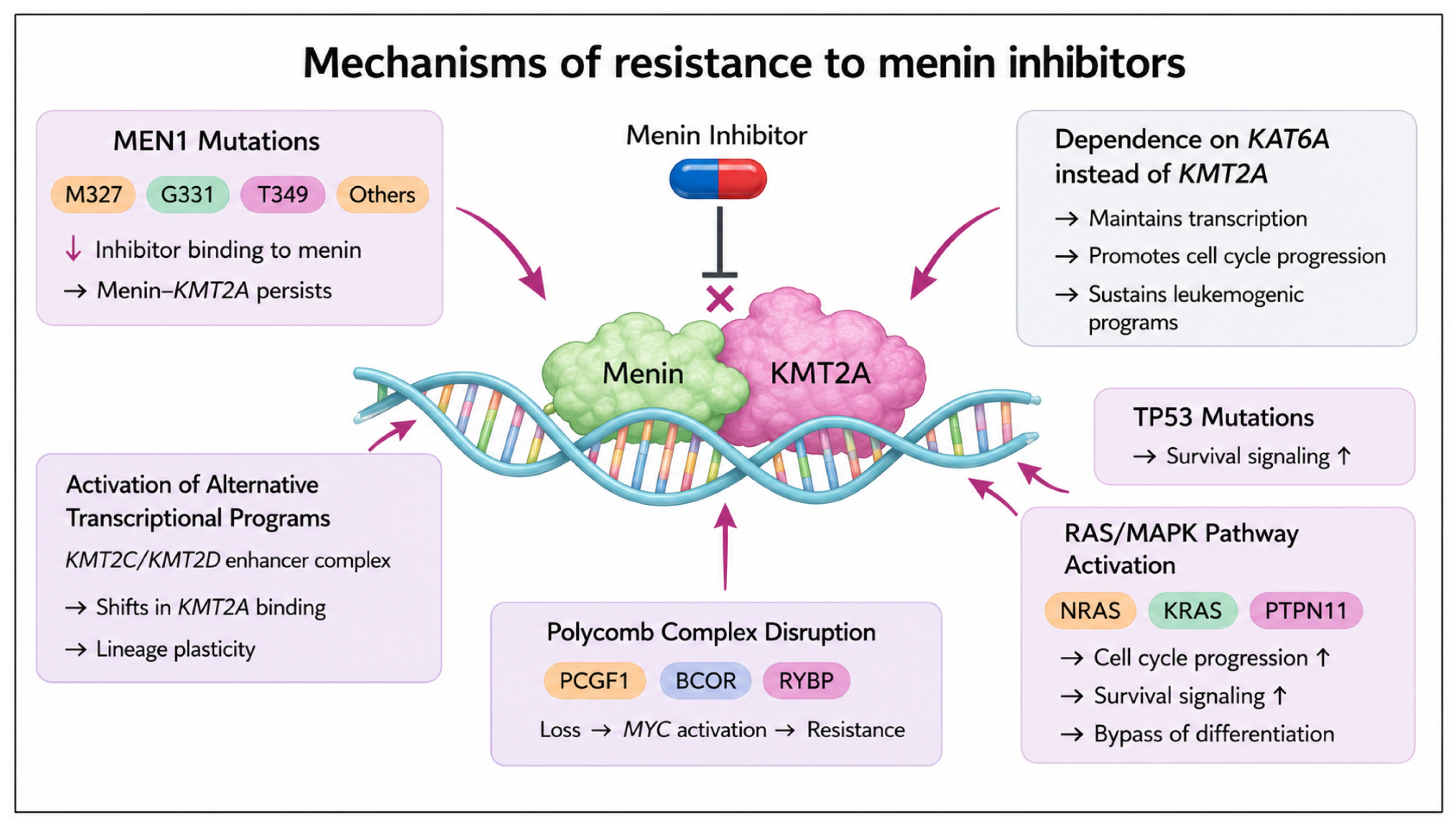

Disclaimer/Publisher’s Note: The statements, opinions and data contained in all publications are solely those of the individual author(s) and contributor(s) and not of MDPI and/or the editor(s). MDPI and/or the editor(s) disclaim responsibility for any injury to people or property resulting from any ideas, methods, instructions or products referred to in the content. |
© 2026 by the authors. Licensee MDPI, Basel, Switzerland. This article is an open access article distributed under the terms and conditions of the Creative Commons Attribution (CC BY) license.