


Abstract
Germanium (Ge) incorporation profoundly modifies the structural and electronic characteristics of carbon fullerenes, giving rise to a diverse landscape of substitutional, exohedral, and endohedral Ge–fullerene architectures. Although experimental studies demonstrate that Ge can be introduced into fullerene matrices through nuclear recoil implantation and arc-discharge synthesis, only exohedral germylated derivatives have been structurally confirmed to date. Substitutional germanium-doped fullerene (Ge-C60) species remain experimentally elusive, with available evidence relying largely on radiochemical signatures and indirect spectroscopic data. In contrast, computational investigations provide a detailed and coherent picture of germanium doping across fullerene sizes, showing that Ge induces significant cage distortion, breaks local symmetry, narrows the highest occupied molecular orbital–lowest unoccupied molecular orbital (HOMO–LUMO) gap, and enhances charge localization at the dopant site. These electronic perturbations strongly increase the affinity of Ge-doped fullerenes for external guest molecules, leading to enhanced adsorption energies and distinct optical and transport responses in exohedral complexes. Theoretical studies of endohedral systems further indicate that Ge atoms or small clusters could form stable encapsulated species with unique electronic properties. Collectively, current evidence positions germanium-doped fullerenes as electronically versatile nanostructures with potential applications in sensing, optoelectronics, catalysis, and nanomedicine, while highlighting the need for definitive experimental synthesis and structural validation of substitutional Ge-fullerene derivatives.
1. Introduction
1.1. Fullerenes: Structure, Properties and Technological Relevance
Carbon nanomaterials represent one of the most versatile and influential classes of modern functional materials. Their unique combination of electronic conductivity, high surface area, tunable chemistry and nanoscale structural diversity has driven major progress in fields such as electronics, energy storage and conversion, catalysis, drug delivery and molecular medicine [1,2]. Among them, fullerenes occupy a special position as closed-cage carbon allotropes with exceptional stability, rich redox chemistry and a delocalized π-electron network that enables diverse physical and chemical interactions [3]. These properties have led to wide exploration of fullerene-based materials in organic photovoltaics, superconductors, nanocarriers in biomedicine, contrast agents, and quantum electronic devices [4,5]. Building on this relevance, molecular modification of fullerene cages—including heteroatom substitution and endohedral or exohedral functionalization—offers powerful strategies for tailoring electronic structure and reactivity toward targeted applications [6].
Among carbon nanostructures, fullerenes—also known as Buckyballs—stand as the prototypical example of a hollow, closed-cage carbon framework [1]. Their truncated icosahedral architecture, high icosahedral symmetry (Ih), and remarkable thermodynamic stability make them one of the most iconic nanostructures in carbon science [2]. A distinctive feature of fullerenes is the presence of an internal cavity, which enables them to function as nanoscale containers capable of encapsulating atoms, ions or small molecular clusters [3,4,5,6]. This combination of structural rigidity, electronic delocalization and internal volume underlies their application in molecular storage, endohedral complexes, drug delivery vectors and quantum electronic systems—firmly establishing fullerenes as foundational building blocks for functional nanotechnology [1,2,3,4,5,6].
1.2. Structure, Variants and Doping Strategies in Fullerene Chemistry
Fullerenes constitute a unique class of carbon allotropes characterized by closed-cage structures composed of fused pentagonal and hexagonal rings [1]. The archetypal fullerene, C60, often referred to as buckminsterfullerene, was discovered in 1985 through laser vaporization of graphite and is renowned for its truncated icosahedral geometry, which closely resembles a soccer ball or a geodesic dome structure [1,2]. C60 possesses icosahedral symmetry and displays a range of remarkable physical and chemical features, including high electron affinity, extensive π-electron delocalization, and pronounced thermodynamic stability [3,4]. Each carbon atom in C60 is bonded to three neighbors in an sp2 hybridization, resulting in a versatile electronic structure that facilitates a variety of chemical transformations, most notably addition reactions rather than reactions characteristic of classical aromatic systems [5,6]. In addition to C60 (a fullerene composed of 60 carbon atoms), the fullerene family encompasses smaller and larger carbon cages such as C20 (20 C atoms), C28, C70, and C84, each named according to the number of carbon atoms forming the cage, with each comprising even numbers of carbon atoms interconnected to form polyhedral cages [7,8,9,10]. C20 is the smallest, but exhibits high internal strain and reactivity due to its all-pentagonal topology [11,12,13,14]. Larger fullerenes like C70, C76, C84, and upwards feature elongation and structural diversification, incorporating more hexagonal rings while keeping the canonical 12 pentagons essential for closure and topology in accordance with Euler’s theorem [15,16]. These size variations lead to a broad range of electronic and structural properties, with potential applications extending from materials science to biomedicine and optoelectronics [17,18,19,20,21].
Beyond pristine carbon cages, further tunability of fullerene properties can be achieved through heteroatom substitution (doping) [22,23,24]. Introducing foreign atoms into the fullerene framework—such as boron, nitrogen, silicon, or germanium—alters the electronic structure, stability, and reactivity of the cages [25,26,27,28,29]. In particular, germanium-doped carbon fullerenes represent a distinct class of heterofullerenes, where substitutional Germanium (Ge) atoms induce characteristic modifications in geometry and electronic behavior, opening new perspectives for functional applications [30,31,32]. Among the possible heteroatom substitutions in carbon fullerenes, germanium represents a particularly intriguing case. Being a group-14 element like silicon, Ge possesses a comparable valence electron configuration but exhibits a larger covalent radius (≈122 pm vs. ≈111 pm for Si) and lower electronegativity (2.01 vs. 2.55 on the Pauling scale) [33,34,35]. These differences imply that Ge substitution within the fullerene cage is likely to induce local geometric distortions, such as elongated C–Ge bond lengths relative to C–C, and may also reduce cage symmetry; analogous geometric perturbations have been observed experimentally for Ge-implanted graphene [36]. Furthermore, the electronic perturbation introduced by Ge atoms alters the π-electron delocalization and opens an energy gap in the electronic structure, as demonstrated for Ge-doped graphene, where the substitution leads to semiconductor behavior and significant modification of optical and electronic properties [37]. This effect is consistent with theoretical studies highlighting the strong impact of group-14 doping (including B, Si, Ge) on the structure, conductivity, and electronic transitions in carbon-based nanostructures [38].
In the context of fullerene modification, germanium can interact with carbon cages through three distinct structural motifs, each associated with different bonding environments and electronic consequences:
(i) Substitutional doping (Ge–Cn heterofullerenes):
A Ge atom replaces one of the carbon atoms within the fullerene framework, forming Ge–C bonds and causing local cage distortion. This modification perturbs π-electron delocalization and often narrows the HOMO–LUMO gap [26,27,28,29,30].
(ii) Exohedral adsorption (surface-bound Ge):
Here, Ge resides outside the fullerene cage, interacting with the carbon surface via chemisorption or physisorption. Such Ge-on-cage complexes enhance molecular polarity and improve affinity toward external molecules, enabling guest binding, catalysis, or sensing applications [31,32,33,34].
(iii) Endohedral encapsulation (Ge@Cn):
In this configuration, Ge is located inside the hollow fullerene cavity, forming endohedral metallofullerenes. Encapsulation can significantly alter electron distribution and magnetic properties, though experimentally these structures are challenging to isolate [23].
Together, these three modes define the structural landscape of germanium-fullerene systems and provide a framework for understanding the computational and experimental results discussed in subsequent sections of this review.
In recent decades, quantum-chemical computations have become essential for elucidating the properties of fullerenes and their heteroatom-doped derivatives. Methods such as DFT and ab initio molecular dynamics allow reliable prediction of cage geometries, bond alternation, electronic delocalization, vibrational spectra, and energetic stability. For heterofullerenes, theory is especially vital: it quantifies how substitution or complexation perturbs local symmetry, modifies HOMO–LUMO gaps, dictates charge redistribution, and screens plausible isomers before synthetic attempts. Indeed, systematic DFT studies—e.g., on C59X cages where X = B, N, Si, Ge—have mapped trends in stability, electronic structure and vibrational behavior across dopants [39]. More generally, reviews on quantum-chemical approaches in fullerene chemistry underscore how computational insights now guide experiment in design of new nanostructures [40].
The present review continues our interest in heteroatom-doped fullerene systems, following our earlier survey on silicon-substituted C60 derivatives [41], with the current focus directed toward germanium-containing fullerene architectures. The scope of this article is intentionally wide, encompassing not only the classical substitutionally Ge-doped fullerenes, where carbon atoms of the cage are replaced by Ge, but also endohedral systems, in which germanium atoms or clusters are trapped inside fullerene cages, and exohedral derivatives involving germanium or other atomic and molecular guests bound externally to the cage surface. By analyzing these diverse motifs in different cage sizes (C20, C60, C70, C84 and larger), this review aims to provide a systematic description of how germanium incorporation modifies the structure, stability and electronic properties of carbon fullerenes. In scientific literature there is an extensive body of work on pure germanium clusters and related cage-like nanostructures, such as Ge94− units, Ge24 clusters, clathrate frameworks, and functionalized nanocages, studied both theoretically and experimentally [42,43]. Numerous studies describe also transition-metal doped or endohedral germanium clusters (e.g., M@Ge12, M = Co, Pd, Zr, Nb) with emphasis on stability, electronic structure, and potential applications [44,45,46,47], as well as heteroatomic Ge-based nanoclusters including Ge-B cages, Ge-Si frameworks, and mixed endohedral complexes [48,49]. Although these systems form an active and rapidly developing area of cluster science with implications for catalysis, optoelectronics, and energy storage, they fall outside the scope of this review, which is devoted specifically to carbon fullerenes modified by germanium. Readers seeking detailed information on pure germanium clusters are referred to the references cited above.
In summary, this review provides a broad perspective on Ge-doped carbon fullerene chemistry, including substitutional, endohedral, and exohedral derivatives as well as hybrid forms. By combining computational and experimental insights, it maps the current state of the field, highlights open questions, and discusses potential applications in nanotechnology, optoelectronics, catalysis, and biomedicine.
2. Attempts Toward Synthesis of Ge-Doped Fullerenes
Experimental efforts to incorporate germanium into carbon fullerenes have been pursued using diverse approaches, ranging from nuclear recoil implantation and arc-discharge synthesis to photochemical and organometallic functionalization. Although germanium—fullerene systems are far less explored than their silicon counterparts, several landmark studies have provided direct or indirect evidence of Ge substitution, adsorption, and encapsulation in fullerene frameworks.
2.1. Traditional Synthesis: High-Energy Methods (Arc Discharge & Laser Vaporization)
The first experimental indication of germanium incorporation into fullerenes was reported by Ohtsuki et al., who investigated the formation of As- and Ge-doped heterofullerenes via nuclear reactions involving C60/C70 targets mixed with GeO2 powders. Following deuteron irradiation, nuclear recoil implantation produced radioactive species identified as GeC59 and related polymeric forms. Gamma-ray spectroscopy confirmed the presence of germanium in fullerene-derived species, but could not unambiguously assign whether Ge was incorporated endohedrally, substitutionally, or remained surface-associated. Radiochemical and radiochromatographic analyses further demonstrated that 69Ge-labeled fullerene monomers, dimers, trimers, and tetramers are present in the soluble fraction. Ab initio molecular-dynamics simulations further suggested that substitutional incorporation is energetically plausible under recoil conditions [50]. Building on these results, Ohtsuki and Ohno extended their radiochemical approach using p- and d-induced recoil implantation reactions on C60/GeO2 composites. Gamma-ray spectroscopy and classical molecular-dynamics simulations, indicated the presence of Ge incorporated into fullerene matrices, with signals consistent (but not definitive) with endohedral and/or defect-associated species. However, an unambiguous structural assignment—particularly a definitive substitutional Ge-C60 derivative—was not achieved. These pioneering works established the feasibility of germanium incorporation through high-energy nuclear recoil processes, though the yields were extremely low and the separation of products remained challenging [51].
2.2. Challenges of Substitution
Further progress in radiochemical encapsulation was made by Saha and co-workers, who employed a recoil-implantation technique using heavy-ion induced nuclear reactions to incorporate various radioactive isotopes into C60 films. Among the tested species, 69Ge showed particularly high retention (≈73%) in the organic phase, compatible with endohedral encapsulation and enabling a quantitative estimate of Ge uptake. Nonetheless, the differentiation between endohedral, substitutional, and interstitial configurations relied on radiochemical behavior rather than direct structural spectroscopy, and mixed populations of Ge–fullerene species likely coexisted [52].
2.3. Spectroscopic Proof of Ge Incorporation
The first successful spectroscopically confirmed arc-discharge synthesis of germanium-encapsulated fullerenes was achieved a decade later by Roy and colleagues. Using composite GeO2-graphite electrodes, they generated carbon soot containing Ge@C60 and Ge@C82 species. Spectroscopic analyses—including UV-Vis, MALDI-TOF, FTIR, XPS, and EDX—supported the endohedral location of Ge rather than external attachment (Figure 1). This study provided the first structural and spectroscopic confirmation of endohedral Ge-fullerenes obtained under arc-discharge conditions, demonstrating that Ge encapsulation can be achieved through conventional fullerene synthesis routes in addition to nuclear recoil implantation methods [32].
Figure 1.
MALDI-TOF spectrum of annealed aniline extract of Ge endometallo fullerene. The intense signal at 1058 m/z indicates the abundance of Ge@C82 in the isolated metallofullerene sample. Reprinted from [32], with permission from Elsevier.
2.4. Mixed Si–Ge-Doped Analogs and Their Preparation
In addition to monodoped Ge–fullerenes, several studies have explored mixed Si–Ge heterofullerenes, where both group-14 elements are incorporated simultaneously into the carbon cage. These materials are typically formed under high-temperature plasma conditions, where Si and Ge precursors are co-evaporated with graphite, producing C60−x(Si,Ge)x clusters detected by mass spectrometry [31]. The presence of both dopants is believed to stabilize the heterofullerene cage through electronic compensation, reducing structural strain compared to pure Ge substitution. Experimental reports describe Si/Ge-codoped species primarily as exohedral or partially substitutional adducts, while isolation of a fully characterized mixed substitutional analog remains challenging. Although structurally confirmed examples are still limited, mixed Si–Ge systems demonstrate a promising route toward multi-heteroatom fullerene engineering [53,54,55,56,57].
Additional arc-discharge experiments conducted by Yılmaz and Uluğ further explored germanium incorporation under helium-atmosphere discharge conditions, using graphite tubes filled with elemental Ge. Their procedure yielded CS2-extractable fullerene fractions whose FTIR spectra displayed characteristic C60/C70 bands, while FAB mass spectrometry revealed a sequence of peaks at m/z values incompatible with pristine fullerenes, organized in recurring patterns separated by 44 amu increments. The authors interpreted these mass-spectrometric series as evidence for heterofullerene formation, potentially involving Ge substitution and/or exohedral addition of heteroatoms. However, the observed peak multiplicity, the coexistence of C, N and O-containing species, and the lack of elemental analysis or high-resolution structural spectroscopy prevented unambiguous assignment of germanium-containing fullerene derivatives. Thus, while the Yılmaz study supports the possibility of Ge incorporation under arc-discharge conditions, it does not provide definitive structural evidence for specific Ge-fullerene architectures [31].
Complementary mechanistic insight into germanium–carbon interactions was provided by Ohara et al., who investigated the aggregation behavior of Ge atoms and clusters on the C60 surface under gas-phase conditions using two-laser vaporization. Their mass spectrometry and photoelectron spectroscopy analyses revealed that small germanium clusters (Ge1-3) weakly adsorb onto the fullerene shell, and do not penetrate or substitute the cage under studied conditions. The observed clusters were predominantly stabilized by relatively weak interactions with the surface, as supported by photoelectron spectra and computational results. This work demonstrated that exohedral germylation, rather than endohedral encapsulation, is the preferred mode of germanium incorporation under the studied conditions, thereby clarifying the initial stages of Ge-C60 surface chemistry [53].
A more defined class of exohedral Ge-fullerenes emerged from photochemical reactions. Akasaka and co-workers reported the first bis-germylation of C60 with a digermirane under photolytic conditions, yielding a well-defined 1,4-cycloadduct featuring two Ge-C bonds on opposite cage sites. The reaction proceeded via a photoactivated exciplex intermediate and produced well-defined adducts characterized by NMR and UV-Vis spectroscopy [54]. Shortly thereafter, Kabe et al. described a related photochemical reaction of 1,2-digermacyclobutane with C60, producing an isolable germylated derivative incorporating [6,5]- and [6,6]-bridging units. PM3 semiempirical calculations supported a closed-cage [6,5] structure featuring a Ge-C bridge, representing one of the earliest examples of controlled exohedral Ge-fullerene bonding [55].
Subsequent studies extended germylation to endohedral metallofullerenes (EMFs). Kako et al. successfully prepared and structurally characterized bis-germylated Lu3N@Ih-C80 derivatives formed photolytically from digermiranes. X-ray diffraction and electrochemical analyses revealed that Ge substitution lowered redox potentials and influenced the localization of the encapsulated metal cluster [56]. This work was later complemented by a comprehensive review by Kako and colleagues, summarizing the functionalization chemistry of fullerenes and EMFs with reactive silicon and germanium compounds. The authors highlighted that germylation not only alters HOMO–LUMO energy levels but also enhances electron-donor capacity, suggesting potential for electronic and catalytic applications [57].
Collectively, these pioneering studies define the current experimental landscape of Ge-fullerene chemistry. A comparative synopsis of their methodologies, analytical tools, main findings, and limitations is presented in Table 1. Taken together, these studies establish the presence of Ge within fullerene matrices (radiochemical/arc-discharge) and on cage surfaces (photochemical germylation), while structurally authenticated substitutional Ge-C60 derivatives remain unverified. Numerous DFT and ab initio studies predict their stability, bond metrics, and electronic modifications, but no reproducible experimental synthesis or isolation of substitutional Ge-C60 derivatives has been reported [39,58,59,60].
Table 1.
Comparative summary of experimental investigations on germanium-fullerene systems.
Alongside the germanium-focused studies reviewed above, a substantial body of work on well-characterized endohedral fullerenes—such as i.e., Li@C60, N@C60, and related fulleride species—provides important methodological benchmarks for assessing the structural validity of proposed Ge-fullerene complexes. Early demonstrations of atom-in-cage architectures, such as the encapsulation of atomic nitrogen (N@C60) reported by Lips et al. [61], established foundational criteria for identifying genuine endohedral species using EPR/ESR signatures and stability measurements. Subsequent advances, including precise structural determination by Aoyagi et al. [62], controlled redox-state manipulation and isolation protocols reported by Ueno and colleagues [63,64], and mechanistic insights into switching behavior demonstrated by Chandler et al. [65], illustrate the analytical standards typically required to establish atom-in-cage architectures with confidence. Complementary synthetic achievements demonstrate the necessity of reproducible separation and crystallographically supported structural assignment to validate endohedral doping [66]. Parallel developments by Neyts and co-workers, and mechanistic studies of endohedral metallofullerene formation [67], highlight the necessity of convergent evidence from complementary techniques—such as single-crystal X-ray diffraction, EPR/ESR spectroscopy, systematic electrochemistry, and reproducible spectroscopic characterization—to differentiate endohedral encapsulation from exohedral binding or surface association. Collectively, these studies establish the analytical standards and methodological expectations that inform the interpretation of germanium-fullerene experiments, where structural assignments are inherently more challenging due to low yields and indirect detection pathways. The established structural benchmarks for N@C60 and Li@C60 have not yet been achieved for any substitutional germanium fullerene; all assignments for Ge rely thus far on indirect, rather than direct structural or spectroscopic, evidence.
Against this established analytical background, the current germanium-fullerene literature remains limited in terms of definitive structural assignments. Radiochemical recoil implantation experiments demonstrate germanium incorporation into fullerene matrices but do not resolve atomic positions within specific molecular species [50,51,52]. Arc-discharge synthesis provides spectroscopic signatures consistent with the presence of Ge inside fullerene cages, yet without direct structural determination [31,32]. Photochemical germylation reactions reliably yield exohedral Ge-C60 derivatives, but do not access substitutional or encapsulated configurations [54,57]. As a result, while germanium involvement in fullerene-derived species is supported experimentally, the precise structural roles of Ge-substitutional, exohedral, or endohedral-remain only partially established, and no structurally authenticated substitutional Ge-C60 derivative has so far been reported [39,58,59,60].
This situation emphasizes the complementary importance of computational approaches. Quantum-chemical studies offer a consistent and detailed description of the structural, electronic, and energetic consequences of germanium incorporation into carbon fullerenes, including substitutional, exohedral, and endohedral motifs. In many cases, theoretical models provide the only available insight into stability trends, charge redistribution, orbital hybridization, and potential reactivity. Consequently, the next section of this review focuses on the current state of in silico investigations, summarizing the most informative computational methodologies and the principal trends they reveal across Ge-Cn systems.
3. Germanium Incorporation: The Three Modes
Germanium can interact with and integrate into fullerene cages through three fundamentally distinct structural pathways, each associated with a unique bonding environment, stability profile and electronic response. These modes are summarized below.
3.1. Substitution (Germanium as a Cage Member)
In the substitutional configuration, a carbon atom in the fullerene cage is replaced by a germanium atom, forming a heterofullerene of the type C60−1Ge [39,68,69,70]. This process introduces a heteroatom directly into the π-conjugated network, modifying local curvature and rehybridization. Substitutional incorporation significantly perturbs delocalized electrons and typically narrows the HOMO–LUMO gap [39,69,71]. However, the synthetic realization of substitutional Ge–fullerenes remains highly challenging, with no crystallographically authenticated C59Ge derivative reported to date [39,70,71,72,73,74,75,76,77,78,79].
3.2. Adsorption (Exohedral Interaction)
In the adsorption (exohedral) mode, Ge binds to the external surface of the fullerene cage, forming a Ge–C interaction without breaking the cage framework. These complexes are more synthetically accessible and can be produced via photochemical germylation or surface chemisorption routes [54,55,56,57]. Exohedral attachment modifies electronic distribution and often increases dipole moment, enhancing reactivity toward donor/acceptor molecules and catalytic interfaces [80,81,82,83,84,85,86,87,88,89,90,91,92,93,94].
3.3. Encapsulation (Endohedral Containment)
In the encapsulation mode, Ge is located inside the internal cavity of the fullerene cage, forming Ge@Cn endohedral metallofullerenes [31,32,50,51,52]. Encapsulation may occur under arc-discharge or recoil implantation conditions where high energy promotes atom insertion through cage opening. These structures show remarkable electronic rearrangement, but direct structural proof remains sparse, with only spectroscopic evidence currently supporting Ge@C60/Ge@C82 species [31,32].
4. Quantum-Chemical Characterization of Ge-Fullerenes
Following the limited but informative experimental attempts to generate Ge-containing fullerene derivatives, quantum-chemical investigations have emerged as the principal route for understanding their structural, electronic, and bonding characteristics [27,39]. Because experimentally accessible Ge-fullerenes are produced in extremely low yields, often as mixtures of short-lived species detectable only by indirect radiochemical or spectroscopic methods, ab initio and density functional theory (DFT) calculations provide the resolution required to examine germanium incorporation with atomic-level precision. Consequently, computational approaches have become indispensable for exploring the substitutional, exohedral, and endohedral motifs proposed in experimental studies [40].
Theoretical investigations have addressed a series of core questions, including the energetic feasibility and relative stability of different germanium-doping patterns, the extent to which Ge atoms induce symmetry breaking and structural distortions in the fullerene cage, and the consequent modifications in aromaticity, curvature, and overall bonding topology. Particular attention has also been devoted to quantifying charge transfer between germanium and the carbon framework, as well as assessing how such electronic redistribution influences the HOMO–LUMO separation, frontier-orbital localization, and magnetic response of the resulting heterofullerenes [69].
The following sections synthesize the major computational findings for substitutionally germanium-doped, exohedral, and endohedral germanium-fullerene systems. Emphasis is placed on methodological aspects—such as functional and basis-set choices, geometry optimization protocols, ESPA analyses, and dynamical simulations—and on the insights these approaches provide into the stability, electronic structure, and reactivity of Ge-Cn heterofullerenes.
4.1. Substitutionally Ge-Doped Fullerenes
Substitutional incorporation of germanium atoms into carbon fullerenes has been extensively investigated through ab initio and density functional theory calculations as a means of tuning the intrinsic electronic and structural characteristics of carbon cages. In these heterofullerenes, one or more carbon atoms are replaced by germanium, leading to local expansion of the cage (C-Ge ≈ 1.82–1.90 Å), symmetry reduction, and polarization of the π-electron density. These effects collectively modify the stability, aromaticity, charge distribution, and electronic transitions of the system [70,71]. Computational studies have examined a wide variety of substitutional Ge-fullerenes, encompassing C20-nGen systems with varying degrees of substitution (n = 1–10) [60,72,73,74,75,76], as well as larger cages such as C58, C59, C69, and C70 [39,50,69,70,71,77,78,79].
Mixed Si–Ge-doped analogs of C20-n(Si,Ge)n have also been explored to assess cooperative effects of co-doping on electronic polarization and cage distortion [80,81]. Theoretical modeling consistently showed that Ge substitution narrows the HOMO–LUMO gap, increases the dipole moment, and induces charge localization near the dopant site [60,70,73,74,77]. For low-substituted C20-nGen systems, incorporation of one or a few Ge atoms leads to localized cage distortion and polarization, whereas in higher substitution regimes (e.g., n ≥ 6) or in larger cages such as C69 and C70, the deformation becomes more delocalized across the fullerene surface, with smoother redistribution of π-electron density [60,77].
A wide spectrum of computational protocols has been used to characterize these systems. The B3LYP functional combined with split-valence polarized basis sets such as 6-31G(d), 6-311+G(d), or 6-311++G(d,p) remains the most widely adopted choice [39,60,71,72,73,74,76,79,80,81]. Other functionals, including B3PW91, M06-2X, and dispersion-corrected PBE-D3, have been applied to benchmark electronic energies and bond-length deviations [60,77,81]. Most calculations were performed using Gaussian 98/09 [39,71,72,73,74,75,79,81], DMol3 [77], GAMESS [60,76,80], HyperChem [78], or MOPAC (CAChe) [69], while Atomistix ToolKit (ATK) and Virtual NanoLab were employed for transport and device-level simulations [82].
The majority of computational studies involved geometry optimization (GO) and electronic structure and property analysis (ESPA), often complemented by vibrational frequency analysis (VFA), and NICS aromaticity evaluation [39,60,69,72,73,74,76,79,80,81]. The results consistently indicated significant charge transfer from Ge to adjacent carbon atoms, accompanied by partial loss of aromatic character and a reduced HOMO–LUMO separation [39,69,72]. For structures such as C59Ge, and C69Ge, DFT analyses revealed that substitution sites with higher local curvature are thermodynamically preferred and that Ge substitution notably enhances molecular polarity and dipole moment [70,71]. Smaller germanium-doped cages (e.g., C12Ge8, C14Ge6, C19Ge) exhibit stronger cage strain but retain substantial cohesive energy, attributed to σ-rehybridization between Ge and neighboring carbons [60,73,74]. In contrast, larger derivatives such as C70-nGen or C20-C16Ge4 display lower deformation energy and enhanced delocalization, consistent with increased structural flexibility of extended carbon frameworks [77,82].The most interesting applications of calculations in the study of these structures are presented below.
Bai et al. [39,72] provided one of the earliest systematic DFT analyses of substitutional Ge-doping in C60, focusing specifically on the C59Ge derivative as part of a broader comparative study of C59X (X = B, N, Al, Si, P, Ga, Ge, As). Their results showed that replacing a single carbon atom with germanium leads to a pronounced increase in local bond lengths and measurable cage distortion, consistent with the comparatively large covalent radius of Ge. Importantly, within the full series of dopants investigated, Ge belonged to the subgroup (Ga, Ge, As) that produced the largest sphericity-parameter (SP) values and the largest C-X bond elongations, indicating that Ge induces substantially stronger geometric deformation than lighter group-14 dopants such as Si or than second-row elements such as B or N (Figure 2). In terms of electronic structure, Bai et al. [39,72] demonstrated that C59Ge exhibits a significantly reduced HOMO–LUMO gap relative to pristine C60, and that this gap narrowing is comparable to that observed for other heavy dopants (Ga, As) but more pronounced than in cages doped with lighter elements.
Figure 2.
Structures of C59X (X = B, N, Al, Si, P, Ga, Ge, and As) and C60 cage. Adapted from [39], licensed under CC BY 3.0.
Their frontier-orbital analysis further revealed that Ge contributes markedly to both HOMO and LUMO densities (≈35.3% and ≈22.4%, respectively), making it one of the most strongly orbital-localizing dopants in the entire C59X series. Taken together, these findings position Ge as one of the dopants that most strongly perturbs both the geometry and the π-electron distribution of C60, offering a clear internal comparison—based on a single methodology—of how group-III, -IV and -V elements differ in their influence on fullerene properties [39]. Building on these conclusions for the C60 framework, Bai et al. [39,72] extended their analysis to the smallest classical fullerene, C20, by examining the full C19X series, including the C19Ge derivative. In contrast to the moderately strained C59X cages, the C20 scaffold—composed exclusively of adjacent pentagons—exhibits intrinsically high curvature and low symmetry, making it far more sensitive to dopant-induced perturbation. Within this highly constrained environment, Ge ranks among the dopants that produce the largest geometric distortions, with SP and ASP values comparable to those of Ga, As, and Se, and far exceeding those generated by lighter elements such as B, N, or O (Table 2). The C-Ge bond in C19Ge belongs to the longest in the entire C19X series, and the associated deformation propagates more strongly across the cage than in substitutionally doped C60. Electronic reorganization follows the same periodic trend: Ge lowers the HOMO–LUMO gap more substantially than lighter group-14 or group-15 dopants, placing it among the dopants that most effectively destabilize the small fullerene’s π-system [72].
Table 2.
The point group (PG), sphericity parameter (SP), asphericity parameter (ASP), POAV, energy, energy with the zero-point correction (E-ZP), cohesive energy (Ecoh), and ΔE of C20 and the doped cages (SP in GHz-1, pi-orbital axis vector (POAV) in degree, energy and E-ZP in a.u., Ecoh in eV/atom, and ΔE in eV).
Extending this comparative perspective, a broader picture of substitutional germanium behavior in small, highly curved cages arises from the systematic studies by Koohi and co-workers [74,76,80,81]. Their work examined extensive families of C20-nGen heterofullerenes across a wide substitution range (n = 1–10), providing some of the most detailed stability and distortion maps available for Ge-doped carbon frameworks (Figure 3). At low substitution levels (n = 1–4), the C20 cage retains its overall integrity, with distortion remaining localized around the Ge atoms—consistent with the trends observed in C59Ge and C19Ge by Bai et al. [39,72]. However, as germanium content increases (particularly n ≥ 6), the cage experiences rapidly rising skeletal strain, significant polarization, and a systematic reduction in thermodynamic stability, eventually approaching the threshold beyond which the fullerene framework can no longer support extensive heteroatom incorporation. The comparative analyses involving Si-Ge co-doped systems (C20-2nSinGen) reveal that silicon behaves as a less perturbing dopant that induces milder geometric distortions and smaller HOMO–LUMO gap reductions than germanium at matching substitution levels (Figure 4). These results reinforce the broader periodic trend already apparent from Bai’s C59X and C19X series: silicon preserves cage symmetry more effectively and perturbs the π-framework less strongly, whereas germanium introduces larger bond-length variations, deeper symmetry breaking, and more pronounced electronic localization [80,81].
Figure 3.
The optimized C20 fullerene and its 10 C14Ge6 analogous. Used with permission from JOHN/WILEY & SONS LTD. [76], permission conveyed through Copyright Clearance Center, Inc.
Figure 4.
Optimized C20 and its C20-2nSnGen derivatives as well as their point groups, at B3LYP/AUG-cc-pVTZ. Used with permission from SPRINGER-VERLAG WIEN [81], permission conveyed through Copyright Clearance Center, Inc.
Complementary insights into high-substitution regimes were provided by Naderi et al., who examined systems such as C12Ge8 specifically to assess the structural integrity of cages containing large numbers of germanium atoms. Their results demonstrated that, although extensive geometric distortion and symmetry loss occur, the fullerene framework can remain a bound minimum on the potential-energy surface. At the same time, the electronic character of these species undergoes profound reorganization, reflecting a complex interplay between σ-rehybridization around dopant centers and depletion of the π-electron network. In comparison with other heteroatoms examined in the same study (boron (B), aluminum (Al), gallium (Ga), silicon (Si), nitrogen (N), phosphorus (P), and arsenic (As)), germanium consistently occupies an intermediate position: it produces substantially larger geometric perturbations and stronger charge redistribution than lighter group-14 dopants such as silicon, yet does not destabilize the cage as severely as some heavier dopants. Taken together with studies conducted by Koohi and collaborators, these findings delineate how increasing germanium content systematically reshapes stability, electronic structure, and geometric resilience in small, highly curved fullerene cages [73].
Electronic structure modifications induced by germanium substitution have been systematically explored across multiple computational studies. Simeon et al. analyzed C59Ge with particular emphasis on frontier-orbital energetics, ionization potential, electron affinity, and local charge redistribution. Their investigation showed that insertion of a Ge atom disrupts the delocalized π-electron network of pristine C60, producing pronounced localization of electron density around the dopant site, enhancing molecular polarity, and modifying redox behavior. These findings established clear correlations between dopant-induced charge polarization and changes in electronic response functions [70].
Complementary semiempirical work by Ibrahim et al. on C60 doped with Si, Ge, and Al using the PM3 method further demonstrated that Ge substitution leads to systematic enlargement of selected C-C bond lengths, substantial reorganization of the net atomic charge distribution, an increased total dipole moment, and characteristic shifts in the IR-active vibrational modes, with an additional low-frequency band appearing as a direct consequence of the doping process [69].
Ostrowski and co-workers focused on larger heterofullerenes such as C69Ge, combining energetic analysis with detailed spectroscopic simulations, including vibrational circular dichroism (VCD), IR, and Raman spectra. Their objective was to delineate how a group-14 heteroatom affects the population of symmetry-distinct isomers and to determine computationally accessible diagnostic criteria for experimental detection. They demonstrated that Ge stabilizes specific low-symmetry isomers by redistributing curvature-induced strain, and they showed that the presence of Ge leads to substantial changes in vibrational signatures. These spectroscopic fingerprints provide potential pathways for distinguishing Ge-substituted cages from pristine fullerenes in complex mixtures [71]. A complementary perspective on substitutional Ge in larger cages was provided by Liu et al., who examined the [5,6]-heterofullerene-like C58Ge obtained by substituting a 6-6 C-C bond with a germanium atom. Their DFT (B3LYP/6-31G) and vibrational analyses confirmed that C58Ge is a true minimum with C2 symmetry, characterized by four Ge-C bonds (≈1.96–2.04 Å), localized distortions in the immediate Ge environment, and an otherwise C60-like C-C bond framework; natural bond orbital and frontier-orbital isodensity maps revealed pronounced charge accumulation and orbital participation at the Ge center [79]. A suitable depiction of the optimized [5,6]-heterofullerene-like C58Ge cage with emphasis on the local Ge-C bonding environment (Figure 5) illustrates the characteristic distortion pattern around the Ge site in a representative larger heterofullerene.
Figure 5.
Structure of [5,6]-heterofullerene-like C58Ge. Used with permission from ROYAL SOCIETY OF CHEMISTRY [79], permission conveyed through Copyright Clearance Center, Inc.
Beyond ground-state electronic structure, several studies have investigated the impact of germanium substitution on optoelectronic and nonlinear optical (NLO) behavior. Kityk et al. combined theoretical modeling with experimental evaluation of nonlinear optical responses of C59Ge and C58Ge2, correlating specific structural modifications with second-harmonic generation (PISHG) and two-photon absorption (TPA) properties. Their results demonstrated that increased Ge content significantly enhances hyperpolarizability and modulates spectral envelopes, indicating that Ge-induced symmetry breaking directly influences NLO activity [78].
Complementary trends were described by Baei et al., who analyzed C20-nGen derivatives using frontier-orbital characteristics, aromaticity indices (NICS), and TD-DFT optical simulations. Their goal was to characterize systematic trends in aromaticity loss and band-gap reduction as a function of substitution degree. They found that higher Ge substitution produces consistent red-shifts in optical transitions, increased polarization, and a marked decrease in HOMO–LUMO gaps. These effects underscore the sensitivity of highly curved carbon frameworks to element-specific heteroatom perturbations [60].
The influence of Ge substitution on charge transport has been evaluated in device-relevant computational scenarios. Kaur et al. modeled electron transport in Ge-doped double-cage junctions based on C20/Ge-containing C20 analogs and demonstrated that Ge incorporation enhances conductance by modifying coherent electron transmission pathways and reshaping the transmission spectrum. These results point toward potential applications of Ge-doped fullerenes in nanoelectronic components, where controlled substitution offers a route to tuning transport characteristics [82].
Alkhafaji with co-workers extended these insights by combining DFT with molecular dynamics simulations to probe finite-temperature behavior, charge distribution, and optoelectronic responses in Ge-doped fullerene systems. Their study revealed that, despite dopant-induced polarization and local symmetry breaking, the fullerene cage retains structural integrity under thermal perturbation and exhibits notable shifts in conductivity profiles. The results illustrate how Ge alters thermal stability and dynamical electronic behavior in ways that may be relevant for functional nanomaterials [77].
Finally, substitutional Ge-doping has been examined in the context of functional interactions. Ajeel et al. investigated C20-based Ge-doped structures, focusing on how Ge substitution alters frontier-orbital distribution, electron-donating capability, and redox signatures. In their case, the Ge atoms are introduced into C20-derived bowl-like clusters rather than perfectly closed cages, but the qualitative electronic effects mirror those observed for cage-type heterofullerenes: Ge enhances dipole moment, increases electron-donor strength, and intensifies localization of electronic states, suggesting that Ge-doped small C20-derived units may exhibit improved sensitivity to external analytes or perturbations. These electronic reorganization effects are consistent with observations in larger cages and provide a unified picture of how germanium modulates reactivity and interaction profiles across different fullerene-sized systems [75]. Selected articles on application of theoretical calculations on substitutional Ge-doped carbon fullerenes are presented in Table 3.
Table 3.
Selected articles on application of theoretical calculations on substitutional Ge-doped carbon fullerenes.
Overall, quantum-mechanical modeling of substitutional Ge-doped fullerenes, encompassing a wide range of cage sizes and substitution degrees, demonstrates that germanium incorporation leads to distinct electronic polarization, symmetry breaking, and localized reactivity patterns. These computational findings provide theoretical benchmarks for understanding the structural behavior, electronic diversity, and potential functional applications of Ge-modified carbon fullerenes in nanotechnology and advanced materials design.
4.2. Exohedral Complexes of Substitutional Ge-Doped Fullerenes
Exohedral complexes of substitutionally Ge-doped carbon fullerenes represent an emerging class of heteronanostructures in which external atoms, ions, or molecules bind to the surface of fullerene cages containing one or more substitutional Ge atoms. The incorporation of germanium perturbs the π-electron distribution, enhances local charge polarization, and modifies frontier molecular orbitals, thereby increasing the affinity of the cage toward external guests. These effects manifest as stronger adsorption energies, enhanced charge transfer, and more pronounced modulation of electronic properties relative to pristine fullerenes, positioning Ge-doped fullerenes as promising candidates for sensing, pollutant capture, catalysis, and molecular delivery. Optical simulations reported in recent studies further indicate that Ge substitution can enhance spectral responsiveness upon guest binding [83,84].
Computational investigations reported to date focus predominantly on monosubstituted C60-based Ge-doped fullerenes [83,84,85,86,87,88,89,90,91,92,93,94], with only isolated studies extending to higher substitution levels such as C55Ge5 [95] or mixed heterofullerenes such as Si11GeC12 [96]. Across these Ge-doped hosts, a wide spectrum of exohedral guests has been investigated. Small organic molecules and environmental pollutants—including acrolein [89] and hexachlorobenzene [88]—were used to evaluate adsorption strength, selectivity, and potential for pollutant scavenging. Biologically relevant small molecules such as serine and cysteine [86,87] revealed substantial charge redistribution and chemisorption behavior, suggesting applications in biosensing. Pharmacologically active compounds—including amphetamine [85], amantadine [83,84], methadone [94], carbamazepine [90], letrozole [91], and natural products such as ferulic acid and EGCG [92,93]—were examined to assess guest–host stabilization, drug–nanocarrier interactions, and solvent-mediated effects. Inorganic ions such as Li [95] were studied to investigate charge transfer, spin-density localization, and metal coordination. Larger heteroatom-containing guests, including caffeine bound to Si11GeC12 [96] illustrate the versatility of Ge-doped cages for multifunctional adsorption platforms.
The computational protocols across these studies follow a consistent pattern. Nearly all works used geometry optimization (GO) followed by electronic structure and property analysis (ESPA), typically involving HOMO–LUMO analysis, DOS characteristics, NBO-based charge transfer, molecular electrostatic potential mapping, and global reactivity descriptors such as hardness, softness, electrophilicity, and ΔNmax. Adsorption energies (Eads), often with BSSE correction, were widely reported [83,85,86,87,88,89,90,91,92,93,94,96]. Solvation models (PCM/SMD) were also applied to capture environmental effects [83,90,91,96]. Several studies incorporated TD-DFT calculations to analyze optical absorption and sensing-relevant spectral shifts [94,96]. Aromaticity changes upon adsorption were evaluated in selected works using NICS [85]
DFT served as the principal methodological framework. Common functionals included B3LYP [83,94,96], B3LYP-D3 [84,85,86,87,88,89,92,93], PBE0 [86,87,88,89], ωB97X-D [84,86,87,88,89,90], and M06-2X [84,86,87,88,89,90,94], typically combined with split-valence polarized basis sets such as 6-31G(d) [83,90,92,93,94], 6-311G(d) [84,86,87,88,89], 6-311G9(d,p) [91,96] and diffuse-augmented variants like 6-311++G(d,p) [85]. Semiempirical methods such as PM6 or MNDO were used for initial structure screening [86,87,88,89,95]. Gaussian (03/09/16) was the most widely used computational package [83,84,86,87,88,89,90,91,92,93,96], while GAMESS appeared in studies involving hybrid DFT/semiempirical workflows [85,94,95].
The scientific aims of these studies converge on several recurring themes. Many works evaluated adsorption strength, interaction mechanisms, and charge redistribution relevant to sensing or pollutant capture [85,88,89,94]. Others focused on drug-delivery and nanocarrier behavior, assessing solvent effects, stability, and reactivity in Ge-doped drug-fullerene complexes [83,90,91,92]. Studies incorporating TD-DFT and DOS analyses explored optoelectronic signatures relevant to molecular electronics [94,96]. Investigations of metal adsorption addressed charge transport and spin-density localization in substituted cages [95]. Together, these computational contributions delineate the structure-reactivity landscape of Ge-doped exohedral fullerenes and illustrate how substitutional germanium acts as a preferential adsorption center across diverse classes of guest molecules.
The most interesting applications of calculations in the study of these structures are presented below in more detail and Table 4. provides a summary of the computational protocols applied, specifying the semi-empirical methods, DFT functionals, and basis sets used in the respective studies on substitutional Ge-doped carbon fullerenes.
Table 4.
Selected articles on application of theoretical calculations on exohedral complexes of substitutional Ge-doped carbon fullerenes.
A coherent body of work has explored how substitutional Ge sites modulate the surface reactivity of fullerene cages toward external guests. One of the earliest examples is the study by Bashiri et al. [85], who investigated C59Ge as a host for amphetamine adsorption. Their DFT analysis showed that introducing a single Ge atom substantially enhances the interaction strength compared with pristine C60, primarily due to increased cage polarization, stronger donor-acceptor coupling, and more pronounced charge transfer. Relative to other doped or pristine fullerenes evaluated in their screening, Ge emerged as one of the strongest adsorption centers, providing the first mechanistic indication that substitutional germanium fundamentally alters surface electronic structure and boosts guest-binding affinity. These findings established C59Ge as a sensitive adsorption platform for small, electronically active organic molecules and provided the first mechanistic evidence that substitutional Ge can act as a preferential binding center on the fullerene surface.
Subsequent studies expanded the scope of investigated guests, particularly in the context of antiviral and other pharmacologically active compounds. Parlak and co-workers and Mohammadi et al., working independently on amantadine, demonstrated that adsorption at the Ge site of C59Ge produces larger interaction energies, lower HOMO–LUMO gaps, and higher dipole moments than adsorption on pristine C60 or on cages doped with other heteroatoms. In these analyses, the Ge atom consistently acted as the electronically dominant interaction site, capable of concentrating frontier-orbital density and mediating stronger donor–acceptor interactions. Taken together, these studies clearly show that substitutional Ge produces stronger adsorption, deeper electronic reorganization, and more pronounced modulation of optoelectronic properties than pristine fullerenes or fullerene cages doped with lighter group-14/15 elements, underscoring the potential of Ge-doped fullerenes as nanocarriers and sensing platforms for small bioactive molecules [83,84].
A complementary perspective emerged from the adsorption studies of Mohammadi et al., who examined biologically relevant amino acids such as serine and cysteine [86,87]. Their results showed that C59Ge consistently exhibits stronger adsorption energies than both pristine C60 and the Si-doped analog C59Si, indicating that the Ge site provides a more polarizable and electronically more responsive adsorption center. In the serine study, the HOMO–LUMO gap followed the order C60 > C59Si > C59Ge, and the adsorption energies became increasingly negative in the same sequence, demonstrating that germanium introduces the strongest donor–acceptor interactions among the tested dopants. QTAIM and NCI analyses further confirmed that noncovalent interactions are more pronounced and spatially more localized around the Ge atom, showing increased electron-density accumulation at the bond-critical points relative to Si-doped and pristine cages. This pattern was reproduced for cysteine, where Ge again produced the most significant charge redistribution and molecular polarization, highlighting the heightened sensitivity of the C59Ge surface to polar, heteroatom-rich biomolecules.
Environmental and pollutant-related applications were explored in later studies, which focused on reactive or toxic small molecules. Mohammadi’s et al. DFT analyses of acrolein demonstrated that substitutional Ge enhances electrophilicity changes, DOS reorganization, and adsorption energy relative to C60, leading to a more substantial modulation of the electronic structure upon binding [89]. These trends became even more pronounced in the adsorption of hexachlorobenzene, where C59Ge exhibited the strongest adsorption of all tested surfaces, with an adsorption energy of −1.010 eV at the B3LYP-D3/6-311G(d) level—significantly stronger than both pristine C60 and C59Si. QTAIM and NCI descriptors confirmed that these interactions remained noncovalent but were electronically more intense and more spatially extended around the Ge site, further establishing substitutional Ge as a highly effective adsorption center [88]. Collectively, these studies position Ge-doped fullerenes as superior adsorption platforms compared with both undoped and Si-doped cages, particularly for hazardous organics and biologically relevant molecules rich in functional groups. The interaction landscape widens considerably in studies involving structurally complex therapeutic molecules.
Silva et al., Behmanesh, and Singh with collaborators investigated carbamazepine, letrozole, and natural bioactive compounds including ferulic acid and EGCG [90,91,92,93]. Across these drug-fullerene systems, all cited studies consistently showed that introducing a substitutional Ge atom into the C60 cage strengthens adsorption relative to pristine C60 and noticeably alters global and local reactivity descriptors (electrophilicity, chemical hardness, charge transfer), in a manner compatible with more stable guest–host complexes. At the same time, Ge typically occupies an intermediate position within the full dopant series: adsorption on C59Ge is systematically stronger than on undoped C60, but in most comparative sets Si- and/or Al-doped cages provide the most energetically favorable binding. Solvation effects, explored through PCM/SMD frameworks, further confirmed that Ge-containing complexes remain stable in aqueous environments, demonstrating that even when Ge is not the strongest dopant in absolute energetic terms, it nonetheless yields pharmaceutically relevant chemisorption and preserves the integrity of the complex in polar media; together, these observations support the potential of Ge-doped fullerenes as nanocarriers for pharmaceutical delivery.
Another dimension of functionality is highlighted in the study by Hoseininezhad-Namin et al., who investigated methadone adsorption on C59X cages (X = B, Si, Ge) in a dopant-resolved comparison designed for sensor applications. Within this triad of dopants, Ge emerged as the strongest adsorption center, yielding the highest adsorption energies and the largest charge transfer to the fullerene surface, whereas Si and B exhibited progressively weaker binding (with B doping providing advantages in recovery time and sensitivity rather than binding strength) (Table 5). Their TD-DFT calculations further demonstrated that the optical response depends strongly on the dopant identity: Ge substitution generated the most pronounced dopant-induced spectral shifts upon methadone binding, reflecting substantial polarization of the cage. Collectively, these results show that among the tested dopants Ge most effectively enhances both thermodynamic binding and the optical detectability of the adsorbed molecule—properties directly relevant to fullerene-based sensing platforms [94].
Table 5.
Computed parameters for heterofullerenes [94].
Beyond classical C60-based cages, more structurally diverse systems have also been considered. Mahdi et al. investigated caffeine adsorption on the mixed Si11GeC12 heterofullerene, in which a single Ge atom is incorporated into an Si-rich C20 cage. Within the comparative set of Si12C12, Si11BC12 and Si11GeC12, their results showed that all three hosts support chemisorption of caffeine, but the strongest binding is obtained for the purely Si-doped Si12C12 and the B-doped analog, whereas Si11GeC12 exhibits slightly weaker—yet still clearly chemisorptive—adsorption energies. At the same time, Ge substitution noticeably modifies the electronic structure of the Si-rich cage, enhancing charge redistribution and altering frontier-orbital profiles compared with undoped Si12C12. The presence of Ge produced distinct dopant-dependent optical responses in TD-DFT spectra, with shifts and intensity changes that differ from those induced by B-doping, indicating that Ge modulates the electronic environment in ways not accessible to Si alone. These findings suggest that mixed Si/Ge heterofullerenes may offer tunable adsorption and optical-sensing characteristics, with germanium acting as an intermediate perturbation center—stronger than a purely Si cage in terms of polarization patterns, but not providing the maximal adsorption energy within the Si/B/Ge series [96].
Early insights into inorganic adsorption were provided by Chistyakov, who modeled Li binding to C55Y5 clusters (Y = Si, Ge, Sn, B, Al, N, P, and hydride analogs) using semiempirical MNDO calculations. These studies revealed clear periodic trends: for bare C55Y5 clusters, Ge substitution increases electron density on the substituted pentagonal face and shortens selected C-C bonds relative to unsubstituted C60, while for LiC55Y5 η5–η6 complexes the Li-pentagon bond energy grows in the sequence X = C < Ge < Sn < Si. In other words, Ge significantly enhances Li-pentagon binding compared with pristine C60, but remains less stabilizing than Si in this group-14 series. For group-13 dopants (B, Al), Li-pentagon stabilization is even larger, whereas N- and P-doped systems display Li-pentagon bond energies comparable to the carbon reference. These results show that substitutional Ge meaningfully alters the electronic landscape of carbon cages and facilitates metal coordination motifs not accessible in undoped fullerenes, placing Ge as an intermediate-strength stabilizer—stronger than the carbon and several group-15/14 analogs, but weaker than the most strongly binding Si- and Al-doped cages [95].
Taken together, these studies reveal a consistent mechanistic picture in which substitutional Ge acts as a reactive, electronically dominant surface site capable of stabilizing a wide range of external guests. Whether interacting with pharmaceutical molecules, amino acids, pollutants, or inorganic ions, Ge-doped fullerenes exhibit enhanced polarization, stronger charge transfer, and distinctive electronic and optical signatures that differentiate them from both pristine and alternative heterodoped cages. This growing body of work establishes substitutional germanium as a versatile modulator of exohedral fullerene chemistry, expanding the functional landscape of carbon nanostructures across sensing, catalysis, environmental remediation, and drug-delivery contexts.
4.3. Endohedral Complexes of Substitutionally Ge-Doped Fullerenes
Endohedral complexes formed within substitutionally doped fullerenes constitute a specialized class of host-guest systems in which a heteroatom embedded in the carbon framework modifies the curvature, symmetry, and electronic landscape of the cage, while an independent atomic or molecular species occupies the interior cavity. This dopant-induced perturbation shapes the internal electrostatic potential and orbital topology, creating an asymmetric confinement environment fundamentally distinct from that of pristine endohedral fullerenes. Such architectures offer a platform for probing how heteroatom substitution influences encapsulation energetics, charge redistribution, and host–guest coupling, with implications for hydrogen storage, molecular electronics, spin-active materials, and quantum nanodevices.
To date, encapsulation inside a substitutionally Ge-doped fullerene has been examined in a single computational study: the investigation by Metin et al., who modeled H2 confinement within the C15Ge5 cage. Within the comparative series C15M5 (M = Al, Si, Ge, Ga), the Ge-containing cage displayed a favorable balance between structural integrity and dopant-induced distortion—more stable than Ga- and Al-doped analogs and only slightly less robust than Si (Figure 6). H2 encapsulation was thermodynamically favorable, with the fullerene maintaining its structural coherence and requiring only minimal local relaxation. The computed adsorption energy of 3.00 eV places C15Ge5 among the more effective hosts for small-molecule confinement [97].
Figure 6.
Optimized structures of H2 encapsulated doped clusters. Reprinted from [97], with permission from Elsevier.
Electronically, the Ge-doped cage responded strongly to the presence of H2. Encapsulation resulted in a measurable narrowing of the HOMO–LUMO gap, polarization centered on the dopant, and redistribution of charge density toward the cavity. This electronic sensitivity places Ge substitution in an intermediate regime -more responsive than Al or Ga doping yet less radical than Si—highlighting its ability to balance reactivity with mechanical resilience. The resulting interplay between cavity asymmetry, dopant effects, and internal polarization identifies C15Ge5 as a finely tuned system for endohedral modulation.
Beyond its intrinsic structural and electronic features, the behavior of C15Ge5 suggests several promising functional perspectives. The distinct changes in frontier orbitals and charge distribution induced by H2 encapsulation point to potential utility in molecular sensing, where guest uptake could be detected electronically or spectroscopically. Thermodynamically favorable confinement of small neutral molecules positions Ge-doped cages as candidates for storage or controlled release applications. Moreover, the asymmetric internal field generated by the germanium dopant underscores their relevance for molecular electronics and nanoscale functional devices, where internal charge redistribution can act as a tunable element.
4.4. Endohedral Complexes of Germanium Species Encapsulated in Pristine Carbon Fullerenes (Ge@Cn)
Endohedral germanium–fullerene complexes (Ge@Cn) form a structurally well-defined family in which one or more Ge atoms or small Ge clusters are confined inside an intact carbon cage. In contrast to substitutional heterofullerenes, the carbon framework remains chemically unmodified; germanium behaves strictly as an internal guest interacting with the delocalized π-electron cloud and curvature-induced σ-framework from within. This internal confinement perturbs symmetry, redistributes electron density, and modulates magnetic, mechanical, and spectroscopic properties, providing a controlled setting for probing how a metalloid center influences pristine fullerene cavities.
Computational investigations reported to date span a wide range of cage sizes and encapsulation patterns. Small strained cages such as C20 and C28 have been examined in detail, including Ge@C28 as a representative highly curved endohedral metallofullerene [98] and Ge@C20 within the group-14 E@C20 (E = Si, Ge, Sn, Pb) series [99]. For the archetypal C60 cage, diverse encapsulation scenarios have been explored: radiochemical formation of 69Ge@C60 and penetration pathways studied via ab initio MD [51], mechanical stabilization and compressive response analyzed through classical MD [100], and systematic DFT investigations of Gen@C60 clusters containing up to nine Ge atoms [101,102,103]. Larger cages have also been addressed, including semiempirical analyses of Ge@C80 [104] and HF-level studies of Gen@C82 with one to three internal Ge atoms [105].
The computational protocols across these studies cover essentially all major electronic-structure frameworks. Early work on C28 employed self-consistent Hartree–Fock with double-ζ basis sets and B-LYP DFT refinements implemented in TURBOMOLE [98]. Relativistic DFT using the PBE functional, ZORA Hamiltonian, STO-TZ2P Slater-type basis sets, and D3 dispersion in ADF was applied to the E@C20 series, with detailed energy-decomposition (EDA-NOCV), charge-flow, and TD-DFT spectral analyses [99]. For Gen@C60 systems, most studies used GGA-PBE within SIESTA, Troullier–Martins pseudopotentials, and DZP basis sets to evaluate binding energies, HOMO–LUMO gaps, charge redistribution, magnetic moments, and reactivity descriptors [101,102,103]. Additional methodologies include classical MD with Tersoff-type bond-order potentials to probe mechanical resilience [100], ab initio LDA-based MD for implantation-driven encapsulation pathways [51], semiempirical AM1 modeling for Ge@C80 [104], and Hartree–Fock/STO-3G geometry analyses for Gen@C82 [105].
The scientific aims of these works converge on several key themes. A primary focus involves evaluating the thermodynamic feasibility and structural stability of Ge encapsulation across different cage sizes and encapsulation numbers [98,99,101,102,103,104,105]. A second major line of inquiry centers on the nature of bonding and electronic response—how internal Ge perturbs HOMO–LUMO gaps, local aromaticity, spin densities, charge distribution, and orbital symmetries relative to pristine fullerenes, frequently using methods such as EDA-NOCV, NIS, or Mulliken/spin-density mapping [98,99,101,102]. A third set of applications concerns functional behavior, including mechanical reinforcement under compression [100], magnetic tunability in Gen@C60 clusters [101,102], and experimental feasibility of Ge@C60 formation through recoil implantation [51] or high-temperature arc-discharge methods [105]. Collectively, these studies delineate a size-dependent landscape in which encapsulation is least favorable in extremely strained small cages such as C28, becomes progressively more stabilized in C20 and C60, and leads to marked modulation of electronic, magnetic, and mechanical characteristics across the Ge@Cn family.
The most interesting applications of calculations in the study of these structures are presented below in more detail and Table 6. provides a summary of the computational protocols applied, specifying the semi-empirical methods, DFT functionals, and basis sets used in the respective studies on substitutional Ge-doped carbon fullerenes.
Table 6.
Selected articles on application of theoretical calculations on endohedral complexes of pristine carbon fullerenes with encapsulated Ge atoms or clusters.
One of the earliest insights into this behavior came from Guo et al., who investigated a series of M@C28 complexes, including Ge@C28, as prototypes of highly strained endohedral metallofullerenes. Their analysis showed that inserting a germanium atom into the exceptionally curved C28 framework induces substantial geometric distortion, alters the topology of the frontier orbitals. These findings established C28 as a limiting case in which extreme curvature renders encapsulation energetically demanding and structurally disruptive, while simultaneously amplifying the sensitivity of the electronic structure to an internal guest. Comparable mechanistic insight into endohedral germanium was provided by Muñoz-Castro [99], who examined Ge@C20 within the group-14 E@C20 (E = Si, Ge, Sn, Pb) series. The study revealed a strong donor–acceptor interaction between Ge 4s/4p orbitals and the π-framework of the C20 cage, accompanied by distinct vibrational and optical signatures characteristic of metalloid–cage coupling under extreme curvature. The results demonstrated that Ge@C20 represents a characteristic case of curvature-driven orbital coupling, in which the geometric constraints of a highly strained cage enhance the electronic interactions between the encapsulated atom and the fullerene framework [98].
The archetypal fullerene C60 has received the most extensive attention. Ohtsuki and co-workers provided the first experimental confirmation of Ge@C60 formation by implanting radioactive 69Ge into fullerene films. Radiochemical detection, supported by ab initio molecular-dynamics simulations, showed that Ge atoms can penetrate the fullerene wall via ballistic recoil processes and become trapped inside the cage. This work demonstrated not only the feasibility of forming endohedral germanium complexes but also the mechanistic pathway by which encapsulation occurs under high-energy conditions. Further analysis of Ge@C60 properties was provided by Shen, who explored its mechanical behavior under compressive loading. Classical molecular-dynamics simulations revealed that an encapsulated Ge atom acts as an internal stabilizing element, enhancing the cage’s resistance to deformation and modifying its elastic response. This indicates that endohedral metalloid inclusion can reinforce the mechanical performance of carbon nanostructures, a feature relevant for designing fullerene-based materials with tunable mechanical resilience [51].
A series of detailed investigations by Umran and collaborators substantially expanded the understanding of size-dependent behavior in Gen@C60 complexes. These studies, encompassing systems with up to nine encapsulated Ge atoms, established systematic trends in binding energies, electron affinities, charge redistribution, and magnetic moments. The results demonstrated that C60 can accommodate multiple Ge atoms while maintaining structural integrity, and that increasing guest multiplicity leads to progressive narrowing of the electronic gap and to the emergence of size-dependent magnetic characteristics. Complementary work using model potentials confirmed these trends and defined the geometric limits of fullerene encapsulation, suggesting that steric and electrostatic crowding inside C60 ultimately govern the maximum number of stable internal guests [101,102,103,104].
Larger cages have also been explored to assess how increased internal volume and altered surface topology affect germanium confinement. Türker’s study of Ge@C80 showed that encapsulated Ge can stabilize energetically less favorable C80 geometries and induce characteristic dipole-moment patterns across a series of group-IV endohedral analogs. Similarly, Roy and co-workers [105] examined Gen@C82 (n = 1–3) and found that the elongated C82 cage enforces specific internal positions for Ge atoms, leading to characteristic axial distortions and monotonic reductions in the HOMO–LUMO gap as guest multiplicity increases. These results demonstrate that larger fullerenes provide a tunable environment in which anisotropy and internal free volume control the preferred binding sites and electronic responses of encapsulated germane species [104].
Together, these studies establish a coherent structure–property framework for endohedral Ge@Cn complexes. Encapsulation is least favorable in extremely strained small cages such as C28, becomes increasingly stabilized in C20 and C60, and acquires additional tunability in larger hosts such as C80 and C82. Across all cage sizes, germanium confinement induces characteristic reductions in band gaps, distinct charge-distribution patterns, and, in many cases, emergent magnetic behavior. These findings highlight the sensitivity of carbon nanocavities to metalloid encapsulation and underscore the potential of Ge-endohedral fullerenes as model systems for probing orbital confinement, and nanomechanical reinforcement in carbon-based materials.
In summary, the available studies establish a coherent structure–property relationship for endohedral Ge@Cn fullerenes, showing that curvature and internal free volume jointly govern the feasibility and consequences of germanium encapsulation. Highly strained cages such as C28 destabilize the confined atom, whereas C20 and C60 provide increasingly favorable environments in which electronic gaps narrow, charge redistribution intensifies, and magnetic responses emerge in a size-dependent manner. Larger hosts, including C80 and C82, introduce additional tunability by allowing anisotropic positioning and reduced steric crowding. Collectively, these findings highlight endohedral Ge complexes as versatile model systems for probing confinement-driven electronic modulation, nanoscale mechanical reinforcement, and metalloid-carbon interactions in pristine fullerene cavities, while revealing substantial opportunities for future exploration of their optical, magnetic, and device-relevant properties.
4.5. Exohedral Germanium Species Interacting with Pristine Carbon Fullerenes
Exohedral complexes formed between pristine carbon fullerenes and externally bound heteroatoms represent a distinct class of host-guest systems in which the fullerene cage remains chemically intact while an adsorbate interacts with its outer surface. In such architectures the curvature, π-electron distribution, and local electrostatic potential of the C60 cage determine the adsorption geometry and binding strength, while the adsorbate perturbs frontier orbital topology and induces localized charge redistribution. These systems are particularly suited for probing how main-group atoms engage in surface bonding to a conjugated carbon sphere, providing insight into reactivity gradients across the fullerene surface, preferential adsorption sites, and the balance between van der Waals and covalent contributions. Germanium, with its intermediate electronegativity and capacity for covalent bonding, serves as a valuable probe of exohedral reactivity in pristine fullerenes.
To date, only one quantum-chemical study has addressed exohedral germanium-C60 complexes at an atomistic and energetics-resolved level: the investigation by Nigam and Majumder [106]. Using density functional theory within the generalized-gradient approximation (PBE functional) and projector-augmented wave (PAW) pseudopotentials in a plane-wave basis, the authors performed full geometry optimizations and systematic energy-landscape scans for Ge approaching, adsorbing on, and attempting to penetrate the C60 cage. Their calculations established that Ge adsorption is strongly exohedral, with the ground-state configuration corresponding to Ge bonded covalently at a 6-6 ring bridge site, characterized by short Ge-C distances (~2.08 Å) and an interaction energy of −1.67 eV. Endohedral configurations were found to be energetically inaccessible, lying ~2 eV higher. Migration of Ge across the cage surface displayed a clear preference for low-coordination bridge sites, while radial insertion scans revealed a large penetration barrier (45–83 eV depending on trajectory), definitively excluding spontaneous encapsulation. The computational protocol encompassed geometry optimization (GO), binding-energy evaluation, and electronic-structure and property analysis (ESPA), including mapping of total-energy profiles along insertion pathways. Together, these results delineate germanium as a surface-bound, covalently interacting adsorbate whose preferred coordination reflects the local topology and π-electron density of C60 [106].
The electronic response of pristine C60 to Ge adsorption in this study highlights several functional implications. Bridge-site binding perturbs the local π-network and produces polarization localized around the adsorption site, affecting the HOMO–LUMO gap and suggesting that Ge adsorption could modulate fullerene-based electronic materials through controlled covalent surface functionalization. The substantial energy barriers for penetration imply that germanium cannot be introduced endohedrally under mild conditions, reinforcing the idea that Ge acts exclusively as a surface-binding species on pristine cages. The study therefore provides the first quantitative structure–energetics map for germanium adsorption on C60 and establishes a computational foundation for understanding exohedral main-group functionalization of fullerenes.
Two additional studies—Ohara et al. and Bertoni et al.—offer experimental context for Ge-C60 interactions, though they fall outside the computational scope of this section. Ohara’s work demonstrates that individual Ge atoms deposited on C60 tend to migrate and aggregate into small clusters (C60Gem), whereas the study by Bertoni et al. investigates C60 adsorption on Ge(111) surfaces rather than germanium adsorption on fullerenes. Because neither study includes quantum-chemical calculations on Ge adsorbed to pristine C60, they are not incorporated into the analytical core of this computational chapter but serve as complementary evidence for exohedral (rather than endohedral) Ge-C60 behavior [53,107].
It should be emphasized that the results of density functional theory (DFT) calculations are sensitive to the choice of exchange–correlation (XC) functional. The widely used hybrid functional B3LYP was originally proposed by Becke and later combined with the Lee–Yang–Parr correlation term [108,109]. In contrast, PBE represents a generalized-gradient approximation functional formulated by Perdew, Burke and Ernzerhof [110,111], frequently applied in fullerene and heteroatom doping studies. For Ge-containing systems, hybrid functionals such as B3LYP, PBE0 and HSE06 are widely used due to their balanced description of electron correlation, structural parameters and HOMO–LUMO gaps. B3LYP typically provides reasonable geometries and energetics at moderate computational cost, while PBE0 and HSE06 offer improved band-gap prediction and often yield better performance for systems involving heavier main-group dopants. The choice of the optimal XC functional therefore depends on the targeted property—geometry optimization is commonly well reproduced by B3LYP/PBE0, whereas electronic excitations and accurate gap estimation may benefit from screened hybrids such as HSE06.
Relativistic contributions become increasingly important for Ge due to 4s–4p orbital contraction and spin–orbit interaction scaling approximately with Z4. For germanium-containing systems, relativistic effects may influence orbital energies, electron distributions and HOMO–LUMO gaps. In practical quantum-chemical simulations, these contributions can be incorporated at different levels of theory. The most common approach in DFT studies is the use of scalar-relativistic Hamiltonians such as the zeroth-order regular approximation (ZORA) or Douglas–Kroll–Hess (DKH), which account for mass-velocity and Darwin terms while retaining computational efficiency. Spin–orbit (SO) coupling, although typically small for structural optimization, can become relevant for excited-state and spectroscopic properties, and can be included via two-component relativistic DFT or SO-coupled pseudopotentials. In high-accuracy benchmark calculations, relativistic effective core potentials (RECP/ECP) or all-electron DKH basis sets are often applied to germanium as a heavier main-group element. These frameworks provide controllable inclusion of scalar and spin–orbit effects when needed.
5. Future Directions and Challenges
Although progress has been made in understanding germanium–fullerene chemistry, several key challenges remain unresolved. The successful isolation of substitutional heterofullerenes (C59Ge) continues to be a major synthetic barrier due to the high stability of pristine cages and the energetic cost of carbon replacement [39,70,79]. Future work may focus on template-assisted growth, high-pressure routes, or controlled ring-opening pathways to facilitate Ge insertion, building on strategies explored in related heterofullerene and metallofullerene synthesis [31,32,50,51,52]. Endohedral Ge@Cn structures, while spectroscopically suggested, still lack unambiguous crystallographic confirmation [31,32]. Advances in cryogenic ion-trapping, synchrotron-based diffraction, and soft-landing MS techniques could enable direct structural verification in the future.
Another promising direction is the exploration of mixed Si–Ge and multi-heteroatom systems, which may offer enhanced stability and tunability relative to mono-doped analogs [56,57,80,81]. From a computational perspective, machine-learning potentials, long-timescale molecular dynamics, and high-level correlated methods may refine energetic predictions and guide synthetic attempts. In addition to DFT, a variety of computational approaches have been employed to study germanium clusters. Early studies on small clusters (Gen, n = 1–6) combined DFT geometry optimization with CCSD(T) single-point calculations to obtain reliable thermochemical and electron-affinity data [112]. For larger nanodots and cluster-derived materials, many-body techniques including GW and self-energy corrected methods have been applied to more accurately determine band gaps beyond standard DFT [113]. Alternative semi-empirical schemes such as transferable non-orthogonal tight-binding models have enabled efficient exploration of configurational spaces of medium-sized clusters [114].
We therefore note that while DFT remains the workhorse for modeling Ge–carbon and Ge–fullerene systems, benchmarking with higher-level methods or complementary approaches is advisable, especially where accurate binding energies or gap predictions are required [112,113,114,115]. Overall, progress will require the convergence of precise synthetic control, sensitive detection methods, and large-scale computational screening to guide feasible targets. A coordinated approach may ultimately enable the first robust experimental realization of substitutional and encapsulated Ge–fullerenes and unlock their potential in optoelectronics, catalysis, and molecular nanotechnology.
6. Conclusions
Germanium incorporation into carbon fullerenes—whether through substitution, exohedral complexation, or endohedral encapsulation—produces a consistent pattern of structural distortion, electronic polarization, and HOMO–LUMO gap modulation that distinguishes Ge-containing heterofullerenes from both pristine Cₙ cages and systems doped with lighter group-14 elements. Experimental studies have demonstrated that Ge can be introduced into fullerene matrices under high-energy recoil conditions and via arc-discharge synthesis, yielding mixtures that contain endohedral or defect-associated Ge species; however, the structural identity of substitutional Ge-fullerenes remains experimentally unresolved. In contrast, photochemical germylation reliably yields well-defined exohedral derivatives, clearly establishing germanium as a viable exohedral functionalization motif. Across all experimentally accessible classes, unambiguous structural authentication—particularly for substitutional Ge in C60—remains a key unmet challenge.
On the theoretical side, quantum-chemical methods have provided the most comprehensive insights into the feasibility, stability, and electronic consequences of germanium incorporation. DFT and ab initio studies agree that Ge substitution induces significant cage polarization, reduces symmetry, localizes frontier orbitals, and narrows band gaps, while maintaining the overall structural integrity of the fullerene framework even at elevated substitution levels. Computational work on exohedral and endohedral complexes shows that the presence of Ge creates preferential adsorption or coordination sites, enhancing guest binding energies and modifying optical and transport properties of the host cage. Altogether, the existing body of evidence positions germanium-doped fullerenes as electronically versatile nanostructures with promising functional characteristics, despite the limited experimental realization of structurally pure Ge-fullerene species.
Author Contributions
Conceptualization, M.Z.-P. and Ł.S.; methodology, M.Z.-P.; software, M.Z.-P., A.J., M.G. and Ł.S.; validation, A.J. and M.G.; formal analysis, M.Z.-P., A.J. and M.G.; investigation, M.Z.-P., A.J. and Ł.S.; resources, M.Z.-P. and M.G.; data curation, M.Z.-P.; writing—original draft preparation, M.Z.-P. and Ł.S.; writing—review and editing, M.Z.-P., M.G. and Ł.S.; visualization, M.Z.-P.; supervision, M.Z.-P. and Ł.S.; project administration, M.Z.-P. All authors have read and agreed to the published version of the manuscript.
Funding
This research received no external funding.
Institutional Review Board Statement
Not applicable.
Informed Consent Statement
Not applicable.
Data Availability Statement
No new data were created or analyzed in this study. Data sharing is not applicable to this article.
Conflicts of Interest
The authors declare no conflicts of interest.
References
- Dresselhaus, M.S.; Dresselhaus, G.; Eklund, P.C. (Eds.) Chapter 3—Structure of Fullerenes. In Science of Fullerenes and Carbon Nanotubes; Academic Press: San Diego, CA, USA, 1996; pp. 60–79. ISBN 978-0-12-221820-0. [Google Scholar]
- Kroto, H.W.; Heath, J.R.; O’Brien, S.C.; Curl, R.F.; Smalley, R.E. C60: Buckminsterfullerene. Nature 1985, 318, 162–163. [Google Scholar] [CrossRef] [Scilit]
- David, W.I.F.; Ibberson, R.M.; Matthewman, J.C.; Prassides, K.; Dennis, T.J.S.; Hare, J.P.; Kroto, H.W.; Taylor, R.; Walton, D.R.M. Crystal Structure and Bonding of Ordered C60. Nature 1991, 353, 147–149. [Google Scholar] [CrossRef] [Scilit]
- Sheka, E.F.; Razbirin, B.S.; Nelson, D.K. Continuous Symmetry of C60 Fullerene and Its Derivatives. J. Phys. Chem. A 2011, 115, 3480–3490. [Google Scholar] [CrossRef] [Scilit] [PubMed]
- Dresselhaus, M.S.; Dresselhaus, G.; Eklund, P.C. (Eds.) Chapter 4—Symmetry Considerations of Fullerene Molecules. In Science of Fullerenes and Carbon Nanotubes; Academic Press: San Diego, CA, USA, 1996; pp. 80–109. ISBN 978-0-12-221820-0. [Google Scholar]
- Scharff, P. Fundamental Properties and Applications of Fullerene and Carbon Nanotube Systems. In Frontiers of Multifunctional Nanosystems; Buzaneva, E., Scharff, P., Eds.; Springer: Dordrecht, The Netherlands, 2002; pp. 213–224. ISBN 978-94-010-0341-4. [Google Scholar]
- Taylor, R.; Hare, J.P.; Abdul-Sada, A.K.; Kroto, H.W. Isolation, Separation and Characterisation of the Fullerenes C60 and C70: The Third Form of Carbon. J. Chem. Soc., Chem. Commun. 1990, 20, 1423–1425. [Google Scholar] [CrossRef] [Scilit]
- Zhang, B.L.; Wang, C.Z.; Ho, K.M.; Xu, C.H.; Chan, C.T. The Geometry of Large Fullerene Cages: C72 to C102. J. Chem. Phys. 1993, 98, 3095–3102. [Google Scholar] [CrossRef] [Scilit]
- Kovalenko, V.K.; Khamatgalimov, A.R. Regularities in the Molecular Structures of Stable Fullerenes. Russ. Chem. Rev. 2006, 75, 981. [Google Scholar] [CrossRef] [Scilit]
- Diederich, F.; Ettl, R.; Rubin, Y.; Whetten, R.L.; Beck, R.; Alvare, M.; Anz, S.; Sensharma, D.; Wudl, F.; Khemani, K.C.; et al. The Higher Fullerenes: Isolation and Characterization of C76, C84, C90, C94, and C70O, an Oxide of D5h-C70. Science 1991, 252, 548–551. [Google Scholar] [CrossRef] [Scilit]
- Openov, L.A.; Davydov, I.V.; Podlivaev, A.I. Stability of C20 Fullerene Chains. JETP Lett. 2007, 85, 339–343. [Google Scholar] [CrossRef] [Scilit]
- Prinzbach, H.; Weiler, A.; Landenberger, P.; Wahl, F.; Wörth, J.; Scott, L.T.; Gelmont, M.; Olevano, D.; Issendorff, B.V. Gas-Phase Production and Photoelectron Spectroscopy of the Smallest Fullerene, C20. Nature 2000, 407, 60–63. [Google Scholar] [CrossRef] [Scilit]
- Francis, A.H. An Atlas of Fullerenes By P. W. Fowler (University of Exeter), D.E. Manolopoulos (University of Nottingham). Oxford: New York. 1995. Viii + 392 pp. $98.00. ISBN 0-19-855787-6. J. Am. Chem. Soc. 1996, 118, 5161. [Google Scholar] [CrossRef] [Scilit]
- Kulkarni, K.; Moghe, Y.; Tangadpalliwar, A.; Kaur, J.; Vohra, R. A Review on the Smallest Carbon Fullerene C20: Applications and Device Formation. Mater. Today Proc. 2024. [Google Scholar] [CrossRef] [Scilit]
- Diederich, F.; Whetten, R.L.; Thilgen, C.; Ettl, R.; Chao, I.; Alvarez, M.M. Fullerene Isomerism: Isolation of C2v,-C78 and D3-C78. Science 1991, 254, 1768–1770. [Google Scholar] [CrossRef] [Scilit]
- Kikuchi, K.; Nakahara, N.; Wakabayashi, T.; Suzuki, S.; Shiromaru, H.; Miyake, Y.; Saito, K.; Ikemoto, I.; Kainosho, M.; Achiba, Y. NMR Characterization of Isomers of C78, C82 and C84 Fullerenes. Nature 1992, 357, 142–145. [Google Scholar] [CrossRef] [Scilit]
- Bhakta, P.; Barthunia, B. Fullerene and Its Applications: A Review. J. Indian Acad. Oral Med. Radiol. 2020, 32, 159–163. [Google Scholar] [CrossRef] [Scilit]
- Jariwala, D.; Sangwan, V.K.; Lauhon, L.J.; Marks, T.J.; Hersam, M.C. Carbon Nanomaterials for Electronics, Optoelectronics, Photovoltaics, and Sensing. Chem. Soc. Rev. 2013, 42, 2824–2860. [Google Scholar] [CrossRef] [Scilit] [PubMed]
- Paukov, M.; Kramberger, C.; Begichev, I.; Kharlamova, M.; Burdanova, M. Functionalized Fullerenes and Their Applications in Electrochemistry, Solar Cells, and Nanoelectronics. Materials 2023, 16, 1276. [Google Scholar] [CrossRef] [Scilit]
- Partha, R.; Conyers, J.L. Biomedical Applications of Functionalized Fullerene-Based Nanomaterials. Int. J. Nanomed. 2009, 4, 261–275. [Google Scholar] [CrossRef] [Scilit]
- Jebnouni, A.; Shariq, M.; Alshehri, S.; Alshahrani, M.; Bouzidi, M.; Aljaloud, A.S.; AlDheirib, A.A.; Khan, S.; Farid, A. Exploring the Structural and Electronic Properties of Fullerenes for Advanced Photodetectors, Diodes, and Solar Cell Applications. J. Ind. Eng. Chem. 2025, 147, 125–148. [Google Scholar] [CrossRef] [Scilit]
- Bellavia-Lund, C.; González, R.; Hummelen, J.C.; Hicks, R.G.; Sastre, A.; Wudl, F. Synthesis of C59(CHPh2)N from (C59N)2 and C59HN. The First Derivatization of C59N. J. Am. Chem. Soc. 1997, 119, 2946–2947. [Google Scholar] [CrossRef] [Scilit]
- Bloodworth, S.; Whitby, R.J. Synthesis of Endohedral Fullerenes by Molecular Surgery. Commun. Chem. 2022, 5, 121. [Google Scholar] [CrossRef] [Scilit]
- László, F. László Mihály Electronic Properties of Doped Fullerenes. Rep. Prog. Phys. 2001, 64, 649. [Google Scholar] [CrossRef] [Scilit]
- Reuther, U.; Hirsch, A. Synthesis, Properties and Chemistry of Aza[60]Fullerene. Carbon 2000, 38, 1539–1549. [Google Scholar] [CrossRef] [Scilit]
- Churilov, G.N.; Alikhanyan, A.S.; Nikitin, M.I.; Glushchenko, G.A.; Vnukova, N.G.; Bulina, N.V.; Emelina, A.L. Synthesis and Investigation of Boron-Doped Fullerene and Scandium-Containing Fullerene. Tech. Phys. Lett. 2003, 29, 168–170. [Google Scholar] [CrossRef] [Scilit]
- Billas, I.M.L.; Tast, F.; Branz, W.; Malinowski, N.; Heinebrodt, M.; Martin, T.P.; Boero, M.; Massobrio, C.; Parrinello, M. Experimental and Computational Studies of Si-Doped Fullerenes. Eur. Phys. J. D-At. Mol. Opt. Plasma Phys. 1999, 9, 337–340. [Google Scholar] [CrossRef] [Scilit]
- Fye, J.L.; Jarrold, M.F. Structures of Silicon-Doped Carbon Clusters. J. Phys. Chem. A 1997, 101, 1836–1840. [Google Scholar] [CrossRef] [Scilit]
- Dunk, P.W.; Rodríguez-Fortea, A.; Kaiser, N.K.; Shinohara, H.; Poblet, J.M.; Kroto, H.W. Formation of Heterofullerenes by Direct Exposure of C60 to Boron Vapor. Angew. Chem. Int. Ed. 2013, 52, 315–319. [Google Scholar] [CrossRef] [Scilit]
- Germanno, R.V. Germanium Properties, Production and Applications; Chemical Engineering Methods and Technology; Nova Science Publishers: New York, NY, USA, 2012; ISBN 1-62417-528-7. [Google Scholar]
- Yilmaz, M.; Uluğ, B. Production of Ge Heterofullerenes by Arc-Discharge Technique. Mater. Sci. Forum. 2005, 480–481, 449–452. [Google Scholar] [CrossRef] [Scilit]
- Roy, D.; Tripathi, N.K.; Ram, K.; Sathyamurthy, N. Synthesis of Germanium Encapsulated Fullerene. Solid State Commun. 2009, 149, 1244–1247. [Google Scholar] [CrossRef] [Scilit]
- Pyykkö, P. Additive Covalent Radii for Single-, Double-, and Triple-Bonded Molecules and Tetrahedrally Bonded Crystals: A Summary. J. Phys. Chem. A 2015, 119, 2326–2337. [Google Scholar] [CrossRef] [Scilit]
- Allen, L.C. Electronegativity Is the Average One-Electron Energy of the Valence-Shell Electrons in Ground-State Free Atoms. J. Am. Chem. Soc. 1989, 111, 9003–9014. [Google Scholar] [CrossRef] [Scilit]
- Greenwood, N.N.; Earnshaw, A. (Eds.) 10-Germanium, Tin and Lead. In Chemistry of the Elements, 2nd ed.; Butterworth-Heinemann: Oxford, UK, 1997; pp. 367–405. ISBN 978-0-7506-3365-9. [Google Scholar]
- Kotakoski, J.; Mangler, C.; Meyer, J.C. Imaging Atomic-Level Random Walk of a Point Defect in Graphene. Nat. Commun. 2014, 5, 3991. [Google Scholar] [CrossRef] [Scilit]
- Kheyri, A.; Nourbakhsh, Z.; Darabi, E. Effect of Fe, Co, Si and Ge Impurities on Optical Properties of Graphene Sheet. Thin Solid Film. 2016, 612, 214–224. [Google Scholar] [CrossRef] [Scilit]
- Muz, İ.; Kurban, M. A Comprehensive Study on Electronic Structure and Optical Properties of Carbon Nanotubes with Doped B, Al, Ga, Si, Ge, N, P and As and Different Diameters. J. Alloys Compd. 2019, 802, 25–35. [Google Scholar] [CrossRef] [Scilit]
- Bai, H.; Ji, W.; Liu, X.; Wang, L.; Yuan, N.; Ji, Y. Doping the Buckminsterfullerene by Substitution: Density Functional Theory Studies of C59 X (X = B, N, Al, Si, P, Ga, Ge, and As). J. Chem. 2013, 2013, 571709. [Google Scholar] [CrossRef] [Scilit]
- Sattarova, A.F.; Biglova, Y.N.; Mustafin, A.G. Quantum-Chemical Approaches in the Study of Fullerene and Its Derivatives by the Example of the Most Typical Cycloaddition Reactions: A Review. Int. J. Quantum Chem. 2022, 122, e26863. [Google Scholar] [CrossRef] [Scilit]
- Zielińska-Pisklak, M.; Siekacz, P.; Stokłosa, Z.; Szeleszczuk, Ł. A Comprehensive Review of Substitutional Silicon-Doped C60 Fullerenes and Their Endohedral/Exohedral Complexes: Synthetic Strategies and Molecular Modeling Approaches. Molecules 2025, 30, 3912. [Google Scholar] [CrossRef] [Scilit]
- Zhao, J.; Buldum, A.; Ping Lu, J.; Fong, C.Y. Structural and Electronic Properties of Germanium Clathrates Ge46 and K8Ge46. Phys. Rev. B 1999, 60, 14177–14181. [Google Scholar] [CrossRef] [Scilit]
- Xu, H.-L.; Tkachenko, N.V.; Szczepanik, D.W.; Popov, I.A.; Muñoz-Castro, A.; Boldyrev, A.I.; Sun, Z.-M. Symmetry Collapse Due to the Presence of Multiple Local Aromaticity in Ge244−. Nat. Commun. 2022, 13, 2149. [Google Scholar] [CrossRef] [Scilit]
- Triedi, R.K.; Bandyopadhyay, D. Insights of the Role of Shell Closing Model and NICS in the Stability of NbGen (n = 7–18) Clusters: A First-Principles Investigation. J. Mater. Sci. 2019, 54, 515–528. [Google Scholar] [CrossRef] [Scilit]
- Trivedi, R.; Mishra, V. Exploring the Structural Stability Order and Electronic Properties of Transition Metal M@Ge12 (M = Co, Pd, Tc, and Zr) Doped Germanium Cage Clusters–A Density Functional Simulation. J. Mol. Struct. 2021, 1226, 129371. [Google Scholar] [CrossRef] [Scilit]
- Wang, J.; Han, J.-G. Geometries and Electronic Properties of the Tungsten-Doped Germanium Clusters: WGen (n = 1–17). J. Phys. Chem. A 2006, 110, 12670–12677. [Google Scholar] [CrossRef] [Scilit] [PubMed]
- Wang, J.; Chen, X.; Liu, J.H. Investigation of a Size-Selective Single Hafnium-Encapsulated Germanium Cage. J. Phys. Chem. A 2008, 112, 8868–8876. [Google Scholar] [CrossRef] [Scilit] [PubMed]
- Borshch, N.A.; Kurganskii, S.I. The effect of group IIIB transition metals on the formation of closed-structure germanium clusters: A computer-aided experiment conducted in the framework of the density functional theory. Condens. Matter Interphases 2019, 21, 182–190. [Google Scholar] [CrossRef] [Scilit]
- Zhao, R.-N.; Chen, R.; Han, J.-G. A Density Functional Study on Geometries, Electronic and Photo Sensitized Surface Properties of the Fullerene-like BGe Nanomaterials. J. Alloys Compd. 2020, 817, 152686. [Google Scholar] [CrossRef] [Scilit]
- Ohtsuki, T.; Ohno, K.; Shiga, K.; Kawazoe, Y.; Maruyama, Y.; Masumoto, K. Formation of As- and Ge-Doped Heterofullerenes. Phys. Rev. B 1999, 60, 1531–1534. [Google Scholar] [CrossRef] [Scilit]
- Ohtsuki, T.; Ohno, K. Radiochemical Challenges in the Study of Endohedral Fullerenes and MD Simulation. J. Radioanal. Nucl. Chem. 2004, 262, 165–173. [Google Scholar] [CrossRef] [Scilit]
- Saha, S.K.; Chowdhury, D.P.; Das, S.K.; Guin, R. Encapsulation of Radioactive Isotopes into C60 Fullerene Cage by Recoil Implantation Technique. Nucl. Instrum. Methods Phys. Res. Sect. B Beam Interact. Mater. At. 2006, 243, 277–281. [Google Scholar] [CrossRef] [Scilit]
- Ohara, M.; Nakamura, Y.; Negishi, Y.; Miyajima, K.; Nakajima, A.; Kaya, K. Behavior of Silicon and Germanium Clusters on a C60 Fullerene. J. Phys. Chem. A 2002, 106, 4498–4501. [Google Scholar] [CrossRef] [Scilit]
- Akasaka, T.; Maeda, Y.; Wakahara, T.; Mizushima, T.; Ando, W.; Wälchli, M.; Suzuki, T.; Kobayashi, K.; Nagase, S.; Kako, M.; et al. A First Photochemical Bis-Germylation of C60 with Digermirane. Org. Lett. 2000, 2, 2671–2674. [Google Scholar] [CrossRef] [Scilit]
- Kabe, Y.; Ohgaki, H.; Yamagaki, T.; Nakanishi, H.; Ando, W. The Photochemical Reaction of 1,2-Digermacyclobutane with C60: Possible Example of a Closed [6,5]-Bridged Fullerene Derivative of Germacyclopropane. J. Organomet. Chem. 2001, 636, 82–90. [Google Scholar] [CrossRef] [Scilit]
- Kako, M.; Miyabe, K.; Sato, K.; Suzuki, M.; Mizorogi, N.; Wang, W.-W.; Yamada, M.; Maeda, Y.; Olmstead, M.M.; Balch, A.L.; et al. Preparation, Structural Determination, and Characterization of Electronic Properties of Bis-Silylated and Bis-Germylated Lu3N@Ih-C80. Chem. Eur. J. 2015, 21, 16411–16420. [Google Scholar] [CrossRef] [Scilit]
- Kako, M.; Nagase, S.; Akasaka, T. Functionalization of Endohedral Metallofullerenes with Reactive Silicon and Germanium Compounds. Molecules 2017, 22, 1179. [Google Scholar] [CrossRef] [Scilit] [PubMed]
- Mahdavifar, Z.; Nomresaz, Z.; Shakerzadeh, E. Hetero-Fullerenes C59M (M = B, Al, Ga, Ge, N, P, As) for Sulfur Dioxide Gas Sensing: Computational Approach. Chem. Phys. 2020, 530, 110606. [Google Scholar] [CrossRef] [Scilit]
- Yousefian, Z.; Ghasemy, E.; Askarieh, M.; Rashidi, A. Theoretical Studies on B, N, P, S, and Si Doped Fullerenes toward H2S Sensing and Adsorption. Phys. E Low-Dimens. Syst. Nanostruct. 2019, 114, 113626. [Google Scholar] [CrossRef] [Scilit]
- Baei, M.T.; Koohi, M.; Shariati, M. Characterization of C20 Fullerene and Its Isolated C20−nGen Derivatives (n = 1–5) by Alternating Germanium Atom(s) in Equatorial Position: A DFT Survey. Heteroat. Chem. 2018, 29, e21410. [Google Scholar] [CrossRef] [Scilit]
- Lips, K.; Waiblinger, M.; Pietzak, B.; Weidinger, A. Atomic Nitrogen Encapsulated in Fullerenes: Realization of a Chemical Faraday Cage. Phys. Status Solidi (A) 2000, 177, 81–91. [Google Scholar] [CrossRef] [Scilit]
- Aoyagi, S.; Miwa, K.; Ueno, H.; Okada, H.; Matsuo, Y.; Kokubo, K. Structure of [60]Fullerene with a Mobile Lithium Cation Inside. R. Soc. Open Sci. 2018, 5, 180337. [Google Scholar] [CrossRef] [Scilit]
- Ueno, H.; Aoyagi, S.; Yamazaki, Y.; Ohkubo, K.; Ikuma, N.; Okada, H.; Kato, T.; Matsuo, Y.; Fukuzumi, S.; Kokubo, K. Electrochemical Reduction of Cationic Li+@C60 to Neutral Li+@C60−: Isolation and Characterisation of Endohedral [60]Fulleride. Chem. Sci. 2016, 7, 5770–5774. [Google Scholar] [CrossRef] [Scilit]
- Jeon, I.; Ueno, H.; Seo, S.; Aitola, K.; Nishikubo, R.; Saeki, A.; Okada, H.; Boschloo, G.; Maruyama, S.; Matsuo, Y. Lithium-Ion Endohedral Fullerene (Li+@C60) Dopants in Stable Perovskite Solar Cells Induce Instant Doping and Anti-Oxidation. Angew. Chem. Int. Ed. 2018, 57, 4607–4611. [Google Scholar] [CrossRef] [Scilit]
- Chandler, H.J.; Stefanou, M.; Campbell, E.E.B.; Schaub, R. Li@C60 as a Multi-State Molecular Switch. Nat. Commun. 2019, 10, 2283. [Google Scholar] [CrossRef] [Scilit]
- Okada, H.; Komuro, T.; Sakai, T.; Matsuo, Y.; Ono, Y.; Omote, K.; Yokoo, K.; Kawachi, K.; Kasama, Y.; Ono, S.; et al. Preparation of Endohedral Fullerene Containing Lithium (Li@C60) and Isolation as Pure Hexafluorophosphate Salt ([Li+@C60][PF6−]). RSC Adv. 2012, 2, 10624–10631. [Google Scholar] [CrossRef] [Scilit]
- Neyts, E.C.; Bogaerts, A. Formation of Endohedral Ni@C60 and Exohedral Ni–C60 Metallofullerene Complexes by Simulated Ion Implantation. Carbon 2009, 47, 1028–1033. [Google Scholar] [CrossRef] [Scilit]
- Iwaszczuk, J.; Baj, A.; Wałejko, P. Sialic Acids—Structure and Properties. Prospect. Pharm. Sci. 2024, 22, 31–38. [Google Scholar] [CrossRef] [Scilit]
- Ibrahim, M.; El-Haes, H.; Jalbout, A.F. Semiempirical Molecular Modelling Study of C60 Doped with Silicon, Germanium, and Aluminium. Chin. J. Phys. 2006, 44, 432–439. [Google Scholar]
- Simeon, T.M.; Yanov, I.; Leszczynski, J. Ab Initio Quantum Chemical Studies of Fullerene Molecules with Substitutes C59X [X=Si, Ge, Sn], C59X− [X = B, Al, Ga, In], and C59X [X = N, P, As, Sb]. Int. J. Quantum Chem. 2005, 105, 429–436. [Google Scholar] [CrossRef] [Scilit]
- Ostrowski, S.; Jamróz, M.H.; Dobrowolski, J.C. A Study on the Stability, Chirality, and Theoretical Spectra of the Heterofullerenes C69X (X=N, P, As, B, Si, Ge). Tetrahedron Asymmetry 2013, 24, 1097–1109. [Google Scholar] [CrossRef] [Scilit]
- Bai, H.; Wu, Y.; Qiao, W.; Ji, Y. Theoretical Investigations on the Geometrical Structures, Energies, and Electronic Properties of the Heterofullerenes Made of the Smallest Fullerene. Fuller. Nanotub. Carbon Nanostruct. 2015, 23, 399–405. [Google Scholar] [CrossRef] [Scilit]
- Naderi, F.; Momeni, M.R.; Shakib, F.A. Theoretical Study of Highly Doped Heterofullerenes Evolved from the Smallest Fullerene Cage. Struct. Chem. 2012, 23, 1503–1508. [Google Scholar] [CrossRef] [Scilit]
- Koohi, M.; Kassaee, M.Z.; Ghavami, M.; Haerizade, B.N.; Ahmadi, A.A. C20−nG Heterofullerenes (n = 5–10) on Focus: A Density Functional Perspective. Monatsh Chem. 2015, 146, 1409–1417. [Google Scholar] [CrossRef] [Scilit]
- Ajeel, F.N. Engineering Electronic Structure of a Fullerene C20 Bowl with Germanium Impurities. Chin. J. Phys. 2017, 55, 2134–2143. [Google Scholar] [CrossRef] [Scilit]
- Koohi, M.; Shariati, M.; Soleimani Amiri, S. A Comparative Study on the Ge6C14 Heterofullerene Nanocages: A Density Functional Survey. J. Phys. Org. Chem. 2017, 30, e3678. [Google Scholar] [CrossRef] [Scilit]
- Alkhafaji, A.A.; Ahmed, H.M.; Queen, B.K.; Issa, A.A.; Sulaiman, G.M.; ELkashef, A.A.; El-Sayed, D.S. Recent Perspective on Polymeric Semimetal (Si, Ge and As) and Nonmetal (N and P) Doped C70-Fullerene System: Comparative Electronic, Dynamic Behavior and Chemotherapy Docking with ADMET Analysis. J. Organomet. Chem. 2024, 1022, 123417. [Google Scholar] [CrossRef] [Scilit]
- Kityk, I.V.; Takahira, P. Nonlinear Optical Effects in C59Ge and C58Ge2. Mater. Lett. 2004, 58, 1553–1556. [Google Scholar] [CrossRef] [Scilit]
- Liu, F.-L. [5,6]-Heterofullerene-like C58Ge: Odd Atoms Assembling a Cage. Phys. Chem. Chem. Phys. 2007, 9, 3872. [Google Scholar] [CrossRef] [Scilit] [PubMed]
- Koohi, M.; Soleimani-Amiri, S.; Shariati, M. Novel X- and Y-Substituted Heterofullerenes X4Y4C12 Developed from the Nanocage C20, Where X = B, Al, Ga, Si and Y = N, P, As, Ge: A Comparative Investigation on Their Structural, Stability, and Electronic Properties at DFT. Struct. Chem. 2018, 29, 909–920. [Google Scholar] [CrossRef] [Scilit]
- Koohi, M.; Bastami, H. Structure, Stability, MEP, NICS, Reactivity, and NBO of Si–Ge Nanocages Evolved from C20 Fullerene at DFT. Monatshefte Für Chem.—Chem. Mon. 2020, 151, 693–710. [Google Scholar] [CrossRef] [Scilit]
- Kaur, R.; Kaur, N. Reconnoitring the Current Characteristics of the Double C20 Fullerene Molecular Device in Two Probe Configuration. J. Mol. Model. 2017, 23, 255. [Google Scholar] [CrossRef] [Scilit]
- Parlak, C.; Alver, Ö. A Density Functional Theory Investigation on Amantadine Drug Interaction with Pristine and B, Al, Si, Ga, Ge Doped C60 Fullerenes. Chem. Phys. Lett. 2017, 678, 85–90. [Google Scholar] [CrossRef] [Scilit]
- Mohammadi, M.D.; Salih, I.H.; Abdullah, H.Y. An Ultimate Investigation on the Adsorption of Amantadine on Pristine and Decorated Fullerenes C59X (X = Si, Ge, B, Al, Ga, N, P, and As): A DFT, NBO, and QTAIM Study. J. Comput. Biophys. Chem. 2021, 20, 23–39. [Google Scholar] [CrossRef]
- Bashiri, S.; Vessally, E.; Bekhradnia, A.; Hosseinian, A.; Edjlali, L. Utility of Extrinsic [60] Fullerenes as Work Function Type Sensors for Amphetamine Drug Detection: DFT Studies. Vacuum 2017, 136, 156–162. [Google Scholar] [CrossRef] [Scilit]
- Doust Mohammadi, M.; Abdullah, H.Y. Intermolecular Interactions between Serine and C60, C59Si, and C59Ge: A DFT Study. Silicon 2022, 14, 6075–6088. [Google Scholar] [CrossRef] [Scilit]
- Doust Mohammadi, M.; Abdullah, H.Y. Non-Covalent Interactions of Cysteine onto C60, C59Si, and C59Ge: A DFT Study. J. Mol. Model. 2021, 27, 330. [Google Scholar] [CrossRef] [Scilit] [PubMed]
- Mohammadi, M.D.; Abdullah, H.Y.; Louis, H.; Etim, E.E.; Edet, H.O.; Godfrey, O.C. Hexachlorobenzene (HCB) Adsorption onto the Surfaces of C60, C59Si, and C59Ge: Insight from DFT, QTAIM, and NCI. Chem. Phys. Impact 2023, 6, 100234. [Google Scholar] [CrossRef] [Scilit]
- Doust Mohammadi, M.; Abdullah, H.Y. Ab Initio Investigation for the Adsorption of Acrolein onto the Surface of C60, C59Si, and C59Ge: NBO, QTAIM, and NCI Analyses. Struct. Chem. 2022, 33, 363–378. [Google Scholar] [CrossRef] [Scilit]
- Lemos Silva, R.A.; Scalabrini Machado, D.F.; De Oliveira, H.C.B.; Ribeiro, L.; Da Silva Filho, D.A. Theoretical Study of the Interaction of Fullerenes with the Emerging Contaminant Carbamazepine for Detection in Aqueous Environments. Sci. Rep. 2022, 12, 15848. [Google Scholar] [CrossRef] [Scilit]
- Behmanesh, A.; Salimi, F.; Ebrahimzadeh Rajaei, G. Adsorption Behavior of Letrozole on Pure, Ge- and Si-Doped C60 Fullerenes: A Comparative DFT Study. Monatshefte Chem. 2020, 151, 25–32. [Google Scholar] [CrossRef] [Scilit]
- Singh, P.P.; Dey, C.; Dhal, B.; Muduli, S.B.; Chakraborty, S. In-Silico Scrutinization of (Al, Ga, B, Si, Ge, and P)-Doped C60 in Sensing EGCG: An Application Based DFT Study. Comput. Theor. Chem. 2025, 1244, 115001. [Google Scholar] [CrossRef] [Scilit]
- Singh, P.P.; Dey, C.; Raphel, A.; Mohammed, F.; Chakraborty, S. Quantum Chemical Investigation of (B, Al, Ga, Ge, Si, N, and P)-Doped C60 in Sensing Ferulic Acid. Comput. Theor. Chem. 2025, 1244, 114998. [Google Scholar] [CrossRef] [Scilit]
- Hoseininezhad-Namin, M.S.; Javanshir, Z.; Jouyban, A.; Pargolghasemi, P.; Rahimpour, E. Effects of Ge, Si, and B Doping on the Adsorption and Detection Properties of C60 Fullerene towards Methadone in Gas and Aqua Phases: A DFT Study. J. Mol. Model. 2023, 29, 71. [Google Scholar] [CrossRef] [Scilit]
- Chistyakov, A.L.; Stankevich, I.V. Simulation of the Molecular and Electronic Structureof Heterofullerenes C55Y5 (Y = Si, Ge, Sn, B, A1, N, P, Sill, GeH, SnH) and Their η5-π-complexes with Li by the MNDO Method. Inorganica Chim. Acta 1998, 280, 219–225. [Google Scholar] [CrossRef] [Scilit]
- Mahdi, W.A.; Obaidullah, A.J. Removal of Caffeine from Aqueous and Vacuum Environments Using Si12C12, Si11GeC12, Si11BC12 Fullerenes: A DFT and TDDFT Studies. J. Mol. Liq. 2024, 400, 124467. [Google Scholar] [CrossRef] [Scilit]
- Metin, T.; Parlak, C.; Alver, Ö.; Tepe, M. Hydrogen Storage and Electronic Properties of C20, C15M5 and H2@C15M5 (M = Al, Si, Ga, Ge) Nanoclusters. J. Mol. Struct. 2022, 1247, 131272. [Google Scholar] [CrossRef] [Scilit]
- Guo, T.; Smalley, R.E.; Scuseria, G.E. Ab Initio Theoretical Predictions of C28, C28H4, C28F4, (Ti@C28)H4, and M@C28 (M = Mg, Al, Si, S, Ca, Sc, Ti, Ge, Zr, and Sn). J. Chem. Phys. 1993, 99, 352–359. [Google Scholar] [CrossRef] [Scilit]
- Muñoz--Castro, A.; King, R.B. On the Formation of Smaller p-block Endohedral Fullerenes: Bonding Analysis in the E@C20 (E = Si, Ge, Sn, Pb) Series from Relativistic DFT Calculations. J. Comput. Chem. 2017, 38, 1661–1667. [Google Scholar] [CrossRef] [Scilit] [PubMed]
- Shen, H. The Compressive Mechanical Properties of C60 and Endohedral M@C60 (M=Si, Ge) Fullerene Molecules. Mater. Lett. 2006, 60, 2050–2054. [Google Scholar] [CrossRef] [Scilit]
- Umran, N.M.; Kumar, R. Effect on Magnetic Properties of Germanium Encapsulated C[Sub60] Fullerene; Indian Institute of Technology: Bombay, Mumbai, India, 2013; pp. 264–265. [Google Scholar]
- Umran, N.M.; Kumar, R. Theoretical Investigation of Endohedral Complexes of Si and Ge with C60 Molecule. Phys. B Condens. Matter 2014, 437, 47–52. [Google Scholar] [CrossRef] [Scilit]
- Umran, N.M.; Kaur, N.; Seema, K.; Kumar, R. Study of Endohedral Doped C60 Fullerene Using Model Potentials. Mater. Res. Express 2015, 2, 055603. [Google Scholar] [CrossRef] [Scilit]
- Türker, L. Endohedrally Be, C, Si and Ge Doped C80—AM1 Treatment. J. Mol. Struct. Theochem 2003, 626, 203–207. [Google Scholar] [CrossRef] [Scilit]
- Roy, D.; Porwal, D.; Mukhopadhyay, K.; Ram, K. Theoretical Studies on C82 Fullerene with Encapsulated Germanium Metal. Synth. React. Inorg. Met.-Org. Nano-Met. Chem. 2006, 36, 43–46. [Google Scholar] [CrossRef] [Scilit]
- Nigam, S.; Majumder, C. Interaction of Impurity Atom with C60 Fullerene Cage: A Density Functional Theory (DFT) Analysis. J. Comput. Theor. Nanosci. 2009, 6, 349–353. [Google Scholar] [CrossRef] [Scilit]
- Bertoni, G.; Cepek, C.; Sancrotti, M. Temperature-Dependent Interaction of C60 with Ge(1 1 1)-c(2 × 8). Appl. Surf. Sci. 2003, 212–213, 52–56. [Google Scholar] [CrossRef] [Scilit]
- Becke, A.D. Density-Functional Exchange-Energy Approximation with Correct Asymptotic Behavior. Phys. Rev. A 1988, 38, 3098–3100. [Google Scholar] [CrossRef] [Scilit] [PubMed]
- Lee, C.; Yang, W.; Parr, R.G. Development of the Colle–Salvetti Correlation-Energy Formula into a Functional of the Electron Density. Phys. Rev. B 1988, 37, 785–789. [Google Scholar] [CrossRef] [Scilit] [PubMed]
- Perdew, J.P.; Burke, K.; Ernzerhof, M. Generalized Gradient Approximation Made Simple. Phys. Rev. Lett. 1996, 77, 3865–3868. [Google Scholar] [CrossRef] [Scilit] [PubMed]
- Perdew, J.P.; Burke, K.; Ernzerhof, M. Generalized Gradient Approximation Made Simple [Phys. Rev. Lett. 77, 3865 (1996)]. Phys. Rev. Lett. 1997, 78, 1396–1399. [Google Scholar] [CrossRef] [Scilit]
- Tai, T.B.; Nguyen, M.T. A Stochastic Search for the Structures of Small Germanium Clusters and Their Anions: Enhanced Stability by Spherical Aromaticity of the Ge10 and Ge102− Systems. J. Chem. Theory Comput. 2011, 7, 1119–1130. [Google Scholar] [CrossRef] [Scilit]
- Marsili, M.; Botti, S.; Palummo, M.; Degoli, E.; Pulci, O. Ab Initio Electronic Gaps of Ge Nanodots: The Role of Self-Energy Effects. J. Phys. Chem. C 2013, 117, 20081–20088. [Google Scholar] [CrossRef] [Scilit]
- Zhao, J.; Wang, J.; Wang, G. A transferable nonorthogonal tight-binding model of germanium: Application to small clusters. Phys. Lett. A 2000, 275, 281–286. [Google Scholar] [CrossRef] [Scilit]
- Szeleszczuk, Ł.; Pisklak, D.M.; Zielińska-Pisklak, M. Can we predict the structure and stability of molecular crystals under increased pressure? First-principles study of glycine phase transitions. J. Comput. Chem. 2018, 39, 1300–1306. [Google Scholar] [CrossRef] [Scilit]
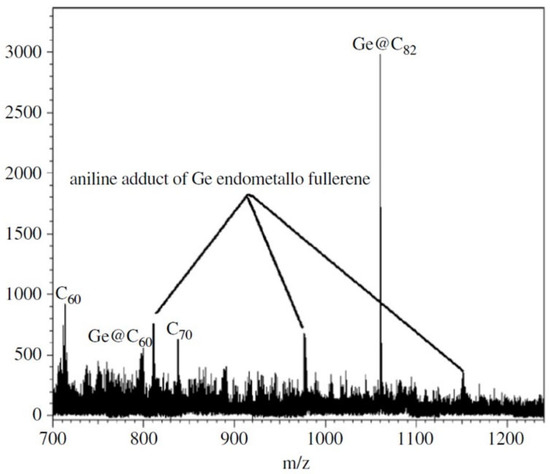
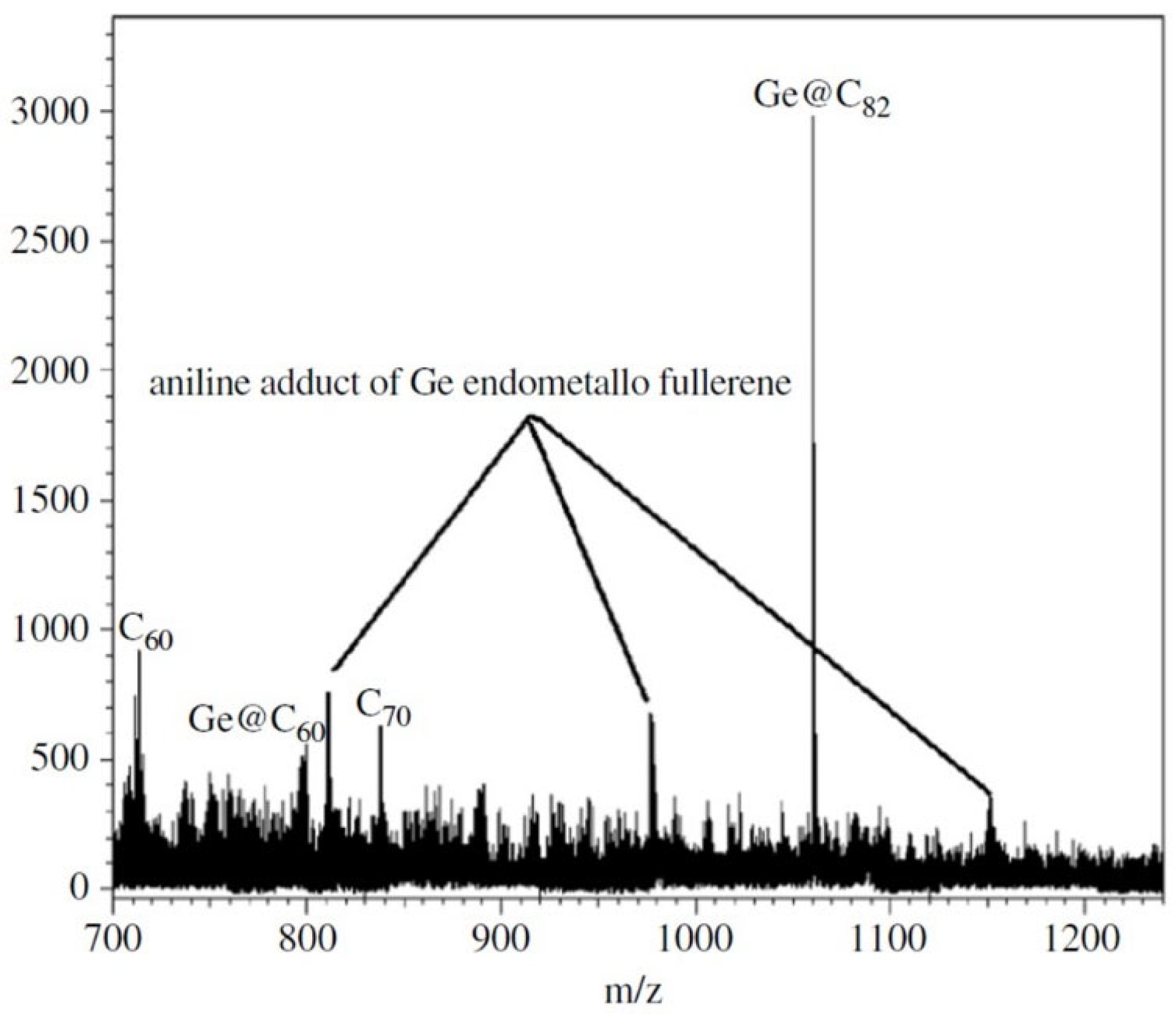
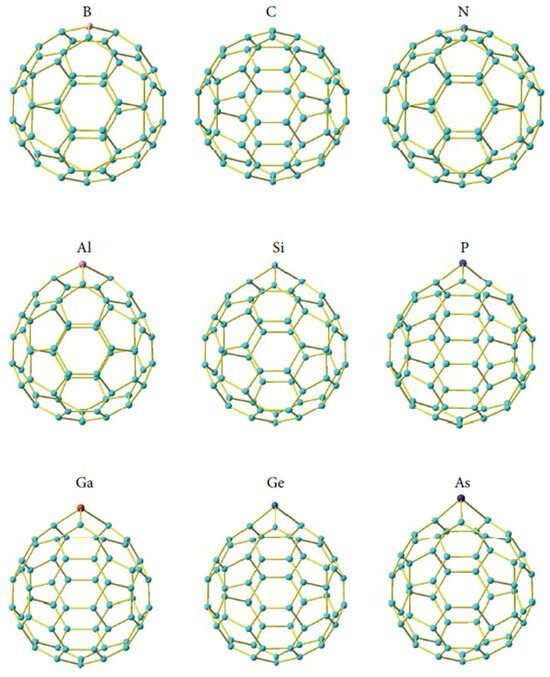
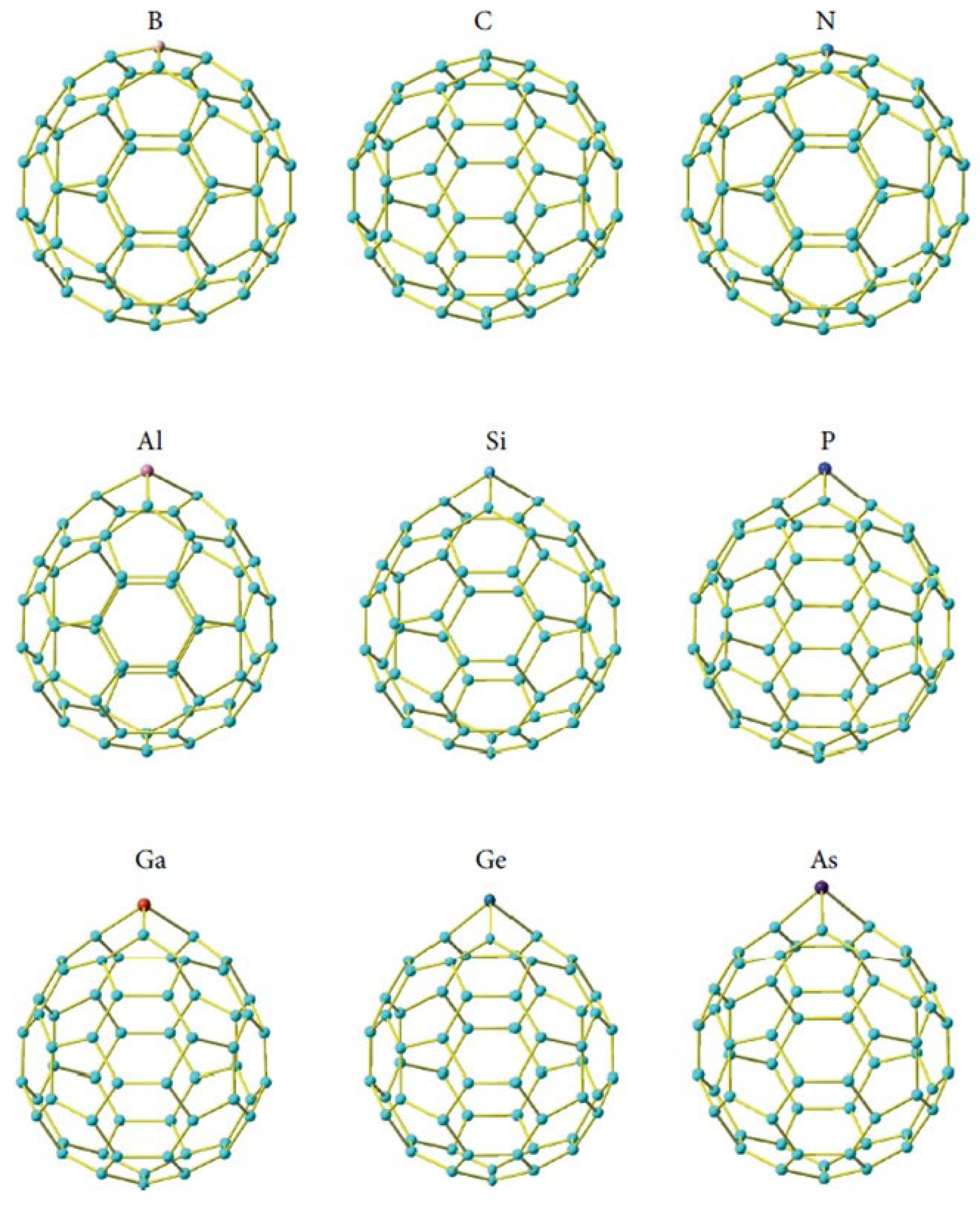
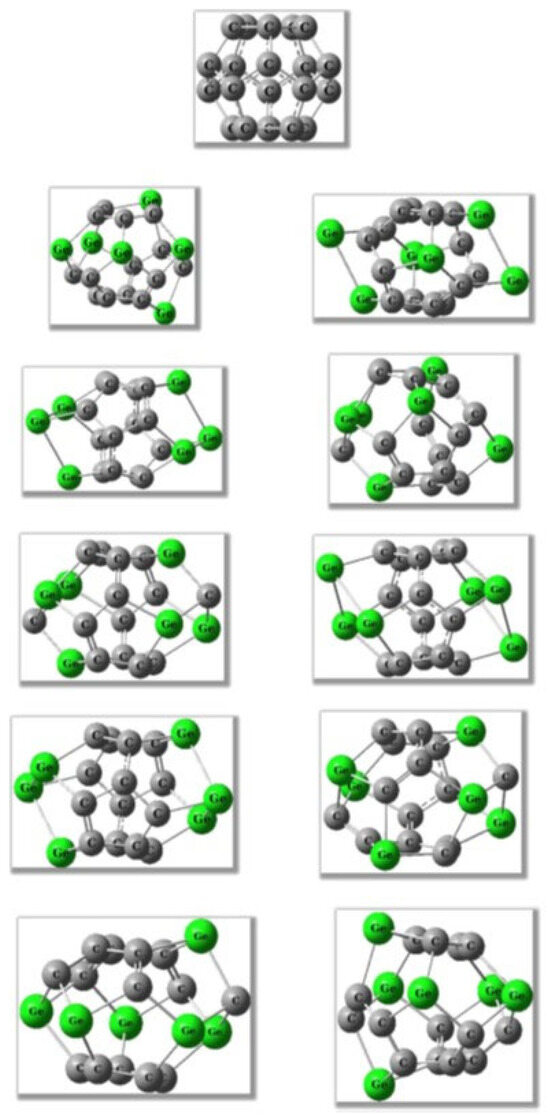
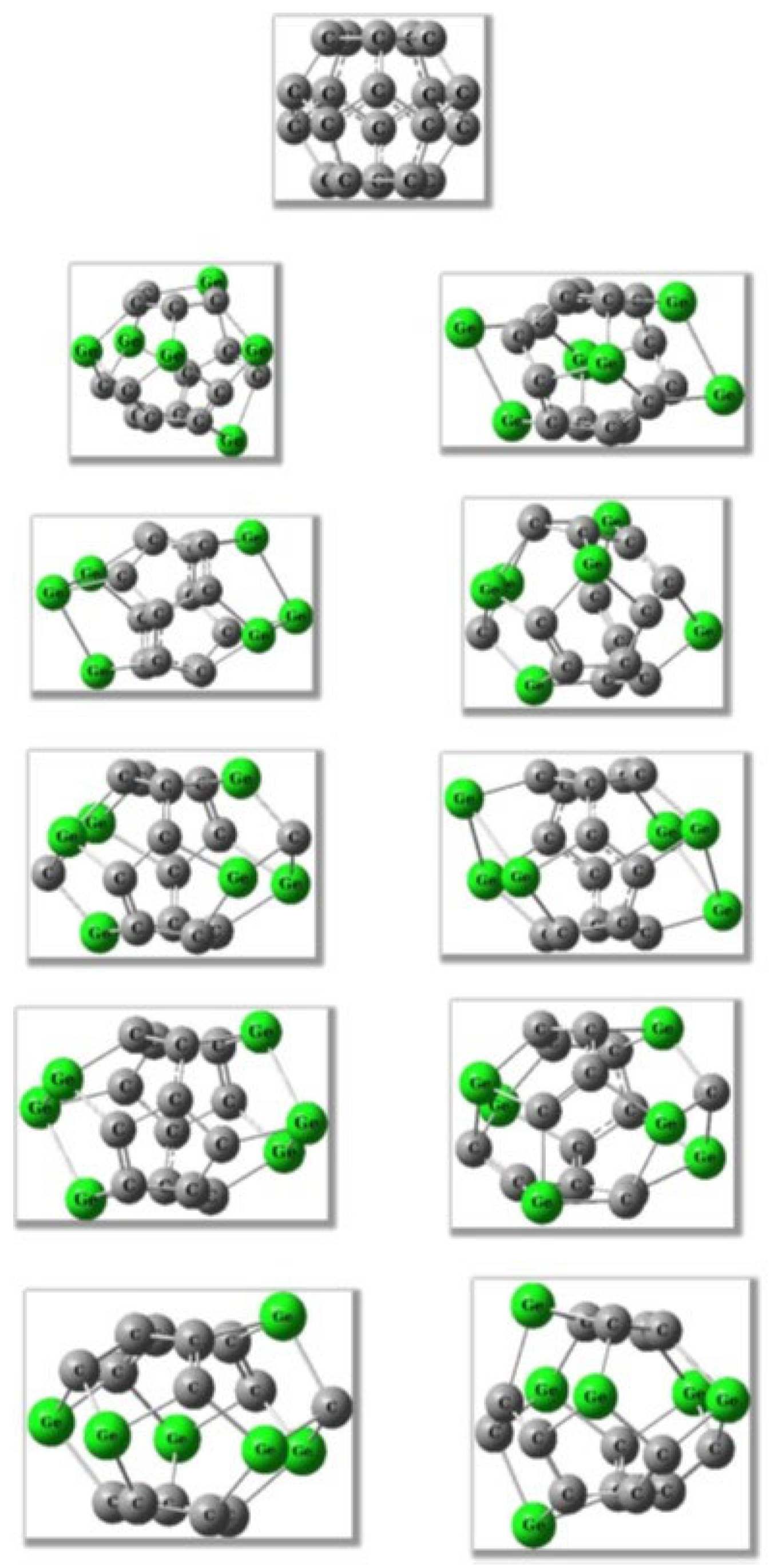
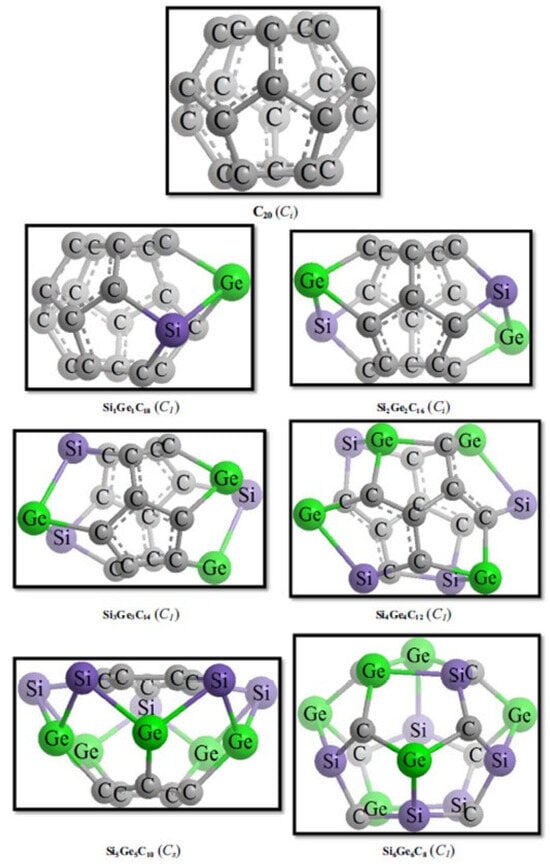
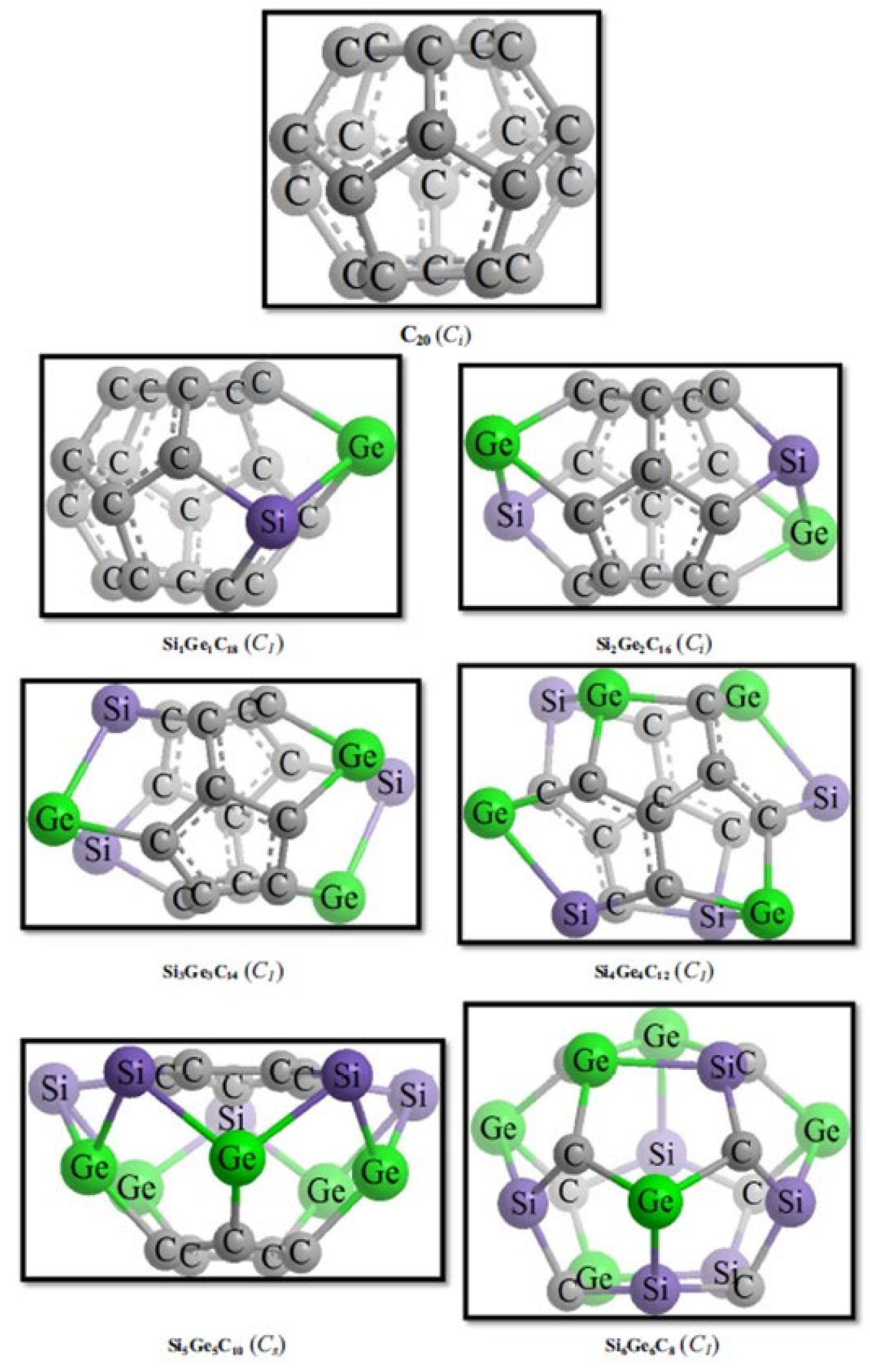
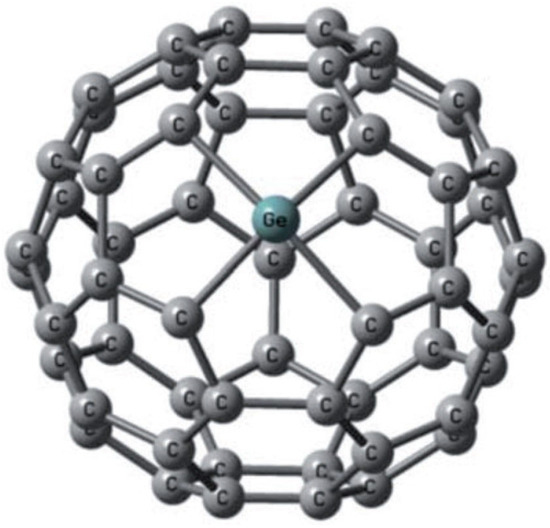
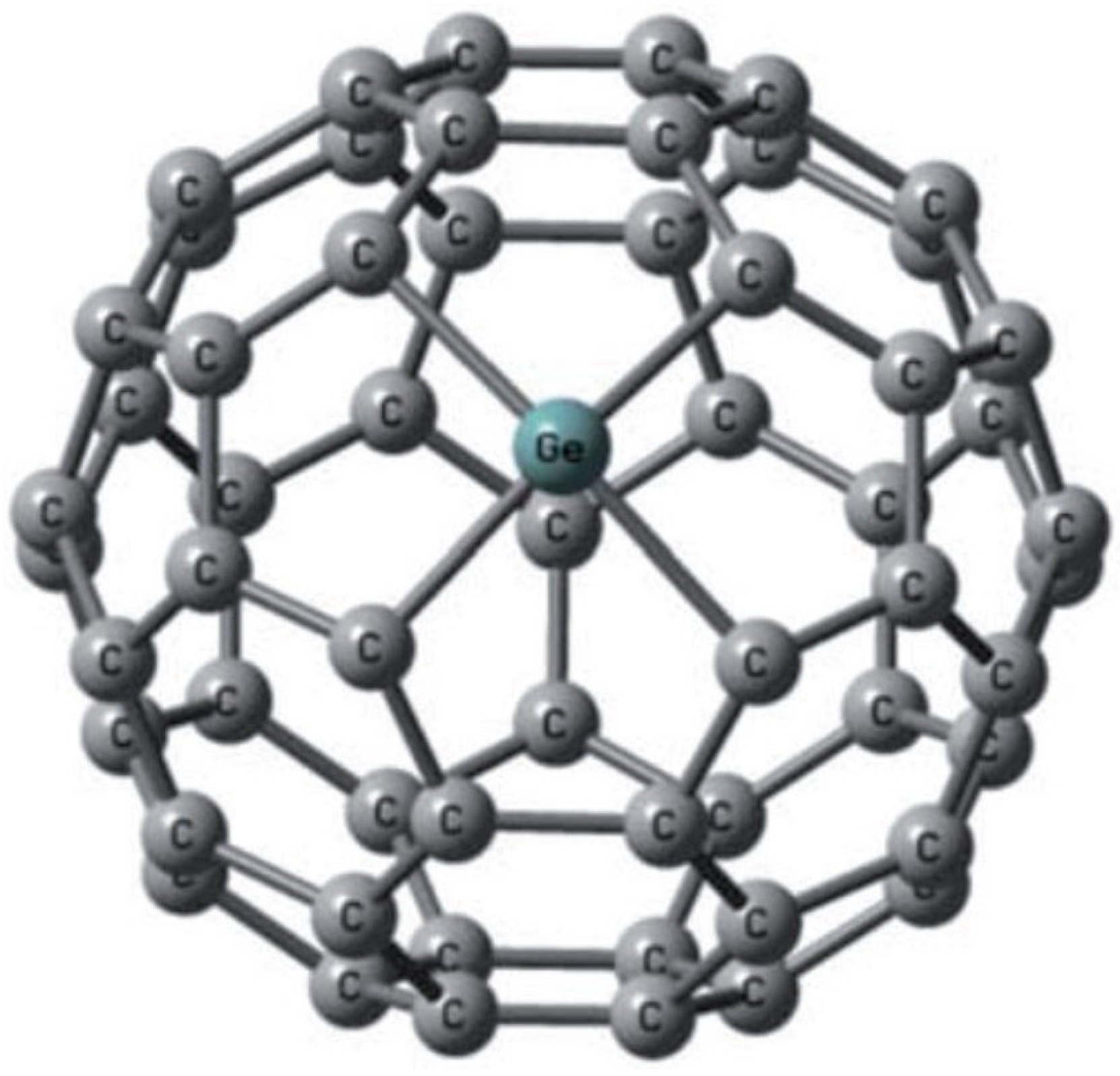
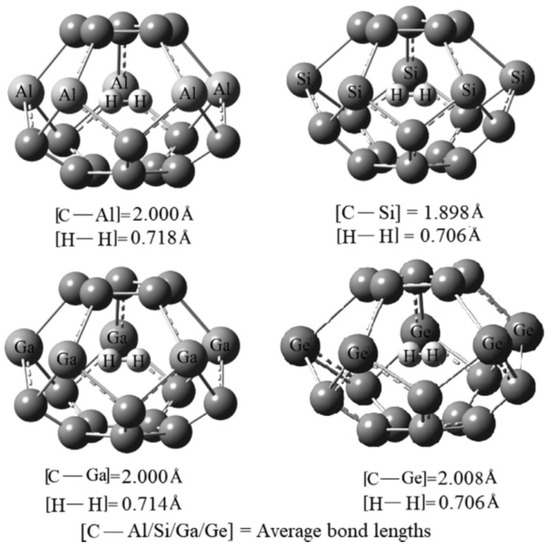
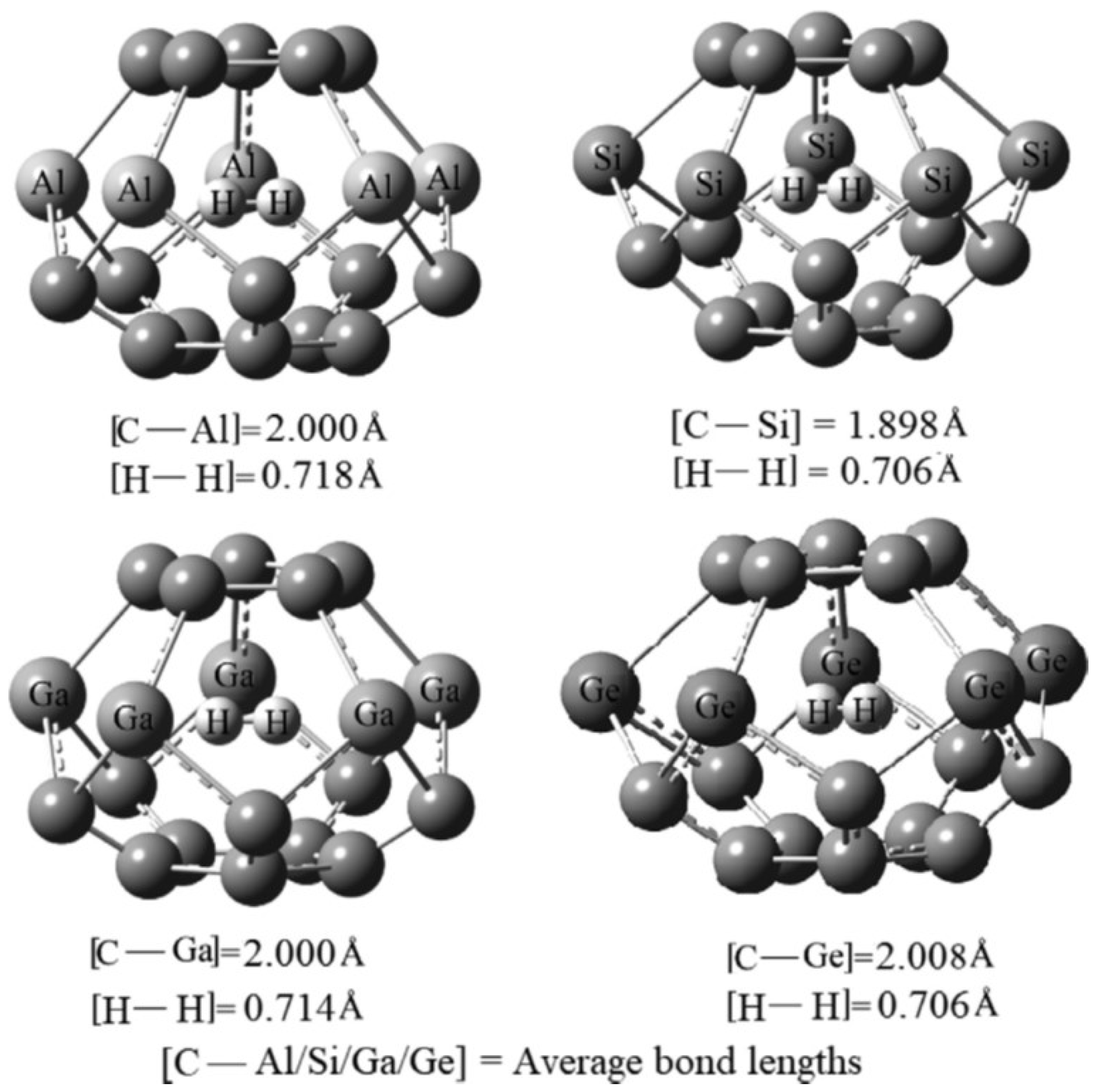

Disclaimer/Publisher’s Note: The statements, opinions and data contained in all publications are solely those of the individual author(s) and contributor(s) and not of MDPI and/or the editor(s). MDPI and/or the editor(s) disclaim responsibility for any injury to people or property resulting from any ideas, methods, instructions or products referred to in the content. |
© 2025 by the authors. Licensee MDPI, Basel, Switzerland. This article is an open access article distributed under the terms and conditions of the Creative Commons Attribution (CC BY) license (https://creativecommons.org/licenses/by/4.0/).