Plasmodium knowlesi Heat Shock Protein 90s: In Silico Analysis Reveals Unique Druggable Structural Features



Abstract
1. Introduction
2. Results
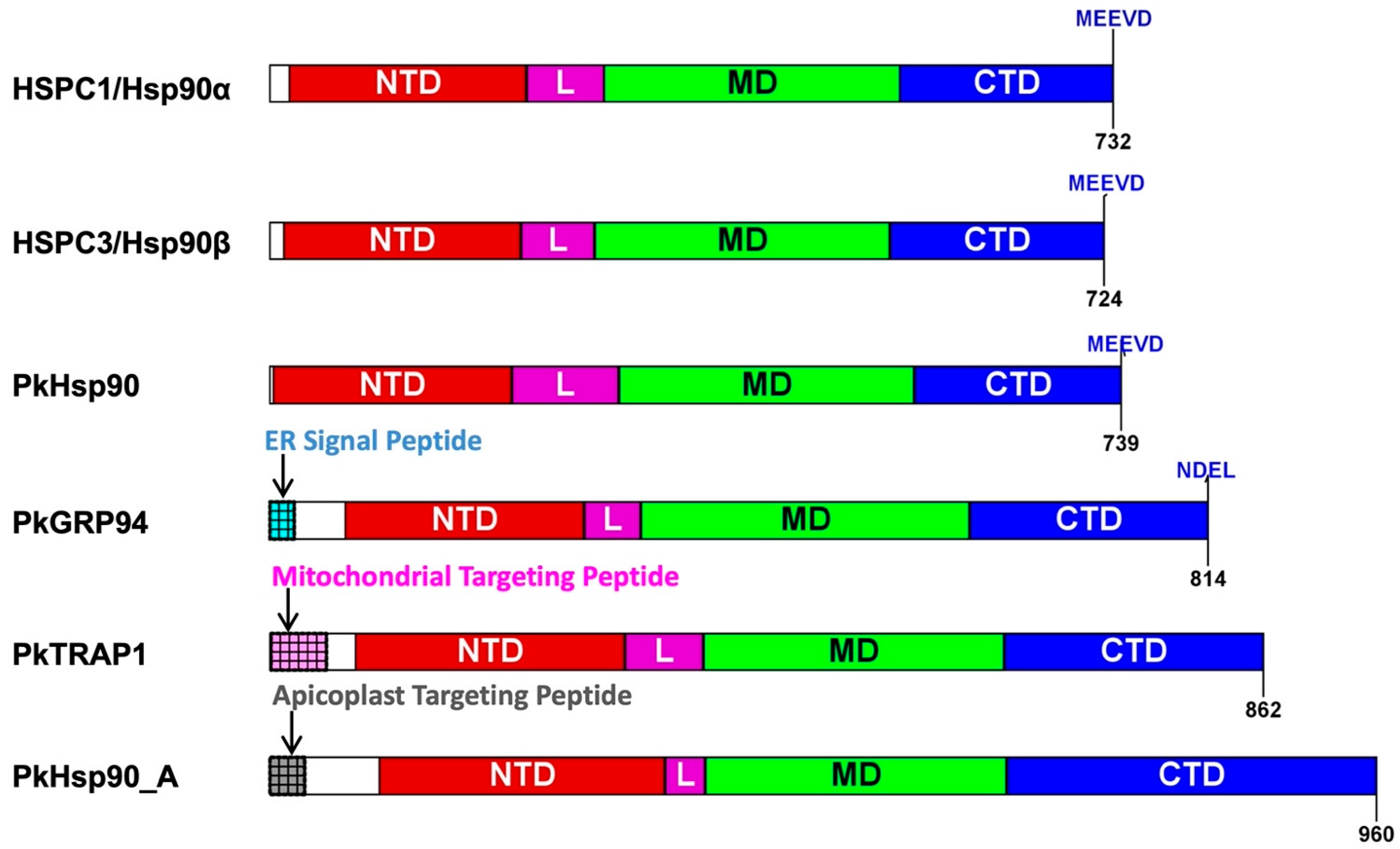
2.1. Identification and Characterization of Plasmodium knowlesi Hsp90 Isoforms
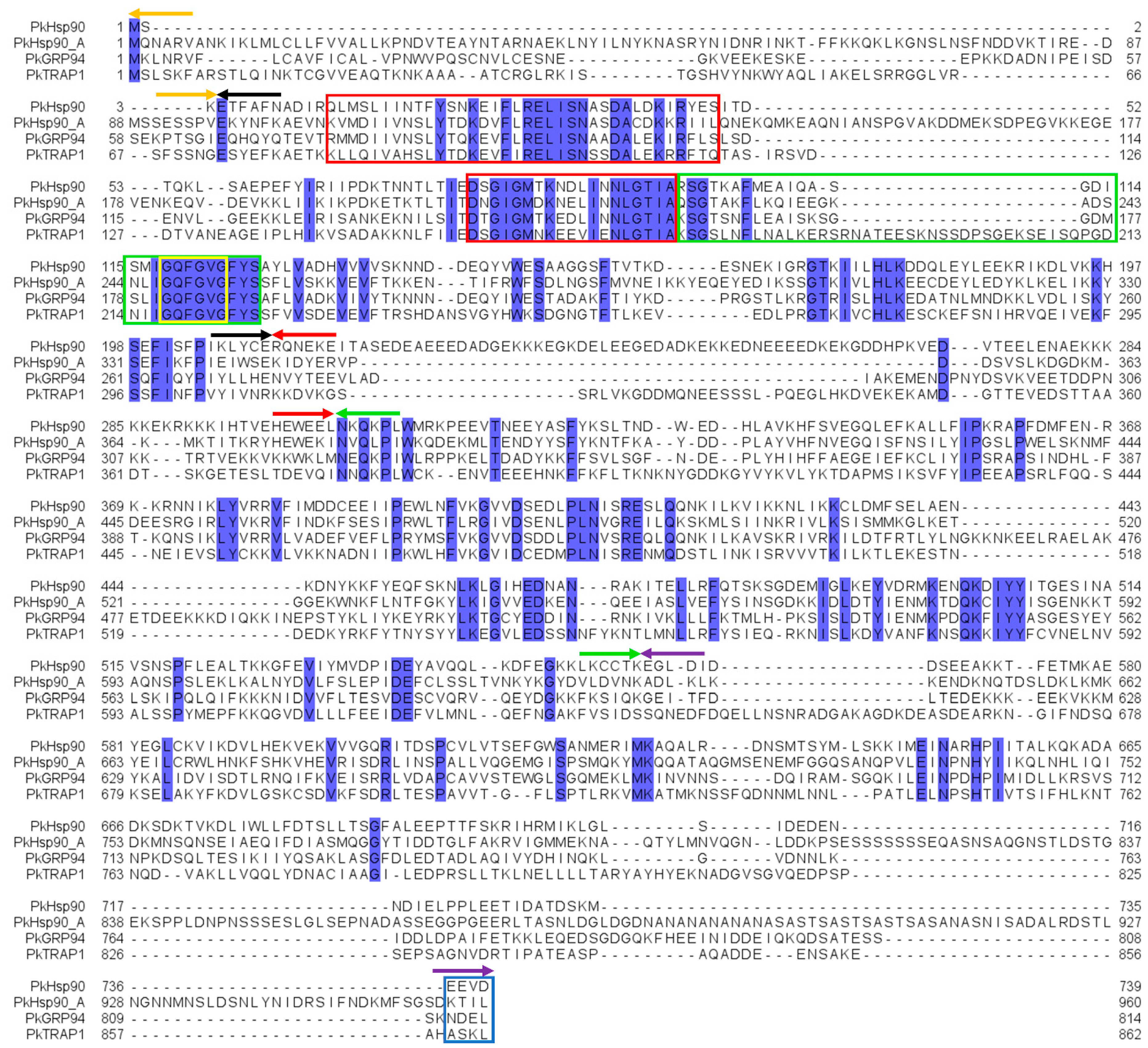
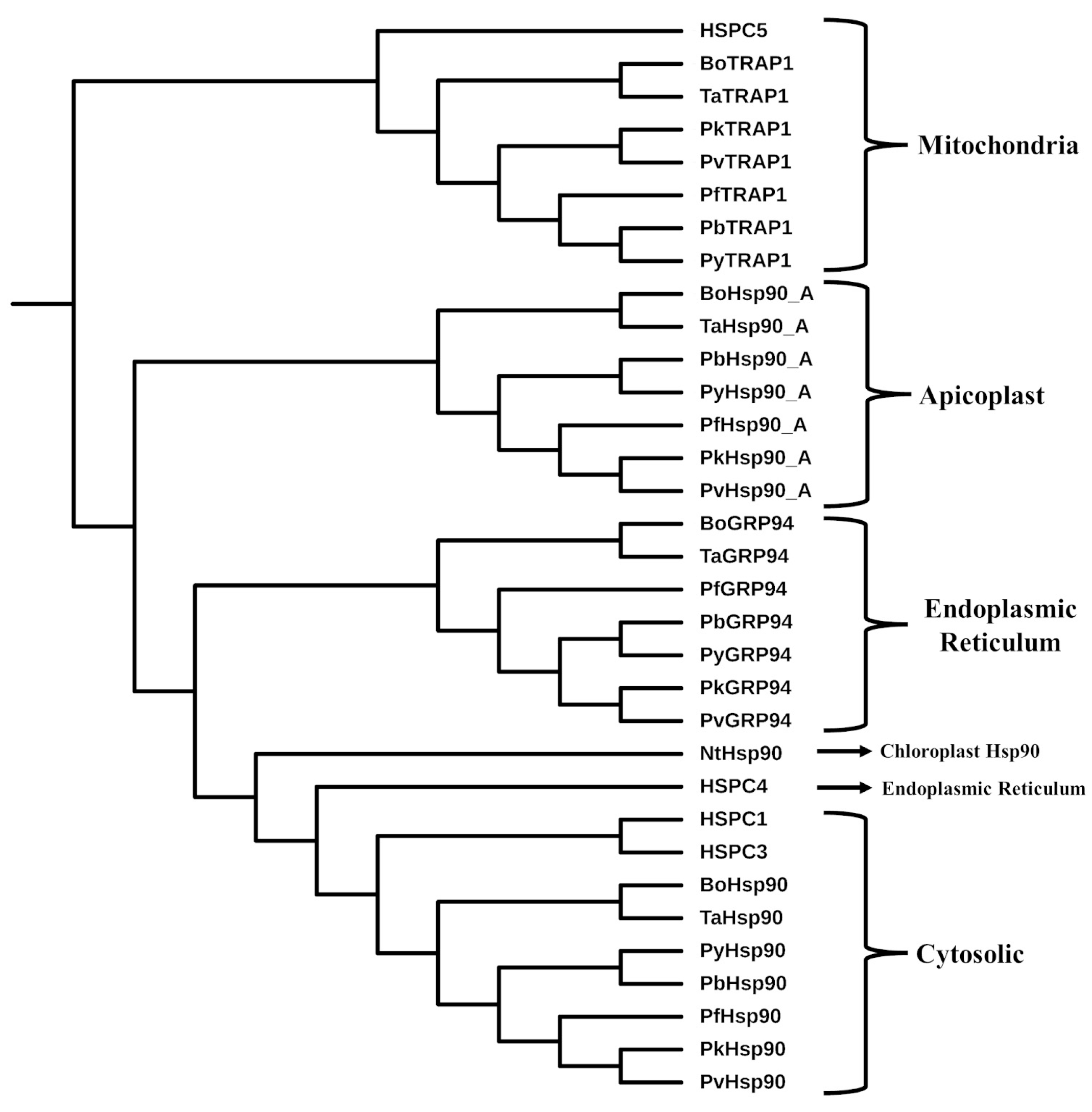
2.2. Sequence Alignment and Phylogenetic Analysis


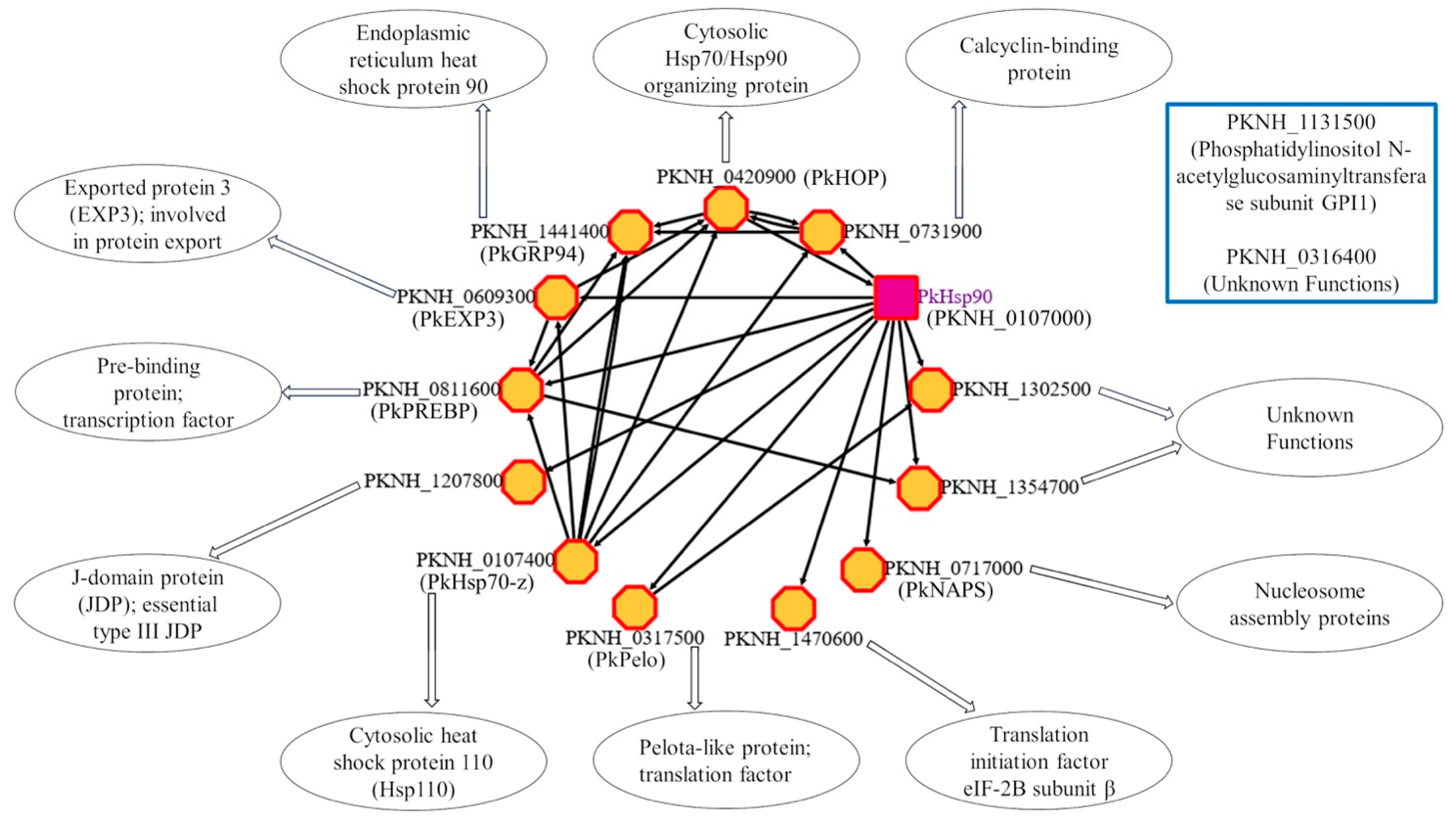
2.3. Functional Annotation and Protein–Protein Interaction (PPI) Analysis
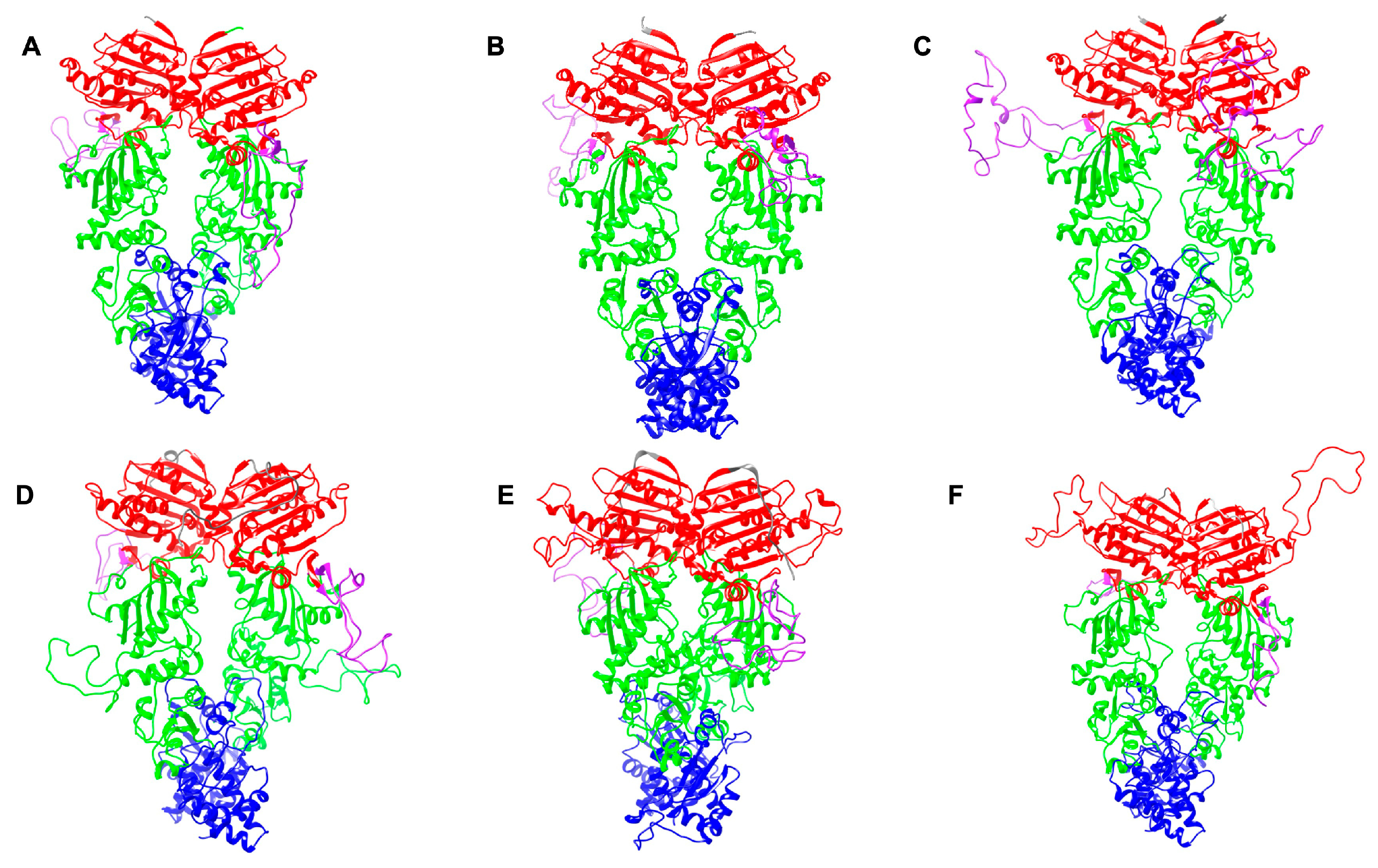
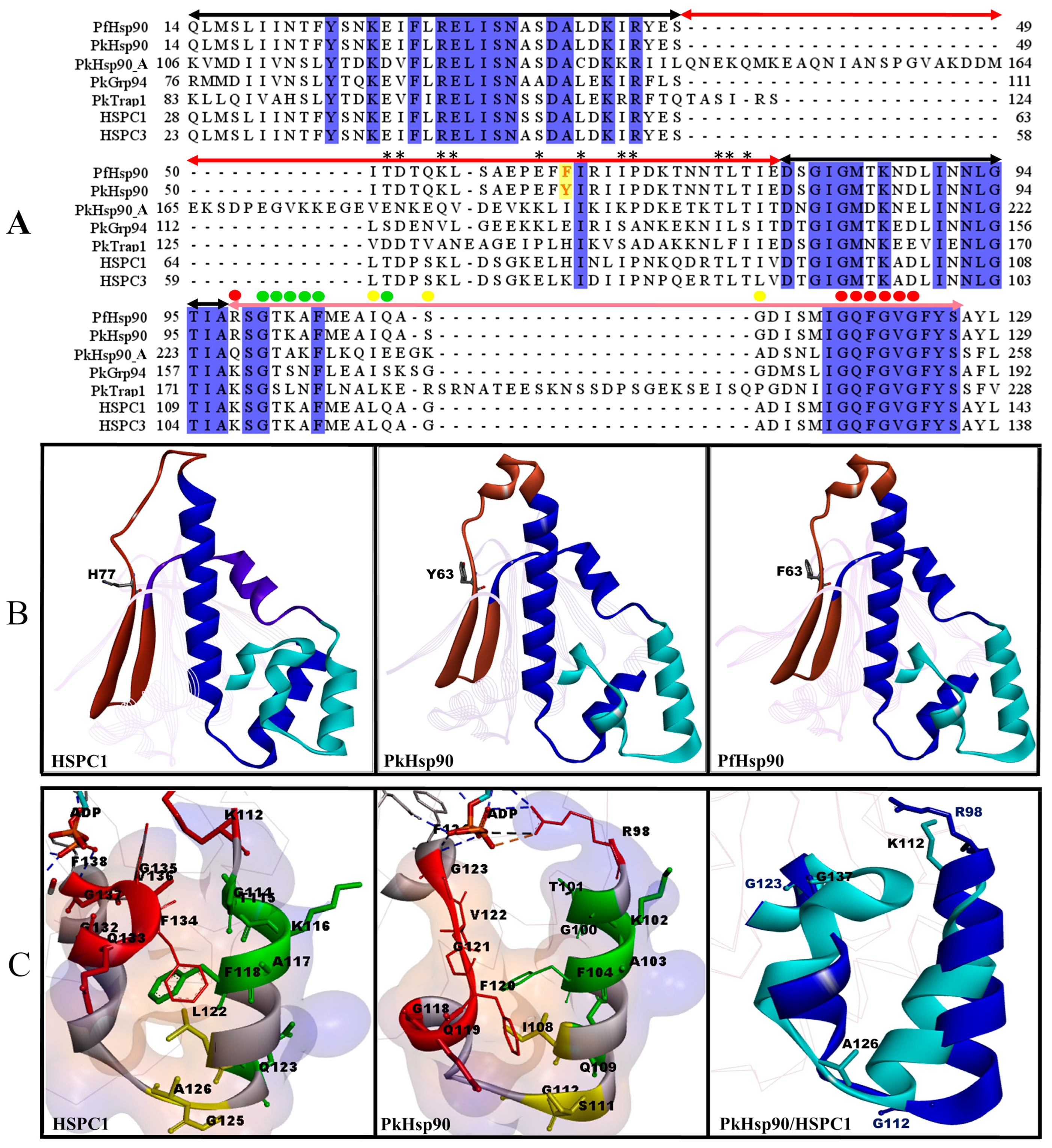
2.4. Sequence and Structural Analyses of the ATP Binding Pockets and Lid Domains
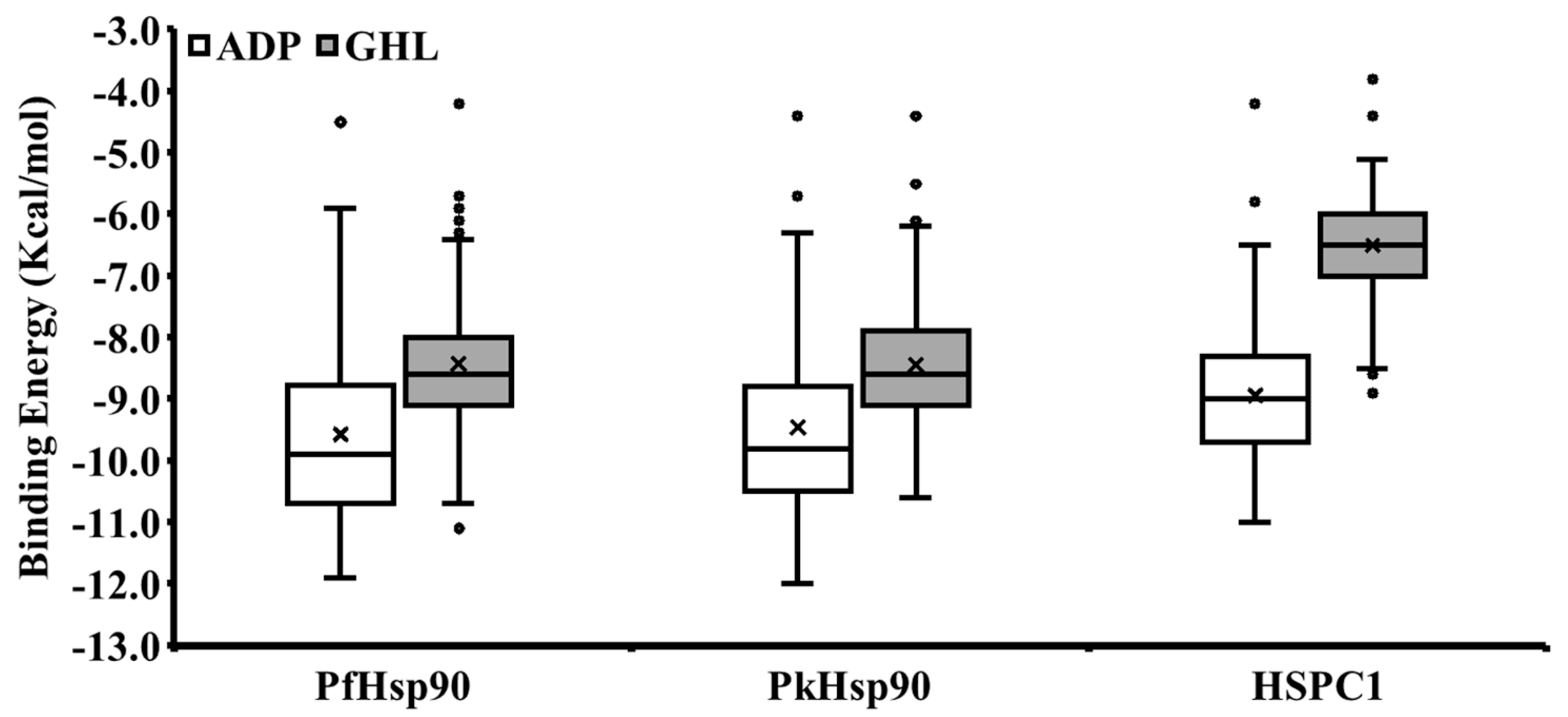
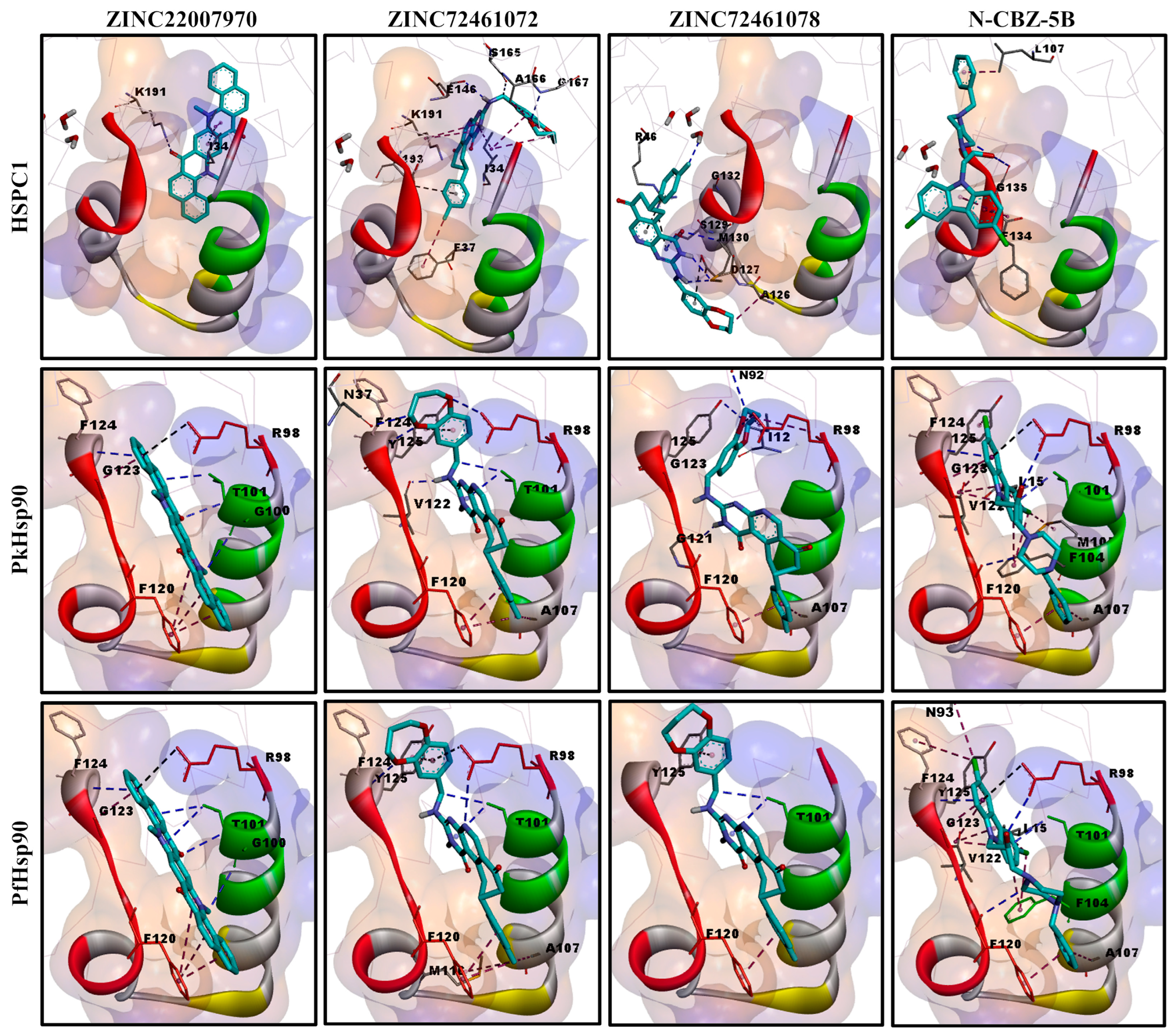
2.5. Comparative Docking Analysis of the ATP Binding Pocket and Lid Domains
3. Discussion
4. Materials and Methods
4.1. Sequence Retrieval and Identification of Hsp90 Isoforms
4.2. Three-Dimensional Protein Structure Retrieval and Modelling
4.3. Multiple Sequence and Structural Alignments and Phylogenetic Analysis
4.4. Protein–Protein Interaction (PPI) Network and Functional Analysis
4.5. Sequence and Structural Analyses of the ATP-Binding Pocket and Lid Domains
4.6. Drug Target Analysis and Ligand Docking
5. Conclusions
Supplementary Materials
Author Contributions
Funding
Institutional Review Board Statement
Informed Consent Statement
Data Availability Statement
Conflicts of Interest
References
- World Health Organization. World Malaria Report 2025; WHO: Geneva, Switzerland, 2025. [Google Scholar]
- Antinori, S.; Galimberti, L.; Milazzo, L.; Corbellino, M. Plasmodium knowlesi: The Emerging Zoonotic Malaria Parasite. Acta Trop. 2013, 125, 191–201. [Google Scholar] [CrossRef]
- Ahebwa, A.; Sukkanon, C.; Hii, J.; Ngoen-Klan, R.; Arunyawat, U.; Manguin, S.; Chareonviriyaphap, T. Prevalence and Determinants of Zoonotic Malaria in the Greater Mekong Subregion (GMS) and Malaysia: Systematic Review and Meta-Analysis. Malar. J. 2025, 24, 218. [Google Scholar] [CrossRef]
- Kotepui, M.; Kotepui, K.U.; Milanez, G.D.; Masangkay, F.R. Prevalence of Severe Plasmodium knowlesi Infection and Risk Factors Related to Severe Complications Compared with Non-Severe P. knowlesi and Severe P. falciparum Malaria: A Systematic Review and Meta-Analysis. Infect. Dis. Poverty 2020, 9, 106. [Google Scholar] [CrossRef] [PubMed]
- Cox-Singh, J.; Hiu, J.; Lucas, S.B.; Divis, P.C.; Zulkarnaen, M.; Chandran, P.; Wong, K.T.; Adem, P.; Zaki, S.R.; Singh, B.; et al. Severe Malaria—A Case of Fatal Plasmodium knowlesi Infection with Post-Mortem Findings: A Case Report. Malar. J. 2010, 9, 10. [Google Scholar] [CrossRef] [PubMed]
- Anstey, N.M.; Grigg, M.J.; Rajahram, G.S.; Cooper, D.J.; William, T.; Kho, S.; Barber, B.E. Knowlesi Malaria: Human Risk Factors, Clinical Spectrum, and Pathophysiology. Adv. Parasitol. 2021, 113, 1–43. [Google Scholar] [CrossRef] [PubMed]
- Barber, B.E.; William, T.; Grigg, M.J.; Parameswaran, U.; Piera, K.A.; Price, R.N.; Yeo, T.W.; Anstey, N.M. Parasite Biomass-Related Inflammation, Endothelial Activation, Microvascular Dysfunction and Disease Severity in Vivax Malaria. PLoS Pathog. 2015, 11, e1004558. [Google Scholar] [CrossRef]
- Marchand, R.P.; Culleton, R.; Maeno, Y.; Quang, N.T.; Nakazawa, S. Co-Infections of Plasmodium knowlesi, P. falciparum, and P. vivax among Humans and Anopheles Dirus Mosquitoes, Southern Vietnam. Emerg. Infect. Dis. 2011, 17, 1232–1239. [Google Scholar] [CrossRef]
- Lee, K.S.; Divis, P.C.S.; Zakaria, S.K.; Matusop, A.; Julin, R.A.; Conway, D.J.; Cox-Singh, J.; Singh, B. Plasmodium knowlesi: Reservoir Hosts and Tracking the Emergence in Humans and Macaques. PLoS Pathog. 2011, 7, e1002015. [Google Scholar] [CrossRef]
- Banumathy, G.; Singh, V.; Pavithra, S.R.; Tatu, U. Heat Shock Protein 90 Function Is Essential for Plasmodium falciparum Growth in Human Erythrocytes. J. Biol. Chem. 2003, 278, 18336–18345. [Google Scholar] [CrossRef]
- Picard, D. Heat-Shock Protein 90, a Chaperone for Folding and Regulation. Cell. Mol. Life Sci. 2002, 59, 1640–1648. [Google Scholar] [CrossRef]
- Pratt, W.B. The Role of the Hsp90-Based Chaperone System in Signal Transduction by Nuclear Receptors and Receptors Signaling via MAP Kinase. Annu. Rev. Pharmacol. Toxicol. 1997, 37, 297–326. [Google Scholar] [CrossRef]
- Li, J.; Soroka, J.; Buchner, J. The Hsp90 Chaperone Machinery: Conformational Dynamics and Regulation by Co-Chaperones. Biochim. Biophys. Acta—Mol. Cell Res. 2012, 1823, 624–635. [Google Scholar] [CrossRef]
- Taipale, M.; Jarosz, D.F.; Lindquist, S. HSP90 at the Hub of Protein Homeostasis: Emerging Mechanistic Insights. Nat. Rev. Mol. Cell Biol. 2010, 11, 515–528. [Google Scholar] [CrossRef] [PubMed]
- Acharya, P.; Kumar, R.; Tatu, U. Chaperoning a Cellular Upheaval in Malaria: Heat Shock Proteins in Plasmodium falciparum. Mol. Biochem. Parasitol. 2007, 153, 85–94. [Google Scholar] [CrossRef]
- Shahinas, D.; Pillai, D.R. Role of Hsp90 in Plasmodium falciparum Malaria; Advances in Experimental Medicine and Biology; Springer: Cham, Switzerland, 2021; Volume 1340, pp. 125–139. [Google Scholar] [CrossRef]
- Verba, K.A.; Wang, R.Y.-R.; Arakawa, A.; Liu, Y.; Shirouzu, M.; Yokoyama, S.; Agard, D.A. Atomic Structure of Hsp90-Cdc37-Cdk4 Reveals That Hsp90 Traps and Stabilizes an Unfolded Kinase. Science 2016, 352, 1542–1547. [Google Scholar] [CrossRef]
- Krukenberg, K.A.; Street, T.O.; Lavery, L.A.; Agard, D.A. Conformational Dynamics of the Molecular Chaperone Hsp90. Q. Rev. Biophys. 2011, 44, 229–255. [Google Scholar] [CrossRef]
- Scheufler, C.; Brinker, A.; Bourenkov, G.; Pegoraro, S.; Moroder, L.; Bartunik, H.; Hartl, F.U.; Moarefi, I. Structure of TPR Domain-Peptide Complexes: Critical Elements in the Assembly of the Hsp70-Hsp90 Multichaperone Machine. Cell 2000, 101, 199–210. [Google Scholar] [CrossRef]
- Schwarz, K.; Baindur-Hudson, S.; Blatch, G.L.; Edkins, A.L. Hsp70/Hsp90 Organising Protein (Hop): Coordinating Much More than Chaperones; Subcellular Biochemistry; Springer: Cham, Switzerland, 2023; Volume 101, pp. 81–125. [Google Scholar] [CrossRef]
- Daniyan, M.O.; Przyborski, J.M.; Shonhai, A. Partners in Mischief: Functional Networks of Heat Shock Proteins of Plasmodium falciparum and Their Influence on Parasite Virulence. Biomolecules 2019, 9, 295. [Google Scholar] [CrossRef] [PubMed]
- Chua, C.-S.; Low, H.; Sim, T.-S. Co-Chaperones of Hsp90 in Plasmodium falciparum and Their Concerted Roles in Cellular Regulation. Parasitology 2014, 141, 1177–1191. [Google Scholar] [CrossRef] [PubMed]
- Dutta, T.; Singh, H.; Edkins, A.L.; Blatch, G.L. Hsp90 and Associated Co-Chaperones of the Malaria Parasite. Biomolecules 2022, 12, 1018. [Google Scholar] [CrossRef]
- Daniyan, M.O.; Ojo, O.T. In Silico Identification and Evaluation of Potential Interaction of Azadirachta indica Phytochemicals with Plasmodium falciparum Heat Shock Protein 90. J. Mol. Graph. Model. 2019, 87, 144–164. [Google Scholar] [CrossRef]
- Li, Y.; Dong, J.; Qin, J.J. Small Molecule Inhibitors Targeting Heat Shock Protein 90: An Updated Review. Eur. J. Med. Chem. 2024, 275, 116562. [Google Scholar] [CrossRef]
- Shonhai, A. Plasmodial Heat Shock Proteins: Targets for chemotherapy. FEMS Immulogy Med. Microbiol. 2010, 58, 61–74. [Google Scholar] [CrossRef]
- Ahmad, T.; Alhammadi, B.A.; Almaazmi, S.Y.; Arafa, S.; Blatch, G.L.; Dutta, T.; Gestwicki, J.E.; Keyzers, R.A.; Shonhai, A.; Singh, H. Plasmodium falciparum Heat Shock Proteins as Antimalarial Drug Targets: An Update. Cell Stress Chaperones 2024, 29, 326–337. [Google Scholar] [CrossRef]
- Stofberg, M.L.; Caillet, C.; de Villiers, M.; Zininga, T. Inhibitors of the Plasmodium falciparum Hsp90 towards Selective Antimalarial Drug Design: The Past, Present and Future. Cells 2021, 10, 2849. [Google Scholar] [CrossRef]
- Wang, T.; Picard, D.; Mäser, P.; Picard, D. Inhibition of Plasmodium falciparum Hsp90 Contributes to the Antimalarial Activities of Aminoalcohol-Carbazoles. J. Med. Chem. 2016, 59, 6344–6352. [Google Scholar] [CrossRef]
- Wang, T.; Bisson, W.H.; Mäser, P.; Scapozza, L.; Picard, D. Differences in Conformational Dynamics between Plasmodium falciparum and Human Hsp90 Orthologues Enable the Structure-Based Discovery of Pathogen-Selective Inhibitors. J. Med. Chem. 2014, 57, 2524–2535. [Google Scholar] [CrossRef]
- Kitson, R.R.A.; Kitsonova, D.; Siegel, D.; Ross, D.; Moody, C.J. Geldanamycin, a Naturally Occurring Inhibitor of Hsp90 and a Lead Compound for Medicinal Chemistry. J. Med. Chem. 2024, 67, 17946–17963. [Google Scholar] [CrossRef] [PubMed]
- Tabassum, W.; Bhattacharyya, S.; Varunan, S.M.; Bhattacharyya, M.K. Febrile Temperature Causes Transcriptional Downregulation of Plasmodium falciparum Sirtuins through Hsp90-Dependent Epigenetic Modification. Mol. Microbiol. 2021, 115, 1025–1038. [Google Scholar] [CrossRef] [PubMed]
- Wider, D.; Péli-Gulli, M.P.; Briand, P.A.; Tatu, U.; Picard, D. The Complementation of Yeast with Human or Plasmodium falciparum Hsp90 Confers Differential Inhibitor Sensitivities. Mol. Biochem. Parasitol. 2009, 164, 147–152. [Google Scholar] [CrossRef] [PubMed]
- Shahinas, D.; Folefoc, A.; Taldone, T.; Chiosis, G.; Crandall, I.; Pillai, D.R. A Purine Analog Synergizes with Chloroquine (CQ) by Targeting Plasmodium falciparum Hsp90 (PfHsp90). PLoS ONE 2013, 8, e75446. [Google Scholar] [CrossRef] [PubMed]
- Pugh, K.W.; Zhang, Z.; Wang, J.; Xu, X.; Munthali, V.; Zuo, A.; Blagg, B.S.J. From Bacteria to Cancer: A Benzothiazole-Based DNA Gyrase B Inhibitor Redesigned for Hsp90 C-Terminal Inhibition. ACS Med. Chem. Lett. 2020, 11, 1535–1538. [Google Scholar] [CrossRef]
- Serwetnyk, M.A.; Blagg, B.S.J. The Disruption of Protein-Protein Interactions with Co-Chaperones and Client Substrates as a Strategy towards Hsp90 Inhibition. Acta Pharm. Sin. B 2021, 11, 1446–1468. [Google Scholar] [CrossRef]
- Reynolds, T.S.; Mishra, S.J.; Blagg, B.S.J. Assessment of Hsp90β-Selective Inhibitor Safety and on-Target Effects. Sci. Rep. 2025, 15, 3692. [Google Scholar] [CrossRef]
- Daniyan, M.O.; Singh, H.; Blatch, G.L. The J Domain Proteins of Plasmodium knowlesi, a Zoonotic Malaria Parasite of Humans. Int. J. Mol. Sci. 2024, 25, 12302. [Google Scholar] [CrossRef]
- Benavente, E.D.; Gomes, A.R.; De Silva, J.R.; Grigg, M.; Walker, H.; Barber, B.E.; William, T.; Yeo, T.W.; de Sessions, P.F.; Ramaprasad, A.; et al. Whole Genome Sequencing of Amplified Plasmodium knowlesi DNA from Unprocessed Blood Reveals Genetic Exchange Events between Malaysian Peninsular and Borneo Subpopulations. Sci. Rep. 2019, 9, 9873. [Google Scholar] [CrossRef] [PubMed]
- Pinheiro, M.M.; Ahmed, M.A.; Millar, S.B.; Sanderson, T.; Otto, T.D.; Lu, W.C.; Krishna, S.; Rayner, J.C.; Cox-Singh, J. Plasmodium knowlesi Genome Sequences from Clinical Isolates Reveal Extensive Genomic Dimorphism. PLoS ONE 2015, 10, e0121303. [Google Scholar] [CrossRef] [PubMed]
- Elsworth, B.; Ye, S.; Dass, S.; Tennessen, J.A.; Sultana, Q.; Thommen, B.T.; Paul, A.S.; Kanjee, U.; Grüring, C.; Ferreira, M.U.; et al. The Essential Genome of Plasmodium knowlesi Reveals Determinants of Antimalarial Susceptibility. Science 2025, 387, eadq6241. [Google Scholar] [CrossRef]
- Jones, P.; Binns, D.; Chang, H.Y.; Fraser, M.; Li, W.; McAnulla, C.; McWilliam, H.; Maslen, J.; Mitchell, A.; Nuka, G.; et al. InterProScan 5: Genome-Scale Protein Function Classification. Bioinformatics 2014, 30, 1236–1240. [Google Scholar] [CrossRef]
- Blum, M.; Andreeva, A.; Florentino, L.C.; Chuguransky, S.R.; Grego, T.; Hobbs, E.; Pinto, B.L.; Orr, A.; Paysan-Lafosse, T.; Ponamareva, I.; et al. InterPro: The Protein Sequence Classification Resource in 2025. Nucleic Acids Res. 2025, 53, D444–D456. [Google Scholar] [CrossRef]
- Corbett, K.D.; Berger, J.M. Structure of the ATP-Binding Domain of Plasmodium falciparum Hsp90. Proteins 2010, 78, 2738–2744. [Google Scholar] [CrossRef] [PubMed]
- Garnier, C.; Lafitte, D.; Tsvetkov, P.O.; Barbier, P.; Leclerc-Devin, J.; Millot, J.-M.; Briand, C.; Makarov, A.A.; Catelli, M.G.; Peyrot, V. Binding of ATP to Heat Shock Protein 90: Evidence for an ATP-Binding Site in the C-Terminal Domain. J. Biol. Chem. 2002, 277, 12208–12214. [Google Scholar] [CrossRef]
- Silva, J.C.; Egan, A.; Friedman, R.; Munro, J.B.; Carlton, J.M.; Hughes, A.L. Genome Sequences Reveal Divergence Times of Malaria Parasite Lineages. Parasitology 2010, 138, 1737. [Google Scholar] [CrossRef]
- Datta, N.; Singh Chauhan, V. Origin and Evolution of Human Malaria Parasite, P. falciparum and P. vivax. In Nature at Work: Ongoing Saga of Evolution; Springer: New Delhi, India, 2010; pp. 307–317. ISBN 978-81-8489-992-4. [Google Scholar]
- Waterhouse, A.M.; Procter, J.B.; Martin, D.M.A.; Clamp, M.; Barton, G.J. Jalview Version 2-A Multiple Sequence Alignment Editor and Analysis Workbench. Bioinformatics 2009, 25, 1189–1191. [Google Scholar] [CrossRef]
- Wolf, J. GIMP 2.6; Galileo Press: Cambridge, UK, 2010; ISBN 9783836216104. [Google Scholar]
- Szklarczyk, D.; Gable, A.L.; Lyon, D.; Junge, A.; Wyder, S.; Huerta-Cepas, J.; Simonovic, M.; Doncheva, N.T.; Morris, J.H.; Bork, P.; et al. STRING V11: Protein-Protein Association Networks with Increased Coverage, Supporting Functional Discovery in Genome-Wide Experimental Datasets. Nucleic Acids Res. 2019, 47, D607–D613. [Google Scholar] [CrossRef] [PubMed]
- Snel, B.; Lehmann, G.; Bork, P.; Huynen, M.A. String: A Web-Server to Retrieve and Display the Repeatedly Occurring Neighbourhood of a Gene. Nucleic Acids Res. 2000, 28, 3442–3444. [Google Scholar] [CrossRef] [PubMed]
- von Mering, C.; Huynen, M.; Jaeggi, D.; Schmidt, S.; Bork, P.; Snel, B. STRING: A Database of Predicted Functional Associations between Proteins. Nucleic Acids Res. 2003, 31, 258–261. [Google Scholar] [CrossRef]
- Ge, S.X.; Jung, D.; Jung, D.; Yao, R. ShinyGO: A Graphical Gene-Set Enrichment Tool for Animals and Plants. Bioinformatics 2019, 36, 2628. [Google Scholar] [CrossRef]
- Aurrecoechea, C.; Chea, C.; Brestelli, J.; Brunk, B.P.; Dommer, J.; Fischer, S.; Gajria, B.; Gao, X.; Gingle, A.; Grant, G.; et al. PlasmoDB: A Functional Genomic Database for Malaria Parasites. Nucleic Acids Res. 2009, 37, D539–D543. [Google Scholar] [CrossRef]
- Altschul, S.F.; Madden, T.L.; Schäffer, A.A.; Zhang, J.; Zhang, Z.; Miller, W.; Lipman, D.J. Gapped BLAST and PSI-BLAST: A New Generation of Protein Database Search Programs. Nucleic Acids Res. 1997, 25, 3389–3402. [Google Scholar] [CrossRef]
- LaCount, D.J.; Vignali, M.; Chettier, R.; Phansalkar, A.; Bell, R.; Hesselberth, J.R.; Schoenfeld, L.W.; Ota, I.; Sahasrabudhe, S.; Kurschner, C.; et al. A Protein Interaction Network of the Malaria Parasite Plasmodium falciparum. Nature 2005, 438, 103–107. [Google Scholar] [CrossRef] [PubMed]
- Shannon, P.; Markiel, A.; Ozier, O.; Baliga, N.S.; Wang, J.T.; Ramage, D.; Amin, N.; Schwikowski, B.; Ideker, T. Cytoscape: A Software Environment for Integrated Models of Biomolecular Interaction Networks. Genome Res. 2003, 13, 2498–2504. [Google Scholar] [CrossRef]
- Ono, K.; Fong, D.; Gao, C.; Churas, C.; Pillich, R.; Lenkiewicz, J.; Pratt, D.; Pico, A.R.; Hanspers, K.; Xin, Y.; et al. Cytoscape Web: Bringing Network Biology to the Browser. Nucleic Acids Res. 2025, 53, W203–W212. [Google Scholar] [CrossRef]
- Zininga, T.; Achilonu, I.; Hoppe, H.; Prinsloo, E.; Dirr, H.W.; Shonhai, A. Overexpression, Purification and Characterisation of the Plasmodium falciparum Hsp70-z (PfHsp70-z) Protein. PLoS ONE 2015, 10, e0129445. [Google Scholar] [CrossRef]
- Muralidharan, V.; Oksman, A.; Pal, P.; Lindquist, S.; Goldberg, D.E. Plasmodium falciparum Heat Shock Protein 110 Stabilizes the Asparagine Repeat-Rich Parasite Proteome during Malarial Fevers. Nat. Commun. 2012, 3, 1310. [Google Scholar] [CrossRef]
- Zininga, T.; Achilonu, I.; Hoppe, H.; Prinsloo, E.; Dirr, H.W.; Shonhai, A. Plasmodium falciparum Hsp70-z, an Hsp110 Homologue, Exhibits Independent Chaperone Activity and Interacts with Hsp70-1 in a Nucleotide-Dependent Fashion. Cell Stress Chaperones 2016, 21, 499–513. [Google Scholar] [CrossRef] [PubMed]
- Gitau, G.W.; Mandal, P.; Blatch, G.L.; Przyborski, J.; Shonhai, A. Characterisation of the Plasmodium falciparum Hsp70-Hsp90 Organising Protein (PfHop). Cell Stress Chaperones 2012, 17, 191–202. [Google Scholar] [CrossRef] [PubMed]
- Batinovic, S.; McHugh, E.; Chisholm, S.A.; Matthews, K.; Liu, B.; Dumont, L.; Charnaud, S.C.; Schneider, M.P.; Gilson, P.R.; De Koning-Ward, T.F.; et al. An Exported Protein-Interacting Complex Involved in the Trafficking of Virulence Determinants in Plasmodium-Infected Erythrocytes. Nat. Commun. 2017, 8, 16044. [Google Scholar] [CrossRef]
- Muzenda, F.L.; Stofberg, M.L.; Mthembu, W.; Achilonu, I.; Strauss, E.; Zininga, T. Characterization and Inhibition of the Chaperone Function of Plasmodium falciparum Glucose-Regulated Protein 94KDa (PfGrp94). Proteins 2025, 93, 957–971. [Google Scholar] [CrossRef]
- Komaki-Yasuda, K.; Okuwaki, M.; Nagata, K.; Kawazu, S.; Kano, S. Identification of a Novel and Unique Transcription Factor in the Intraerythrocytic Stage of Plasmodium falciparum. PLoS ONE 2013, 8, e74701. [Google Scholar] [CrossRef]
- Gill, J.; Kumar, A.; Yogavel, M.; Belrhali, H.; Jain, S.K.; Rug, M.; Brown, M.; Maier, A.G.; Sharma, A. Structure, Localization and Histone Binding Properties of Nuclear-Associated Nucleosome Assembly Protein from Plasmodium falciparum. Malar. J. 2010, 9, 90. [Google Scholar] [CrossRef]
- Pavlovic Djuranovic, S.; Erath, J.; Andrews, R.J.; Bayguinov, P.O.; Chung, J.J.; Chalker, D.L.; Fitzpatrick, J.A.; Moss, W.N.; Szczesny, P.; Djuranovic, S. Plasmodium falciparum Translational Machinery Condones Polyadenosine Repeats. eLife 2020, 9, e57799. [Google Scholar] [CrossRef]
- Dutta, T.; Pesce, E.R.; Maier, A.G.; Blatch, G.L. Role of the J Domain Protein Family in the Survival and Pathogenesis of Plasmodium falciparum; Advances in Experimental Medicine and Biology; Springer: Cham, Switzerland, 2021; Volume 1340, pp. 97–123. [Google Scholar] [CrossRef]
- Guex, N.; Peitsch, M.C.; Schwede, T. Automated comparative protein structure modeling with SWISS-MODEL and Swiss-PdbViewer: A historical perspective. Electrophoresis 2009, 30 (Suppl. 1), S162–S173. [Google Scholar] [CrossRef] [PubMed]
- Waterhouse, A.; Bertoni, M.; Bienert, S.; Studer, G.; Tauriello, G.; Gumienny, R.; Heer, F.T.; de Beer, T.A.P.; Rempfer, C.; Bordoli, L.; et al. SWISS-MODEL: Homology modelling of protein structures and complexes. Nucleic Acids Res. 2018, 46, W296–W303. [Google Scholar] [CrossRef]
- Stofberg, M.L.; Muzenda, F.L.; Achilonu, I.; Strauss, E.; Zininga, T. In Silico Screening of Selective ATP Mimicking Inhibitors Targeting the Plasmodium falciparum Grp94. J. Biomol. Struct. Dyn. 2024, 43, 6214–6225. [Google Scholar] [CrossRef]
- Dassault Systèmes. BIOVIA Discovery Studio Modeling Environment, Release 4.5; Dassault Systèmes: San Diego, CA, USA, 2015. [Google Scholar]
- Amos, B.; Aurrecoechea, C.; Barba, M.; Barreto, A.; Basenko, E.Y.; Bażant, W.; Belnap, R.; Blevins, A.S.; Böhme, U.; Brestelli, J.; et al. VEuPathDB: The Eukaryotic Pathogen, Vector and Host Bioinformatics Resource Center. Nucleic Acids Res. 2022, 50, D898–D911. [Google Scholar] [CrossRef]
- Alvarez-Jarreta, J.; Amos, B.; Aurrecoechea, C.; Bah, S.; Barba, M.; Barreto, A.; Basenko, E.Y.; Belnap, R.; Blevins, A.; Böhme, U.; et al. VEuPathDB: The Eukaryotic Pathogen, Vector and Host Bioinformatics Resource Center in 2023. Nucleic Acids Res. 2024, 52, D808–D816. [Google Scholar] [CrossRef]
- Sayers, E.W.; Bolton, E.E.; Brister, J.R.; Canese, K.; Chan, J.; Comeau, D.C.; Farrell, C.M.; Feldgarden, M.; Fine, A.M.; Funk, K.; et al. Database Resources of the National Center for Biotechnology Information in 2023. Nucleic Acids Res. 2022, 51, D29. [Google Scholar] [CrossRef] [PubMed]
- Kampinga, H.H.; Hageman, J.; Vos, M.J.; Kubota, H.; Tanguay, R.M.; Bruford, E.A.; Cheetham, M.E.; Chen, B.; Hightower, L.E. Guidelines for the Nomenclature of the Human Heat Shock Proteins. Cell Stress Chaperones 2009, 14, 105–111. [Google Scholar] [CrossRef]
- Bittrich, S.; Segura, J.; Duarte, J.M.; Burley, S.K.; Rose, Y. RCSB Protein Data Bank: Exploring Protein 3D Similarities via Comprehensive Structural Alignments. Bioinformatics 2024, 40, btae370. [Google Scholar] [CrossRef] [PubMed]
- Jumper, J.; Evans, R.; Pritzel, A.; Green, T.; Figurnov, M.; Ronneberger, O.; Tunyasuvunakool, K.; Bates, R.; Žídek, A.; Potapenko, A.; et al. Highly Accurate Protein Structure Prediction with AlphaFold. Nature 2021, 596, 583–589. [Google Scholar] [CrossRef]
- Notredame, C.; Higgins, D.G.; Heringa, J. T-Coffee: A Novel Method for Fast and Accurate Multiple Sequence Alignment. J. Mol. Biol. 2000, 302, 205–217. [Google Scholar] [CrossRef]
- Sievers, F.; Wilm, A.; Dineen, D.; Gibson, T.J.; Karplus, K.; Li, W.; Lopez, R.; McWilliam, H.; Remmert, M.; Söding, J.; et al. Fast, Scalable Generation of High-Quality Protein Multiple Sequence Alignments Using Clustal Omega. Mol. Syst. Biol. 2011, 7, 539. [Google Scholar] [CrossRef]
- Sievers, F.; Higgins, D.G. Clustal Omega for Making Accurate Alignments of Many Protein Sequences. Protein Sci. 2018, 27, 135–145. [Google Scholar] [CrossRef]
- Sievers, F.; Higgins, D.G. The Clustal Omega Multiple Alignment Package. Methods Mol. Biol. 2021, 2231, 3–16. [Google Scholar] [CrossRef] [PubMed]
- Bateman, A.; Martin, M.J.; Orchard, S.; Magrane, M.; Ahmad, S.; Alpi, E.; Bowler-Barnett, E.H.; Britto, R.; Bye-A-Jee, H.; Cukura, A.; et al. UniProt: The Universal Protein Knowledgebase in 2023. Nucleic Acids Res. 2023, 51, D523–D531. [Google Scholar] [CrossRef]
- Larkin, M.A.; Blackshields, G.; Brown, N.P.; Chenna, R.; Mcgettigan, P.A.; McWilliam, H.; Valentin, F.; Wallace, I.M.; Wilm, A.; Lopez, R.; et al. Clustal W and Clustal X Version 2.0. Bioinformatics 2007, 23, 2947–2948. [Google Scholar] [CrossRef]
- Gao, Y.; Liu, Y.; Ma, Y.; Liu, B.; Wang, Y.; Xing, Y. AbPOA: An SIMD-Based C Library for Fast Partial Order Alignment Using Adaptive Band. Bioinformatics 2021, 37, 2209–2211. Erratum in Bioinformatics 2021, 37, 3384. https://doi.org/10.1093/bioinformatics/btab587. [CrossRef]
- Edgar, R.C.; Drive, R.M.; Valley, M. MUSCLE: Multiple Sequence Alignment with High Accuracy and High Throughput. Nucleic Acids Res. 2004, 32, 1792–1797. [Google Scholar] [CrossRef]
- Katoh, K.; Misawa, K.; Kuma, K.I.; Miyata, T. MAFFT: A Novel Method for Rapid Multiple Sequence Alignment Based on Fast Fourier Transform. Nucleic Acids Res. 2002, 30, 3059–3066. [Google Scholar] [CrossRef]
- Subramanian, A.R.; Weyer-Menkhoff, J.; Kaufmann, M.; Morgenstern, B. DIALIGN-T: An Improved Algorithm for Segment-Based Multiple Sequence Alignment. BMC Bioinform. 2005, 6, 66. [Google Scholar] [CrossRef] [PubMed]
- Pei, J.; Sadreyev, R.; Grishin, N.V. PCMA: Fast and Accurate Multiple Sequence Alignment Based on Profile Consistency. Bioinformatics 2003, 19, 427–428. [Google Scholar] [CrossRef]
- Do, C.B.; Mahabhashyam, M.S.P.P.; Brudno, M.; Batzoglou, S. ProbCons: Probabilistic Consistency-Based Multiple Sequence Alignment. Genome Res. 2005, 15, 330–340. [Google Scholar] [CrossRef] [PubMed]
- Rose, P.W.; Beran, B.; Bi, C.; Bluhm, W.F.; Dimitropoulos, D.; Goodsell, D.S.; Prlić, A.; Quesada, M.; Quinn, G.B.; Westbrook, J.D.; et al. The RCSB Protein Data Bank: Redesigned Web Site and Web Services. Nucleic Acids Res. 2011, 39, D392–D401. [Google Scholar] [CrossRef]
- Lemoine, F.; Correia, D.; Lefort, V.; Doppelt-Azeroual, O.; Mareuil, F.; Cohen-Boulakia, S.; Gascuel, O. NGPhylogeny.Fr: New Generation Phylogenetic Services for Non-Specialists. Nucleic Acids Res. 2019, 47, W260–W265. [Google Scholar] [CrossRef]
- Letunic, I.; Bork, P. Interactive Tree of Life (ITOL) v6: Recent Updates to the Phylogenetic Tree Display and Annotation Tool. Nucleic Acids Res. 2024, 52, W78–W82. [Google Scholar] [CrossRef]
- Kimball, S.; Mattis, P. GIMP—GNU Image Manipulation Program. 1996. Available online: https://www.gimp.org (accessed on 28 September 2025).
- Oughtred, R.; Rust, J.; Chang, C.; Breitkreutz, B.-J.; Stark, C.; Willems, A.; Boucher, L.; Leung, G.; Kolas, N.; Zhang, F.; et al. The BioGRID Database: A Comprehensive Biomedical Resource of Curated Protein, Genetic, and Chemical Interactions. Protein Sci. 2021, 30, 187–200. [Google Scholar] [CrossRef]
- Stark, C.; Breitkreutz, B.-J.; Reguly, T.; Boucher, L.; Breitkreutz, A.; Tyers, M. BioGRID: A General Repository for Interaction Datasets. Nucleic Acids Res. 2006, 34, D535–D539. [Google Scholar] [CrossRef]
- Schulte, T.W.; Akinaga, S.; Soga, S.; Sullivan, W.; Stensgard, B.; Toft, D.; Neckers, L.M. Antibiotic Radicicol Binds to the N-Terminal Domain of Hsp90 and Shares Important Biologic Activities with Geldanamycin. Cell Stress Chaperones 1998, 3, 100–108. [Google Scholar] [CrossRef]
- Donnelly, A.; Blagg, B.S.J. Novobiocin and Additional Inhibitors of the Hsp90 C-Terminal Nucleotide-Binding Pocket. Curr. Med. Chem. 2008, 15, 2702–2717. [Google Scholar] [CrossRef] [PubMed]
- Everson, N.; Bach, J.; Hammill, J.T.; Falade, M.O.; Rice, A.L.; Guy, R.K.; Eagon, S. Identification of Plasmodium falciparum Heat Shock 90 Inhibitors via Molecular Docking. Bioorganic Med. Chem. Lett. 2021, 35, 127818. [Google Scholar] [CrossRef]
- Irwin, J.J.; Shoichet, B.K. ZINC—A Free Database of Commercially Available Compounds for Virtual Screening. J. Chem. Inf. Model. 2005, 45, 177–182. [Google Scholar] [CrossRef]
- Irwin, J.J.; Sterling, T.; Mysinger, M.M.; Bolstad, E.S.; Coleman, R.G. ZINC: A Free Tool to Discover Chemistry for Biology. J. Chem. Inf. Model. 2012, 52, 1757–1768. [Google Scholar] [CrossRef]
- Volkamer, A.; Kuhn, D.; Grombacher, T.; Rippmann, F.; Rarey, M. Combining Global and Local Measures for Structure-Based Druggability Predictions. J. Chem. Inf. Model. 2012, 52, 360–372. [Google Scholar] [CrossRef]
- Volkamer, A.; Griewel, A.; Grombacher, T.; Rarey, M. Analyzing the Topology of Active Sites: On the Prediction of Pockets and Subpockets. J. Chem. Inf. Model. 2010, 50, 2041–2052. [Google Scholar] [CrossRef] [PubMed]
- Pedretti, A.; Villa, L.; Vistoli, G. VEGA: A Versatile Program to Convert, Handle and Visualize Molecular Structure on Windows-Based PCs. J. Mol. Graph. Model. 2002, 21, 47–49. [Google Scholar] [CrossRef] [PubMed]
- Trott, O.; Olson, A.J. AutoDock Vina: Improving the Speed and Accuracy of Docking with a New Scoring Function, Efficient Optimization and Multithreading Oleg. J. Comput. Chem. 2010, 31, 455–461. [Google Scholar] [CrossRef] [PubMed]



| P. falciparum Enrichment | GO Terms | Description | P. knowlesi Enrichment | Functional Terms | ||
|---|---|---|---|---|---|---|
| FDR | Fold | FDR | Fold | |||
| 2.04 × 10⁻⁷ | 83.72 | GO:0051082 | unfolded protein binding | 1.65 × 10⁻⁶ | 255.10 | MF |
| 1.06 × 10⁻⁶ | 52.53 | GO:0006457 | protein folding | 1.03 × 10⁻⁵ | 113.38 | BP |
| 2.39 × 10⁻⁶ | 41.86 | GO:0016887 | ATP hydrolysis activity | 2.97 × 10⁻⁵ | 63.78 | BP |
| 1.31 × 10⁻⁵ | 26.26 | GO:0017111 | nucleoside-triphosphatase activity | 9.59 × 10⁻⁵ | 36.71 | BP |
| 1.48 × 10⁻⁵ | 24.69 | GO:0006950 | response to stress | 2.31 × 10⁻⁵ | 76.15 | BP |
| 1.48 × 10⁻⁵ | 24.24 | GO:0016462 | pyrophosphatase activity | 9.59 × 10⁻⁵ | 34.24 | BP |
| 1.48 × 10⁻⁵ | 23.81 | GO:0016818 | hydrolase activity acting on acid anhydrides in phosphorus-containing anhydrides | 9.59 × 10⁻⁵ | 33.35 | BP |
| 1.48 × 10⁻⁵ | 23.71 | GO:0016817 | hydrolase activity acting on acid anhydrides | 9.59 × 10⁻⁵ | 33.13 | BP |
| 3.71 × 10⁻⁵ | 18.6 | GO:0140657 | ATP-dependent activity | 0.00022 | 24.30 | BP |
| 0.00018 | 12.32 | GO:0005524 | ATP binding | 0.00103 | 13.43 | MF |
| 0.00021 | 11.67 | GO:0032559 | adenyl ribonucleotide binding | 0.00103 | 13.36 | MF |
| 0.00021 | 11.62 | GO:0030554 | adenyl nucleotide binding | 0.00103 | 13.32 | MF |
| 0.00029 | 10.26 | GO:0035639 | purine ribonucleoside triphosphate binding | 0.00122 | 11.19 | MF |
| 0.00032 | 9.8 | GO:0032555 | purine ribonucleotide binding | 0.00122 | 11.14 | MF |
| 0.00032 | 9.74 | GO:0017076 | purine nucleotide binding | 0.00122 | 11.12 | MF |
| 0.00032 | 9.71 | GO:0032553 | ribonucleotide binding | 0.00122 | 11.04 | MF |
| 0.00032 | 9.64 | GO:0050896 | response to stimulus | 7.92 × 10⁻⁵ | 42.87 | BP |
| 0.00033 | 9.43 | GO:0097367 | carbohydrate derivative binding | 0.00122 | 10.93 | MF |
| 0.00033 | 9.4 | GO:0043168 | anion binding | 0.00131 | 10.50 | MF |
| 0.00039 | 8.8 | GO:1901265 | nucleoside phosphate binding | 0.00206 | 8.77 | MF |
| 0.00039 | 8.8 | GO:0000166 | nucleotide binding | 0.00206 | 8.77 | MF |
| 0.00043 | 8.52 | GO:0036094 | small molecule binding | 0.00213 | 8.55 | MF |
| 0.00062 | 7.71 | GO:0016787 | hydrolase activity | 0.00122 | 11.52 | BP |
| 0.00107 | 6.63 | GO:0005515 | protein binding | 0.00118 | 12.44 | MF |
| 0.00153 | 6.02 | GO:0043167 | ion binding | 0.00396 | 6.86 | MF |
| 0.00519 | 4.34 | GO:1901363 | heterocyclic compound binding | 0.00671 | 5.61 | MF |
| 0.00519 | 4.33 | GO:0097159 | organic cyclic compound binding | 0.00671 | 5.61 | MF |
| 0.01267 | 3.43 | GO:0003824 | catalytic activity | 0.01484 | 4.25 | BP |
| 0.03449 | 2.55 | GO:0005488 | binding | 0.02542 | 3.49 | MF |
| 0.07697 | 2.01 | GO:0009987 | cellular process | 0.02542 | 3.47 | BP |
| 0.10566 | 1.82 | GO:0003674 | molecular function | 0.08176 | 2.30 | MF |
| 0.10637 | 1.81 | GO:0008150 | biological process | 0.03437 | 3.11 | BP |
| Compounds | ADP Binding Pocket | Lid Domain | ||||
|---|---|---|---|---|---|---|
| PfHsp90 | PkHsp90 | HSPC1 | PfHsp90 | PkHsp90 | HSPC1 | |
| N-CBZ-3A | −8.9 | −9.3 | −8.4 | −8.5 | −5.2 | |
| N-CBZ-3B | −8.7 | −9.5 | −9 | −9.1 | ||
| N-CBZ-3C | −9 | −8.9 | −8.4 | −8.2 | ||
| N-CBZ-3E | −9.2 | −9.3 | −8.5 | −8.4 | ||
| N-CBZ-3G | −9.1 | −9.1 | −8.5 | −8.5 | ||
| N-CBZ-5B | −8.9 | −9 | −8.8 | −8.7 | −6.2 | |
| SNX-2112 | −9.7 | −9.7 | −9.2 | −8.6 | −8.2 | −6.2 |
| ZINC22007970 | −11.4 | −11.3 | −10.5 | −10.4 | ||
| ZINC72461072 | −11.6 | −11.4 | −10.7 | −10.4 | −7.4 | |
| ZINC72461078 | −11.6 | −11.4 | −11 | −10.2 | −10.3 | |
Disclaimer/Publisher’s Note: The statements, opinions and data contained in all publications are solely those of the individual author(s) and contributor(s) and not of MDPI and/or the editor(s). MDPI and/or the editor(s) disclaim responsibility for any injury to people or property resulting from any ideas, methods, instructions or products referred to in the content. |
© 2025 by the authors. Licensee MDPI, Basel, Switzerland. This article is an open access article distributed under the terms and conditions of the Creative Commons Attribution (CC BY) license (https://creativecommons.org/licenses/by/4.0/).
Share and Cite
Daniyan, M.O.; Singh, H.; Blatch, G.L. Plasmodium knowlesi Heat Shock Protein 90s: In Silico Analysis Reveals Unique Druggable Structural Features. Int. J. Mol. Sci. 2025, 26, 12065. https://doi.org/10.3390/ijms262412065
Daniyan MO, Singh H, Blatch GL. Plasmodium knowlesi Heat Shock Protein 90s: In Silico Analysis Reveals Unique Druggable Structural Features. International Journal of Molecular Sciences. 2025; 26(24):12065. https://doi.org/10.3390/ijms262412065
Chicago/Turabian StyleDaniyan, Michael O., Harpreet Singh, and Gregory L. Blatch. 2025. "Plasmodium knowlesi Heat Shock Protein 90s: In Silico Analysis Reveals Unique Druggable Structural Features" International Journal of Molecular Sciences 26, no. 24: 12065. https://doi.org/10.3390/ijms262412065
APA StyleDaniyan, M. O., Singh, H., & Blatch, G. L. (2025). Plasmodium knowlesi Heat Shock Protein 90s: In Silico Analysis Reveals Unique Druggable Structural Features. International Journal of Molecular Sciences, 26(24), 12065. https://doi.org/10.3390/ijms262412065