


Abstract
To address the escalating challenge of fungal resistance in agriculture and explore structurally diverse antifungal scaffolds, a series of novel spirotryprostatin A-inspired spirooxindole-diketopiperazine derivatives was designed and synthesized. Seven spirooxindole intermediates and fourteen target derivatives were successfully obtained and systematically evaluated for their antifungal activities against twelve phytopathogenic fungi. Structure–activity relationship (SAR) analyses indicated that incorporation of the diketopiperazine framework contributed to improved antifungal activity, while the electronic properties and substitution patterns of aromatic substituents influenced the biological profiles. Generally, compounds with electron-withdrawing groups (EWGs) exhibited relatively improved antifungal activity compared with those bearing electron-donating groups (EDGs), with ortho-trifluoromethyl substitution showing a favorable effect. Among the synthesized derivatives, compounds 4e and 4e′ exhibited promising broad-spectrum antifungal activity, with MIC values of 4 μg/mL observed against some tested phytopathogenic fungi. Isothermal microcalorimetry (IMC) experiments further supported the antifungal potential of 4e. Additionally, molecular docking studies suggested that the selected active derivative could interact with succinate dehydrogenase (SDH) and myosin through hydrogen-bonding and hydrophobic interactions, providing preliminary insights into possible binding modes. Overall, this study expands the structural diversity of spirotryprostatin A-inspired spirooxindole-diketopiperazines and provides valuable information for the discovery and optimization of novel antifungal compounds.
1. Introduction
Ensuring global food security is the core of modern agricultural development [1]. According to statistics from the Food and Agriculture Organization (FAO) of the United Nations, diseases caused by plant pathogenic fungi result in a 10% to 15% loss of global crop yields annually [2]. For a long time, agricultural disease control has primarily relied on traditional chemical pesticides [3,4]. However, their prolonged and unreasonable application has not only exacerbated ecological and environmental pollution but also triggered a sharp increase in the multidrug resistance of pathogenic fungi, posing severe challenges to the efficacy of traditional fungicides [5]. Major fungicide classes used in crop protection include demethylation inhibitors (DMIs), quinone outside inhibitors (QoIs), succinate dehydrogenase inhibitors (SDHIs), and methyl benzimidazole carbamates (MBCs), among others. The emergence of resistance to several widely used fungicide classes has highlighted the need for novel antifungal compounds with diverse chemical scaffolds.
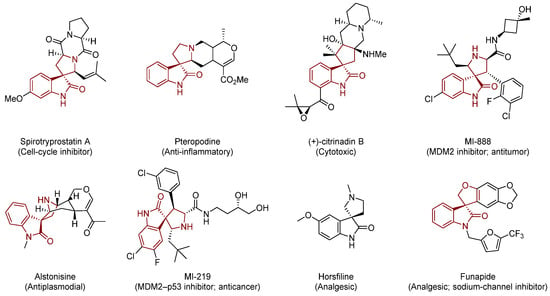
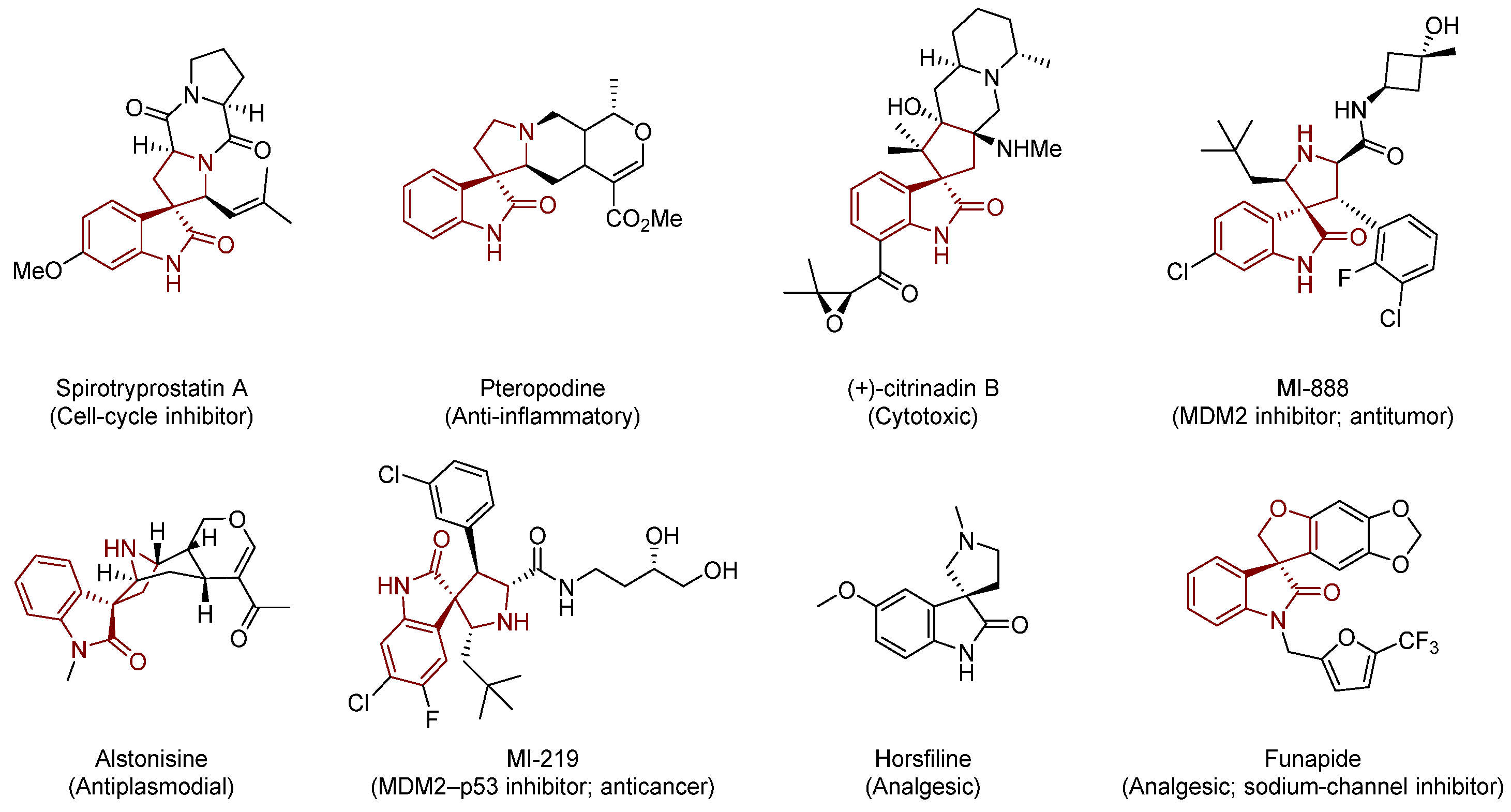
Structural modification and derivatization based on natural products are effective approaches for creating novel pesticide compounds. The spirooxindole framework is a privileged scaffold widely found in structurally diverse natural alkaloids, including spirotryprostatin A, pteropodine, (+)-citrinadin B, alstonisine, and horsfiline, as well as synthetic bioactive molecules such as MI-219, MI-888, and funapide (Figure 1). Spirooxindole-containing compounds have been reported to exhibit diverse biological activities, including cell-cycle inhibitory, anti-inflammatory, cytotoxic, antitumor, antiplasmodial, and analgesic activities [6,7,8,9,10,11,12,13]. Meanwhile, the diketopiperazine unit, with its rigid heterocyclic skeleton and favorable metabolic stability, can significantly enhance the binding affinity between ligands and target proteins through multiple hydrogen-bonding interactions [14,15]. In recent years, the combination of spirooxindole and diketopiperazine pharmacophores through molecular hybridization strategies has emerged as an effective approach for constructing structurally diverse bioactive molecules [16,17,18]. Spirotryprostatin A, a representative spirooxindole alkaloid containing a diketopiperazine framework, has attracted considerable attention because of its unique structural characteristics and biological potential. Inspired by this natural product scaffold, spirooxindole-diketopiperazine derivatives have been explored as promising frameworks for the discovery of novel bioactive compounds [19,20].
Figure 1.
Examples of natural spirooxindole alkaloids and their structurally related derivatives [6,7,8,9,10,11,12,13].
However, the biological activity of spirooxindole-diketopiperazine derivatives can be influenced by structural variations, particularly the electronic properties, steric effects, and substitution patterns of aromatic substituents [21,22,23]. These factors can regulate molecular polarity, steric environment, and conformational characteristics, thereby influencing their biological performance [24,25]. Therefore, systematic structural diversification and structure–activity relationship (SAR) investigations are important for exploring the relationship between structural features and biological activity within this scaffold [26,27]. The introduction of substituents with different electronic properties provides an effective strategy for exploring SAR trends. Electron-donating groups (EDGs) and electron-withdrawing groups (EWGs) can alter electron distribution, polarity, and molecular recognition, while different substitution patterns may further influence steric interactions and molecular conformation [28,29,30]. To investigate the influence of electronic effects, methyl (–CH3) and trifluoromethyl (–CF3) groups were selected as representative EDG and EWG substituents, respectively. These two groups possess distinct electronic properties while exhibiting relatively moderate steric differences, providing suitable models for investigating how electronic properties influence antifungal activity [31,32,33,34]. In addition, the trifluoromethyl group is widely applied in medicinal and agrochemical chemistry because of its ability to regulate lipophilicity, metabolic stability, and physicochemical properties.
In this study, a series of novel Spirotryprostatin A-inspired spirooxindole-diketopiperazine derivatives were designed and synthesized through systematic structural diversification of aromatic substituents. Seven spirooxindole intermediates and fourteen target derivatives were successfully obtained. By introducing electron-donating and electron-withdrawing groups at different positions of the aromatic ring, the influence of electronic properties, substitution patterns, and stereochemical configurations on antifungal activity was investigated. The antifungal activities of these derivatives against twelve major phytopathogenic fungi were evaluated by determining minimum inhibitory concentration (MIC) values, and comprehensive SAR analyses were performed to elucidate the relationship between molecular structure and biological activity. Furthermore, isothermal microcalorimetry (IMC) was employed to investigate the metabolic responses of representative fungal strains under compound treatment, while molecular docking studies were conducted to provide preliminary insights into the possible molecular interactions of highly active derivatives with potential fungal targets. This study provides a structural optimization strategy for Spirotryprostatin A-inspired scaffolds and contributes to the discovery of novel antifungal compounds.
2. Results and Discussion
2.1. Synthesis of Spirotryprostatin A-Inspired Spirooxindole-Diketopiperazine Derivatives
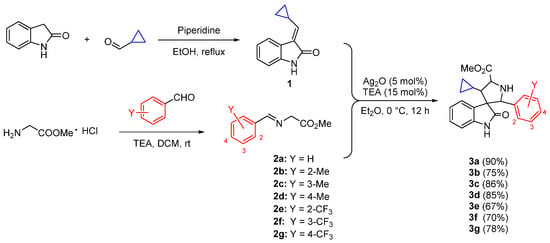
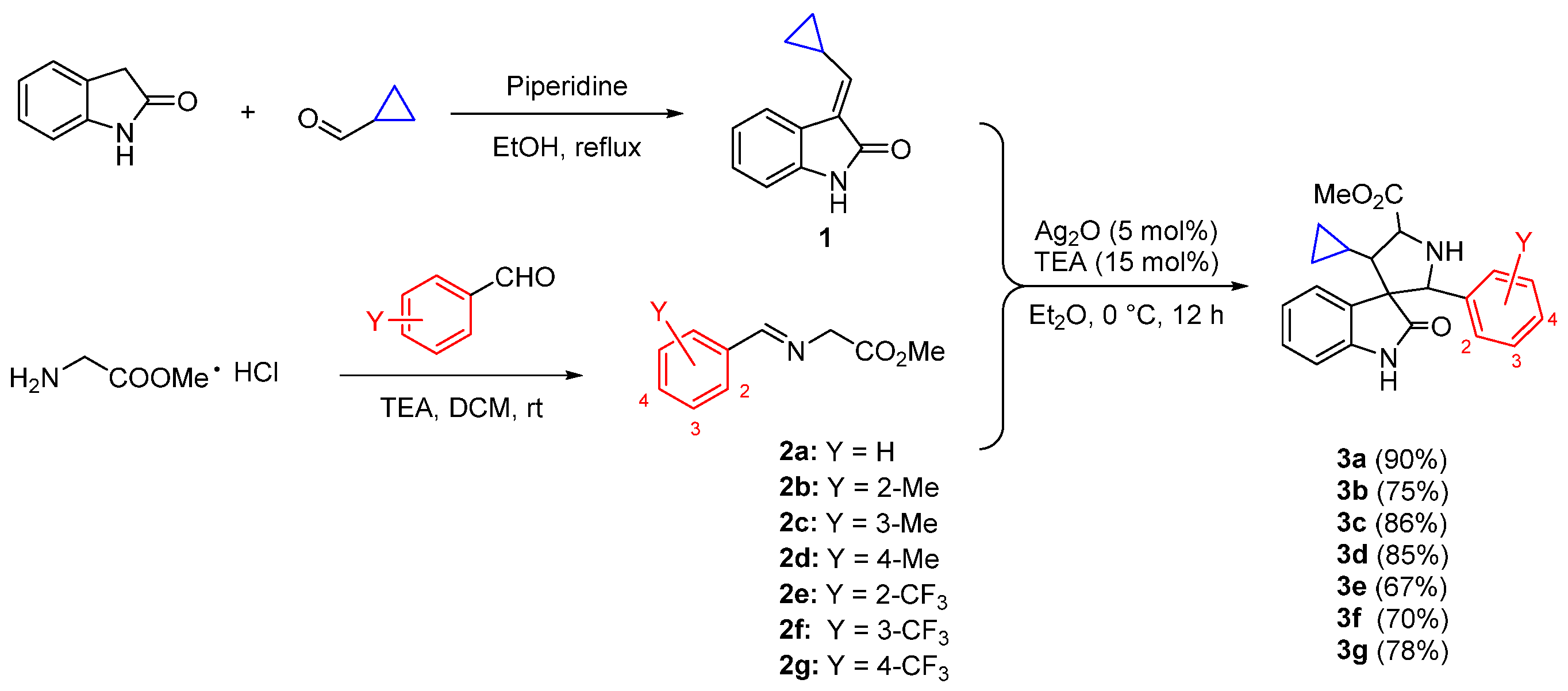
The synthetic strategy was designed based on structural diversification of aromatic substituents on the spirotryprostatin A-inspired spirooxindole-diketopiperazine scaffold to investigate the effects of electronic properties and substitution patterns on antifungal activity. The spirooxindole intermediates were initially synthesized via a catalytic [3 + 2] cycloaddition reaction between oxindole 1 and various glycine ester imines (2a–2g) in the presence of Ag2O and Et3N (Scheme 1). This transformation provided the key spirooxindole intermediates 3a–3g, which served as versatile precursors for the subsequent construction of the target spirooxindole-diketopiperazine derivatives.
Scheme 1.
Preparation of spirooxindole intermediates 3a–3g.
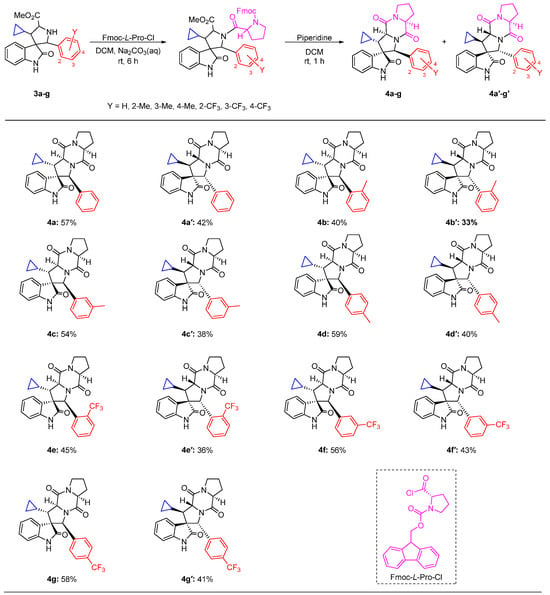
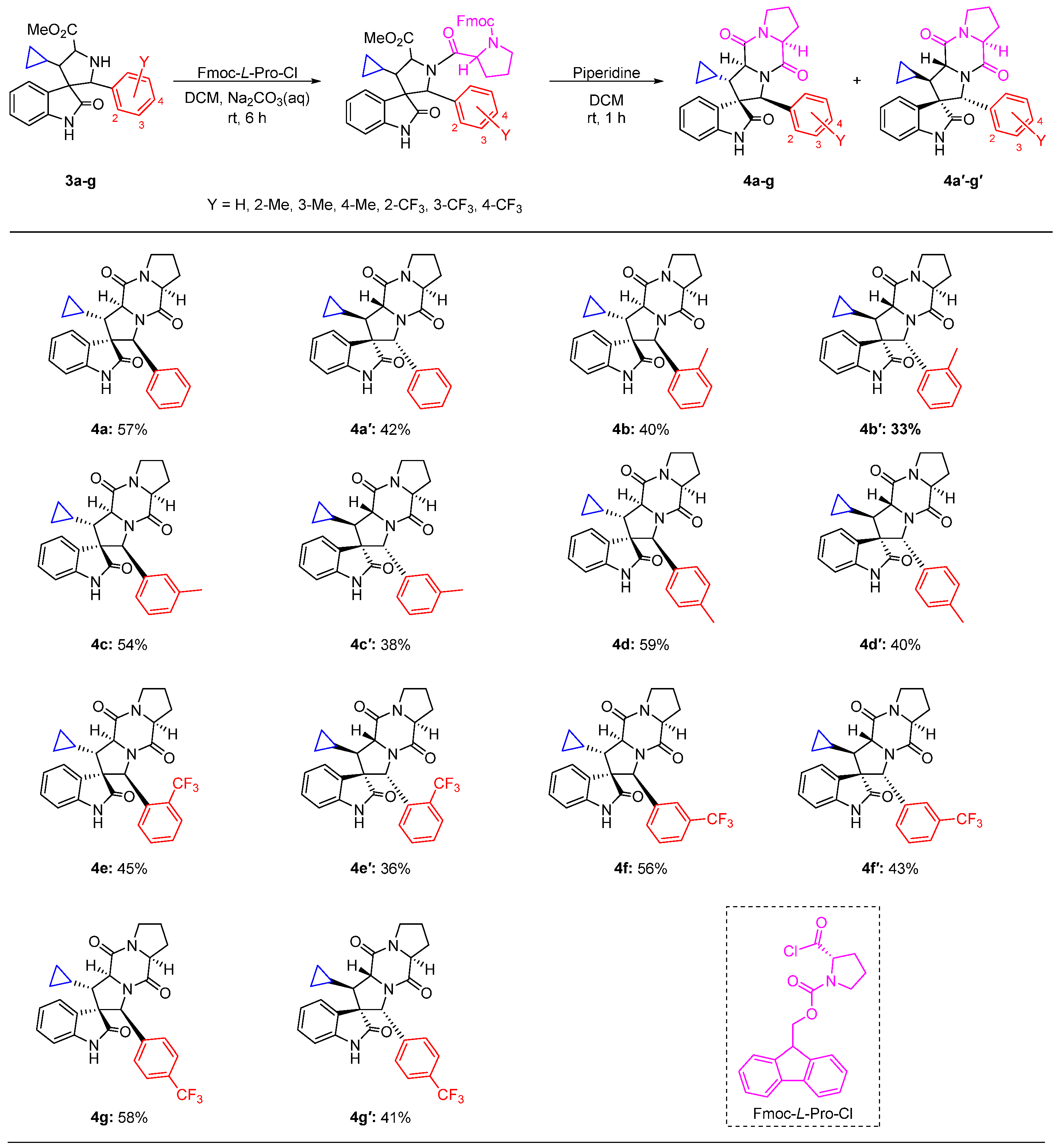
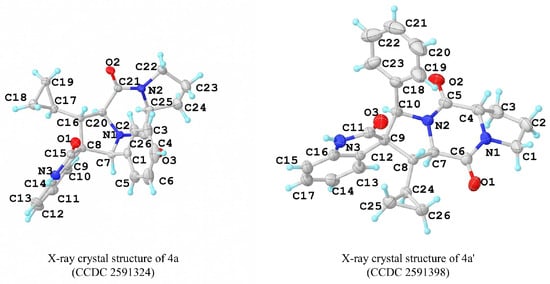
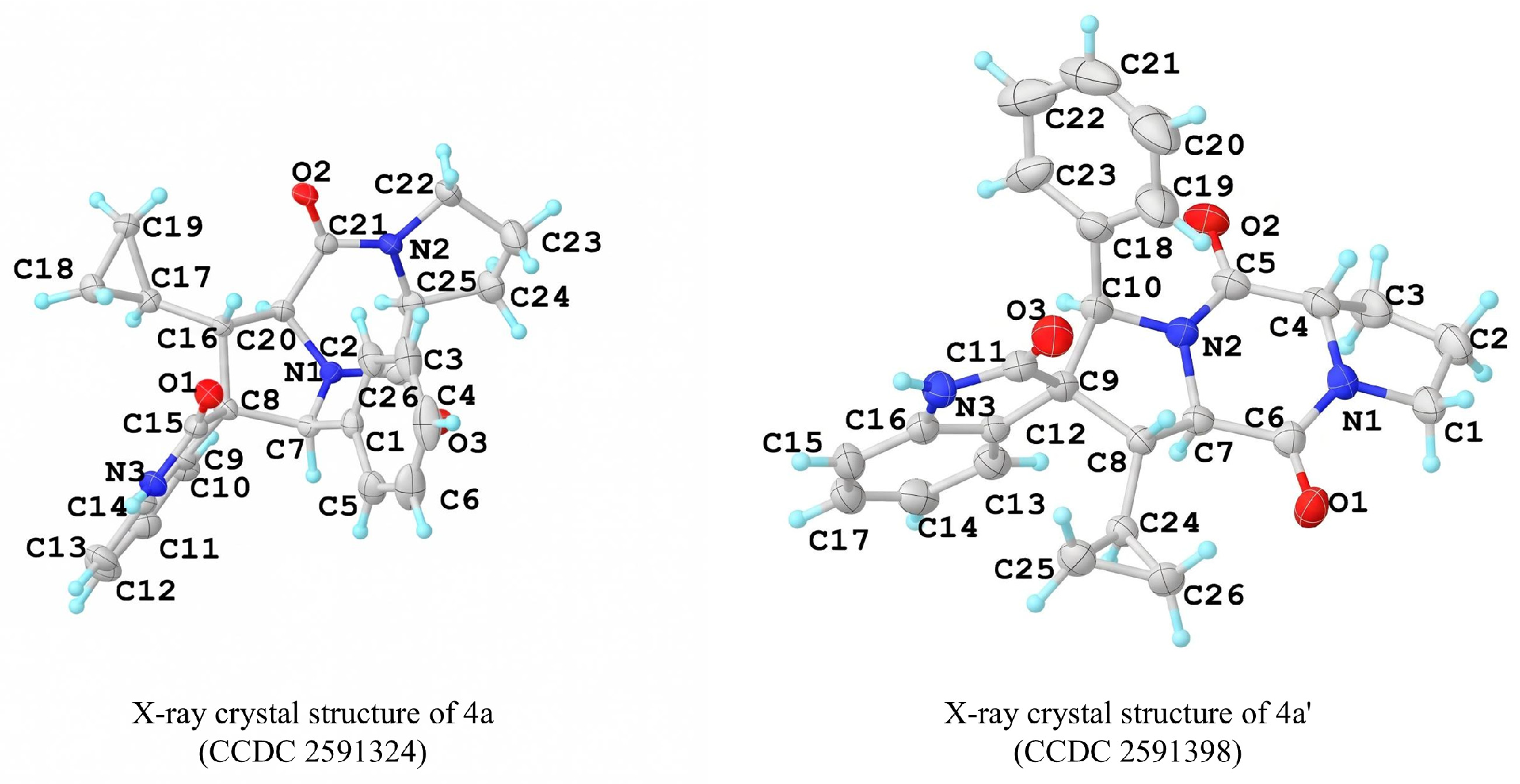
During the synthesis of the target spirooxindole-diketopiperazine derivative 4, Fmoc-L-Pro-Cl was employed as the acylating reagent to construct the dipeptide intermediates via a Schotten–Baumann reaction. This step introduced the proline-derived chiral unit into the molecular framework. Subsequently, removal of the Fmoc protecting group was achieved under basic conditions using piperidine, followed by spontaneous intramolecular cyclization to generate the diketopiperazine ring system. The resulting products were purified by silica gel column chromatography to afford the target compounds 4 and 4′ (Scheme 2). The absolute configurations of representative derivatives were confirmed by single-crystal X-ray diffraction analysis (Figure 2). To systematically investigate the effects of electronic properties and substitution patterns on the molecular diversity of the target compounds, electron-withdrawing and electron-donating groups were strategically introduced at the ortho-, meta-, and para-positions of the aromatic ring. The target products 4 and 4′ were generally obtained in moderate to excellent yields (77–99%). However, compounds 4b, 4b′, 4e, and 4e′ were obtained in relatively lower yields compared with other derivatives, which may be associated with increased steric hindrance during the intramolecular cyclization step.
Scheme 2.
Preparation of spiroindolodione piperazine compounds 4a–4g and 4a′–4g′ a,b. a Reaction conditions: 3a–3g (0.1 mmol) and Fmoc-L-Pro-Cl (0.1 mmol) in DCM (5.0 mL) and Na2CO3 (5 mL) at room temperature; piperidine (0.12 mmol) at room temperature. b Isolated yields.
Figure 2.
The X-ray crystal structure of 4a and 4a′.
2.2. Preliminary Antifungal Evaluation of Spirotryprostatin A-Inspired Spirooxindole-Diketopiperazine Derivatives
In this study, seven spirooxindole intermediates (3a–3g) and fourteen spirooxindole-diketopiperazine derivatives (4a–4g and 4a′–4g′) were initially evaluated for their in vitro antifungal activities against twelve phytopathogenic fungi using the agar diffusion method. Ketoconazole (2 mg/mL) was used as the positive control, while DMSO served as the negative control. The antifungal profiles of the tested compounds were visualized by heatmap analysis (Supplementary Materials, Figure S43), in which the color intensity corresponded to the diameter of inhibition zones (mm), allowing an intuitive comparison of inhibitory effects among different compounds and fungal strains.
SAR analysis revealed that the spirooxindole-diketopiperazine derivatives (4a–4g and 4a′–4g′) generally exhibited enhanced antifungal activity compared with the corresponding spirooxindole intermediates (3a–3g). The introduction of the diketopiperazine framework significantly improved the inhibitory effects against several tested fungal strains, indicating the importance of this structural motif for antifungal activity. Among the tested phytopathogens, the synthesized compounds displayed particularly pronounced inhibitory effects against Valsa mali (V. m.) and Alternaria brassicae (A. b.).
2.3. Minimum Inhibitory Concentration (MIC) Evaluation and Structure–Activity Relationship Studies of Spirooxindole-Diketopiperazine Derivatives
The minimum inhibitory concentration (MIC) is a critical parameter for evaluating the antimicrobial efficacy of bioactive compounds and serves as an important indicator in the screening and quantitative assessment of antifungal agents. To systematically evaluate the inhibitory effects of the 21 synthesized compounds against 12 plant pathogenic fungi, the MIC values of all derivatives were determined for each fungal strain, and their antifungal activities were comprehensively analyzed (Table 1).
Table 1.
Minimum inhibitory concentration (MIC) of compounds 3a–3g, 4a–4g, and 4a′–4g′.
The MIC results demonstrated that the antifungal activities of the synthesized compounds varied significantly depending on their molecular structures, indicating that structural modifications of the spirooxindole-diketopiperazine scaffold had a substantial influence on antifungal potency. Meanwhile, different fungal strains exhibited distinct sensitivity profiles toward these compounds, suggesting the presence of species-specific variations in susceptibility.
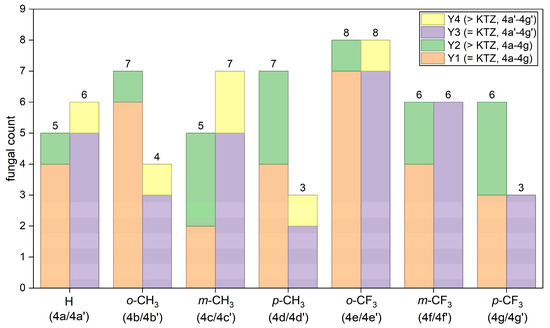
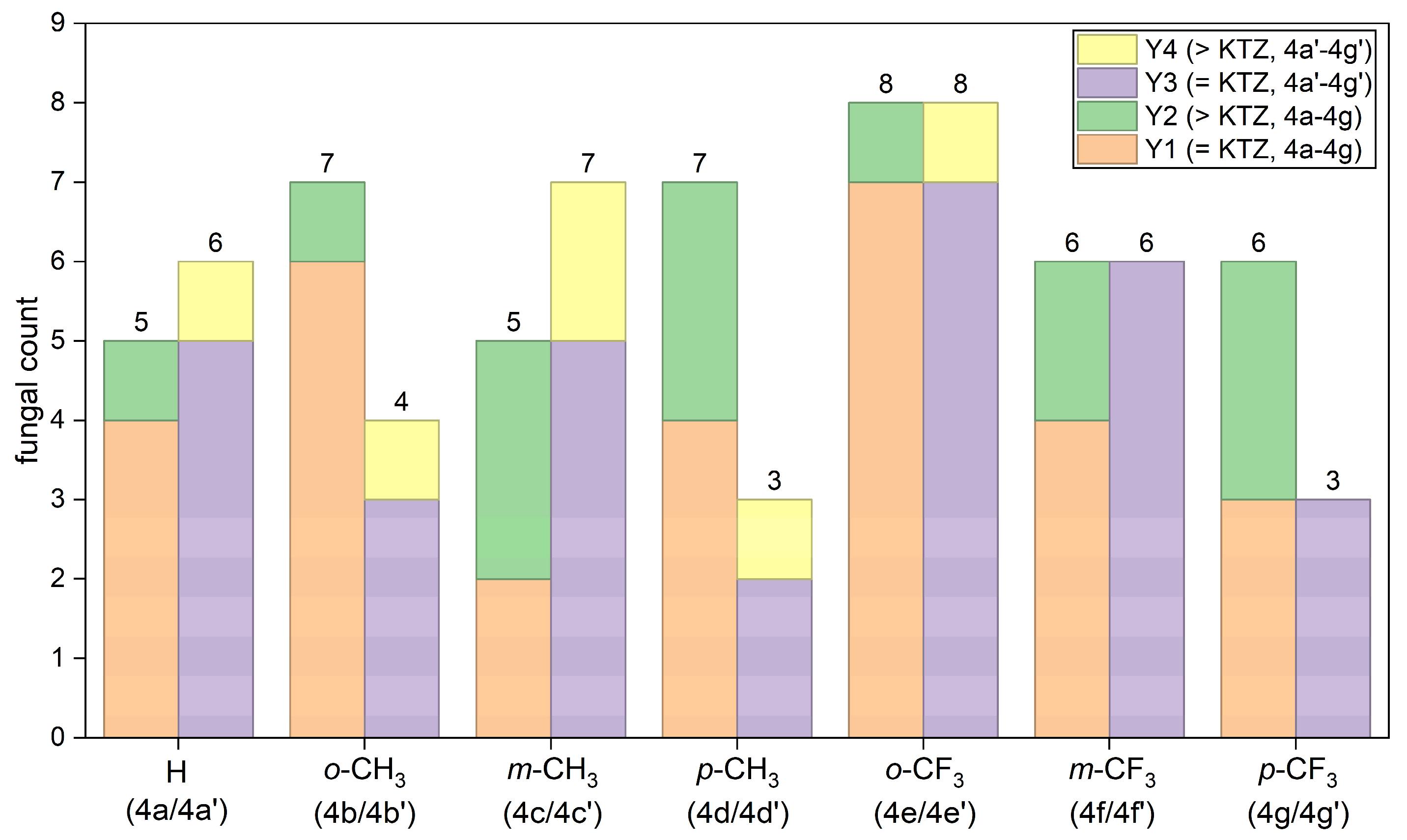
To further evaluate and quantify the broad-spectrum antifungal potency of the final products in each substituent series (4a–4g, 4a′–4g′), this study used the broad-spectrum antifungal agent ketoconazole (KTZ) as a positive control, and for the 12 plant pathogenic fungi, counted the frequency of strains for which the compounds in each substituent series (e.g., 4b and its diastereomer 4b′) exhibited antifungal activity equivalent to (=KTZ) or superior to (>KTZ) that of ketoconazole (Figure 3).
Figure 3.
The number of fungal strains in different substituent series that achieved or surpassed the efficacy of ketoconazole.
The in vitro antifungal activity assay demonstrated that, compared with the unsubstituted phenyl ring compounds 4a/4a′ of the spirooxindole diketopiperazine final products, the compounds 4b–4d and 4b′–4d′ bearing an electron-donating group (-CH3) and the compounds 4e–4g and 4e′–4g′ bearing a strong electron-withdrawing group (-CF3) all exhibited varying degrees of improvement in overall antifungal activity. For the two series with methyl and trifluoromethyl substituents, a horizontal comparison based on the specific MIC values in Table 1 revealed that the influence of the substituent position (-ortho, -meta, -para) on activity exhibited different trends under different electronic effects.
In the unsubstituted (-H) series on the phenyl ring, compound 4a exhibited MIC values against C.l. (16 μg/mL), P.o. (16 μg/mL), P.p. (8 μg/mL), and F.o.v. (32 μg/mL) that were equal to those of the positive control ketoconazole, and its MIC value against V.m. (4 μg/mL) was lower than that of ketoconazole. The diastereomer 4a′ showed the same effect as 4a against C.l. and P.p., but exhibited better inhibitory effects than 4a against M.m. (32 μg/mL), F.g. (16 μg/mL), and P.o. (8 μg/mL).
In the methyl (-CH3) series, the ranking of the superiority frequencies by substituent position was meta-substitution (m-CH3) (4c/4c′, 12 strains) > ortho-substitution (o-CH3) (4b/4b′, 11 strains) > para-substitution (p-CH3) (4d/4d′, 10 strains). Among them, the meta-substituted compound 4c exhibited the broadest and most excellent antifungal activity. Specifically, against F.g. (16 μg/mL) and V.m. (8 μg/mL), 4c displayed antifungal activity comparable to that of the positive control ketoconazole; against A.b. (4 μg/mL), A.s. (4 μg/mL), and C.g. (16 μg/mL), 4c exhibited superior antifungal activity to ketoconazole. Interestingly, the diastereomer 4c′ showed excellent antifungal activity different from that of 4c against M.m. (16 μg/mL), A.a. (8 μg/mL), and F.o.v. (32 μg/mL). The ortho-substituted compounds performed excellently on specific strains: 4b exhibited antifungal activity comparable to ketoconazole against six strains including M.m. (32 μg/mL), F.o.n. (8 μg/mL), and A.a. (8 μg/mL), and showed stronger antifungal activity than ketoconazole against A.s. (8 μg/mL). Furthermore, the diastereomer 4b′ also exhibited antifungal activity different from that of 4b against P.p. (8 μg/mL), and its antifungal activity against A.b. (4 μg/mL) was superior to that of ketoconazole. Although the para-substituted compounds 4d/4d′ had slightly lower superiority frequencies than the meta- and ortho-substituted ones, they still exhibited excellent inhibitory effects against eight strains. In particular, 4d showed particularly outstanding activity against F.g. (8 μg/mL), C.l. (8 μg/mL), and A.s. (8 μg/mL). Based on the above broad-spectrum or specific performance, compounds 4c and 4d demonstrated potential value for development as highly effective narrow-spectrum fungicides.
In the trifluoromethyl (-CF3) series, the pattern of superiority frequencies by substituent position was ortho (4e/4e′, 16 strains) > meta (4f/4f′, 12 strains) > para (4g/4g′, 9 strains). The ortho-substituted series showed a favorable overall antifungal profile and promising broad-spectrum activity among all series: 4e showed excellent inhibitory effects on various strains such as M.m. (32 μg/mL), C.l. (16 μg/mL), A.a. (8 μg/mL), P.o. (8 μg/mL), P.p. (4 μg/mL), A.s. (16 μg/mL), V.m. (8 μg/mL), and F.o.v. (32 μg/mL); its diastereomer 4e′ exhibited stronger inhibitory effects than 4e against F.g. (16 μg/mL), A.b. (8 μg/mL), and V.m. (4 μg/mL). The meta-substituted compound 4f exhibited excellent inhibitory effects against F.g. (16 μg/mL), F.o.n. (8 μg/mL), C.l. (8 μg/mL), A.b. (8 μg/mL), P.p. (8 μg/mL), and C.g. (16 μg/mL) and other strains. Its diastereomer 4f′ showed better inhibitory effects than 4f against M.m. (32 μg/mL) and A.s. (16 μg/mL). The para-substituted compounds 4g/4g′ exhibited excellent inhibitory effects against eight strains. Among them, 4g demonstrated exceptionally outstanding antifungal effects against three strains, namely P.o. (8 μg/mL), A.s. (8 μg/mL), and V.m. (4 μg/mL), with MIC values lower than that of ketoconazole, while the diastereomer 4g′ exhibited better inhibitory activity than 4g against F.o.n. (8 μg/mL) and A.b. (8 μg/mL).
Structure–activity relationship (SAR) analysis indicates that the antifungal activity of this series of compounds is primarily regulated by the substituent’s electronic properties and substitution position, with molecular stereoconfiguration exerting a relatively minor impact. Overall, the electronic effect plays a significant role [35]: electron-withdrawing groups (e.g., -CF3), exhibit significantly superior antifungal efficacy compared to electron-donating groups (e.g., -CH3) by rendering the phenyl ring electron-deficient, thereby substantially enhancing both overall activity and broad-spectrum efficacy [36]. Regarding positional effects, different trends emerge: for electron-withdrawing groups, the activity follows the order of ortho > meta > para; conversely, for electron-donating groups, the order is meta > ortho > para. In contrast, the stereoisomeric effect acts only as a minor secondary factor that does not fundamentally alter the aforementioned overall SAR trends. In terms of future molecular design strategies based on these findings: for electron-donating ortho/para-directing groups (such as methyl), meta-modification should be prioritized to minimize electronic interference, whereas, for electron-withdrawing meta-directing groups (such as trifluoromethyl) [36,37,38], ortho- or meta-modification should be preferentially considered, aiming to utilize the strong electron-withdrawing inductive effect to strengthen the binding affinity with the receptor while avoiding the steric geometric limitations imposed by para-modification [39].
2.4. Heat Flow Curve Analysis of Spirooxindole-Diketopiperazine Derivatives
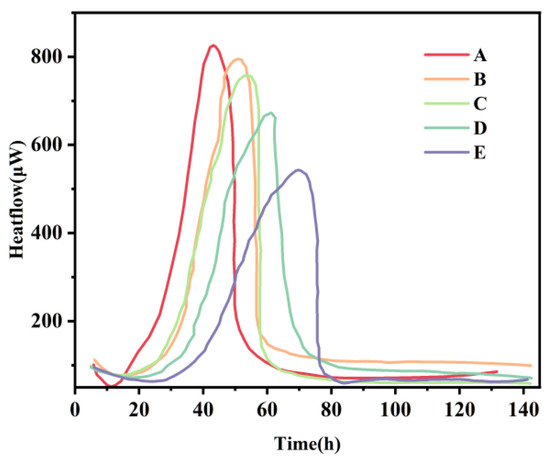
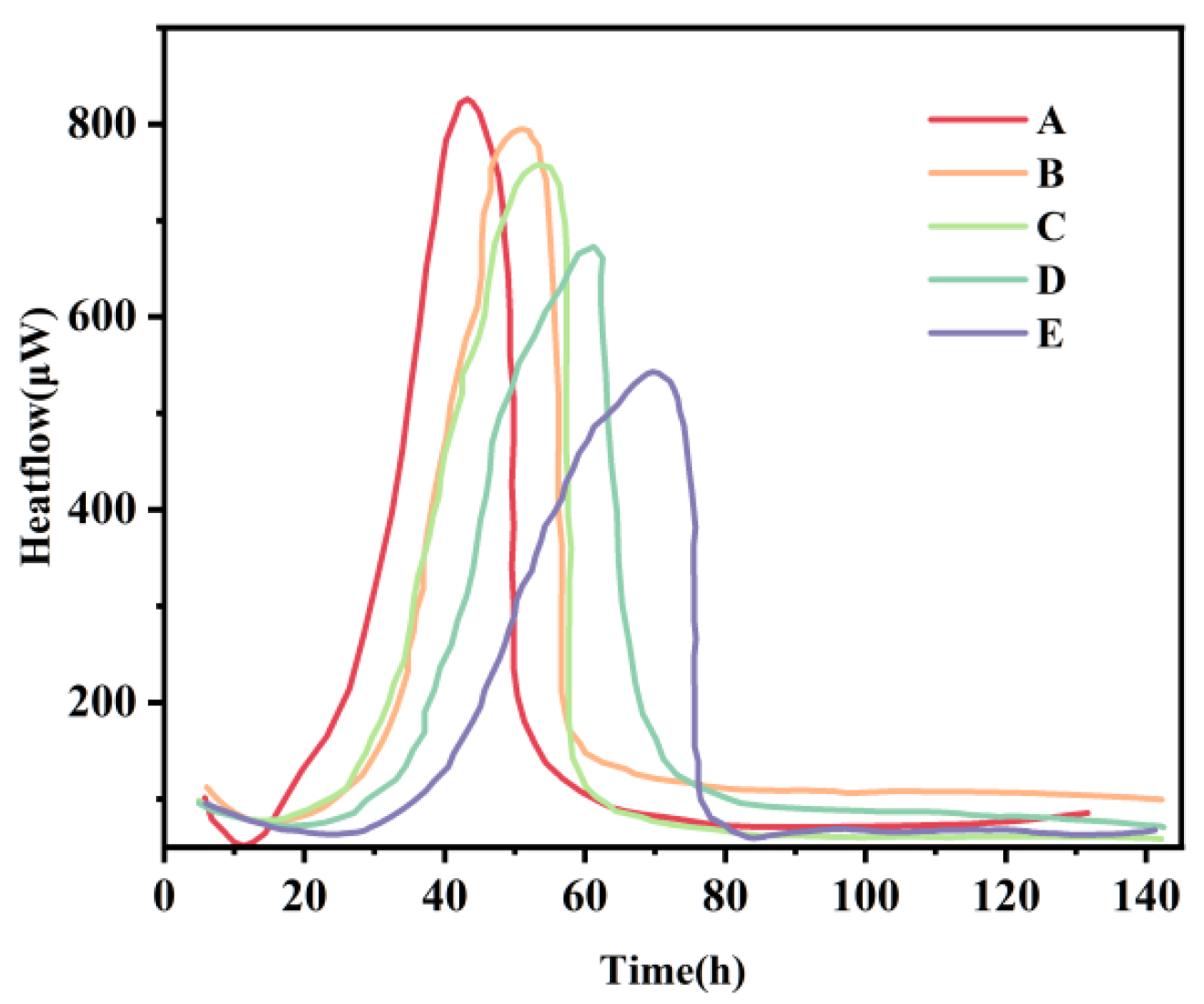
Isothermal microcalorimetry possesses extremely high sensitivity to the heat released by metabolically active cells, enabling real-time, non-destructive recording of energy changes during microbial metabolic processes. In this study, compound 4e (which exhibited antifungal activity comparable to that of the positive control ketoconazole and demonstrated broad-spectrum antifungal activity) was selected, and the Valsa mali, the most sensitive strain to this series of compounds, was used as the test fungus for heat flow curve analysis by isothermal microcalorimetry [40]. Under isothermal conditions, this experiment monitored in real time the energy and heat changes accompanying the metabolic process of Valsa mali under the action of different concentrations (0, 1, 2, 4, 8 μg/mL) of the spirooxindole diketopiperazine compound 4e, and obtained the corresponding metabolic power–time curves (Figure 4) and related biometabolic kinetic parameters (Table 2).
Figure 4.
Isothermal microcalorimetry heat flow–time curves of Valsa mali in the presence of compound 4e at various concentrations: (A) 0 μg/mL, (B) 1 μg/mL, (C) 2 μg/mL, (D) 4 μg/mL, and (E) 8 μg/mL.
Table 2.
Fungal inhibition and kinetics parameters obtained by isothermal microcalorimetry.
As illustrated in Figure 4, the heat flow curves of Valsa mali exhibited a distinct concentration-dependent response upon treatment with compound 4e, characterized by a progressive suppression of the exothermic peak intensity and a pronounced rightward shift in the metabolic profiles. Quantitative kinetic analysis (Table 2) revealed that the maximum metabolic power (Pm) of the control group was 835.20 ± 12.8 μW, with a peak time (tm) of 43.92 ± 1.5 h. Upon increasing the concentration of 4e to 8 μg/mL, the Pm value step-wisely declined to 549.53 ± 11.5 μW, whereas the tm was substantially prolonged to 70.48 ± 2.8 h. These findings demonstrate that compound 4e effectively suppresses the ceiling of energy metabolism during the late log phase of the fungus and drastically extends its lag phase, manifesting a significant kinetic delay in fungal proliferation.
Intriguingly, the specific growth rate constant (μ) of Valsa mali did not experience a catastrophic collapse across the investigated concentration range, remaining relatively constant between 0.017 and 0.022 h−1. This phenomenon indicates that the primary mode of action of compound 4e is fungistatic rather than strictly fungicidal. The compound impedes the initial physiological preparation and confines the maximum metabolic burst scale, yet the intrinsic reproductive velocity of the surviving fungal cells remains uncompromised once they enter the exponential growth phase. The determination coefficients (R2) for all kinetic fits ranged from 0.81 to 0.87, underscoring the high accuracy and robustness of the thermodynamic model. This study provides precise quantitative evidence from both thermodynamic and kinetic perspectives, validating the potential of spirooxindole diketopiperazine derivatives as promising candidates for novel agricultural fungicides.
2.5. Molecular Docking Analysis of Spirooxindole-Diketopiperazine Derivatives
Succinate dehydrogenase (SDH) and myosin are key proteins involved in fungal energy metabolism and cellular processes, respectively. To obtain preliminary insights into the potential interactions between the synthesized spirooxindole-diketopiperazine derivatives and these proteins, molecular docking studies were performed using SDH (PDB ID: 1ZOY) and myosin (PDB ID: 6UI4) as target models. The calculated binding free energies (ΔG) and docking results are summarized in Table 3.
Table 3.
Molecular docking and binding energy of compounds to different proteins.
The docking results revealed that the tested compounds exhibited different predicted binding affinities toward the selected targets, and the interaction profiles were influenced by structural modifications of the spirooxindole-diketopiperazine scaffold. In the myosin docking model (PDB ID: 6UI4), the primed derivatives generally showed more favorable binding energies than their corresponding analogues. Among them, compound 4d′ exhibited the optimal predicted interaction with myosin (ΔG = −6.40 kcal/mol), followed by 4c′ (ΔG = −6.18 kcal/mol) and 4b′ (ΔG =−5.68 kcal/mol). Similarly, in the SDH docking model (PDB ID: 1ZOY), compound 4c′ displayed the most favorable binding energy (ΔG = −6.91 kcal/mol), while 4b′ and 4d′ also showed relatively strong interactions with ΔG values of −6.60 and −6.65 kcal/mol, respectively.
Notably, the improved docking scores of these derivatives showed a broadly consistent trend with their observed antifungal activities, suggesting that the introduction of specific substituents and optimization of the diketopiperazine scaffold may influence ligand–target interactions. Among the tested derivatives, compound 4c′ exhibited the most favorable predicted binding energy toward SDH (ΔG = −6.91 kcal/mol). This result suggests that the structural features of 4c′ may promote favorable interactions within the SDH binding pocket, which may contribute to its observed antifungal activity.
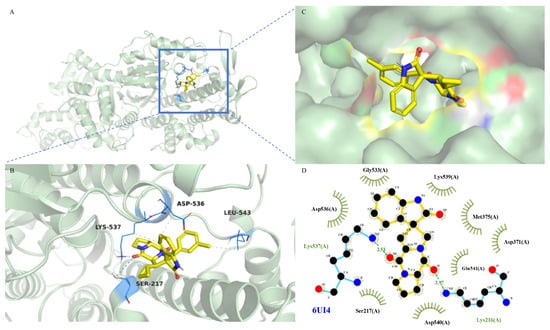
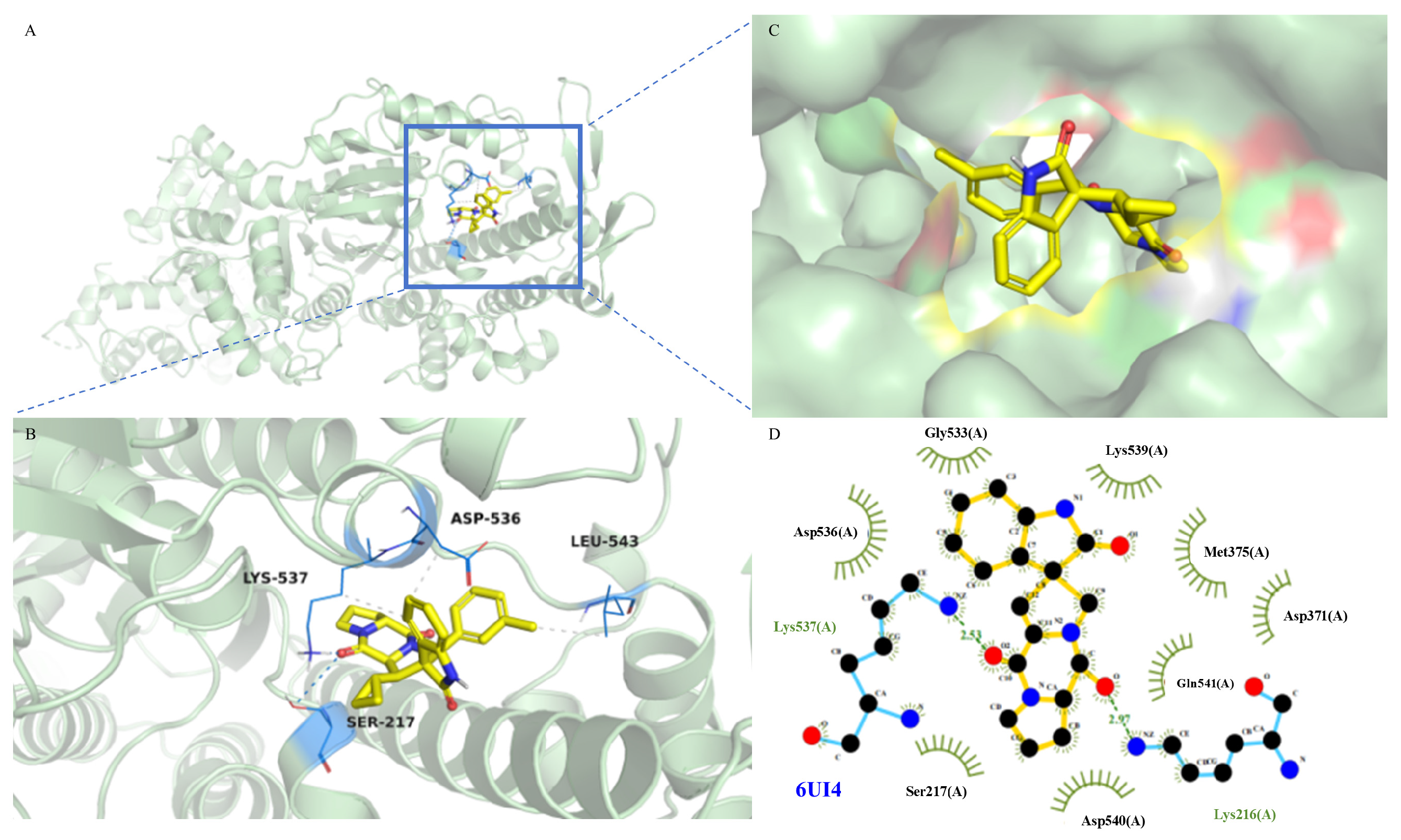
Compound 4c′ was specifically selected for detailed molecular docking visualization because it demonstrated the highest theoretical binding affinity (lowest binding free energy) against both target proteins in the computational evaluation. While compounds 4e and 4e′ exhibited broader in vitro antifungal activity, it is well established that molecular docking models the interactions with isolated target proteins, whereas in vitro MIC assays reflect the comprehensive whole-cell antifungal efficacy. Therefore, 4c′ was utilized as the optimal structural model to elucidate the specific protein–ligand interactions within the target binding pockets. To further understand the molecular basis underlying this favorable docking performance, the binding mode of 4c′ with myosin was analyzed in detail (Figure 5). Compound 4c′ adopted a favorable orientation within the binding pocket of myosin, where the spirooxindole-diketopiperazine scaffold was accommodated in the hydrophobic region of the pocket. The carbonyl groups of the diketopiperazine moiety were involved in polar interactions with surrounding residues, which may contribute to the stabilization of the ligand–protein complex. Hydrophobic interactions with residues such as Leu543, together with additional polar contacts involving Ser217 and Asp536, were observed.
Figure 5.
Molecular docking analysis of compound 4c′ with myosin (PDB ID: 6UI4). (A) overall docking pose of 4c′ within the myosin binding pocket; (B) three-dimensional interaction mode of 4c′ with surrounding amino acid residues; (C) surface representation of the 4c′-myosin complex; (D) two-dimensional interaction diagram showing the interactions between 4c′ and myosin residues.
The two-dimensional interaction analysis further revealed that the carbonyl groups of the diketopiperazine ring formed hydrogen-bond interactions with Lys216 and Lys537, with calculated distances of 2.53 and 2.97 Å, respectively (Figure 5D). These hydrogen-bond interactions, combined with hydrophobic contacts, may contribute to the favorable binding affinity of the 4c′-myosin complex.
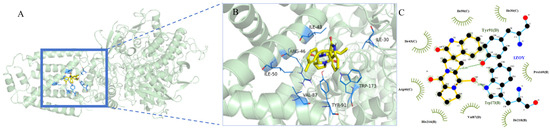
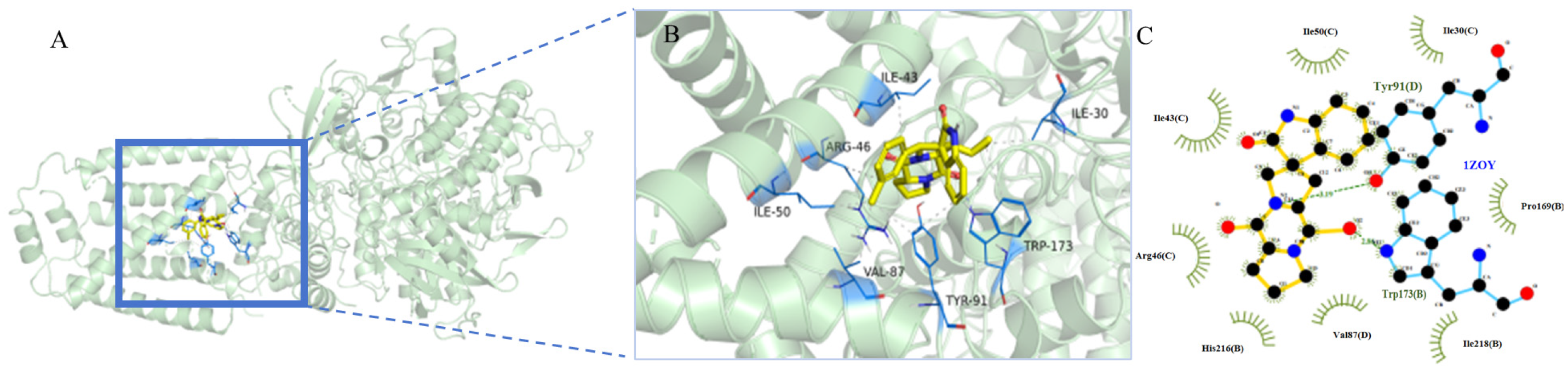
Furthermore, the interaction modes of 4c′ with SDH was analyzed in detail (Figure 6). Compound 4c′ exhibited a favorable predicted binding energy toward SDH (ΔG = −6.91 kcal/mol). The docking analysis suggested that 4c′ adopted a favorable orientation within the SDH binding pocket and formed potential intermolecular interactions with surrounding residues. These structural features may contribute to the predicted interaction of 4c′ with SDH.
Figure 6.
Molecular docking analysis of 4c′ with succinate dehydrogenase (SDH, PDB ID: 1ZOY): (A) overall view of the 4c′–SDH complex; (B) close-up view of the binding site; and (C) two-dimensional interaction diagram.
Overall, the molecular docking results suggested that the spirooxindole-diketopiperazine derivatives, particularly 4c′ and related analogues, exhibited favorable predicted interactions toward SDH and myosin. These findings provide preliminary molecular insights into possible ligand–target binding modes and may contribute to a better understanding of their structure–activity relationships.
It is noteworthy that molecular docking simulations provide theoretical predictions of ligand–target interactions rather than direct experimental evidence. Therefore, the proposed binding modes and potential antifungal mechanisms require further validation through biochemical and genetic investigations. Nevertheless, the docking results offer valuable structural insights into the interaction characteristics of these compounds with their potential targets.
3. Materials and Methods
3.1. General Information
1H and 13C NMR spectra were recorded on JEOL ECP 500 (400 MHz) or Bruker AVANCE 600 (Bruker Switzerland AG, Fällanden, Switzerland) NMR spectrometers. High-resolution mass spectrometry (HRMS) data were acquired using a Bruker Impact HD Q-TOF mass spectrometer (Milford, MA, USA). Single-crystal X-ray diffraction (SC-XRD) data were collected on a Bruker D8 VENTURE dual-wavelength (Mo/Cu) diffractometer (Bruker AXS, Karlsruhe, Germany). Melting points were determined with an X-4 digital display microscopic melting point apparatus (Beijing Tek Instruments Co., Ltd., Beijing, China). Unless otherwise specified, all chemical reagents and solvents purchased from commercial sources were used directly without further purification.
3.2. General Procedure for the Synthesis of Compound 1
To a 100 mL round-bottom flask, 2-oxindole (10 mmol) and anhydrous ethanol (15 mL) were added and stirred until fully dissolved. Subsequently, cyclopropanecarbox-aldehyde (11 mmol) and piperidine (15 mmol) were added. The reaction mixture was stirred and refluxed at 80 °C for 8 h. After completion of the reaction, the solvent was removed under reduced pressure using a rotary evaporator. The residue was purified by silica gel column chromatography to afford compound 1.
3.3. General Procedure for the Synthesis of Compound 2a–2g
To a 250 mL round-bottom flask, glycine methyl ester hydrochloride (22 mmol), anhydrous MgSO4 (40 mmol), DCM (50 mL), and triethylamine (22 mmol) were sequentially added, and the mixture was stirred at room temperature for 1 h. Subsequently, the corresponding aldehyde (20 mmol) was added, and the mixture was kept stirring at room temperature for another 24 h. Upon completion, the mixture was filtered, diluted with water (30 mL), and separated into layers. The aqueous layer was extracted with DCM (3 × 10 mL). The organic phases were combined, washed with brine, and dried over anhydrous MgSO4. After filtration, the solvent was evaporated under reduced pressure. The crude products were used directly in the next step without further purification.
3.4. General Procedure for the Synthesis of Compound 3a–3g
Under a nitrogen atmosphere, Ag2O (12 mg, 0.05 mmol), compound 1 (0.1 mmol), compound 2a–2g (0.2 mmol), Et3N (2.2 μL, 0.015 mmol), and diethyl ether (1 mL) were sequentially charged into a Schlenk tube to obtain a yellow suspension. The reaction mixture was stirred at 0 °C for 12 h, during which the color of the suspension completely shifted from yellow to dark gray. The solvent was removed under reduced pressure, and the crude residue was purified by silica gel column chromatography (petroleum ether/ethyl acetate = 2:1, v/v) to furnish the desired product 3a–3g.
3.5. General Procedure for the Synthesis of Compound 4a–4g, 4a′–4g′
To a 25 mL round-bottom flask, DCM (5 mL) and saturated aqueous Na2CO3 solution (5 mL) were added to form a biphasic system. Compound 3a–3g (0.1 mmol) was added under stirring until the solid was completely dissolved. Subsequently, a solution of Fmoc-L-Pro-Cl (0.1 mmol) in DCM (2 mL) was added dropwise. After stirring at room temperature for 6 h, the mixture was allowed to stand for phase separation. The aqueous phase was extracted with DCM (3 × 5 mL). The combined organic layers were washed with brine, dried over anhydrous MgSO4, and filtered. Piperidine (0.12 mmol) was then introduced into the filtrate, and the mixture was stirred at room temperature for an additional 1 h. Finally, the solvent was concentrated, and the residue was purified by column chromatography (petroleum ether/ethyl acetate = 1:1, v/v) to afford the products 4a–4g and 4a′–4g′ as white solids.
3.6. Tested Fungal Strains and Medium Preparation
A total of twelve phytopathogenic fungal strains were employed in this study; specific strain information is provided in the Supplementary Materials. All strains were provided by the Laboratory of Natural Product Chemistry at Shaanxi University of Science and Technology.
3.7. Primary Antifungal Activity Screening
The antifungal activity screening methods are detailed in the Supplementary Materials.
3.8. Determination of Minimum Inhibitory Concentration (MIC) via Two-Fold Serial Dilution
The minimum inhibitory concentration (MIC) of the seven spirooxindole intermediates and fourteen final products against the target fungal strains were determined using the standard two-fold serial dilution method. Detailed experimental procedures are provided in the Supplementary Materials.
3.9. Isothermal Microcalorimetry (IMC) Assay
Isothermal microcalorimetry (IMC) was used to monitor the metabolic heat flow of the test strain, Valsa mali. Detailed IMC experimental procedures are provided in the Supplementary Materials.
3.10. Molecular Docking Simulations
The two target protein structures (PDB codes: 1ZOY and 6UI4) were retrieved from the RCSB Protein Data Bank (https://www.rcsb.org/). The protein structures were preprocessed using PyMOL. The three-dimensional structures of the synthesized small molecules were constructed based on their experimentally determined chemical structures using ChemDraw (version 21.0.0). The generated structures were converted into MOL2 format using OpenBabel (version 3.2.1) and subsequently optimized with AutoDockTools by adding hydrogen atoms and assigning partial charges to generate the ligand PDBQT files. Molecular docking was performed with AutoDock 4.2.6. The estimated binding free energies were obtained from the AutoDock docking calculations, and the lowest-energy conformation from the largest cluster was selected as the optimal binding mode. The three-dimensional visualizations were generated using PyMOL (version 0.99; DeLano Scientific, San Carlos, CA, USA), and the two-dimensional interaction diagrams were produced with LigPlot (version 2.2).
4. Conclusions
In summary, a series of novel spirooxindole-diketopiperazine derivatives were synthesized and systematically evaluated as potential antifungal agents for agricultural applications. The experimental results revealed clear structure–activity relationships (SARs), demonstrating that antifungal activity was mainly influenced by the electronic properties and substitution positions of the aromatic substituents, while stereoconfiguration showed a relatively limited effect under the tested conditions. In general, electron-withdrawing groups exhibited enhanced antifungal activity compared with electron-donating groups. Regarding substitution patterns, ortho-substitution was favorable for electron-withdrawing groups, whereas meta-substitution showed better activity for electron-donating groups. Furthermore, isothermal microcalorimetry and molecular docking analyses provided preliminary insights into the possible interaction mechanisms of these derivatives with myosin and succinate dehydrogenase (SDH), suggesting that hydrogen bonding and hydrophobic interactions may contribute to their antifungal activity. Several highly active derivatives displayed comparable or superior antifungal efficacy to the positive control ketoconazole, highlighting the potential of the spirooxindole-diketopiperazine scaffold as a promising framework for the development of novel agricultural fungicides.
Supplementary Materials
The following supporting information can be downloaded at: https://www.mdpi.com/article/10.3390/molecules31213846/s1.
Author Contributions
M.Z.: writing—original draft preparation, methodology, investigation, formal analysis, data curation; Y.M.: conceptualization, supervision, funding acquisition, project administration; G.D.: methodology, investigation, data curation; Z.W.: formal analysis, data curation; M.S.: formal analysis, data curation; Q.J.: investigation, data curation. All authors have read and agreed to the published version of the manuscript.
Funding
We are grateful for the financial support from the National Natural Science Foundation of China (No. 22178205).
Institutional Review Board Statement
Not applicable.
Informed Consent Statement
Not applicable.
Data Availability Statement
All data supporting the findings of this study are available within the paper and within its Supplementary Materials published online.
Conflicts of Interest
The authors declare no conflicts of interest.
References
- Wang, G.; Yang, H.; Liang, S.; Lang, J.; Ying, J.; Lv, L.; Li, B.; Yu, H. Design, Synthesis, and Structure–Activity Relationship of Novel Quinazolinone Derivatives. J. Agric. Food Chem. 2025, 73, 19974–19982. [Google Scholar] [CrossRef] [Scilit]
- Su, S.J.; Jiang, Z.Y.; Chen, H.Y.; Wan, X.Y.; Gong, P.X.; Zhang, W.H.; Zhang, M.Z.; Zhang, H.L.; Xia, Q.; Zhu, Y.G. Novel β-Ionone Derivatives Containing Isoxazole Hydrazide Moiety: Design, Synthesis, Antifungal Activity, and Action Mechanism. J. Agric. Food Chem. 2025, 73, 29160–29170. [Google Scholar] [CrossRef] [Scilit]
- Peng, F.; Chai, J.; Xie, Y.; Tai, L.; Chen, M.; Yang, C. Novel heterocyclic amide derivatives containing a diphenylmethyl moiety: Systematic optimizations, synthesis, antifungal activity and action mechanism. Pest Manag. Sci. 2025, 81, 462–476. [Google Scholar] [CrossRef] [Scilit]
- Han, Z.Y.; Chen, M.M.; Zhang, C.; Xue, W.; Gu, L.J. Electrochemistry-Enabled Hydroxysulfurization of Aryl Alkenes for the Synthesis of β-Hydroxysulfides and Their Antifungal Activities. Acta Chim. Sin. 2026, 84, 280–286. [Google Scholar] [CrossRef] [Scilit]
- Hu, J.; Niu, Z.X.; Wang, J.F. Recent Advances in the Total Synthesis of Spirotryprostatin Alkaloids. Molecules 2024, 29, 1655. [Google Scholar] [CrossRef] [Scilit]
- Cui, C.B.; Kakeya, H.; Osada, H. Novel Mammalian Cell Cycle Inhibitors, Spirotryprostatins A and B, Produced by Aspergillus fumigatus, Which Inhibit Mammalian Cell Cycle at G2/M Phase. Tetrahedron 1996, 52, 12651–12666. [Google Scholar] [CrossRef] [Scilit]
- Paniagua-Perez, R.; Sanchez-Chapul, L.; Madrigal-Bujaidar, E.; Alvarez-Gonzalez, I.; Madrigal-Santillan, E.; Cruz-Hernandez, L.; Martinez-Canseco, C.; Reyes-Legorreta, C.; Ruiz-Rosano, L.; Hernandez-Flores, C.; et al. Anti-Inflammatory Potential of Pteropodine in Rodents. Metabolites 2023, 13, 907. [Google Scholar] [CrossRef] [Scilit]
- Mugishima, T.; Takahashi, M.; Kasai, Y.; Ishiyama, H.; Fukushi, E.; Kawabata, J.; Watanabe, M.; Akao, K.; Kobayashi, J. Absolute Stereochemistry of Citrinadins A and B from Marine-Derived Fungus. J. Org. Chem. 2005, 70, 9430–9435. [Google Scholar] [CrossRef] [Scilit]
- Zhao, Y.; Yu, S.; Sun, W.; Liu, L.; Lu, J.; McEachern, D.; Shargary, S.; Bernard, D.; Li, X.; Zhao, T.; et al. A Potent Small-Molecule Inhibitor of the MDM2–p53 Interaction (MI-888) Achieved Complete and Durable Tumor Regression in Mice. J. Med. Chem. 2013, 56, 5553–5561. [Google Scholar] [CrossRef] [Scilit]
- Cheenpracha, S.; Ritthiwigrom, T.; Laphookhieo, S. Alstoniaphyllines A–C, Unusual Nitrogenous Derivatives from the Bark of Alstonia macrophylla. J. Nat. Prod. 2013, 76, 723–726. [Google Scholar] [CrossRef] [Scilit]
- Shangary, S.; Qin, D.; McEachern, D.; Liu, M.; Miller, R.S.; Qiu, S.; Nikolovska-Coleska, Z.; Ding, K.; Wang, G.; Chen, J.; et al. Temporal Activation of p53 by a Specific MDM2 Inhibitor Is Selectively Toxic to Tumors and Leads to Complete Tumor Growth Inhibition. Proc. Natl. Acad. Sci. USA 2008, 105, 3933–3938. [Google Scholar] [CrossRef] [Scilit]
- Paira, P.; Chakrabarty, R.; Deb Barman, P.; Singh, B.; Paira, R. Recent Advances of Azomethine Ylides for the Synthesis of Natural and Synthetic Bioactive Pyrrolidines and Spiropyrrolidines. RSC Adv. 2026, 16, 7744–7776. [Google Scholar] [CrossRef] [Scilit]
- Goldberg, Y.P.; Price, N.; Namdari, R.; Cohen, C.J.; Lamers, M.H.; Winters, C.; Price, J.; Young, C.E.; Verschoof, H.; Sherrington, R.; et al. Treatment of Nav1.7-mediated pain in inherited erythromelalgia using a novel sodium channel blocker. Pain 2012, 153, 80–85. [Google Scholar] [CrossRef] [Scilit]
- Ma, Y.M.; Zhang, X.M.; Dang, G.G.; Miao, X.; Sun, Z.Y.; Ma, S.Y.; Zhang, W.T. Diastereoselective Stereo-Divergent Synthesis of Spiroindolines via Ligand-Controlled Silver(I)-Catalyzed Asymmetric [3 + 2] cycloadditions. Tetrahedron 2024, 167, 134291. [Google Scholar] [CrossRef] [Scilit]
- Cao, X.F.; Xu, Y.Y.; Cao, Y.B.; Wang, R.L.; Zhou, R.; Chu, W.J.; Yang, Y.S. Design, synthesis, and structure–activity relationship studies of novel thienopyrrolidone derivatives with strong antifungal activity against Aspergillus fumigates. Eur. J. Med. Chem. 2015, 102, 471–476. [Google Scholar] [CrossRef] [Scilit]
- Braissant, O.; Wirz, D.; Gopfert, B.; Daniels, A.U. Use of isothermal microcalorimetry to monitor microbial activities. FEMS Microbiol. Lett. 2010, 303, 1–8. [Google Scholar] [CrossRef] [Scilit]
- Zhang, J.; Wang, Z.; Gai, C.; Yang, F.; Yun, X.; Jiang, B.; Zou, Y.; Meng, Q.; Zhao, Q.; Chai, X. Design, synthesis, evaluation and optimization of novel azole analogues as potent antifungal agents. Bioorg. Med. Chem. 2024, 97, 117543. [Google Scholar] [CrossRef] [Scilit]
- Yu, B.; Zhao, B.; Hao, Z.; Chen, L.; Cao, L.; Guo, X.; Zhang, N.; Yang, D.; Tang, L.; Fan, Z. Design, synthesis and biological evaluation of pyrazole-aromatic containing carboxamides as potent SDH inhibitors. Eur. J. Med. Chem. 2021, 214, 113230. [Google Scholar] [CrossRef] [Scilit]
- Yan, Y.; Bao, A.; Wang, Y.; Xie, X.; Wang, D.; Deng, Z.; Wang, X.; Cheng, W.; Li, W.; Zhang, X.; et al. Design, Synthesis, Antifungal Activity, and Molecular Docking Studies of Novel Chiral Isoxazoline-Benzofuran-Sulfonamide Derivatives. J. Agric. Food Chem. 2024, 72, 9424−9435. [Google Scholar] [CrossRef] [Scilit]
- Xie, L.L.; Zhang, T.; Karrar, E.; Zheng, L.; Xie, D.; Jin, J.; Chang, M.; Wang, X.; Jin, Q. Insights into an α-Glucosidase Inhibitory Profile of 4,4-Dimethylsterols by Multispectral Techniques and Molecular Docking. J. Agric. Food Chem. 2021, 69, 15252–15260. [Google Scholar] [CrossRef] [Scilit]
- Lai, H.L.; Zheng, J.; Li, Y.; Chen, D.D.; Tian, Y.J.; Jiang, Y.Y.; Deng, X.Q.; Song, M.X.; Xiao, X.L. Novel aminoguanidine derivatives containing alkynyl moiety: Synthesis and evaluation of antibacterial and antifungal activities. Mol. Divers. 2026, 30, 5889–5905. [Google Scholar] [CrossRef] [Scilit]
- Zhang, Y.H.; Bai, R.F.; Du, T.Y.; Wang, Y.W.; Zhou, B.H.; Zhou, C.W.; Zhou, L. Design, synthesis, bioactivity and action mechanism of N-substituted N′-phenylpicolinohydrazides against phytopathogenic fungi. Mol. Divers. 2024, 29, 2209–2226. [Google Scholar] [CrossRef] [Scilit]
- Zhang, Y.H.; Zhou, B.H.; Wei, P.G.; Liu, L.; Bai, R.F.; Wang, Y.W.; Zhou, L. Design, bioactivity and mechanism of N′-phenyl pyridylcarbohydrazides with broad-spectrum antifungal activity. Mol. Divers. 2025, 29, 1375–1392. [Google Scholar] [CrossRef] [Scilit]
- Wang, W.; Wu, F.; Ma, Y.; Xu, D.; Xu, G. Study on Synthesis and Antifungal Activity of Novel Benzamides Containing Substituted Pyrazole Unit. Chin. J. Org. Chem. 2022, 42, 607–618. [Google Scholar] [CrossRef] [Scilit]
- Liu, Y.; Liu, W.; Yu, S.; Wang, Q.; Liu, M.; Han, J.; Sun, B. Novel aryl alkamidazole derivatives as multifunctional antifungal inhibitors: Design, synthesis, and biological evaluation. J. Med. Chem. 2022, 65, 14916–14937. [Google Scholar] [CrossRef] [Scilit]
- Sun, X.; Feng, J.; Li, S.; Feng, S.; Liu, Z.; Song, Y.; Qiao, X. Design, Synthesis, and Antifungal Activity of Novel Thiochromanone Derivatives Containing 1,3,4-Oxadiazole Skeleton. Chin. J. Org. Chem. 2019, 39, 1037–1043. [Google Scholar] [CrossRef] [Scilit]
- Dong, J.; Zhu, X.; Feng, S.; Zhang, C.; Liu, Z.; Qiao, X.; Song, Y. Synthesis and Antifungal Activity of 7-Phenyl-6H,7H-1,3,4-thia- diazolo[3,2-a]-thiochromeno[4,3-d]pyrimidine Compounds. Chin. J. Org. Chem. 2021, 41, 2467–2475. [Google Scholar] [CrossRef] [Scilit]
- Li, L.; Yang, D.; Li, H.; Chen, G.; Lei, P.; Gao, Y.; Feng, J. Heterocycle-Substituted α-Methylene-γ-Butyrolactones Derivatives Synthesis, Antifungal Activity, and 3D-QSAR. J. Agric. Food Chem. 2023, 71, 11008–11015. [Google Scholar] [CrossRef] [Scilit]
- Jia, B.; Sun, Z.-Y.; Ma, S.-Y.; Zhao, Z.-Q.; Yan, C.; Dong, Y.; Ma, Y.-M. A concise asymmetric total synthesis of 18-Ar-spirotryprostatin A analogs. Tetrahedron Lett. 2024, 138, 154968. [Google Scholar] [CrossRef] [Scilit]
- Dai, P.; Wang, Q.; Teng, P.; Jiao, J.; Li, Y.; Xia, Q.; Zhang, W. Design, Synthesis, Antifungal Activity, and 3D-QASR of Novel Oxime Ether-Containing Coumarin Derivatives as Potential Fungicides. J. Agric. Food Chem. 2024, 72, 5983–5992. [Google Scholar] [CrossRef] [Scilit]
- Gao, K.; Qin, Y.; Wang, L.; Li, X.; Liu, S.; Xing, R.; Yu, H.; Chen, X.; Li, P. Design, Synthesis, and Antifungal Activities of Hymexazol Glycosides Based on a Biomimetic Strategy. J. Agric. Food Chem. 2022, 70, 9520–9535. [Google Scholar] [CrossRef] [Scilit]
- Lü, X.; Chen, Y.; Gong, J.; Cheng, X.; Wang, Y.; Xia, D.; Li, M. Design, Synthesis and Antifungal Bioactivity Evaluation of Thiazole Benzoate Derivatives. Chin. J. Org. Chem. 2023, 43, 686–696. [Google Scholar] [CrossRef] [Scilit]
- Ma, Y.M.; Miao, X.; Jia, B.; Sun, Z.Y.; Ma, S.Y.; Yan, C. Design, Synthesis, Antifungal Evaluation, Structure-Activity Relationship (SAR) Study, and Molecular Docking of Novel Spirotryprostatin A Derivatives. Molecules 2024, 29, 864. [Google Scholar] [CrossRef] [Scilit]
- Ma, Y.M.; Liang, X.A.; Zhang, H.C.; Liu, R. Cytotoxic and Antibiotic Cyclic Pentapeptide from an Endophytic Aspergillus tamarii of Ficus carica. J. Agric. Food Chem. 2016, 64, 3789–3793. [Google Scholar] [CrossRef] [Scilit]
- Bissantz, C.; Kuhn, B.; Stahl, M. A Medicinal Chemist’s Guide to Molecular Interactions. J. Med. Chem. 2010, 53, 5061–5084. [Google Scholar] [CrossRef] [Scilit]
- Muüller, K.; Faeh, C.; Diederich, F.o. Fluorine in Pharmaceuticals: Looking Beyond Intuition. Science 2007, 317, 1881–1886. [Google Scholar] [CrossRef] [Scilit]
- Wei, Z.; Jiang, W.; Shuni, W.; Zhanni, G.; Luis, A.J.; Kunisuke, I.; Hong, L.; A., S.V. Recent advances in the trifluoromethylation methodology and new CF3-containing drugs. J. Fluor. Chem. 2014, 167, 37–54. [Google Scholar] [CrossRef] [Scilit]
- Purser, S.; Moore, P.R.; Swallow, S.; Gouverneur, V. Fluorine in medicinal chemistry. Chem. Soc. Rev. 2008, 37, 320–330. [Google Scholar] [CrossRef] [Scilit]
- Böhm, H.J.; Banner, D.; Bendels, S.; Kansy, M.; Kuhn, B.; Müller, K.; Obst-Sander, U.; Stahl, M. Fluorine in Medicinal Chemistry. ChemBioChem 2004, 5, 637–643. [Google Scholar] [CrossRef] [Scilit]
- Morazzoni, C.; Sirel, M.; Allesina, S.; Veses Garcia, M.; Kragh, K.; Pane, M.; Beilharz, K. Proof of concept: Real-time viability and metabolic profiling of probiotics with isothermal microcalorimetry. Front. Microbiol. 2024, 15, 1391688. [Google Scholar] [CrossRef] [Scilit]

Disclaimer/Publisher’s Note: The statements, opinions and data contained in all publications are solely those of the individual author(s) and contributor(s) and not of MDPI and/or the editor(s). MDPI and/or the editor(s) disclaim responsibility for any injury to people or property resulting from any ideas, methods, instructions or products referred to in the content. |
© 2026 by the authors. Licensee MDPI, Basel, Switzerland. This article is an open access article distributed under the terms and conditions of the Creative Commons Attribution (CC BY) license.