


Abstract
Background: Wild-growing Cannabis sativa L. represents an underexplored source of hemp-type plant material, but its value for future selection depends on standardized morphological and phytochemical characterization. This study evaluated cultivated Macedonian Cannabis sativa plants of wild-origin (CsW) in comparison with selected commercial cultivars and literature-reported European hemp varieties, based on the assessment of phenotypic differentiation and cannabinoid diversity. Methods: Seeds from five wild-growing plant groups from two N. Macedonian regions, Kočani (W1, W2, W6) and Strumica (W3 and W4), were planted outdoors together with four commercial cultivars with differing cannabinoid composition. Morphological traits were assessed using selected UPOV descriptors and multivariate analysis. Cannabinoids were determined by HPLC-DAD. Results: UPOV-based PCA clearly differentiated CsW from the commercial cultivars (R2X = 0.92, Q2 = 0.86), while the expanded comparative UPOV analysis indicated phenotypic affinity with registered hemp-type material, particularly Kompolti, supporting its potential relevance as a phenotypic reference in future DUS-oriented evaluation. Among the cultivated wild-origin groups, W1 from the Kočani region showed the highest proportion of female plants (10:1), representing a favorable agronomic characteristic for flower-oriented production. All CsW were CBD-predominant chemotype III class, with total CBD of 5.14–7.61%, while total Δ9-THC did not exceed 0.20%. This CBD/THC balance positioned the CsW within the higher-CBD range reported for selected European hemp cultivars, while maintaining a favorable low-THC profile. Conclusions: CsW represent morphologically distinct, CBD-rich and low-THC plant material displaying characteristics consistent with a hemp-type profile. The combined UPOV and cannabinoid data support its relevance as a promising resource for further agronomic evaluation, phytochemical selection and future registration-oriented hemp research.
Keywords:
UPOV descriptors; chemotype; cannabidiol (CBD); phytocannabinoids; agronomic traits; PCA; PLS-DA 1. Introduction
Cannabis sativa L. is a multipurpose plant species with increasing relevance in industrial, medicinal and pharmaceutical sectors [1,2]. Its morphological and phytochemical diversity is shaped by genetic background, environmental conditions, geographical origin and cultivation practices [3,4,5]. Consequently, the use of well-defined plant material is essential for obtaining reproducible data and for comparing results across studies. In Europe, research on low-THC Cannabis sativa L. has largely focused on officially listed industrial hemp cultivars [6], including Futura 75, Fedora 17, Felina 32, Finola, Santhica 27, USO 31, Kompolti, Carmagnola, Bialobrzeskie and KC Dóra [7,8,9,10,11,12]. These cultivars are commonly used in agronomic, phytochemical and breeding studies because they provide a known origin, certified seed material, documented agronomic or chemical traits, improved uniformity and predictable performance under field or controlled cultivation conditions [7,8,9,10,11,12].
In contrast, studies on medicinal and commercial cannabis often include market-derived chemovars, hybrids, or breeder-reported strain names that are not necessarily linked to formal variety registration or harmonized descriptors [13,14]. The increasing number of officially registered varieties, together with the expansion of commercial strain databases, reflects growing breeding, regulatory, and market interest in cannabis. However, official variety registers and commercial databases differ in purpose and standardization: the former support legal variety registration, protection, and standardized testing, whereas the latter primarily document commercially available hybrids, breeder-reported names, genetic lineages, and, in some cases, chemovar characteristics [6]. Thus, commercial databases provide useful information on market diversity and breeding trends but are not equivalent to officially registered varieties.
The use of officially registered varieties has promoted greater standardization in cannabis research, facilitating comparisons of agronomic performance, cannabinoid composition, and environmental adaptation. This distinction is particularly relevant when characterizing less formalized material, including wild-growing cannabis.
Against this background, UPOV-based descriptors provide a standardized framework for characterizing both registered varieties and non-registered plants. UPOV guidelines define harmonized descriptors covering morphological traits, sex expression, flowering time, plant architecture, and cannabinoid-related characteristics, supporting reliable identification and comparison of cannabis material. Although the present study does not aim at variety registration, these descriptors were used to provide a structured basis for characterizing Macedonian wild-growing cannabis, comparing it with cultivated reference material and registered cannabis varieties reported in the literature.
Despite the long history of hemp cultivation in Europe, the historical distribution and cultivation of cannabis in parts of the Balkan region remain incompletely documented, with limited information available on the locations of wild-growing plants and the accessibility of collection sites [15]. More broadly, historical prohibition of Cannabis constrained systematic scientific research and contributed to gaps in its scientific documentation [16]. Wild-growing cannabis plants have been identified across the territory of N. Macedonia but their origin and biological status remain insufficiently clarified [17]. At present, there is insufficient evidence to classify these plants as autochthonous, domesticated or relicts of previously domesticated populations [17]. Their interpretation remains complex, since such material may originate from escaped cultivation, historical hemp cultivation or wild populations. Nevertheless, these plants may preserve traits associated with adaptation to local environmental conditions, resilience and suitability for outdoor cultivation. Hence, systematic morphological and phytochemical characterization is necessary to assess their potential contribution to future selection, breeding and cultivar development [14,15].
To date, Macedonian wild-origin cannabis has not been comprehensively characterized using an integrated UPOV-based morphological and phytochemical approach under common outdoor cultivation conditions. This may help assess its potential as a resource for hemp variety development.
Therefore, the aim of this study was to characterize cultivated Macedonian Cannabis sativa plants of wild-origin (CsW) through UPOV-based morphological assessment and phytochemical profiling, in comparison with selected commercial cultivars and literature-reported data for registered hemp varieties, in order to evaluate their potential as material for further hemp selection and development.
2. Results and Discussion
2.1. UPOV-Based Morphological Characterization
Morphological characterization was performed according to selected UPOV descriptors to compare the CsW with commercial cultivars, with both groups grown from seed and cultivated outdoors under the same conditions. The evaluated descriptors included cotyledon traits, leaf morphology, stem characteristics, plant height, proportion of female plants and flower yield. Detailed seed morphometric characteristics and ATR-IR-based differentiation of the investigated seed material have been reported previously [17] and are therefore not presented again here. However, the relevant UPOV seed descriptors were retained as complementary variables in the integrated multivariate analysis together with the vegetative and agronomic traits. Summary UPOV qualitative and quantitative descriptor data are provided in Table 1 whereas individual plant UPOV measurements for leaf traits, plant height and flower yield are given in Supplementary Tables S1 and S2.
Table 1.
Summary of morphological and agronomic characteristics of cultivated Macedonian Cannabis sativa plants of wild-origin and commercial cannabis strains.
Among the evaluated quantitative traits, plant height varied across the investigated groups, ranging from 122.75 cm in NYC Diesel to 235.25 cm in W3. CsW generally showed greater mean plant height than the commercial cultivars under the same outdoor cultivation conditions. Leaf morphology also varied among the investigated groups, with the largest mean central leaflet dimensions recorded in Charlotte’s Angel, reaching 57.87 mm in length and 4.22 mm in width. Among the CsW, W2 and W4 had greater mean central leaflet lengths compared with W1 and W3, whereas W3 showed the lowest mean central leaflet width. Overall, the descriptive data showed variability in plant stature and leaf morphology among the investigated groups under common outdoor cultivation conditions.
Mean flower yield varied among the investigated groups, ranging from 56.75 g (GWS) to 92.67 g (CA). W2 and W1 had mean flower yields of 89.46 g and 84.43 g, respectively. Thus, W1 and W2 were among the groups with the highest mean flower biomass recorded across the investigated plant groups.
The distribution of female and male plants varied among the cultivated Macedonian Cannabis sativa groups of wild-origin, with W1 showing the strongest female predominance (10:1 female-to-male ratio), whereas all commercial cultivars consisted exclusively of female plants. The pronounced female-biased ratio observed in W1 may represent a potentially favorable characteristic for flower-oriented cultivation, where a high proportion of female plants is desirable. Nevertheless, as this ratio was observed during a single cultivation experiment, its stability remains to be confirmed. Although sex determination in dioecious C. sativa has a strong genetic basis, sex expression may also be modulated by environmental and cultivation conditions, including photoperiod and temperature [18], nutrient availability [19], and environmental stress [20]. Thus, the observed female predominance in W1 is a promising feature that warrants further evaluation across additional growing seasons and environmental conditions. An unsupervised PCA model was constructed using the morphological dataset obtained from the CsW and commercial cultivars, to determine whether the recorded UPOV descriptors provide sufficient discriminatory information beyond descriptive morphology. The model showed strong explanatory and predictive performance, with R2X = 0.92 and Q2 = 0.86. Five principal components explained 92.33% of the total variability, with PC1, PC2, PC3, PC4 and PC5 accounting for 35.52%, 22.77%, 18.66%, 9.29% and 6.09% of the variance, respectively.
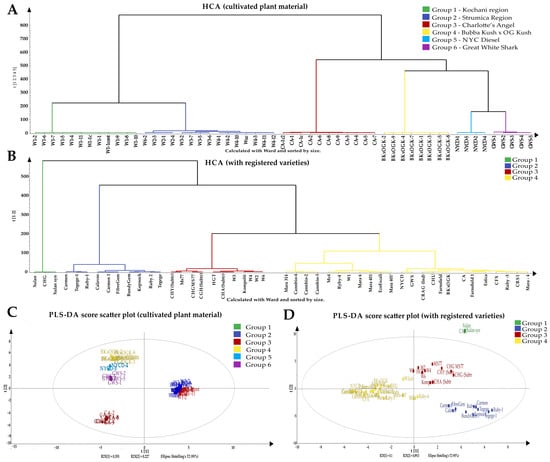
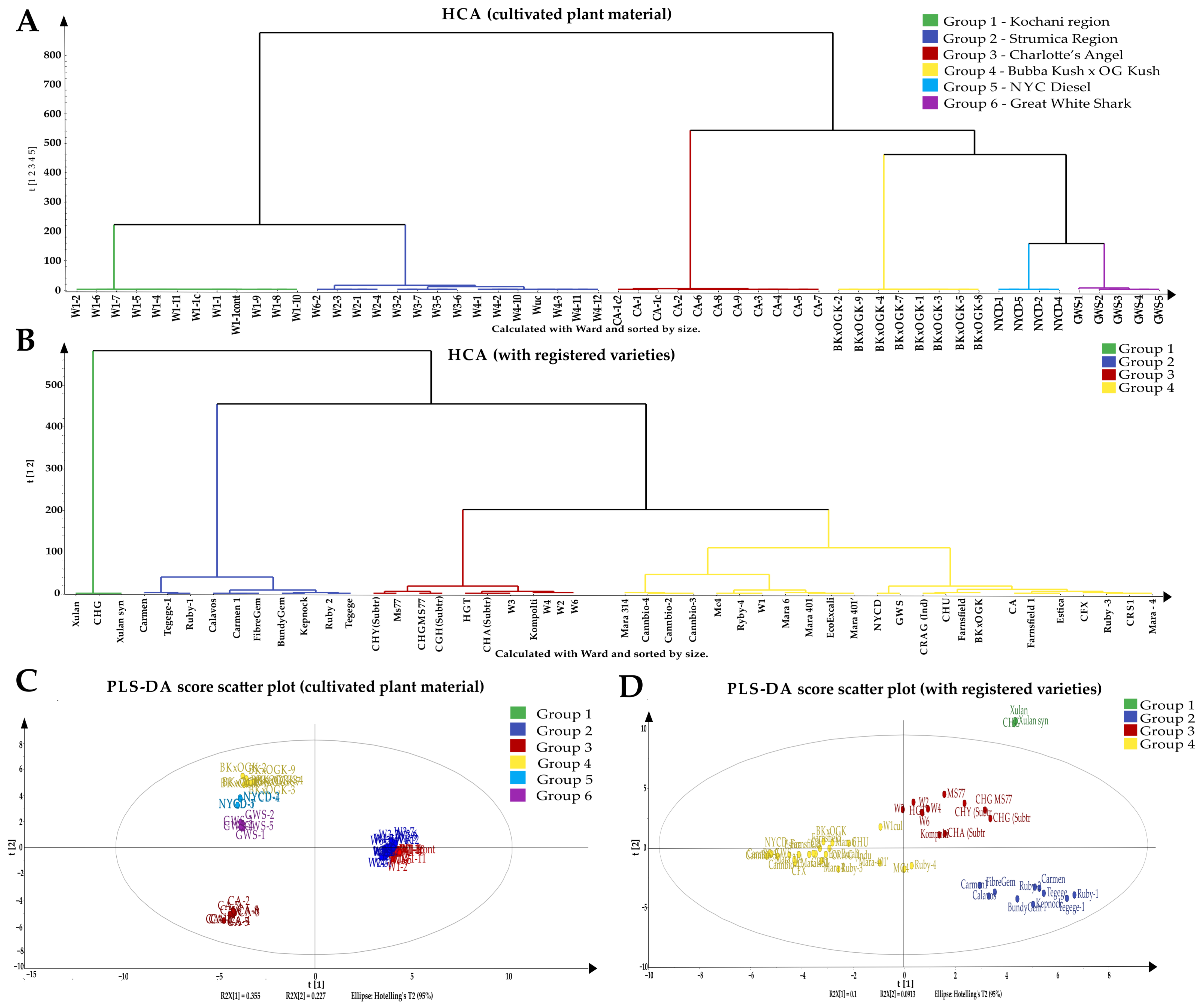
The score scatter plot revealed that the investigated material did not distribute randomly, but followed a clear pattern according to morphological similarity. The first principal component was mainly responsible for the separation between plants of wild-origin and commercial cultivars, indicating that their distinction was not driven by a single trait, but by the combined contribution of several UPOV descriptors. These included plant height, stem characteristics, leaf morphology, seed traits and flower-yield-related parameters. Therefore, the PCA model confirmed that the CsW possess a distinct morphological profile when compared with the commercial cultivars grown under the same outdoor conditions. The PCA score plot also indicated variation within the CsW, with partial grouping according to their original collection region, particularly between the Kočani- and Strumica-derived groups. This suggests that UPOV descriptors captured region-associated phenotypic variation within CsW. Ward’s hierarchical cluster analysis was subsequently performed using the PCA model scores (Figure 1A). The dendrogram separated the investigated material into six main clusters, supporting the distribution observed in the PCA score plot. The clustering pattern confirmed the separation between the plants of wild-origin and commercial cultivars and further indicated that the wild-growing material was not morphologically homogeneous.
Figure 1.
Hierarchical cluster analysis (HCA) (A) and PLS-DA score scatter plot (C) based on UPOV morphological descriptors of CsW and commercial cultivars; HCA (B) and PLS-DA score scatter plot (D) based on the expanded UPOV dataset, including CsW, commercial cultivars, and literature-reported registered Australian cannabis varieties. Abbreviations: HCA—hierarchical cluster analysis; PLS-DA—partial least square discriminatory analysis; W1–W6—cultivated Macedonian Cannabis sativa plant groups of wild-origin (CsW); CA—Charlotte’s Angel; BK × OGK—Bubba Kush × OG Kush; GWS—Great White Shark; NYC Diesel—New York City Diesel.
Based on the HCA-derived groups, a supervised PLS-DA model was developed to evaluate the discriminatory potential of the UPOV descriptor dataset. The model comprised six latent variables and showed R2X = 0.94, R2Y = 0.99 and Q2 = 0.99. Internal model validation was performed using permutation testing and CV-ANOVA. The 50-permutation test (Figure S1) yielded R2 and Q2 regression-line intercepts of 0.0491 and −0.509, respectively, while CV-ANOVA (Table S3) confirmed the statistical significance of the cross-validated model (F = 64.59, p < 0.001). The high R2Y and Q2 values indicate that the morphological descriptors were sufficient not only to describe the investigated material, but also to classify the predefined groups with high predictive ability. The PLS-DA score scatter plots (Figure 1C) further confirmed the relative position of the CsW and commercial plants, while the loading/weighting plots identified the descriptors contributing most strongly to group separation (Table 2).
Table 2.
UPOV morphological descriptors identified from the loading/weighting plots as the main contributors to the separation of HCA-defined groups in the PLS-DA model based on morphological characterization of the investigated cannabis material.
A second multivariate analysis was performed by combining our experimental UPOV dataset with publicly available literature descriptor data for registered or previously described cannabis varieties. This expanded analysis was considered separately from the field-based morphological comparison, because it included external descriptor data and therefore served as a comparative phenotypic framework rather than a direct cultivation experiment.
The inclusion of registered varieties enabled evaluation of the plants of wild-origin in relation to established hemp-type material. In this expanded UPOV dataset, HCA separated the material into four main clusters (Figure 1B), followed by a PLS-DA model constructed from the selected HCA-derived groups (Figure 1D). The PLS-DA model was based on three principal components and showed satisfactory discriminatory ability, with R2X = 0.25, R2Y = 0.88 and Q2 = 0.67. Although the explained X-variance was lower than in the experimental UPOV model, the R2Y and cross-validated Q2 values indicated that the descriptor set retained discriminatory information within the expanded and more heterogeneous dataset. Internal validation by a 50-permutation test (Figure S2) yielded R2 and Q2 intercepts of 0.409 and −0.291, respectively, while CV-ANOVA (Table S3) demonstrated statistical significance of the cross-validated model (F = 9.16, p < 0.001). The most relevant observation from the comparative analysis was the morphological proximity of the CsW to Kompolti, a Hungarian hemp variety. In the HCA (Figure 1B), W2, W3, W4, and W6 clustered within the same major group as Kompolti and CHA, whereas W1 was positioned in a separate cluster together with MC4 and Ruby. Within this major cluster, W2, W4, and W6 showed particularly close clustering with Kompolti. The association of most Macedonian plants of wild-origin with Kompolti is particularly noteworthy considering the historical and regulatory importance of this variety in European hemp cultivation and its long history of cultivation and registration, with its first variety application dating back to 1952 [15,16].
Its importance is also reflected in the subsequent registration of related varieties, including Kompolti hybrid TC in Hungary in 1979 and Kompolti sárgaszárú in 1994, as well as later registration and application records involving Kompolti in several European countries [15]. Importantly for the present morphological comparison, Kompolti was included as an example variety for several states of expression in the UPOV guideline for Cannabis sativa L., including number of leaflets, length and width of the central leaflet, time of male flowering, main stem color and thickness, and seed marbling [21]. Furthermore, Kompolti has been used as a comparator in the examination of registered cannabis varieties within the Australian Plant Breeder’s Rights system [22]. Its position among the closest registered varieties in the present multivariate analysis, together with its established use in UPOV-based characterization and variety examination, supports its relevance as a phenotypic reference for interpreting the CsW. Interestingly, some morphological characteristics reported for Kompolti when used as a comparator in the Australian variety examination [22] differed from the states of expression assigned to Kompolti in the UPOV guideline [21], particularly for leaflet number, central leaflet dimensions, time of male flowering, and main stem color. Despite their overall proximity to Kompolti in the multivariate analysis, cultivated Cannabis sativa plants of wild origin showed differences in several individual UPOV descriptors. In particular, they were characterized by few leaflets compared with the medium number of leaflets reported for Kompolti, long plants compared with the medium natural height of Kompolti, and a yellow main stem compared with the green main stem of Kompolti.
Nevertheless, the consistent positioning of most CsW within the same broader phenotypic space as Kompolti indicates substantial phenotypic affinity with established hemp-type material. However, the groups did not completely overlap with Kompolti or with the other registered varieties included in the models; therefore, this association should be interpreted as morphological similarity rather than varietal identity. Moreover, because the external UPOV descriptor data were derived from literature sources representing different environments, years, cultivation conditions, and potentially different scoring procedures, direct comparison with the experimentally evaluated material is inherently limited. Accordingly, the expanded UPOV analysis should be regarded primarily as an exploratory phenotypic comparison. At the same time, this multivariate approach provides a useful basis for identifying phenotypically similar registered varieties that may serve as relevant comparators in subsequent DUS-oriented evaluation, with Kompolti emerging as one potential comparator based on the present exploratory analysis.
Another noteworthy characteristic was the pronounced female predominance observed in W1, with 10 female plants and one male plant (10:1 female-to-male ratio), with male and female plants shown in Supplementary Figures S4 and S5, respectively. This contrasts with the approximately balanced female-to-male distribution generally associated with dioecious hemp [21]; Kompolti, the principal phenotypic comparator identified in the present analysis, is itself a dioecious hemp variety [23]. At the same time, the comparative UPOV dataset showed variation in sex expression among registered hemp varieties, with Eco Excalibur, HGT, Mara 314, and Mara 401 characterized by medium-to-high proportions of female plants and low-to-medium proportions of male plants, whereas several other registered varieties showed medium proportions of both female and male plants [22]. Female-biased distributions have also been reported experimentally among commercial hemp cultivars; for example, CFX-1 comprised 82.9% female and 17.1% male plants [24]. Thus, although female-biased sex distributions are also represented among registered and commercial hemp cultivars, the 90.9% female proportion observed experimentally in W1 represents a pronounced female predominance and may constitute a potentially favorable characteristic for flower-oriented cultivation. Nevertheless, its stability requires confirmation across additional growing seasons and environmental conditions. Accordingly, the comparative UPOV analysis was used to establish the phenotypic position of the CsW relative to established varieties and to identify relevant phenotypic references for their further evaluation, rather than to assign them to an existing variety or define a new taxonomic entity. Overall, the experimental and comparative UPOV-based analyses indicate that the CsW are morphologically differentiated from the high-cannabinoid commercial cultivars while showing closer affinity to registered hemp-type material, including Kompolti within the exploratory comparative analysis.
2.2. Cannabinoid Profile
The cannabinoid profile of dried female flowers was determined by HPLC-DAD through quantification of CBDA, CBD, CBN, Δ9-THC and Δ9-THCA, while total CBD and total Δ9-THC were calculated from the corresponding acidic and neutral forms. Individual results are presented in Supplementary Tables S5 and S6. In all cultivated Macedonian Cannabis sativa plant groups of wild-origin, CBDA was the predominant cannabinoid, whereas Δ9-THCA and Δ9-THC were present at low levels. Consequently, all CsW were classified as chemotype III class [25]. Mean total CBD content was 5.15 ± 1.41% in W1, 5.14 ± 0.64% in W2, 5.88 ± 0.39% in W3 and 5.96 ± 1.18% in W4, while W6-2 showed 7.61% total CBD. Total Δ9-THC was below 0.2% in all CsW. Among the commercial cultivars, Charlotte’s Angel also showed a CBD-predominant profile, with higher mean total CBD content (10.73 ± 1.70%), but total Δ9-THC exceeded the low-THC hemp threshold (0.60 ± 0.53%). Bubba Kush × OG Kush [26] and NYC Diesel were Δ9-THCA/Δ9-THC-predominant and were classified as chemotype I [25], with mean total Δ9-THC contents of 9.31 ± 4.92% [26] and 9.89 ± 1.80%, respectively. Great White Shark showed an intermediate cannabinoid profile, with mean total CBD and total Δ9-THC contents of 5.24 ± 3.08% and 6.76 ± 3.28%, respectively, corresponding to chemotype II class [25]. Considerable intra-group variability was observed, particularly in W1 for total CBD and in Bubba Kush × OG Kush [26] and Great White Shark for total Δ9-THC.
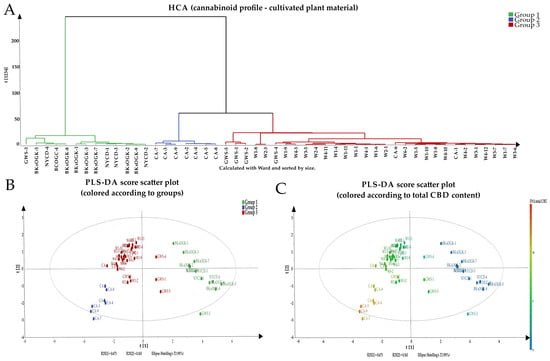
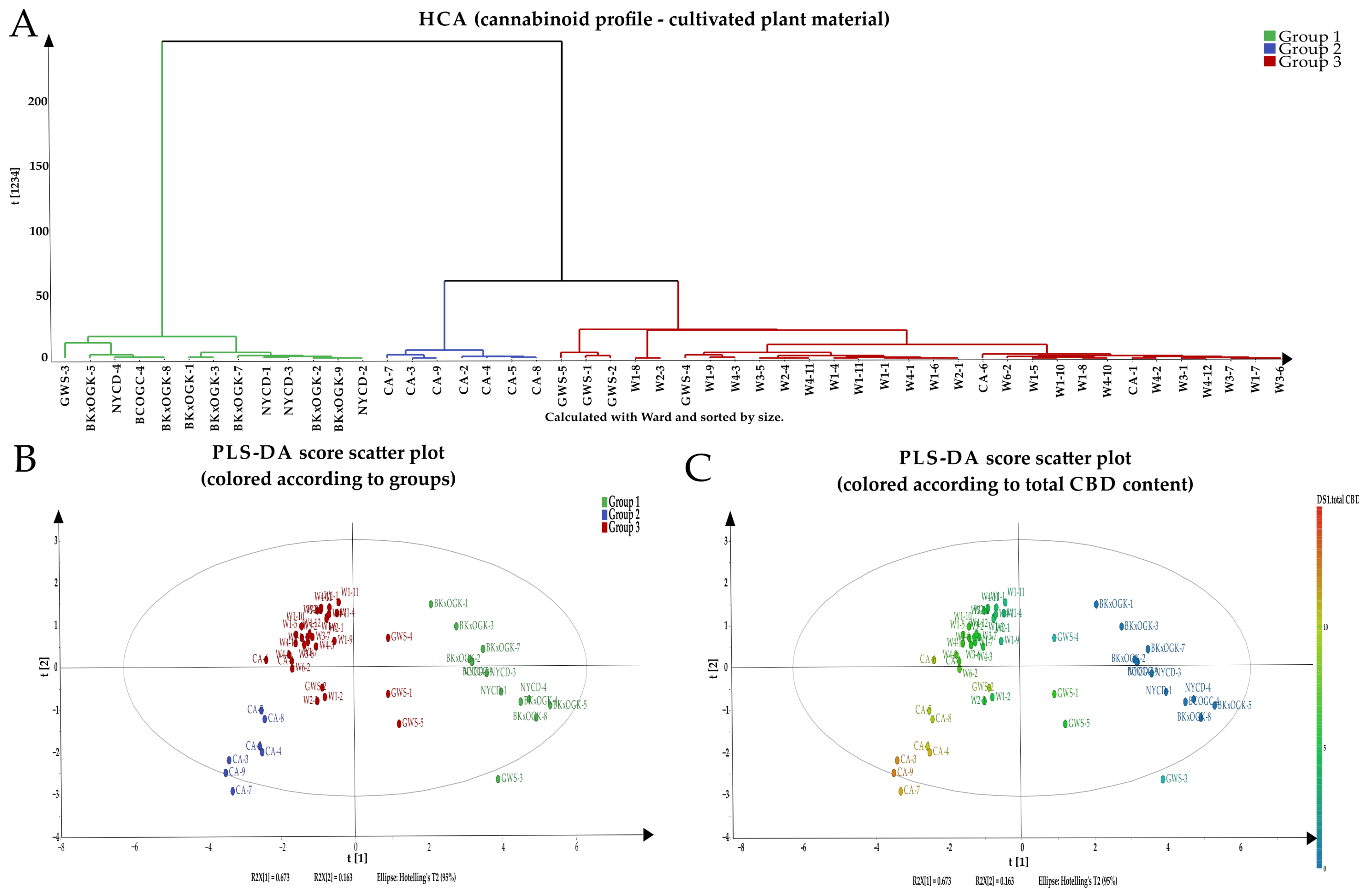
An unsupervised PCA model was constructed using the quantified cannabinoids and calculated total cannabinoid values and showed strong explanatory and predictive performance, with R2X = 0.97 and Q2 = 0.73. Four principal components explained 97.07% of the total variability, with PC1 accounting for 67.33%, PC2 for 16.56%, PC3 for 9.45% and PC4 for 3.73%. Ward’s HCA (Figure 2A) separated the samples into three main clusters, which were subsequently used to construct a supervised PLS-DA model with three components. The PLS-DA model showed satisfactory discrimination, with R2X = 0.89, R2Y = 0.74 and Q2 = 0.69. Internal validation by a 50-permutation test (Figure S3) yielded R2 and Q2 intercepts of 0.003 and −0.271, respectively, while CV-ANOVA (Table S3) demonstrated statistical significance of the cross-validated model (F = 21.44, p < 0.001).
Figure 2.
HCA (A); PLS-DA score scatter plots based on the cannabinoid profiles of CsW and commercial cannabis strains (B); with samples colored according to the total CBD content (highest content—orange; lowest content—dark blue) (C). Abbreviations: HCA—hierarchical cluster analysis; PLS-DA—partial least square discriminatory analysis; W1–W6—cultivated Macedonian Cannabis sativa plant groups of wild-origin (CsW); CA—Charlotte’s Angel; BK × OGK—Bubba Kush × OG Kush; GWS—Great White Shark; NYC Diesel—New York City Diesel.
The score scatter plots of the PLS-DA model reveal the relative positions of the sample subsets based on the HCA clustering (Figure 2B) and total CBD contents (Figure 2C), while the loading plots (Figure S6) for each principal component identify the main variables contributing to the differentiation of the groups in the model.
The first PLS-DA component mainly separated Δ9-THC/Δ9-THCA-rich material from CBDA/CBD-rich material, whereas the second further differentiated Charlotte’s Angel from the CsW. CBN did not contribute substantially to sample differentiation. The multivariate analysis therefore confirmed that the CsW formed a separate CBDA/CBD-predominant cluster (Group 3) with total Δ9-THC not exceeding 0.20%, whereas the commercial cultivars were distributed according to their chemotype as THC-predominant, CBD- predominant or intermediate [24].
The observed Δ9-THC levels comply with the legally permitted limit in North Macedonia and with the European Union regulations applicable to Cannabis sativa L. plants intended for industrial and agricultural purposes [26,27].
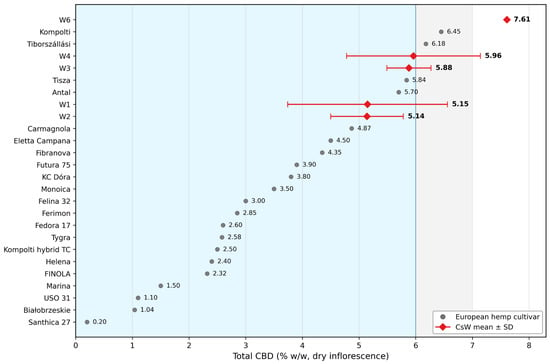
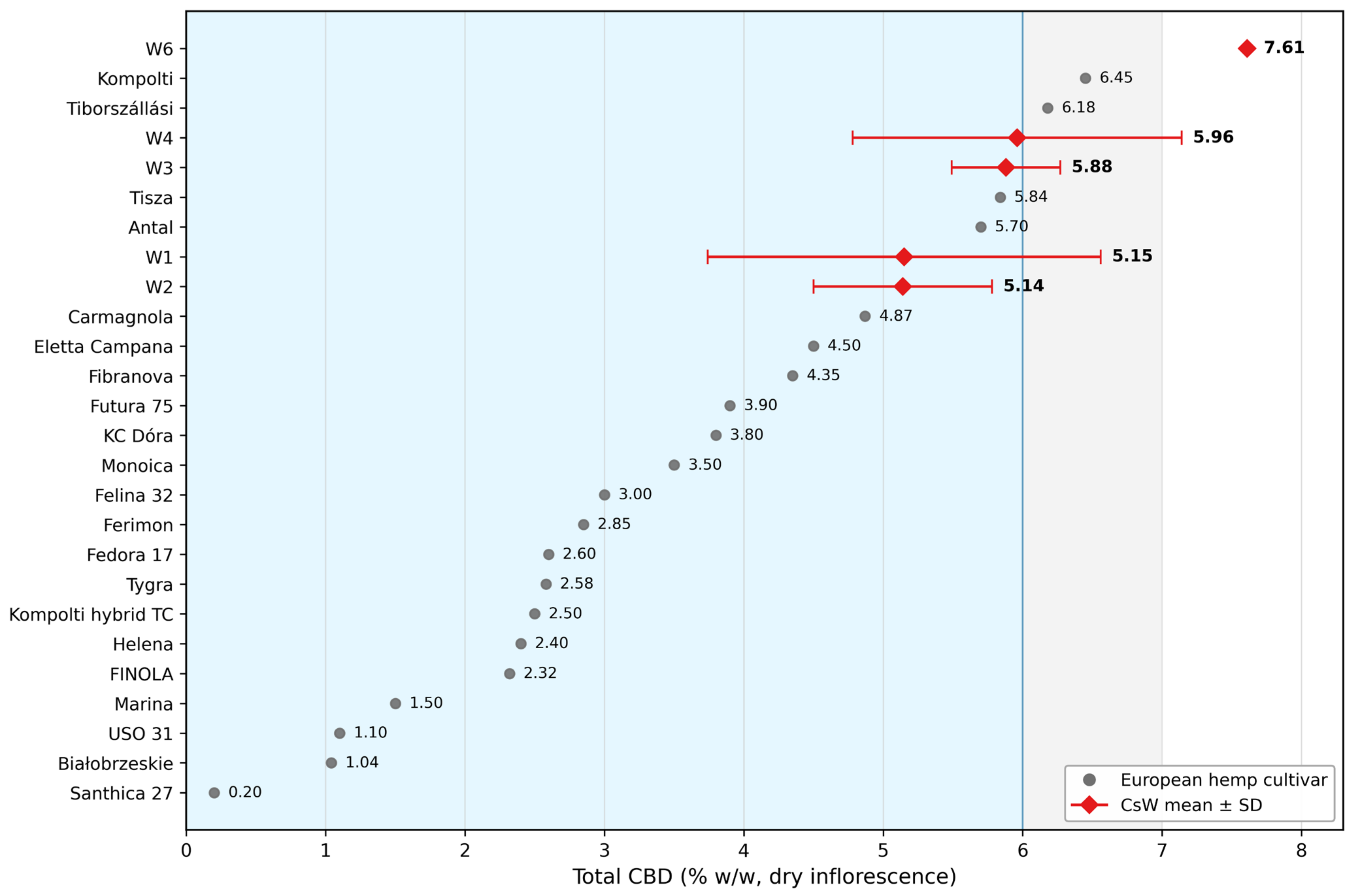
The cannabinoid profile of the CsW was also compared with published inflorescence data for European hemp cultivars (Figure 3 and Supplementary Table S7). A clear positioning of CsW within the upper part of the reported CBD range was observed. Mean total CBD concentrations of W1–W4 ranged from 5.14 to 5.96%, placing these groups alongside or above several established CBD-dominant cultivars, whereas W6-2 reached 7.61%, representing the highest value observed within the present material. In the literature dataset, cultivars such as Fedora 17, Felina 32, FINOLA, Futura 75, USO 31, Kompolti hybrid TC and Carmagnola generally showed lower total CBD concentrations under the reported experimental conditions, while higher-CBD cultivars such as Antal, Tisza, Tiborszállási and Kompolti approached the range observed for W1–W4 [11,12,27,28,29,30,31,32,33]. Importantly, the relevance of the CsW is not based solely on relatively high CBD accumulation, but on its combination of CBD predominance and low total Δ9-THC, with mean THC values of only 0.14–0.17% in W1–W4. This phytochemical balance is particularly noteworthy when contrasted with Charlotte’s Angel, which accumulated higher CBD concentrations under the same cultivation conditions but also exceeded the low-THC threshold. Although direct quantitative comparisons among studies should be interpreted cautiously because cannabinoid accumulation is strongly influenced by genotype, environment, developmental stage, cultivation practices and analytical methodology, the overall positioning shown in Figure 3 indicates that CsW combine CBD levels characteristic of the higher-CBD segment of European hemp with comparatively low THC content. This profile further supports their characteristics and their potential for agronomic characterization, phytochemical selection, and evaluation in future hemp breeding and registration-oriented programs.
Figure 3.
CBD landscape of European hemp cultivars and CsW. Abbreviations: CBD—cannabidiol; W1–W6—cultivated Macedonian Cannabis sativa plant groups of wild-origin (CsW).
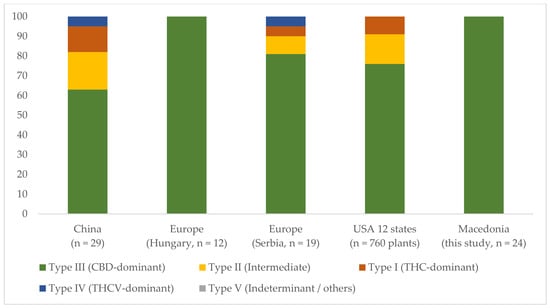
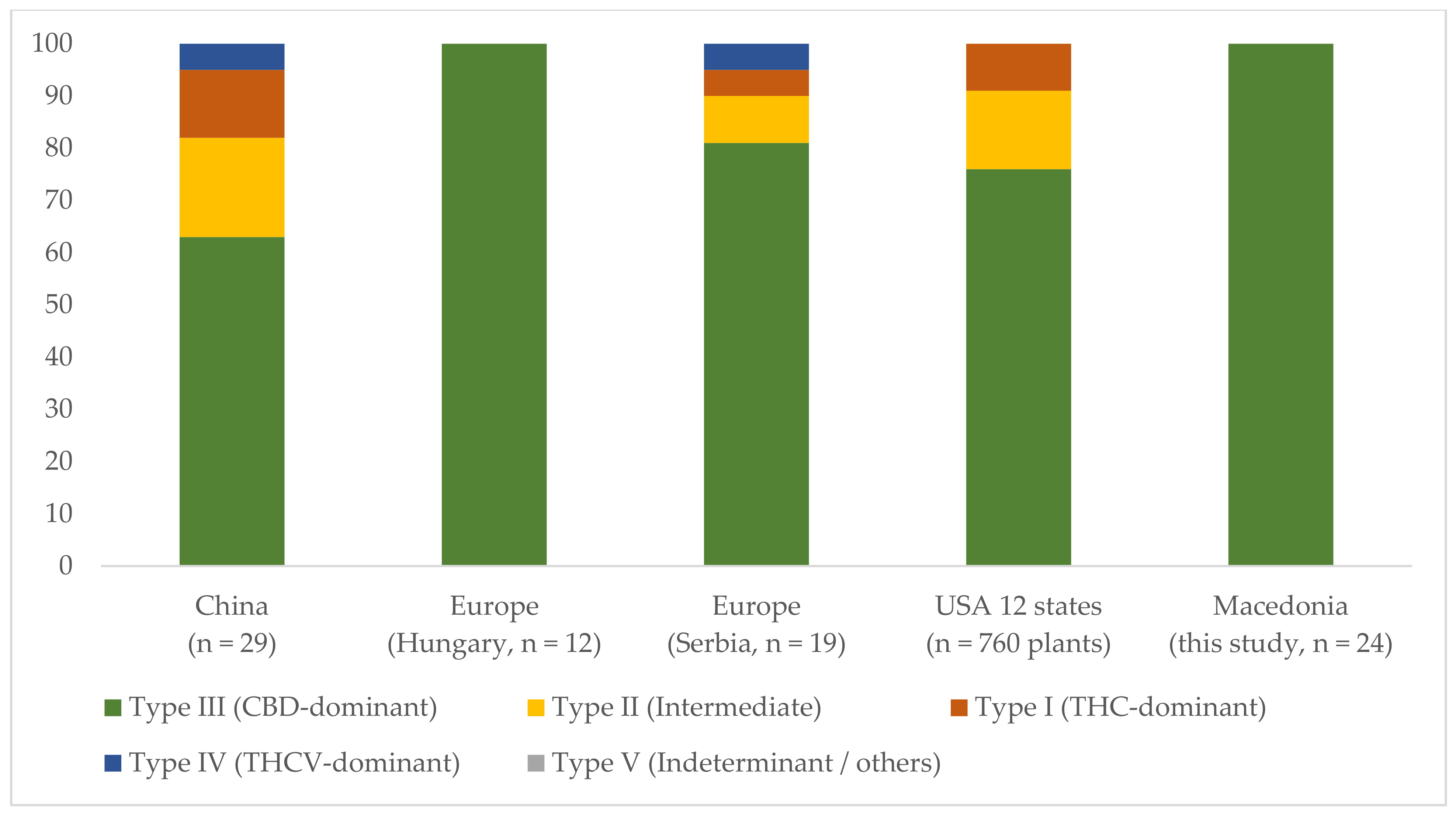
Comparison with wild and feral cannabis from other geographical origins further contextualized the relatively homogeneous cannabinoid profile of the CsW (Figure 4). In contrast, Mehdi et al. [34] reported pronounced chemotypic heterogeneity among 66 naturally occurring Indian populations, of which 45 were characterized by THC > 0.3% and CBD < 0.5%, whereas only five showed THC < 0.3% and CBD > 0.5%. Feral populations from North America similarly showed a predominance of CBD-rich/Type III plants, although Type I and Type II chemotypes were also present [25], indicating greater chemotypic heterogeneity [35,36]. Notably, total cannabinoid content in US feral material ranged from 0.21–4.73%, whereas total CBD alone reached 5.14–7.61% in the CsW, although differences in cultivation, sampling and analytical methodology preclude direct quantitative comparison [30]. Reports of spontaneous or wild cannabis from Hungary and Serbia further demonstrate the persistence of phytochemically and morphologically distinct populations in Central and Southeastern Europe [37,38,39]. Comparable population-level cannabinoid data for wild or feral African cannabis remain scarce, with the chemical diversity of southern African germplasm still insufficiently characterized [40,41].
Figure 4.
Chemotype [25] (cannabinoid profile) distribution of wild cannabis populations from different geographical origins.
2.3. Terpene Profile
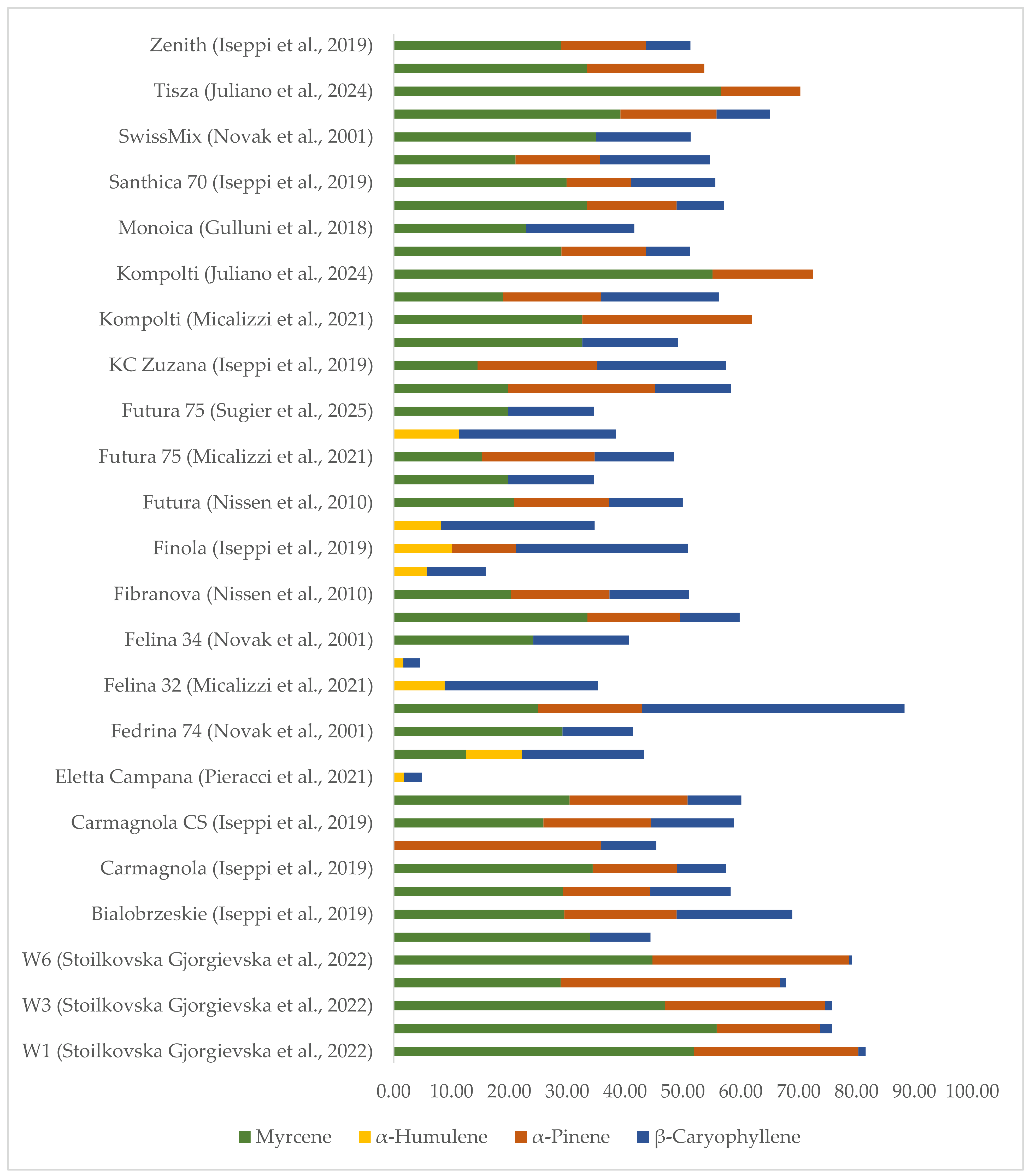
Terpene composition has increasingly been considered as an additional criterion for the chemical differentiation of cannabis, particularly in chemovar classification based on major cannabinoids and dominant terpenes [42]. Moreover, variation in the relative abundance of terpenes among cannabis chemotypes further supports their value as complementary phytochemical characteristics [43,44,45]. As part of the broader phytochemical characterization and positioning of the CsW, the previously reported terpene profiles, [46,47] analyzed with HS-GS/MS/FID [48], were further contextualized using published data for registered hemp varieties (Figure 5).
Figure 5.
Comparison of the relative abundance (%) of selected predominant terpenes (myrcene, α-humulene, α-pinene, and β-caryophyllene) in CsW and several European hemp cultivars reported in the literature [46,49,50,51,52,53,54,55,56,57,58,59,60]. Abbreviations: W1–W6—cultivated Macedonian Cannabis sativa plant groups of wild-origin (CsW).
Overall, the CsW showed a terpene pattern consistent with the chemical diversity reported for European hemp, with myrcene and α-pinene representing the principal constituents [47]. Myrcene has also been reported as a major or predominant terpene in several European hemp cultivars, including Bialobrzeskie, Carmagnola, Ferimon, Futura 75, Santhica 27, Santhica 70, Tiborszallasi and Tygra, although the relative contributions of α-pinene, β-caryophyllene and other terpenes vary considerably among cultivars and studies. Particularly close qualitative agreement was observed with Kompolti and Tisza, for which Juliano et al. (2024) reported myrcene as the predominant constituent (55.10 and 56.56%, respectively), followed by α-pinene (17.40 and 13.73%) and limonene (10.31 and 6.53%) [49]. Earlier data for Kompolti also demonstrated a myrcene-rich profile, although with greater contributions from caryophyllene and ocimene [59], highlighting the substantial influence of growing conditions, developmental stage, plant material and analytical approach on the relative terpene composition. Other cultivars, such as Felina 32 and Fedora 17, have been reported to exhibit more pronounced β-caryophyllene-dominant profiles, further demonstrating the chemotypic variability of European hemp. Taken together, the predominance of myrcene and α-pinene positions the CsW within the broader terpene diversity reported for European hemp varieties, while group-specific differences in the relative contributions of these and other major terpenes further demonstrate the phytochemical distinctiveness of the investigated material.
3. Materials and Methods
3.1. Plant Material
Plants and seeds from wild-origin Cannabis sativa L. were collected during the flowering and seed maturation stages in July 2019 and August 2020 from several localities in the Kočani and Strumica regions of North Macedonia. Plant identification was performed by Prof. Gjoshe Stefkov (Faculty of Pharmacy, Ss. Cyril and Methodius University in Skopje, North Macedonia) based on characteristic morphological features and selected descriptors of the UPOV guideline TG/276/1 for Cannabis sativa L. A complete overview of all identified plants from wild-origin cannabis, including collection sites, geographical coordinates and herbarium voucher specimens deposited at the Herbarium of the Faculty of Pharmacy (FFUKIMCs), and is published in our previous research [17,61].
Five groups of plants of wild-origin from Kočani and Strumica regions were selected for subsequent outdoor cultivation and comprehensive characterization (Table 3).
Table 3.
Collection localities and year of collection of cannabis plants of wild-origin.
Four commercial cannabis cultivars with contrasting cannabinoid chemotypes were included in the study, namely Charlotte’s Angel (CA; chemotype III class, CBD-predominant), Bubba Kush × OG Kush [26] (BK × OGK; chemotype I, Δ9-THC-predominant), NYC Diesel (NYCD; chemotype I, Δ9-THC-predominant) and Great White Shark (GWS; chemotype II, intermediate Δ9-THC/CBD ratio). Voucher specimens of cultivated Macedonian Cannabis sativa plants of wild-origin (CsW) and commercial cultivars were deposited at the Herbarium of the Faculty of Pharmacy.
For each CsW, the seed lot originated from a single maternal plant collected at the corresponding natural locality; seeds collected from different maternal plants at the same locality were not pooled. Following germination, the resulting plants were cultivated separately according to their respective seed lots. Germination percentages and the numbers of plants established for cultivation, together with their sex distribution, is summarized in Supplementary Table S4. All plants identified as male during the vegetative stage or at the beginning of the generative stage were removed from the experimental field to prevent cross-pollination with other cannabis hybrids cultivated by the company. Identification of male and female flowers is shown in Supplementary Figures S4 and S5. Two plants (BK × OGK-6 and NYCD-3) were lost during field cultivation due to mechanical stem breakage.
3.2. Seed Germination and Cultivation
Seeds collected from Macedonian Cannabis sativa plants of wild-origin and seeds of commercial cultivars were subjected to germination trials in order to obtain plant material for subsequent morphological and phytochemical characterization. Preliminary experiments evaluated seed soaking and mechanical scarification under moist conditions, with the latter approach proving more suitable for plants from wild-origin cannabis seeds. Prior to germination, seeds were mechanically scarified using P80 abrasive paper and placed between two layers of moistened cotton pads in Petri dishes. Petri dishes were incubated in darkness at approximately 25 °C, and germination was monitored daily. Germinated seeds were carefully transferred into seedling trays containing commercial propagation substrate. Germination percentage was calculated as the ratio between the number of germinated and tested seeds. Germination percentages for all plant groups are presented in Supplementary Table S4.
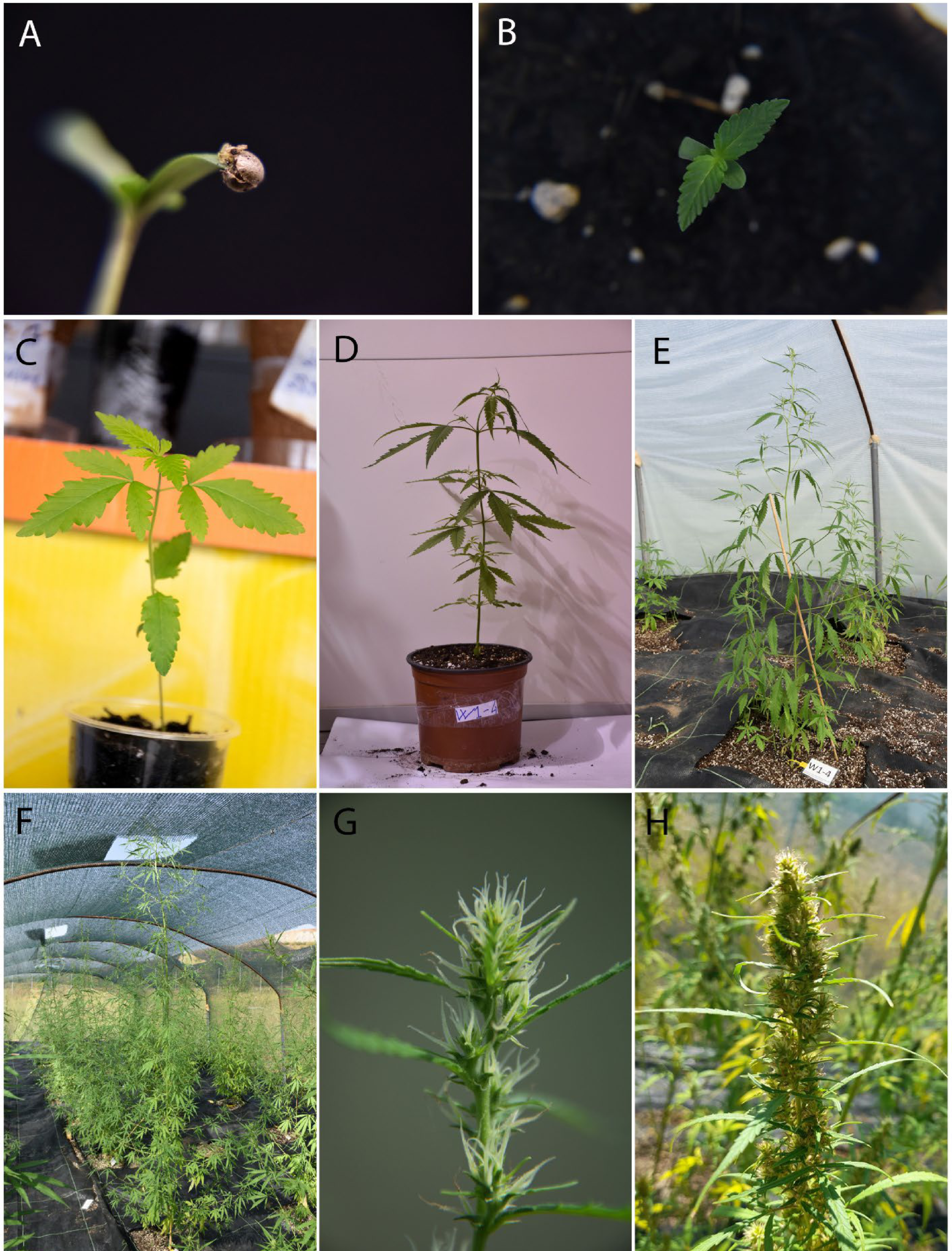
Seedlings were initially maintained under controlled indoor conditions under an 18 h light/6 h dark photoperiod at ambient temperature. During the vegetative stage, plants were fertilized with a water-soluble NPK fertilizer enriched with micronutrients—Alkafert, N:P:K 10:5:5 supplemented with Cu, Mn and Zn (Alkaloid AD, Skopje, North Macedonia), applied at a concentration of 0.3% according to the manufacturer’s recommendations. Prior to transplantation to the outdoor experimental field, plants were acclimatized under greenhouse conditions for approximately one month. Outdoor cultivation was conducted during the 2021 growing season at the facilities of a licensed cannabis company (North Macedonia). Plants were cultivated in a substrate consisting of equal volumes of local field soil, organic compost and commercial growing substrate (1:1:1, v/v/v). During cultivation, plants received periodic applications of a liquid NPK fertilizer supplemented with magnesium (20:20:20 + Mg), whereas copper fertilizer containing 14% Cu was used to reduce the risk of bacterial and fungal infections. Insecticide treatments based on flonicamid (500 ± 25 g/L) (ISK Biosciences Europe N.V., Diegem, Belgium) were applied when required to minimize biotic stress. Plants were grown under insect netting and shading nets (40–60%) and irrigated regularly to maintain adequate soil moisture. Female inflorescences were harvested at technological maturity, manually cleaned and air-dried under dark, well-ventilated conditions for seven days. Dried plant material was subsequently packed in labelled aluminum bags and stored until further morphological and phytochemical analyses. The cultivation process is presented in Figure A1 and Supplementary Figure S7.
3.3. Morphological Characterization
Morphological characterization of CsW and commercial cultivars was performed according to the UPOV guideline TG/276/1 for Cannabis sativa L. A total of 18 qualitative and quantitative descriptors related to plant architecture, foliage, inflorescence morphology, and phenology were evaluated and recorded as states of expression. Descriptive observations and measurements were conducted throughout the vegetative and reproductive developmental stages of female plants cultivated under uniform outdoor conditions. Seed material originating from the investigated plants of wild-origin and commercial cultivars was previously subjected to detailed morphometric characterization by digital image analysis, as described by Stoilkovska Gjorgievska et al. [17].
Because plant breeders’ rights for cannabis varieties are protected under the UPOV Convention, detailed morphological descriptions generated during variety registration and DUS testing are often not publicly accessible, which limits the availability of reference data for comparative studies. Among varieties registered by companies from European Union Member States, Estica, registered in Estonia, was identified as the only variety for which a sufficiently detailed UPOV-based morphological description was publicly available [62]. In contrast, Australia maintains a governmental Plant Breeder’s Rights database in which morphological characteristics and examination data for registered plant varieties, including cannabis, are publicly documented in the Plant Varieties Journal, issued four times annually [22]. Therefore, to compare the cultivated material examined in this study with officially registered cannabis varieties, the publicly available UPOV-based description of Estica, together with those of varieties documented within the Australian Plant Breeder’s Rights system, was incorporated into the multivariate analyses. This approach enabled the assessment of phenotypic similarities among CsW, commercial cultivars, and officially registered cannabis varieties and may provide useful guidance for selecting appropriate reference varieties for future distinctness, uniformity and stability (DUS) testing procedures.
3.4. HPLC-DAD Analysis of Cannabinoids
Cannabinoid analysis was performed according to the monograph for Cannabis flos of the German Pharmacopoeia (DAB) with minor modifications [63,64]. Dried female inflorescences were milled and sieved through a 710 μm sieve. Approximately 0.5 g of powdered plant material was extracted with 20 mL of 96% ethanol (Ph. Eur., Alkaloid AD, Skopje, North Macedonia) by ultrasonication (50/60 Hz) for 15 min and subsequently centrifuged. The residue was extracted twice more with 12.5 mL aliquots of ethanol under identical conditions. Combined extracts were transferred into a 50 mL volumetric flask and adjusted to volume with 96% ethanol. Prior to analysis, samples were filtered through regenerated cellulose membrane filters (0.45 μm). Subsequently, 1 mL of filtrate was transferred into a 10 mL volumetric flask and diluted to volume with 96% ethanol to obtain a final concentration of 1 mg/mL. All samples were prepared in triplicate.
Chromatographic analysis was performed using an Agilent 1200 HPLC system equipped with a quaternary pump (G1311A), thermostatted autosampler (G1329A), column compartment (G1316A) and diode array detector (Agilent Technologies, Waldbrune, Germany). Separation was achieved on an InfinityLab Poroshell 120 EC-C18 column (150 × 3 mm, 2.7 μm; Agilent Technologies, Santa Clara, CA, USA) maintained at 40 °C. The mobile phase consisted of aqueous orthophosphoric acid solution (8.64 g/L) as solvent A and HPLC-grade acetonitrile (Carlo Erba Reagents S.r.l., Cornaredo, Italy) as solvent B. Gradient elution was performed according to the following program: 0–16 min, 36–18% A; 16–17 min, 18–36% A; followed by a re-equilibration period up to 30 min. The flow rate was maintained at 0.7 mL/min, the injection volume was 5 μL, and chromatograms were recorded at 225 nm.
Quantification was performed by external calibration using certified reference standards of CBDA, CBD, CBN, Δ9-THC and Δ9-THCA (Cayman Chemical, Ann Arbor, MI, USA). Calibration curves were constructed according to DAB requirements using at least five concentration levels. The calibration ranges were 0.5–100 μg/mL for CBDA, 0.5–75 μg/mL for CBD and THC, 0.1–10 μg/mL for CBN, and 0.5–250 μg/mL for Δ9-THCA.
System suitability was evaluated according to DAB requirements. Resolution between Δ9-THC and Δ8-THC peaks was required to be not less than 1.2, whereas precision was assessed by six replicate injections of the Δ9-THCA reference solution (50 μg/mL), with an acceptance criterion of relative standard deviation not exceeding 1.0%.
3.5. Chemometric Analysis
Principal component analysis (PCA), hierarchical cluster analysis (HCA), and partial least squares discriminant analysis (PLS-DA) were performed using SIMCA v14.1 software. Model performance was evaluated using R2X, R2Y, and Q2 parameters. Variable importance in projection (VIP) values and loading plots were used to identify descriptors contributing most strongly to sample discrimination. HCA was performed using Ward’s linkage method following min–max normalization (0–1 scaling). PLS-DA was subsequently applied to the HCA-derived groups as an exploratory supervised step to further characterize and visualize the group structure and to identify the variables contributing to sample differentiation, rather than as an independent classification model. Internal model validation was performed by 50-permutation testing and CV-ANOVA. The experimental morphology, expanded UPOV, and cannabinoid PLS-DA models comprised 55, 48, and 50 observations, respectively, with 19 morphological/UPOV descriptors, 28 UPOV descriptors, and nine cannabinoid-related variables, respectively. Morphological descriptors, cannabinoid contents and publicly available UPOV datasets of registered cannabis varieties were integrated into the multivariate analyses to investigate phenotypic and phytochemical relationships among CsW, commercial cultivars, and registered cannabis varieties.
4. Conclusions
This study demonstrates that Macedonian Cannabis sativa plants of wild-origin, after cultivation under common outdoor conditions, retain a distinct and structured morphological and phytochemical profile. UPOV-based multivariate analyses clearly separated the plants of wild-origin from the commercial cultivars and revealed additional differentiation associated with geographical origin. Most plants of wild-origin also showed morphological proximity to Kompolti, indicating phenotypic similarities with this established hemp-type variety and suggesting its potential relevance as a comparator in future DUS-oriented evaluation.
All CsW were CBD-predominant, with total CBD of 5.14–7.61% and total Δ9-THC at or below 0.20%. The fusion of morphological character, favorable agronomic performance, relatively high CBD accumulation and consistently low Δ9-THC highlights these plants as a potentially valuable resource for future hemp selection and development. The present findings provide a strong basis for further evaluation of the most promising wild-origin plant groups but broader multi-environment assessment would further establish the stability of their favorable characteristics and their adaptability to different growing conditions. Complementary genetic characterization could additionally support the observed morphological and phytochemical differentiation.
Further selection, stability assessment and multi-environment evaluation are necessary to determine its potential for breeding and future variety development. Overall, the integration of morphological, agronomic and cannabinoid characteristics identifies Macedonian wild-growing Cannabis sativa as a valuable and still insufficiently explored resource for hemp improvement. The identified CBD-rich and low-THC populations provide promising starting material for targeted selection, with potential application in the development of hemp varieties and future DUS-oriented evaluation and breeding programs.
Supplementary Materials
The following supporting information can be downloaded at https://www.mdpi.com/article/10.3390/molecules31203723/s1. Table S1: Quantitative characterization of leaf traits and plant height according to UPOV descriptors, and untrimmed flower yield of individual plants of outdoor-cultivated (CsW) and commercial strains; Table S2: Quantitative characterization of leaf traits and plant height according to UPOV descriptors, and untrimmed flower yield in CsW and commercial strain plant groups; Table S3: CV-ANOVA results for the PLS-DA models; Table S4: Germination and sex distribution of the cultivated Cannabis sativa plant groups; Table S5: Cannabinoid content in dried flowers of individual CsW from groups W1, W2, W3, W4, and W6 (expressed as % m/m); Table S6: Cannabinoid content in dried flowers of individual cultivated commercial plants (CA, NYCD, and GWS), expressed as % m/m; Table S7: Reported total CBD content in inflorescences of selected European hemp cultivars and CsW; Figure S1: Permutation test (n = 50) for the morphology-based PLS-DA model. The model comprised six components and yielded R2 and Q2 intercepts of 0.0491 and −0.509, respectively; Figure S2: Permutation test (n = 50) for the expanded UPOV morphology -based PLS-DA model. The model comprised three components and yielded R2 and Q2 intercepts of 0.409 and −0.291, respectively; Figure S3: Permutation test (n = 50) for the cannabinoid composition based PLS-DA model. The model comprised three components and yielded R2 and Q2 intercepts of 0.003 and −0.271, respectively; Figure S4: Identification of male plants: (A–C) characteristic morphological features of male plants—racemose inflorescences (inflorescentia racemosa) consisting of multiple small flowers arranged in clusters, with stamens that produce pollen; Figure S5: Identification of female plants: (A–C) Characteristic morphological features of female plants—initial flowers developing in the leaf axils (axillae), with pistils bearing characteristically long, hair-like stigmas that capture pollen for fertilization; Figure S6: PLS-DA loading plots based on the cannabinoid profiles of cultivated Macedonian Cannabis sativa plants from wild-origin (CsW) and commercial cannabis strains, showing the contribution of individual cannabinoids to the observed sample differentiation. Abbreviations: PC—principal component; PLS-DA—partial least square discriminatory analysis; CBDA—cannabidiolic acid; CBD—cannabidiol; CBN—cannabinol; Δ9-THC—Δ9-tetrahydrocannabinol; Δ9-THCA—Δ9-tetrahydrocannabinolic acid; AVE—average.; Figure S7: Cultivation process: (a) germination, (b) imbibition, (c) early vegetative stage, (d) preparation of the experimental field for outdoor transplantation, (e) transplanted plants at the experimental field during the early vegetative stage, (f,g) spatial arrangement of the outdoor experimental field, (h) onset of flowering, (i) harvesting, (j) drying, and (k) weighing and packaging of the dried plant material.
Author Contributions
Conceptualization, V.S.G. and G.S.; methodology, V.S.G., G.S., N.G. and I.C.K.; software, N.G.; validation, V.S.G., A.T.M. and I.D.S.; formal analysis, V.S.G., I.C.K. and A.T.M.; investigation, V.S.G., A.T.M., I.D.S. and F.T.; resources, M.K. and G.S.; data curation, V.S.G.; writing—original draft preparation, V.S.G.; writing—review and editing, I.C.K., N.G., M.K. and G.S.; visualization, V.S.G., I.C.K. and N.G.; supervision, G.S.; project administration, M.K. and G.S.; funding acquisition, G.S. All authors have read and agreed to the published version of the manuscript.
Funding
This research received no external funding.
Data Availability Statement
The data presented in this study are available within the article and its Supplementary Materials. Additional data supporting the findings of this study will be made available by the authors on request.
Acknowledgments
The authors sincerely acknowledge the technical assistance in this research provided by Andrea Belazelkoska, Ana Kozar and Martina Samarakova.
Conflicts of Interest
The authors declare no conflicts of interest.
Appendix A
Figure A1.
Stages of the cultivation process of plants from the W1 group (Gorni and Dolni Podlog, Kočani region): (A) emergence with the seed coat still attached, (B) first two true leaves, (C) early vegetative development, (D) early vegetative development and preparation for transfer to outdoor conditions, (E) late vegetative development, (F) onset of flowering, (G) flower appearance at the onset of flowering, and (H) later flowering stage.
References
- Stefkov, G.; Cvetkovikj Karanfilova, I.; Stoilkovska Gjorgievska, V.; Trajkovska, A.; Geskovski, N.; Karapandzova, M.; Kulevanova, S. Analytical Techniques for Phytocannabinoid Profiling of Cannabis and Cannabis-Based Products—A Comprehensive Review. Molecules 2022, 27, 975. [Google Scholar] [CrossRef] [Scilit]
- Davkova, I.; Cvetkovikj Karanfilova, I.; Trajkovska, A.; Stoilkovska Gjorgievska, V.; Kulevanova, S.; Stefkov, G.; Karapandzova, M. Effects of Temperature on THC and THCA Content during Storage. Maced. Pharm. Bull. 2023, 69, 249–250. [Google Scholar] [CrossRef] [Scilit]
- El Oihabi, M.; Soultana, M.; Ammari, M.; Ben Allal, L.; Fakih Lanjri, A. Diversity and Variability of Bioactive Compounds in Cannabis sativa: Effects on Therapeutic and Environmental Uses and Orientations for Future Research. Case Stud. Chem. Environ. Eng. 2024, 9, 100732. [Google Scholar] [CrossRef] [Scilit]
- De Prato, L.; Ansari, O.; Hardy, G.E.S.J.; Howieson, J.; O’Hara, G.; Ruthrof, K.X. The Cannabinoid Profile and Growth of Hemp (Cannabis sativa L.) Is Influenced by Tropical Daylengths and Temperatures, Genotype and Nitrogen Nutrition. Ind. Crops Prod. 2022, 178, 114605. [Google Scholar] [CrossRef] [Scilit]
- Welling, M.T.; Liu, L.; Shapter, T.; Raymond, C.A.; King, G.J. Characterisation of Cannabinoid Composition in a Diverse Cannabis sativa L. Germplasm Collection. Euphytica 2016, 208, 463–475. [Google Scholar] [CrossRef] [Scilit]
- EU PLANT VARIETY PORTAL. Varieties of EU-Regulated Agricultural, Vegetable and Fruit Species. Available online: https://ec.europa.eu/food/plant-variety-portal/index.xhtml;jsessionid=Pe8soU14b3Zuu9322IwkLbc8O27_uKrdjmqDJQDrRvVaItDp3afO!989555755 (accessed on 4 July 2026).
- Hemp-Agriculture and Rural Development-European Commission. Available online: https://agriculture.ec.europa.eu/farming/crop-productions-and-plant-based-products/hemp_en (accessed on 4 July 2026).
- Tang, K.; Struik, P.C.; Yin, X.; Thouminot, C.; Bjelková, M.; Stramkale, V.; Amaducci, S. Comparing Hemp (Cannabis sativa L.) Cultivars for Dual-Purpose Production under Contrasting Environments. Ind. Crops Prod. 2016, 87, 33–44. [Google Scholar] [CrossRef] [Scilit]
- Tsaliki, E.; Moysiadis, T.; Kalivas, A.; Panoras, I.; Grigoriadis, I. Multi-Year Insights into Industrial Hemp Growth in a Mediterranean Climate. Agronomy 2024, 14, 1946. [Google Scholar] [CrossRef] [Scilit]
- Kousta, A.; Papastylianou, P.; Tzimas, P.; Skaltsounis, L.A.; Bilalis, D. Evaluation of European-Developed Hemp Cultivars (Cannabis sativa L.) in Response to Water Regimes. Span. J. Agric. Res. 2025, 23, 21257. [Google Scholar] [CrossRef] [Scilit]
- Flajšman, M.; Kušar, A.; Abramovič, H.; Jakopič, J.; Kocjan Ačko, D.; Čeh, B. Impact of Hemp (Cannabis sativa L.) Variety on the Seed and Stem Yield, Biochemical Characteristics of the Inflorescences and Nutritional Quality of Seeds. Plant Soil Environ. 2026, 72, 122–137. [Google Scholar] [CrossRef] [Scilit]
- Glivar, T.; Eržen, J.; Kreft, S.; Zagožen, M.; Čerenak, A.; Čeh, B.; Tavčar Benković, E. Cannabinoid Content in Industrial Hemp (Cannabis sativa L.) Varieties Grown in Slovenia. Ind. Crops Prod. 2020, 145, 112082. [Google Scholar] [CrossRef] [Scilit]
- Reimann-Philipp, U.; Speck, M.; Orser, C.; Johnson, S.; Hilyard, A.; Turner, H.; Stokes, A.J.; Small-Howard, A.L. Cannabis Chemovar Nomenclature Misrepresents Chemical and Genetic Diversity; Survey of Variations in Chemical Profiles and Genetic Markers in Nevada Medical Cannabis Samples. Cannabis Cannabinoid Res. 2020, 5, 215–230. [Google Scholar] [CrossRef] [Scilit]
- Hazekamp, A.; Tejkalová, K.; Papadimitriou, S. Cannabis: From Cultivar to Chemovar II—A Metabolomics Approach to Cannabis Classification. Cannabis Cannabinoid Res. 2016, 1, 202–215. [Google Scholar] [CrossRef] [Scilit]
- Reed, K.; Smuk, A.; Tkalčec, T.; Balen, J.; Mihaljević, M. Food and Agriculture in Slavonia, Croatia, during the Late Middle Ages: The Archaeobotanical Evidence. Veg. Hist. Archaeobot. 2022, 31, 347–361. [Google Scholar] [CrossRef] [Scilit]
- Gjorgievska, V.; Karanfilova, I.; Trajkovska, A.; Karapandzova, M.; Petrovska, B.; Kulevanova, S.; Stefkov, G. Monitoring of Cannabis Cultivar Technological Maturity by Trichome Morphology Analysis and HPLC Phytocannabinoid Content. Pharmacogn. Res. 2023, 15, 94–100. [Google Scholar] [CrossRef] [Scilit]
- Stoilkovska Gjorgievska, V.; Geskovski, N.; Makreski, P.; Trajkovska, A.; Cvetkovikj Karanfilova, I.; Karapandzova, M.; Kulevanova, S.; Stefkov, G. Differentiation of Cannabis Seeds Employing Digital Morphological Screening and Infrared Spectroscopy Coupled with Multivariate Modeling. Ind. Crops Prod. 2024, 211, 118184. [Google Scholar] [CrossRef] [Scilit]
- Salentijn, E.M.J.; Petit, J.; Trindade, L.M. The Complex Interactions Between Flowering Behavior and Fiber Quality in Hemp. Front. Plant Sci. 2019, 10, 614. [Google Scholar] [CrossRef] [Scilit]
- van der Werf, H.M.G.; van den Berg, W. Nitrogen Fertilization and Sex Expression Affect Size Variability of Fibre Hemp (Cannabis sativa L.). Oecologia 1995, 103, 462–470. [Google Scholar] [CrossRef] [Scilit]
- Richards, C.D.; Ryu, B.-R.; Gim, G.-J.; Park, S.-H. Hermaphroditism in Cannabis sativa L.: Impacts, Inducers, and Industry Implications. Plants 2026, 15, 1643. [Google Scholar] [CrossRef] [Scilit]
- International Union for the Protection of New Varieties of Plants (UPOV). Hemp, Cannabis: Cannabis sativa L.; UPOV Code: CANNB_SAT; Guidelines for the Conduct of Tests for Distinctness, Uniformity and Stability; TG/276/1; UPOV: Geneva, Switzerland, 2012; Available online: https://www.upov.int/documents/d/upov/tg-documents-en-tg276_01.pdf (accessed on 4 July 2026).
- IP Australia. Plant Varieties Journal. Available online: https://www.ipaustralia.gov.au/tools-and-research/professional-resources/ip-rights-journals/plant-varieties-journal (accessed on 4 July 2026).
- Ruzgas, R.; Tilvikienė, V.; Barčauskaitė, K.; Viršilė, A.; Žydelis, R. Ethephon’s Effects on Sexual Expression and Cannabinoid Production in Monoecious and Dioecious Varieties of Hemp (Cannabis sativa L.): A Field Trial. Ind. Crops Prod. 2024, 210, 118064. [Google Scholar] [CrossRef] [Scilit]
- Zhang, M.; Anderson, S.L.; Brym, Z.T.; Pearson, B.J. Photoperiodic Flowering Response of Essential Oil, Grain, and Fiber Hemp (Cannabis sativa L.) Cultivars. Front. Plant Sci. 2021, 12, 694153. [Google Scholar] [CrossRef] [Scilit]
- European Pharmacopoeia Commission. Cannabis Flos (Monograph 07/2024:3028). In European Pharmacopoeia, 11.5 ed.; EDQM, Council of Europe: Strasbourg, France, 2024. [Google Scholar]
- Belazelkoska, A.; Stoilkovska, A.; Stoilkovska Gjorgievska, V.; Trajkovska, A.; Cvetkovikj Karanfilova, I.; Karapandzova, M.; Kulevanova, S.; Stefkov, G. Individual Variability of the Cannabinoids’ Content in Outdoor Cultivated Bubba Kush x OG Kush Cannabis Strain. Maced. Pharm. Bull. 2022, 68, 575–576. [Google Scholar] [CrossRef] [Scilit]
- Spano, M.; Di Matteo, G.; Ingallina, C.; Botta, B.; Quaglio, D.; Ghirga, F.; Balducci, S.; Cammarone, S.; Campiglia, E.; Giusti, A.M.; et al. A Multimethodological Characterization of Cannabis sativa L. Inflorescences from Seven Dioecious Cultivars Grown in Italy: The Effect of Different Harvesting Stages. Molecules 2021, 26, 2912. [Google Scholar] [CrossRef] [Scilit]
- Burgel, L.; Hartung, J.; Pflugfelder, A.; Graeff-Hönninger, S. Impact of Growth Stage and Biomass Fractions on Cannabinoid Content and Yield of Different Hemp (Cannabis sativa L.) Genotypes. Agronomy 2020, 10, 372. [Google Scholar] [CrossRef] [Scilit]
- Ingallina, C.; Sobolev, A.P.; Circi, S.; Spano, M.; Fraschetti, C.; Filippi, A.; Di Sotto, A.; Di Giacomo, S.; Mazzoccanti, G.; Gasparrini, F.; et al. Cannabis sativa L. Inflorescences from Monoecious Cultivars Grown in Central Italy: An Untargeted Chemical Characterization from Early Flowering to Ripening. Molecules 2020, 25, 1908. [Google Scholar] [CrossRef] [Scilit]
- Pavlovic, R.; Panseri, S.; Giupponi, L.; Leoni, V.; Citti, C.; Cattaneo, C.; Cavaletto, M.; Giorgi, A. Phytochemical and Ecological Analysis of Two Varieties of Hemp (Cannabis sativa L.) Grown in a Mountain Environment of Italian Alps. Front. Plant Sci. 2019, 10, 1265. [Google Scholar] [CrossRef] [Scilit]
- Szalata, M.; Dreger, M.; Zielińska, A.; Banach, J.; Szalata, M.; Wielgus, K. Simple Extraction of Cannabinoids from Female Inflorescences of Hemp (Cannabis sativa L.). Molecules 2022, 27, 5868. [Google Scholar] [CrossRef] [Scilit]
- Ioannidis, V.A.; Sygouni, V.; Giannopoulos, S.; Sotirianos, K.; Ioannides, T.; Paraskeva, C.A.; Lamari, F.N. Development of a Validated LC-MS Method for the Determination of Cannabinoids and Evaluation of Supercritical CO2 vs. Ultrasound-Assisted Extraction in Cannabis sativa L. (Kompolti Cv.). Antioxidants 2025, 14, 777. [Google Scholar] [CrossRef] [Scilit]
- Pexová Kalinová, J.; Vrchotová, N.; Tříska, J.; Hellerová, Š. Industrial Hemp (Cannabis sativa L.) as a Possible Source of Cannabidiol. J. Cent. Eur. Agric. 2021, 22, 110–118. [Google Scholar] [CrossRef] [Scilit]
- Mehdi, J.; Husain, D.; Srivastava, A.; Gupta, N.; Shanker, K.; Talha, M.; Lal, R.K.; Kumar, B.; Gupta, A.K. The Genetic Diversity and Chemical Profiling of Natural Populations of Indian Cannabis. Ind. Crops Prod. 2023, 203, 117187. [Google Scholar] [CrossRef] [Scilit]
- Busta, L.; Dweikat, I.; Sato, S.J.; Qu, H.; Xue, Y.; Zhou, B.; Gan, L.; Yu, B.; Clemente, T.E.; Cahoon, E.B.; et al. Chemical and Genetic Variation in Feral Cannabis sativa Populations across the Nebraska Climate Gradient. Phytochemistry 2022, 200, 113206. [Google Scholar] [CrossRef] [Scilit]
- Aina, A.; Wenger, J.P.; Stanton, E.; Majumdar, C.G.; ElSohly, M.; Weiblen, G.D.; Ellison, S. Genetic Diversity, Population Structure, and Cannabinoid Variation in Feral Cannabis sativa Germplasm from the United States. Sci. Rep. 2025, 15, 20423. [Google Scholar] [CrossRef] [Scilit]
- Zheljazkov, V.D.; Sikora, V.; Dincheva, I.; Kačániová, M.; Astatkie, T.; Semerdjieva, I.B.; Latkovic, D. Industrial, CBD, and Wild Hemp: How Different Are Their Essential Oil Profile and Antimicrobial Activity? Molecules 2020, 25, 4631. [Google Scholar] [CrossRef] [Scilit]
- Nagy, D.U.; Cianfaglione, K.; Maggi, F.; Sut, S.; Dall’Acqua, S. Chemical Characterization of Leaves, Male and Female Flowers from Spontaneous Cannabis (Cannabis sativa L.) Growing in Hungary. Chem. Biodivers. 2019, 16, e1800562. [Google Scholar] [CrossRef] [Scilit]
- Benécs-Bárdi, G. Taxonomy and morphology of uncultivated hemp (Cannabis sativa L.) as weed in Hungary. Acta Bot. Hung. 2002, 44, 31–47. [Google Scholar] [CrossRef] [Scilit]
- Ndlangamandla, V.V.; Salawu-Rotimi, A.; Bushula-Njah, V.S.; Hlongwane, N.L.; Sibandze, G.F.; Gebashe, F.C.; Mchunu, N.P. Finally Freed—Cannabis in South Africa: A Review Contextualised within Global History, Diversity, and Chemical Profiles. Plants 2024, 13, 2695. [Google Scholar] [CrossRef] [Scilit]
- Field, B.I.; Arndt, R.R. Cannabinoid Compounds in South African Cannabis sativa L. J. Pharm. Pharmacol. 1980, 32, 21–24. [Google Scholar] [CrossRef] [Scilit]
- Chirambo, G.; Gwedela, M.N.V.; Mwambyale, T.; Chimphepo, L.; Chikowe, I.; Jana, C.E. Chapter 3—Cannabis Chemotypes and Chemovars. In Cannabis and Khat in Drug Discovery; Mtewa, A.G., Mekuriya, T., Alele, P.E., Igoli, J.O., Lampiao, F., Eds.; Elsevier Science: Amsterdam, The Netherlands, 2024; pp. 33–44. ISBN 978-0-323-95927-8. [Google Scholar]
- Russo, E.B. Taming THC: Potential Cannabis Synergy and Phytocannabinoid-Terpenoid Entourage Effects. Br. J. Pharmacol. 2011, 163, 1344–1364. [Google Scholar] [CrossRef] [Scilit]
- Ibrahim, E.A.; Gul, W.; Gul, S.W.; Stamper, B.J.; Hadad, G.M.; Abdel Salam, R.A.; Ibrahim, A.K.; Ahmed, S.A.; Chandra, S.; Lata, H.; et al. Determination of Acid and Neutral Cannabinoids in Extracts of Different Strains of Cannabis sativa Using GC-FID. Planta Med. 2018, 84, 250–259. [Google Scholar] [CrossRef] [Scilit]
- Sarma, N.D.; Waye, A.; ElSohly, M.A.; Brown, P.N.; Elzinga, S.; Johnson, H.E.; Marles, R.J.; Melanson, J.E.; Russo, E.; Deyton, L.; et al. Cannabis Inflorescence for Medical Purposes: USP Considerations for Quality Attributes. J. Nat. Prod. 2020, 83, 1334–1351. [Google Scholar] [CrossRef] [Scilit]
- Stoilkovska Gjorgievska, V.; Cvetkovikj Karanfilova, I.; Karapandzova, M.; Trajkovska, A.; Kulevanova, S.; Stefkov, G. Terpene Profile in Fresh Flowers of Outdoor Cultivated Commercial Strains and Wildtype of Cannabis. Maced. Pharm. Bull. 2022, 68, 113–114. [Google Scholar] [CrossRef] [Scilit]
- Samarakova, M.; Stoilkovska, A.; Stoilkovska Gjorgievska, V.; Cvetkovikj Karanfilova, I.; Trajkovska, A.; Karapandzova, M.; Kulevanova, S.; Stefkov, G. Comparison of Terpene Profile in Fresh and Dry Flowers of Cultivated Commercial Strains and Wildtype of Cannabis. Maced. Pharm. Bull. 2022, 68, 585–586. [Google Scholar] [CrossRef] [Scilit]
- Karapandzova, M.; Davkova, I.; Cvetkovikj Karanfilova, I.; Stoilkovska Gjorgievska, V.; Stefkov, G.; Kulevanova, S. Headspace GC/MS Profiling of Aroma Compounds in Different Cannabis Cultivars. In Proceedings of the Abstract book of 52nd International Symposium on Essential Oils; College of Physiotherapy in Wrocław: Wrocław, Poland, 2022. [Google Scholar]
- Juliano, C.C.A.; Mattu, I.; Marchetti, M.; Usai, M. Chemical Characterization and Evaluation of the Antimicrobial Activity of Extracts from Two Cultivars of Cannabis sativa L. (Tisza and Kompolti) Grown in Sardinia. Appl. Sci. 2024, 14, 3353. [Google Scholar] [CrossRef] [Scilit]
- Agnieszka, S.; Magdalena, R.; Jan, B.; Katarzyna, W.; Malgorzata, B.; Krzysztof, H.; Danuta, K. Phytotoxic Effect of Fiber Hemp Essential Oil on Germination of Some Weeds and Crops. J. Essent. Oil Bear. Plants 2016, 19, 262–276. [Google Scholar] [CrossRef] [Scilit]
- Iseppi, R.; Brighenti, V.; Licata, M.; Lambertini, A.; Sabia, C.; Messi, P.; Pellati, F.; Benvenuti, S. Chemical Characterization and Evaluation of the Antibacterial Activity of Essential Oils from Fibre-Type Cannabis sativa L. (Hemp). Molecules 2019, 24, 2302. [Google Scholar] [CrossRef] [Scilit]
- Nissen, L.; Zatta, A.; Stefanini, I.; Grandi, S.; Sgorbati, B.; Biavati, B.; Monti, A. Characterization and Antimicrobial Activity of Essential Oils of Industrial Hemp Varieties (Cannabis sativa L.). Fitoterapia 2010, 81, 413–419. [Google Scholar] [CrossRef] [Scilit]
- Pieracci, Y.; Ascrizzi, R.; Terreni, V.; Pistelli, L.; Flamini, G.; Bassolino, L.; Fulvio, F.; Montanari, M.; Paris, R. Essential Oil of Cannabis sativa L: Comparison of Yield and Chemical Composition of 11 Hemp Genotypes. Molecules 2021, 26, 4080. [Google Scholar] [CrossRef] [Scilit]
- Vinciguerra, V.; Di Martile, M.; Mollica Graziano, M.; Del Bufalo, D.; Garzoli, S. LVI and DI-SPME Combined with GC/MS and GC/MS for Volatile Chemical Profile Investigation and Cytotoxic Power Evaluation of Essential Oil and Hydrolate from Cannabis sativa L. Cv. Carmagnola. Molecules 2024, 29, 3299. [Google Scholar] [CrossRef] [Scilit]
- Benelli, G.; Pavela, R.; Petrelli, R.; Cappellacci, L.; Santini, G.; Fiorini, D.; Sut, S.; Dall’Acqua, S.; Canale, A.; Maggi, F. The Essential Oil from Industrial Hemp (Cannabis sativa L.) by-Products as an Effective Tool for Insect Pest Management in Organic Crops. Ind. Crops Prod. 2018, 122, 308–315. [Google Scholar] [CrossRef] [Scilit]
- Micalizzi, G.; Vento, F.; Alibrando, F.; Donnarumma, D.; Dugo, P.; Mondello, L. Cannabis sativa L. a Comprehensive Review on the Analytical Methodologies for Cannabinoids and Terpenes Characterization. J. Chromatogr. A 2021, 1637, 461864. [Google Scholar] [CrossRef] [Scilit]
- Ascrizzi, R.; Flamini, G.; Rossi, A.; Santini, A.; Angelini, L.G.; Tavarini, S. Inflorescence Yield, Essential Oil Composition and Antioxidant Activity of Cannabis sativa L. Cv ‘Futura 75’ in a Multilocation and On-Farm Study. Agriculture 2024, 14, 225. [Google Scholar] [CrossRef] [Scilit]
- Sugier, P.; Jaros-Tsoj, K.; Jaroszuk-Ściseł, J.; Papazoglou, E.G.; Alexopoulou, E.; Sugier, D.; Sęczyk, Ł.; Plak, A.; Kowalski, R.; Sikorska, A.D.; et al. Industrial Hemp Futura 75 Infructescence as a Source of Essential Oils: Micromorphology, Chemical Profile, and Yield of Essential Oils. Ind. Crops Prod. 2025, 234, 121527. [Google Scholar] [CrossRef] [Scilit]
- Mazzara, E.; Spinozzi, E.; Maggi, F.; Petrelli, R.; Fiorini, D.; Scortichini, S.; Perinelli, D.R.; Bonacucina, G.; Ricciardi, R.; Pavela, R.; et al. Hemp (Cannabis sativa Cv. Kompolti) Essential Oil and Its Nanoemulsion: Prospects for Insecticide Development and Impact on Non-Target Microcrustaceans. Ind. Crops Prod. 2023, 203, 117161. [Google Scholar] [CrossRef] [Scilit]
- Gulluni, N.; Re, T.; Loiacono, I.; Lanzo, G.; Gori, L.; Macchi, C.; Epifani, F.; Bragazzi, N.; Firenzuoli, F. Cannabis Essential Oil: A Preliminary Study for the Evaluation of the Brain Effects. Evid. Based Complement. Altern. Med. 2018, 2018, 1709182. [Google Scholar] [CrossRef] [Scilit]
- Gjorgjievska, J.; Stefkov, D.; Stoilkovska Gjorgievska, V.; Cvetkovikj Karanfilova, I.; Trajkovska, A.; Karapandzova, M.; Kulevanova, S.; Stefkov, G. Revealing Wild Cannabis at the Territory of North Macedonia. Maced. Pharm. Bull. 2022, 68, 583–584. [Google Scholar] [CrossRef] [Scilit]
- Agriculture and Food Board of the Republic of Estonia. UPOV Variety Description: Estica; Agriculture and Food Board of the Republic of Estonia: Tallinn, Estonia. Available online: https://pta.agri.ee/sites/default/files/documents/2023-03/Estica.pdf (accessed on 4 July 2026).
- German Pharmacopoeia Commission. German Pharmacopoeia, 2020th ed.; Cannabisblüten; Geschäftsstelle Der Arzneibuch-Kommissionen, Bundesinstitut Fur Arzneimittel Und Miedizinprodukte: Bonn, Germany, 2020. [Google Scholar]
- Karanfilova, I.C.; Gjorgievska, V.S.; Stefkov, G.; Karapandzova, M.; Trajkovska, A.; Davkova, I.; Acevska, J.; Kulevanova, S.; Brezovska, K. DAB Method Transfer for Potency of Cannabinoids in Dry Cannabis Flower. Maced. Pharm. Bull. 2022, 68, 27–34. [Google Scholar] [CrossRef] [Scilit]

Disclaimer/Publisher’s Note: The statements, opinions and data contained in all publications are solely those of the individual author(s) and contributor(s) and not of MDPI and/or the editor(s). MDPI and/or the editor(s) disclaim responsibility for any injury to people or property resulting from any ideas, methods, instructions or products referred to in the content. |
© 2026 by the authors. Licensee MDPI, Basel, Switzerland. This article is an open access article distributed under the terms and conditions of the Creative Commons Attribution (CC BY) license.