


Abstract
Aluminum oxide nanoparticles (Al2O3 NPs) are frequently incorporated into fertilizers and pesticides. Nevertheless, the effects of Al2O3 NPs on plants growing in acidic soils with elevated aluminum toxicity remain poorly understood. In this context, we evaluated the effects of aluminum oxide nanoparticles (Al2O3 NPs) on photosynthetic activity, gene expression, and antioxidant defense mechanisms in the Lolium perenne genotype Halo-AR1 cultivated in nutrient solution under acidic conditions. Thus, plants were subjected to Al2O3 NPs, Al2O3 NP supernatant, and AlCl3 treatments. Photosynthetic performance was significantly impaired in all treatments, as reflected by reduced CO2 assimilation, stomatal conductance, effective PSII quantum yield of PSII (ΦPSII), and electron transport rate (ETR), with stronger effects in the Al2O3 NP supernatant and AlCl3 treatments. Furthermore, Al2O3 NPs and AlCl3 downregulated the expression of the photosynthesis-related genes psbA and rbcS after 48 h of exposure. Antioxidant activity, total phenols, and flavonoid contents increased in leaves and roots, indicating activation of antioxidant defenses, particularly under Al2O3 NPs and Al2O3 NP supernatant exposure. Overall, the Al2O3 NP supernatant and AlCl3 treatments produced more pronounced effects on photosynthetic performance than the Al2O3 NP suspension under the tested conditions. However, the contributions of particulate and dissolved Al to these responses remain unresolved.
1. Introduction
Nanotechnology has become an important area of research in modern agriculture, with engineered nanoparticles (NPs) investigated for agricultural applications to improve crop productivity and resource-use efficiency [1,2,3,4,5]. Among the most widely produced metal-based nanomaterials are carbon nanotubes, zinc oxide, titanium dioxide, and aluminum oxide nanoparticles (Al2O3 NPs) [6]. In particular, Al2O3 NPs are increasingly used as components of agricultural formulations, raising concerns about their potential environmental fate and biological effects following their release into agricultural systems [7,8].
Aluminum (Al) is the third-most-abundant element in the Earth’s crust and, under acidic conditions (pH ≤ 5.5), is solubilized mainly as phytotoxic Al3+, which inhibits root growth, nutrient uptake, and ultimately reduces crop productivity [9,10,11]. Because acidic soils represent nearly 50% of the world’s potentially arable land, the application of Al2O3 nanoparticles to these environments raises an important question: whether phytotoxic responses are caused primarily by the nanoparticles themselves or by soluble aluminum species released through nanoparticle dissolution under acidic conditions. Addressing this distinction is essential for accurately assessing the environmental risks associated with Al2O3 nanoparticle use in agriculture.
Although Al2O3 nanoparticles have traditionally been regarded as particulate contaminants, their behavior in acidic environments is strongly influenced by dissolution processes that release soluble aluminum species [12,13]. Consequently, the phytotoxic effects reported for Al2O3 NPs may result from the nanoparticles themselves, from dissolved Al ions, or from the combined action of both fractions. Therefore, distinguishing between particle-mediated and dissolution-mediated phytotoxicity is essential for improving our understanding of the environmental risks associated with Al2O3 nanoparticle applications in agriculture.
Perennial ryegrass (Lolium perenne L.) is one of the most important forage species in temperate agricultural systems, sustaining beef and dairy production in southern Chile [14,15,16]. L. perenne is predominantly cultivated on Andisols, which are frequently characterized by low pH ( ≤ 5.5) and high aluminum availability [14]. Consequently, aluminum toxicity represents a major constraint to forage productivity, persistence, and nutritional quality in these production systems.
Previous studies have shown that exposure to aluminum nanoparticles or aluminum ions can impair photosynthesis at both the physiological and molecular levels. For example, in Arabidopsis thaliana, aluminum nanoparticles markedly reduced the expression of the photosynthesis-related genes psbA and rbcL, suggesting impaired carbon fixation [17]. Similarly, our previous work demonstrated differential expression of psbA, rbcL, and rbcS in Solanum lycopersicum exposed to TiO2 nanoparticles [18]. These findings highlight the importance of integrating physiological and molecular approaches to better understand the mechanisms underlying nanoparticle-induced phytotoxicity.
Therefore, this study aimed to evaluate the effects of an aluminum oxide nanoparticle (Al2O3 NP) suspension, its centrifugation-derived supernatant, and an AlCl3 solution on photosynthetic performance, photosynthesis-related gene expression, and antioxidant responses in Lolium perenne grown under acidic conditions.
2. Results
The Al2O3 NPs were < 50 nm in size, as measured by the manufacturer using transmission electron microscopy (TEM). Our measurements in aqueous media using a Z-sizer showed a mean hydrodynamic diameter of 216.8 nm and a polydispersity index (PDI) of 0.226 at 25.1 °C. The measured zeta potential was +32.7 mV.
2.1. Chlorophyll Fluorescence of PSII and Gas Exchange
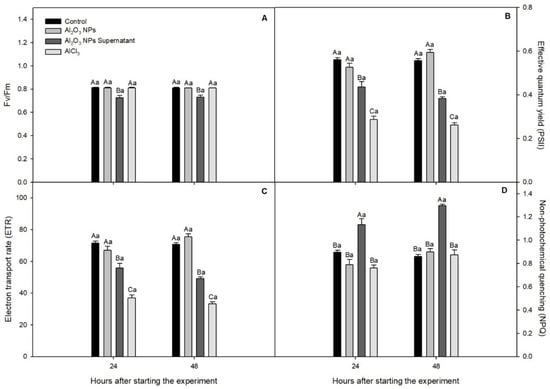
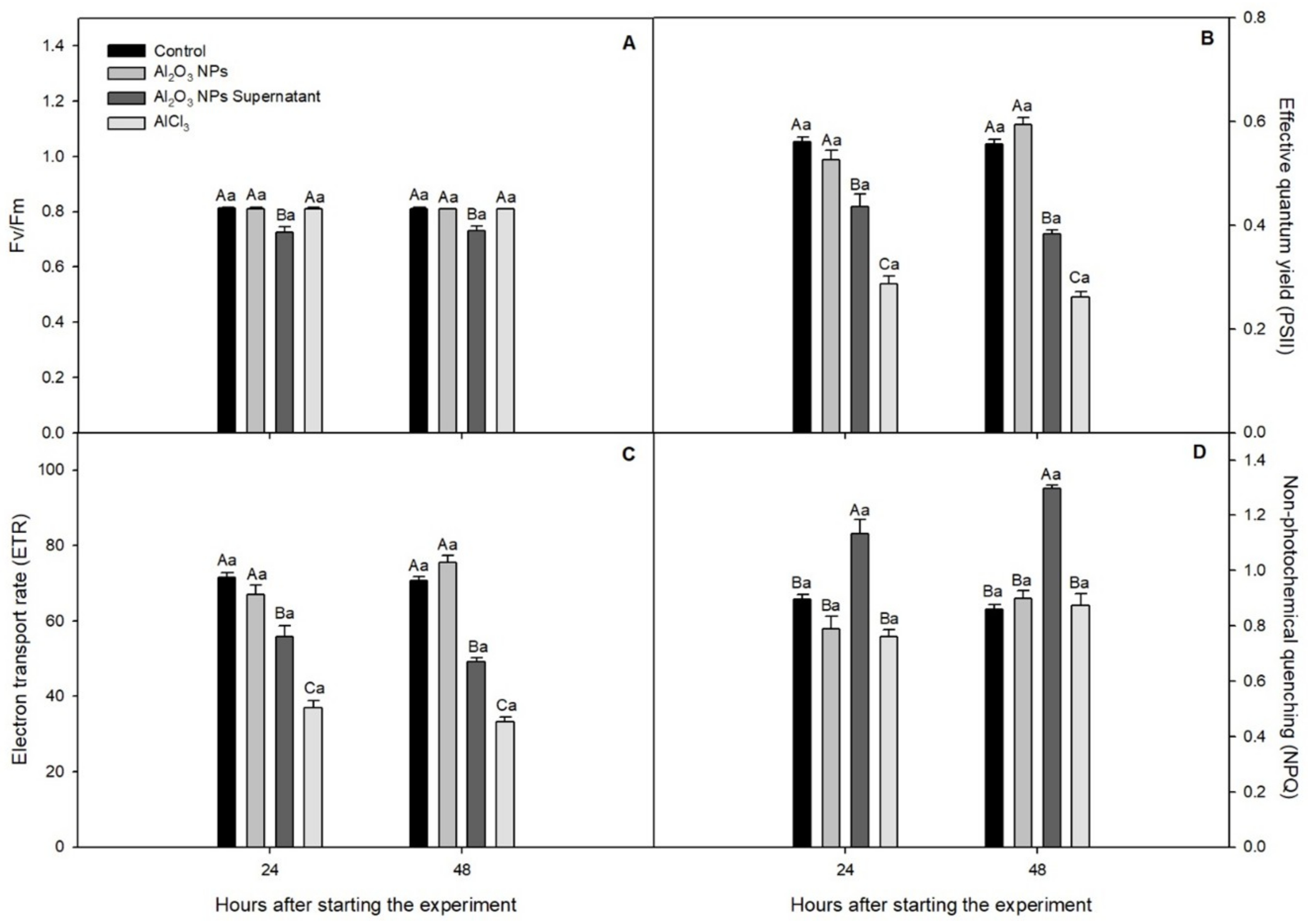
In our study, the maximum photochemical efficiency of PSII (Fv/Fm) showed no significant differences among treatments during the experiment in L. perenne, except for the Al2O3 NP supernatant, which decreased by 10% compared to the control treatment at 24 and 48 h (Figure 1A). On the other hand, we observed that Al2O3 NP supernatant treatment significantly decreased 22% and 27% the effective quantum yield of PSII (ΦPSII) in L. perenne at 24 and 48 h, respectively, compared to control plants (Figure 1B). Likewise, the electron transport rate (ETR) showed similar tendency to ΦPSII, where L. perenne plants decreased their levels under Al2O3 NP supernatant at 24 and 48 h, showing a decrease of 22% and 32%, respectively, compared to control plants (Figure 1C). Otherwise, AlCl3 treatment decreased 48% and 54% the effective quantum yield of PSII (ΦPSII) in L. perenne at 24 and 48 h, compared to control plants (Figure 1B). Meanwhile, the electron transport rate (ETR) decreased 48% and 53% at 24 and 48 h, respectively, in L. perenne subjected to AlCl3 treatment compared to control plants (Figure 1C). Regarding non-photochemical quenching (NPQ), the Al2O3 NP supernatant treatment showed the highest NPQ values at both 24 and 48 h, compared with all other treatments (Figure 1D).
Figure 1.
Chlorophyll fluorescence of PSII in perennial ryegrass (L. perenne) exposed to: (1) control (without NPs), (2) 500 mg L−1 Al2O3 NPs, (3) 500 mg L−1 Al2O3 NP supernatant, and (4) 200 μM AlCl3 for 24 and 48 h. (A) The maximum photochemical efficiency of PSII (Fv/Fm), (B) effective quantum yield of the PSII, (C) electron transport rate, and (D) non-photochemical quenching. Different capital letters indicate significant differences among treatments at the same exposure time according to Tukey’s test (p ≤ 0.05). Different lowercase letters indicate significant differences in exposure time (24 to 48 h) for the same treatment, as determined by the paired samples Student’s t-test (p ≤ 0.05).
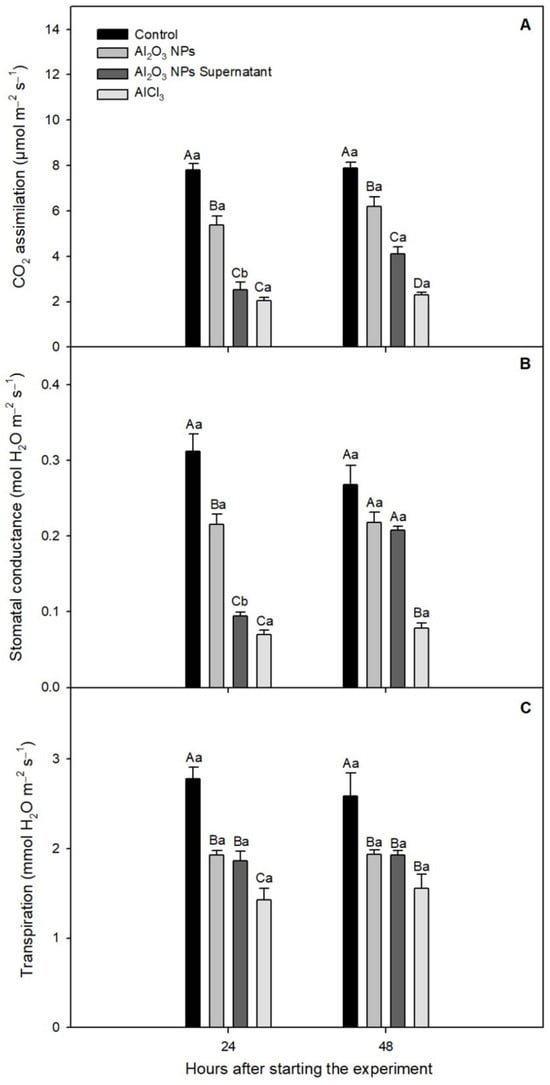
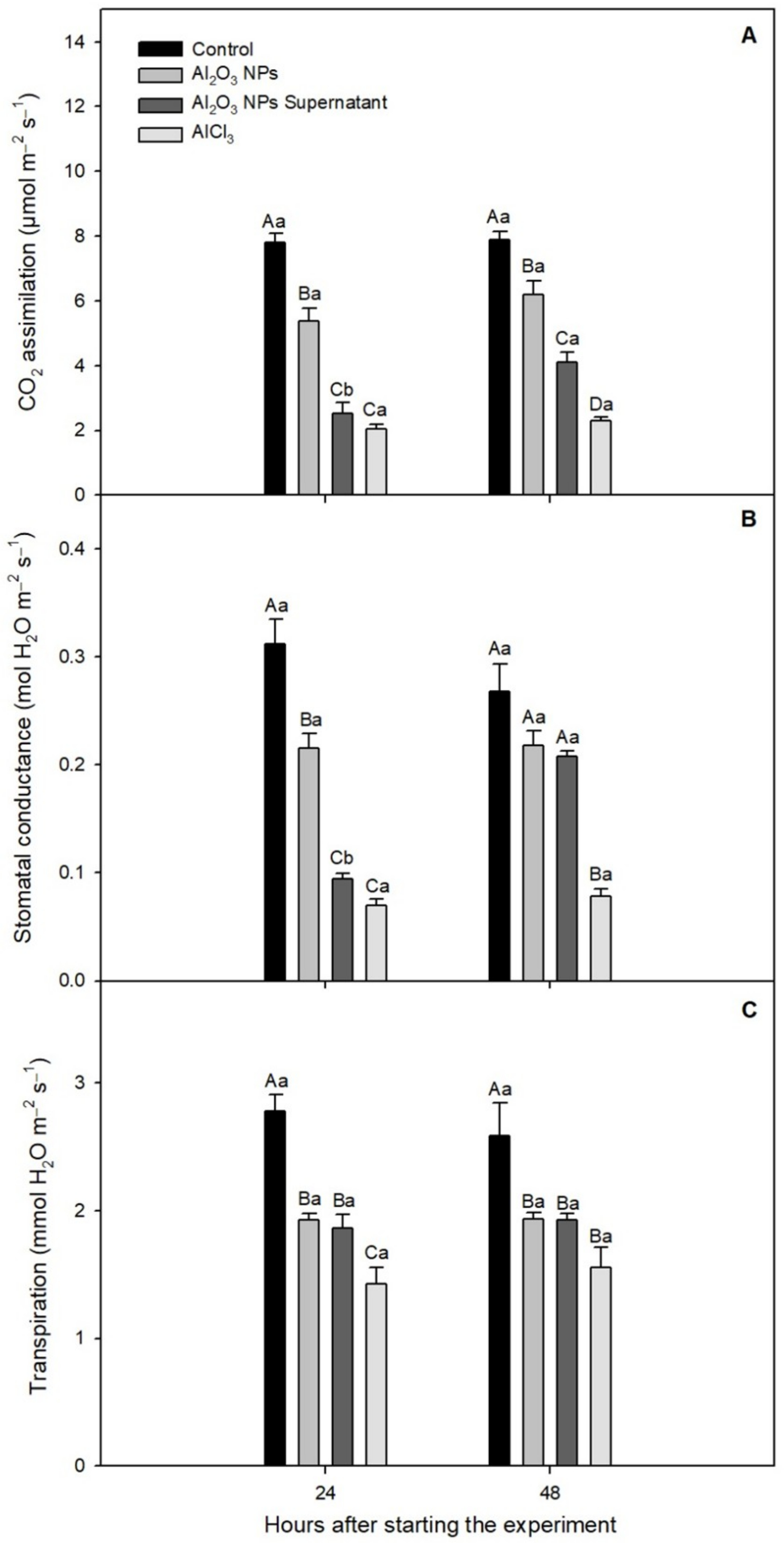
On the other hand, our study revealed that CO2 assimilation was significantly decreased in all treatments compared to control plants, decreasing by 28%, 58%, and 50% in Al2O3 NPs, Al2O3 NP supernatant, and AlCl3 treatments, respectively (Figure 2A). Similar tendency was observed in stomatal conductance (gs), where it was reduced in plants subjected to Al2O3 NPs, Al2O3 NP supernatant, and AlCl3 treatments (Figure 2B). Interestingly, plants under Al2O3 NP supernatant showed an increase in CO2 assimilation (by 25%) and gs (by 50%) at 48 h compared to 24 h of the experiment. Concerning transpiration (E), L. perenne plants exposed to Al2O3 NPs and Al2O3 NP supernatant exhibited transpiration rates approximately 25% lower than the control at both exposure times (Figure 2C). At 24 h, the AlCl3 treatment showed the lowest transpiration rate. In contrast, at 48 h no significant differences were detected among the three Al treatments. No significant differences were observed between 24 and 48 h across any treatment.
Figure 2.
(A) CO2 assimilation, (B) stomatal conductance, and (C) transpiration of perennial ryegrass (L. perenne) exposed to: (1) control (without NPs), (2) 500 mg L−1 Al2O3 NPs, (3) 500 mg L−1 Al2O3 NP supernatant, and (4) 200 μM AlCl3 for 24 and 48 h. Different capital letters indicate significant differences among treatments at the same exposure time according to Tukey’s test (p ≤ 0.05). Different lowercase letters indicate significant differences in exposure time (24 to 48 h) for the same treatment, as determined by the paired samples Student’s t-test (p ≤ 0.05).
2.2. Gene Expression of Subunits of PSII and Rubisco
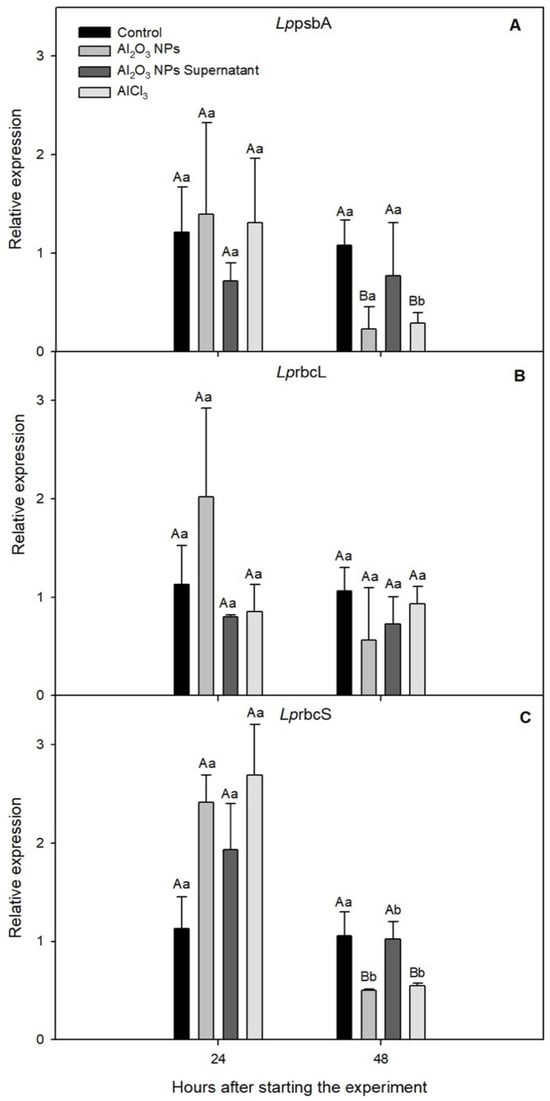
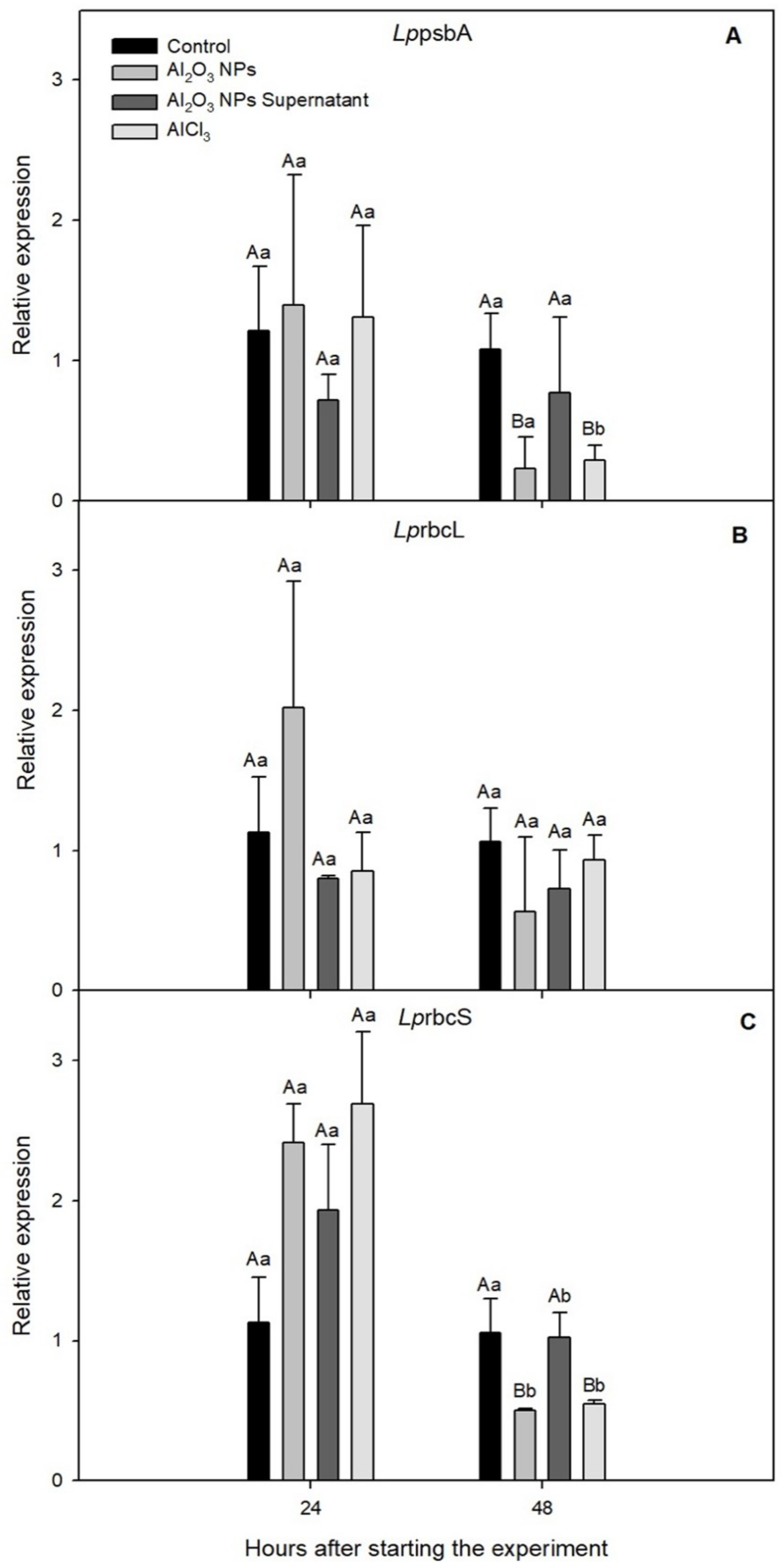
In our study, differential gene expression of psbA, rbcL, and rbcS was induced by Al2O3 NPs, Al2O3 NP supernatant, and AlCl3 treatments (Figure 3). Gene expression of psbA did not differ among treatments at 24 h. However, we observed that Al2O3 NPs and AlCl3 treatments significantly reduced (by about 60%) psbA gene expression compared to the control treatment at 48 h (Figure 3A). The rbcL gene expression did not differ significantly among treatments at either 24 or 48 h, although the Al2O3 NP treatment showed the highest mean expression at 24 h and lower expression at 48 h (Figure 3B). The rbcS gene expression did not differ significantly among treatments at 24 h. At 48 h, Al2O3 NPs and AlCl3 significantly reduced rbcS expression compared with the control and the Al2O3 NP supernatant treatment. In addition, rbcS expression decreased significantly from 24 to 48 h in the Al2O3 NPs, Al2O3 NP supernatant, and AlCl3 treatments, whereas no temporal differences were observed in the control (Figure 3C).
Figure 3.
Gene expression of subunits of PSII and Rubisco (A) psbA, (B) rbcL, and (C) rbcS of perennial ryegrass (L. perenne) exposed to: (1) control (without NPs), (2) 500 mg L−1 Al2O3 NPs, (3) 500 mg L−1 Al2O3 NP supernatant, and (4) 200 μM AlCl3 for 24 and 48 h. Different capital letters indicate significant differences among treatments at the same exposure time according to Tukey’s test (p ≤ 0.05). Different lowercase letters indicate significant differences in exposure time (24 to 48 h) for the same treatment, as determined by the paired samples Student’s t-test (p ≤ 0.05).
2.3. Photosynthetic Pigments in L. perenne
Regarding photosynthetic pigments, Chl a, Chl b, Chl a+b, and Chl a/b did not vary among treatments at 24 h (Table 1). By contrast, at 48 h into the experiment, L. perenne plants treated with Al2O3 NPs showed the lowest Chl a level, 21% lower than in control plants. Regarding Chl b, the supernatant from Al2O3 NPs increased by more than 50% compared to the control plants at 48 h, reaching the highest level among the treatments. A similar trend was observed for Chl a+b, with the Al2O3 NP supernatant showing the highest value at 48 h, whereas Al2O3 NPs resulted in the lowest Chl a+b content among the treatments (Table 1). In general, no changes in Chl a pigment were observed across exposure times for all treatments, except for Al2O3 NPs, which reduced Chl a by about 21% at 48 h compared to 24 h. Concerning Chl b, the Al2O3 NP supernatant treatment showed a significant increase of approximately 171% at 48 h compared with 24 h, whereas no temporal changes were observed in the remaining treatments. A similar pattern was observed for Chl a+b, which also increased significantly in the Al2O3 NP supernatant treatment between 24 and 48 h. By contrast, Chl a declined significantly only in the Al2O3 NP treatment over time, while the Chl a/b ratio decreased significantly in the Al2O3 NP supernatant treatment and increased in the Al2O3 NP treatment at 48 h (Table 1).
Table 1.
Concentration of photosynthetic pigments (mg g−1 FW) in perennial ryegrass (L. perenne) exposed to: (1) control (without NPs), (2) 500 mg L−1 Al2O3 NPs, (3) 500 mg L−1 Al2O3 NP supernatant, and (4) 200 μM AlCl3 for 24 and 48 h.
2.4. Antioxidant-Related Parameter Responses in L. perenne
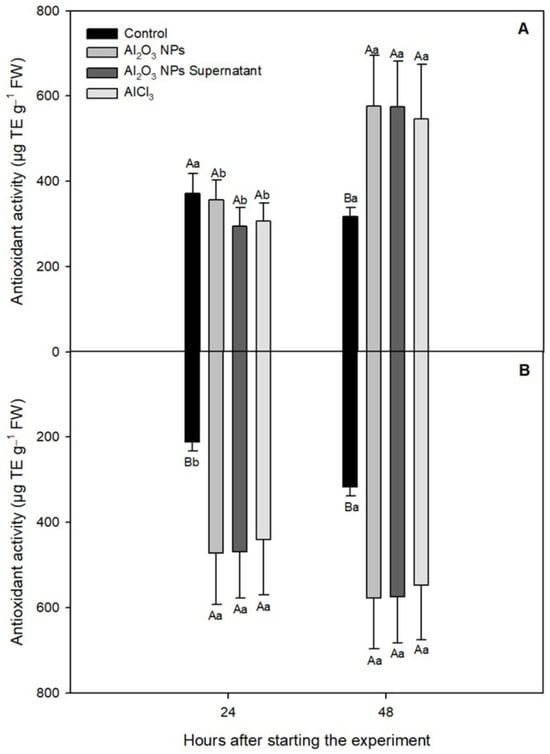
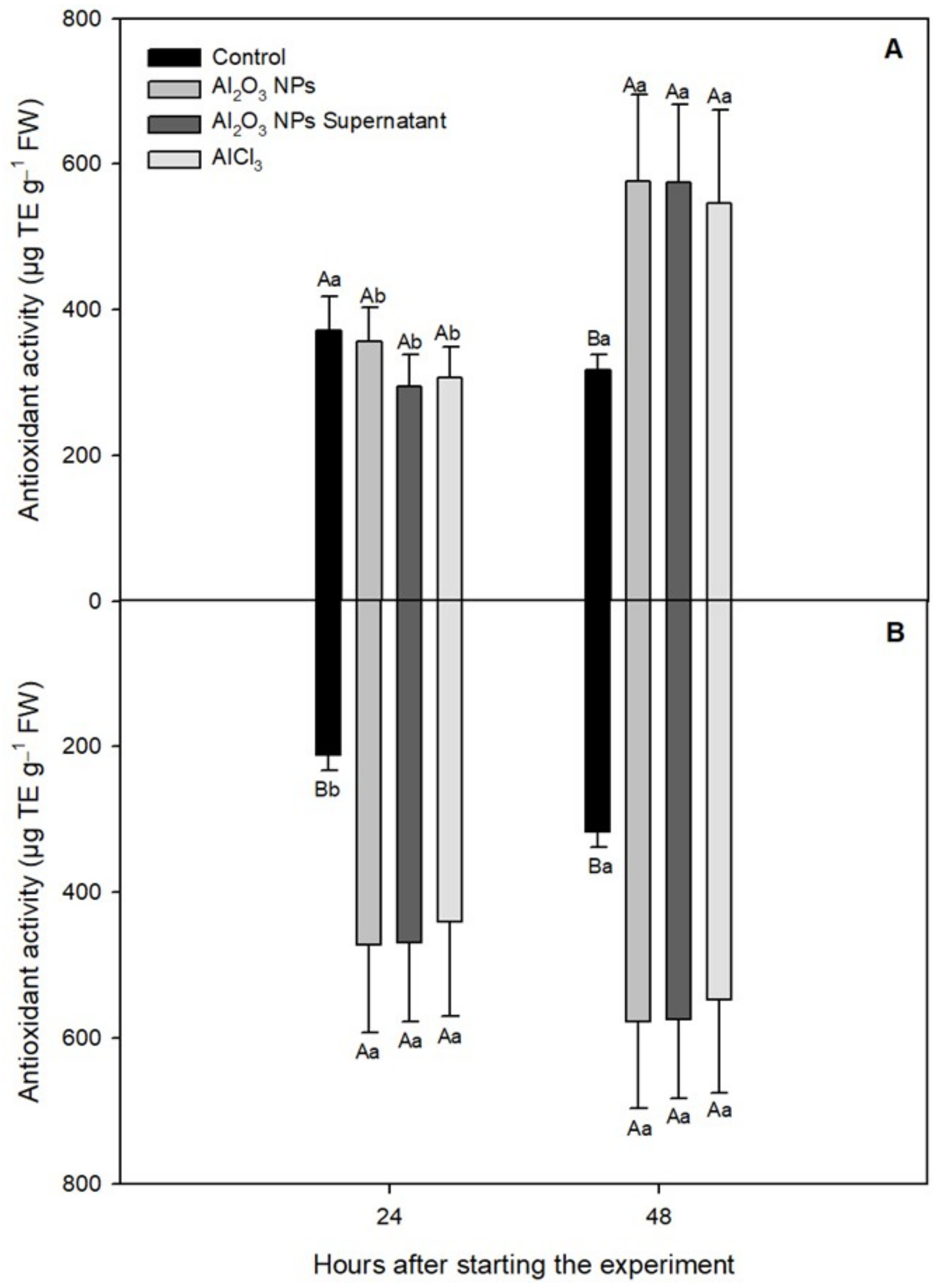
Antioxidant activity (AA) in leaves did not differ among treatments after 24 h of exposure (Figure 4A). However, after 48 h, all treatments (Al2O3 NPs, Al2O3 NP supernatant, and AlCl3) showed significantly higher AA than the control, with increases of approximately 40%. At the same time, no differences were detected among the three treatments. Temporal analysis showed that AA remained unchanged in control plants but increased significantly from 24 to 48 h in all treatments.
Figure 4.
Antioxidant activity in (A) leaves and (B) roots of perennial ryegrass (L. perenne) exposed to: (1) control (without NPs), (2) 500 mg L−1 Al2O3 NPs, (3) 500 mg L−1 Al2O3 NP supernatant, and (4) 200 μM AlCl3 for 24 and 48 h. Different capital letters indicate significant differences among treatments at the same exposure time according to Tukey’s test (p ≤ 0.05). Different lowercase letters indicate significant differences in exposure time (24 to 48 h) for the same treatment, as determined by the paired samples Student’s t-test (p ≤ 0.05).
In roots, all treatments exhibited significantly higher AA than the control at both 24 and 48 h, reaching values approximately 2.1-fold greater than those of the control plants (Figure 4B). Similar to leaves, AA remained unchanged over time in the control. In contrast, all treatments showed a significant increase between 24 and 48 h.
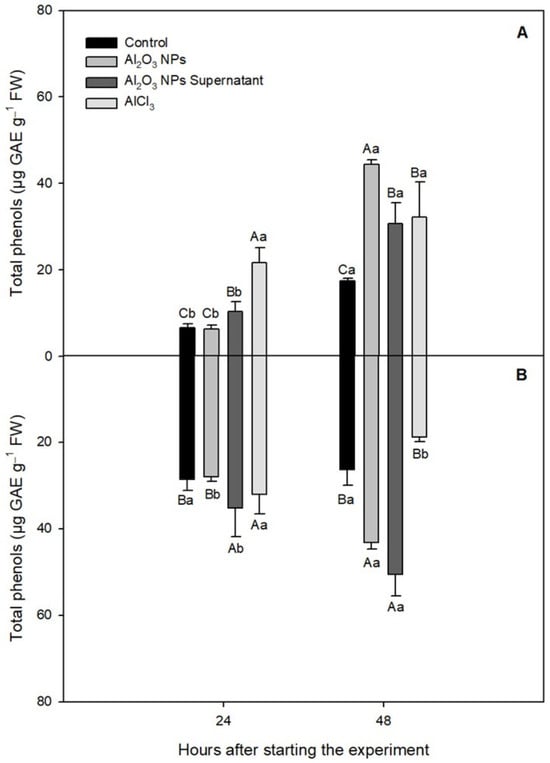
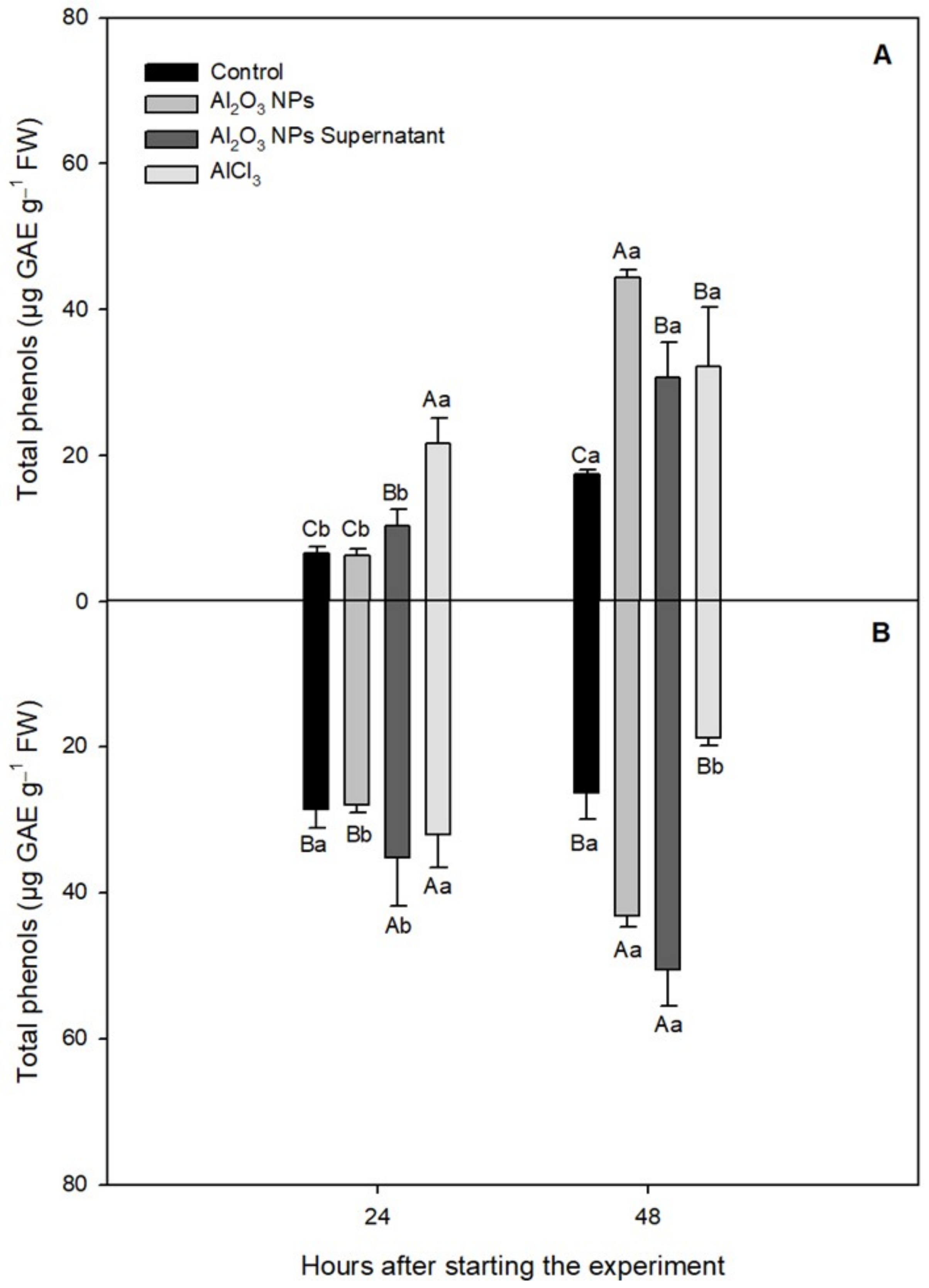
Total phenol (TP) content in leaves differed among treatments at both exposure times (Figure 5A). At 24 h, AlCl3 induced the highest TP content, reaching values approximately 3.2-fold higher than the control. In contrast, the Al2O3 NP supernatant showed an intermediate response, and Al2O3 NPs did not differ from the control. After 48 h, TP content further increased under all Al treatments, with Al2O3 NPs exhibiting the highest values (approximately 2.5-fold higher than the control), followed by the Al2O3 NP supernatant and AlCl3, while the control remained the lowest. No significant temporal differences in TP content were detected in leaves within any treatment.
Figure 5.
Total phenols in (A) leaves and (B) roots of perennial ryegrass (L. perenne) exposed to: (1) control (without NPs), (2) 500 mg L−1 Al2O3 NPs, (3) 500 mg L−1 Al2O3 NP supernatant, and (4) 200 μM AlCl3 for 24 and 48 h. Different capital letters indicate significant differences among treatments at the same exposure time according to Tukey’s test (p ≤ 0.05). Different lowercase letters indicate significant differences in exposure time (24 to 48 h) for the same treatment, as determined by the paired samples Student’s t-test (p ≤ 0.05).
In roots, AlCl3 induced the highest TP content at 24 h, whereas Al2O3 NPs and the Al2O3 NP supernatant showed intermediate values and the control remained the lowest (Figure 5B). After 48 h, TP content increased further in the Al2O3 NPs and Al2O3 NP supernatant treatments, which showed the highest values among treatments, whereas AlCl3 exhibited intermediate levels. Temporal analysis revealed a significant increase in the Al2O3 NP supernatant treatment only between 24 and 48 h, while the remaining treatments did not show significant changes over time.
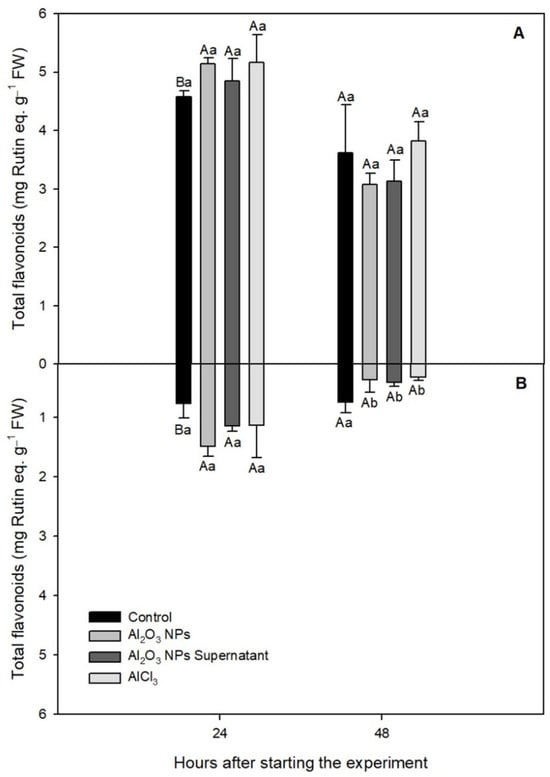
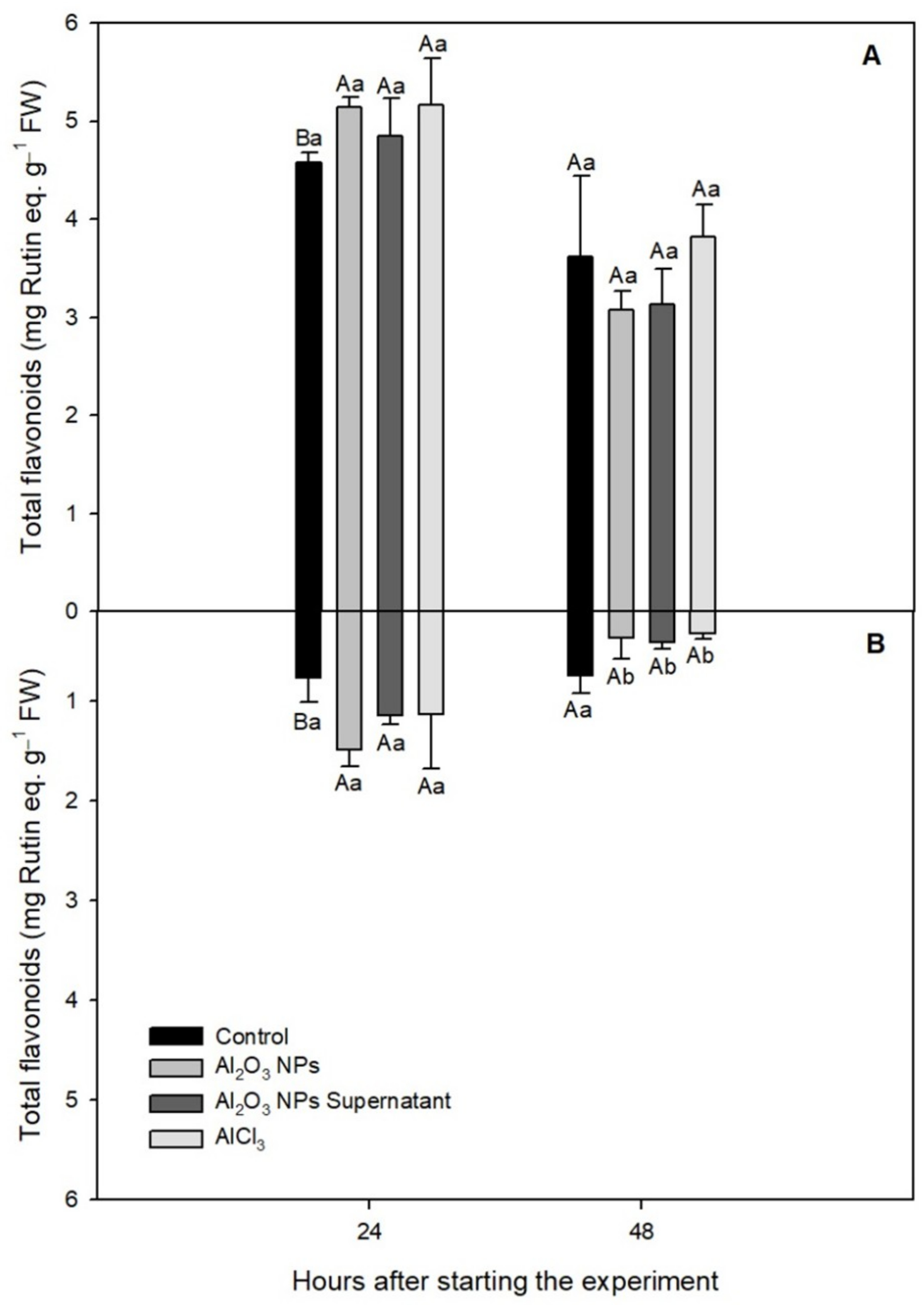
Total flavonoid (TF) content in leaves was significantly higher in all treatments than in the control after 24 h of exposure, with no differences among the Al treatments (Figure 6A). However, after 48 h, no significant differences were detected among treatments. Temporal analysis showed that TF content remained unchanged in the control, whereas all Al treatments exhibited a significant decrease between 24 and 48 h.
Figure 6.
Total flavonoids in (A) leaves and (B) roots of perennial ryegrass (L. perenne) exposed to: (1) control (without NPs), (2) 500 mg L−1 Al2O3 NPs, (3) 500 mg L−1 Al2O3 NP supernatant, and (4) 200 μM AlCl3 for 24 and 48 h. Different capital letters indicate significant differences among treatments at the same exposure time according to Tukey’s test (p ≤ 0.05). Different lowercase letters indicate significant differences in exposure time (24 to 48 h) for the same treatment, as determined by the paired samples Student’s t-test (p ≤ 0.05).
A similar pattern was observed in roots (Figure 6B). At 24 h, all treatments showed significantly higher TF content than the control, while no differences among treatments were detected. After 48 h, TF levels no longer differed among treatments. As observed in leaves, TF content decreased significantly over time in all Al treatments, whereas the control remained unchanged.
2.5. Lipid Peroxidation in L. perenne
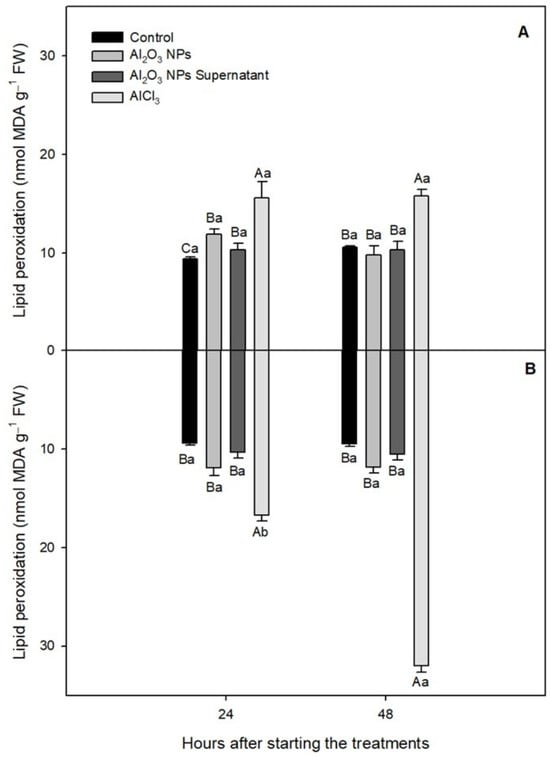
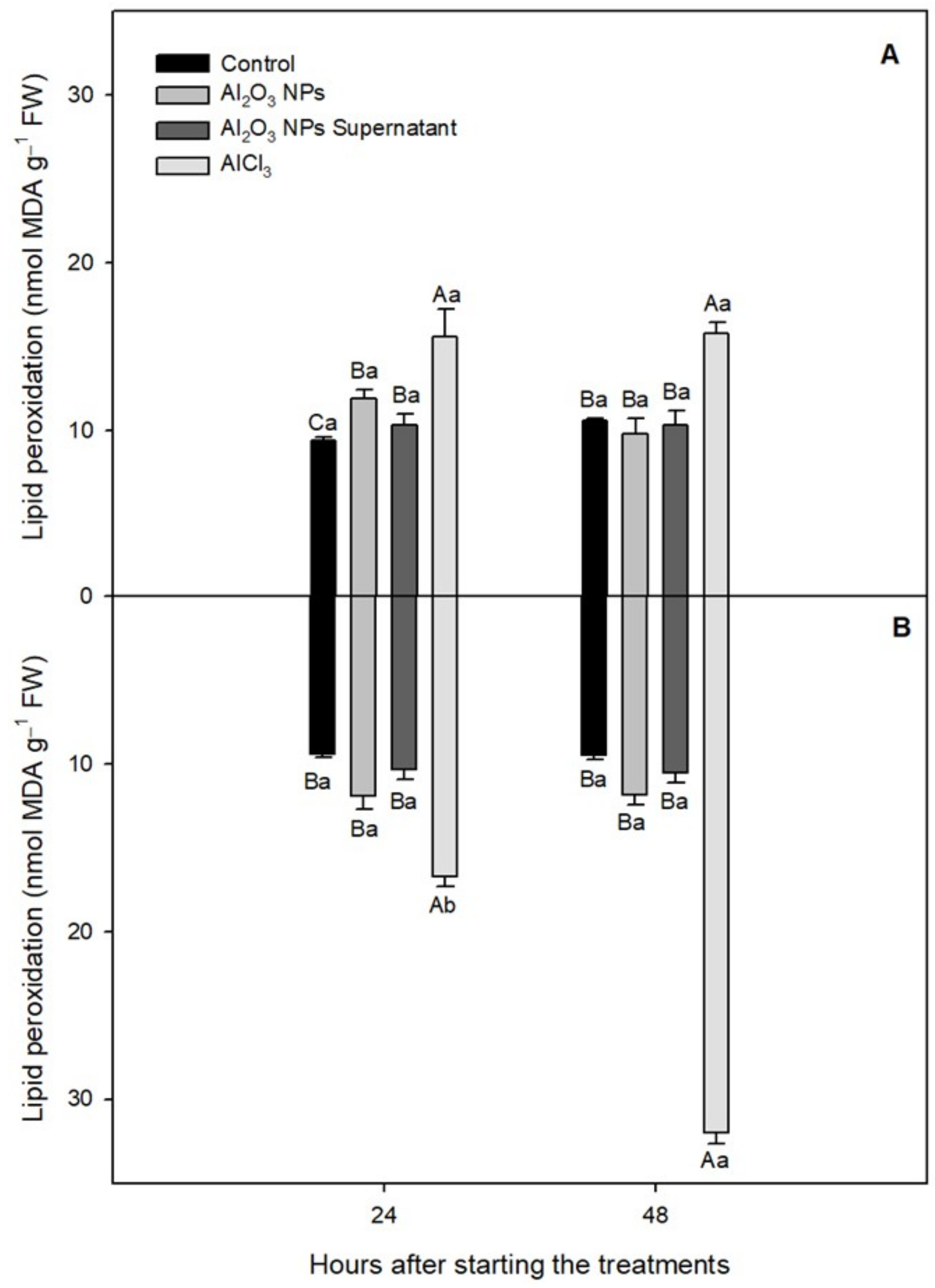
Lipid peroxidation in leaves was significantly affected only by the AlCl3 treatment, which showed MDA levels approximately 1.6-fold higher than those of the control at both 24 and 48 h (Figure 7A). No significant differences were detected among the control, Al2O3 NPs, and Al2O3 NP supernatant treatments. In addition, no temporal changes in lipid peroxidation were observed in leaves for any treatment.
Figure 7.
Lipid peroxidation in (A) leaves and (B) roots of perennial ryegrass (L. perenne) exposed to: (1) control (without NPs), (2) 500 mg L−1 Al2O3 NPs, (3) 500 mg L−1 Al2O3 NP supernatant, and (4) 200 μM AlCl3 for 24 and 48 h. Different capital letters indicate significant differences among treatments at the same exposure time according to Tukey’s test (p ≤ 0.05). Different lowercase letters indicate significant differences in exposure time (24 to 48 h) for the same treatment, as determined by the paired samples Student’s t-test (p ≤ 0.05).
A similar pattern was observed in roots (Figure 7B), where AlCl3 also induced the highest lipid peroxidation at both exposure times. In contrast, the control, Al2O3 NPs, and Al2O3 NP supernatant treatments did not differ significantly. Temporal analysis revealed a significant increase in lipid peroxidation only in the AlCl3 treatment, which increased approximately 3.3-fold between 24 and 48 h.
3. Discussion
In studies involving NPs, it is important to determine their average size and surface electrical characteristics in the medium in which they are applied to understand their interactions with ions and biological systems, as well as their state of aggregation [19]. For aluminum nanoparticles, these properties are significantly influenced by the medium’s pH [13,20]. The size and electrical charge of the NPs used in this study are consistent with those reported by Ghosh et al. [13] at pH 5, where the approximate size is > 300 nm, compared with 216.8 nm observed, and the Z potential is approximately +30 mV, compared with +32.7 mV observed in our work.
The Al2O3 NP supernatant and AlCl3 treatments produced more pronounced effects on several photosynthetic parameters than the Al2O3 NP suspension under the tested acidic conditions. Although CO2 assimilation and stomatal conductance decreased in all Al treatments, the Al2O3 NP supernatant and AlCl3 consistently produced the greatest reductions in ΦPSII, ETR, and gas exchange. This response agrees with the well-established predominance of soluble Al species under acidic conditions, where Al toxicity is recognized as one of the major constraints limiting photosynthesis and plant productivity [21], since Al2O3 dissolution increases as pH decreases [12]. These differences are consistent with a possible contribution of dissolved Al, but they do not establish its predominance as a driver of phytotoxicity. The observed responses cannot conclusively distinguish particle-mediated from dissolution-mediated effects because Al was not measured.
At 48 h, Al2O3 NPs and AlCl3 reduced expression of psbA and rbcS, whereas rbcL expression did not differ significantly among treatments. Although psbA encodes the D1 protein of photosystem II [22], changes in its expression did not consistently align with the photochemical responses. Al2O3 NPs reduced psbA expression without significantly affecting ΦPSII or ETR, whereas the supernatant decreased both parameters without significantly altering psbA expression. These contrasting patterns indicate that psbA transcript abundance alone does not explain the photochemical responses across treatments. Although reduced psbA expression coincided with lower ΦPSII and ETR under AlCl3 exposure, this association does not establish a direct causal relationship.
Several studies have shown that the phytotoxicity of metal oxide nanoparticles depends not only on the particles themselves but also on their dissolution behavior in the exposure medium [23,24]. Under acidic or complexing conditions, dissolution can increase the release of soluble metal species, thereby enhancing biological responses [23,24]. Consistent with this, reductions in chlorophyll fluorescence parameters have been reported following exposure to different metal oxide nanoparticles [25,26,27,28,29]. For example, MgAl2O4 nanoparticles significantly reduced Fv/Fm, ΦPSII, and ETR in Hordeum vulgare [29], whereas similar alterations have been described for CuO and ZnO nanoparticles [26,27,28], supporting the view that disruption of PSII photochemistry is a common response to metal oxide nanoparticle exposure.
The simultaneous reduction in CO2 assimilation, ΦPSII, and ETR suggests that aluminum exposure promoted an imbalance between light energy absorption and carbon fixation, favoring the generation of reactive oxygen species (ROS) [30]. This interpretation is supported by the higher lipid peroxidation observed, particularly under AlCl3 treatment, indicating greater oxidative damage. Similar increases in lipid peroxidation and H2O2 accumulation have been reported in Triticum aestivum exposed to Al2O3 nanoparticles [31], reinforcing the association between aluminum exposure, oxidative stress, and impaired photosynthetic performance [32].
To cope with ROS and oxidative stress, plants activate antioxidant defense mechanisms, including biosynthesis of phenolic compounds such as phenols, flavonoids, and anthocyanins [33,34]. Additionally, phenolic compounds, through their complexing capacity, can modulate metal bioavailability, thereby buffering oxidative damage during Al and Cu exposure [35]. Consistent with these mechanisms, AA and TP increased in leaves and roots across all treatments, with the effect more evident at 48 h of exposure. Interestingly, Al2O3 NPs exhibited the highest TP level in leaves at 48 h, reaching values 2.5-fold higher than the control. Similarly, TF content increased significantly in leaves and roots at 24 h in all treatments, with no differences among them. In agreement with our findings, Yanik and Vardar [31] reported increased phenolic compound accumulation in Triticum aestivum exposed to low doses of Al2O3 NPs, whereas higher nanoparticle concentrations reduced phenolic levels, suggesting a dose-dependent antioxidant response. In our study, increased antioxidant activity and phenolic compound accumulation under Al2O3 NP and Al2O3 NP supernatant exposure were accompanied by lipid peroxidation levels that did not differ significantly from those of the control. These findings are consistent with a possible protective role of antioxidant responses; however, they do not establish a causal relationship between these responses and the limitation of oxidative damage. Such a protective mechanism remains a hypothesis requiring further experimental validation.
This study focused on short-term physiological and biochemical responses. Root growth and biomass were not assessed, and colloidal stability in Hoagland solution was not monitored during exposure. Dissolved Al concentrations and complete particle removal from the supernatant were also not verified. Addressing these aspects in future studies would help clarify the contributions of particulate and dissolved Al and their implications for plant growth.
4. Materials and Methods
4.1. Nanoparticle Characterization
Aluminum oxide nanoparticles (Al2O3 NPs) were purchased from Merck® (product ID 544833, Merck KGaA, Darmstadt, Germany). The hydrodynamic size and zeta potential of the Al2O3 NPs were determined by dynamic light scattering (DLS) using a Zetasizer Nano ZS ZEN3600 (Malvern Instruments, Malvern, UK).
4.2. Plant Material and Growth Conditions
Seeds of L. perenne Halo-AR1 were germinated in six Petri dishes on filter paper moistened with 30 mL of deionized water. Seeds were disinfected with 1% sodium hypochlorite (NaClO) and distilled water before germination, resulting in a 92% germination rate. A total of 60 seeds were placed in each Petri dish and watered with calcium chloride (CaCl2) for 10 days. After 10 days, seedlings were transferred to 12 black 5-L pots, each containing 12 plants grown in Hoagland nutrient solution at pH 5.2 [36]. The experiment comprised four treatments, with three independent pots per treatment. Each pot constituted an experimental unit, whereas the plants within each pot constituted observational units. Thus, each treatment had three independent biological replicates (n = 3). Hoagland solution was renewed every 3 days, and the pH was adjusted to 5.2 every 2 days. Each pot was equipped with an aeration system connected to air pumps. Seedlings were grown under controlled conditions (16/8 h light/dark photoperiod, 24 ± 2°C, and 40% relative humidity) for 28 days for acclimation. Then, L. perenne seedlings were subjected to four treatments: control (without NPs), 500 mg L−1 Al2O3 NPs, 500 mg L−1 (according to Riahi-Madvar et al. [37] used in Triticum aestivum), Al2O3 NP supernatant, and 200 μM AlCl3 (according to Parra-Almuna [38]). The Al2O3 NP suspension was prepared at a nominal concentration of 500 mg L−1 and stirred for 30 min, sonicated for 30 min, and then stirred for an additional 30 min before application. The Al2O3 NP supernatant was obtained from the same procedure, but then centrifuged at 16,000× g for 10 min, similar to [39] for zinc NPs. At each evaluation time (24 and 48 h after the start of treatment), seven plants per pot were used for the determinations at 24 h, and the remaining seven plants were used at 48 h. Consequently, different plants were sampled at each exposure time, but both sampling times were represented within the same pots. Photosynthetic performance was assessed, and shoots and roots were then harvested from the same plants for gene expression and biochemical analyses. Samples were immediately frozen in liquid nitrogen and stored at −80°C, except those used in lipid peroxidation assays, which were stored at −20°C.
4.3. Chlorophyll Fluorescence of PSII and Photosynthetic Performance
Chlorophyll fluorescence measurements were determined as described by Reyes-Díaz et al. [40] using a portable pulse-amplitude-modulated fluorometer (FMS 2; Hansatech Instruments, King’s Lynn, UK). Before measuring Fv/Fm, fully expanded leaves were dark-adapted for 30 min using leaf clips equipped with a movable shutter plate to allow PSII reaction centers to return to the open state. Effective quantum yield (ΦPSII), electron transport rate (ETR), and non-photochemical quenching (NPQ) were determined as fluorescence parameters as described by Maxwell and Johnson [41]. The measurements were performed in the morning between 08:00 and 10:00 h. For gas exchange measurements, a portable infrared gas analyzer (IRGA) (Li-6400; LI-COR, Inc., Lincoln, NE, USA) was used, following the protocol of Reyes-Díaz et al. [42]. The analyzed parameters were CO2 assimilation (Pn), stomatal conductance (gs), and transpiration (E). The CO2 reference concentration was 400 μmol mol−1, with a flow rate of 300 mL min−1, a light intensity of 300 µmol m−2 s−1, 60% relative humidity, and a temperature of 20 ± 1°C. Chlorophyll fluorescence and gas exchange were measured in vivo during the light period from 08:00 to 10:00 h.
4.4. Gene Expression
4.4.1. Total RNA Isolation and cDNA Synthesis
RNA was extracted using the rapid CTAB protocol developed by Gambino et al. [43] and modified by Inostroza-Blancheteau et al. [11]. To assess RNA integrity, samples were separated by electrophoresis in 1% agarose gels containing ethidium bromide at a final concentration of 0.5 µg mL−1, at 80 V for 45 min. RNA concentration was measured spectrophotometrically using an EPOCH® microplate spectrophotometer (BioTek Instruments, Inc., Winooski, VT, USA) with a Take3® microvolume plate (BioTek) and a Quantus® dual-channel fluorometer (Cat. No. E6150) using a Promega QuantiFluor® dye system (Cat. No. E3310). The RNA was treated with RNase-free DNase I (Thermo Fisher, Waltham, MA, USA) to eliminate genomic DNA contamination. For cDNA synthesis, 50 units of MultiScribe reverse transcriptase were used, following the instructions for the High-Capacity cDNA Reverse Transcription Kit (Thermo Fisher). Electrophoresis was subsequently performed in 1% agarose gels containing ethidium bromide at a final concentration of 0.5 µg mL−1, at 90 V for 30 min.
4.4.2. Real-Time Quantitative PCR (qRT PCR) Analysis
The relative expression of the psbA, rbcL, and rbcS genes were analyzed using primers previously designed by Wu et al. [44] (see Table 2). Actin was used as the housekeeping gene. Real-time polymerase chain reactions (qPCR) were carried out using the GoTaq® qPCR Master Mix kit from Promega® (Madison, WI, USA), following the manufacturer’s instructions. Each 15 μL reaction contained 7.5 μL GoTaq®, 0.3 μL of each specific primer, and 3 μL of cDNA. The cycling conditions were as follows: 95°C for 10 min, followed by 40 cycles of 95°C for 15 s, 54 °C for 30 s, and 60 °C for 30 s. Relative gene expression was calculated using the comparative 2^(−ΔΔ) Ct method [45] with a StepOne™ Real-Time PCR System (Applied Biosystems, Foster City, CA, USA)—Table 2.
Table 2.
Specific primers used for real-time PCR analysis to evaluate the expression of subunits of PSII and Rubisco.
4.5. Photosynthetic Pigments Determination
The total chlorophyll a (Chl a) and chlorophyll b (Chl b) were analyzed in leaf samples of perennial ryegrass. Leaf samples (0.1 g) were ground in liquid nitrogen, macerated with ethanol (96% v/v), and centrifuged at 13,000× g for 5 min at 4°C, following the Lichtenthaler and Wellburn [46] protocol. The absorbance was measured at 665, 649, and 470 nm using a spectrophotometer (Thermo Scientific, GENESYS 10 UV, Rochester, NY, USA).
4.6. Determination of Antioxidant-Related Parameters
Antioxidant activity (AA), total phenols (TP), and total flavonoids were determined as antioxidant-related parameters in L. perenne. For AA and TP, 0.2 g leaf and root samples were ground in liquid nitrogen, macerated with 2 mL of ethanol (80% v/v), and centrifuged at 13,000× g for 10 min at 4 °C. The supernatant was collected and used for both determinations. Antioxidant activity was measured using the free radical 2,2-diphenyl-1-picrylhydrazyl (DPPH) according to the method described by Chinnici et al. [47]. The AA was measured at 515 nm using a spectrophotometer (Thermo Scientific, GENESYS 10 UV, Rochester, NY, USA) and expressed as µg of Trolox equivalent per gram of fresh weight (µg TE g−1 FW). For total phenols, the Folin–Ciocalteu method [48] was used, measuring absorbance at 765 nm. The results were expressed as µg of gallic acid equivalent per gram of fresh weight (µg GAE g−1 FW). Total flavonoids were determined by the aluminum chloride colorimetric method described by Cheng and Breen [49]. For this, leaf and root samples were macerated with methanol (80% v/v) and mixed with NaNO2 (5%) and distilled water. After 5 min of incubation, AlCl3 (10%) was added and incubated for 6 min. Then, NaOH (1 mol L−1) was added to the solution. Finally, the solution was incubated for 15 min. The absorbance was measured at 510 nm using the spectrophotometer (Thermo Scientific, GENESYS 10 UV, Rochester, NY, USA). Results were expressed as mg of rutin equivalents per g of fresh weight (mg Rutin g−1 FW).
4.7. Lipid Peroxidation of Msembranes
As an oxidative stress indicator, lipid peroxidation was measured in leaves and roots by quantifying thiobarbituric acid-reactive substances (TBARS). The absorbance was determined at 532, 600, and 440 nm to correct for TBARS-sugar interferences using a spectrophotometer (Thermo Scientific, GENESYS 10 UV, Rochester, NY, USA). The LP was expressed as malondialdehyde content equivalents per g of fresh weight (nmol MDA g−1 FW), following the modified method of Du and Bramlage [50].
4.8. Experimental Design and Data Analysis
A completely randomized block design with four treatments and three replicates was used. The experiment comprised four treatments, with three independent pots per treatment and 14 plants per pot, totaling 12 pots. Each pot constituted an experimental unit, and the plants within each pot were considered observational units. At 24 h, seven plants were harvested from each pot, and their tissues were pooled separately by tissue type to obtain one composite sample per pot for each tissue analyzed. The remaining seven plants were harvested and pooled in the same manner at 48 h. This procedure yielded three independent biological replicates per treatment at each sampling time (n = 3), with both sampling times represented within the same pots. Data were tested for normality and equal variance using the Shapiro–Wilk and Levene tests, respectively. Then, data were analyzed using one-way ANOVA, followed by a Tukey test for multiple comparisons (p ≤ 0.05) among treatments for the same exposure time. Paired samples Student’s t-test (p ≤ 0.05) was performed to compare exposure times for the same treatment. SigmaStat v. 2.0 (SPSS, Chicago, IL, USA) was used for statistical analysis.
5. Conclusions
This study demonstrates that aluminum exposure markedly impairs the physiological performance and photosynthetic capacity of Lolium perenne under acidic conditions. The strongest effects on gas exchange and PSII photochemical efficiency were observed in plants exposed to AlCl3 and the Al2O3 NP supernatant. However, the absence of dissolved Al measurements and verification of the particulate content of the supernatant precludes a definitive attribution of these effects to soluble Al. These physiological responses were accompanied by changes in the expression of photosynthesis-related genes and activation of antioxidant defense mechanisms. Although antioxidant activity and phenolic compound accumulation increased in response to aluminum exposure, these responses were insufficient to prevent oxidative damage under AlCl3 treatment. Further studies combining measurements of dissolved Al, verification of particle separation, and quantification of Al accumulation in plant tissues are needed to resolve the mechanisms underlying these treatment responses.
Author Contributions
Conceptualization, methodology, project administration, funding acquisition R.T.-N. and C.I.-B.; methodology, formal analysis, writing (original draft) J.G.-V., V.F., P.C.-F. and M.R.-D.; writing (original draft), writing—review and editing A.B.-M., A.J.-M. and G.T.F. All authors have read and agreed to the published version of the manuscript.
Funding
This work is funded by the grants ANID/FONDECYT Regular 1250452, FEQUIP2018 CI-04_UCT, VIP-UCTemuco_2023 PF-04-RT, 2026FEQUIP-KI-02, ANID/ANILLO ATE230007, ANID/ANILLO ATE250064, ANID Millennium Nucleus in Data Science and Plant Resilience (PhytoLearning) NCN2024_047.
Institutional Review Board Statement
Not applicable.
Informed Consent Statement
Not applicable.
Data Availability Statement
The original contributions presented in this study are included in the article. Further inquiries can be directed to the corresponding authors.
Acknowledgments
We would like to thank the National Research and Development Agency (ANID), the Food Production Research Nucleus at the Faculty of Natural Resources, and the Department of Agricultural and Aquaculture Sciences at UCT.
Conflicts of Interest
The authors declare no conflicts of interest.
Abbreviations
The following abbreviations are used in this manuscript:
| AA | Antioxidant activity |
| Chl a | Chlorophyll a |
| Chl b | Chlorophyll b |
| E | Transpiration rate |
| ETR | Electron transport rate |
| Fv/Fm | Maximum photochemical efficiency of photosystem II |
| gs | Stomatal conductance |
| IRGA | Infrared gas analyzer |
| NPs | Nanoparticles |
| NPQ | Non-photochemical quenching |
| Pn | CO2 assimilation |
| PSII | Photosystem II |
| qPCR | Quantitative polymerase chain reaction |
| qRT-PCR | Real-time quantitative polymerase chain reaction |
| RNA | Ribonucleic acid |
| TF | Total flavonoid content |
| TP | Total phenol content |
| ΦPSII | Effective quantum yield of photosystem II |
References
- Nel, A.; Xia, T.; Mädler, L.; Li, N. Toxic potential of materials at the nanolevel. Science 2006, 311, 622–627. [Google Scholar] [CrossRef] [Scilit]
- Mustafa, G.; Komatsu, S. Toxicity of heavy metals and metal-containing nanoparticles on plants. Biochim. Biophys. Acta 2016, 1864, 932–944. [Google Scholar] [CrossRef] [Scilit]
- Peters, R.; Bouwmeester, H.; Gottardo, S.; Amenta, V.; Arena, M.; Brandhoff, P.; Marvin, H.; Mech, A.; Moniz, F.; Pesudo, L.; et al. Nanomaterial for products and application in agriculture, feed and food. Trends Food Sci. Technol. 2016, 54, 155–164. [Google Scholar] [CrossRef] [Scilit]
- Ayenew, B.; Satheesh, N.; Zegeye, Z.; Kassie, D. A review on the production of nanofertilizers and its application in agriculture. Heliyon 2025, 11, e41243. [Google Scholar] [CrossRef] [Scilit]
- Shashidhara, V.; Bhattacharjee, S.; Alwarsamy, M. Boosting Agronomic Yields with Metallic Nano-Fertilizers: An Effective Approach for Sustainable Agricultural Development. Commun. Soil Sci. Plant Anal. 2025, 56, 1734–1750. [Google Scholar] [CrossRef] [Scilit]
- Miralles, P.; Church, T.; Harris, A. Toxicity, Uptake, and Translocation of Engineered Nanomaterials in Vascular plants. Environ. Sci. Technol. 2012, 46, 9224–9239. [Google Scholar] [CrossRef] [Scilit]
- Stadler, T.; Buteler, M.; Weaver, D.K. Novel use of nanostructured alumina as an insecticide. Pest Manag. Sci. 2010, 66, 577–579. [Google Scholar] [CrossRef] [Scilit]
- Remédios, C.; Rosário, F.; Bastos, V. Environmental nanoparticles interactions with plants: Morphological, physiological, and genotoxic aspects. J. Bot. 2012, 1, 751686. [Google Scholar] [CrossRef] [Scilit]
- Kochian, L.V.; Pineros, M.A.; Hoekenga, O.A. The physiology, genetics and molecular biology of plant aluminum resistance and toxicity. Plant Soil 2005, 274, 175–195. [Google Scholar] [CrossRef] [Scilit]
- Bernier, R.; Alfaro, M. Acidez de los suelos y efecto del encalado. Bol. INIA 2006, 151, 7–46. [Google Scholar]
- Inostroza-Blancheteau, C.; Reyes-Díaz, M.; Aquea, F.; Nunes-Nesi, A.; Alberdi, M.; Arce-Johnson, P. Biochemical and molecular changes in response to aluminium-stress in highbush blueberry (Vaccinium corymbosum L.). Plant Physiol. Biochem. 2011, 49, 1005–1012. [Google Scholar] [CrossRef] [Scilit]
- Furrer, G.; Stumm, W. The coordination chemistry of weathering: I. Dissolution kinetics of δ-Al2O3 and BeO. Geochim. Cosmochim. Acta 1986, 50, 1847–1860. [Google Scholar] [CrossRef] [Scilit]
- Ghosh, S.; Mashayekhi, H.; Pan, B.; Bhowmik, P.; Xing, B. Colloidal behavior of aluminum oxide nanoparticles as affected by pH and natural organic matter. Langmuir 2008, 24, 12385–12391. [Google Scholar] [CrossRef] [Scilit]
- Mora, M.L.; Alfaro, M.A.; Jarvis, S.C.; Demanet, R.; Cartes, P. Soil aluminium availability in Andisols of Southern Chile and its effect on forage production and animal metabolism. Soil Use Manag. 2006, 22, 95–101. [Google Scholar] [CrossRef] [Scilit]
- Pontigo, S.; Godoy, K.; Jiménez, H.; Guitérrez-Moraga, A.; Mora, M.L.; Cartes, P. Silicon-Mediated alleviation of aluminum toxicity by modulation of Al/Si uptake and antioxidant performance in ryegrass plants. Front. Plant Sci. 2017, 8, 642. [Google Scholar] [CrossRef] [Scilit]
- Parra-Almuna, L.; Pontigo, S.; Ruiz, A.; González, F.; Ferrol, N.; Mora, M.D.l.L.; Cartes, P. Dissecting the Roles of Phosphorus Use Efficiency, Organic Acid Anions, and Aluminum-Responsive Genes under Aluminum Toxicity and Phosphorus Deficiency in Ryegrass Plants. Plants 2024, 13, 929. [Google Scholar] [CrossRef] [Scilit]
- Jin, Y.; Fan, X.; Li, X.; Zhang, Z.; Sun, L.; Fu, Z.; Lavoie, M.; Pan, X.; Qian, H. Distinct physiological and molecular responses in Arabidopsis thaliana exposed to aluminum oxide nanoparticles and ionic aluminum. Environ. Pollut. 2017, 228, 517–527. [Google Scholar] [CrossRef] [Scilit]
- Sánchez-Campos, Y.; Cárcamo-Fincheira, P.; González-Villagra, J.; Jorquera-Fontena, E.; Acevedo, P.; Soto-Cerda, B.; Nunes-Nesi, A.; Inostroza-Blancheteau, C.; Tighe-Neira, R. Physiological and molecular effects of TiO2 nanoparticles application on UV-A radiation stress responses in Solanum lycopersicum L. Protoplasma 2023, 260, 1527–1537. [Google Scholar] [CrossRef] [Scilit]
- Bantz, C.; Koshkina, O.; Lang, T.; Galla, H.J.; Kirkpatrick, C.J.; Stauber, R.H.; Maskos, M. The surface properties of nanoparticles determine the agglomeration state and the size of the particles under physiological conditions. Beilstein J. Nanotechnol. 2014, 5, 1774–1786. [Google Scholar] [CrossRef] [Scilit]
- Missana, T.; Benedicto, A.; Mayordomo, N.; Alonso, U. Analysis of anion adsorption effects on alumina nanoparticles stability. Appl. Geochem. 2014, 49, 68–76. [Google Scholar] [CrossRef] [Scilit]
- Kochian, L.V.; Piñeros, M.A.; Liu, J.; Magalhaes, J.V. Plant Adaptation to Acid Soils: The Molecular Basis for Crop Aluminum Resistance. Annu. Rev. Plant Biol. 2015, 66, 571–598. [Google Scholar] [CrossRef] [Scilit]
- Theis, J.; Schroda, M. Revisiting the photosystem II repair cycle. Plant Signal. Behav. 2016, 11, e1218587. [Google Scholar] [CrossRef] [Scilit]
- Gao, X.; Avellan, A.; Laughton, S.; Vaidya, R.; Rodrigues, S.; Casman, E.; Lowry, G. CuO Nanoparticle Dissolution and Toxicity to Wheat (Triticum aestivum) in Rhizosphere. Environ. Sci. Technol. 2018, 52, 2888–2897. [Google Scholar] [CrossRef] [Scilit]
- Avramescu, M.L.; Chénier, M.; Beauchemin, S.; Rasmussen, P. Dissolution Behaviour of Metal-Oxide Nanomaterials in Various Biological Media. Nanomaterials 2023, 13, 26. [Google Scholar] [CrossRef] [Scilit]
- Juhel, G.; Batisse, E.; Hugues, Q.; Daly, D.; van Pelt, F.N.; O’Halloran, J.; Jansen, M.A. Alumina nanoparticles enhance growth of Lemna minor. Aquat. Toxicol. 2011, 105, 328–336. [Google Scholar] [CrossRef] [Scilit]
- Dimkpa, C.O.; McLean, J.E.; Latta, D.E.; Manangón, E.; Britt, D.; Johnson, W.; Boyanov, M.; Anderson, A. CuO and ZnO nanoparticles: Phytotoxicity, metal speciation, and induction of oxidative stress in sand-grown wheat. J. Nanopart. Res. 2012, 14, 1125. [Google Scholar] [CrossRef] [Scilit]
- Nair, P.G.M.; Chung, I.M. A mechanistic study on the toxic effect of copper oxide nanoparticles in soybean (Glycine max L.) root development and lignification of root cells. Biol. Trace Elem. Res. 2014, 162, 342–352. [Google Scholar] [CrossRef] [Scilit]
- Wang, X.; Yang, X.; Chen, S.; Li, Q.; Wang, W.; Hou, C.; Gao, X.; Wang, L.; Wang, S. Zinc oxide nanoparticles affect biomass accumulation and photosynthesis in Arabidopsis. Front. Plant Sci. 2016, 6, 1243, Correction in Front. Plant Sci. 2016, 7, 559. https://doi.org/10.3389/fpls.2016.00559. [Google Scholar] [CrossRef] [Scilit]
- Alghofaili, F.; Tombuloglu, H.; Almessiere Alsaeed, M.; Tombuloglu, G.; Akhtar, S.; Baykal, A.; Veysi, M.; Turumtay, H. Growth-Promoting and Genotoxic Effect of a Potential Nano Fertilizer (Magnesium Aluminum Oxide): A Double-Edged Sword. J. Soil Sci. Plant Nutr. 2025, 25, 3815–3829. [Google Scholar] [CrossRef] [Scilit]
- Foyer, C.H.; Noctor, G. Redox sensing and signaling associated with reactive oxygen in chloroplasts, peroxisomes and mitochondria. Physiol. Plant. 2003, 119, 355–364. [Google Scholar] [CrossRef] [Scilit]
- Yanik, F.; Vardar, F. Toxic Effects of Aluminum Oxide (Al2O3) Nanoparticles on Root Growth and Development in Triticum aestivum. Water Air Soil Pollut. 2015, 22, 296. [Google Scholar] [CrossRef] [Scilit]
- Gill, S.S.; Tuteja, N. Reactive oxygen species and antioxidant machinery in abiotic stress tolerance in crop plants. Plant Physiol. Biochem. 2010, 48, 909–930. [Google Scholar] [CrossRef] [Scilit]
- Krause, G.H.; Weis, E. Chlorophyll Fluorescence and Photosynthesis: The Basics. Annu. Rev. Plant Biol. 1991, 42, 313–349. [Google Scholar] [CrossRef]
- González-Villagra, J.; Kurepin, L.V.; Reyes-Díaz, M.M. Evaluating the involvement and interaction of abscisic acid and miRNA156 in the induction of anthocyanin biosynthesis in drought-stressed plants. Planta 2017, 246, 299–312. [Google Scholar] [CrossRef] [Scilit]
- Jańczak-Pieniążek, M.; Cichoński, J.; Michalik, P.; Chrzanowski, G. Effect of Heavy Metal Stress on Phenolic Compounds Accumulation in Winter Wheat Plants. Molecules 2023, 28, 241. [Google Scholar] [CrossRef] [Scilit]
- Hoagland, D.; Arnon, D. The water culture method for growing plants without soil. Calif. Agric. Exp. Stn. Univ. Calif. 1950, 347, 1–39. [Google Scholar]
- Riahi-Madvar, A.; Rezaee, F.; Jalali, V. Effects of alumina nanoparticles on morphological properties and antioxidant system of Triticum aestivum. Iran. J. Plant Physiol. 2012, 1, 595–603. [Google Scholar]
- Parra-Almuna, L.; Diaz-Cortez, A.; Ferrol, N.; de la Luz Mora, M. Aluminium toxicity and phosphate deficiency activates antioxidant systems and up-regulates expression of phosphate transporters gene in ryegrass (Lolium perenne L.) plants. Plant Physiol. Biochem. 2018, 130, 445–454. [Google Scholar] [CrossRef] [Scilit]
- Heim, J.; Felder, E.; Tahir, M.N.; Kaltbeitzel, A.; Heinrich, U.R.; Brochhausen, C.; Mailänder, V.; Tremel, W.; Brieger, J. Genotoxic effects of zinc oxide nanoparticles. Nanoscale 2015, 7, 8931–8938. [Google Scholar] [CrossRef] [Scilit]
- Reyes-Díaz, M.; Alberdi, M.; Mora, M.L. Short-term aluminum stress differentially affects the photochemical efficiency of photosystem II in highbush blueberry genotypes. J. Am. Soc. Hortic. Sci. 2009, 134, 14–21. [Google Scholar] [CrossRef] [Scilit]
- Maxwell, K.; Johnson, G.N. Chlorophyll Fluorescence—A Practical Guide. J. Exp. Bot. 2000, 51, 659–668. [Google Scholar] [CrossRef]
- Reyes-Díaz, M.; Inostroza-Blancheteau, C.; Millaleo, R.; Cruces, E.; Wulff-Zottele, C.; Alberdi, M.; Mora, M. Long-term aluminium exposure effects on physiological and biochemical features of highbush blueberry cultivars. J. Am. Soc. Hortic. Sci. 2011, 135, 221–222. [Google Scholar] [CrossRef] [Scilit]
- Gambino, G.; Perrone, I.; Gribaudo, I. A rapid and effective method for RNA extraction from different tissues of grapevine and other woody plants. Phytochem. Anal. 2008, 19, 520–525. [Google Scholar] [CrossRef] [Scilit]
- Wu, Q.; Su, N.; Shen, W.; Cui, J. Analyzing photosynthetic activity and growth of Solanum lycopersicum seedlings exposed to different light qualities. Acta Physiol. Plant. 2014, 36, 1411–1420. [Google Scholar] [CrossRef] [Scilit]
- Livak, K.J.; Schmittgen, T.D. Analysis of relative gene expression data using real-time quantitative PCR and the 2−ΔΔCT method. Methods 2001, 25, 402–408. [Google Scholar] [CrossRef] [Scilit]
- Lichtenthaler, H.; Wellburn, A. Determinations of total carotenoids and chlorophylls a and b of leaf extracts in different solvents. Biochem. Soc. Trans. 1983, 11, 591–592. [Google Scholar] [CrossRef] [Scilit]
- Chinnici, F.; Bendini, A.; Gaiani, A.; Riponi, C. Radical scavenging activities of peels and pulps from cv. Golden Delicious apples as related to their phenolic composition. J. Agric. Food Chem. 2004, 52, 4684–4689. [Google Scholar] [CrossRef] [Scilit]
- Singleton, V.L.; Rossi, J.A., Jr. Colorimetry of total phenolics with phosphomolybdic-phosphotungstic acid reagents. Am. J. Enol. Vitic. 1965, 16, 144–158. [Google Scholar] [CrossRef] [Scilit]
- Cheng, G.W.; Breen, P.J. Activity of phenylalanine ammonialyase (PAL) and concentrations of anthocyanins and phenolics in developing strawberry fruit. J. Am. Soc. Hort. Sci. 1991, 116, 865–869. [Google Scholar] [CrossRef] [Scilit]
- Du, Z.; Bramlage, W. Modified thiobarbituric acid assay for measuring lipid oxidation in sugar-rich plant tissue extracts. J. Agric. Food Chem. 1992, 40, 1566–1570. [Google Scholar] [CrossRef] [Scilit]

Disclaimer/Publisher’s Note: The statements, opinions and data contained in all publications are solely those of the individual author(s) and contributor(s) and not of MDPI and/or the editor(s). MDPI and/or the editor(s) disclaim responsibility for any injury to people or property resulting from any ideas, methods, instructions or products referred to in the content. |
© 2026 by the authors. Licensee MDPI, Basel, Switzerland. This article is an open access article distributed under the terms and conditions of the Creative Commons Attribution (CC BY) license.