


Abstract
Biochar is increasingly being explored beyond its established environmental and agricultural uses as a functional material that interacts with microorganisms, cells, and biological molecules. However, biochar is not a uniform material, and its biological effects cannot be interpreted independently of feedstock composition, production conditions, particle size, surface chemistry, and post-production modification. This review synthesizes current knowledge on the relationships between these physicochemical characteristics and the biological responses associated with biochar and biochar-based materials. This review examines how specific physicochemical characteristics of biochar relate to interaction mechanisms and biological responses, while identifying areas where mechanistic evidence remains limited. Particular attention is given to adsorption, electron transfer, microbial habitat formation, biomolecule binding, and mineral precipitation as mechanisms that may underlie changes in oxidative balance, antimicrobial activity, animal physiology, cellular responses, and tissue regeneration. The review also critically considers emerging nanobiochar and engineered composites investigated as drug carriers, wound-healing materials, regenerative scaffolds, and platforms for anticancer therapy. Importantly, reported effects often depend on highly heterogeneous materials and experimental models, and the biological contribution of the biochar matrix is not always clearly distinguished from that of incorporated metals, polymers, drugs, or other functional components. Current evidence therefore supports biochar as a tunable platform rather than a universally bioactive material. Its successful development for biological and biomedical applications will require standardized production and characterization as well as mechanism-oriented experimental designs.
1. Introduction
Biochar is a carbon-rich material produced when biomass is heated in a closed container under limited-oxygen or no-oxygen conditions. It can be produced from a wide variety of feedstocks, such as wood, manure, or crop residues [1]. Biochar has a long history, as Amazonian Indians used it to produce the terra preta soils of the Amazon Basin, which, 1000 years after their creation, remain more fertile than surrounding lands [2]. Biochar has diverse potential applications, including carbon sequestration, soil fertility improvement, pollution remediation, and the valorization and recycling of agricultural residues [3,4,5]. In recent years, interest in biochar and its research has increased significantly [6] because it plays an important role in addressing several pressing environmental issues, including climate change [7], soil degradation [8,9], and waste management [10]. However, global biochar production statistics are highly uncertain. Available data mainly rely on incomplete industry surveys and coarse-aggregated datasets rather than standardized, comprehensive reporting frameworks [11,12].
Rather than focusing on individual applications, this review examines how biochar physicochemical properties relate to key interaction mechanisms, including adsorption, electron transfer, microbial habitat formation, and biomolecule interactions, and how these mechanisms contribute to biological responses. This structure–property–function perspective also provides a basis for critically evaluating emerging nanobiochar and engineered biochar-based materials and the extent to which their reported effects can be attributed to the biochar matrix.
Biochar is most commonly produced through pyrolysis at different temperatures, typically ranging from 300 to 700 °C. Aside from temperature, another key variable in biochar production is residence time, which typically ranges from minutes to several hours. These two factors play an important role in determining fixed-carbon content, pH value, the amount of acidic and basic functional groups, biochar yield, and adsorption capacity [13]. Different thermochemical conversion pathways may also be involved in biochar production, including slow pyrolysis [14], fast pyrolysis [15], microwave pyrolysis [16], vacuum pyrolysis [17], and gasification (co-gasification) [18]. The final properties of biochar depend upon physicochemical properties, including feedstock type, temperature, heating rate, and residence time, which collectively affect surface area, porosity, ash content, functional groups, and mineral composition [1]. These properties influence biochar suitability for environmental applications and its interactions with biological systems, including microbial colonization [19], biomolecule adsorption [20], and redox-mediated processes [21].
Although these relationships have often been described qualitatively, several original experimental studies have demonstrated quantitative associations between specific biochar characteristics and biological responses. Biochar particle size and application rate were shown to affect sub-lethal responses in earthworms, with smaller particles (<0.5 mm) and higher application rates (6%) posing sub-lethal toxicity under the tested conditions [22]. Similarly, biochar cytotoxicity was found to be associated with concentration- and time-dependent effects in mammalian fibroblast cells (NIH 3T3 mouse fibroblast cell line), where EC10 values were 49.6 and 18.8 μg/mL after incubation for 24 and 48 h, respectively. [23]. Changes in the soil pore structure (increase in the total porosity and pore volumes of soil) induced by the application of biochar have also been linked quantitatively (soil pores of >5 µm) with positive effects on the microbial diversity and abundance (of aerobic bacterial genera and fungal genera) [24]. The differences among particle-size fractions have been shown to alter contaminant (Cadmium) speciation, transformation, and associated ecotoxicity, where colloidal-BC exhibited the highest ecotoxicity (in comparison to macro- or nanobiochar) for Scenedesmus obliquus. [25]. Collectively, these findings indicate that biochar physicochemical characteristics can influence biological responses through measurable, but context-dependent, relationships. However, because feedstock, pyrolysis conditions, particle characteristics, surface chemistry, and application rate frequently vary simultaneously among biochars, the current evidence is better regarded as comparative and system-specific rather than as a generalized quantitative structure–activity relationship. Overall, quantitative evidence exists for individual physicochemical property–biological response relationships, but a generalized quantitative structure–activity relationship has not yet been established for biochar.
Biochar has a vast range of applications in agriculture, environmental engineering, and livestock systems [2]. In agricultural systems, biochar addition can improve soil physical properties, including aggregate stability and water retention, while also increasing nutrient availability, microbial activity, and under appropriate conditions, crop productivity [26,27,28]. Long-term field experiments further demonstrate that biochar application can increase soil organic carbon stocks, supporting its potential for long-term carbon sequestration [29].
Biochar possesses high chemical stability and sorptive properties that contribute to its applications in nutrient retention and greenhouse-gas mitigation [30], waste management, and pollutant removal [31]. Its persistent carbon structure also enables long-term carbon sequestration [32]. In environmental engineering, biochar has attracted considerable attention as a low-cost adsorbent for contaminant remediation (volatile organic compounds (VOCs)) [31]. Experimental studies have demonstrated that biochar can sorb organic contaminants and immobilize inorganic contaminants such as heavy metals (Cd and Pb) in soil, supporting its application in soil remediation strategies [31,33,34].
Recent work further highlights the influence of pyrolysis conditions on carbon materials used for environmental purification. Ren et al. [35] showed that lignosulfonate-derived porous carbon prepared at 800 °C exhibited increased surface area, graphitization, and electrical conductivity, and achieved 95.3% tetracycline degradation when coupled with peroxydisulfate activation, illustrating how production conditions can influence pollutant-removal performance.
The evidence supporting adsorption, electron transfer, microbial habitat formation, and biomolecule binding mechanisms differs according to the biological context. Biochar-mediated adsorption and immobilization of organic and inorganic contaminants have been directly demonstrated in environmental systems [31,33,34], whereas direct biological evidence is available for the microbial colonization of biochar surfaces and pores and for relationships between biochar pore characteristics and microbial community responses [24,36]. Biochar-mediated extracellular and interspecies electron transfer has also been demonstrated experimentally in microbial systems [37,38]. In addition, the adsorption of biological macromolecules, including extracellular enzymes, has been experimentally observed [39] and linked to biochar surface and pore characteristics [40]. Thus, although these mechanisms have each been investigated experimentally, the strength and biological relevance of the evidence vary among mechanisms and experimental systems.
In livestock and veterinary applications, the use of biochar as a feed additive enhances animal growth, hematological profiles, meat, milk, and egg yields, resistance to illnesses (especially gut-pathogenic bacteria), and reduces ruminant methane emissions. Due to the strong sorption capacity of biochar, it can also efficiently remove contaminants and poisons from the animals’ bodies and the surroundings of the farm in which animals are raised [41].
More recently, advances in nanobiochar engineering have expanded the potential applications of biochar into biomedical fields, including targeted drug delivery and cancer therapy [42]. The wide range of agronomic and environmental benefits associated with biochar has contributed to its recognition not only as a soil amendment, but also as a potential carbon dioxide removal strategy through the long-term sequestration of biomass-derived carbon in soils [43]. Biochar is a chemically stable carbonaceous material with an aromatic structure [44] that resists microbial decomposition over extended periods, enabling a substantial fraction of its carbon to persist in soils for centuries under appropriate conditions [45,46]. In this way, biochar can function as a long-term terrestrial carbon sink by promoting the persistence and sequestration of carbon in soils, thereby contributing to climate change mitigation [47]. On the other hand, recent studies indicate that biochar is not universally beneficial and requires careful management and quality control. Despite biochar’s potential benefits, concerns remain about its long-term environmental safety and effects on soil organisms because biochar properties and their interactions with soil systems can change over time, and some ecological effects and underlying mechanisms remain insufficiently understood [48,49]. An in-depth understanding of the environmental fate of biochar-derived dissolved and particulate carbon in freshwater and terrestrial systems is needed, as biochar-derived compounds and particles may pose ecological risks and potentially diminish some of the anticipated climate benefits of biochar application [50,51]. Biochar properties vary substantially depending on feedstock type and pyrolysis temperature, particle size, surface chemistry, and post-treatment, and these differences can influence soil organic matter mineralization and microbial community structures [52]. Therefore, inadequate characterization of biochar properties may complicate the prediction of its effects on soil microbial communities and functions. To facilitate a comparison among studies, the characteristics of the biochars used in the studies discussed in this review, including feedstock, pyrolysis temperature, modification, and dose or application rate, are summarized where reported in a table as File S2. Parameters that were not reported in the original studies are indicated as “NR: not reported”.
Biochar addition can increase the sorption of soil-applied herbicides and reduce their bioavailability and efficacy, potentially compromising weed control and increasing the need for additional herbicide or weed-management interventions [53]. Accordingly, reported effects are considered in relation to biochar characteristics and experimental conditions rather than being generalized to biochar as a uniform material.
To ensure safety and optimize performance, standardization, application optimization, and long-term field studies remain essential. Nevertheless, responsibly produced biochar, when integrated into circular-economy and climate-mitigation strategies, may contribute substantially to global greenhouse gas mitigation. For this reason, biochar is considered a promising tool that can help address environmental issues, including agricultural soil amendment, wastewater treatment, cement manufacturing, and the remediation of contaminated soils [54,55]. Figure 1 summarizes the multidisciplinary roles of biochar across environmental, biological, and biomedical systems and related domains. This review builds upon fundamental material properties and extends to advanced applications, including environmental, veterinary, and food-related uses.
Figure 1.
Schematic overview of the production and modification of biomass-derived materials, their physicochemical properties, interaction mechanisms, biological responses, and potential applications.
1.1. Biochar Characteristics, Physicochemical, and Biological Properties
Biochar is commonly characterized by its physicochemical properties, including specific surface area, porosity, surface functional groups, and pH [56]. Biochar has been extensively applied as a soil amendment and environmental material to increase soil fertility, immobilize contaminants (both organic and inorganic), and enhance long-term carbon sequestration [1,57,58]. Biochar can create favorable microenvironments for soil microorganisms by providing suitable habitats and niches, particularly through its porous structure and associated physicochemical characteristics [24,59]. In addition, the introduction of metabolically available labile compounds from biochar into the surrounding soil can significantly influence soil microbial activity and community structure [60].
Feedstock selection has the largest influence on biochar properties [61], ultimately influencing its applications. Biochars derived from plant-based materials such as wood and sugarcane have a greater capacity to improve carbon storage in tropical soils due to their higher aromatic structure, higher carbon concentration, lower H/C ratio, and Fourier transform infrared spectroscopy (FTIR) spectral features compared to nutrient-rich biochars [62]. Animal bone-derived biochar can improve soil quality and reduce Cd and Zn phytoavailability [63], while animal manure-derived biochars are generally rich in phosphorus [64], which can improve nutrient retention [65]. A recent large-scale meta-analysis further confirmed that feedstock type and composition account for the greatest variation in biochar surface area, total and fixed carbon content, pH, cation exchange capacity, ash content, nitrogen content, biochar yield, H/C ratio, and O/C ratio. This variation in properties leads to different applications of biochar; e.g., sludge and manures can be important feedstocks for carbon sequestration purposes, and biochar from crop residues is suitable for improving key soil properties [66].
Production parameters also largely affect biochar properties [13]. High-temperature pyrolysis increases biochar pH, surface area, pore size, ash content, and hydrophobicity, whereas it decreases hydrophilicity and biochar yield [67,68]. In contrast, lower temperatures preserve more oxygen-containing functional groups (carboxyl and esters), which contribute to cation exchange capacity and sorption behavior [69]. The relationships between biochar feedstock, production parameters, the resulting physicochemical properties, and potential environmental applications are summarized in Figure 2.
Figure 2.
Relationship between biochar feedstock and production parameters resulting in the physicochemical properties and potential environmental applications. The relationships shown are based on experimentally reported findings from the cited literature [13,63,64,65,66,67,68,69].
Biochar possesses a hierarchical pore structure comprising micropores, mesopores, and macropores, as defined by the International Union of Pure and Applied Chemistry (IUPAC) classification [70]. Chemically, biochar is mainly composed of carbon, hydrogen, and oxygen, with variable nitrogen content and an additional mineral (ash) fraction depending on the feedstock [61,71]. Its atomic H/C [72] and O/C ratios are widely used as indicators of biochar stability, compared with production parameters (e.g., pyrolysis temperature and biomass type) or volatile matter determinations [73]. The distribution and type of surface functional groups include aliphatic and aromatic groups [74]. Besides these, surfaces may include hydroxyl, epoxy, carboxyl, acyl, carbonyl, ether, ester, amido, sulfonic, and azyl groups, which strongly affect surface charge, hydrophilicity, cation exchange capacity, and, in general, surface reactivity [75].
Collectively, these physicochemical properties define biochar’s biological activity by governing its interactions with cells, microorganisms [76], biomolecules [77], and dissolved ions [78]. Therefore, the physicochemical properties of biochar determine the application of this biomaterial as an additive to improve soil quality and soil fertility [68]. It is widely known for its sorption capability toward heavy metals such as Cd, Cu, Pb, and Zn [79,80], nutrients such as phosphate [81], and organic contaminants such as pesticides [82] and pharmaceuticals [83]. Biochar sorption takes place through different mechanisms, including physical adsorption, partitioning [31], complexation, physical sorption, precipitation, and electrostatic interactions [84]. Biochars derived from animal-based feedstock are characterized by high calcium-phosphorus content [85] and alkaline pH [86], which improve metal immobilization and nutrient retention, thus enabling diverse applications of biochar in environmental and agricultural systems [85,86]. In soil environments, biochar plays its role in contaminant immobilization and nutrient retention [87], while its broader biological functions are discussed in later sections.
1.2. Antioxidative Action of Biochar-Influence on Cell Viability
Reactive oxygen species (ROS) function in a diverse array of signaling pathways when produced at lower, regulated levels in controlled concentrations. However, when oxidants, such as hydrogen peroxide and superoxide anions, are produced in large amounts, they can damage cellular components [88,89]. Biochar is recognized as a functional material capable of influencing redox conditions through its pool of redox-active moieties, including electron-donating, electron-accepting, quinone, and phenolic groups [21]. These properties facilitate the use of biochar as a soil ameliorant by immobilizing environmental contaminants, including heavy metals such as Cd, Cu, and Pb, and reducing their bioavailability [90,91]. These properties also enable biochar to act as an electron donor, electron acceptor, or electron shuttle in processes such as pollutant degradation, metalloid immobilization, and nutrient transformation [92]. Recent mechanistic evidence indicates that biochar redox behavior is governed by its intrinsic electron exchange capacity and the nature, distribution, and accessibility of redox-active surface moieties, which regulate electron-transfer reactions and can influence ROS generation [93,94,95]. Surface redox-active functional groups, particularly quinone and phenolic moieties, can mediate reversible electron-transfer reactions, thereby influencing the redox transformations and oxidative conditions of environmental systems [21,92]. Reductions in metal mobility and bioavailability following biochar addition have been associated with alleviated metal toxicity and improved biological performance in contaminated soils, including increases in microbial biomass and abundance, shifts in microbial community composition, and enhanced microbial activity and functional efficiency [96,97,98]. Under anaerobic conditions, biochar can facilitate direct interspecies electron transfer (DIET) by acting as a conductive carbon conduit that promotes electron exchange between microbial species, thereby enhancing microbial attachment and syntrophic interactions [99]. In addition, biochar amendments during the anaerobic digestion of food wastes may improve process stability by enhancing volatile fatty acid degradation and methane production [100]. Furthermore, biochar has been shown to alleviate antibiotic-associated microbial stress by reducing antibiotic resistance gene (ARG) expression, contaminant bioavailability, and altering ROS genes and SOS-response pathways [101,102].
Evidence from soil-plant studies also supports these mechanistic pathways, showing that biochar application in stressed soils enhances antioxidant enzyme activity and reduces oxidative stress, leading to the improved dry weight of roots, shoots, and seedlings of soybean [103]. Wheat grown under salt stress showed a positive effect of soil supplementation with biochar on plant growth and mitigation of the negative effect of salinity, with a possibility of enhanced crop production [104]. Similarly, in cadmium-stressed maize, the combined application of biochar and gibberellic acid (GA3) enhanced several growth and biochemical parameters, including germination, root and shoot length, chlorophyll content, and protein, phenolic, and malondialdehyde contents in the leaves, roots, and shoots. The amended soils also exhibited increased resistance to heavy metal toxicity, highlighting the potential of biochar and GA3 as a viable strategy for improving maize growth under cadmium stress [105]. Collectively, these findings imply that biochar may reduce oxidative stress in plants through redox-mediated mechanisms. However, further investigation into its interactions with biological systems and its cytotoxic safety is needed to better understand its broader biological outcomes. Although some studies have examined different biochar application rates, the available evidence does not consistently establish a dose–response relationship or a defined toxicity threshold for biochar-mediated redox effects. The concentration range at which these effects may shift from beneficial to potentially adverse therefore remains insufficiently defined and requires further systematic investigation.
1.3. Immunomodulatory Action of Biochar
Biochar has been reported to influence plant defense-related mechanisms, including a reduced incidence of disease, suppression of plant pathogens, and enhancement of resistance against foliar fungal pathogen infection [106]. Elad et al. [107] described that soil-applied biochar induces systemic resistance to foliar fungal pathogens on pepper and tomato and to the broad mite pest on pepper. These induced systemic resistance (ISR)-like responses are associated with the increased activity of defense-related enzymes such as phenylalanine ammonia lyase (PAL), guaiacol peroxidase (POX), polyphenol oxidase (PPO), and lipoxygenase (LOX) [108]. These findings correlated with alterations in the root-associated bacterial community of greenhouse peppers, shifting the microbiome composition towards plant-growth-promoting bacteria [109] and leading to disease suppression [107].
Biochar and related charcoal-based products support intestinal health by maintaining intestinal morphology and improving intestinal function under dietary stress conditions. For example, piglets fed charcoal powder, including feed supplementation with 3% wood vinegar compound liquid (CWVC), have been reported to support intestinal health by developing larger cells and cells protruding further into the lumen. CWVC might also activate intestinal functions both at the villus and cellular levels [110]. Mekbungwan et al. [111] demonstrated that CWVC might prevent the harmful effects of pigeon pea meal (PM) dietary toxins on intestinal function, resulting in normal growth performance. An important mechanism underlying these effects is the adsorption of contaminants by biochar, which leads to a decrease in their mobility and bioavailability in soil and water environments, thus lowering the ecological risk [112]. Livestock studies suggest that biochar supplementation may support gut health, improve physiological and production performance (e.g., live weight gain, feed conversion efficiency, feed intake), and reduce enteric methane emissions [113,114]. Biochar appears to affect host health mainly through indirect mechanisms. Recent evidence for direct anti-inflammatory or immunoregulatory effects remains limited, highlighting the need for further mechanistic investigations. However, the available evidence is heterogeneous and is derived largely from plant and livestock models, which limits direct extrapolation to human biomedical applications. Differences in feedstock, dose, formulation, and exposure conditions, together with the limited number of studies directly examining immune-cell responses, make it difficult to establish consistent structure–function relationships or define the long-term immunological safety of biochar.
1.4. Proliferation and Cell Cycle Regulation Influenced by Biochar
Cell proliferation is an important biological process controlled by the cell cycle and is responsible for clonogenic potential. A clonogenic assay, or colony formation assay, is an in vitro cell survival assay based on a single cell’s ability to proliferate and form a colony [115,116].
In microbial systems, biochar has been shown to influence intercellular signaling and microbial communication through surface adsorption, pore filling, electrostatic interactions, ion-grid formation, and covalent bonding [117]. Biochar adsorbs quorum-sensing signaling molecules, thereby interfering with bacterial communication and disrupting the coordinated gene expression required for collective microbial behaviors [118,119].
In plants, evidence suggests that biochar influences proliferation-associated signaling. Tan et al. [120] revealed that integrated transcriptomic and metabolomic analyses in Echinacea purpurea showed that biochar amendment significantly promoted plant growth and improved nutrient status and was associated with a significant enrichment of plant hormone signal transduction pathways, particularly those of auxin and jasmonic acid (JA), which are key regulators of plant growth, development, and stress [121,122]. Activation of the JA pathway was particularly associated with the simultaneous upregulation of its biosynthetic and metabolic genes, along with a marked accumulation of JA, jasmonoyl-isoleucine, and 12-hydroxy-jasmonoyl-isoleucine [120]. These integrated results show that biochar application can simultaneously promote growth and enhance the secondary metabolism of E. purpurea by coordinating phytohormone signaling and phenylpropanoid biosynthesis. These transcriptional changes indicate that biochar may influence the coordination between growth regulation and broader metabolic reprogramming in plants [120].
Engineered biochar-based systems can decrease the proliferation of cancer cells, primarily when used as carriers of bioactive compounds [123]. Fei et al. [123] demonstrated that tailor-made biochar enhanced the antiproliferative activity of butyrate-glyceride (BMDG) formulations against in vitro models of human colorectal cancer cells, i.e., HCT116 and HT29, resulting in reduced cell proliferation and altered cell-cycle progression. Rather than exerting a direct cytotoxic effect, biochar acted as a functional carrier that improved the biological performance of BMDG, likely through its porous structure, adsorption capacity, and controlled release of bioactive metabolites. The enhanced activity depended strongly on the physicochemical properties of the biochar, particularly its meso- and macroporous architecture, highlighting the importance of pore structure and surface accessibility in regulating biological responses [1,123]. Collectively, all of these findings from microbial, plant, and human in vitro systems imply that biochar may affect the proliferative behavior mainly by altering the extracellular, hormonal, and metabolic signaling pathways rather than directly acting on conserved cell-cycle machinery.
Engineered biochar may influence cellular responses, with effects enhanced by material properties such as surface functionalization, particle size, and chemical reactivity rather than bulk composition alone. Further work is therefore needed to develop optimized physicochemical parameters, safe exposure thresholds, and reproducible experimental frameworks to better define how biochar affects proliferative behavior in biological organisms.
1.5. Anti-Cancer Properties of Biochar
Nanobiochar (NBC) is produced from biochar by fragmentation into very fine particles via approaches including ball-milling, centrifugation, sonication, and hydrothermal synthesis. It is an advanced nanosized biochar (which can also be modified or engineered to obtain “engineered nanobiochar” or biochar nanocomposites) with enhanced properties and wide applicability [124]. NBC is an excellent candidate for healthcare applications and targeted drug delivery in cancer research because of its versatile properties, like many-fold enhancements in surface area, pore size, total pore volume, and surface functionalities over bulk biochars [124]. NBC greatly improves the water dispersion stability of cancer-targeted drug delivery systems (DDSs) and is a nanomaterial effectively used as a nanocarrier for poorly water-soluble drugs [42]. The importance of surface modification is highlighted by a study showing that orange-peel-derived NBC functionalized with tumor-targeting ligands, including biotin, riboflavin, folic acid, and hyaluronic acid, achieved enhanced cellular uptake of anticancer drugs. By internalizing the poorly water-soluble drug DHF into cancer cells, likely through receptor-mediated endocytosis, the functionalized NBC induces cell death, selective cytotoxicity, and potent in vitro antiproliferative activity against A549 lung cancer cells. Notably, biotin-functionalized NBC resulted in cell death percentages that were more than double in comparison to those achieved by the drug alone. These findings demonstrate the potential of surface-modified NBC for precision oncology applications [42].
Beyond its drug-delivery function, biochar may exert biological effects through redox-mediated mechanisms. Pyrolysis-derived biochar can retain environmentally persistent free radicals (EPFRs) and redox-active surface moieties that promote ROS generation, including superoxide and hydroxyl radicals [125,126,127]. This ROS-generating activity may induce localized oxidative stress and contribute to apoptosis and tumor-cell growth inhibition. Recent studies have reported cytotoxic and antitumor effects of biochar-based materials in colorectal cancer and Caco-2 cells [123,128]. Such ROS-mediated processes are consistent with the principles underlying chemodynamic cancer therapy [129].
Functional versatility can be achieved through surface functionalization and drug-loading strategies, which enable NBC to act as a targeted nanocarrier for anticancer therapeutics [42]. In particular, the combination of silver nanoparticles (AgNPs) and biochar showed antiproliferative properties; they significantly reduced the vascular endothelial growth factor (VEGF) and proinflammatory cytokine expression levels [130]. Furthermore, it also demonstrated reduced expression of anti-apoptotic genes and pro-inflammatory cytokines compared to individual treatments [131]. The enhanced surface functionalities and favorable colloidal stability of NBC can reduce particle agglomeration and improve dispersion stability in aqueous systems [132]. This enhances therapeutic performance without substantial increases in material complexity while maintaining a relatively simple platform design.
Despite these advances, the clinical translation of NBC remains challenging because feedstock composition and pyrolysis conditions can substantially affect specific surface area, elemental composition, morphology, functional groups, and the crystalline and amorphous nature of the carbon, leading to variability in biological performance [132,133]. A recent study by Singh et al. [134] further identified nanobiochar (nanoscale biochar) and biochar nanocomposites, sustainable carbon-based nanomaterials with numerous applications, including the use of biochar nanocomposites for targeted drug delivery and biosensors, which are promising applications for One Health (which integrates human, animal, and environmental health). Nevertheless, clinical translation remains limited by insufficient data on reproducibility and long-term safety, highlighting the need for standardized manufacturing and toxicological evaluation. Despite the growing potential in various applications of nanobiochars, there are still concerns regarding their health effects. For instance, a study by Dong et al. [135] demonstrated that nano-tobacco stem-pyrolyzed biochars (nTSBs) can cause evident cytotoxic and genotoxic effects in epithelial cells (a normal human in vitro model) by inducing ROS formation. nTSB exposure also led to the activation of inflammatory factors. Furthermore, the integrity of the epithelial barrier was also impaired. This study also showed that nTSB exposure increases the risk of chronic obstructive pulmonary disease. However, all of these adverse responses were induced by high concentrations of nTSBs. Accordingly, the pulmonary toxic potential of nTSBs occurring at high concentrations is likely not the same as that occurring at more realistic outdoor exposure concentrations. As the toxicity of nanobiochar to human and ecosystem health has not received sufficient research attention, it highlights the significance of standardized manufacturing and safety protocols [132]. Detailed toxicological evaluation, reproducible synthesis routes, and strict control of redox-active components are therefore important for advancing NBC toward clinical use [132,135]. Importantly, the contribution of biochar itself is not always distinguishable in multifunctional systems containing drugs, nanoparticles, or other active components. Appropriate biochar-only and component-specific controls are therefore needed to clarify its independent biological contribution. More broadly, the heterogeneity of the available anticancer studies limits the interpretation and comparison of their findings. The evidence remains predominantly preclinical and involves heterogeneous nanobiochar formulations and multifunctional composites, with differences in material properties, dose, and experimental models. Long-term safety and biodistribution also remain insufficiently evaluated. Therefore, standardized materials, appropriate controls, and systematic long-term in vivo studies are needed before clinical translation.
Collectively, the convergence of targeted drug delivery, photothermal responsiveness, and redox-based therapeutic mechanisms, together with the sustainability and cost advantages of biomass-derived nanomaterials, highlights the potential of nanobiochar as a promising platform for next-generation cancer therapeutics, although further research is needed to establish its safety, reproducibility, and clinical applicability.
1.6. Pro-Regenerative Properties and Applications of Biochar
Regenerative biomedicine (i.e., regenerative medicine) is an interdisciplinary field that is focused on restoring, replacing, or regenerating human cells, tissues, or organs to re-establish normal function through biological and engineering approaches [136]. In this context, biochar has gained attention as a biomaterial whose structural and chemical properties support a range of regenerative processes [134]. Novel and tissue-compatible three-dimensional bioscaffolds can be derived from biochar-based nanocomposites, provide structural support for cell growth, and can be functionalized to facilitate the slow release of molecules, such as growth factors, thereby accelerating tissue proliferation and wound healing. Similar applications of biochar nanocomposites can be found in wound dressings or as coatings in medical devices to prevent infections. Moreover, biochar-incorporated hydrogels, enriched with nanoparticles such as Ag-NPs, can also be used in dressings for wound healing [134,137,138].
The osteogenic activity (osteoconductive and osteoinductive activity) of biomaterials can be enhanced by the release of bioactive mineral ions such as calcium, phosphate, and magnesium, which regulate bone regeneration and bone repair processes [139,140]; biochar naturally contains these mineral constituents, which contribute to its bioregenerative properties and functionality [141]. The incorporation of biochar into hydrogels also improves their regenerative abilities by developing multifunctional wound dressings. Chu et al. [137] developed a photothermal N-halamine hydrogel loaded with biochar produced from cow dung, in which cow dung was first converted into biochar by pyrolysis, which was then coupled with a 3D interpenetrating hydrogel network to treat infected wounds. The hydrogel exhibited excellent synergistic antibacterial performance against Escherichia coli (E. coli) and Staphylococcus aureus (S. aureus) within 60 min. The S. aureus-infected wound model in vivo demonstrated that the hydrogel worked as an ideal wound dressing, capable of resisting bacterial infection, accelerating the healing process, and promoting epithelial regeneration. Borjihan et al. [138] also formulated a cow dung biochar-based hydrogel for the in situ generation and controllable release of active iodine. This hydrogel showed controllable antibacterial properties and excellent biocompatibility. It can also accelerate the healing of methicillin-resistant Staphylococcus aureus (MRSA) infected wounds. Because these wound-healing systems combine biochar with hydrogels and other active components, the specific contribution of biochar to the observed therapeutic effects requires confirmation using appropriate comparative controls. These composite systems exhibit properties including tissue adhesiveness, antibacterial activity, self-healing, and enhanced chronic recovery processes. Altogether, they support the shift from early inflammation to proliferation, which is very important for effective wound repair [137,142]. Collectively, these findings highlight the multifunctional role of biochar as a regenerative biomaterial that integrates infection control, modulation of redox balance, structural support, and physicochemical signaling. Future developments may include macrophage-modulating biochars, ion-doped architectures to improve angiogenesis, and stimuli-responsive delivery systems triggered by pH or enzymatic activity, thus positioning biochar as a tunable material for next-generation regenerative therapies. However, the regenerative effects of biochar-based materials should be interpreted with the consideration of biochar dose and overall formulation composition. The available evidence does not consistently establish dose–response relationships or toxicity thresholds, particularly for biochar-containing hydrogels and nanocomposites, highlighting the need for systematic studies using appropriate dose ranges and component-specific controls. Moreover, these findings remain largely preclinical, and the limited number of in vivo studies makes it difficult to assess the reproducibility and long-term regenerative safety of biochar-based materials.
1.7. Antibacterial Activity of Biochar
Recent advances in composite and functionalized biochar materials have enabled their use in antibacterial treatments. Biochar can be functionalized with metal oxides, silver nanoparticles, or polymers to enhance its antimicrobial activity, offering alternatives to conventional antibiotics [143]. Metal-impregnated biochars containing Cu, Fe [144], or Ag [145,146,147,148] show antibacterial performance. Hu et al. [144] developed a magnetic biochar-supported Fe0/Cu0 composite (BC@Fe0/Cu0) that effectively inactivated Escherichia coli and Staphylococcus aureus through carbothermal reduction. The biochar matrix facilitated the formation of active Fe0 and Cu0 species, enabling strong antibacterial activity with complete E. coli inactivation and 97.05% S. aureus reduction within one hour.
Recent studies in silver-engineered biochar composites have demonstrated their potential as highly effective antibacterial materials against clinically and environmentally relevant pathogens. Zhao et al. [145] developed a porous silver-loaded biochar composite (p-PVA/C–Ag) that exhibited strong antibacterial activity by effectively inhibiting Escherichia coli growth. In another work, Eltaweil et al. [146] developed another Ag@biochar nanocomposite that exhibited broad-spectrum antimicrobial activity, completely inhibiting Escherichia coli growth and suppressing the growth of Pseudomonas aeruginosa, Klebsiella pneumoniae, and Bacillus subtilis. In a study by Xie et al. [147], silver-carrying biochar-polyvinyl alcohol-alginate gel beads (C/PVA/SA) were designed for suppressing bacteria. It was found that C/PVA/SA gel beads had a strong inhibitory effect on Escherichia coli, Staphylococcus aureus, and Pseudomonas aeruginosa. Zhang et al. [148] synthesized a nanosilver antibacterial composite derived from fish-scale charcoal and evaluated its activity against Escherichia coli, Staphylococcus aureus, and Pseudomonas aeruginosa. The composite achieved an antibacterial rate exceeding 99.9% against the tested bacterial strains, supporting its potential for the development of antimicrobial coatings and infection-control materials.
Magnetic biochar conjugated with a quaternary phosphonium salt (MBQ) significantly enhances biochar’s antibacterial performance. MBQ is an effective bactericide against both Gram-positive (Staphylococcus aureus) and Gram-negative bacteria (Escherichia coli). This antibacterial activity is mainly attributed to increased cell damage, cell membrane disruption, and oxidative stress induced by the germicidal agent phosphonium salt (QPS). The biocide effect is further enhanced by the penetration of MBQ particles through the cell wall, cell membrane, and into the cytoplasm [149]. Thus, modified magnetic biochar is a promising dual-function material for pollutant removal and water disinfection. Fu et al. [150] further investigated the removal of tetracycline (TC) by iron nanoparticles (Fe NP). Fe NP@BC obtained appealing TC adsorption and degradation capacity.
Recent evidence indicates that engineered biochar can effectively mitigate the dissemination of antibiotic resistance genes (ARGs). Zhao et al. [151] demonstrated that incorporating biochar into earthworm ecological filters effectively removed both chromosome- and plasmid-carried antibiotic resistance genes (ARGs) from rural sewage. Biochar was particularly effective against plasmid-carried ARGs, reducing their abundance and inhibiting plasmid-mediated horizontal gene transfer, thereby limiting ARG dissemination. Zhou et al. [152] further demonstrated that a Fe-Mo bimetallic sulfide-coated biochar hydrogel (FeMoS-HC) activated by peroxymonosulfate efficiently inactivated antibiotic-resistant bacteria (ARB), removed both intracellular and extracellular ARGs, and markedly inhibited horizontal gene transfer. These effects were attributed to oxidative degradation mechanisms that also suppressed the expression of key genes involved in ARG transfer. Ma et al. [153] reported that nanoscale zero-valent iron-modified biochars (nZVI-SBCs) also effectively inactivated both intracellular and extracellular ARGs in aquatic environments. This effect was achieved through bacterial cell membrane disruption, intracellular ROS generation, and the degradation of plasmid DNA, thereby inhibiting the horizontal transfer of ARGs. Wang et al. [154] further reported that biochar reduced the abundance and dissemination of ARGs by regulating mobile genetic elements, including prophages, insertion sequences, and transposons. Functional gene analysis further indicated that biochar influenced genetic material synthesis and amino acid metabolism, contributing to the regulation of ARGs.
In addition to oxidative and metal-ion-mediated killing mechanisms, biochar-associated antimicrobial effects can also be caused by the adsorption and pore-filling processes, where the porous structure and surface chemistry immobilize microorganisms and adsorb nutrients required for microbial growth, thereby reducing microbial mobility and proliferation. Walnut-shell-derived biochars produced under controlled pyrolysis conditions have been shown to remove multidrug-resistant bacteria (up to 97%) in experimental filtration systems; additionally, these biochars adsorb active pharmaceutical ingredients (up to 97% of methylphenidate and 88% of the antibiotic clarithromycin), suggesting potential for wastewater treatment applications [155]. Recent evidence suggests that biochar can act as an effective adsorbent, and when functionalized, can serve as a promising antimicrobial material, although further mechanistic studies and application-specific optimization are still required. However, antibacterial efficacy is strongly dependent on the applied concentration, material composition, and exposure conditions, and the available studies do not consistently establish dose–response relationships or defined toxicity thresholds. In particular, the contribution of biochar itself should be distinguished from that of incorporated metals or other antimicrobial agents, while potential cytotoxic or ecological effects at higher exposure levels require further evaluation. Moreover, much of the current evidence is based on engineered or functionalized biochars evaluated under application-specific experimental conditions, which limits direct extrapolation to biomedical use and highlights the need for validation in relevant in vivo models.
1.8. Regulation of the Microbiome
The porous structure and high specific surface area of biochar, together with its capacity to adsorb soluble nutrients and organic matter, may facilitate bacterial and fungal colonization by creating favorable microhabitats. This may be particularly relevant to the establishment and persistence of beneficial bacterial and fungal taxa. Importantly, these effects are not necessarily selective and depend on the properties of both the biochar and the surrounding environment. Biochar serves as a protective shield for microbes against natural predators such as mites and nematodes, facilitates microbial growth, colonization, and biofilm formation, thereby increasing the total microbial biomass and activity [117,156,157]. With the formation of such micro-niches, biochar may facilitate the persistence of low-abundance microbial taxa, contributing to shifts in microbial diversity and community composition in amended soils [158]. Apart from passive habitat development, biochar can also act as an ideal microbial carrier (and can even replace commercially produced, non-renewable microbial carrier substrates), thereby improving the development of beneficial microbial inoculants [117]. The effects of biochar on soil microbial communities are well-documented, but variability remains high. Bacterial and fungal communities respond differently to biochar’s physical properties, including pH, feedstock type, pyrolysis conditions, pore structure, and particle size, which can alter the microbial community composition and taxonomic distribution. For example, microbial biomass, prokaryotic abundance, and diversity largely depend on biochar properties and its application rate [158].
The modulatory effect of biochar on the microbiome is defined by its characteristics, like surface area, porous structure, labile C, high pH, and electrochemical properties, determining soil microbial abundance and communities and their mediated nitrogen and phosphorus cycling processes, such as nitrification, denitrification, and phosphorus solubilization [159,160,161]. Meta-analytical evidence indicates that biochar amendments generally increase microbial biomass, although variation in responses could be attributed to heterogeneity in soil characteristics, biochar properties, or amendment protocols [162]. The microbial community living in and around the biochar particles had significantly lower prokaryotic diversity and higher eukaryotic diversity than the surrounding soil, due to the formation of distinct biochar-associated microhabitats [161,162,163]. These findings are consistent with other studies showing that biochar can produce negative or contrasting effects on microbial diversity under specific conditions. A field study reported that biochar application significantly decreased microbial community diversity, as reflected in the significant decrease in the Shannon diversity of bacterial and fungal communities [164]. Similarly, a long-term study found that biochar increased bacterial α-diversity but decreased fungal α-diversity and significantly altered both bacterial and fungal community structures [165]. Furthermore, a recent meta-analysis showed that the effects of biochar on soil microbial α-diversity depended on application dose, while bacterial β-diversity was significantly shifted at doses above 2%; although the relative abundances of several bacterial groups increased, those of Verrucomicrobia and Basidiomycota declined following biochar application [166].
Another perspective is the capability of biochar to modulate the gut microbiome in animals. Emam et al. [167] demonstrated that 3% biochar supplementation in the diet of broiler chickens positively affected cecal microbiota, increasing beneficial bacteria and reducing harmful bacteria. Furthermore, it significantly improved growth performance, antioxidant indices in both serum and liver, and digestive enzyme activities, particularly amylase activity. Similarly, Zhang et al. [168] reported that 3% dietary biochar supplementation in pigs enhanced immune function by modulating immune-related pathways. Furthermore, biochar supplementation also reduced mortality and improved the average daily weight gain, leading to better overall growth performance in growing pigs. On the other hand, Tichá et al. [169] demonstrated that feeding 1% biochar as a feed supplement to horses does not affect fecal bacterial community diversity or the relative abundances of major bacterial taxa, showing limited microbiome-modulating potential at the practical inclusion level. It provides clear evidence that the microbiome response is species- and dose-dependent. Collectively, these studies provide evidence that biochar functions not only as an adsorbent in the gastrointestinal tract, but also as a regulator of gut microbial ecological diversity, highlighting its potential as a sustainable feed additive to improve animal health and productivity. Despite ongoing progress, critical knowledge gaps remain, including limited long-term field evidence and insufficient understanding of sorption–desorption dynamics that affect microbial metabolism.
1.9. Biochar as a Functional Feed Additive
Biochar itself, as well as its applications, has been evolving in recent years, and currently, it has been used as an innovative functional feed additive. According to meta-analytical evidence provided by both in vitro and in vivo experiments, feed supplementation with biochar improves animal performance, growth rate, feed digestibility, feed conversion rates, body weight gain, microbiota production in the rumen, and reduction in enteric methane production [170,171]. Appell, M. et al. [172] extensively investigated the mechanisms of biochar’s ability to adsorb undesirable compounds such as mycotoxins, e.g., aflatoxin B1, ochratoxin A, and zearalenone, at the in vitro level. It may decrease their bioavailability and reduce negative impacts on gut health and nutrient utilization. Simultaneously, its porous structure enhances in vitro ruminal microbial activity and microbial biomass, thus promoting a healthier gut microbiome [173]. Consistent with these findings, an in vivo broiler study demonstrated that dietary biochar alleviated aflatoxin B1-induced impairments in growth performance, immune function, blood indices, and liver histopathology, supporting its potential to reduce mycotoxin toxicity in animals [174]. Although animal studies have shown that dietary biochar is safe and may improve gastrointestinal function and animal performance [175], direct in vivo evidence confirming biochar’s sequestration of mycotoxins remains limited.
Teoh et al. [176] investigated the effect of supplementing the diet with hardwood biochar using the in vitro RUSITEC (rumen simulation technique) system. They concluded that hardwood biochar had no influence on ruminal fermentation characteristics and may potentially decrease the concentration of enteric CH4 when included at higher dosages by manipulating ruminal microbiota abundances. The study by Lind et al. [177] investigated both in vitro (rumen fluid from Holstein cows) and in vivo (sheep and lamb) models. This study demonstrated that biochar supplementation had no favorable impacts on in vitro and in vivo CH4 production, while there was an increase in the total short-chain fatty acid (SCFA) concentration. Ni et al. [178] studied an in vivo model and demonstrated that enriched biochar did not reduce methane emissions from Holstein steers, and fermentation end products were not affected by dietary strategy. The results related to fermentation effects have motivated an investigation into biochar as a tool for decreasing enteric methane emissions. However, experimental results are contradictory, as indicated by the in vitro and in vivo experimental results. Nevertheless, the meta-analytic evidence by Qomariyah et al. [171] generally states that biochar supplementation of ruminant diets modulates rumen fermentation by increasing propionic acid but decreasing methane emissions.
Molecular studies suggest that biochar can elicit biological effects beyond adsorption and fermentation modulation. Masiello et al. [119] provided evidence that biochars (biochar prepared at 700 °C (surface area of 301 m2/g) inhibited cellular communication 10-fold more than an equivalent mass of biochar prepared at 300 °C (surface area of 3 m2/g) and had a range of effects on gene expression dependent on intercellular signaling. This affects the bioavailability and activity of quorum-sensing molecules taking part in microbial communication. Quorum sensing regulates virulence expression, biofilm formation, and metabolic coordination [119]. In a transcriptomic study using the model organism Caenorhabditis elegans, Chen et al. [179] showed that exposure to biochar led to the differential expression of genes involved in cuticle/barrier integrity, transcriptional regulation, stress signaling, and oxidative stress defense. Further supporting these mechanistic molecular studies, in a recent in vitro study using Caco-2 intestinal epithelial cells, Amin et al. [128] demonstrated that biochar aqueous extracts induced time-dependent regulation of apoptosis-associated pathways accompanied by the modulation of microRNA expression, suggesting that biochar-derived compounds may directly influence intestinal cellular signaling and gene regulatory mechanisms. It presented proof of the concept that biochar can modulate host gene expression at the molecular level. These findings raise the possibility that biochar-mediated cellular signaling could influence host–microbe interactions in gastrointestinal environments. Collectively, these studies provide evidence that dietary biochar may affect not only physicochemical mechanisms, but also cellular regulatory pathways, particularly host gene expression. Figure 3 illustrates the proposed mechanisms through which dietary biochar interacts with gastrointestinal chemistry and host physiology.
Figure 3.
Proposed mechanisms of dietary biochar as a functional feed additive in animal systems.
Most of the poultry studies revealed more uniform positive effects on animal performance; for example, dietary supplementation of 1% biochar in the diet of broiler chickens improved feed intake, body weight gain, and feed conversion ratio; nutrient digestibility; and enhanced tibia calcium and phosphorus content [180]. Additionally, it improved footpad health, litter quality, and titer against Newcastle disease and infectious bronchitis disease in broilers [180]. Similarly, Emam et al. [167] recently reported that biochar supplementation in broiler chicks significantly improved growth and feed efficiency. Biochar supplementation also influenced blood biochemical parameters by increasing calcium and phosphorus concentrations and promoted a more favorable cecal microbiota through an increase in beneficial bacteria and a reduction in harmful bacterial populations. In contrast, Kalus et al. [181] reported that dietary biochar supplementation increased the feed conversion ratio in broiler chickens. Beyond productivity improvements, Pervaiz et al. [180] associated biochar supplementation with enhanced immune function in poultry, as evidenced by higher antibody titers and increased thymus and bursa weights, although the underlying molecular mechanisms remain insufficiently understood. The potential benefits of dietary biochar therefore extend beyond enteric methane mitigation and animal growth performance. Its ability to adsorb organic nutrients, including fatty acids, urea, and amino acids, may improve nutrient preservation; however, experimental validation of this mechanism under commercial production conditions remains limited [170]. Recent literature focuses both on the promises and limitations of biochar as a feed additive, highlighting material heterogeneity, nonuniform animal responses, and limited mechanistic clarity as main complications.
1.10. Biomineralization
Biomineralization is the process by which living organisms influence the precipitation, synthesis, and organization of mineral materials, and it may be considered an ancient process for the accumulation of metal ions in living systems [182]. This process is responsible for creating nonhomogeneous composites of organic and inorganic compounds that depend on the environment in which they form [183]. It has attracted increasing attention in biochar research, as growing evidence indicates that biochar contains a mineral fraction comprising alkaline and alkaline-earth elements, including Ca and Mg, which may occur in forms such as carbonates, phosphates, hydroxides, and oxides [184,185]. Although conventional biomineralization refers to biologically controlled mineral formation, biochar research has extended this concept to encompass biochar-mediated mineral precipitation and the formation of mineral phases associated with its carbonaceous matrix. In this context, we use “biochar-mediated mineralization” to describe mineral precipitation or transformation associated with biochar surfaces or constituents, whereas “biologically induced mineralization” refers specifically to mineral formation directly mediated by living organisms or their metabolic activity. Rees et al. [186] showed that metals can be immobilized within calcium carbonate crystals (formed from calcium oxalate during pyrolysis), as well as in newly formed carbonate precipitates associated with the original wood structure. The mineralization and metal-immobilization behavior of biochar is influenced by its inherent carbonate phases and their distribution within the biochar structure [186].
Various mineral phases have been incorporated into or associated with biochar through approaches such as co-pyrolysis [187] and post-pyrolysis modification [188]. These include clay minerals [189], sulfides and sulfates [190], phosphates [191], metal oxides [192], and silicate minerals [193]. Mineral-modified biochars have shown considerable promise for soil remediation [194], enhancement of soil fertility [195], wastewater treatment [188], and rainwater management [196]. The major biochar-mediated biomineralization pathways, including phosphate and carbonate precipitation, hydroxyapatite-associated bone char, engineered biochars, and their environmental applications, are summarized in Figure 4.
Figure 4.
Conceptual illustration of the major biochar-mediated biomineralization pathways and their environmental applications.
Heavy metal adsorption takes place through the precipitation of insoluble metal compounds both on the biochar surface (where the biochar acts as a nucleation site for precipitate formation) and in the surrounding solution (through reactions between dissolved metal ions and inorganic species released from the biochar) [197]. Beyond heavy metal immobilization, similar biomineralization processes have been exploited for nutrient recovery, particularly phosphorus, through the formation of stable phosphate minerals on engineered biochars.
Phosphorus (P) is an essential nutrient for life. It sustains the productivity of food systems; yet surplus phosphorus can accumulate in wastewater and can be the cause of water eutrophication if not properly treated [198]. Therefore, phosphorus removal and recovery are receiving increasing attention as important components of sustainable wastewater treatment and nutrient management [198]. Zeng et al. [199] demonstrated that the removal of low phosphate concentrations is primarily driven by the electrostatic attraction (physical adsorption) of phosphate ions to positively charged biochar surfaces, whereas at higher phosphate concentrations, removal is mainly achieved through chemical precipitation, in which phosphate reacts with iron or calcium present in engineered biochar (ZFCO-BC: metal-modified biochar loaded with Fe and Ca) to form insoluble compounds.
Metal-modified biochars, particularly those containing Mg-based minerals such as MgO, have been widely investigated for efficient phosphorus recovery. This can occur through a variety of mechanisms: physical adsorption, precipitation, and inner-sphere surface complexation. These mechanisms lead to the formation of Mg(H2PO4)2 and MgHPO4 on the biochar surface, allowing the recovered phosphorus to be reused as a slow-release fertilizer following desorption [200]. Mineral (Fe) modified biochar can also simultaneously recover nitrogen and phosphate from biogas slurry and may subsequently serve as a slow-release fertilizer [201]. Engineered biochars modified with Mg-, Ca-, and Fe-containing phases can alter surface chemistry and promote phosphate removal through adsorption and precipitation processes [199,202,203]. Such approaches allow biomineralization to be tuned toward specific target phases and applications.
Biochar-mediated biomineralization also includes carbonate mineral formation. Metals can be immobilized on biochars by precipitation with carbonate [186]. Biochar is also involved in enhancing microbially induced calcite (CaCO3) precipitation, improving cadmium immobilization and soil function through biomineralization processes [204]. These mechanisms demonstrate the multifunctional role of biochar in environmental engineering and soil remediation applications. In addition to engineered mineral phases, naturally occurring minerals also contribute to the biomineralization potential of certain biochars, particularly bone char.
Bone char is a specialized type of biochar that naturally contains hydroxyapatite (calcium phosphate) within its carbonaceous matrix, making it particularly suitable for biomineralization and bone-related applications [205]. The presence of hydroxyapatite provides bioactive properties that support mineral deposition, making bone char particularly attractive for biomineralization and regenerative applications. In regenerative medicine, bone char and hydroxyapatite-containing cryogels have shown both in vitro mineralization potential and in vivo evidence of bone formation. Hixon et al. [206] found that bone-char-incorporated gelatin-chitosan cryogels exhibited appropriate porosity and interconnectivity, adequate swelling and mechanical properties, excellent cell attachment, and increased mineralization, supporting their suitability for bone tissue engineering. Subsequently, Robertson et al. [207] reported woven bone formation associated with bone-char-containing cryogels in a rat calvarial fracture model based on histological and microCT findings, although plain cryogels showed greater overall bone-regeneration capabilities after 8 weeks, highlighting the influence of scaffold composition and organization. Thus, in vitro mineralization should be distinguished from direct evidence of bone regeneration, with the latter requiring a demonstration of new bone formation in an appropriate in vivo model. Collectively, these findings demonstrate that the mineral composition of biochar can be deliberately engineered to promote biomineralization and precipitation processes, thereby expanding its applications in environmental remediation, nutrient recovery, and regenerative technologies.
2. Research Gaps and Future Perspectives
Despite the growing interest in biochar and research efforts to explain its properties and applications as reviewed in our manuscript, important knowledge gaps and new research directions must be addressed to improve translational and scalable applications of biochar. Among these gaps, improved standardization and reporting represent a fundamental priority because they underpin reproducible mechanistic studies and meaningful comparison across biological and environmental systems. Mechanistic validation and systematic evaluation of long-term safety and translational applicability should then be pursued using these standardized approaches. The critical limitations include insufficient standardization of biochar materials, diversity in feedstock selection, pyrolysis parameters (time and temperature), and post-processing treatment steps. This leads to a wide range of variability in physicochemical characteristics, redox properties, biological response behavior, and ultimately, the possible applications. This diversity further leads to complications, including difficult cross-study comparisons, limited reproducibility, and blurred structure–function relationships, particularly in biomedical scenarios where precise control over surface chemistry, particle size distribution, and environmentally persistent free radical (EPFR) content is very important. Further research should be focused on harmonized classification frameworks and reference biochars, together with reporting standards that specify key material characteristics, including feedstock and pyrolysis conditions, particle size, surface area and porosity, surface functional groups, pH, elemental and mineral composition, and relevant redox properties of the biochar. Experimental conditions, including biochar concentration, exposure duration, and biological model, should also be reported consistently to facilitate reproducibility and meaningful comparison between studies. Future comparative studies should combine standardized material characterization with controlled experimental designs in which key biochar properties are systematically varied and biological responses are evaluated under comparable exposure conditions. Such approaches would help distinguish effects associated with specific material characteristics from those arising from differences in experimental systems and provide a basis for developing reproducible structure–property–function relationships. Where possible, findings should be validated across independent biochars and complementary biological models to assess the robustness and consistency of the proposed mechanisms. In biomedical applications, these limitations are further compounded by the frequent use of multifunctional composites, in which the independent contribution of the biochar matrix may be difficult to distinguish from that of incorporated drugs, nanoparticles, metals, polymers, or other active components.
While adsorption, redox modulation, and microbial interactions are broadly invoked, a quantitative understanding of these processes remains limited, with effects varying according to feedstock type, production conditions, and biological context [1]. The dynamic balance between reactive oxygen species (ROS) generation and scavenging remains poorly understood and largely depends on the biochar properties and exposure context. Unraveling the conditions under which biochar-mediated redox activity transitions from beneficial to potentially deleterious outcomes remains an important research challenge, particularly for emerging systems with prospective biomedical applications. To address these knowledge gaps, advanced spectroscopic, electrochemical, and in situ imaging techniques should be integrated with biological assays to elucidate electron-transfer pathways, EPFR stability, and the spatiotemporal dynamics of ROS generation in complex biological microenvironments.
Another significant knowledge gap lies in the long-term biological fate and safety of biochar, mainly nanoscale and composite formulations. Although short-term cellular responses to biochar have been investigated, comprehensive data on the effects of chronic or recurrent exposure, tissue accumulation, and long-term biological responses remain limited, particularly for fine and nanoscale biochar particles [208]. This is specifically related to inhalation risks, inflammatory phenomena, immune system interactions, and oxidative stress [208]. Further studies should include comprehensive toxicological assessments and evaluate the effects of realistic long-term exposure to support regulatory approval and the safe use of biochar-based materials. Furthermore, recent analyses emphasize that standardized nanobiochar synthesis protocols, reproducible physicochemical characterization, and harmonized biocompatibility testing are prerequisites for reliable comparison among studies and for the successful clinical translation of biochar-based biomaterials [134].
From an application point of view, incorporating multifunctionality without increasing complexity remains a striking challenge. Biochar’s capability to simultaneously modify redox balance, deliver drugs, inhibit pathogens, and support tissue regeneration is attractive; however, coupling these functions often introduces trade-offs in stability, predictability, and manufacturability.
Design strategies such as surface functionalization, heteroatom/element doping, and composite or coating-based architectures have been widely explored to tailor the physicochemical properties of biochar for environmental and energy applications [209,210,211]. Extending these approaches to the rational design of biochar-based biomaterials represents a promising direction for future biomedical applications; however, advanced functions such as immunomodulation, microbiome modulation, and stimulus-responsive systems remain largely exploratory and require systematic validation.
Finally, future perspectives should focus on translation and sustainability in parallel, leveraging biochar’s low-cost, renewable origins while meeting the stringent performance and safety requirements of biomedical technologies. Future investigations should also prioritize clinically relevant in vitro model studies, pharmacokinetic and biodistribution studies, and scalable manufacturing strategies to facilitate regulatory acceptance and commercialization of biochar-based biomedical technologies [134]. Altogether, addressing these knowledge gaps will enable the shift of biochar from a multifunctional experimental material to a robust, standardized, and application-ready platform for agriculture, environmental management, health, and regenerative medicine.
3. Critical Appraisal of the Current Evidence and Its Limitations
The multifunctionality of biochar reflects the interplay between its physicochemical characteristics and the conditions under which it interacts with biological and environmental systems. Although several mechanisms have been proposed, their relative importance remains context-dependent. Among these, biochar can participate in electron donation, electron acceptance, or electron shuttling through redox-active functionalities such as phenolic and quinone-like groups, whose abundance and accessibility are influenced by feedstock and pyrolysis conditions [21,92,93]. These redox properties are also associated with the presence of environmentally persistent free radicals (EPFRs), whose formation is influenced by feedstock and pyrolysis temperature [125,126,127] and which may contribute to ROS generation [125,126]. However, a consistent quantitative relationship between EPFR concentration, redox potential, electron-exchange capacity, and specific biological outcomes has not been established [83,84,85]. Beyond processes associated with the solid biochar matrix, biological effects may also result from compounds released from the material. Evidence from biochar water-soluble fractions, leachates, and dissolved organic matter demonstrates that these released constituents can independently influence biological or environmental processes [50,212,213].
Overall, the current evidence indicates that biochar-mediated mechanisms are strongly influenced by biochar characteristics, dose, production conditions, exposure environment, and the receiving biological system. Consequently, donor or acceptor behavior cannot be predicted solely from production conditions, and universal thresholds or consistent dose–response relationships for redox-related biological effects remain difficult to establish. Moreover, because dissolved or leachable constituents can contribute to observed responses, the relative contributions of the intact biochar matrix and released fractions remain insufficiently resolved across different biochars and biological models. Future studies should therefore use appropriate comparative controls, including biochar-free and dissolved-fraction or leachate treatments where relevant, to distinguish these contributions and establish more robust mechanism-response relationships.
4. Conclusions
Biochar has evolved from a conventional carbon-rich soil amendment into a multifunctional material with applications spanning environmental remediation, agriculture, animal production, and emerging biomedical technologies. As demonstrated throughout this review, these diverse applications are governed by the physicochemical properties of biochar, which are determined by feedstock selection, thermochemical conversion conditions, and post-production modifications. Consequently, variations in surface chemistry, hierarchical porosity, mineral composition, and redox-active functional groups directly influence biochar’s environmental reactivity and biological performance. This review highlights that the multifunctionality of biochar arises from fundamental structure-property-function relationships. Surface-mediated adsorption, electron transfer, redox modulation, microbial habitat formation, biomolecule interactions, and biomineralization collectively underpin its roles in oxidative stress regulation, microbiome modulation, antimicrobial activity, tissue regeneration, and targeted therapeutic applications. Furthermore, recent advances in engineered biochars, nanobiochar, and biochar-based composites demonstrate that a rational modification of biochar properties can substantially expand its functional capabilities while maintaining the sustainability advantages of biomass-derived carbon materials. Although significant progress has been achieved, broader implementation of biochar requires improved standardization of production and characterization methods together with a deeper mechanistic understanding of its interactions within environmental and biological systems. Continued integration of environmental chemistry, materials science, microbiology, and biomedicine will enable the rational design of next-generation biochar-based technologies, supporting sustainable solutions for environmental protection, resource recovery, agriculture, and human health.
Supplementary Materials
The following supporting information can be downloaded at: https://www.mdpi.com/article/10.3390/molecules31203648/s1, File S1: Review paper methodology; File S2: Characteristics of the biochars and experimental conditions reported in the studies included in this review.
Author Contributions
Conceptualization, S.A., A.Ś. and M.W.; methodology, S.A.; investigation, S.A.; writing—original draft preparation, S.A.; writing—review and editing, A.Ś., M.W. and S.O.; visualization, S.A.; supervision, M.W. All authors have read and agreed to the published version of the manuscript.
Funding
The work was carried out as part of the research project OPUS-24 entitled “Biochar in the diet of laying hens and the expression of genes and proteins affecting the structure and physicochemical properties of eggs”, which was funded by the National Science Centre based on contract UMO-2022/47/B/NZ9/02182 dated 1 August 2023. The article is part of a PhD dissertation titled “Multi-omics analysis of laying hens’ eggshells’ formation modulated by biochar with diversified sorption surface”, prepared during the Doctoral School at the Wrocław University of Environmental and Life Sciences. The APC was financed by Wrocław University of Environmental and Life Sciences.
Institutional Review Board Statement
Not applicable.
Informed Consent Statement
Not applicable.
Data Availability Statement
The original contributions presented in this study are included in the article/Supplementary Materials. Further inquiries can be directed to the corresponding authors.
Acknowledgments
During the preparation of this manuscript, the authors used [ChatGPT image generating tool GPT-5.6 Luna] for the purpose of [generating icons/small illustrations used in the figures]. The authors have reviewed and edited the output and take full responsibility for the content of this publication.
Conflicts of Interest
The authors declare no conflicts of interest.
References
- Lehmann, J.; Joseph, S. (Eds.) Biochar for Environmental Management: Science, Technology and Implementation, 2nd ed.; Routledge: London, UK, 2015. [Google Scholar] [CrossRef] [Scilit]
- Lehmann, J.; Joseph, S. (Eds.) Biochar for Environmental Management: Science and Technology; Earthscan/Routledge: London, UK, 2009. [Google Scholar]
- Bi, Y.; Cai, S.; Wang, Y.; Xia, Y.; Zhao, X.; Wang, S.; Xing, G. Assessing the viability of soil successive straw biochar amendment based on a five-year column trial with six different soils: Views from crop production, carbon sequestration and net ecosystem economic benefits. J. Environ. Manag. 2019, 245, 173–186. [Google Scholar] [CrossRef] [Scilit] [PubMed]
- Mohan, D.; Abhishek, K.; Sarswat, A.; Patel, M.; Singh, P.; Pittman, C.U., Jr. Biochar production and applications in soil fertility and carbon sequestration—A sustainable solution to crop-residue burning in India. RSC Adv. 2018, 8, 508–520. [Google Scholar] [CrossRef] [Scilit]
- Zhang, R.-H.; Xie, Y.; Zhou, G.; Li, Z.; Ye, A.; Huang, X.; Xie, Y.; Shi, L.; Cao, X.; Zhang, J.; et al. The effects of short-term, long-term, and reapplication of biochar on the remediation of heavy metal-contaminated soil. Ecotoxicol. Environ. Saf. 2022, 248, 114316. [Google Scholar] [CrossRef] [Scilit] [PubMed]
- Fikri, N.; Hattafi, Y.; Mardi, L.; El Amarty, F.; El Hassani, F.; Benaabidate, L.; Lahrach, A. Production and application of biochar: A bibliometric–bibliographic study from 2004 to 2023. J. Environ. Eng. Sci. 2025, 20, 199–221. [Google Scholar] [CrossRef] [Scilit]
- Yang, W.; Feng, Y.; Ren, G.; Liang, H.; Zhang, J. Impact of biochar on greenhouse gas emissions and soil carbon sequestration in corn grown under drip irrigation with mulching. Sci. Total Environ. 2020, 729, 138752. [Google Scholar] [CrossRef] [Scilit] [PubMed]
- Farkas, É.; Feigl, V.; Gruiz, K.; Vaszita, E.; Fekete-Kertész, I.; Tolner, M.; Kerekes, I.K.; Pusztai, É.; Kari, A.; Uzinger, N.; et al. Long-term effects of grain husk and paper fibre sludge biochar on acidic and calcareous sandy soils—A scale-up field experiment applying a complex monitoring toolkit. Sci. Total Environ. 2020, 731, 138988. [Google Scholar] [CrossRef] [Scilit] [PubMed]
- Liao, J.X.; Bordoloi, S.; Wang, Y.C.; Hau, B.C.H.; Ng, C.W.W. Field study of biochar effects on vegetation and bacterial communities in a restored mine. Appl. Soil Ecol. 2025, 211, 106141. [Google Scholar] [CrossRef] [Scilit]
- Pradhan, S.; Abdelaal, A.H.; Mroue, K.; Al-Ansari, T.; Mackey, H.R.; McKay, G. Biochar from vegetable wastes: Agro-environmental characterization. Biochar 2020, 2, 439–453. [Google Scholar] [CrossRef] [Scilit]
- International Biochar Initiative; US Biochar Initiative. 2023 Global Biochar Market Report. 2023. Available online: https://biochar-international.org/wp-content/uploads/2024/06/Global-Biochar-Market-Report-2023-%E2%80%93-Public.pdf (accessed on 8 October 2026).
- Karan, S.; Woolf, D.; Azzi, E.S.; Sundberg, C.; Wood, S.A. Potential for biochar carbon sequestration from crop residues: A global spatially explicit assessment. GCB Bioenergy 2023, 15, 1424–1436. [Google Scholar] [CrossRef] [Scilit]
- Sun, J.; He, F.; Pan, Y.; Zhang, Z. Effects of pyrolysis temperature and residence time on physicochemical properties of different biochar types. Acta Agric. Scand. Sect. B Soil Plant Sci. 2017, 67, 12–22. [Google Scholar] [CrossRef] [Scilit]
- Ronsse, F.; van Hecke, S.; Dickinson, D.; Prins, W. Production and characterization of slow pyrolysis biochar: Influence of feedstock type and pyrolysis conditions. GCB Bioenergy 2013, 5, 104–115. [Google Scholar] [CrossRef] [Scilit]
- Ma, R.; Luo, J.; Duan, X.; Sheng, Y.; Wang, S.; Zhang, D.; Wang, F.; Yang, S.; Yi, W. Novel laser-driven fast pyrolysis of biomass: Insights into biochar characteristics and applications. Bioresour. Technol. 2025, 436, 132986. [Google Scholar] [CrossRef] [Scilit] [PubMed]
- Paudel, P.P.; Park, S.; Kim, S.J.; Kim, S.Y.; Kang, K.S.; Kim, K.J.; Kim, D.H. Comprehensive study on microwave pyrolysis process variables and operating modes for optimized biochar production. Bioresour. Technol. 2025, 437, 133120. [Google Scholar] [CrossRef] [Scilit] [PubMed]
- Melligan, F.; Auccaise, R.; Novotny, E.H.; Leahy, J.J.; Kwapinski, W. Production of char from vacuum pyrolysis of South-African sugar cane bagasse and its characterization as activated carbon and biochar. J. Anal. Appl. Pyrolysis 2012, 96, 24–32. [Google Scholar] [CrossRef] [Scilit]
- Ng, W.C.; You, S.; Ling, R.; Gin, K.Y.-H.; Dai, Y.; Wang, C.-H. Co-gasification of woody biomass and chicken manure: Syngas production, biochar reutilization, and cost-benefit analysis. Energy 2017, 139, 732–742. [Google Scholar] [CrossRef] [Scilit]
- Dai, Z.; Barberán, A.; Li, Y.; Brookes, P.C.; Xu, J. Bacterial community composition associated with pyrogenic organic matter (biochar) varies with pyrolysis temperature and colonization environment. mSphere 2017, 2, e00085-17. [Google Scholar] [CrossRef] [Scilit] [PubMed]
- Wang, X.; Liu, N.; Liu, Y.; Jiang, L.; Zeng, G.; Tan, X.; Liu, S.; Yin, Z.; Tian, S.; Li, J. Adsorption removal of 17β-estradiol from water by rice straw-derived biochar with special attention to pyrolysis temperature and background chemistry. Int. J. Environ. Res. Public Health 2017, 14, 1213. [Google Scholar] [CrossRef] [Scilit] [PubMed]
- Klüpfel, L.; Keiluweit, M.; Kleber, M.; Sander, M. Redox properties of plant biomass-derived black carbon (biochar). Environ. Sci. Technol. 2014, 48, 5601–5611. [Google Scholar] [CrossRef] [Scilit] [PubMed]
- Prodana, M.; Silva, C.; Gravato, C.; Verheijen, F.G.A.; Keizer, J.J.; Soares, A.M.V.M.; Loureiro, S.; Bastos, A.C. Influence of biochar particle size on biota responses. Ecotoxicol. Environ. Saf. 2019, 174, 120–128. [Google Scholar] [CrossRef] [Scilit] [PubMed]
- Sigmund, G.; Huber, D.; Bucheli, T.D.; Baumann, M.; Borth, N.; Guebitz, G.M.; Hofmann, T. Cytotoxicity of biochar: A workplace safety concern? Environ. Sci. Technol. Lett. 2017, 4, 362–366. [Google Scholar] [CrossRef] [Scilit]
- Yang, C.; Liu, J.; Ying, H.; Lu, S. Soil pore structure changes induced by biochar affect microbial diversity and community structure in an Ultisol. Soil Tillage Res. 2022, 224, 105505. [Google Scholar] [CrossRef] [Scilit]
- Gu, S.; Zhang, W.; Wang, F.; Meng, Z.; Cheng, Y.; Geng, Z.; Lian, F. Particle size of biochar significantly regulates the chemical speciation, transformation, and ecotoxicity of cadmium in biochar. Environ. Pollut. 2023, 320, 121100. [Google Scholar] [CrossRef] [Scilit] [PubMed]
- Ma, N.; Zhang, L.; Zhang, Y.; Yang, L.; Yu, C.; Yin, G.; Doane, T.A.; Wu, Z.; Zhu, P.; Ma, X. Biochar improves soil aggregate stability and water availability in a Mollisol after three years of field application. PLoS ONE 2016, 11, e0154091. [Google Scholar] [CrossRef] [Scilit] [PubMed]
- Jílková, V. Biochar-application rate and method affect nutrient availability and retention in a coarse-textured, temperate agricultural Cambisol in a microcosm experiment. J. Plant Nutr. Soil Sci. 2023, 186, 209–216. [Google Scholar] [CrossRef] [Scilit]
- Yang, W.; Wang, Z.; Zhao, H.; Li, D.; Jia, H.; Xu, W. Biochar application influences the stability of soil aggregates and wheat yields. Plant Soil Environ. 2024, 70, 125–141. [Google Scholar] [CrossRef] [Scilit]
- Ding, X.; Li, G.; Zhao, X.; Lin, Q.; Wang, X. Biochar application significantly increases soil organic carbon under conservation tillage: An 11-year field experiment. Biochar 2023, 5, 28. [Google Scholar] [CrossRef] [Scilit]
- Agyarko-Mintah, E.; Cowie, A.; Singh, B.P.; Joseph, S.; van Zwieten, L.; Cowie, A.; Harden, S.; Smillie, R. Biochar increases nitrogen retention and lowers greenhouse gas emissions when added to composting poultry litter. Waste Manag. 2017, 61, 138–149. [Google Scholar] [CrossRef] [Scilit] [PubMed]
- Zhang, X.; Gao, B.; Zheng, Y.; Hu, X.; Creamer, A.E.; Annable, M.D.; Li, Y. Biochar for volatile organic compound (VOC) removal: Sorption performance and governing mechanisms. Bioresour. Technol. 2017, 245, 606–614. [Google Scholar] [CrossRef] [Scilit] [PubMed]
- Yan, J.; Yue, C.; Yun, Z.; Ge, H.; Wang, H.; Quan, G.; Cui, L.; Cheng, J. Evolution of organic carbon components in saline–alkali soil after ten years of biochar application: Implications of soil carbon sequestration capacity and stability of the soil carbon pool. Environ. Sci. Process. Impacts 2026, 28, 712–721. [Google Scholar] [CrossRef] [Scilit] [PubMed]
- Bian, R.; Joseph, S.; Cui, L.; Pan, G.; Li, L.; Liu, X.; Zhang, A.; Rutlidge, H.; Wong, S.; Chia, C.; et al. A three-year experiment confirms continuous immobilization of cadmium and lead in contaminated paddy field with biochar amendment. J. Hazard. Mater. 2014, 272, 121–128. [Google Scholar] [CrossRef] [Scilit] [PubMed]
- Jun, L.; Wei, H.; Aili, M.; Juan, N.; Hongyan, X.; Jingsong, H.; Yunhua, Z.; Cuiying, P. Effect of lychee biochar on the remediation of heavy metal-contaminated soil using sunflower: A field experiment. Environ. Res. 2020, 188, 109886. [Google Scholar] [CrossRef] [Scilit] [PubMed]
- Ren, H.; Kang, H.; Labidi, A.; Lohwacharin, J.; Du, T.; Wang, C. Porous carbon activated peroxydisulfate for rapid degradation of tetracycline: The key role of pyrolysis temperature. Colloids Surf. A Physicochem. Eng. Asp. 2025, 726, 138037. [Google Scholar] [CrossRef] [Scilit]
- Jaafar, N.M.; Clode, P.L.; Abbott, L.K. Soil microbial responses to biochars varying in particle size, surface and pore properties. Pedosphere 2015, 25, 770–780. [Google Scholar] [CrossRef] [Scilit]
- Chen, S.; Rotaru, A.-E.; Shrestha, P.M.; Malvankar, N.S.; Liu, F.; Fan, W.; Nevin, K.P.; Lovley, D.R. Promoting interspecies electron transfer with biochar. Sci. Rep. 2014, 4, 5019. [Google Scholar] [CrossRef] [Scilit] [PubMed]
- Prado, A.; Berenguer, R.; Esteve-Núñez, A. Electroactive biochar outperforms highly conductive carbon materials for biodegrading pollutants by enhancing microbial extracellular electron transfer. Carbon 2019, 146, 597–609. [Google Scholar] [CrossRef] [Scilit]
- Foster, E.J.; Fogle, E.J.; Cotrufo, M.F. Sorption to biochar impacts β-glucosidase and phosphatase enzyme activities. Agriculture 2018, 8, 158. [Google Scholar] [CrossRef] [Scilit]
- Zeng, L.; Zimmerman, A.R.; Huang, R. Adsorption of extracellular enzymes by biochar: Impacts of enzyme and biochar properties. Geoderma 2024, 451, 117082. [Google Scholar] [CrossRef] [Scilit]
- Nair, P.S.; P S, S.M.; Suresh, S.; A J, S.; K, S.; S, A.K.; P R, A.; Krishnan, N.; S, P.; Chakraborty, S.; et al. Beneficial impacts of biochar as a potential feed additive in animal husbandry. J. Exp. Biol. Agric. Sci. 2023, 11, 479–499. [Google Scholar] [CrossRef] [Scilit]
- Iannazzo, D.; Celesti, C.; Espro, C.; Ferlazzo, A.; Giofrè, S.V.; Scuderi, M.; Scalese, S.; Gabriele, B.; Mancuso, R.; Ziccarelli, I.; et al. Orange-peel-derived nanobiochar for targeted cancer therapy. Pharmaceutics 2022, 14, 2249. [Google Scholar] [CrossRef] [Scilit] [PubMed]
- Liu, C.; Chen, T.; Zhang, F.; Han, H.; Yi, B.; Chi, D. Soil carbon sequestration increment and carbon-negative emissions in alternate wetting and drying paddy ecosystems through biochar incorporation. Agric. Water Manag. 2024, 300, 108908. [Google Scholar] [CrossRef] [Scilit]
- Keiluweit, M.; Nico, P.S.; Johnson, M.G.; Kleber, M. Dynamic molecular structure of plant biomass-derived black carbon (biochar). Environ. Sci. Technol. 2010, 44, 1247–1253. [Google Scholar] [CrossRef] [Scilit] [PubMed]
- Kuzyakov, Y.; Bogomolova, I.; Glaser, B. Biochar stability in soil: Decomposition during eight years and transformation as assessed by compound-specific ^14C analysis. Soil Biol. Biochem. 2014, 70, 229–236. [Google Scholar] [CrossRef] [Scilit]
- Budai, A.; Rasse, D.P.; Lagomarsino, A.; Lerch, T.Z.; Paruch, L. Biochar persistence, priming and microbial responses to pyrolysis temperature series. Biol. Fertil. Soils 2016, 52, 749–761. [Google Scholar] [CrossRef] [Scilit]
- Zhang, Q.; Duan, P.; Gunina, A.; Zhang, X.; Yan, X.; Kuzyakov, Y.; Xiong, Z. Mitigation of carbon dioxide by accelerated sequestration from long-term biochar amended paddy soil. Soil Tillage Res. 2021, 209, 104955. [Google Scholar] [CrossRef] [Scilit]
- Elliston, T.; Oliver, I.W. Ecotoxicological assessments of biochar additions to soil employing earthworm species Eisenia fetida and Lumbricus terrestris. Environ. Sci. Pollut. Res. 2019, 27, 33410–33418. [Google Scholar] [CrossRef] [Scilit] [PubMed]
- Xing, D.; Cheng, H.; Ning, Z.; Liu, Y.; Lin, S.; Li, Y.; Wang, X.; Hill, P.; Chadwick, D.; Jones, D.L. Field aging declines the regulatory effects of biochar on cadmium uptake by pepper in the soil. J. Environ. Manag. 2022, 321, 115832. [Google Scholar] [CrossRef] [Scilit] [PubMed]
- Smith, C.R.; Hatcher, P.G.; Kumar, S.; Lee, J.W. Investigation into the sources of biochar water-soluble organic compounds and their potential toxicity on aquatic microorganisms. ACS Sustain. Chem. Eng. 2016, 4, 2550–2558. [Google Scholar] [CrossRef] [Scilit]
- Ravi, S.; Sharratt, B.S.; Li, J.; Olshevski, S.; Meng, Z.; Zhang, J. Particulate matter emissions from biochar-amended soils as a potential tradeoff to the negative emission potential. Sci. Rep. 2016, 6, 35984. [Google Scholar] [CrossRef] [Scilit] [PubMed]
- Lu, X.; Yin, Y.; Li, S.; Ma, H.; Gao, R.; Yin, Y. Effects of biochar feedstock and pyrolysis temperature on soil organic matter mineralization and microbial community structures of forest soils. Front. Environ. Sci. 2021, 9, 717041. [Google Scholar] [CrossRef] [Scilit]
- Clay, S.A.; Krack, K.K.; Bruggeman, S.A.; Papiernik, S.K.; Schumacher, T.E. Maize, switchgrass, and ponderosa pine biochar added to soil increased herbicide sorption and decreased herbicide efficacy. J. Environ. Sci. Health Part B 2016, 51, 497–507. [Google Scholar] [CrossRef] [Scilit] [PubMed]
- Papageorgiou, A.; Sinha, R.; Azzi, E.S.; Sundberg, C.; Enell, A. The role of biochar systems in the circular economy: Biomass waste valorization and soil remediation. In Circular Economy—Recent Advances in Sustainable Waste Management; Zhang, T., Ed.; IntechOpen: Hamilton, NJ, USA, 2022. [Google Scholar] [CrossRef] [Scilit]
- Weng, Z.H.; Cowie, A.L. Estimates vary but credible evidence points to gigaton-scale climate change mitigation potential of biochar. Commun. Earth Environ. 2025, 6, 259. [Google Scholar] [CrossRef] [Scilit]
- Xiong, J.; Xu, J.; Zhou, M.; Zhao, W.; Chen, C.; Wang, M.; Tan, W.; Koopal, L.K. Quantitative characterization of the site density and the charged state of functional groups on biochar. ACS Sustain. Chem. Eng. 2021, 9, 2600–2608. [Google Scholar] [CrossRef] [Scilit]
- Qiu, M.; Liu, L.; Ling, Q.; Cai, Y.; Yu, S.; Wang, S.; Fu, D.; Hu, B.; Wang, X. Biochar for the removal of contaminants from soil and water: A review. Biochar 2022, 4, 19. [Google Scholar] [CrossRef] [Scilit]
- Woolf, D.; Amonette, J.E.; Street-Perrott, F.A.; Lehmann, J.; Joseph, S. Sustainable biochar to mitigate global climate change. Nat. Commun. 2010, 1, 56. [Google Scholar] [CrossRef] [Scilit] [PubMed]
- Zhang, M.; Xia, H.; Riaz, M.; Liu, B.; El-Desouki, Z.; Jiang, C. Various beneficial microorganisms colonizing on the surface of biochar primarily originated from the storage environment rather than soil environment. Appl. Soil Ecol. 2023, 182, 104700. [Google Scholar] [CrossRef] [Scilit]
- Quilliam, R.S.; Glanville, H.C.; Wade, S.C.; Jones, D.L. Life in the “charosphere”—Does biochar in agricultural soil provide a significant habitat for microorganisms? Soil Biol. Biochem. 2013, 65, 287–293. [Google Scholar] [CrossRef] [Scilit]
- Ippolito, J.A.; Spokas, K.A.; Novak, J.M.; Lentz, R.D.; Cantrell, K.B. Biochar elemental composition and factors influencing nutrient retention. In Biochar for Environmental Management: Science, Technology and Implementation, 2nd ed.; Lehmann, J., Joseph, S., Eds.; Routledge: London, UK, 2015; pp. 137–161. [Google Scholar]
- Domingues, R.R.; Trugilho, P.F.; Silva, C.A.; Melo, I.C.N.A.; Melo, L.C.A.; Magriotis, Z.M.; Sánchez-Monedero, M.A. Properties of biochar derived from wood and high-nutrient biomasses with the aim of agronomic and environmental benefits. PLoS ONE 2017, 12, e0176884. [Google Scholar] [CrossRef] [Scilit] [PubMed]
- Azeem, M.; Ali, A.; Jeyasundar, P.G.S.A.; Li, Y.; Abdelrahman, H.; Latif, A.; Li, R.; Basta, N.; Li, G.; Shaheen, S.M.; et al. Bone-derived biochar improved soil quality and reduced Cd and Zn phytoavailability in a multi-metal contaminated mining soil. Environ. Pollut. 2021, 277, 116800. [Google Scholar] [CrossRef] [Scilit] [PubMed]
- Ducey, T.F.; Bauer, P.J.; Sigua, G.C.; Hunt, P.G.; Miller, J.O.; Cantrell, K.B. Manure-derived biochars for use as a phosphorus fertilizer in cotton production. J. Cotton Sci. 2017, 21, 259–264. [Google Scholar] [CrossRef] [Scilit]
- Luo, P.; Wei, C.; Wang, J.; Ueda, K.; Yang, X.; Han, X.; Meng, J. Feedstock-dependent nutrient retention and release mechanisms of manure-derived biochars: Implications for mitigating agricultural nutrient loss. J. Environ. Manag. 2026, 404, 129270. [Google Scholar] [CrossRef] [Scilit] [PubMed]
- Jalali, M.; Panam, Z.; Jalali, M.; Buss, W. The impact of feedstock type and pyrolysis parameters on the physical and chemical properties of biochars for sorption, agricultural and carbon sequestration applications: A meta-analysis. J. Anal. Appl. Pyrolysis 2025, 192, 107271. [Google Scholar] [CrossRef] [Scilit]
- Hassan, M.; Liu, Y.; Naidu, R.; Parikh, S.J.; Du, J.; Qi, F.; Willett, I.R. Influences of feedstock sources and pyrolysis temperature on the properties of biochar and functionality as adsorbents: A meta-analysis. Sci. Total Environ. 2020, 744, 140714. [Google Scholar] [CrossRef] [Scilit] [PubMed]
- Tomczyk, A.; Sokołowska, Z.; Boguta, P. Biochar physicochemical properties: Pyrolysis temperature and feedstock kind effects. Rev. Environ. Sci. Bio/Technol. 2020, 19, 191–215. [Google Scholar] [CrossRef] [Scilit]
- Chen, Z.; Xiao, X.; Chen, B.; Zhu, L. Quantification of chemical states, dissociation constants and contents of oxygen-containing groups on the surface of biochars produced at different temperatures. Environ. Sci. Technol. 2015, 49, 309–317. [Google Scholar] [CrossRef] [Scilit] [PubMed]
- Thommes, M.; Kaneko, K.; Neimark, A.V.; Olivier, J.P.; Rodriguez-Reinoso, F.; Rouquerol, J.; Sing, K.S.W. Physisorption of gases, with special reference to the evaluation of surface area and pore size distribution (IUPAC Technical Report). Pure Appl. Chem. 2015, 87, 1051–1069. [Google Scholar] [CrossRef] [Scilit]
- Enders, A.; Hanley, K.; Whitman, T.; Joseph, S.; Lehmann, J. Characterization of biochars to evaluate recalcitrance and agronomic performance. Bioresour. Technol. 2012, 114, 644–653. [Google Scholar] [CrossRef] [Scilit] [PubMed]
- International Biochar Initiative. Standardized Product Definition and Product Testing Guidelines for Biochar That Is Used in Soil; International Biochar Initiative: Bowdoinham, ME, USA, 2015; Available online: https://biochar-international.org/characterizationstandard/ (accessed on 8 October 2026).
- Spokas, K.A. Review of the stability of biochar in soils: Predictability of O:C molar ratios. Carbon Manag. 2010, 1, 289–303. [Google Scholar] [CrossRef] [Scilit]
- Li, X.; Shen, Q.; Zhang, D.; Mei, X.; Ran, W.; Xu, Y.; Yu, G. Functional groups determine biochar properties (pH and EC) as studied by two-dimensional 13C NMR correlation spectroscopy. PLoS ONE 2013, 8, e65949. [Google Scholar] [CrossRef] [Scilit] [PubMed]
- Xiao, F.; Chen, B.; Zhu, D.; Lee, X. Insight into multiple and multilevel structures of biochars and their potential environmental applications: A critical review. Environ. Sci. Technol. 2018, 52, 5027–5047. [Google Scholar] [CrossRef] [Scilit] [PubMed]
- Zhang, P.; Zheng, S.; Liu, J.; Wang, B.; Liu, F.; Feng, Y. Surface properties of activated sludge-derived biochar determine the facilitating effects on Geobacter co-cultures. Water Res. 2018, 142, 441–451. [Google Scholar] [CrossRef] [Scilit] [PubMed]
- Hao, J.; Zhang, X.; Zong, S.; Zhuo, Y.; Zhang, Y.; Wang, S.; Deng, Y.; Zhang, X.; Li, J. Biochar as a highly efficient adsorption carrier for sewage sludge-derived nutrients and biostimulants: Component fixation and mechanism. Biochar 2024, 6, 42. [Google Scholar] [CrossRef] [Scilit]
- Zhao, L.; Cao, X.; Zheng, W.; Wang, Q.; Yang, F. Endogenous minerals have influences on surface electrochemistry and ion exchange properties of biochar. Chemosphere 2015, 136, 133–139. [Google Scholar] [CrossRef] [Scilit] [PubMed]
- Padilla, J.; Watts, D.; Szogi, A.; Johnson, M. Evaluation of a pH- and time-dependent model for the sorption of heavy metal cations by poultry litter-derived biochar. Chemosphere 2024, 347, 140688. [Google Scholar] [CrossRef] [Scilit] [PubMed]
- Trakal, L.; Komárek, M.; Száková, J.; Zemanová, V.; Tlustoš, P. Biochar application to metal-contaminated soil: Evaluating of Cd, Cu, Pb, and Zn sorption behavior using single- and multi-element sorption experiment. Plant Soil Environ. 2011, 57, 372–380. [Google Scholar] [CrossRef] [Scilit]
- Zhang, H.; Chen, C.; Gray, E.M.; Boyd, S.E.; Yang, H.; Zhang, D. Roles of biochar in improving phosphorus availability in soils: A phosphate adsorbent and a source of available phosphorus. Geoderma 2016, 276, 1–6. [Google Scholar] [CrossRef] [Scilit]
- Zheng, W.; Guo, M.; Chow, T.; Bennett, D.N.; Rajagopalan, N. Sorption properties of greenwaste biochar for two triazine pesticides. J. Hazard. Mater. 2010, 181, 121–126. [Google Scholar] [CrossRef] [Scilit] [PubMed]
- Chen, J.; Zhang, D.; Zhang, H.; Ghosh, S.; Pan, B. Fast and slow adsorption of carbamazepine on biochar as affected by carbon structure and mineral composition. Sci. Total Environ. 2017, 579, 598–605. [Google Scholar] [CrossRef] [Scilit] [PubMed]
- Inyang, M.I.; Gao, B.; Yao, Y.; Xue, Y.; Zimmerman, A.; Mosa, A.; Pullammanappallil, P.; Ok, Y.S.; Cao, X. A review of biochar as a low-cost adsorbent for aqueous heavy metal removal. Crit. Rev. Environ. Sci. Technol. 2015, 46, 406–433. [Google Scholar] [CrossRef] [Scilit]
- Lei, S.; Shi, Y.; Qiu, Y.; Che, L.; Xue, C. Performance and mechanisms of emerging animal-derived biochars for immobilization of heavy metals. Sci. Total Environ. 2019, 646, 1281–1289. [Google Scholar] [CrossRef] [Scilit] [PubMed]
- Chen, H.; Yang, X.; Wang, H.; Sarkar, B.; Shaheen, S.M.; Gielen, G.; Bolan, N.; Guo, J.; Che, L.; Sun, H.; et al. Animal carcass- and wood-derived biochars improved nutrient bioavailability, enzyme activity, and plant growth in co-contaminated soils. J. Environ. Manag. 2020, 261, 110246. [Google Scholar] [CrossRef] [Scilit] [PubMed]
- Beesley, L.; Moreno-Jiménez, E.; Gomez-Eyles, J.L.; Harris, E.; Robinson, B.; Sizmur, T. A review of biochars’ potential role in the remediation, revegetation and restoration of contaminated soils. Environ. Pollut. 2011, 159, 3269–3282. [Google Scholar] [CrossRef] [Scilit]
- Holmström, K.M.; Finkel, T. Cellular mechanisms and physiological consequences of redox-dependent signalling. Nat. Rev. Mol. Cell Biol. 2014, 15, 411–421. [Google Scholar] [CrossRef] [Scilit] [PubMed]
- Mittler, R. ROS are good. Trends Plant Sci. 2017, 22, 11–19. [Google Scholar] [CrossRef] [Scilit] [PubMed]
- Cui, L.; Noerpel, M.R.; Scheckel, K.G.; Ippolito, J.A. Wheat straw biochar reduces environmental cadmium bioavailability. Environ. Int. 2019, 126, 69–75. [Google Scholar] [CrossRef] [Scilit] [PubMed]
- Park, J.H.; Choppala, G.K.; Bolan, N.S.; Chung, J.W.; Chuasavathi, T. Biochar reduces the bioavailability and phytotoxicity of heavy metals. Plant Soil 2011, 348, 439–451. [Google Scholar] [CrossRef] [Scilit]
- Yuan, Y.; Bolan, N.; Prévoteau, A.; Vithanage, M.; Biswas, J.K.; Ok, Y.S.; Wang, H. Applications of biochar in redox-mediated reactions. Bioresour. Technol. 2017, 246, 271–281. [Google Scholar] [CrossRef] [Scilit] [PubMed]
- Li, S.; Shao, L.; Zhang, H.; Lu, X.; Lü, F.; He, P. A nanoscale observation to explain the discrepancy of electron exchange capacities between biochar containing comparable surface redox-active moieties. Biochar 2022, 4, 41. [Google Scholar] [CrossRef] [Scilit]
- Zhu, K.; Ma, S.; Chen, N.; Dai, Y.; Wang, T.; Guo, X.; Jia, H. Robust reactive oxygen species production in interfacial reaction between organic acids and biochar: The combined effect of electron acceptance and electron conduction. J. Hazard. Mater. 2024, 464, 132960. [Google Scholar] [CrossRef] [Scilit] [PubMed]
- Shang, H.; Jia, C.; Wu, S.; Chen, N.; Wang, Y.; Zhu, X. Geoconductor function of graphitized biochar redirects microbial Fe(III) reduction and stimulates hydroxyl radical production in paddy soil. Biochar 2026, 8, 92. [Google Scholar] [CrossRef] [Scilit]
- Xu, Y.; Seshadri, B.; Sarkar, B.; Wang, H.; Rumpel, C.; Sparks, D.; Farrell, M.; Hall, T.; Yang, X.; Bolan, N. Biochar modulates heavy metal toxicity and improves microbial carbon use efficiency in soil. Sci. Total Environ. 2018, 621, 148–159. [Google Scholar] [CrossRef] [Scilit] [PubMed]
- Ma, W.; Sun, T.; Xu, Y.; Zheng, S.; Sun, Y. In-situ immobilization remediation, soil aggregate distribution, and microbial community composition in weakly alkaline Cd-contaminated soils: A field study. Environ. Pollut. 2022, 292, 118327. [Google Scholar] [CrossRef] [Scilit] [PubMed]
- Wan, Y.; Devereux, R.; George, S.E.; Chen, J.; Gao, B.; Noerpel, M.; Scheckel, K. Interactive effects of biochar amendment and lead toxicity on soil microbial community. J. Hazard. Mater. 2022, 425, 127921. [Google Scholar] [CrossRef] [Scilit] [PubMed]
- Zhao, Z.; Zhang, Y.; Holmes, D.E.; Dang, Y.; Woodard, T.L.; Nevin, K.P.; Lovley, D.R. Potential enhancement of direct interspecies electron transfer for syntrophic metabolism of propionate and butyrate with biochar in up-flow anaerobic sludge blanket reactors. Bioresour. Technol. 2016, 209, 148–156. [Google Scholar] [CrossRef] [Scilit] [PubMed]
- Cai, J.; He, P.; Wang, Y.; Shao, L.; Lü, F. Effects and optimization of the use of biochar in anaerobic digestion of food wastes. Waste Manag. Res. 2016, 34, 409–416. [Google Scholar] [CrossRef] [Scilit] [PubMed]
- Wei, L.; Zheng, J.; Han, Y.; Xu, X.; Li, M.; Zhu, L. Insights into the roles of biochar pores toward alleviating antibiotic resistance genes accumulation in biofiltration systems. Bioresour. Technol. 2024, 394, 130257. [Google Scholar] [CrossRef] [Scilit] [PubMed]
- Wang, M.; Chen, C.; Yang, J.; Liu, X.; Xie, B.; Ren, P.; Kong, X.; Fu, Y. Biochar induces different responses of intracellular and extracellular antibiotic resistance genes and suppresses horizontal transfer during lincomycin fermentation dregs composting. Bioresour. Technol. 2024, 394, 130227. [Google Scholar] [CrossRef] [Scilit] [PubMed]
- Farhangi-Abriz, S.; Torabian, S. Antioxidant enzyme and osmotic adjustment changes in bean seedlings as affected by biochar under salt stress. Ecotoxicol. Environ. Saf. 2017, 137, 64–70. [Google Scholar] [CrossRef] [Scilit] [PubMed]
- Akhtar, S.S.; Andersen, M.N.; Liu, F. Residual effects of biochar on improving growth, physiology and yield of wheat under salt stress. Agric. Water Manag. 2015, 158, 61–68. [Google Scholar] [CrossRef] [Scilit]
- Anwar, T.; Qureshi, H.; Jabeen, M.; Zaman, W.; Ali, H.M. Mitigation of cadmium-induced stress in maize via synergistic application of biochar and gibberellic acid to enhance morpho-physiological and biochemical traits. BMC Plant Biol. 2024, 24, 192. [Google Scholar] [CrossRef] [Scilit] [PubMed]
- Bhatt, B.; Gupta, S.K.; Mukherjee, S.; Kumar, R. A comprehensive review on biochar against plant pathogens: Current state-of-the-art and future research perspectives. Heliyon 2024, 10, e37204. [Google Scholar] [CrossRef] [Scilit] [PubMed]
- Elad, Y.; David, D.R.; Harel, E.; Borenshtein, Y.M.; Graber, M. Induction of systemic resistance in plants by biochar, a Soil-Applied Carbon Sequestering Agent. Phytopathology 2010, 100, 913–921. [Google Scholar] [CrossRef] [Scilit] [PubMed]
- Vanitha, S.C.; Umesha, S. Pseudomonas fluorescens mediated systemic resistance in tomato is driven through an elevated synthesis of defense enzymes. Biol. Plant. 2011, 55, 317–322. [Google Scholar] [CrossRef] [Scilit]
- Kolton, M.; Harel, Y.M.; Pasternak, Z.; Graber, E.R.; Elad, Y.; Cytryn, E. Impact of Biochar Application to Soil on the Root-Associated Bacterial Community Structure of Fully Developed Greenhouse Pepper Plants. Appl. Environ. Microbiol. 2011, 77, 4924–4930. [Google Scholar] [CrossRef] [Scilit] [PubMed]
- Mekbungwan, A.; Yamauchi, K.; Sakaida, T. Intestinal villus histological alterations in piglets fed dietary charcoal powder including wood vinegar compound liquid. Anat. Histol. Embryol. 2004, 33, 11–16. [Google Scholar] [CrossRef] [Scilit] [PubMed]
- Mekbungwan, A.; Yamauchi, K.; Sakaida, T.; Buwjoom, T. Effects of a charcoal powder–wood vinegar compound solution in piglets for raw pigeon pea seed meal. Animal 2008, 2, 366–374. [Google Scholar] [CrossRef] [Scilit] [PubMed]
- Ahmad, M.; Rajapaksha, A.U.; Lim, J.E.; Zhang, M.; Bolan, N.; Mohan, D.; Vithanage, M.; Lee, S.S.; Ok, Y.S. Biochar as a sorbent for contaminant management in soil and water: A review. Chemosphere 2014, 99, 19–33. [Google Scholar] [CrossRef] [Scilit]
- Leng, R.A.; Preston, T.R.; Inthapanya, S. Biochar reduces enteric methane and improves growth and feed conversion in local “Yellow” cattle fed cassava root chips and fresh cassava foliage. Livest. Res. Rural Dev. 2012, 24, 199. [Google Scholar]
- Kalus, K.; Koziel, J.A.; Opaliński, S. A Review of Biochar Properties and Their Utilization in Crop Agriculture and Livestock Production. Appl. Sci. 2019, 9, 3494. [Google Scholar] [CrossRef] [Scilit]
- Brix, N.; Samaga, D.; Belka, C.; Lauber, K. Analysis of clonogenic growth in vitro. Nat. Protoc. 2021, 16, 4963–4991. [Google Scholar] [CrossRef] [Scilit] [PubMed]
- Franken, N.A.P.; Rodermond, H.M.; Stap, J.; Haveman, J.; van Bree, C. Clonogenic assay of cells in vitro. Nat. Protoc. 2006, 1, 2315–2319. [Google Scholar] [CrossRef] [Scilit] [PubMed]
- Bolan, S.; Hou, D.; Wang, L.; Hale, L.; Egamberdieva, D.; Tammeorg, P.; Bolan, N. The potential of biochar as a microbial carrier for agricultural and environmental applications. Sci. Total Environ. 2023, 886, 163968. [Google Scholar] [CrossRef] [Scilit] [PubMed]
- Miller, M.B.; Bassler, B.L. Quorum sensing in bacteria. Annu. Rev. Microbiol. 2001, 55, 165–199. [Google Scholar] [CrossRef] [Scilit] [PubMed]
- Masiello, C.A.; Chen, Y.; Gao, X.; Liu, S.; Cheng, H.-Y.; Bennett, M.R.; Rudgers, J.A.; Wagner, D.S.; Zygourakis, K.; Silberg, J.J. Biochar and microbial signaling: Production conditions determine effects on microbial communication. Environ. Sci. Technol. 2013, 47, 11496–11503. [Google Scholar] [CrossRef] [Scilit] [PubMed]
- Tan, L.; Liu, L.; Liu, J.; Fu, Y.; Zhang, Y.; Sun, C.; Zhang, Y. Integrated transcriptomic and metabolomic analysis reveals biochar-induced enhancement of growth and secondary metabolism in the medicinal plant Echinacea purpurea. Int. J. Mol. Sci. 2025, 26, 11249. [Google Scholar] [CrossRef] [Scilit] [PubMed]
- Zhao, Y. Auxin biosynthesis and its role in plant development. Annu. Rev. Plant Biol. 2010, 61, 49–64. [Google Scholar] [CrossRef] [Scilit] [PubMed]
- Wasternack, C.; Hause, B. Jasmonates: Biosynthesis, perception, signal transduction and action in plant stress response, growth and development. Ann. Bot. 2013, 111, 1021–1058. [Google Scholar] [CrossRef] [Scilit] [PubMed]
- Fei, L.; Propato, A.P.; Lotti, G.; Nardini, P.; Guasti, D.; Polvani, S.; Bani, D.; Galli, A.; Casini, D.; Cantini, G.; et al. Tailor-made biochar enhances the anti-tumour effects of butyrate-glycerides in colorectal cancer. Biomed. Pharmacother. 2025, 184, 117900. [Google Scholar] [CrossRef] [Scilit] [PubMed]
- Chaubey, A.K.; Pratap, T.; Preetiva, B. Definitive review of nanobiochar. ACS Omega 2024, 9, 12331–12379. [Google Scholar] [CrossRef] [Scilit] [PubMed]
- Fang, G.; Gao, J.; Liu, C.; Dionysiou, D.D.; Wang, Y.; Zhou, D. Key role of persistent free radicals in hydrogen peroxide activation by biochar: Implications to organic contaminant degradation. Environ. Sci. Technol. 2014, 48, 1902–1910. [Google Scholar] [CrossRef] [Scilit] [PubMed]
- Fang, G.; Liu, C.; Gao, J.; Dionysiou, D.D.; Zhou, D. Mechanism of hydroxyl radical generation from biochar suspensions: Implications to diethyl phthalate degradation. Bioresour. Technol. 2015, 176, 210–217. [Google Scholar] [CrossRef] [Scilit] [PubMed]
- Wang, Y.; Gu, X.; Huang, Y.; Ding, Z.; Chen, Y.; Hu, X. Insight into biomass feedstock on formation of biochar-bound environmentally persistent free radicals under different pyrolysis temperatures. RSC Adv. 2022, 12, 19318–19326. [Google Scholar] [CrossRef] [Scilit] [PubMed]
- Amin, S.; Marcinkowska, K.; Wołoszyńska, M.; Opaliński, S.; Skrzypczak, D.; Wiercik, P.; Bobak, Ł.; Śmieszek, A. Evaluation of the cytotoxicity of biochar aqueous extract in Caco-2 cells: Time-dependent regulation of apoptosis, associated with miRNA modulation. Molecules 2026, 31, 989. [Google Scholar] [CrossRef] [Scilit] [PubMed]
- Zhao, B.; Zhao, P.; Jin, Z.; Fan, M.; Meng, J.; He, Q. Programmed ROS/CO-releasing nanomedicine for synergetic chemodynamic-gas therapy of cancer. J. Nanobiotechnology 2019, 17, 75. [Google Scholar] [CrossRef] [Scilit] [PubMed]
- Alqaraleh, M.; Khleifat, K.M.; Abu Hajleh, M.N.; Farah, H.S.; Ahmed, K.A.-A. Fungal-mediated silver nanoparticle and biochar synergy against colorectal cancer cells and pathogenic bacteria. Antibiotics 2023, 12, 597. [Google Scholar] [CrossRef] [Scilit] [PubMed]
- Abu Hajleh, M.N.; Al-Limoun, M.; Al-Tarawneh, A.; Hijazin, T.J.; Alqaraleh, M.; Khleifat, K.; Al-Madanat, O.Y.; Al Qaisi, Y.; AlSarayreh, A.; Al-Samydai, A.; et al. Synergistic effects of AgNPs and biochar: A potential combination for combating lung cancer and pathogenic bacteria. Molecules 2023, 28, 4757. [Google Scholar] [CrossRef] [Scilit] [PubMed]
- Ramanayaka, S.; Vithanage, M.; Alessi, D.S.; Liu, W.-J.; Jayasundera, A.C.A.; Ok, Y.S. Nanobiochar: Production, properties, and multifunctional applications. Environ. Sci. Nano 2020, 7, 3279–3302. [Google Scholar] [CrossRef] [Scilit]
- Raczkiewicz, M.; Ostolska, I.; Mašek, O.; Oleszczuk, P. Effect of the pyrolysis conditions and type of feedstock on nanobiochars obtained as a result of ball milling. J. Clean. Prod. 2024, 458, 142456. [Google Scholar] [CrossRef] [Scilit]
- Singh, P.; Pathy, A.; Sharma, S.; Dhanorkar, M.; Naeth, M.A.; Chang, S.X. Expanding the frontiers of nanobiochar and biochar nanocomposites as versatile biomaterials for sustainable development. Biochar 2026, 8, 15. [Google Scholar] [CrossRef] [Scilit]
- Dong, C.D.; Lung, S.C.C.; Chen, C.W.; Lee, J.S.; Chen, Y.C.; Wang, W.C.V.; Chen, C.J.; Hung, C.M.; Lin, C.H. Assessment of the pulmonary toxic potential of nano-tobacco stem-pyrolyzed biochars. Environ. Sci. Nano 2019, 6, 1527–1535. [Google Scholar] [CrossRef] [Scilit]
- Mason, C.; Dunnill, P. A brief definition of regenerative medicine. Regen. Med. 2008, 3, 1–5. [Google Scholar] [CrossRef] [Scilit] [PubMed]
- Chu, M.; Zhao, S.; Yuan, T.; Yan, J.; Sheng, X.; Lan, S.; Dong, A. Photothermal-induced multimodal antibacterial dressing comprising N-halamine hydrogel loaded with cow-dung biochar for infected wound healing. ACS Appl. Mater. Interfaces 2024, 16, 56653–56665. [Google Scholar] [CrossRef] [Scilit] [PubMed]
- Borjihan, Q.; Meng, S.; Bai, H.; Chen, T.; Hu, X.; Xiao, D.; Shi, L.; Dong, A. Active iodine regulated in cow dung biochar-based hydrogel combined with PDT/PTT for MRSA infected wound therapy. Mater. Des. 2023, 231, 112051. [Google Scholar] [CrossRef] [Scilit]
- Jeong, J.; Kim, J.H.; Shim, J.H.; Hwang, N.S.; Heo, C.Y. Bioactive calcium phosphate materials and applications in bone regeneration. Biomater. Res. 2019, 23, 4. [Google Scholar] [CrossRef] [Scilit] [PubMed]
- Qi, L.; Zhao, T.; Yan, J.; Ge, W.; Jiang, W.; Wang, J.; Gholipourmalekabadi, M.; Lin, K.; Wang, X.; Zhang, L. Advances in magnesium-containing bioceramics for bone repair. Biomater. Transl. 2024, 5, 3–20. [Google Scholar] [CrossRef] [Scilit] [PubMed]
- Xu, X.; Zhao, Y.; Sima, J.; Zhao, L.; Mašek, O.; Cao, X. Indispensable role of biochar-inherent mineral constituents in its environmental applications: A review. Bioresour. Technol. 2017, 241, 887–899. [Google Scholar] [CrossRef] [Scilit] [PubMed]
- Fang, W.; Yang, L.; Chen, Y.; Hu, Q. Bioinspired multifunctional injectable hydrogel for hemostasis and infected wound management. Acta Biomater. 2023, 161, 50–66. [Google Scholar] [CrossRef] [Scilit] [PubMed]
- Min, K.H.; Kim, K.H.; Seo, J.-H.; Pack, S.P. Biochar Utilization in Antimicrobial, Anticancer, and Biosensing Applications: A Review. Biomolecules 2025, 15, 760. [Google Scholar] [CrossRef] [Scilit] [PubMed]
- Hu, Z.; Rao, J.; Xie, Z.; Liu, M.; Su, L.; Chen, Y.; Gao, W.; Tan, Y.; Zhou, Z.; Zhou, N. A green in-situ synthesis of biochar-supported Fe0/Cu0 bimetallic catalyst for the efficient oxidation antibacterial in water: Performance and mechanism analysis. J. Water Process Eng. 2023, 51, 103424. [Google Scholar] [CrossRef] [Scilit]
- Zhao, H.; Li, X.; Zhang, L.; Hu, Z.; Zhong, L.; Xue, J. Preparation and bacteriostatic research of porous polyvinyl alcohol/biochar/nanosilver polymer gel for drinking water treatment. Sci. Rep. 2021, 11, 12205. [Google Scholar] [CrossRef] [Scilit] [PubMed]
- Eltaweil, A.S.; Abdelfatah, A.M.; Hosny, M.; Fawzy, M. Novel biogenic synthesis of a Ag@biochar nanocomposite as an antimicrobial agent and photocatalyst for methylene blue degradation. ACS Omega 2022, 7, 8046–8059. [Google Scholar] [CrossRef] [Scilit] [PubMed]
- Xie, L.; Zhang, L.; Zhao, H.; Hu, Z.; Xue, J. Antibacterial effect of polyvinyl alcohol/biochar–nano silver/sodium alginate gel beads. Processes 2023, 11, 2330. [Google Scholar] [CrossRef] [Scilit]
- Zhang, Z.; He, Y. Synthesis and characteristics of a fish scale-based biochar–nanosilver antibacterial material. Processes 2023, 11, 1992. [Google Scholar] [CrossRef] [Scilit]
- Fu, Y.; Wang, F.; Sheng, H.; Xu, M.; Liang, Y.; Bian, Y.; Hashsham, S.A.; Jiang, X.; Tiedje, J.M. Enhanced antibacterial activity of magnetic biochar conjugated quaternary phosphonium salt. Carbon 2020, 163, 360–369. [Google Scholar] [CrossRef] [Scilit]
- Fu, D.; Kurniawan, T.A.; Li, H.; Wang, H.; Wang, Y.; Li, Q. Co-oxidative removal of arsenite and tetracycline based on a heterogeneous Fenton-like reaction using iron nanoparticles-impregnated biochar. Environ. Pollut. 2021, 290, 118062. [Google Scholar] [CrossRef] [Scilit] [PubMed]
- Zhao, M.; Huang, K.; Wen, F.; Xia, H.; Song, B. Biochar reduces plasmid-mediated antibiotic resistance gene transfer in earthworm ecological filters for rural sewage treatment. J. Hazard. Mater. 2025, 487, 137230. [Google Scholar] [CrossRef] [Scilit] [PubMed]
- Zhou, J.; Yuan, M.; Wang, X.; Xia, S.; Zhao, J. Simultaneous removal of antibiotic-resistant bacteria and resistance genes by biochar hydrogel coated FeMoS activating peroxymonosulfate: Performance and mechanisms. Chem. Eng. J. 2025, 515, 163647. [Google Scholar] [CrossRef] [Scilit]
- Ma, X.; Yao, J.; Yue, T.; Liu, L.; Sun, C.; Cai, Z.; Liu, Y.; Shao, M.; Wu, J.; Luo, X.; et al. Inactivation of antibiotic resistance genes by nanoscale zero-valent iron modified biochar composites: Synergistic effect of oxidative damage and physical destruction. Chem. Eng. J. 2025, 505, 159683. [Google Scholar] [CrossRef] [Scilit]
- Wang, R.; Chen, J.; Chen, H. Performance and mechanism of antibiotic resistance removal by biochar-enhanced sediment microbial fuel cell. Bioresour. Technol. 2024, 412, 131371. [Google Scholar] [CrossRef] [Scilit] [PubMed]
- Fady, P.-E.; Richardson, A.K.; Barron, L.P.; Mason, A.J.; Volpe, R. Biochar filtration of drug-resistant bacteria and active pharmaceutical ingredients to combat antimicrobial resistance. Sci. Rep. 2025, 15, 1256. [Google Scholar] [CrossRef] [Scilit] [PubMed]
- Kracmarova-Farren, M.; Alexova, E.; Kodatova, A.; Mercl, F.; Szakova, J.; Tlustos, P.; Demnerova, K.; Stiborova, H. Biochar-induced changes in soil microbial communities: A comparison of two feedstocks and pyrolysis temperatures. Environ. Microbiome 2024, 19, 87. [Google Scholar] [CrossRef] [Scilit] [PubMed]
- Wu, H.; Huo, Y.; Qi, F.; Zhang, Y.; Li, R.; Qiao, M. Biochar-supported microbial systems: A strategy for remediation of persistent organic pollutants. Biochar 2025, 7, 113. [Google Scholar] [CrossRef] [Scilit]
- Deshoux, M.; Sadet-Bourgeteau, S.; Gentil, S.; Prévost-Bouré, N.C. Effects of biochar on soil microbial communities: A meta-analysis. Sci. Total Environ. 2023, 902, 166079. [Google Scholar] [CrossRef] [Scilit] [PubMed]
- Palansooriya, K.N.; Wong, J.T.F.; Hashimoto, Y.; Huang, L.; Rinklebe, J.; Chang, S.X.; Bolan, N.; Wang, H.; Ok, Y.S. Response of microbial communities to biochar-amended soils: A critical review. Biochar 2019, 1, 3–22. [Google Scholar] [CrossRef] [Scilit]
- Zhang, L.; Chang, L.; Liu, H.; de Jesús Puy Alquiza, M.; Li, Y. Biochar application to soils can regulate soil phosphorus availability: A review. Biochar 2025, 7, 13. [Google Scholar] [CrossRef] [Scilit]
- Dai, Z.; Xiong, X.; Zhu, H.; Xu, H.; Leng, P.; Li, J.; Tang, C.; Xu, J. Association of biochar properties with changes in soil bacterial, fungal and fauna communities and nutrient cycling processes. Biochar 2021, 3, 239–254. [Google Scholar] [CrossRef] [Scilit]
- Kerner, P.; Struhs, E.; Mirkouei, A.; Aho, K.; Lohse, K.A.; Dungan, R.S.; You, Y. Microbial Responses to Biochar Soil Amendment and Influential Factors: A Three-Level Meta-Analysis. Environ. Sci. Technol. 2023, 57, 19838–19848. [Google Scholar] [CrossRef] [Scilit] [PubMed]
- Noyce, G.L.; Winsborough, C.; Fulthorpe, R.; Basiliko, N. The microbiomes and metagenomes of forest biochars. Sci. Rep. 2016, 6, 26425. [Google Scholar] [CrossRef] [Scilit] [PubMed]
- Zhang, H.; Wang, S.; Zhang, J.; Tian, C.; Luo, S. Biochar application enhances microbial interactions in mega-aggregates of farmland black soil. Soil Tillage Res. 2021, 213, 105145. [Google Scholar] [CrossRef] [Scilit]
- Zheng, J.; Chen, J.; Pan, G.; Liu, X.; Zhang, X.; Li, L.; Bian, R.; Cheng, K.; Zheng, J. Biochar decreased microbial metabolic quotient and shifted community composition four years after a single incorporation in a slightly acid rice paddy from southwest China. Sci. Total Environ. 2016, 571, 206–217. [Google Scholar] [CrossRef] [Scilit] [PubMed]
- Zhao, J.; Qiu, Y.; Yi, F.; Li, J.; Wang, X.; Fu, Q.; Fu, X.; Yao, Z.; Dai, Z.; Qiu, Y.; et al. Biochar dose-dependent impacts on soil bacterial and fungal diversity across the globe. Sci. Total Environ. 2024, 930, 172509. [Google Scholar] [CrossRef] [Scilit] [PubMed]
- Emam, A.M.; Elnesr, S.S.; Mahmoud, B.Y.; El-Full, E.A.; Abdel-Kader, I.A.; Semida, D.A. Effect of dietary biochar supplementation on growth, blood constituents, digestive enzymes, intestinal microbiota and viscosity, antioxidant indices, and carcass traits of broiler chicks. Trop. Anim. Health Prod. 2026, 58, 34. [Google Scholar] [CrossRef] [Scilit] [PubMed]
- Zhang, X.; Wu, X.; He, X.; Wang, Q.; Ma, H.; Duan, Y.; Su, X.; Bao, S. Dietary biochar enhances growth performance and feed efficiency in growing pigs: Evidence from integrated transcriptomic and proteomic analyses. Front. Vet. Sci. 2026, 13, 1863140. [Google Scholar] [CrossRef] [Scilit] [PubMed]
- Tichá, D.; Vadroňová, M.; Výborná, A.; Kudrna, V.; Joch, M. Effects of feeding biochar on the faecal bacterial community in horses. Ital. J. Anim. Sci. 2026, 25, 1534–1543. [Google Scholar] [CrossRef] [Scilit]
- Ayeneshet, B.; Temesgen, T. Role of biochar as a feed additive on animal performance, digestibility, microbiota dynamics, and reduction of enteric methane production. Adv. Agric. 2025, 2025, 9911760. [Google Scholar] [CrossRef] [Scilit]
- Qomariyah, N.; Ella, A.; Ahmad, S.N.; Yusriani, Y.; Sholikin, M.; Prihambodo, T.R.; Retnani, Y.; Jayanegara, A.; Wina, E.; Permana, I.G. Dietary biochar as a feed additive for increasing livestock performance: A meta-analysis of in vitro and in vivo experiments. Czech J. Anim. Sci. 2023, 68, 72–86. [Google Scholar] [CrossRef] [Scilit]
- Appell, M.; Jackson, M.A.; Wawrzyniak, J.; Li, Y.; Kwon, Y.M. In vitro evaluation of the adsorption efficacy of biochar materials on aflatoxin B1, ochratoxin A, and zearalenone. Animals 2023, 13, 3311. [Google Scholar] [CrossRef] [Scilit] [PubMed]
- Kazemi, M. Biochar in animal agriculture: Enhancing health, efficiency and environmental sustainability. Vet. Med. Sci. 2025, 11, e70629. [Google Scholar] [CrossRef] [Scilit] [PubMed]
- Rashidi, N.; Khatibjoo, A.; Taherpour, K.; Akbari-Gharaei, M.; Shirzadi, H. Effects of licorice extract, probiotic, toxin binder and poultry litter biochar on performance, immune function, blood indices and liver histopathology of broilers exposed to aflatoxin-B1. Poult. Sci. 2020, 99, 5896–5906. [Google Scholar] [CrossRef] [Scilit] [PubMed]
- Goiri, I.; Ruiz, R.; Atxaerandio, R.; Lavín, J.L.; Díaz de Otálora, X.; García-Rodríguez, A. Assessing the potential use of a feed additive based on biochar on broilers feeding upon productive performance, pH of digestive organs, cecum fermentation and bacterial community. Anim. Feed Sci. Technol. 2021, 279, 115039. [Google Scholar] [CrossRef] [Scilit]
- Teoh, R.; Caro, E.; Holman, D.B.; Joseph, S.; Meale, S.J.; Chaves, A.V. Effects of hardwood biochar on methane production, fermentation characteristics, and the rumen microbiota using rumen simulation. Front. Microbiol. 2019, 10, 1534. [Google Scholar] [CrossRef] [Scilit] [PubMed]
- Lind, V.; Sizmaz, Ö.; Demirtaş, A.; Sudagidan, M.; Weldon, S.; Budai, A.; O’Toole, A.; Miladinović, D.D.; Jørgensen, G.M. Biochar effect on sheep feed intake, growth rate, and ruminant in vitro and in vivo methane production. Animal 2024, 18, 101195. [Google Scholar] [CrossRef] [Scilit] [PubMed]
- Ni, M.; Parra, M.C.; Chaves, A.V.; Meale, S.J. Effect of enriched biochar on methane emissions, rumen microbial structure and rumen fermentation characteristics in Holstein steers. Livest. Sci. 2024, 289, 105590. [Google Scholar] [CrossRef] [Scilit]
- Chen, Y.; Wang, X.; Li, J.; Wang, Z.; Song, T.; Lai, X.; Zhang, G.; Ruan, W. The effects of different biochars on Caenorhabditis elegans and the underlying transcriptomic mechanisms. PLoS ONE 2023, 18, e0284348. [Google Scholar] [CrossRef] [Scilit] [PubMed]
- Pervaiz, R.; Mustafa, R.; Farooq, U.; Abbas, W.; Khalid, M.F.; Rehman, A.; Hussain, M.; Riaz, M.M.; Fatima, A.; Rahman, M.A. Effect of dietary supplementation of biochars on growth performance, bone mineralization, footpad health, lymphoid organs weight, antibody titers of Newcastle disease and infectious bronchitis disease in broiler chicks. Vet. Sci. 2025, 12, 680. [Google Scholar] [CrossRef] [Scilit] [PubMed]
- Kalus, K.; Konkol, D.; Korczyński, M.; Koziel, J.A.; Opaliński, S. Effect of biochar diet supplementation on chicken broilers performance, NH3 and odor emissions and meat consumer acceptance. Animals 2020, 10, 1539. [Google Scholar] [CrossRef] [Scilit] [PubMed]
- Shastri, V.P. Biomineralization: A confluence of materials science, biophysics, proteomics, and evolutionary biology. MRS Bull. 2015, 40, 473–477. [Google Scholar] [CrossRef] [Scilit]
- Skinner, H.C.W.; Jahren, A.H. Biogeochemistry. In Treatise on Geochemistry; Holland, H.D., Turekian, K.K., Eds.; Elsevier: Amsterdam, The Netherlands, 2007; Volume 8. [Google Scholar]
- Cao, X.; Harris, W. Properties of dairy-manure-derived biochar pertinent to its potential use in remediation. Bioresour. Technol. 2010, 101, 5222–5228. [Google Scholar] [CrossRef] [Scilit] [PubMed]
- Sobik-Szołtysek, J.; Wystalska, K.; Malińska, K.; Meers, E. Influence of pyrolysis temperature on the heavy metal sorption capacity of biochar from poultry manure. Materials 2021, 14, 6566. [Google Scholar] [CrossRef] [Scilit] [PubMed]
- Rees, F.; Watteau, F.; Mathieu, S.; Turpault, M.-P.; Le Brech, Y.; Qiu, R.; Morel, J.L. Metal immobilization on wood-derived biochars: Distribution and reactivity of carbonate phases. J. Environ. Qual. 2017, 46, 845–854. [Google Scholar] [CrossRef] [Scilit] [PubMed]
- Gao, R.; Wang, Q.; Liu, Y.; Zhu, J.; Deng, Y.; Fu, Q.; Hu, H. Co-pyrolysis biochar derived from rape straw and phosphate rock: Carbon retention, aromaticity, and Pb removal capacity. Energy Fuels 2019, 33, 413–419. [Google Scholar] [CrossRef] [Scilit]
- Kang, J.; Parsons, J.; Gunukula, S.; Tran, D.T. Iron and magnesium impregnation of avocado seed biochar for aqueous phosphate removal. Clean Technol. 2022, 4, 690–702. [Google Scholar] [CrossRef] [Scilit]
- Zhao, F.; Mu, B.; Zhang, T.; Dong, C.; Zhu, Y.; Zong, L.; Wang, A. Synthesis of biochar/clay mineral nanocomposites using oil shale semi-coke waste for removal of organic pollutants. Biochar 2023, 5, 7. [Google Scholar] [CrossRef] [Scilit]
- Zhang, Y.; Li, M.; Zhu, X.; Wang, L.; Mašek, O.; Sarmah, A.K.; Tsang, D.C.W. Enhanced thermal insulation of biochar-gypsum composites. Cem. Concr. Compos. 2025, 159, 106013. [Google Scholar] [CrossRef] [Scilit]
- Piri, M.; Sepehr, E. Struvite/biochar composites as recovered phosphorus fertilizers from domestic sewage sludge increased biomass and nutrient uptake of maize. J. Plant Nutr. 2024, 47, 433–447. [Google Scholar] [CrossRef] [Scilit]
- Dong, Y.; Liang, J.; E, Z.; Song, J.; Liu, C.; Ding, Z.; Wang, W.; Zhang, W. Preparation of biochar/iron mineral composites and their adsorption of methyl orange. RSC Adv. 2024, 14, 33977–33986. [Google Scholar] [CrossRef] [Scilit] [PubMed]
- Diagboya, P.N.; Mtunzi, F.M.; Adebowale, K.O.; Düring, R.-A.; Olu-Owolabi, B.I. Comparative empirical evaluation of the aqueous adsorptive sequestration potential of low-cost feldspar-biochar composites for ivermectin. Colloids Surf. A Physicochem. Eng. Asp. 2022, 634, 127930. [Google Scholar] [CrossRef] [Scilit]
- Hou, R.; Zhu, B.; Wang, L.; Gao, S.; Wang, R.; Hou, D. Mechanism of clay mineral modified biochar simultaneously immobilizes heavy metals and reduces soil carbon emissions. J. Environ. Manag. 2024, 361, 121252. [Google Scholar] [CrossRef] [Scilit] [PubMed]
- Dai, H.; Liu, Z.; Yu, J.; Teng, X.; Liu, L.; Jia, M.; Xue, J. Assessment of the characters of a novel phosphoric acid and mineral-comodified biochar composite and its potential application in saline–alkali soil improvement. Agriculture 2025, 15, 785. [Google Scholar] [CrossRef] [Scilit]
- Wang, L.; Tian, Y.; Sun, J.; Li, Y.; Yang, Z. The efficacy of bioretention systems amended with iron-modified biochar for the source-separated and component-specific treatment of rainwater runoff: A microbiome perspective. J. Environ. Manag. 2025, 373, 123728. [Google Scholar] [CrossRef] [Scilit]
- Han, R.; Gao, Y.; Jia, Y.; Wang, S. Heterogeneous precipitation behavior and mechanism during the adsorption of cationic heavy metals by biochar: Roles of inorganic components. J. Hazard. Mater. 2024, 480, 136322. [Google Scholar] [CrossRef] [Scilit] [PubMed]
- Zheng, Y.; Wan, Y.; Zhang, Y.; Huang, J.; Yang, Y.; Tsang, D.C.W.; Wang, H.; Chen, H.; Gao, B. Recovery of phosphorus from wastewater: A review based on current phosphorous removal technologies. Crit. Rev. Environ. Sci. Technol. 2022, 53, 1148–1172. [Google Scholar] [CrossRef] [Scilit] [PubMed]
- Zeng, S.; Lan, X.; Liu, P.; Zhang, Z.; Cheng, X.; Xu, N.; Yin, H. Removal of Phosphate from Water by Iron/Calcium Oxide-Modified Biochar: Removal Mechanisms and Adsorption Modeling. Water 2024, 16, 3245. [Google Scholar] [CrossRef] [Scilit]
- Tu, P.; Zhang, G.; Cen, Y.; Huang, B.; Li, J.; Li, Y.; Deng, L.; Yuan, H. Enhanced phosphate adsorption and desorption characteristics of MgO-modified biochars prepared via direct co-pyrolysis of MgO and raw materials. Bioresour. Bioprocess. 2023, 10, 49. [Google Scholar] [CrossRef] [Scilit] [PubMed]
- Li, B.; Jing, F.; Hu, Z.; Liu, Y.; Xiao, B.; Guo, D. Simultaneous recovery of nitrogen and phosphorus from biogas slurry by Fe-modified biochar. J. Saudi Chem. Soc. 2021, 25, 101213. [Google Scholar] [CrossRef] [Scilit]
- Zhang, M.; Yang, J.; Wang, H.; Lv, Q.; Xue, J. Enhanced removal of phosphate from aqueous solution using Mg/Fe modified biochar derived from excess activated sludge: Removal mechanism and environmental risk. Environ. Sci. Pollut. Res. 2021, 28, 16282–16297. [Google Scholar] [CrossRef] [Scilit] [PubMed]
- Qin, Y.; Wu, X.; Huang, Q.; Beiyuan, J.; Wang, J.; Liu, J.; Yuan, W.; Nie, C.; Wang, H. Phosphate removal mechanisms in aqueous solutions by three different Fe-modified biochars. Int. J. Environ. Res. Public Health 2023, 20, 326. [Google Scholar] [CrossRef] [Scilit] [PubMed]
- Xu, M.; Ma, J.; Zhang, X.-H.; Yang, G.; Long, L.-L.; Chen, C.; Song, C.; Wu, J.; Gao, P.; Guan, D.-X. Biochar-bacteria partnership based on microbially induced calcite precipitation improves Cd immobilization and soil function. Biochar 2023, 5, 20. [Google Scholar] [CrossRef] [Scilit]
- Piccirillo, C. Preparation, characterisation and applications of bone char, a food waste-derived sustainable material: A review. J. Environ. Manag. 2023, 339, 117896. [Google Scholar] [CrossRef] [Scilit] [PubMed]
- Hixon, K.R.; Eberlin, C.T.; Lu, T.; Neal, S.M.; Case, N.D.; McBride-Gagyi, S.H.; Sell, S.A. The calcification potential of cryogel scaffolds incorporated with various forms of hydroxyapatite for bone regeneration. Biomed. Mater. 2017, 12, 025005. [Google Scholar] [CrossRef] [Scilit] [PubMed]
- Robertson, E.M.; Hixon, K.R.; McBride-Gagyi, S.H.; Sell, S.A. Bioactive impact of manuka honey and bone char incorporated into gelatin and chitosan cryogels in a rat calvarial fracture model. J. Biomed. Mater. Res. Part B Appl. Biomater. 2023, 111, 1763–1774. [Google Scholar] [CrossRef] [Scilit] [PubMed]
- Pinelli, S.; Rossi, S.; Malcevschi, A.; Miragoli, M.; Corradi, M.; Selis, L.; Tagliaferri, S.; Rossi, F.; Cavallo, D.; Ursini, C.L.; et al. Biochar dust emission: Is it a health concern? Preliminary results for toxicity assessment. Environ. Toxicol. Pharmacol. 2024, 109, 104477. [Google Scholar] [CrossRef] [Scilit] [PubMed]
- Gęca, M.; Khalil, A.M.; Tang, M.; Bhakta, A.K.; Snoussi, Y.; Nowicki, P.; Wiśniewska, M.; Chehimi, M.M. Surface treatment of biochar—Methods, surface analysis and potential applications: A comprehensive review. Surfaces 2023, 6, 179–213. [Google Scholar] [CrossRef] [Scilit]
- Yameen, M.Z.; Naqvi, S.R.; Juchelková, D.; Khan, M.N.A. Harnessing the power of functionalized biochar: Progress, challenges, and future perspectives in energy, water treatment, and environmental sustainability. Biochar 2024, 6, 25. [Google Scholar] [CrossRef] [Scilit]
- Zhao, J.; Jiang, Y.; Chen, X.; Wang, C.; Nan, H. Unlocking the potential of element-doped biochar: From tailored synthesis to multifunctional applications in environment and energy. Biochar 2025, 7, 77. [Google Scholar] [CrossRef] [Scilit]
- Zhang, H.; Chen, Q.; Zhang, H.; He, P.; Li, S.; Lü, F. Leaching of biochar at different stages of anaerobic digestion: Leaching behaviors, leachate chemodiversity and effects. J. Clean. Prod. 2024, 435, 140531. [Google Scholar] [CrossRef] [Scilit]
- Yang, F.; Wang, C.; Sun, H. A comprehensive review of biochar-derived dissolved matters in biochar application: Production, characteristics, and potential environmental effects and mechanisms. J. Environ. Chem. Eng. 2021, 9, 105258. [Google Scholar] [CrossRef] [Scilit]
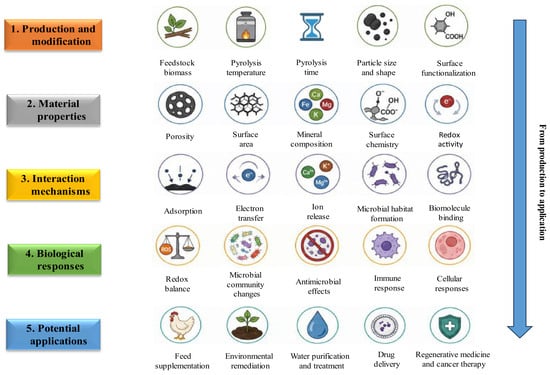
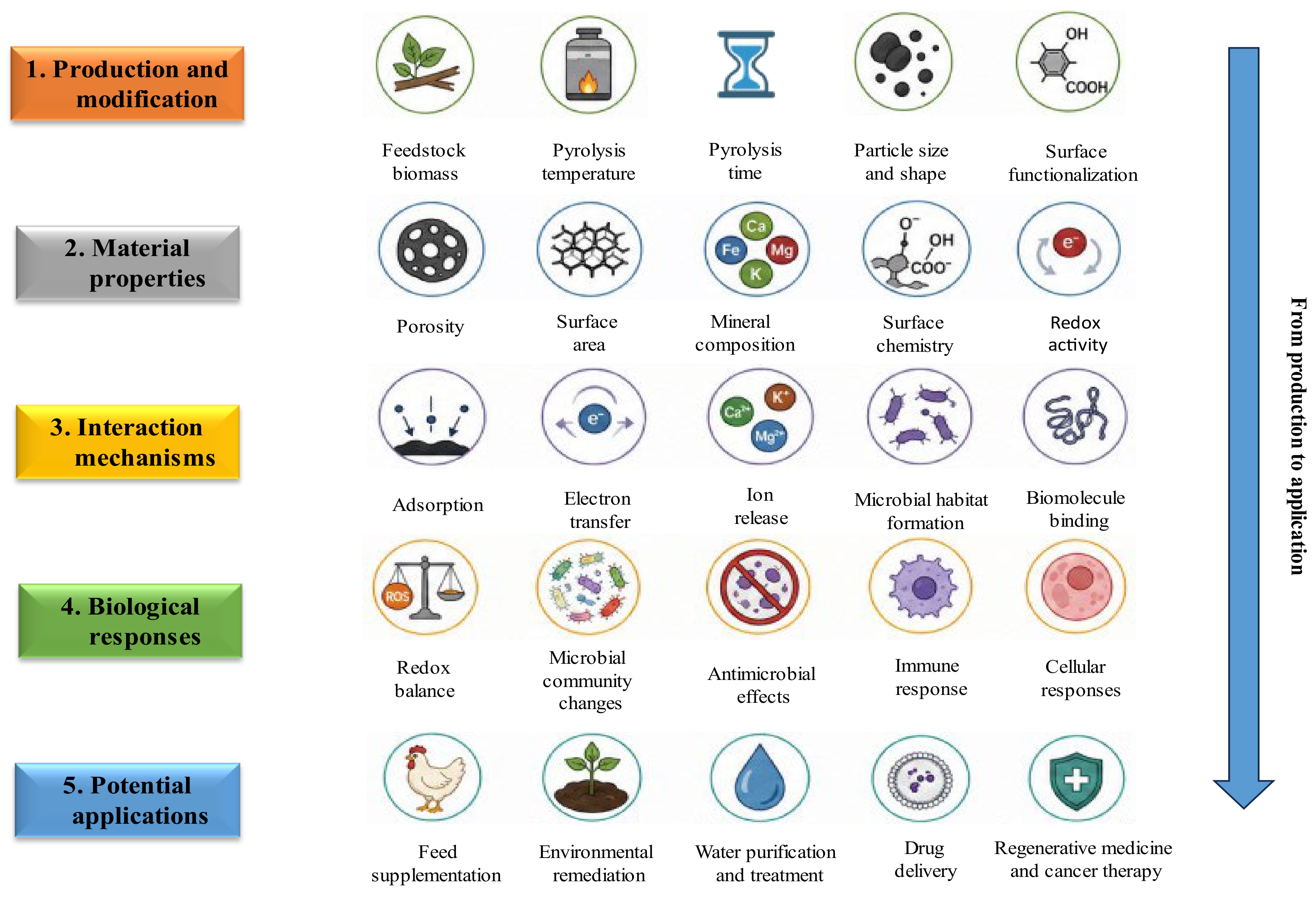
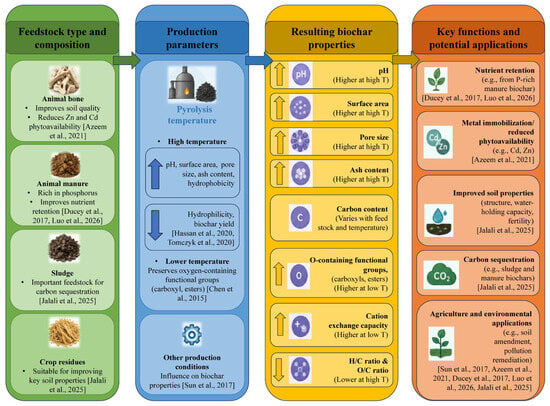
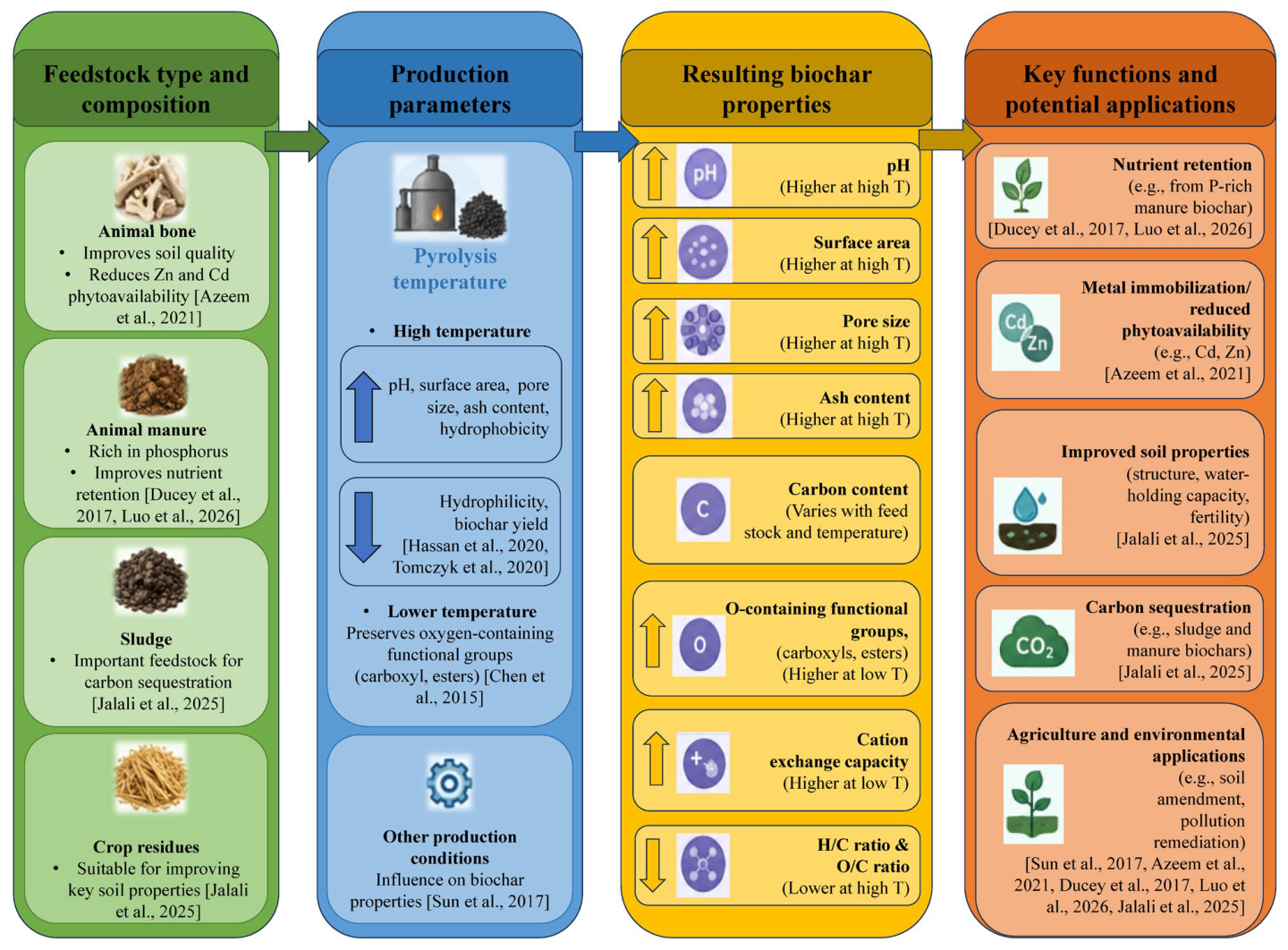
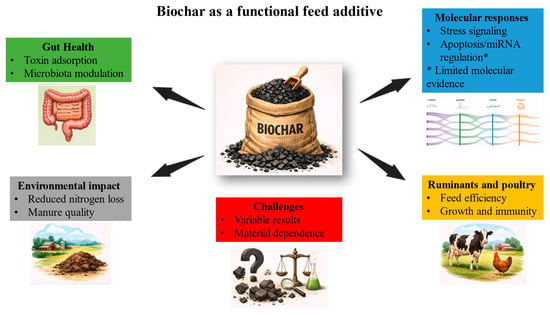
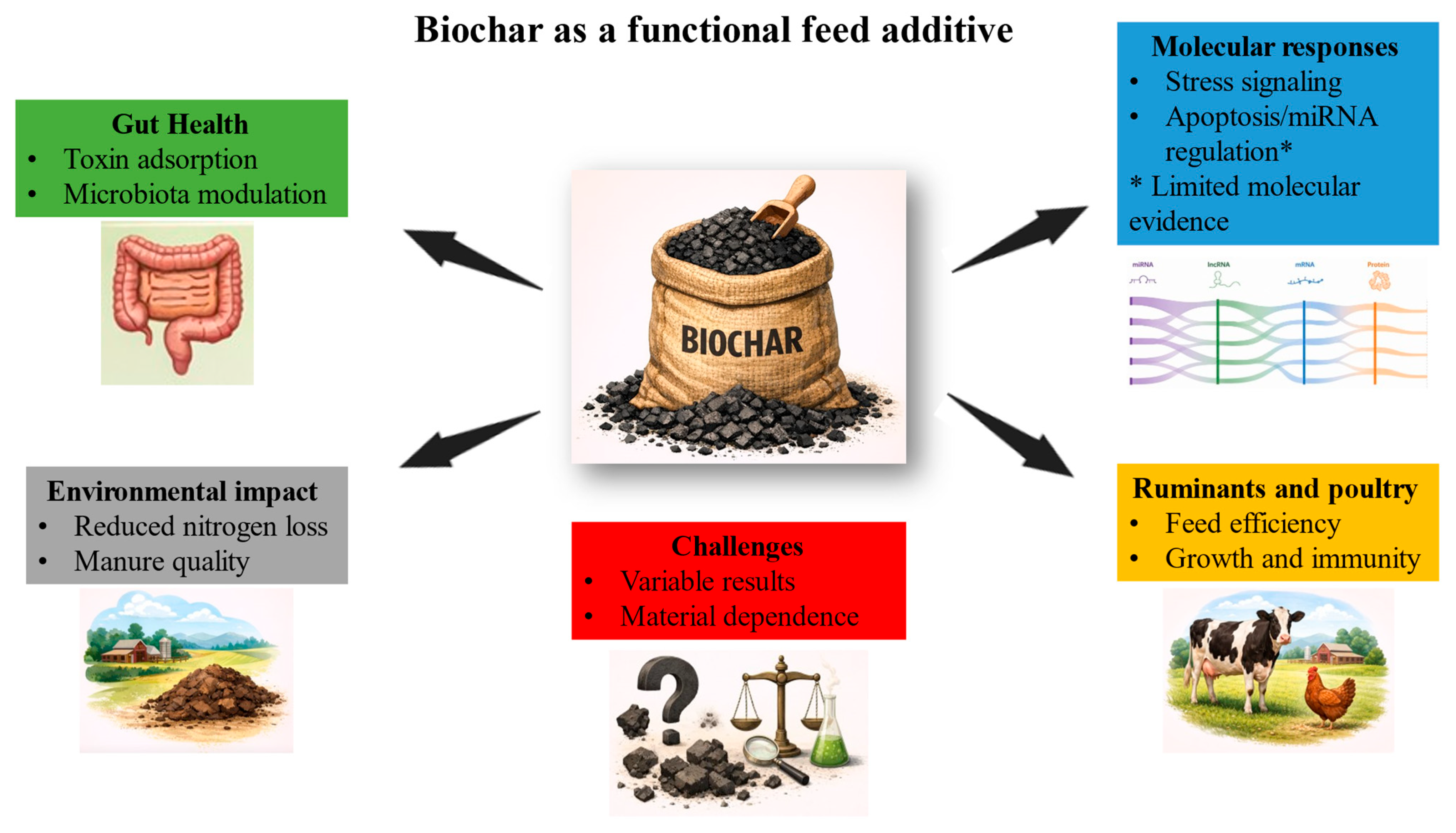
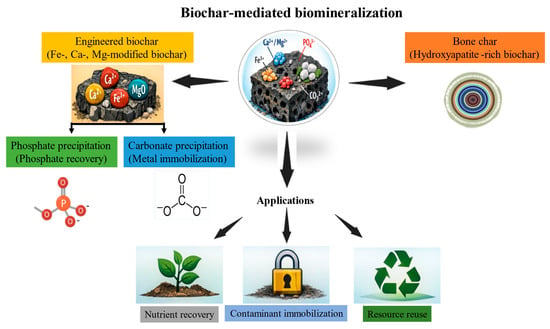
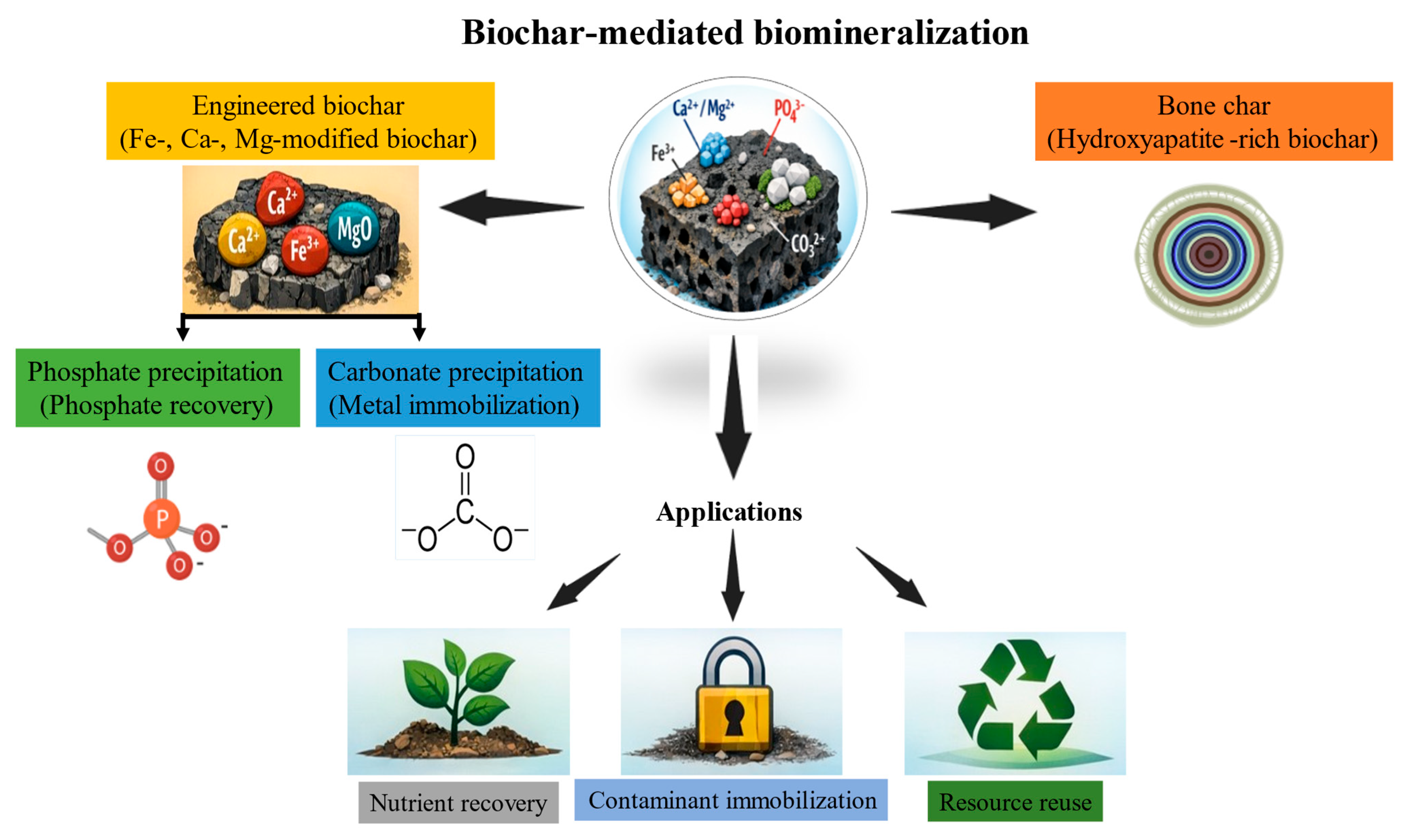
Disclaimer/Publisher’s Note: The statements, opinions and data contained in all publications are solely those of the individual author(s) and contributor(s) and not of MDPI and/or the editor(s). MDPI and/or the editor(s) disclaim responsibility for any injury to people or property resulting from any ideas, methods, instructions or products referred to in the content. |
© 2026 by the authors. Licensee MDPI, Basel, Switzerland. This article is an open access article distributed under the terms and conditions of the Creative Commons Attribution (CC BY) license.