


Abstract
In this study, we developed two complementary synthetic routes to novel piperidine- and azetidine-containing 2,3-disubstituted propanoic acid derivatives as heterocyclic amino acid building blocks. The strategy employs ketone- and carboxylic acid-derived Meldrum’s acid intermediates, which are converted into common α,β-unsaturated methyl esters through methanolysis; they are subsequently diversified via DBU-promoted aza-Michael addition with saturated cyclic amines and aromatic NH-heterocycles. The ketone-derived approach provided piperidine-containing derivatives in 35–89% yield and the corresponding azetidine analogues in 61–92% yield, whereas the complementary acid-derived route afforded regioisomeric products in 59–85% and 61–89% yield, respectively. Both synthetic sequences tolerated a broad range of nitrogen nucleophiles, and no alternative regioisomeric aza-Michael products were detected for heterocycles containing multiple nitrogen atoms. The structures of the synthesized compounds were established via 1H, 13C, 15N, and 19F NMR spectroscopy together with HRMS, including detailed multidimensional NMR analysis of representative products. The developed methodology provides efficient access to structurally diverse heterocyclic propanoic acid derivatives and expands the repertoire of amino acid building blocks available for peptide chemistry, medicinal chemistry, and DNA-encoded library synthesis.
1. Introduction
Substituted propanoic acid derivatives are an important and versatile class of compounds in organic synthesis and medicinal chemistry owing to the broad opportunities for structural diversification provided by functionalization at the C-2 and C-3 positions adjacent to the carboxyl group [1,2]. Moreover, substitution at C-2 often creates chiral centers that are important for the preparation of certain drug forms and serve as precursors for pharmaceuticals and natural products [3,4]. These applications have stimulated the development of efficient synthetic methodologies that expand the accessible structural diversity of the propanoic acid scaffold [5,6].
Monosubstituted propanoic acid derivatives comprise two principal structural classes depending on whether substitution occurs at C-2 or C-3. Among C-2-substituted derivatives, synthetic 2-arylpropionic acids are particularly important, as exemplified by the non-steroidal anti-inflammatory drugs ibuprofen I and naproxen II [7] (Figure 1). Because their biological activity strongly depends on stereochemistry, numerous asymmetric synthetic approaches have been developed, including nickel-catalyzed asymmetric hydrogenation of 2-substituted acrylic acids reported by Li et al. [8] and photoredox/nickel-catalyzed reductive alkyl–aryl coupling of acrylates described by Qian et al. [9]. Freifelder studied the reduction of 2-(2-, 3-, and 4-pyridyl)propionic acids to the corresponding 2-(piperidinyl)propionic acids, including compound III [10].
Figure 1.
Examples of C-2-substituted, C-3-substituted, and C-2,3-disubstituted propanoic acid derivatives.
C-3-substituted propanoic acid has been extensively studied in medicinal chemistry. This propanoic acid structure is widespread in natural products and has been found to exhibit various biological activities. 3-Aminopropanoic acid, β-alanine, and its 3-substituted derivatives have also been widely used as building blocks to prepare oligomers [11,12], while β-peptide-based antibiotics are being explored as ways of evading antibiotic resistance [13]. Indole-3-propionic acid IV is a tryptophan-derived metabolite, which is widely reported for neuroprotection under various stress conditions such as neuronal injury [14]. 3-(4,5-Diphenyl-1,3-oxazol-2-yl)propanoic acid, the drug oxaprozin, is a non-steroidal anti-inflammatory agent (NSAID), used to relieve inflammation, swelling, stiffness, and joint pain associated with osteoarthritis and rheumatoid arthritis [15].
Among 2,3-disubstituted propanoic acid derivatives, compounds bearing hydroxyl and amino substituents at the C-2 position constitute two major structural classes represented by both naturally occurring and synthetic molecules. For example, naturally occurring DL-indole-3-lactic acid V is a versatile compound recognized for its probiotic functions in the intestine and its involvement in various biological processes and applications [16]. Additionally, DL-indole-3-lactic acid has garnered attention in the field of pharmaceuticals, where it is being investigated for its potential anti-inflammatory and antioxidant properties, as well as its role in immune regulation [17], making it a valuable candidate for therapeutic applications [18]. The essential proteinogenic amino acids histidine and tryptophan are exclusively heteroaromatic amino acids, highlighting their potential application in the development of bioactive compounds, including alkaloids [19]. However, naturally occurring 2-amino-3-substituted propanoic acids represent a vast class of non-proteinogenic amino acids, among which L-mimosine is a characteristic heterocyclic example [20,21]. Willardiine is a non-protein amino acid containing uracil and is thus classified as a nucleobase amino acid that acts as an agonist at the α-amino-3-hydroxy-5-methyl-4-isoxazole-propionic acid (AMPA) receptor VI [22]. Among synthetic heterocyclic 3-substituted amino acids are marked 2-amino-3-(2-, 3-, and 4-pyridyl)propanoic acids, where a pyridine ring replaces the phenyl ring of phenylalanine, widely used in medicinal chemistry and pharmacology [23,24,25,26]. Kolodiazhna et al. developed a method for synthesizing compounds with potential biological activity, such as enantiomerically pure 3-pyridine-2-methylpropanoic acids, including compound VII. The dynamic kinetic enzymatic resolution methodology was applied at key synthesis stages [27].
Biheterocyclic compounds are widely represented in both pharmaceutical [28] and agrochemical [29] fields. Their development involves combining two pharmacophore structures in a single molecule. The presence of two pharmacophores in a single unit results in pharmacological activity exceeding the sum of the activities of each individual part [30]. However, 2,3-diheterocyclic propanoic acids have been rarely described in the literature. Recently, Aksenov et al. reported the synthesis of 2-(pyridin-2-yl)-3-(quinazolin-4-yl)propionic acid VIII via an acid-catalyzed rearrangement of 4-oxobutyronitriles [31].
In general, heterocyclic amino acids have been applied as scaffolds, heterocyclic hybrids, and building blocks for the preparation of various biologically active compounds [32], peptides [33,34], and DNA-encoded chemical libraries [35,36]. However, the DNA-encoded library of target component molecules should have a high degree of structural and functional diversity, allowing for diversity-oriented synthesis (DOS) [37,38]. Previously, we have reported efficient protocols for synthesizing highly functionalized amino acid building blocks by including bicyclic heterocyclic compounds [39,40,41,42,43].
In this study, we developed a modular synthetic approach to novel 2,3-disubstituted propanoic acid derivatives, containing heterocycles and heteroaryls, as amino acid building blocks. This strategy employs two complementary synthetic routes originating from ketone- and acid-derived Meldrum’s acid intermediates that converge on common α,β-unsaturated intermediates, which are subsequently diversified through aza-Michael addition with various nitrogen heterocycles. By combining complementary synthetic entry points with late-stage diversification from common α,β-unsaturated intermediates, this approach provides efficient access to structurally diverse racemic amino acid building blocks while expanding the repertoire of propanoic acid derivatives incorporating both saturated cyclic amines and aromatic NH-heterocycles.
2. Results and Discussion
To access methyl 2-(N-Boc-piperidin-4-yl)-3-(N-heterocyclyl/heteroaryl)propionates, the key α,β-unsaturated ester 5 was first prepared from commercially available 1-(tert-butoxycarbonyl)-4-piperidone 1, as outlined in Scheme 1. The synthesis commenced with an organocatalytic transformation adapted from literature procedures describing the reaction of carbonyl compounds with Meldrum’s acid in the presence of Hantzsch ester as a mild hydride donor for transfer hydrogenation [44,45,46,47]. Accordingly, ketone 1 was reacted with Meldrum’s acid 2 and Hantzsch ester in DMSO at room temperature using L-proline as the organocatalyst. Under the optimized conditions, the reaction reached completion within 18 h, affording Meldrum’s acid derivative 3 in 71% isolated yield after precipitation from methanol.
Scheme 1.
Preparation of piperidine-derived Michael acceptor 5 from N-Boc-4-piperidone 1.
To optimize this transformation, several solvents of different polarity were evaluated (Table 1). Among the solvents examined, DMSO proved to be the most suitable, providing the highest isolated yield of 3, whereas THF afforded the product in 59% yield. In the remaining solvents, incomplete conversion of ketone 1, accompanied by the formation of side products, resulted in lower isolated yields. Therefore, DMSO was selected for all subsequent experiments. After removal of DMSO, addition of methanol induced precipitation of compound 3, which was isolated by filtration and used directly in the subsequent step without further purification.
Table 1.
Optimization of reaction solvent for compound 3.
Then, Meldrum’s acid derivative 3 was converted into methyl α,β-unsaturated ester 5 via treatment with 2 equiv. N,N-dimethylmethyleneiminium iodide 4 (Eschenmoser’s salt) in a THF/MeOH mixture (1:1) at 70 °C for 18 h. Under these conditions, compound 5 was obtained in 87% yield after aqueous work-up and purification via flash column chromatography. This transformation involves methylenation of the Meldrum’s acid derivative followed by methanolysis, resulting in the formation of the corresponding methyl acrylate derivative 5. It should be noted that to improve the efficiency of this methylenation/methanolysis step, the amount of Eschenmoser’s salt was subsequently optimized. For instance, a related Mannich-type cycloelimination of Meldrum’s acid derivatives with Eschenmoser’s salt has been reported for the preparation of methyl acrylate intermediates [48]. Following this literature procedure, Meldrum’s acid derivative 3 was initially treated with 3.5 equiv. N,N-dimethylmethyleneiminium iodide 4 in methanol at 70 °C for 18 h. Under these conditions, the desired α,β-unsaturated ester 5 was formed via methylenation followed by methanolysis. Lowering the reagent loading from 3.5 to 2.0 equiv. had only a minor effect on the isolated yield of compound 5. In contrast, further reduction to 1.5 or 1.0 equiv. resulted in incomplete conversion of compound 3 and afforded product 5 in less than 50% yield. Therefore, 2.0 equiv. of Eschenmoser’s salt was selected as the optimal loading and was applied to the synthesis of compound 5, which has been proven to be sufficiently stable and pure for further aza-Michael addition reactions.
The aza-Michael addition of nitrogen nucleophiles to methyl α,β-unsaturated ester 5 was investigated as the key diversification step for the synthesis of methyl 2-(N-Boc-piperidin-4-yl)-3-(N-heterocyclyl/heteroaryl)propionate derivatives 7a–r (Scheme 2). In the general procedure, Michael acceptor 5 was reacted with the corresponding N-heterocyclic nucleophile 6 in acetonitrile at 60 °C in the presence of DBU. Depending on the nucleophile, the reactions were carried out for 4–18 h and afforded the desired methyl propionate derivatives 7a–r in 35–89% yield.
Scheme 2.
Synthesis of methyl 2-(N-Boc-piperidin-4-yl)-3-(N-heterocyclyl/heteroaryl)propionates 7a–r via aza-Michael addition.
Several bases were initially screened using azetidine and pyrazole as representative nucleophiles in acetonitrile (Table 2). Reaction with DBU at 60 °C (Entry 5) gave the best results in both cases, affording azetidine derivative 7a in 70% yield after 4 h and pyrazole derivative 7i in 81% yield after 18 h. Inorganic bases generally provided lower yields, whereas NaH was ineffective for both 7a and 7i, with no detectable formation of the desired products. In the absence of a base, no detectable formation of either product was observed. Therefore, DBU was selected as the optimal base for further reactions.
Table 2.
Optimization of reaction conditions for compounds 7a and 7i: effect of base, solvent, temperature and reaction time.
After DBU had been identified as the most effective base, acetonitrile, dioxane, ethanol, and tetrahydrofuran were evaluated as solvents based on literature reports [39]. Acetonitrile provided the best results, whereas the other solvents resulted in markedly lower yields and, in some cases, no detectable formation of the desired products.
Finally, the influence of reaction temperature was investigated using DBU in acetonitrile. At room temperature, formation of both 7a and 7i was observed, although the reactions proceeded more slowly and less efficiently. At 40 °C, a substantial amount of starting material remained unreacted, whereas at 80 °C increased formation of side products was observed. Accordingly, 60 °C was established as the optimal reaction temperature, providing the most favorable balance between reaction rate and product formation.
A plausible mechanism for the formation of pyrazole derivative 7i under the employed DBU-promoted reaction conditions is proposed in Scheme 3. Initially, DBU deprotonates pyrazole to generate the corresponding pyrazolate anion and DBUH+. The pyrazolate anion then undergoes conjugate addition to the β-carbon of α,β-unsaturated ester 5, generating intermediate X. Subsequent proton transfer from DBUH+ affords product 7i and regenerates DBU. This proposal is consistent with the general mechanistic principles of aza-Michael reactions, for which different mechanistic pathways may operate depending on the Michael donor, Michael acceptor, and reaction conditions [49], as well as with reported base-promoted aza-Michael additions of pyrazoles [50] and DBU-promoted aza-Michael reactions [51].
Scheme 3.
Proposed mechanism for the DBU-promoted aza-Michael addition of pyrazole to α,β-unsaturated ester 5.
Under the optimized DBU-promoted aza-Michael conditions, Michael acceptor 5 was reacted with various nitrogen nucleophiles (Scheme 2), affording the corresponding methyl 2-(N-Boc-piperidin-4-yl)-3-(N-heterocyclyl/heteroaryl)propionates 7a–r in 35–89% yields. Saturated cyclic amines reacted smoothly to give products 7a–g in good yields (60–86%) within 2–12 h, with most reactions reaching completion within 6 h. Isoindoline also proved to be a suitable nucleophile, affording product 7h in 66% yield. In contrast, aza-heteroaromatic nucleophiles generally required longer reaction times (12–16 h) and afforded products 7i–r in more variable yields (35–89%), consistent with their lower nucleophilicity [51,52,53,54,55]. Although isoindoline reacted readily under the applied conditions, indole remained unreactive, and no desired aza-Michael adduct was detected even after prolonged reaction times, increased DBU loading, or the use of alternative bases. This lack of reactivity is consistent with the relatively low N-nucleophilicity of indole and its preference for electrophilic substitution at the C-3 position; N-1- or C-2-functionalization generally becomes more favourable when the C-3 position is blocked [52,53,56].
To further evaluate the applicability of the developed sequence, tert-butyl 3-oxoazetidine-1-carboxylate 8, a strained nitrogen heterocycle relevant to medicinal chemistry [57,58,59], was employed as an additional ketone substrate (Scheme 4). Application of the optimized L-proline/Hantzsch ester-mediated conditions to ketone 8 and Meldrum’s acid afforded the corresponding azetidine-based Meldrum’s acid derivative 9 in 75% yield. Unlike the piperidine analogue 3, compound 9 remained soluble in methanol and could not be isolated via precipitation; therefore, purification via column chromatography was required. Subsequent reaction of purified 9 with Eschenmoser’s salt, followed by methanolysis, furnished the corresponding methyl α,β-unsaturated ester 10 in 92% yield.
Scheme 4.
Synthesis of methyl 2-(N-Boc-azetidin-3-yl)-3-(N-heterocyclyl/heteroaryl)propionates 11a–f via aza-Michael addition.
After the successful preparation of azetidine-derived methyl α,β-unsaturated ester 10, its reactivity in the aza-Michael addition was examined using selected nitrogen nucleophiles that had performed well in the piperidine series (Scheme 4). In analogy to the optimized conditions developed for Michael acceptor 5, compound 10 was reacted with the corresponding N-heterocyclic nucleophile in acetonitrile at 60 °C in the presence of DBU [39,51,52,53]. Depending on the nucleophile, the reactions proceeded within 4–18 h and afforded the corresponding methyl 2-(N-Boc-azetidin-3-yl)-3-(N-heterocyclyl/heteroaryl)propionate derivatives 11a–f in 61–92% yields. Similar reactivity trends were observed for the azetidine series. Importantly, the strained azetidine scaffold remained intact under the applied reaction conditions throughout the multistep sequence.
Both piperidine- and azetidine-derived Michael acceptors reacted smoothly under the developed aza-Michael conditions and were compatible with structurally diverse nitrogen nucleophiles. In reactions involving aromatic NH-heterocycles containing multiple potentially nucleophilic nitrogen centers, no alternative regioisomeric products were detected via chromatographic analysis. Collectively, these results demonstrate that the developed methodology provides efficient access to structurally diverse piperidine- and azetidine-containing propanoic acid building blocks. The structures of the isolated compounds were assigned and confirmed via NMR spectroscopy.
Compound 11e was subjected to a detailed spectral analysis. The molecular structure of the synthesized trifluoromethylated pyrazole derivative was unambiguously established through a comprehensive analysis of 1D (1H, 13C, 19F) and 2D (1H-1H COSY, 1H-13C HSQC, 1H-13C HMBC and 1H-15N HMBC) NMR spectra. In the 1H-NMR spectrum, the pyrazole ring system is clearly identified by two singlets at δH 7.41 ppm (for 5-H) and δH 6.47 ppm (for 4-H), characteristic of the pyrazole core protons. The methyl ester function is confirmed by a three-proton singlet at δH 3.67 ppm (COOCH3), which correlates with the ester carbonyl carbon resonance at δC 172.0 ppm in the 13C-NMR spectrum. Additionally, the tert-butoxycarbonyl (Boc) protecting group on the azetidine nitrogen is indicated by a highly intense singlet at δH 1.41 ppm integrating for nine protons (C(CH3)3), matching the quaternary carbon signal at δC 79.8 ppm and the carbamate carbonyl peak at δC 156.2 ppm (Figure 2).
Figure 2.
Relevant 1H-13C HMBC and 1H-15N HMBC correlations, as well as 1H-NMR (black), 13C-NMR (blue), 15N-NMR (red), and 19F-NMR (pink) chemical shifts, of compound 11e.
The central core consists of an azetidine ring and a conformationally flexible aliphatic chain. Due to the diastereotopic environment generated by the adjacent ester-bearing chiral center (δH 3.20–3.25 ppm, δC 49.5 ppm), the methylene protons adjacent to the pyrazole ring appear as two distinct multiplets in the δH 4.28–4.43 ppm region. The azetidine protons appeared as three distinct signals due to their diastereotopic nature. A multiplet at δH 3.96–4.02 ppm (2H) was assigned to one pair of the diastereotopic protons adjacent to the nitrogen atom (from 2-H and 4-H), while the remaining two resonances were observed as separate multiplets at δH 3.73–3.76 ppm (1H) and δH 3.59–3.63 ppm (1H) (Figure 2).
The presence of the trifluoromethyl substituent (CF3) is conclusively demonstrated by both 19F- and 13C-NMR data. The 19F-NMR spectrum exhibits a sharp, single resonance at δF −62.0 ppm, typical for a pyrazole-bound CF3 group. In the 13C-NMR spectrum, this fluorine attachment induces characteristic heteronuclear carbon-fluorine coupling (JC,F); the CF3 carbon splits into a well-defined quartet centred at δC 121.2 ppm with a distinct one-bond coupling constant of JC,F = 268.6 Hz. Furthermore, the adjacent pyrazole ring carbon appears as a quartet at δC 143.1 ppm with a two-bond coupling constant of 2JC,F = 38.3 Hz. Finally, the connectivity of the nitrogen atoms within the heterocycles was corroborated using 1H-15N HMBC couplings, exhibiting distinctive cross-peaks that verify the site-selective conjugation of the pyrazole scaffold.
To complement the previously described ketone-derived series and further expand the scope of the developed methodology, a second series of propionate derivatives was prepared from N-Boc-piperidine-4-carboxylic acid (12) and N-Boc-azetidine-3-carboxylic acid (17) (Scheme 5 and Scheme 6). This approach provided homologated derivatives with substitution patterns complementary to those of the ketone-derived series.
Scheme 5.
Synthesis of methyl 2-(N-heterocyclyl/heteroaryl)-3-(N-Boc-piperidin-4-yl)propionates 16a–f.
Scheme 6.
Acid-derived synthesis of methyl 2-(N-heterocyclylmethyl)-3-(N-Boc-azetidin-3-yl)propionates 21a–f.
N-Boc-piperidine-4-carboxylic acid 12 was first coupled with Meldrum’s acid 2 under EDC·HCl/DMAP-mediated conditions in DCM. The reaction was carried out from 0 °C to room temperature over 16 h and afforded acyl Meldrum’s acid derivative 13 in 78% yield [60,61]. In comparison with previously reported DCC-based procedures [62,63], the use of EDC·HCl was advantageous because the corresponding urea by-product could be readily removed during aqueous work-up, thereby simplifying purification [61]. Subsequent reduction of acyl Meldrum’s acid derivative 13 with NaBH4 in the presence of acetic acid in DCM at −10 °C for 6 h provided alkylated Meldrum’s acid derivative 14 in 65% yield. Intermediate 14 was then treated with Eschenmoser’s salt in a THF/MeOH mixture at 70 °C for 16 h, and the resulting methylenation/methanolysis sequence furnished piperidine-derived methyl α,β-unsaturated ester 15 in 92% yield [62].
Michael acceptor 15 was next used in the aza-Michael addition step with selected nitrogen nucleophiles that had previously shown good performance in the ketone-derived series. The reactions were performed under the optimized DBU-promoted conditions, using the corresponding N-heterocyclic nucleophile in acetonitrile at 60 °C. Depending on the nucleophile, the reactions proceeded within 2–16 h and afforded methyl 2-(N-heterocyclyl/heteroaryl)-3-(N-Boc-piperidin-4-yl)propionate derivatives 16a–f in 59–85% yields. As observed for the ketone-derived series, saturated cyclic amines reacted smoothly, whereas aromatic NH-heterocycles generally required longer reaction times and provided more variable yields. For heterocyclic nucleophiles containing more than one potentially reactive nitrogen atom, no alternative regioisomeric products were detected by chromatographic analysis.
The same acid-derived sequence was subsequently applied to N-Boc-azetidine-3-carboxylic acid 17 to access the corresponding azetidine-containing analogues (Scheme 6). Coupling of acid 17 with Meldrum’s acid under EDC·HCl/DMAP-mediated conditions in DCM afforded acyl Meldrum’s acid derivative 18 in 92% yield. Reduction of compound 18 with NaBH4/AcOH in DCM at −10 °C gave alkylated Meldrum’s acid derivative 19 in 68% yield. Subsequent treatment of 19 with Eschenmoser’s salt in THF/MeOH at 70 °C, followed by methanolysis, furnished azetidine-derived methyl α,β-unsaturated ester 20 in 94% yield.
Michael acceptor 20 was then subjected to the optimized DBU-promoted aza-Michael addition conditions with representative nitrogen nucleophiles. Thus, compound 20 was reacted with the appropriate N-heterocycle in acetonitrile at 60 °C in the presence of DBU, providing methyl 2-(N-heterocyclyl/heteroaryl)-3-(N-Boc-azetidin-3-yl)propionate derivatives 21a–f in 61–89% yields [39,51,52,53]. The reactivity profile of azetidine-derived acceptor 20 was comparable to that of the piperidine analogue 15, and the strained azetidine scaffold was retained throughout the multistep sequence. Together, the ketone- and acid-derived strategies provide complementary access to regioisomeric series of structurally diverse piperidine- and azetidine-containing propanoate building blocks, while the remaining position is diversified through aza-Michael addition. The structures of the isolated compounds were assigned and confirmed via NMR analysis.
The structural assignment of compound 21e was deduced via detailed spectral data analysis. In the 1H-NMR spectrum, the tert-butoxycarbonyl (Boc) protecting group was readily identified by a sharp 9H singlet at δH 1.42 ppm, which correlated with the quaternary carbon at δC 79.7 ppm and a carbamoyl carbonyl at δC 156.4 ppm. The methyl ester group appeared as a characteristic singlet at δH 3.65 ppm, exhibiting a diagnostic long-range HMBC correlation to the ester carbonyl at δC 173.5 ppm. The 3-(trifluoromethyl)-1H-pyrazole moiety displayed two characteristic aromatic singlets at δH 7.41 and 6.47 ppm. The presence of the trifluoromethyl substituent at the C-3 position was confirmed by characteristic resonances in the 13C-NMR spectrum, including a quartet at δC 122.1 ppm assigned to -CF3 and a quartet at δC 142.1 ppm assigned to C-3. Additionally, the 1H-1H NOESY correlation between pyrazole-linked CH2 protons δH 4.40–4.45 ppm and pyrazole H-5 at δH 7.41 ppm was observed (Figure 3).
Figure 3.
Relevant 1H-13C HMBC and 1H-15N HMBC, 1H-1H COSY and 1H-1H NOESY correlations, as well as 1H-NMR (black), 13C-NMR (blue), 15N-NMR (red) and 19F-NMR (pink) chemical shifts, of compound 21e.
The connectivity of the aliphatic backbone was traced via the 1H-1H COSY spectrum. The central (CH) methine proton at δH 2.99–3.05 ppm showed clear cross-peaks with both the adjacent (CH2-) methylene spacer leading to the azetidine core and the (CH2-N) group attached to the pyrazole ring.
The CH2-N methylene protons δH 4.40–4.45 ppm exhibited 1H-13C HMBC cross-peaks with the central methine carbon at δC 44.6 ppm, while the methylene protons connecting the methine centre to the azetidine ring showed correlations to the same carbon. Pyrazole ring protons H-4 δH 6.47 ppm and H-5 δH 7.41 showed 2- or 3-bond correlations with C-3 carbon at δC 142.1 ppm. The 1H-15N HMBC spectrum revealed three distinct nitrogen environments. A strong cross-peak was observed between the CH2-N protons and the pyrrole-like nitrogen N-2 at δN −171.1 ppm, confirming the regioselective attachment. The remaining nitrogen signals were unambiguously assigned to the pyridine-like pyrazole N-1 at δN −77.6 ppm and the carbamate nitrogen of the azetidine ring at δN −311.1 ppm (Figure 3).
To evaluate the possibility of direct enantiomeric separation, chiral HPLC analyses were performed for four representative compounds (7r, 11f, 16f, and 21f), including one example from each synthetic series (Figures S139–S142). Under the chromatographic conditions employed, compounds 7r, 16f, and 21f showed a single unresolved peak. For compound 11f, partial enantiomeric resolution was observed; however, baseline separation was not achieved, precluding reliable determination of the relative peak areas and enantiomeric composition. These results indicate that direct chiral HPLC resolution of the synthesized compounds would require further optimization of the chromatographic conditions and/or evaluation of alternative chiral stationary phases.
An alternative approach to the resolution of structurally related racemic propanoic acid derivatives was previously demonstrated by Gudelis et al. [64]. Racemic 2-(N-Boc-azetidin-3-yl)-2-alkylpropanoic acids were converted into diastereomeric derivatives using (S)-4-benzyl-2-oxazolidinone as a resolving agent. The resulting diastereomers were successfully separated by conventional column chromatography and subsequently converted into the corresponding enantiomerically pure carboxylic acids. Thus, derivatization followed by diastereomeric separation may represent an alternative strategy for the stereochemical resolution of the compounds described herein.
3. Materials and Methods
3.1. General Information
All starting materials were purchased from commercial suppliers and were used as received. Flash column chromatography was performed on Silica Gel 60 Å (Merck KGaA, Darmstadt, Germany). Vacuum distillation was performed in a Büchi Model B580 GKR oven (Büchi Labortechnik AG, Flawil, Switzerland). Thin-layer chromatography was carried out on Silica Gel plates (Merck Kieselgel 60 F254) and visualised by UV light (254 nm) (Merck KGaA, Darmstadt, Germany). Melting points were determined using a Büchi M-565 melting point apparatus (Büchi Labortechnik AG, Flawil, Switzerland) and were uncorrected. The IR spectra were recorded on a Bruker Vertex 70v FT-IR spectrometer (Bruker Optik GmbH, Ettlingen, Germany) using neat samples and are reported in the frequency of absorption (cm−1). Mass spectra were obtained using a Shimadzu LCMS-2020 (ESI+) spectrometer (Shimadzu Corporation, Kyoto, Japan). High-resolution mass spectra were measured using a Bruker MicrOTOF-Q III (ESI+) apparatus (Bruker Daltonik GmbH, Bremen, Germany). Accurate measurements were achieved using the internal mass calibration of each sample using sodium formate calibration solution as a standard procedure, with a standard deviation always less than 1 ppm. In addition, all data files were recalibrated with an internal standard of sodium formate injected prior to initial sample elution for each sample. 1H-NMR and 13C-NMR spectra were recorded from CDCl3 solutions at 25 °C on a Bruker Avance III 400 instrument (400 MHz for 1H, 100 MHz for 13C) using a directly detecting BBO probe (Bruker Bio Spin International AG, Faellanden, Switzerland). 15N-NMR spectra were recorded from CDCl3 solutions at 25 °C on a Bruker Avance III 400 instrument (40 MHz for 15N) using a directly detecting BBO probe. The chemical shifts (δ), expressed in ppm, were relative to tetramethylsilane (TMS). 15N-NMR spectra were referenced against neat external nitromethane (coaxial capillary). 19F-NMR spectra (376.46 MHz, absolute referencing via Ξ ratio) were obtained on a Bruker Avance III 400 instrument with a directly detecting broadband observe probe (BBO). The following abbreviations were used in reporting the NMR data: Pip, piperidine; Ind, indazole; Pyr, pyrazole; Imid, imidazole; Az, azetidine; i-Ind, isoindole; Mor, morpholine; OH-Pip, hydroxypiperidine; Ph-Pip, phenylpiperidine; Pyrr, pyrrolidine; Bim, benzimidazole; Pim, propylimidazole.
3.2. Synthetic Procedures
3.2.1. General Procedure for Compound 3
Corresponding ketone (1 mmol), 2,2-dimethyl-1,3-dioxane-4,6-dione 2 (1 mmol) and diethyl 1,4-dihydro-2,6-dimethyl-3,5-pyridinedicarboxylate (1 mmol) were dissolved in DMSO (1 mL). After 10 min, L-proline (0.2 mmol) was added, and the resulting mixture was stirred at room temperature for 18 h. After completion of the reaction, DMSO was removed under reduced pressure at elevated temperature, and methanol was added to the residue. The resulting precipitate was collected by filtration through a Büchner funnel and dried under reduced pressure to give product 3.
Tert-butyl 4-(2,2-dimethyl-4,6-dioxo-1,3-dioxan-5-yl)piperidine-1-carboxylate (3)
1-(tert-butoxycarbonyl)-4-piperidone 1 (0.2 g, 1 mmol), 2,2-dimethyl-1,3-dioxane-4,6-dione 2 (0.14 g, 1 mmol) and diethyl 1,4-dihydro-2,6-dimethyl-3,5-pyridinedicarboxylate (0.25 g, 1 mmol) were dissolved in DMSO (1 mL). After 10 min, L-proline (0.02 g, 0.2 mmol) was added, and the resulting mixture was stirred at room temperature for 18 h. After completion of the reaction, DMSO was removed under reduced pressure, and methanol was added to the residue. The resulting precipitate was collected by filtration through a Büchner funnel and dried under reduced pressure to give 3 (0.232 g, 71%) as a white solid, mp 160–161 °C. 1H-NMR (400 MHz, CDCl3): δH ppm 1.44 (s, 9H, C(CH3)3), 1.53–1.56 (m, 2H, Pip 3,5-H), 1.74 (s, 3H, CH3), 1.76 (s, 3H, CH3), 1.82–1.93 (m, 2H, Pip 3,5-H), 2.48–2.57 (m, 1H, Pip 4-H), 2.60–2.78 (m, 2H, Pip 2,6-H), 3.41–3.42 (m, 1H, CH), 4.12–4.31 (m, 2H, Pip 4,6-H). 13C-NMR (101 MHz, CDCl3): δC ppm 27.5 (CH3), 28.3 (Pip 2 × CH2), 28.4 (CH3), 28.6 (COOC(CH3)3), 37.1 (Pip C-4), 44.2 (Pip 2 × CH2), 50.5 (CH), 79.7 (COOC(CH3)3), 105.1 (C), 154.7 (COOC(CH3)3), 164.6 (2 × C=O). 15N-NMR (71 MHz, CDCl3): δN ppm −295.0 (N-Boc). IR (FT-IR, νmax, cm−1): 2979, 2850 (CHaliph), 1789 (C=O), 1737 (C=O), 1674 (C=O), 1425, 1167, 1135 (C=C, C–N, C–O–C). HRMS (ESI+) C16H25NNaO6 ([M + Na]+) calcd. 350.1574, found 350.1574.
3.2.2. General Procedure for Compound 5
A 50-mL round-bottomed flask was charged under nitrogen atmosphere with compound 3 (1 mmol) and N,N-dimethylmethyleneiminium iodide 4 (2 mmol). The solids were dissolved in THF and MeOH (1:1). The reaction mixture was then heated to 70 °C and stirred for 18 h. Upon cooling of the mixture to room temperature, the solvents were removed in vacuo, and the residue was taken up in ethyl acetate, washed with sat. NaHCO3 soln, 10% aq. KHSO4 and brine. The organic layer was dried with anhydrous sodium sulfate, filtered, and then concentrated under reduced pressure. The resulting mixture was purified via flash column chromatography to give product 5.
Tert-butyl 4-(3-methoxy-3-oxoprop-1-en-2-yl)piperidine-1-carboxylate (5)
A 50-mL round-bottomed flask was charged under nitrogen atmosphere with compound 3 (0.33 g, 1 mmol) and N,N-dimethylmethyleneiminium iodide 4 (0.37 g, 2 mmol). The solids were dissolved in THF (6 mL) and MeOH (6 mL). The reaction mixture was then heated to 70 °C and stirred for 18 h. Upon cooling of the mixture to room temperature, the solvents were removed in vacuo, and the yellow residue was taken up in ethyl acetate (15 mL), washed with sat. NaHCO3 soln (15 mL), 10% aq. KHSO4 (15 mL) and brine (15 mL). The organic layer was dried with anhydrous sodium sulfate, filtered, and then concentrated under reduced pressure. The resulting mixture was purified via flash column chromatography (eluent n-hexane/ethyl acetate, v/v, 4:1) to give the corresponding product 5 (0.234 g, 87%) as a colorless liquid. 1H-NMR (400 MHz, CDCl3): δH ppm 1.24–1.35 (m, 2H, Pip 3,5-H), 1.44 (s, 9H, C(CH3)3), 1.73–1.76 (m, 2H, Pip 3,5-H), 2.55–2.61 (m, 1H, Pip 4-H), 2.70–2.77 (m, 2H, Pip 2,6-H), 3.75 (s, 3H, OCH3), 4.16 (s, 2H, Pip 2,6-H), 5.50 (s, 1H, C=CH2), 6.17 (s, 1H, C=CH2). 13C-NMR (101 MHz, CDCl3): δC ppm 28.5 (COOC(CH3)3), 31.3 (Pip 2 × CH2), 37.4 (Pip C-4), 44.1 (Pip 2 × CH2), 51.9 (OCH3), 79.4 (COOC(CH3)3), 123.2 (C=CH2), 144.3 (C=CH2), 154.8 (COOC(CH3)3), 167.4 (COOCH3). 15N-NMR (71 MHz, CDCl3): δN ppm −292.4 (N-Boc). IR (FT-IR, νmax, cm−1): 2949, 2854 (CHaliph), 1720 (C=O), 1689 (C=O), 1419, 1144 (C=C, C–N, C–O–C). HRMS (ESI+) C14H23NNaO4 ([M + Na]+) calcd. 292.1519, found 292.1519.
3.2.3. General Procedure for Compounds 7a–r
An appropriate N-heterocyclic compound 6 (1.1 mmol), DBU (1.15 mmol), and tert-butyl 4-(3-methoxy-3-oxoprop-1-en-2-yl)piperidine-1-carboxylate 5 (1 mmol) were dissolved in acetonitrile (1 mL) and stirred at 60 °C for 4–18 h. The reaction mixture was diluted with water (10 mL) and extracted with ethyl acetate (2 × 15 mL). The organic layer was dried with anhydrous sodium sulfate, filtered, and then concentrated under reduced pressure. The resulting mixtures were purified via flash column chromatography to provide products 7a–r.
Tert-butyl 4-[3-(azetidin-1-yl)-1-methoxy-1-oxopropan-2-yl]piperidine-1-carboxylate (7a)
Compound 7a was obtained from 5 (0.27 g, 1 mmol), azetidine hydrochloride (0.1 g, 1.1 mmol), and DBU (0.17 mL, 1.15 mmol). The reaction was stirred at 60 °C for 4 h. The obtained residue was purified via flash column chromatography (eluent methylene chloride/methanol, v/v, 100:1) to give 7a (0.228 g, 70%) as a yellowish liquid. 1H-NMR (400 MHz, CDCl3): δH ppm 1.13–1.27 (m, 2H, Pip 3,5-H), 1.43 (s, 9H, C(CH3)3), 1.45–1.49 (m, 1H, Pip 4-H), 1.63–1.70 (m, 2H, Pip 3,5-H), 2.01 (p, J = 7.0 Hz, 2H, Az 3-CH2), 2.20–2.26 (m, 1H, CHCOOCH3), 2.44–2.48 (m, 1H, Az-CH2), 2.59–2.66 (m, 2H, Pip 2,6-H), 2.70–2.75 (m, 1H, Az-CH2), 3.08–3.19 (m, 4H, Az 2,4-CH2), 3.67 (s, 3H, OCH3), 4.07 (s, 2H, Pip 2,6-H). 13C-NMR (101 MHz, CDCl3): δC ppm 17.7 (Az C-3), 28.6 (COOC(CH3)3), 29.8 (Pip C-4), 30.2 (Pip CH2), 37.2 (Pip CH2), 44.0 (Pip 2 × CH2), 49.9 (CHCOOCH3), 51.6 (OCH3), 55.6 (Az C-2,4), 59.5 (Az-CH2), 79.5 (COOC(CH3)3), 154.8 (COOC(CH3)3), 175.0 (COOCH3). 15N-NMR (71 MHz, CDCl3): δN ppm −342.0 (N-1), N-Boc was not found. IR (FT-IR, νmax, cm−1): 2930, 2820 (CHaliph), 1735 (C=O), 1689 (C=O), 1422, 1159 (C=C, C–N, C–O–C). HRMS (ESI+) C17H31N2O4 ([M + H]+) calcd. 327.2278, found 327.2278.
Tert-butyl 4-[3-(3-hydroxyazetidin-1-yl)-1-methoxy-1-oxopropan-2-yl]piperidine-1-carboxylate (7b)
Compound 7b was obtained from 5 (0.27 g, 1 mmol), 3-hydroxyazetidine hydrochloride (0.12 g, 1.1 mmol), and DBU (0.17 mL, 1.15 mmol). The reaction was stirred at 60 °C for 6 h. The obtained residue was purified via flash column chromatography (eluent methylene chloride/methanol, v/v, 100:2) to give 7b (0.236 g, 69%) as a yellowish liquid. 1H-NMR (400 MHz, CDCl3): δH ppm 1.12–1.23 (m, 2H, Pip 3,5-H), 1.42 (s, 9H, C(CH3)3), 1.43–1.47 (m, 1H, Pip 4-H), 1.61–1.68 (m, 2H, Pip 3,5-H), 2.20–2.26 (m, 1H, CHCOOCH3), 2.48–2.52 (m, 1H, Az-CH2), 2.59–2.63 (m, 2H, Pip 2,6-H), 2.78–2.89 (m, 3H, Az CH2, Az-CH2), 3.28 (s, 1H, OH), 3.54–3.63 (m, 2H, Az CH2), 3.66 (s, 3H, OCH3), 4.05 (s, 2H, Pip 2,6-H), 4.33–4.36 (m, 1H, Az 3-H). 13C-NMR (101 MHz, CDCl3): δC ppm 28.5 (COOC(CH3)3), 29.7 (Pip C-4), 30.1 (Pip CH2), 37.2 (Pip CH2), 43.9 (Pip 2 × CH2), 50.1 (CHCOOCH3), 51.7 (OCH3), 59.4 (Az-CH2), 62.4 (Az C-3), 64.5 (Az CH2), 64.7 (Az CH2), 79.6 (COOC(CH3)3), 154.8 (COOC(CH3)3), 174.8 (COOCH3). 15N-NMR (71 MHz, CDCl3): δN ppm −356.2 (N-1), −292.9 (N-Boc). IR (FT-IR, νmax, cm−1): 3420 (O-H), 2940, 2847 (CHaliph), 1732 (C=O), 1688 (C=O), 1424, 1160 (C=C, C–N, C–O–C). HRMS (ESI+) C17H31N2O5 ([M + H]+) calcd. 343.2227, found 343.2227.
Tert-butyl 4-[1-methoxy-1-oxo-3-(pyrrolidin-1-yl)propan-2-yl]piperidine-1-carboxylate (7c)
Compound 7c was obtained from 5 (0.27 g, 1 mmol), pyrrolidine (0.09 mL, 1.1 mmol), and DBU (0.17 mL, 1.15 mmol). The reaction was stirred at 60 °C for 12 h. The obtained residue was purified via flash column chromatography (eluent methylene chloride/methanol, v/v, 100:2) to give 7c (0.221 g, 65%) as a yellowish liquid. 1H-NMR (400 MHz, CDCl3): δH ppm 1.14–1.29 (m, 3H, Pip), 1.43 (s, 9H, C(CH3)3), 1.49–1.53 (m, 1H, Pip), 1.69–1.73 (m, 5H, Pip, Pyrr), 2.43–2.67 (m, 8H, Pip, Pyrr, CHCOOCH3), 2.84–2.90 (m, 1H, Pyrr), 3.67 (s, 3H, OCH3), 4.08 (s, 2H, Pip). 13C-NMR (101 MHz, CDCl3): δC ppm 23.6 (Pyrr 2 × CH2), 28.6 (COOC(CH3)3), 29.8 (Pip C-4), 30.2 (Pip CH2), 37.8 (Pip CH2), 43.8 (Pip 2 × CH2), 50.8 (CHCOOCH3), 51.6 (OCH3), 54.4 (Pyrr CH2), 56.1 (Pyrr 2 × CH2), 79.5 (COOC(CH3)3), 154.8 (COOC(CH3)3), 175.2 (COOCH3). 15N-NMR (71 MHz, CDCl3): δN ppm −329.1 (N-1), N-Boc was not found. IR (FT-IR, νmax, cm−1): 2934, 2854 (CHaliph), 1734 (C=O), 1689 (C=O), 1422, 1160 (C=C, C–N, C–O–C). HRMS (ESI+) C18H33N2O4 ([M + H]+) calcd. 341.2435, found 341.2435.
Tert-butyl 4-[1-methoxy-3-(4-methylpiperidin-1-yl)-1-oxopropan-2-yl]piperidine-1-carboxylate (7d)
Compound 7d was obtained from 5 (0.27 g, 1 mmol), 4-methylpiperidine (0.13 mL, 1.1 mmol), and DBU (0.17 mL, 1.15 mmol). The reaction was stirred at 60 °C for 12 h. The obtained residue was purified via flash column chromatography (eluent methylene chloride/methanol, v/v, 100:2) to give 7d (0.221 g, 60%) as a yellowish liquid. 1H-NMR (400 MHz, CDCl3): δH ppm 0.88 (d, J = 6.3 Hz, 3H, Pip-CH3), 1.11–1.28 (m, 5H, Pip), 1.44 (s, 9H, C(CH3)3), 1.48–1.56 (m, 3H, Pip), 1.65–1.72 (m, 2H, Pip), 1.79–1.85 (m, 1H, CHCOOCH3), 1.95–2.01 (m, 1H, Pip), 2.38–2.42 (m, 1H, Pip), 2.46–2.52 (m, 1H, Pip-CH2), 2.61–2.71 (m, 4H, Pip), 2.86–2.89 (m, 1H, Pip-CH2), 3.66 (s, 3H, OCH3), 4.08 (s, 2H, Pip). 13C-NMR (101 MHz, CDCl3): δC ppm 22.0 (Pip-CH3), 28.6 (COOC(CH3)3), 30.0 (Pip CH2), 30.2 (Pip CH2), 30.9 (Pip CH), 34.5 (Pip CH2), 34.6 (Pip CH2), 37.8 (Pip CH2), 43.9 (Pip 2 × CH2), 49.5 (CHCOOCH3), 51.5 (OCH3), 53.6 (Pip-CH2), 55.0 (Pip CH), 58.8 (Pip CH2), 79.5 (COOC(CH3)3), 154.9 (COOC(CH3)3), 175.4 (COOCH3). 15N-NMR (71 MHz, CDCl3): δN ppm −226.3 (N-1), N-Boc was not found. IR (FT-IR, νmax, cm−1): 2924, 2847 (CHaliph), 1736 (C=O), 1691 (C=O), 1421, 1159 (C=C, C–N, C–O–C). HRMS (ESI+) C20H37N2O4 ([M + H]+) calcd. 369.2748, found 369.2748.
Tert-butyl 4-[3-(4-hydroxypiperidin-1-yl)-1-methoxy-1-oxopropan-2-yl]piperidine-1-carboxylate (7e)
Compound 7e was obtained from 5 (0.27 g, 1 mmol), 4-hydroxypiperidine (0.11 g, 1.1 mmol), and DBU (0.17 mL, 1.15 mmol). The reaction was stirred at 60 °C for 12 h. The obtained residue was purified via flash column chromatography (eluent methylene chloride/methanol, v/v, 100:2) to give 7e (0.270 g, 73%) as a yellowish liquid. 1H-NMR (400 MHz, CDCl3): δH ppm 1.14–1.26 (m, 2H, Pip), 1.44 (s, 9H, C(CH3)3), 1.50–1.52 (m, 2H, Pip), 1.68–1.73 (m, 2H, Pip), 1.79–1.86 (m, 3H, Pip), 2.00–2.05 (m, 1H, Pip), 2.18–2.23 (m, 1H, Pip), 2.40–2.51 (m, 2H, OH-Pip-CH2, CHCOOCH3), 2.61–2.69 (m, 4H, Pip, OH-Pip-CH2), 2.79–2.84 (m, 1H, Pip), 3.61–3.66 (m, 1H, CH-OH), 3.68 (s, 3H, OCH3), 4.08 (s, 2H, Pip). 13C-NMR (101 MHz, CDCl3): δC ppm 28.5 (COOC(CH3)3), 30.0 (Pip CH2), 30.1 (Pip CH2), 34.6 (Pip CH2), 34.7 (Pip CH2), 37.6 (Pip CH2), 43.8 (Pip 2 × CH2), 49.7 (CHCOOCH3), 50.9 (Pip CH2), 51.5 (OCH3), 51.9 (Pip 2 × CH2), 58.2 (OH-Pip-CH2), 68.1 (Pip-OH C-4), 79.5 (COOC(CH3)3), 154.8 (COOC(CH3)3), 175.2 (COOCH3). 15N-NMR (71 MHz, CDCl3): δN ppm −336.5 (N-1), N-Boc was not found. IR (FT-IR, νmax, cm−1): 3447 (O-H), 2939, 2852 (CHaliph), 1733 (C=O), 1688 (C=O), 1424, 1160 (C=C, C–N, C–O–C). HRMS (ESI+) C19H35N2O5 ([M + H]+) calcd. 371.2540, found 371.2541.
Tert-butyl 4-[3-(4-hydroxy-4-phenylpiperidin-1-yl)-1-methoxy-1-oxopropan-2-yl]piperidine-1-carboxylate (7f)
Compound 7f was obtained from 5 (0.27 g, 1 mmol), 4-hydroxy-4-phenylpiperidine (0.19 g, 1.1 mmol), and DBU (0.17 mL, 1.15 mmol). The reaction was stirred at 60 °C for 8 h. The obtained residue was purified via flash column chromatography (eluent methylene chloride/methanol, v/v, 100:2) to give 7f (0.268 g, 60%) as a yellowish liquid. 1H-NMR (400 MHz, CDCl3): δH ppm 1.16–1.30 (m, 2H, Pip), 1.44 (s, 9H, C(CH3)3), 1.50–1.53 (m, 1H, Pip), 1.71–1.77 (m, 4H, Pip), 2.00–2.15 (m, 2H, Pip), 2.36–2.42 (m, 1H, Pip), 2.50–2.68 (m, 6H, Pip 2 × CH2, Ph-Pip-CH2, CHCOOCH3), 2.73–2.78 (m, 1H, Ph-Pip-CH2), 2.82–2.85 (m, 1H, Pip), 3.69 (s, 3H, OCH3), 4.10 (s, 2H, Pip), 7.22–7.28 (m, 1H, Ph 4-H), 7.32–7.36 (m, 2H, Ph 3,5-H), 7.47–7.49 (m, 2H, Ph 2,6-H). 13C-NMR (101 MHz, CDCl3): δC ppm 28.5 (COOC(CH3)3), 30.0 (Ph-Pip CH2), 30.1 (Ph-Pip CH2), 37.7 (Pip CH2), 38.5 (Ph-Pip CH2), 38.5 (Ph-Pip CH2), 44.0 (Pip 2 × CH2), 48.9 (Pip CH2), 49.4 (CHCOOCH3), 50.5 (Pip CH2), 51.5 (OCH3), 58.4 (Ph-Pip-CH2), 71.1 (Ph-Pip C-4), 79.5 (COOC(CH3)3), 124.7 (Ph C-2,6), 127.0 (Ph C-4), 128.4 (Ph C-3,5), 148.5 (Ph C-1), 154.8 (COOC(CH3)3), 175.2 (COOCH3). 15N-NMR (71 MHz, CDCl3): δN ppm −336.4 (N-1), -292.5 (N-Boc). IR (FT-IR, νmax, cm−1): 3445 (O-H), 2944, 2820 (CHaliph), 1733 (C=O), 1689 (C=O), 1425, 1159 (C=C, C–N, C–O–C). HRMS (ESI+) C25H39N2O5 ([M + H]+) calcd. 447.2853, found 447.2854.
Tert-butyl 4-[1-methoxy-3-(morpholin-4-yl)-1-oxopropan-2-yl]piperidine-1-carboxylate (7g)
Compound 7g was obtained from 5 (0.27 g, 1 mmol), morpholine (0.09 mL, 1.1 mmol), and DBU (0.17 mL, 1.15 mmol). The reaction was stirred at 60 °C for 4 h. The obtained residue was purified via flash column chromatography (eluent methylene chloride/methanol, v/v, 100:2) to give 7g (0.306 g, 86%) as a colorless liquid. 1H-NMR (400 MHz, CDCl3): δH ppm 1.14–1.27 (m, 2H, Pip), 1.43 (s, 9H, C(CH3)3), 1.48–1.51 (m, 1H, Pip), 1.64–1.73 (m, 2H, Pip), 2.30–2.35 (m, 2H, Mor), 2.42–2.54 (m, 4H, Mor CH2, Mor-CH2), 2.61–2.71 (m, 3H, Pip CH2, CHCOOCH3), 3.59–3.66 (m, 4H, Mor), 3.67 (s, 3H, OCH3), 4.09 (s, 2H, Pip). 13C-NMR (101 MHz, CDCl3): δC ppm 28.6 (COOC(CH3)3), 30.0 (Pip CH2), 30.1 (Pip C-4), 37.6 (Pip CH2), 43.8 (Pip 2 × CH2), 48.9 (CHCOOCH3), 51.6 (OCH3), 53.7 (Mor 2 × CH2), 58.7 (Mor-CH2), 67.0 (Mor 2 × CH2), 79.6 (COOC(CH3)3), 154.9 (COOC(CH3)3), 175.0 (COOCH3). 15N-NMR (71 MHz, CDCl3): δN ppm −337.6 (N-4), N-Boc was not found. IR (FT-IR, νmax, cm−1): 2947, 2852 (CHaliph), 1735 (C=O), 1689 (C=O), 1422, 1157, 1116 (C=C, C–N, C–O–C). HRMS (ESI+) C18H33N2O5 ([M + H]+) calcd. 357.2384, found 357.2384.
Tert-butyl 4-[3-(1,3-dihydro-2H-isoindol-2-yl)-1-methoxy-1-oxopropan-2-yl]piperidine-1-carboxylate (7h)
Compound 7h was obtained from 5 (0.27 g, 1 mmol), isoindoline hydrochloride (0.17 g, 1.1 mmol), and DBU (0.17 mL, 1.15 mmol). The reaction was stirred at 60 °C for 12 h. The obtained residue was purified via flash column chromatography (eluent methylene chloride/methanol, v/v, 100:2) to give 7h (0.256 g, 66%) as a dark brown liquid. 1H-NMR (400 MHz, CDCl3): δH ppm 1.20–1.33 (m, 2H, Pip), 1.45 (s, 9H, C(CH3)3), 1.54–1.60 (m, 1H, Pip), 1.75–1.78 (m, 2H, Pip), 2.52–2.58 (m, 1H, CHCOOCH3), 2.63–2.69 (m, 2H, Pip), 2.80–2.84 (m, 1H, i-Ind-CH2), 3.06–3.12 (m, 1H, i-Ind-CH2), 3.68 (s, 3H, OCH3), 3.86 (d, J = 11.5 Hz, 2H, i-Ind 1,3-H), 3.98 (d, J = 11.5 Hz, 2H, i-Ind 1,3-H), 4.11 (s, 2H, Pip), 7.17 (s, 4H, i-Ind CH). 13C-NMR (101 MHz, CDCl3): δC ppm 28.6 (COOC(CH3)3), 29.8 (Pip C-4), 30.4 (Pip CH2), 37.4 (Pip CH2), 43.9 (Pip 2 × CH2), 51.0 (CHCOOCH3), 51.6 (OCH3), 56.1 (i-Ind-CH2), 59.4 (i-Ind C-1,3), 79.5 (COOC(CH3)3), 122.3 (i-Ind 2 × CH), 126.8 (i-Ind 2 × CH), 140.1 (i-Ind C-3a,7a), 154.8 (COOC(CH3)3), 174.9 (COOCH3). 15N-NMR (71 MHz, CDCl3): δN ppm −339.5 (N-2), −292.8 (N-Boc). IR (FT-IR, νmax, cm−1): 2936, 2852, 2765 (CHaliph), 1734 (C=O), 1687 (C=O), 1422, 1159 (C=C, C–N, C–O–C). HRMS (ESI+) C22H33N2O4 ([M + H]+) calcd. 389.2435, found 389.2435.
Tert-butyl 4-[1-methoxy-1-oxo-3-(1H-pyrazol-1-yl)propan-2-yl]piperidine-1-carboxylate (7i)
Compound 7i was obtained from 5 (0.27 g, 1 mmol), 1H-pyrazole (0.08 g, 1.1 mmol), and DBU (0.17 mL, 1.15 mmol). The reaction was stirred at 60 °C for 18 h. The obtained residue was purified via flash column chromatography (eluent methylene chloride/methanol, v/v, 100:4) to give 7i (0.273 g, 81%) as a colorless liquid. 1H-NMR (400 MHz, CDCl3): δH ppm 1.24–1.35 (m, 2H, Pip), 1.44 (s, 9H, C(CH3)3), 1.57–1.61 (m, 1H, Pip), 1.70–1.76 (m, 2H, Pip), 2.62–2.67 (m, 2H, Pip), 2.95–3.00 (m, 1H, CHCOOCH3), 3.60 (s, 3H, OCH3), 4.12 (s, 2H, Pip), 4.28–4.33 (m, 1H, Pyr-CH2), 4.37–4.42 (m, 1H, Pyr-CH2), 6.18 (s, 1H, Pyr 4-H), 7.33 (s, 1H, Pyr 5-H), 7.48 (s, 1H, Pyr 3-H). 13C-NMR (101 MHz, CDCl3): δC ppm 28.5 (COOC(CH3)3), 29.4 (Pip C-4), 29.9 (Pip CH2), 37.2 (Pip CH2), 43.9 (Pip 2 × CH2), 51.4 (Pyr-CH2), 51.8 (CHCOOCH3), 51.9 (OCH3), 79.7 (COOC(CH3)3), 105.6 (Pyr C-4), 130.0 (Pyr C-5), 140.0 (Pyr C-3), 154.8 (COOC(CH3)3), 173.6 (COOCH3). 15N-NMR (71 MHz, CDCl3): δN ppm −174.6 (N-1), −78.8 (N-2), N-Boc was not found. IR (FT-IR, νmax, cm−1): 2936, 2866 (CHaliph), 1724 (C=O), 1674 (C=O), 1428, 1155, 1131 (C=C, C–N, C–O–C). HRMS (ESI+) C17H27N3NaO4 ([M + Na]+) calcd. 360.1894, found 360.1894.
Tert-butyl 4-[1-methoxy-3-(4-methyl-1H-pyrazol-1-yl)-1-oxopropan-2-yl]piperidine-1-carboxylate (7j)
Compound 7j was obtained from 5 (0.27 g, 1 mmol), 4-methyl-1H-pyrazole (0.09 mL, 1.1 mmol), and DBU (0.17 mL, 1.15 mmol). The reaction was stirred at 60 °C for 14 h. The obtained residue was purified via flash column chromatography (eluent methylene chloride/methanol, v/v, 100:2) to give 7j (0.211 g, 60%) as a colorless liquid. 1H-NMR (400 MHz, CDCl3): δH ppm 1.26–1.32 (m, 2H, Pip), 1.45 (s, 9H, C(CH3)3), 1.58–1.61 (m, 1H, Pip), 1.71–1.74 (m, 2H, Pip), 2.04 (s, 3H, Pyr-CH3), 2.63–2.68 (m, 2H, Pip), 2.94–2.98 (m, 1H, CHCOOCH3), 3.62 (s, 3H, OCH3), 4.13 (s, 2H, Pip), 4.21–4.35 (m, 2H, Pyr-CH2), 7.11 (s, 1H, Pyr 5-H), 7.29 (s, 1H, Pyr 3-H). 13C-NMR (101 MHz, CDCl3): δC ppm 8.9 (Pyr-CH3), 28.5 (COOC(CH3)3), 29.4 (Pip CH2), 29.8 (Pip CH2), 37.1 (Pip CH2), 43.9 (Pip 2 × CH2), 51.2 (Pyr-CH2), 51.7 (CHCOOCH3), 51.9 (OCH3), 79.6 (COOC(CH3)3), 116.0 (Pyr C-4), 128.7 (Pyr C-5), 140.3 (Pyr C-3), 154.8 (COOC(CH3)3), 173.6 (COOCH3). 15N-NMR (71 MHz, CDCl3): δN ppm −175.9 (N-1), −78.3 (N-2), N-Boc was not found. IR (FT-IR, νmax, cm−1): 2932, 2857 (CHaliph), 1732 (C=O), 1687 (C=O), 1423, 1160 (C=C, C–N, C–O–C). HRMS (ESI+) C18H29N3NaO4 ([M + Na]+) calcd. 374.2050, found 374.2050.
Tert-butyl 4-[3-(4-chloro-1H-pyrazol-1-yl)-1-methoxy-1-oxopropan-2-yl]piperidine-1-carboxylate (7k)
Compound 7k was obtained from 5 (0.27 g, 1 mmol), 4-chloro-1H-pyrazole (0.11 g, 1.1 mmol), and DBU (0.17 mL, 1.15 mmol). The reaction was stirred at 60 °C for 16 h. The obtained residue was purified via flash column chromatography (eluent methylene chloride/methanol, v/v, 100:2) to give 7k (0.212 g, 57%) as a colorless liquid. 1H-NMR (400 MHz, CDCl3): δH ppm 1.24–1.32 (m, 2H, Pip), 1.44 (s, 9H, C(CH3)3), 1.56–1.59 (m, 1H, Pip), 1.68–1.78 (m, 2H, Pip), 2.62–2.68 (m, 2H, Pip), 2.91–2.96 (m, 1H, CHCOOCH3), 3.63 (s, 3H, OCH3), 4.13 (s, 2H, Pip), 4.20–4.25 (m, 1H, Pyr-CH2), 4.32–4.37 (m, 1H, Pyr-CH2), 7.34 (s, 1H, Pyr 5-H), 7.40 (s, 1H, Pyr 3-H). 13C-NMR (101 MHz, CDCl3): δC ppm 28.5 (COOC(CH3)3), 29.4 (Pip CH2), 29.8 (Pip CH2), 37.2 (Pip CH2), 43.9 (Pip 2 × CH2), 51.5 (CHCOOCH3), 52.0 (Pyr-CH2), 52.1 (OCH3), 79.8 (COOC(CH3)3), 109.9 (Pyr C-4), 128.1 (Pyr C-5), 138.4 (Pyr C-3), 154.8 (COOC(CH3)3), 173.3 (COOCH3). 15N-NMR (71 MHz, CDCl3): δN ppm −177.1 (N-1), −78.5 (N-2), N-Boc was not found. IR (FT-IR, νmax, cm−1): 2945, 2873 (CHaliph), 1725 (C=O), 1688 (C=O), 1424, 1164 (C=C, C–N, C–O–C). HRMS (ESI+) C17H26ClN3NaO4 ([M + Na]+) calcd. 394.1504, found 394.1504.
Tert-butyl 4-[3-(4-bromo-1H-pyrazol-1-yl)-1-methoxy-1-oxopropan-2-yl]piperidine-1-carboxylate (7l)
Compound 7l was obtained from 5 (0.27 g, 1 mmol), 4-bromopyrazole (0.16 g, 1.1 mmol), and DBU (0.17 mL, 1.15 mmol). The reaction was stirred at 60 °C for 12 h. The obtained residue was purified via flash column chromatography (eluent methylene chloride/methanol, v/v, 100:5) to give 7l (0.354 g, 85%) as a colorless liquid. 1H-NMR (400 MHz, CDCl3): δH ppm 1.25–1.34 (m, 2H, Pip), 1.43 (s, 9H, C(CH3)3), 1.55–1.59 (m, 1H, Pip), 1.68–1.76 (m, 2H, Pip), 2.61–2.66 (m, 2H, Pip), 2.90–2.96 (m, 1H, CHCOOCH3), 3.62 (s, 3H, OCH3), 4.12 (s, 2H, Pip), 4.21–4.26 (m, 1H, Br-Pyr-CH2), 4.33–4.39 (m, 1H, Br-Pyr-CH2), 7.36 (s, 1H, Pyr 5-H), 7.42 (s, 1H, Pyr 3-H). 13C-NMR (101 MHz, CDCl3): δC ppm 28.5 (COOC(CH3)3), 29.4 (Pip C-4), 29.8 (Pip CH2), 37.1 (Pip CH2), 43.8 (Pip 2 × CH2), 51.4 (CHCOOCH3), 51.9 (Br-Pyr-CH2), 52.1 (OCH3), 79.7 (COOC(CH3)3), 93.0 (Pyr C-4), 130.2 (Pyr C-5), 140.5 (Pyr C-3), 154.7 (COOC(CH3)3), 173.2 (COOCH3). 15N-NMR (71 MHz, CDCl3): δN ppm −172.6 (N-1), −75.0 (N-2), N-Boc was not found. IR (FT-IR, νmax, cm−1): 2934, 2853 (CHaliph), 1731 (C=O), 1686 (C=O), 1422, 1156 (C=C, C–N, C–O–C). HRMS (ESI+) C17H26BrN3NaO4 ([M + Na]+) calcd. 438.0999, found 438.0999.
Tert-butyl 4-{1-methoxy-1-oxo-3-[3-(trifluoromethyl)-1H-pyrazol-1-yl]propan-2-yl}piperidine-1-carboxylate (7m)
Compound 7m was obtained from 5 (0.27 g, 1 mmol), 3-trifluoromethylpyrazole (0.15 g, 1.1 mmol), and DBU (0.17 mL, 1.15 mmol). The reaction was stirred at 60 °C for 12 h. The obtained residue was purified via flash column chromatography (eluent hexane/ethyl acetate, v/v, 4:1) to give 7m (0.32 g, 79%) as a colorless liquid. 1H-NMR (400 MHz, CDCl3): δH ppm 1.24–1.33 (m, 2H, Pip), 1.44 (s, 9H, C(CH3)3), 1.57–1.60 (m, 1H, Pip), 1.69–1.81 (m, 2H, Pip), 2.62–2.68 (m, 2H, Pip), 2.96–3.01 (m, 1H, CHCOOCH3), 3.61 (s, 3H, OCH3), 4.14 (s, 2H, Pip), 4.30–4.34 (m, 1H, CF3-Pyr-CH2), 4.41–4.47 (m, 1H, CF3-Pyr-CH2), 6.45 (s, 1H, Pyr 4-H), 7.40 (s, 1H, Pyr 5-H). 13C-NMR (101 MHz, CDCl3): δC ppm 28.5 (COOC(CH3)3), 29.4 (Pip CH2), 29.8 (Pip CH2), 37.3 (Pip CH2), 43.8 (Pip 2 × CH2), 51.5 (CHCOOCH3), 52.1 (OCH3), 52.1 (CF3-Pyr-CH2), 79.8 (COOC(CH3)3), 104.4 (Pyr C-4), 121.8 (q, J = 268.5 Hz, CF3), 131.7 (Pyr C-5), 143.0 (q, J = 38.3 Hz, Pyr C-3), 154.8 (COOC(CH3)3), 173.2 (COOCH3). 15N-NMR (71 MHz, CDCl3): δN ppm −174.3 (N-1), −74.7 (N-2), N-Boc was not found. 19F-NMR (376 MHz, CDCl3): δF ppm −62.0 (s, CF3). IR (FT-IR, νmax, cm−1): 2918, 2856 (CHaliph), 1733 (C=O), 1687 (C=O), 1407, 1121 (C=C, C–N, C–O–C). HRMS (ESI+) C18H26F3N3NaO4 ([M + Na]+) calcd. 428.1768, found 428.1768.
Tert-butyl 4-[3-(1H-indazol-1-yl)-1-methoxy-1-oxopropan-2-yl]piperidine-1-carboxylate (7n)
Compound 7n was obtained from 5 (0.27 g, 1 mmol), 1H-indazole (0.13 g, 1.1 mmol), and DBU (0.17 mL, 1.15 mmol). The reaction was stirred at 60 °C for 18 h. The obtained residue was purified via flash column chromatography (eluent methylene chloride/methanol, v/v, 100:4) to give 7n (0.252 g, 65%) as a yellowish liquid. 1H-NMR (400 MHz, CDCl3): δH ppm 1.31–1.39 (m, 2H, Pip), 1.45 (s, 9H, C(CH3)3), 1.63–1.66 (m, 1H, Pip), 1.73–1.81 (m, 2H, Pip), 2.63–2.69 (m, 2H, Pip), 3.17–3.22 (m, 1H, CHCOOCH3), 3.57 (s, 3H, OCH3), 4.15 (s, 2H, Pip), 4.54–4.59 (m, 1H, Ind-CH2), 4.67–4.72 (m, 1H, Ind-CH2), 7.06 (t, J = 7.5 Hz, 1H, Ind), 7.26 (t, J = 7.5 Hz, 1H, Ind), 7.61 (d, J = 8.4 Hz, 1H, Ind), 7.67 (d, J = 8.4 Hz, 1H, Ind), 7.89 (s, 1H, Ind 3-H). 13C-NMR (101 MHz, CDCl3): δC ppm 28.5 (COOC(CH3)3), 29.4 (Pip C-4), 29.9 (Pip CH2), 37.5 (Pip CH2), 43.9 (Pip 2 × CH2), 51.8 (CHCOOCH3), 52.0 (OCH3), 52.9 (Ind-CH2), 79.7 (COOC(CH3)3), 117.5 (Ind CH), 120.3 (Ind CH), 121.7 (Ind C-3a), 121.8 (Ind CH), 123.9 (Ind CH), 126.2 (Ind CH), 149.3 (Ind C-7a), 154.8 (COOC(CH3)3), 173.3 (COOCH3). 15N-NMR (71 MHz, CDCl3): δN ppm −160.1 (N-1), −99.9 (N-2), N-Boc was not found. IR (FT-IR, νmax, cm−1): 2932, 2885 (CHaliph), 1732 (C=O), 1686 (C=O), 1422, 1161 (C=C, C–N, C–O–C). HRMS (ESI+) C21H30N3O4 ([M + H]+) calcd. 388.2231, found 388.2231.
Tert-butyl 4-[3-(1H-imidazol-1-yl)-1-methoxy-1-oxopropan-2-yl]piperidine-1-carboxylate (7o)
Compound 7o was obtained from 5 (0.27 g, 1 mmol), imidazole (0.08 g, 1.1 mmol), and DBU (0.17 mL, 1.15 mmol). The reaction was stirred at 60 °C for 14 h. The obtained residue was purified via flash column chromatography (eluent methylene chloride/methanol, v/v, 100:4) to give 7o (0.219 g, 65%) as a yellowish liquid. 1H-NMR (400 MHz, CDCl3): δH ppm 1.21–1.32 (m, 2H, Pip), 1.41 (s, 9H, C(CH3)3), 1.52–1.55 (m, 1H, Pip), 1.66–1.76 (m, 2H, Pip), 2.56–2.69 (m, 3H, Pip CH2, CHCOOCH3), 3.57 (s, 3H, OCH3), 4.02–4.26 (m, 4H, Pip CH2, Imid-CH2), 6.81 (s, 1H, Imid 2-H), 6.98 (s, 1H, Imid 4-H), 7.38 (s, 1H, Imid 5-H). 13C-NMR (101 MHz, CDCl3): δC ppm 28.4 (COOC(CH3)3), 29.4 (Pip C-4), 29.8 (Pip CH2), 37.2 (Pip CH2), 43.7 (Pip 2 × CH2), 46.3 (Imid-CH2), 52.1 (OCH3), 52.9 (CHCOOCH3), 79.7 (COOC(CH3)3), 119.0 (Imid C-2), 129.7 (Imid C-4), 137.5 (Imid C-5), 154.6 (COOC(CH3)3), 173.0 (COOCH3). 15N-NMR (71 MHz, CDCl3): δN ppm −293.8 (N-Boc), −213.2 (N-1), −124.3 (N-3). IR (FT-IR, νmax, cm−1): 2974, 2857 (CHaliph), 1731 (C=O), 1683 (C=O), 1423, 1162 (C=C, C–N, C–O–C). HRMS (ESI+) C17H28N3O4 ([M + H]+) calcd. 338.2074, found 338.2074.
Tert-butyl 4-[1-methoxy-1-oxo-3-(2-propyl-1H-imidazol-1-yl)propan-2-yl]piperidine-1-carboxylate (7p)
Compound 7p was obtained from 5 (0.27 g, 1 mmol), 2-propylimidazole (0.12 g, 1.1 mmol), and DBU (0.17 mL, 1.15 mmol). The reaction was stirred at 60 °C for 18 h. The obtained residue was purified via flash column chromatography (eluent methylene chloride/methanol, v/v, 100:2) to give 7p (0.133 g, 35%) as a yellowish liquid. 1H-NMR (400 MHz, CDCl3): δH ppm 0.99 (t, J = 7.4 Hz, 3H, CH2CH2CH3), 1.24–1.34 (m, 2H, Pip), 1.44 (s, 9H, C(CH3)3), 1.55–1.58 (m, 1H, Pip), 1.72–1.82 (m, 4H, Pip CH2, CH2CH2CH3), 2.57–2.69 (m, 5H, Pip CH2, CH2CH2CH3, CHCOOCH3), 3.59 (s, 3H, OCH3), 3.96–4.01 (m, 1H, Pim-CH2), 4.13–4.19 (m, 3H, Pip CH2, Pim-CH2), 6.74 (s, 1H, Pim 5-H), 6.91 (s, 1H, Pim 4-H). 13C-NMR (101 MHz, CDCl3): δC ppm 14.1 (CH2CH2CH3), 21.3 (CH2CH2CH3), 28.5 (COOC(CH3)3), 28.6 (CH2CH2CH3), 29.6 (Pip CH2), 29.8 (Pip CH2), 37.4 (Pip CH2), 43.8 (Pip 2 × CH2), 45.2 (Pim-CH2), 52.1 (OCH3), 52.5 (CHCOOCH3), 79.8 (COOC(CH3)3), 119.1 (Pim C-5), 127.3 (Pim C-4), 148.2 (Pim C-2), 154.7 (COOC(CH3)3), 173.2 (COOCH3). 15N-NMR (71 MHz, CDCl3): δN ppm −217.2 (N-1), −131.5 (N-3), N-Boc was not found. IR (FT-IR, νmax, cm−1): 2960, 2871 (CHaliph), 1733 (C=O), 1686 (C=O), 1423, 1163 (C=C, C–N, C–O–C). HRMS (ESI+) C20H34N3O4 ([M + H]+) calcd. 380.2544, found 380.2544.
Tert-butyl 4-[3-(1H-benzimidazol-1-yl)-1-methoxy-1-oxopropan-2-yl]piperidine-1-carboxylate (7r)
Compound 7r was obtained from 5 (0.27 g, 1 mmol), benzimidazole (0.13 g, 1.1 mmol), and DBU (0.17 mL, 1.15 mmol). The reaction was stirred at 60 °C for 8 h. The obtained residue was purified via flash column chromatography (eluent methylene chloride/methanol, v/v, 100:2) to give 7r (0.344 g, 89%) as a colorless liquid. 1H-NMR (400 MHz, CDCl3): δH ppm 1.25–1.41 (m, 2H, Pip), 1.46 (s, 9H, C(CH3)3), 1.61–1.67 (m, 1H, Pip), 1.78–1.87 (m, 2H, Pip), 2.67–2.73 (m, 2H, Pip), 2.84–2.90 (m, 1H, CHCOOCH3), 3.54 (s, 3H, OCH3), 4.19 (s, 2H, Pip), 4.27–4.32 (m, 1H, Bim-CH2), 4.50–4.57 (m, 1H, Bim-CH2), 7.28–7.35 (m, 3H, Bim CH), 7.78–7.80 (m, 1H, Bim CH), 7.85 (s, 1H, Bim CH). 13C-NMR (101 MHz, CDCl3): δC ppm 28.5 (COOC(CH3)3), 29.6 (Pip CH2), 29.8 (Pip CH2), 37.5 (Pip CH2), 43.8 (Pip 2 × CH2), 44.4 (Bim-CH2), 51.3 (CHCOOCH3), 52.2 (OCH3), 79.9 (COOC(CH3)3), 109.3 (Bim CH), 120.7 (Bim CH), 122.5 (Bim CH), 123.3 (Bim CH), 133.5 (Bim C-7a), 143.4 (Bim C-2), 143.9 (Bim C-3a), 154.7 (COOC(CH3)3), 173.2 (COOCH3). 15N-NMR (71 MHz, CDCl3): δN ppm −228.9 (N-1), −137.4 (N-3), N-Boc was not found. IR (FT-IR, νmax, cm−1): 2934, 2860 (CHaliph), 1732 (C=O), 1680 (C=O), 1429, 1135 (C=C, C–N, C–O–C). HRMS (ESI+) C21H30N3O4 ([M + H]+) calcd. 388.2231, found 388.2230.
3.2.4. General Procedure for Compound 9
Corresponding ketone (1 mmol), 2,2-dimethyl-1,3-dioxane-4,6-dione 2 (1 mmol) and diethyl 1,4-dihydro-2,6-dimethyl-3,5-pyridinedicarboxylate (1 mmol) were dissolved in DMSO (1 mL). After 10 min, L-proline (0.2 mmol) was added, and the resulting mixture was stirred at room temperature for 18 h. The residue was dissolved in ethyl acetate and washed with brine. The organic layer was dried with anhydrous sodium sulfate, filtered, and then concentrated under reduced pressure. The resulting mixture was purified via flash column chromatography to give the corresponding product 9.
Tert-butyl 3-(2,2-dimethyl-4,6-dioxo-1,3-dioxan-5-yl)azetidine-1-carboxylate (9)
Tert-butyl 3-oxoazetidine-1-carboxylate (8) (0.172 g, 1 mmol), 2,2-dimethyl-1,3-dioxane-4,6-dione 2 (0.14 g, 1 mmol) and diethyl 1,4-dihydro-2,6-dimethyl-3,5-pyridinedicarboxylate (0.25 g, 1 mmol) were dissolved in DMSO (1 mL). After 10 min, L-proline (0.02 g, 0.2 mmol) was added, and the resulting mixture was stirred at room temperature for 18 h. The obtained residue was diluted with ethyl acetate and washed with brine (2 × 15 mL). The organic layer was dried with anhydrous sodium sulfate, filtered, and then concentrated under reduced pressure. The resulting mixture was purified via flash column chromatography (eluent n-hexane/ethyl acetate, v/v, 4:1) to give the product 9 (0.224 g, 75%) as a white amorphous solid, mp 140–141 °C. 1H-NMR (400 MHz, CDCl3): δH ppm 1.43 (s, 9H, C(CH3)3), 1.77 (s, 3H, CH3), 1.87 (s, 3H, CH3), 3.07 (h, J = 7.5 Hz, 1H, Az 3-H), 3.82–3.85 (m, 1H, CH), 3.89–3.93 (m, 2H, Az 2,4-H), 4.25–4.29 (m, 2H, Az 2,4-H). 13C-NMR (101 MHz, CDCl3): δC ppm 26.5 (CH3), 27.4 (Az C-3), 28.5 (C(CH3)3), 28.7 (COOC(CH3)3), 49.8 (CH), 54.0 (Az 2 × CH2), 79.8 (COOC(CH3)3), 105.7 (C) 156.1 (COOC(CH3)3), 164.0 (2 × C=O). 15N-NMR (71 MHz, CDCl3): δN ppm −308.0 (N-Boc). IR (FT-IR, νmax, cm−1): 2980, 2887 (CHaliph), 1791 (C=O), 1743 (C=O), 1696 (C=O), 1386, 1133 (C=C, C–N, C–O–C). HRMS (ESI+) C14H21NNaO6 ([M + Na]+) calcd. 322.1261, found 322.1261.
3.2.5. General Procedure for Compound 10
A 50-mL round-bottomed flask was charged under nitrogen atmosphere with compound 9 (1 mmol) and N,N-dimethylmethyleneiminium iodide (2 mmol). The solids were dissolved in THF and MeOH (1:1). The reaction mixture was stirred at 70 °C for 18 h. Upon cooling of the mixture to room temperature, the solvents were removed in vacuo, and the residue was taken up in ethyl acetate, washed with sat. NaHCO3 soln, 10% aq. KHSO4 and brine. The organic layer was dried with anhydrous sodium sulfate, filtered, and then concentrated under reduced pressure. The resulting mixture was purified via flash column chromatography to give the corresponding product 10.
Tert-butyl 3-(3-methoxy-3-oxoprop-1-en-2-yl)azetidine-1-carboxylate (10)
A 50-mL round-bottomed flask was charged under nitrogen atmosphere with compound 9 (0.299 g, 1 mmol) and N,N-dimethylmethyleneiminium iodide (0.37 g, 2 mmol). The solids were dissolved in THF (6 mL) and MeOH (6 mL). The reaction mixture was stirred at 70 °C for 18 h. Upon cooling of the mixture to room temperature, the solvents were removed in vacuo, and the yellow residue was taken up in ethyl acetate (15 mL), washed with sat. NaHCO3 soln (15 mL), 10% aq. KHSO4 (15 mL) and brine (15 mL). The organic layer was dried with anhydrous sodium sulfate, filtered, and then concentrated under reduced pressure. The resulting mixture was purified via flash column chromatography (eluent n-hexane/ethyl acetate, v/v, 4:1) to give the product 10 (0.222 g, 92%) as a colorless liquid. 1H-NMR (400 MHz, CDCl3): δH ppm 1.42 (s, 9H, C(CH3)3), 3.55 (p, J = 7.3 Hz, 1H, Az 3-H), 3.75 (s, 3H, OCH3), 3.82 (t, J = 7.6 Hz, 2H, Az 2,4-H), 4.13 (t, J = 8.7 Hz, 2H, Az 2,4-H), 5.68 (s, 1H, C=CH2), 6.35 (s, 1H, C=CH2). 13C-NMR (101 MHz, CDCl3): δC ppm 28.5 (COOC(CH3)3), 30.2 (Az C-3), 52.2 (OCH3), 53.9 (Az 2 × CH2), 79.6 (COOC(CH3)3, 124.7 (C=CH2), 140.1 (C=CH2), 156.5 (COOC(CH3)3), 166.7 (COOCH3). 15N-NMR (71 MHz, CDCl3): δN ppm −310.72 (N-Boc). IR (FT-IR, νmax, cm−1): 2979, 2888 (CHaliph), 1700 (C=O), 1640 (C=O), 1268, 1145 (C=C, C–N, C–O–C). HRMS (ESI+) C12H19NNaO4 ([M + Na]+) calcd. 264.1206, found 264.1206.
3.2.6. General Procedure for Compounds 11a–f
An appropriate N-heterocyclic compound 6 (1.1 mmol), DBU (1.15 mmol), and tert-butyl 3-(3-methoxy-3-oxoprop-1-en-2-yl)azetidine-1-carboxylate 10 (1 mmol) were dissolved in acetonitrile (1 mL) and stirred at 60 °C for 4–18 h. The reaction mixture was diluted with water (10 mL) and extracted with ethyl acetate (2 × 15 mL). The organic layer was dried with anhydrous sodium sulfate, filtered, and then concentrated under reduced pressure. The resulting mixtures were purified via flash column chromatography to provide products 11a–f.
Tert-butyl 3-[1-methoxy-3-(morpholin-4-yl)-1-oxopropan-2-yl]azetidine-1-carboxylate (11a)
Compound 11a was obtained from 10 (0.241 g, 1 mmol), morpholine (0.09 mL, 1.1 mmol), and DBU (0.17 mL, 1.15 mmol). The reaction was stirred at 60 °C for 4 h. The obtained residue was purified via flash column chromatography (eluent methylene chloride/methanol, v/v, 100:2) to give 11a (0.266 g, 81%) as a colorless liquid. 1H-NMR (400 MHz, CDCl3): δH ppm 1.42 (s, 9H, C(CH3)3), 2.31–2.36 (m, 1H, Mor-CH2), 2.39–2.41 (m, 2H, Mor CH2), 2.46–2.53 (m, 2H, Mor CH2), 2.63–2.76 (m, 2H, Mor-CH2, Az 3-H), 2.84–2.90 (m, 1H, CHCOOCH3), 3.62–3.70 (m, 9H, OCH3, Az CH2, Mor 2 × CH2), 3.94–4.04 (m, 2H, Az CH2). 13C-NMR (101 MHz, CDCl3): δC ppm 28.5 (COOC(CH3)3), 30.1 (Az C-3), 47.1 (CHCOOCH3), 52.0 (OCH3), 53.1 (Az 2 × CH2), 53.8 (Mor 2 × CH2), 58.8 (Mor-CH2), 66.9 (Mor 2 × CH2), 79.7 (COOC(CH3)3), 156.3 (COOC(CH3)3), 173.9 (COOCH3). 15N-NMR (71 MHz, CDCl3): δN ppm −339.7 (N-4), −309.3 (N-Boc). IR (FT-IR, νmax, cm−1): 2980, 2887 (CHaliph), 1733 (C=O), 1697 (C=O), 1393, 1366, 1141, 1115 (C=C, C–N, C–O–C). HRMS (ESI+) C16H29N2O5 ([M + H]+) calcd. 329.2071, found 329.2071.
Tert-butyl 3-[3-(1,3-dihydro-2H-isoindol-2-yl)-1-methoxy-1-oxopropan-2-yl]azetidine-1-carboxylate (11b)
Compound 11b was obtained from 10 (0.241 g, 1 mmol), isoindoline hydrochloride (0.17 g, 1.1 mmol), and DBU (0.17 mL, 1.15 mmol). The reaction was stirred at 60 °C for 12 h. The obtained residue was purified via flash column chromatography (eluent methylene chloride/methanol, v/v, 100:2) to give 11b (0.22 g, 61%) as a dark brown liquid. 1H-NMR (400 MHz, CDCl3): δH ppm 1.43 (s, 9H, C(CH3)3), 2.71–2.84 (m, 2H, i-Ind-CH2, Az 3-H), 2.95–3.00 (m, 1H, CHCOOCH3), 3.15–3.21 (m, 1H, i-Ind-CH2), 3.68–3.77 (m, 5H, OCH3, Az CH2), 3.97–4.12 (m, 6H, i-Ind 1,3-CH2, Az CH2), 7.20 (s, 4H, i-Ind CH). 13C-NMR (101 MHz, CDCl3): δC ppm 28.5 (COOC(CH3)3), 30.0 (Az C-3), 48.6 (CHCOOCH3), 52.3 (OCH3), 53.2 (Az 2 × CH2), 55.6 (i-Ind-CH2), 59.3 (i-Ind C-1,3), 79.8 (COOC(CH3)3), 122.5 (i-Ind 2 × CH), 127.4 (i-Ind 2 × CH), 138.6 (i-Ind C-3a,7a), 156.4 (COOC(CH3)3), 173.7 (COOCH3). 15N-NMR (71 MHz, CDCl3): δN ppm −335.8 (N-2), −310.3 (N-Boc). IR (FT-IR, νmax, cm−1): 2980, 2886 (CHaliph), 1732 (C=O), 1695 (C=O), 1392, 1365, 1146 (C=C, C–N, C–O–C). HRMS (ESI+) C20H29N2O4 ([M + H]+) calcd. 361.2122, found 361.2122.
Tert-butyl 3-[1-methoxy-1-oxo-3-(1H-pyrazol-1-yl)propan-2-yl]azetidine-1-carboxylate (11c)
Compound 11c was obtained from 10 (0.241 g, 1 mmol), 1H-pyrazole (0.08 g, 1.1 mmol), and DBU (0.17 mL, 1.15 mmol). The reaction was stirred at 60 °C for 14 h. The obtained residue was purified via flash column chromatography (eluent methylene chloride/methanol, v/v, 100:2) to give 11c (0.232 g, 75%) as a colorless liquid. 1H-NMR (400 MHz, CDCl3): δH ppm 1.41 (s, 9H, C(CH3)3), 2.65–2.71 (m, 1H, Az 3-H), 3.18–3.24 (m, 1H, CHCOOCH3), 3.48–3.54 (m, 1H, Az 2,4-H), 3.67 (s, 3H, OCH3), 3.69–3.73 (m, 1H, Az 2,4-H), 3.91–4.01 (m, 2H, Az 2,4-H), 4.24–4.29 (m, 1H, Pyr-CH2), 4.35–4.41 (m, 1H, Pyr-CH2), 6.21 (s, 1H, Pyr 4-H), 7.32 (s, 1H, Pyr 5-H), 7.49 (s, 1H, Pyr 3-H). 13C-NMR (101 MHz, CDCl3): δC ppm 28.5 (COOC(CH3)3), 28.9 (Az C-3), 49.9 (CHCOOCH3), 51.3 (Pyr-CH2), 52.4 (OCH3), 53.1 (Az 2 × CH2), 79.7 (COOC(CH3)3), 106.0 (Pyr C-4), 129.9 (Pyr C-5), 140.1 (Pyr C-3), 156.2 (COOC(CH3)3), 172.4 (COOCH3). 15N-NMR (71 MHz, CDCl3): δN ppm −310.5 (N-Boc), −175.9 (N-1), −77.6 (N-2). IR (FT-IR, νmax, cm−1): 2980, 2887 (CHaliph), 1733 (C=O), 1693 (C=O), 1394, 1366, 1142 (C=C, C–N, C–O–C). HRMS (ESI+) C15H23N3NaO4 ([M + Na]+) calcd. 332.1581, found 332.1582.
Tert-butyl 3-[3-(4-bromo-1H-pyrazol-1-yl)-1-methoxy-1-oxopropan-2-yl]azetidine-1-carboxylate (11d)
Compound 11d was obtained from 10 (0.241 g, 1 mmol), 4-bromopyrazole (0.16 g, 1.1 mmol), and DBU (0.17 mL, 1.15 mmol). The reaction was stirred at 60 °C for 18 h. The obtained residue was purified via flash column chromatography (eluent methylene chloride/methanol, v/v, 100:2) to give 11d (0.357 g, 92%) as a colorless liquid. 1H-NMR (400 MHz, CDCl3): δH ppm 1.41 (s, 9H, C(CH3)3), 2.61–2.72 (m, 1H, Az 3-H), 3.13–3.22 (m, 1H, CHCOOCH3), 3.55–3.62 (m, 1H, Az 2,4-H), 3.69–3.75 (m, 4H, OCH3, Az 2,4-H), 3.95–4.02 (m, 2H, Az 2,4-H), 4.22–4.24 (m, 1H, Pyr-CH2), 4.30–4.35 (m, 1H, Pyr-CH2), 7.36 (s, 1H, Pyr 5-H), 7.43 (s, 1H, Pyr 3-H). 13C-NMR (101 MHz, CDCl3): δC ppm 28.5 (COOC(CH3)3), 28.8 (Az C-3), 49.5 (CHCOOCH3), 51.7 (Pyr-CH2), 52.5 (OCH3), 53.1 (Az 2 × CH2), 79.8 (COOC(CH3)3), 93.4 (Pyr C-4), 130.2 (Pyr C-5), 140.6 (Pyr C-3), 156.2 (COOC(CH3)3), 172.1 (COOCH3). 15N-NMR (71 MHz, CDCl3): δN ppm −311.2 (N-Boc), −174.8 (N-1), −73.9 (N-2). IR (FT-IR, νmax, cm−1): 2980, 2887 (CHaliph), 1733 (C=O), 1691 (C=O), 1394, 1366, 1143 (C=C, C–N, C–O–C). HRMS (ESI+) C15H23BrN3O4 ([M + H]+) calcd. 388.0866, found 388.0865.
Tert-butyl 3-{1-methoxy-1-oxo-3-[3-(trifluoromethyl)-1H-pyrazol-1-yl]propan-2-yl}azetidine-1-carboxylate (11e)
Compound 11e was prepared from 10 (0.241 g, 1 mmol), 3-trifluoromethylpyrazole (0.15 g, 1.1 mmol), and DBU (0.17 mL, 1.15 mmol). The reaction was stirred at 60 °C for 18 h. The obtained residue was purified via flash column chromatography (eluent methylene chloride/methanol, v/v, 100:2) to give 11e (0.23 g, 61%) as a white amorphous solid. 1H-NMR (400 MHz, CDCl3): δH ppm 1.41 (s, 9H, C(CH3)3), 2.64–2.73 (m, 1H, Az 3-H), 3.20–3.25 (m, 1H, CHCOOCH3), 3.59–3.63 (m, 1H, Az 2,4-H), 3.67 (s, 3H, OCH3), 3.73–3.75 (m, 1H, Az 2,4-H), 3.96–4.02 (m, 2H, Az 2,4-H), 4.28–4.32 (m, 1H, Pyr-CH2), 4.37–4.43 (m, 1H, Pyr-CH2), 6.47 (s, 1H, Pyr 4-H), 7.41 (s, 1H, Pyr 5-H). 13C-NMR (101 MHz, CDCl3): δC ppm 28.4 (COOC(CH3)3), 28.9 (Az C-3), 49.5 (CHCOOCH3), 51.8 (Pyr-CH2), 52.5 (OCH3, Az CH2), 53.0 (Az CH2), 79.8 (COOC(CH3)3), 104.8 (Pyr C-4), 121.2 (q, J = 268.6 Hz, CF3), 131.7 (Pyr C-5), 143.2 (q, J = 38.2 Hz, Pyr C-3), 156.2 (COOC(CH3)3), 172.0 (COOCH3). 15N-NMR (71 MHz, CDCl3): δN ppm −310.8 (N-Boc), −172.2 (N-1), −76.6 (N-2). 19F-NMR (376 MHz, CDCl3): δF ppm −62.0 (s, CF3). IR (FT-IR, νmax, cm−1): 2980, 2888 (CHaliph), 1732 (C=O), 1675 (C=O), 1386, 1245, 1147 (C=C, C–N, C–O–C). HRMS (ESI+) C16H22F3N3NaO4 ([M + Na]+) calcd. 400.1455, found 400.1455.
Tert-butyl 3-[3-(1H-benzimidazol-1-yl)-1-methoxy-1-oxopropan-2-yl]azetidine-1-carboxylate (11f)
Compound 11f was obtained from 10 (0.241 g, 1 mmol), benzimidazole (0.13 g, 1.1 mmol), and DBU (0.17 mL, 1.15 mmol). The reaction was stirred at 60 °C for 8 h. The obtained residue was purified via flash column chromatography (eluent methylene chloride/methanol, v/v, 100:2) to give 11f (0.316 g, 88%) as a colorless liquid. 1H-NMR (400 MHz, CDCl3): δH ppm 1.42 (s, 9H, C(CH3)3), 2.72–2.81 (m, 1H, Az 3-H), 3.17–3.23 (m, 1H, CHCOOCH3), 3.62 (s, 3H, OCH3), 3.65–3.68 (m, 1H, Az 2,4-H), 3.75–3.79 (m, 1H, Az 2,4-H), 4.01–4.05 (m, 2H, Az 2,4-H), 4.23–4.28 (m, 1H, Bim-CH2), 4.45–4.51 (m, 1H, Bim-CH2), 7.29–7.35 (m, 3H, Bim), 7.80–7.82 (m, 1H, Bim), 7.93 (s, 1H, Bim 2-H). 13C-NMR (101 MHz, CDCl3): δC ppm 28.5 (COOC(CH3)3), 29.1 (Az C-3), 44.5 (Bim-CH2), 49.4 (CHCOOCH3), 52.7 (OCH3, Az CH2), 53.3 (Az CH2), 80.1 (COOC(CH3)3), 109.3 (Bim CH), 120.5 (Bim CH), 123.0 (Bim CH), 123.8 (Bim CH), 133.4 (Bim C), 143.1 (Bim C-2), 156.1 (COOC(CH3)3), 163.9 (Bim C), 172.0 (COOCH3). 15N-NMR (71 MHz, CDCl3): δN ppm −311.6 (N-Boc), −232.6 (N-1), −143.6 (N-3). IR (FT-IR, νmax, cm−1): 2979, 2885 (CHaliph), 1732 (C=O), 1686 (C=O), 1365, 1253, 1143 (C=C, C–N, C–O–C). HRMS (ESI+) C19H26N3O4 ([M + H]+) calcd. 360.1918, found 360.1918.
3.2.7. General Procedure for Compound 15
A 50 mL round-bottomed flask was charged under nitrogen atmosphere with compound 14 (1 mmol) and N,N-dimethylmethyleneiminium iodide (2 mmol). The solids were dissolved in THF and MeOH (1:1). The reaction mixture was stirred at 70 °C for 18 h. Upon cooling of the mixture to room temperature, the solvents were removed in vacuo, and the residue was taken up in ethyl acetate, washed with sat. NaHCO3 soln, 10% aq. KHSO4 and brine. The organic layer was dried with anhydrous sodium sulfate, filtered, and then concentrated under reduced pressure. The resulting mixture was purified via flash column chromatography to give the corresponding product 15.
Tert-butyl 4-[2-(methoxycarbonyl)prop-2-en-1-yl]piperidine-1-carboxylate (15)
A 50 mL round-bottomed flask was charged under nitrogen atmosphere with compound 14 (0.341 g, 1 mmol) and N,N-dimethylmethyleneiminium iodide (0.37 g, 2 mmol). The solids were dissolved in THF (6 mL) and MeOH (6 mL). The reaction mixture was stirred at 70 °C for 18 h. Upon cooling of the mixture to room temperature, the solvents were removed in vacuo, and the yellow residue was taken up in ethyl acetate (15 mL), washed with sat. NaHCO3 soln (15 mL), 10% aq. KHSO4 (15 mL) and brine (15 mL). The organic layer was dried with anhydrous sodium sulfate, filtered, and then concentrated under reduced pressure. The resulting mixture was purified via flash column chromatography (eluent n-hexane/ethyl acetate, v/v, 4:1) to give the corresponding product 15 (0.26 g, 92%) as a white amorphous solid. 1H-NMR (400 MHz, CDCl3): δH ppm 1.00–1.10 (m, 2H, Pip CH2), 1.43 (s, 9H, C(CH3)3), 1.61–1.64 (m, 3H, Pip 4-H, Pip CH2), 2.22–2.23 (m, 2H, Pip-CH2), 2.64 (t, J = 13.0 Hz, 2H, Pip CH2), 3.74 (s, 3H, OCH3), 4.05 (s, 2H, Pip CH2), 5.50 (s, 1H, C=CH2), 6.17 (s, 1H, C=CH2). 13C-NMR (101 MHz, CDCl3): δC ppm 28.6 (COOC(CH3)3), 32.0 (Pip 2 × CH2), 35.0 (Pip C-4), 39.3 (Pip-CH2), 44.0 (Pip 2 × CH2), 52.0 (OCH3), 79.3 (COOC(CH3)3), 126.7 (C=CH2), 138.3 (C=CH2), 155.0 (COOC(CH3)3), 167.7 (COOCH3). 15N-NMR (71 MHz, CDCl3): δN ppm −292.1 (N-Boc). IR (FT-IR, νmax, cm−1): 2980, 2903 (CHaliph), 1711 (C=O), 1673 (C=O), 1432, 1159 (C=C, C–N, C–O–C). HRMS (ESI+) C15H25NNaO4 ([M + Na]+) calcd. 306.1676, found 306.1675.
3.2.8. General Procedure for Compounds 16a–f
An appropriate N-heterocyclic compound 6 (1.1 mmol), DBU (1.15 mmol), and tert-butyl 4-[2-(methoxycarbonyl)prop-2-en-1-yl]piperidine-1-carboxylate 15 (1 mmol) were dissolved in acetonitrile (1 mL) and stirred at 60 °C for 4–18 h. The reaction was diluted with water (10 mL) and extracted with ethyl acetate (2 × 15 mL). The organic layer was dried with anhydrous sodium sulfate, filtered, and then concentrated under reduced pressure. The resulting mixtures were purified via flash column chromatography to provide products 16a–f.
Tert-butyl 4-{3-methoxy-2-[(morpholin-4-yl)methyl]-3-oxopropyl}piperidine-1-carboxylate (16a)
Compound 16a was obtained from 15 (0.283 g, 1 mmol), morpholine (0.09 mL, 1.1 mmol), and DBU (0.17 mL, 1.15 mmol). The reaction was stirred at 60 °C for 4 h. The obtained residue was purified via flash column chromatography (eluent methylene chloride/methanol, v/v, 100:2) to give 16a (0.289 g, 78%) as a colorless liquid. 1H-NMR (400 MHz, CDCl3): δH ppm 0.98–1.15 (m, 2H, Pip 3,5-H), 1.32–1.34 (m, 2H, Pip 4-H, Pip-CH2), 1.44 (s, 9H, C(CH3)3), 1.56–1.61 (m, 2H, Pip 5-H, Pip-CH2), 1.71–1.74 (m, 1H, Pip 3-H), 2.28–2.37 (m, 3H, Mor 3,5-H, Mor-CH2), 2.46–2.79 (m, 6H, Mor CH2, CHCOOCH3, Mor-CH2,), 3.61–3.74 (m, 7H, OCH3, Mor 2,6-H), 4.06 (s, 2H, Pip 2,6-H). 13C-NMR (101 MHz, CDCl3): δC ppm 28.6 (COOC(CH3)3), 31.7 (Pip CH2), 32.6 (Pip CH2), 34.4 (Pip C-4), 37.5 (Pip-CH2), 41.0 (CHCOOCH3), 44.0 (Pip 2 × CH2), 51.7 (OCH3), 53.8 (Mor 2 × CH2), 61.5 (Mor-CH2), 67.1 (Mor 2 × CH2), 79.4 (COOC(CH3)3), 154.9 (COOC(CH3)3), 176.1 (COOCH3). 15N-NMR (71 MHz, CDCl3): δN ppm −336.6 (N-4), N-Boc was not found. IR (FT-IR, νmax, cm−1): 2980, 2889 (CHaliph), 1736 (C=O), 1689 (C=O), 1421, 1159 (C=C, C–N, C–O–C). HRMS (ESI+) C19H35N2O5 ([M + H]+) calcd. 371.2540, found 371.2540.
Tert-butyl 4-{2-[(1,3-dihydro-2H-isoindol-2-yl)methyl]-3-methoxy-3-oxopropyl}piperidine-1-carboxylate (16b)
Compound 16b was obtained from 15 (0.283 g, 1 mmol), isoindoline hydrochloride (0.17 g, 1.1 mmol), and DBU (0.17 mL, 1.15 mmol). The reaction was stirred at 60 °C for 12 h. The obtained residue was purified via flash column chromatography (eluent methylene chloride/methanol, v/v, 100:2) to give 16b (0.306 g, 76%) as a dark brown liquid. 1H-NMR (400 MHz, CDCl3): δH ppm 1.02–1.15 (m, 2H, Pip 3,5-H), 1.39–1.45 (m, 11H, C(CH3)3, Pip-CH2, Pip 4-H), 1.59–1.67 (m, 2H, Pip 3,5-H), 1.75–1.79 (m, 1H, Pip-CH2), 2.58–2.74 (m, 2H, i-Ind-CH2), 2.80–2.90 (m, 2H, Pip 2,6-H), 3.11–3.17 (m, 1H, CHCOOCH3), 3.71 (OCH3), 3.99–4.11 (m, 6H, Pip 2,6-H, i-Ind 2 × CH2), 7.17 (s, 4H, i-Ind CH). 13C-NMR (101 MHz, CDCl3): δC ppm 28.6 (COOC(CH3)3), 31.7 (Pip CH2), 32.6 (Pip CH2), 34.2 (Pip C-4), 37.8 (Pip-CH2), 42.5 (CHCOOCH3), 43.8 (Pip 2 × CH2), 52.1 (OCH3), 58.4 (i-Ind-CH2), 59.1 (i-Ind 2 × CH2), 79.5 (COOC(CH3)3), 122.5 (i-Ind 2 × CH), 127.3 (i-Ind 2 × CH), 138.8 (i-Ind C-3a,7a), 155.0 (COOC(CH3)3), 175.8 (COOCH3). 15N-NMR (71 MHz, CDCl3): δN ppm −331.3 (N-2), N-Boc was not found. IR (FT-IR, νmax, cm−1): 2980, 2887 (CHaliph), 1733 (C=O), 1686 (C=O), 1422, 1161 (C=C, C–N, C–O–C). HRMS (ESI+) C23H35N2O4 ([M + H]+) calcd. 403.2591, found 403.2591.
Tert-butyl 4-{3-methoxy-3-oxo-2-[(1H-pyrazol-1-yl)methyl]propyl}piperidine-1-carboxylate (16c)
Compound 16c was obtained from 15 (0.283 g, 1 mmol), 1H-pyrazole (0.08 g, 1.1 mmol), and DBU (0.17 mL, 1.15 mmol). The reaction was stirred at 60 °C for 14 h. The obtained residue was purified via flash column chromatography (eluent methylene chloride/methanol, v/v, 100:2) to give 16c (0.207 g, 59%) as a colorless liquid. 1H-NMR (400 MHz, CDCl3): δH ppm 0.98–1.10 (m, 2H, Pip 3,5-H), 1.24–1.34 (m, 2H, Pip 4-H, Pip-CH2), 1.43 (s, 9H, C(CH3)3), 1.58–1.72 (m, 3H, Pip 3,5-H, Pip-CH2), 2.58–2.67 (m, 2H, Pip 2,6-H), 3.09–3.19 (m, 1H, CHCOOCH3), 3.63 (s, 3H, OCH3), 4.04 (m, 2H, Pip 2,6-H), 4.17–4.22 (m, 1H, Pyr-CH2), 4.33–4.38 (m, 1H, Pyr-CH2), 6.20 (s, Pyr 4-H), 7.33 (s, 1H, Pyr 5-H), 7.50 (s, 1H, Pyr 3-H). 13C-NMR (101 MHz, CDCl3): δC ppm 28.6 (COOC(CH3)3), 31.6 (Pip C-5), 32.4 (Pip C-3), 34.0 (Pip C-1), 36.8 (Pip-CH2), 43.7 (CHCOOCH3), 44.1 (Pip C-2,6), 52.1 (OCH3), 53.8 (Pyr-CH2), 79.5 (COOC(CH3)3), 105.6 (Pyr C-4), 129.9 (Pyr C-5), 139.9 (Pyr C-3), 154.9 (COOC(CH3)3), 174.6 (COOCH3). 15N-NMR (71 MHz, CDCl3): δN ppm −173.8 (N-1), −79.3 (N-2), N-Boc was not found. IR (FT-IR, νmax, cm−1): 2980, 2888 (CHaliph), 1734 (C=O), 1685 (C=O), 1422, 1159 (C=C, C–N, C–O–C). HRMS (ESI+) C18H29N3NaO4 ([M + Na]+) calcd. 374.2050, found 374.2053.
Tert-butyl 4-{2-[(4-bromo-1H-pyrazol-1-yl)methyl]-3-methoxy-3-oxopropyl}piperidine-1-carboxylate (16d)
Compound 16d was obtained from 15 (0.283 g, 1 mmol), 4-bromopyrazole (0.16 g, 1.1 mmol), and DBU (0.17 mL, 1.15 mmol). The reaction was stirred at 60 °C for 18 h. The obtained residue was purified via flash column chromatography (eluent methylene chloride/methanol, v/v, 100:2) to give 16d (0.353 g, 82%) as a colorless liquid. 1H-NMR (400 MHz, CDCl3): δH ppm 0.99–1.14 (m, 2H, Pip 3,5-H), 1.27–1.34 (m, 2H, Pip 4-H, Pip-CH2), 1.44 (s, 9H, C(CH3)3), 1.59–1.72 (m, 3H, Pip 3,5-H, Pip-CH2), 2.59–2.68 (m, 2H, Pip 2,6-H), 3.07–3.14 (m, 1H, CHCOOCH3), 3.65 (s, 3H, OCH3), 4.04–4.07 (m, 2H, Pip 2,6-H), 4.12–4.17 (m, 1H, Pyr-CH2), 4.29–4.34 (m, 1H, Pyr-CH2), 7.37 (s, 1H, Pyr 5-H), 7.44 (s, 1H, Pyr 3-H). 13C-NMR (101 MHz, CDCl3): δC ppm 28.6 (COOC(CH3)3), 31.7 (Pip C-5), 32.4 (Pip C-3), 33.9 (Pip C-1), 36.7 (Pip-CH2), 43.8 (Pip C-2,6), 44.0 (CHCOOCH3), 52.3 (OCH3), 54.2 (Pyr-CH2), 79.5 (COOC(CH3)3), 93.1 (Pyr C-4), 130.1 (Pyr C-5), 140.5 (Pyr C-3), 154.9 (COOC(CH3)3), 174.3 (COOCH3). 15N-NMR (71 MHz, CDCl3): δN ppm −172.6 (N-1), −75.0 (N-2), N-Boc was not found. IR (FT-IR, νmax, cm−1): 2980, 2888 (CHaliph), 1735 (C=O), 1680 (C=O), 1425, 1160 (C=C, C–N, C–O–C). HRMS (ESI+) C18H29BrN3O4 ([M + H]+) calcd. 430.1336, found 430.1329.
Tert-butyl 4-(3-methoxy-3-oxo-2-{[3-(trifluoromethyl)-1H-pyrazol-1-yl]methyl}propyl)piperidine-1-carboxylate (16e)
Compound 16e was obtained from 15 (0.283 g, 1 mmol), 3-trifluoromethylpyrazole (0.15 g, 1.1 mmol), and DBU (0.17 mL, 1.15 mmol). The reaction was stirred at 60 °C for 18 h. The obtained residue was purified via flash column chromatography (eluent methylene chloride/methanol, v/v, 100:2) to give 16e (0.331 g, 79%) as a colorless liquid. 1H-NMR (400 MHz, CDCl3): δH ppm 1.00–1.14 (m, 2H, Pip 3,5-H), 1.28–1.35 (m, 2H, Pip 4-H, Pip-CH2), 1.44 (s, 9H, C(CH3)3), 1.60–1.73 (m, 3H, Pip 3,5-H, Pip-CH2), 2.60–2.68 (m, 2H, Pip 2,6-H), 3.12–3.18 (m, 1H, CHCOOCH3), 3.64 (s, 3H, OCH3), 4.05–4.08 (m, 2H, Pip 2,6-H), 4.21–4.25 (m, 1H, Pyr-CH2), 4.37–4.43 (m, 1H, Pyr-CH2), 6.47 (s, 1H, Pyr 4-H), 7.41 (s, 1H, Pyr 5-H). 13C-NMR (101 MHz, CDCl3): δC ppm 28.6 (COOC(CH3)3), 31.6 (Pip C-5), 32.4 (Pip C-3), 33.9 (Pip C-1), 36.8 (Pip-CH2), 43.8 (Pip C-2,6), 44.1 (CHCOOCH3), 52.2 (OCH3), 54.3 (Pyr-CH2), 79.5 (COOC(CH3)3), 104.4 (Pyr C-4), 121.3 (q, J = 268.6 Hz, CF3), 131.5 (Pyr C-5), 143.0 (q, J = 38.2 Hz, Pyr C-3), 154.9 (COOC(CH3)3), 174.3 (COOCH3). 15N-NMR (71 MHz, CDCl3): δN ppm −170.3 (N-1), −77.2 (N-2), N-Boc was not found. 19F-NMR (376 MHz, CDCl3): δF ppm −62.0 (s, CF3). IR (FT-IR, νmax, cm−1): 2980, 2886 (CHaliph), 1736 (C=O), 1684 (C=O), 1424, 1159, 1127 (C=C, C–N, C–O–C). HRMS (ESI+) C19H29F3N3O4 ([M + H]+) calcd. 420.2105, found 420.2106.
Tert-butyl 4-{2-[(1H-benzimidazol-1-yl)methyl]-3-methoxy-3-oxopropyl}piperidine-1-carboxylate (16f)
Compound 16f was obtained from 15 (0.283 g, 1 mmol), benzimidazole (0.13 g, 1.1 mmol), and DBU (0.17 mL, 1.15 mmol). The reaction was stirred at 60 °C for 8 h. The obtained residue was purified via flash column chromatography (eluent methylene chloride/methanol, v/v, 100:2) to give 16f (0.341 g, 85%) as a colorless liquid. 1H-NMR (400 MHz, CDCl3): δH ppm 0.99–1.13 (m, 2H, Pip 3,5-H), 1.37–1.44 (m, 11H, C(CH3)3, Pip 4-H, Pip-CH2), 1.59–1.79 (m, 3H, Pip 3,5-H, Pip-CH2), 2.58–2.65 (m, 2H, Pip 2,6-H), 3.05–3.12 (m, 1H, CHCOOCH3), 3.57 (s, 3H, OCH3), 3.99–4.14 (m, 2H, Pip 2,6-H), 4.17–4.22 (m, 1H, Pyr-CH2), 4.44–4.50 (m, 1H, Pyr-CH2), 7.29–7.36 (m, 3H, Bim), 7.79–7.81 (m, 1H, Bim), 7.90 (s, 1H, Bim 2-H). 13C-NMR (101 MHz, CDCl3): δC ppm 28.6 (COOC(CH3)3), 31.6 (Pip C-5), 32.5 (Pip C-3), 34.1 (Pip C-1), 37.2 (Pip-CH2), 43.5 (Pip C-2,6), 44.2 (CHCOOCH3), 47.1 (OCH3), 52.4 (Bim-CH2), 79.6 (COOC(CH3)3), 109.4 (Bim CH), 120.6 (Bim CH), 122.6 (Bim CH), 123.5 (Bim CH), 133.5 (Bim C), 143.2 (Bim C-2), 154.9 (COOC(CH3)3), 163.9 (Bim C), 174.1 (COOCH3). 15N-NMR (71 MHz, CDCl3): δN ppm −231.0 (N-1), −141.9 (N-3), N-Boc was not found. IR (FT-IR, νmax, cm−1): 2980, 2887 (CHaliph), 1733 (C=O), 1682 (C=O), 1424, 1161 (C=C, C–N, C–O–C). HRMS (ESI+) C22H32N3O4 ([M + H]+) calcd. 402.2387, found 402.2387.
3.2.9. General Procedure for Compound 19
Compound 18 (1 mmol) was dissolved in methylene chloride and cooled to −10 °C. Maintaining the temperature at −10 °C, acetic acid was added dropwise (3.5 mmol) and sodium borohydride was added in portions over 1 h. The reaction was stirred at −10 °C for 6 h. The reaction mixture was diluted with DCM and washed with water and brine. The organic layer was dried with anhydrous sodium sulfate, filtered, and then concentrated under reduced pressure. The obtained residue was purified via flash column chromatography to provide compound 19.
Tert-butyl 3-[(2,2-dimethyl-4,6-dioxo-1,3-dioxan-5-yl)methyl]azetidine-1-carboxylate (19)
Compound 18 (0.327 g, 1 mmol) was dissolved in methylene chloride and cooled to −10 °C. Maintaining the temperature at −10 °C, acetic acid was added dropwise (0.2 mL, 3.5 mmol) and sodium borohydride was added in portions over 1 h. The reaction was stirred at −10 °C for 6 h. The reaction mixture was diluted with DCM (10 mL) and washed with water (2 × 15 mL) and brine (15 mL). The organic layer was dried with anhydrous sodium sulfate, filtered, and then concentrated under reduced pressure. The obtained residue was purified via flash column chromatography (eluent n-hexane/ethyl acetate, v/v, 3:1) to provide compound 19 (0.213 g, 68%) as a white solid, mp 114–115 °C. 1H-NMR (400 MHz, CDCl3): δH ppm 1.42 (s, 9H, C(CH3)3), 1.77 (d, J = 13.4 Hz, 6H, 2 × CH3), 2.38 (t, J = 6.8 Hz, 2H, Az-CH2), 2.83 (hept, J = 7.2 Hz, 1H, Az 3-H), 3.39 (t, J = 5.7 Hz, 1H, 5-H), 3.61–3.65 (m, 2H, Az 2,4-H), 3.99–4.04 (m, 2H, Az 2,4-H). 13C-NMR (101 MHz, CDCl3): δC ppm 26.9 (CH3), 27.2 (Az C-3), 28.5 (COOC(CH3)3), 28.6 (CH3), 31.1 (Az-CH2), 44.7 (C-5), 54.3 (Az 2 × CH2), 79.6 (COOC(CH3)3), 105.4 (C-2), 156.4 (COOC(CH3)3), 165.3 (2 × C=O). 15N-NMR (71 MHz, CDCl3): δN ppm −310.6 (N-Boc). IR (FT-IR, νmax, cm−1): 2980, 2887 (CHaliph), 1738 (C=O), 1693 (C=O), 1394, 1159 (C=C, C–N, C–O–C). HRMS (ESI+) C15H24NO6 ([M + H]+) calcd. 314.1598, found 314.1598.
3.2.10. General Procedure for Compound 20
A 50 mL round-bottomed flask was charged under nitrogen atmosphere with compound 19 (1 mmol) and N,N-dimethylmethyleneiminium iodide (2 mmol). The solids were dissolved in THF and MeOH (1:1). The reaction mixture was stirred at 70 °C for 18 h. Upon cooling of the mixture to room temperature, the solvents were removed in vacuo, and the residue was taken up in ethyl acetate, washed with sat. NaHCO3 soln, 10% aq. KHSO4 and brine (15 mL). The organic layer was dried with anhydrous sodium sulfate, filtered, and then concentrated under reduced pressure. The resulting mixture was purified via flash chromatography to give the product 20.
Tert-butyl 3-[2-(methoxycarbonyl)prop-2-en-1-yl]azetidine-1-carboxylate (20)
A 50 mL round-bottomed flask was charged under nitrogen atmosphere with compound 19 (0.313 g, 1 mmol) and N,N-dimethylmethyleneiminium iodide (0.37 g, 2 mmol). The solids were dissolved in THF (6 mL) and MeOH (6 mL). The reaction mixture was stirred at 70 °C for 18 h. Upon cooling of the mixture to room temperature, the solvents were removed in vacuo, and the yellow residue was taken up in ethyl acetate (15 mL), washed with sat. NaHCO3 soln (15 mL), 10% aq. KHSO4 (15 mL) and brine (15 mL). The organic layer was dried with anhydrous sodium sulfate, filtered, and then concentrated under reduced pressure. The resulting mixture was purified via flash column chromatography (eluent n-hexane/ethyl acetate, v/v, 4:1) to give the corresponding product 20 (0.24 g, 94%) as a colorless liquid. 1H-NMR (400 MHz, CDCl3): δH ppm 1.39 (s, 9H, C(CH3)3), 2.54–2.55 (m, 2H, Az-CH2), 2.64–2.73 (m, 1H, Az 3-H), 3.49–3.53 (m, 2H, Az CH2), 3.71 (s, 3H, OCH3), 3.94–3.98 (m, 2H, Az CH2), 5.46 (s, 1H, C=CH2), 6.14 (s, 1H, C=CH2). 13C-NMR (101 MHz, CDCl3): δC ppm 27.3 (Az C-3), 28.4 (COOC(CH3)3), 36.6 (Az-CH2), 52.0 (OCH3), 54.1 (Az 2 × CH2), 79.3 (COOC(CH3)3), 125.9 (C=CH2), 137.8 (C=CH2), 156.4 (COOC(CH3)3), 167.2 (COOCH3). 15N-NMR (71 MHz, CDCl3): δN ppm −309.9 (N-Boc). IR (FT-IR, νmax, cm−1): 2980, 2884 (CHaliph), 1697 (C=O), 1645 (C=O), 1394, 1132 (C=C, C–N, C–O–C). HRMS (ESI+) C13H21NNaO4 ([M + Na]+) calcd. 278.1363, found 278.1363.
3.2.11. General Procedure for Compounds 21a–f
An appropriate N-heterocyclic compound 6 (1.1 mmol), DBU (1.15 mmol), and tert-butyl 3-[2-(methoxycarbonyl)prop-2-en-1-yl]azetidine-1-carboxylate 20 (1 mmol) were dissolved in acetonitrile (1 mL) and stirred at 60 °C for 4–18 h. The reaction was diluted with water (10 mL) and extracted with ethyl acetate (2 × 15 mL). The organic layer was dried with anhydrous sodium sulfate, filtered, and then concentrated under reduced pressure. The resulting mixtures were purified via flash column chromatography to provide products 21a–f.
Tert-butyl 3-{3-methoxy-2-[(morpholin-4-yl)methyl]-3-oxopropyl}azetidine-1-carboxylate (21a)
Compound 21a was obtained from 20 (0.255 g, 1 mmol), morpholine (0.09 mL, 1.1 mmol), and DBU (0.17 mL, 1.15 mmol). The reaction was stirred at 60 °C for 4 h. The obtained residue was purified via flash column chromatography (eluent methylene chloride/methanol, v/v, 100:2) to give 21a (0.294 g, 86%) as a yellowish liquid. 1H-NMR (400 MHz, CDCl3): δH ppm 1.41 (s, 9H, C(CH3)3), 1.76–1.90 (m, 2H, Az-CH2), 2.32–2.40 (m, 3H, Mor CH2, Mor-CH2), 2.47–2.53 (m, 3H, Az 3-H, Mor CH2), 2.55–2.60 (m, 1H, CHCOOCH3), 2.63–2.68 (m, 1H, Mor-CH2), 3.46–3.52 (m, 2H, Az CH2), 3.61–3.71 (m, 7H, OCH3, Mor 2 × CH2), 3.93–4.00 (m, 2H, Az CH2). 13C-NMR (101 MHz, CDCl3): δC ppm 27.3 (Az C-3), 28.5 (COOC(CH3)3), 35.3 (Az-CH2), 41.7 (CHCOOCH3), 51.9 (OCH3), 53.7 (Mor 2 × CH2), 54.5 (Az 2 × CH2), 60.7 (Mor-CH2), 66.9 (Mor 2 × CH2), 79.5 (COOC(CH3)3), 156.4 (COOC(CH3)3), 175.2 (COOCH3). 15N-NMR (71 MHz, CDCl3): δN ppm −338.3 (N-4), −309.7 (N-Boc). IR (FT-IR, νmax, cm−1): 2980, 2886 (CHaliph), 1735 (C=O), 1697 (C=O), 1395, 1116 (C=C, C–N, C–O–C). HRMS (ESI+) C17H31N2O5 ([M + H]+) calcd. 343.2227, found 343.2226.
Tert-butyl 3-{2-[(1,3-dihydro-2H-isoindol-2-yl)methyl]-3-methoxy-3-oxopropyl}azetidine-1-carboxylate (21b)
Compound 21b was obtained from 20 (0.255 g, 1 mmol), isoindoline hydrochloride (0.17 g, 1.1 mmol), and DBU (0.17 mL, 1.15 mmol). The reaction was stirred at 60 °C for 12 h. The obtained residue was purified via flash column chromatography (eluent methylene chloride/methanol, v/v, 100:2) to give 21b (0.243 g, 65%) as a dark brown liquid. 1H-NMR (400 MHz, CDCl3): δH ppm 1.42 (s, 9H, C(CH3)3), 1.90–1.94 (m, 2H, Az-CH2), 2.51–2.58 (m, 1H, Az 3-H), 2.65–2.70 (m, 1H, CHCOOCH3), 2.80–2.85 (m, 1H, i-Ind-CH2), 3.10–3.15 (m, 1H, i-Ind-CH2), 3.50–3.56 (m, 2H, Az CH2), 3.70 (s, 3H, OCH3), 3.96–4.06 (m, 6H, i-Ind 1,3-CH2, Az CH2), 7.20 (s, 4H, i-Ind CH). 13C-NMR (101 MHz, CDCl3): δC ppm 27.3 (Az C-3), 28.5 (COOC(CH3)3), 35.4 (Az-CH2), 43.5 (CHCOOCH3), 52.1 (OCH3), 54.5 (Az 2 × CH2), 57.8 (i-Ind-CH2), 59.1 (i-Ind 2 × CH2), 79.6 (COOC(CH3)3), 122.5 (i-Ind 2 × CH), 127.2 (i-Ind 2 × CH), 139.0 (i-Ind 2 × CH2), 156.4 (COOC(CH3)3), 175.1 (COOCH3). 15N-NMR (71 MHz, CDCl3): δN ppm −335.2 (N-2), −310.1 (N-Boc). IR (FT-IR, νmax, cm−1): 2980, 2884 (CHaliph), 1698 (C=O), 1635 (C=O), 1395, 1133 (C=C, C–N, C–O–C). HRMS (ESI+) C21H31N2O4 ([M + H]+) calcd. 375.2278, found 375.2278.
Tert-butyl 3-{3-methoxy-3-oxo-2-[(1H-pyrazol-1-yl)methyl]propyl}azetidine-1-carboxylate (21c)
Compound 21c was obtained from 20 (0.255 g, 1 mmol), 1H-pyrazole (0.08 g, 1.1 mmol), and DBU (0.17 mL, 1.15 mmol). The reaction was stirred at 60 °C for 14 h. The obtained residue was purified via flash column chromatography (eluent methylene chloride/methanol, v/v, 100:2) to give 21c (0.236 g, 73%) as a colorless liquid. 1H-NMR (400 MHz, CDCl3): δH ppm 1.41 (s, 9H, C(CH3)3), 1.70–1.77 (m, 1H, Az-CH2), 1.89–1.96 (m, 1H, Az-CH2), 2.46–2.55 (m, 1H, Az 3-H), 2.95–3.02 (m, 1H, CHCOOCH3), 3.46–3.50 (m, 2H, Az CH2), 3.63 (s, 3H, OCH3), 3.94–4.00 (m, 2H, Az CH2), 4.17–4.22 (m, 1H, Pyr-CH2), 4.35–4.41 (m, 1H, Pyr-CH2), 6.21 (s, 1H, Pyr 4-H), 7.35 (s, 1H, Pyr 5-H), 7.50 (s, 1H, Pyr 3-H). 13C-NMR (101 MHz, CDCl3): δC ppm 27.0 (Az C-3), 28.5 (COOC(CH3)3), 34.6 (Az-CH2), 44.8 (CHCOOCH3), 52.2 (OCH3), 53.1 (Pyr-CH2), 54.4 (Az 2 × CH2), 79.6 (COOC(CH3)3), 105.7 (Pyr C-4), 130.1 (Pyr C-5), 140.0 (Pyr C-3), 156.4 (COOC(CH3)3), 173.8 (COOCH3). 15N-NMR (71 MHz, CDCl3): δN ppm −310.2 (N-Boc), −174.5 (N-1), −80.1 (N-2). IR (FT-IR, νmax, cm−1): 2980, 2885 (CHaliph), 1734 (C=O), 1693 (C=O), 1395, 1157 (C=C, C–N, C–O–C). HRMS (ESI+) C16H26N3O4 ([M + H]+) calcd. 324.1918, found 324.1918.
Tert-butyl 3-{2-[(4-bromo-1H-pyrazol-1-yl)methyl]-3-methoxy-3-oxopropyl}azetidine-1-carboxylate (21d)
Compound 21d was obtained from 20 (0.255 g, 1 mmol), 4-bromopyrazole (0.16 g, 1.1 mmol), and DBU (0.17 mL, 1.15 mmol). The reaction was stirred at 60 °C for 18 h. The obtained residue was purified via flash column chromatography (eluent methylene chloride/methanol, v/v, 100:2) to give 21d (0.334 g, 83%) as a colorless liquid. 1H-NMR (400 MHz, CDCl3): δH ppm 1.42 (s, 9H, C(CH3)3), 1.72–1.78 (m, 1H, Az-CH2), 1.89–1.96 (m, 1H, Az-CH2), 2.50–2.57 (m, 1H, Az 3-H), 2.92–2.99 (m, 1H, CHCOOCH3), 3.47–3.51 (m, 2H, Az CH2), 3.66 (s, 3H, OCH3), 3.95–4.01 (m, 2H, Az CH2), 4.12–4.17 (m, 1H, Pyr-CH2), 4.32–4.37 (m, 1H, Pyr-CH2), 7.38 (s, 1H, Pyr 5-H), 7.45 (s, 1H, Pyr 3-H). 13C-NMR (101 MHz, CDCl3): δC ppm 27.0 (Az C-3), 28.5 (COOC(CH3)3), 34.6 (Az-CH2), 44.5 (CHCOOCH3), 52.4 (OCH3), 53.7 (Pyr-CH2), 54.4 (Az 2 × CH2), 79.6 (COOC(CH3)3), 93.2 (Pyr C-4), 130.2 (Pyr C-5), 140.6 (Pyr C-3), 156.3 (COOC(CH3)3), 173.6 (COOCH3). 15N-NMR (71 MHz, CDCl3): δN ppm −310.6 (N-Boc), −173.4 (N-1), −75.2 (N-2). IR (FT-IR, νmax, cm−1): 2980, 2884 (CHaliph), 1734 (C=O), 1690 (C=O), 1399, 1140 (C=C, C–N, C–O–C). HRMS (ESI+) C16H24BrN3NaO4 ([M + Na]+) calcd. 424.0842, found 424.0842.
Tert-butyl 3-(3-methoxy-3-oxo-2-{[3-(trifluoromethyl)-1H-pyrazol-1-yl]methyl}propyl)azetidine-1-carboxylate (21e)
Compound 21e was prepared from 20 (0.255 g, 1 mmol), 3-trifluoromethylpyrazole (0.15 g, 1.1 mmol), and DBU (0.17 mL, 1.15 mmol). The reaction was stirred at 60 °C for 18 h. The obtained residue was purified via flash column chromatography (eluent methylene chloride/methanol, v/v, 100:2) to give 21e (0.239 g, 61%) as a colorless liquid. 1H-NMR (400 MHz, CDCl3): δH ppm 1.42 (s, 9H, C(CH3)3), 1.75–1.81 (m, 1H, Az-CH2), 1.91–1.99 (m, 1H, Az-CH2), 2.51–2.58 (m, 1H, Az 3-H), 2.99–3.05 (m, 1H, CHCOOCH3), 3.48–3.52 (m, 2H, Az CH2), 3.65 (s, 3H, OCH3), 3.96–4.03 (m, 2H, Az CH2), 4.20–4.25 (m, 1H, Pyr-CH2), 4.40–4.45 (m, 1H, Pyr-CH2), 6.47 (s, 1H, Pyr 4-H), 7.41 (s, 1H, Pyr 5-H). 13C-NMR (101 MHz, CDCl3): δC ppm 27.0 (Az C-3), 28.5 (COOC(CH3)3), 34.7 (Az-CH2), 44.6 (CHCOOCH3), 52.4 (OCH3), 53.8 (Pyr-CH2), 54.3 (Az 2 × CH2), 79.7 (COOC(CH3)3), 104.5 (Pyr C-4), 122.1 (q, J = 268.5 Hz, CF3), 131.7 (Pyr C-5), 142.1 (q, J = 38.3 Hz, Pyr C-3), 156.4 (COOC(CH3)3), 173.5 (COOCH3). 15N-NMR (71 MHz, CDCl3): δN ppm −311.1 (N-Boc), −171.1 (N-1), −77.6 (N-2). 19F-NMR (376 MHz, CDCl3): δF ppm −62.0 (s, CF3). IR (FT-IR, νmax, cm−1): 2980, 2885 (CHaliph), 1736 (C=O), 1691 (C=O), 1392, 1127 (C=C, C–N, C–O–C). HRMS (ESI+) C17H24F3N3NaO4 ([M + Na]+) calcd. 414.1611, found 414.1610.
Tert-butyl 3-{2-[(1H-benzimidazol-1-yl)methyl]-3-methoxy-3-oxopropyl}azetidine-1-carboxylate (21f)
Compound 21f was obtained from 20 (0.255 g, 1 mmol), benzimidazole (0.13 g, 1.1 mmol), and DBU (0.17 mL, 1.15 mmol). The reaction was stirred at 60 °C for 8 h. The obtained residue was purified via flash column chromatography (eluent methylene chloride/methanol, v/v, 100:2) to give 21f (0.332 g, 89%) as a colorless liquid. 1H-NMR (400 MHz, CDCl3): δH ppm 1.42 (s, 9H, C(CH3)3), 1.82–1.86 (m, 1H, Az-CH2), 2.00–2.07 (m, 1H, Az-CH2), 2.54–2.57 (m, 1H, Az 3-H), 2.90–2.96 (m, 1H, CHCOOCH3), 3.49–3.51 (m, 2H, az CH2), 3.59 (s, 3H, OCH3), 3.97–4.02 (m, 2H, az CH2), 4.19–4.24 (m, 1H, Bim-CH2), 4.49–4.55 (m, 1H, Bim-CH2), 7.29–7.35 (m, 3H, Bim), 7.81–7.83 (m, 1H, Bim), 7.95 (s, 1H, Bim 2-H). 13C-NMR (101 MHz, CDCl3): δC ppm 27.0 (Az C-3), 28.5 (COOC(CH3)3), 35.0 (Az-CH2), 44.3 (CHCOOCH3), 46.6 (Bim-CH2), 52.5 (OCH3), 54.3 (Az 2 × CH2), 79.8 (COOC(CH3)3), 109.4 (Bim CH), 120.5 (Bim CH), 122.9 (Bim CH), 123.7 (Bim CH), 133.4 (Bim C), 143.2 (Bim C-2), 156.3 (COOC(CH3)3), 163.8 (Bim C), 173.4 (COOCH3). 15N-NMR (71 MHz, CDCl3): δN ppm −311.0 (N-Boc), −231.5 (N-1), −143.7 (N-3). IR (FT-IR, νmax, cm−1): 2980, 2885 (CHaliph), 1733 (C=O), 1689 (C=O), 1393, 1140 (C=C, C–N, C–O–C). HRMS (ESI+) C20H28N3O4 ([M + H]+) calcd. 374.2074, found 374.2074.
4. Conclusions
In conclusion, two complementary synthetic approaches for the preparation of novel piperidine- and azetidine-containing 2,3-disubstituted propanoic acid derivatives were developed. Ketone-derived Meldrum’s acid intermediates were converted into the corresponding α,β-unsaturated methyl esters and subsequently subjected to aza-Michael addition with a range of saturated and aromatic nitrogen heterocycles. This route afforded piperidine-containing derivatives in 35–89% yields and the corresponding azetidine derivatives in 61–92% yields. A complementary approach starting from N-Boc-piperidine-4-carboxylic acid and N-Boc-azetidine-3-carboxylic acid provided regioisomeric propanoate derivatives in 59–85% and 61–89% yields, respectively. Thus, the two synthetic pathways enabled access to structurally diverse compounds bearing piperidine or azetidine fragments at complementary positions of the propanoate backbone. The structures of the synthesized compounds were unambiguously confirmed via HRMS and multinuclear NMR spectroscopy, including detailed 1H-1H COSY, 1H-1H NOESY, 1H-13C HMBC, and 1H-15N HMBC analyses of representative compounds. The developed methodology provides efficient access to structurally diverse heterocyclic propanoic acid derivatives that may serve as versatile amino acid building blocks for peptide chemistry and DNA-encoded library synthesis.
Supplementary Materials
The following supporting information can be downloaded at: https://www.mdpi.com/article/10.3390/molecules31162909/s1, Figure S1: 1H NMR (400 MHz, CDCl3) spectrum of compound 3, Figure S2: 13C NMR (101 MHz, CDCl3) spectrum of compound 3, Figure S3: HRMS (ESI-TOF) spectrum of compound 3, Figure S4: 1H NMR (400 MHz, CDCl3) spectrum of compound 5, Figure S5: 13C NMR (101 MHz, CDCl3) spectrum of compound 5, Figure S6: HRMS (ESI-TOF) spectrum of compound 5, Figure S7: 1H NMR (400 MHz, CDCl3) spectrum of compound 7a, Figure S8: 13C NMR (101 MHz, CDCl3) spectrum of compound 7a, Figure S9: HRMS (ESI-TOF) spectrum of compound 7a, Figure S10: 1H NMR (400 MHz, CDCl3) spectrum of compound 7b, Figure S11: 13C NMR (101 MHz, CDCl3) spectrum of compound 7b, Figure S12: HRMS (ESI-TOF) spectrum of compound 7b, Figure S13: 1H NMR (400 MHz, CDCl3) spectrum of compound 7c, Figure S14: 13C NMR (101 MHz, CDCl3) spectrum of compound 7c, Figure S15: HRMS (ESI-TOF) spectrum of compound 7c, Figure S16: 1H NMR (400 MHz, CDCl3) spectrum of compound 7d, Figure S17: 13C NMR (101 MHz, CDCl3) spectrum of compound 7d, Figure S18: HRMS (ESI-TOF) spectrum of compound 7d, Figure S19: 1H NMR (400 MHz, CDCl3) spectrum of compound 7e, Figure S20: 13C NMR (101 MHz, CDCl3) spectrum of compound 7e, Figure S21: HRMS (ESI-TOF) spectrum of compound 7e, Figure S22: 1H NMR (400 MHz, CDCl3) spectrum of compound 7f, Figure S23: 13C NMR (101 MHz, CDCl3) spectrum of compound 7f, Figure S24: HRMS (ESI-TOF) spectrum of compound 7f, Figure S25: 1H NMR (400 MHz, CDCl3) spectrum of compound 7g, Figure S26: 13C NMR (101 MHz, CDCl3) spectrum of compound 7g, Figure S27: HRMS (ESI-TOF) spectrum of compound 7g, Figure S28: 1H NMR (400 MHz, CDCl3) spectrum of compound 7h, Figure S29: 13C NMR (101 MHz, CDCl3) spectrum of compound 7h, Figure S30: HRMS (ESI-TOF) spectrum of compound 7h, Figure S31: 1H NMR (400 MHz, CDCl3) spectrum of compound 7i, Figure S32: 13C NMR (101 MHz, CDCl3) spectrum of compound 7i, Figure S33: HRMS (ESI-TOF) spectrum of compound 7i, Figure S34: 1H NMR (400 MHz, CDCl3) spectrum of compound 7j, Figure S35: 13C NMR (101 MHz, CDCl3) spectrum of compound 7j, Figure S36: HRMS (ESI-TOF) spectrum of compound 7j, Figure S37: 1H NMR (400 MHz, CDCl3) spectrum of compound 7k, Figure S38: 13C NMR (101 MHz, CDCl3) spectrum of compound 7k, Figure S39: HRMS (ESI-TOF) spectrum of compound 7k, Figure S40: 1H NMR (400 MHz, CDCl3) spectrum of compound 7l, Figure S41: 13C NMR (101 MHz, CDCl3) spectrum of compound 7l, Figure S42: HRMS (ESI-TOF) spectrum of compound 7l, Figure S43: 1H NMR (400 MHz, CDCl3) spectrum of compound 7m, Figure S44: 13C NMR (101 MHz, CDCl3) spectrum of compound 7m, Figure S45: 19F NMR (376 MHz, CDCl3) spectrum of compound 7m, Figure S46: HRMS (ESI-TOF) spectrum of compound 7m, Figure S47: 1H NMR (400 MHz, CDCl3) spectrum of compound 7n, Figure S48: 13C NMR (101 MHz, CDCl3) spectrum of compound 7n, Figure S49: HRMS (ESI-TOF) spectrum of compound 7n, Figure S50: 1H NMR (400 MHz, CDCl3) spectrum of compound 7o, Figure S51: 13C NMR (101 MHz, CDCl3) spectrum of compound 7o, Figure S52: HRMS (ESI-TOF) spectrum of compound 7o, Figure S53: 1H NMR (400 MHz, CDCl3) spectrum of compound 7p, Figure S54: 13C NMR (101 MHz, CDCl3) spectrum of compound 7p, Figure S55: HRMS (ESI-TOF) spectrum of compound 7p, Figure S56: 1H NMR (400 MHz, CDCl3) spectrum of compound 7r, Figure S57: 13C NMR (101 MHz, CDCl3) spectrum of compound 7r, Figure S58: HRMS (ESI-TOF) spectrum of compound 7r, Figure S59: 1H NMR (400 MHz, CDCl3) spectrum of compound 9, Figure S60: 13C NMR (101 MHz, CDCl3) spectrum of compound 9, Figure S61: HRMS (ESI-TOF) spectrum of compound 9, Figure S62: 1H NMR (400 MHz, CDCl3) spectrum of compound 10, Figure S63: 13C NMR (101 MHz, CDCl3) spectrum of compound 10, Figure S64: HRMS (ESI-TOF) spectrum of compound 10, Figure S65: 1H NMR (400 MHz, CDCl3) spectrum of compound 11a, Figure S66: 13C NMR (101 MHz, CDCl3) spectrum of compound 11a, Figure S67: HRMS (ESI-TOF) spectrum of compound 11a, Figure S68: 1H NMR (400 MHz, CDCl3) spectrum of compound 11b, Figure S69: 13C NMR (101 MHz, CDCl3) spectrum of compound 11b, Figure S70: HRMS (ESI-TOF) spectrum of compound 11b, Figure S71: 1H NMR (400 MHz, CDCl3) spectrum of compound 11c, Figure S72: 13C NMR (101 MHz, CDCl3) spectrum of compound 11c, Figure S73: HRMS (ESI-TOF) spectrum of compound 11c, Figure S74: 1H NMR (400 MHz, CDCl3) spectrum of compound 11d, Figure S75: 13C NMR (101 MHz, CDCl3) spectrum of compound 11d, Figure S76: HRMS (ESI-TOF) spectrum of compound 11d, Figure S77: 1H NMR (400 MHz, CDCl3) spectrum of compound 11e, Figure S78: 13C NMR (101 MHz, CDCl3) spectrum of compound 11e, Figure S79: 1H–1H COSY NMR (400 MHz, CDCl3) spectrum of compound 11e, Figure S80: 1H–13C HSQC NMR (400/101 MHz, CDCl3) spectrum of compound 11e, Figure S81: 1H–13C HMBC NMR (400/101 MHz, CDCl3) spectrum of compound 11e, Figure S82: 1H–15N HMBC NMR (400/71 MHz, CDCl3) spectrum of compound 11e, Figure S83: 1H–1H NOESY NMR (400 MHz, CDCl3) spectrum of compound 11e, Figure S84: 19F NMR (376 MHz, CDCl3) spectrum of compound 11e, Figure S85: HRMS (ESI-TOF) spectrum of compound 11e, Figure S86: 1H NMR (400 MHz, CDCl3) spectrum of compound 11f, Figure S87: 13C NMR (101 MHz, CDCl3) spectrum of compound 11f, Figure S88: HRMS (ESI-TOF) spectrum of compound 11f, Figure S89: 1H NMR (400 MHz, CDCl3) spectrum of compound 15, Figure S90: 13C NMR (101 MHz, CDCl3) spectrum of compound 15, Figure S91: HRMS (ESI-TOF) spectrum of compound 15, Figure S92: 1H NMR (400 MHz, CDCl3) spectrum of compound 16a, Figure S93: 13C NMR (101 MHz, CDCl3) spectrum of compound 16a, Figure S94: HRMS (ESI-TOF) spectrum of compound 16a, Figure S95: 1H NMR (400 MHz, CDCl3) spectrum of compound 16b, Figure S96: 13C NMR (101 MHz, CDCl3) spectrum of compound 16b, Figure S97: HRMS (ESI-TOF) spectrum of compound 16b, Figure S98: 1H NMR (400 MHz, CDCl3) spectrum of compound 16c, Figure S99: 13C NMR (101 MHz, CDCl3) spectrum of compound 16c, Figure S100: HRMS (ESI-TOF) spectrum of compound 16c, Figure S101: 1H NMR (400 MHz, CDCl3) spectrum of compound 16d, Figure S102: 13C NMR (101 MHz, CDCl3) spectrum of compound 16d, Figure S103: HRMS (ESI-TOF) spectrum of compound 16d, Figure S104: 1H NMR (400 MHz, CDCl3) spectrum of compound 16e, Figure S105: 13C NMR (101 MHz, CDCl3) spectrum of compound 16e, Figure S106: HRMS (ESI-TOF) spectrum of compound 16e, Figure S107: 1H NMR (400 MHz, CDCl3) spectrum of compound 16f, Figure S108: 13C NMR (101 MHz, CDCl3) spectrum of compound 16f, Figure S109: HRMS (ESI-TOF) spectrum of compound 16f, Figure S110: 1H NMR (400 MHz, CDCl3) spectrum of compound 19, Figure S111: 13C NMR (101 MHz, CDCl3) spectrum of compound 19, Figure S112: HRMS (ESI-TOF) spectrum of compound 19, Figure S113: 1H NMR (400 MHz, CDCl3) spectrum of compound 20, Figure S114: 13C NMR (101 MHz, CDCl3) spectrum of compound 20, Figure S115: HRMS (ESI-TOF) spectrum of compound 20, Figure S116: 1H NMR (400 MHz, CDCl3) spectrum of compound 21a, Figure S117: 13C NMR (101 MHz, CDCl3) spectrum of compound 21a, Figure S118: HRMS (ESI-TOF) spectrum of compound 21a, Figure S119: 1H NMR (400 MHz, CDCl3) spectrum of compound 21b, Figure S120: 13C NMR (101 MHz, CDCl3) spectrum of compound 21b, Figure S121: HRMS (ESI-TOF) spectrum of compound 21b, Figure S122: 1H NMR (400 MHz, CDCl3) spectrum of compound 21c, Figure S123: 13C NMR (101 MHz, CDCl3) spectrum of compound 21c, Figure S124: HRMS (ESI-TOF) spectrum of compound 21c, Figure S125: 1H NMR (400 MHz, CDCl3) spectrum of compound 21d, Figure S126: 13C NMR (101 MHz, CDCl3) spectrum of compound 21d, Figure S127: HRMS (ESI-TOF) spectrum of compound 21d, Figure S128: 1H NMR (400 MHz, CDCl3) spectrum of compound 21e, Figure S129: 13C NMR (101 MHz, CDCl3) spectrum of compound 21e, Figure S130: 1H–1H COSY NMR (400 MHz, CDCl3) spectrum of compound 21e, Figure S131: 1H–13C HSQC NMR (400/101 MHz, CDCl3) spectrum of compound 21e, Figure S132: 1H–13C HMBC NMR (400/101 MHz, CDCl3) spectrum of compound 21e, Figure S133: 1H–15N HMBC NMR (400/71 MHz, CDCl3) spectrum of compound 21e, Figure S134: 19F NMR (376 MHz, CDCl3) spectrum of compound 21e, Figure S135: HRMS (ESI-TOF) spectrum of compound 21e, Figure S136: 1H NMR (400 MHz, CDCl3) spectrum of compound 21f, Figure S137: 13C NMR (101 MHz, CDCl3) spectrum of compound 21f, Figure S138: HRMS (ESI-TOF) spectrum of compound 21f, Figure S139: Chiral HPLC analysis of compound 7r, Figure S140: Chiral HPLC analysis of compound 11f, Figure S141: Chiral HPLC analysis of compound 16f, Figure S142: Chiral HPLC analysis of compound 21f.
Author Contributions
Conceptualization, F.A.S., G.R. and A.Š.; methodology, P.V., G.R. and F.A.S.; validation, P.V. and G.R. and M.D.; formal analysis, P.V. and G.R.; investigation, P.V. and G.R.; data curation, P.V. and G.R.; writing—original draft preparation, P.V. and G.R.; writing—review and editing, P.V., G.R., F.A.S. and A.Š.; visualization, P.V. and G.R.; resources, F.A.S. and A.Š.; supervision, G.R., A.Š. and F.A.S. All authors have read and agreed to the published version of the manuscript.
Funding
This research was funded by Vipergen ApS (Copenhagen, Denmark).
Institutional Review Board Statement
Not applicable.
Informed Consent Statement
Not applicable.
Data Availability Statement
The data presented in this study are available on request from the corresponding authors.
Conflicts of Interest
Author Frank A. Sløk was employed by the company Vipergen ApS. The remaining authors declare that the research was conducted in the absence of any commercial or financial relationships that could be construed as a potential conflict of interest.
References
- Rémondin, C.; Mignani, S.; Rochais, C.; Dallemagne, P. Synthesis and interest in medicinal chemistry of β-phenylalanine derivatives (β-PAD): An update (2010–2022). Future Med. Chem. 2024, 16, 1147–1162. [Google Scholar] [CrossRef] [Scilit] [PubMed]
- Landoni, M.F.; Soraci, A. Pharmacology of chiral compounds: 2-Arylpropionic acid derivatives. Curr. Drug Metab. 2001, 2, 37–51. [Google Scholar] [CrossRef] [Scilit] [PubMed]
- Nguyen, L.A.; He, H.; Pham-Huy, C. Chiral drugs: An overview. Int. J. Biomed. Sci. 2006, 2, 85–100. [Google Scholar] [CrossRef] [Scilit]
- Zeng, H.-W.; Wu, P.-Y.; Wu, H.-L. Progress in recent development of stereoselective synthesis of β2-amino acid derivatives from β-nitroacrylate derivatives. Org. Biomol. Chem. 2020, 18, 2991–3006. [Google Scholar] [CrossRef] [Scilit] [PubMed]
- Gouda, A.M.; Beshr, E.A.M.; Almalki, F.A.; Halawah, H.H.; Taj, B.F.; Alnafaei, A.F.; Alharazi, R.S.; Kazi, W.M.; AlMatrafi, M.M. Arylpropionic acid-derived NSAIDs: New insights on derivatization, anticancer activity and potential mechanism of action. Bioorg. Chem. 2019, 92, 103224. [Google Scholar] [CrossRef] [Scilit] [PubMed]
- Kaduševičius, E. Novel applications of NSAIDs: Insight and future perspectives in cardiovascular, neurodegenerative, diabetes and cancer disease therapy. Int. J. Mol. Sci. 2021, 22, 6637. [Google Scholar] [CrossRef] [Scilit] [PubMed]
- Ha, M.-W.; Paek, S.-M. Recent advances in the synthesis of ibuprofen and naproxen. Molecules 2021, 26, 4792. [Google Scholar] [CrossRef] [Scilit] [PubMed]
- Li, B.; Wang, Z.; Luo, Y.; Wei, H.; Chen, J.; Liu, D.; Zhang, W. Nickel-catalyzed asymmetric hydrogenation for the preparation of α-substituted propionic acids. Nat. Commun. 2024, 15, 5482. [Google Scholar] [CrossRef] [Scilit] [PubMed]
- Qian, P.; Guan, H.; Wang, Y.-E.; Lu, Q.; Zhang, F.; Xiong, D.; Walsh, P.J.; Mao, J. Catalytic enantioselective reductive domino alkyl arylation of acrylates via nickel/photoredox catalysis. Nat. Commun. 2021, 12, 6613. [Google Scholar] [CrossRef] [Scilit] [PubMed]
- Freifelder, M. Hydrogenation of some pyridinealkanoic acids. J. Org. Chem. 1963, 28, 602–603. [Google Scholar] [CrossRef] [Scilit]
- Culbertson, J.Y.; Kreider, R.B.; Greenwood, M.; Cooke, M. Effects of beta-alanine on muscle carnosine and exercise performance: A review of the current literature. Nutrients 2010, 2, 75–98. [Google Scholar] [CrossRef] [Scilit] [PubMed]
- Cabrele, C.; Martinek, T.A.; Reiser, O.; Berlicki, Ł. Peptides containing β-amino acid patterns: Challenges and successes in medicinal chemistry. J. Med. Chem. 2014, 57, 9718–9739. [Google Scholar] [CrossRef] [Scilit] [PubMed]
- Appella, D.H.; Christianson, L.A.; Karle, I.L.; Powell, D.R.; Gellman, S.H. β-Peptide foldamers: Robust helix formation in a new family of β-amino acid oligomers. J. Am. Chem. Soc. 1996, 118, 13071–13072. [Google Scholar] [CrossRef] [Scilit]
- Owe-Larsson, M.; Drobek, D.; Iwaniak, P.; Kloc, R.; Urbanska, E.M.; Chwil, M. Microbiota-derived tryptophan metabolite indole-3-propionic acid—Emerging role in neuroprotection. Molecules 2025, 30, 3628. [Google Scholar] [CrossRef] [Scilit] [PubMed]
- Greenblatt, D.J.; Matlis, R.; Scavone, J.M.; Blyden, G.T.; Harmatz, J.S.; Shader, R.I. Oxaprozin pharmacokinetics in the elderly. Br. J. Clin. Pharmacol. 1985, 19, 373–378. [Google Scholar] [CrossRef] [Scilit] [PubMed]
- Kumar, P.; Lee, J.-H.; Lee, J. Diverse roles of microbial indole compounds in eukaryotic systems. Biol. Rev. 2021, 96, 2522–2545. [Google Scholar] [CrossRef] [Scilit] [PubMed]
- Zhou, Q.; Xie, Z.; Wu, D.; Liu, L.; Shi, Y.; Li, P.; Gu, Q. The effect of indole-3-lactic acid from Lactiplantibacillus plantarum ZJ316 on human intestinal microbiota In Vitro. Foods 2022, 11, 3302. [Google Scholar] [CrossRef] [Scilit] [PubMed]
- Baral, T.; Johnson, A.S.; Unnikrishnan, M.K.; Manu, M.K.; Saravu, K.; Kudru, C.U.; Abdulsalim, S.; Singh, J.; Mukhopadhyay, C.; Rao, M.; et al. Potential role of indole-3-propionic acid in tuberculosis: Current perspectives and future prospects. Expert Opin. Ther. Targets 2025, 29, 171–178. [Google Scholar] [CrossRef] [Scilit] [PubMed]
- de Borba, I.A.S.; Peripolli, J.B.; Joaquim, A.R.; Fumagalli, F. Beyond peptides and peptidomimetics: Natural heteroaromatic amino acids in the synthesis of fused heterocyclic frameworks for bioactive agents. Organics 2025, 6, 23. [Google Scholar] [CrossRef] [Scilit]
- Nguyen, B.C.Q.; Tawata, S. The chemistry and biological activities of mimosine: A review. Phytother. Res. 2016, 30, 1230–1242. [Google Scholar] [CrossRef] [Scilit] [PubMed]
- Bąchor, R.; Randaccio, E.; Lachowicz, J.I.; Stefanowicz, P.; Nurchi, V.M.; Szewczuk, Z. Synthesis and mass spectrometry analysis of mimosine-containing peptides. Int. J. Pept. Res. Ther. 2021, 27, 379–384. [Google Scholar] [CrossRef] [Scilit]
- Palumbo, R.; Omodei, D.; Vicidomini, C.; Roviello, G.N. Willardiine and its synthetic analogues: Biological aspects and implications in peptide chemistry of this nucleobase amino acid. Pharmaceuticals 2022, 15, 1243. [Google Scholar] [CrossRef] [Scilit] [PubMed]
- Saitton, S.; Kihlberg, J.; Luthman, K. A synthetic approach to 2,3,4-substituted pyridines useful as scaffolds for tripeptidomimetics. Tetrahedron 2004, 60, 6113–6120. [Google Scholar] [CrossRef] [Scilit]
- Dalla Croce, P.; La Rosa, C.; Pizzatti, E. Stereoselective synthesis of 3-heteroaromatic-substituted alanines. Tetrahedron Asymmetry 2000, 11, 2635–2642. [Google Scholar] [CrossRef] [Scilit]
- Ueyama, N.; Yanagisawa, T.; Kawai, T.; Sonegawa, M.; Baba, H.; Mochizuki, S.; Kosakai, K.; Tomiyama, T. Nonpeptide angiotensin II receptor antagonists. I. Synthesis and biological activity of pyridine derivatives. Chem. Pharm. Bull. 1994, 42, 1841–1849. [Google Scholar] [CrossRef] [Scilit] [PubMed]
- Kopka, I.E.; Young, D.N.; Lin, L.S.; Mumford, R.A.; Magriotis, P.A.; MacCoss, M.; Mills, S.G.; Van Riper, G.; McCauley, E.; Egger, L.E.; et al. Substituted N-(3,5-dichlorobenzenesulfonyl)-L-prolyl-phenylalanine analogues as potent VLA-4 antagonists. Bioorg. Med. Chem. Lett. 2002, 12, 637–640. [Google Scholar] [CrossRef] [Scilit] [PubMed]
- Kolodiazhna, A.O.; Faiziiev, O.O.; Prysiazhnuk, D.V. Synthesis of optically pure 3-heteroaryl-2-methylpropanoic and 3-heteroarylbutanoic acids by biocatalytic resolution. Ukr. Bioorg. Acta 2025, 20, 26–31. [Google Scholar] [CrossRef] [Scilit]
- Qadir, T.; Amin, A.; Sharma, P.S.; Jeelani, I.; Abe, H. A review on medicinally important heterocyclic compounds. Open Med. Chem. J. 2022, 16, e187410452202280. [Google Scholar] [CrossRef] [Scilit]
- Lamberth, C. Heterocyclic chemistry in crop protection. Pest Manag. Sci. 2013, 69, 1106–1114. [Google Scholar] [CrossRef] [Scilit] [PubMed]
- Bhat, R.M.; Hegde, V.; Budagumpi, S.; Adimule, V.; Keri, R.S. Benzimidazole–oxadiazole hybrids—Development in medicinal chemistry: An overview. Chem. Biol. Drug Des. 2024, 104, e14609. [Google Scholar] [CrossRef] [Scilit] [PubMed]
- Aksenov, N.A.; Kurlikov, A.E.; Barbolin, A.P.; Karaseva, P.S.; Baziyants, M.M.; Glotova, E.A.; Kurenkov, I.A.; Aksenov, D.A.; Aksenov, A.V. Synthesis of 3-(quinazolin-4-yl)propionic acids via an acid-catalyzed rearrangement of 4-oxobutyronitriles. Int. J. Mol. Sci. 2026, 27, 3903. [Google Scholar] [CrossRef] [Scilit] [PubMed]
- Bąchor, U.; Mączyński, M. Selected β2-, β3- and β2,3-amino acid heterocyclic derivatives and their biological perspective. Molecules 2021, 26, 438. [Google Scholar] [CrossRef] [Scilit] [PubMed]
- Bizzarri, B.M.; Santalucia, R.; Mancin, E.; Kapralov, M.; Krasavin, E.; Saladino, R.; Di Mauro, E. Synthesis of peptides, peptide nucleic acid components, and other biogenic compounds from a three-component prebiotic mixture. Chem. Eur. J. 2026, 32, e02419. [Google Scholar] [CrossRef] [Scilit] [PubMed]
- Sylvianingsih, F.; Supratman, U.; Maharani, R. Amino acid- and peptide-conjugated heterocyclic compounds: A comprehensive review of synthesis strategies and biological activities. Eur. J. Med. Chem. 2025, 290, 117534. [Google Scholar] [CrossRef] [Scilit] [PubMed]
- Matsuo, B.; Granados, A.; Levitre, G.; Molander, G.A. Photochemical methods applied to DNA-encoded library (DEL) synthesis. Acc. Chem. Res. 2023, 56, 385–401. [Google Scholar] [CrossRef] [Scilit] [PubMed]
- Petrov, D.; Plais, L.; Schira, K.; Cai, J.; Keller, M.; Lessing, A.; Bassi, G.; Cazzamalli, S.; Neri, D.; Gloger, A.; et al. Flexibility-tuning of dual-display DNA-encoded chemical libraries facilitates cyclic peptide ligand discovery. Nat. Commun. 2025, 16, 3273. [Google Scholar] [CrossRef] [Scilit] [PubMed]
- Lenci, E.; Baldini, L.; Trabocchi, A. Diversity-oriented synthesis as a tool to expand the chemical space of DNA-encoded libraries. Bioorg. Med. Chem. 2021, 41, 116218. [Google Scholar] [CrossRef] [Scilit] [PubMed]
- Gerry, C.J.; Wawer, M.J.; Clemons, P.A.; Schreiber, S.L. DNA barcoding a complete matrix of stereoisomeric small molecules. J. Am. Chem. Soc. 2019, 141, 10225–10235. [Google Scholar] [CrossRef] [Scilit] [PubMed]
- Gudelis, E.; Krikštolaitytė, S.; Stančiauskaitė, M.; Šachlevičiūtė, U.; Bieliauskas, A.; Milišiūnaitė, V.; Jankauskas, R.; Kleizienė, N.; Sløk, F.A.; Šačkus, A. Synthesis of new azetidine and oxetane amino acid derivatives through aza-Michael addition of NH-heterocycles with methyl 2-(azetidin- or oxetan-3-ylidene)acetates. Molecules 2023, 28, 1091. [Google Scholar] [CrossRef] [Scilit] [PubMed]
- Bruzgulienė, J.; Račkauskienė, G.; Bieliauskas, A.; Milišiūnaitė, V.; Dagilienė, M.; Matulevičiūtė, G.; Martynaitis, V.; Krikštolaitytė, S.; Sløk, F.A.; Šačkus, A. Regioselective synthesis of methyl 5-(N-Boc-cycloaminyl)-1,2-oxazole-4-carboxylates as new amino acid-like building blocks. Beilstein J. Org. Chem. 2022, 18, 102–109. [Google Scholar] [CrossRef] [Scilit] [PubMed]
- Matulevičiūtė, G.; Arbačiauskienė, E.; Kleizienė, N.; Kederienė, V.; Ragaitė, G.; Dagilienė, M.; Bieliauskas, A.; Milišiūnaitė, V.; Sløk, F.A.; Šačkus, A. Synthesis and characterization of novel methyl (3)5-(N-Boc-piperidinyl)-1H-pyrazole-4-carboxylates. Molecules 2021, 26, 3808. [Google Scholar] [CrossRef] [Scilit] [PubMed]
- Iškauskienė, M.; Ragaitė, G.; Sløk, F.A.; Šačkus, A. Facile synthesis of novel amino acid-like building blocks by N-alkylation of heterocyclic carboxylates with N-Boc-3-iodoazetidine. Mol. Divers. 2020, 24, 1235–1251. [Google Scholar] [CrossRef] [Scilit] [PubMed]
- Malinauskienė, V.; Kveselytė, A.; Dzedulionytė, K.; Bieliauskas, A.; Burinskas, S.; Sløk, F.A.; Šačkus, A. L-Proline and related chiral heterocyclic amino acids as scaffolds for the synthesis of functionalized 2-amino-1,3-selenazole-5-carboxylates. Chem. Heterocycl. Compd. 2018, 54, 469–473. [Google Scholar] [CrossRef] [Scilit]
- List, B.; Castello, C. A novel proline-catalyzed three-component reaction of ketones, aldehydes, and Meldrum’s acid. Synlett 2001, 2001, 1687–1689. [Google Scholar] [CrossRef] [Scilit]
- Faisca Phillips, A.M.; Pombeiro, A.J.L. Applications of Hantzsch esters in organocatalytic enantioselective synthesis. Catalysts 2023, 13, 419. [Google Scholar] [CrossRef] [Scilit]
- Zheng, C.; You, S.-L. Transfer hydrogenation with Hantzsch esters and related organic hydride donors. Chem. Soc. Rev. 2012, 41, 2498–2518. [Google Scholar] [CrossRef] [Scilit] [PubMed]
- Gerencsér, J.; Dormán, G.; Darvas, F. Meldrum’s acid in multicomponent reactions: Applications to combinatorial and diversity-oriented synthesis. QSAR Comb. Sci. 2006, 25, 439–448. [Google Scholar] [CrossRef] [Scilit]
- Rotter, M.J.; Zentgraf, S.; Weizel, L.; Frank, D.; Burgers, L.D.; Brunst, S.; Fürst, R.; Proschak, A.; Wichelhaus, T.A.; Proschak, E. Integrating siderophore substructures in thiol-based metallo-β-lactamase inhibitors. Molecules 2023, 28, 1984. [Google Scholar] [CrossRef] [Scilit] [PubMed]
- Genest, A.; Portinha, D.; Fleury, E.; Ganachaud, F. The aza-Michael reaction as an alternative strategy to generate advanced silicon-based (macro)molecules and materials. Prog. Polym. Sci. 2017, 72, 61–110. [Google Scholar] [CrossRef] [Scilit]
- Jiang, Z.-Y.; Huang, Z.-Y.; Yang, H.; Zhou, L.; Li, Q.-H.; Zhao, Z.-G. Cs2CO3 catalyzed direct aza-Michael addition of azoles to α,β-unsaturated malonates. RSC Adv. 2022, 12, 19265–19269. [Google Scholar] [CrossRef] [Scilit] [PubMed]
- Yeom, C.-E.; Kim, M.J.; Kim, B.M. 1,8-Diazabicyclo [5.4.0]undec-7-ene (DBU)-promoted efficient and versatile aza-Michael addition. Tetrahedron 2007, 63, 904–909. [Google Scholar] [CrossRef] [Scilit]
- Rulev, A.Y. Weak nucleophiles in the aza-Michael reaction. Adv. Synth. Catal. 2023, 365, 1908–1925. [Google Scholar] [CrossRef] [Scilit]
- Rulev, A.Y. Aza-Michael reaction: A decade later—Is the research over? Eur. J. Org. Chem. 2023, 26, e202300451. [Google Scholar] [CrossRef] [Scilit]
- Brotzel, F.; Chu, Y.C.; Mayr, H. Nucleophilicities of primary and secondary amines in water. J. Org. Chem. 2007, 72, 3679–3688. [Google Scholar] [CrossRef] [Scilit] [PubMed]
- Kanzian, T.; Nigst, T.A.; Maier, A.; Pichl, S.; Mayr, H. Nucleophilic reactivities of primary and secondary amines in acetonitrile. Eur. J. Org. Chem. 2009, 2009, 6379–6385. [Google Scholar] [CrossRef] [Scilit]
- Bandini, M.; Eichholzer, A. Catalytic functionalization of indoles in a new dimension. Angew. Chem. Int. Ed. 2009, 48, 9608–9644. [Google Scholar] [CrossRef] [Scilit] [PubMed]
- Parmar, D.R.; Soni, J.Y.; Guduru, R.; Rayani, R.H.; Kusurkar, R.V.; Vala, A.G. Azetidines of pharmacological interest. Arch. Pharm. 2021, 354, e2100062. [Google Scholar] [CrossRef] [Scilit] [PubMed]
- Mughal, H.; Szostak, M. Recent advances in the synthesis and reactivity of azetidines: Strain-driven character of the four-membered heterocycle. Org. Biomol. Chem. 2021, 19, 3274–3286. [Google Scholar] [CrossRef] [Scilit] [PubMed]
- Cheekatla, S.R. Azetidines in medicinal chemistry: Emerging applications and approved drugs. Future Med. Chem. 2026, 18, 303–337. [Google Scholar] [CrossRef] [Scilit] [PubMed]
- Tian, X.; Field, T.B.; Switzer, A.G.; Mazur, A.W.; Ebetino, F.H.; Wos, J.A.; Berberich, S.M.; Jayasinghe, L.R.; Obringer, C.M.; Dowty, M.E.; et al. Design, synthesis, and evaluation of proline and pyrrolidine based melanocortin receptor agonists. A conformationally restricted dipeptide mimic approach. J. Med. Chem. 2006, 49, 4745–4761. [Google Scholar] [CrossRef] [Scilit] [PubMed]
- Isidro-Llobet, A.; Kenworthy, M.N.; Mukherjee, S.; Kopach, M.E.; Wegner, K.; Gallou, F.; Smith, A.G.; Roschangar, F. Sustainability challenges in peptide synthesis and purification: From R&D to production. J. Org. Chem. 2019, 84, 4615–4628. [Google Scholar] [CrossRef] [Scilit] [PubMed]
- Hin, B.; Majer, P.; Tsukamoto, T. Facile synthesis of α-substituted acrylate esters. J. Org. Chem. 2002, 67, 7365–7368. [Google Scholar] [CrossRef] [Scilit] [PubMed]
- Ullrich, A.; Herrmann, J.; Müller, R.; Kazmaier, U. Synthesis and biological evaluation of pretubulysin and derivatives. Eur. J. Org. Chem. 2009, 2009, 6367–6378. [Google Scholar] [CrossRef] [Scilit]
- Gudelis, E.; Bieliauskas, A.; Gruškienė, R.; Martynaitis, V.; Kleizienė, N.; Sløk, F.A.; Šačkus, A. Synthesis of chiral 2-(N-Boc-azetidin-3-yl)-2-alkylpropanoic acids as novel GABA derivatives. Monatsh. Chem. 2024, 155, 83–97. [Google Scholar] [CrossRef] [Scilit]
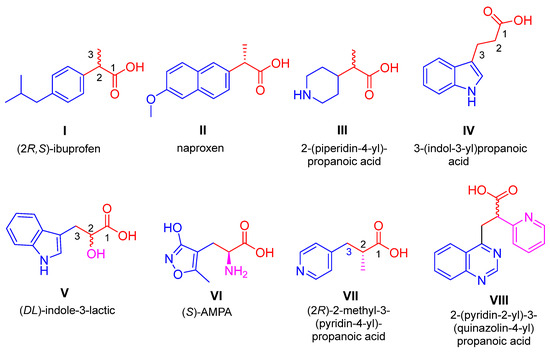
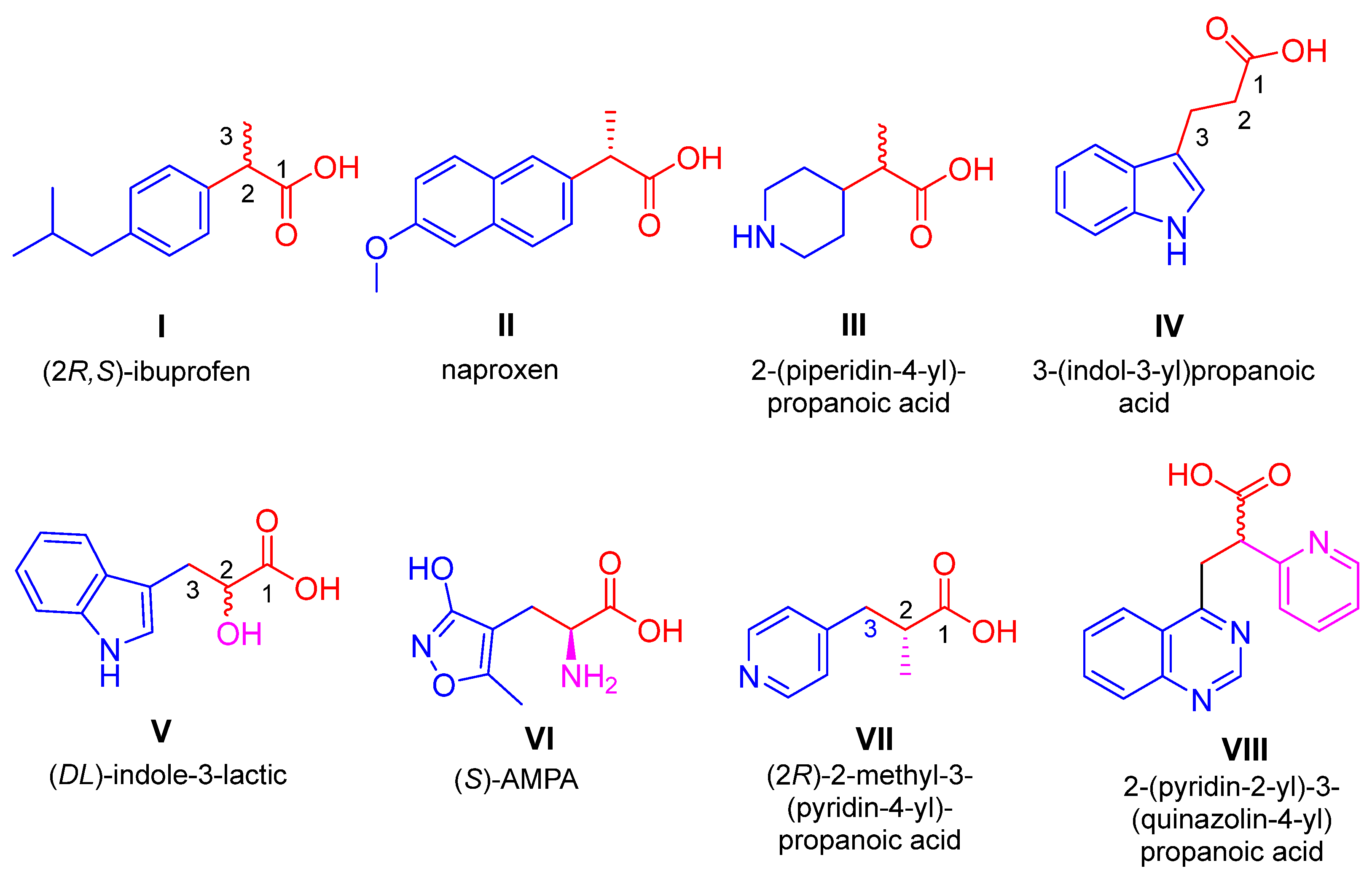
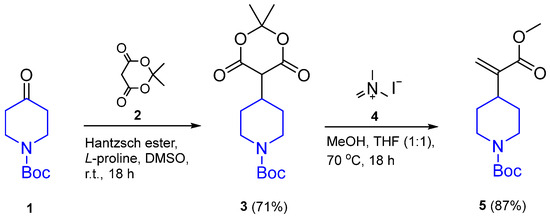
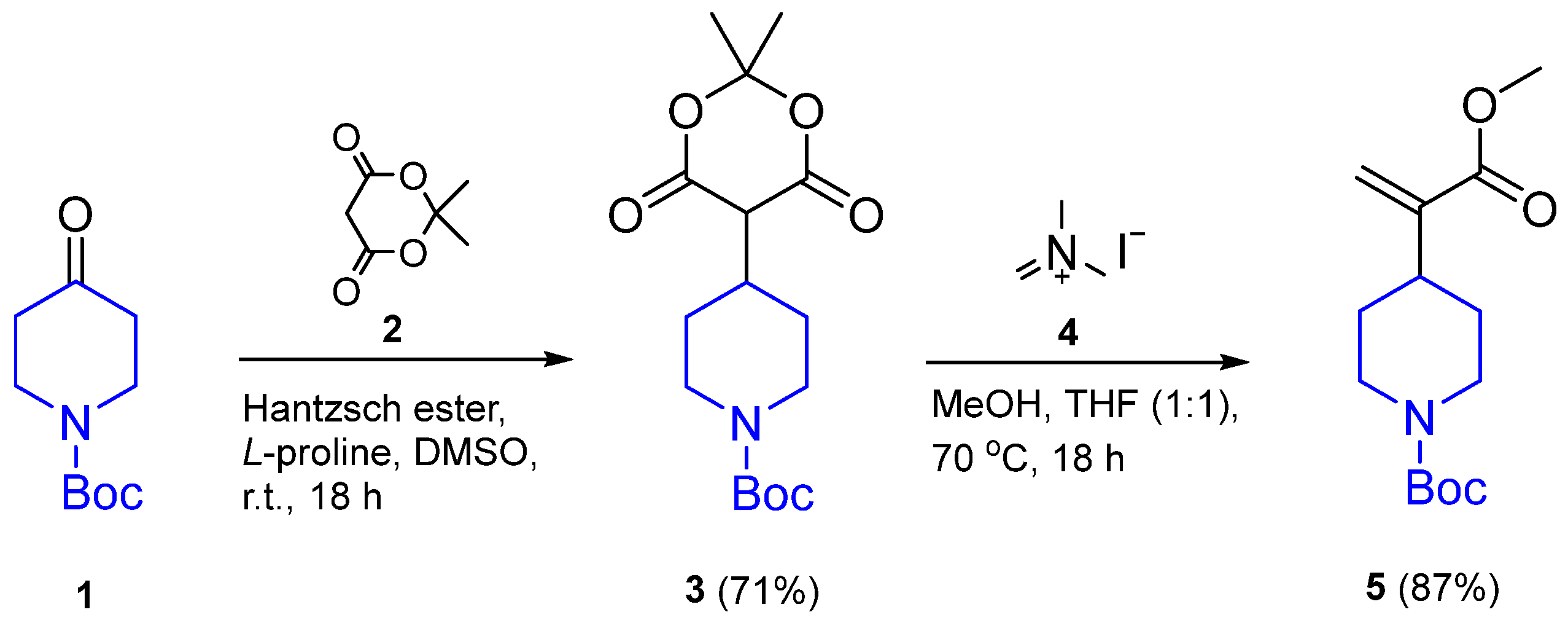
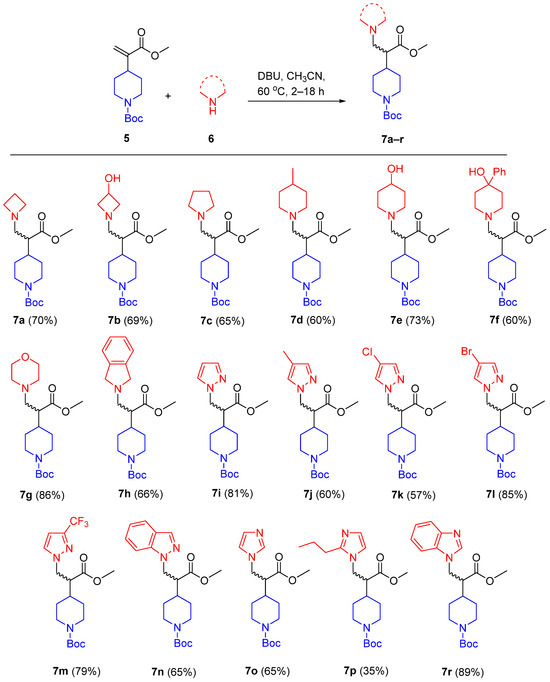
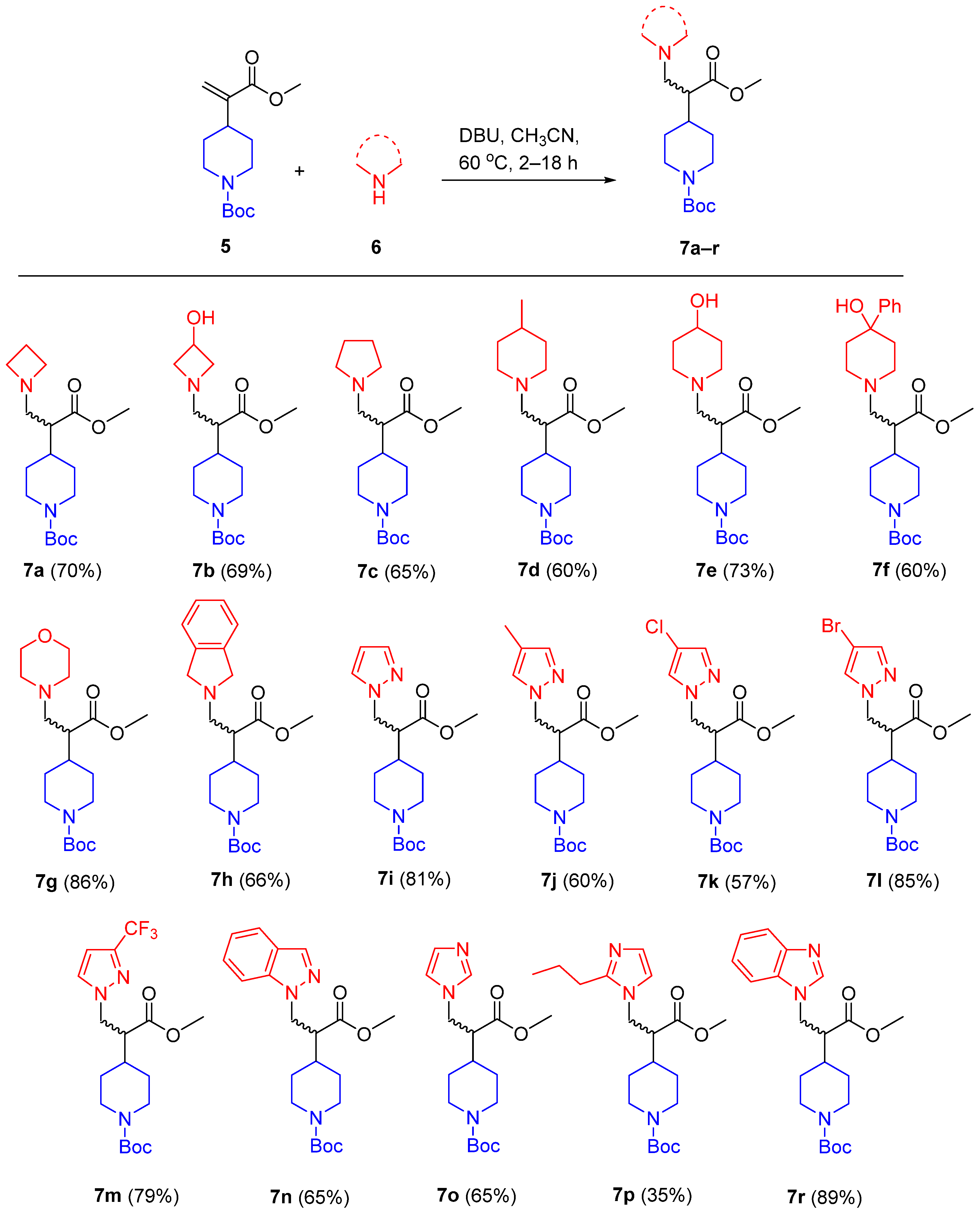
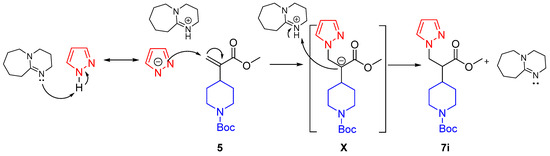
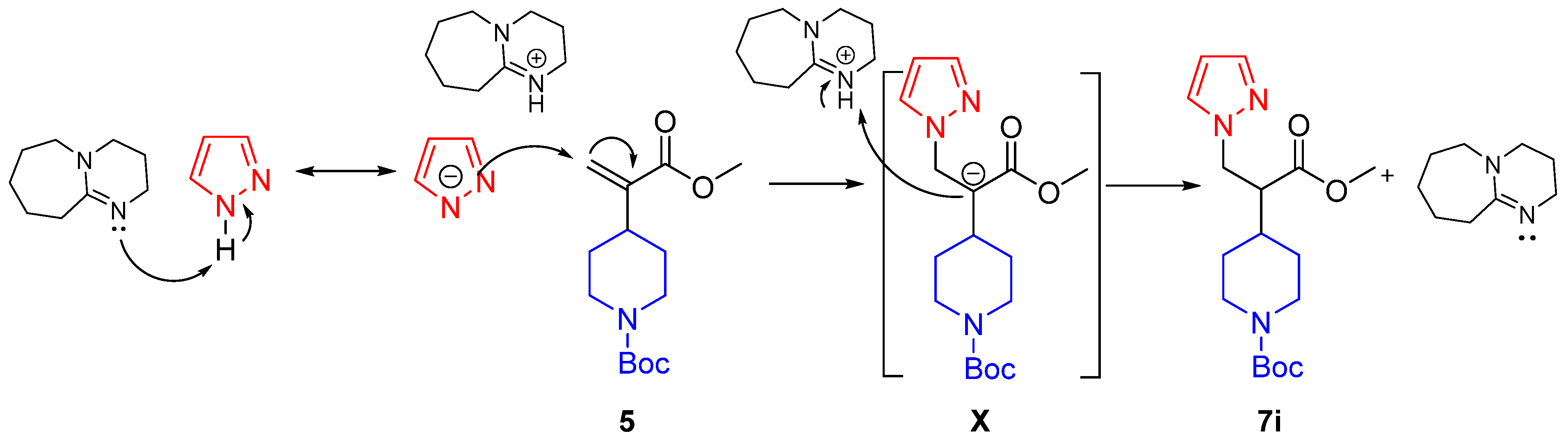
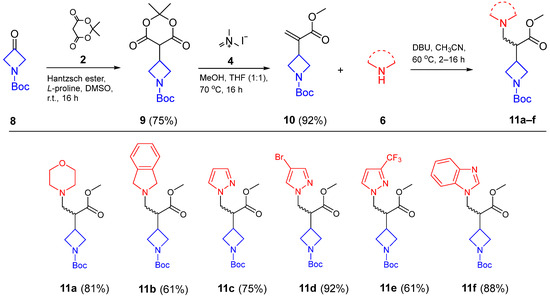
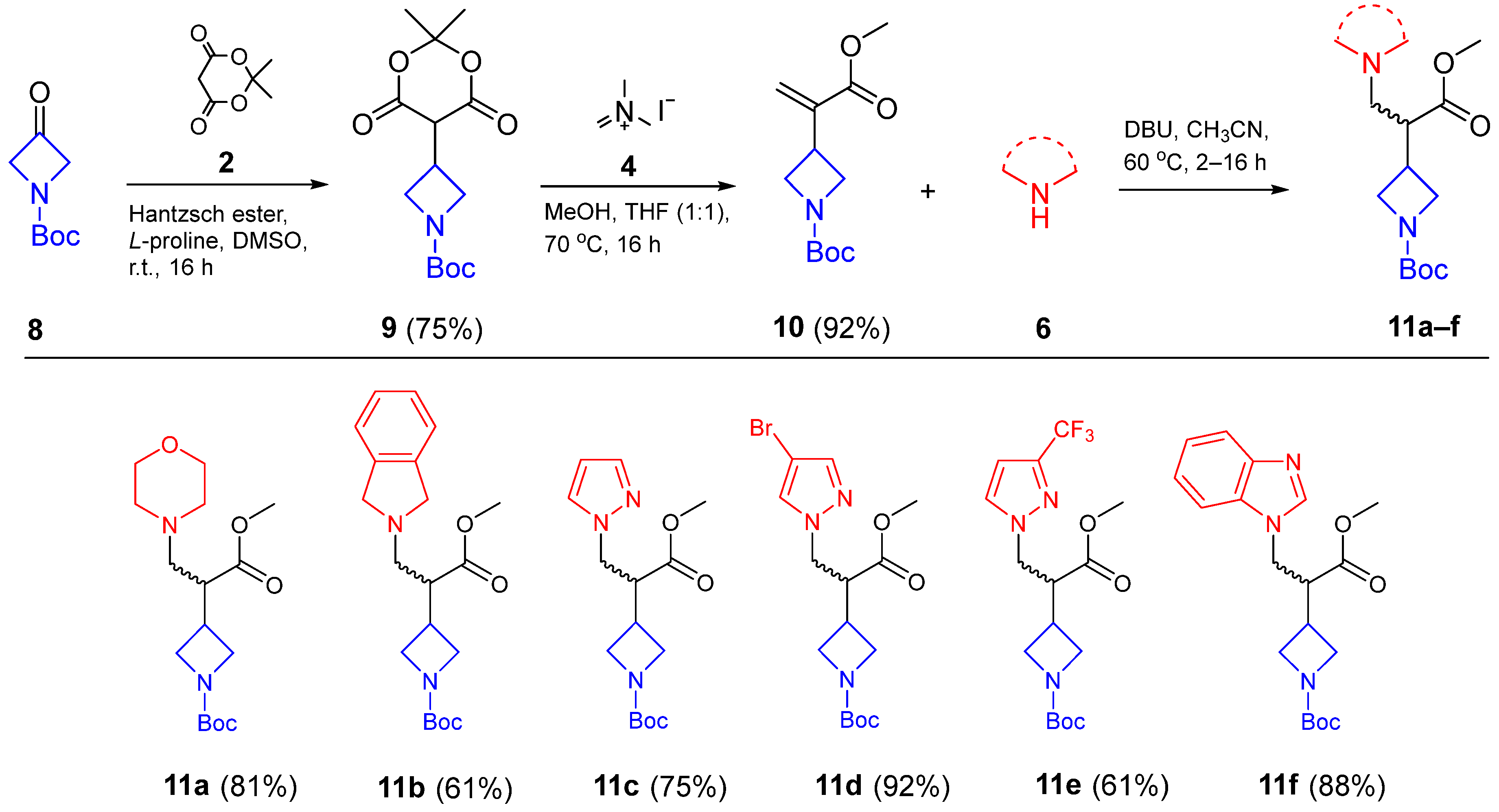
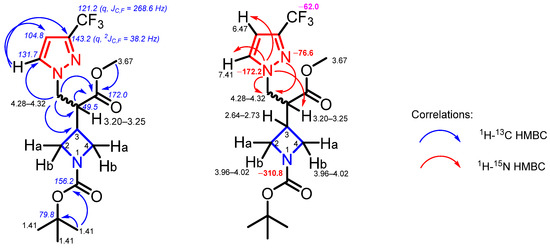
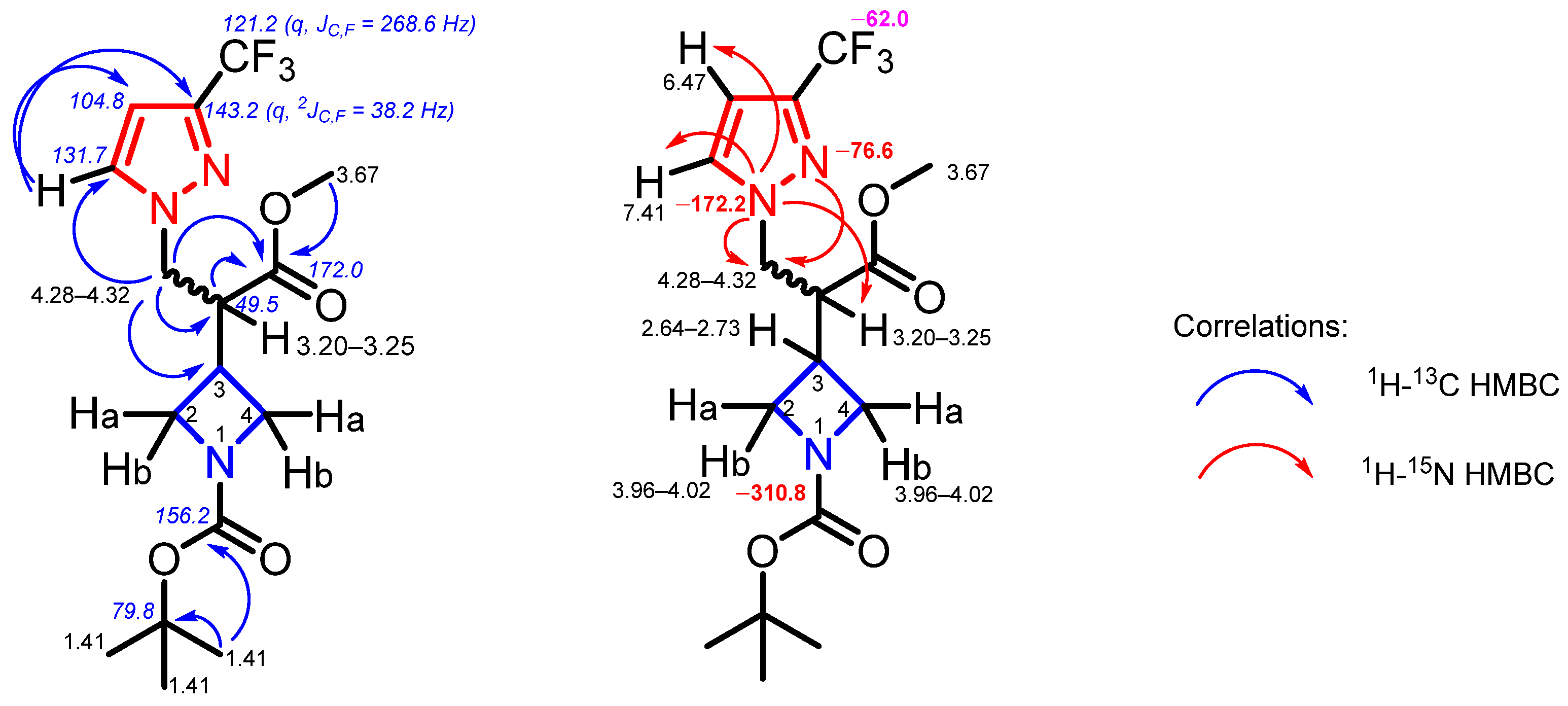
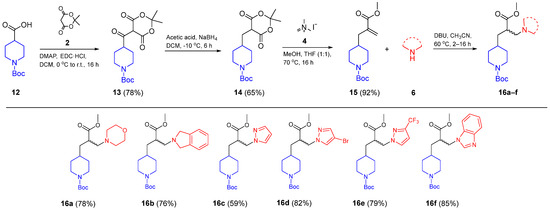
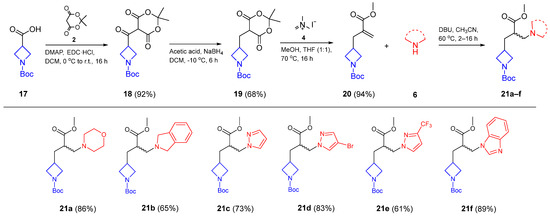
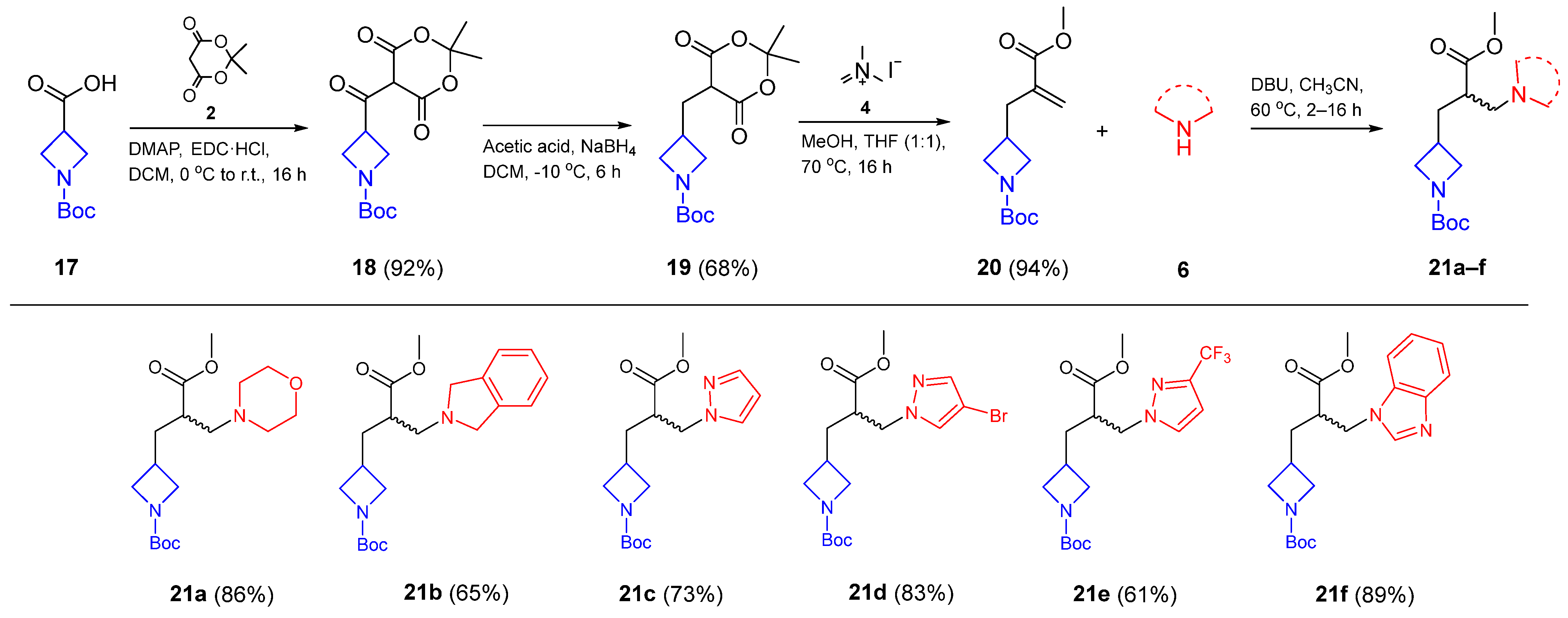
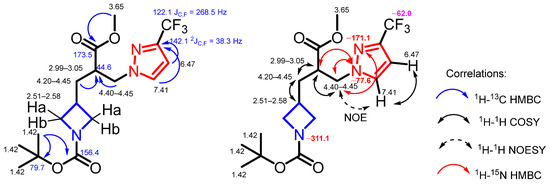
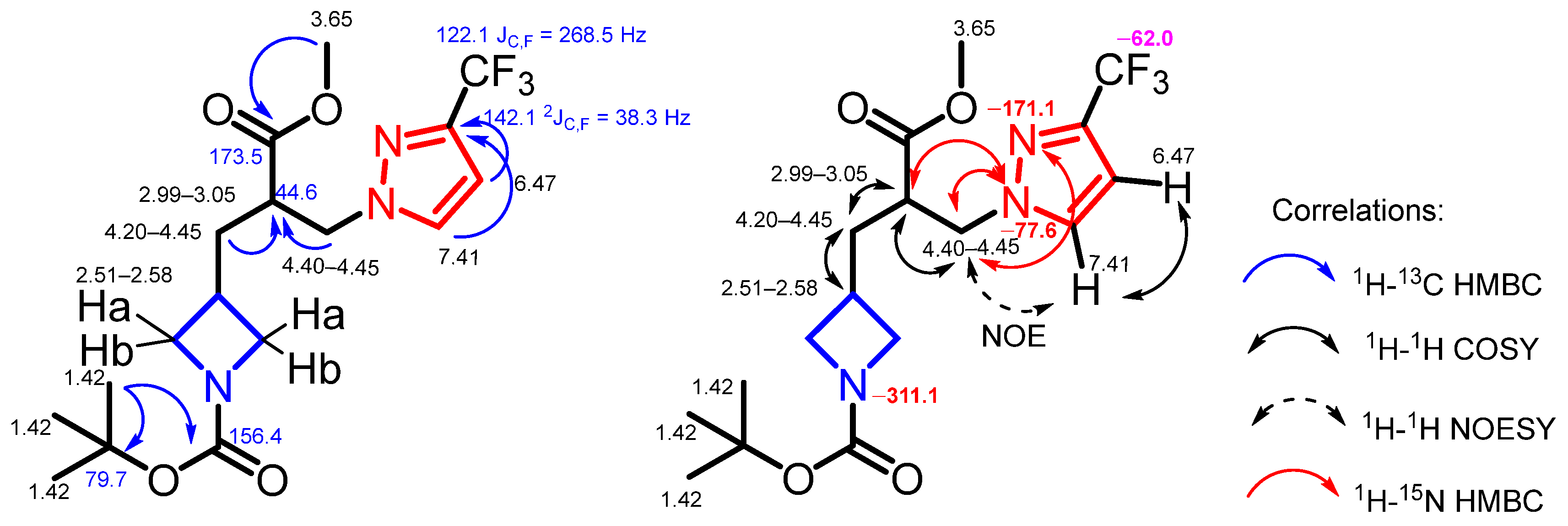

Disclaimer/Publisher’s Note: The statements, opinions and data contained in all publications are solely those of the individual author(s) and contributor(s) and not of MDPI and/or the editor(s). MDPI and/or the editor(s) disclaim responsibility for any injury to people or property resulting from any ideas, methods, instructions or products referred to in the content. |
© 2026 by the authors. Licensee MDPI, Basel, Switzerland. This article is an open access article distributed under the terms and conditions of the Creative Commons Attribution (CC BY) license.