


Abstract
Some of the diverse agro-industrial waste generated in primary or secondary stages have proved to be promising biomaterials for treating aqueous effluents contaminated, in this case, with heavy metals. Therefore, it is necessary to know their optimal operating conditions and the regeneration or reusability of the solid by-product, an aspect related to desorption. Considering the above, this article presents the findings of a preliminary study related to the desorption process of coffee pulp without physicochemical modification (Castilla variety), an agricultural waste used as a sorbent of Cr(III and VI) ions in synthetic wastewater. The desorption efficiency of four eluting agents at defined concentrations (0.10M)—HC1, HNO3, H2SO4, and EDTA—was evaluated in a time interval of 1 to 9 days. Likewise, the proposals for the sorption and/or desorption mechanisms proposed and reported in the literature with respect to the use of biosorbents derived from the coffee crop are presented. With respect to the results, the coffee pulp used in previous studies of the adsorption of chromium species mentioned (optimal conditions in synthetic water of particle size 180 μm, dose 20 g·L−1, agitation 100 RPM, room temperature, time of 90 to 105 min) showed efficiencies in the removal of Cr(III) and Cr(VI) of 93.26% and 74.80%, respectively. Regarding the extracting substances used, H2SO4 0.10 M was the one that presented the highest desorption percentage in both chromic species, with a desorption of 45.75% Cr(VI) and 66.84% Cr(III) in periods of 5 and 9 days, respectively, with agitation of 100 RPM and room temperature. Finally, the dissemination of preliminary results on the desorption of coffee pulp contaminated with chromic species without physicochemical modification is novel in this study, as similar work with this specific material has not yet been reported in the literature. On the other hand, the limitations of the study and future research are related to the evaluation at different concentrations and of other extractor solutions that allow improving the efficiency of desorption of these chemical species in a shorter time from the coffee pulp (with and without modification) as well as the reuse cycles. As a result, the desorption of coffee pulp used as an adsorbent material in real water could help researchers identify the possible interfering factors that affect the process (foreign anions and cations, organic matter, environmental conditions, among others).
1. Introduction
Water is one of the natural resources that is used in the processes of the diverse industrial activities in which it is required. This is due to the increasing industrialization that different countries in the world are going through. In order to safeguard public and environmental health, the aim is to ensure that these aqueous matrices are purified before their final disposal due to the significant negative effects they could have on the ecosystem in the short, medium, and long term [1,2].
Heavy metals (also known as environmentally priority pollutants, Potentially Toxic Elements (PTE), Persistent Bio-accumulative Toxics (PBT), and Unitary Potentially Toxic Residues (UPTR)) [3,4,5], are among the pollutants, produced by industrial wastewater, particularly those of an inorganic nature. These pollutants are not removed in conventional wastewater treatment plants (pretreatment, primary, secondary, and tertiary treatment stages) [6]. However, these substances can be mitigated through the use of advanced methodologies, which involve ion exchange, membrane filtration (microfiltration, nanofiltration, ultrafiltration, and reverse osmosis), electrodialysis, photocatalysis, flotation, and electrocoagulation, among others [7]. There are also conventional methods such as chemical precipitation and adsorption using activated carbon (AC) as a “universal adsorbent” and carbon nanotubes (CNTs) (since they are adsorbents that have high efficiency for both organic and inorganic pollutants removal) [3]. Although the advantages of these technologies refer to their high removal efficiency, generation of moderate amounts of sludge, and economy (exclusively the chemical precipitation); the disadvantages concern their high cost in implementation, requirements for energy, maintenance, and high cost of production, especially those of adsorption methods (AC) that prevent their use in countries with scarce resources [8,9,10].
In view of the above, over the years, research on so-called non-conventional technologies (also known as clean technologies or green methodologies) has gained considerable attention and importance. These include the use of biosorption, bioremediation, phytoremediation, hydrogels, and fly ash. This is mainly characterized by: (a) the use of live and dead biomasses, lignocellulosic materials, in order to revalue the various solid by-products generated in human activities susceptible to being reused in issues such as water treatment, and (2) being easy to acquire, highly efficient, environmentally friendly, high adsorption capacity, does not generate sludge and is economical [8,9,10,11].
Particularly for the biosorption method, important findings have been reported in the literature regarding the use of sorbents derived from agro-industrial by-products (coffee bagasse, coffee pulp, agave, maguey, sugar cane, organic waste from fruits and vegetables) [2,5,12]; solid materials from tannery industrial activities (chrome shavings, leather trimmings, fly ash, and hair) [13,14]; by-products of the incineration of municipal sewage sludge, such as fly ash and slag (chitosan, waste-to-energy power plant, sunflower wood, pine nut shells) [15,16,17,18]. Additionally, fruit and vegetable waste from the processing of the food industry, as well as the use of γ-polyglutamic acid, elderberries, pine biomass, and mushroom biomass [19,20,21,22]. These are proposed as possible alternatives to address the environmental challenges caused by various metal ionic species in aqueous effluents, such as Cr(III and VI), Ni(II), Zn(II), Pb(II), Cd(II), Mn(II), Cu(II), etc.
Biosorption is a physical method in which the adsorbates, pollutants in ionic state present in the liquid phase (wastewater), interact with the adsorbent (biological material) the solid phase in which the sorbates accumulate [23]. In this process, the physisorption and/or chemisorption processes are immersed; for the first, the types of binding forces are Van der Waals, with relatively low sorption heat (10 kJ·mol−1–40 kJ·mol−1), very low activation energy, and is fully reversible (desorption of the adsorbate occurs due to the decrease in the activity of the adsorbent on the fluid surrounding the surface). With respect to the second, the type of binding force is similar to chemical bonding, with high sorption heat (20 kJ·mol−1–400 kJ·mol−1), high activation energy, where the process is irreversible (the “desorbed compounds” are different from the adsorbed ones) [24].
Likewise, it is important to highlight that the opposite phenomenon of biosorption is desorption; in this process, the aim is to separate and/or recover the organic and inorganic pollutants that have interacted with the solid phase—biosorbent—with the purpose of reincorporating the substances into the industrial production processes, as well as the reuse of the sorbent material [25]. Publications on this topic have proposed the use of various extracting solutions or eluting agents, such as chelating agents (EDTA), acid substances (HCl, H2SO4), alkaline substances (NaOH), inorganic and organic salts (NaNO3, Ca(NO3)2, sodium citrate, etc.) or tests such as that reported by Ahalya et al. (2010) [26] that involve physisorption (physical bonding) and/or chemisorption (chemical bonding), exposing that if the physisorption process is present, the weakly bound metal ion can be easily desorbed with distilled water in most cases, but if the process is chemisorption or ion exchange or combination of the two, desorption can occur by stronger desorbing agents such as acidic or alkaline solutions, thus when using distilled water (pH 6.90) to desorb Cr(VI) from coffee husk, chemisorption was observed, since it was not desorbed with this type of water. Thus, the use of these substances will depend on variables such as: the type of sorbent, the metal ionic species present in the aqueous solution, pH, the concentration of the extractant solutions, contact time, temperature, ionic strength, agitation [8,25].
It is important to emphasize that desorption allows the recovery of the biomass free of contaminants to be reused in the biosorption process, thus allowing its regeneration. This is favorable because, in this way, it will be more accessible to users who implement this technology and with it, the maximum number of cycles in which the biosorbent can be reused is established. On the other hand, it is relevant to say that if organic and inorganic contaminants remain in solution, they can be reincorporated into the production cycle or life cycle of industrial processes, allowing companies to incorporate a circular economy and at the same time being sustainable, since they will favor environmental, economic, and social factors [2,5,7,26].
On the other hand, Cr(III) is one of the most stable chromium species found in high abundance in the environment [27,28] and it is considered an essential trace element for humans, causing the body to metabolize carbohydrates, proteins, and fats. Cr(VI) is also 1000 times more toxic than Cr(III), it causes allergies and skin ulcers, irritations on respiratory and gastrointestinal tract surfaces, fibrosis, alteration of genetic material, and immune system weakness. At the same time, renal and hepatic lesions have been observed in the long term after inhalation exposure. This has been linked to lung cancer according to the International Agency for Research on Cancer (IARC), the United States Environmental Protection Agency (USEPA), and as a probable carcinogen, based on epidemiological studies [29,30,31].
It is important to note tha the World Health Organization (WHO), ranks this heavy metal as one of the 13 with the greatest impact on public health and the environment [32] and that the United States Environmental Protection Agency (USEPA) ranks Cr(VI) as one of the 129 most critical pollutants [26]. Furthermore, chromium is used in the electroplating industry, tannery industry, dyes, electroplating, and other industries [33,34]. Some conventional methods for the treatment of chemical species such as Cr(VI) include reduction to Cr(III), then precipitation; additionally, electrolytic techniques, ion exchange, and other techniques are also used. [8]. Some of the maximum permissible limits for the two ionic species of chromium (III and VI) and total chromium in wastewater discharges in some countries reported in mg·L−1 are as follows: Colombia, México (Cr III and VI/ no apply), Cr Total 1.0–1.5; Venezuela ((Cr III/ no apply), Cr(VI) 0.5 and Cr Total 2.0) [28].
Regarding the evaluation of agro-industrial by-products in the context of industrial wastewater treatment, which incorporates pollutants such as the aforementioned, coffee pulp (CP) has been investigated in previous studies [2,5,27]. This lignocellulosic material generated from the pulping process represents 29% dry-weight of the coffee fruit; 2 tons of this residue are generated for each ton of coffee [35]. Every year, 21 billion kilograms of CP waste are produced worldwide, obtained as a by-product of the processing operations to obtain coffee beans [36]. Pulping and transportation of pulp with water, in addition to its disposal in uncovered or open pits, are considered to be responsible for 74% of the polluting potential represented by coffee by-products [37].
The most relevant coffee species on the planet is Arabica coffee, which constitutes 60% of world production due to its high quality [38]. Colombia is the third world producer after Brazil and Vietnam, with an approximate production of 14.30 million bags of 65 kg of coffee, while Brazil had a production of 63.40 million bags of 65 kg of coffee in 2020. Therefore, Brazil represents approximately 40% of world coffee production [39]. Regarding the almond coffee that Colombia exports in a year, approximately 162.900 tons of pulp residues are generated for every million 60 kg bags, which represents about 43.58% of the weight of the fresh fruit. If such tons of waste are not adequately treated, pollutants equivalent to the feces and urine of a population of approximately 868.736 inhabitants could be produced [36].
In terms of chemical composition, CP is composed of cellulose (18.65–65.50%), hemicellulose (0.98–3.30%), and lignin (12.20–19.70%) [35]. These compounds mainly have in their chemical structure aldehyde, methoxyl, phenol, ether, alcohol, aromatic rings, and carbonyl groups, which will be present in the various chemical interactions that may occur in the adsorption/desorption mechanisms between the sorbate and the adsorbent—depending on the conditions of the biosorption process (pH, temperature, dosage, etc.). In addition, CP has been given applications in animal feed, composting, biofuel production, production of energy drinks, production of coffee honey, vermicomposting, and larvicomposting [40,41].
Given the above, the present article shows the results of a preliminary study related to the desorption process of CP without physicochemical modification, with the material being used as a sorbent of ionic Cr(III and VI) species in synthetic wastewater. The use of four eluting agents (0.10M), HCl, HNO3, H2SO4, and EDTA was evaluated to desorb Cr species from CP. Likewise, the adsorption and desorption mechanisms proposed and reported in the research related to the use of sorbents derived from coffee cultivation and processing are presented. Finally, the authors present the limitations of the study and future research from this perspective.
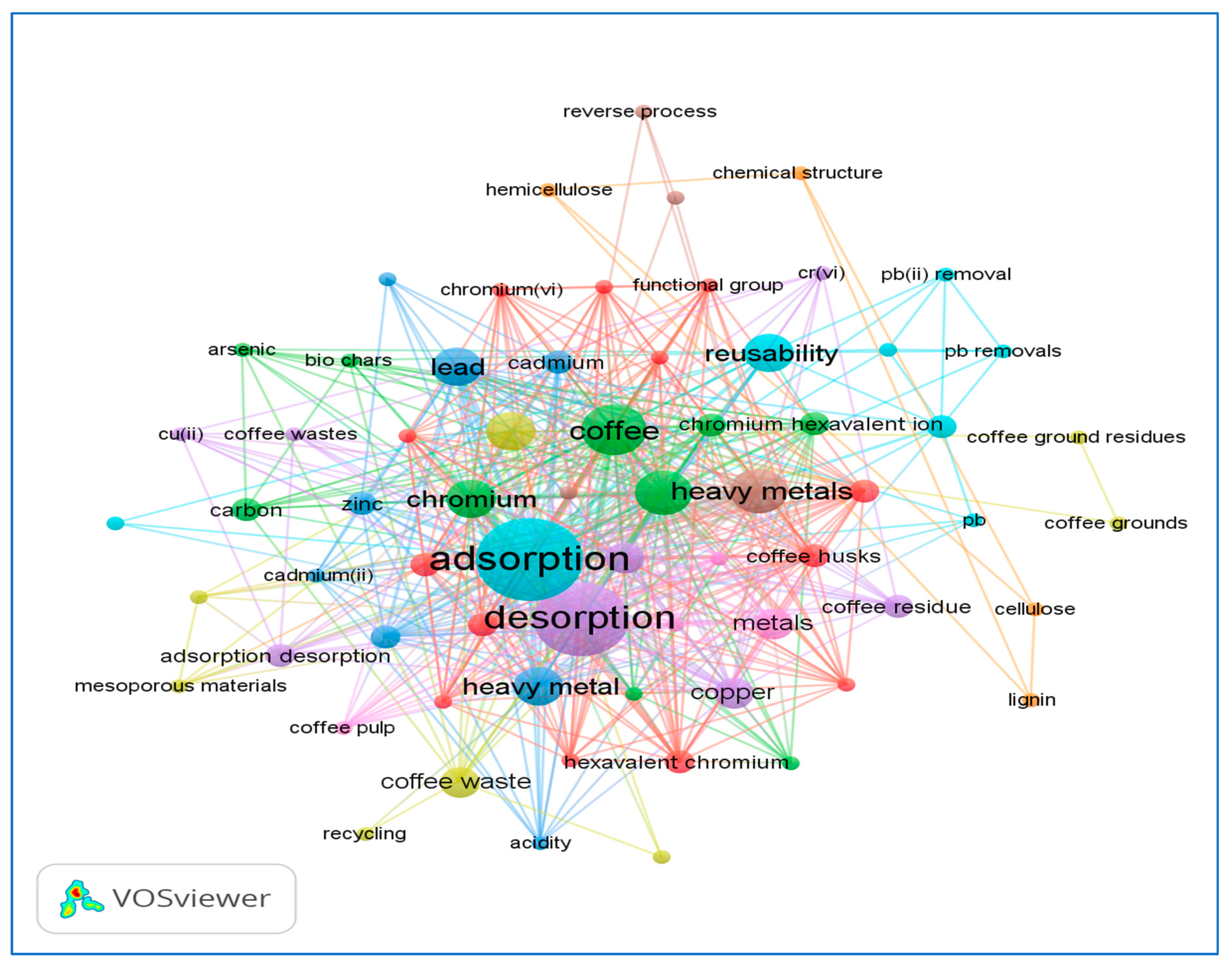
This research arises due to the low research related to this aspect, and that in publications related to agro-industry by-products, particularly derived from coffee cultivation, it has been raised as a future research and/or limitations, especially with this agricultural waste [5,27,42]. After a survey on sources of information from 2000 to 2021 using as a starting point the metadata of the Scopus database, a bibliometric map was made (see Figure 1) based on the co-occurrence of terms related to desorption, coffee pulp, and heavy metals. The above, with the use of the VOSviewer 1.6.18 software (free version), allowed the observation of a general panorama in terms of the research related to the aspect that is the subject of this article.
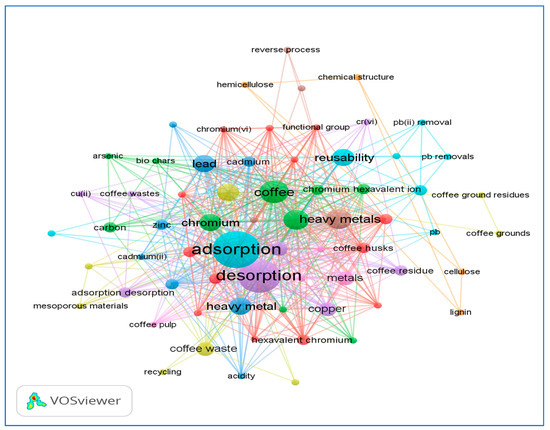
Figure 1.
Bibliometric map related to co-occurrence of terms against the search from 2000 to the present for “desorption” and “coffee” and “heavy metals” (elaborated with Scopus metadata using VOSviewer 1.6.18 Software).
Figure 1 shows the co-occurrence of terms referring to the most mentioned words by the researchers and the relationships between them (e.g., adsorption, desorption, coffee beans, coffee leaves, heavy metals—copper, lead, chromium, cadmium, arsenic). This provides a first approach to the current research related to the desorption of lignocellulosic materials derived from the process of cultivation and processing of coffee fruit [5], except for CP contaminated with ionic Cr species.
2. Materials and Methods
2.1. Collection and Physical Treatment of CP
CP used was of the Castilla variety, collected from a coffee farm in the Maracas, Quebrada Negra, municipality of Neira, Department of Caldas (Colombia) with the coordinates 5.140579° N–75.484538° W. The sampling of the material was performed in zigzag, collecting a sample size of 10 kg that was dried for 7 to 15 days in solar parabolic dryers. This was to partially dehydrate the residue—the percentage of moisture obtained in this drying process was 8.20%. Subsequently, it was placed in an oven at 60 °C until it obtained a constant mass. Once the sample was dry, it was mechanically triturated in a mill to obtain a particle size of 180 µm [27,43].
2.2. Quantification of Cr(III and VI)
The Cr(III and VI) solutions were prepared using analytical reagents KCr(SO4)2 99% and K2Cr2O7 99.5%, which were diluted in deionized water at room temperature, from which stock solutions of 1000 mg·L−1 and diluted (1,5,10,15) mg·L−1 were prepared. The respective instrumental calibration was performed by the Atomic Absorption Spectrophotometry (AAS) method in a VARIAN AA 140 equipment; the method used was 3111 B of the Standard Methods using flame (air-acetylene).
2.3. Adsorption and Desorption Procedures
In previous studies, optimal biosorption conditions were found for each metal ionic species in volumes of 25 mL of synthetic wastewater (indicating that this water is prepared at a specific concentration) [44]. These corresponded to a mass of 0.50 g of CP, temperature of 20 °C, agitation of 100 RPM, and contact time of 90 and 105 min for Cr(III and VI), respectively. Furthermore, the pH values were 2.0 for Cr(VI) and 5.0 for Cr(III).
Subsequently, the CP contaminated with Cr(III and VI) ionic species was retained using Whatman grade 4 qualitative filter paper with a pore size of 20 µm–25 µm. Afterward, 0.10 g of the contaminated dry residue was immersed in a volume of eluting agent of 50mL each of HCl, HNO3, H2SO4, EDTA; all of concentration 0.10 M. The sorbent–eluent system was left under constant agitation at 100 RPM for 9 days at room temperature [12,45].
The extractive solutions were prepared from analytical grade reagents whose purities were HCl 37%, HNO3 65%, H2SO4 98%, EDTA 99%. In relation to the treatment of the data, the accumulated desorption percentage for each ionic species was plotted against the monitored time; additionally, the desorption capacity (Qdes.) was calculated by applying the following expression [30]:
Qdes. (mg·g−1) = (Cdes·V)/M
Cdes: desorption concentration of the pollutant (mg·L−1).
V: volume (L) of the eluting agent.
M: mass (g) of the adsorbent.
Additionally:
%desorption = (Cdes/Cads.) × 100
Cdes.: desorption concentration in the extractant solution (mg·L−1).
Cads.: sorption concentration of the biosorbent (mg·L−1).
2.4. Statistical Treatment
The Excel program’s ANOVA was used to perform the statistical analysis based on the comparison of desorption percentages and Cr(III and VI) ionic species with different extractant solutions.
3. Results and Discussion
3.1. Desorption Assays of Cr(III and VI) from CP
According to the preliminary adsorption studies, under the optimum conditions of pH, particle size, agitation, temperature, and adsorbent dosage, CP was used to remove Cr(III and VI) in synthetic wastewater. The optimum pH variables for Cr(III and VI) were 2.0 and 5.0 pH units, an initial concentration of 100 mg·L−1, a particle size of 180 µm, a temperature of 20 °C, and an adsorbent dose of 0.50 g with 25 mL of the synthetic solution for the two ionic species.
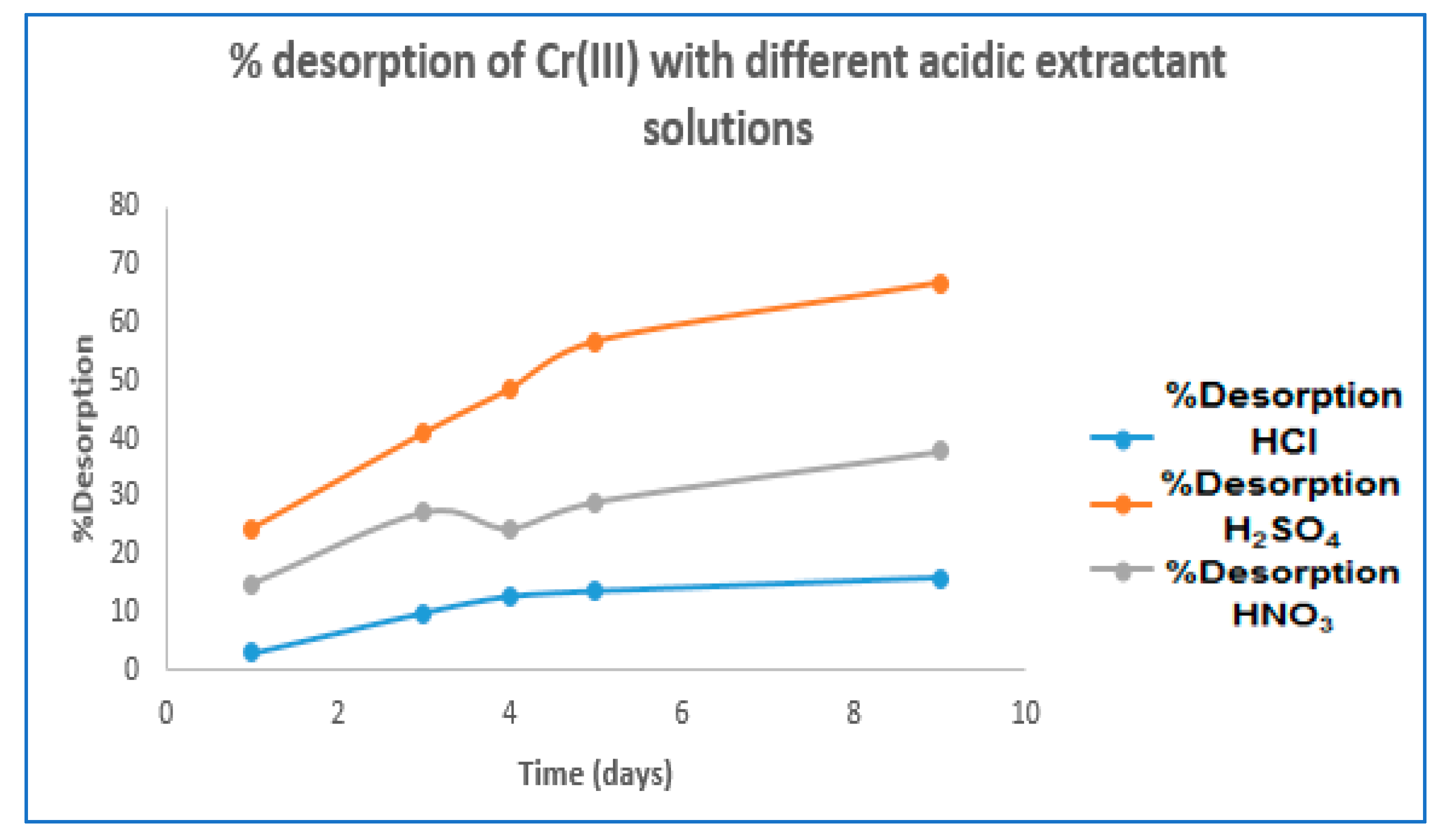
Regarding Cr(III) desorption, it was performed using H2SO4, HCl, and HNO3 extractive solutions at the concentrations mentioned in the methodological section. The results are shown in Table 1 and Figure 2:

Table 1.
Percentage desorption of Cr(III) and Qdes. with different acidic extractant solutions.
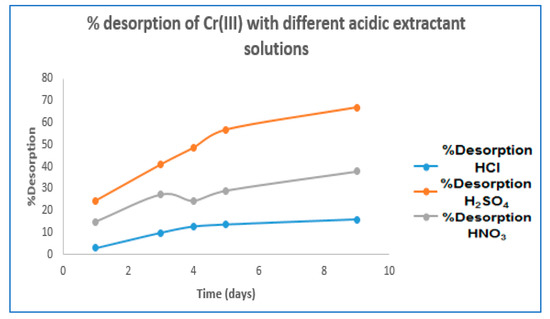
Figure 2.
Percentage desorption of Cr(III) with different acidic extractant solutions.
According to the results shown in Table 1 and Figure 2 H2SO4 0.10 M demonstrated the highest Cr(III) desorption efficiency of 66.84% in a time of 9 days; similarly, the desorption capacities ranged for HCl at (0.23 mg·g−1–15.88 mg·g−1), H2SO4 (1.77 mg·g−1–4.85 mg·g−1), and HNO3 (4.72 mg·g−1–11.93 mg·g−1).
With the results, researchers used an ANOVA (p < 0.05) to specify if there were significant differences between the extractant solutions at the same concentration, temperature, agitation, and biosorbent material (see Table 2).
Table 2.
Analysis of variance between extractant solutions for Cr(III).
Table 2 shows a comparison of the desorption percentages for Cr(III) between the extractant solutions (HCl, H2SO4, and HNO3), showing that there are significant differences at 95% probability, given that the F calculated value is higher than the F critical value. Thus, it could be inferred that the desorption processes are different for each acid.
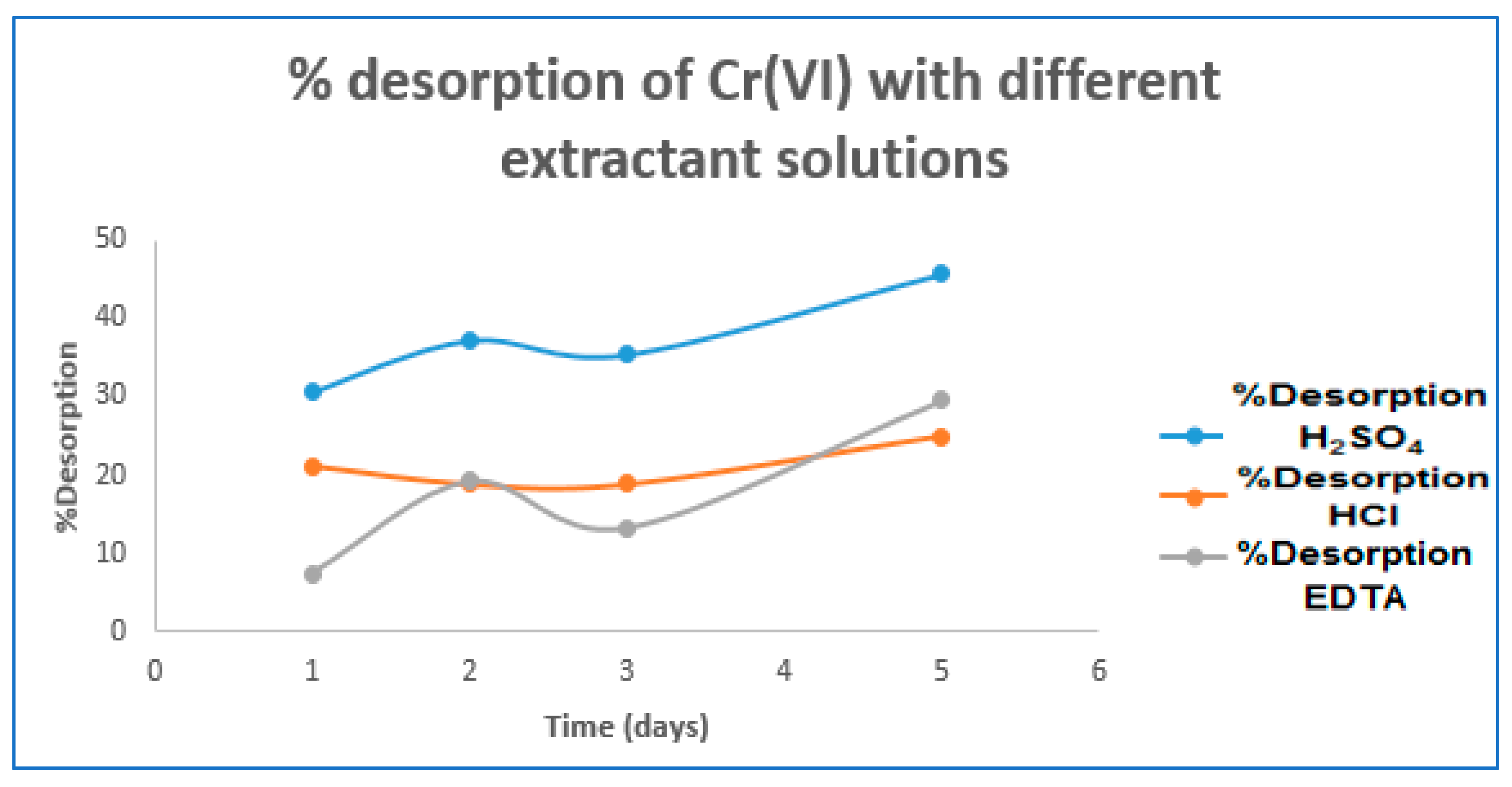
On the other hand, Cr(VI) desorption was performed using H2SO4, HCl, and EDTA extracting solutions at the concentrations mentioned in the methodological section. The results are shown in Table 3 and Figure 3:
Table 3.
Percentage desorption of Cr(VI) and Qdes. with different extractant solutions.
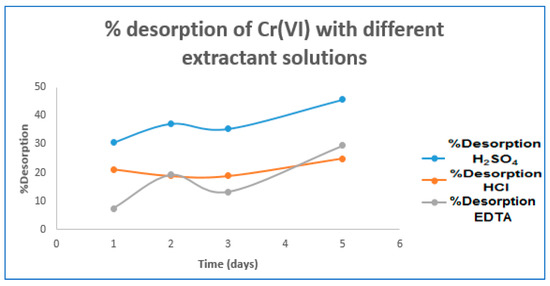
Figure 3.
Percentage desorption of Cr(VI) with different extractant solutions.
According to the results in Table 3 and Figure 2, it was found that of the three eluting agents evaluated, H2SO4 0.10 M had the highest Cr(VI) desorption efficiency of 45.75% in a time of 5 days; similarly, the desorption capacities range for HCl was (1.44 mg·g−1–1.69 mg·g−1), for H2SO4 (2.08 mg·g−1–3.11 mg·g−1), and EDTA (1.21 mg·g−1–1.82 mg·g−1).
Having the results, researchers used an ANOVA (p < 0.05) to specify if there were significant differences between the extractant solutions at the same concentration, temperature, agitation, and biosorbent material (see Table 4).
Table 4.
Analysis of variance between extractant solutions for Cr(VI).
Table 4 shows a comparison of the desorption percentages for Cr(VI) between the extractant solutions (H2SO4, HCl, EDTA); it can be observed that there are significant differences at 95% probability since the F calculated value is higher than the F critical value. Thus, it could be inferred that the desorption processes are different for each substance.
In the two desorption methods using CP as a sorbent, it was observed that a higher percentage of desorption occurred using acidic solutions since it is possible that the protons from the dissociation of the latter replace the metal (ion exchange) that is bound through electrostatic interactions to the functional groups on the surface of the adsorbent, for example, hydroxyls and carboxyls [25].
3.2. Reports on Mechanisms of Adsorption and Desorption of Agricultural Waste Derived from the Cultivation and Processing of Coffee
Table 5 shows the statements found and reported on the adsorption and desorption conditions using various by-products derived from coffee cultivation:
Table 5.
Sorption and desorption processes and conditions with various by-products derived from coffee crops.
When analyzing Table 5 in relation to the variables (particle size, contact time, adsorbent dosage, and temperature) used in the desorption process using coffee wastes (leaves, beans, and pulp), it was observed that the extracting solutions used were inorganic acids (HCl, H2SO4), as well as basic solutions such as NaOH in concentrations ranging from 0.02 M to 1 M. Furthermore, it can be established that the basic solutions have been one of the most used eluting agents, where their desorption percentages have ranged from 10% to 77.3%, while with the acids, the most efficient has been HCl 0.1 M, where the desorption percentages ranged from 25% to 95% given that the contact times were between 60 and 1440 min, indicating that the longer the time, the higher the desorption percentage. In relation to the reports found and shown in the table above, it is observed that the ionic species that has been adsorbed and desorbed with the coffee residues has been only Cr(VI) and the matrix used was synthetic wastewater.
The results obtained in the present study establish adsorption/desorption data with two ionic species, Cr(III) and Cr(VI), where the acidic extractive solutions (HNO3 0.1 M and H2SO4 0.1 M) were more efficient in the desorption of the two species with CP. Additionally, the Qdes. of each species were reported, which were 11.93 mg·g−1 and 3.11 mg·g−1 for Cr(III) and Cr(VI) with extractive solutions such as HNO3 and H2SO4, respectively.
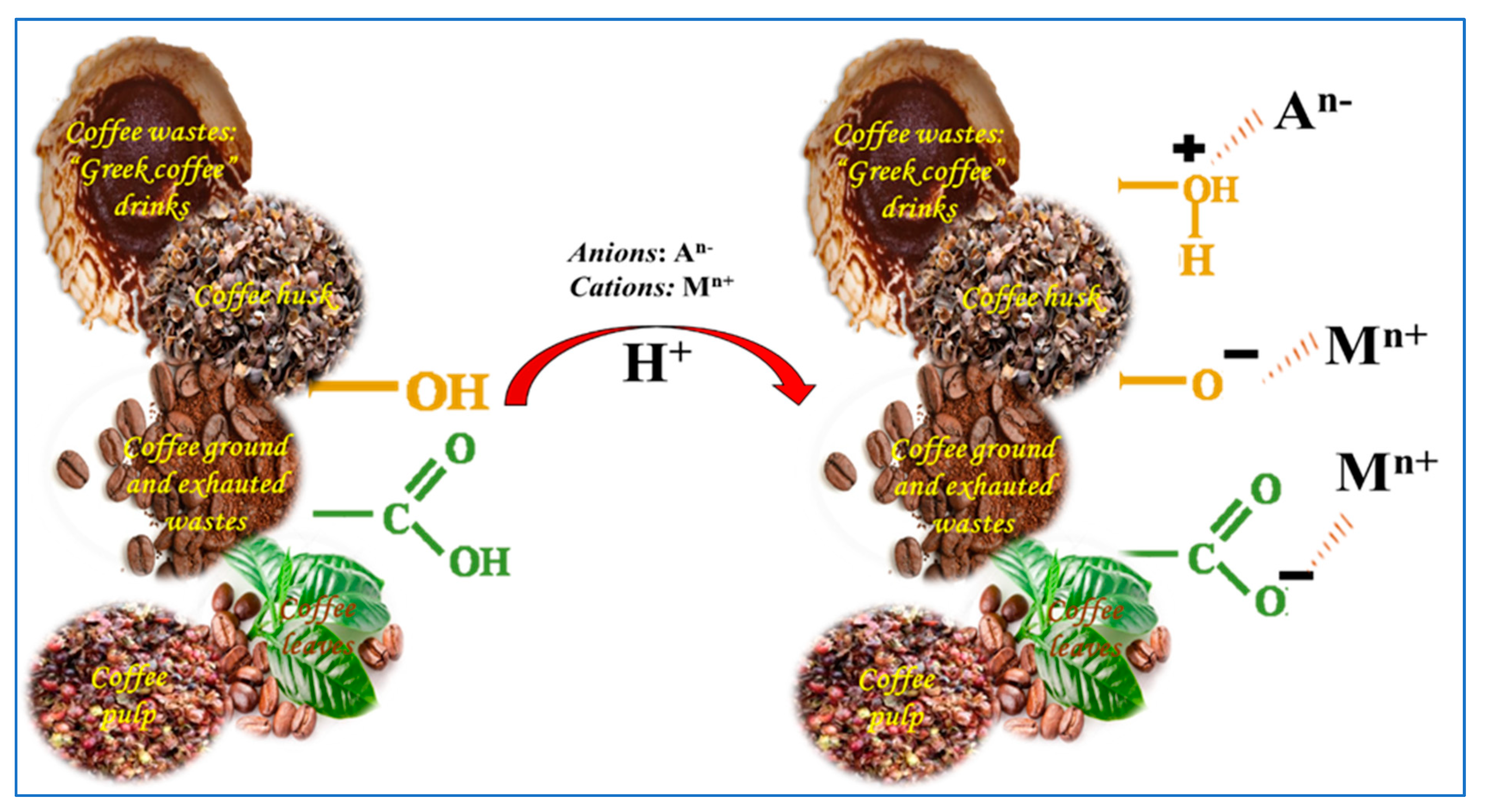
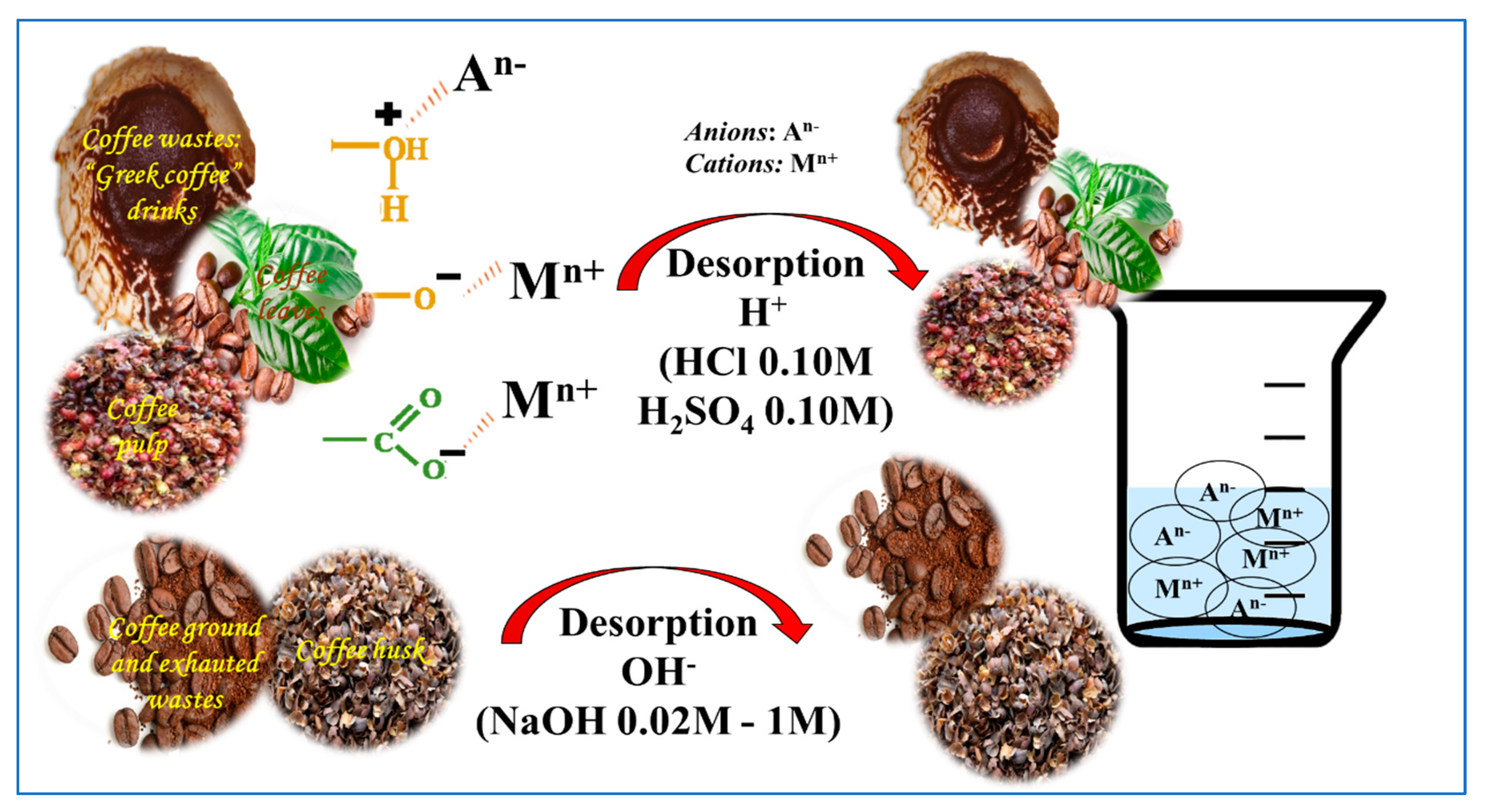
In addition to the above, Table 6, Figure 4 and Figure 5 show and illustrate the statements reported in the literature related to the mechanisms of adsorption and desorption when using the residues from coffee cultivation and processing.
Table 6.
Statements reported on possible adsorption and desorption mechanisms using coffee by-products as sorbents.
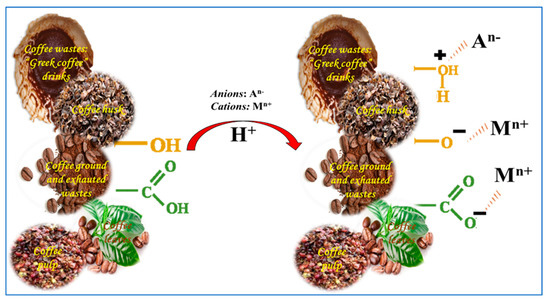
Figure 4.
Mechanisms of adsorption of anionic and cationic species using sorbents derived from coffee cultivation and processing.
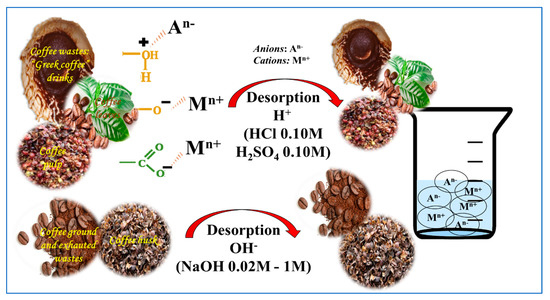
Figure 5.
Desorption mechanisms of anionic and cationic species using sorbents derived from coffee cultivation and processing.
3.3. Limitations and Future Research
According to the preliminary study and the findings presented in this article, it is important to mention that:
- (a)
- Subsequent studies are required to evaluate additional extracting solutions, in addition, to those evaluated here, in order to improve the percentage desorption of CP without physicochemical modification. Furthermore, it is relevant to analyze the effects of the eluting agents’ concentrations.
- (b)
- It is necessary to carry out adsorption and desorption processes (reuse cycles) in order to analyze and evaluate the number of times that CP can be used under the same conditions.
- (c)
- Studies related to the application of the sorbent in real water and/or multimetallic aqueous systems are still lacking, which would allow analyzing the effect of other pollutants present as well as atmospheric conditions that could intervene in the sorption and desorption of CP being used as a sorbent for Cr ions. Likewise, physicochemical modification of the biosorbent is necessary in order to observe the increase and/or decrease in sorption tests in the future.
- (d)
- Analyses focused on the environmental impact and techno-economic studies related to the adsorption and desorption of lignocellulosic materials such as CP are required in order to analyze the short, medium, and long term effects of scaling up the technology in small, medium, or large-scale treatment systems, which involve environmental, economic, and social aspects.
- (e)
- It is recommended to carry out a triplicate for each concentration used in the extractive solutions, in order to make a statistical treatment based on the repeatability and reproducibility of the desorption method to be used on a pilot and/or industrial scale with real water.
4. Conclusions
In previous studies, it was established that coffee pulp, without physicochemical modification, had Cr(III) and Cr(VI) removal efficiencies in synthetic wastewater of 93.26% and 74.80%, respectively. The above, under optimum conditions of 20g/L dosage, pH 5.0 and 2.0, time of 90 min and 105 min, respectively, and particle size of 180 μm.
Four extractive solutions were evaluated to desorb chromium ionic species (Cr III and VI) from coffee pulp without physicochemical modification (Castilla variety); these corresponded to HCl, HNO3, H2SO4, and EDTA, all at concentrations of 0.10 M. It was established that sulfuric acid was the best agent to elute these sorbates under agitation conditions of 100 RPM, room temperature, for periods of 5 and 9 days, with desorption percentages of 45.75% and 66.84%, respectively. Additionally, the Qdes. of each species were reported, which were 11.93 mg·g−1 and 3.11 mg·g−1 for Cr(III) and Cr(VI) with extracting solutions such as HNO3 and H2SO4, respectively.
In addition, according to the review of the literature, there are few studies related to the desorption of materials derived from coffee cultivation, some of which are related to coffee waste, coffee husks, and coffee grounds. Regarding the mechanisms of adsorption and desorption, they are mainly related to electrostatic interactions, oxidation–reduction reactions, and ionic exchange. This is related to the physicochemical composition of the materials, where the OH and COOH groups of compounds such as lignin, cellulose, and hemicellulose predominate.
Since no reports related to CP desorption have yet been published in the literature, these preliminary findings will be used as starting points for future studies wishing to investigate the use of CP as a heavy metal sorbent in real wastewater at the pilot and/or industrial scale.
Author Contributions
D.L.G.-A. performed the experimental methodology, systematization, and analytical treatment of the experimental data obtained; J.P.R.-M., D.B.-G. and O.J.S.-P. guided the research conducted; J.A.E.-M. and D.L.G.-A. drafted the manuscript; J.P.R.-M., D.B.-G. and O.J.S.-P. translated the article and reviewed the writing and citation of the bibliographic references. All authors have read and agreed to the published version of the manuscript.
Funding
This research received no external funding.
Institutional Review Board Statement
Not applicable.
Informed Consent Statement
Not applicable.
Data Availability Statement
Not applicable.
Acknowledgments
The authors are thankful to Crispin Celis and Oscar Rodríguez (Pontificia Universidad Javeriana) for providing support and encouragement to accomplish this research work.
Conflicts of Interest
The authors declare no conflict of interest.
Sample Availability
Not available.
References
- Barrantes, E.; Cartín, M. Eficacia del tratamiento de aguas residuales de la Universidad de Costa Rica en la Sede de Occidente, San Ramón, Costa Rica. Cuad. Investig. UNED 2017, 9, 193–197. [Google Scholar] [CrossRef]
- Gómez Aguilar, D.L.; Rodríguez Miranda, J.P.; Baracaldo Guzmán, D.; Esteban Muñoz, J.A. Using Coffee Pulp as Bioadsorbent for the Removal of Manganese (Mn (II)) from Synthetic Wastewater. Water 2020, 12, 2500. [Google Scholar] [CrossRef]
- Fu, F.; Wang, Q. Removal of heavy metal ions from wastewaters: A review. J. Environ. Manag. 2011, 92, 407–418. [Google Scholar] [CrossRef] [PubMed]
- Akindele, E.O.; Omisakin, O.D.; Oni, O.A.; Aliu, O.O.; Omoniyi, G.E.; Akinpelu, O.T. Heavy metal toxicity in the water column and benthic sediments of a degraded tropical stream. Ecotoxicol. Environ. Saf. 2020, 190, 110153. [Google Scholar] [CrossRef]
- Gómez-Aguilar, D.L.; Rodríguez-Miranda, J.P.; Baracaldo-Guzmán, D.; Salcedo-Parra, O.J.; Esteban-Muñoz, J.A. Biosorption of Pb(II) Using Coffee Pulp as a Sustainable Alternative for Wastewater Treatment. Appl. Sci. 2021, 11, 6066. [Google Scholar] [CrossRef]
- Caraballo, J. Análisis Técnico de Buenas Prácticas Ambientales Urbanas en el Servicio Público Domiciliario de Alcantarillado. Specialization Monograph, Universidad Piloto de Colombia, Bogotá D.C. 2015. Available online: Repository.unipiloto.edu.co/bitstream/handle/20.500.12277/3228/Trabajo%20de%20grado.pdf?sequence=1&isAllowed=y (accessed on 1 January 2022).
- Gómez-Aguilar, D.; Esteban-Muñoz, J.; Rodríguez-Miranda, J. Removal of heavy metals present in wastewater using corn´s by-products (Zea mays L.): A 2010-2019 bibliographic review. Int. J. Mech. Prod. 2020, 10, 15693–15702. [Google Scholar]
- Fiol, N.; Escudero, C.; Villaescusa, I. Re-use of Exhausted Ground Coffee Waste for Cr(VI) Sorption. Sep. Sci. Technol. 2008, 43, 582–596. [Google Scholar] [CrossRef]
- Valladares-Cisneros, M.; Valerio-Cárdenas, C.; de la Cruz-Burelo, P.; Melgoza-Alemán, R.M. Adsorbentes no-convencionales, alternativas sustentables para el tratamiento de aguas residuales. Rev. Ing. Univ. Med. 2017, 16, 55–73. [Google Scholar]
- Caviedes, D.I.; Muñoz, R.A.; Perdomo, A.; Rodríguez, D.; Sandoval Rojas, I.J. Tratamientos para la Remoción de Metales Pesados Comúnmente Presentes en Aguas Residuales Industriales. Una Revisión. Ing. Región 2015, 13, 73–90. [Google Scholar] [CrossRef]
- Kyzas, G.Z. Commercial Coffee Wastes as Materials for Adsorption of Heavy Metals from Aqueous Solutions. Materials 2012, 5, 1826–1840. [Google Scholar] [CrossRef]
- Acosta, I.; Sandoval, P.; Bautista, D.; Hernández, N.; Cárdenas, J.; Martínez, V. Bioadsorción de cromo (VI) por la cáscara de Mamey (Mammea americana L.). Av. Cienc. Ing. 2012, 3, 1–9. [Google Scholar]
- Esteban-Muñoz, J.A.; Gómez-Aguilar, D.L. Biosorción de Colorantes en Aguas Residuales Aprovechando Residuos Sólidos Provenientes de Curtiembres. In Memorias III Seminario Internacional Catatumbarí 2021; Universidad Francico de Paula Santander: Ocaña, Norte de Santander, Colombia, 2021; p. 32. Available online: https://bda45641-6621-4165-a223-cd8fc2d826af.filesusr.com/ugd/de6def_70a8080eea7748e88509a7823d5048c1.pdf (accessed on 1 January 2022).
- Mehdi, L.; Abdoul, N.; Abdelaziz, B.; Abdelrani, Y. Removal of Chromium Cr(VI) of Tanning Effluent with Activated Carbon from Tannery Solid Wastes. Am. J. Phys. Chem. 2017, 6, 103–109. [Google Scholar]
- Wen, Y.; Tang, Z.; Chen, Y.; Gu, Y. Adsorption of Cr(VI) from aqueous solutions using chitosan-coated fly ash composite as biosorbent. Chem. Eng. J. 2011, 175, 110–116. [Google Scholar] [CrossRef]
- Vaid, U.; Mittal, S.; Babu, J.N. Removal of hexavalent chromium from aqueous solution using biomass derived fly ash from Waste-to-Energy power plant. Desal. Water Treat. 2013, 52, 7845–7855. [Google Scholar] [CrossRef]
- Kalak, T.; Cierpiszewski, R.; Ulewicz, M. High Efficiency of the Removal Process of Pb(II) and Cu(II) Ions with the Use of Fly Ash from Incineration of Sunflower and Wood Waste Using the CFBC Technology. Energies 2021, 14, 1771. [Google Scholar] [CrossRef]
- Li, G.; Zhang, J.; Liu, J.; Chen, S.; Li, H. Investigation of the adsorption characteristics of Cr(VI) onto fly ash, pine nut shells, and modified bentonite. Desal. Water Treat. 2020, 195, 389–402. [Google Scholar] [CrossRef]
- Zhang, C.; Ren, H.-X.; Zhong, C.-Q.; Wu, D. Biosorption of Cr(VI) by immobilized waste biomass from polyglutamic acid production. Sci. Rep. 2020, 10, 3705. [Google Scholar] [CrossRef] [Green Version]
- Kalak, T.; Dudczak-Hałabuda, J.; Tachibana, Y.; Cierpiszewski, R. Effective use of elderberry (Sambucus nigra) pomace in biosorption processes of Fe(III) ions. Chemosphere 2020, 246, 125744. [Google Scholar] [CrossRef]
- Sudha Bai, R.; Abraham, T.E. Studies on chromium(VI) adsorption–desorption using immobilized fungal biomass. Bioresour. Technol. 2003, 87, 17–26. [Google Scholar] [CrossRef]
- Zhao, J.; Boada, R.; Cibin, G.; Palet, C. Enhancement of selective adsorption of Cr species via modification of pine biomass. Sci. Total Environ. 2021, 756, 143816. [Google Scholar] [CrossRef]
- Sánchez-Silva, J.; González-Estrada, R.; Blancas-Benitez, F.; Fonseca-Cantabrana, A. Utilización de subproductos agroindustriales para la bioadsorción de metales pesados. TIP Rev. Espec. Cienc. Químico Biol. 2020, 23, 1–18. [Google Scholar] [CrossRef]
- Králik, M. Adsorption, chemisorption, and catalysis. Chem. Pap. 2014, 68, 1–14. [Google Scholar] [CrossRef]
- Njikam, E.; Schiewer, S. Optimization and kinetic modeling of cadmium desorption from citrus peels: A process for biosorbent regeneration. J. Hazard. Mater. 2012, 213, 242–248. [Google Scholar] [CrossRef] [PubMed]
- Ahalya, N.; Kanamadi, R.D.; Ramachandra, T.V. Removal of hexavalent chromium using coffee husk. Int. J. Environ. Pollut. 2010, 43, 106–116. [Google Scholar] [CrossRef]
- Gómez Aguilar, D.L.; Rodríguez Miranda, J.P.; Esteban Muñoz, J.A.; Betancur P., J.F. Coffee Pulp: A Sustainable Alternative Removal of Cr(VI) in Wastewaters. Processes 2019, 7, 403. [Google Scholar] [CrossRef] [Green Version]
- Gómez-Aguilar, D.; Esteban-Muñoz, J.; Rodríguez-Miranda, J. Utilization of unconventional technologies in the removal of chrome present in tanneries wastewater: A literature review from 2009 to 2019. Int. J. Mech. Prod. Eng. Res. Dev. 2020, 10, 15703–15712. [Google Scholar]
- Zerihun-Asmelash, S. Technological Viability of Coffee Husk Ash, Soil Rich in Kaolinite-Ferrinatrite and Kaolinitegeothite for the Adsorptive Removal of Chromium (vi) from Industrial Wastewater. Ph.D. Thesis, University of KwaZulu-Natal, KwaZulu-Natal, South Africa, 2017. [Google Scholar]
- Cherdchoo, W.; Nithettham, S.; Charoenpanich, J. Removal of Cr(VI) from synthetic wastewater by adsorption onto coffee ground and mixed waste tea. Chemosphere 2019, 221, 758–767. [Google Scholar] [CrossRef]
- Tchounwou, P.B.; Yedjou, C.G.; Patlolla, A.K.; Sutton, D.J. Heavy metal toxicity and the environment. Mol. Clin. Environ. Toxicol. 2012, 101, 133–164. [Google Scholar]
- World Health Organization (WHO). Adverse Health Effects of Heavy Metals in Children. 2011. Available online: https://www.who.int/ceh/capacity/heavy_metals.pdf (accessed on 1 January 2022).
- Aruna; Bagotia, N.; Sharma, A.K.; Kumar, S. A review on modified sugarcane bagasse biosorbent for removal of dyes. Chemosphere 2020, 268, 129309. [Google Scholar]
- Yadav, A.; Bagotia, N.; Sharma, A.K.; Kumar, S. Advances in decontamination of wastewater using biomass-basedcomposites: A critical review. Sci. Total Environ. 2021, 784, 147108. [Google Scholar] [CrossRef]
- Aristizábal-Marulanda, V.; Chacón-Perez, Y.; Cardona Alzate, C.A. The biorefinery concept for the industrial valorization of coffee processing by-products. In Handbook of Coffee Processing By-Products; Academic Press: New York, NY, USA, 2017; pp. 63–92. [Google Scholar]
- Rodríguez, N.; Zambrano, D. Los subproductos del café: Fuente de energía renovable. Av. Tec. Cenicafé 2010, 393, 1–8. [Google Scholar]
- Rodríguez, N.; Sanz, J.; Oliveros, C.; Ramírez, C. Beneficios del Café: Prácticas y Estrategias Para el Ahorro y Uso Eficiente del Agua y el Control de la Contaminación Hídrica en el Proceso de Beneficio del Café; Federación Nacional de Cafeteros [FNC]-Cenicafé: Chinchina, Colombia, 2015; pp. 1–37. [Google Scholar]
- Olmos, L.; Duque, E.; Rodríguez, E. State of the art of coffee drying technologies in Colombia and their global development. Rev. Espac. 2017, 38, 27. [Google Scholar]
- Deshmukh, A. The World’s Top Coffee Producing Countries. 2021. Available online: https://www.visualcapitalist.com/worlds-top-coffee-producing-countries/ (accessed on 6 March 2022).
- Cerino-Córdova, F.J.; Dávila-Guzmán, N.; García León, A.M.; Salazar-Rabago, J.; Soto-Regalado, E. Revalorization of Coffee Waste. In Coffee-Production and Research; IntechOpen: London, UK, 2020. [Google Scholar]
- Rodríguez-Valencia, N.; Sanz-Uribe, J.R.; Ramírez, C.A.; Quintero-Yepes, L.; Tibaduiza, C.A. Tipificación del beneficio del café en Colombia, relación con el consumo de agua, generación de vertimientos y huellas hídricas azul y gris. Bol. Tec. Cenicafé 2021, 46, 1–40. [Google Scholar] [CrossRef]
- Wang, X.; Guo, Z.; Hu, Z.; Zhang, J. Recent advances in biochar application for water and wastewater treatment: A review. PeerJ 2020, 8, e9164. [Google Scholar] [CrossRef] [PubMed]
- Shafiq, M.; Alazaba, A.; Amin, M.T. Removal of Heavy Metals from Wastewater using Date Palm as a Biosorbent: A Comparative Review. Sains Malays. 2018, 47, 35–49. [Google Scholar]
- Acosta-Rodríguez, I.; González-Sánchez, H.; Moctezuma-Zárate, M.; Cárdenas-González, J.; Martínez-Juárez, V. Remoción de cromo (vi) en solución por la cáscara de naranja (Citrus sinensis Osbeck). Rev. Acad. Investig. 2012, 9, 1–16. [Google Scholar]
- Amorim, W.B.; Hayashi, A.M.; Pimentel, P.F.; da Silva, M.G.C. A study of the process of desorption of hexavalent chromium. Braz. J. Chem. Eng. 2003, 20, 283–289. [Google Scholar] [CrossRef]
- Higuera-Cobos, O.; Florez-García, L.; Arroyave-Londoño, J. Estudio de la biosorción de cromo con hoja de café. Rev. Ing. Investig. 2009, 29, 59–64. [Google Scholar]
Publisher’s Note: MDPI stays neutral with regard to jurisdictional claims in published maps and institutional affiliations. |
© 2022 by the authors. Licensee MDPI, Basel, Switzerland. This article is an open access article distributed under the terms and conditions of the Creative Commons Attribution (CC BY) license (https://creativecommons.org/licenses/by/4.0/).