


Abstract
With the rapid development of artificial intelligence, AI-driven algorithmic goal setting has become an important mechanism of digital platform management. In the livestream e-commerce industry, platforms increasingly use algorithmic systems to assign tasks, monitor performance, and regulate streamers’ work. Although this intensive and dynamic form of algorithmic management can improve operational efficiency, it may also be associated with potential ethical risks. Drawing on Conservation of Resources Theory, Emotional Labor Theory, and Sociotechnical Systems Theory, this study examines whether AI-driven algorithmic goal setting is associated with streamers’ unethical selling behavior through emotional dissonance and whether AI transparency moderates this relationship. Using a three-wave time-lagged survey design, data were collected from 427 livestream e-commerce streamers in China. SPSS-based hierarchical regression analysis and bootstrapping were employed to test the proposed moderated mediation model. The results showed that AI-driven algorithmic goal setting was significantly and positively associated with streamers’ unethical selling behavior and that emotional dissonance partially mediated this relationship. Furthermore, the positive relationship between AI-driven algorithmic goal setting and emotional dissonance, as well as the corresponding indirect relationship with unethical selling behavior, was weaker at higher levels of AI transparency. These findings identify emotional dissonance as an important psychological mechanism linking algorithmic performance demands with unethical selling behavior and indicate the conditional buffering role of AI transparency. This study extends algorithmic management research to the livestream e-commerce context and provides practical implications for enhancing algorithmic transparency and reducing ethical risks in platform governance.
1. Introduction
With the rapid advancement of artificial intelligence (AI), governance mechanisms in the digital platform economy are undergoing a profound transformation [1]. Platform enterprises increasingly rely on AI-enabled algorithmic systems to allocate tasks, evaluate performance, and regulate worker behavior, making algorithmic governance a central mechanism of digital labor management [2]. This trend is particularly evident in livestream e-commerce, where AI-enabled algorithmic systems have become important tools for platform governance [3]. Through AI-driven algorithmic goal setting, platforms use real-time data to assign tasks, determine task priorities, and establish performance requirements for streamers [4]. These requirements commonly involve indicators such as gross merchandise value (GMV), conversion rates, livestreaming duration, interaction frequency, and traffic rankings [5]. Platforms also use intelligent recommendation systems, real-time traffic feedback, and data analytics to monitor and adjust streamers’ activities [4,6]. Although this mode of governance can improve operational efficiency and commercial performance, it is also reshaping digital workers’ work patterns, emotional experiences, and behavioral responses [7,8].
In this study, AI-driven algorithmic goal setting refers to the extent to which AI-enabled platform systems assign work tasks, determine task priorities, and establish performance goals [9,10]. Unlike traditional goal setting led primarily by human managers, algorithmic goal setting delegates these managerial functions, in part or in full, to platform-based algorithmic systems. In livestream e-commerce, algorithmically assigned goals may be dynamically adjusted in response to sales data, traffic fluctuations, and user feedback and are often linked to traffic allocation, exposure opportunities, account rankings, and economic rewards [11,12]. Consequently, streamers may experience persistent performance demands over which they have limited control. When frequently adjusted goals are closely tied to short-term rewards, streamers may prioritize immediate sales outcomes over long-term customer relationships and ethical compliance [13]. Some may engage in ethically questionable selling practices, such as exaggerating product benefits, creating artificial scarcity, using misleading promotions, or withholding important product information [14]. Thus, although algorithmic goal setting can support sales efficiency, it may also be associated with ethical risks in digital platform environments [15]. However, research has yet to adequately explain whether and how algorithmic goal setting is related to streamers’ unethical selling behavior [16,17].
Existing research on algorithmic management has primarily examined food-delivery riders [18,19,20], ride-hailing drivers [21,22], and other gig workers [21,23], with particular attention to algorithmic control [24,25], work intensification [26], occupational stress [27], and burnout [28]. Livestream e-commerce differs from these settings because it combines digital labor, sales activities, performance, and continuous emotional display [4]. Livestreaming is highly interactive, requiring streamers to respond immediately to audience comments, live-chat messages, and purchasing inquiries [29]. Streamers must not only present and sell products but also continuously display enthusiasm, professionalism, and trustworthiness to maintain consumer trust and encourage purchasing [30]. Emotional expression therefore constitutes a commercially valuable component of livestreaming work, reflecting the commodification of emotion [31]. Streamers’ enthusiasm, charisma, and interaction quality can directly shape viewer retention, engagement, and purchasing decisions [32]. These characteristics make livestream e-commerce a theoretically important context in which algorithmic governance may be associated with distinctive emotional and behavioral consequences [12,33].
To explain these relationships, this study identifies emotional dissonance as a central psychological mechanism linking algorithmic goal setting to unethical selling behavior. Emotional dissonance refers to the discrepancy between individuals’ genuinely experienced emotions and the emotions they are required to display at work [34,35]. In livestream e-commerce, streamers are expected to remain positive, energetic, and highly interactive even when they feel fatigued, anxious, or emotionally exhausted. Algorithmically established requirements related to sales, user engagement, viewing duration, traffic, and conversion rates may intensify these emotional display demands [36]. Emotional Labor Theory explains why such performance requirements may widen the discrepancy between streamers’ genuine feelings and required emotional expressions. Conservation of Resources (COR) Theory further suggests that continuously managing this discrepancy consumes emotional, cognitive, and self-regulatory resources, which may weaken ethical judgment and increase reliance on short-term, instrumental selling strategies [37]. The two theories therefore serve complementary functions: Emotional Labor Theory explains the formation of emotional dissonance, whereas COR Theory explains why emotional dissonance may be associated with a greater likelihood of unethical selling behavior.
The strength of this relationship may depend on how algorithmic systems are designed and governed. With the growing emphasis on explainable AI and responsible algorithmic governance, AI transparency has emerged as an important technological characteristic shaping how individuals perceive and respond to algorithmic systems [38]. AI transparency refers to the extent to which information about algorithmic operations, recommendation logic, and performance-evaluation criteria is accessible, clearly communicated, and understandable to users [39,40]. When platforms explain traffic-allocation mechanisms, performance-evaluation standards, recommendation logic, and the reasons for changes in assigned goals, streamers may be better able to understand platform requirements and anticipate algorithmic decisions, thereby reducing uncertainty and perceived uncontrollability [41,42,43]. From the perspective of Sociotechnical Systems Theory, effective governance depends on the alignment between technical systems and workers’ social and psychological needs. AI transparency may improve this alignment by making algorithmic requirements more comprehensible and predictable. Accordingly, this study examines whether AI transparency weakens the positive relationship between algorithmic goal setting and emotional dissonance and reduces the corresponding indirect relationship with unethical selling behavior.
This study addresses three gaps in the literature. First, previous research on algorithmic management has mainly examined conventional gig workers and outcomes such as work stress, burnout, and worker well-being, offering limited insight into the ethical implications of algorithmic governance in livestream e-commerce. By examining streamers’ unethical selling behavior, this study extends algorithmic management research from employee well-being and job-related outcomes to consumer-facing ethical behavior. Second, although previous studies have documented the stress, strain, and resource depletion associated with algorithmic management, the emotional pathway linking algorithmic performance requirements to unethical behavior remains insufficiently understood. By examining emotional dissonance as a mediator, this study explains how backstage algorithmic governance may be associated with consumer-facing ethical consequences through streamers’ emotional labor. Third, limited attention has been paid to whether technological governance characteristics can mitigate these relationships. By examining AI transparency as a moderator, this study identifies a potentially important governance condition for reducing the emotional and ethical risks associated with algorithmic goal setting.
To address these gaps, this study develops a moderated mediation model in which algorithmic goal setting is associated with unethical selling behavior through emotional dissonance. In contrast, AI transparency moderates this indirect relationship. The model was tested using a three-wave time-lagged survey conducted at four-week intervals among livestream e-commerce streamers in China, yielding 427 valid matched responses. By identifying an emotional pathway and a technological boundary condition associated with the ethical implications of algorithmic goal setting, this study contributes to research on algorithmic management, emotional labor, and responsible AI governance in the digital platform economy.
2. Theory and Hypotheses
This study integrates COR Theory, Emotional Labor Theory, and Sociotechnical Systems Theory to explain different components of the proposed model. Rather than offering parallel or competing explanations, the three theories perform complementary functions. COR Theory explains how algorithmically imposed performance demands threaten and deplete streamers’ valued resources, weakening their self-regulatory capacity and increasing their susceptibility to unethical selling behavior. Emotional Labor Theory explains how algorithmic performance goals intensify positive emotional display requirements, thereby creating a discrepancy between streamers’ genuine feelings and required emotional expressions. Sociotechnical Systems Theory explains why AI transparency, as a technological governance characteristic, can align algorithmic systems more closely with streamers’ needs for predictability, understanding, and control. Together, these perspectives explain the resource-depletion process, the formation of emotional dissonance, and the technological boundary condition underlying the proposed model.
2.1. AI-Driven Algorithmic Goal Setting and Unethical Selling Behavior
AI-driven algorithmic goal setting refers to the extent to which AI-enabled platform systems assign work tasks, determine task priorities, and establish performance goals [10]. In livestream e-commerce, AI-enabled algorithmic systems may determine which tasks streamers should perform, which activities should be prioritized, and which sales, viewership, conversion, or livestreaming-duration targets they should achieve [44,45]. Its defining feature is the delegation of authority over task assignment, task prioritization, and performance-goal setting from human managers to AI-enabled algorithmic systems. Embedded within a broader governance environment involving real-time performance feedback and traffic allocation, AI-driven algorithmic goal setting may increase streamers’ dependence on algorithmically assigned goals and expose them to greater performance demands [46].
From an alternative theoretical perspective, AI-driven algorithmic goal setting does not necessarily produce negative outcomes. Clear and challenging goals can focus streamers’ attention, strengthen work engagement, and reduce role ambiguity. By clarifying task priorities and performance requirements, AI-enabled algorithmic systems may provide useful work-related guidance, helping streamers allocate their effort, adjust their livestreaming strategies, and improve sales efficiency. In this sense, algorithmic goal setting may function as an informational resource. Nevertheless, goal clarity does not necessarily imply that streamers can control the conditions required for goal attainment. In livestream e-commerce, achieving algorithmically assigned goals depends not only on streamers’ efforts but also on factors beyond their direct control, including platform traffic allocation, consumer preferences, product quality, and market fluctuations. Consequently, even clearly specified goals may create substantial performance pressure and threaten resource loss when streamers have limited control over the conditions necessary to achieve them. This tension between the informational benefits of goal clarity and the resource threats associated with limited goal attainability provides the basis for applying COR Theory to algorithmic goal setting.
From a COR perspective, individuals strive to acquire, retain, and protect valued resources. When work demands consume existing resources or threaten future resource loss, individuals experience stress and may adopt defensive strategies to prevent further depletion [47]. Algorithmically assigned goals are often closely linked to valuable outcomes, including traffic exposure, account rankings, income, and future business opportunities. Failure to attain these goals may therefore threaten streamers with significant resource losses. To avoid such losses, streamers must continually invest time, energy, attention, and self-regulatory resources in meeting platform-imposed requirements. As these resources become depleted, streamers may increasingly prioritize immediate sales outcomes while devoting less attention to long-term customer relationships and ethical standards.
Moreover, platform algorithms primarily evaluate quantifiable outcomes, such as sales, conversion rates, and user engagement, whereas the ethical quality of the selling process is less directly observable [48,49]. This outcome-oriented governance logic may signal that performance results are more highly valued than the means through which they are achieved. Under sustained performance and resource pressure, streamers may therefore regard exaggerating product benefits, withholding unfavorable information, creating artificial scarcity, or inducing urgency and consumer anxiety as instrumental strategies for preserving traffic, income, and performance rankings [50,51]. Meanwhile, continued resource depletion may weaken the self-regulatory capacity required to maintain ethical judgment and resist performance-related temptations, thereby increasing the likelihood of unethical selling behavior.
Taken together, the resource threats created by algorithmically assigned performance goals are expected to increase streamers’ reliance on unethical selling practices. Accordingly, this study proposes the following hypothesis:
Hypothesis 1.
AI-driven algorithmic goal setting is positively related to livestreaming streamers’ unethical selling behavior.
2.2. AI-Driven Algorithmic Goal Setting and Emotional Dissonance
In addition to its potential direct effect on streamers’ unethical selling behavior, AI-driven algorithmic goal setting may also shape their emotional experiences. As AI algorithms increasingly become a core mechanism of platform governance, streamers’ work pace, traffic exposure, and commercial performance have become increasingly dependent on platforms’ dynamic algorithmic evaluation and resource allocation [52]. Through AI-enabled algorithmic systems, platforms continuously establish performance goals related to sales, interaction frequency, conversion rates, and livestreaming duration and link goal attainment to traffic exposure, account rankings, and financial rewards [53]. To achieve these goals, streamers must not only invest considerable time and effort but also continuously maintain an outward appearance of enthusiasm, positivity, and high engagement [54]. Thus, AI-driven algorithmic goal setting intensifies not only performance demands but also the emotional display requirements imposed on streamers, placing them in a highly demanding emotional labor environment over an extended period.
Emotional dissonance refers to the discrepancy between the emotions individuals genuinely experience and those they are required to display at work [55]. Emotional Labor Theory explains why the performance demands generated by algorithmic goal setting can produce this discrepancy. Organizations prescribe the emotions that workers are expected to express through emotional display rules, and emotional dissonance arises when these prescribed expressions conflict with workers’ genuine feelings [56]. In livestream e-commerce, streamers are expected to continuously display enthusiasm, positivity, and energy to sustain audience engagement, facilitate purchase conversion, and secure platform-generated traffic exposure, even when they feel fatigued, anxious, or emotionally exhausted [36,57]. As algorithmically established sales, interaction, and conversion targets become more demanding, the pressure to maintain these positive emotional expressions intensifies. Consequently, the discrepancy between streamers’ genuinely experienced emotions and required outward expressions is likely to widen.
Accordingly, algorithmically imposed performance goals are expected to intensify streamers’ emotional dissonance. Therefore, this study proposes the following hypothesis:
Hypothesis 2.
AI-driven algorithmic goal setting is positively related to livestreaming streamers’ emotional dissonance.
2.3. Emotional Dissonance and Unethical Selling Behavior
According to COR Theory, individuals who experience sustained resource depletion without sufficient recovery are more likely to adopt norm-deviating behaviors to prevent further resource loss [58]. In livestream e-commerce, streamers must continuously maintain positive emotional displays while suppressing their genuine negative feelings, which requires intensive emotional regulation over extended periods [58,59]. As emotional dissonance intensifies, this regulatory process progressively consumes streamers’ psychological and self-regulatory resources [60], weakening their capacity to control impulsive behavior, maintain balanced ethical judgment, and resist external performance pressure [61]. Resource-depleted streamers may consequently prioritize immediate sales outcomes and adopt strategies that improve conversion rates but violate ethical standards, including exaggerating product effectiveness, engaging in misleading promotion, creating artificial scarcity or consumer anxiety, and exerting excessive purchase pressure [12].
Prolonged emotional dissonance may also facilitate moral disengagement. Under sustained emotional and performance pressure, achieving sales targets may become increasingly salient, while ethical considerations receive less cognitive attention [62]. Streamers may consequently rationalize unethical selling practices as necessary responses to platform demands. Emotional dissonance is therefore expected to increase the likelihood of unethical selling behavior, leading to the following hypothesis:
Hypothesis 3.
Emotional dissonance is positively related to livestreaming streamers’ unethical selling behavior.
2.4. The Mediating Role of Emotional Dissonance
The preceding arguments jointly suggest that emotional dissonance connects AI-driven algorithmic goal setting with unethical selling behavior. By intensifying performance demands and positive emotional display requirements, AI-driven algorithmic goal setting increases the discrepancy between streamers’ genuine feelings and required emotional expressions [59,63]. Managing this discrepancy continuously consumes streamers’ emotional, cognitive, and self-regulatory resources [60]. As these resources become depleted, streamers’ capacity to maintain sound ethical judgment, regulate their behavior, and resist performance-related temptations may gradually weaken. Consequently, streamers may increasingly prioritize immediate sales outcomes and adopt short-term, instrumental selling strategies while paying less attention to ethical selling standards [64,65].
Emotional dissonance therefore translates the emotional demands created by AI-driven algorithmic goal setting into behavioral responses intended to protect performance-related resources. It constitutes the central psychological mechanism through which algorithmically imposed performance and emotional display requirements increase the likelihood of unethical selling behavior. Accordingly, this study proposes the following hypothesis:
Hypothesis 4.
Emotional dissonance mediates the relationship between AI-driven algorithmic goal setting and livestreaming streamers’ unethical selling behavior.
2.5. The Moderating Role of AI Transparency
However, even when exposed to similar levels of algorithmic goal pressure, streamers may not experience the same degree of emotional dissonance. Variations in platform algorithmic governance, particularly the level of AI transparency, may shape how streamers interpret and psychologically respond to algorithmically assigned goals [66]. AI transparency refers to the extent to which the rules, decision logic, and performance evaluation criteria underlying platform algorithms are disclosed, clearly communicated, and understandable to streamers [67].
Sociotechnical Systems Theory explains why this technological governance characteristic can alter the emotional consequences of AI-driven algorithmic goal setting. Employee outcomes are shaped not only by the technical properties of work systems but also by the degree of alignment between technical systems and employees’ social and psychological needs [68,69]. In livestream e-commerce, AI transparency connects platform governance systems with streamers’ needs for predictability, understanding, and control. When platforms clearly communicate traffic allocation mechanisms, performance evaluation standards, and recommendation logic, streamers can better understand why particular goals are assigned and how their actions affect algorithmic outcomes. This understanding makes algorithmic goals more predictable and manageable while reducing uncertainty regarding platform requirements [70].
Compared with opaque or “black-box” algorithmic governance, greater AI transparency may therefore reduce streamers’ perceptions of uncertainty, unpredictability, and loss of control while strengthening their perceptions of procedural fairness [71]. This difference becomes particularly important when algorithmic goals require streamers to maintain positive emotional displays. Under low transparency, streamers may be unable to determine why particular performance goals are assigned, how those goals influence traffic allocation, or what actions are required to satisfy platform expectations. The resulting frustration and psychological strain may widen the discrepancy between streamers’ genuine negative feelings and the positive emotions they are required to display during livestreaming. By contrast, high AI transparency reduces this additional psychological strain and should therefore weaken the extent to which AI-driven algorithmic goal setting produces emotional dissonance [72].
This reasoning leads to the following moderating hypothesis:
Hypothesis 5.
AI transparency negatively moderates the relationship between AI-driven algorithmic goal setting and emotional dissonance. Specifically, when AI transparency is high, the positive relationship between AI-driven algorithmic goal setting and livestreaming streamers’ emotional dissonance is weaker; when AI transparency is low, this positive relationship is stronger.
2.6. The Moderated Mediating Role of AI Transparency
Integrating the mediating role of emotional dissonance with the moderating role of AI transparency suggests that the indirect effect of AI-driven algorithmic goal setting on unethical selling behavior is conditional on the transparency of the platform’s AI system. When AI transparency is high, greater predictability and cognitive control alleviate the emotional resource depletion associated with algorithmic performance pressure [73]. This weakens the extent to which AI-driven algorithmic goal setting generates emotional dissonance and, consequently, reduces its indirect effect on unethical selling behavior.
By contrast, low AI transparency reinforces the “black-box” characteristics of platform algorithms, increasing uncertainty regarding traffic allocation and performance evaluation [74]. Under such conditions, AI-driven algorithmic goal setting is more likely to intensify emotional dissonance, which, in turn, depletes the emotional and self-regulatory resources required to maintain ethical selling standards [73]. The positive indirect relationship between AI-driven algorithmic goal setting and unethical selling behavior through emotional dissonance should therefore be stronger when AI transparency is low and weaker when it is high.
This integrated reasoning leads to the following conditional indirect-effect hypothesis:
Hypothesis 6.
AI transparency moderates the indirect relationship between AI-driven algorithmic goal setting and livestreaming streamers’ unethical selling behavior through emotional dissonance. Specifically, when AI transparency is high, this positive indirect relationship is weaker; when AI transparency is low, it is stronger.
Based on this integrated theoretical framework, this study proposes the research model presented in Figure 1.
Figure 1.
Research model.
3. Method
3.1. Measures
This study employed measurement scales derived from well-established constructs validated in previous empirical studies. Chinese versions were developed using translation and back-translation to ensure consistency with the original English scales [75]. Apart from the demographic variables, all items were assessed using a 5-point Likert scale ranging from 1 (strongly disagree) to 5 (strongly agree). The complete measurement items are provided in Appendix A.
AI-driven algorithmic goal setting (AGS)
This study measured AI-driven algorithmic goal setting using the algorithmic goal-setting dimension of the algorithmic management scale developed in [76]. The scale was adapted to the livestream e-commerce context to capture the extent to which AI-driven platform algorithmic systems assign tasks, determine task priorities, and establish performance goals. The scale consisted of five items. Sample items included “My daily livestreaming tasks are assigned by the platform’s AI-driven algorithmic system” and “The platform’s AI-driven algorithmic system determines the performance targets I must achieve (e.g., sales, viewership, conversion rate, and livestreaming duration).” The scale demonstrated good internal consistency (Cronbach’s α = 0.872).
Emotional Dissonance (ED)
Emotional dissonance was measured using the scale developed by [77], with modifications to fit the livestreaming context. The scale consisted of five items. Sample items included: “When dealing with viewers, my expressed emotions differ from my genuine feelings” and “During livestreaming, I need to hide my genuine emotions.” (Cronbach’s α = 0.840).
AI Transparency (AIT)
This study measured AI transparency using scales developed by [78,79]. The scale consisted of five items. Sample items included: “The AI decision-making procedure provides clear explanations for its decisions” and “The AI decision-making procedure helps me understand why a particular outcome was reached.” (Cronbach’s α = 0.852).
Unethical Selling Behavior (USB)
Unethical selling behavior was measured using the scale developed by [80], adapted to the livestreaming commerce context. The scale consisted of five items. Sample items included: “I sometimes exaggerate product information to increase livestream sales” and “I may avoid mentioning unfavorable product information during livestreaming.” (Cronbach’s α = 0.836).
Control Variables
In this study, gender, age, education, livestreaming experience, and weekly livestreaming frequency were included as control variables. These demographic and work-related factors may influence livestreamers’ emotional dissonance and unethical selling behavior. Therefore, they were controlled for in all analyses.
3.2. Data Collection
Data were collected through Credamo, a professional online survey platform in China that maintains a large pool of registered respondents. Because this study required participants with specific livestream e-commerce experience and exposure to platform-based algorithmic management, a non-probability purposive sampling approach was employed. No predetermined quotas were established for gender, age, education, livestreaming experience, or streamer type, and participants were not randomly selected within demographic strata. Instead, survey invitations were distributed to available members of Credamo’s respondent pool who potentially met the eligibility criteria, and their eligibility was verified through screening questions at the beginning of the survey. Therefore, the final sample composition reflects the eligibility requirements and the availability and willingness of qualified respondents within the platform’s panel rather than statistically representing all livestream e-commerce streamers in China.
The target population consisted of livestream e-commerce streamers in China who were directly involved in presenting, promoting, or selling products through livestreaming platforms. Participants were required to meet the following eligibility criteria: (1) be at least 18 years old; (2) have been actively engaged in livestream e-commerce for at least six consecutive months; (3) promote and sell products through major livestreaming platforms, such as Douyin, Kuaishou, Taobao Live, Xiaohongshu, or WeChat Channels; and (4) have their livestreaming activities influenced by platform-based algorithmic recommendation, traffic allocation, performance evaluation, or goal-setting mechanisms. Individuals engaged exclusively in entertainment, gaming, educational, or other noncommercial livestreaming activities were excluded.
The livestream e-commerce context is characterized by a high degree of digitalization, platformization, and algorithmic governance. Platforms commonly use algorithmic systems to manage traffic allocation, recommendation exposure, performance evaluation, and sales-related goals. Streamers are therefore required not only to meet platform-assigned performance goals but also to engage in continuous emotional labor to maintain a positive and engaging livestreaming image. This context is particularly suitable for examining the relationships among algorithmic goal setting, emotional dissonance, unethical selling behavior, and AI transparency.
Before participating in the survey, all respondents received information about the research purpose, survey procedures, voluntary nature of participation, anonymity, and data confidentiality. Participants were informed that the data would be used solely for academic research. Informed consent was obtained before the survey began, and all responses were collected and processed anonymously.
To reduce common method bias and establish temporal separation among the variables, a three-wave time-lagged survey design with four-week intervals was employed. A four-week interval was selected to provide sufficient temporal separation between the measurement waves and reduce respondents’ recall of their previous answers, while avoiding excessive sample attrition and uncontrolled changes in participants’ working conditions over a longer period. At Time 1, survey invitations were distributed to 600 eligible livestream e-commerce streamers. A total of 506 valid responses were obtained, including demographic information and measures of algorithmic goal setting and AI transparency. Four weeks later, the 506 respondents were invited to participate in the Time 2 survey measuring emotional dissonance, and 458 valid responses were retained. After another four-week interval, these 458 respondents were invited to complete the Time 3 survey measuring unethical selling behavior.
Responses from the three waves were matched using anonymous identification codes. Respondents were excluded if they failed to complete all three waves, did not satisfy the eligibility criteria, provided patterned or internally inconsistent responses, or completed the questionnaire in an unreasonably short time. After matching and screening, 427 valid responses were retained for the final analysis, representing 71.2% of the 600 participants initially invited. The time-lagged design strengthened the temporal ordering of algorithmic goal setting, emotional dissonance, and unethical selling behavior, although it did not establish definitive causal relationships.
The final sample consisted of 427 livestream e-commerce streamers. Women accounted for 56.9% of the sample and men for 43.1%. Most respondents were between 20 and 39 years old (80.8%). Regarding education, 46.4% held a bachelor’s degree, and 29.5% held an associate degree. Nearly half of the respondents had one to three years of livestreaming experience (45.0%), and 41.2% livestreamed six to ten times per week. Full-time streamers accounted for 67.2% of the sample. Regarding affiliation, 39.3% were affiliated with MCN organizations, 24.1% with brands, 21.3% with platforms, and 15.2% were independent streamers. The complete demographic profile is presented in Table 1.
Table 1.
Profile of participants.
3.3. Data Analysis
SPSS 27.0 and AMOS 26.0 were used to analyze the data. The analysis proceeded in three stages. First, descriptive statistics, Pearson correlations, and Cronbach’s alpha coefficients were calculated to examine variable distributions, bivariate relationships, and internal consistency.
Second, confirmatory factor analysis was performed using AMOS 26.0 to assess the measurement model. Model fit was evaluated using the chi-square-to-degrees-of-freedom ratio (χ2/df), comparative fit index (CFI), Tucker–Lewis index (TLI), root mean square error of approximation (RMSEA), and standardized root mean square residual (SRMR). Standardized factor loadings, Cronbach’s alpha, composite reliability (CR), and average variance extracted (AVE) were examined to assess internal consistency, indicator reliability, and convergent validity. Discriminant validity was evaluated using both the Fornell–Larcker criterion and the heterotrait–monotrait ratio of correlations (HTMT). In addition, 95% confidence intervals for the HTMT values were estimated using 5000 bootstrap resamples. Finally, common method bias (CMB) was assessed using Harman’s single-factor test as a supplementary diagnostic procedure. All measurement items were entered into an unrotated exploratory factor analysis, and CMB was considered unlikely to be a serious concern if the first unrotated factor accounted for less than 40% of the total variance. Third, hierarchical multiple regression analysis was conducted using SPSS 27.0 to examine the direct and moderating relationships. The control variables were entered first, followed by the focal predictors and interaction term. Before constructing the interaction term, algorithmic goal setting and AI transparency were standardized using z-score transformations. Their standardized scores were then multiplied to create the AGS × AIT interaction term. Variance inflation factors were examined to assess multicollinearity. A significant interaction was further interpreted using simple slope analysis at one standard deviation above and below the mean of AI transparency.
The mediating and moderated mediation relationships were examined using a nonparametric bootstrap procedure with 5000 resamples. The indirect relationship through emotional dissonance was evaluated based on the bootstrap confidence interval for the indirect effect. The conditional indirect relationships between algorithmic goal setting and unethical selling behavior through emotional dissonance were estimated at low, mean, and high levels of AI transparency. The index of moderated mediation was also calculated. An indirect effect, conditional indirect effect, or index of moderated mediation was considered statistically significant when its 95% bootstrap confidence interval did not include zero.
4. Results
4.1. Correlation and Discriminant Validity Analysis
A correlation analysis was conducted to examine the relationships among the key variables, and the results are presented in Table 2. AI-driven algorithmic goal setting (AGS) was significantly positively correlated with AI transparency (AIT; r = 0.317, p < 0.01), emotional dissonance (ED; r = 0.435, p < 0.01), and unethical selling behavior (USB; r = 0.415, p < 0.01). AI transparency was also positively correlated with emotional dissonance (r = 0.163, p < 0.01) and unethical selling behavior (r = 0.183, p < 0.01). In contrast, emotional dissonance was positively associated with unethical selling behavior (r = 0.355, p < 0.01). The positive zero-order correlations of AI transparency with emotional dissonance and unethical selling behavior should not be interpreted as evidence that transparency directly increases these outcomes. Notably, AI transparency was also positively associated with AI-driven algorithmic goal setting, suggesting that platforms characterized by more intensive algorithmic management may simultaneously provide greater transparency. Therefore, these bivariate correlations may partly reflect their shared association with the overall intensity of algorithmic governance. Moreover, H5 and H6 concern the conditional role of AI transparency rather than its unconditional main effect. Whether AI transparency buffers the effects of AI-driven algorithmic goal setting was therefore assessed through the interaction term and conditional indirect-effect analysis reported below.
Table 2.
Descriptive statistics and correlation analysis.
Discriminant validity was assessed by comparing the square roots of the AVE with the inter-construct correlation coefficients. As shown in Table 2, the square roots of all AVE values were greater than the corresponding inter-construct correlations, indicating satisfactory discriminant validity of the measurement model [81].
4.2. Measurement Model Assessment
AMOS was used to perform the CFA. As shown in Table 3, the hypothesized four-factor model demonstrated a good fit to the data (χ2/df = 1.383, CFI = 0.983, TLI = 0.980, RMSEA = 0.030, and SRMR = 0.034), outperforming the alternative three-factor, two-factor, and single-factor models. Convergent validity and composite reliability were subsequently assessed. As shown in Table 4, the standardized factor loadings ranged from 0.661 to 0.850, the composite reliability (CR) values ranged from 0.837 to 0.874, and the average variance extracted (AVE) values ranged from 0.507 to 0.583. All CR values exceeded the recommended threshold of 0.70, and all AVE values exceeded 0.50, supporting satisfactory composite reliability and convergent validity.
Table 3.
Confirmatory factor analysis results.
Table 4.
Convergent validity and composite reliability.
Discriminant validity was further assessed using the HTMT. The HTMT values ranged from 0.193 to 0.504, all below the conservative threshold of 0.85. Moreover, none of the 95% confidence intervals obtained from 5000 bootstrap resamples included 1.00. These results provide further support for the satisfactory discriminant validity of the study constructs. Finally, CMB was assessed using Harman’s single-factor test. The first unrotated factor accounted for 31.04% of the total variance, which was below the commonly used threshold of 40%. Therefore, CMB was unlikely to be a serious concern in this study.
4.3. Hypothesis Testing
Based on the results of the reliability, validity, and correlation analyses, hierarchical multiple regression analysis was conducted to test the proposed hypotheses. The results are presented in Table 5.
Table 5.
Regression test results.
Model 5 showed that, after controlling for demographic variables, AI-driven algorithmic goal setting (AGS) was significantly and positively associated with unethical selling behavior (USB) (β = 0.414, robust SE = 0.041, t = 10.073, p < 0.001), supporting H1.
Model 2 indicated that AGS was significantly and positively associated with emotional dissonance (ED) (β = 0.432, robust SE = 0.045, t = 9.559, p < 0.001), supporting H2. In addition, Model 6 showed that ED was significantly and positively associated with USB (β = 0.216, robust SE = 0.048, t = 4.510, p < 0.001), supporting H3.
To directly test the mediating role of ED, a nonparametric bootstrap analysis with 5000 resamples was conducted. The indirect association between AGS and USB through ED was significant (indirect effect = 0.089, BootSE = 0.021, 95% bootstrap CI [0.047, 0.132]), as the confidence interval did not include zero. Moreover, after ED was included in Model 6, the standardized coefficient of AGS decreased from β = 0.414 to β = 0.320 but remained significant (robust SE = 0.047, t = 6.791, p < 0.001), indicating partial mediation. Therefore, H4 was supported.
To test the moderating role of AI transparency (AIT), AGS and AIT were standardized before constructing their interaction term, which was subsequently entered into Model 3. The VIF values were 1.148 for standardized AGS, 1.172 for standardized AIT, and 1.016 for the AGS × AIT interaction term. Across the full model, including the control variables, VIF values ranged from 1.016 to 1.303, well below the recommended threshold of 5. Therefore, multicollinearity was not a serious concern.
The AGS × AIT interaction term was significantly and negatively associated with ED (β = −0.264, robust SE = 0.047, t = −5.563, p < 0.001). As shown in Figure 2, indicating that AIT weakened the positive relationship between AGS and ED. Thus, H5 was supported.
Figure 2.
The moderating effect of AI transparency.
To further examine the conditional indirect effect, the indirect effect of AI-driven algorithmic goal setting (AGS) on unethical selling behavior (USB) through emotional dissonance (ED) was estimated at three levels of AI transparency: one standard deviation below the mean, the mean, and one standard deviation above the mean.
As shown in Table 6, the indirect effect was strongest when AI transparency was low (indirect effect = 0.131, BootSE = 0.031, 95% CI [0.072, 0.190]). At the mean level of AI transparency, the indirect effect decreased but remained significant (indirect effect = 0.083, BootSE = 0.020, 95% CI [0.044, 0.123]). When AI transparency was high, the indirect effect further decreased but remained significant (indirect effect = 0.035, BootSE = 0.016, 95% CI [0.006, 0.068]).
Table 6.
Moderated mediation effect test.
These results indicate that as AI transparency increased, the indirect effect of algorithmic goal setting on unethical selling behavior through emotional dissonance became progressively weaker. This pattern was further supported by the significant index of moderated mediation (Index = −0.063, BootSE = 0.018, 95% CI [−0.103, −0.031]), whose confidence interval did not include zero. Therefore, H6 was supported.
5. Discussion
Drawing on COR Theory, Emotional Labor Theory, and Sociotechnical Systems Theory, this study examined the relationship between AI-driven algorithmic goal setting and unethical selling behavior among livestream e-commerce streamers.
First, the results show that AI-driven algorithmic goal setting is significantly and positively associated with streamers’ unethical selling behavior. This finding is consistent with previous research indicating that performance pressure is associated with unethical behavior [50,51]. When platforms place excessive emphasis on sales, traffic, and performance rankings, streamers may focus more on achieving performance targets while paying relatively less attention to the ethicality of the means used to achieve them. However, prior research on algorithmic management has mainly examined worker-related outcomes, such as reduced job autonomy, increased workload, burnout, and occupational health risks. The present findings suggest that algorithmic management is associated not only with workers’ internal experiences but also with consumer-facing ethical behavior. Accordingly, this study extends research on the “dark side” of goal setting from conventional human management contexts to algorithmic governance on livestream e-commerce platforms. It also provides an algorithmic management perspective for understanding unethical selling practices such as artificial scarcity, misleading information, and emotional manipulation in livestream e-commerce.
Second, emotional dissonance significantly mediated the relationship between AI-driven algorithmic goal setting and unethical selling behavior. This finding is consistent with the central proposition of Emotional Labor Theory that inconsistency between genuinely experienced emotions and work-required emotional expressions is associated with emotional dissonance [53,54]. Even when experiencing pressure from sales targets, traffic fluctuations, and performance evaluations, streamers are expected to continuously display positive, enthusiastic, and trustworthy emotions during livestreaming. This requirement may be associated with a wider discrepancy between their genuine negative feelings and outward emotional expressions [57,59]. Although emotional labor is not unique to livestreaming, it is particularly salient in livestream e-commerce because of the real-time, public, interactive, and one-to-many nature of the work. Unlike ride-hailing drivers and food-delivery workers, who are primarily evaluated according to service speed and customer ratings, livestream e-commerce streamers must simultaneously perform multiple tasks, including selling products, producing content, interacting with viewers, and displaying appropriate emotions [29,57,59]. AI-driven algorithmic goal setting may therefore be associated not only with streamers’ work pace and autonomy but also with how they communicate with and persuade consumers. This study thus extends prior algorithmic management research by identifying an emotional-labor pathway linking backstage algorithmic governance with consumer-facing ethical behavior.
Third, the positive relationship between AI-driven algorithmic goal setting and emotional dissonance was significantly weaker at higher levels of AI transparency. This finding is consistent with previous research associating algorithmic transparency with lower uncertainty and control-oriented attributions and with stronger perceptions of fairness, predictability, and comprehensibility [38,40,72]. When platforms clearly explain algorithmic logic, performance standards, and goal-setting mechanisms, streamers may be better able to understand and anticipate algorithmic requirements. They may perceive less loss of control and fewer negative emotional reactions. AI transparency may be particularly important in livestream e-commerce because streamers’ traffic exposure, recommendation rankings, performance evaluations, and income opportunities depend heavily on algorithmic decisions, which may change rapidly in response to real-time sales data, viewer engagement, and traffic fluctuations [4,11,41]. Under conditions of low transparency, streamers may find it difficult to understand why specific goals are assigned and how their actions are associated with subsequent traffic allocation and performance rankings. Although greater transparency does not eliminate performance requirements, it may make platform rules and algorithmic expectations more comprehensible and predictable. These findings suggest that the conditional role of AI transparency may extend beyond algorithmic trust, fairness, and acceptance to streamers’ emotional labor processes [79].
Finally, the moderated mediation results indicate that the indirect relationship between AI-driven algorithmic goal setting and unethical selling behavior through emotional dissonance became progressively weaker as AI transparency increased. This finding is consistent with Sociotechnical Systems Theory [68,69]. AI-driven algorithmic goal setting represents the task allocation and performance management functions of a platform’s technical system. In contrast, AI transparency can be understood as a governance characteristic that reflects the alignment between this system and streamers’ psychological needs for predictability, understanding, and control. Consistent with this interpretation, the indirect relationship of “AI-driven algorithmic goal setting–emotional dissonance–unethical selling behavior” was weaker at higher levels of AI transparency. This result suggests that the relationships associated with algorithmic management may depend not only on the intensity of algorithmic control but also on whether technological governance systems enable workers to understand and psychologically adapt to algorithmic requirements.
Overall, this study is consistent with previous findings that performance pressure is associated with unethical behavior and extends this relationship to algorithmic governance in livestream e-commerce. Compared with other forms of platform work, livestream e-commerce combines algorithmic performance control, continuous emotional display, and real-time consumer interaction. These work characteristics make emotional dissonance a particularly relevant psychological mechanism and AI transparency an important governance condition associated with weaker adverse emotional and ethical relationships arising from algorithmic goal setting.
5.1. Theoretical Implications
This study makes several important theoretical contributions.
First, this study extends algorithmic management research into the livestreaming e-commerce context, enriching the literature on algorithmic governance in digital platform labor settings. Existing studies on algorithmic management have primarily focused on platform workers such as food delivery riders, ride-hailing drivers, and crowdworkers, emphasizing outcomes such as algorithmic control, job stress, and performance [82,83]. In contrast, livestreaming streamers represent a new type of digital worker whose work heavily depends on emotional labor and continuous consumer interaction. By focusing on livestreaming streamers, this study broadens the application boundary of algorithmic management theory and provides a new theoretical perspective for understanding digital labor in livestreaming e-commerce.
Second, this study reveals the emotional mechanism linking algorithmic goal setting to unethical selling behavior by integrating COR theory and Emotional Labor Theory. Prior research has largely explained the consequences of algorithmic management from perspectives such as job stress, workload, and burnout, with limited attention to psychological mechanisms rooted in emotional labor [84]. This study demonstrates that algorithmic goal setting promotes unethical selling behavior through emotional dissonance, highlighting the critical mediating role of emotional dissonance between algorithmic governance and behavioral outcomes. This finding deepens the application of Emotional Labor Theory in digital labor contexts.
Third, this study incorporates unethical selling behavior into the algorithmic management framework, thereby expanding the range of outcome variables associated with algorithmic governance. Existing research has mainly examined outcomes such as performance, job satisfaction, turnover intention, and burnout, while the ethical consequences of algorithmic management remain underexplored [83]. This study shows that algorithmic goal setting not only influences streamers’ work experiences but may also trigger unethical selling behavior through emotional resource depletion. These findings reveal important ethical risks associated with algorithmic governance and offer new directions for digital platform governance research.
Fourth, from the perspective of Sociotechnical Systems Theory, this study validates the boundary role of AI transparency in algorithmic governance. The results show that when platforms provide more transparent, explainable, and understandable algorithmic systems, the negative effects of algorithmic goal setting on emotional dissonance and unethical selling behavior are significantly reduced. This finding suggests that the impact of algorithmic management is not solely determined by technology itself but is jointly shaped by technological design and governance mechanisms. Thus, this study enriches Sociotechnical Systems Theory by advancing our understanding of the interaction between technological factors and individual behavior.
5.2. Practical Implications
This study also offers several practical implications.
First, platform enterprises should redesign algorithmic goal-setting mechanisms to balance performance demands with streamers’ psychological well-being. Although algorithmic systems can improve efficiency by assigning tasks and setting targets for sales, conversion rates, livestreaming duration, interaction frequency, and traffic rankings, overly demanding goals may intensify emotional dissonance and unethical selling behavior. Platforms should therefore establish attainable target ranges based on streamers’ previous performance, livestreaming experience, product categories, working hours, and available traffic resources rather than imposing uniform targets. They should also provide advance notice of major target changes, introduce workload-warning mechanisms, and allow temporary target adjustments, additional rest periods, or reduced livestreaming intensity when streamers experience sustained emotional strain.
Second, platform enterprises and multi-channel network (MCN) organizations should establish emotional management and psychological support systems. Because livestreaming requires streamers to continuously display enthusiasm and positivity, prolonged emotional regulation may deplete their emotional resources and increase unethical selling behavior. Platforms and MCN organizations should regularly provide training in emotional regulation, stress management, and ethical decision-making under sales pressure. They should also offer confidential psychological counseling and periodically assess streamers’ emotional exhaustion. Operational measures could include mandatory rest intervals, limits on consecutive livestreaming hours, rotation of high-pressure assignments, and temporary reductions in interaction intensity without algorithmic penalties. These measures would help streamers preserve emotional resources and mitigate the adverse effects of prolonged emotional regulation.
Third, platform enterprises should translate AI transparency and explainability into specific governance practices. Platforms could develop AI explanation interfaces within streamers’ management dashboards that disclose the principal criteria used to set performance goals and allocate traffic. These interfaces should explain the factors affecting recommendation exposure, account rankings, and penalties while providing real-time information on performance progress, target adjustments, and their potential consequences. Platforms should also notify streamers in advance of major changes to algorithmic rules and provide accessible channels for appeals, data correction, and human review. By making algorithmic decisions more visible, understandable, and contestable, these measures could reduce streamers’ uncertainty, perceived loss of control, and emotional dissonance while strengthening trust in platform governance.
Fourth, platform enterprises should incorporate ethics-compliant indicators into algorithmic evaluation, traffic allocation, and incentive systems. Rather than evaluating streamers solely on sales, conversion rates, and traffic outcomes, platforms should also consider content authenticity, completeness of product-information disclosure, return rates, verified consumer complaints, customer satisfaction, and regulatory compliance. These indicators should be displayed alongside commercial targets and assigned meaningful weight in reward and traffic-allocation decisions. Platforms could also introduce real-time AI-assisted warnings to identify exaggerated claims, incomplete disclosures, artificial scarcity appeals, and other high-risk expressions during livestreaming. Such warnings should be supplemented by ethical sales training, proportionate corrective procedures, and human review. Aligning commercial incentives with ethical conduct can reduce unethical selling behavior, protect consumers, and support sustainable platform development.
5.3. Limitations and Future Research
Despite its contributions in revealing the mechanisms through which algorithmic goal setting influences livestreaming streamers’ unethical selling behavior, as well as validating the mediating role of emotional dissonance and the moderating role of AI transparency, this study has several limitations that warrant further investigation in future research.
First, this study focuses on the livestreaming e-commerce context in China, with livestreaming streamers as the primary research population. Although this context offers strong practical relevance, the external validity of the findings may still be limited. Chinese livestreaming platforms are characterized by intense competition, high-frequency interaction, and strong algorithmic governance. Algorithmic governance mechanisms may differ significantly across countries and platform ecosystems. For example, individuals from different cultural backgrounds may perceive algorithmic control, performance pressure, and technological uncertainty differently. Therefore, future research could further examine the applicability of the proposed model in cross-cultural contexts and extend it to other digital labor settings, such as food delivery services, ride-hailing platforms, content creation platforms, and AI-assisted work environments, thereby improving the generalizability of the findings.
Second, although this study employed a three-wave time-lagged design to reduce common method bias and strengthen temporal separation among variables, strict causal inferences cannot be fully established. In particular, the relationships between algorithmic goal setting, emotional dissonance, and unethical selling behavior may be dynamic and recursive. For instance, streamers who frequently engage in unethical selling behavior may subsequently perceive greater performance pressure and experience stronger emotional dissonance, thereby creating a reinforcing cycle. Future research could adopt longitudinal designs, Experience Sampling Method (ESM), or experimental approaches to more accurately capture the dynamic influence of algorithmic governance on individuals’ emotions and behaviors.
Third, unethical selling behavior was measured using streamers’ self-reported responses. Given the ethically sensitive nature of behaviors such as exaggerating product information, withholding unfavorable information, and misleading consumers, respondents may have underreported such behaviors to maintain a socially desirable self-image. Therefore, the results may be affected by self-report bias and social desirability bias, even though anonymity and confidentiality were emphasized during data collection. Future research could employ multi-source and objective data, such as consumer evaluations, third-party observations, platform complaint records, regulatory violations, or behavioral data extracted from livestreaming content. Researchers could also include a social desirability scale or use indirect questioning techniques to assess and statistically control for potential response bias, thereby improving the validity of the measurement of unethical selling behavior.
Fourth, this study examined AI transparency as a key boundary condition, but the effects of algorithmic governance may not depend solely on transparency. In fact, technological governance factors such as algorithmic fairness, algorithmic controllability, algorithmic accountability, and platform trust may jointly shape digital workers’ cognitive and behavioral responses to algorithmic systems. In addition, individual-level factors such as psychological resilience, digital literacy, technological self-efficacy, and professional experience may also influence how workers cope with algorithmic pressure. Therefore, future research could adopt a multi-level perspective to further explore the interaction among technological, organizational, and individual factors to build a more comprehensive theoretical framework of algorithmic governance.
Finally, this study primarily focused on the negative consequences of algorithmic goal setting, particularly its effects on emotional dissonance and unethical selling behavior. However, algorithmic governance does not necessarily produce only negative outcomes. Under certain conditions, efficient, transparent, and fair algorithmic governance may enhance work efficiency, improve the quality of performance feedback, and promote digital workers’ capability development and work engagement. Therefore, future research should pay greater attention to the “double-edged sword” effect of algorithmic governance by examining the conditions under which algorithmic governance generates positive outcomes versus negative consequences. Such efforts would contribute to a more balanced and systematic understanding of algorithmic goal setting.
Author Contributions
L.L.: writing—original draft, methodology, formal analysis, data curation, and visualization. X.Z.: conceptualization, investigation, supervision, project administration, funding acquisition, and writing—review and editing. Z.L.: conceptualization, methodology, writing—review and editing, supervision, and resources. All authors have read and agreed to the published version of the manuscript.
Funding
This research received no external funding.
Institutional Review Board Statement
This study was conducted in accordance with the principles of the Declaration of Helsinki and the ethical standards applicable to social science research in China. The study employed an anonymous questionnaire survey of adult participants, collected no human biological samples or personally identifiable information, involved no medical intervention, and posed minimal risk. Therefore, pursuant to Article 32 of the Measures for Ethical Review of Life Science and Medical Research Involving Human Subjects, issued in China in 2023, this study was exempt from formal institutional ethical review. Before participation, all participants were informed of the purpose of the study, the anonymity and confidentiality of their responses, the voluntary nature of participation, and their right to withdraw, and they provided informed consent.
Informed Consent Statement
Informed consent was obtained from all subjects involved in the study.
Data Availability Statement
The raw data supporting the conclusions of this article will be made available by the authors, without undue reservation, to any qualified researcher.
Conflicts of Interest
The authors declare that the research was conducted in the absence of any commercial or financial relationships that could be construed as a potential conflict of interest.
Appendix A. Measurement Items
| Construct | Code | Measurement Items |
| AI-Driven Algorithmic Goal Setting | AGS1 | My daily livestreaming tasks are assigned by the platform’s AI-driven algorithmic system. |
| AGS2 | The platform’s AI-driven algorithmic system determines which livestreaming tasks I should perform. | |
| AGS3 | In my livestreaming work, the platform’s AI-driven algorithmic system determines which tasks should be prioritized. | |
| AGS4 | The platform’s AI-driven algorithmic system determines the performance targets I must achieve (e.g., sales, viewership, conversion rate, and livestreaming duration). | |
| AGS5 | My livestreaming performance targets are set by the platform’s AI-driven algorithmic system. | |
| Emotional Dissonance | ED1 | When dealing with viewers, my expressed emotions differ from my genuine feelings. |
| ED2 | Most of the time during livestreaming, my external emotional expression is different from my genuine feelings. | |
| ED3 | I often display emotions that are inconsistent with how I truly feel during livestreaming. | |
| ED4 | During livestreaming, I need to hide my genuine emotions. | |
| ED5 | I often pretend to feel emotions that I do not genuinely experience during livestreaming. | |
| AI Transparency | AIT1 | The AI decision-making procedure provides clear explanations for its decisions. |
| AIT2 | The AI decision-making procedure helps me understand how decisions are made. | |
| AIT3 | The AI decision-making procedure makes the decision-making process transparent to me. | |
| AIT4 | The AI decision-making procedure shows the reasons behind each decision. | |
| AIT5 | The AI decision-making procedure helps me understand why a particular outcome was reached. | |
| Unethical Selling Behavior | USB1 | I sometimes exaggerate product information to increase livestream sales. |
| USB2 | I may overstate product effectiveness during livestreaming promotions. | |
| USB3 | I sometimes use persuasive tactics that may mislead consumers. | |
| USB4 | I may avoid mentioning unfavorable product information during livestreaming. | |
| USB5 | I sometimes feel pressured to promote products in ways that conflict with my personal values. |
References
- Wessel, M.; Adam, M.; Benlian, A.; Majchrzak, A.; Thies, F. Generative AI and Its Transformative Value for Digital Platforms. J. Manag. Inf. Syst. 2025, 42, 346–369. [Google Scholar] [CrossRef] [Scilit]
- Nan, H.; Lin, J.; Xia, Z.; Zeng, S. Governance of Smart Service Social Responsibility: A Systematic Literature Review. IEEE Trans. Eng. Manag. 2025, 72, 3365–3382. [Google Scholar] [CrossRef] [Scilit]
- Zhu, T.; Abd Rozan, M.Z. AI Adoption in E-Commerce Enterprises: Insights into Current Practices and Future Directions from an Interview Study. PLoS ONE 2026, 21, e0336416. [Google Scholar] [CrossRef] [Scilit] [PubMed]
- Fu, H.; Fung, A. “The Harder I Work, the Luckier I Get”: How Rural Streamers Perceive and Cope with the Algorithmic Gaze on Taobao Live. Commun. Cult. Crit. 2024, 17, 309–317. [Google Scholar] [CrossRef] [Scilit]
- Wei, Y.; Pan, X. The Analysis of Marketing Performance in E-Commerce Live Broadcast Platform Based on Big Data and Deep Learning. Sci. Rep. 2025, 15, 15594. [Google Scholar] [CrossRef] [Scilit] [PubMed]
- Chen, H.; Li, Z. When Digital Power Backfires: A Systems Perspective on Technology-Enacted Abusive Supervision, Defensive Silence, and Counterproductive Work Behavior. Systems 2026, 14, 145. [Google Scholar] [CrossRef] [Scilit]
- Pepple, D.; Muthuthantrige, N. Artificial Intelligence, Innovation and the New Architecture of Exploitation: Towards Reconfiguring Humanness in the Age of Algorithmic Labour. J. Innov. Knowl. 2026, 11, 100878. [Google Scholar] [CrossRef] [Scilit]
- Sun, Y.; Xu, C. Hybrid Cognitive Authority and Algorithmic Subjectivity: Rethinking Knowledge Management in AI-Driven Communication. J. Knowl. Manag. 2025; Epub ahead of printing. [CrossRef] [Scilit]
- Kellogg, K.C.; Valentine, M.A.; Christin, A. Algorithms at Work: The New Contested Terrain of Control. Acad. Manag. Ann. 2020, 14, 366–410. [Google Scholar] [CrossRef] [Scilit]
- Parent-Rocheleau, X.; Parker, S.K. Algorithms as Work Designers: How Algorithmic Management Influences the Design of Jobs. Hum. Resour. Manag. Rev. 2022, 32, 100838. [Google Scholar] [CrossRef] [Scilit]
- He, Y.; Huang, N.; Wang, L.; Sun, Y. Real-Time Sales Data, Streamer Improvisation, and Sales Performance: Evidence from Live Stream Selling. MIS Q. 2025, 49, 1567–1594. [Google Scholar] [CrossRef] [Scilit]
- Fan, J.; Peng, L.; Chen, T.; Cong, G. Regulation Strategy for Behavioral Integrity of Live Streamers: From the Perspective of the Platform Based on Evolutionary Game in China. Electron. Mark. 2024, 34, 21. [Google Scholar] [CrossRef] [Scilit]
- Bağcı, R.B.; Raja, J.Z.; Gölgeci, I. Bridging Different Institutional Logics: The Role of Institutional Work in Translating Sustainable Product-Service Systems Across Contexts. J. Bus. Ethics, 2026; Epub ahead of printing. [CrossRef] [Scilit]
- Lee, J.-Y.; Sridhar, S.; Bosukonda, N.; Yan, S. Platform Customer Misconduct: A Conceptual Framework for Research and Practice. J. Acad. Mark. Sci. 2025, 53, 1772–1796. [Google Scholar] [CrossRef] [Scilit]
- Tran, M.T. Advancing Retail and Service Strategies: AI-Driven Consumer Behavior Prediction, Gamification, and Ethical Marketing. J. Retail. Consum. Serv. 2026, 88, 104558. [Google Scholar] [CrossRef] [Scilit]
- Gaczek, P.; Leszczyński, G.; Wei, Y.; Sun, H. The Bright Side of AI in Marketing Decisions: Collaboration with Algorithms Prevents Managers from Violating Ethical Norms. J. Bus. Ethics 2026, 204, 771–794. [Google Scholar] [CrossRef] [Scilit]
- Gegen, T.; Chai, J.; Chen, W.; Wauk, G. When Algorithms Meet Ethics: Mapping Consumer Moral Responses to AI versus Human Marketing Practices. J. Retail. Consum. Serv. 2026, 91, 104729. [Google Scholar] [CrossRef] [Scilit]
- Huang, H. Algorithmic Management in Food-delivery Platform Economy in China. New Technol. Work Employ. 2023, 38, 185–205. [Google Scholar] [CrossRef] [Scilit]
- Wu, X.; Liu, Q.; Qu, H.; Wang, J. The Effect of Algorithmic Management and Workers’ Coping Behavior: An Exploratory Qualitative Research of Chinese Food-Delivery Platform. Tour. Manag. 2023, 96, 104716. [Google Scholar] [CrossRef] [Scilit]
- Galière, S. When Food-delivery Platform Workers Consent to Algorithmic Management: A Foucauldian Perspective. New Technol. Work Employ. 2020, 35, 357–370. [Google Scholar] [CrossRef] [Scilit]
- Kadolkar, I.; Kepes, S.; Subramony, M. Algorithmic Management in the Gig Economy: A Systematic Review and Research Integration. J. Organ. Behav. 2025, 46, 1057–1080. [Google Scholar] [CrossRef] [Scilit]
- Wiener, M.; Cram, W.A.; Benlian, A. Algorithmic Control and Gig Workers: A Legitimacy Perspective of Uber Drivers. Eur. J. Inf. Syst. 2023, 32, 485–507. [Google Scholar] [CrossRef] [Scilit]
- Wood, A.J.; Graham, M.; Lehdonvirta, V.; Hjorth, I. Good Gig, Bad Gig: Autonomy and Algorithmic Control in the Global Gig Economy. Work Employ. Soc. 2019, 33, 56–75. [Google Scholar] [CrossRef] [Scilit] [PubMed]
- Zhang, M.M.; Cooke, F.L.; Ahlstrom, D.; McNeil, N. The Rise of Algorithmic Management and Implications for Work and Organisations. New Technol. Work Employ. 2025, 40, 659–671. [Google Scholar] [CrossRef] [Scilit]
- Krzywdzinski, M.; Schneiß, D.; Sperling, A. Between Control and Participation: The Politics of Algorithmic Management. New Technol. Work Employ. 2025, 40, 60–80. [Google Scholar] [CrossRef] [Scilit]
- Dupuis, M. Algorithmic Management and Control at Work in a Manufacturing Sector: Workplace Regime, Union Power and Shopfloor Conflict over Digitalisation. New Technol. Work Employ. 2025, 40, 81–101. [Google Scholar] [CrossRef] [Scilit]
- Nilsson, K.H.; Matilla-Santander, N.; Lee, M.K.; Brulin, E.; Bodin, T.; Håkansta, C. Algorithmic Management and Occupational Health: A Comparative Case Study of Organizational Practices in Logistics. Saf. Sci. 2025, 187, 106863. [Google Scholar] [CrossRef] [Scilit]
- Gong, T. Algorithmic Management and Gig Workers: Engagement, Exhaustion and Citizenship Behavior. Manag. Decis. 2025, Epub ahead of printing. [Google Scholar] [CrossRef] [Scilit]
- Chu, H. HCI-Enabled Sellers in Live Stream Commerce: Forging New Value from an Assemblage Theory Perspective. Int. J. Hum.—Comput. Interact. 2025, 41, 8464–8480. [Google Scholar] [CrossRef] [Scilit]
- Wang, L.; Wang, Z.; Wang, X.; Zhao, Y. Assessing Word-of-Mouth Reputation of Influencers on B2C Live Streaming Platforms: The Role of the Characteristics of Information Source. Asia Pac. J. Mark. Logist. 2022, 34, 1544–1570. [Google Scholar] [CrossRef] [Scilit]
- Meng, L.M.; Duan, S.; Zhao, Y.; Lü, K.; Chen, S. The Impact of Online Celebrity in Livestreaming E-Commerce on Purchase Intention from the Perspective of Emotional Contagion. J. Retail. Consum. Serv. 2021, 63, 102733. [Google Scholar] [CrossRef] [Scilit]
- Li, X.; Huang, D.; Dong, G.; Wang, B. Why Consumers Have Impulsive Purchase Behavior in Live Streaming: The Role of the Streamer. BMC Psychol. 2024, 12, 129. [Google Scholar] [CrossRef] [Scilit] [PubMed]
- Hu, P.; Wang, X.; Wang, J. Integrating Human Support with Algorithmic Control: Psychological Reactance in Platform Work. Technol. Forecast. Soc. Change 2026, 225, 124520. [Google Scholar] [CrossRef] [Scilit]
- Zapf, D.; Vogt, C.; Seifert, C.; Mertini, H.; Isic, A. Emotion Work as a Source of Stress: The Concept and Development of an Instrument. Eur. J. Work Organ. Psychol. 1999, 8, 371–400. [Google Scholar] [CrossRef] [Scilit]
- Pugh, S.D.; Groth, M.; Hennig-Thurau, T. Willing and Able to Fake Emotions: A Closer Examination of the Link between Emotional Dissonance and Employee Well-Being. J. Appl. Psychol. 2011, 96, 377–390. [Google Scholar] [CrossRef] [Scilit] [PubMed]
- Peng, Y.; Wang, Y.; Li, J.; Yang, Q. Impact of AI-Oriented Live-Streaming E-Commerce Service Failures on Consumer Disengagement—Empirical Evidence from China. J. Theor. Appl. Electron. Commer. Res. 2024, 19, 1580–1598. [Google Scholar] [CrossRef] [Scilit]
- Wang, S.; Luan, K.; Qin, X. Empowering or Burdening? The Short-term Benefits and Costs of Upward Networking at Work. J. Organ. Behav. 2024, 45, 981–1002. [Google Scholar] [CrossRef] [Scilit]
- Shin, D. The Effects of Explainability and Causability on Perception, Trust, and Acceptance: Implications for Explainable AI. Int. J. Hum.-Comput. Stud. 2021, 146, 102551. [Google Scholar] [CrossRef] [Scilit]
- Mohseni, S.; Zarei, N.; Ragan, E.D. A Multidisciplinary Survey and Framework for Design and Evaluation of Explainable AI Systems. ACM Trans. Interact. Intell. Syst. 2021, 11, 1–45. [Google Scholar] [CrossRef] [Scilit]
- Shin, D.; Park, Y.J. Role of Fairness, Accountability, and Transparency in Algorithmic Affordance. Comput. Hum. Behav. 2019, 98, 277–284. [Google Scholar] [CrossRef] [Scilit]
- Hödl, T.; Myrach, T. Content Creators Between Platform Control and User Autonomy: The Role of Algorithms and Revenue Sharing. Bus. Inf. Syst. Eng. 2023, 65, 497–519. [Google Scholar] [CrossRef] [Scilit]
- Zerilli, J.; Bhatt, U.; Weller, A. How Transparency Modulates Trust in Artificial Intelligence. Patterns 2022, 3, 100455. [Google Scholar] [CrossRef] [Scilit] [PubMed]
- Rosin, A.; Parviainen, H. Improving the Transparency of Algorithmic Management in Platform Work: The Role of the Platform Work Directive. Eur. Labour Law. J. 2025, 16, 472–493. [Google Scholar] [CrossRef] [Scilit]
- Meng, Y. Governing AI Virtual Anchors in China’s Live Streaming E-Commerce Ecosystem: Policy Challenges and Global Implications. Telecommun. Policy 2026, 50, 103109. [Google Scholar] [CrossRef] [Scilit]
- Liu, X. Dynamic Coupon Targeting Using Batch Deep Reinforcement Learning: An Application to Livestream Shopping. Mark. Sci. 2023, 42, 637–658. [Google Scholar] [CrossRef] [Scilit]
- Liang, X.; Liu, Y.; Wang, N. Evolutionary Game Analysis of Quality Regulation in Live Streaming E-Commerce: Insights from China. Humanit. Soc. Sci. Commun. 2025, 12, 1456. [Google Scholar] [CrossRef] [Scilit]
- Li, Z.; Choi, M.-C.; Kim, H.-E. AI Awareness and Employee Innovation: A Dual-Pathway Moderated Mediation Model within Organizational Systems. Systems 2025, 13, 530. [Google Scholar] [CrossRef] [Scilit]
- Theodorakopoulos, L.; Theodoropoulou, A.; Klavdianos, C. Interactive Viral Marketing Through Big Data Analytics, Influencer Networks, AI Integration, and Ethical Dimensions. J. Theor. Appl. Electron. Commer. Res. 2025, 20, 115. [Google Scholar] [CrossRef] [Scilit]
- Cameron, L.; Rahman, H.A. (Not) Seeing Like an Algorithm: Managerial Control and Worker Resistance in the Platform Economy. Acad. Manag. Proc. 2021, 2021, 237. [Google Scholar] [CrossRef] [Scilit]
- Wu, Q.; Sang, Y.; Wang, D.; Lu, Z. Malicious Selling Strategies in Livestream E-Commerce: A Case Study of Alibaba’s Taobao and ByteDance’s TikTok. ACM Trans. Comput.-Hum. Interact. 2023, 30, 35. [Google Scholar] [CrossRef] [Scilit]
- Chen, M.; Chen, C.C. The moral dark side of performance pressure: How and when it affects unethical pro-organizational behavior. Int. J. Hum. Resour. Manag. 2023, 34, 1359–1389. [Google Scholar] [CrossRef] [Scilit]
- Zhou, J. Doing Data, Doing Gender: Manufacturing Gendered AI through the Optimization Loop. Big Data Soc. 2026, 13, 20539517261426453. [Google Scholar] [CrossRef] [Scilit]
- Xu, L.; Zhang, H. The game of popularity: The earnings system and labor control in the live streaming industry. Chin. J. Sociol. 2022, 8, 187–209. [Google Scholar] [CrossRef] [Scilit]
- Lin, Y.; Yao, D.; Chen, X. Happiness begets money: Emotion and engagement in live streaming. J. Mark. Res. 2021, 58, 417–438. [Google Scholar] [CrossRef] [Scilit]
- Jansz, J.; Timmers, M. Emotional Dissonance: When the Experience of an Emotion Jeopardizes an Individual’s Identity. Theory Psychol. 2002, 12, 79–95. [Google Scholar] [CrossRef] [Scilit]
- Schaible, L.M.; Gecas, V. The Impact of Emotional Labor and Value Dissonance on Burnout Among Police Officers. Police Q. 2010, 13, 316–341. [Google Scholar] [CrossRef] [Scilit]
- Lyu, J.; Liang, Y.D.; Vellore Nagarajan, D. Optimizing Live Streaming Engagement through Store Atmospheric Cues: Exploring Prosocial Behavior and Social Comparison—Insights from Streamers and Viewers. Internet Res. 2025, 35, 882–911. [Google Scholar] [CrossRef] [Scilit]
- Sun, L.; Pan, W. HR Practices Perceptions, Emotional Exhaustion, and Work Outcomes: A Conservation-of-resources Theory in the Chinese Context. Hum. Resour. Dev. Q. 2008, 19, 55–74. [Google Scholar] [CrossRef] [Scilit]
- Bao, H.; Shang, A. Emotional Labor of Player Knockout Streamers: Forms, Dilemmas, and Control—A Qualitative Study. Media Int. Aust. 2025, 1329878X251361562. [Google Scholar] [CrossRef] [Scilit]
- Zhang, S.; Pan, Y. Mind over Matter: Examining the Role of Cognitive Dissonance and Self-Efficacy in Discontinuous Usage Intentions on Pan-Entertainment Mobile Live Broadcast Platforms. Behav. Sci. 2023, 13, 254. [Google Scholar] [CrossRef] [Scilit] [PubMed]
- Baumeister, R.F.; Heatherton, T.F. Self-Regulation Failure: An Overview. Psychol. Inq. 1996, 7, 1–15. [Google Scholar] [CrossRef] [Scilit] [PubMed]
- Song, M.; Guo, R.; Wang, Y.; Mou, J. How Streamer’s Follower Count Affect Consumers’ Immediate Purchase Behavior: The Moderating Effect of Context Collapse. Ind. Manag. Data Syst. 2026, 126, 1775–1800. [Google Scholar] [CrossRef] [Scilit]
- Hu, T.; Ge, L. Affective Liquidity, Synthetic Bonds: VTubers as Posthuman Mediators of Digital Intimacies. New Media Soc. 2025, 14614448251403091. [Google Scholar] [CrossRef] [Scilit]
- Zhang, L. Balancing Multidimensional Health through Re-Domestication of Algorithms: A Qualitative Study of Female Digital Laborers in China. Chin. J. Commun. 2026, 1–20. [Google Scholar] [CrossRef] [Scilit]
- Shekhar, A.; Saurombe, M.D. Algorithmic Anxiety: AI, Work, and the Evolving Psychological Contract in Digital Discourse. Front. Psychol. 2026, 17, 1745164. [Google Scholar] [CrossRef] [Scilit] [PubMed]
- Qin, Y.; Zuo, T.; Liang, C. Is It Dark? Understanding Dark Pattern Influence through User Behavioral Strategies and Interpretations in Livestream E-Commerce. In Proceedings of the 2026 Designing Interactive Systems Conference, Singapore, Singapore, 13–17 June 2026; ACM: New York, NY, USA, 2026; pp. 3897–3917. [Google Scholar]
- Sebastião, S.P.; Dias, D.F.-M. AI Transparency: A Conceptual, Normative, and Practical Frame Analysis. Media Commun. 2025, 13, 9419. [Google Scholar] [CrossRef] [Scilit]
- Bednar, P.M.; Welch, C. Socio-Technical Perspectives on Smart Working: Creating Meaningful and Sustainable Systems. Inf. Syst. Front. 2020, 22, 281–298. [Google Scholar] [CrossRef] [Scilit]
- Lee, S.; Chang, H.; Cho, M. Applying the Sociotechnical Systems Theory to Crowdsourcing Food Delivery Platforms: The Perspective of Crowdsourced Workers. Int. J. Contemp. Hosp. Manag. 2022, 34, 2450–2471. [Google Scholar] [CrossRef] [Scilit]
- Zhang, Y.; Li, L.; Ma, X.; Sun, J.; Dong, Y.; Yang, Z. Invisible Algorithms, Visible Outcomes: Roles of Emotional Labor and Work Gamification in Gigs. Comput. Hum. Behav. 2025, 169, 108681. [Google Scholar] [CrossRef] [Scilit]
- Shin, D. User Perceptions of Algorithmic Decisions in the Personalized AI System: Perceptual Evaluation of Fairness, Accountability, Transparency, and Explainability. J. Broadcast. Electron. Media 2020, 64, 541–565. [Google Scholar] [CrossRef] [Scilit]
- Zhou, L.; Lei, X.; Cooke, F.L.; Huang, X.; Zhang, J. The dual effects of algorithmic management on platform workers: An attribution perspective. Hum. Resour. Manag. 2025, 64, 1687–1707. [Google Scholar] [CrossRef] [Scilit]
- Yu, L.; Li, Y.; Fan, F. Employees’ Appraisals and Trust of Artificial Intelligences’ Transparency and Opacity. Behav. Sci. 2023, 13, 344. [Google Scholar] [CrossRef] [Scilit] [PubMed]
- Bujold, A.; Parent-Rocheleau, X.; Gaudet, M.-C. Opacity behind the Wheel: The Relationship between Transparency of Algorithmic Management, Justice Perception, and Intention to Quit among Truck Drivers. Comput. Hum. Behav. Rep. 2022, 8, 100245. [Google Scholar] [CrossRef] [Scilit]
- Brislin, R.W. Cross-Cultural Research Methods. In Environment and Culture; Altman, I., Rapoport, A., Wohlwill, J.F., Eds.; Springer US: Boston, MA, USA, 1980; pp. 47–82. [Google Scholar]
- Parent-Rocheleau, X.; Parker, S.K.; Bujold, A.; Gaudet, M. Creation of the Algorithmic Management Questionnaire: A Six-phase Scale Development Process. Hum. Resour. Manag. 2024, 63, 25–44. [Google Scholar] [CrossRef] [Scilit]
- Cheung, F.Y.-L.; Tang, C.S.-K. The Influence of Emotional Dissonance and Resources at Work on Job Burnout among Chinese Human Service Employees. Int. J. Stress Manag. 2007, 14, 72–87. [Google Scholar] [CrossRef] [Scilit]
- Ehrhardt, N.; Renn, M.; Utz, S. Navigating Fairness: Introducing the Multidimensional AIM-FAIR Scale for Evaluating AI Decision-Making. AI Soc. 2025, 40, 6181–6199. [Google Scholar] [CrossRef] [Scilit]
- Shan, H.; Yang, J.; Lee, J.-N.; Li, Z. The Double-Edged Effects of AI: A Dual-Path Systems Perspective Based on Fairness and Dehumanization. Systems 2026, 14, 643. [Google Scholar] [CrossRef] [Scilit]
- Román, S. The Impact of Ethical Sales Behaviour on Customer Satisfaction, Trust and Loyalty to the Company: An Empirical Study in the Financial Services Industry. J. Mark. Manag. 2003, 19, 915–939. [Google Scholar] [CrossRef] [Scilit]
- Fornell, C.; Larcker, D.F. Evaluating structural equation models with unobservable variables and measurement error. J. Mark. Res. 1981, 18, 39–50. [Google Scholar] [CrossRef] [Scilit]
- Vignola, E.F.; Baron, S.; Abreu Plasencia, E.; Hussein, M.; Cohen, N. Workers’ Health under Algorithmic Management: Emerging Findings and Urgent Research Questions. Int. J. Environ. Res. Public Health 2023, 20, 1239. [Google Scholar] [CrossRef] [Scilit] [PubMed]
- Chigbu, B.I. Algorithmic Management in the Global Gig Economy: An Interdisciplinary Systematic Literature Review and Critical Discourse Analysis. Front. Sociol. 2026, 11, 1743445. [Google Scholar] [CrossRef] [Scilit] [PubMed]
- Alexander, S. The Emotional Labour of Sex Work in the Gig Economy: A Cross-Cultural Analysis. Psychol. Sex. 2026, 1–34. [Google Scholar] [CrossRef] [Scilit]
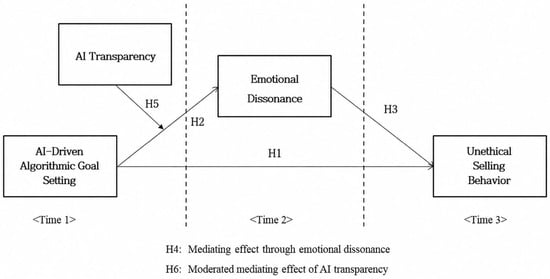
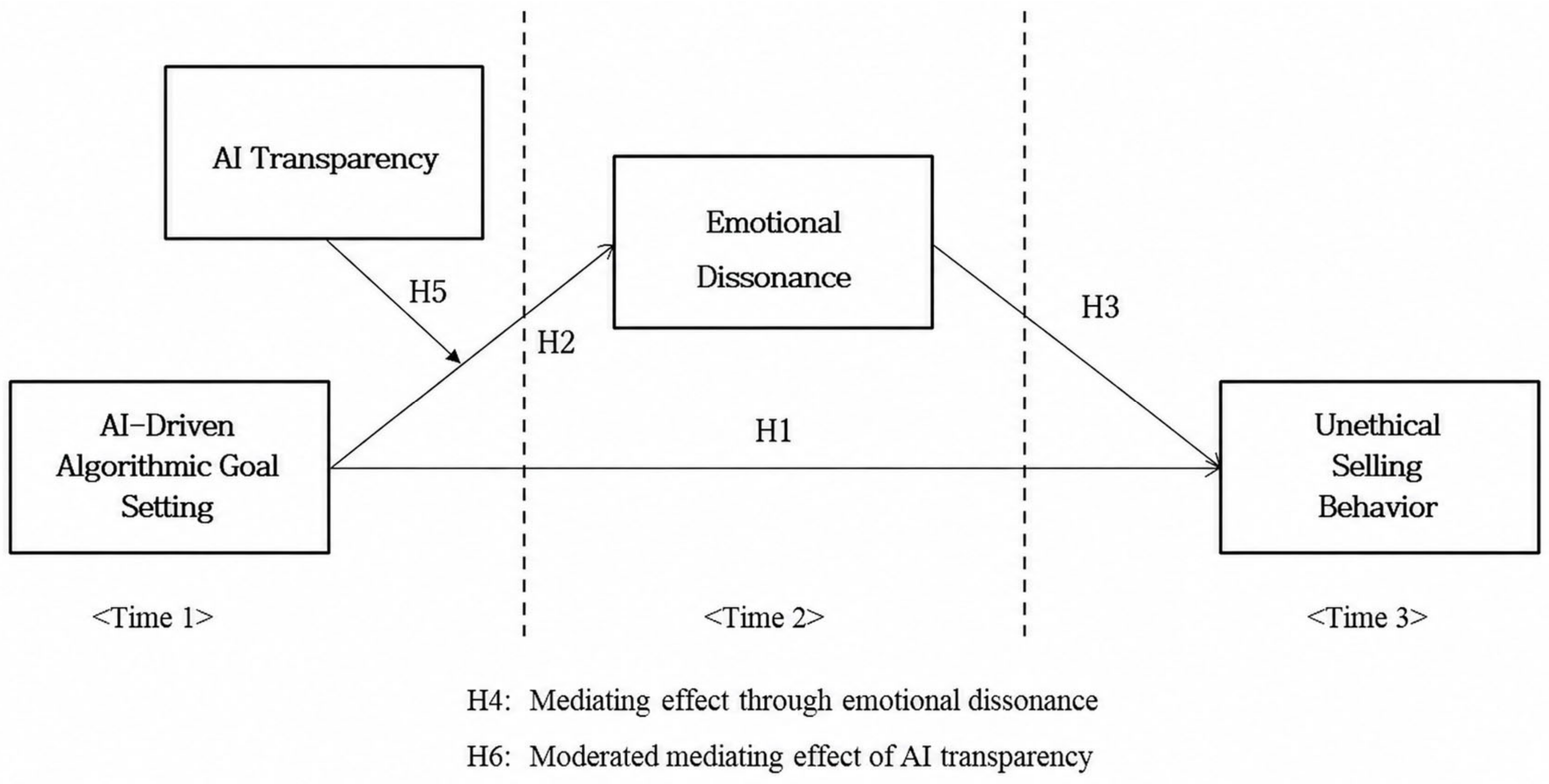
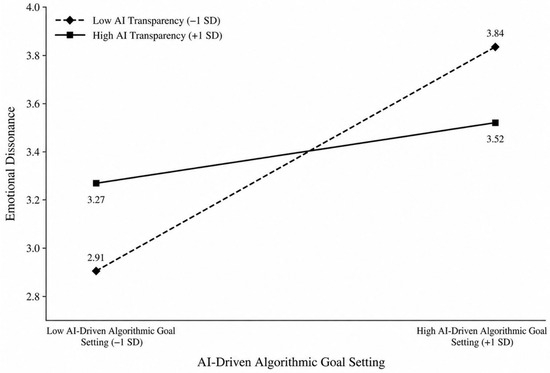
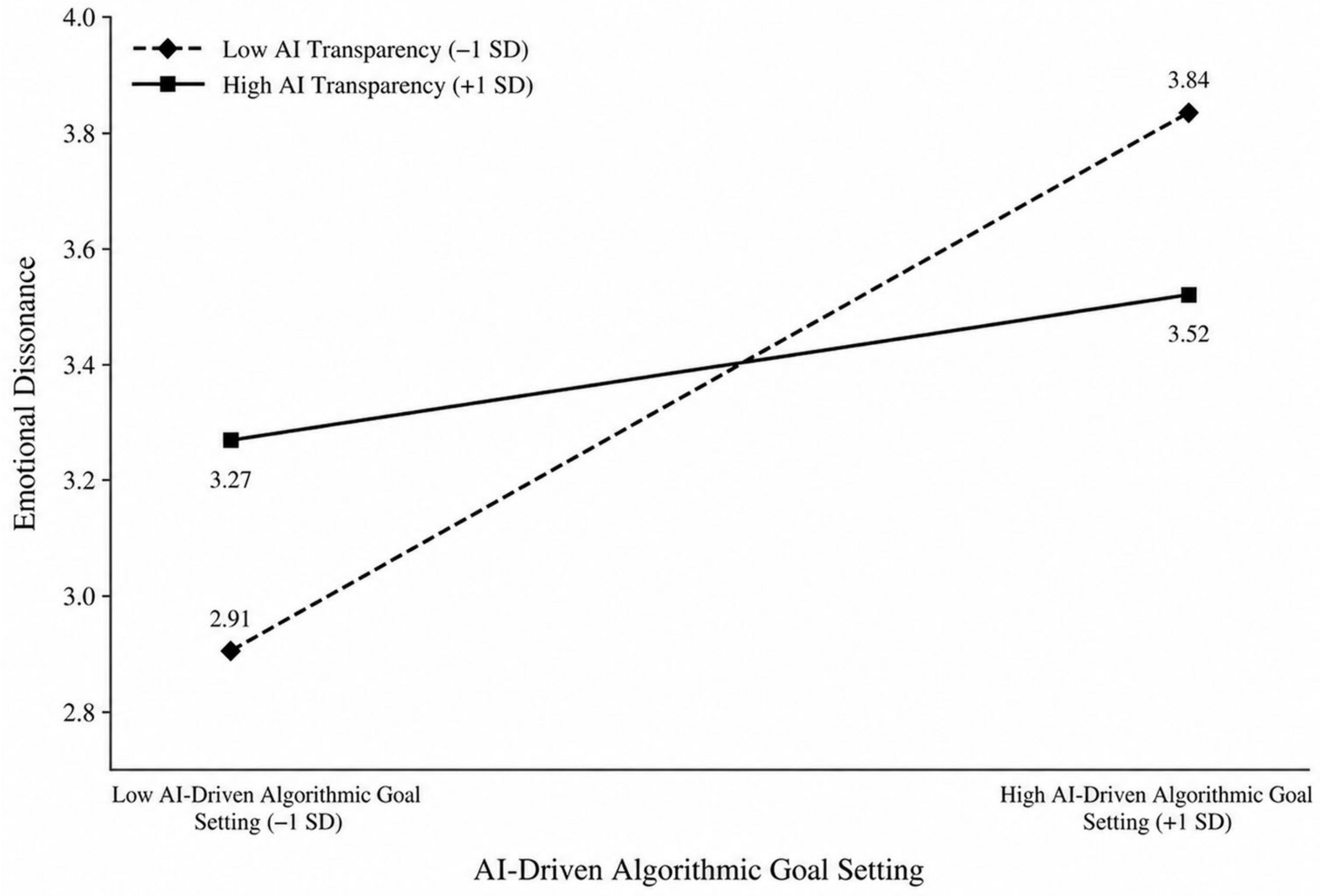

Disclaimer/Publisher’s Note: The statements, opinions and data contained in all publications are solely those of the individual author(s) and contributor(s) and not of MDPI and/or the editor(s). MDPI and/or the editor(s) disclaim responsibility for any injury to people or property resulting from any ideas, methods, instructions or products referred to in the content. |
© 2026 by the authors. Licensee MDPI, Basel, Switzerland. This article is an open access article distributed under the terms and conditions of the Creative Commons Attribution (CC BY) license.