


Abstract
Although generative artificial intelligence (AI) has increasingly been used to create destination marketing images, tourists’ responses to such images remain unclear. Prior research has often attributed negative reactions to the visual characteristics of AI-generated images. However, limited attention has been paid to how tourists interpret these images within broader cultural contexts. Drawing on authenticity theory and cultural learning theory, this research examines the effect of image type (AI vs. human) on tourists’ perceived authenticity and visit intention, as well as the moderating roles of cultural learning cues in this process. Using three experiments, the results show that AI-generated images reduce perceived authenticity and visit intention compared with images taken by humans. Notably, while salient cultural learning cues enhance tourists’ perceived authenticity and visit intentions, different types of cues produce distinct outcomes: commodified cultural cues mitigate tourists’ negative responses to AI-generated images, whereas heritage cultural cues amplify authenticity concerns. These findings provide strategic insights for destination marketers on how to deploy AI-generated images effectively in tourism destination marketing.
1. Introduction
First-time tourists often rely on destination images when making travel decisions [1]. As AI-generated visual content becomes increasingly integrated into digital marketing and online destination promotion [2], understanding consumers’ responses to AI-generated marketing materials has become an important issue for electronic commerce and digital communication research. The application of AI in tourism marketing in the global market reached approximately US$3.37 billion in 2024 [3].
Although academic interest in AI-generated destination images is growing fast, existing findings remain contradictory. The inconsistent findings suggest that tourists’ evaluations of AI-generated destination images may involve more than image-based judgments alone. Although prior studies have explained these reactions through algorithmic skepticism [4], trust concerns [5], and cognitive processing mechanisms [6], these explanations mainly focus on image characteristics. They provide limited insight into how tourists interpret destination images within cultural contexts.
To address this limitation, authenticity theory suggests that authenticity emerges from interpretive processes through which viewers construct meaning [7,8]. Since tourists often lack direct experience or deep prior knowledge of a destination, they rely heavily on contextual information, symbols, and brief narratives to interpret destination representations [9,10]. This suggests that authenticity judgments are unlikely to be based only on visual appearance. Rather, tourists actively perceive authenticity by interpreting available contextual information. Cultural learning theory suggests that individuals acquire cultural understanding through exposure to culturally meaningful information embedded in their environment [11]. In the tourism context, such information may serve as cultural learning cues that help tourists interpret destination representations and construct judgments regarding authenticity. Cultural learning cues provide contextual information that helps tourists evaluate the authenticity of AI-generated destination images.
Notably, the majority of the tourism literature assumes that more cultural information can help tourists understand destinations more effectively [12,13]. However, culture is closely tied to specific contexts, as individuals interpret cultural information through situational cues, symbolic framing, and experiential settings [14]. Therefore, cultural information may not uniformly enhance destination understanding. Instead, its influence may depend on whether tourists can easily interpret and integrate the cultural meanings embedded in those cues.
The above discussion suggests that existing findings remain fragmented because prior studies have primarily focused on image-related explanations while paying limited attention to tourists’ cultural interpretation processes. Consequently, the mechanisms underlying authenticity evaluations of AI-generated destination images remain insufficiently understood. Furthermore, tourism literature has not adequately addressed the role of cultural learning cues in shaping tourists’ destination understanding, particularly when tourists rely on interpretive cultural cues to perceive the authenticity of AI-generated images. Therefore, in this research, we examine (1) whether AI-generated destination images reduce tourists’ perceived authenticity and visit intention compared to human-taken photos, (2) whether salient cultural learning cues can enhance tourists’ perceived authenticity, and (3) how different types of cultural learning cues affect tourists’ perceived authenticity and visit intentions. We conduct three experiments to answer these research questions.
By examining how consumers evaluate AI-generated destination imagery in online promotional contexts, this research contributes to the growing literature on AI-mediated digital marketing and consumer responses to digitally generated content. Our findings show that commodified cultural learning cues can compensate for the authenticity deficit of AI-generated images. In contrast, heritage cues may amplify tourists’ authenticity concerns. These findings challenge the implicit assumption that “more cultural information is always better.” This research demonstrates that authenticity depends not only on the visual characteristics of AI-generated images but also on the cultural interpretive resources available to tourists.
2. Literature Review
2.1. AI-Generated Images in Tourism
Tourism destination images have a significant impact on tourists’ decision-making [15,16]. With the increasing digitization of tourism marketing, marketers have begun using generative AI to create visually appealing destination content more efficiently [17]. AI tools allow creators to adjust aesthetic features, simulate ideal environmental conditions, and generate imaginative scenes [18]. As a result, AI-generated images are increasingly integrated into tourism destination promotion [19].
However, recent empirical findings remain mixed. Some studies suggest that AI-generated images can provide aesthetic appeal and capture attention due to their clarity, controllability, and creative flexibility, potentially supporting positive destination impressions [18,20,21]. However, a growing body of research indicates that tourists perceive AI-generated images to be overly polished or artificially constructed [2,22]. Recent studies have begun to examine the influence of various mediating factors such as trust [22,23], perceived originality [24], and emotional arousal [25]. Baek, Kim and Kim [26] also showed that AI disclosure may let consumers perceive AI-generated content as less credible. Research on source credibility suggests that consumers often rely on information sources when evaluating the trustworthiness of digital content [27]. When content is identified as AI-generated, their concerns about credibility and authenticity may become more salient [26]. Although these findings provide valuable insights, existing research still lacks explanations of when and why AI-generated images may lead to positive or negative evaluations.
Tourism is strongly dependent on visual communication, and the credibility and reliability of destination images become essential cues that influence tourists’ travel decisions [15]. When evaluating unfamiliar destinations, tourists typically assume that human-taken photos are more trustworthy since they reflect real destination conditions [22,28]. In contrast, AI-generated images are often perceived as more artificial [29]. As a result, tourists may have lower trust in AI-generated images and reduce their visit intention. We propose the following hypothesis:
H1.
AI-generated images (compared to human-taken photos) decrease tourists’ visit intention.
2.2. Perceived Authenticity as the Mediator
Authenticity refers to the perceived genuineness, truthfulness, and realness of an object, setting, or experience [30]. Early theorization highlights that authenticity is not an inherent property of objects but a socially produced representation shaped by cultural narratives and symbolic constructions [31]. Prior studies have indicated that authenticity influences tourists’ satisfaction and loyalty within heritage settings [32,33] and winery destinations [34]. Reisinger and Steiner [35] highlight the importance of visual authenticity for tourists’ expectations of unfamiliar destinations. Bui, Filimonau and Sezerel [22] introduced the concept of “AI-thenticity”. They indicated that AI-generated visuals can influence tourists’ decision-making processes. Yu and Meng [2] further indicated that AI-generated images undermine authenticity.
According to authenticity theory [33], tourists seek experiences they perceive as real, which can be based on the objective original state, social construction, or self-authenticity. Gross [36] posited that AI-generated images make tourists feel a less meaningful connection with the image. While human-taken photos typically conform more closely to tourists’ mental expectations of destinations. Compared to human-taken photos, AI-generated images are expected to reduce tourists’ perceived authenticity. When perceived authenticity is compromised, tourists may doubt the reliability of the visual information and become less willing to visit the destination [37]. Therefore, perceived authenticity is expected to mediate the relationship between image type and tourists’ visit intentions. We proposed the following hypothesis:
H2.
Perceived authenticity mediates the impact of image type (AI vs. human) on tourists’ visit intention.
2.3. Cultural Learning Cue as the Moderator
2.3.1. Salience of Cultural Learning Cues
According to cultural learning theory, individuals may experience uncertainty and interpretive strain when they encounter unfamiliar cultural symbols [38]. Cultural learning in tourism contexts helps individuals organize, activate, or recalibrate existing cultural schemas [39]. Prior studies have explored cultural learning processes when tourists navigate culturally distinct environments [39,40,41]. These cues assist tourists in constructing authenticity when evaluating unfamiliar destination representations [42,43].
During cultural encounters, tourists rely on a variety of informational signals to understand local cultural meanings, such as website comments [44], information services [45], and linguistic landscapes [46]. Cultural learning cues refer to destination-related information that provides cultural meanings. Cultural learning cues help tourists interpret destination-related cultural meanings and form more confident evaluations [47,48]. In this way, cultural learning cues activate relevant cultural schemas that guide tourists’ interpretations of local meanings.
Building on this framework, the salience of cultural learning cues determines whether tourists notice and utilize these cues [49]. Prior research indicates that salient contextual cues enhance tourists’ understanding of tourism destinations [39]. AI-generated images often evoke greater uncertainty and skepticism due to their synthetic origin [2]. Salient cultural learning cues can help tourists interpret AI-generated images, thereby increasing their perceived authenticity and intention to visit the destination. In contrast, when cues are non-salient, tourists tend to rely primarily on heuristic judgments [50], which may intensify doubts about the authenticity of AI-generated images. Accordingly, we propose that the salience of cultural learning cues moderates the effects of image type on both perceived authenticity and visit intention.
H3a.
Cultural learning cues (salient vs. non-salient) moderate the relationship between image type (AI vs. human) and perceived authenticity. Specifically, tourists perceive greater authenticity when cultural learning cues are salient.
H3b.
Cultural learning cues (salient vs. non-salient) moderate the relationship between image type (AI vs. human) and visit intention. Specifically, tourists are more likely to visit the destination when cultural learning cues are salient.
2.3.2. Types of Cultural Learning Cues
Tourism research widely distinguishes two forms of cultural representations: heritage culture and commodified culture [51,52]. Heritage culture emphasizes historical continuity and cultural symbolism [53]. In contrast, commodified culture presents tourism culture in commercialized forms, such as popular motifs, commercial themes, or recreational culture [54]. Commodified culture is generally interpreted through the lens of entertainment and consumption [55].
Although commodification has traditionally been viewed as a threat to authenticity [56], recent research suggests that authenticity judgments are socially constructed and context-dependent [57,58]. In many tourism contexts, commercialized image presentations are not necessarily regarded as inaccurate representations of culture; instead, they help tourists quickly interpret a destination because they provide easily recognizable cultural signals [59].
From a cultural learning perspective, heritage cues carry strong cultural significance [60]. Heritage-related cultural information often serves as a signal of historical symbolic value [33,61]. Consequently, evaluations of heritage-oriented content may place greater emphasis on authenticity than evaluations of consumption-oriented cultural representations. When a heritage image is identified as AI-generated, tourists may have greater concerns because authenticity is the key value in the cultural experience. As a result, their perceived authenticity and visit intention may decrease. In contrast, commodified cues do not require a high level of cultural accuracy [62,63]. AI-generated images may be more easily accepted as sufficiently authentic by tourists, thereby weakening the negative effect of image type. In summary, the type of cultural learning cue (heritage vs. commodified) is expected to moderate the effect of image type on both perceived authenticity and visit intention. We propose the following hypotheses:
H4a.
Cultural learning cues (heritage vs. commodified) moderate the relationship between image type (AI vs. human) and perceived authenticity. Specifically, tourists primed with commodified cultural learning cues report higher perceived authenticity than those exposed to heritage cultural learning cues.
H4b.
Cultural learning cues (Heritage vs. Commodified) moderate the relationship between image type (AI vs. human) and visit intention. Specifically, tourists primed with commodified cultural learning cues report higher visit intention than those exposed to heritage cultural learning cues.
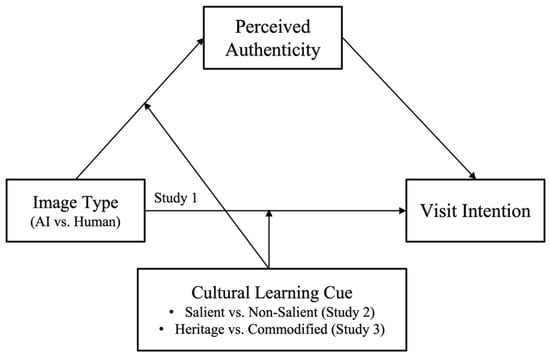
Figure 1 illustrates the proposed research model.
Figure 1.
Research Model.
3. Experimental Studies
This research employed three experimental designs to examine the effect of image type (AI vs. human) on tourists perceived authenticity and visit intention toward a tourism destination, as well as the role of cultural learning cues in these relationships. Prior to data collection, the required sample sizes for each study were estimated using G*Power 3.1. The estimations indicated that the minimum total sample sizes for Study 1, Study 2, and Study 3 were 89, 159, and 159, respectively. Participants were recruited online through Credamo.com, a professional Chinese survey platform, between July and September 2025. Eligible participants were adults aged 18 years or above who were able to complete an online questionnaire in Chinese. All items across the three studies were measured using a five-point Likert scale (1 = strongly disagree, 5 = strongly agree).
Table 1 summarizes the overall research design and the three studies conducted in this research. Study 1 established the baseline effect of image type on perceived authenticity and visit intention, and the mediating role of perceived authenticity. Building on these findings, Study 2 examined whether the salience of cultural learning cues moderates tourists’ responses to AI-generated images. Study 3 further compared two types of cultural learning cues (heritage vs. commodified). The aim is to investigate whether different cultural learning cues lead to distinct evaluations of AI-generated destination images. The three studies provide a progressive examination of the main effect, underlying mechanism, and boundary conditions of tourists’ responses to AI-generated destination imagery.
Table 1.
Summary of Three Experimental Studies.
Across all studies, participants viewed a tourism destination image generated either by AI or by humans and subsequently completed validated measures of perceived authenticity and visit intention. The AI-generated images were created using ChatGPT-4o. To minimize potential confounding effects, AI-generated and human-taken images were matched as closely as possible in terms of composition, viewing angle, and overall visual content. Detailed prompts and stimulus materials are provided in the Supplementary Materials. To manipulate image type, AI images were labeled “AI-generated image,” whereas human-taken photos were labeled “Human-taken photo”, since prior research suggests that individuals may have difficulty distinguishing AI-generated visuals without explicit disclosure [64]. The manipulation reflects both image exposure and source disclosure, which is consistent with AI-generated promotional content in real-world marketing environments. Participants were randomly assigned to either the AI-generated or human-taken image conditions. Random assignment helps distribute potential individual differences across experimental conditions and reduces the likelihood that these factors systematically bias the results [65].
Before launching the formal experiments, a pilot test (n = 56) was conducted with university students to assess the questionnaire items and the experimental stimuli. Participants were asked to evaluate the clarity and comprehensibility of the questionnaire as well as the realism, visual quality, and overall appropriateness of the destination images used in the experiments. Feedback from the pilot test indicated that the stimuli were generally perceived as realistic and suitable for the experimental context. Minor adjustments to the wording of several questionnaire items were made to improve clarity and readability.
4. Study 1
The aim of Study 1 was to examine the effect of image type (AI vs. human) on tourists’ perceived authenticity and visit intention.
4.1. Method
Study 1 included 101 valid responses, of which 50.5% were male. We adopted a between-subjects experimental design. The selected tourism destination image was Hong Kong’s Victoria Peak, as it is internationally recognizable and frequently featured in tourism promotional materials. Using a widely recognized landmark helps reduce potential unfamiliarity with the destination. Participants were randomly assigned to one of two image conditions (AI vs. human) and then rated their perceptions. In the AI condition, participants viewed an AI-generated image; in the human condition, they viewed a photo taken by a real tourist.
Perceived authenticity was measured using four items adapted from Bui, Filimonau and Sezerel [22], whereas visit intention was measured using five items developed by Su, Lian and Huang [66]. The measurement items were kept identical across all three studies. Because the adopted scales assess general perceptions, no modifications were made to the original wording. See Appendix A for the measurement items. A factor analysis was conducted to verify the dimensionality of the nine measurement items. Principal component analysis revealed two factors, corresponding to perceived authenticity and visit intention. Factor loadings ranged from 0.78 to 0.91, exceeding the recommended threshold of 0.40. Cronbach’s alpha was 0.957 for perceived authenticity and 0.904 for visit intention, both exceeding the minimum threshold of 0.70, indicating strong internal consistency. To control for potential confounding effects, all participants evaluated the same destination (Victoria Peak) using the same questionnaire.
For the manipulation check, participants were asked to indicate whether the displayed image was AI-generated or human-taken. Participants who failed the manipulation check or provided incomplete responses were excluded from further analysis. In total, four participants were removed from the dataset. Basic demographic variables were also collected (see Supplementary Materials for details).
4.2. Results
4.2.1. Visit Intention
The results of the one-way ANOVA indicated a significant effect of image type (AI vs. human) on tourists’ visit intention. Participants who viewed human-taken photos reported significantly higher visit intention (Mhuman = 3.74, SD = 0.80) than those who viewed AI-generated images (MAI = 3.19, SD = 0.76; F (1, 99) = 12.43, p < 0.001). Thus, H1 was supported.
4.2.2. Perceived Authenticity
A one-way ANOVA was conducted to examine the effect of image type on perceived authenticity. Participants who viewed human-taken photos (Mhuman = 2.89, SD = 1.01) rated the images as significantly more authentic than those who viewed AI-generated images (MAI = 2.39, SD = 0.89; F (1, 99) = 7.15, p = 0.009).
4.2.3. Mediation
We used PROCESS Model 4 for mediation analysis [67] to examine whether perceived authenticity mediated the effect of image type (AI vs. human) on tourists’ visit intention. As shown in Table 2, image type had a significant effect on perceived authenticity (β = 0.51, SE = 0.19, t = 2.67, p = 0.009). The indirect effect of image type on visit intention through perceived authenticity was significant (β = 0.17, Boot SE = 0.08, 95% CI [0.04, 0.34]). These results indicate that AI-generated tourism images reduce tourists’ visit intention because they are perceived as less authentic.
Table 2.
Mediation results of Study 1.
4.3. Discussion
Study 1 supported H1 and H2. Specifically, AI-generated images were perceived as significantly less authentic than human-taken images. Unlike human photographs, AI-generated images often lack contextual cues [36]. According to authenticity theory, authenticity emerges through interpretive processes [7]. Cultural learning theory further suggests that individuals’ appreciation of culturally rich stimuli depends on the extent to which they understand the underlying meanings and narratives embedded in those stimuli [11]. When such contextual information is absent, the cultural interpretation process becomes more effortful. Therefore, Study 2 examined whether introducing cultural learning cues could enhance tourists perceived authenticity and visit intention.
5. Study 2
In Study 2, we further examined whether cultural learning cues moderate the effect of image type (AI vs. human) on tourists’ perceived authenticity and visit intention.
5.1. Method
Study 2 employed a 2 (image type: AI vs. human) × 2 (cultural learning cues: salient vs. non-salient) between-subjects design. Participants were shown a tourism destination image generated either by AI or by a human (see Supplementary Materials). The image featured the Merlion in Singapore, as it is strongly associated with national cultural storytelling. After viewing the image, participants indicated whether the image was generated by AI, by a human, or if they were uncertain. Participants who failed the attention check were excluded from further analysis. After excluding two responses, the final sample consisted of 166 valid participants.
To manipulate cultural learning cues, participants in the non-salient condition viewed the destination image without any accompanying statement. Participants in the salient condition were presented with the following description:
The Merlion is the iconic national symbol of Singapore. It combines the head of a lion with the body of a fish. The lion represents the original name of Singapore, “Singapura”, which means “Lion City”, while the fish body symbolizes the city’s origin as a fishing village. This statue reflects the integration of Singapore’s tradition and modernity, embodying its maritime heritage and showcasing its transformation into a global metropolis.
We used three manipulation check items for cultural learning cues adapted from Xiong, Sun [39]. Measures of perceived authenticity and visit intention were consistent with those used in Study 1. The Supplementary Materials provide full manipulation details and demographic information. To isolate the effect of cultural learning cue salience, the destination image, questionnaire items, and experimental procedures were held constant across conditions.
5.2. Results
5.2.1. Manipulation Check
We conducted an independent t-test to check the effectiveness of the cultural learning cue manipulation. Participants in the salient-cue condition (Msalient = 3.46, SD = 0.61) reported significantly higher levels of perceived cultural learning than those in the non-salient condition (Mnon-salient = 2.57, SD = 0.59), t (164) = −9.45, p < 0.001. Thus, our manipulations were successful.
5.2.2. Visit Intention
A one-way ANOVA was conducted to examine the effect of image type on visit intention. The results showed a significant effect, F (1, 164) = 62.41, p < 0.001. Participants who viewed human-taken photos (Mhuman = 3.39, SD = 1.05) reported significantly higher visit intention than those who viewed AI-generated images (MAI = 2.33, SD = 0.63). This result further supports H1.
5.2.3. Perceived Authenticity
A one-way ANOVA indicated a significant effect of image type on perceived authenticity, F (1, 164) = 71.73, p < 0.001. Participants who viewed human-taken photos (Mhuman = 3.72, SD = 0.87) rated them as significantly more authentic than those who viewed AI-generated images (MAI = 2.77, SD = 0.55).
5.2.4. Mediation
PROCESS Model 4 [67] was used to test whether perceived authenticity mediated the effect of image type (AI vs. human) on visit intention. As shown in Table 3, image type significantly predicted perceived authenticity (β = 0.95, SE = 0.11, t = 8.29, p < 0.001). Perceived authenticity also had a significant positive effect on visit intention (β = 0.63, SE = 0.17, t = 3.73, p < 0.001). The indirect effect through perceived authenticity was significant (β = 0.93, Boot SE = 0.12, 95% CI [0.70, 1.17]). H2 was supported.
Table 3.
Mediation results of Study 2.
5.2.5. Moderation
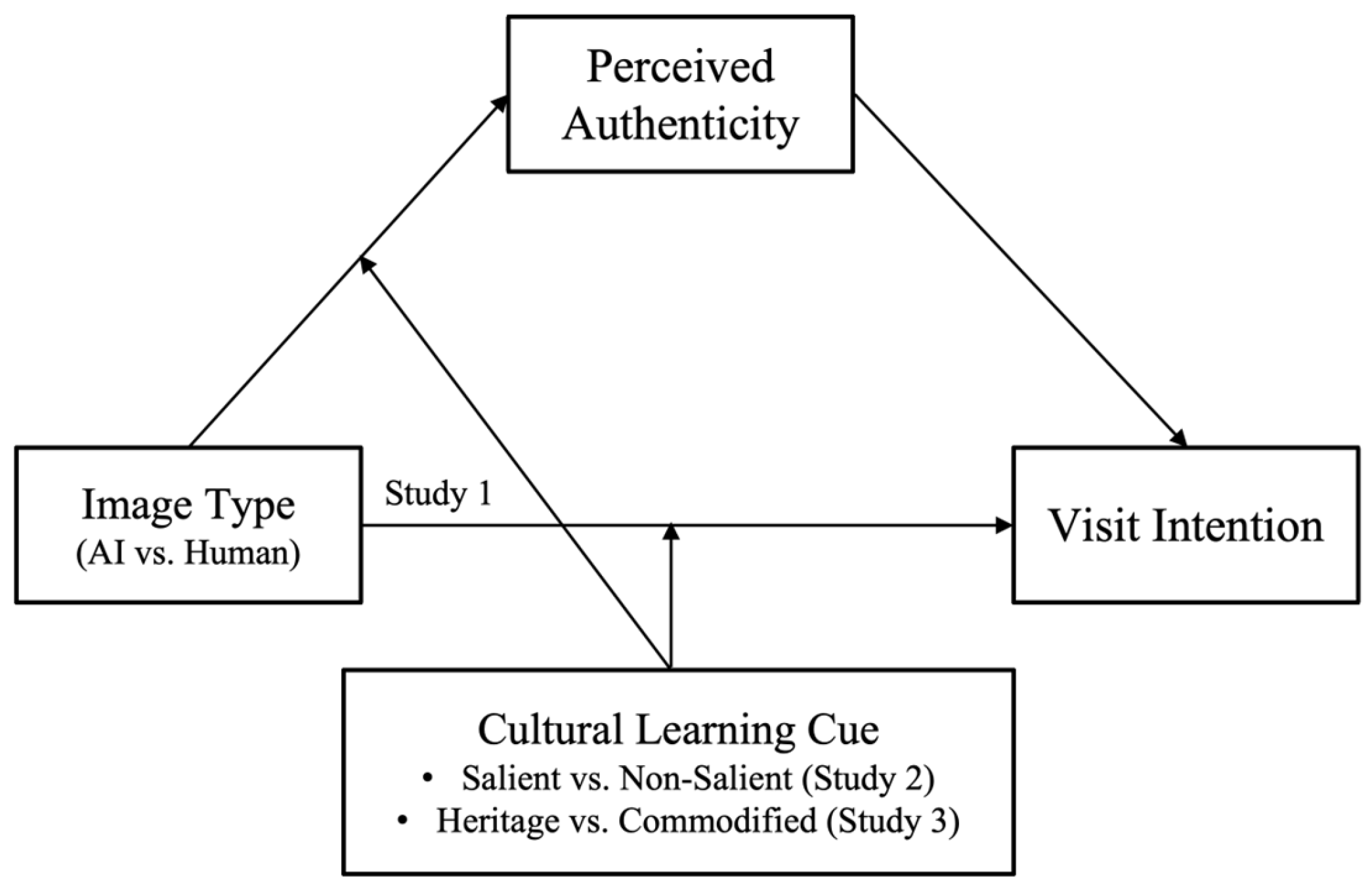
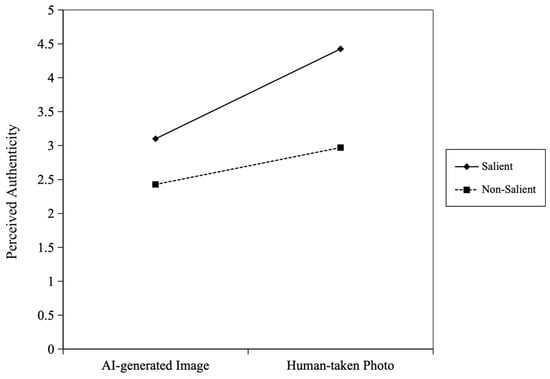
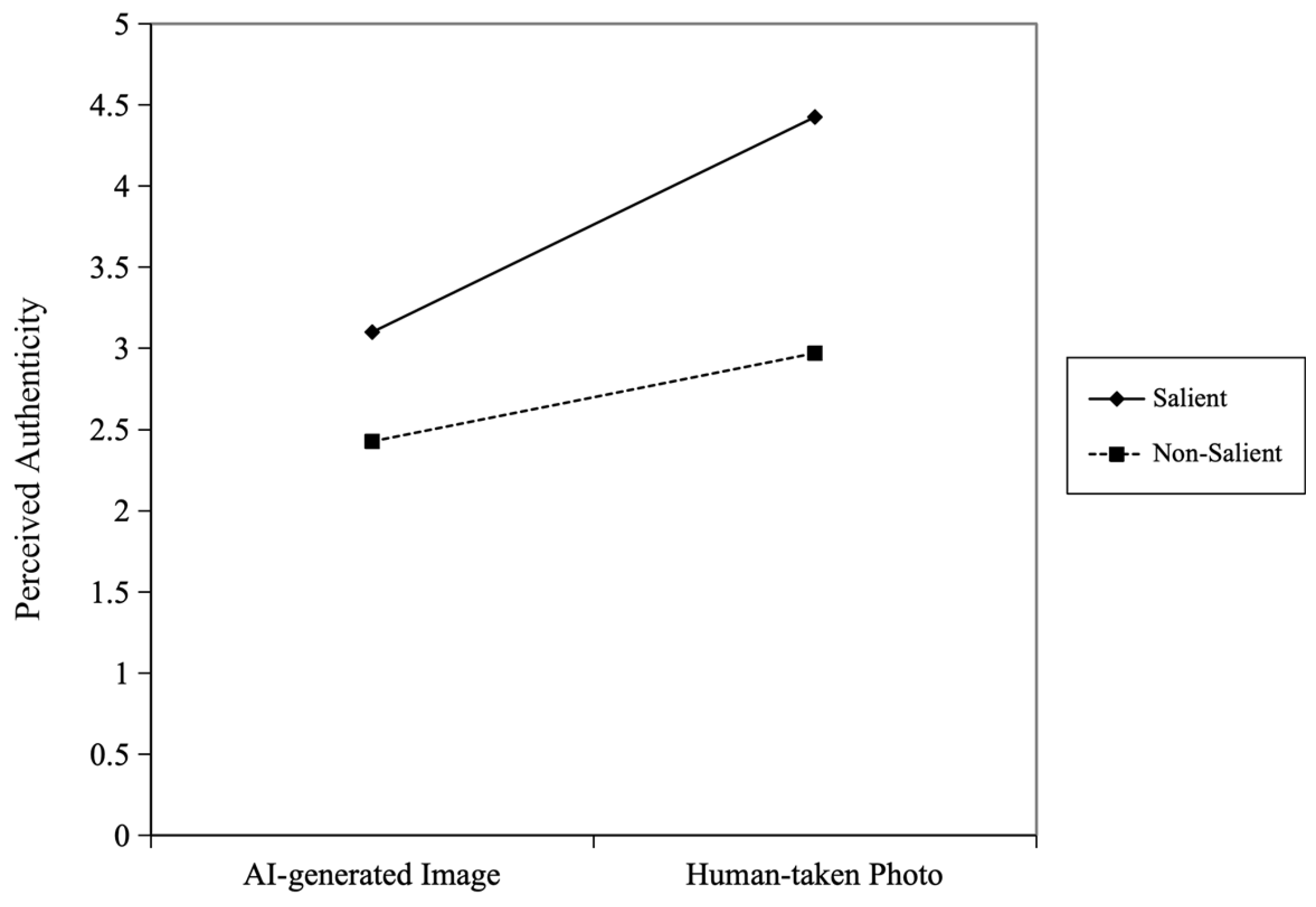
PROCESS Model 1 [67] was employed to examine whether cultural learning cues moderate the relationship between image type and perceived authenticity and visit intention. There was a significant interaction effect between image type and cultural learning cues on perceived authenticity (F (1, 162) = 31.99, p < 0.001). Specifically, when cultural learning cues were salient, human-taken photos were perceived as significantly more authentic than AI-generated images (β = 1.32, SE = 0.10, 95% CI [1.13, 1.52]). A similar pattern was observed under non-salient cue conditions, although the difference was smaller (β = 0.54, SE = 0.10, 95% CI [0.35, 0.73]). Perceived authenticity was generally higher when cultural learning cues were salient than when they were non-salient (see Figure 2). H3a was supported.
Figure 2.
Moderating role of Cultural Learning Cues on the relationship between Image Type and Authenticity.
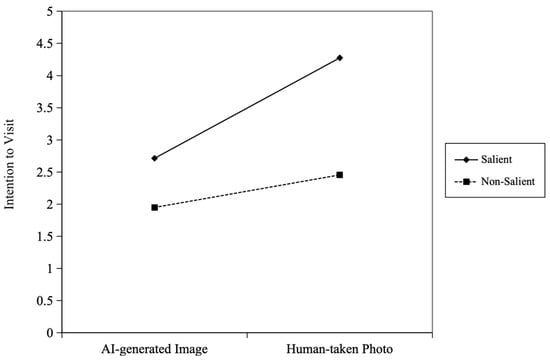
Similarly, the moderating effect of cultural learning cues on the relationship between image type and visit intention was significant (F (1, 162) = 47.59, p < 0.001) (see Figure 3). Human-taken photos generated higher visit intention than AI-generated images in both conditions, and the difference was larger when cultural learning cues were salient (β = 1.56, SE = 0.11, 95% CI [1.34, 1.77]) than when they were non-salient (β = 0.51, SE = 0.11, 95% CI [0.29, 0.72]). H3b was supported.
Figure 3.
Moderating role of Cultural Learning Cues on the relationship between Image Type and Visit Intention.
5.3. Discussion
The results of Study 2 indicate that providing cultural information enhanced tourists’ authenticity evaluations and visit intention. However, prior research suggests that providing more cultural information is not always beneficial [68]. The quality and interpretive framing of cultural cues may be more important [69]. Therefore, Study 3 further investigates whether different types of cultural learning cues influence tourists’ perceived authenticity and visit intention in response to AI-generated destination images.
6. Study 3
In Study 3, we further explore the effect of the type of cultural learning cues (heritage vs. commodified) on perceived authenticity and visit intention.
6.1. Method
Study 3 also employed a two-factor between-subjects design. We recruited 162 participants, of whom 49.4% were male. Participants were randomly assigned to one of four conditions in a 2 (photo type: AI vs. human) × 2 (cultural learning cues: heritage vs. commodified) design. Participants first viewed a tourism destination image accompanied by a short textual description. Afterwards, participants were asked to indicate whether the image they saw was generated by AI, taken by a human, or if they were uncertain. All participants answered this question correctly. Therefore, no responses were excluded. The destination image selected for Study 3 was the Petronas Twin Towers in Kuala Lumpur, Malaysia. This destination was chosen because it embodies both strong national heritage symbolism and significant commercial appeal.
To manipulate cultural learning cues, participants in the heritage cultural learning cue group read the following text stimulus:
The Petronas Twin Towers are iconic symbols of Malaysia’s post-independence national identity. Completed in 1998, their design blends Islamic geometric patterns with modern architecture, which reflects the nation’s aspiration to bridge tradition and modernity. The towers once stood as the tallest buildings in the world and remain a proud emblem of Malaysia’s cultural heritage.
Participants in the commodified cultural learning cue group were presented with the following statement:
The Petronas Twin Towers are one of the most Instagrammable spots in Kuala Lumpur.
Must-take shot: the reflection of the towers in the KLCC pool, especially stunning at night.
Wanna an “Instagram-cover-photo”? Head to the SkyBar at Traders Hotel, grab a cocktail, and enjoy the perfect skyline background.
Tip: wear light-colored clothes and use the wide-angle mode for an aesthetic, cinematic vibe.
The measurement items for perceived authenticity and visit intention were identical to those used in Studies 1 and 2. To validate the effectiveness of the cultural learning cue manipulation, we used a six-item scale from prior research that has been validated as having a two-dimensional structure. All participants viewed the same destination image and completed identical measurement scales. Finally, participants completed demographic questions.
6.2. Results
6.2.1. Manipulation Check
The results of an independent-samples t-test showed that participants in the heritage condition rated the heritage-oriented items significantly higher (Mheritage = 3.25, SD = 0.56) than those in the commodified condition (Mcommodified = 2.06, SD = 0.44), t (160) = 14.97, p < 0.001, Cohen’s d = 2.35. Thus, the manipulation was successful.
6.2.2. Visit Intention
A one-way ANOVA was conducted to test whether image type (AI-generated vs. human-taken) influenced tourists’ visit intention. The analysis revealed a significant main effect of image type, F (1, 160) = 58.44, p < 0.001. Participants who viewed human-taken photos reported considerably higher visit intention (Mhuman = 3.12, SD = 0.56) than those who viewed AI-generated images (MAI = 2.28, SD = 0.81). Thus, H1 was supported.
6.2.3. Mediation
PROCESS Model 4 [67] was used to examine whether perceived authenticity mediated the effect of image type (AI vs. human) on visit intention. As shown in Table 4, image type had a significant positive effect on perceived authenticity (β = 0.75, SE = 0.10, t = 7.71, p < 0.001). Perceived authenticity significantly predicted visit intention (β = 1.39, SE = 0.16, t = 8.66, p < 0.001). The indirect effect of image type on visit intention through perceived authenticity was significant (β = 0.46, Boot SE = 0.10, 95% CI [0.28, 0.66]). Thus, H2 was supported.
Table 4.
Mediation results of Study 3.
6.2.4. Moderation
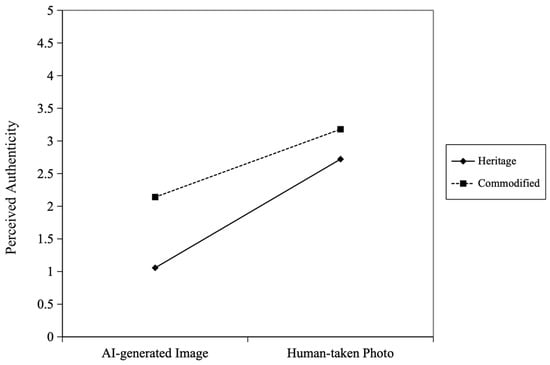
We employed PROCESS Model 1 [67] to test whether the type of cultural learning cue (heritage vs. commodified) moderates the effect of image type (AI vs. human) on perceived authenticity. The interaction effect between image type and cultural learning cues on perceived authenticity was significant (F (1, 158) = 18.16, p < 0.001). When the cultural cue was heritage-oriented, human-taken photos were perceived as significantly more authentic than AI-generated images (β = 1.04, SE = 0.10, 95% CI [0.84, 1.24]). When the cue was commodified, the difference remained significant but was smaller (β = 0.41, SE = 0.11, 95% CI [0.21, 0.62]). Thus, H4a was supported. Figure 4 presents the moderation results for H4a.
Figure 4.
Moderating role of Cultural Learning Cues on the relationship between Image Type and Authenticity.
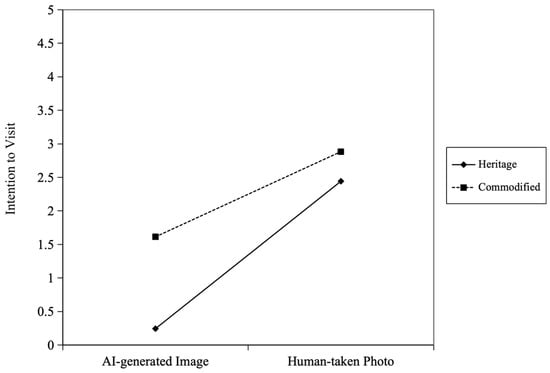
We also examined the moderating effect of cultural learning cues on the relationship between image type and tourists’ visit intention (see Figure 5). The interaction between image type and cultural learning cue was significant, F (1, 158) = 37.65, p < 0.001. When the cultural cue emphasized heritage, the positive effect of image type on visit intention was stronger (β = 1.27, SE = 0.10, 95% CI [1.06, 1.47]) than when the cue was commodified (β = 0.34, SE = 0.11, 95% CI [0.13, 0.56]). These findings support H4b.
Figure 5.
Moderating role of Cultural Learning Cues on the relationship between Image Type and Visit Intention.
6.3. Discussion
Study 3 further explored how the type of cultural learning cues influences tourists’ responses to AI-generated images. The results suggest that heritage cues amplify the negative effect of AI-generated images on perceived authenticity and visit intention. One possible explanation is that heritage cues raise tourists’ expectations regarding authenticity [70], making the absence of human-generated traces in AI-generated images more salient. Consequently, heritage cues intensify the authenticity penalty. Notably, heritage-oriented cues may employ more educational forms of presentation, which may encourage deeper reflection on the meaning and authenticity of destination representations. Similarly to prior studies, commodified cues are not necessarily perceived as inauthentic [57], since they are often interpreted through consumption-oriented frames [55]. Study 3 demonstrates that cultural learning cues can either repair or exacerbate authenticity perceptions, depending on the underlying cultural meanings they convey.
7. Single-Paper Meta-Analysis
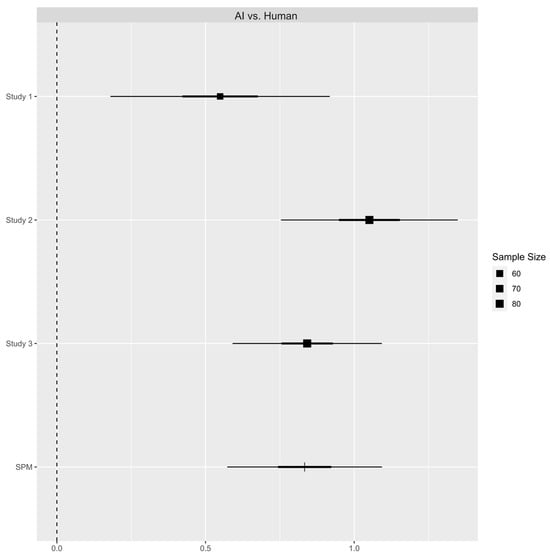
We conducted a single-paper meta-analysis (SPM) according to McShane and Böckenholt [71], which integrates effect sizes from multiple experiments within the same paper to strengthen statistical power and improve the reliability of the conclusions. Table 5 synthesizes the combined data from the three studies to evaluate the effect sizes of the findings. As shown in Figure 6, the estimated predictive value for the AI group was 2.58 (SE = 0.24), for the human group it was 3.41 (SE = 0.24). Overall, compared with human-taken photos, AI-generated images decrease tourists’ visit intention, with an overall effect estimate of β = 0.83 (SE = 0.13). The SPM results demonstrate the robustness of the overall effect.
Table 5.
Summary of Single-Paper Meta-analysis.
Figure 6.
Effect Estimate of Three Studies.
8. Conclusions
8.1. Theoretical Implications
First, prior marketing research suggests that practitioners should be cautious when using AI-generated images in promotional contexts [72], as such visuals are often perceived as overly polished or artificially constructed [29]. Our research extends authenticity theory. On the one hand, our findings are consistent with prior research indicating that when individuals lack sufficient interpretive resources to understand the content represented in images, AI-generated visuals may trigger their doubts [73]. On the other hand, our results demonstrate that the authenticity penalty associated with disclosed AI-generated images does not arise solely from the artificial nature of the visual itself, but also from the absence of cultural meaning that enables viewers to interpret the image within a meaningful context. This finding supports the view that authenticity judgments are influenced by the interpretive context in which destination representations are evaluated [8]. Our research contributes to the tourism authenticity literature by offering a more integrated explanation of authenticity evaluations when cultural representations are mediated through emerging technologies.
Second, this research highlights the role of cultural learning cues as an important buffering mechanism that can mitigate the negative effects of generative AI in tourism destination marketing. Our findings align with the existing literature, which suggests that perceived authenticity depends on interpretive cues [26,72]. Our findings suggest that cultural learning cues function as interpretive resources through which tourists judge authenticity. This perspective highlights the role of cultural meaning-making in shaping responses to AI-generated destination imagery. This research demonstrates that authenticity evaluations are influenced not only by the visual characteristics of destination images but also by tourists’ access to culturally meaningful information. In this regard, cultural learning theory helps to explain the influence of cultural information on tourists’ authenticity judgments. We also extend cultural learning theory [38], which traditionally emphasizes the acquisition of cultural knowledge through direct interaction and experiential immersion. Our findings demonstrate that cultural learning processes can also operate through mediated representations, such as AI-generated tourism imagery, where interpretive cues provide the scaffolding necessary for audiences to perceive authenticity. More broadly, our research underscores the importance of cultural interpretation in shaping tourists’ evaluations of emerging technologies in tourism communication and their subsequent behavioral intentions.
Finally, our research identifies an important boundary condition within authenticity theory: cultural information enhances authenticity only when the representational medium can credibly support the cultural meaning conveyed. Previous research has suggested that providing cultural information generally enhances tourists’ perceptions of destinations [74], but our research found that providing cultural information is not always a case where “more is better,” especially for AI-generated destination images. Heritage-oriented cultural cues tend to heighten authenticity expectations and increase the diagnostic importance of indexical grounding. As a result, the absence of human-generated traces in AI-generated images becomes more salient, amplifying authenticity concerns. From a sociocultural learning perspective [75], cultural learning cues function as a form of interpretive scaffolding that supports meaning-making only when it is appropriately calibrated to the learner’s interpretive capacity. Excessively deep cultural cues may exceed the interpretive affordances of AI-generated visuals and make tourists feel confused.
8.2. Practical Implications
This research provides several practical implications for organizations that utilize AI-generated visual content in digital marketing and online promotional environments. As AI-generated imagery becomes increasingly integrated into digital commerce, understanding how consumers evaluate the authenticity of AI-generated content is critical for maintaining consumer engagement. For example, cities such as Venice and Florence operate smart control rooms to manage tourist flows, which include monitoring visitors’ countries of origin [76]. In practice, this recommendation may be particularly relevant for culturally significant destinations that rely heavily on digital promotion and destination branding. AI-generated visuals may be used for mood-setting banners, conceptual campaign visuals, or inspirational marketing content, but these visuals should be accompanied by short and easily interpretable captions or labels that provide cultural context and interpretive guidance.
Furthermore, marketers using AI-generated visual content should recognize that consumers do not evaluate digital content solely based on visual quality. Contextual information and interpretive cues embedded in digital communication can significantly influence perceived authenticity and subsequent behavioral responses. For instance, the STQRY-powered Explore Kuranda app embedded narrative explanations of Kuranda Village in Australia’s history, nature tracks, and public artworks into an interactive mobile guide [77]. For destinations that provide cultural interpretation through mobile applications, digital guides, or smart tourism platforms, cultural learning cues can be embedded into expandable cultural notes, short audio narratives, or location-triggered storytelling features. Practitioners may also design AI-assisted promotional materials that combine concise captions with optional deeper explanations and visual annotations highlighting culturally meaningful elements within destination imagery.
Importantly, the results of Study 3 suggest that providing more cultural information is not always beneficial. Tourism marketers should carefully evaluate the cultural significance and required authenticity standards of the destination context before using AI-generated visuals. In destinations involving religious heritage, sacred sites, or historically contested narratives, human-generated photography may be more appropriate. For example, a widely circulated AI-generated TikTok video that animated the sacred statue of Lord Murugan at Batu Caves in Malaysia was strongly criticized by members of the Hindu community for disrespecting the sanctity of the site [78]. For heritage-oriented destinations such as Batu Caves and similar cultural attractions, marketers should carefully evaluate whether AI-generated imagery is appropriate for communicating culturally significant meanings. When authenticity expectations are high, heritage-focused messages may unintentionally amplify tourists’ concerns regarding AI-generated content. Destination marketers should not simply increase the amount of cultural information presented but instead focus on aligning the cultural weight of the message with the representational capabilities and limitations of the visual medium.
8.3. Limitations and Future Directions
This research still has several limitations. First, all studies were conducted with participants from China, and the destination stimuli were all selected from destinations in Asia. Prior research indicates that tourists’ cultural backgrounds and nationalities can influence authenticity perceptions and destination evaluations [79]. The findings may not generalize to tourists from other cultural contexts. Individuals from different countries may vary in their familiarity with AI-generated content, authenticity expectations, and responses to cultural learning cues. Future studies should replicate these findings in Western contexts to examine whether similar psychological mechanisms operate across different cultural settings.
A further limitation concerns the disclosure of image origin. In all three studies, participants were informed whether the destination image was AI-generated or human-taken. The observed effects may reflect reactions to the disclosed source of the image, such as AI skepticism or algorithm aversion [22]. We adopted this approach because prior research suggests that individuals often have difficulty accurately identifying AI-generated images without explicit disclosure [64]. Future research could employ blind or partially disclosed designs to distinguish the effects of image characteristics from the effects of AI disclosure and source attribution.
Finally, although this research used random assignment to mitigate systematic familiarity differences across experimental conditions, individual-level familiarity with the destination may still influence visit intentions. Future research could directly measure baseline destination familiarity and examine whether it moderates the relationships observed here.
Supplementary Materials
The following supporting information can be downloaded at: https://www.mdpi.com/article/10.3390/jtaer21060193/s1, Figure S1: Stimuli Used in Study 1; Figure S2: Stimuli Used in Study 2; Figure S3: Stimuli Used in Study 3; Table S1: Measurement Items; Table S2: Demographic Profiles; Table S3: Moderation Results of Study 2; Table S4: Moderation Results of Study 3.
Author Contributions
Conceptualization, W.L. and C.F.G.; methodology, W.L. and C.F.G.; software, W.L.; formal analysis, W.L.; investigation, W.L.; resources, C.F.G. and O.K.T.; data curation, W.L.; writing—original draft preparation, W.L.; writing—review and editing, C.F.G., Y.W. and O.K.T.; visualization, W.L.; supervision, C.F.G. All authors have read and agreed to the published version of the manuscript.
Funding
This research received no external funding.
Institutional Review Board Statement
Ethical approval was not required in the local area (China) where the research was conducted. The study was conducted in accordance with the ethical standards of the Declaration of Helsinki. No sensitive, high-risk, or vulnerable populations (e.g., minors or individuals unable to give informed consent) were involved. No medical interventions were performed, and no biological samples or sensitive personal data were collected. All participants were adults who provided data voluntarily and anonymously through self-administered questionnaires. All authors ensured that all data collected would remain confidential and be used exclusively for academic purposes. In China, formal ethical review requirements are primarily governed by the Ethical Review Measures for Life Science and Medical Research Involving Humans issued by the National Health Commission of the People’s Republic of China (2023). This regulatory framework mainly applies to biomedical and clinical research involving human subjects. As the present study is a low-risk, anonymous questionnaire-based survey in the field of social sciences, it does not fall under the primary scope of mandatory ethical review as defined in this framework.
Informed Consent Statement
Informed consent was obtained from all subjects involved in the study.
Data Availability Statement
The data presented in this study are available on request from the author.
Conflicts of Interest
The authors declare no conflicts of interest.
Abbreviations
The following abbreviations are used in this manuscript:
| AI | Artificial Intelligence |
| DMO | Destination Marketing Organization |
| SPM | Single-Paper Meta-analysis |
| SD | Standard Deviation |
| SE | Standard Error |
Appendix A
Please rate your level of agreement with each statement that describes your perception of the AI-generated/human-generated image.
Table A1.
Items.
References
- Ye, H.; Tussyadiah, I.P. Destination visual image and expectation of experiences. J. Travel Tour. Mark. 2011, 28, 129–144. [Google Scholar] [CrossRef] [Scilit]
- Yu, J.; Meng, T. Image Generative AI in Tourism: Trends, Impacts, and Future Research Directions. J. Hosp. Tour. Res. 2025, 50, 10963480251324676. [Google Scholar] [CrossRef] [Scilit]
- Grand View. AI in Tourism Market (2025–2030). 2025. Available online: https://www.grandviewresearch.com/industry-analysis/artificial-intelligence-ai-tourism-market-report (accessed on 15 January 2026).
- Kim, S.; Oh, P.; Lee, J. Algorithmic gender bias: Investigating perceptions of discrimination in automated decision-making. Behav. Inf. Technol. 2024, 43, 4208–4221. [Google Scholar] [CrossRef] [Scilit]
- Yu, T.; Tian, Y.; Chen, Y.; Huang, Y.; Pan, Y.; Jang, W. How Do Ethical Factors Affect User Trust and Adoption Intentions of AI-Generated Content Tools? Evidence from a Risk-Trust Perspective. Systems 2025, 13, 461. [Google Scholar] [CrossRef] [Scilit]
- Chen, C.; Zhang, D.; Zhu, L.; Zhang, F. Exploring Consumer Responses to AI-Generated Visual Marketing Content: A Dual-Process Theory Perspective. Int. J. Consum. Stud. 2025, 49, e70121. [Google Scholar]
- Wang, N. Rethinking authenticity in tourism experience. Ann. Tour. Res. 1999, 26, 349–370. [Google Scholar] [CrossRef] [Scilit]
- Lau, R.W. Revisiting authenticity: A social realist approach. Ann. Tour. Res. 2010, 37, 478–498. [Google Scholar]
- Gursoy, D.; McCleary, K.W. Travelers’ prior knowledge and its impact on their information search behavior. J. Hosp. Tour. Res. 2004, 28, 66–94. [Google Scholar] [CrossRef] [Scilit]
- Ghaderi, Z.; Mahdavizadeh, M.J.; Rajabi, M.; Hall, C.M. Does storytelling affect destination image, destination personality, and tourists’ behavioural intention? Anatolia 2024, 35, 313–325. [Google Scholar]
- Pacheco, E.-M. Culture learning theory and globalization: Reconceptualizing culture shock for modern cross-cultural sojourners. New Ideas Psychol. 2020, 58, 100801. [Google Scholar] [CrossRef] [Scilit]
- Weng, L.; Liang, Z.; Bao, J. The effect of tour interpretation on perceived heritage values: A comparison of tourists with and without tour guiding interpretation at a heritage destination. J. Destin. Mark. Manag. 2020, 16, 100431. [Google Scholar] [CrossRef] [Scilit]
- Huang, Z.; Weng, L.; Bao, J. How do visitors respond to sustainable tourism interpretations? A further investigation into content and media format. Tour. Manag. 2022, 92, 104535. [Google Scholar] [CrossRef] [Scilit]
- Lave, J.; Wenger, E. Situated Learning: Legitimate Peripheral Participation; Cambridge University Press: Cambridge, UK, 1991. [Google Scholar]
- Lian, T.; Yu, C. Impacts of online images of a tourist destination on tourist travel decision. Tour. Geogr. 2019, 21, 635–664. [Google Scholar] [CrossRef] [Scilit]
- Marder, B.; Erz, A.; Angell, R.; Plangger, K. The role of photograph aesthetics on online review sites: Effects of management-versus traveler-generated photos on tourists’ decision making. J. Travel Res. 2021, 60, 31–46. [Google Scholar]
- Hartmann, J.; Exner, Y.; Domdey, S. The power of generative marketing: Can generative AI create superhuman visual marketing content? Int. J. Res. Mark. 2025, 42, 13–31. [Google Scholar]
- Campbell, C.; Sands, S.; Ferraro, C.; Tsao, H.-Y.J.; Mavrommatis, A. From data to action: How marketers can leverage AI. Bus. Horiz. 2020, 63, 227–243. [Google Scholar] [CrossRef] [Scilit]
- Zhao, D.; Jin, X.; Ren, W.; Dong, K.; Jin, C.-H. Internet Advertising Falsity and Consumer Harm: A Moderated Mediation Analysis of Consumer Cognitive Processes and Consumer Vulnerability. J. Theor. Appl. Electron. Commer. Res. 2026, 21, 133. [Google Scholar] [CrossRef] [Scilit]
- Thomas, V.L.; Fowler, K. Close encounters of the AI kind: Use of AI influencers as brand endorsers. J. Advert. 2021, 50, 11–25. [Google Scholar] [CrossRef] [Scilit]
- Hou, L.; Min, Y.; Pan, X.; Gong, Z. Distinguishing AI-generated versus real tourism photos: Visual differences, human judgment, and deep learning detection. Inf. Process. Manag. 2025, 62, 104218. [Google Scholar] [CrossRef] [Scilit]
- Bui, H.T.; Filimonau, V.; Sezerel, H. AI-thenticity: Exploring the effect of perceived authenticity of AI-generated visual content on tourist patronage intentions. J. Destin. Mark. Manag. 2024, 34, 100956. [Google Scholar] [CrossRef] [Scilit]
- Wang, S.; Peng, K.-L.; Huang, Z.; Ma, L. AI-Generated Videos: Influencing Trustworthiness, Awe, and Behavioral Intention in Space Tourism E-Commerce. J. Theor. Appl. Electron. Commer. Res. 2025, 20, 307. [Google Scholar] [CrossRef] [Scilit]
- Duan, H.; Dawod, A.Y.; Wan, G. The personalization paradox in AI-driven tourism e-commerce: Psychological reactance, threat-substitution, and the moderating role of privacy concerns. J. Theor. Appl. Electron. Commer. Res. 2026, 21, 127. [Google Scholar] [CrossRef] [Scilit]
- Zhu, S.; Song, M.; Duan, Y. Emotional arousal: How artificial intelligence-generated content influences tourism decision-making. Tour. Recreat. Res. 2024, 50, 1639–1650. [Google Scholar] [CrossRef] [Scilit]
- Baek, T.H.; Kim, J.; Kim, J.H. Effect of disclosing AI-generated content on prosocial advertising evaluation. Int. J. Advert. 2024, 45, 171–192. [Google Scholar] [CrossRef] [Scilit]
- Kalbfleisch, P.J. Credibility for the 21st century: Integrating perspectives on source, message, and media credibility in the contemporary media environment. In Communication Yearbook 27; Routledge: London, UK, 2003; pp. 307–350. [Google Scholar]
- Wong, J.W.C.; Lai, I.K.W.; Lin, Y. The perceived reliability and adoption intention towards human-generated content vs. AI-generated content for travel planning: A moderating role of travel persona. J. Travel Tour. Mark. 2025, 42, 461–478. [Google Scholar] [CrossRef] [Scilit]
- Wasielewski, A. Unnatural Images: On AI-Generated Photographs. Crit. Inq. 2024, 51, 1–29. [Google Scholar] [CrossRef] [Scilit]
- Newman, G.E.; Smith, R.K. Kinds of authenticity. Philos. Compass 2016, 11, 609–618. [Google Scholar] [CrossRef] [Scilit]
- Hughes, G. Authenticity in tourism. Ann. Tour. Res. 1995, 22, 781–803. [Google Scholar] [CrossRef] [Scilit]
- Chhabra, D.; Healy, R.; Sills, E. Staged authenticity and heritage tourism. Ann. Tour. Res. 2003, 30, 702–719. [Google Scholar] [CrossRef] [Scilit]
- Park, E.; Choi, B.-K.; Lee, T.J. The role and dimensions of authenticity in heritage tourism. Tour. Manag. 2019, 74, 99–109. [Google Scholar] [CrossRef] [Scilit]
- Kim, H.; Bonn, M.A. Authenticity: Do tourist perceptions of winery experiences affect behavioral intentions? Int. J. Contemp. Hosp. Manag. 2016, 28, 839–859. [Google Scholar] [CrossRef] [Scilit]
- Reisinger, Y.; Steiner, C.J. Reconceptualizing object authenticity. Ann. Tour. Res. 2006, 33, 65–86. [Google Scholar] [CrossRef] [Scilit]
- Gross, E.-C. Dissolving Reality: Exploring the Erosion of Photographic Authenticity in the Age of AI. Rev. Transilv. 2024, 1, 36–43. [Google Scholar]
- Ramkissoon, H.; Uysal, M.S. The effects of perceived authenticity, information search behaviour, motivation and destination imagery on cultural behavioural intentions of tourists. Curr. Issues Tour. 2011, 14, 537–562. [Google Scholar]
- Yagi, N.; Kleinberg, J. Boundary work: An interpretive ethnographic perspective on negotiating and leveraging cross-cultural identity. J. Int. Bus. Stud. 2011, 42, 629–653. [Google Scholar] [CrossRef] [Scilit]
- Xiong, X.; Sun, D.; Wong, I.A.; Lian, Q.L. Do Tourists Prefer Dialectal Service? The Role of Processing Fluency, Distinctiveness, and Cultural Learning Cues. J. Travel Res. 2026, 65, 1539–1566. [Google Scholar]
- Durko, A.; Martens, H. Fostering higher level cultural learning among tourism students through virtual interaction. J. Teach. Travel Tour. 2021, 21, 235–247. [Google Scholar] [CrossRef] [Scilit]
- Zhang, S.-N.; Zhang, W.-Y.; Li, Y.-Q.; Ruan, W.-Q.; Zhou, Y. Will visual peripheral cues motivate you to purchase tourism cultural and creative products? Evidence from China. Asia Pac. J. Tour. Res. 2023, 28, 1434–1451. [Google Scholar] [CrossRef] [Scilit]
- Xu, J.B.; Song, H.; Prayag, G. Using authenticity cues to increase repurchase intention in restaurants: Should the focus be on ability or morality? Tour. Manag. Perspect. 2023, 46, 101102. [Google Scholar] [CrossRef] [Scilit]
- Jebbouri, A.; Zhang, H.; Wang, L.; Bouchiba, N. Exploring the relationship of image formation on tourist satisfaction and loyalty: Evidence from China. Front. Psychol. 2021, 12, 748534. [Google Scholar] [CrossRef] [Scilit] [PubMed]
- Liang, F.; Pan, Y.; Gu, M.; Guan, W.; Tsai, F. Cultural tourism resource perceptions: Analyses based on tourists’ online travel notes. Sustainability 2021, 13, 519. [Google Scholar] [CrossRef] [Scilit]
- Meng, L.; Liu, Y. A meaning-aware cultural tourism intelligent navigation system based on anticipatory calculation. Front. Psychol. 2021, 11, 611383. [Google Scholar] [CrossRef] [Scilit] [PubMed]
- Chang, J.; Li, J.; Cheng, S. Tourists’ visual attention toward linguistic landscape: An eye-tracking experimental study. Curr. Issues Tour. 2025, 1–21. [Google Scholar] [CrossRef] [Scilit]
- Sieras, S.G. Impact and Identities as Revealed in Tourists’ Perceptions of the Linguistic Landscape in Tourist Destinations. Int. J. Lang. Lit. Stud. 2024, 6, 375–392. [Google Scholar] [CrossRef] [Scilit]
- Arowosafe, F.; Oni, F.; Tunde-Ajayi, O. Effectiveness of Interpretative Signs on Visitors’ Behaviour and Satisfaction at Lekki Conservation Center, Lagos State, Nigeria. Czech J. Tour. 2023, 12, 50–65. [Google Scholar] [CrossRef] [Scilit]
- Kim, J.-H. Effect of brand popularity as an advertising cue on tourists’ shopping behavior. J. Destin. Mark. Manag. 2018, 10, 78–86. [Google Scholar] [CrossRef] [Scilit]
- Larsen, S.; Brun, W.; Øgaard, T.; Selstad, L. Subjective food-risk judgements in tourists. Tour. Manag. 2007, 28, 1555–1559. [Google Scholar] [CrossRef] [Scilit]
- Picard, M. Bali. Cultural Tourism and Touristic Culture; Archipelago Press: Brooklyn, NY, USA, 1996. [Google Scholar]
- Picard, M. Cultural tourism, nation-building, and regional culture: The making of a Balinese identity. In Tourism, Ethnicity, and the State in Asian and Pacific Societies; University of Hawaii Press: Honolulu, HI, USA, 1997; pp. 181–214. [Google Scholar]
- Olsen, D.H. Heritage, tourism, and the commodification of religion. Tour. Recreat. Res. 2003, 28, 99–104. [Google Scholar] [CrossRef] [Scilit]
- Macleod, D. Cultural commodification and tourism: A very special relationship. Tour. Cult. Commun. 2006, 6, 71–84. [Google Scholar] [CrossRef] [Scilit]
- Lexhagen, M.; Ziakas, V.; Lundberg, C. Popular culture tourism: Conceptual foundations and state of play. J. Travel Res. 2023, 62, 1391–1410. [Google Scholar]
- Halewood, C.; Hannam, K. Viking heritage tourism: Authenticity and commodification. Ann. Tour. Res. 2001, 28, 565–580. [Google Scholar] [CrossRef] [Scilit]
- Bai, L.; Weng, S. New perspective of cultural sustainability: Exploring tourism commodification and cultural layers. Sustainability 2023, 15, 9880. [Google Scholar] [CrossRef] [Scilit]
- Cole, S. Beyond authenticity and commodification. Ann. Tour. Res. 2007, 34, 943–960. [Google Scholar] [CrossRef] [Scilit]
- Su, J. Understanding the changing intangible cultural heritage in tourism commodification: The music players’ perspective from Lijiang, China. J. Tour. Cult. Change 2019, 17, 247–268. [Google Scholar]
- Ye, J.; Qin, Y.; Wu, H. Cultural heritage and sustainable tourism: Unveiling the positive correlations and economic impacts. Curr. Psychol. 2024, 43, 36393–36415. [Google Scholar] [CrossRef] [Scilit]
- Yi, X.; Fu, X.; Yu, L.; Jiang, L. Authenticity and loyalty at heritage sites: The moderation effect of postmodern authenticity. Tour. Manag. 2018, 67, 411–424. [Google Scholar] [CrossRef] [Scilit]
- Marbun, S. (Ed.) The Commodification of Culture in Global Tourism: Balancing Authenticity, Sustainability, and Ethical Practices Amidst Disruption. In Proceeding of International Seminar of Culture and Tourism AKBI; Asosiasi Kajian Budaya Indonesia: Bali, Indonesia, 2025. [Google Scholar]
- MacCannell, D. The Tourist: A New Theory of the Leisure Class; University of California Press: Oakland, CA, USA, 2013. [Google Scholar]
- Nightingale, S.J.; Farid, H. AI-synthesized faces are indistinguishable from real faces and more trustworthy. Proc. Natl. Acad. Sci. USA 2022, 119, e2120481119. [Google Scholar] [CrossRef] [Scilit] [PubMed]
- Anderson-Cook, C.M. Experimental and Quasi-Experimental Designs for Generalized Causal Inference; Taylor & Francis: Abingdon-on-Thames, UK, 2005. [Google Scholar]
- Su, L.; Lian, Q.; Huang, Y. How do tourists’ attribution of destination social responsibility motives impact trust and intention to visit? The moderating role of destination reputation. Tour. Manag. 2020, 77, 103970. [Google Scholar] [CrossRef] [Scilit]
- Hayes, A.F. Introduction to Mediation, Moderation, and Conditional Process Analysis: A Regression-Based Approach; Guilford Publications: New York, NY, USA, 2017. [Google Scholar]
- Wei, Y.; Chen, M. Tracing the Evolution of Tourist Perception of Destination Image: A Multi-Method Analysis of a Cultural Heritage Tourist Site. Sustainability 2025, 17, 5476. [Google Scholar] [CrossRef] [Scilit]
- Uskul, A.K.; Oyserman, D. When message-frame fits salient cultural-frame, messages feel more persuasive. Psychol. Health 2010, 25, 321–337. [Google Scholar] [CrossRef] [Scilit] [PubMed]
- Zhou, G.; Chen, W.; Wu, Y. Research on the effect of authenticity on revisit intention in heritage tourism. Front. Psychol. 2022, 13, 883380. [Google Scholar] [CrossRef] [Scilit] [PubMed]
- McShane, B.B.; Böckenholt, U. Single-paper meta-analysis: Benefits for study summary, theory testing, and replicability. J. Consum. Res. 2017, 43, 1048–1063. [Google Scholar] [CrossRef] [Scilit]
- Zhang, L.; Hur, C. The Impact of Generative AI Images on Consumer Attitudes in Advertising. Adm. Sci. 2025, 15, 395. [Google Scholar] [CrossRef] [Scilit]
- Troshani, I.; Rao Hill, S.; Sherman, C.; Arthur, D. Do we trust in AI? Role of anthropomorphism and intelligence. J. Comput. Inf. Syst. 2021, 61, 481–491. [Google Scholar]
- Cetin, G.; Bilgihan, A. Components of cultural tourists’ experiences in destinations. Curr. Issues Tour. 2016, 19, 137–154. [Google Scholar]
- Vygotsky, L.S. Mind in Society: The Development of Higher Psychological Processes; Harvard University Press: Cambridge, MA, USA, 1978. [Google Scholar]
- Florido-Benítez, L.; del Alcázar Martínez, B. How artificial intelligence (AI) is powering new tourism marketing and the future agenda for smart tourist destinations. Electronics 2024, 13, 4151. [Google Scholar] [CrossRef] [Scilit]
- STQRY. Digital Storytelling in Tourism: Engaging Modern Travelers. 2025. Available online: https://stqry.com/blog/digital-storytelling-in-tourism-engaging/?utm_source=chatgpt.com (accessed on 20 March 2026).
- Thiru, T. Controversial AI TikTok Video at Batu Caves Angers Hindu Community. 2025. Available online: https://www.therakyatpost.com/news/2025/01/21/controversial-ai-tiktok-video-at-batu-caves-angers-hindu-community/ (accessed on 15 March 2026).
- Reisinger, Y.; Turner, L. Cross-Cultural Behaviour in Tourism; Routledge: London, UK, 2012. [Google Scholar]

Disclaimer/Publisher’s Note: The statements, opinions and data contained in all publications are solely those of the individual author(s) and contributor(s) and not of MDPI and/or the editor(s). MDPI and/or the editor(s) disclaim responsibility for any injury to people or property resulting from any ideas, methods, instructions or products referred to in the content. |
© 2026 by the authors. Licensee MDPI, Basel, Switzerland. This article is an open access article distributed under the terms and conditions of the Creative Commons Attribution (CC BY) license.