


Abstract
Fitness influencers increasingly convert follower trust into purchasing behavior through seeding, group-buying, and social selling arrangements within South Korea’s hyperconnected, appearance-oriented digital ecosystem. Yet how they assess brand fit, manage authenticity, and navigate follower expectations remains underexamined. This study uses grounded theory to examine how fitness influencers with 500,000 or more followers navigate brand collaborations across these commercial formats. Semi-structured in-depth interviews were conducted with 16 fitness influencers, and open, axial, and selective coding were applied to identify a paradigm model of collaborative decision-making. The findings suggest, from the influencers’ side, that brand-fit assessment is not an influencer–brand dyadic negotiation but a triadic process in which the follower community functions as an active third party, simulated in advance and verified through comments, direct messages, and purchase-verification behavior. Influencers who experienced authenticity crises subsequently institutionalized stricter, measurable disclosure and verification rules, while the deliberate disclosure of product flaws was reported by one participant to coincide with restored trust and better sales. These findings propose a reconceptualization of influencer–brand fit in social commerce as a dynamic, community-mediated negotiation rather than a static dyadic attribute, with implications for how brands and social commerce platforms may design influencer partnerships and disclosure strategies.
1. Introduction
South Korea is one of the most densely connected digital nations worldwide. As of late 2025, Internet penetration reached 97.9%, social media users accounted for 95.4% of the total population, and mobile subscriptions exceeded 118% of the population [1]. This hyperconnectivity extends beyond mere infrastructure statistics, giving rise to a distinctive media ecosystem in which the production and consumption of content, and the rise and fall of trends circulate rapidly. Although South Korea does not rank among the world’s largest countries in terms of population, the cultural influence of its social media platforms far exceeds its population size.
Underlying this environment is the global expansion of the popular culture industry, epitomized by K-pop, which has simultaneously amplified social attention to body image and physical appearance. South Korea records the world’s highest rate of cosmetic surgery procedures per 1000 people, with estimates suggesting that one in three women aged 19 to 29 years have undergone a cosmetic procedure [2]. The body images of K-pop idols and actors also function as aesthetic standards [2]. This emphasis on appearance and body management has provided fertile ground for the fitness influencer ecosystem, allowing their core content themes of exercise and physical transformation to flourish.
Within this context, fitness influencers occupy a distinctive position that goes beyond simple information provision and is situated at the intersection of body image, self-management discourse, and commercial brand messaging. They cultivate relationships with followers as an extension of the appearance-oriented consumer culture, while functioning as commercial actors who must generate revenue through brand collaborations. The tension arising from this dual position, namely the need to simultaneously perform the roles of an “authentic self” and a “commercial partner,” is the starting point of this study.
Influencer marketing and social commerce are expanding rapidly worldwide. The global social commerce market is projected to grow from USD 2.21 billion in 2026 to USD 27.52 billion by 2034, representing a compound annual growth rate of 37.04% [3]. Influencers are central to this growth, as brands increasingly use influencer collaborations to reach consumers beyond traditional advertising.
Research on influencer–brand collaboration has long rested on endorser-product congruence, or “fit” [4,5,6,7,8], a body of work whose theoretical development is reviewed in Section 2.2. The point that matters for the present problem is that this tradition has mainly treated fit as a match perceived by consumers between an endorser and a product, and has said little about how influencers themselves arrive at fit judgments when a brand proposes a collaboration.
More recent research has begun to treat fit and authenticity as something influencers must actively manage rather than a static attribute [9,10,11]. As reviewed in Section 2.1, this work has identified strategies for managing authenticity under commercial pressure, including passionate and transparent authenticity [9] and the strategies used by sport and fitness influencers [10], and has argued that authenticity is a social assemblage co-constructed with followers, brands, and agencies [11]. It has paid less attention to the decision process through which individual influencers actually reach collaboration decisions.
Sponsorship disclosure adds a further difficulty. Recent surveys indicate that 45% of Instagram content and 40% of TikTok content either lack disclosure entirely or disclose it insufficiently [12], and non-disclosure often reflects structural pressures rather than deceptive intent [13], while disclosure itself can paradoxically lower perceived trustworthiness [14] and regulators such as the U.S. Federal Trade Commission continue to tighten disclosure rules [15]. Influencers therefore have to decide how to disclose under conflicting pressures, a tension examined further in Section 2.3.
At the same time, influencer–follower relationships extend beyond one-way viewing. Parasocial intimacy [16] and user-generated content (UGC) [17] link followers’ trust, authenticity, and community identity to purchase behavior, as discussed in Section 2.2.
Domestic research has extensively examined the effects of influencer attributes on brand attitude, purchase intention, and word-of-mouth intention [18,19,20,21,22,23,24,25,26,27]. Even within the narrower sport and fitness domain, studies have reported effects of sport influencer attractiveness on flow and purchase intention [24], the mediating effect of sponsorship disclosure on consumer behavioral intention [26], the moderating effect of influencer–brand image congruence [18], and the relationship between benign envy and imitative consumption tendencies [27]. These domestic studies have largely concentrated on quantitative verification through survey methods, leaving a relative gap in the process-oriented, qualitative understanding of how influencers judge collaboration fit, learn from authenticity crises, and accordingly adapt their practices through interactions with their follower communities.
Taken together, the existing literature has largely conceptualized influencer–brand fit as a dyadic relationship. Although recent work has begun to treat authenticity as a relational achievement involving audiences, as in Audrezet et al.’s [9] account of authenticity strategies and Duffek et al.’s [11] “social assemblage,” this work has mainly described authenticity as an outcome or a conceptual structure rather than tracing how influencers themselves reach collaboration decisions. What remains unexplored is the influencer-side decision process through which the follower community is anticipated before a collaboration is accepted, verified after it is launched, and translated into institutionalized rules after authenticity crises, particularly in group-buying and social selling formats where follower trust is directly converted into transactions. However, in South Korea’s fitness influencer ecosystem, in which a hyperconnected digital environment intersects with an appearance-oriented consumer culture, the follower community is likely to function as an active third axis that shapes the perceived viability and authenticity of collaboration.
This study therefore uses grounded theory to explore fitness influencers’ brand collaboration experiences. Specifically, it examines the criteria by which influencers judge fit when facing collaboration proposals from brands across different categories, including apparel and gymwear, supplements and health functional foods, and diets and chicken breast products. It then investigates how influencers manage authenticity and their relationships with followers once a collaboration, whether simple seeding, group-buying, or sponsored social selling, is underway, focusing on comment management, direct-message responses, and the reproduction of follower-generated content (UGC), thereby offering an integrated understanding of how authenticity is managed and negotiated within triadic relationships among influencers, brands, and communities. Rather than comparing collaboration types or platforms systematically, the study identifies the shared process across participants who differ in platform, category, and collaboration type (Table 1). In this study, the follower community refers to the followers and subscribers who watch an influencer’s content, interact with the influencer through comments and direct messages, and purchase through collaborations; brands, agencies, and fellow influencers are treated as separate actors, and family members of purchasers are discussed only as part of the audience context where participants were raised. Its contribution lies in specifying, from the influencer’s side, how a follower community is simulated before and verified after a collaboration, and how this cycle is institutionalized into concrete collaboration rules. Ultimately, this study contributes to theorizing the mechanism of trust formation in influencer-mediated social commerce by clarifying how the concrete commercial practices of group-buying and social selling operate through trust and authenticity built with followers.
Table 1.
Research participants.
2. Literature Review
2.1. Fitness Influencer Marketing and Authenticity Management
Fitness influencer marketing has expanded alongside the fitness content ecosystem on platforms such as YouTube and Instagram. Domestic studies have examined the communicative patterns and image attributes that distinguish YouTube fitness influencers from general lifestyle creators [28], as well as the message- and source-related factors that drive fitness content viewership [29]. Beyond individual creators, the fitness influencer economy has also been analyzed as a networked community in which digital transformation reshapes how fitness businesses and influencers co-construct narratives around bodies, routines, and products [30]. Building on this foundation, recent work has begun to examine the attitudinal determinants that shape how social media users relate to sports influencers and how these determinants translate into exercise participation and purchase intentions [31]. Yet this body of work has mainly examined influencers’ content and consumers’ reception, and gives limited attention to how influencers themselves manage their relationships with followers once commercial collaborations begin.
Within this growing body of research, authenticity has emerged as a central and contested construct. Audrezet et al. [9] were among the first to document that authenticity is not a fixed trait, but a condition that is actively threatened once influencers enter commercial partnerships, identifying passionate authenticity and transparent authenticity as the two principal strategies influencers use to manage this threat. Extending this line of inquiry to the sport and fitness domain, Massia, Piancatelli, Vocino, and Rojas-Méndez [10] combined in-depth interviews with content analysis to derive six authenticity strategies organized around intrinsic and extrinsic motivation, attractiveness, trustworthiness, and expertise. Duffek, Eisingerich, Merlo, and Lee [11] pushed this reconceptualization further by arguing that authenticity is not a property residing within the influencer alone, but a social assemblage co-constructed by followers, brands, and agencies. Taken together, authenticity management in fitness influencer marketing is best understood as an ongoing, relationally negotiated practice, rather than a static attribute that influencers either possess or lack. What these studies share is a view of authenticity as something negotiated with audiences, but they say little about the concrete decision rules through which individual influencers anticipate and verify follower reactions, which is the process examined in the present study.
2.2. Influencer–Brand Match-Up and Parasocial Relationships
The theoretical foundation for understanding influencer–brand fit traces back to the classic celebrity endorsement research. McCracken [4] proposed a meaning-transfer model that describes how the cultural meanings embodied by a celebrity are transferred to the endorsed brand, and subsequently to the consumer. Kamins [5] extended this logic to the match-up hypothesis, arguing that endorsement effectiveness depends on the perceived congruence between the endorser and product. Ohanian [6] and Erdogan [7] operationalized this congruence along the dimensions of expertise, trustworthiness, and attractiveness, a framework that has since been applied extensively to social media influencers. Reviewing five decades of accumulated endorser research, Schimmelpfennig and Hunt [8] concluded that no single theoretical lens fully captures the diversity of contemporary influencer collaborations, calling for integrative frameworks that capture platform-specific and relational dynamics. In this tradition, fit is mainly treated as a match perceived by consumers between an endorser and a product, which leaves open how fit is judged from the influencer’s side.
Domestic research extends these congruence-based frameworks to the Korean social media context. Hyeong, Park, and Yu [18] demonstrated that the congruence between an influencer’s image and a brand’s image moderates the relationship between influencer characteristics and fan community identification, directly linking match-up theory to community-level outcomes. Similarly, Namgung and Lee [32] found that the level of identity congruence between amateur sports influencers and their followers moderates the effect of influencer characteristics on fanship and behavioral intention, reinforcing that fit is experienced differently depending on the follower’s identification with the influencer. Complementary studies have shown that sports influencer attractiveness shapes flow and relationship maintenance intention [24] and that source attributes perceived by MZ-generation consumers affect brand trust and behavior, specifically for sporting goods [25], while a study following influencer marketing collaborations found downstream effects on sports brand satisfaction and purchase behavior [33]. These domestic studies are largely survey-based and consumer-centered, and they do not trace how an influencer’s own fit judgment is formed.
However, congruence alone does not fully explain why followers extend trust to influencers they have never met. Horton and Wohl’s [16] concept of the parasocial relationship, originally developed to describe audiences’ one-sided emotional bonds with television personalities, has since become a central explanatory mechanism in influencer marketing research, accounting for how followers’ sense of intimacy and identification with an influencer translates into purchase behavior. This parasocial lens complements match-up theory by shifting attention from the static congruence between influencer and brand toward the dynamic, felt relationship between influencer and follower. The present study examines whether and how this relationship enters the way influencers judge collaboration fit.
2.3. The Commercialization Dilemma: Sponsorship Disclosure and Social Selling
As influencer marketing has become increasingly commercialized, sponsorship disclosure has emerged as a central tension between authenticity and monetization. Recent audits indicate that a substantial share of the sponsored content on Instagram and TikTok is not clearly or sufficiently disclosed [12]. Musiyiwa and Jacobson [13] argued that this pattern cannot be reduced to simple deception; influencers face both algorithmic barriers, such as reduced organic reach for content flagged as sponsored, and non-algorithmic barriers, such as ambiguous platform guidelines, which together discourage full transparency. Giuffredi-Kähr, Petrova, and Malär [14] further showed that disclosure can paradoxically damage perceived trustworthiness under certain conditions, even as regulatory bodies, such as the U.S. Federal Trade Commission [15], continue to tighten the disclosure requirements for consumer reviews and endorsements. Taken together, these findings suggest that disclosure is less a single choice than a recurring decision that influencers make under platform, market, and regulatory pressures.
Domestic research approaches this dilemma from a complementary perspective. Park and Jeong [26] identified sponsorship disclosure as a significant mediator between sports influencer characteristics and consumer behavioral intentions, empirically demonstrating that disclosure practices shape downstream commercial outcomes rather than merely satisfying regulatory obligations. Lee and Kim [34] documented a boomerang effect in which the interaction between influencer type and perceived social distance from followers shapes negative word-of-mouth intention, suggesting that disclosure and commercialization missteps can backfire differently depending on the closeness of the influencer–follower relationship. Earlier conceptual work characterized influencer marketing as advertising that deliberately does not look like advertising [35,36], a framing that anticipates the disclosure dilemma that this study investigates, while a broader review of domestic influencer marketing research has called for greater attention to the underlying trust mechanisms that disclosure practices are meant to protect [37]. Complementary studies examining branded content credibility [38], comparisons between mass media and social media beauty influencer strategies [39], SNS marketing and influencer characteristics as drivers of immersion [40], and the personal and content characteristics that shape purchase intention through trust and self-congruity [21,22,23,41,42] together indicate that the boundary between authentic content and commercial persuasion remains a persistent and unresolved concern across both fashion- and sports-focused influencer research in South Korea.
Building on this dual foundation, social selling, in which influencers move beyond passive endorsement to directly facilitate transactions through discount codes, affiliate links, or live commerce, represents the most commercially explicit form of influencer–brand collaboration, and consequently the context in which authenticity and disclosure tensions are most acute. However, existing research has largely examined influencer–brand fit, authenticity, and disclosure as separate studies, each centered on the influencer–brand or influencer–follower dyad. How fitness influencers themselves navigate these three concerns simultaneously and how their follower communities actively shape this navigation remains empirically underexplored. In this study, the follower community refers to the followers and subscribers who watch an influencer’s content, interact with the influencer through comments and direct messages, and purchase through collaborations. The present study addresses this gap through grounded theory analysis of in-depth interview data.
3. Materials and Methods
3.1. Research Design
This study adopted a grounded theory approach to theorize the process through which fitness influencers judge brand fit, manage authenticity, and interact with follower communities during brand collaborations. Grounded theory is a qualitative research method suited to inductively deriving concepts and categories from participants’ experiences and constructing a middle-range theory, rather than testing a priori hypotheses about a given phenomenon [43,44]. The study is exploratory and aims to build a theory from influencers’ own accounts of their decisions. Following the procedures outlined by Strauss and Corbin [45], this study was designed in four stages.
First, from the outset of the study, participants’ existing public activities, including YouTube and Instagram content and media interviews, were preliminarily reviewed to identify collaboration types and category-specific characteristics, and individually tailored, in-depth interview questions were constructed. Second, these interviews were adopted as the primary data collection method to capture the participants’ experiences of judging fit, managing authenticity, and interacting with communities at multiple levels. Third, the collected interview data were subjected to sequential open, axial, and selective coding, with data collection and analysis conducted concurrently in accordance with the principle of constant comparison, to continuously assess theoretical saturation. Theoretical saturation was judged to have been reached when the most recently conducted interviews yielded no substantially new concepts or categories, at which point data collection was concluded. Fourth, in the process of identifying relationships among the derived core categories, analytic memos and paradigm-model diagramming were conducted in parallel to strengthen the systematicity of the analysis and validity of the findings.
3.2. Operational Definitions and Sampling Criteria
To clarify the scope of the participants, the following operational definitions were established: First, the study targeted macro- and mega-tier fitness influencers with 500,000 or more followers or subscribers, because influencers at this scale receive frequent collaboration proposals across product categories and collaboration types and therefore have sufficient commercial experience to describe how they judge fit. Second, influencers who operate their own private label (PB) brands were excluded from the sampling framework to restrict collaboration types to purely sponsorship- or partnership-based relationships. Third, the participants were limited to those with a documented history of at least one brand collaboration, whether simple seeding, group buying, or sponsored social selling, within the past year.
Maximum variation sampling was applied across the following seven axes to ensure diversity in the sample: (1) platform used (Instagram, YouTube, or TikTok/Reels); (2) activity category (apparel/gymwear, supplements/health functional foods, or diet/chicken breast products); (3) collaboration type (simple seeding, group-buying, or sponsored social selling); (4) presence or absence of a negative collaboration experience (e.g., controversy or non-disclosure); (5) gender; (6) dual-role status (full-time influencer versus concurrent trainer or fitness facility operator); and (7) years of collaboration experience.
3.3. Research Participants: Informants
Participants were recruited through a combination of direct outreach based on publicly available activity records and coordination through talent agencies. A purposeful sampling method [46] was applied to prioritize individuals whose experiences were closely relevant to the research purpose, while deliberately reflecting variation across the seven axes to prevent data from concentrating on a single type of case. To prevent identity disclosure, participants were assigned codes (P1–P16) rather than real names; their detailed characteristics are presented in Table 1. Follower counts were reported in 100,000-unit ranges to further protect participants’ anonymity. Dual-role status, years of collaboration experience, and the presence of negative experiences were used as sampling axes during recruitment but are not reported per participant in Table 1, in order to limit the risk of identification. Quotations are attributed only by participant code, and no information beyond the categories shown in Table 1 is linked to a participant.
3.4. Data Collection
Data were collected through semi-structured, in-depth interviews between April and September 2026. The initial interview with each participant was conducted face-to-face and lasted approximately 40 to 90 min. The interview protocol was organized around six thematic areas: (1) platform and identity as an activity; (2) brand-fit judgment; (3) differences across collaboration types; (4) community- and user-generated content; (5) negative experiences; and (6) career and change over time. Additionally, participants’ existing public statements and activity histories were reviewed in advance so that individually tailored follow-up questions could be added, allowing the interviews to probe deeply into undisclosed points, rather than repeating what had already been made public. All face-to-face interviews were audio-recorded with participants’ consent and transcribed verbatim. Where points remained incomplete or unclear after the initial interview, follow-up conversations were held by telephone and through text messages to clarify and supplement the interview data; these follow-up exchanges were not audio-recorded.
3.5. Data Analysis
The transcribed text was analyzed in stages following Strauss and Corbin [45]. First, open coding was conducted at the sentence or paragraph level to capture recurring statements and their implicit meanings by assigning conceptual labels that were used to construct subcategories. Table 2 presents examples of how participants’ statements were coded into subcategories and categories. Second, the derived concepts and subcategories were reviewed and integrated according to shared properties through a categorization process. Third, in the axial coding stage, relationships among categories were rearranged according to a paradigm model comprising causal conditions, contextual conditions, the central phenomenon, intervening conditions, action/interaction strategies, and consequences. The paradigm model was used as an organizing framework rather than a predetermined set of findings. This was conducted in parallel with data collection until theoretical saturation was reached. Finally, in the selective coding stage, a core category was identified, around which a single theoretical model explaining fitness influencers’ brand collaboration experiences was constructed. The resulting model is a theoretical proposal grounded in these interviews and has not been tested statistically.
Table 2.
Examples of coding from interview statements to subcategories and categories.
3.6. Trustworthiness and Ethical Considerations
Because rigor in qualitative research begins with a process through which participants confirm the authenticity of the data, this study conducted member checking, presented the derived concepts and conclusions to participants, and elicited their responses. Additionally, the coding results were cross-reviewed among the co-researchers to prevent data from being shaped by a single researcher’s interpretation.
All interviews were conducted in Korean, and the verbatim transcripts were open-, axial-, and selectively coded in the original language to preserve the nuance of participants’ expressions before translation. Representative quotations used in the Results and Discussion sections were subsequently translated into English by the first author and cross-checked against the original Korean transcripts by the corresponding authors to ensure that the translated wording accurately reflected participants’ intended meaning.
Reflexivity was also addressed throughout the research process. The first author has several years of experience operating a fitness center, which facilitated rapport-building and contextual understanding during recruitment and interviews, but also required ongoing critical reflection to avoid over-identifying with participants’ perspectives. To manage this, analytic memos documenting the researchers’ assumptions and interpretive decisions were maintained throughout data collection and analysis, and interpretations were repeatedly discussed among the co-researchers to guard against a single perspective dominating the analysis.
This study was conducted with the approval of the Institutional Review Board (IRB) of Hanyang University (protocol code IRB-HYU-2026-197, approved 7 April 2026, expedited review). Prior to each interview, all participants were informed of the study’s purpose, procedures, data use practices, limitations, and recordings, and written informed consent was obtained. Because many participants are influencers whose faces and activities are already publicly known through social media and YouTube, standard anonymization alone carried a risk of identity inference. Accordingly, in addition to assigning participant codes, potentially identifying details such as affiliation, account names, and competition records were excluded from the text, and only broad categories and follower-count ranges, as shown in Table 1, were reported.
4. Results
4.1. Causal Conditions: Rising Pressure to Monetize Trust
The 16 participants in this study commonly reported that once their follower base exceeded a certain threshold, the psychological and commercial pressures surrounding the collaboration underwent a qualitative shift. These causal conditions were articulated through three subcategories: the accumulation of follower trust capital, sudden shifts in audience composition following media exposure, and a quantitative increase in collaboration proposals. Rather than operating independently, these three factors overlapped and fundamentally altered the psychological threshold at which participants encountered collaboration proposals.
“Once you pass 100,000 or 200,000 followers… at some point it becomes frightening. I get dozens of DMs a day saying things like, ‘Because of you, I lost 15 kg and found my self-esteem,’ or ‘I buy whatever you recommend without even checking the ingredient label.’”(P2)
“After I appeared on the broadcast, my subscriber count jumped by hundreds of thousands within a month… the comments used to be from domestic fitness enthusiasts, but one day I noticed that 70 to 80 percent were in English, Spanish, and Arabic. That’s when I realized my stage had completely changed.”(P4)
“Honestly… I waver every single night (laughs). Once you pass 100,000, the first digit of the brand proposal fee changes. There’s this devilish whisper every day: ‘One group-buy campaign could pay several months of an office worker’s salary at once.’”(P10)
These statements indicate that growth in follower count does not simply mean an expansion of influence, but a dual condition in which the psychological burden carried by the influencer and the external pressure of commercial proposals intensify simultaneously. As illustrated in P2’s case, the unconditional trust of followers functioned not as a source of freedom for the influencer but as a burden that induced self-censorship, aligning with prior work showing that the effectiveness of influencer–brand collaboration fundamentally depends on trust capital accumulated from followers [9]. P4’s account of an abrupt shift in audience composition represents a case in which media exposure forced a reconstruction of the collaboration strategy itself, interpretable as a domestic manifestation of the authenticity-management pressure that Massia et al. [10] identified among sports and fitness influencers. Furthermore, P10’s account suggests that the decision to accept sponsorship is not a one-time judgment but a repeatedly renegotiated process. The statements of P2 and P10 looked back on earlier stages of their growth, so they are best read as the influencers’ recollections of how this pressure was experienced rather than as contemporaneous records.
4.2. Context Conditions: Differentiated Risk by Expertise and Audience Vulnerability
Context conditions emerged as a pattern in which the strictness of fit judgment varied qualitatively depending on the nature of the participant’s area of expertise and the characteristics of the audience they faced, articulated through three subcategories: legal risk grounded in professional credentials, audience vulnerability, and dual verification arising from dual-role identity. Although participants uniformly described “judging fit,” the density and form of that judgment procedure differed markedly depending on their area of expertise.
“If a proposal contains wording like ‘relieves disc pain’ or ‘100 percent corrects forward head posture,’ I reject it immediately… so I looked up the original paper myself. It turned out to be a shoddy journal article with a sample of barely ten people and no proper control group.”(P11)
“The actual consumers are elderly, but the final verification is done by their children in their thirties and forties… If there is even a hint of price inflation or exaggerated wording, I never touch it.”(P15)
“I don’t think of myself as simply a ‘fitness model’… if I write one line on my feed saying ‘I recommend this equipment,’ the studio owners I consult for spend tens of millions of won installing it in their centers.”(P9)
“I’m not some cyber-being who just posts videos and disappears. Every day, I show up at the gym and shake hands with a hundred members while we throw barbells together. If I advertise a grip tape or lifting belt in a video, and members show up the next day saying their wrists are scraped raw, I can’t hold my head up in that gym anymore. So, we first hand-sponsored samples to our box’s coaches and a few members and have them push it hard for two weeks before I ever film anything.”(P13)
P11, who runs a rehabilitation-focused channel, notes that reviewing a collaboration extends beyond a simple judgment of brand image to substantive legal and academic verification concerning potential violations of medical law and exaggerated advertising claims. This complements prior work suggesting that non-disclosure practices arise mainly from structural pressure rather than from deceptive intent [13], showing that participants with higher expertise additionally develop domain-specific verification practices that extend beyond disclosure decisions. P15, who runs a senior-focused channel, revealed a distinctive dual structure in which the actual consumer and the final verifier of the purchase are separate parties. This third-party monitoring mechanism cannot be explained by the conventional influencer–follower dyadic model, and it provides early evidence for the active community role this study foregrounds. Meanwhile, P9, a Pilates instructor and startup consultant, illustrated how a dual-role identity leads to fit judgment to be conducted simultaneously from multiple professional perspectives, rather than through a single criterion. P13, a CrossFit coach, illustrates a further variant of this dual verification. Unlike P9’s separation between two distinct audiences, online followers, and offline consulting clients, P13’s case shows online content being verified in real time by the offline community the influencer answers daily. This indicates that online and offline communities function not as two separate axes but as a single interlocking verification circuit.
4.3. Central Phenomenon: Brand–Community Fit Assessment
The central phenomenon of this study emerged as a dual judgment process in which participants assessed emotional and professional congruence with a brand, while simulating how their follower community would receive the collaboration. This was articulated through two subcategories, pre-existing affinity-based screening and community acceptance simulation, and represented a central finding repeatedly confirmed across several participants’ statements.
“To be honest… no matter how high the fee, once I open the email, if it’s a brand I’ve never bought with my own money before, our agency politely declines it on my behalf… my subscribers are like ghosts. They immediately notice, ‘Oh, she’s doing her homework [sponsored content] again.’”(P1)
“Even when 30 group-buy proposals come in a month, I turn down 28 of them… what’s the point of earning tens of millions of won from selling something once, if my feed turns into a complete marketplace and the sisterly relationship I’ve built collapses instantly?”(P2)
“For collaboration proposals that emphasize exposure… I request angles in the contract, in reverse, that clearly show ‘athletic functionality’ rather than skin exposure… my fans need to feel that I look genuinely cool and strong, not that I’m ‘eye candy.’ The moment a comment like that appears, the collaboration has completely failed.”(P12)
“Who doesn’t like money? My proposal inbox fills up daily with offers worth tens of millions of won. But body building is a sport that can’t lie. Your body only shows exactly as much as the hours of sweat and chicken breast you’ve put in. The moment some unheard-of diet supplement claims it will give you visible abs, that’s a con artist talking, not an athlete.”(P7)
The cases of P1 and P2 show that fit judgment extends beyond an evaluation of the brand itself to a procedure that anticipates the reactions of followers who witness the collaboration. P1’s phrase, “my subscribers are like ghosts,” captures the extent to which the follower community functions as an active watchdog that discerns whether a collaboration is authentic. This extends beyond the explanatory scope of the dyadic match-up hypothesis [5] and meaning transfer model [4], which conceptualize influencer–brand fit and represent the core theoretical implication of this study: that the follower community operates as an active third axis that shapes the perceived viability and authenticity of a collaboration. P12, a visual fitness model, illustrates how this community simulation can develop beyond passive prediction into an active strategy for renegotiating contract terms. P7, who deliberately limits collaborations, illustrates a stricter variant of this pre-existing affinity screening. Rather than relying on emotional affinity with a brand, he assesses whether a product’s efficacy claims align with the embodied “truth” of his sport. This suggests that pre-existing affinity screening can operate both through sports-specific epistemic standards and emotional resonance.
4.4. Intervening Conditions: Crisis Learning and Relational Mediators
Intervening conditions emerged as a learning process in which participants reorganized their collaboration standards through past crisis experiences, together with a pattern in which relational indebtedness formed with early fans continuously constrained subsequent collaboration decisions. These were articulated through two subcategories: the learning effect of past crisis experiences and relational indebtedness grounded in fan reciprocity.
“That was truly the darkest period of my life… after that, we tripled the strictness of our own guidelines. We slam a caption at the start of the video, put it at the very top of the description box, and attach a paid advertisement label to the pinned comment.”(P1)
“I can never forget the days seven or eight years ago when I lived in a semi-basement and couldn’t even afford bus fare to the gym… the moment I suddenly start wearing a Rolex and showing off, the younger fans who watched over me from the very beginning would say, ‘So he changed after all,’ wouldn’t they? The moment I give them that sense of betrayal, my channel’s life is over.”(P5)
P1’s case shows that a crisis experience involving a sponsorship-disclosure controversy functioned as a turning point that fundamentally reorganized self-imposed guidelines across all subsequent collaborations. This stands in contrast to recent statistics indicating that non-disclosure remains widespread across a substantial share of Instagram and TikTok content [12], suggesting that an influencer who has experienced such a crisis may proceed to build a self-verification system that exceeds the legal standard. P5, a strength- and entertainment-oriented creator, provides a representative case illustrating how relational indebtedness shapes collaboration decisions, suggesting that a sense of emotional obligation formed through relationships with early fans can function as a powerful constraint that may override even high-value brand collaboration. P14, who runs a natural bodybuilding channel, illustrates how a prior crisis experience can harden into an ongoing commitment to external accountability standards that exceed industry norms, a condition that subsequently shaped how the influencer approached every collaboration. P14 recounted this crisis retrospectively, so the account reflects his own interpretation of how the earlier experience shaped his later practice, as did the accounts of P1 and P5 about earlier periods.
4.5. Interaction Strategies: Community Engagement Tactics
Interaction strategies emerged as the active behavioral patterns that participants adopted to reduce follower resistance toward collaboration content and to sustain long-term trust, articulated through four subcategories: a combined sales–communication strategy, an identity-separation strategy, a flaw-disclosure strategy, and a third-party verification strategy. This category shows that the fit judgment identified in the preceding central phenomenon does not end once a collaboration is accepted, but continues as an actively managed practice throughout the entire course of the collaboration.
“I never just post a product photo on my feed and end it with ‘link in bio.’ On the day a market opens, I deliberately go live and chat for two hours straight… I turn the act of selling itself into a form of interactive play.”(P3)
“During workouts I don’t say a word and show the essence of the sport as if coughing up blood, but in daily vlogs or advertisements I let myself be as silly as possible… because my core is solid, my fans forgive me and enjoy it even when I shoot a comedic advertisement.”(P6)
“Even when I accept an advertisement, I write a poison-pill clause into the brand contract stating that at least two drawbacks must be included exactly as scripted, with no edits… ironically, when I post ad videos that openly reveal the product’s flaws, my fans say the product sells even better.”(P16)
“I request the original certificate of testing and a certificate confirming no banned substances under WADA… I’ve even paid out of my own pocket to have a private testing agency independently verify protein content.”(P14)
“At first, honestly, I felt a bit envious and quietly rivalrous seeing his view counts climb, since the fitness scene is small and algorithmic competition is fierce. But I realized that fighting it out alone would only shrink my own share of the pie, so I set my pride aside and sent him a DM first… once that trust was built, when a major gymwear brand later proposed a modeling deal, I was even able to counter-propose: ‘I’ll sign only if you bring on [him] as a joint model with me.’”(P8)
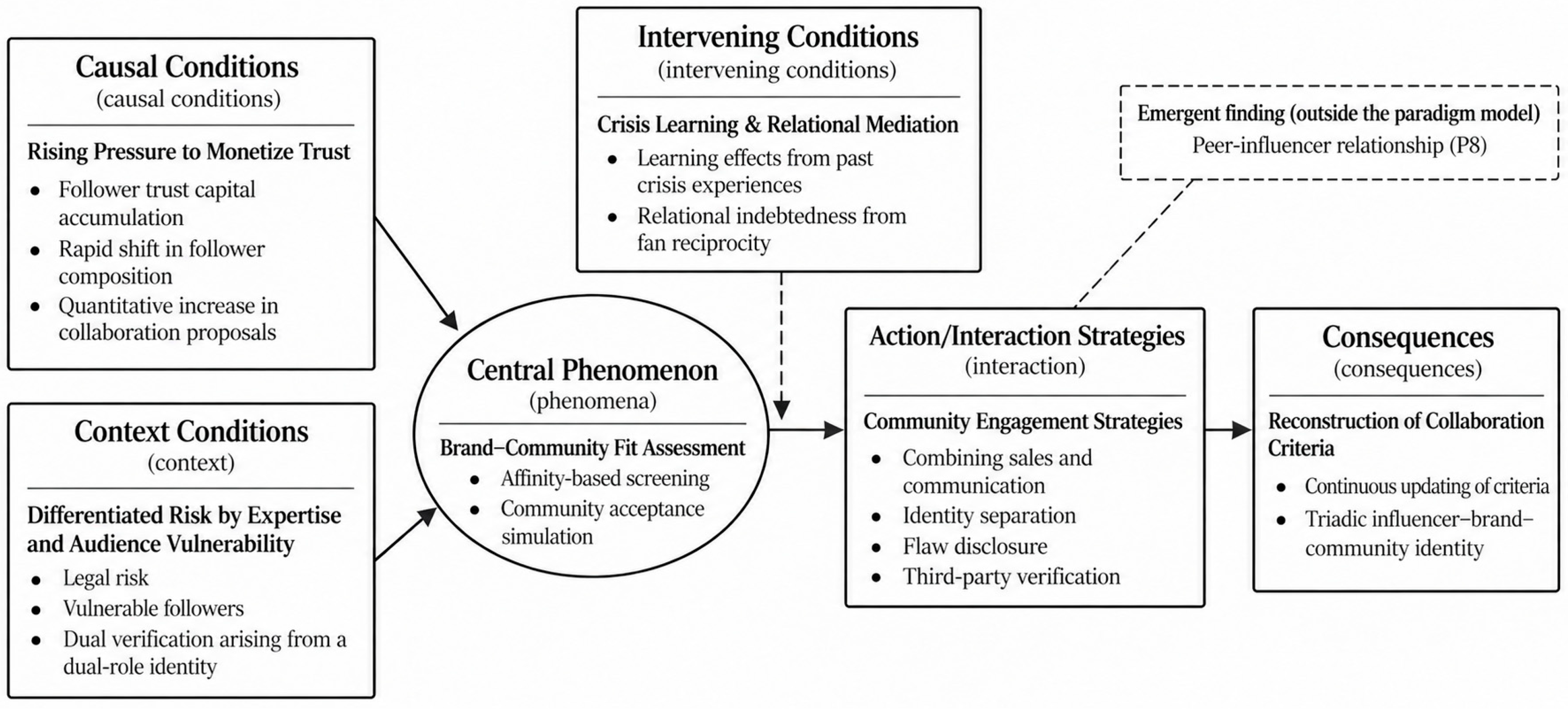
P3, who runs a body-correction and wellness commerce operation, illustrates a strategy of converting the act of selling into a form of communication, thereby easing resistance to commercial content. This can be interpreted as a concrete, live-commerce-based instantiation of the “transparent authenticity” strategy proposed by Audrezet et al. [9]. P6, a heavyweight bodybuilder, illustrated a compromise strategy of deliberately separating training content from lifestyle and advertising content, preserving his expert identity while still securing broad accessibility. P16, who runs an equipment and apparel review channel, offers one of the most notable findings of this study: after experiencing a crisis of authenticity, he adopted the paradoxical strategy of mandatorily disclosing product flaws. In his account, this practice was associated with restored follower trust and better sales, although these outcomes rest on his own report and were not independently verified. His account suggests that flaw disclosure, distinct from sponsorship disclosure, can function as a strategic asset rather than merely a matter of regulatory compliance. Additionally, P14’s practice of commissioning independent third-party testing to verify product claims constitutes a fourth strategy, illustrating how the crisis-driven accountability commitment discussed in Section 4.4 materializes into a concrete interaction strategy once a collaboration is underway. While these four strategies are directed at followers, P8’s account reveals a further dimension in which relationship-building with a fellow influencer becomes leverage in brand negotiations, suggesting that peer-influencer relationships may constitute a separate, complementary dimension worth exploring in future research. Because this finding rests on a single account and concerns a peer rather than followers, it is treated as a separate emergent finding outside the paradigm model rather than as a fifth interaction strategy, and it is shown in a dashed box in Figure 1.
Figure 1.
Paradigm model of influencer decision-making in brand collaboration. Solid arrows indicate the relationships among the categories of the paradigm model. The dashed box and dashed line indicate an emergent finding (the peer-influencer relationship, P8) that falls outside the paradigm model.
4.6. Consequences: Reconstruction of Collaboration Criteria
The consequence category revealed that participants’ collaboration criteria are not fixed principles but a cyclical process continuously updated through experiences of crisis and recovery, articulated through two subcategories: the continuous updating of collaboration criteria and the reconstitution of identity around the triadic influencer–brand–community relationship.
“I’m gritting my teeth to never cross the red lines I’ve set: ‘no more than two commercial posts per month,’ and ‘only proceed with products I’ve personally used daily for at least three weeks with a confirmed InBody change.’”(P10)
“The core value of my brand is ‘transparency beyond doubt,’ so the moment I compromise that principle, I would create a hundred thousand antifans overnight.”(P14)
P10’s case, drawn from an influencer at an earlier growth stage, shows that collaboration criteria are instantiated not as abstract principles but as concrete, measurable, and self-imposed rules, such as a monthly cap on commercial posts and a minimum personal-use period. This suggests that participants institutionalize the outcome of fit judgment as a repeatedly applicable procedure rather than a one-time decision. Although the process was shared across participants, its emphasis varied with their areas of expertise and professional roles. Participants whose work involves specialized claims (P11, P15) described verification that went beyond brand image, such as checking the original research (P11) or anticipating verification by the buyers’ children (P15). Participants with more than one professional role (P9, P13) described verification by more than one audience, such as consulting clients (P9) or an offline gym community (P13). P3 and P16 emphasized strategies that act directly on the commercial content, converting selling into interaction (P3) and disclosing product flaws (P16), whereas P7 screened proposals mainly against the epistemic standards of his sport and P5 against his obligation to early fans. These differences are reported as variations within one shared process and not as a systematic comparison across participants or collaboration types. Taken together, these findings from all 16 participants suggest, from the influencers’ side, that influencer–brand fit is not a static attribute but a dynamic process that is continuously renegotiated and reconstructed through interaction with the community before, during, and after collaboration. This finding extends the existing dyadic fit theories [4,5,7] toward a triadic influencer–brand–community relationship as a key theoretical contribution of this study. This relationship is a theoretical proposal grounded in the interviews and has not been tested statistically. The relationships among the causal conditions, context conditions, central phenomenon, intervening conditions, interaction strategies, and consequences identified above are integrated schematically in the paradigm model presented in Figure 1.
5. Discussion
5.1. The Accumulation of Trust Capital and Collaboration Pressure
The findings identified in Section 4.1 are consistent with prior work that treats follower trust as a resource on which influencer–brand collaboration depends [9]. Read alongside Massia et al. [10], P4’s experience suggests that the authenticity management pressure they describe among sports and fitness influencers is not limited to the moment of commercial entry. It can be triggered again whenever the composition of the audience changes, so that the community an influencer must manage is itself a moving target. However, whereas prior studies have largely treated trust capital as a positive resource that facilitates collaboration, the participants in this study perceived the same trust as grounds for self-censorship, offering an additional implication that trust capital operates in a double-edged manner for influencers. Because P2 and P10 spoke retrospectively, this double-edged quality should be read as the influencers’ own interpretation of their growth, and it should be checked in future studies that follow influencers over time.
5.2. Differentiation of Risk Perception by Expertise
The findings in Section 4.2 complement prior work suggesting that non-disclosure practices arise not necessarily from deceptive intent but from structural pressures, such as fear of reduced algorithmic exposure [13], by showing that influencers also develop verification practices that address concerns distinct from disclosure itself. Whereas the literature focuses on the structural causes of disclosure avoidance, the participants with higher expertise, such as P11, responded to the same structural pressure by constructing self-verification procedures that went beyond what disclosure rules require. Additionally, the separation between the actual consumer and the final verifier identified in P15’s case is insufficiently explained by the conventional influencer–follower dyadic model, reaffirming the active community role that this study foregrounds. P13’s case extends this finding further: rather than a separation between two distinct audiences, as in P9’s or P15’s accounts, P13’s offline gym community functions as a real-time verification mechanism for the same content that is later distributed online, suggesting that the “community” in this study’s theoretical model is not confined to a single online audience but can encompass co-located offline networks that verify claims before they reach a follower’s screen. Following the definition given in Section 1, the community here refers to followers and subscribers who watch an influencer’s content, interact through comments and direct messages, and purchase through collaborations. The offline gym members in P13’s case are included only because they also act as an audience for the influencer’s content, and the family members who verify purchases in P15’s case are treated as part of the audience context rather than as members of the follower community. Brands, agencies, and fellow influencers are treated separately.
5.3. Brand–Community Fit: A Triadic Relationship Beyond the Dyad
The central phenomenon identified in Section 4.3 constitutes the central theoretical contribution of this study. In Section 4.3, followers appeared to participants as an audience that watches for signs of sponsorship, and participants responded by anticipating that watching before they accepted a proposal. This goes beyond the dyadic match-up hypothesis [5] and the meaning transfer model [4], which conceptualize fit as a match between endorser and product. It also connects to the view that authenticity is co-constructed with audiences [11] by showing how an influencer acts on that view when deciding on a collaboration. Specifically, fit is not judged solely between the influencer and the brand but needs to be reconceptualized as the product of a triadic relationship in which the follower community is simulated in advance and verified after the fact. The counter-proposal of contract terms observed in P12’s case suggests that this community simulation can develop beyond passive prediction into an active negotiation strategy. P7’s case adds a further dimension to this triadic model: his screening criterion rests not on emotional affinity toward a brand but on whether a product’s efficacy claims are logically compatible with the embodied truth of his sport, indicating that the community-anticipation process underlying fit judgment can be organized around a sport-specific epistemic standard and an emotional one, and thereby broadening the theoretical scope of “fit” within this triadic framework. Because the sample consists only of influencers, this triadic account describes how fit is judged from the influencer’s side. How followers and brands themselves experience the same process was not examined.
5.4. The Dynamics of Authenticity Management Through Crisis Learning
The findings in Section 4.4 extend the discussion on the influencer authenticity management strategies proposed by Audrezet et al. [9]. In P1’s account, the guidelines tightened after a sponsorship-disclosure controversy applied to later collaborations as well, which suggests that authenticity management is not the application of a fixed principle but a learning process continuously renewed through a crisis. Because the crisis experiences of P1, P5, and P14 were recalled after the fact, this learning process is described as the participants understood it in retrospect. Additionally, P14’s use of third-party verification bodies is insufficiently discussed in the existing literature, pointing to the possibility that authenticity can be constructed through institutional evidence rather than verbal declaration.
5.5. Community Engagement and Authenticity Management Strategies
Among the strategies identified in Section 4.5, P3’s live-commerce case illustrates how the “transparent authenticity” strategy proposed by Audrezet et al. [9] is instantiated in a concrete form in the field. P16’s case, in which mandatorily disclosing product flaws was reported by the participant to coincide with restored trust and better sales, contrasts with evidence that sponsorship disclosure can lower perceived trustworthiness [14]. Because these outcomes are self-reported and come from one participant, the case suggests only that flaw disclosure may function as a strategic asset in its own right, distinct from sponsorship disclosure, and this needs to be tested with follower data. P14’s use of independent third-party testing further shows that authenticity management can also be operationalized through external verification mechanisms. P6’s deliberate separation of training, lifestyle, and advertising content further illustrates how influencers preserve professional identity while accommodating commercial content. P8’s case extends this discussion in a different direction than the disclosure and authenticity literature: the community-oriented strategies discussed above are directed at followers, whereas P8’s relationship-building with a fellow influencer functioned as leverage in brand negotiations. Because this finding rests on one account and concerns a peer rather than followers, it is not treated as part of the follower community or of the paradigm model. It is a separate emergent finding, and future research could examine whether peer-influencer relationships play a role in negotiating collaborations.
5.6. The Cyclical Reconstruction of Fit Judgment
The findings in Section 4.6 show, as illustrated by P10’s case, that collaboration criteria become institutionalized as concrete and measurable self-imposed rules rather than abstract principles. This suggests that, in contrast to existing theories that treat influencer–brand fit as a static attribute [4,5,7], fit is a dynamic process that is continuously renegotiated according to the outcomes of collaboration. Taken together, these findings suggest, based on in-depth interviews with 16 participants, that fitness influencers’ judgment of brand fit is not a dyadic relationship between influencer and brand, but a cyclical negotiation process within a triadic relationship in which the follower community shapes the perceived viability and authenticity of the collaboration as an active third party. This study differs from earlier work on authenticity in three respects. First, whereas fit research has treated fit as a match perceived by consumers [4,5,6,7,8], it examines how influencers themselves arrive at fit judgments. Second, whereas studies of authenticity strategies [9,10] and of authenticity as a social assemblage [11] describe what influencers do or how authenticity is co-constructed, it traces a sequence in which the follower community is anticipated before a collaboration, verified after it, and converted into explicit rules after crises. Third, it examines this sequence in the Korean fitness context, where follower trust is directly converted into transactions through group buying and social selling, and it identifies a peer-influencer relationship (P8) that falls outside the community-centered model. This is a theoretical proposal grounded in interviews with influencers and has not been tested statistically. It does not by itself show that followers or brands experience the process in the same way.
6. Conclusions
Through in-depth interviews with 16 fitness influencers who each had 500,000 or more followers, this study used grounded theory to examine the influencers’ experiences of judging brand fit, managing authenticity, and interacting with follower communities during brand collaboration, and to derive a theoretical explanatory framework for this experience. Based on this research purpose and the analyzed findings, the following conclusions were drawn:
These findings collectively identify six interconnected categories that together describe how fitness influencers navigate brand collaboration. Rising pressure to monetize accumulated follower trust functioned as a causal condition, while the strictness of fit judgment varied depending on participants’ professional expertise and the vulnerability of their audience as a contextual condition. At the center of this process, participants engaged in a dual judgment of brand-community fit, assessing not only their own congruence with a brand but also anticipating how their follower community would receive the collaboration. Past crisis experiences and relational indebtedness to early fans served as intervening conditions that shaped subsequent decisions, prompting interaction strategies such as combining sales with communication, separating professional and personal identities, deliberately disclosing product flaws, and using third-party verification to substantiate product claims. As a consequence, participants institutionalized these experiences into concrete, measurable, and continuously updated collaboration criteria, reconstructing their professional identity around a triadic influencer–brand–community relationship. These categories describe the process as reported by the influencers themselves.
Theoretically, this study’s central contribution is to propose a reconceptualization of influencer–brand fit, long treated as a dyadic attribute negotiated between an influencer and a brand, as a triadic and cyclical process seen from the influencer’s side, in which the follower community functions as an active third party that is simulated in advance and verified after the fact. This reframing extends classic match-up and meaning-transfer accounts of endorser-brand congruence [4,5,7] and offers an account, grounded in influencer interviews, of how authenticity management, sponsorship disclosure, and community interaction appear to operate jointly rather than as separate concerns. The follower community here means the followers and subscribers who watch, comment on, and purchase through an influencer’s content, as defined in Section 1.
This study suggests the need to understand influencer–brand collaboration not as a simple commercial transaction within a dyadic relationship but as a cyclical negotiation process within a triadic relationship in which the follower community actively shapes both fit judgment and authenticity verification from the influencer’s perspective. In particular, the community acceptance simulation identified in Section 4.3 and Section 5.3 suggests that when designing collaborations with influencers, brand practitioners may consider not only the individual influencer’s image suitability, but also the characteristics and expectations of their follower community. Additionally, the flaw-disclosure strategy identified in Section 4.5 and Section 5.5 suggests that disclosing product flaws, as distinct from sponsorship disclosure, may be worth testing as a way of building trust rather than being treated merely as a matter of regulatory compliance, since the trust and sales effects were reported by a single participant and were not independently verified. These findings suggest that social commerce platform designers and brand practitioners may wish to treat follower-community trust as a core design consideration when incorporating group buying and social selling into influencer partnerships.
This study has several limitations. First, because the participants were limited to macro- and mega-tier influencers with 500,000 or more followers, it remains unclear whether the same fit judgment mechanisms apply to smaller-scale microinfluencers. Second, the participants’ accounts may have been shaped by the collaboration environment and personal circumstances at the time of the interview, such that interviews conducted at different time points might have yielded different experiences. Third, because this study focused on domestic fitness influencers in South Korea, further verification is required to determine whether the derived triadic model equally applies to culturally different contexts. Fourth, because the findings rely on influencers’ retrospective self-reports about commercially and ethically sensitive experiences, social desirability and recall bias cannot be entirely excluded. Fifth, because only influencers were interviewed, the findings describe the influencers’ side of the process. The perspectives of followers and brands are not represented, and the proposed model is a theoretical proposal that has not been tested statistically. Finally, this study suggests the following directions for future research. First, while it explored the qualitative mechanisms of fit judgments through in-depth interviews, future quantitative research that statistically verifies the influencer–brand–community triadic model would strengthen its theoretical explanatory power. Second, while this study focused on the experiences of individual influencers, future comparative research involving diverse stakeholder groups, including brand managers, agencies, and followers, is needed to fully elucidate the structural conditions under which this triadic relationship forms. Third, because this study excluded micro- and nano-influencers from its sampling framework, future research comparing follower-size tiers can verify how the fit judgment mechanisms identified in this study vary according to the influencer scale.
Author Contributions
Conceptualization, K.Y. and S.N.; methodology, S.N.; investigation, K.Y.; formal analysis, K.Y. and J.K.; writing—original draft preparation, K.Y.; writing—review and editing, S.N. and J.K.; supervision, S.N. All authors have read and agreed to the published version of the manuscript.
Funding
This research received no external funding.
Institutional Review Board Statement
This study was conducted in accordance with the guidelines of the Institutional Review Board of Hanyang University (protocol code IRB-HYU-2026-197, approved on 7 April 2026, and an expedited review).
Informed Consent Statement
Written informed consent was obtained from all participants involved in this study.
Data Availability Statement
The data presented in this study are available upon request from the corresponding authors owing to privacy and confidentiality agreements with the research participants.
Conflicts of Interest
The authors declare no conflicts of interest.
References
- DataReportal. Digital 2026: South Korea; DataReportal: Singapore, 2026. [Google Scholar]
- International Society of Aesthetic Plastic Surgery (ISAPS). Global Survey Results; ISAPS: Hanover, NH, USA, 2024. [Google Scholar]
- Fortune Business Insights. Social Commerce Market Size, Share | Industry Forecast, 2034; Fortune Business Insights: Pune, India, 2026. [Google Scholar]
- McCracken, G. Who is the celebrity endorser? Cultural foundations of the endorsement process. J. Consum. Res. 1989, 16, 310–321. [Google Scholar] [CrossRef] [Scilit] [PubMed]
- Kamins, M.A. An investigation into the “match-up” hypothesis in celebrity advertising: When beauty may be only skin deep. J. Advert. 1990, 19, 4–13. [Google Scholar] [CrossRef] [Scilit]
- Ohanian, R. Construction and validation of a scale to measure celebrity endorsers’ perceived expertise, trustworthiness, and attractiveness. J. Advert. 1990, 19, 39–52. [Google Scholar] [CrossRef] [Scilit]
- Erdogan, B.Z. Celebrity endorsement: A literature review. J. Mark. Manag. 1999, 15, 291–314. [Google Scholar] [CrossRef] [Scilit]
- Schimmelpfennig, C.; Hunt, J.B. Fifty years of celebrity endorser research. Psychol. Mark. 2020, 37, 488–505. [Google Scholar] [CrossRef] [Scilit]
- Audrezet, A.; de Kerviler, G.; Guidry Moulard, J. Authenticity under threat: When social media influencers need to go beyond self-presentation. J. Bus. Res. 2020, 117, 557–569. [Google Scholar] [CrossRef] [Scilit]
- Massia, M.; Piancatelli, C.; Vocino, A.; Rojas-Méndez, J.I. Making it real on social media: Exploring authenticity strategies for sport and fitness influencers. J. Strateg. Mark. 2024, 32, 1376–1397. [Google Scholar] [CrossRef] [Scilit]
- Duffek, B.; Eisingerich, A.B.; Merlo, O.; Lee, G. Authenticity in influencer marketing. J. Mark. 2025, 89, 21–46. [Google Scholar] [CrossRef] [Scilit]
- Deng, Q.; Pergelova, A.; Hachey, A. Disentangling mixed effects of sponsorship disclosure in influencer marketing. J. Consum. Aff. 2026, 60, e70067. [Google Scholar] [CrossRef] [Scilit]
- Musiyiwa, R.; Jacobson, J. Sponsorship disclosure in social media influencer marketing: The algorithmic and non-algorithmic barriers. Soc. Media Soc. 2023, 9, 20563051231196870. [Google Scholar] [CrossRef] [Scilit]
- Giuffredi-Kähr, A.; Petrova, A.; Malär, L. Sponsorship disclosure of influencers: A curse or a blessing? J. Interact. Mark. 2022, 57, 18–34. [Google Scholar] [CrossRef] [Scilit]
- Federal Trade Commission. Trade Regulation Rule on the Use of Consumer Reviews and Testimonials; FTC: Washington, DC, USA, 2024.
- Horton, D.; Wohl, R.R. Mass communication and para-social interaction. Psychiatry 1956, 19, 215–229. [Google Scholar] [CrossRef] [Scilit] [PubMed]
- Kostić, S.; Spajić, J.; Alavuk, Đ.; Šiđanin, I.; Laličić, B.; Bunčić, S. The role of user-generated content in social commerce: A systematic review. Sustainability 2026, 18, 1601. [Google Scholar] [CrossRef] [Scilit]
- Hyeong, H.; Park, C.; Yu, C. The effect of SNS influencer characteristics on fan community identification and brand preference. J. Internet Electron. Commer. Res. 2024, 24, 27–51. [Google Scholar] [CrossRef] [Scilit]
- Han, J. The relationship among SNS users’ interpersonal trust in influencers, brand image, and purchase intention. J. Korea Contents Assoc. 2020, 20, 31–44. [Google Scholar]
- Yoon, H.; Kim, T.; Nam, S. The effect of influencers’ fashion product usage videos on brand attitude and purchase intention. J. Inf. Technol. Serv. 2019, 18, 1–16. [Google Scholar]
- Kim, W.; Choo, H. The effect of SNS fashion influencer authenticity on consumer behavioral intention. In Proceedings of the Korean Distribution Association Conference; Korean Distribution Association: Seoul, Republic of Korean, 2017; pp. 233–240. [Google Scholar]
- Han, M.; Song, G.; Park, J. A study on the effect of fashion influencer attributes on consumers’ purchase intention and word-of-mouth intention. J. Serv. Res. Stud. 2023, 24, 1–25. [Google Scholar] [CrossRef] [Scilit]
- Kim, K.; Oh, S.; Han, J. A meta-analytic examination of the factors influencing sport influencer characteristics on consumer behavior. Korean J. Sports Sci. 2025, 34, 457–472. [Google Scholar] [CrossRef] [Scilit]
- Choi, S.; Ryu, S.; Lee, Y. The effect of sport influencer attractiveness on flow, relationship maintenance intention, and purchase intention. Korean J. Sociol. Sport 2020, 82, 95–108. [Google Scholar] [CrossRef] [Scilit]
- Lee, H.; Lee, J. The effect of sporting goods social media influencer source attributes perceived by MZ generation on brand trust and consumer behavior. Korean J. Phys. Educ. 2023, 28, 339–352. [Google Scholar] [CrossRef] [Scilit]
- Park, E.; Jeong, J. The effect of sport influencer characteristics on consumer behavioral intention: The mediating effect of sponsorship disclosure. Korean J. Sports Sci. 2023, 32, 87–98. [Google Scholar] [CrossRef] [Scilit]
- Lee, G.; Nam, S. A study on the relationship between benign envy toward sport influencers and consumers’ imitative consumption tendency and continuous purchase intention. Korean J. Sports Sci. 2024, 33, 364–378. [Google Scholar] [CrossRef] [Scilit]
- Kim, S. A Study on the Communication Types, Image Attributes of YouTube Fitness Influencers, and Viewer Responses. Master’s Thesis, Hanyang University, Seoul, Republic of Korea, 2021. [Google Scholar]
- Kim, J.; Won, J.; Kim, K. Factors affecting YouTube fitness content views. J. Korea Contents Assoc. 2023, 23, 249–266. [Google Scholar] [CrossRef] [Scilit]
- Kim, G. Understanding the digital transformation of the fitness market. J. Korean Soc. Rhythm. Exerc. 2022, 15, 33–49. [Google Scholar]
- Seok, S. The Effect of Social Media Users’ Attitude Determinants Toward Sport Influencers on Exercise Participation Intention and Purchase Intention. Master’s Thesis, Seoul National University, Seoul, Republic of Korea, 2025. [Google Scholar]
- Namgung, J.; Lee, J. The effect of amateur sport influencer characteristics on followers’ fanship and behavioral intention. Korean J. Sport Manag. 2023, 28, 24–50. [Google Scholar] [CrossRef] [Scilit]
- Kim, C. The Effect of Influencer Marketing on Sport Brand Characteristics, Satisfaction, and Purchase Behavior. Master’s Thesis, Korea National Sport University, Seoul, Republic of Korea, 2021. [Google Scholar]
- Lee, S.; Kim, S. The boomerang effect of influencer marketing. Korean Acad. Soc. Bus. Adm. 2019, 32, 2005–2028. [Google Scholar] [CrossRef] [Scilit]
- Kim, S.; Kim, S.; Son, S.; Lee, T. Advertising that doesn’t look like advertising: Influencer marketing. Marketing 2017, 51, 56–66. [Google Scholar]
- Jeong, E. Case analysis of influencer marketing and marketing research suggestions. Serv. Mark. J. 2019, 12, 33–39. [Google Scholar] [CrossRef] [Scilit]
- Heo, W.; Cho, H.; Lim, Y.; Kang, S. An analysis of domestic research trends and future directions in influencer marketing research. Korean J. Distrib. Manag. 2024, 27, 33–46. [Google Scholar]
- Son, D. A Study on Reliability Factors of Commercial Content by Digital Influencer. Doctoral Dissertation, Kyung Hee University, Seoul, Republic of Korea, 2018. [Google Scholar]
- Choi, J.; Jeong, Y. Beauty influencer marketing utilization strategy. Korean J. Advert. 2017, 28, 47–72. [Google Scholar] [CrossRef]
- Shin, H.S.; Kim, C.J. The effect of SNS marketing characteristics and influencer characteristics on flow: Focusing on the mediating effect of brand loyalty and the moderating effect of engagement. J. Korea Cult. Ind. 2021, 21, 181–192. [Google Scholar] [CrossRef] [Scilit]
- Han, G. The effect of fashion influencer characteristics on purchase intention. J. Digit. Contents Soc. 2019, 20, 2243–2254. [Google Scholar]
- Lee, M.; Lee, S. The effect of social media influencers’ personal characteristics and content characteristics on brand attitude and purchase intention. Asia-Pac. J. Bus. Ventur. 2021, 16, 159–175. [Google Scholar]
- Glaser, B.G.; Strauss, A.L. The Discovery of Grounded Theory; Aldine: Chicago, IL, USA, 1967. [Google Scholar]
- Charmaz, K. Constructing Grounded Theory; Sage: London, UK, 2006. [Google Scholar]
- Strauss, A.; Corbin, J. Basics of Qualitative Research, 2nd ed.; Sage: Thousand Oaks, CA, USA, 1998. [Google Scholar]
- Patton, M.Q. Enhancing the quality and credibility of qualitative analysis. Health Serv. Res. 1999, 34, 1189–1208. [Google Scholar] [PubMed]

Disclaimer/Publisher’s Note: The statements, opinions and data contained in all publications are solely those of the individual author(s) and contributor(s) and not of MDPI and/or the editor(s). MDPI and/or the editor(s) disclaim responsibility for any injury to people or property resulting from any ideas, methods, instructions or products referred to in the content. |
© 2026 by the authors. Licensee MDPI, Basel, Switzerland. This article is an open access article distributed under the terms and conditions of the Creative Commons Attribution (CC BY) license.