Recent Advances in Chemical Artificial Intelligence
Topic Information
Dear Colleagues,
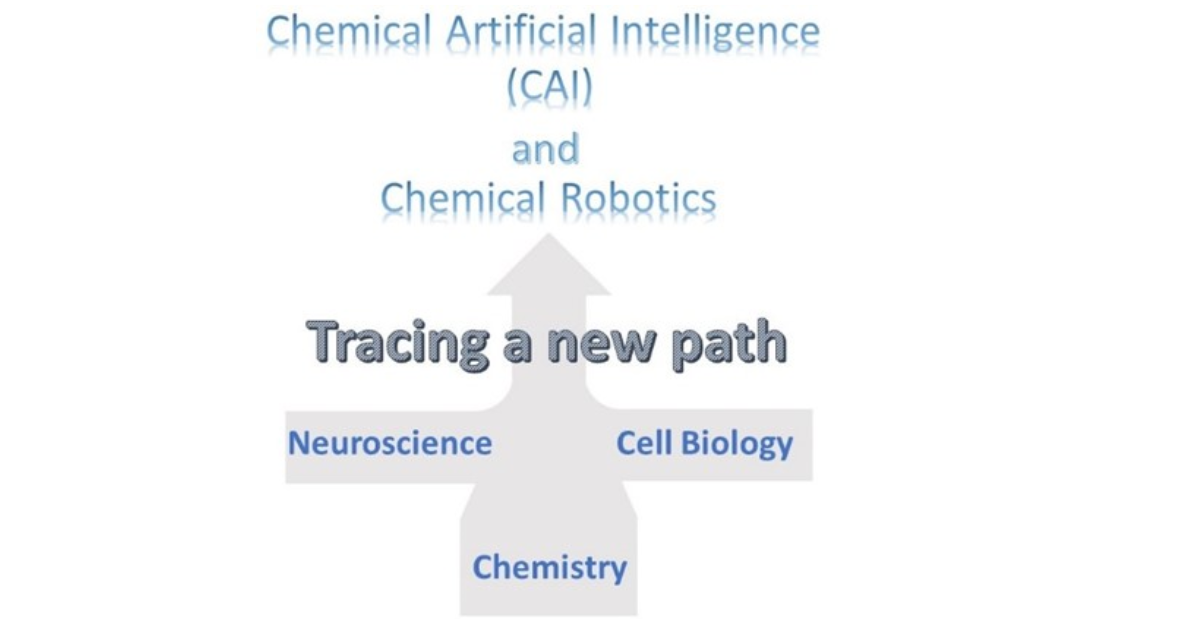
Artificial Intelligence (AI) and robotics are becoming more prevalent in our societies. They assist, and sometimes even replace, humans in accomplishing specific tasks and dealing with complex systems. Traditionally, AI and robotics are developed in software and hardware, the latter being either rigid or soft. In the early 2010s, a new promising strategy was put forward as follows: to use molecular, supramolecular, and systems chemistry in wetware (i.e., in fluid solutions) to mimic some performances of human (and, more generally, biological) intelligence and develop the so-called Chemical Artificial Intelligence (CAI) and Chemical Robotics. In CAI, information is encoded, collected, stored, processed, and sent primarily through molecules and chemical reactions. CAI and Chemical Robots will allow humans to colonize the microscopic world. Microscopic artificial intelligent chemical systems will help in diagnosing and curing diseases, safeguarding the environment, and contributing to increased energy and food supplies. Finally, designing and implementing various forms of autonomous chemical intelligence will allow for a deeper comprehension of two remarkable emergent properties: intelligence and life.
This topic accepts research articles, reviews, and perspectives presenting the burgeoning field of CAI and Chemical Robotics, with the ambition of gathering brilliant ideas of the principal investigators in this new and forward-thinking research field and promoting the generation of a research network for further scientific collaborations.
Prof. Dr. Pier Luigi Gentili
Prof. Dr. Jerzy Górecki
Prof. Dr. David C Magri
Prof. Pasquale Stano
Topic Editors
Keywords
- molecular chemistry
- biomolecules
- supramolecular chemistry
- systems chemistry
- smart colloids
- synthetic cells
- molecular logic gates
- chemical communication
- fuzziness of chemistry
- oscillatory chemical reactions
- origin of life
Participating Journals
 Molecules
 Biomimetics
 Chemosensors
 Life
Life