


Abstract
Geriatric patients with hip fractures often experience overlap in problems related to nutrition, including undernutrition, sarcopenia, and frailty. Such problems are powerful predictors of adverse responses, although few healthcare professionals are aware of them and therefore do not implement effective interventions. This review aimed to summarize the impact of undernutrition, sarcopenia, and frailty on clinical outcomes in elderly individuals with hip fractures and identify successful strategies that integrate nutrition and rehabilitation. We searched PubMed (MEDLINE) and Cochrane Central Register of Controlled Trials (CENTRAL) for relevant literature published over the last 10 years and found that advanced interventions targeting the aforementioned conditions helped to significantly improve postoperative outcomes among these patients. Going forward, protocols from advanced interventions for detecting, diagnosing, and treating nutrition problems in geriatric patients with hip fractures should become standard practice in healthcare settings.
1. Introduction
Hip fractures are a global public health problem and result in hospitalization, disability, and death [1]. Globally, as the population ages, the number of hip fractures is increasing, and it is expected that 6.3 million people will suffer from hip fracture in 2050 [2]. Hip fracture patients have high mortality [3], experience prolonged disability [4], and require substantial costs for postoperative management [5]. Therefore, management after hip fracture is a critical issue to be resolved.
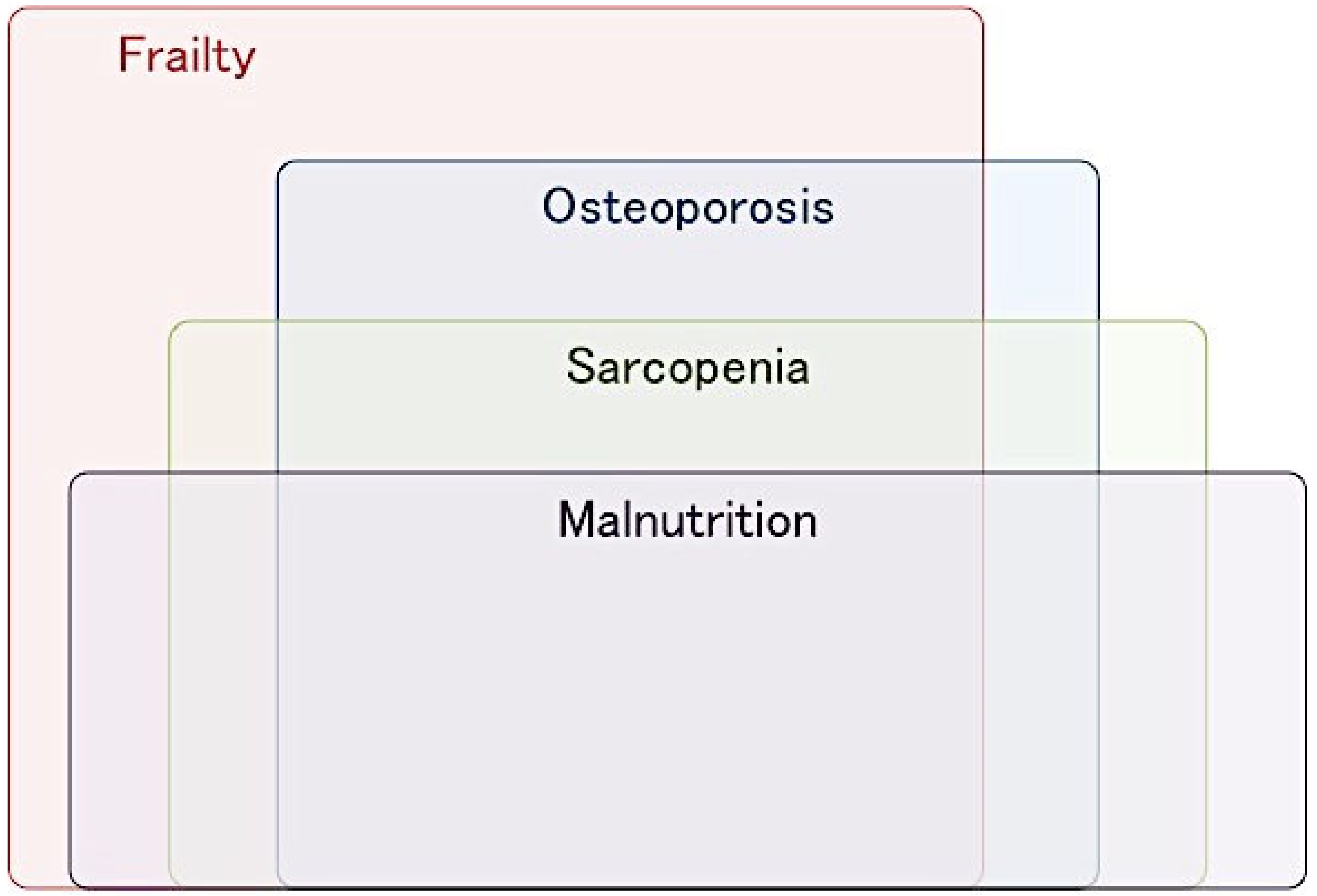
Hip fracture patients experience multiple geriatric nutritional problems, often including undernutrition, sarcopenia, and frailty at admission, all of which overlap (Figure 1), (Supplementary Figures S1–S3). These geriatric nutritional problems have significant impacts on disability, the occurrence of complications, and mortality after hip fracture. Therefore, interventions for these factors are a key strategy for improving postoperative clinical outcomes in patients with hip fracture.
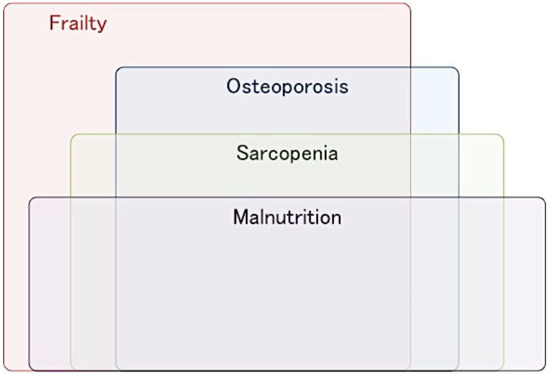
Figure 1.
The overlapping geriatric nutritional problems in patients with fragility hip fracture.
Conversely, the effect of interventions for geriatric nutritional problems in patients with hip fracture remains unclear. Nutritional therapy alone was not shown to reduce mortality [6]. Medical professionals often ignore undernutrition, sarcopenia, and frailty, and this unawareness inhibits improvements in clinical outcomes [7]. A focus must be placed on geriatric nutritional problems in hip fracture patients, and effective interventions should be considered. Our review aims to summarize the impact of undernutrition, sarcopenia, and frailty on clinical outcomes and to identify effective interventions combined with nutrition and rehabilitation for hip fracture patients.
2. Materials and Methods
2.1. Data Sources and Search Strategy
This review adhered to the guidelines of the Preferred Reporting Items for Systematic Reviews and Meta-Analyses (PRISMA) [8]. We searched for relevant literature in PubMed (MEDLINE) and Cochrane Central Register of Controlled Trials (CENTRAL). To review recent studies on undernutrition, sarcopenia, and frailty of patients with hip fracture, we selected observational and intervention studies published in English 10 years since the European Working Group on Sarcopenia in Older People (EWGSOP) was published in 2010 [9]. We used the search terms hip fractures, femoral neck fractures, nutritional status, malnutrition, sarcopenia, muscle atrophy, and frailty.
2.2. Study Selection
2.2.1. Inclusion Criteria
The inclusion criteria for the included studies in this review were as follows: (1) Assessment of patients with fragility hip fracture; (2) inclusion of both genders and all races; (3) examination of the impact of undernutrition, sarcopenia, and frailty on clinical outcomes; (4) application of validated nutritional assessments, such as nutritional screening tools, anthropometric parameters, and blood concentrations; (5) evaluation of muscle strength and/or muscle mass for diagnosing sarcopenia; (6) utilization of diagnostic criteria that address multiple factors reflecting vulnerability in the absence of established diagnostic criteria for frailty; (7) clinical outcomes, such as death, complications, hospital stay, discharge disposition, activities of daily living (ADL), mobility, etc.; and (8) observational and intervention study design.
2.2.2. Exclusion Criteria
Editorials, case reports, letters to the editor, review articles, animal studies, and conference abstracts were excluded from this review.
2.3. Data Extraction
We extracted the following information from the included studies: Name of the first author, year of publication, country of origin, study design, setting, age, gender prevalence, sample size, screening or assessment tool of nutritional status, diagnostic criteria of sarcopenia and frailty, prevalence of undernutrition, sarcopenia, and frailty, main study outcomes, and main results.
2.4. Quality Assessment
We assessed the quality of the included studies using both the National Institutes of Health (NIH) Quality Assessment tool for Observational Cohort and Cross-Sectional Studies and the Quality Assessment of Controlled Intervention Studies [10]. This quality assessment tool comprised 14 items per study design. We scored these items and classified the included studies as “good”, “fair”, or “poor” (Supplementary Tables S1–S3).
3. Undernutrition in Patients with Hip Fracture
3.1. Prevalence of Undernutrition
The prevalence of undernutrition with hip fracture is high and varies based on the evaluation tool used, ranging from about 7% to 26% (Table 1). The Mini Nutritional Assessment-Short Form (MNA-SF) [11,12,13,14,15] and the Mini Nutritional Assessment-Full Form (MNA-FF) [12,16,17,18,19] are the most commonly used tools for evaluating nutritional status in patients with hip fracture. The Malnutrition Screening Tool (MST) [20], Controlling Nutritional Status (CONUT) [21,22], Geriatric Nutritional Risk Index (GNRI) [22,23], Malnutrition Universal Screening Tool (MUST) [24], body mass index (BMI) [25,26], serum albumin [12,16,26,27], prealbumin [27], total protein [27], vitamin D [23,27] and lymphocyte count [16] are also used. These evaluation tools are useful for assessing the nutritional status of patients with hip fracture.

Table 1.
Assessment of nutritional status, prevalence of undernutrition, and the impact of undernutrition on clinical outcomes in patients with hip fracture.
3.2. Impact of Undernutrition on Clinical Outcomes
A large number of observational studies reported a significant association between undernutrition and clinical outcomes in patients with hip fracture. Most studies set mortality [13,18,19,22,23,24,25,26,28,30] or ADL [11,12,15,17,30] as clinical outcomes and the occurrence of postoperative complications [14,18,21,24], length of hospital stay [18,29], discharge disposition [12,24], readmission [27], mobility [23], and failure after internal fixation [16] as additional outcomes. Inoue et al. [15] and Goisser et al. [17] reported that undernutrition, as evaluated via the MNA-SF and MNA-FF, respectively, was a significant predictor of improved ADL at discharge from acute hospitals and six months postsurgery. Nishioka et al. [11] revealed that improvement in nutritional status via MNA-SF screening during hospitalization in a convalescent hospital was associated with ADL at discharge. Miu and Lam [30] reported that, compared with at-risk and well-nourished patients, malnourished patients screened via the MNA-SF had a higher rate of in-hospital mortality. Gumieiro et al. [28] reported that the MNA-FF score was a predictor of mortality after six months. Vosoughi et al. [25] reported that BMI was an independent risk factor of mortality at one and three years. Conversely, Koren-Hakim et al. [13] reported that the MNA-SF score was not associated with mortality at 36 months. Overall, most of the studies found an association between nutritional status and clinical outcomes in hip fracture patients.
Several studies examining the appropriate nutritional screening tools recommended the use of the MNA-SF for hip fracture patients. The European Society for Clinical Nutrition and Metabolism also recommended the MNA-SF and the Malnutrition Universal Screening Tool and the Nutritional Risk Score 2002 (NRS-2002), which is known as a validated nutritional screening tool [31]. In their comparisons of these validated screening tools, Inoue et al. [32] and Koren-Hakim et al. [33] reported that the MNA-SF was a good predictor of ADL at discharge from an acute hospital, readmission during six months, and mortality at 36 months. In a study comparing the MNA-FF and NRS-2002 [28], only the MNA-FF could predict walking ability and mortality after six months. These results suggested that the use of the MNA-SF or MNA-FF is appropriate for predicting clinical outcomes in patients with hip fracture.
3.3. Highlights of Undernutrition in Hip Fracture
Evaluation of nutritional status is important, because undernutrition is a significant risk factor for clinical outcomes in hip fracture patients. The MNA-SF and MNA-FF are the most commonly used tools for nutritional status evaluation and were reported to be significant independent predictors of clinical outcomes. The MNA-SF is a simple and quick nutritional screening tool for nutritional status [34]. Furthermore, calf circumference rather than BMI can be used in the scoring of the MNA-SF, which is an advantage because of the difficulty in accurately measuring body weight on admission for patients with hip fracture. Moreover, the scoring for the MNA-SF includes the following components: functional, psychological, and cognitive aspects. Thus, the MNA-SF can accurately reflect the characteristics of elderly patients with hip fracture and might be the most appropriate nutritional screening tool for clinical outcomes in patients with hip fracture.
4. Sarcopenia in Patients with Hip Fracture
4.1. Definition of Sarcopenia
Sarcopenia is defined as a muscle disease [35,36] characterized by progressive and generalized decreased muscle strength and loss of muscle mass [9,37]. Sarcopenia is associated with functional disability, death, and other adverse outcomes [7]. Sarcopenia is also associated with osteoporosis [38] and falls [39], therefore, patients with hip fracture are more likely to be sarcopenic.
4.2. Prevalence of Sarcopenia
The prevalence of sarcopenia is high in patients with hip fracture. Although the prevalence varies on the basis of the diagnostic criteria, the overall prevalence (for both sexes combined) of sarcopenia ranges from 11% to 76.4% (Table 2). The prevalence ranges from 12% to 81% in males and from 18% to 76% in females. The EWGSOP [9], updated EWGSOP2 [37], Asian Working Group for Sarcopenia (AWGS) [40], and updated AWGS 2019 [41] are often used for diagnosis, and the Foundation for the National Institutes of Health [42,43] and SARC-F [44] were also used in reported studies.
Table 2.
Diagnosis criteria of sarcopenia, prevalence, and its impact on clinical outcomes in patients with hip fracture.
Previous studies reported two ways to diagnose sarcopenia, i.e., using either a combination of muscle strength and muscle mass [45,46,49,50,51,52,53,54,56,57,58,59,60,61,62,63] or muscle mass alone [43,47,48,55]. In all of the studies referenced in the present review, handgrip strength was used to evaluate muscle strength. Dual-energy X-ray absorptiometry [43,46,49,53,54,55,57] and bioimpedance analysis (BIA) [45,51,56,60,62,63] were mostly used to evaluate muscle mass, with computed tomography [47,52] and anthropometric measurement [50,58] also used. Postoperative hip fracture patients have implantation of metal in the lower extremity, and the BIA may overestimate the muscle mass of the operative lower extremity because of its methodological limitations. Therefore, whether BIA is a suitable method for measuring muscle mass in patients with hip fractures is unclear. The criteria for sarcopenia diagnosis are becoming standardized, and further research using standardized diagnostic criteria is necessary in patients with hip fracture.
4.3. Impact of Sarcopenia on Clinical Outcomes
Most observational studies reported a significant association between sarcopenia and clinical outcomes in patients with hip fractures. Many studies set outcomes for mortality [48,50,51,52] and ADL [43,46]. Others reported an association between sarcopenia and mobility [50], quality of life (QOL) [53], length of hospital stay [47], discharge disposition [50], and the development of dysphagia [56]. Di Monaco et al. [46] reported the association between sarcopenia and ADL at admission to a convalescent hospital. Landi et al. [43] reported the association between sarcopenia and ADL at discharge from a rehabilitation hospital and after 3 months, and Steihaug et al. [50] reported the association between sarcopenia and mobility after 1 year. Nagano et al. [56] reported an association between sarcopenia and the development of dysphagia after hip fracture. Regarding mortality, Kim et al. [48] reported that sarcopenia was not associated with mortality at one year postoperatively but was associated with mortality at five years. Conversely, Byun et al. [52] reported an association between sarcopenia in women and one-year mortality. Malafarina et al. [51] reported sarcopenia was a predictor of mortality at seven years. Overall, sarcopenia was found to be a significant independent predictor of postoperative clinical outcomes, and the diagnosis of sarcopenia is important to improve clinical outcomes.
4.4. Highlights of Sarcopenia in Hip Fracture
The prevalence of sarcopenia is very high, and sarcopenia is a significant predictor of adverse outcomes in patients with hip fractures. The diagnostic criteria of the EWGSOP, updated EWGSOP2, AWGS, and updated AWGS 2019 are mainly used for the diagnosis of sarcopenia, depending on the race of the patients. The use of standardized diagnostic criteria has had a positive impact on the increase in sarcopenia research in patients with hip fracture. However, sarcopenia is often overlooked in clinical practice [7], and there are no intervention studies in hip fracture patients with sarcopenia. Thus, this type of study in hip fracture patients with sarcopenia is strongly needed.
5. Frailty in Patients with Hip Fracture
5.1. Definition of Frailty
Frailty is defined as a state of vulnerability accompanied by various preliminary reductions in the ability to maintain or regain homeostasis when exposed to stressors [64]. However, no standardized diagnostic criteria of frailty exist, and various tools were used in reported studies [64,65,66]. A previous study reported an association between frailty and the incidence of hip fractures [67], with a large proportion of hip fracture patients expected to have frailty.
5.2. Prevalence of Frailty
The diagnosis of frailty in patients with hip fracture is hindered by a lack of standardized diagnostic criteria for frailty. These criteria vary in the studies referenced in the present review (Table 3). Therefore, discussing the prevalence of frailty in hip fracture patients is difficult. The most commonly used criteria are the frailty phenotype reported by Fried et al. [68] and the frailty index reported by Rockwood et al. [69]. Frailty phenotype has the following five features or criteria: Weakness, slow gait speed, low physical activity, exhaustion, and unintentional weight loss [68]. Frailty is diagnosed if a positive score is obtained for three or more symptoms or signs out of the five criteria.
Table 3.
Diagnosis criteria of frailty and its prevalence and impact on clinical outcomes in patients with hip fracture.
The concept of the frailty index consists of the accumulation of health-related deficits, such as signs, symptoms, disease, and disability. The frailty index is easy to use in clinical practice because it consists mainly of medical conditions [69] and can be evaluated from the medical record. Patel et al. [70], Inoue et al. [78], Vasu et al. [76], and Pizzonia M et al. [82] adopted 19 items and Krishnan et al. [71] adopted 51 items to develop the modified frailty index for hip fracture patients. These models suggest that frailty is a continuous score that considers disability, comorbidity, and symptoms. Higher scores are considered to be associated with greater frailty. They reported an association of the modified frailty index with mortality [70,76,82], occurrences of complications [78], length of hospital stay [71], discharge disposition [71,78] from acute hospital, and low functional recovery [78]. Further studies are needed to enable an easy diagnosis of frailty in clinical practice for hip fracture patients.
5.3. Impact of Frailty on Clinical Outcomes
Many previous studies reported that frailty was a predictor of adverse outcomes. The clinical outcomes included mortality [70,71,74,75,76,77,82,84], the occurrence of complications [72,73,78], length of hospital stay [72,73,74], ADL [78,80,81,83], QOL [79], and discharge disposition [72,74,78,83]. However, few well-designed studies were conducted. Thus, it is necessary to develop diagnostic criteria that are simple, highly accurate, able to predict adverse outcomes, and suitable for hip fracture patients.
6. Nutritional Intervention for Patients with Hip Fracture
Based on the current evidence, the effectiveness of nutritional therapy alone for hip fracture patients is unclear. A systematic review [6] of nutritional interventions for hip fracture patients reported only low-quality evidence to reduce complications and no clear effect on mortality. Many intervention studies examined the effect of oral administration of protein [85,86,87,88,89,90,91,92], β-hydroxy-β-methylbutyrate [93], vitamin D [94,95,96], whey protein [97,98], or combined calcium β-hydroxy-β-methylbutyrate (CaHMB), vitamin D, and protein intake [99] on clinical outcomes. One randomized controlled trial for hip fracture patients conducted an intervention to calculate energy requirements by measuring the resting energy expenditure using an indirect calorimeter [100]. In individual randomized controlled trials, the group that received the nutritional intervention had better outcomes than the control group in terms of occurrence of complications [87,100], severity of pressure ulcers [88], length of hospital stay [89], readmission rate [94], nutritional status [86], muscle strength [98], muscle mass [91,93], and wound-healing period [99]. Conversely, there was no significant difference in nutritional status [85,89] or mortality [87] between the group that received a nutritional intervention alone and the control group. The effects of nutritional intervention on ADL are not consistent [87,89,90,91,98]. There were no intervention studies that reported enhanced rehabilitation used in combination with nutritional therapy. These discrepancies might suggest that nutritional interventions alone are insufficient to improve clinical outcomes.
7. Combined Nutritional Intervention with Rehabilitation Exercise
A combination of nutrition and exercise interventions is effective for elderly patients with sarcopenia. A combination of amino acid intake and exercise improved muscle strength, muscle mass, and ADL of community-dwelling women with sarcopenia [101] and sarcopenic patients with cerebrovascular disease [102]. A meta-analysis reported that the combination of nutrition and exercise had a positive effect on physical function in community-dwelling elderly individuals [103]. Combined nutrition and exercise interventions promoted muscle protein synthesis compared with each of these interventions alone [104]. Thus, these combination interventions for hip fracture patients may contribute to improved clinical outcomes.
8. Advanced Strategies for Improvement of Clinical Outcomes
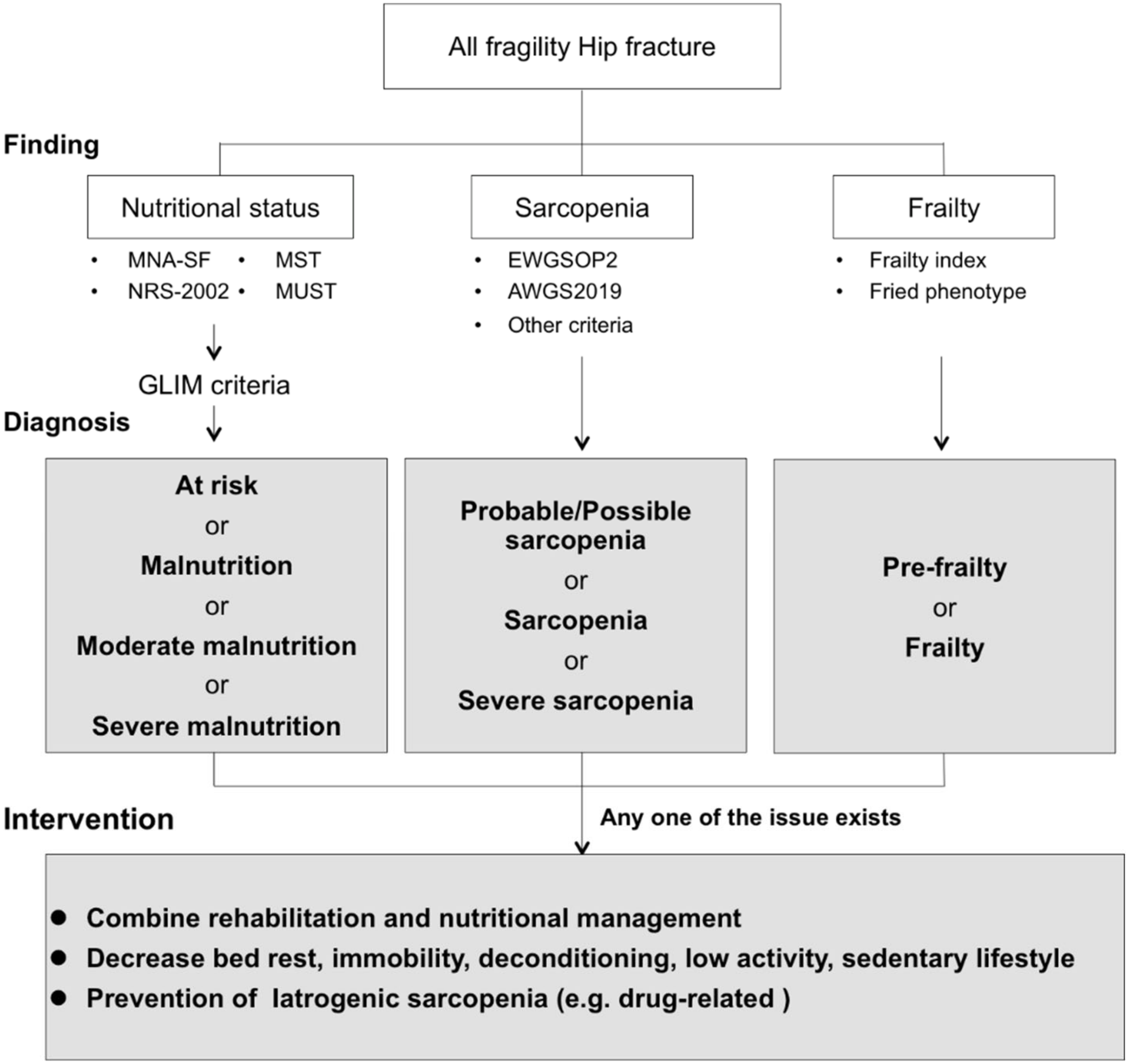
To improve clinical outcomes effectively, medical professionals should be aware of geriatric nutritional problems in hip fracture patients (Figure 2). On the basis of geriatric nutritional evaluation, we must be careful about iatrogenic sarcopenia [7]. Iatrogenic sarcopenia is caused by hospitalization and is drug-related [7]. Hospitalization-related iatrogenic sarcopenia is caused by physicians, nurses, and other medical professionals [105,106]. Iatrogenic sarcopenia mainly comprises inactivity- and nutritional-related factors. Inactivity-related iatrogenic sarcopenia is mainly caused by unnecessary inactivity during the perioperative period. In hospitalized hip fracture patients, approximately 99% of the day consists of sedentary time [107]. The incidence of sarcopenia in acute hospitals is approximately 15%, and the duration of bed rest is associated with the incidence of sarcopenia [108]. In patients in rehabilitation hospitals, increased time away from bed is more effective in improving ADL [109]. Medical professionals should pay close attention to iatrogenic sarcopenia, and avoiding unnecessary bed rest, immobility, and deconditioning in patients could prevent activity-related sarcopenia.
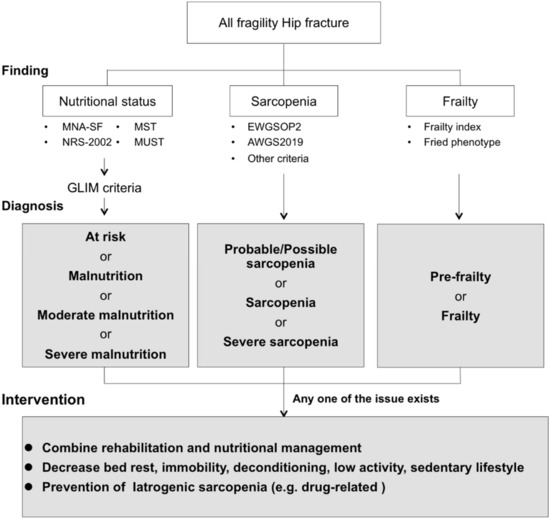
Figure 2.
The specific strategies of geriatric nutritional evaluation and advanced intervention for patients with fragility hip fracture. Abbreviations: MNA-SF, Mini Nutritional Assessment-Short Form; MST, Malnutrition Screening Tool; NRS-2002, Nutrition Risk Screening 2002; MUST, Malnutrition Universal Screening Tool; EWGSOP, European Working Group on Sarcopenia in Older People; AWGS, Asian Working Group for Sarcopenia.
In hip fracture patients, nutritional-related iatrogenic sarcopenia requires a comprehensive approach. Only 17.5% of patients meet their energy requirements in the first week after hip surgery [110]. Additionally, multiple factors are associated with reduced food intake after fractures [111,112], and it is clear that interventions that merely administer supplements are insufficient for improving clinical outcomes. Bell et al. [113] reported that intensive individualized, multidisciplinary (orthopedic and geriatric physician, nursing staff, physiotherapists and occupational therapists, dietitian, pharmacist, etc.) interventions reduced barriers to food intake; food intake increased in the group with multidisciplinary intervention (mean 1489.0 kcal/day, protein intake of 1.13 g/body weight) compared with the group with conventional care (mean 707.4 kcal/day, protein intake of 0.60 g/body weight) in hip fracture patients. Additionally, medical professionals should pay attention to sarcopenic dysphagia accompanied by deterioration in nutritional status after hip surgery [56]. A multidisciplinary, comprehensive pragmatic intervention trial is required for hip fractures with overlapping undernutrition, sarcopenia, and frailty. Compared with randomized controlled trials, pragmatic trials can be routinely conducted with less stringent inclusion and exclusion criteria. Therefore, selection bias can be controlled, and the results can be easily generalized to routine clinical practice. Comprehensive multidisciplinary interventions are necessary to prevent nutritional-related iatrogenic sarcopenia in patients with hip fracture.
9. Comprehensive Intervention Based on Combined Nutritional Intervention with Rehabilitation Exercise for Patients with Hip Fractures
The geriatric nutritional evaluation, a comprehensive approach that combines nutritional management and rehabilitation, is a key strategy for improving clinical outcomes [105,106,114]. The concept of “rehabilitation nutrition” [114] invented in Japan may be effective for managing geriatric nutritional problems in fragility hip fracture patients. “Rehabilitation nutrition” is defined as that which (i) holistically evaluates the presence and causes of nutritional disorders, sarcopenia, and excess or deficiency of nutrient intake as per the International Classification of Functioning, Disability and Health; (ii) conducts rehabilitation nutrition diagnosis and rehabilitation nutrition goal setting; and (iii) elicits the highest body functions, activities, participations, and QOL by improving nutritional status, sarcopenia, and frailty using “nutrition care management in consideration of rehabilitation” and “rehabilitation in consideration of nutrition” in people with a disability and frail older people [114]. This rehabilitation nutrition concept can maximize functional recovery and QOL through the diagnosis and intervention of undernutrition, sarcopenia, and frailty. Previous studies reported the usefulness of this comprehensive approach, which combines nutritional management and rehabilitation [102,115]. Future research on comprehensive interventions combined with nutrition and rehabilitation, specifically for hip fracture patients, is strongly needed.
10. Strengths and Limitations
The strength of this review is that we summarized recent research that focused on the nutritional problem of elderly patients with hip fracture and mentioned new intervention strategies for geriatric nutritional problems. However, this review also has methodological limitations. For example, we did not use a strict literature search for a systematic review, which is necessary to further explore the impact of sarcopenia and frailty on the clinical outcomes of hip fractures.
11. Conclusions
The overlap between undernutrition, sarcopenia, and frailty is a characteristic of fragility hip fracture patients. Geriatric nutritional problems have a strong impact on adverse outcomes after hip fracture. To improve clinical outcomes effectively, medical professionals should be aware of geriatric nutritional problems in hip fracture patients. A comprehensive approach that combines nutritional management and rehabilitation is a key strategy for improving clinical outcomes. New, comprehensive, advanced, and hip-fracture-specific intervention strategies are strongly needed.
Supplementary Materials
The following are available online at https://www.mdpi.com/2072-6643/12/12/3743/s1: Supplementary Table S1: Results of the quality assessment of the study on undernutrition and clinical outcomes; Supplementary Table S2: Results of the quality assessment of the study on sarcopenia and clinical outcomes; Supplementary Table S3: Results of the quality assessment of the study on frailty and clinical outcomes; Supplementary Figure S1: Flow diagrams of electronic search strategy for undernutrition with hip fractures; Supplementary Figure S2: Flow diagrams of electronic search strategy for sarcopenia with hip fractures; Supplementary Figure S3: Flow diagrams of electronic search strategy for frailty with hip fractures.
Author Contributions
Conceptualization, T.I., K.M. (Keisuke Maeda), A.N., A.S., J.U., K.M. (Kenta Murotani), K.S., and A.T.; methodology, T.I. and K.M. (Keisuke Maeda); writing—original draft preparation, T.I. and K.M. (Keisuke Maeda); writing—review and editing, T.I., K.M. (Keisuke Maeda), A.N., A.S., J.U., K.M. (Kenta Murotani), K.S., and A.T.; supervision, K.M. (Keisuke Maeda) and A.T.; funding acquisition, K.M. (Keisuke Maeda). All authors have read and agreed to the published version of the manuscript.
Funding
This research was funded by the Research Funding of Longevity Sciences (grant 20-57 to K. Maeda).
Acknowledgments
We give special thanks to all of the individuals involved in this review who greatly facilitated this work.
Conflicts of Interest
The authors declare no conflict of interest.
References
- Johnell, O.; Kanis, J.A. An estimate of the worldwide prevalence, mortality and disability associated with hip fracture. Osteoporos. Int. 2004, 15, 897–902. [Google Scholar] [CrossRef]
- Cooper, C.; Campion, G.; Melton, L.J. Hip fractures in the elderly: A world-wide projection. Osteoporos. Int. 1992, 2, 285–289. [Google Scholar] [CrossRef]
- Johnell, O.; Kanis, J. Epidemiology of osteoporotic fractures. Osteoporos. Int. 2005, 16, 6–10. [Google Scholar] [CrossRef]
- Shyu, Y.-I.L.; Chen, M.-C.; Liang, J.; Wu, C.-C.; Su, J.-Y. Predictors of functional recovery for hip fractured elders during 12 months following hospital discharge: A prospective study on a Taiwanese sample. Osteoporos. Int. 2004, 15, 475–482. [Google Scholar] [CrossRef]
- Braithwaite, R.S.; Col, N.F.; Wong, J.B. Estimating hip fracture morbidity, mortality and costs. J. Am. Geriatr. Soc. 2003, 51, 364–370. [Google Scholar] [CrossRef] [PubMed]
- Avenell, A.; Handoll, H. Nutritional supplementation for hip fracture aftercare in the elderly. Cochrane Database Syst. Rev. 2016. [Google Scholar] [CrossRef] [PubMed]
- Cruz-Jentoft, A.J.; Sayer, A.A. Sarcopenia. Lancet 2019, 393, 2636–2646. [Google Scholar] [CrossRef]
- Liberati, A.; Altman, D.G.; Tetzlaff, J.; Mulrow, C.; Gøtzsche, P.C.; Ioannidis, J.P.A.; Clarke, M.; Devereaux, P.J.; Kleijnen, J.; Moher, D. The PRISMA statement for reporting systematic reviews and meta-analyses of studies that evaluate health care interventions: Explanation and elaboration. PLoS Med. 2009, 6. [Google Scholar] [CrossRef] [PubMed]
- Cruz-Jentoft, A.J.; Baeyens, J.P.; Bauer, J.M.; Boirie, Y.; Cederholm, T.; Landi, F.; Martin, F.C.; Michel, J.P.; Rolland, Y.; Schneider, S.M.; et al. Sarcopenia: European consensus on definition and diagnosis. Age Ageing 2010, 39, 412–423. [Google Scholar] [CrossRef]
- National Heart Lung and Blood Institute. Study Quality Assessment Tools. Available online: https://www.nhlbi.nih.gov/health-topics/study-quality-assessment-tools (accessed on 17 November 2020).
- Nishioka, S.; Wakabayashi, H.; Momosaki, R. Nutritional Status Changes and Activities of Daily Living after Hip Fracture in Convalescent Rehabilitation Units: A Retrospective Observational Cohort Study from the Japan Rehabilitation Nutrition Database. J. Acad. Nutr. Diet. 2018, 118, 1270–1276. [Google Scholar] [CrossRef]
- Helminen, H.; Luukkaala, T.; Saarnio, J.; Nuotio, M. Comparison of the Mini-Nutritional Assessment short and long form and serum albumin as prognostic indicators of hip fracture outcomes. Injury 2017, 48, 903–908. [Google Scholar] [CrossRef] [PubMed]
- Koren-Hakim, T.; Weiss, A.; Hershkovitz, A.; Otzrateni, I.; Grosman, B.; Frishman, S.; Salai, M.; Beloosesky, Y. The relationship between nutritional status of hip fracture operated elderly patients and their functioning, comorbidity and outcome. Clin. Nutr. 2012, 31, 917–921. [Google Scholar] [CrossRef] [PubMed]
- Mazzola, P.; Ward, L.; Zazzetta, S.; Broggini, V.; Anzuini, A.; Valcarcel, B.; Brathwaite, J.S.; Pasinetti, G.M.; Bellelli, G.; Annoni, G. Association Between Preoperative Malnutrition and Postoperative Delirium after Hip Fracture Surgery in Older Adults. J. Am. Geriatr. Soc. 2017, 65, 1222–1228. [Google Scholar] [CrossRef] [PubMed]
- Inoue, T.; Misu, S.; Tanaka, T.; Sakamoto, H.; Iwata, K.; Chuman, Y.; Ono, R. Pre-fracture nutritional status is predictive of functional status at discharge during the acute phase with hip fracture patients: A multicenter prospective cohort study. Clin. Nutr. 2017, 36, 6–11. [Google Scholar] [CrossRef]
- Bajada, S.; Smith, A.; Morgan, D. Pre-operative nutritional serum parameters as predictors of failure after internal fixation in undisplaced intracapsular proximal femur fractures. Injury 2015, 46, 1571–1576. [Google Scholar] [CrossRef]
- Goisser, S.; Schrader, E.; Singler, K.; Bertsch, T.; Gefeller, O.; Biber, R.; Bail, H.J.; Sieber, C.C.; Volkert, D. Malnutrition According to Mini Nutritional Assessment Is Associated with Severe Functional Impairment in Geriatric Patients before and up to 6 Months after Hip Fracture. J. Am. Med. Dir. Assoc. 2015, 1–7. [Google Scholar] [CrossRef]
- Van Wissen, J.; van Stijn, M.F.M.; Doodeman, H.J.; Houdijk, A.P.J. Mini nutritional assessment and mortality after hip fracture surgery in the elderly. J. Nutr. Health Aging 2016, 20, 964–968. [Google Scholar] [CrossRef]
- Zanetti, M.; Gortan Cappellari, G.; Ratti, C.; Ceschia, G.; Murena, L.; De Colle, P.; Barazzoni, R. Poor nutritional status but not cognitive or functional impairment per se independently predict 1 year mortality in elderly patients with hip-fracture. Clin. Nutr. 2019, 38, 1607–1612. [Google Scholar] [CrossRef]
- Milte, R.; Miller, M. Dietetic care of hip fracture patients across Australia: Are we doing enough? Nutr. Diet. 2011, 68, 214–220. [Google Scholar] [CrossRef]
- Yagi, T.; Oshita, Y.; Okano, I.; Kuroda, T.; Ishikawa, K.; Nagai, T.; Inagaki, K. Controlling nutritional status score predicts postoperative complications after hip fracture surgery. BMC Geriatr. 2020, 20, 1–7. [Google Scholar] [CrossRef]
- Kotera, A. Geriatric Nutritional Risk Index and Controlling Nutritional Status Score can predict postoperative 180-day mortality in hip fracture surgeries. JA Clin. Rep. 2019, 5. [Google Scholar] [CrossRef] [PubMed]
- Hao, L.; Carson, J.L.; Schlussel, Y.; Noveck, H.; Shapses, S.A. Vitamin D deficiency is associated with reduced mobility after hip fracture surgery: A prospective study. Am. J. Clin. Nutr. 2020, 112, 613–618. [Google Scholar] [CrossRef] [PubMed]
- Han, T.S.; Yeong, K.; Lisk, R.; Fluck, D.; Fry, C.H. Prevalence and consequences of malnutrition and malnourishment in older individuals admitted to hospital with a hip fracture. Eur. J. Clin. Nutr. 2020. [Google Scholar] [CrossRef] [PubMed]
- Vosoughi, A.R.; Emami, M.J.; Pourabbas, B.; Mahdaviazad, H. Factors increasing mortality of the elderly following hip fracture surgery: Role of body mass index, age, and smoking. Musculoskelet. Surg. 2017, 101, 25–29. [Google Scholar] [CrossRef] [PubMed]
- Miyanishi, K.; Jingushi, S.; Torisu, T. Mortality after hip fracture in Japan: The role of nutritional status. J. Orthop. Surg. (Hong Kong) 2010, 18, 265–270. [Google Scholar] [CrossRef]
- Stone, A.V.; Jinnah, A.; Wells, B.J.; Atkinson, H.; Miller, A.N.; Futrell, W.M.; Lenoir, K.; Emory, C.L. Nutritional markers may identify patients with greater risk of re-admission after geriatric hip fractures. Int. Orthop. 2018, 42, 231–238. [Google Scholar] [CrossRef] [PubMed]
- Gumieiro, D.N.; Rafacho, B.P.M.; Gonçalves, A.F.; Tanni, S.E.; Azevedo, P.S.; Sakane, D.T.; Carneiro, C.A.S.; Gaspardo, D.; Zornoff, L.A.M.; Pereira, G.J.C.; et al. Mini Nutritional Assessment predicts gait status and mortality 6 months after hip fracture. Br. J. Nutr. 2012, 1–5. [Google Scholar] [CrossRef]
- Drevet, S.; Bioteau, C.; Mazière, S.; Couturier, P.; Merloz, P.; Tonetti, J.; Gavazzi, G. Prevalence of protein-energy malnutrition in hospital patients over 75 years of age admitted for hip fracture. Orthop. Traumatol. Surg. Res. 2014, 100, 669–674. [Google Scholar] [CrossRef]
- Miu, K.Y.D.; Lam, P.S. Effects of nutritional status on 6-month outcome of hip fractures in elderly patients. Ann. Rehabil. Med. 2017, 41, 1005–1012. [Google Scholar] [CrossRef]
- Kondrup, J.; Allison, S.P.; Elia, M.; Vellas, B.; Plauth, M. ESPEN guidelines for nutrition screening 2002. Clin. Nutr. 2003, 22, 415–421. [Google Scholar] [CrossRef]
- Inoue, T.; Misu, S.; Tanaka, T.; Kakehi, T.; Ono, R. Acute phase nutritional screening tool associated with functional outcomes of hip fracture patients: A longitudinal study to compare MNA-SF, MUST, NRS-2002 and GNRI. Clin. Nutr. 2019, 38, 220–226. [Google Scholar] [CrossRef] [PubMed]
- Koren-Hakim, T.; Weiss, A.; Hershkovitz, A.; Otzrateni, I.; Anbar, R.; Gross Nevo, R.F.; Schlesinger, A.; Frishman, S.; Salai, M.; Beloosesky, Y. Comparing the adequacy of the MNA-SF, NRS-2002 and MUST nutritional tools in assessing malnutrition in hip fracture operated elderly patients. Clin. Nutr. 2015, 3–8. [Google Scholar] [CrossRef]
- Guigoz, Y. The Mini Nutritional Assessment (MNA) review of the literature—What does it tell us? J. Nutr. Health Aging 2006, 10, 466–485, discussion 485–487. [Google Scholar] [PubMed]
- Cao, L.; Morley, J.E. Sarcopenia Is Recognized as an Independent Condition by an International Classification of Disease, Tenth Revision, Clinical Modification (ICD-10-CM) Code. J. Am. Med. Dir. Assoc. 2016, 17, 675–677. [Google Scholar] [CrossRef] [PubMed]
- Anker, S.D.; Morley, J.E.; von Haehling, S. Welcome to the ICD-10 code for sarcopenia. J. Cachexia Sarcopenia Muscle 2016, 7, 512–514. [Google Scholar] [CrossRef] [PubMed]
- Cruz-Jentoft, A.J.; Bahat, G.; Bauer, J.; Boirie, Y.; Bruyère, O.; Cederholm, T.; Cooper, C.; Landi, F.; Rolland, Y.; Sayer, A.A.; et al. Sarcopenia: Revised European consensus on definition and diagnosis. Age Ageing 2019, 48, 16–31. [Google Scholar] [CrossRef]
- Edwards, M.H.; Dennison, E.M.; Aihie Sayer, A.; Fielding, R.; Cooper, C. Osteoporosis and sarcopenia in older age. Bone 2015, 80, 126–130. [Google Scholar] [CrossRef]
- Yamada, M.; Nishiguchi, S.; Fukutani, N.; Tanigawa, T.; Yukutake, T.; Kayama, H.; Aoyama, T.; Arai, H. Prevalence of sarcopenia in community-dwelling Japanese older adults. J. Am. Med. Dir. Assoc. 2013, 14, 911–915. [Google Scholar] [CrossRef]
- Chen, L.K.; Liu, L.K.; Woo, J.; Assantachai, P.; Auyeung, T.W.; Bahyah, K.S.; Chou, M.Y.; Chen, L.Y.; Hsu, P.S.; Krairit, O.; et al. Sarcopenia in Asia: Consensus report of the Asian working group for sarcopenia. J. Am. Med. Dir. Assoc. 2014, 15, 95–101. [Google Scholar] [CrossRef]
- Chen, L.; Woo, J.; Assantachai, P.; Auyeung, T.; Chou, M.; Iijima, K.; Jang, H.C.; Kang, L.; Kim, M.; Kim, S.; et al. Asian Working Group for Sarcopenia: 2019 Consensus Update on Sarcopenia Diagnosis and Treatment. J. Am. Med. Dir. Assoc. 2020, 21, 200–307.e2. [Google Scholar] [CrossRef]
- Studenski, S.A.; Peters, K.W.; Alley, D.E.; Cawthon, P.M.; McLean, R.R.; Harris, T.B.; Ferrucci, L.; Guralnik, J.M.; Fragala, M.S.; Kenny, A.M.; et al. The FNIH sarcopenia project: Rationale, study description, conference recommendations, and final estimates. J. Gerontol. Ser. A Biol. Sci. Med. Sci. 2014, 69, 547–558. [Google Scholar] [CrossRef] [PubMed]
- Landi, F.; Calvani, R.; Ortolani, E.; Salini, S.; Martone, A.M.; Santoro, L.; Santoliquido, A.; Sisto, A.; Picca, A.; Marzetti, E. The association between sarcopenia and functional outcomes among older patients with hip fracture undergoing in-hospital rehabilitation. Osteoporos. Int. 2017, 28, 1569–1576. [Google Scholar] [CrossRef] [PubMed]
- Malmstrom, T.K.; Morley, J.E. SARC-F: A simple questionnaire to rapidly diagnose sarcopenia. J. Am. Med. Dir. Assoc. 2013, 14, 531–532. [Google Scholar] [CrossRef] [PubMed]
- González-Montalvo, J.I.; Alarcón, T.; Gotor, P.; Queipo, R.; Velasco, R.; Hoyos, R.; Pardo, A.; Otero, A. Prevalence of sarcopenia in acute hip fracture patients and its influence on short-term clinical outcome. Geriatr. Gerontol. Int. 2015. [Google Scholar] [CrossRef] [PubMed]
- Di Monaco, M.; Castiglioni, C.; De Toma, E.; Gardin, L.; Giordano, S.; Di Monaco, R.; Tappero, R. Presarcopenia and sarcopenia in hip-fracture women: Prevalence and association with ability to function in activities of daily living. Aging Clin. Exp. Res. 2015, 27, 465–472. [Google Scholar] [CrossRef] [PubMed]
- Chang, C.D.; Wu, J.S.; Mhuircheartaigh, J.N.; Hochman, M.G.; Rodriguez, E.K.; Appleton, P.T.; Mcmahon, C.J. Effect of sarcopenia on clinical and surgical outcome in elderly patients with proximal femur fractures. Skelet. Radiol. 2018, 47, 771–777. [Google Scholar] [CrossRef] [PubMed]
- Kim, Y.K.; Yi, S.R.; Lee, Y.H.; Kwon, J.; Jang, S.I.; Park, S.H. Effect of Sarcopenia on Postoperative Mortality in Osteoporotic Hip Fracture Patients. J. Bone Metab. 2018, 25, 227. [Google Scholar] [CrossRef]
- Yoo, J.I.; Kim, H.; Ha, Y.C.; Kwon, H.B.; Koo, K.H. Osteosarcopenia in patients with hip fracture is related with high mortality. J. Korean Med. Sci. 2018, 33, 1–9. [Google Scholar] [CrossRef]
- Steihaug, O.M.; Gjesdal, C.G.; Bogen, B.; Kristoffersen, M.H.; Lien, G.; Hufthammer, K.O.; Ranhoff, A.H. Does sarcopenia predict change in mobility after hip fracture? A multicenter observational study with one-year follow-up. BMC Geriatr. 2018, 18, 1–10. [Google Scholar] [CrossRef]
- Malafarina, V.; Malafarina, C.; Ugarte, A.B.; Martinez, J.A.; Goñi, I.A.; Zulet, M.A. Factors associated with sarcopenia and 7-year mortality in very old patients with hip fracture admitted to rehabilitation units: A pragmatic study. Nutrients 2019, 11, 2243. [Google Scholar] [CrossRef]
- Byun, S.E.; Kim, S.; Kim, K.H.; Ha, Y.C. Psoas cross-sectional area as a predictor of mortality and a diagnostic tool for sarcopenia in hip fracture patients. J. Bone Miner. Metab. 2019, 37, 871–879. [Google Scholar] [CrossRef] [PubMed]
- Chen, Y.P.; Wong, P.K.; Tsai, M.J.; Chang, W.C.; Hsieh, T.S.; Leu, T.H.; Jeff Lin, C.F.; Lee, C.H.; Kuo, Y.J.; Lin, C.Y. The high prevalence of sarcopenia and its associated outcomes following hip surgery in Taiwanese geriatric patients with a hip fracture. J. Formos. Med. Assoc. 2020. [Google Scholar] [CrossRef] [PubMed]
- Chiles Shaffer, N.; Huang, Y.; Abraham, D.S.; Cheng, Y.J.; Lu, W.; Gruber-Baldini, A.L.; Hochberg, M.C.; Guralnik, J.; Magaziner, J.; Orwig, D. Comparing Longitudinal Sarcopenia Trends by Definitions Across Men and Women After Hip Fracture. J. Am. Geriatr. Soc. 2020, 1–8. [Google Scholar] [CrossRef] [PubMed]
- Shin, W.C.; Jang, J.H.; Seo, H.E.; Suh, K.T.; Moon, N.H. Prevalence and clinical impact of sarcopenia in osteoporotic hip fracture: Single center retrospective cohort study. Acta Orthop. Traumatol. Turc. 2020, 54, 27–33. [Google Scholar] [CrossRef] [PubMed]
- Nagano, A.; Maeda, K.; Shimizu, A.; Nagami, S.; Takigawa, N.; Ueshima, J.; Suenaga, M. Association of sarcopenic dysphagia with underlying sarcopenia following hip fracture surgery in older women. Nutrients 2020, 12, 1365. [Google Scholar] [CrossRef]
- Ha, Y.C.; Won, C.W.; Kim, M.; Chun, K.J.; Yoo, J.-I. SARC-F as a Useful Tool for Screening Sarcopenia in Elderly Patients with Hip Fractures. J. Nutr. Health Aging 2020, 24, 78–82. [Google Scholar] [CrossRef]
- Steihaug, O.M.; Gjesdal, C.G.; Bogen, B.; Kristoffersen, M.H.; Lien, G.; Ranhoff, A.H. Sarcopenia in patients with hip fracture: A multicenter cross-sectional study. PLoS ONE 2017, 12, 1–13. [Google Scholar] [CrossRef]
- Ho, A.W.H.; Lee, M.M.L.; Chan, E.W.C.; Ng, H.M.Y.; Lee, C.W.; Ng, W.S.; Wong, S.H. Prevalence of pre-sarcopenia and sarcopenia in Hong Kong Chinese geriatric patients with hip fracture and its correlation with different factors. Hong Kong Med. J. 2015, 22, 8–10. [Google Scholar] [CrossRef]
- Marzetti, E.; Calvani, R.; Lorenzi, M.; Marini, F.; D’Angelo, E.; Martone, A.M.; Celi, M.; Tosato, M.; Bernabei, R.; Landi, F. Serum levels of C-terminal agrin fragment (CAF) are associated with sarcopenia in older hip fractured patients. Exp. Gerontol. 2014, 60, 79–82. [Google Scholar] [CrossRef]
- Yoo, J.I.; Ha, Y.C.; Choi, H.; Kim, K.H.; Lee, Y.K.; Koo, K.H.; Park, K.S. Malnutrition and chronic inflammation as risk factors for sarcopenia in elderly patients with hip fracture. Asia Pac. J. Clin. Nutr. 2018, 27, 527–532. [Google Scholar] [CrossRef]
- Sánchez-Castellano, C.; Martín-Aragón, S.; Bermejo-Bescós, P.; Vaquero-Pinto, N.; Miret-Corchado, C.; Merello de Miguel, A.; Cruz-Jentoft, A.J. Biomarkers of sarcopenia in very old patients with hip fracture. J. Cachexia Sarcopenia Muscle 2020, 11, 478–486. [Google Scholar] [CrossRef] [PubMed]
- Marzetti, E.; Calvani, R.; Lorenzi, M.; Tanganelli, F.; Picca, A.; Bossola, M.; Menghi, A.; Bernabei, R.; Landi, F. Association between myocyte quality control signaling and sarcopenia in old hip-fractured patients: Results from the Sarcopenia in HIp FracTure (SHIFT) exploratory study. Exp. Gerontol. 2016, 80, 1–5. [Google Scholar] [CrossRef] [PubMed]
- Morley, J.E.; Vellas, B.; Abellan van Kan, G.; Anker, S.D.; Bauer, J.M.; Bernabei, R.; Cesari, M.; Chumlea, W.C.; Doehner, W.; Evans, J.; et al. Frailty consensus: A call to action. J. Am. Med. Dir. Assoc. 2013, 14, 392–397. [Google Scholar] [CrossRef] [PubMed]
- Dent, E.; Martin, F.C.; Bergman, H.; Woo, J.; Romero-Ortuno, R.; Walston, J.D. Management of frailty: Opportunities, challenges, and future directions. Lancet 2019, 394, 1376–1386. [Google Scholar] [CrossRef]
- Lin, H.-S.; Watts, J.N.; Peel, N.M.; Hubbard, R.E. Frailty and post-operative outcomes in older surgical patients: A systematic review. BMC Geriatr. 2016, 16, 157. [Google Scholar] [CrossRef]
- Rolland, Y.; Abellan Van Kan, G.; Benetos, A.; Blain, H.; Bonnefoy, M.; Chassagne, P.; Jeandel, C.; Laroche, M.; Nourhashemi, F.; Orcel, P.; et al. Frailty, osteoporosis and hip fracture: Causes, consequences and therapeutic perspectives. J. Nutr. Health Aging 2008, 12, 335–346. [Google Scholar] [CrossRef]
- Fried, L.P.; Tangen, C.M.; Walston, J.; Newman, A.B.; Hirsch, C.; Gottdiener, J.; Seeman, T.; Tracy, R.; Kop, W.J.; Burke, G.; et al. Frailty in Older Adults: Evidence for a Phenotype. J. Gerontol. Med. Sci. 2001, 56, 46–56. [Google Scholar] [CrossRef]
- Rockwood, K.; Mcdowell, I.; Song, X.; Macknight, C.; Bergman, H.; Hogan, D.B.; Hogan, D.; Mcdowell, I.; Mitnitski, A. A global clinical measure of fitness and frailty in elderly people. Can. Med. Assoc. J. 2005, 30, 489–495. [Google Scholar] [CrossRef]
- Patel, K.V.; Brennan, K.L.; Brennan, M.L.; Jupiter, D.C.; Shar, A.; Davis, M.L. Association of a modified frailty index with mortality after femoral neck fracture in patients aged 60 years and older. Clin. Orthop. Relat. Res. 2014, 472, 1010–1017. [Google Scholar] [CrossRef]
- Krishnan, M.; Beck, S.; Havelock, W.; Eeles, E.; Hubbard, R.E.; Johansen, A. Predicting outcome after hip fracture: Using a frailty index to integrate comprehensive geriatric assessment results. Age Ageing 2014, 43, 122–126. [Google Scholar] [CrossRef]
- Kistler, E.A.; Nicholas, J.A.; Kates, S.L.; Friedman, S.M. Frailty and Short-Term Outcomes in Patients with Hip Fracture. Geriatr. Orthop. Surg. Rehabil. 2015, 6, 209–214. [Google Scholar] [CrossRef] [PubMed]
- Gleason, L.J.; Benton, E.A.; Alvarez-Nebreda, M.L.; Weaver, M.J.; Harris, M.B.; Javedan, H. FRAIL Questionnaire Screening Tool and Short-Term Outcomes in Geriatric Fracture Patients. J. Am. Med. Dir. Assoc. 2017, 18, 1082–1086. [Google Scholar] [CrossRef] [PubMed]
- Choi, J.Y.; Cho, K.J.; Kim, S.W.; Yoon, S.J.; Kang, M.G.; Kim, K.I.; Lee, Y.K.; Koo, K.H.; Kim, C.H. Prediction of Mortality and Postoperative Complications using the Hip-Multidimensional Frailty Score in Elderly Patients with Hip Fracture. Sci. Rep. 2017, 7, 1–8. [Google Scholar] [CrossRef]
- Winters, A.M.; Hartog, L.C.; Roijen, H.I.F.; Brohet, R.M.; Kamper, A.M. Relationship between clinical outcomes and Dutch frailty score among elderly patients who underwent surgery for hip fracture. Clin. Interv. Aging 2018, 13, 2481–2486. [Google Scholar] [CrossRef] [PubMed]
- Vasu, B.K.; Ramamurthi, K.P.; Rajan, S.; George, M. Geriatric Patients with Hip Fracture: Frailty and Other Risk Factors Affecting the Outcome. Anesth. Essays Res. 2018, 12, 546–551. [Google Scholar] [CrossRef] [PubMed]
- Chen, C.L.; Chen, C.M.; Wang, C.Y.; Ko, P.W.; Chen, C.H.; Hsieh, C.P.; Chiu, H.C. Frailty is Associated with an Increased Risk of Major Adverse Outcomes in Elderly Patients Following Surgical Treatment of Hip Fracture. Sci. Rep. 2019, 9, 1–9. [Google Scholar] [CrossRef] [PubMed]
- Inoue, T.; Misu, S.; Tanaka, T.; Kakehi, T.; Kakiuchi, M.; Chuman, Y.; Ono, R. Frailty defined by 19 items as a predictor of short-term functional recovery in patients with hip fracture. Injury 2019, 50, 2272–2276. [Google Scholar] [CrossRef] [PubMed]
- Van De Ree, C.L.P.; Landers, M.J.F.; Kruithof, N.; De Munter, L.; Slaets, J.P.J.; Gosens, T.; Jongh, M.A.C. Effect of frailty on quality of life in elderly patients after hip fracture: A longitudinal study. BMJ Open 2019, 9, 1–8. [Google Scholar] [CrossRef]
- Jorissen, R.N.; Lang, C.; Visvanathan, R.; Crotty, M.; Inacio, M.C. The effect of frailty on outcomes of surgically treated hip fractures in older people. Bone 2020, 136, 115327. [Google Scholar] [CrossRef]
- Lu, W.; Dai, L.; Wu, G.; Hu, R. Comparison of two frailty indexes in hip fractures. J. Orthop. Surg. 2020, 28, 1–8. [Google Scholar] [CrossRef]
- Pizzonia, M.; Giannotti, C.; Carmisciano, L.; Signori, A.; Rosa, G.; Santolini, F.; Caffa, I.; Montecucco, F.; Nencioni, A.; Monacelli, F. Frailty assessment, hip fracture, and long-term clinical outcomes in older adults. Eur. J. Clin. Investig. 2020, e13445. [Google Scholar] [CrossRef] [PubMed]
- Low, S.; Wee, E.; Dorevitch, M. Impact of place of residence, frailty and other factors on rehabilitation outcomes post hip fracture. Age Ageing 2020, 1–8. [Google Scholar] [CrossRef] [PubMed]
- Narula, S.; Lawless, A.; D’Alessandro, P.; Jones, C.W.; Yates, P.; Seymour, H. Clinical Frailty Scale is a good predictor of mortality after proximal femur fracture. Bone Jt. Open 2020, 1, 443–449. [Google Scholar] [CrossRef] [PubMed]
- Botella-Carretero, J.I.; Iglesias, B.; Balsa, J.A.; Zamarrón, I.; Arrieta, F.; Vázquez, C. Effects of oral nutritional supplements in normally nourished or mildly undernourished geriatric patients after surgery for hip fracture: A randomized clinical trial. JPEN J. Parenter. Enter. Nutr. 2008, 32, 120–128. [Google Scholar] [CrossRef] [PubMed]
- Botella-Carretero, J.I.; Iglesias, B.; Balsa, J.A.; Arrieta, F.; Zamarrón, I.; Vázquez, C. Perioperative oral nutritional supplements in normally or mildly undernourished geriatric patients submitted to surgery for hip fracture: A randomized clinical trial. Clin. Nutr. 2010, 29, 574–579. [Google Scholar] [CrossRef]
- Espaulella, J.; Guyer, H.; Diaz-Escriu, F.; Mellado-Navas, J.A.; Castells, M.; Pladevall, M. Nutritional supplementation of elderly hip fracture patients. A randomized, double-blind, placebo-controlled trial. Age Ageing 2000, 29, 425–431. [Google Scholar] [CrossRef]
- Houwing, R.H.; Rozendaal, M.; Wouters-Wesseling, W.; Beulens, J.W.J.; Buskens, E.; Haalboom, J.R. A randomised, double-blind assessment of the effect of nutritional supplementation on the prevention of pressure ulcers in hip-fracture patients. Clin. Nutr. 2003, 22, 401–405. [Google Scholar] [CrossRef]
- Myint, M.W.W.; Wu, J.; Wong, E.; Chan, S.P.; To, T.S.J.; Chau, M.W.R.; Ting, K.H.; Fung, P.M.; Au, K.S.D. Clinical benefits of oral nutritional supplementation for elderly hip fracture patients: A single blind randomised controlled trial. Age Ageing 2013, 42, 39–45. [Google Scholar] [CrossRef]
- Neumann, M.; Friedmann, J.; Roy, M.A.; Jensen, G.L. Provision of high-protein supplement for patients recovering from hip fracture. Nutrition 2004, 20, 415–419. [Google Scholar] [CrossRef]
- Tidermark, J.; Ponzer, S.; Carlsson, P.; Söderqvist, A.; Brismar, K.; Tengstrand, B.; Cederholm, T. Effects of protein-rich supplementation and nandrolone in lean elderly women with femoral neck fractures. Clin. Nutr. 2004, 23, 587–596. [Google Scholar] [CrossRef]
- Wyers, C.E.; Reijven, P.L.M.; Breedveld-Peters, J.J.L.; Denissen, K.F.M.; Schotanus, M.G.M.; Van Dongen, M.C.J.M.; Eussen, S.J.P.M.; Heyligers, I.C.; Van Den Brandt, P.A.; Willems, P.C.; et al. Efficacy of Nutritional Intervention in Elderly after Hip Fracture: A Multicenter Randomized Controlled Trial. J. Gerontol. Ser. A Biol. Sci. Med. Sci. 2018, 73, 1429–1437. [Google Scholar] [CrossRef] [PubMed]
- Malafarina, V.; Uriz-Otano, F.; Malafarina, C.; Martinez, J.A.; Zulet, M.A. Effectiveness of nutritional supplementation on sarcopenia and recovery in hip fracture patients. A multi-centre randomized trial. Maturitas 2017, 101, 42–50. [Google Scholar] [CrossRef] [PubMed]
- Bischoff-Ferrari, H.A.; Dawson-Hughes, B.; Platz, A.; Orav, E.J.; Stähelin, H.B.; Willett, W.C.; Can, U.; Egli, A.; Mueller, N.J.; Looser, S.; et al. Effect of High-Dosage Cholecalciferol and Extended Physiotherapy on Complications After Hip Fracture. Arch. Intern. Med. 2010, 170, 813–820. [Google Scholar] [CrossRef] [PubMed]
- Papaioannou, A.; Kennedy, C.C.; Giangregorio, L.; Ioannidis, G.; Pritchard, J.; Hanley, D.A.; Farrauto, L.; Debeer, J.; Adachi, J.D. A randomized controlled trial of vitamin D dosing strategies after acute hip fracture: No advantage of loading doses over daily supplementation. BMC Musculoskelet. Disord. 2011, 12. [Google Scholar] [CrossRef] [PubMed]
- Bachrach-Lindström, M.; Unosson, M.; Ek, A.C.; Arnqvist, H.J. Assessment of nutritional status using biochemical and anthropometric variables in a nutritional intervention study of women with hip fracture. Clin. Nutr. 2001, 20, 217–223. [Google Scholar] [CrossRef]
- Chevalley, T.; Hoffmeyer, P.; Bonjour, J.P.; Rizzoli, R. Early serum IGF-I response to oral protein supplements in elderly women with a recent hip fracture. Clin. Nutr. 2010, 29, 78–83. [Google Scholar] [CrossRef]
- Niitsu, M.; Ichinose, D.; Hirooka, T.; Mitsutomi, K.; Morimoto, Y.; Sarukawa, J.; Nishikino, S.; Yamauchi, K.; Yamazaki, K. Effects of combination of whey protein intake and rehabilitation on muscle strength and daily movements in patients with hip fracture in the early postoperative period. Clin. Nutr. 2016, 35, 943–949. [Google Scholar] [CrossRef]
- Ekinci, O.; Yanlk, S.; Terzioǧlu Bebitoǧlu, B.; Yllmaz Akyüz, E.; Dokuyucu, A.; Erdem, Ş. Effect of Calcium β-Hydroxy-β-Methylbutyrate (CaHMB), Vitamin D, and Protein Supplementation on Postoperative Immobilization in Malnourished Older Adult Patients with Hip Fracture. Nutr. Clin. Pract. 2016, 31, 829–835. [Google Scholar] [CrossRef]
- Anbar, R.; Beloosesky, Y.; Cohen, J.; Madar, Z.; Weiss, A.; Theilla, M.; Koren Hakim, T.; Frishman, S.; Singer, P. Tight Calorie Control in geriatric patients following hip fracture decreases complications: A randomized, controlled study. Clin. Nutr. 2014, 33, 23–28. [Google Scholar] [CrossRef]
- Kim, H.K.; Suzuki, T.; Saito, K.; Yoshida, H.; Kobayashi, H.; Kato, H.; Katayama, M. Effects of exercise and amino acid supplementation on body composition and physical function in community-dwelling elderly Japanese sarcopenic women: A randomized controlled trial. J. Am. Geriatr. Soc. 2012, 60, 16–23. [Google Scholar] [CrossRef]
- Yoshimura, Y.; Bise, T.; Shimazu, S.; Tanoue, M.; Tomioka, Y.; Araki, P.T.; Nishino, P.T.; Kuzuhara, P.T.; Tomioka, P.T. Effects of a leucine-enriched amino acid supplement on muscle mass, muscle strength, and physical function in post-stroke patients with sarcopenia: A randomized controlled trial. Nutrition 2019, 58, 1–6. [Google Scholar] [CrossRef] [PubMed]
- Yoshimura, Y.; Wakabayashi, H.; Yamada, M.; Kim, H.; Harada, A.; Arai, H. Interventions for Treating Sarcopenia: A Systematic Review and Meta-Analysis of Randomized Controlled Studies. J. Am. Med. Dir. Assoc. 2017, 18, 553.e1–553.e16. [Google Scholar] [CrossRef] [PubMed]
- Drummond, M.J.; Dreyer, H.C.; Fry, C.S.; Glynn, E.L.; Rasmussen, B.B. Nutritional and contractile regulation of human skeletal muscle protein synthesis and mTORC1 signaling. J. Appl. Physiol. 2009, 106, 1374–1384. [Google Scholar] [CrossRef] [PubMed]
- Wakabayashi, H. Rehabilitation nutrition in general and family medicine. J. Gen. Fam. Med. 2017, 18, 153–154. [Google Scholar] [CrossRef] [PubMed]
- Nagano, A.; Nishioka, S.; Wakabayashi, H. Rehabilitation Nutrition for Iatrogenic Sarcopenia and Sarcopenic Dysphagia. J. Nutr. Health Aging 2019, 23, 256–265. [Google Scholar] [CrossRef]
- Davenport, S.J.; Arnold, M.; Hua, C.; Schenck, A.; Batten, S.; Taylor, N.F. Physical Activity Levels During Acute Inpatient Admission After Hip Fracture are Very Low. Physiother. Res. Int. 2015, 2050, 174–181. [Google Scholar] [CrossRef]
- Martone, A.M.; Bianchi, L.; Abete, P.; Bellelli, G.; Bo, M.; Cherubini, A.; Di Bari, M.; Maggio, M.; Manca, G.M.; Marzetti, E.; et al. The incidence of sarcopenia among hospitalized older patients: Results from the Glisten study. J. Cachexia Sarcopenia Muscle 2017, 8, 907–914. [Google Scholar] [CrossRef] [PubMed]
- Murayama, I.; Asai, T.; Misu, S.; Yamauchi, M.; Miura, A.; Ikemura, T.; Takehisa, T.; Takehisa, Y. Is increased “stay away from bed” time associated with improved clinical rehabilitation outcomes in Japanese rehabilitation hospitals? A prospective observational study and clinical practice. Aging Clin. Exp. Res. 2019. [Google Scholar] [CrossRef] [PubMed]
- Inoue, T.; Misu, S.; Tanaka, T.; Sakamoto, H.; Iwata, K.; Chuman, Y.; Ono, R. Inadequate Postoperative Energy Intake Relative to Total Energy Requirements Diminishes Acute Phase Functional Recovery from Hip Fracture. Arch. Phys. Med. Rehabil. 2019, 100, 32–38. [Google Scholar] [CrossRef] [PubMed]
- Foss, N.B.; Jensen, P.S.; Kehlet, H. Risk factors for insufficient perioperative oral nutrition after hip fracture surgery within a multi-modal rehabilitation programme. Age Ageing 2007, 36, 538–543. [Google Scholar] [CrossRef] [PubMed][Green Version]
- Mudge, A.M.; Ross, L.J.; Young, A.M.; Isenring, E.A.; Banks, M.D. Helping understand nutritional gaps in the elderly (HUNGER): A prospective study of patient factors associated with inadequate nutritional intake in older medical inpatients. Clin. Nutr. 2011, 30, 320–325. [Google Scholar] [CrossRef] [PubMed]
- Bell, J.J.; Bauer, J.D.; Capra, S.; Pulle, R.C. Multidisciplinary, multi-modal nutritional care in acute hip fracture inpatients—Results of a pragmatic intervention. Clin. Nutr. 2014, 1–7. [Google Scholar] [CrossRef] [PubMed]
- Wakabayashi, H.; Sakuma, K. Rehabilitation nutrition for sarcopenia with disability: A combination of both rehabilitation and nutrition care management. J. Cachexia Sarcopenia Muscle 2014, 5, 269–277. [Google Scholar] [CrossRef]
- Maeda, K.; Akagi, J. Treatment of Sarcopenic Dysphagia with Rehabilitation and Nutritional Support: A Comprehensive Approach. J. Acad. Nutr. Diet. 2016, 116, 573–577. [Google Scholar] [CrossRef] [PubMed]
Publisher’s Note: MDPI stays neutral with regard to jurisdictional claims in published maps and institutional affiliations. |
© 2020 by the authors. Licensee MDPI, Basel, Switzerland. This article is an open access article distributed under the terms and conditions of the Creative Commons Attribution (CC BY) license (http://creativecommons.org/licenses/by/4.0/).