


Abstract
Plastics play a pivotal role in various industries owing to their versatility in engineering their physical, mechanical, and chemical properties while exploiting their remarkable durability, light-weight nature, and cost-effectiveness. Yet, their widespread use has led to the pollution of Earth’s water systems. Over time, plastic waste degrades into microplastics, particles smaller than 5 mm. Recent studies have highlighted the growing concerns associated with microplastics, especially in bottled beverages, including bottled water, with associated hazards still in the very early stages of being fully understood. Furthermore, the global understanding of the extent of microplastic contamination in the environment and along the food chain remains limited. This study aimed to detect, quantify, and characterise microplastics in bottled drinking water produced and sold in Malta. Samples from five brands were filtered, stained with Nile red, and quantified using fluorescence microscopy. The average microplastic concentration was found to be 35,877 ± 23,542 particles per litre, with 84% of samples exhibiting contamination, which was noted to be statistically significant. The average particle diameter was measured to be 2.3696 ± 0.0035 µm. Raman spectroscopy was used to chemically characterise 10 larger particles per brand (i.e., 50 samples), identifying the presence of cellulose, polyurethane, polymethyl methacrylate, polyethylene, and smaller quantities of other polymers. Morphological analysis classified 36 of the larger particles as fragments and 14 as fibres. Excluding laboratory-introduced contamination, the primary source of microplastic contamination in the analysed bottled water was traced to the bottle caps.
1. Introduction
The degradation of plastics pollution results in the formation of microplastics (<5 mm) and nanoplastics (<1 µm), which are now ubiquitous in aquatic environments, including marine waters, lakes, and rivers—from densely populated areas to remote regions [1]. Common polymers identified in aquatic microplastic pollution include polyethylene (PE), polypropylene (PP), polystyrene (PS), polyethylene terephthalate (PET), and polyvinyl chloride (PVC), with regional variations in prevalence [2,3].
Microplastic exposure poses potential risks to both wildlife and human health. Microplastics can enter the human body through inhalation, dermal contact, and the ingestion of contaminated food and beverages [4,5]. The potential harmful effects on human health resulting from interactions with microplastics can be attributed to three main risks, which are related to size effects, chemicals, and microbes [6,7]. The exposure to, and accumulation in still unknown quantities, of microplastic particles in the human body can potentially trigger or exacerbate immune responses. Furthermore, the consumption of microplastics can lead to chemical toxicity due to the intake of leached monomers, additives, and other contaminants from the plastics themselves [7]. Microbial toxicity is believed to be caused due to the capacity of microplastics to act as a vector for microorganisms and external chemicals, which can also pose risks to human health [7].
Drinking water has been a major focus of microplastic contamination research due to its direct and prolonged exposure to humans, especially problematic to vulnerable populations such as children and individuals with underlying health conditions. Studies have identified microplastics in both tap and bottled water, as well as in various beverages that use water as a primary ingredient, such as tea, beer, wine, soft drinks, and energy drinks [5,8,9,10]. Notably, water and water-based beverages are among the most consumed food products, with an average daily intake of 724.55 g/day by 95.43% of the European population, underscoring the significance of this exposure route [11]. It is also recommended by the European Food Safety Authority (EFSA) that the adequate daily water intake is 2.0 L for females and 2.5 L for males [12].
Research into microplastic contamination in bottled water (Table 1) has revealed significant variability in particle counts, largely influenced by differences in detection methodologies, bottle material, and cap composition. Studies have examined microplastics in disposable PET bottles, reusable PET bottles, glass bottles, cartons, and polycarbonate (PC) containers [13,14,15,16,17,18,19,20,21]. The highest microplastic concentrations have been observed in studies focusing on particles smaller than 10 µm, with counts reaching up to 5.42 × 10⁷ particles per litre [18]. Notably, nanoplastics (<1 µm) accounted for approximately 90% of detected plastic particles in a study by Qian et al. [21], highlighting a potential underestimation in studies that do not assess this size range.
Table 1.
Summary of findings of microplastics contamination in bottled water, including information on the bottle packaging material, the number of samples (N); the volume of each sample; the polymer type, shape, abundance, size range of the microplastics; and the lower size limit of detection.
Variability in findings across studies is often attributed to differences in sample preparation, detection limits, and analytical techniques. Partial filter sample analysis has been noted in several studies, potentially leading to underestimation of microplastic contamination [14,15,21]. Additionally, while some studies performed comprehensive chemical analysis of detected particles, others focused only on select size ranges [17,20,21]. PET and PE have been the most identified polymers in bottled water, with bottle caps frequently cited as a major source of contamination [14,16,17,20].
Beyond water, other beverages have also been investigated for microplastic contamination. Studies on tea and coffee have shown significant contamination, with plastic tea bags releasing up to 11.6 × 10⁹ microplastics per cup—several orders of magnitude higher than bottled water [22]. Similarly, disposable cups used for hot beverages have been found to release microplastics into drinks [23]. Research on alcoholic beverages has revealed microplastic contamination in beer and white wine, with PE and PET fibres likely originating from bottle seals and processing equipment [13,24,25,26,27]. Soft drinks, cold teas, and energy drinks have also been found to contain microplastics, primarily in the form of fibres, with textile and packaging materials suggested as potential sources of contamination [26].
Despite growing evidence of microplastic contamination in drinking water and beverages, regulatory frameworks remain limited. Within the European Union (EU), the Directive 2020/2184 governs the quality of drinking water, ensuring safety standards to protect public health [28]. The recast of this directive in December 2020 acknowledged the issue of microplastics in drinking water, introducing a watch list to monitor emerging contaminants. However, no official limits for microplastics have been established, and standardised monitoring methodologies are still lacking [28].
Given the widespread presence of microplastics in the environment and their potential health implications, further research is necessary to refine detection methods, assess exposure risks, and develop effective regulatory measures. This study aims to contribute to the growing body of knowledge on microplastic contamination in drinking water by detecting, quantifying, analysing, and characterising the microplastics in Maltese local bottled water.
2. Methodology
2.1. Sample Collection
Five local Maltese bottled water brands (referred to as Brands 1–5) were selected for microplastic analysis. To maintain anonymity, brand names were omitted. Three packs of six 2 or 2.5 L bottles were purchased from each brand, out of which ten bottles from each brand were randomly selected, filtered, and analysed, yielding a total of 50 samples across all tested brands. Brands 2 and 4 were sourced from the same batch, while the remaining brands included samples from two different batches due to availability.
Information on water source, treatment, and packaging was obtained via email correspondence. Brands 1, 2, 3, and 5 provided details, all indicating the use of reverse osmosis. Brand 4 did not respond. Water sources included tap and groundwater in varying combinations. Full details are available in Section S1 in the Supporting Information.
2.2. Sample Preparation
Brands 1, 2, 4, and 5 were packaged in 2 L bottles while Brand 3 used 2.5 L bottles. Necessary measures were taken to reduce the risk of contamination. Water samples were filtered using an all-glass vacuum filtration system (Scharlab, Barcelona, Spain), and 47 mm diameter glass fibre membranes with a 0.3 µm pore size (Advantec MFS Inc., Dublin, CA, USA). Bottles were opened once and poured directly into the filtering apparatus. One new filter membrane was used per sample. After complete filtration, any plastic particles captured by the filter membrane were stained using a Nile Red (NR) solution (10 µg/mL in methanol), approximately 1.25 mL (equivalent to 25 drops) evenly applied across each filter. After 15 min incubation at room temperature, the filters were rinsed with approximately 3.75 mL (equivalent to 75 drops) of ultrapure type 1 water (Elga PURELAB Classic UV system), then carefully removed, placed in clean Petri dishes, and left to dry for at least 24 h in a dark, contaminant-free environment.
Negative control samples were included in this study as part of the quality assurance process. A total of 10 filter samples were prepared throughout the experimental procedure. These samples were prepared following an identical procedure to the water samples, with the exception that no water was poured into the funnel. This allowed for the identification of any contamination from the environment, equipment, or chemicals used, which could then be accounted for during analysis.
2.3. Sample Analysis
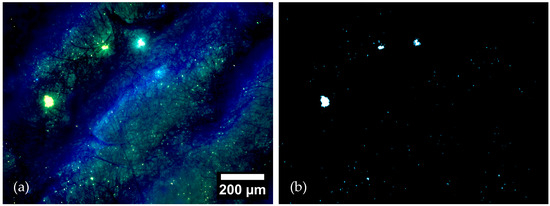
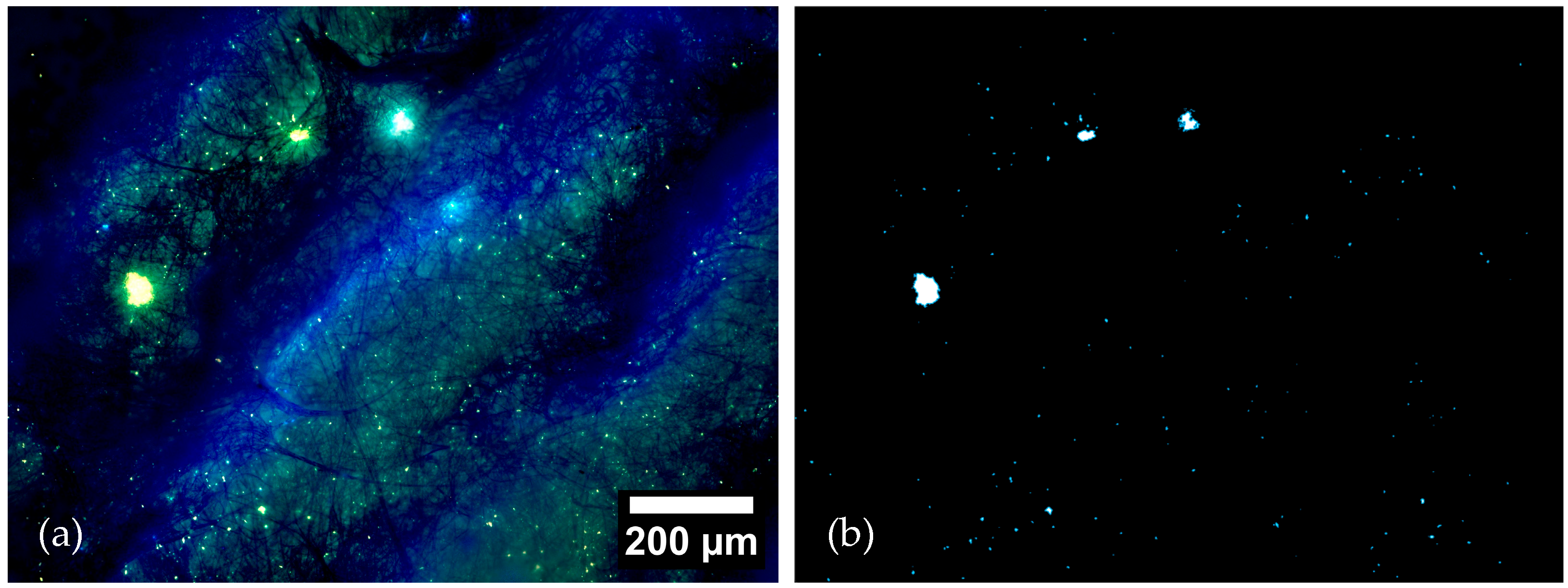
Fluorescence imaging was conducted using a Zeiss Axioscope 5 microscope (Carl Zeiss AG, Oberkochen, Germany) with an HXP 120 V light source and a 10× magnification objective (Zeiss EC Epiplan-Neofluar 10×/0.25 BD M27), providing a resolution of 0.4545 µm/pixel. Due to the time-intensive nature of full-filter analysis, the herringbone sampling method developed by Ferguson [29] was employed to obtain representative counts while minimising bias. To address image focus issues brought about by membrane roughness and limited depth of field, image stacking was performed using Helicon Focus 8 Pro (v8.2.2). Between 10 and 25 z-stacked images per field were acquired and combined using the software’s depth map algorithm. Sixteen representative fields per sample were imaged according to the herringbone method. Post-capture, images were enhanced in Adobe Photoshop Lightroom (v6.4) to improve contrast between fluorescent particles and the filter background, an example of which is shown in Figure 1. Particle detection and size analysis were performed using Galaxy Count (v1.0), with modified code to output particle counts and area measurements. The modified script is available in Section S2 in the Supporting Information.
Figure 1.
Fluorescence micrographs of microplastics found in one of the bottled water samples after (a) image stacking and (b) processing.
2.4. Data Analysis
Raw particle size data were initially recorded in pixel area (pixel2). To convert these into real-world dimensions (µm), particles were assumed to be spherical, based on their small size. Using this assumption, particle diameters were calculated via Equation (1),
where represents the assumed particle diameter (µm), is the constant pixel ratio (µm/pixel), which is 0.4545 µm/pixel, and is the area obtained from the raw data (pixel2).
In theory, the smallest detectable particle should have had a diameter of 0.5128 µm. However, in practice, the smallest particle detected had a diameter of 1.4506 µm, and there were numerous particles of this size. While it is possible that these particles were all indeed this size, it is more likely that there were even smaller particles present. This indicates that the software had a limitation in its calculation or pixel detection, causing the smallest area data to be 8 pixel2, equivalent to 1.4506 µm. As a result, the lower limit for particle diameters in this study was achieved at 1.4506 µm.
Particle counts were normalised to ‘particles per litre’ (ppL) for each bottled water sample. External contamination was accounted for by subtracting the mean particle count from negative controls. To do this, the percentage of the sample area imaged (e) was calculated using Equation (2),
where is the number of images analysed per sample strata, is the area of one image (mm2), and is the area of the total sample area (mm2).
The final ppL value was determined using Equation (3),
where is the total sample particle count, is the average total particle count in the negative controls, and is the filtered volume (L).
To evaluate differences in microplastic abundance among brands, a one-way ANOVA was conducted (α = 0.05). Additionally, two-sample t-tests (α = 0.05) were used to compare each brand’s particle counts against the negative control.
2.5. Raman Spectroscopy
Chemical identification of selected particles was performed using a HORIBA XploRA PLUS Raman spectrometer (Horiba, Kyoto, Japan). Larger particles that were detectable with the naked eye using a 365 nm UV LED torch were transferred from the filters onto polished P-type silicon wafers (Agar Scientific Ltd., Rotherham, UK) using clean metal tweezers. The wafers were pre-cleaned with ethanol and acetone, then dried with food-grade nitrogen. Ten particles per brand, including those from the negative control, were selected for analysis. To aid in material identification, Raman spectra were also collected from the bottle packaging (body and cap), filter membranes, and filter packaging to serve as reference spectra and to assess potential contamination sources. Measurements were conducted using a 785 nm excitation laser at full power with a 1800 gr/mm grating. The spectral range spanned 50–2000 cm−1, with slit and hole sizes set at 50 µm and 300 µm, respectively. Due to the small particle size, each spectrum was acquired with a 5 s integration time and 10 accumulations.
3. Results and Discussion
3.1. Microplastic Quantification
Negative control samples contained an average of 2413 particles within the examined area (1.844% of the total filter area). This value was subtracted from the number of particles counted from the 1.844% of the filter area analysed of the bottled water samples to estimate the number of microplastic particles per litre (ppL) in bottled water.
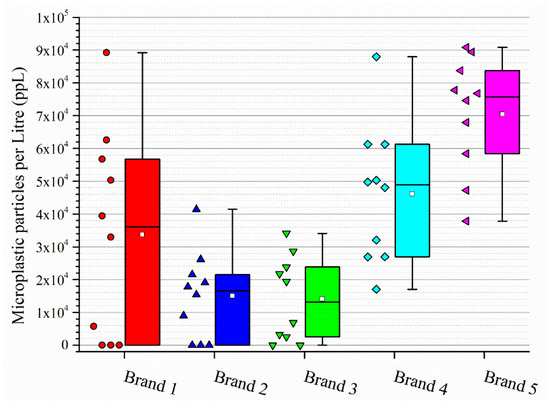
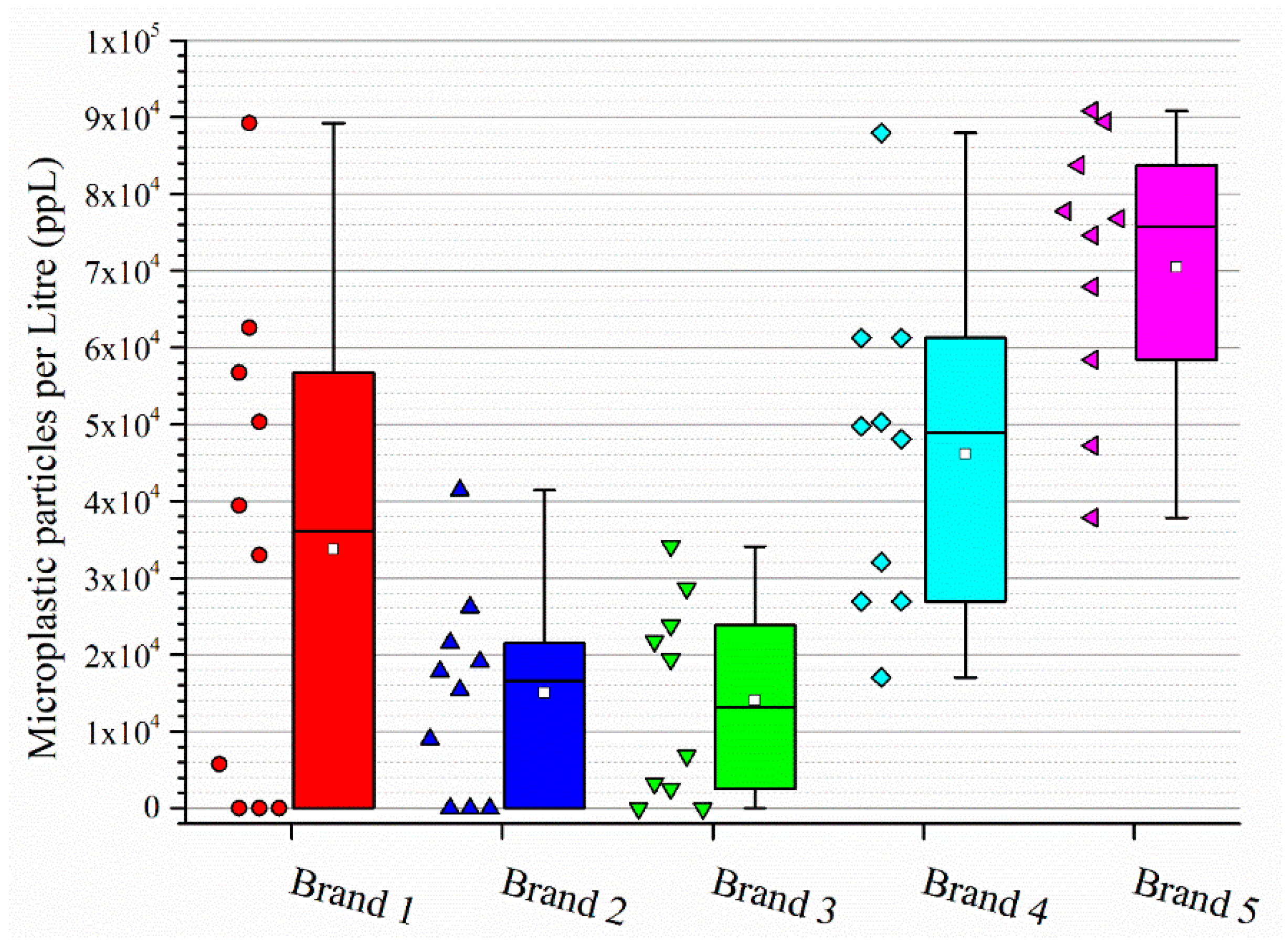
The average ppL values for each brand were: Brand 1—33,691 ± 31,517 ppL, Brand 2—15,040 ± 13,339 ppL, Brand 3—14,045 ± 12,883 ppL, Brand 4—46,154 ± 21,133 ppL, and Brand 5—70,457 ± 17,684 ppL as illustrated in Figure 2. ANOVA analysis revealed significant differences between brands (F > Fcrit, p < 0.01), and t-tests confirmed that all brands had significantly higher microplastic counts than the negative control (tstat > tcrit, p value < 0.05).
Figure 2.
Particles per litre (ppL) of each brand, represented as data points and box plots. The box plot is illustrated with whiskers that represent the minimum and maximum values; the box that represents the 25th and 75th percentiles, and the median; the white square symbol that represents the mean.
Among the tested samples, 84% exhibited microplastic contamination, with an overall average concentration of 35,877 ± 23,542 ppL. Potential false positives could arise from self-fluorescing organics or Nile red precipitation; however, these effects were minimised through sample preparation techniques and industry-regulated organic content limits in bottled water.
Significant variability in microplastic concentrations was observed within Brand 1, where contamination levels ranged from negligible compared to the negative control to 89,000 ppL. Brand 1 was collected from two different batches. As such, variations in the water source used, and any variation in other environmental conditions present in the production plant on the day of water treatment and bottling, and in later storage, might have contributed to this variation. However, variation was also noticed within the same batch.
Brands 2 and 3 consistently exhibited the lowest microplastic contamination levels. Despite differing water sources, with Brand 2 using groundwater and Brand 3 using tap water as the initial source, both brands employ similar treatment processes, including high-rejection reverse osmosis and fine polishing filters. Brand 3’s slightly lower contamination levels may result from its tap water source, which undergoes additional desalination plant filtration. The controlled bottling environment of Brand 2, involving thorough bottle rinsing and disinfection, may also be contributing to its lower contamination levels.
In contrast, Brand 1 displayed the highest variability in contamination, likely due to differences in pre-treatment processes compared to the other brands. While it employs RO filtration like Brands 2 and 3, potential contamination may arise during water storage before secondary filtration, as no additional RO treatment is applied. Additionally, uncertainty surrounding the cleanliness of the bottling environment suggests contamination could occur during the filling stage. Brand 4 recorded the second-highest microplastic concentration. Limited information from the company made it difficult to determine exact causes, but inadequate bottle cleaning and mixed water sources (tap and groundwater) may contribute to the observed contamination. Suboptimal water treatment and contamination during bottling are also possible factors. Brand 5 exhibited the highest microplastic concentrations among all brands, likely due to its minimal treatment process. While the water undergoes double reverse osmosis treatments, additional treatments such as preliminary filtrations are absent. The bottling process remains unclear, and uncertainties regarding bottle manufacturing and the cleanliness of the filling environment suggest multiple potential contamination sources.
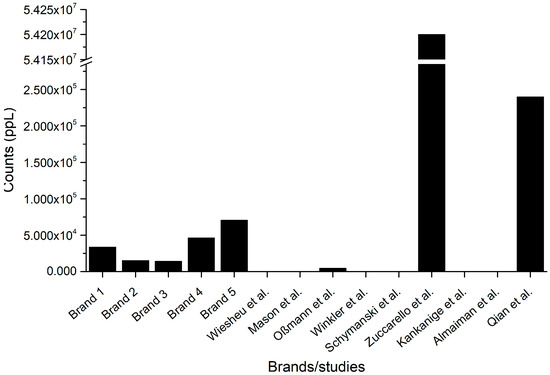
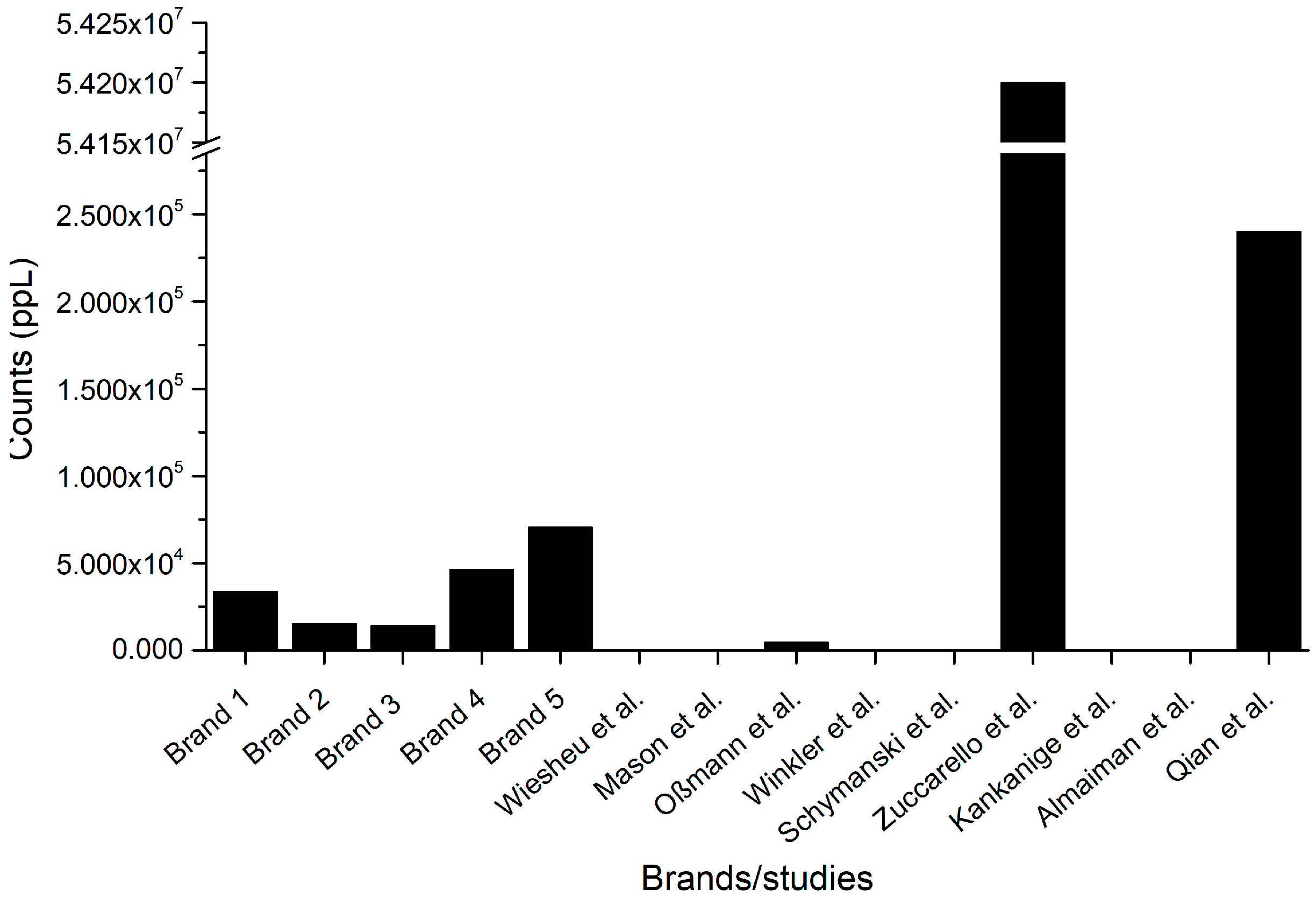
The microplastic concentrations observed in this study were at least one order of magnitude higher than those reported in studies analysing particles larger than 1 µm [13,17,19,20]. This can be seen in Figure 3. However, studies that included particles smaller than 1 µm reported similarly high counts [18,21]. In terms of concentration, the study by Oßmann et al. [15] reported 2689 ± 4371 ppL in PET bottled water. In contrast, this study detected concentrations at least 11,356 ppL higher, indicating a substantially greater level of contamination. One possible reason for this discrepancy is that Oßmann’s study did not employ Nile red staining and fluorescence microscopy, techniques that enhance the detection of microplastics. A second study by Zuccarello and Ferrante [18] reported an even higher concentration of 5.42 × 10⁷ ± 1.95 × 10⁷ ppL. This elevated value may reflect the inclusion of smaller particles, which are typically more abundant due to the fragmentation of plastics over time.
Figure 3.
Particles per Litre (ppL) of the brands analysed in this study and those from the existing literature [13,14,15,16,17,18,19,20,21].
It is worth noting that the detection limit of this study (1.4506 µm) likely contributed to an underestimation of total microplastic counts by excluding smaller micro- and/or nanoplastics, which are known to occur in higher quantities. This limitation arises from a combination of factors, including the resolution capabilities of the microscope, the software processing constraints, and the signal-to-noise ratio at lower particle sizes. That said, all microplastic studies are subject to detection limits—whether explicitly stated or not—and these limits have a substantial impact on reported particle counts. Unfortunately, many studies in the literature do not clearly disclose their lower detection limits, making direct comparisons difficult. Despite the detection threshold of 1.45 µm being among the lowest reported, which increases the confidence in capturing smaller particle fractions relative to much of the existing literature, this limitation impacts the particle count and comparability of results with studies that had lower detection thresholds [18,21]. It is therefore essential for studies in this field to clearly state their detection limits, as this greatly impacts the interpretation and comparability of results; the lack of such transparency contributes to the ongoing uncertainty in the scientific community regarding the true extent and quantification of micro/nano-plastics in environmental and consumer samples. Differences in methodologies across studies highlight the desperate need for standardisation in microplastic analysis to improve comparability, since direct comparisons require consideration of particle size ranges.
3.2. Microplastic Sizing
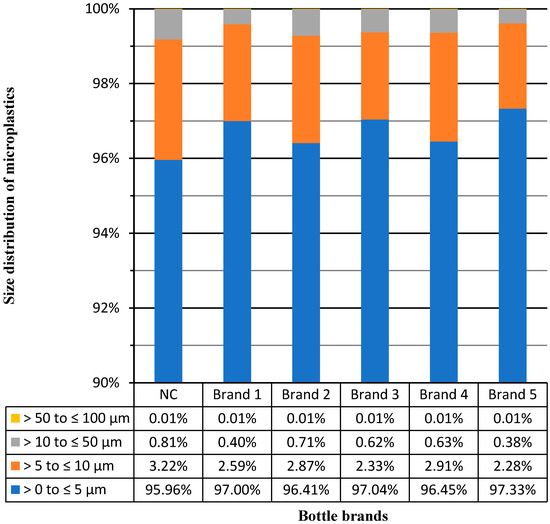
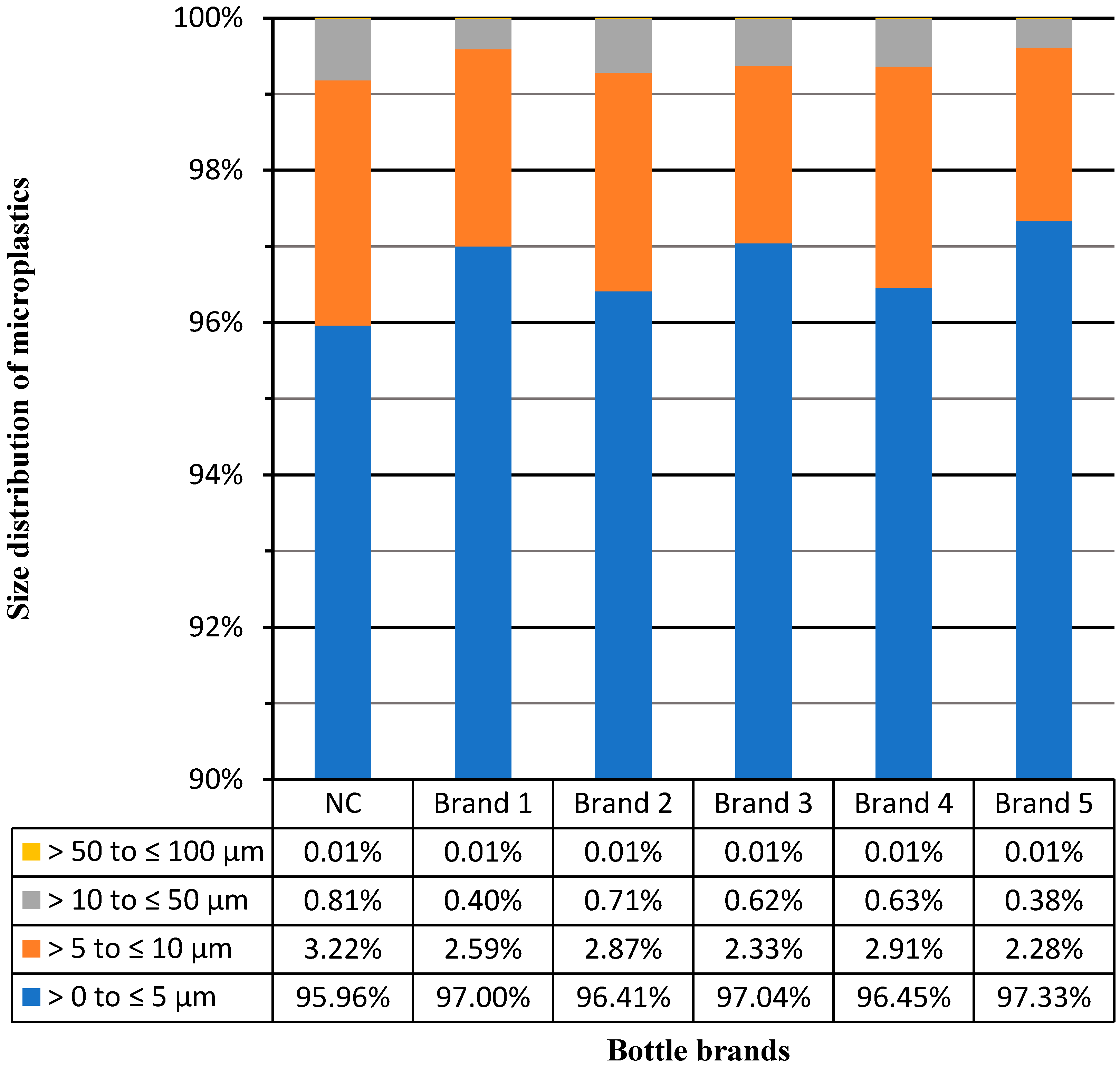
The smallest detected particle in this study was 1.4506 µm. The largest detected particle measured 80 µm. Size distribution analysis (Figure 4) revealed that over 95% of detected particles across all brands were ≤5 µm, a trend also observed in negative control samples, though at lower concentrations. The remaining particles were distributed across larger size ranges, up to 80 µm. The data, after accounting for the negative control, was then represented as histograms illustrating the distribution of the particle sizes, which can be found in Section S3 in the Supporting Information.
Figure 4.
Distribution of various particle size ranges for every bottled water brand sample, including the negative control (NC) samples.
With regards to particle size, Oßmann et al. [15] included particles as small as 1 µm, while Zuccarello and Ferrante focused on a range between 0.5 and 10 µm. The average particle size reported by Zuccarello and Ferrante [18] was 2.44 ± 0.66 µm, which is comparable to the average size found in the present study. The substantially higher particle count in their results underscores the influence of the lower detection limit—smaller particles are more numerous and significantly affect concentration estimates. These findings underscore the importance of standardised microplastic measurement methods.
3.3. Chemical Analysis
For each brand, samples of the bottle bodies and caps were sectioned and analysed by means of Raman spectroscopy. A representative Raman spectrum obtained for each of these samples can be seen in Section S4 in the Supporting Information. It was determined that all bottle brands had a bottle body made of PET, as expected, as one of the biggest applications of PET is for beverage packaging. Brands 3 and 4 had caps that were made of polyethylene (PE). For Brands 1, 2, and 5, more specific information was noted, and they had bottle caps made of low-density polyethylene (LDPE). This finding resonates with industry production as bottle caps are also a common application of PE and more specifically LDPE [30].
Raman spectroscopy was also conducted on particles that were large enough to be visually detectable with the human eye, which were very limited in quantity. Table 2 presents the number of particles with a specific chemistry found in each brand, while Table 3 is a more detailed compilation of the chemistry, size, and shape of the particles analysed.
Table 2.
The number of particles with a specific chemistry found in each brand sample.
Table 3.
Size, shape, and chemistry of the selected particles analysed.
Analysis of the ten selected particles from the negative control samples showed that the particles were cellulose fibres and fragments (8) and PET fragments (2). The source of these particles can be directly linked to the packaging of the filter, which was composed of cellulose and PET. This showed that all filters might have the presence of PET and cellulose particles on their surface.
As shown in Table 2, cellulose was detected in all brands. While the presence of cellulose as fibres on the filters could have originated from the filter packaging, as observed in the negative control samples, cellulose could have also originated from the laboratory surroundings, or from the drinking water itself, yet there is no clear correlation. LDPE or PE, found in all brands except Brand 5, can be specifically correlated to the caps of the water bottle packaging, which are also made from LDPE or PE. Several studies investigating microplastics in bottled water have also concluded that PE contamination is linked to the bottle caps [14,15,16,17,19,20,21]. The possibility of bottle packaging abrasion has been studied elsewhere, and it was observed that this mechanical degradation is mostly due to the opening and closing mechanism of the bottle packaging [16,31]. Studies also showed that the hard surface of glass bottles was even more likely to wear down the softer PE caps than PET bottles [15,17]. Other microplastic detection studies conducted on tap water have also revealed the presence of PE microplastics [32,33,34]. Suspected sources include pipes used in the domestic water supply and treatment plants [32,33], as well as environmental entry from consumer waste [34]. This suggests that these sources may also contribute to the presence of PE microplastics in bottled water, especially given that locally produced bottled water is primarily sourced from tap water, or from groundwater; the latter is lately being replenished with tap water (or desalinated seawater) to maintain the natural aquifer. The presence of PET in Brand 5 could have originated from two primary sources: the inner filter packaging, as was also detected in the negative control samples, and the water bottle body itself, both made from PET. Other studies on bottled water have also attributed PET contamination to the bottle packaging itself [16,19,20,21], while one study linked the contamination to the filter material, as PET was also observed in the filter blanks [15]. In contrast, a study examining tap water linked PET contamination to environmental pollution from consumer waste [34].
PU and PMMA microplastics were detected in most of the brands. No specific source was established for these chemistries from the packaging analysis, hence no correlation could be made. This lack of correlation suggests that these particles may have originated from sources prior to the bottling of the water. PU is known to have applications in specific areas of water treatment. These include pipe coatings, lining for water reservoirs, and even filtration membranes [35]. Degradation of such components could account for the presence of PU particles in the water. One study investigating microplastics in bottled water also detected PU microplastics; however, no source correlations were proposed [20]. PMMA is not typically used directly in water treatment systems. However, PMMA is used in protective barriers of manufacturing equipment. Hence, possible abrasion of these barriers may have released PMMA microplastics into the water. It is also possible that the source water was contaminated, and the treatment process was not able to remove the particles. Three different studies support both possibilities. One study conducted on bottled water suggested that PMMA particles originated from the water treatment plants [19], while two other studies on tap water attributed their presence to surface runoff or industrial discharge [34,36]. These sources often contain PMMA as an additive in rubbers, cosmetics, and paints, which may not be effectively removed during water treatment processes [36]. Although these are possible sources, the exact origin of PU and PMMA remains unclear. This highlights a limitation in source identification and suggests that further investigation is needed to better understand how such particles may enter the water during production or treatment. Similarly, PAM and PVE found in Brand 1, and PVC and PPTA found in Brand 5 might have already been present in the water source, or they might have been introduced in the water as contaminants during production. Among these four polymers, only PVC has been previously reported in other studies and attributed to different sources. Two studies on microplastics in bottled water proposed that PVC contamination may have originated during water processing at the bottling plant [19,21]. Additionally, another two studies on microplastics in tap water associated PVC with the water distribution system, where the use of PVC piping may contribute to its release into the water supply [32,34].
The variability of microplastic polymer chemistries observed between individual brands indicates that multiple sources of microplastic contamination are unlikely to originate solely from the source water (e.g., groundwater or tap water), as this would otherwise result in a more uniform contamination profile across all brands. Instead, it is plausible that brand-specific factors—such as the materials used in water treatment systems, filtration units, bottling lines, and packaging—contribute to this variability. However, identifying the exact sources of contamination is challenging without access to detailed information on production practices and quality control protocols. This underscores the importance of increased transparency and collaboration from bottled water manufacturers. A better idea of the origin of the microplastic contamination of bottled water can be obtained by analysis and quantifying the presence of microplastics in the water at different stages throughout the entire production and bottling process. Such cooperation would allow researchers to better trace contamination pathways and ultimately support the development of more effective mitigation strategies.
Based on the types of polymers detected, several potential sources of microplastics were identified: (1) bottle-related abrasion—between the bottle caps (LDPE/PE) and bottles (PET) themselves; (2) contamination such as filters (PET and cellulose); (3) water treatment system components (PU, PVC); (4) piping; and (5) the source water itself. Although negative controls were included in the study, it remains challenging to quantify the exact contribution of each potential source. Further collaboration and transparency from water production companies would be essential to narrow down these contributions. Nevertheless, the evidence points to packaging-related abrasion (as indicated by [14,15,16,17,19,20,21]) and water system contamination (as suggested by [19,20,21]) as plausible and significant pathways for microplastic presence in bottled water.
4. Conclusions
This study aimed to detect, analyse, quantify, and characterise microplastics in Maltese, locally produced and sold, bottled drinking water. The main outcomes noted were as follows:
- The average concentration of microplastics across all brands was 35,877 ± 23,542 ppL, with Brand 5 having the highest concentration at 70,457 ± 17,684 ppL. Overall, 84% of bottled water samples contained microplastics.
- The average particle diameter across all brands was 2.3696 ± 0.0035 µm, with over 95% of particles being ≤5 µm. The smallest detected particle was 1.45 µm, limited by detection capabilities.
- Among the 50 analysed particles that were large enough to be seen with the naked eye and transferred to a clean silicon substrate for Raman spectroscopy, the most common materials were cellulose (17 particles), followed by PU (8), PMMA (7), PE (6), and LDPE (5). Other detected polymers included PVC (2), PPTA (2), PET (1), PVE (1), and PAM (1). Several sources of microplastics were detected: (1) bottle-related abrasion—between the bottle caps (LDPE/PE) and bottles (PET) themselves; (2) contamination, such as filters (PET and cellulose); (3) water treatment system components (PU, PVC); (4) piping; and (5) the source water itself.
To reduce microplastic contamination in bottled water, companies should aim to consider implementing internal monitoring and quality control—analysing microplastic contamination at different production stages, including the water source, filtration, post-treatment, and bottling, identifying points of contamination to prevent further ingress. This should support the improvement of filtration and bottling practices. Exploring alternative packaging materials that are less prone to fragmentation is equally important. Recent European regulations requiring fixed bottle caps may, in fact, lead to increased cap degradation due to greater fastening force, highlighting the need for stronger and more durable materials or a redesign of the bottle cap and/or water bottle itself.
While no formal microplastic regulations exist for bottled water, companies should pre-emptively adopt best practices to ensure compliance with potential future standards. Regulatory bodies, such as the Malta Competition and Consumer Affairs Authority (MCCAA) and the Environmental Health Directorate on a local level, could play a key role by introducing national testing protocols, requiring disclosure of packaging material composition, and aligning local practices with upcoming EU directives on microplastic monitoring. In parallel, public health awareness campaigns could help inform consumers about the risks associated with microplastic exposure and promote the responsible use and disposal of plastic packaging. Educating the public also builds societal pressure that encourages industry transparency and accountability.
This study contributes to the rapidly growing body of research aimed at understanding the presence of microplastics in our environment. Such research is instrumental for health studies conducting risk assessments and for policymakers and regulatory bodies in setting regulatory limits. Additionally, the methods used in this study may support efforts toward the development of standardised approaches for quantifying microplastics in water, an area the scientific community is still working to fully understand, refine, and establish. Strengthening collaboration between researchers, regulatory authorities, and industry stakeholders will be crucial for achieving long-term mitigation and ensuring safe drinking water for consumers, both in Malta and across the world.
Supplementary Materials
The following supporting information can be downloaded at: https://www.mdpi.com/article/10.3390/microplastics4040088/s1, Figure S1: Water source and treatment process flow diagrams of brand 1; Figure S2: Packaging process flow diagrams of brand 1; Figure S3: Water source and treatment process flow diagrams of brand 2; Figure S4: Packaging process flow diagrams of brand 2; Figure S5: Water source and treatment process flow diagrams of brand 3; Figure S6: Water source and treatment process flow diagrams of brand 5; Figure S7: Histogram of particle sizes detected in samples of (a–e) Brands 1–5 and (f) the negative control, including Gaussian curve in a skewed distribution; Figure S8: Raman spectra of the bottle packaging body and cap for (a–e) Brands 1–5.
Author Contributions
Conceptualization, A.A.A. and S.M.B.; Methodology, J.C. and S.M.B.; Software, J.C.; Formal analysis, J.C.; Investigation, J.C.; Data curation, J.C.; Writing—original draft, J.C. and S.M.B.; Writing—review & editing, J.C., A.A.A. and S.M.B.; Supervision, A.A.A. and S.M.B.; Project administration, S.M.B.; Funding acquisition, J.C., A.A.A. and S.M.B. All authors have read and agreed to the published version of the manuscript.
Funding
The research work disclosed in this publication is partially funded by the Endeavour II Scholarships Scheme. The project is co-funded by the ESF+ 2021–2027.
Institutional Review Board Statement
Not applicable.
Informed Consent Statement
Not applicable.
Data Availability Statement
The original contributions presented in this study are included in the article/Supplementary Materials. Further inquiries can be directed to the corresponding author.
Conflicts of Interest
The authors declare no conflict of interest.
References
- Marrone, A.; La Russa, M.F.; Randazzo, L.; La Russa, D.; Cellini, E.; Pellegrino, D. Microplastics in the center of mediterranean: Comparison of the two calabrian coasts and distribution from coastal areas to the open sea. Int. J. Environ. Res. Public Health 2021, 18, 10712. [Google Scholar] [CrossRef] [PubMed]
- Rocha-Santos, T.; Duarte, A.C. A critical overview of the analytical approaches to the occurrence, the fate and the behavior of microplastics in the environment. TrAC-Trends Anal. Chem. 2015, 65, 47–53. [Google Scholar] [CrossRef]
- MacLeod, M.; Arp, H.P.H.; Tekman, M.B.; Jahnke, A. The global threat from plastic pollution. Science 2021, 373, 61–65. [Google Scholar] [CrossRef]
- Revel, M.; Châtel, A.; Mouneyrac, C. Micro(nano)plastics: A threat to human health? Curr. Opin. Environ. Sci. Health 2018, 1, 17–23. [Google Scholar] [CrossRef]
- Kadac-Czapska, K.; Knez, E.; Grembecka, M. Food and human safety: The impact of microplastics. Crit. Rev. Food Sci. Nutr. 2022, 64, 3502–3521. [Google Scholar] [CrossRef]
- Wright, S.L.; Kelly, F.J. Plastic and Human Health: A Micro Issue? Environ. Sci. Technol. 2017, 51, 6634–6647. [Google Scholar] [CrossRef]
- Sazakli, E.; Leotsinidis, M. Possible effects of microplastics on human health. In Microplastics in Water and Wastewater; Karapanagioti, H.K., Kalavrouziotis, I.K., Eds.; IWA Publishing: London, UK, 2019; Volume 12, pp. 177–190. [Google Scholar]
- Koelmans, A.A.; Nor, N.H.M.; Hermsen, E.; Kooi, M.; Mintenig, S.M.; De France, J. Microplastics in freshwaters and drinking water: Critical review and assessment of data quality. Water Res. 2019, 155, 410–422. [Google Scholar] [CrossRef] [PubMed]
- Zhang, Q.; Xu, E.G.; Li, J.; Chen, Q.; Ma, L.; Zeng, E.Y.; Shi, H. A Review of Microplastics in Table Salt, Drinking Water, and Air: Direct Human Exposure. Environ. Sci. Technol. 2020, 54, 3740–3751. [Google Scholar] [CrossRef]
- Danopoulos, E.; Twiddy, M.; Rotchell, J.M. Microplastic contamination of drinking water: A systematic review. PLoS ONE 2020, 15, e0236838. [Google Scholar] [CrossRef] [PubMed]
- European Food Safety Authority. Food Consumption Data’. Available online: https://www.efsa.europa.eu/en/data-report/food-consumption-data (accessed on 11 August 2025).
- EFSA Panel on Dietetic Products Nutrition and Allergies (NDA). Scientific Opinion on Dietary Reference Values for water. EFSA J. 2010, 8, 1459. [Google Scholar] [CrossRef]
- Wiesheu, A.C.; Anger, P.M.; Baumann, T.; Niessner, R.; Ivleva, N.P. Raman microspectroscopic analysis of fibers in beverages. Anal. Methods 2016, 8, 5722–5725. [Google Scholar] [CrossRef]
- Mason, S.A.; Welch, V.G.; Neratko, J. Synthetic Polymer Contamination in Bottled Water. Front. Chem. 2018, 6, 407. [Google Scholar] [CrossRef] [PubMed]
- Oßmann, B.E.; Sarau, G.; Holtmannspötter, H.; Pischetsrieder, M.; Christiansen, S.H.; Dicke, W. Small-sized microplastics and pigmented particles in bottled mineral water. Water Res. 2018, 141, 307–316. [Google Scholar] [CrossRef]
- Winkler, A.; Santo, N.; Ortenzi, M.A.; Bolzoni, E.; Bacchetta, R.; Tremolada, P. Does mechanical stress cause microplastic release from plastic water bottles? Water Res. 2019, 166, 115082. [Google Scholar] [CrossRef] [PubMed]
- Schymanski, D.; Goldbeck, C.; Humpf, H.U.; Fürst, P. Analysis of microplastics in water by micro-Raman spectroscopy: Release of plastic particles from different packaging into mineral water. Water Res. 2018, 129, 154–162. [Google Scholar] [CrossRef]
- Zuccarello, P.; Ferrante, M.; Cristaldi, A.; Copat, C.; Grasso, A.; Sangregorio, D.; Fiore, M.; Conti, G.O. Exposure to microplastics (<10 μm) associated to plastic bottles mineral water consumption: The first quantitative study. Water Res. 2019, 157, 365–371. [Google Scholar] [CrossRef]
- Kankanige, D.; Babel, S. Smaller-sized micro-plastics (MPs) contamination in single-use PET-bottled water in Thailand. Sci. Total Environ. 2020, 717, 137232. [Google Scholar] [CrossRef]
- Almaiman, L.; Aljomah, A.; Bineid, M.; Aljeldah, F.M.; Aldawsari, F.; Liebmann, B.; Lomako, I.; Sexlinger, K.; Alarfaj, R. The occurrence and dietary intake related to the presence of microplastics in drinking water in Saudi Arabia. Environ. Monit. Assess. 2021, 193, 390. [Google Scholar] [CrossRef]
- Qian, N.; Gao, X.; Lang, X.; Deng, H.; Bratu, T.M.; Chen, Q.; Stapleton, P.; Yan, B.; Min, W. Rapid single-particle chemical imaging of nanoplastics by SRS microscopy. Proc. Natl. Acad. Sci. USA 2024, 121, e2300582121. [Google Scholar] [CrossRef]
- Hernandez, L.M.; Xu, E.G.; Larsson, H.C.E.; Tahara, R.; Maisuria, V.B.; Tufenkji, N. Plastic Teabags Release Billions of Microparticles and Nanoparticles into Tea. Environ. Sci. Technol. 2019, 53, 12300–12310. [Google Scholar] [CrossRef]
- Ranjan, V.P.; Joseph, A.; Goel, S. Microplastics and other harmful substances released from disposable paper cups into hot water. J. Hazard. Mater. 2021, 404, 124118. [Google Scholar] [CrossRef] [PubMed]
- Kosuth, M.; Mason, S.A.; Wattenberg, E.V. Anthropogenic contamination of tap water, beer, and sea salt. PLoS ONE 2018, 13, e0194970. [Google Scholar] [CrossRef]
- Liebezeit, G.; Liebezeit, E. Synthetic particles as contaminants in German beers. Food Addit. Contam.-Part A 2014, 31, 1574–1578. [Google Scholar] [CrossRef] [PubMed]
- Shruti, V.C.; Pérez-Guevara, F.; Elizalde-Martínez, I.; Kutralam-Muniasamy, G. First study of its kind on the microplastic contamination of soft drinks, cold tea and energy drinks—Future research and environmental considerations. Sci. Total Environ. 2020, 726, 138580. [Google Scholar] [CrossRef] [PubMed]
- Prata, J.C.; Paço, A.; Reis, V.; da Costa, J.P.; Fernandes, A.J.S.; da Costa, F.M.; Duarte, A.C.; Rocha-Santos, T. Identification of microplastics in white wines capped with polyethylene stoppers using micro-Raman spectroscopy. Food Chem. 2020, 331, 127323. [Google Scholar] [CrossRef]
- European Parliament. Directive (EU) 2020/2184 of the European Parliament and of the Council—On the Quality of Water Intended for Human Consumption. Official Journal of the European Union. Available online: http://data.europa.eu/eli/dir/2020/2184/oj (accessed on 6 September 2023).
- Ferguson, C.C. The statistical basis for spatial sampling of contaminated land. Ground Eng. 1992, 25, 34–38. [Google Scholar]
- da Costa, J.P.; Duarte, A.C.; Rocha-Santos, T.A.P. Microplastics–Occurrence, Fate and Behaviour in the Environment. In Comprehensive Analytical Chemistry; Rocha-Santos, T.A.P., Duarte, A.C., Eds.; Elsevier: Amsterdam, The Netherlands, 2017; Chapter 1; Volume 75, pp. 1–24. [Google Scholar]
- Singh, T. Generation of microplastics from the opening and closing of disposable plastic water bottles. J. Water Health 2021, 19, 488–498. [Google Scholar] [CrossRef]
- Mintenig, S.M.; Löder, M.G.J.; Primpke, S.; Gerdts, G. Low numbers of microplastics detected in drinking water from ground water sources. Sci. Total Environ. 2019, 648, 631–635. [Google Scholar] [CrossRef]
- Tong, H.; Jiang, Q.; Hu, X.; Zhong, X. Occurrence and identification of microplastics in tap water from China. Chemosphere 2020, 252, 126493. [Google Scholar] [CrossRef]
- Shen, M.; Zeng, Z.; Wen, X.; Ren, X.; Zeng, G.; Zhang, Y.; Xiao, R. Presence of microplastics in drinking water from freshwater sources: The investigation in Changsha, China. Environ. Sci. Pollut. Res. 2021, 28, 42313–42324. [Google Scholar] [CrossRef]
- Dege, N. (Ed.) Technology of Bottled Water. In Technology of Bottled Water, 3rd ed.; Wiley-Blackwell: West Sussex, UK, 2011; Chapter 7; pp. 197–222. [Google Scholar]
- Mukotaka, A.; Kataoka, T.; Nihei, Y. Rapid analytical method for characterization and quantification of microplastics in tap water using a Fourier-transform infrared microscope. Sci. Total Environ. 2021, 790, 148231. [Google Scholar] [CrossRef] [PubMed]

Disclaimer/Publisher’s Note: The statements, opinions and data contained in all publications are solely those of the individual author(s) and contributor(s) and not of MDPI and/or the editor(s). MDPI and/or the editor(s) disclaim responsibility for any injury to people or property resulting from any ideas, methods, instructions or products referred to in the content. |
© 2025 by the authors. Licensee MDPI, Basel, Switzerland. This article is an open access article distributed under the terms and conditions of the Creative Commons Attribution (CC BY) license (https://creativecommons.org/licenses/by/4.0/).