
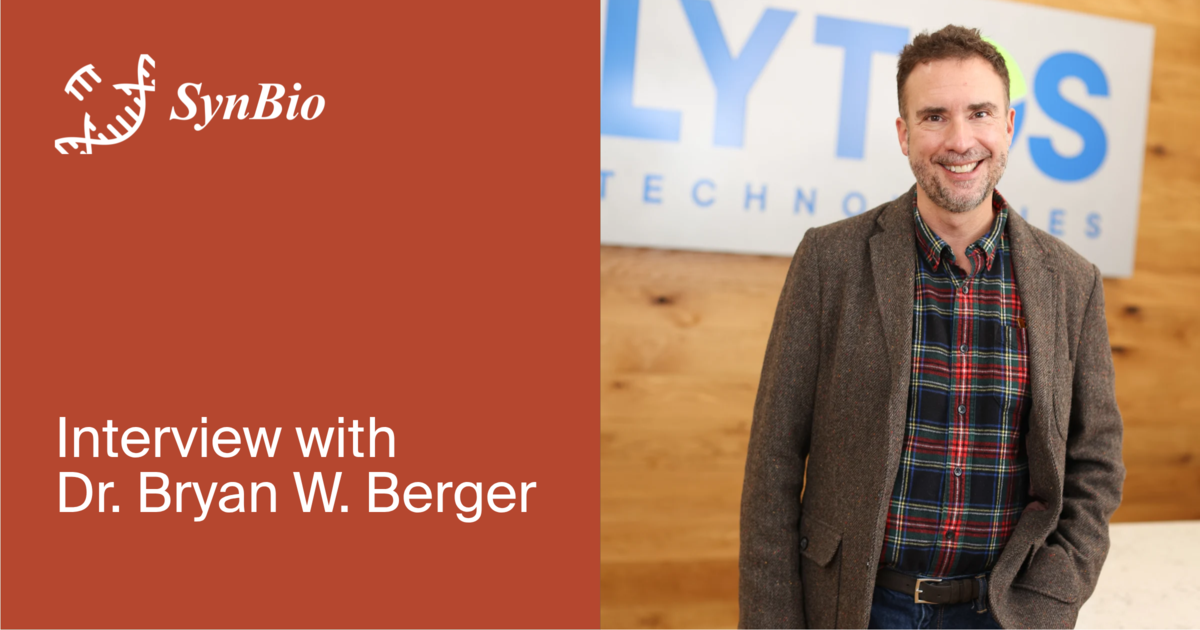
SynBio | Interview with Editorial Board Member—Dr. Bryan W. Berger
We are pleased to share the following interview with Dr. Bryan W. Berger, Editorial Board Member of SynBio (ISSN 2674-0583).
Name: Dr. Bryan W. Berger
Affiliation: Department of Chemical Engineering and Biomedical Engineering, School of Engineering and Applied Science, University of Virginia, Charlottesville, VA 22904, USA
Interests: biofilms; biosurfactants; protein engineering; transmembrane signal transduction; antimicrobials; polysaccharide lyase; biomineralization; bioremediation; PFAS; structural biology; food safety; biomass processing
The following is an interview with Dr. Bryan W. Berger:
1. What is the most satisfying discovery or achievement you have obtained in your laboratory?
I take a lot of pride in our work being focused on translating biotechnologies from the lab to commercial readiness. Some recent work I am particularly excited about is our ability to design proteins to replace antibiotics for use in treating fire blight in orchards pre-harvest, as well as developing engineered biosensors to detect PFAS in surface water samples. Both are examples of translational outcomes that have led to successful commercialization efforts now in Lytos Technologies and PFAScreen, 2 start-ups I co-founded.
2. Could you discuss individuals or experiences that have significantly influenced your research career?
I’m thankful to have met many people along my academic journey who have had an impact on my professional and personal development. Michael Timko has been a great mentor to me since moving to the University of Virginia, and I’ve enjoyed working with him collaboratively on a wide range of biotechnology projects. I credit my post-doctoral advisor William DeGrado for teaching me how to be a good mentor to graduate students, to think big and bold about grand challenges in biotechnology research, and showing me how much fun it is to work in protein biochemistry.
3. How do you maintain a balance between research commitments and personal life?
I make sure to make time on the weekends to spend time outside of the lab with my family and friends. We live in the foothills of the Blue Ridge Mountains, so there is a wide range of outdoor activities we love to enjoy. Charlottesville also has an eclectic music, art and food scene, so there is lots for us to enjoy and explore as well.
4. In your opinion, what role do academic journals play in scientific communication?
Academic journals are the most direct way of sharing research findings with the broader scientific community, and in a time when AI is ascendent, it is even more important for scientists to take the time to publish their findings with a high standard of rigor and novelty.
5. What advantages do you think SynBio possesses compared with other journals covering synthetic biology?
The broad view of synthetic biology SynBio takes is an advantage—it allows the breadth of this large, growing and evolving field to be published and doesn’t exclude or narrowly define what scope is acceptable for the field.
6. When reviewing borderline manuscripts which contain imperfect yet novel observations, what standards guide your final decision?
I think it is important to take risks and publish new findings rather than incremental observations, so I support people pursuing novel research and work with them to make sure it is sufficiently reproducible and complete to publish.