
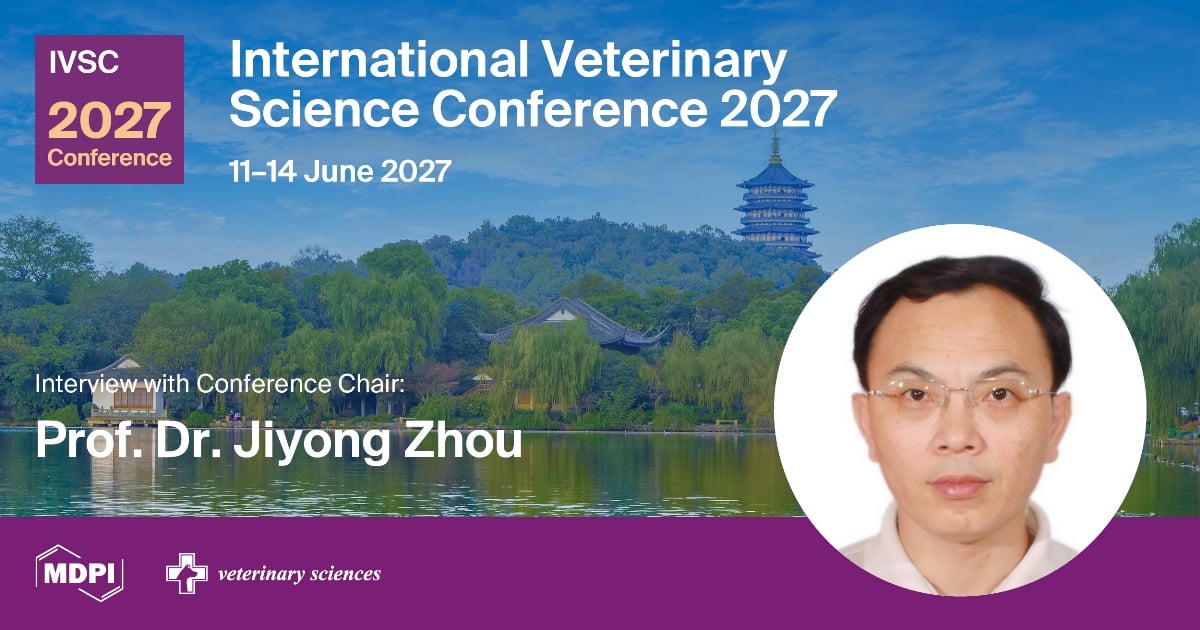
Veterinary Science | Interview with Prof. Dr. Jiyong Zhou—Conference Chair for the International Veterinary Science Conference 2027 (IVSC 2027)
1. Your research team has long been deeply engaged in revealing the molecular pathogenic mechanisms of major livestock and poultry viruses, including porcine circovirus (PCV), PRRSV, and avian influenza virus (AIV). Could you briefly introduce your team’s recent key research directions? When exploring critical mechanisms such as viral receptor recognition and immune evasion, what has been the most challenging breakthrough?
Our team has been conducting systematic research on major livestock and poultry pathogens, including porcine circovirus (PCV), pseudorabies virus (PRV), porcine reproductive and respiratory syndrome virus (PRRSV), infectious bursal disease virus (IBDV), and avian influenza virus (AIV). Our focus centers on viral epidemiology and genetic evolution, replication and pathogenic mechanisms, virus-host interactions, as well as the development of diagnostic technologies and vaccines. Our ultimate objective is to elucidate viral emergence, transmission, and evolution to further decipher how viruses gain entry, replicate within hosts, and induce disease, thereby translating basic research into disease surveillance, diagnostics, and immunoprophylactic controls.
In terms of epidemiology and viral ecology, we have long engaged in the surveillance and genetic evolution of major animal viruses. For instance, in our avian influenza research, we have isolated and characterized numerous viral strains from wild mammals and migratory birds, investigated the natural infection and evolutionary dynamics of diverse AIV subtypes along the Central Asian Flyway, and continuously monitored cross-species transmission alongside differences in innate immune responses across distinct host species. These studies not only deepen our understanding of viral maintenance and evolution in nature but also provide crucial foundations for risk early warning and vaccine strain selection.
Regarding viral replication, pathogenesis, and host interactions, we aim to answer fundamental questions: Why do viruses target specific hosts and cell types? How do they hijack host machinery for replication? And how do they cause immune injury and achieve immune evasion? For example, in our PCV2 research, we identified viral-encoded products linked to apoptosis and immune damage, resolved the processes of viral attachment, intracellular trafficking, nuclear entry, and genomic uncoating, and proposed a model of capsid conformational changes driving viral entry and genome release. In our IBDV studies, we unveiled signaling regulatory mechanisms involved in viral genomic reassortment and replication in infected cells. For PRRSV, we continuously investigate persistent infection, viral co-infections, and host immune modulation.
Ultimately, this fundamental research serves the control and prevention of animal infectious diseases. Centered on PCV2, we developed highly efficacious vaccines that rapidly induce protective immunity and created the first PCV diagnosis kit approved by the Chinese government. For IBDV, we established high-throughput genetic manipulation and diagnostic technology platforms, developing genetically engineered subunit vaccines and gene-deleted attenuated vaccines. This embodies our long-standing paradigm: moving from virus discovery and characterization to viral detection and control, directly translating basic science into practical disease control capabilities. These achievements have earned three National New Veterinary Drug Registration Certificates and three National Science and Technology Awards.
In viral receptor recognition and immune evasion research, the primary challenges can be summarized in two aspects:
- Receptor Identification: Moving beyond merely discovering binding molecules to definitively demonstrating that they serve as bona fide receptors determining viral infection and host tropism.
- Immune Evasion: Progressing from identifying single pathway modulations to comprehensively understanding how viruses dynamically reshape host immune responses across different stages of infection.
Looking ahead, we aim to bridge epidemiology, viral genetic variation, receptor recognition, and immune evasion mechanisms to fully explain how viruses sustain endemicity, adapt to hosts, and cause disease, ultimately translating these insights into more precise diagnostics, targeted vaccines, and control strategies.
2. In recent years, artificial intelligence (AI), synthetic biology, and AI sensors have been reshaping life sciences. From the perspective of molecular virology and epidemiology, how do you foresee these interdisciplinary technologies transforming future livestock/poultry disease early warning and antiviral strategies?
I believe the rapid development of emerging technologies is fundamentally changing how we understand and control animal infectious diseases. Historically, actions were predominantly reactive—detecting pathogens, diagnosing etiologies, and implementing control measures only after an outbreak occurred. Moving forward, driven by AI, synthetic biology, and AI sensing technologies, veterinary disease control will prioritize early detection, early prediction, and proactive intervention.
From a molecular virology perspective, the volume of viral genomic, structural biology, and virus-host interactome data is expanding exponentially. AI enables us to extract patterns from these massive datasets that were previously undetectable, such as viral mutation trends, potential spillover risks, and novel antiviral targets. While AI cannot replace empirical experimentation, it empowers researchers to formulate hypotheses, screen candidates, and optimize research pipelines at unprecedented speeds.
The advancements in synthetic biology are equally compelling. In the future, synthetic biology will render novel vaccine antigen design, rapid diagnostics, and reverse genetics model construction significantly more efficient and precise.
From an epidemiological standpoint, the critical frontier lies in seamlessly integrating laboratory data with field-level data. Continuously capturing livestock health metrics, production performance, environmental dynamics, and pathogen surveillance data via AI sensors—and analyzing them through AI algorithms—will allow us to detect risk signals well before large-scale outbreaks occur.
Future animal disease management will progressively transition from reliance on diagnosis and treatment to an integrated paradigm of surveillance, forecasting, early warning, and precision intervention. Nevertheless, regardless of technological evolution, we must remain grounded in practical application. Our goal is not technology deployment for its own sake, but solving real-world challenges facing animal health and the livestock industry.
3. As the Conference Chair for IVSC 2027, what do you consider the most exciting cutting-edge highlights in the scientific program? How will this conference propel the advancement of veterinary science both nationally and globally?
Veterinary science is currently undergoing rapid evolution. On one hand, traditional infectious disease control remains paramount; on the other, emerging and re-emerging infectious diseases, zoonoses, biosecurity, precision diagnostics, and AI applications present novel challenges and opportunities. Therefore, IVSC 2027 aims to highlight two defining characteristics: state-of-the-art innovation and interdisciplinary integration. Beyond reinforcing classical disciplines such as virology, bacteriology, immunology, and clinical veterinary medicine, the congress will foster active exchange with public health, bioinformatics, artificial intelligence, environmental science, and biosecurity.
I am personally eager to see experts from diverse disciplines gather to discuss shared animal health challenges. The future of veterinary science no longer relies on isolated disciplinary progress; it increasingly demands synergy between basic science, clinical practice, epidemiology, and industrial technologies.
For Chinese veterinary science, this represents a crucial platform for international engagement. In recent years, China has achieved remarkable progress in animal disease control, veterinary basic research, and the animal health industry. Through IVSC 2027, we aim to deepen collaboration with global peers while offering the international community clearer insights into China's advancements in veterinary science.
I hope this congress serves not only as a showcase for academic achievements, but also as a catalyst for new international collaborations, academic exchanges, and young talent cultivation, establishing shared imperatives for the future of veterinary science.
4. The “One Health” framework has become a global consensus in addressing zoonotic diseases. How will IVSC 2027 establish a platform to drive deep interdisciplinary cross-pollination among veterinary science, human medicine, environmental science, and biosecurity?
I have long maintained that animal health cannot be viewed in isolation. Particularly in an era of accelerating global mobility, livestock trade, and ecological shifts, the interconnectivity among animal health, human health, and environmental integrity is increasingly pronounced. The core value of One Health lies in prompting us to adopt a systems-thinking approach to disease dynamics. Many pathogens are restricted neither to a single host species nor to a single geographic region. Consequently, neither veterinary science nor human medicine can resolve these challenges in isolation.
IVSC 2027 aims to serve as a genuine interdisciplinary bridge. We will facilitate robust dialogues spanning veterinary medicine, clinical medicine, public health, environmental science, bioinformatics, and biosecurity.
True interdisciplinary collaboration goes beyond assembling experts from different fields in the same room; it requires active collaboration around common problems. Critical issues—such as pathogen emergence and spillover, surveillance and risk modeling, climate-disease interactions, and biosecurity under major pandemic threats—demand multi-faceted expertise. Facilitating sustained, substantive interdisciplinary partnerships through this congress would represent a deeply meaningful outcome.
5. This conference has attracted participation from numerous international academic societies and regional organizations, including MAVMA (Malaysian Association of Veterinary Medicine). As Chair, what are your expectations for the conference in fostering East-West talent exchange and enhancing regional biosecurity synergy?
I warmly welcome the participation of international societies and regional organizations, including MAVMA, at IVSC 2027. Infectious animal diseases recognize no political borders, nor do pathogens halt their transmission at regional lines. Thus, international cooperation remains the bedrock of veterinary scientific progress.
The Asian region boasts rich livestock resources while simultaneously facing complex animal disease control challenges. Countries across the region possess unique strengths in pathogen surveillance, vaccine R&D, diagnostic technologies, and biosecurity infrastructure, while sharing common vulnerabilities. Through IVSC 2027, I hope to strengthen scientific exchange and workforce mobility across nations and regions.
I am particularly keen to see the conference offer robust face-to-face networking opportunities for early-career researchers and young veterinarians. Scientific progress ultimately hinges on human capital; many impactful international collaborations originate from a single inspiring academic conversation.
Regarding regional biosecurity, I hope to see enhanced synergy in pathogen monitoring, information sharing, technical training, and emergency response. We must build more open, timely, and effective collaborative mechanisms to detect risks, share intelligence, and implement interventions well before localized threats escalate into widespread crises.
I anticipate that IVSC 2027 will extend beyond a successful event, serving as a launchpad for a resilient, long-term international collaborative network.
6. Molecular mechanism research is often deep and abstract, whereas industry demands efficient, cost-effective vaccines and diagnostic tools. Drawing on your rich experience in translating novel vaccines and diagnostics, how should academia and animal health enterprises bridge the “last mile” from “mechanistic discovery” to “standardized products”?
Bridging the gap from mechanistic discovery to standardized commercial products is rarely hindered by just the final step; rather, the fundamental challenge is that academia and industry operate on different evaluation metrics from the outset.
Academic research prioritizes novelty of mechanisms and clarity of causal relationships. Conversely, industry focuses on efficacy, stability, safety, cost-effectiveness, scalability, regulatory compliance, and market viability. Therefore, bridging this "last mile" requires shifting industrial requirements upstream to the initial research stages.
A key insight from our experience in developing PCV2 vaccines and diagnostic kits is that basic research should not be conducted in a vacuum before seeking industrial partners. Clinical and industrial realities must inform early-stage research. For instance, vaccine evaluation must extend beyond immunogenicity to incorporate seed virus replication efficiency, antigen yield, onset of protective immunity, and manufacturing costs. Similarly, diagnostic assay design must not only identify a valid biomarker, but also rigorously evaluate specificity, sensitivity, batch-to-batch consistency, and field deployability.
Second, scientific discoveries must be converted into quantifiable product specifications. A novel receptor, protective epitope, or diagnostic biomarker must undergo extensive validation across large sample cohorts and field scenarios to prove its stability and universal applicability before it can be reliably designated as a vaccine candidate or diagnostic target.
Third, academic institutions and enterprises must establish true co-development partnerships. Academia excels at original discovery, mechanistic resolution, and technological breakthroughs, whereas industry possesses expertise in process scale-up, quality control, regulatory registration, and market dynamics. Jointly defining product profiles and evaluation criteria early in R&D minimizes late-stage iterations and failures.
Finally, standardization is paramount. To achieve commercialization, technology must transition from being “reproducible in the laboratory” to being “consistently and stably manufactured on industrial production lines”. This encompasses a comprehensive ecosystem of manufacturing processes, quality standards, potency and safety assays, and regulatory dossier filings.
Thus, the essence of bridging this pipeline is not merely “handing over” a lab result to an enterprise but establishing a collaborative R&D framework driven by clinical needs, solved through basic research, co-defined by industry, and scaled through standardized manufacturing.
7. Global animal agriculture continues to face persistent threats from major emerging infectious diseases. From a holistic perspective of epidemiology and biosecurity, how should future veterinary science establish cross-regional and international global surveillance and join early warning networks?
A critical paradigm shift for future animal disease control is transitioning from reactive outbreak response to proactive risk discovery.
Achieving this requires, first and foremost, establishing a more systematic pathogen surveillance infrastructure. Monitoring must not be restricted to outbreak management; it must operate continuously as a routine baseline. Long-term epidemiological and genetic variation surveillance must be intensified, particularly for high-consequence animal pathogens and candidates with zoonotic spillover potential.
Second, we must enable seamless data sharing and information exchange across regional and institutional tiers. Next-generation surveillance networks should dynamically synthesize laboratory diagnostics, on-farm monitoring data, field epidemiological intelligence, and environmental metadata.
Third, international cooperation must be strengthened. Major infectious animal diseases are inherently transboundary, and no single nation can combat them in isolation. While respecting national biosecurity protocols, we must enhance pathogen data sharing, joint diagnostic development, and coordinated emergency response mechanisms.
Simultaneously, we must reinforce grassroots surveillance capacity. The ultimate efficacy of a global surveillance network relies not only on the sophistication of high-containment reference laboratories, but equally on the capability of field veterinary staff to promptly detect anomalies, report rapidly, and execute accurate frontline testing.
Driven by advancements in genomics, point-of-care diagnostics, and artificial intelligence, future disease surveillance will become increasingly real-time and precise. Yet technology is merely an enabler—the true cornerstone remains building resilient, long-term international trust and collaboration mechanisms.
8. Drawing on your decades of research and mentoring experience, what academic and career advice would you offer to young scholars and graduate students entering veterinary molecular virology, immunology, and related disciplines?
My primary advice to young scholars and graduate students is to learn how to ask genuine scientific questions. Technology is evolving rapidly, with new methodologies emerging constantly. However, the core of scientific research is never “What technology do I possess?”, but rather “What fundamental scientific question am I trying to solve?” In veterinary virology and immunology, we face complex, real-world disease challenges. We must identify questions grounded in real-world phenomena and rigorously pursue answers through scientific inquiry.
Second, I emphasize uncompromising scientific rigor. Experimental data must withstand intense scrutiny, and results must be demonstrably reproducible and verifiable. There are no shortcuts in scientific research; arriving at a genuinely reliable conclusion requires repeated experimentation and patient accumulation over time.
Third, cultivate perseverance and long-term commitment. Solving a major scientific problem rarely happens in a year or two. Our team has pursued continuous research on viral diseases for decades—spanning basic science, control technologies, and product deployment. Only by immersing oneself deeply in a field can one build meaningful scientific authority and heritage.
Fourth, maintain an open, multidisciplinary mindset. The future of veterinary science will be deeply interdisciplinary. Young scientists must build a solid foundation in their core discipline while actively embracing emerging methodologies such as AI, bioinformatics, and structural biology. However, mastering new tools should serve the primary goal of solving key scientific problems rather than chasing transient trends.
Finally, I encourage young researchers to align their personal academic pursuits with the pressing needs of society and the nation. Animal health is inextricably linked to food safety, public health, and societal well-being. Veterinary science offers countless impactful challenges worthy of lifelong dedication.
Scientific research is a marathon. Experiencing setbacks, failures, and temporary stagnation is completely normal. What matters most is retaining curiosity for science, tenacity for problem-solving, and profound reverence for scientific integrity and empirical laws. If you stay focused and committed, the younger generation will undoubtedly play an increasingly pivotal role in shaping the future of veterinary science.
Introduction of IVSC 2027
Conference date: 11–14 June 2027 (Beijing Time)
Location: Hangzhou, China
Deadline for abstract submission: 1 February 2027;
Deadline for early bird registration: 18 March 2027.
Conference chairs
- Prof. Dr. Jiyong Zhou (Zhejiang University, China);
- Prof. Dr. Patrick Butaye (Ghent University, Belgium);
- Prof. Dr. Zhiqiang Wang (Yangzhou University, China);
- Prof. Dr. Wentao Li (Huazhong Agricultural University, China).
For more details: https://sciforum.net/event/IVSC2027.
For any enquiries regarding the event, please get in touch with ivsc@mdpi.com.