
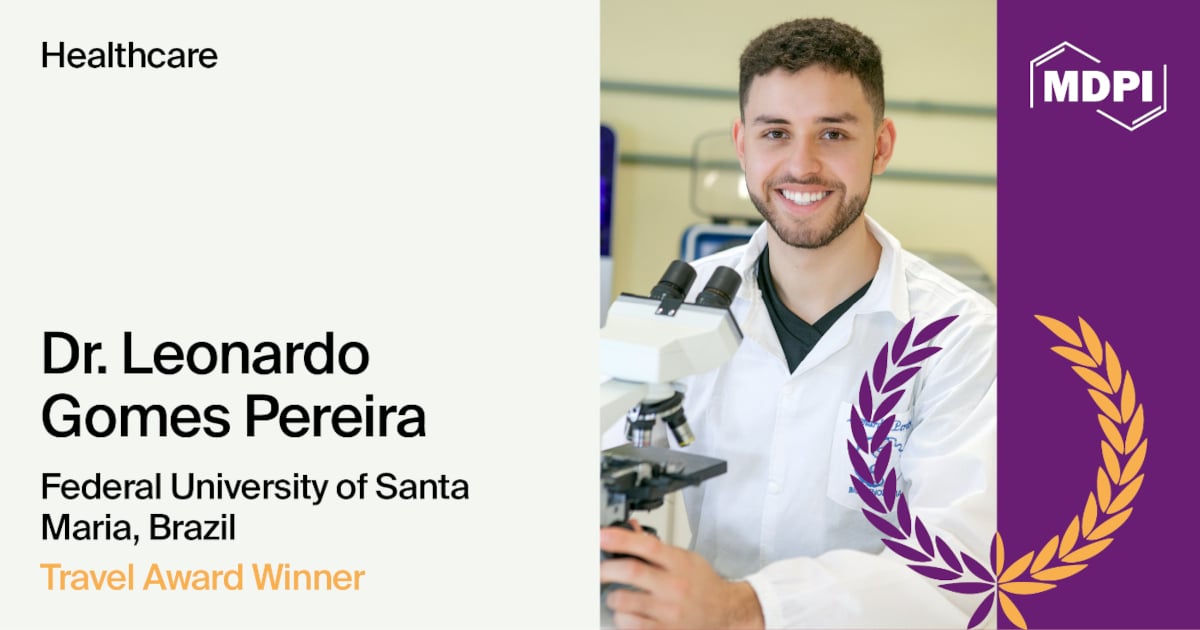
Interview with Dr. Leonardo Gomes Pereira—Winner of the Healthcare Travel Award
- First of all, congratulations on winning the Healthcare Travel Award. Could you please briefly introduce yourself and your primary research areas?
My name is Leonardo Gomes Pereira, and I am a Brazilian researcher with a background in biotechnology, pharmacology, and neuroscience. I hold a PhD in biological sciences, with an emphasis on pharmacology, and I am currently conducting postdoctoral research in Brazil. My main research interests include neuropharmacology, pain neurobiology and nociception, neuroinflammation, and neurodegenerative disorders, particularly Parkinson’s disease. In my work, I use preclinical experimental models to investigate the biological mechanisms underlying disease and to identify potential therapeutic targets that may contribute to improved healthcare outcomes.
- In your view, what is the most innovative aspect or potential scientific impact of your work? Furthermore, what has been the most significant challenge you encountered during this research, and how did you address it?
I believe that the most innovative aspect of my work is its integrative approach. By combining pharmacological, behavioral, and neurochemical perspectives, my research seeks to better understand complex mechanisms involved in pain and neurodegeneration, while also exploring pathways that may become relevant therapeutic targets. The potential scientific impact lies in helping bridge basic and translational research. A clearer understanding of these mechanisms may support the development of more effective and safer interventions for conditions that still have a major impact on patients’ quality of life. One of the main challenges in this type of research is the inherent complexity and variability of biological systems, especially in experimental models of neurological disorders and pain. I have addressed this by applying rigorous experimental design, careful standardization of protocols, appropriate controls, and critical interpretation of the findings. Collaboration with colleagues from different areas has also been essential for strengthening the quality and reproducibility of the work.
- Can you share with us your feelings after winning the award? What motivated you to apply for this Travel Award in the first place?
Receiving this award was both a great honor and a strong source of motivation. It represents valuable recognition of the effort invested in my research career and encourages me to continue pursuing high-quality, impactful science. I applied for the Travel Award because international conferences are very important opportunities for early career researchers. They allow us to present our findings, receive constructive feedback, learn from leading researchers, and establish collaborations that can strengthen future projects. For me, this award makes that opportunity more accessible and meaningful.
- Could you briefly describe the conference you plan to attend through the funding of this award, and discuss the significance of participating in such conferences for your research?
I plan to attend the IASP 2026 World Congress on Pain, organized by the International Association for the Study of Pain, which will take place in Bangkok, Thailand, from 26 to 30 October. This is the largest global gathering in the pain field, bringing together thousands of scientists, clinicians, and healthcare providers from around the world to discuss the latest advances in pain research, clinical practice, and treatment strategies. The congress program includes keynote and award lectures, plenary sessions, topical workshops, poster presentations, hands-on workshops, and special interest group symposia, covering the full spectrum of basic, translational, and clinical pain research. Participating in an event of this scale is extremely valuable for my research on pain neurobiology and nociception. It allows me to present my findings to a highly specialized international audience, receive feedback from leading researchers in the field, learn about emerging methodologies and mechanistic insights, and build collaborations that can strengthen future projects. Given that this will be the first time in IASP’s 50-year history that the World Congress takes place in Southeast Asia, it is also a unique opportunity to engage with a broader and more diverse global pain research community.
- What key qualities do you think are essential for a young researcher to cultivate in today’s academic environment?
I believe that young researchers should cultivate scientific curiosity, resilience, integrity, and openness to collaboration. Curiosity drives meaningful questions, while resilience is essential because research often involves unexpected results, technical limitations, and rejection during the publication or funding process. Scientific integrity is fundamental at every stage, from experimental design and data analysis to authorship and communication of results. I also think that communication skills are increasingly important: researchers need to be able to explain their work clearly to specialists, students, funding agencies, and society. Finally, maintaining a collaborative mindset and a commitment to continuous learning are essential in today’s interdisciplinary academic environment.
- How did you hear about the Healthcare journal? From your perspective, what role does the journal play in advancing open access publishing and supporting effective scholarly communication within your field?
I became familiar with Healthcare through the scientific literature and online searches related to my research interests. As a researcher, I consider it important to follow journals that publish interdisciplinary work relevant to healthcare, pharmacology, neuroscience, and translational research. From my perspective, open access journals can play an important role in making scientific knowledge more broadly available to researchers, healthcare professionals, students, policymakers, and the public. When high editorial standards, transparent peer review practices, and clear scientific communication are maintained, open access can help reduce barriers to knowledge and increase the visibility and potential reach of research findings.
- Do you have any other suggestions on how our journal could further support young researchers and the academic community?
I appreciate initiatives such as the Travel Award because they provide concrete support for young researchers at an important stage of their careers. To further support the academic community, the journal could continue expanding opportunities for early career researchers, such as webinars on scientific writing and peer review, mentoring initiatives, virtual networking events, and editorial training activities. It could also be valuable to promote discussions on research integrity, reproducibility, open science, and the responsible use of new technologies in research. These initiatives would help young scientists not only publish their work, but also develop the broader skills needed for a sustainable academic career.