

- Article

Body Dissatisfaction and Eating Disorder Risk Indicators in Older Women: Associations with Medically Supervised Dietary Treatment
- Patrizia Carmen Marruffi-Bonfante,
- Manuel Rosety-Rodríguez and
- Javier Riscart-López
- + 2 authors
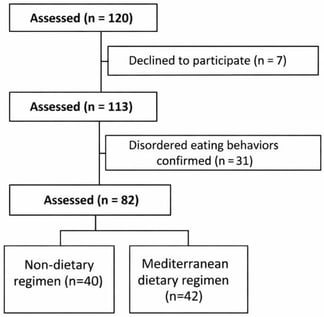
Body dissatisfaction and eating disorder (ED) risk indicators can persist into later life but are less frequently assessed in routine care for older women. Among women aged 50 years and older, attendance on dietary care pathways in clinical settings may offer a pragmatic opportunity for early identification (screening) of ED risk indicators and related psychological distress, particularly during the menopausal transition. Thus, the aim of this study was to compare body dissatisfaction and ED risk indicators in older women attending dietary treatment versus those not following a dietary regimen. This cross-sectional study compared women aged ≥50 years without a prior ED diagnosis who were receiving medically supervised dietary treatment (DTG; n = 42) with peers not following any dietary regimen (NDG; n = 40) in Cádiz (Spain). Participants completed the Eating Disorder Inventory-3 Referral Form (EDI-3RF), AF-5 Self-Concept Questionnaire, List of Brief Symptoms (LBS-50), and the International Physical Activity Questionnaire (IPAQ) and underwent anthropometric assessment. Compared with those women in the NDG, those in the DTG had a higher body mass index (p = 0.002), higher drive for thinness (p < 0.001) and body dissatisfaction (p < 0.001), lower physical self-concept (p = 0.001), and higher total EDI-3RF scores (p < 0.001). Based on the EDI-3RF, 11.9% of the DTG met clinical referral criteria versus none in the NDG (p = 0.031). These findings indicate that, in this sample of women aged ≥ 50 years, women attending dietary care pathways exhibited a higher ED risk profile, higher psychopathological symptom levels, and lower physical self-concept than women not following a dietary regimen. Given the cross-sectional design, results should be interpreted as associations and may reflect pre-existing differences among women who enter dietary care; nonetheless, dietary care pathways may represent a practical opportunity to incorporate brief screening for body image concerns and ED risk indicators in older women.
26 February 2026