Skip Content
You are currently on the new version of our website. Access the old version .

Wind

Wind is an international, peer-reviewed, open access journal on wind-related technologies, environmental and sustainability studies published quarterly online by MDPI. 

All Articles (140)

Wind energy has the potential to become an important source of energy for remote Arctic regions. However, there are risks associated with the exposure of coastal wind parks to extremely strong winds caused by storms and polar lows. Extreme winds can either enhance or reduce wind energy production. The outcomes largely depend on the coastal landscape surrounding the wind park. To address these questions, we conducted a series of simulations using the Weather Research and Forecasting (WRF) model. This study focuses on one of the strongest wind events along the western Norwegian coast—the landfall of the storm “Ylva” (24–27 November 2017). The study employs terrain-resolving downscaling by zooming in on the area of the Kvitfjell–Raudfjell wind park, Norway. The terrain-resolving WRF simulations reveal stronger winds at turbine hub height (80 m to 100 m above the ground level) in the coastal area. However, it was previously overlooked that the landfall of an Atlantic storm, which approaches this area from the southwest, brings the strongest winds from southeast directions, i.e., from the land. This creates geographically extensive and vertically deep wind-sheltered areas along the coast. Wind speeds at hub height in these sheltered areas are reduced, while they remain extreme over wind-channeling sea fjords. The novelty and applied value of this study is that it reveals an overlooked opportunity for optimal wind park siting. The coastal wind parks can take advantage of both sustained westerly winds during normal weather conditions and wind sheltering during extreme storm conditions. We found that the Kvitfjell–Raudfjell location is nearly optimal with respect to the extreme winds of “Ylva.”

2 February 2026
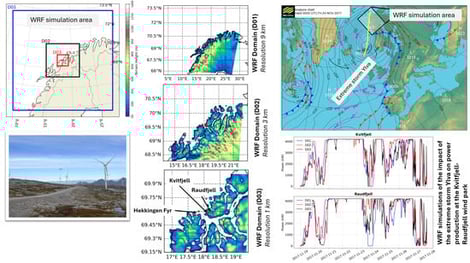
Historical synoptic analysis and weather chart from UK MetOffice (available at https://digital.nmla.metoffice.gov.uk/SO_5ac00274-e340-4c7a-ba07-0be9797536eb/?pg=6, last accessed 26 November 2025). Analysis shows the meteorological situation at 00:00 UTC on 24 November 2017.

An Efficient Hybrid Evolutionary Algorithm for Enhanced Wind Energy Capture

  • Muhammad Rashid,
  • Abdur Raheem and
  • Touqeer Ahmed Jumani
  • + 3 authors

An optimal topographical arrangement of wind turbines (WTs) is essential for increasing the total power production of a wind farm (WF). This work introduces PSO-GA, a newly formulated algorithm based on the hybrid of Particle Swarm Optimization (PSO) and the Genetic Algorithm (GA) method, to provide the best possible and reliable WF layout (WFL) for enhanced output power. Because GA improves on PSO-found solutions while PSO investigates several regions; therefore, hybrid PSO-GA can effectively handle issues involving multiple local optima. In the first phase of the framework, PSO improves the original variables; in the second phase, the variables are changed for improved fitness. The goal function takes into account both the power production of the WF and the cost per power while analyzing the wake loss using the Jenson wake model. To evaluate the robustness of this strategy, three case studies are analyzed. The algorithm identifies the best possible position of turbines and strictly complies with industry-standard separation distances to prevent extreme wake interference. This comparative study on the past layout improvement process models demonstrates that the proposed hybrid algorithm enhanced performance with a significant power improvement of 0.03–0.04% and a 24–27.3% reduction in wake loss. The above findings indicate that the proposed PSO-GA can be better than the other innovative methods, especially in the aspects of quality and consistency of the solution.

29 January 2026

Share of electricity generation by energy source type [1].

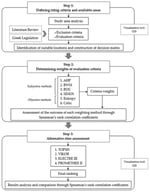
The purpose of this study is to determine the optimal location for siting an onshore wind farm on the island of Skyros, thereby maximizing performance and minimizing the project’s environmental impacts. Seven evaluation criteria are defined across various sectors, including environmental and economic sectors, and six criteria weighting methods are applied in combination with four multicriteria decision-making (MCDM) ranking methods for suitable areas, resulting in twenty-four ranking models. The alternatives considered in the analysis were defined through the application of constraints imposed by the Specific Framework for Spatial Planning and Sustainable Development for Renewable Energy Sources (SFSPSD RES), complemented by exclusion criteria documented in the international literature, as well as a minimum area requirement ensuring the feasibility of installing at least four wind turbines within the study area. The correlations between their results are then assessed using the Spearman coefficient. Geographic information systems (GISs) are utilized as a mapping tool. Through the application of the methodology, it emerges that area A9, located in the central to northern part of Skyros, is consistently assessed as the most suitable site for the installation of a wind farm based on nine models combining criteria weighting and MCDM methods, which should be prioritized as an option for early-stage wind farm siting planning. The results demonstrate an absolute correlation among the subjective weighting methods, whereas the objective methods do not appear to be significantly correlated with each other or with the subjective methods. The ranking methods with the highest correlation are PROMETHEE II and ELECTRE III, while those with the lowest are TOPSIS and VIKOR. Additionally, the hierarchy shows consistency across results using weights from AHP, BWM, ROC, and SIMOS. After applying multiple methods to investigate correlations and mitigate their disadvantages, it is concluded that when experts in the field are involved, it is preferable to incorporate subjective multicriteria analysis methods into decision-making problems. Finally, it is recommended to use more than one MCDM method in order to reach sound decisions.

16 January 2026

Proposed methodological framework.

Exploratory Analysis of Wind Resource and Doppler LiDAR Performance in Southern Patagonia

  • María Florencia Luna,
  • Rafael Beltrán Oliva and
  • Jacobo Omar Salvador

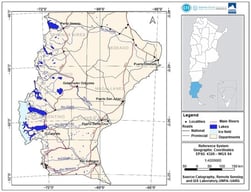
Southern Patagonia in Argentina possesses a world-class wind resource; however, its remote location challenges long-term monitoring. This study presents the first long-term Doppler LiDAR-based wind characterization in the region, analyzing six months of high-resolution data at a 100 m hub height. Power for the LiDAR is provided by a hybrid system combining photovoltaic (PV) and grid sources, with remote monitoring. The results reveal two distinct seasonal regimes identified through a multi-model statistical framework (Weibull, Lognormal, and non-parametric Kernel Density Estimation: a high-energy summer with concentrated westerly flows and pronounced diurnal cycles (Weibull scale parameter A ≈ 11.9 m/s), and a more stable autumn with a broad wind direction spectrum (shape parameter k ≈ 2.86). Energy output, simulated using Windographer v5.3.12 (Academic License) for a Vestas V117-3.3 MW turbine, shows close alignment (~15% difference) with the operational Bicentenario I & II wind farm (Jaramillo, AR), validating the site’s wind energy potential. This study confirms the viability of utility-scale wind power generation in Southern Patagonia and establishes Doppler LiDAR as a reliable tool for high-resolution wind resource assessment in remote, high-wind environments.

15 January 2026

Map of the province of Santa Cruz, Argentina.

News & Conferences

Issues

Open for Submission

Editor's Choice

Reprints of Collections

Sustainable Energy Technology
Reprint

Sustainable Energy Technology

Editors: Wei-Hsin Chen, Aristotle T. Ubando, Chih-Che Chueh, Liwen Jin

Get Alerted

Add your email address to receive forthcoming issues of this journal.

XFacebookLinkedIn
Wind - ISSN 2674-032X