You are currently viewing a new version of our website. To view the old version click .

Current Status of Research on Gut Metabolites and Microbiota

Special Issue Information

Dear Colleagues,

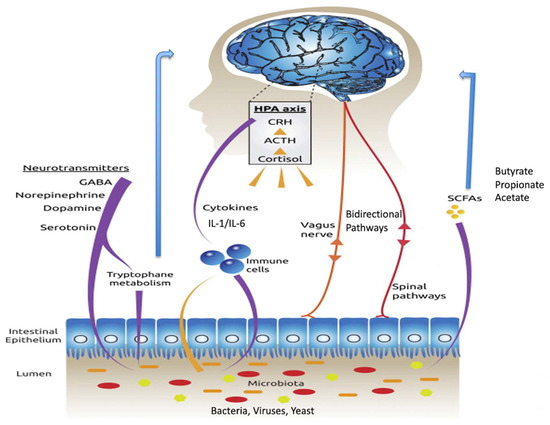
Metabolites are small molecules that derive from cell metabolism. In the last few years, the role of metabolites produced in the gut by the microbiome–host system has attracted much attention. They can be considered to be “molecular words” in the communication language within the gut microbial community (microbe–microbe) and other microbial communities in the body, such as those inhabiting the skin, the oral cavity, or the respiratory tract, as well as to and from the host (microbe–host). Metabolites circulating in the gut are involved in several host physiological processes, such as nutrition, immune system stimulation, epithelium maintenance, and colonization resistance. Interruption of the metabolite-based dialogue between the microbiota and the host leads to disease, not only intestinal but affecting other organs or systemic. It is the case for intestinal inflammatory bowel disease, Clostridium difficile colitis, colorectal cancer, asthma, and some metabolic, neurological, reproductive, and immune-system-associated disorders where the gut metabolome (the complete set of small molecules from the gut) plays a part in their outcome. Omics approaches, especially metagenomics combined with metabolomics, have significantly contributed to the study of the function of critical metabolites for health, such as short-chain fatty acids, bile acids, amino acids, and polyamines and to the identification of their producers. However, our knowledge of the ecological web of metabolic interactions is filled with gaps due to the ecological complexity of the gut microbiome–host interplay. The area of microbiome metabolomics is promising and already expanding, especially regarding its therapeutic applications. We thus invite contributions to this Topic Collection in the form of original research articles, case reports, short communications, or review papers that cover any aspect of gut metabolites and the microbiome, and host–microbiome interplay, including new research, new data, novel methodologies, and future perspectives.

Dr. Ana Elena Pérez Cobas
Collection Editor

Manuscript Submission Information

Manuscripts should be submitted online at www.mdpi.com by registering and logging in to this website. Once you are registered, click here to go to the submission form. Manuscripts can be submitted until the deadline. All submissions that pass pre-check are peer-reviewed. Accepted papers will be published continuously in the journal (as soon as accepted) and will be listed together on the special issue website. Research articles, review articles as well as short communications are invited. For planned papers, a title and short abstract (about 250 words) can be sent to the Editorial Office for assessment.
Submitted manuscripts should not have been published previously, nor be under consideration for publication elsewhere (except conference proceedings papers). All manuscripts are thoroughly refereed through a single-blind peer-review process. A guide for authors and other relevant information for submission of manuscripts is available on the Instructions for Authors page. Pathogens is an international peer-reviewed open access monthly journal published by MDPI.

Please visit the Instructions for Authors page before submitting a manuscript. The Article Processing Charge (APC) for publication in this open access journal is 2200 CHF (Swiss Francs). Submitted papers should be well formatted and use good English. Authors may use MDPI's English editing service prior to publication or during author revisions.

Keywords

  • gut
  • microbiota
  • metabolites
  • metabolomics
  • interaction
  • physiology

Benefits of Publishing in a Special Issue

  • Ease of navigation: Grouping papers by topic helps scholars navigate broad scope journals more efficiently.
  • Greater discoverability: Special Issues support the reach and impact of scientific research. Articles in Special Issues are more discoverable and cited more frequently.
  • Expansion of research network: Special Issues facilitate connections among authors, fostering scientific collaborations.
  • External promotion: Articles in Special Issues are often promoted through the journal's social media, increasing their visibility.
  • e-Book format: Special Issues with more than 10 articles can be published as dedicated e-books, ensuring wide and rapid dissemination.

Published Papers

Get Alerted

Add your email address to receive forthcoming issues of this journal.

XFacebookLinkedIn
Pathogens - ISSN 2076-0817