


materials-logo

Journal Browser

Journal Browser

Advanced Materials Machining: Theory and Experiment

A special issue of Materials (ISSN 1996-1944). This special issue belongs to the section "Manufacturing Processes and Systems".

Deadline for manuscript submissions: 20 June 2026 | Viewed by 3112

Special Issue Editors


E-Mail Website
Guest Editor
Department of Manufacturing Techniques and Automation, The Faculty of Mechanical Engineering and Aeronautics, Rzeszow University of Technology, 35-959 Rzeszow, Poland
Interests: machining; grinding; cutting tools; grinding wheels; cutting process diagnostics
Special Issues, Collections and Topics in MDPI journals

E-Mail Website
Guest Editor
Department of Manufacturing and Materials Engineering, Faculty of Mechanical Engineering, Opole University of Technology, 45-271 Opole, Poland
Interests: manufacturing technologies; theory and modelling of machining processes; computed tomography; surface metrology; materials science; reverse engineering; robotization of manufacturing processes
Special Issues, Collections and Topics in MDPI journals

E-Mail Website
Guest Editor
Faculty of Manufacturing Technologies of the Technical University of Košice with the Seat in Prešov, Bayerova 1, 080 01 Prešov, Slovakia
Interests: advanced manufacturing technologies; water jetting; hybrid technologies

Special Issue Information

Dear Colleagues,

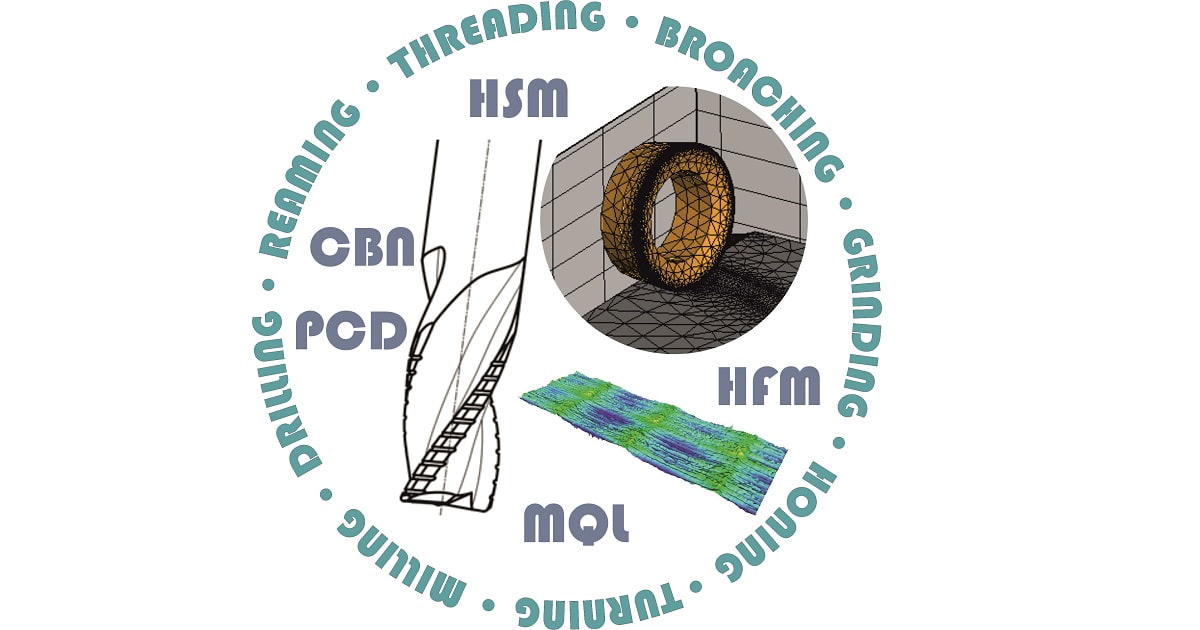
The machining of modern materials, such as titanium and nickel alloys, composites, and advanced ceramics, presents numerous challenges due to their high hardness, wear resistance, and low thermal conductivity. Consequently, machining these materials is associated with rapid tool wear, the necessity for precise cooling systems, and the selection of machining parameters and strategies to ensure the required workpiece quality. Furthermore, the demands for process efficiency and sustainability drive the need to optimize machining technologies, including the use of advanced tools with coatings, as well as technologies such as High-Speed Machining (HSM), High-Feed Milling (HFM), and Minimum Quantity Lubrication (MQL) cooling.

This Special Issue is dedicated to research on modern material machining technologies, aiming to deepen understanding of processes and phenomena and improve the efficiency and reliability of existing machining methods. The scope of this Special Issue includes studies on cutting tools, particularly their geometry and wear; the modeling and simulation of machining processes with an emphasis on numerical methods and artificial intelligence; and investigations into cutting parameters and strategies, cooling methods, quality parameters after machining (such as surface roughness, waviness, dimensional and shape accuracy), and the condition of the surface layer.

This Special Issue is related to "Constellation of Scientific Schools in Mechanical Engineering 2025", which takes place virtually on 24–26 September 2025 (https://www.mdpi.com/journal/materials/events/18451).

Dr. Łukasz Żyłka
Prof. Krzysztof Żak
Prof. Dr. Sergej Hloch
Guest Editors

Manuscript Submission Information

Manuscripts should be submitted online at www.mdpi.com by registering and logging in to this website. Once you are registered, click here to go to the submission form. Manuscripts can be submitted until the deadline. All submissions that pass pre-check are peer-reviewed. Accepted papers will be published continuously in the journal (as soon as accepted) and will be listed together on the special issue website. Research articles, review articles as well as short communications are invited. For planned papers, a title and short abstract (about 250 words) can be sent to the Editorial Office for assessment.

Submitted manuscripts should not have been published previously, nor be under consideration for publication elsewhere (except conference proceedings papers). All manuscripts are thoroughly refereed through a single-blind peer-review process. A guide for authors and other relevant information for submission of manuscripts is available on the Instructions for Authors page. Materials is an international peer-reviewed open access semimonthly journal published by MDPI.

Please visit the Instructions for Authors page before submitting a manuscript. The Article Processing Charge (APC) for publication in this open access journal is 2600 CHF (Swiss Francs). Submitted papers should be well formatted and use good English. Authors may use MDPI's English editing service prior to publication or during author revisions.

Keywords

  • precision machining
  • machining and machinability
  • difficult-to-cut materials
  • metals and alloys
  • cutting process modelling and optimization
  • machining simulation
  • tool wear and durability
  • surface topography
  • diagnostics and process monitoring
  • cooling conditions

Benefits of Publishing in a Special Issue

  • Ease of navigation: Grouping papers by topic helps scholars navigate broad scope journals more efficiently.
  • Greater discoverability: Special Issues support the reach and impact of scientific research. Articles in Special Issues are more discoverable and cited more frequently.
  • Expansion of research network: Special Issues facilitate connections among authors, fostering scientific collaborations.
  • External promotion: Articles in Special Issues are often promoted through the journal's social media, increasing their visibility.
  • Reprint: MDPI Books provides the opportunity to republish successful Special Issues in book format, both online and in print.

Further information on MDPI's Special Issue policies can be found here.

Published Papers (5 papers)

Order results
Result details
Select all
Export citation of selected articles as:

Research

27 pages, 5585 KB  
Article
Thin Wall Milling at a Maximized Axial Depth of Cut: An Analysis of Thermal and Mechanical Interactions
by Magdalena Zawada-Michałowska
Materials 2025, 18(23), 5347; https://doi.org/10.3390/ma18235347 - 27 Nov 2025
Viewed by 324
Abstract
This paper reports the results of a study examining the effect of thermomechanical interactions that occur during a milling process conducted at a maximum axial depth of cut for a thin wall made of aluminium alloy 7050 T7451. The impact of cutting speed [...] Read more.
This paper reports the results of a study examining the effect of thermomechanical interactions that occur during a milling process conducted at a maximum axial depth of cut for a thin wall made of aluminium alloy 7050 T7451. The impact of cutting speed and wall thickness on cutting force and cutting temperature was determined. Response surface methodology and face-centred central composite design were used. It was found that raising the cutting speed to approximately vc ≈ 700 m/min led to an increase in cutting force component Fx and cutting temperature T, followed by a decrease in their values. Nonetheless, these variables at vc = 900 m/min were considerably higher than those observed at vc = 300 m/min. The thinnest tested wall of t = 1 mm exhibited the greatest process instability and evident signs of chatter, while a wall thickness increase to t = 2 mm resulted in improved process stability and reduced flatness deviation. The interaction between the cutting force and the cutting temperature, as well as the occurrence of chatter, were established as two dominant factors affecting thin wall machining accuracy. Results showed that the assumed empirical models could be used to predict the tested dependent variables under similar milling conditions. Full article
(This article belongs to the Special Issue Advanced Materials Machining: Theory and Experiment)
Show Figures

Figure 1

25 pages, 4767 KB  
Article
Thin Wall Milling at a Maximized Axial Depth of Cut
by Magdalena Zawada-Michałowska
Materials 2025, 18(22), 5219; https://doi.org/10.3390/ma18225219 - 18 Nov 2025
Cited by 1 | Viewed by 318
Abstract
The objective of the study was to determine the minimum thickness of a thin wall for milling at a maximized axial depth of cut, considering the effect of cutting speed on residual stress and post-machining distortion. Test samples were made of aluminum alloy [...] Read more.
The objective of the study was to determine the minimum thickness of a thin wall for milling at a maximized axial depth of cut, considering the effect of cutting speed on residual stress and post-machining distortion. Test samples were made of aluminum alloy 7050 T7451. The milling operation at a maximized axial depth of cut was performed during finishing. Response surface methodology was employed. Wall thickness and cutting speed were considered as two independent variables, while dependent variables were flatness deviation, wall thickness deviation, and residual stress. Flatness deviation and wall thickness deviation were used as the indicators of post-machining wall deformation and their measurements were made using a coordinate measuring machine. Residual stress was measured with an X-ray diffractometer. The obtained results showed that thin wall milling at a maximized axial depth of cut was feasible; nevertheless, for a wall thickness of t = 1 mm, the formation of considerable post-machining deformation was observed. Therefore, for milling with the employed axial depth of cut, the wall thickness should be t ≥ 1.5 mm. The highest strain and residual stress were observed at vc ≈ 600 m/min; despite its subsequent decrease, the strain at vc = 900 m/min was still higher than that at vc = 300 m/min. The results also showed tensile stress to be dominant, while compressive stress only occurred at vc = 300 m/min for wall thicknesses of t = 1.5 mm and t = 2 mm. The developed response surface quadratic models make it possible to predict the tested variables under similar conditions. Full article
(This article belongs to the Special Issue Advanced Materials Machining: Theory and Experiment)
Show Figures

Figure 1

16 pages, 3262 KB  
Article
Experimental Study on the Role of Bond Elasticity and Wafer Toughness in Back Grinding of Single-Crystal Wafers
by Joong-Cheul Yun and Dae-Soon Lim
Materials 2025, 18(21), 4890; https://doi.org/10.3390/ma18214890 - 25 Oct 2025
Viewed by 613
Abstract
Grinding semiconductor wafers with high hardness, such as SiC, remains a significant challenge due to the need to maximize material removal rates while minimizing subsurface damage. In the back-grinding process, two key parameters—the elastic modulus (Eb) of the grinding wheel bond and the [...] Read more.
Grinding semiconductor wafers with high hardness, such as SiC, remains a significant challenge due to the need to maximize material removal rates while minimizing subsurface damage. In the back-grinding process, two key parameters—the elastic modulus (Eb) of the grinding wheel bond and the fracture toughness (KIC) of the wafer—play a critical role in governing the behavior of diamond and the extent of wafer damage. This study systematically investigated the effect of Eb and KIC on diamond protrusion height (hp), surface roughness (Ra), grinding forces, and the morphology of generated debris. The study encompassed four wafer types—Si, GaP, sapphire, and ground SiC—using five Back-Grinding Wheels (BGWs), with Eb ranging from 95.24 to 131.38 GPa. A log–linear empirical relationship linking ℎₚ to Eb and KIC was derived and experimentally verified, demonstrating high predictive accuracy across all wafer–wheel combinations. Surface roughness (Ra) was measured in the range of 0.486 − 1.118𝜇m, debris size ranged from 1.41 to 14.74𝜇m, and the material removal rate, expressed as a thickness rate, varied from 555 to 1546𝜇m/h (equivalent to 75−209 mm³/min using an effective processed area of 81.07 cm²). For SiC, increasing the bond modulus from 95.24 to 131.38 GPa raised the average hp from 9.0 to 1.2 um; the removal rate peaked at 122.07 GPa, where subsurface damage (SSD) was minimized, defining a practical grindability window. These findings offer practical guidance for selecting grinding wheel bond compositions and configuring process parameters. In particular, applying a higher Eb is recommended for harder wafers to ensure sufficient diamond protrusion, while an appropriate dressing must be employed to prevent adverse effects from excessive stiffness. By balancing removal rate, surface quality, and subsurface damage constraints, the results support industrial process development. Furthermore, the protrusion model proposed in this study serves as a valuable framework for optimizing bond design and grinding conditions for both current and next-generation semiconductor wafers. Full article
(This article belongs to the Special Issue Advanced Materials Machining: Theory and Experiment)
Show Figures

Figure 1

14 pages, 4276 KB  
Article
Side Oscillation Milling: Modeling, Analysis, and Compensation of Cutting Forces Through Feed Optimization
by Michał Gdula and Piotr Żurek
Materials 2025, 18(16), 3789; https://doi.org/10.3390/ma18163789 - 12 Aug 2025
Cited by 1 | Viewed by 497
Abstract
This article presents an analysis and the modeling of cutting forces in the process of oscillation milling of side surfaces of workpieces made of hardened steel. In addition, the impact of the oscillation machining method on cutting forces was analyzed, taking into account [...] Read more.
This article presents an analysis and the modeling of cutting forces in the process of oscillation milling of side surfaces of workpieces made of hardened steel. In addition, the impact of the oscillation machining method on cutting forces was analyzed, taking into account feed optimization. A sinusoidal function was used to describe the trajectory of the tool in order to induce the oscillatory motion. The study is based on a set of 34 cutting tests using four end-mill cutters, each characterized by a unique combination of feed rate and sinusoidal downward and upward angles. This constitutes a novel approach to sine wave period selection. Empirical mathematical models of the cutting forces were developed using the response surface method. The results demonstrate that the sinusoidal trajectory of the tool movement, together with optimization of the feed rate, leads to a reduction in fluctuations and the stabilization of cutting forces, and an approximately 30% increase in the efficiency of this machining process. Full article
(This article belongs to the Special Issue Advanced Materials Machining: Theory and Experiment)
Show Figures

Figure 1

22 pages, 10596 KB  
Article
Detection of Defects in Solid Carbide Cutting Tools During Creep-Feed Flute Grinding (CFG) Using Recurrence Analysis
by Marcin Sałata, Robert Babiarz and Krzysztof Kęcik
Materials 2025, 18(12), 2743; https://doi.org/10.3390/ma18122743 - 11 Jun 2025
Cited by 2 | Viewed by 832
Abstract
This study presents a comprehensive analysis of defect detection in the manufacturing process of solid carbide milling tools. The creep-feed flute grinding technique was used to fabricate a milling tool, with cutting force signals recorded and examined using recurrence analysis and conventional statistical [...] Read more.
This study presents a comprehensive analysis of defect detection in the manufacturing process of solid carbide milling tools. The creep-feed flute grinding technique was used to fabricate a milling tool, with cutting force signals recorded and examined using recurrence analysis and conventional statistical methods. The analysis identified four distinct dynamic fluctuations (cutting force amplitude jumps), which showed a direct correlation with the formation of microcracks on the flute surface. These jumps exhibited varying levels of reduction, ranging from 5% to 22% in amplitude. A detailed investigation, including recurrence plots and recurrence quantification analysis (RQA) with a moving-window approach, revealed that several recurrence indicators, such as the recurrence rate (RR), determinism (DET), and maximum diagonal line length (LMAX), were highly effective in detecting microcracks, as their values significantly deviated from the reference level. These results were compared with conventional statistical analysis, and interestingly, the recurrence methods demonstrated greater sensitivity, successfully detecting additional very small cutting force jumps that conventional statistical methods could not identify. Full article
(This article belongs to the Special Issue Advanced Materials Machining: Theory and Experiment)
Show Figures

Figure 1

Back to TopTop