




Journal Menu
► ▼ Journal Menu-
- Materials Home
- Aims & Scope
- Editorial Board
- Reviewer Board
- Topical Advisory Panel
- Early Career Editorial Board
- Instructions for Authors
- Special Issues
- Topics
- Sections & Collections
- Article Processing Charge
- Indexing & Archiving
- Editor’s Choice Articles
- Most Cited & Viewed
- Journal Statistics
- Journal History
- Journal Awards
- Society Collaborations
- Conferences
- Editorial Office
Journal Browser
► ▼ Journal BrowserNeed Help?
Announcements
29 December 2022
Dr. Ingo Dierking Appointed Section Editor-in-Chief of Section "Soft Matter" in Materials
We are pleased to announce that Dr. Ingo Dierking has been appointed Editor-in-Chief of the Section "Soft Matter" in Materials (ISSN: 1996-1944).
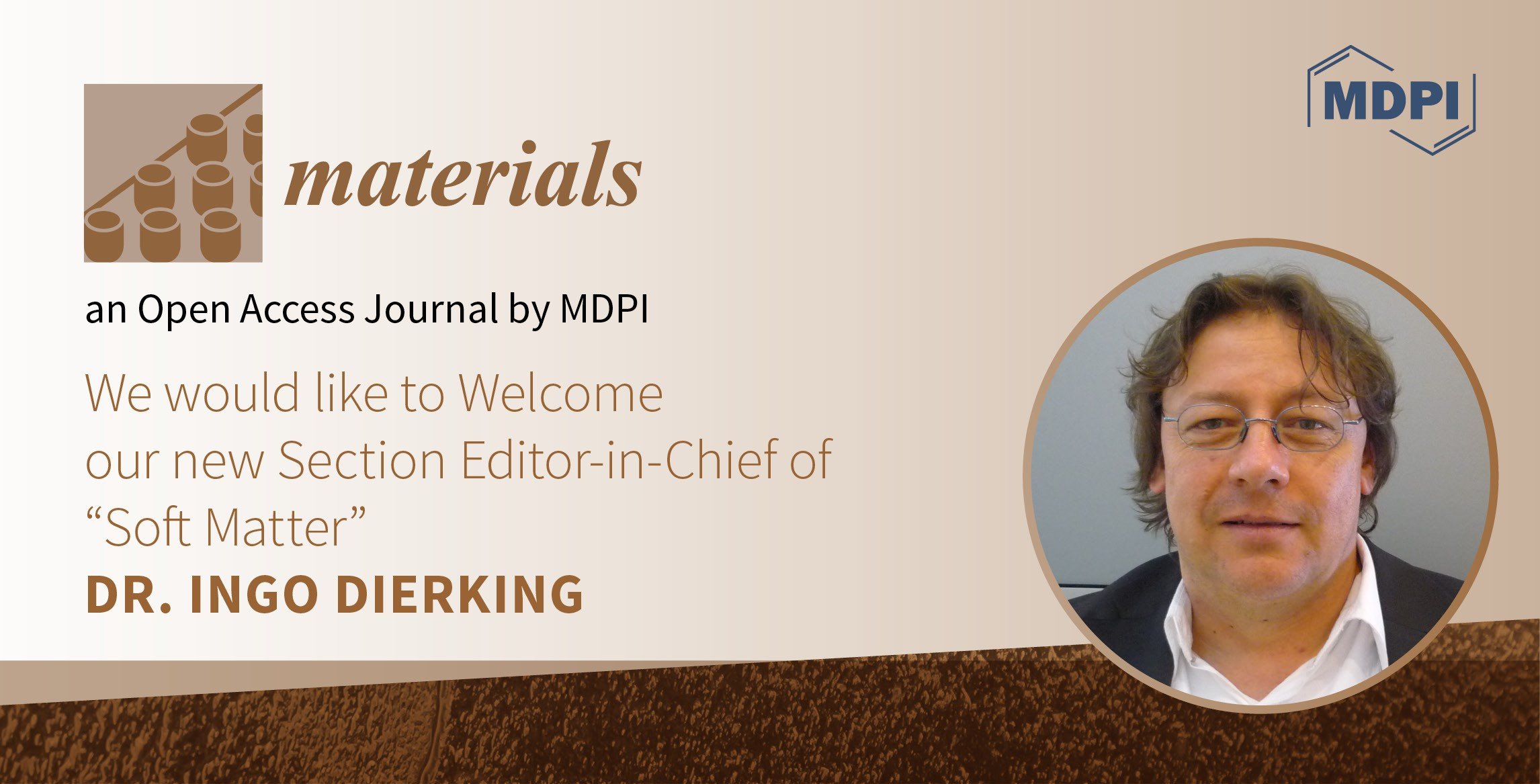
Dr. Ingo Dierking received his Ph.D. in 1995 from the University of Clausthal in Germany. After employment at the IBM TJ Watson Research Center in the US, working on electronic paper, he joined Chalmers University in Gothenburg, Sweden, as a Humboldt fellow. There, he was appointed docent, before joining the University of Darmstadt in Germany as a lecturer for several years and eventually moving to the University of Manchester in 2002, where he is a Senior Lecturer/Associate Professor at the Department of Physics & Astronomy. Dr. Ingo Dierking has published more than 150 scientific papers, as well as several books on the topic of liquid crystal research. He is the 2009 awardee of the Hilsum medal of the British Liquid Crystal Society (BLCS), the 2016 winner of the Samsung Mid-Career Award for Research Excellence of the International Liquid Crystal Society (ILCS) and the 2021 awardee of the Gray medal. Ingo Dierking is the editor of Liquid Crystals Today, the current President of the ILCS and a former Chair of the BLCS. His current research interests are broadly focused on soft-matter systems, with an emphasis on liquid crystals, and LC-based composites with polymers and nanoparticles.
The following is a Q&A with Dr. Ingo Dierking, who shared his vision for the Section, in addition to his views on the research area and Open Access publishing:
1. What appealed to you about the journal that made you want to take the role as its Section Editor-in-Chief?
The journal has a relatively wide scope and is appealing to a broad audience. It offers the possibility to obtain an overview of research topics one would not necessarily look for, for example, a soft matter physicist is exposed to nanomaterial research in the same issue of the journal and might run across an interesting title when looking through the table of contents. Similarly, as a Section editor with a background in liquid crystals, one is exposed to publications from the fields of polymers, colloids, or biological materials, which might enhance one’s own research.
2. What does the future of this field of research look like?
This is of course a question which is very different for each individual, so I would like to talk about this with my specific view and expertise on liquid crystals. The current research in liquid crystals as being applied in screens is slowly decreasing because there has already been so much research in this area that significant improvements from the side of materials are not needed anymore commercially. The future could lie in 3D screens or holography for screen-related technologies, and also in augmented reality applications. The applications in other areas are now being explored, such as drug delivery, biosensors, gas sensors and adaptive (micro)optics. From a fundamental point of view, different areas of soft matter could increasingly overlap, leading to a broader understanding of the field and the potential for further and largely different applications, especially through the exploitation of self-assembly and self-organization.
3. You have run several successful Special Issues, what did you find important to their success?
The activity and engagement of the Guest Editor are essential. I tend to send personalized emails to the authors I want to invite and to see participate in a special issue. Mass emailing does not attract me personally to submit, so that is what I try to avoid. On the other hand, receiving personalized emails from the GE makes me more likely to consider contributing, so this is what I do when I am a GE. Furthermore, a good and interesting choice of topic, which sets itself apart from those of other issues and journals, might also help.
4. What factors are important to you when selecting a journal to submit to?
In my opinion, the impact factor has become an overrated metric to judge the quality of research. Of course, as a researcher, one should have an interest in publishing quality research. For this, it is essential that a journal has a good review process in place. And of course, the impact factor in many cases allows us to distinguish quality research, but this has to be taken with a pinch of salt, as impact, for example, also depends on the size of the research field, etc. Personally, I believe that the primary question for an author should be: Who is my target audience for a particular research paper? Is it the science community, the soft matter community or the liquid crystal community? Who would I really want to read this paper? – of course, also with an eye on the impact.
5. What do you think of the development of Open Access in the publishing field?
There are certain risks with the concept of Open Access publishing, like predatory journals publishing every submission simply for the sake of maximizing profits. As such, a robust review process might be easier to implement for other publishers, although, of course, most of these, in the end, also publish for profit. The positive side is, of course, that OA publishing reaches a potentially much larger audience, also colleagues who might otherwise not have access to the literature. And of course, there are the funding agencies who often demand Open Access publishing. I believe that OA is a good concept for research publishing, as long as thorough peer review is ensured, costs are controllable, and it is ensured that excellent research is published independent of the financial situation of the authors. Lack of funds should not be a reason for the rejection of good research.
We wish Dr. Ingo Dierking every success in his new position, and we look forward to his contributions to the journal.
22 December 2022
Special Issue Mentor Program
We are pleased to announce the launch of a new initiative—the MDPI Special Issue Mentor Program.
This program will enable early career researchers (who must hold a Ph.D. in a related field) to experience editing a Special Issue in MDPI journals, under the mentorship of our experienced Editorial Board Members or other experienced scientists. The mentor program will provide an excellent opportunity for early career scientists to gain editorial experience, and to cultivate their ability to edit scientific research.
The mentee’s responsibilities include:
- Proposing a Special Issue title and assisting the mentor in preparing a summary (around 200–400 words) and 3–10 keywords describing the background, importance, and goal of the Issue;
- Writing a brief promotion plan for the Special Issue;
- Preparing a list of scholars who may be interested in the Issue and personally e-mailing invitations on behalf of Guest Editors;
- Writing an editorial for the online Special Issue together with the mentor.
The mentor’s responsibilities include:
- Conducting a final check before the Special Issue is published online;
- Performing editorial control of the Special Issue and quality control of the publications, both of which must be carried out in a timely manner;
- Providing suggestions to younger scholars if they have any doubts or concerns regarding submissions;
- Organizing video calls with young scholars and the Editorial Office regularly to discuss problems and improvement suggestions for the Special Issue;
- Making and submitting decisions regarding submissions with the assistance of mentees.
Certificates and awards:
After the Special Issue closes, the Editorial Office will provide official certificates for all the mentors and early career researchers.
If you are interested in this opportunity, please send your Special Issue proposal to the Editorial Office of a journal you choose, and we will discuss the process (i.e., mentor collaboration, Special Issue topic feasibility analysis, etc.) in further detail. The full list of MDPI journals is as follows: https://www.mdpi.com/about/journals.
In addition to the new Special Issue Mentor Program, we will continue to welcome all Special Issue proposals focusing on hot research topics.
22 December 2022
Materials | Best Oral Presentation and Best Poster Award for the 4th International Conference on Materials: Advanced and Emerging Materials (ICM 2022)—Winners Announced
Materials (ISSN: 1996-1944) has organized and sponsored the Best Oral Presentation and Best Poster Award for the 4th International Conference on Materials: Advanced and Emerging Materials (ICM 2022). The applications were processed by the Conference Committee. We are pleased to announce the Best Oral Presentation Award winner, Ms. Katherine Pérez, and Best Poster Award winner, Ms. Noor Abu Jarad.
|
|
Best Oral Presentation Award winner: Ms. Katherine Pérez |
|
|
Best Poster Award winner: Ms. Noor Abu Jarad |
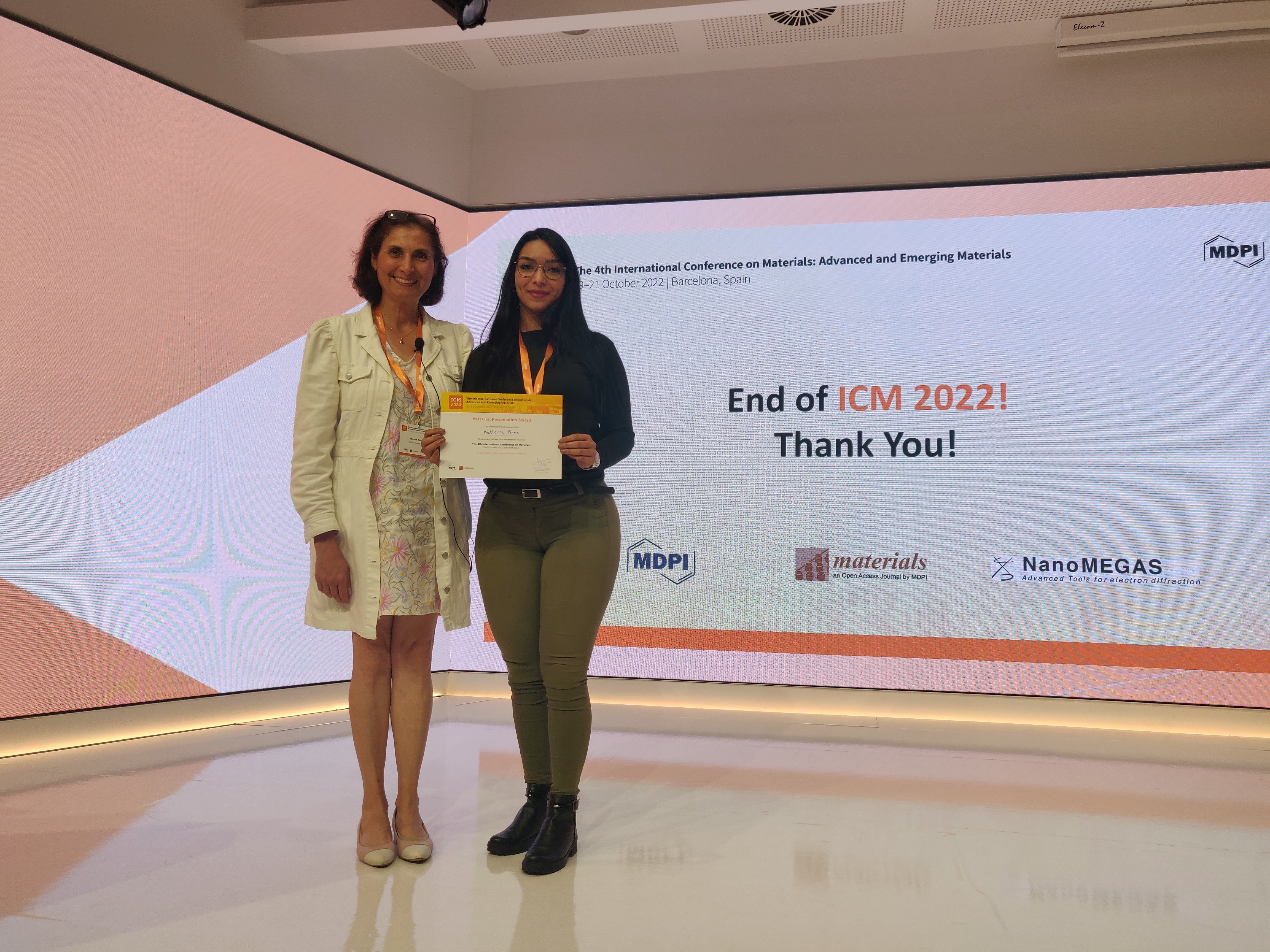
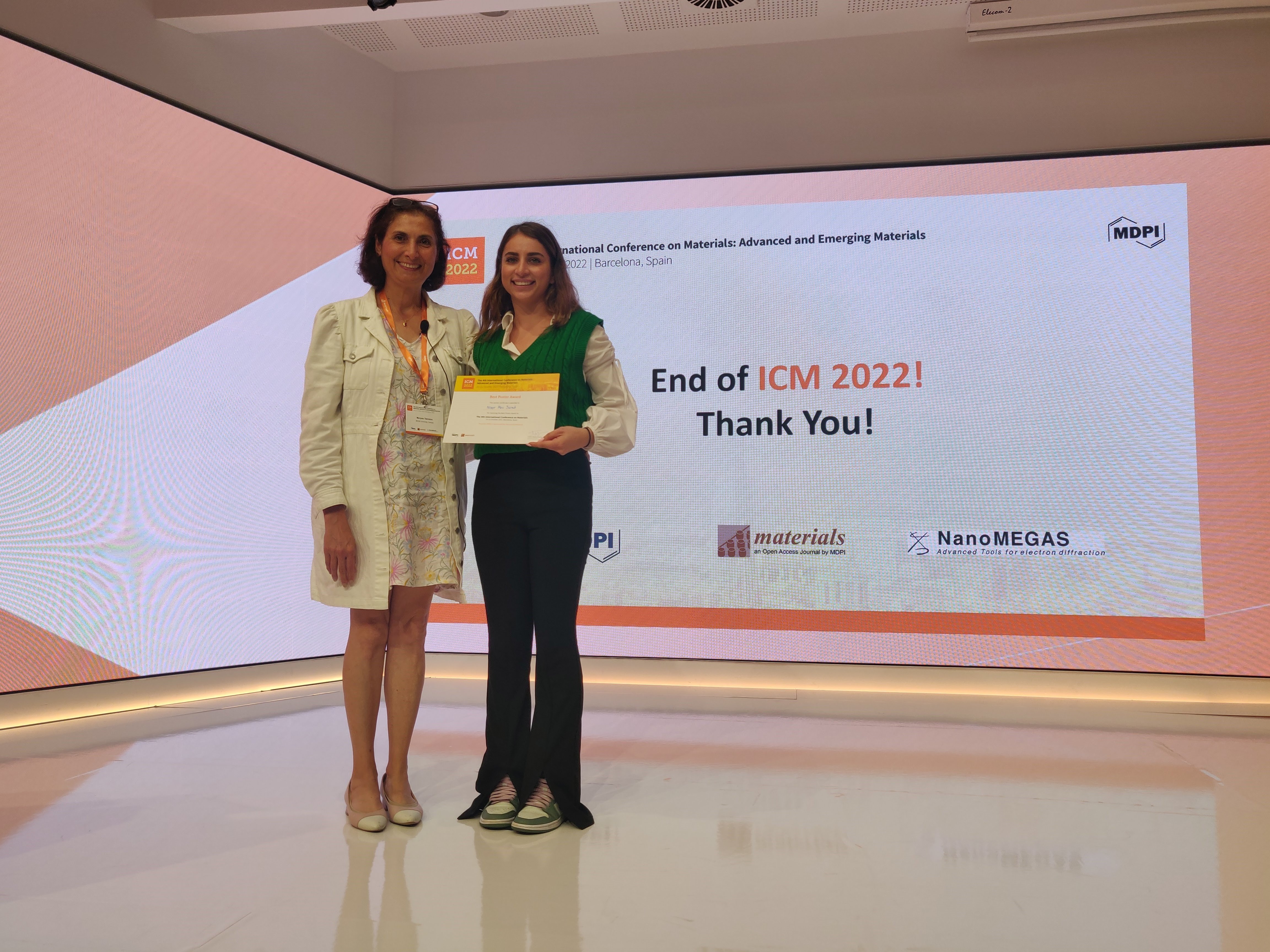
ICM 2022 was chaired by the Materials Editor-in-Chief Prof. Dr. Maryam Tabrizian (McGill University, Montreal, Canada) and Associate Editor-in-Chief Prof. Dr. Filippo Berto (Department of Industrial and Mechanical Engineering, Norwegian University of Science and Technology, Trondheim, Norway). The conference topics included: Materials Characterization, Nanotechnology in Material Sciences and Engineering, Materials Processing and Manufacturing, Soft and Bio-materials, Fibers and Membranes, and Optical, Electrical and Magnetic Materials. More details about the conference can be found on the following website: https://icm2022.sciforum.net/.
The following is an interview with Ms. Katherine Pérez:
We would like to congratulate Ms. Katherine Pérez and Ms. Noor Abu Jarad again for their accomplishments! If you are also interested in Materials’ awards, please refer to https://www.mdpi.com/journal/materials/awards to apply or nominate someone else for an award.
14 December 2022
"Thanks a Million!" – One Million Articles Published in MDPI Journals
MDPI has just become the first open access (OA) publisher to reach the milestone of one million articles published. That is one million articles freely available to all, to circulate and build upon! We are proud to share this special moment with the global scientific community.
This landmark has been reached thanks to the immeasurable support of more than 600,000 expert reviewers, 66,000 editorial board members and 6700 hard-working colleagues across MDPI’s global offices.
Within more than 25 years of publishing, our journals received 2.1 million manuscripts and generated 4.6 million peer review reports to get to one million papers published.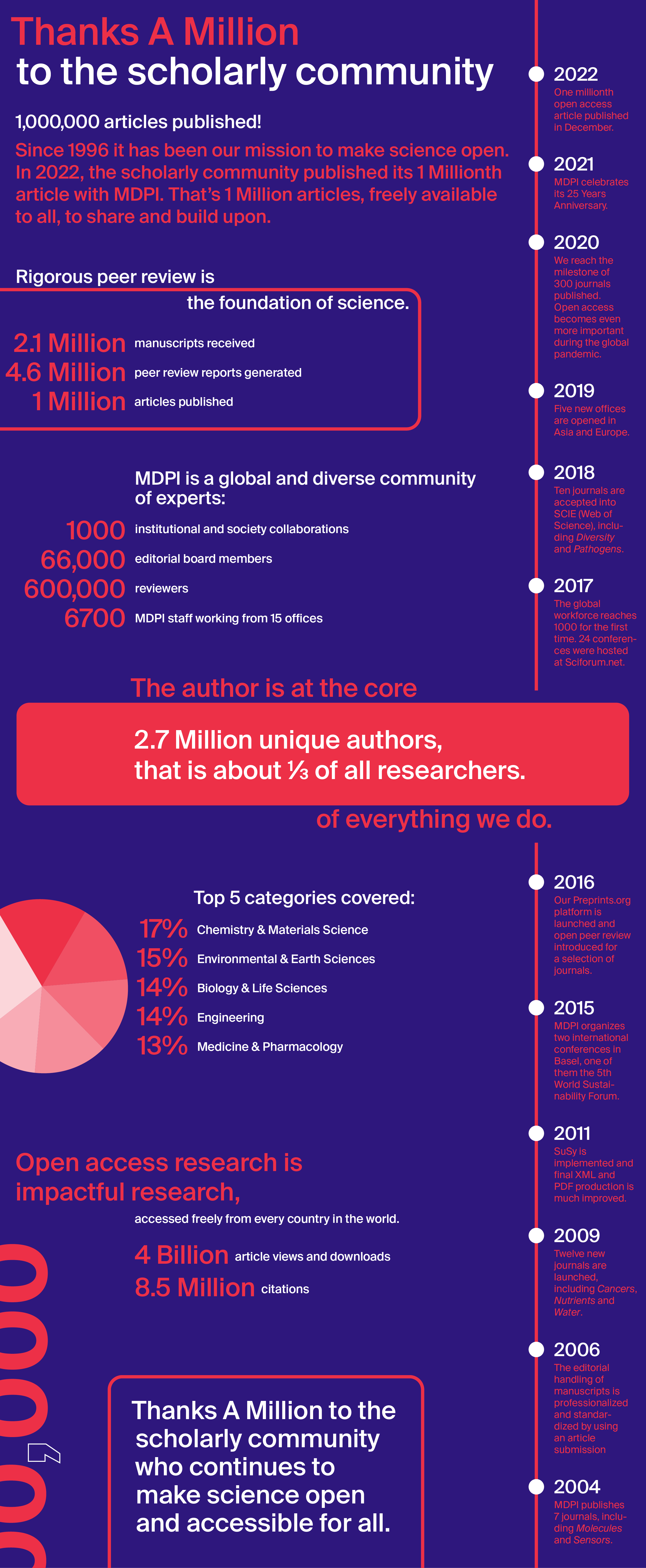
Reaching the milestone of one million articles published reinforces our mission to remove any existing barriers and to make scientific research accessible to all. Since its inception, MDPI’s goal has been to create reliable processes to make science open. This is a path towards facilitating the dissemination of novel insights in scientific communities.
Regular feedback from authors and reviewers shows that our service is greatly appreciated and needed. At the same time, the feedback helps us identify areas for further improvement.
As it stands, a significant share of published research findings remain closed access. More than half of the content published with the most well-known legacy publishers stays behind a paywall, and that is not including articles published in hybrid OA journals, or made available months or years after publication.
A new policy announced by the US administration in August 2022 requires that, as of January 2026, all US federally funded research be made freely and immediately available after publication. While the new policy does not mandate articles be published under an open access license, it is aligned with the open access movement in removing all barriers to research. Similarly, some of the most advanced research institutions in the world intend to have all funded research articles published in open access by 2025.
MDPI is proud to be the leading agent of the transition to open access.
"Thanks a Million" to all the contributors!
13 December 2022
Materials | Recruiting Section Editor-in-Chief for the Section “Green Materials”

We are now recruiting the Editor-in-Chief for the Section “Green Materials” of Materials (ISSN: 1996-1944), which was launched this year. If you are an active researcher in one of the green materials fields and are passionate about publishing cutting-edge research, please do not hesitate to contact us at: materials@mdpi.com.
Section Information
Research in green materials covers, among other polymers, composites, polymeric materials, and non-conventional materials which can reduce the use of hazardous substances in the preparation, manufacturing process, and applications of green products. To enhance the impact of green materials in the context of material science, the Section includes but is not limited to contributions on:
- Renewable materials;
- Sustainable biomaterials;
- Advanced polymer nanocomposites;
- Inorganic functional nanomaterials;
- Environmentally friendly polymeric materials;
- Novel flame-retardant polymers;
- Green chemical materials.
You can find more information about the Section on our homepage: https://www.mdpi.com/journal/materials/sections/green_materials.
The Section Editor-in-Chief has the following responsibilities:
- Promoting Materials and the Section “Green Materials” and increasing their visibility at related academic conferences;
- Making scientific decisions about the journal’s scope;
- Inviting distinguished scientists to join the Editorial Board;
- Suggesting topics for Special Issues and assisting the Guest Editors in the setup of Special Issues;
- Providing support and guidance to Editorial Board Members and editorial staff where required;
- Overviewing the editorial process for individual manuscripts (mainly by making the final decision on whether a paper can be published after peer review and revisions);
- Understanding, leading, and upholding MDPI’s peer review guidelines and ethics guidelines.
We believe that by combining our rigorous editorial policies with your expertise, we can build a high-quality journal. We thank you in advance for your interest and look forward to collaborating with you.
Materials Editorial Office
9 December 2022
Welcoming New Editorial Board Members of Materials
We are pleased to announce that 15 new scholars were appointed Editorial Board Members (EBMs) of the journal Materials (ISSN: 1996-1944) in November 2022.
| Name | Section | Affiliation |
| Prof. Dr. Andrea Manes | “Advanced Composites” | Politecnico di Milano, Italy |
| Dr. Chris M. Fancher | “Advanced Materials Characterization” | Oak Ridge National Laboratory, USA |
| Dr. Matteo Tonezzer | “Advanced Nanomaterials and Nanotechnology” | IMEM-CNR, Italy |
| Prof. Dr. Sangwon Park | “Biomaterials” | Chonnam National University, South Korea |
| Dr. Chun Yang Yin | “Carbon Materials” | Newcastle University, Singapore |
| Dr. Bing Zhang | “Construction and Building Materials” | Harbin Institute of Technology (Shenzhen), China |
| Dr. Luisa Rovero | “Construction and Building Materials” | University of Florence, Italy |
| Prof. Dr. Federico Bella | “Energy Materials” | Politecnico di Torino, Italy |
| Dr. Linfeng Lan | “Materials Physics” | South China University of Technology, China |
| Prof. Dr. Fuguo Li | “Materials Physics” | Northwestern Polytechnical University, China |
| Dr. Changho Lee | “Mechanics of Materials” | Chonnam National University, South Korea |
| Dr. Chih-Chun Hsieh | “Metals and Alloys” | National Taiwan University of Science and Technology, Taiwan |
| Prof. Dr. Heng Li | “Metals and Alloys” | Northwestern Polytechnical University, China |
| Prof. Dr. Pan Gong | “Metals and Alloys” | Huazhong University of Science and Technology, China |
| Dr. Roberto Verucchi | “Thin Films and Interfaces” | National Research Council, Italy |
Further details about the Editorial Board can be found at the following link: https://www.mdpi.com/journal/materials/editors.
We wish our new members every success in both their research and in the development of the journal.
Additionally, Materials is recruiting prestigious scholars from around the world to join our Editorial Board. To apply for this position, recommend potential candidates, or request further information, please contact the Materials Editorial Office (materials@mdpi.com) with the following two files attached:
- A full academic CV;
- A short cover letter that details your interest in and enthusiasm for the position.
Materials Editorial Office
8 December 2022
MDPI Sustainability Foundation: New Look and Nominations for the 2023 Sustainability Awards Now Open
We are pleased to announce that the website of the MDPI Sustainability Foundation has been revamped! For the past couple of months, our UX UI team and front-end developers have been working hard to launch the website in time for the opening of the Sustainability Awards nominations.
The website is not the only thing that has had a remodeling. Indeed, the format of the Emerging Sustainability Leader Award (ESLA) has been updated. ESLA is now a competition open to individual researchers or start-ups founded by researchers under the age of 35. Nominee applications will go through 2 rounds of selection until the final 3 are decided. The finalists will then be invited to give pitch presentations during the Award Ceremony to win either first place (10,000 USD) or runner-up (2 x 5000 USD).
The World Sustainability Award, on the other hand, remains the same: a total prize money of 100,000 USD is up for grabs by senior individual researchers or groups of researchers from the international research community.
Nominations for both the World Sustainability Award and the Emerging Sustainability Leader award are now open! Check out our new website for more information on how to nominate.
29 November 2022
Editorial Board Members from Materials Featured in 2022 Highly Cited Researchers List Published by Clarivate
Recently, ClarivateTM revealed its 2022 list of Highly Cited ResearchersTM—individuals at universities, research institutes and commercial organizations.
The scientists who were selected for this year’s list of Highly Cited Researchers have published highly cited papers in the 11-year period from January 2011 to December 2021, with citation frequency in the top 1% of academic subjects and the same year of publication in the Web of ScienceTM database. Based on Web of Science Citation data, 6938 researchers from across the globe who have demonstrated a disproportionate level of significant and broad influence in their chosen field or fields over the last decade have been awarded Highly Cited Researcher 2022 designations. The list is truly global, spanning 69 countries or regions and spread across a diverse range of research sciences and social sciences.
According to the statistics, 28 members of the Editorial Board of Materials (ISSN: 1996-1944) have been selected for the list of Highly Cited Researchers of Clarivate in 2022. They are being recognized for their high-quality scientific research achievements and outstanding contributions to professional fields. The Materials journal office would like to sincerely congratulate all elected Editorial Board Members and hopes that they continue to have an academically productive relationship with the journal.
| Name | Affiliation |
| Dr. Hui Wu | Tsinghua University, China |
| Dr. Xiaojun Wu | Beihang University, China |
| Dr. Yuyan Jiang | Stanford University, USA |
| Prof. Dr. Bin Yu | University of Science and Technology of China, China |
| Prof. Dr. Cheng Zhong | Tianjin University, China |
| Prof. Dr. Dewei Zhao | Sichuan University, China |
| Prof. Dr. Guoxiu Wang | University of Technology Sydney, Australia |
| Prof. Dr. Haijun Wu | Xi'an Jiaotong University, China |
| Prof. Dr. Haijun Zhang | Wuhan University of Science and Technology, China |
| Prof. Dr. Hao Bin Wu | Zhejiang University, China |
| Prof. Dr. Jie Yang | RMIT University, Australia |
| Prof. Dr. Jun Yan | Dalian University of Technology, China |
| Prof. Dr. Katsuhiko Ariga | National Institute for Materials Science (NIMS), Japan |
| Prof. Dr. Lidong Chen | Chinese Academy of Sciences, China |
| Prof. Dr. Li-Dong Zhao | Beihang University, China |
| Prof. Dr. Lijian Leng | Central South University, China |
| Prof. Dr. Litao Sun | Southeast University, China |
| Prof. Dr. Pan Liu | Shanghai Jiao Tong University, China |
| Prof. Dr. Rafael Luque | Universidad de Córdoba, Spain |
| Prof. Dr. Shaowei Chen | University of California Santa Cruz, USA |
| Prof. Dr. Weili Zhang | Oklahoma State University, USA |
| Prof. Dr. Xiaodong Zhang | University of Science and Technology of China, China |
| Prof. Dr. Xiaogang Zhang | Nanjing University of Aeronautics and Astronautics, China |
| Prof. Dr. Xinhui Xia | Zhejiang University, China |
| Prof. Dr. Yongzhen Wu | East China University of Science and Technology, China |
| Prof. Dr. Yufeng Zheng | Peking University, China |
| Prof. Dr. Zexiang Shen | Nanyang Technological University, Singapore |
| Prof. Dr. Zhiguo Xia | South China University of Technology, China |
21 November 2022
Prof. Dr. Federico Bella Appointed Section Editor-in-Chief of Section "Energy Materials" in Materials

We are pleased to announce that Prof. Dr. Federico Bella has been appointed Editor-in-Chief of the Section "Energy Materials" in Materials (ISSN: 1996-1944).
Prof. Dr. Federico Bella (Torino, 1987) is a full professor of chemistry at Politecnico di Torino. In the Electrochemistry Group, he leads the research activities on post-Li batteries, electrochemical nitrogen reduction and hybrid photovoltaics.
Due to his important achievements in energy chemistry, Prof. Dr. Federico Bella received both the “ENI Award” and the “Roberto Piontelli Award” from the President of the Italian Republic. In 2021, he was the recipient of the USERN Prize, awarded among 10000 candidates by a jury of previous Nobel awardees.
Prof. Dr. Federico Bella is an author of more than 100 international publications (h-index 65) and leads the ERC project SuN2rise, a €1.5 M EU grant to redesign the process of NH3 production. He has coordinated the Early-Career Division of the Italian Chemical Society and is a member of the Editorial Board of cutting-edge journals in the field of chemistry, e.g., ChemSusChem and ACS Sustainable Chemistry & Engineering.
The following is a short Q&A with Prof. Dr. Federico Bella, who shared his vision for the Section, in addition to his views on the research area:
1. What appealed to you about the journal that made you want to take the role as its Section Editor-in-Chief?
In recent years I have worked a lot for Materials in order to propose new Special Issues on emerging thematic areas and contribute to the manuscripts review process. Now, I am happy to have this opportunity to devote myself to the development of one of the most strategic Sections of this journal, i.e., “Energy Materials”.
2. What is your vision for the Section?
We are experiencing an energy transition that must necessarily be accompanied by an ecological transition. All of these challenges are achievable if new materials are developed and are capable of providing performance, sustainability and low costs at the same time: to this end, this Section of the Materials journal will be invaluable in collecting the best possible contributions in this field.
3. What does the future of this field of research look like?
Batteries, supercapacitors, electrocatalytic reactors and photovoltaic cells will be the main players in the electrification of society and industry during the next decade. And it is on these pillars that the “Energy Materials” Section will focus its efforts in order to offer high-quality research articles.
4. What do you think of the development of Open Access in the publishing field?
Researchers must be able to work in the best possible conditions in order to reach important goals. To this purpose, the first requirement is to have access to the literature on one's own research topic, hence the high importance of the Open Access system emerges.
5. What aspects do you focus on when reviewing a manuscript?
I check these three items when I first read a newly submitted manuscript. First, the main challenge of the work must be clearly highlighted. Second, a phenomenological explanation for the measured performances has to be clearly indicated. Third, English style: authors often do not take care of this aspect, but this influences the way a research work is appreciated by a referee.
6. Do you have any suggestions for young researchers in this field?
There is strong competition between research groups in the field of energy materials, and this stems from the great challenges in place and the potential to be financed more easily than in other sectors. However, innovation always comes first: I suggest young people focus on a challenge where they can emerge with a new material or a new phenomenon, rather than chasing performance records on existing materials developed by others.
We wish Prof. Dr. Federico Bella every success in his new position, and we look forward to his contributions to the journal.
18 November 2022
Materials | Top 10 Cited Papers in 2021 in the Section “Polymeric Materials”

1. "High-Temperature Properties and Applications of Si-Based Polymer-Derived Ceramics: A Review"
by Zhongkan Ren, Shakir Bin Mujib and Gurpreet Singh
Materials 2021, 14(3), 614; https://doi.org/10.3390/ma1403061
Full text available online: https://www.mdpi.com/1996-1944/14/3/614
2. "Propolis and Organosilanes as Innovative Hybrid Modifiers in Wood-Based Polymer Composites"
by Majka Odalanowska, Magdalena Woźniak, Izabela Ratajczak, Daria Zielińska, Grzegorz Cofta and Sławomir Borysiak
Materials 2021, 14(2), 464; https://doi.org/10.3390/ma14020464
Full text available online: https://www.mdpi.com/1996-1944/14/2/464
3. "Antibacterial Films Based on Polylactide with the Addition of Quercetin and Poly(Ethylene Glycol)"
by Ewa Olewnik-Kruszkowska, Magdalena Gierszewska, Agnieszka Richert, Sylwia Grabska-Zielińska, Anna Rudawska and Mohamed Bouaziz
Materials 2021, 14(7), 1643; https://doi.org/10.3390/ma14071643
Full text available online: https://www.mdpi.com/1996-1944/14/7/1643
4. "Structure and Mechanical Properties of High-Density Polyethylene Composites Reinforced with Glassy Carbon"
by Piotr Olesik, Marcin Godzierz, Mateusz Kozioł, Jakub Jała, Urszula Szeluga and Jerzy Myalski
Materials 2021, 14(14), 4024; https://doi.org/10.3390/ma14144024
Full text available online: https://www.mdpi.com/1996-1944/14/14/4024
5. "Photocurable Epoxy Acrylate Coatings Preparation by Dual Cationic and Radical Photocrosslinking"
by Paulina Bednarczyk, Karolina Mozelewska, Małgorzata Nowak and Zbigniew Czech
Materials 2021, 14(15), 4150; https://doi.org/10.3390/ma14154150
Full text available online: https://www.mdpi.com/1996-1944/14/15/4150
6. "Bactericidal and Fungistatic Properties of LDPE Modified with a Biocide Containing Metal Nanoparticles"
by Katarzyna Janczak, Daria Kosmalska, Daniel Kaczor, Aneta Raszkowska-Kaczor, Lauren Wedderburn and Rafał Malinowski
Materials 2021, 14(15), 4228; https://doi.org/10.3390/ma14154228
Full text available online: https://www.mdpi.com/1996-1944/14/15/4228
7. "New Organosilicon Composite Based on Borosiloxane and Zinc Oxide Nanoparticles Inhibits Bacterial Growth, but Does Not Have a Toxic Effect on the Development of Animal Eukaryotic Cells"
by Denis N. Chausov, Dmitriy E. Burmistrov, Alexander D. Kurilov, Nikolai F. Bunkin, Maxim E. Astashev, Alexander V. Simakin, Maria V. Vedunova and Sergey V. Gudkov
Materials 2021, 14(21), 6281; https://doi.org/10.3390/ma14216281
Full text available online: https://www.mdpi.com/1996-1944/14/21/6281
8. "Quantification Approaches for Fatigue Crack Resistance of Thermoplastic Tape Layered Composites with Multiple Delaminations"
by Anastasiia Khudiakova, Andreas J. Brunner, Markus Wolfahrt and Gerald Pinter
Materials 2021, 14(6), 1476; https://doi.org/10.3390/ma14061476
Full text available online: https://www.mdpi.com/1996-1944/14/6/1476
9. "Near-Infrared Light-Responsive Shell-Crosslinked Micelles of Poly(d,l-lactide)-b-poly((furfuryl methacrylate)-co-(N-acryloylmorpholine)) Prepared by Diels–Alder Reaction for the Triggered Release of Doxorubicin"
by Sonyabapu Yadav, Kalyan Ramesh, Parveen Kumar, Sung-Han Jo, Seong II Yoo, Yeong-Soon Gal, Sang-Hyug Park and Kwon Taek Lim
Materials 2021, 14(24), 7913; https://doi.org/10.3390/ma14247913
Full text available online: https://www.mdpi.com/1996-1944/14/24/7913
10. "High-Impact Polystyrene Reinforced with Reduced Graphene Oxide as a Filament for Fused Filament Fabrication 3D Printing"
by Marta Sieradzka, Janusz Fabia, Dorota Biniaś, Tadeusz Graczyk and Ryszard Fryczkowski
Materials 2021, 14(22), 7008; https://doi.org/10.3390/ma14227008
Full text available online: https://www.mdpi.com/1996-1944/14/22/7008
