


You are currently viewing a new version of our website. To view the old version click .

Livers

Livers is an international, peer-reviewed, open access journal on liver science published quarterly online by MDPI.

Quartile Ranking JCR - Q3 (Gastroenterology and Hepatology)

All Articles (219)

Secondary Perfusion to Model Viability of Livers Declined for Transplantation

  • Avery K. Fortier,
  • Kimberly M. Feeney and
  • Matthew L. Holzner
  • + 6 authors

Background/Objectives: The donor liver shortage has created an urgent need to utilize higher-risk grafts for transplantation. Normothermic machine perfusion enables ex vivo graft assessment prior to transplantation, offering a route to expand access safely. However, proposed performance metrics often fail to differentiate dysfunctional grafts from functional grafts. Organs showing borderline results require careful deliberation as clinicians seek to balance recipient safety with waiting list access. The crucial question remains: are we discarding organs appropriately? Methods: To address this question, we describe a novel “secondary perfusion” model. We suggest that organs declined for transplantation after normothermic perfusion be subjected to an additional trial of cold ischemia and warm reanimation, mimicking reperfusion. Results: We present a protocol description and proof-of-concept case study using a marginal donor liver, showing how secondary perfusion enabled confirmation of predicted dysfunction. Conclusions: We share a protocol for modeling the performance of discarded organs in a recipient. We aim for this proof of concept to enable further investigation of existing viability criteria and better inform clinical decision-making.

12 December 2025
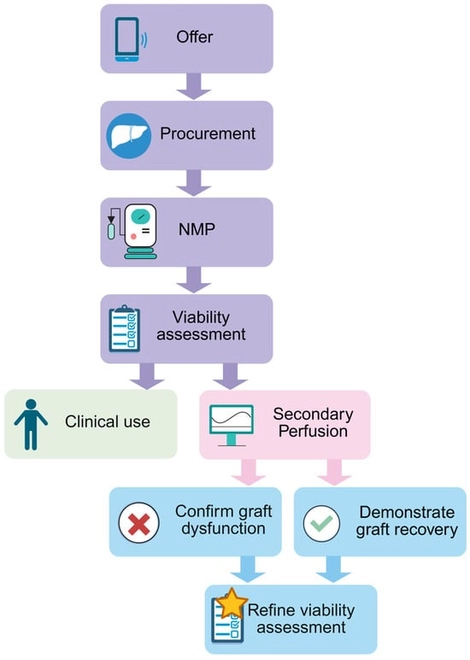
Schematic showing an overview of the secondary perfusion workflow. Created using BioRender.com.

Implication of the Androgen Receptor in Muscle–Liver Crosstalk: An Overlooked Mechanistic Link in Lean-MASLD

  • Eleni Myrto Trifylli,
  • Christiana Charalambous and
  • Nikolaos Spiliotopoulos
  • + 4 authors

Androgen receptor (AR) signaling has a pivotal role in hepatic lipid homeostasis, as well as in core metabolic functions such as lipogenesis, fatty acid oxidation, and insulin sensitivity. Dysregulation of AR function has been demonstrated in both animal and human studies to disrupt these crucial metabolic pathways, thereby promoting hepatic steatosis. Several causes can lead to AR dysregulation, including genetic mutations or polymorphisms, epigenetic and post-transcriptional modifications, as well as various endocrine disturbances. Prompted by a diagnostically challenging case of a lean 34-year-old male with persistent ALT-predominant transaminasemia, unexplained suboptimal dyslipidemia despite adherence to drug therapy and a healthy lifestyle, and chronically elevated creatine phosphokinase levels irrespective of statin use or exercise intensity, we highlight the overlooked mechanistic link between AR dysfunction and liver–muscle disruption in lean-MASLD patients. Considering the pivotal role of AR in liver–muscle crosstalk, we emphasize the importance of evaluating AR signaling pathways through targeted genetic testing in cases of lean-MASLD among the male population, as well as addressing other extrahepatic manifestations, such as neuromuscular diseases, closely related to AR dysfunction. This clinical strategy may ultimately optimize lean-MASLD management, particularly in view of the emerging utilization of AR-targeted therapeutic modalities, and may also facilitate the management of systemic manifestations associated with altered AR signaling pathways.

8 December 2025

Transplant vs. Resection for Non-HCC Malignancies of the Liver

  • Sibi Krishna Thiyagarajan,
  • Arielle Jacover and
  • Alfredo Verastegui
  • + 2 authors

Background: Surgical resection (SR) and liver transplantation (LT) are the main curative options for non-hepatocellular carcinoma (non-HCC) liver malignancies, including colorectal liver metastases (CRLMs), intrahepatic cholangiocarcinoma (iCCA), hilar cholangiocarcinoma (hCCA), and neuroendocrine tumor liver metastases (NETLMs). Resection aims for negative margins and adequate hepatic reserve, while LT offers treatment for unresectable disease but is limited by donor scarcity, immunosuppression, and ethical constraints. Methods: A targeted literature search (2005–2025) was conducted using PubMed and Google Scholar with predefined MeSH terms combining “liver resection,” “hepatectomy,” and “liver transplantation” across non-HCC malignancies. Relevant studies, reviews, and guidelines were included. Results: For CRLMs, SR remains standard with 5-year overall survival (OS) up to 58%, while LT offers 60–83% in highly selected unresectable cases. In iCCA, resection achieves median survival around 40 months, and LT yields OS up to 69% in very early or neoadjuvant-controlled disease. For hCCA, the Mayo protocol combining neoadjuvant therapy with LT provides 5-year OS of 65–80%. In NETLMs, LT achieves 63–97% OS under strict criteria. Conclusions: SR remains first-line for resectable non-HCC malignancies, while LT provides superior outcomes in unresectable yet biologically favorable disease, emphasizing careful selection and organ allocation.

5 December 2025

Background: Liver fibrosis is a progressive pathological condition characterized by excessive extracellular matrix deposition, driven by activated hepatic stellate cells (aHSCs). Effective therapeutic strategies require targeting aHSCs and agents capable of reversing their activated phenotype. Methods: In this study, we developed chitosan nanoparticles loaded with atorvastatin (AS) and JQ1 and functionalized them with varying densities of retinol (Rt) to exploit aHSC targeting. Results: In vitro, Rt-NPs demonstrated enhanced uptake in GRX cells, with optimal performance observed at high Rt density (HRt-NPs). In vivo biodistribution in CCl4-induced fibrotic and healthy mice revealed that LRt-NPs achieved superior hepatic accumulation in fibrotic livers compared to unmodified and HRt-NPs, underscoring the importance of optimal ligand density for targeting. Western blot analysis showed that treatment of GRX cells with Rt-AS-NPs and Rt-JQ1-NPs either individually or combined significantly reduced the expression of fibronectin, vimentin, and PDGFR-β, key markers of HSC activation, with combination therapy providing more significant effects. Conclusions: This work highlights the potential of Rt-chitosan NPs loaded with AS and JQ1 as an effective dual-drug system for targeted antifibrotic therapy, offering enhanced hepatic selectivity, improved safety, and potent aHSC deactivation.

5 December 2025

News & Conferences

Issues

Open for Submission

Editor's Choice

Reprints of Collections

Recent Advances in Acetaminophen Hepatotoxicity
Reprint

Recent Advances in Acetaminophen Hepatotoxicity

Editors: Hartmut W. Jaeschke
Liver Fibrosis
Reprint

Liver Fibrosis

Mechanisms, Targets, Assessment and Treatment
Editors: Ralf Weiskirchen, Tilman Sauerbruch

Get Alerted

Add your email address to receive forthcoming issues of this journal.

XFacebookLinkedIn
Livers - ISSN 2673-4389