Review

Implication of the Androgen Receptor in Muscle–Liver Crosstalk: An Overlooked Mechanistic Link in Lean-MASLD


by
Eleni Myrto Trifylli
1,2,
Christiana Charalambous
3,
Nikolaos Spiliotopoulos
2,
Nikolaos Papadopoulos
1,
Anastasia Oikonomou
2,
Spilios Manolakopoulos
1 and
Melanie Deutsch
1,*
1
GI-Liver Unit, 2nd Department of Internal Medicine, National and Kapodistrian University of Athens, General Hospital of Athens “Hippocratio”, 114 Vas Sofias, 11527 Athens, Greece
2
Institute of Molecular Medicine and Biomedical Research (IMBE), 11527 Athens, Greece
3
1st Department of Internal Medicine, Nicosia General Hospital, 2031 Limassol, Cyprus
*
Author to whom correspondence should be addressed.
Livers 2025, 5(4), 65; https://doi.org/10.3390/livers5040065
Submission received: 15 August 2025 / Revised: 4 October 2025 / Accepted: 14 November 2025 / Published: 8 December 2025

Abstract

Androgen receptor (AR) signaling has a pivotal role in hepatic lipid homeostasis, as well as in core metabolic functions such as lipogenesis, fatty acid oxidation, and insulin sensitivity. Dysregulation of AR function has been demonstrated in both animal and human studies to disrupt these crucial metabolic pathways, thereby promoting hepatic steatosis. Several causes can lead to AR dysregulation, including genetic mutations or polymorphisms, epigenetic and post-transcriptional modifications, as well as various endocrine disturbances. Prompted by a diagnostically challenging case of a lean 34-year-old male with persistent ALT-predominant transaminasemia, unexplained suboptimal dyslipidemia despite adherence to drug therapy and a healthy lifestyle, and chronically elevated creatine phosphokinase levels irrespective of statin use or exercise intensity, we highlight the overlooked mechanistic link between AR dysfunction and liver–muscle disruption in lean-MASLD patients. Considering the pivotal role of AR in liver–muscle crosstalk, we emphasize the importance of evaluating AR signaling pathways through targeted genetic testing in cases of lean-MASLD among the male population, as well as addressing other extrahepatic manifestations, such as neuromuscular diseases, closely related to AR dysfunction. This clinical strategy may ultimately optimize lean-MASLD management, particularly in view of the emerging utilization of AR-targeted therapeutic modalities, and may also facilitate the management of systemic manifestations associated with altered AR signaling pathways.

1. Introduction

Steatotic liver disease (SLD) constitutes an umbrella term that encompass various causes of hepatic steatosis (lipid accumulation in hepatic parenchyma), with several sub-categories such as (i) metabolic dysfunction-associated steatotic liver disease (MASLD) for patients with cardiometabolic factors (ii) Alcohol-associated liver disease (ALD) for patients that abuse alcohol (iii) MetALD, the combination of the former two, as well as (iv) cryptogenic SLD for unknown causes of hepatic steatosis and without any metabolic risk being present. At the same time, it constitutes the first cause of liver transplantation in the global population, among all the above SLD subcategories. In contrast, it constitutes the leading cause of liver transplantation in the U.S [1,2]. Nevertheless, some non-metabolic causes are implicated in hepatic steatosis development, such as genetic mutations, polymorphisms, endocrine disturbances, and epigenetic or post-transcriptional modifications [3].
Among these, androgen receptor (AR) signaling is in the spotlight of liver-steatosis related studies, as a regulator of mitochondrial function, glucose, and lipid hepatic metabolism, with its functional disturbance leading to hepatic steatosis development, with or without the presence of cardiometabolic factors, making the diagnosis and the disease management quite challenging for physicians, especially in cases of lean patients, as AR dysfunction is mostly associated with visceral obesity [3,4,5,6]. However, it is essential to note that AR dysfunction constitutes a rare but not exclusive mechanism in lean MASLD. Prompted by a diagnostically challenging case of a lean young male with persistent ALT elevation, unexplained dyslipidemia, and chronically high CPK, we shed light on the role of androgen receptor (AR) dysfunction and its implication in liver–muscle crosstalk. At the same time, we emphasize the importance of its evaluation, particularly in lean patients with hepatic steatosis, when other common genetic and non-genetic causes are excluded.

2. Case Presentation

We present a case of a lean 34-year-old Caucasian male patient (BMI: 22.2 kg/m2) who was referred to the outpatient Hepatology clinic for clinical evaluation due to recurrent elevation of transaminases. Written informed consent was obtained from the patient for the publication of this case-based review, which was reviewed and approved by the Ethics Committee of the General Hospital of Athens “Hippocratio” in the 1st Health Authority of Greece, Attica. The patient was referred to the outpatient clinic due to significant lipid disturbances and persistent transaminasemia.

2.1. Laboratory and Radiological Assessment

The patient presented with persistently elevated liver enzymes (ALT 122 IU/L, AST 80 IU/L), severe hypertriglyceridemia (443 mg/dL), and modest dyslipidemia despite combination lipid-lowering therapy (statin, ezetimibe, and Ωmega-3). Muscle enzymes were markedly increased, with creatine phosphokinase (CPK) at 1163 IU/L. Viral hepatitis panels, autoimmune, and metabolic tests (Wilson’s disease, hemochromatosis, α1-antitrypsin deficiency) were negative, while common genetic polymorphisms associated with lean MASLD (TM6SF2, PNPLA3) were also absent. Hormonal profile (testosterone, LH, FSH, TSH), complete blood count, and inflammatory markers (CRP, ESR) were within normal ranges. Moreover, abdominal ultrasound revealed mild hepatic steatosis, and transient elastography showed liver stiffness of 5.27 kPa (F1).
Clinical red flags in this patient included a young age (34 years), persistent unexplained transaminasemia, severe dyslipidemia, and chronically elevated CPK levels (1163 IU/L), despite adherence to lifestyle modifications and pharmacotherapy. The suboptimal response to statins suggested an atypical metabolic mechanism underlying his hepatic and lipid abnormalities. Based on the aforementioned lab findings, we performed a comprehensive diagnostic work-up for SLD differential diagnosis.

2.2. Differential Diagnosis

We initially excluded viral hepatitis (e.g., hepatitis C or B, HIV, EBV, CMV, HSV, etc.), autoimmune liver diseases (e.g., autoimmune hepatitis), as the patient had negative serology and auto-antibodies, respectively. Other metabolic and genetic disorders were also excluded, including Wilson’s disease (normal ceruloplasmin, absence of Kayser-Fleischer rings), hemochromatosis (normal ferritin and transferrin saturation), and α1-Antitrypsin deficiency (normal A1AT levels), as well as monogenic disorders predisposing to MASLD such as LPIN1 and CPT2 deficiency, familial hypobetalipoproteinemia, hereditary fructose intolerance, or other lipodystrophies. Additionally, we excluded drug-induced Liver Injury (DILI) as the patient did not consume any hepatotoxic drug or herbal supplement, while liver enzyme abnormalities were present before statin initiation. Concomitant endocrinological diseases were also excluded, such as hypogonadism, Cushing syndrome, and thyroid disorders. Moreover, familial lipid disorders were excluded, such as familial hypertriglyceridemia and hypobetalipoproteinemia. Based on the aforementioned lab findings, we suggested a possible diagnosis of lean MASLD. Genetic polymorphisms that could be potential causes of lean-MASLD were excluded, with the testing PNPLA3 (rs738409, I148M) polymorphism being negative. Liver biopsy was not performed, as there was no discordance on the non-invasive tests (NITs) results, based on the American Gastroenterological Association (AGA) and European Association for the Study of the Liver (EASL) clinical recommendations [1,7,8,9,10,11,12].

2.3. Hypothesis and Confirmation of Diagnosis

Despite the patient’s strict adherence to medical and lifestyle modifications, including a tailored diet and physical exercise plan, the drug response was suboptimal, and the persistence of elevated ALT was noticeable. This phenomenon raised our suspicion of a more complex molecular background of metabolic dysfunction and hepatic steatosis, in combination with chronic elevation of CPK (1163 IU/L), which was unrelated to statin intake or physical exercise intensity. Meanwhile, neurological evaluation excluded several types of myopathies and common neuromuscular disorders, including lipid myopathies (LPIN1 and carnitine palmitoyltransferase II deficiencies), amyotrophic lateral sclerosis, progressive muscular atrophy, and others [13].
Although initial neurological evaluation excluded common myopathies, the combination of mild neuromuscular symptoms and laboratory evidence of muscle involvement raised suspicion for androgen receptor (AR)-related neuromuscular dysfunction, prompting targeted genetic testing. Specifically, polymerase chain reaction (PCR)-based fragment analysis and next-generation sequencing (NGS) were performed, demonstrating a pathogenic expansion of the CAG repeat region (≥38 repeats), whereas normal alleles contain approximately 9–36 CAG repeats, thereby confirming the diagnosis of AR dysfunction.
These clinical findings (muscle weakness), laboratory results (elevated CPK and ALT with normal testosterone), imaging findings (hepatic steatosis), and the pathogenic CAG expansion led to the diagnosis of Kennedy Disease (KD), also known as Spinal and Bulbar Muscular Atrophy (SBMA). This neuromuscular disorder primarily affects males and is associated with significant metabolic dysfunction, endocrinal symptoms, and progressive loss of muscle strength [14,15,16].
Therefore, the metabolic and hepatic phenotype in this case was attributed to AR dysfunction, supporting the role of the liver–muscle axis in the pathophysiology of lean MASLD. Nevertheless, although this case highlights a possible mechanistic correlation between AR dysfunction and hepatic steatosis, the evidence remains hypothesis-generating; the concurrence of KD and lean MASLD in this patient cannot be considered definitive causality, and further research is required to clarify this interplay. In Table 1, we summarize the laboratory and imaging findings at the time of diagnosis.

2.4. Therapeutic and Lifestyle Management

We hypothesized that modification of lipid treatment could be beneficial, including the initiation of a PCSK9 inhibitor in combination with ezetimibe and omega-3 fatty acids for a wider targeting of multiple lipid-lowering pathways and the cessation of statins due to several concerns about their utilization, as possible statin-associated muscle symptoms (SAMs) could aggravate the AR dysfunction-related neuromuscular manifestations, like in KD. However, the safety and efficacy of statins’ utilization have not been widely and systematically studied in KD. At the same time, there is no general contraindication to statin prescription in all neuromuscular pathologies, except for autoimmune myopathies and some specific genetic muscle diseases [16,17]. Additionally, PCSK9 inhibitors were chosen as they are generally well-tolerated based on clinical trial data, with a very low incidence of hepatic and muscle toxicity and reduced risk of T2DM development, compared to statins. Inclisiran (siRNA-based PCSK9 inhibitor) can potentially have one side effect, which constitutes injection site reactions (5%), which are not severe and can be decreased after repeated administrations, in comparison to other agents of this drug family [18]. On top of that, there is no reported specific interaction based on the available literature between the aforementioned combination of drugs (Inclisiran, ezetimibe, and Omega-3), which could, unlikely, cause major pharmacokinetic issues. The combination of Inclisiran and ezetimibe provides a positive additive pharmacodynamic effect for LDL reduction, whereas omega-3 works on triglycerides. Another benefit of Inclisiran that was taken into consideration is that nucleases metabolize it to inactive nucleotides and do not constitute a substrate of cytochrome P450 (CYP) isozymes or other transporters. Therefore, Inclisiran is not expected to cause drug interactions since it does not interfere with the CYP enzyme system or drug transporters, which makes it ideal for patients who are receiving multiple medications [18,19]. Considering that non-adherence, improper diet, and underdosing or genetic dyslipidemia and other comorbidities (e.g., diabetes, hypothyroidism, obesity, etc.) were excluded, we observed that the patient presented a suboptimal response to lipid-lowering therapy with statins, combined with ezetimibe and Ωmega-3. Meanwhile, we suspected an alternative signaling pathway, such as AR signaling, being implicated in dyslipidemia, also taking into consideration the involvement of muscle [19,20,21].
Moreover, a personalized diet and exercise plan, as well as a semi-annual follow-up, were recommended for monitoring and early detection of liver-related complications, which are imperative, especially considering the subtle clinical presentation in lean individuals. Lastly, given the multi-systemic nature and manifestations of KD, a multidisciplinary approach involving several specialties, such as endocrinologists, diabetes specialists, neurologists, and physiotherapists, was considered beneficial for the optimal management and treatment of these patients [15,16,17,22,23].
The case mentioned above aims to raise clinical awareness of the importance of evaluating AR signaling in lean male patients with hepatic steatosis and unexplained metabolic dysfunction, primarily due to the emerging role of hormonal and AR-targeted therapies in MASLD, as well as to underscore the emerging molecular link between AR dysfunction and liver-muscle axis disruption.

3. An Overview of the Current Literature

3.1. A Brief Overview of Impaired Liver Lipid Metabolism in Hepatic Steatosis

The two primary sources of hepatic fatty acids (FAs) arise from (i) high-fructose diets, with excess carbohydrates being subsequently converted into fat via de novo lipogenesis (DNL), (ii)increased dietary FAs, and (iii) increased adipose tissue lipolysis. The proliferator-activated receptor-γ (PPAR-γ) plays a crucial role in lipid accumulation by regulating the uptake of circulating FAs by hepatocytes, a process mediated by several FA transporters, including FATP2–5 and CD36. Moreover, another key enzyme for FA synthesis in DNL is sterol regulatory element-binding protein 1c (SREBP1c), which upregulates several enzymes that are implicated in the process, such as fatty acid synthase, stearoyl-CoA desaturase, Acetyl-CoA carboxylase, and long-chain elongase.
Moreover, triglycerides are physiologically assembled with apolipoprotein B-100 (ApoB100) and exported from the liver as very low-density lipoproteins (VLDL). However, the export of VLDL can be impaired due to decreased levels of either ApoB100 or microsomal triglyceride transfer protein (MTTP), leading to lipid accumulation in liver parenchyma, steatosis development, and disease progression towards steatohepatitis. Last but not least, hepatic steatosis is also attributed to FA mitochondrial β-oxidation dysfunction, a process closely regulated by the proliferator-activated receptor-α (PPAR-α). This process typically reduces lipid accumulation in the liver by increasing the channeling of FAs into mitochondrial β-oxidation. This phenomenon leads to lipotoxic injury of hepatocytes and increased reactive oxygen species [3,4,5,6,7,8,9,10,24]

3.2. Sex Disparities in Hepatic Steatosis and Metabolic Dysfunction

Focusing on the molecular background of the sex disparities in liver steatosis, sex hormone-binding globulin (SHBG) has a crucial role in the course of MASLD. More particularly, this glycoprotein is synthesized by the liver, and its primary action is to bind and transport circulating estradiol and testosterone, with a higher affinity for the latter hormone. The relationship between testosterone and SHBG is crucial for metabolic homeostasis and androgen bioavailability, as it controls the amount of free, biologically active testosterone and the bound, bioavailable testosterone. These levels are also related to AR activation. SHBG is significantly altered under the influence of several metabolic dysfunctions, such as obesity, insulin resistance, etc., and a chronic inflammatory state, with its synthesis being notably reduced. Interestingly, patients with chronic inflammation have also decreased levels of SHBG that arise from the downregulatory effect of pro-inflammatory cytokines on hepatocyte nuclear factor-4α (HNF-4α), which regulates its synthesis. Similarly, adipose tissue cytokines suppress HNF-4a mRNA via JNK MAPK, NF-kB, or MET1/2 pathways, leading to the impairment of the insulin signaling pathway and lipid accumulation in hepatic parenchyma. Interestingly, it is also important to note that SHBG levels are inversely related to liver TGs. Furthermore, increased lipogenesis in liver parenchyma or insulin resistance decreases both HNF-4a and SHBG synthesis. Therefore, reduced levels of SHBG in blood circulation imply a higher risk for MASLD in both sexes, as well as a higher severity of steatosis in biopsy-proven MASLD studies. Reduced levels of SHBG reflect a lowered total testosterone, leading to several systemic issues, including hepatic metabolic dysregulation and steatosis development. This phenomenon highlights the necessity of evaluating SHBG and testosterone levels, especially in lean MASLD patients, which may arise from a deeper molecular mechanism, such as AR dysfunction [25,26,27,28].
On the other hand, it has been demonstrated that women with polycystic ovary syndrome (PCOS) (chronic hyperandrogenism) and MASLD have decreased SHBG levels, compared with those without MASLD. More particularly, lower levels of SHBG synthesis in PCOS are attributed to increased levels of insulin and hepatic insulin resistance (increased DNL, decreased FA oxidation), with the presence of obesity aggravating this phenomenon. Subsequently, there is a vicious cycle as the lowered SHBG levels increase the levels of free testosterone and the hyperandrogenism, leading to hepatic steatosis and further metabolic dysfunction in females. Moreover, the excess of androgens also leads to fat deposition in visceral organs like the liver, as the storage capacity of subcutaneous tissue is reduced, with adipose tissue lipolysis, leading to more free circulating FA and lipid accumulation in the liver. Furthermore, excessive androgen levels in females lead to the increased expression of lipogenic genes in hepatocytes, such as FASN and ACC. At the same time, mitochondrial fatty acid oxidation is also impaired via the decreased expression of genes such as PPAR-α and CPT1A that are involved in this process. The impairment of the FA oxidation further worsens the inflammatory state, promoting the progression from steatosis to steatohepatitis and fibrosis. All the above pathophysiological mechanisms explain the phenomenon that PCOS female patients have a higher risk (2–4 fold) of MASLD, even with a normal body phenotype, with contraceptives being a possible therapeutic strategy for this condition, as hormones like estrogens and thyroid increase the expression of HNF-4a and subsequently SHBG synthesis [26,29].
AR nuclear receptors that interact with testosterone and its derivative dihydrotestosterone, which regulate the expression of several genes that encode proteins that are implicated in fatty acid oxidation, glucose metabolism, and muscle contraction [30,31,32,33]. There are several causes of AR dysregulation, such as X-linked genetic mutation or CAG codon repeat expansion in the AR gene, which can lead to Androgen Insensitivity Syndrome (AIS) and Kennedy’s Disease (KD), respectively. Meanwhile, endocrine disorders can lead to AR dysfunction, such as in the case of iatrogenic AR blockade in prostate cancer via anti-androgen therapy or in the case of primary or secondary androgen deficiency in male hypogonadism [6,7,8]. Interestingly, the degree of AR impairment can be proportionally related to the extent of genetic aberration, such as in the case of KD, in which the length of GAG repeats leads to up- or downregulation of AR function [6,7].
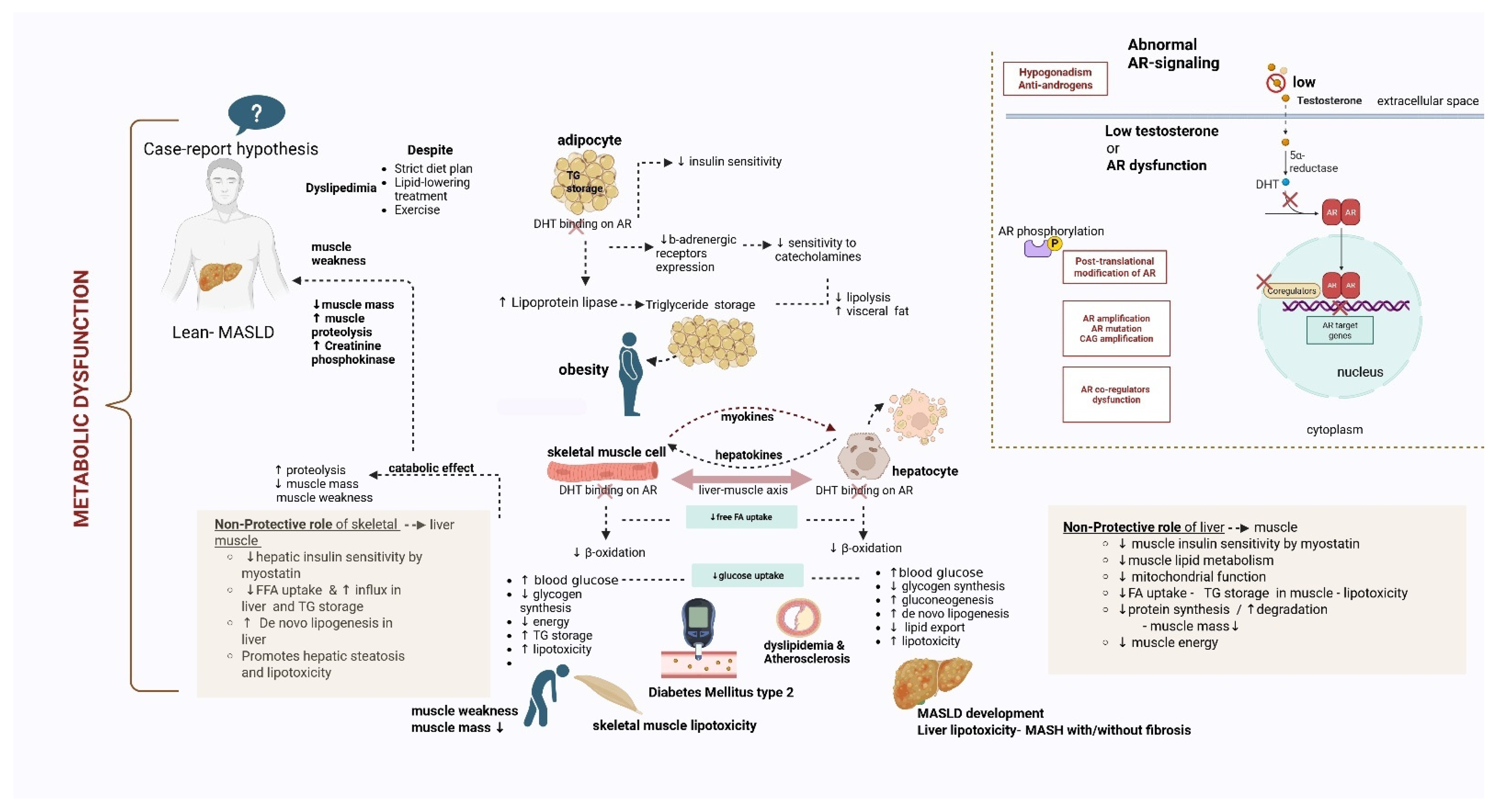
Typically, the AR signaling pathway has a key protective role against fat accumulation in several anatomical sites, including visceral and subcutaneous tissue, as well as hepatic and muscular tissue. However, impaired AR directly modifies the effects of testosterone, which regulates the expression of a wide variety of proteins, including those implicated in lipid, glucose, adipose, and muscle tissue metabolism [3,4,5,6,7,8,9,34]. More particularly, disturbance of AR signaling, or low testosterone levels, leads to several modifications in fundamental pathways, leading to metabolic dysfunction. More particularly, testosterone is implicated in lipolysis in visceral adipose tissue, in which it binds to AR on adipocytes and induces an inhibitory and stimulatory effect on lipoprotein lipase (LPL) and hormone-sensitive lipase (HSL), respectively. The former enzyme promotes TG storage, whereas the latter facilitates TG mobilization. At the same time, testosterone upregulates β-adrenergic receptors in adipose tissue, increasing the sensitivity of adipocytes to catecholamines, which leads to lipolysis via the cAMP–PKA signaling pathway. Meanwhile, it is worth noting that testosterone’s primary effect is on visceral adipose tissue (less on subcutaneous). This phenomenon explains the causes of visceral adiposity in males who present decreased testosterone, compared to males with high levels of testosterone. Lipolysis leads to TG breakdown, with FFAs and glycerol being produced, and with the former being oxidized for energy purposes in muscles and the liver. Meanwhile, higher testosterone leads to a significant reduction in visceral fat, as well as improves insulin sensitivity via upregulating the PI3K–Akt pathway that leads to increased glucose uptake by tissues, increased glycogen synthesis, and reduced hepatic gluconeogenesis via AR-related inhibition of G6Pase and of PEPCK. On the other hand, when testosterone levels are low, there is visceral fat accumulation, leading to obesity, as well as insulin resistance (IR) and metabolic syndrome. More particularly, de novo lipogenesis (DNL) is significantly increased under AR dysfunction due to the loss of the suppressive effect on transcription factors implicated in TG synthesis (e.g., SREBP-1c) in liver parenchyma, leading to increased storage and reduced export of TG by VLDL. Meanwhile, hepatocytes become resistant to insulin, which further increases DNL and FFA supply from visceral adipose tissue, while FA oxidation is also affected, leading to fat accumulation. Additionally, chronic exposure of hepatocytes to increased levels of circulating free FAs promotes gluconeogenesis and TG synthesis, which further enhances hepatic IR, metabolic syndrome, and oxidative stress, with the latter being attributed to the increased amount of pro-inflammatory cytokines secreted by adipose tissue cells in the portal vein and visceral fat. The increased levels of cytokines augment the inflammatory reaction in hepatic parenchyma, leading to MASH and fibrosis development [3,4,5,6,7,8,9,34].
Furthermore, AR dysfunction and androgen insensitivity dysregulate the liver-muscle axis, leading to neuromuscular dysfunction [3,4,5,6,7,8,9,35,36,37]. Interestingly, a study by Goffinet. A et al. (2024) demonstrated that men with similar levels of free testosterone, presenting or not MASH, present different AR expression in mononuclear cells, with the MASH group having decreased one. Meanwhile, MASL and subjects without MASLD had no significant difference in AR expression. Moreover, liver-specific AR knockout mice present increased lipid infiltration in liver parenchyma, insulin resistance, and reduced FA oxidation, even in the absence of cardiometabolic risk factors [8]. The disruption of AR signaling not only influences the proper function of the liver, but also the muscular one, as AR coordinates muscle metabolism and contractile functions. It has been demonstrated that AR overexpression in skeletal muscles in male animal models (mice) notably decreases fat and increases lean mass. This phenomenon is closely related to increased mitochondrial activity in the muscle. On the other hand, suppression of AR expression in skeletal muscles, such as in the extremities, leads to lipid metabolism disruption via the suppression of fatty acid transporter CD36 expression, as well as to muscle weakening, resulting from the impaired organization of myofibrils. Moreover, based on the study by Ghaibour K et al. (2023) [33], AR ablation in the myofibres of musculoskeletal tissue of mice leads to the impairment of oxidative metabolism in the skeletal muscles, as well as promotes oxidative stress and amino acid catabolism. On the other hand, an interesting study by Guadalupe-Grau A. et al. tested the hypothesis that the length of GGN and GAG repeats, which are triplets in exon-1 of the AR gene, affect muscular strength phenotype, which they were not implicated in lean mass in young males [38]. Nevertheless, the molecular mechanisms driving the tissue-specific effects of androgens remain poorly understood, highlighting a crucial gap in knowledge regarding their diverse metabolic actions.

3.3. Implication of AR Dysfunction in the Liver-Muscle Axis

It is essential to note that the implication of AR in the liver-muscle axis constitutes the communication network between the liver and skeletal muscles. This network has crucial biological and metabolic functions for homeostasis maintenance [39]. As was previously underlined, several pivotal metabolic pathways take place in the liver, including gluconeogenesis, glycogenolysis, glycogenesis, and DNL, FA uptake and oxidation, cholesterol metabolism, as well as triglyceride storage and export. Likewise, muscle tissue presents similar functions, including glucose uptake, glycolysis, glycogen and triglyceride storage (intramuscular TGs), FA uptake, and oxidation. This communication is mediated via several “messengers”, such as hepatokines and myokines, with the former being released by the liver that influence muscular sensitivity to insulin and functionality, where muscles release the latter and have a direct implication in hepatic metabolism [30,31]. Nevertheless, the disruption of this axis has a significant impact on metabolic homeostasis, leading to metabolic dysfunction (dyslipidemia, insulin insensitivity, increased liver gluconeogenesis, lipid accumulation in hepatocytes, and steatosis development, as well as disruption of muscle metabolism, leading to muscular symptoms. AR plays a crucial role in skeletal muscle homeostasis by increasing GLUT4 expression and translocation for glucose uptake and promoting muscle insulin sensitivity, while it also preserves muscle mass. Muscle mass preservation is mediated via the anabolic effect of AR signaling, which inhibits proteolysis and increases the protein synthesis that is implicated in the increase in muscle mass via PI3K–Akt–mTOR signaling pathway, under certain circumstances. Meanwhile, AR stimulates PGC-1a, which regulates FA oxidation and mitochondrial biogenesis. Additionally, the liver has a protective role for muscle under lipotoxic conditions, a phenomenon mediated by the liver’s prevention of excess FA surplus; however, this occurs when AR signaling is not impaired. Likewise, the muscle protects the liver via its significant contribution to lipid and glucose metabolism homeostasis. More particularly, when AR signaling is physiological, skeletal muscle insulin sensitivity is promoted, which permits a larger uptake of glucose, reducing blood glucose levels, minimizing its storage in hepatic parenchyma and DNL, as well as limiting systemic insulin resistance. On top of that, skeletal muscle is another site of FA oxidation, which prevents excessive FA influx to the liver, TG production, and MASLD development. Moreover, skeletal muscle secretes the so-called myokines, which are cytokines released during exercise or muscle contraction. Myokines significantly influence liver metabolism, as they either promote hepatic insulin sensitivity (e.g., β-aminoisobutyric acid, FGF21, etc.), improve lipid metabolism and hepatic insulin sensitivity (e.g., irisin), limiting steatosis development [40,41,42,43,44]. Similarly, Secreted Protein Acidic and Rich in Cysteine (SPARC) increases liver metabolism and prevents it from fibrotic injury, as well as reduces fibrosis [40,45]. Meanwhile, Brain-Derived Neurotrophic Factor (BDNF) also increases hepatic glucose metabolism and prevents hepatocytes from liver injury [40,46]. Interestingly, IL-6 is secreted by muscle cells during exercise, a phenomenon that promotes hepatic glucose production, whereas when its secretion is chronic, it has a non-protective role for hepatic parenchyma [40,47]. IL-15 is another myokine that increases hepatic lipid metabolism [40,48], whereas myostatin and TNF-α constitute non-protective myokines [40,49], which reduce hepatic insulin sensitivity, leading to increased TG storage in the liver, promoting steatosis development and lipotoxicity. The liver also exhibits a protective role for the muscle tissue, a phenomenon that is mediated via hepatokines. Fibroblast Growth Factor 21 (FGF21), which constitutes a hepatokine, promotes muscle insulin sensitivity and increases glucose uptake by activating GLUT4 translocation and upregulating insulin signaling, as well as regulates muscle lipid metabolism, increasing FA oxidation and mitochondrial function in skeletal muscle [40,50]. Meanwhile, IGF1 suppresses proteolysis in the muscle, promotes proteosynthesis, which leads to an increase in muscle mass via the PI3K–AKT–mTOR pathway [40,51], while activin E is also implicated in muscle mass regulation [40]. In addition, another hepatokine with a key role in muscle lipid metabolism is angiopoietin-like-4 (Angptl4), which increases FA uptake and oxidation in muscle tissue and minimizes lipid storage [40,52].
Nevertheless, when AR signaling is dysfunctional or testosterone levels are reduced, many metabolic pathways are dysregulated, and the liver-muscle axis is disrupted. First of all, muscle mass cannot be preserved, as well as insulin resistance, energy insufficiency (decreased glucose uptake), and impaired FA oxidation could be developed, with muscle losing its protective role for hepatic parenchyma. Similarly, the liver also loses its protective role, with the skeletal muscle cells being damaged from lipotoxicity and hepatokines such as fetuin-A and selenoprotein P, which both of them reducing insulin sensitivity in muscle, leading to muscle insulin resistance. Based on the above, AR signaling plays a crucial role in regulating the liver-muscle axis. Disruption of this axis significantly contributes to the development of MASLD and neuromuscular dysfunction, initiating a reciprocal vicious cycle that leads to metabolic dysfunction [33,53,54]. We present Liver-muscle axis interaction under physiological AR-function in Figure 1, and a summary of the protective and non-protective roles of hepatokines and myokines in Table 2.

3.4. Types of AR Signaling Dysfunction and Steatosis Development

  • AR signaling disruption—low testosterone levels
There are gender disparities in AR-related hepatic steatosis, as males are more likely to develop it in cases of low levels of androgens (e.g., primary or secondary hypogonadism, obesity, testicular dysfunction, aging). Therefore, low levels of testosterone lead to decreased AR function, impaired lipid metabolism, with increased FFAs, leading to hepatic steatosis and MASLD development. Thus, testosterone replacement therapy (TRT) significantly reduces the levels of these enzymes [55,56]. Kelly et al. studied testicular feminized mice, which presented defective AR and orchiectomized XY littermate mice. The mice with defective AR demonstrated low testosterone levels and increased lipid accumulation in the liver parenchyma, despite the balanced chow diet [56]. On the other hand, whereas women with increased, e.g., testosterone in the case of polycystic ovarian syndrome, are likely to develop steatosis and IR, which constitutes a paradoxical phenomenon. This phenomenon is attributed to the excessive AR stimulation that subsequently leads to increased de novo lipogenesis in the liver, insulin resistance, and steatosis. At the same time, an anti-androgen drug strategy is required, compared to males. Furthermore, as previously referred to, the implication of SHBG in hepatic steatosis development and severity [57], lower levels of SHBG are related to a higher risk of MASLD in males with hypogonadism (low testosterone levels), as well as with metabolic syndrome and complications [26,27,28,29,55,56,57].
  • AR disruption- AR knockout/loss of function
It has been shown that AR dysfunction increases the activity of lipogenic genes such as ACC1, SREBP-1c, and FASN that lead to triglyceride accumulation in hepatocytes [58,59]. Meanwhile, another animal (mice) study demonstrated that obese male AR-knockout mice presented modified FA oxidation (β-oxidation pathway), with sterol regulatory element binding protein 1c (SREBP-1c), and PPARa genes being pivotal for adipogenesis and the regulation of the aforementioned oxidation pathway. These mice presented increased SREBP-1c expression, leading to increased levels of acetyl CoA carboxylase, which has a fundamental role in FFA production [58,59,60]. It has to be underlined that testosterone also regulates the function of lipid-metabolism enzymes such as Acetyl-CoA carboxylase, as well as FA synthase [58,59,60]. Androgen Insensitivity Syndrome (AIS) is an example of an AR gene mutation, with partial or complete loss of its functionality [61].
  • AR disruption due to genetic mutation/polymorphism
AR genetic polymorphism encompasses normal variation in GAG repeats (<36), which may influence AR activity. In contrast, ≥36–38 repeats are considered pathogenic genetic mutations, leading to abnormal AR function, misfolded AR protein, androgen insensitivity, and pathological manifestations including metabolic and neurodegenerative issues [62,63]. CAG repeats in AR gene leads to AR disruption such as the expansion of polyQ alters significantly its functionality, leading to androgen insensitivity, hypogonadism, testicular atrophy, gynecomastia, and infertility due to decreased sperm count, visceral fat accumulation and central obesity, regardless of the fat content of their diet, impaired insulin signaling pathways, IR and hepatic steatosis as it was demonstrated in an animal study performed by Lin et al. (2008) [64], which studied liver AR depletion in male rodents [62,63,64].
Pathological elongation of CAG trinucleotide repeats (usually >38 repeats) in the exon-1 of androgen receptor (AR) gene on chromosome X, leads to KD, also known as Spinal and bulbar muscular atrophy (SBMA), a rare X-linked genetic neuromuscular disease, which has a multisystem involvement including, metabolic dysfunction, slowly progressive myopathy and degeneration of lower motor neurons [16]. The CAG codon encodes glutamine, so the expansion leads to a polyglutamine tract (polyQ tract) in the AR protein, leading to misfolded proteins and their aggregation, with Kennedy disease being considered the first polyQ disease that was identified [2,3]. From a metabolic perspective, KD patients experience noticeable disturbances of lipid, glucose, and adipose tissue metabolism, leading to hepatic steatosis with or without extensive fibrotic injury, insulin resistance, and cardiovascular disorders [16]. Longer repeats are closely associated with reduced AR activity and the development of hepatic steatosis. Additionally, imbalance of T helper 17/T-regulatory cells (Th17/Treg) constitute a shared feature in neurodegenerative disorders, as well as in MASLD animal models, which includes an increased Th17 cell counts, with Th17 cells producing several cytokines, such as IL-21, IL-17A and IL-22 which have a key role in auto-immune and inflammatory responses, promoting hepatocyte inflammation and fibrogenesis via HSCs activation [63,65]. Nevertheless, studies on KD hepatic involvement failed to identify patients with advanced liver disease, despite IR, as they might present lower levels of glycated hemoglobin or fasting glucose compared to controls [16,66].
AR dysfunction (e.g., KD, androgen deficiency, etc.) also contributes to hepatic steatosis by impairing mitochondrial FA oxidation, which leads to lipid homeostasis disruption and lipid accumulation in the hepatic parenchyma. AR plays a pivotal regulatory role in lipid metabolic signaling in the liver, as it inhibits de novo lipogenesis and induces FA oxidation by enhancing mitochondrial function, where the breakdown of fatty acids occurs. Nevertheless, impaired AR function (regardless the cause of AR dysfunction) leads to suppression of the function of several enzymes such as acyl-Co and medium-chain Acyl-CoA dehydrogenases, as well as carnitine palmitoyl transferase I (CPT1), which are closely implicated in mitochondrial β-oxidation, where their impairment leads in the disruption of FA breakdown, leading in the accumulation of FFAs, increased triglyceride synthesis and lipid accumulation in hepatocytes [3,67,68,69]. Moreover, the disruption of normal AR function not only leads to the FA mitochondrial oxidation process but also to the abnormal function of the mitochondrion itself. More particularly, it has been demonstrated that AR dysfunction leads to mitochondrial biogenesis suppression, aberrant ATP production, as well as an increase in oxidative stress, which leads to increased lipid droplet accumulation in hepatocytes, inflammation, and further disease progression. This phenomenon has been identified in animal experiments, in which AR knockout led to increased fat infiltration in liver parenchyma, as well as lipid and glucose metabolism imbalances [67,68,69,70,71].
  • AR phosphorylation
AR phosphorylation by mechanistic target of rapamycin complex 1 (mTORC1) constitutes a significant factor in hepatic steatosis development, as well as HCC, with mTORC1 being highly activated in liver carcinogenesis. MTORC1 interacts with the AR in the liver and induces its phosphorylation (at serine 96, S96), which is a pivotal site for lipogenesis regulation, hepatocyte proliferation, and stability. The disruption caused by AR phosphorylation leads to increased de novo lipogenesis and hepatocarcinogenesis, which have been reported in biopsies of patients with hepatic steatosis and HCC. The interplay between liver AR, its phosphorylation at the S96 site, and mTORC1 has been demonstrated in vitro experiments. It has been shown that mTORC1 is highly activated in human HCC tissues, with mTORC1 phosphorylating AR at S96, which is crucial for hepatic lipid metabolism regulation, leading to increased de novo lipogenesis and a high risk of HCC development. Phosphorylated AR at S96 has also been highly found in human liver tissues with steatosis, as well as in HCC, being correlated with cancer-free and overall survival of HCC patients [72,73]. We demonstrate the effects of AR dysfunction, as well as its consequences, in Table 3, and the dysregulated axis under AR signaling dysfunction in Figure 2.

3.5. Lean-MASLD Clinical Data

MASLD is considered a global epidemic, which encompasses a spectrum of liver conditions, including metabolic dysfunction-associated steatotic liver (MASL), Metabolic Dysfunction-Associated Steatohepatitis (MASH) with/or without fibrotic injury, cirrhosis, and eventually Hepatocellular Carcinoma (HCC) in the background of MASH, regardless of the fibrosis grade. The former is characterized by fatty infiltration in the liver parenchyma, whereas the second constitutes a reversible inflammatory condition, which may lead to cirrhosis. These patients present liver enzyme disturbances, dyslipidemia, and insulin resistance [75]. Surprisingly, the causes of patients’ mortality with MASLD are cardiovascular outcomes, followed by extrahepatic malignancy, and lastly liver-related complications. This phenomenon implies the necessity of the early identification of hepatic steatosis [11].
Meanwhile, multi-society Delphi consensus for the latest disease nomenclature indicated that MASLD diagnosis requires the presence at least 1 out of 5 cardiometabolic factors such as (i) decreased levels of HDL (males <40 mg/dl; females <50 mg/dl) or anti-hyperlipidemic therapy, (ii) increased TG levels (>150 mg/dl) or anti-hyperlipidemic medication, (iii) BMI ≥ 25 kg/m2 or increased waist circumference (>80 cm, and >94 cm for men and women, respectively), (iv) hypertension (≥130/80 mmHg) or treatment for arterial hypertension and (v) diabetes mellitus or impaired fasting glucose levels, or increased 2 h post-prandial levels, or anti-glycemic medication [1]. EASL-EASD-EASO Clinical Practice Guidelines recommend that routine laboratory and/or imaging testing, including liver enzymes and abdominal ultrasound, be performed in patients with metabolic syndrome or obesity for steatosis screening and early management [11].
MASLD constitutes a “silent” epidemic, affecting more than 30% of the global population. At the same time, it is the first cause for liver transplantation in the US population, due to liver-related complications (e.g., cirrhosis, hepatic failure, etc.) Nevertheless, the majority of MASLD patients are obese; a portion of them is lean (7–20%), who present a body mass index (BMI) <25 kg/m2 or <23 kg/m2 for Asians [1,11]. Steatosis in lean patients could be attributed to inflammatory disorders, infectious diseases (e.g., Viral hepatitis C, HIV), lipodystrophy, familial hypobetalipoproteinemia, inherited and genetic disorders, lysosomal acid lipase deficiency, as well as drug-induced steatosis (e.g., corticosteroids), and increased alcohol consumption, while lean-MASLD patients have increased all-cause mortality and risk of liver and cardiovascular complications, compared to lean patients without MASLD [17]. Meanwhile, several studies demonstrated that the lean-MASLD population has a higher or equal prevalence of cardiovascular complications, metabolic comorbidities, and risks than MASLD patients with abnormal BMI and lean controls [76,77]. Based on the aforementioned risks, it is recommended that lean-MASLD patients should be assessed for metabolic disturbances such as hypertension, dyslipidemia, insulin resistance/type 2 diabetes mellitus (T2DM). At the same time, it was observed that these patients also present aberrations in bile salt metabolism, which is implicated in steatosis development in liver parenchyma and cholesterol levels disturbance [78]. However, the lean population should not be evaluated and screened for MASLD, excluding patients who present metabolic dysfunction combined with liver enzyme disturbances or incidental sonographic findings of hepatic steatosis, as well as the diabetic population after the age of 40 [76]. Interestingly, 6.8% of MASLD patients with confirmed steatohepatitis have a normal body weight (lean), while most lean-MASLD patients (10.8%) are males and are relatively older [79]. Further research is considered crucial for studying this particular population of MASLD, given the limited amount of available data. In Table 4, we summarize the genetic and non-genetic causes of lean-MASLD.

3.6. Genetic Causes of Lean-MASLD

Genetic determinants of MASLD, particularly in lean individuals, have been extensively studied and have a pivotal role in disease progression, especially in specific ethnicities. Several gene polymorphisms have been identified as strong contributors to lean-MASLD and increased risk of fibrosis development, such as PNPLA3 rs738409 (I148M) polymorphism, which is considered the strongest genetic risk factor for hepatic steatosis and MASH, especially for the Hispanic and Asian population. Other variants include MBOAT7 (rs641738), TM6SF2 (E167K), and GCKR (P446L), as well as other loci such as APOC3 and LYPLAL1, which induce moderate effects.
Focusing on the implication of PNPLA3 rs738409 (I148M) polymorphism in disease progression, this variant significantly promotes TG storage in hepatocytes, via the impairment of TG hydrolysis, which eventually leads to steatosis development. It has to be underlined that the aforementioned phenomenon is independent of the obese phenotype, leading to steatosis even in lean individuals. Based on the epidemiological data, it is mostly identified in Latin America (50–63%), in East (35–45%), and South Asia (24–30%), followed by Europe (23–38%), and Sub-Saharan Africa (12%). The predominance of PNPLA3 in the Asian population underlined the key role of this polymorphism in hepatic lipid metabolism dysregulation, rather than systemic metabolic dysfunction and obesity. Other variants, such as TM6SF2 (E167K), MBOAT7 (rs641738), and GCKR (P446L), also contribute to disease risk, though their distribution and clinical impact may differ across ethnic groups. MBOAT7 (rs641738) is related to proneness to steatosis and fibrosis development, as well as it is also correlated with the modified phospholipid remodeling mechanism, mostly in Europe and less frequently in East Asia. Moreover, TM6SF2 (E167K variant) is related to altered VLDL secretion; however, it is not considered as common compared to the other two aforementioned variants. GCKR (P446L variant) is related to increased hepatic glucose uptake and DNL, lower fasting plasma glucose, and higher TG. Interestingly, these patients have a lower risk of T2DM development [6,80,81]

3.7. Non-Genetic Causes of Lean MASLD

In addition to genetic predisposition, several non-genetic factors also contribute significantly to the development of lean-MASLD. Ethnicity has a crucial role in lean-MASLD development, with Asians showing a disproportionately higher prevalence despite normal BMI. Lifestyle and diet also influence disease progression, with physical inactivity and higher intake of carbohydrates and lipids enhancing hepatic glucose uptake, DNL, and insulin resistance, respectively. On top of that, certain medications, including methotrexate, corticosteroids, and tamoxifen, can induce iatrogenic steatosis, as well as endocrine disorders such as polycystic ovarian syndrome, hypothyroidism, and hypopituitarism. Moreover, alterations in the gut microbiome (dysbiosis) disrupt bile acid signaling and intestinal permeability, leading to bacterial translocation and hepatic inflammation. Finally, low muscle mass and sarcopenia are increasingly recognized as contributors, since they worsen insulin resistance and compound metabolic stress in lean individuals [76,82]. We present some of the genetic and non-genetic causes of lean-MASLD in Table 4.

3.8. Therapeutic Approaches for AR Dysfunction-Related Hepatic Steatosis

  • Androgen replacement therapy (ART) and targeted molecular therapies
While no AR-specific approved therapy for hepatic steatosis exists yet, androgen replacement therapy (ART) has shown promising results in restoring disrupted signaling pathways and improving metabolic imbalances. ART could improve metabolic imbalances and steatosis in AR dysfunction, although potential adverse effects, such as hypertension, increased risk of cardiovascular events, aggravation of prostate hyperplasia, and high risk of prostate cancer, should be carefully considered in a risk-benefit assessment [35,57,82,83,84].

3.9. Preclinical Studies

  • AR-lowering miRNAs that can potentially be utilized for AR suppression (e.g., miR196a, miR-298) [85,86]
  • mTORC1-AR axis blockade: Salinomycin constitutes an antibiotic that serves as a dual-acting inhibitor of AR and mTORC1 in preclinical studies for prostate cancer. This agent effectively suppresses mTORC1 and AR expression (decreased phosphorylation at serine 81), which leads to autophagy stimulation and decreased AR transcriptional activity, respectively. Rapamycin also suppresses mTORC1 and activates autophagy, while suppressing AR via folding impairment (interaction with FKBP51). However, there are no adequate studies for the targeting of the AR-mTOTC1 axis in AR-dysfunction SLD [72,87].
  • Liver-specific AR modulators: Liver-specific modulators constitute another potential therapeutic modality that can increase the activity of AR, which can improve the leptin and hepatic insulin sensitivity, leading to lipid and glucose metabolism regulation, respectively [16,35,83]. EP-001, which is a derivative of Bisphenol A diglicycyl ether, acts as an AR receptor suppressor that can potentially reduce hepatic steatosis in mouse models via CYP2E1 inhibition. EP-001 can covalently bind to the activation function-1 region of AR, thereby inducing the interaction between AR protein and its co-regulatory protein, p300/CBP, which is essential for the transcriptional activation of AR. This agent can also be potentially beneficial for MASLD management, due to its modulatory role for peroxisome proliferation-activated receptor (PPAR), which is implicated in lipid metabolism and mitochondrial function in MASLD progression towards HCC development. Interestingly, it has been demonstrated that EPI-001 not only blocks fat accumulation in human hepatocytes but also protects mouse hepatocytes from high-fat/high-sucrose diet-induced hepatic steatosis [88].
  • Liver-muscle axis modulators: It has been demonstrated that the administration of a β2-adrenoceptor agonist in diet-induced obese animal models (mice) induces an increase in glucose uptake by skeletal muscles, leading to glucose metabolism modification and homeostasis, including the rise in insulin sensitivity, which notably alleviates hepatic steatosis. Clenbuterol has been reported as a promising agent for the improvement of neuromuscular and metabolic functions. However, this agent does not have a direct effect on AR signaling, but it can potentially counteract the effects of AR dysfunction [89]. Likewise, myostatin inhibitors like bimagrumab ameliorate insulin resistance and increase muscle mass, with a potential beneficial effect on hepatic steatosis [90].
  • Cilofexor, an FXR agonist, has been tested alone or in combination with other agents in MASH mice models, with a reduction in steatosis and fibrosis [91].

3.10. Clinical Studies

  • LPCN 1144: Identification of AR dysfunction could significantly alter disease management, as seen in non-cirrhotic hypogonadal males with MASH, for whom replacement therapy with oral LPCN 1144 (an endogenous testosterone prodrug) could be beneficial for metabolic dysfunction and hepatic steatosis management (clinical trial NCT04134091 [92]).
  • Thyroid hormones (THR-βs): THR-βs such as resmetirom can counteract the dysfunction of mitochondrial FA oxidation that is induced by AR signaling dysregulation. THR-βs stimulate liver FA β oxidation and cholesterol/phospholipids excretion into the bile, and have shown significantly beneficial effects for patients, with reduction in MASH and fibrosis [93,94].
  • Agents with concomitant favorable effects on the liver-muscle axis:
    β2-adrenoceptor agonists such as clenbuterol improve glucose uptake in skeletal muscles and alleviate hepatic steatosis. However, they do not directly affect AR signaling [89].
    Myostatin inhibitors like bimagrumab improve insulin resistance and muscle mass, with potential benefits for hepatic steatosis [90].
    Several pharmacological agents can manage the metabolic dysregulation and subsequently lead to the limitation of hepatic steatosis [95], including:
    Glucose-lowering agents and insulin sensitizers: Metformin [96], thiazolidinediones (e.g., pioglitazone) [97], GLP-1 receptor agonists (e.g., semaglutide) [98], which have been proved beneficial for insulin sensitivity enhancement, as well as for hepatic steatosis reduction, with the latter being noticeably advantageous for liver fat and inflammation reduction, as well as liver enzyme improvement, without worsening fibrosis [99].
    Lipid-lowering agents: Statins, ezetimibe, fibrates, omega-3 fatty acids, and PCSK9 inhibitors (e.g., Inclisiran) [100,101,102,103,104,105,106,107,108,109]:
    Lipid-lowering agents could be beneficial in AR dysfunction; however, they are less effective in comparison to cases without modifications in AR function, due to significantly altered metabolic signaling pathways. Some of the categories of the lipid-lowering pharmacotherapies that could be utilized includes (i) statins (HMG-CoA Reductase Inhibitors) that reduce LDL cholesterol and have been proved beneficial for liver function, with monitoring of liver enzymes being recommended (ii) ezetimibe, which can be combined with statins, as they significantly suppress intestinal cholesterol absorption and lead to additional LDL lowering, (iii) fibrates and (iv) omega-3 fatty acids for triglycerides reduction, and (v) Proprotein Convertase Subtilisin/Kexin type 9 (PCSK9) inhibitor, especially for the cases of statin intolerance. Proprotein Convertase Subtilisin/Kexin type 9 (PCSK9) inhibitor (e.g., Inclisiran) is a challenging alternative treatment in those patients [100]. More particularly, Statin-Associated Muscle Symptoms (SAMS) is a persistent issue among patients receiving various statins for lowering LDL-c [101,102]. In this particular case, the patient was previously receiving a statin combined with ezetimibe. PCSK9 is an enzyme secreted by the liver that binds to the receptor of the Low-Density Lipoprotein (LDL-R) on hepatocytes. After binding, the PCSK9 leads the LDL-R to its hydrolysis in the cell’s lysosome. This process results in decreased expression of LDL-R on the hepatocytes and consequently in increased levels of LDL-C in the bloodstream [58,59]. Inclisiran is a silencing mRNA/small interfering RNA (siRNA), which blocks the translation of PCSK9 mRNA. Therefore, less PCSK9 means more LDL-R expression on the hepatocyte, hence less LDL-C in the bloodstream [103,104,105,106,107,108,109].
  • Other metabolic modulators: Indirect metabolic regulation for hepatic steatosis management has also been in the spotlight of the current research, such as in the case of GLP-1 agonists (e.g., Semaglutide) [110], SCD1 inhibitor (e.g., aramchol) [111], FXR agonists (e.g., Cilofexor or GS-9674) [112], and PPAR pan-agonists α, γ,δ (e.g., lanifibranor) [113] or dual PPARα,δ agonist (e.g., elafibranor) [114], or dual PPARα,γ agonist (e.g., Saroglitazar) [115]. Semaglutide is a widely used agent of the former class that significantly improves hepatic steatohepatitis without worsening fibrosis [110]. In contrast, the second agent has shown a noticeable decrease in hepatic fat by suppressing hepatic lipogenesis and increasing the export of cholesterol from the liver [111]. Cilofexor, a FXR agonist, has been tested alone or in combinations with other agents in MASH mice models, with reduction in steatosis and fibrosis, as well as in non-cirrhotic MASH patients (phase 2 clinical trial NCT02854605), in which a 24-week utilization of Cilofexor led to noticeable reduction in hepatic steatosis, liver enzyme improvements and reduction in serum bile acids in MASH patients [112,116]. Focusing on the latter class, lanifibranor has been studied in MASH patients (phase 3 clinical trial), which improved insulin sensitivity and lipid metabolism [113], whereas elafibranor (phase 3 clinical trial) did not meet the primary efficacy endpoints [114]. Meanwhile, Saroglitazar met the primary efficacy end points, including reduction in hepatic steatosis on MRI assessment, improvement of insulin sensitivity, dyslipidemia, and liver enzyme ALT levels in MASH patients [115].
  • Selective Androgen Receptor Modulators (SARMs), such as enobosarm, RAD-140 (testolone), LGD-4033, and S-23, have no role in hepatic steatosis amelioration or hepatic lipid metabolism. At the same time, they can cause drug-induced liver injury and aggravation of metabolic dysfunction [67,68]. More particularly, there is a case report of a 29-year-old male who developed drug-induced liver injury (DILI) after taking RAD-140, with the symptomatology being resolved after drug discontinuation. Likewise, there is another report of a 52-year-old man who also experienced DILI after using RAD-140 and LGD-4033 [116,117].

3.11. Lifestyle Modifications:

Personalized dietary interventions and physical exercise significantly enhance insulin sensitivity and reduce hepatic steatosis, even in lean individuals. Exercise programs should be carefully applied in patients with AR dysfunction and neuromuscular manifestations, such as in KD, due to high rhabdomyolysis risk [16]. All those mentioned above are strongly recommended in patients with hepatic steatosis, even in lean individuals. In Table 5. we present a summary of the therapeutic approaches for AR dysfunction-related hepatic steatosis.

4. Methods for Evaluation of AR Signaling Function/Hormonal Profile

Several methodologies can be followed in the assessment of AR function. More particularly, there are the (i) targeted AR gene sequencing, such as Next-Generation Sequencing (NGS) and Sanger sequencing, with the former providing a vast amount of information regarding AR gene variations (amplifications, deletions) and mutations, which have already been identified or newly discovered. Sanger Sequencing is usually utilized for the identification of deletions, point mutations, CAG repeats, or insertions in the gene. AR gene deletions or amplification can also be evaluated via Multiplex Ligation-dependent Probe Amplification (MLPA) and quantitative polymerase chain reaction (qPCR). CAG/GLN repeat length analysis can be mediated via PCR and fragment analysis, by which the length of polyglutamine (CAG) repeats in exon 1 of the AR gene can be evaluated. Meanwhile, fusions and other structural variations can be detected via whole-genome sequencing (WGS) or RNA-sequencing for the evaluation of downstream gene expression changes in which AR is implicated. Western blotting could also be utilized for the quantification of AR protein levels in several types of tissues or at the cellular level. At the same time, tissue-specific localization can be performed via immunohistochemistry, while immunofluorescence permits the visualization of AR-androgen binding. Likewise, AR-DHT/testosterone binding can be evaluated via ligand-binding assays. The analysis of mRNA expression can also be assessed via qRT-PCR for quantification of transcripts. At the same time, chromatin immunoprecipitation is used for the identification of the genomic loci where AR is bound, to evaluate the functionality of the AR signaling pathway. Moreover, coactivator interaction assays can be utilized to evaluate coactivators for AR transcription or proteomic analysis, and to assess post-translational alterations (AR phosphorylation) and abnormalities in the AR signaling pathway [17,118,119,120,121,122,123,124,125,126,127].

5. Discussion

We present a lean, Caucasian 34-year-old male with ALT-predominant hypertransaminasemia and drug-resistant severe dyslipidemia, in whom common causes of lean MASLD were excluded. The co-occurrence of hepatic steatosis, persistent muscular symptoms, and recurrent creatine phosphokinase elevations, independent of statin use or physical activity, suggested a possible defect in androgen receptor (AR) signaling. This case underscores the potential role of AR dysfunction as a mechanistic link in the liver–muscle axis, bridging hepatic and muscular pathology in lean MASLD, and highlights the need to consider AR evaluation in similar clinical contexts, particularly in light of emerging AR-targeted therapeutic strategies in MASLD.
The liver-muscle axis constitutes a key communication network between the liver and skeletal muscles that take part in metabolic homeostasis. The former closely regulates the lipid and glucose metabolism, including DNL, triglyceride export and storage, uptake and oxidation of FAs, cholesterol metabolism, and gluconeogenesis, glycogenolysis, and glycolysis for the liver’s demands, respectively. Similarly, skeletal muscles also regulate the uptake and oxidation of FAs, the intramuscular triglyceride storage, as well as glucose uptake and glycolysis. However, disruption of the axis leads to the development of glucose and lipid metabolism dysregulation, with AR playing a crucial role in both organ functionality [128].
An example of the implication of AR dysfunction in the proper regulation of this axis, is KD or SBMA, with which patient have been diagnosed based on the targeted genetic testing that included the performance of currently made via following generation sequencing approaches (a positive diagnosis: ≥38 repeats in CAG triplet expansion in exon 1 of the AR gene on the X chromosome) [17]. In this case report, this young, lean, male patient was diagnosed with KD-related SLD, and more particularly with MASLD, as he presented metabolic disturbances and was under hypolipidemic therapy. The prevalence of KD is around 2.5 cases per 100,000 men, with a typical onset between 30 and 60 years of age. Focusing on the gender distribution of SBMA, it has to be underlined that symptomatology is noticeable mainly in males. In contrast, females, who are carriers, may present mild or lack symptomatology. This disease is usually given during adulthood, with a peak between 30 and 60 years old, depending on the length of CAG [16,129].
Even though KD is a neurodegenerative disease, the survival expectancy is not relatively reduced compared to other motor neuron pathologies, as there is a broad spectrum of symptomatology in males and homozygous females, which implies the multisystemic involvement of this disease, including not only neuromuscular symptomatology but also metabolic, endocrine, and cardiorespiratory. The identification of KD patients is crucial for their optimal management and prognosis, considering the AR-targeted therapies in combination with those for metabolic management [16]. Metabolic disturbances need to be identified early via several laboratory and imaging tests. More particularly, increased TG, total cholesterol, LDL, fasting glucose levels, increased glycosylated hemoglobin, low high-density lipoprotein cholesterol, and increased transaminase levels (AST/ALT ratio <1) [1,11]. Patients should also be evaluated for cardiometabolic risk factors such as increased BMI, waist circumference, dyslipidemia, hypertension, as well as IR and T2DM for their optimal management and the prevention of liver-related long-term outcomes [1,11].
Focusing on the molecular background of this case of AR dysfunction-related hepatic steatosis, the expansion of polyQ alters AR functionality, leading to androgen insensitivity. The impairment of AR directly modifies the effects of testosterone, which regulates the expression of a wide variety of proteins, including those implicated in glycogen synthesis, glycolysis, and lipid, adipose, and muscle tissue metabolism. In contrast, the normal function of AR fat accumulation is prevented via the testosterone-related inhibition of lipoprotein lipase action, which mediates the lipolysis pathway in visceral adipose tissue and the anabolism in muscles [16,129,130,131,132,133,134]. The impairment of the paths mentioned above leads to lipid accumulation via overproduction and release of free fatty acids (FFAs) and pro-inflammatory cytokines secreted by adipose tissue cells in the portal vein. The chronicity of this manifestation leads to a constant exposure of hepatocytes to increased levels of circulating FFAs, promoting gluconeogenesis, increased TG synthesis, impaired insulin action, and VLDL increase, which further worsen skeletal muscle and liver resistance to insulin. Therefore, low levels of testosterone lead to impaired lipid metabolism, with increased FFAs, resulting in hepatic steatosis and MASLD development [129,130,131,132,133,134]. Querin et al. (2016) [135] and Guber et al. (2017) [136] have demonstrated the high prevalence of metabolic disturbances in patients with SBMA. The latter study team performed magnetic resonance spectroscopy, reporting MASLD in all 22 SBMA patients, regardless of their BMI. In the same year, Rosenbohm et al. (2017) [137] and Nakatsuji et al. (2017) [138] also studied SBMA patients in the German [137] and Japanese populations [138], respectively. The former study group was also evaluated by whole-body magnetic resonance, with the visceral fat content being noticeably higher in SBMA patients, compared to controls [137]. The latter study team conducted a multivariate analysis of 55 Japanese patients with hypertension and increased HOMA-IR values compared to healthy individuals, yielding findings that suggest a correlation between impaired insulin signaling pathways in skeletal muscles and decreased expression of insulin receptors [138]. Moreover, Francini-Pesenti et al. (2018) [139] also closely studied the Italian SBMA population, on which abdominal ultrasonography was performed, which revealed MASLD imaging findings in 22 out of 24 SBMA cases. Meanwhile, one patient was initially diagnosed with cirrhosis before the neuromuscular SBMA manifestations. At the same time, HOMA-IR levels were also higher in SBMA patients, compared to healthy controls in the study above. The same team of Francini-Pesenti et al. (2020) [14] reported the presence of mild hypertransaminasemia (AST/ALT ratio <1) in SBMA patients, which was initially incorrectly attributed to the muscular manifestations of this disease, then in MASLD [14]. Histopathological findings of steatotic liver disease (SLD) have been reported in liver tissue biopsies in mice, while SBMA patients, who present dyslipidemia, T2DM, or insulin resistance, often present transaminase disturbances [133]. Furthermore, liver tissue biopsies acquired from SBMA patients were evaluated and compared to those of healthy individuals, with the former group presenting histopathological findings of MASH. The percentage of AR expression in liver tissue suggests an interplay between the disease and the MASLD pathogenesis, with the percentage being 85% and 55% for SBMA and non-SBMA MASH tissue specimens, respectively [129].
Surprisingly, it has been demonstrated that KD patients with MASLD/MASH with a normal BMI have some differences with conventional MASH patients; however, the pathogenetic mechanism is still under investigation. Meanwhile, liver-related mortality is higher in lean-MASLD patients, compared to non-lean ones, especially regarding the increased fibrogenesis in the former. On top of that, the lean patients, in addition to having more liver-related events, also have cardiovascular complications [25]. Numerous studies investigate the pathophysiology of lean-MASLD; however, there are still literature gaps. Interestingly, even though lean individuals may have different risk factor backgrounds, their disease is not considered “milder”, as it may lead to the same liver outcomes as non-lean MASLD, such as MASH with or without fibrosis, cirrhosis, and HCC [11,14,16,129,140].
In this case, we faced a relevant drug-resistant dyslipidemia, with statin being avoided due to the neuromuscular manifestations of KD. Generally, it has to be underlined that a patient with AR dysfunction could present a relative resistance to metabolic-targeted therapies, as it significantly modifies the glucose and lipid metabolic signaling pathways. In the given case, statins combined with ezetimibe and omega-3 FAs were initially applied; however, due to the nature of the disease and the possible development of SAMs, the former was replaced by a safer alternative such as Inclisiran (a PCSK9 siRNA inhibitor) [141,142,143,144]. Prompted by this patient case, this review aims to highlight the close interplay between the liver–muscle axis and AR-mediated metabolic regulation and its potential role as a mechanistic link between hepatic and muscular pathology in MASLD, as well as to raise clinical awareness for the evaluation of AR signaling in patients with unexplained metabolic dysfunction and hepatic steatosis in the lean male population. Nevertheless, the molecular mechanisms driving the tissue-specific effects of androgens remain not so clearly understood, highlighting an essential gap in knowledge regarding their diverse metabolic actions.
On top of that, misclassification of hepatic steatosis could result in suboptimal treatment management, which should be precisely tailored based on the dysregulated signaling pathways. This phenomenon suggests the need for a distinct cause of steatosis, such as AR dysfunction, which can be managed through several therapeutic approaches, potentially improving clinical outcomes for affected individuals. Overall, a dilemma exists regarding the appropriate classification of KD patients with hepatic steatosis. Since this genetic disease is associated with metabolic disturbances that contribute to MASLD, the question arises whether patients with AR dysfunction should be categorized as having SLD, a broader category in which genetic mutations may lead to excessive liver fat accumulation independently of traditional metabolic risk factors, or included under MASLD due to the presence of cardiometabolic risk factors [145,146].
Furthermore, it should be emphasized that the presence of AR dysfunction, which profoundly alters metabolic signaling pathways, was considered a key factor underlying the patient’s resistance to lipid-lowering therapy, especially in patients who are compliant with drug medication and lifestyle modifications with a normal or not body phenotype. Lastly, the identification of AR dysfunction could significantly alter the disease management, such as in the case of hypogonadal males, for whom testosterone therapy could be beneficial for metabolic dysfunction, as well as in hepatic steatosis management (clinical trial NCT04134091, oral LPCN 1144 endogenous testosterone prodrug in non-cirrhotic male NASH patients) [130]. Nevertheless, it is essential to note that the AR-targeted interventions are presented at the preclinical or early clinical stage. Their translational potential, safety profile, and risk of off-target effects require careful evaluation. In particular, modulating nuclear receptor signaling in humans presents inherent challenges, including tissue-specific effects and systemic hormonal impacts. These strategies are promising but remain experimental, and further mechanistic and clinical studies are necessary before routine therapeutic application.
Last but not least, although this case highlights a possible mechanistic interplay between AR dysfunction and hepatic steatosis, the evidence remains hypothesis-generating. The co-occurrence of KD and lean MASLD in this patient does not establish a definitive causality, and further research is needed to clarify the nature of this relationship. However, we consider AR dysfunction as the most possible mechanism, as other potential contributors to steatosis in this patient have been carefully excluded, including genetic variants, dietary patterns, and co-existing metabolic factors, that could independently or synergistically promote hepatic lipid accumulation.

6. Conclusions and Future Perspectives

This case-based review should be regarded as hypothesis-generating, underscoring the need for further studies to determine whether AR dysfunction contributes causally to lean MASLD or whether it represents one of multiple overlapping risk factors. Explicit recognition of alternative mechanisms is essential for balanced interpretation. AR dysfunction may contribute to lean MASLD, representing a plausible mechanism that warrants further investigation. However, these findings are primarily associative and based on a single illustrative case. It has to be clarified that the potential contribution of AR dysfunction represents a distinct mechanistic pathway, underscoring the genetic heterogeneity underlying MASLD across populations. Confirmation in larger cohorts and mechanistic studies, which can molecularly evaluate lean-MASLD patients for AR-related abnormalities (cross-sectional and population cohort), is necessary, as this group is quite heterogeneous, especially for the estimation of prevalence. In addition, a subgroup analysis considering AR function, histological severity, and disease outcomes (prospective cohorts) will open new horizons for managing lean-MASLD patients based on the AR genetic variant. Lastly, AR-targeted interventions, the translational potential, safety profile, and risk of off-target effects of nuclear receptor signaling modulators, such as in the case of AR-targeted agents, require careful evaluation, as they are considered challenging due to their potential systemic hormonal impacts in humans.

Author Contributions

All authors (E.M.T., C.C., N.S., N.P., A.O., S.M., and M.D.) participated in the review. All authors have read and agreed to the published version of the manuscript.

Funding

This research received no external funding.

Institutional Review Board Statement

This study was reviewed and approved by the Ethics Committee of the General Hospital of Athens “Hippocratio” in the 1st Health Authority of Greece, Attica (No. 24, dated 15 November 2022).

Informed Consent Statement

Verbal and email correspondence and signed informed consent were obtained from the patient involved in this case report.

Data Availability Statement

The data presented in this study are available on request from the corresponding author.

Conflicts of Interest

The authors declare no conflicts of interest.

Abbreviations

ALTAlanine Aminotransferase
ARAndrogen Receptor
ASTAspartate Aminotransferase
BMIBody Mass Index
CAPControlled Attenuation Parameter
CAGCytosine-Adenine-Guanine (trinucleotide)
CPKCreatine Phosphokinase
ELFEnhanced Liver Fibrosis
FFAsFree Fatty Acids
GluGlucose
HDLHigh-Density Lipoprotein
HCCHepatocellular Carcinoma
HOMA-IRHomeostatic Model Assessment of Insulin Resistance
IGF-1Insulin-Like Growth Factor 1
IRInsulin Resistance
KDKennedy Disease
LDLLow-Density Lipoprotein
MASLDMetabolic Dysfunction-Associated Steatotic Liver Disease
MASHMetabolic Dysfunction-Associated Steatohepatitis
PCSK9Proprotein Convertase Subtilisin/Kexin Type 9
SBMASpinal and Bulbar Muscular Atrophy
SREBP-1cSterol Regulatory Element Binding Protein 1c
T2DMType 2 Diabetes Mellitus
TChoLTotal Cholesterol
TGTriglycerides
Th17T Helper 17 Cells
TregT Regulatory Cells
TM6SF2Transmembrane 6 Superfamily Member 2
PNPLA3Patatin-Like Phospholipase Domain Containing 3
UAPUltrasound Attenuation Parameter
VLDLVery Low-Density Lipoprotein

References

  1. Rinella, M.E.; Lazarus, J.V.; Ratziu, V.; Francque, S.M.; Sanyal, A.J.; Kanwal, F.; Romero, D.; Abdelmalek, M.F.; Anstee, Q.M.; Arab, J.P.; et al. A Multisociety Delphi Consensus Statement on New Fatty Liver Disease Nomenclature. Hepatology 2023, 78, 1966–1986. [Google Scholar] [CrossRef] [PubMed]
  2. Le, P.; Tatar, M.; Dasarathy, S.; Alkhouri, N.; Herman, W.H.; Taksler, G.B.; Deshpande, A.; Ye, W.; Adekunle, O.A.; McCullough, A.; et al. Estimated Burden of Metabolic Dysfunction-Associated Steatotic Liver Disease in US Adults, 2020 to 2050. JAMA Netw. Open 2025, 8, e2454707. [Google Scholar] [CrossRef] [PubMed]
  3. Yin, L.; Qi, S.; Zhu, Z. Advances in Mitochondria-Centered Mechanism Behind the Roles of Androgens and Androgen Receptor in the Regulation of Glucose and Lipid Metabolism. Front. Endocrinol. 2023, 14, 1267170. [Google Scholar] [CrossRef] [PubMed]
  4. Hutchison, A.L.; Tavaglione, F.; Romeo, S.; Charlton, M. Endocrine Aspects of Metabolic Dysfunction-Associated Steatotic Liver Disease (MASLD): Beyond Insulin Resistance. J. Hepatol. 2023, 79, 1524–1541. [Google Scholar] [CrossRef]
  5. Krahmer, N.; Walther, T.C.; Farese, R.V., Jr. The Pathogenesis of Hepatic Steatosis in MASLD: A Lipid Droplet Perspective. J. Clin. Investig. 2025, 135, e198334. [Google Scholar] [CrossRef]
  6. Pei, Y.; Goh, G.B. Genetic Risk Factors for Metabolic Dysfunction-Associated Steatotic Liver Disease. Gut Liver 2025, 19, 8–18. [Google Scholar] [CrossRef]
  7. Shukla, G.C.; Plaga, A.R.; Shankar, E.; Gupta, S. Androgen Receptor-Related Diseases: What Do We Know? Andrology 2016, 4, 366–381. [Google Scholar] [CrossRef]
  8. Pujana-Vaquerizo, M.; Bozal-Basterra, L.; Carracedo, A. Metabolic Adaptations in Prostate Cancer. Br. J. Cancer 2024, 131, 1250–1262. [Google Scholar] [CrossRef]
  9. Osei-Ntansah, A.; Oliver, T.; Lofton, T.; Falzarano, C.; Carr, K.; Huang, R.; Wilson, A.; Damaser, E.; Harvey, G.; Rahman, M.A.; et al. Liver Androgen Receptor Knockout Improved High-Fat Diet–Induced Glucose Dysregulation in Female Mice but Not Male Mice. J. Endocr. Soc. 2024, 8, bvae021. [Google Scholar] [CrossRef]
  10. Li, J.; Wu, N.; Yang, Y.; Zhai, X.; Yuan, F.; Zhang, F.; Yu, N.; Li, D.; Wang, R.; Wang, J.; et al. Unique Genetic Variants of Lean Nonalcoholic Fatty Liver Disease: A Retrospective Cohort Study. BMC Endocr. Disorders 2023, 23, 11. [Google Scholar] [CrossRef]
  11. Tacke, F.; Horn, P.; Wong, V.W.; Ratziu, V.; Bugianesi, E.; Francque, S.; Zelber-Sagi, S.; Valenti, L.; Roden, M.; Schick, F.; et al. EASL–EASD–EASO Clinical Practice Guidelines on the Management of Metabolic Dysfunction-Associated Steatotic Liver Disease (MASLD). J. Hepatol. 2024, 81, 492–542. [Google Scholar] [CrossRef] [PubMed]
  12. Wattacheril, J.J.; Abdelmalek, M.F.; Lim, J.K.; Sanyal, A.J. AGA Clinical Practice Update on the Role of Noninvasive Biomarkers in the Evaluation and Management of Nonalcoholic Fatty Liver Disease: Expert Review. Gastroenterology 2023, 165, 1080–1088. [Google Scholar] [CrossRef] [PubMed]
  13. Rothschild, B. Muscle Diseases of Metabolic and Endocrine Derivation. Rheumato 2025, 5, 2. [Google Scholar] [CrossRef]
  14. Francini-Pesenti, F.; Vitturi, N.; Tresso, S.; Sorarù, G. Metabolic Alterations in Spinal and Bulbar Muscular Atrophy. Rev. Neurol. 2020, 176, 780–787. [Google Scholar] [CrossRef]
  15. Kennedy’s Disease Association. What Is Kennedy’s Disease. Kennedy’s Disease Association (KDA) Website. Available online: https://kennedysdisease.org/living-with-kd/what-is-kennedys-disease/what-is-kd.html (accessed on 13 November 2025).
  16. Pradat, P.F.; Bernard, E.; Corcia, P.; Couratier, P.; Jublanc, C.; Querin, G.; Morélot Panzini, C.; Salachas, F.; Vial, C.; Wahbi, K.; et al. The French National Protocol for Kennedy’s Disease (SBMA): Consensus Diagnostic and Management Recommendations. Orphanet J. Rare Dis. 2020, 15, 90. [Google Scholar] [CrossRef]
  17. Crisan, E.; Patil, V.K. Neuromuscular Complications of Statin Therapy. Curr. Neurol. Neurosci. Rep. 2020, 20, 47. [Google Scholar] [CrossRef]
  18. Stoll, F.; Eidam, A.; Michael, L.; Bauer, J.M.; Haefeli, W.E. Drug Treatment of Hypercholesterolemia in Older Adults: Focus on Newer Agents. Drugs Aging 2022, 39, 251–256. [Google Scholar] [CrossRef]
  19. Drugs.com. Drug Interaction Checker. Available online: https://www.drugs.com/interactions-check.php?drug_list=1062-0,4328-0,1749-15695&professional=1 (accessed on 3 October 2025).
  20. Sun, L.; Wolska, A.; Amar, M.; Zubirán, R.; Remaley, A.T. Approach to the Patient with a Suboptimal Statin Response: Causes and Algorithm for Clinical Management. J. Clin. Endocrinol. Metab. 2023, 108, 2424–2434. [Google Scholar] [CrossRef]
  21. Baratta, F.; Moscucci, F.; Lospinuso, I.; Cocomello, N.; Colantoni, A.; Di Costanzo, A.; Tramontano, D.; D’Erasmo, L.; Pastori, D.; Ettorre, E.; et al. Lipid-Lowering Therapy and Cardiovascular Prevention in Elderly. Drugs 2025, 85, 801–812. [Google Scholar] [CrossRef]
  22. Guidetti, D.; Sabadini, R.; Ferlini, A.; Torrente, I. Epidemiological Survey of X-Linked Bulbar and Spinal Muscular Atrophy, or Kennedy Disease, in the Province of Reggio Emilia, Italy. Eur. J. Epidemiol. 2001, 17, 587–591. [Google Scholar] [CrossRef]
  23. Genetic and Rare Diseases Information Center (GARD). Kennedy Disease. Available online: https://rarediseases.info.nih.gov/diseases/6818/kennedy-disease (accessed on 15 April 2025).
  24. Carli, F.; Della Pepa, G.; Sabatini, S.; Vidal Puig, A.; Gastaldelli, A. Lipid Metabolism in MASLD and MASH: From Mechanism to the Clinic. JHEP Rep. 2024, 6, 101185. [Google Scholar] [CrossRef] [PubMed]
  25. Joo, S.K.; Kim, W. Sex Differences in Metabolic Dysfunction-Associated Steatotic Liver Disease: A Narrative Review. Ewha Med. J. 2024, 47, e17. [Google Scholar] [CrossRef] [PubMed]
  26. Cherubini, A.; Della Torre, S.; Pelusi, S.; Valenti, L. Sexual Dimorphism of Metabolic Dysfunction-Associated Steatotic Liver Disease. Trends Mol. Med. 2024, 30, 1126–1136. [Google Scholar] [CrossRef] [PubMed]
  27. Duric, L.F.; Belčić, V.; Oberiter Korbar, A.; Ćurković, S.; Vujicic, B.; Gulin, T.; Muslim, J.; Gulin, M.; Grgurević, M.; Catic Cuti, E. The Role of SHBG as a Marker in Male Patients with Metabolic-Associated Fatty Liver Disease: Insights into Metabolic and Hormonal Status. J. Clin. Med. 2024, 13, 7717. [Google Scholar] [CrossRef]
  28. Miao, M.-Y.; Lyu, J.-Q.; Jiang, W.; Liu, Z.-Y.; Chen, G.-C. Sex-specific associations of metabolic dysfunction-associated steatotic liver disease with cardiovascular outcomes. Clin. Mol. Hepatol. 2025, 31, e35–e38. [Google Scholar] [CrossRef]
  29. Xu, Q.; Zhang, J.; Lu, Y.; Wu, L. Association of metabolic-dysfunction associated steatotic liver disease with polycystic ovary syndrome. iScience 2024, 27, 108783. [Google Scholar] [CrossRef]
  30. Marjot, T.; Armstrong, M.J.; Stine, J.G. Skeletal Muscle and MASLD: Mechanistic and Clinical Insights. Hepatol. Commun. 2025, 9, e0711. [Google Scholar] [CrossRef]
  31. Guo, S.; Feng, Y.; Zhu, X.; Zhang, X.; Wang, H.; Wang, R.; Zhang, Q.; Li, Y.; Ren, Y.; Gao, X.; et al. Metabolic Crosstalk between Skeletal Muscle Cells and Liver through IRF4-FSTL1 in Nonalcoholic Steatohepatitis. Nat. Commun. 2023, 14, 6047. [Google Scholar] [CrossRef]
  32. Sakai, H.; Imai, Y. Cell-Specific Functions of Androgen Receptor in Skeletal Muscles. Endocr. J. 2024, 71, 497–510. [Google Scholar] [CrossRef]
  33. Ghaibour, K.; Duteil, D.; Metzger, D. Androgen Receptor Coordinates Muscle Metabolic and Contractile Functions. J. Cachexia Sarcopenia Muscle 2023, 14, 1707–1720. [Google Scholar] [CrossRef]
  34. Rooge, S.; Shrestha, N. Editorial: Lipid Metabolism in Metabolic Dysfunction-Associated Steatotic Liver Disease. Front. Med. 2025, 12, 1584932. [Google Scholar] [CrossRef] [PubMed]
  35. Lin, H.; Yu, I.; Wang, R.; Chen, Y.; Liu, N.; Altuwaijri, S.; Hsu, C.; Ma, W.; Jokinen, J.; Sparks, J.D.; et al. Increased Hepatic Steatosis and Insulin Resistance in Mice Lacking Hepatic Androgen Receptor. Hepatology 2008, 47, 1924–1935. [Google Scholar] [CrossRef] [PubMed]
  36. De Pergola, G. The Adipose Tissue Metabolism: Role of Testosterone and Dehydroepiandrosterone. Int. J. Obes. 2000, 24 (Suppl. 2), S59–S63. [Google Scholar] [CrossRef] [PubMed]
  37. Colantoni, A.; Bucci, T.; Cocomello, N.; Angelico, F.; Ettorre, E.; Pastori, D.; Lip, G.Y.H.; Del Ben, M.; Baratta, F. Lipid-Based Insulin-Resistance Markers Predict Cardiovascular Events in Metabolic Dysfunction Associated Steatotic Liver Disease. Cardiovasc. Diabetol. 2024, 23, 175. [Google Scholar] [CrossRef]
  38. Guadalupe-Grau, A.; Rodríguez-González, F.G.; Dorado, C.; Olmedillas, H.; Fuentes, T.; Pérez-Gómez, J.; Delgado-Guerra, S.; Vicente-Rodríguez, G.; Calbet, J.A.L. Androgen Receptor Gene Polymorphisms, Lean Mass, and Performance in Young Men. Br. J. Sports Med. 2011, 45, 95–100. [Google Scholar] [CrossRef]
  39. Chakravarthy, M.V.; Siddiqui, M.S.; Forsgren, M.F.; Sanyal, A.J. Harnessing Muscle-Liver Crosstalk to Treat Nonalcoholic Steatohepatitis. Front. Endocrinol. 2020, 11, 592373. [Google Scholar] [CrossRef]
  40. Dumond Bourie, A.; Potier, J.-B.; Pinget, M.; Bouzakri, K. Myokines: Crosstalk and Consequences on Liver Physiopathology. Nutrients 2023, 15, 1729. [Google Scholar] [CrossRef]
  41. Yi, X.; Yang, Y.; Li, T.; Li, M.; Yao, T.; Hu, G.; Wan, G.; Chang, B. Signaling Metabolite β-Aminoisobutyric Acid as a Metabolic Regulator, Biomarker, and Potential Exercise Pill. Front. Endocrinol. 2023, 14, 1192458. [Google Scholar] [CrossRef]
  42. Gong, Q.; Hu, Z.; Zhang, F.; Cui, A.; Chen, X.; Jiang, H.; Gao, J.; Chen, X.; Han, Y.; Liang, Q.; et al. Fibroblast Growth Factor 21 Improves Hepatic Insulin Sensitivity by Inhibiting Mammalian Target of Rapamycin Complex 1 in Mice. Hepatology 2016, 64, 425–438. [Google Scholar] [CrossRef]
  43. Ciałowicz, M.; Woźniewski, M.; Murawska-Ciałowicz, E.; Dzięgiel, P. The Influence of Irisin on Selected Organs—The Liver, Kidneys, and Lungs: The Role of Physical Exercise. Cells 2025, 14, 1228. [Google Scholar] [CrossRef]
  44. Mazzolini, G.; Atorrasagasti, C.; Onorato, A.; Peixoto, E.; Schlattjan, M.; Sowa, J.-P.; Sydor, S.; Gerken, G.; Canbay, A. SPARC Expression Is Associated with Hepatic Injury in Rodents and Humans with Non-Alcoholic Fatty Liver Disease. Sci. Rep. 2018, 8, 725. [Google Scholar] [CrossRef]
  45. Peixoto, E.; Atorrasagasti, C.; Malvicini, M.; Fiore, E.; Rodriguez, M.; Garcia, M.; Finocchieto, P.; Poderoso, J.J.; Corrales, F.; Mazzolini, G. SPARC gene deletion protects against toxic liver injury and is associated to an enhanced proliferative capacity and reduced oxidative stress response. Oncotarget 2016, 10, 4169–4179. [Google Scholar] [CrossRef] [PubMed] [PubMed Central]
  46. Genzer, Y.; Chapnik, N.; Froy, O. Effect of Brain-Derived Neurotrophic Factor (BDNF) on Hepatocyte Metabolism. Int. J. Biochem. Cell Biol. 2017, 88, 69–74. [Google Scholar] [CrossRef] [PubMed]
  47. Bertholdt, L.; Gudiksen, A.; Jessen, H.; Pilegaard, H. Impact of Skeletal Muscle IL-6 on Regulation of Liver and Adipose Tissue Metabolism during Fasting. Pflugers Arch. 2018, 470, 1597–1613. [Google Scholar] [CrossRef] [PubMed]
  48. Nadeau, L.; Patten, D.A.; Caron, A.; Garneau, L.; Pinault-Masson, E.; Foretz, M.; Haddad, P.; Anderson, B.G.; Quinn, L.S.; Jardine, K.; et al. IL-15 Improves Skeletal Muscle Oxidative Metabolism and Glucose Uptake in Association with Increased Respiratory Chain Supercomplex Formation and AMPK Pathway Activation. Biochim. Biophys. Acta Gen. Subj. 2019, 1863, 395–407. [Google Scholar] [CrossRef]
  49. Sheptulina, A.F.; Mamutova, E.M.; Elkina, A.Y.; Timofeev, Y.S.; Metelskaya, V.A.; Kiselev, A.R.; Drapkina, O.M. Serum Irisin, Myostatin, and Myonectin Correlate with Metabolic Health Markers, Liver Disease Progression, and Blood Pressure in Patients with Metabolic Dysfunction-Associated Fatty Liver Disease and Hypertension. Metabolites 2024, 14, 584. [Google Scholar] [CrossRef]
  50. Hansen, P.A.; Nolte, L.A.; Chen, M.M.; Holloszy, J.O. Increased GLUT-4 Translocation Mediates Enhanced Insulin Sensitivity of Muscle Glucose Transport after Exercise. J. Appl. Physiol. 1998, 85, 1218–1222. [Google Scholar] [CrossRef]
  51. Zeng, F.; Zhao, H.; Liao, J. Androgen Interacts with Exercise through the mTOR Pathway to Induce Skeletal Muscle Hypertrophy. Biol. Sport 2017, 34, 313–321. [Google Scholar] [CrossRef]
  52. Kersten, S. Role and Mechanism of the Action of Angiopoietin-Like Protein ANGPTL4 in Plasma Lipid Metabolism. J. Lipid Res. 2021, 62, 100150. [Google Scholar] [CrossRef]
  53. Lanthier, N.; Lebrun, V.; Molendi-Coste, O.; van Rooijen, N.; Leclercq, I.A. Liver Fetuin-A at Initiation of Insulin Resistance. Metabolites 2022, 12, 1023. [Google Scholar] [CrossRef]
  54. Misu, H.; Takamura, T.; Takayama, H.; Hayashi, H.; Matsuzawa-Nagata, N.; Kurita, S.; Ishikura, K.; Ando, H.; Takeshita, Y.; Ota, T.; et al. A Liver-Derived Secretory Protein, Selenoprotein P, Causes Insulin Resistance. Cell Metab. 2010, 12, 483–495. [Google Scholar] [CrossRef]
  55. Mahmoud, M.; Kawtharany, H.; Awali, M.; Mahmoud, N.; Mohamed, I.; Syn, W.-K. The Effects of Testosterone Replacement Therapy in Adult Men With Metabolic Dysfunction-Associated Steatotic Liver Disease: A Systematic Review and Meta-analysis. Clin. Transl. Gastroenterol. 2025, 16, e00787. [Google Scholar] [CrossRef]
  56. Kelly, D.M.; Akhtar, S.; Sellers, D.J.; Muraleedharan, V.; Channer, K.S.; Jones, T.H. Testosterone differentially regulates targets of lipid and glucose metabolism in liver, muscle, and adipose tissues of the testicular feminised mouse. Endocrine 2016, 54, 504–515. [Google Scholar] [CrossRef] [PubMed]
  57. Song, M.J.; Choi, J.Y. Androgen Dysfunction in Non-Alcoholic Fatty Liver Disease: Role of Sex Hormone Binding Globulin. Front. Endocrinol. 2022, 13, 1053709. [Google Scholar] [CrossRef] [PubMed]
  58. Rao, G.; Peng, X.; Li, X.; An, K.; He, H.; Fu, X.; Li, S.; An, Z. Unmasking the Enigma of Lipid Metabolism in Metabolic Dysfunction-Associated Steatotic Liver Disease: From Mechanism to the Clinic. Front. Med. 2023, 10, 1294267. [Google Scholar] [CrossRef] [PubMed]
  59. Nikolaou, N.; Nasiri, M.; Gathercole, L.; Parajes Castro, S.; Krone, N.; Valsamakis, G.; Mastorakos, G.; Tomlinson, J.W. Androgen Receptor Overexpression Drives Lipid Accumulation in Human Hepatocytes. Endocr. Abstr. 2014, 34, P363. [Google Scholar] [CrossRef]
  60. Zhao, Q.; Lin, X.; Wang, G. Targeting SREBP-1-Mediated Lipogenesis as Potential Strategies for Cancer. Front. Oncol. 2022, 12, 952371. [Google Scholar] [CrossRef]
  61. Gottlieb, B.; Trifiro, M.A. Androgen Insensitivity Syndrome. In GeneReviews®; Adam, M.P., Bick, S., Mirzaa, G.M., Pagon, R.A., Wallace, S.E., Amemiya, A., Eds.; University of Washington: Seattle, WA, 1999; Updated 11 May 2017. Available online: https://www.ncbi.nlm.nih.gov/books/NBK1429/ (accessed on 13 November 2025).
  62. Ciarloni, A.; delli Muti, N.; Ambo, N.; Perrone, M.; Rossi, S.; Sacco, S.; Salvio, G.; Balercia, G. Contribution of Androgen Receptor CAG Repeat Polymorphism to Human Reproduction. DNA 2025, 5, 9. [Google Scholar] [CrossRef]
  63. Kim, J.W.; Bae, Y.D.; Ahn, S.T.; Kim, J.W.; Kim, J.J.; Moon, D.G. Positive Correlation between Androgen Receptor CAG Repeat Length and Metabolic Syndrome in a Korean Male Population. World J. Mens Health 2018, 36, 73–78. [Google Scholar] [CrossRef]
  64. Fagman, J.B.; Wilhelmson, A.S.; Motta, B.M.; Pirazzi, C.; Alexanderson, C.; De Gendt, K.; Verhoeven, G.; Holmäng, A.; Anesten, F.; Jansson, J.O.; et al. The Androgen Receptor Confers Protection against Diet-Induced Atherosclerosis, Obesity, and Dyslipidemia in Female Mice. FASEB J. 2015, 29, 1540–1550. [Google Scholar] [CrossRef]
  65. Zhang, S.; Gang, X.; Yang, S.; Cui, M.; Sun, L.; Li, Z.; Wang, G. The Alterations in and the Role of the Th17/Treg Balance in Metabolic Diseases. Front. Immunol. 2021, 12, 678355. [Google Scholar] [CrossRef] [PubMed]
  66. Rosenbohm, A.; Hirsch, S.; Volk, A.E.; Grehl, T.; Grosskreutz, J.; Hanisch, F.; Herrmann, A.; Kollewe, K.; Kress, W.; Meyer, T.; et al. The Metabolic and Endocrine Characteristics in Spinal and Bulbar Muscular Atrophy. J. Neurol. 2018, 265, 1026–1036. [Google Scholar] [CrossRef] [PubMed]
  67. Zheng, Y.; Wang, S.; Wu, J.; Wang, Y. Mitochondrial Metabolic Dysfunction and Non-Alcoholic Fatty Liver Disease: New Insights from Pathogenic Mechanisms to Clinically Targeted Therapy. J. Transl. Med. 2023, 21, 510. [Google Scholar] [CrossRef] [PubMed]
  68. Alves-Bezerra, M.; Cohen, D.E. Triglyceride Metabolism in the Liver. Compr. Physiol. 2018, 8, 1–8. [Google Scholar] [CrossRef]
  69. Francini-Pesenti, F.; Cacciavillani, M.; Sorarù, G.; Zanette, G.; Angelini, C. Metabolic Alterations in Spinal and Bulbar Muscular Atrophy (Kennedy Disease). Muscle Nerve 2020, 62, 715–723. [Google Scholar] [CrossRef]
  70. Ahmad, I.; Newell-Fugate, A.E. Role of Androgens and Androgen Receptor in Control of Mitochondrial Function. Am. J. Physiol. Cell Physiol. 2022, 323, C835–C846. [Google Scholar] [CrossRef]
  71. Song, L.; Yu, J.; Zhang, D.; Li, X.; Chen, L.; Cai, Z.; Yu, C. Androgen Excess Induced Mitochondrial Abnormality in Ovarian Granulosa Cells in a Rat Model of Polycystic Ovary Syndrome. Front. Endocrinol. 2022, 13, 789008. [Google Scholar] [CrossRef]
  72. Ren, Q.N.; Zhang, H.; Sun, C.Y.; Zhou, Y.F.; Yang, X.F.; Long, J.W.; Li, X.X.; Mai, S.J.; Zhang, M.Y.; Zhang, H.Z.; et al. Phosphorylation of Androgen Receptor by mTORC1 Promotes Liver Steatosis and Tumorigenesis. Hepatology 2022, 75, 1123–1138. [Google Scholar] [CrossRef]
  73. Zhao, T.; Fan, J.; Abu-Zaid, A.; Burley, S.K.; Zheng, X.F.S. Nuclear mTOR Signaling Orchestrates Transcriptional Programs Underlying Cellular Growth and Metabolism. Cells 2024, 13, 781. [Google Scholar] [CrossRef]
  74. Bajpai, P.; Koc, E.; Sonpavde, G.; Singh, R.; Singh, K.K. Mitochondrial Localization, Import, and Mitochondrial Function of the Androgen Receptor. J. Biol. Chem. 2019, 294, 6621–6634. [Google Scholar] [CrossRef]
  75. Trifylli, E.M.; Fortis, S.P.; Kriebardis, A.G.; Papadopoulos, N.; Koustas, E.; Sarantis, P.; Manolakopoulos, S.; Deutsch, M. Extracellular Vesicles as Biomarkers in Chronic Hepatobiliary Diseases: An Overview of Their Interplay. Int. J. Mol. Sci. 2025, 26, 6333. [Google Scholar] [CrossRef] [PubMed]
  76. Danpanichkul, P.; Suparan, K.; Kim, D.; Wijarnpreecha, K. What Is New in Metabolic Dysfunction-Associated Steatotic Liver Disease in Lean Individuals: From Bench to Bedside. J. Clin. Med. 2024, 13, 278. [Google Scholar] [CrossRef] [PubMed]
  77. Kim, Y.; Han, E.; Lee, J.S.; Lee, H.W.; Kim, B.K.; Kim, M.K.; Wong, V.W.; Sinn, D.H. Cardiovascular Risk Is Elevated in Lean Subjects with Nonalcoholic Fatty Liver Disease. Gut Liver 2022, 16, 290–299. [Google Scholar] [CrossRef] [PubMed]
  78. Patel, A.H.; Peddu, D.; Amin, S.; Elsaid, M.I.; Minacapelli, C.D.; Chandler, T.M.; Catalano, C.; Rustgi, V.K. Nonalcoholic Fatty Liver Disease in Lean/Nonobese and Obese Individuals: A Comprehensive Review on Prevalence, Pathogenesis, Clinical Outcomes, and Treatment. J. Clin. Transl. Hepatol. 2023, 11, 502–515. [Google Scholar] [CrossRef]
  79. Young, S.; Tariq, R.; Provenza, J.; Satapathy, S.K.; Faisal, K.; Choudhry, A.; Friedman, S.L.; Singal, A.K. Prevalence and Profile of Nonalcoholic Fatty Liver Disease in Lean Adults: Systematic Review and Meta-Analysis. Hepatol. Commun. 2020, 4, 953–972. [Google Scholar] [CrossRef]
  80. Hsu, S.-W.; Lin, M.-R.; Chou, W.-H.; Wan, Y.-J.Y.; Kao, W.-Y.; Chang, W.-C. Cross-ancestry Discovery of Genetic Risk Variants for Lean Metabolic Dysfunction-Associated Steatotic Liver Disease. Cell Biosci. 2025, 15, 131. [Google Scholar] [CrossRef]
  81. Seko, Y.; Yamaguchi, K.; Shima, T.; Iwaki, M.; Takahashi, H.; Kawanaka, M.; Tanaka, S.; Mitsumoto, Y.; Yoneda, M.; Nakajima, A.; et al. Differential Effects of Genetic Polymorphism on Comorbid Disease in Metabolic Dysfunction-Associated Steatotic Liver Disease. Clin. Gastroenterol. Hepatol. 2024, 22, 1436–1443.e4. [Google Scholar] [CrossRef]
  82. Rotaru, A.; Stafie, R.; Stratina, E.; Zenovia, S.; Nastasa, R.; Minea, H.; Huiban, L.; Cuciureanu, T.; Muzica, C.; Chiriac, S.; et al. Lean MASLD and IBD: Exploring the Intersection of Metabolic Dysfunction and the Gut–Liver Axis. Life 2025, 15, 288. [Google Scholar] [CrossRef]
  83. Apostolov, R.; Gianatti, E.; Wong, D.; Kutaiba, N.; Gow, P.; Grossmann, M.; Sinclair, M. Testosterone therapy reduces hepatic steatosis in men with type 2 diabetes and low serum testosterone concentrations. World J. Hepatol. 2022, 14, 754–765. [Google Scholar] [CrossRef]
  84. Al-Qudimat, A.; Al-Zoubi, R.M.; Yassin, A.A.; Alwani, M.; Aboumarzouk, O.M.; AlRumaihi, K.; Talib, R.; Al Ansari, A. Testosterone Treatment Improves Liver Function and Reduces Cardiovascular Risk: A Long-Term Prospective Study. Arab J. Urol. 2021, 19, 376–386. [Google Scholar] [CrossRef]
  85. Pourshafie, N.; Lee, P.R.; Chen, J.; Rao, A.; Sah, M.; Wang, J.; Rosenberg, M.I.; Cortes, C.J.; La Spada, A.R. MiR-298 Regulates the Androgen Receptor in Prostate Cancer and Spinal and Bulbar Muscular Atrophy Models. Mol. Ther. 2016, 24, 544–554. [Google Scholar] [CrossRef]
  86. Östling, P.; Leivonen, S.K.; Aakula, A.; Kohonen, P.; Mäkelä, R.; Hagman, Z.; Edsjö, A.; Kangaspeska, S.; Edgren, H.; Nicorici, D.; et al. Systematic Analysis of MicroRNAs Targeting the Androgen Receptor in Prostate Cancer Cells. Cancer Res. 2011, 71, 1956–1967. [Google Scholar] [CrossRef] [PubMed]
  87. Smith, J.; Doe, A. Rapamycin Ameliorates Intrahepatic Inflammation in MASLD by Modulating AR Pathway. J. Hepat. Biol. 2025, 12, 145–156. [Google Scholar] [CrossRef]
  88. Wang, S.; Li, X.; Xu, W.; Gao, J.; Wang, Y.; Jia, X.; Li, G.; Pan, Q.; Chen, K. Amelioration of Hepatic Steatosis by the Androgen Receptor Inhibitor EPI-001 in Mice and Human Hepatic Cells Is Associated with the Inhibition of CYP2E1. Int. J. Mol. Sci. 2022, 23, 16063. [Google Scholar] [CrossRef] [PubMed]
  89. Kalinovich, A.; Dehvari, N.; Åslund, A.; van Beek, S.; Halleskog, C.; Olsen, J.; Forsberg, E.; Zacharewicz, E.; Schaart, G.; Rinde, M.; et al. Treatment with a β-2-Adrenoceptor Agonist Stimulates Glucose Uptake in Skeletal Muscle and Improves Glucose Homeostasis, Insulin Resistance, and Hepatic Steatosis in Mice with Diet-Induced Obesity. Diabetologia 2020, 63, 1603–1615. [Google Scholar] [CrossRef]
  90. Heymsfield, S.B.; Coleman, L.A.; Miller, R.; Rooks, D.S.; Laurent, D.; Petricoul, O.; Praestgaard, J.; Swan, T.; Wade, T.; Perry, R.G.; et al. Effect of Bimagrumab vs Placebo on Body Fat Mass among Adults with Type 2 Diabetes and Obesity: A Phase 2 Randomized Clinical Trial. JAMA Netw. Open 2021, 4, e2033457. [Google Scholar] [CrossRef]
  91. Schwabl, P.; Hambruch, E.; Budas, G.R.; Supper, P.; Burnet, M.; Liles, J.T.; Birkel, M.; Brusilovskaya, K.; Königshofer, P.; Peck-Radosavljevic, M.; et al. The Non-Steroidal FXR Agonist Cilofexor Improves Portal Hypertension and Reduces Hepatic Fibrosis in a Rat NASH Model. Biomedicines 2021, 9, 60. [Google Scholar] [CrossRef]
  92. Lbhaisi, S.; Kim, K.; Baker, J.; Chidambaram, N.; Patel, M.V.; Charlton, M.; Sanyal, A.J. LPCN 1144 Resolves NAFLD in Hypogonadal Males. Hepatol. Commun. 2020, 4, 1430–1440. [Google Scholar] [CrossRef]
  93. Suvarna, R.; Shetty, S.; Pappachan, J.M. Efficacy and Safety of Resmetirom, a Selective Thyroid Hormone Receptor-β Agonist, in the Treatment of Metabolic Dysfunction-Associated Steatotic Liver Disease (MASLD): A Systematic Review and Meta-Analysis. Sci. Rep. 2024, 14, 19790. [Google Scholar] [CrossRef]
  94. Zhang, X.; Lau, H.C.-H.; Yu, J. Pharmacological Treatment for Metabolic Dysfunction–Associated Steatotic Liver Disease and Related Disorders: Current and Emerging Therapeutic Options. Pharmacol. Rev. 2025, 77, 100018. [Google Scholar] [CrossRef]
  95. Powell, E.E. A New Treatment and Updated Clinical Practice Guidelines for MASLD. Nat. Rev. Gastroenterol. Hepatol. 2025, 22, 88–89. [Google Scholar] [CrossRef]
  96. Chen, H.; Huang, X.; Zhang, L.; Wang, Y.; Wang, X.; Li, Y.; Wang, H.; Zhu, L.; Liu, Y.; Ma, X. Metformin’s Effect on Metabolic Dysfunction-Associated Steatotic Liver Disease: Insights from Animal Models and Human Studies. Front. Pharmacol. 2024, 15, 1477212. [Google Scholar] [CrossRef] [PubMed]
  97. Ito, D.; Shimizu, S.; Haisa, A.; Yanagisawa, S.; Inoue, K.; Saito, D.; Sumita, T.; Yanagisawa, M.; Uchida, Y.; Inukai, K.; et al. Long-Term Effects of Ipragliflozin and Pioglitazone on Metabolic Dysfunction-Associated Steatotic Liver Disease in Patients with Type 2 Diabetes: 5-Year Observational Follow-Up of a Randomized, 24-Week, Active-Controlled Trial. J. Diabetes Investig. 2024, 15, 1220–1230. [Google Scholar] [CrossRef] [PubMed]
  98. Sanyal, A.J.; Newsome, P.N.; Kliers, I.; Østergaard, L.H.; Long, M.T.; Kjær, M.S.; Cali, A.M.G.; Bugianesi, E.; Rinella, M.E.; Roden, M.; et al. Phase 3 Trial of Semaglutide in Metabolic Dysfunction-Associated Steatohepatitis. N. Engl. J. Med. 2025, 392, 2089–2099. [Google Scholar] [CrossRef] [PubMed]
  99. Dakal, T.C.; Xiao, F.; Bhusal, C.K.; Sabapathy, P.C.; Segal, R.; Chen, J.; Bai, X. Lipids Dysregulation in Diseases: Core Concepts, Targets and Treatment Strategies. Lipids Health Dis. 2025, 24, 61. [Google Scholar] [CrossRef]
  100. Rosenson, R.S.; Baker, S.K.; Jacobson, T.A.; Kopecky, S.L.; Parker, B.A.; The National Lipid Association’s Muscle Safety Expert Panel. An Assessment by the Statin Muscle Safety Task Force: 2014 Update. J. Clin. Lipidol. 2014, 8 (Suppl. 3), S58–S71. [Google Scholar] [CrossRef]
  101. Rosenson, R.S.; Baker, S.; Banach, M.; Borow, K.M.; Braun, L.T.; Bruckert, E.; Brunham, L.R.; Catapano, A.L.; Elam, M.B.; Mancini, G.B.J.; et al. Optimizing Cholesterol Treatment in Patients with Muscle Complaints. J. Am. Coll. Cardiol. 2017, 70, 1290–1301. [Google Scholar] [CrossRef] [PubMed]
  102. Alaíz, Á.R.; Gudino, L.C.; de la Isla, L.P.; Pardo, H.G.; Calle, D.G.; Miramontes-González, J.P. Inclisiran: Efficacy in Real World—Systematic Review and Meta-Analysis. J. Clin. Med. 2025, 14, 4163. [Google Scholar] [CrossRef]
  103. Ray, K.K.; Troquay, R.P.T.; Visseren, F.L.J.; Leiter, L.A.; Scott Wright, R.; Vikarunnessa, S.; Talloczy, Z.; Zang, X.; Maheux, P.; Lesogor, A.; et al. Long-Term Efficacy and Safety of Inclisiran in Patients with High Cardiovascular Risk and Elevated LDL Cholesterol (ORION-3): Results from the 4-Year Open-Label Extension of the ORION-1 Trial. Lancet Diabetes Endocrinol. 2023, 11, 109–119. [Google Scholar] [CrossRef]
  104. Ray, K.K.; Wright, R.S.; Kallend, D.; Koenig, W.; Leiter, L.A.; Raal, F.J.; Bisch, J.A.; Richardson, T.; Jaros, M.; Wijngaard, P.L.J.; et al. Two Phase 3 Trials of Inclisiran in Patients with Elevated LDL Cholesterol. N. Engl. J. Med. 2020, 382, 1507–1519. [Google Scholar] [CrossRef]
  105. Ray, K.K.; Kallend, D.; Leiter, L.A.; Raal, F.J.; Koenig, W.; Jaros, M.J.; Schwartz, G.G.; Landmesser, U.; Garcia Conde, L.; Wright, R.S.; et al. Effect of Inclisiran on Lipids in Primary Prevention: The ORION-11 Trial. Eur. Heart J. 2022, 43, 5047–5057. [Google Scholar] [CrossRef] [PubMed]
  106. Zhang, D.W.; Lagace, T.A.; Garuti, R.; Zhao, Z.; McDonald, M.; Horton, J.D.; Cohen, J.C.; Hobbs, H.H. Binding of Proprotein Convertase Subtilisin/Kexin Type 9 to Epidermal Growth Factor-Like Repeat A of Low Density Lipoprotein Receptor Decreases Receptor Recycling and Increases Degradation. J. Biol. Chem. 2007, 282, 18602–18612. [Google Scholar] [CrossRef] [PubMed]
  107. Lo Surdo, P.; Bottomley, M.J.; Calzetta, A.; Settembre, E.C.; Cirillo, A.; Pandit, S.; Ni, Y.G.; Hubbard, B.; Sitlani, A.; Carfí, A. Mechanistic Implications for LDL Receptor Degradation from the PCSK9/LDLR Structure at Neutral pH. EMBO Rep. 2011, 12, 1300–1305. [Google Scholar] [CrossRef] [PubMed]
  108. Huang, F.; Dai, Q.; Zhou, Y.; Guan, J.; Wu, J.; Dong, Y.; Lv, J. Inclisiran in Cardiovascular Health: A Review of Mechanisms, Efficacy, and Future Prospects. Med. Sci. Monit. 2025, 31, e946439. [Google Scholar] [CrossRef]
  109. Marrs, J.C.; Anderson, S.L. Inclisiran for the Treatment of Hypercholesterolaemia. Drugs Context 2024, 13, 2023-12-3. [Google Scholar] [CrossRef]
  110. Loomba, R.; Abdelmalek, M.F.; Armstrong, M.J.; Jara, M.; Kjær, M.S.; Krarup, N.; Lawitz, E.; Ratziu, V.; Sanyal, A.J.; Schattenberg, J.M.; et al. Semaglutide 2·4 mg Once Weekly in Patients with Non-Alcoholic Steatohepatitis-Related Cirrhosis: A Randomised, Placebo-Controlled Phase 2 Trial. Lancet Gastroenterol. Hepatol. 2023, 8, 511–522. [Google Scholar] [CrossRef]
  111. Safadi, R.; Konikoff, F.M.; Mahamid, M.; Zelber-Sagi, S.; Halpern, M.; Gilat, T.; Oren, R.; FLORA Group. The Fatty Acid–Bile Acid Conjugate Aramchol Reduces Liver Fat Content in Patients with Nonalcoholic Fatty Liver Disease. Clin. Gastroenterol. Hepatol. 2014, 12, 2085–2091.e1. [Google Scholar] [CrossRef]
  112. Noureddin, M.; Djedjos, C.S.; Harrison, S.A.; Billin, A.N.; Subramanian, G.M.; Myers, R.P.; Rojter, S.E.; Trotter, J.F.; Gane, E.J.; Wong, V.W.; et al. Cilofexor, a Nonsteroidal FXR Agonist, in Patients with Noncirrhotic NASH: A Phase 2 Randomized Controlled Trial. Hepatology 2020, 72, 58–71. [Google Scholar] [CrossRef]
  113. Francque, S.M.; Bedossa, P.; Ratziu, V.; Anstee, Q.M.; Bugianesi, E.; Sanyal, A.J.; Loomba, R.; Harrison, S.A.; Balabanska, R.; Mateva, L.; et al. A Randomized, Controlled Trial of the Pan-PPAR Agonist Lanifibranor in NASH. N. Engl. J. Med. 2021, 385, 1547–1558. [Google Scholar] [CrossRef]
  114. Ratziu, V.; Harrison, S.A.; Francque, S.; Bedossa, P.; Lehert, P.; Serfaty, L.; Romero-Gomez, M.; Boursier, J.; Abdelmalek, M.; Caldwell, S.; et al. Elafibranor, an Agonist of the Peroxisome Proliferator-Activated Receptor-α and -δ, Induces Resolution of Nonalcoholic Steatohepatitis Without Fibrosis Worsening. Gastroenterology 2016, 150, 1147–1159.e5, Erratum: Gastroenterology 2017, 152, 2084. [Google Scholar] [CrossRef]
  115. Goyal, O.; Nohria, S.; Goyal, P.; Kaur, J.; Sharma, S.; Sood, A.; Chhina, R.S. Saroglitazar in Patients with Non-Alcoholic Fatty Liver Disease and Diabetic Dyslipidemia: A Prospective, Observational, Real World Study. Sci. Rep. 2020, 10, 21117. [Google Scholar] [CrossRef] [PubMed]
  116. Sebastiani, G.; Patel, K.; Ratziu, V.; Feld, J.J.; Neuschwander-Tetri, B.A.; Pinzani, M.; Petta, S.; Berzigotti, A.; Metrakos, P.; Shoukry, N.; et al. Current considerations for clinical management and care of non-alcoholic fatty liver disease: Insights from the 1st International Workshop of the Canadian NASH Network (CanNASH). Can. Liver J. 2022, 5, 61–90. [Google Scholar] [CrossRef] [PubMed]
  117. Demangone, M.R.; Abi Karam, K.R.; Li, J. Selective Androgen Receptor Modulators Leading to Liver Injury: A Case Report. Cureus 2024, 16, e67958. [Google Scholar] [CrossRef]
  118. Malave, B. Metabolic and Hormonal Dysfunction in an Asymptomatic Patient Using Selective Androgen Receptor Modulators: A Case Report. Bull. Natl. Res. Cent. 2023, 47, 11. [Google Scholar] [CrossRef]
  119. Stuppia, L.; Gatta, V.; Antonucci, I. Use of the MLPA Assay in the Molecular Diagnosis of Gene Copy Number Alterations in Human Genetic Diseases. J. Mol. Diagn. 2012, 14, 393–406. [Google Scholar] [CrossRef]
  120. La Spada, A.R.; Wilson, E.M.; Lubahn, D.B.; Harding, A.E.; Fischbeck, K.H. Androgen Receptor Gene Mutations in X-Linked Spinal and Bulbar Muscular Atrophy. Nature 1991, 352, 77–79. [Google Scholar] [CrossRef]
  121. Siciliano, T.; Sommer, U.; Beier, A.K.; Stope, M.B.; Borkowetz, A.; Thomas, C.; Erb, H.H.H. The Androgen Hormone-Induced Increase in Androgen Receptor Protein Expression Is Caused by the Autoinduction of the Androgen Receptor Translational Activity. Curr. Issues Mol. Biol. 2022, 44, 597–608. [Google Scholar] [CrossRef]
  122. Wasmuth, E.V.; Olsen, L.R.; Rosenfeld, M.G.; Johnson, D.S. Mechanisms of Androgen Receptor DNA Binding and Regulation Revealed by ChIP-Seq and Functional Genomics. Proc. Natl. Acad. Sci. USA. 2020, 117, 9050–9059. [Google Scholar] [CrossRef]
  123. Elshan, N.G.R.D.; Rettig, M.B.; Jung, M.E. Molecules Targeting the Androgen Receptor (AR) Signaling Axis Beyond the AR-Ligand Binding Domain. Med. Res. Rev. 2019, 39, 910–960. [Google Scholar] [CrossRef]
  124. Kałużewski, T.; Pinkier, I.; Wysocka, U.; Sałamunia, J.; Kępczyński, Ł.; Piotrowicz, M.; Kałużewski, B.; Gach, A. Expanding the Molecular Landscape of Androgen Insensitivity Syndrome Through Next-Generation Sequencing. Appl. Clin. Genet. 2024, 17, 205–214. [Google Scholar] [CrossRef]
  125. Hiltunen, J.; Helminen, L.; Aaltonen, N.; Launonen, K.M.; Laakso, H.; Malinen, M.; Niskanen, E.A.; Palvimo, J.J.; Paakinaho, V. Androgen Receptor-Mediated Assisted Loading of the Glucocorticoid Receptor Modulates Transcriptional Responses in Prostate Cancer Cells. Genome Res. 2025, 35, 1717–1732. [Google Scholar] [CrossRef]
  126. Lempiäinen, J.K.; Niskanen, E.A.; Vuoti, K.M.; Lampinen, R.E.; Göös, H.; Varjosalo, M.; Palvimo, J.J. Agonist-Specific Protein Interactomes of Glucocorticoid and Androgen Receptor as Revealed by Proximity Mapping. Mol. Cell. Proteomics 2017, 16, 1462–1474. [Google Scholar] [CrossRef] [PubMed]
  127. Chen, Y.; Lan, T. N-Terminal Domain of Androgen Receptor Is a Major Therapeutic Barrier and Potential Pharmacological Target for Treating Castration Resistant Prostate Cancer: A Comprehensive Review. Front. Pharmacol. 2024, 15, 1451957. [Google Scholar] [CrossRef] [PubMed]
  128. Sandireddy, R.; Sakthivel, S.; Gupta, P.; Behari, J.; Tripathi, M.; Singh, B.K. Systemic Impacts of Metabolic Dysfunction-Associated Steatotic Liver Disease (MASLD) and Metabolic Dysfunction-Associated Steatohepatitis (MASH) on Heart, Muscle, and Kidney-Related Diseases. Front. Cell Dev. Biol. 2024, 12, 1433857. [Google Scholar] [CrossRef] [PubMed]
  129. DeBartolo, D.; Arnold, F.J.; Liu, Y.; Molotsky, E.; Tang, H.Y.; Merry, D.E. Differentially Disrupted Spinal Cord and Muscle Energy Metabolism in Spinal and Bulbar Muscular Atrophy. JCI Insight 2024, 9, e178048. [Google Scholar] [CrossRef]
  130. Atsuta, N.; Watanabe, H.; Ito, M.; Banno, H.; Suzuki, K.; Katsuno, M.; Tanaka, F.; Tamakoshi, A.; Sobue, G. Natural History of Spinal and Bulbar Muscular Atrophy (SBMA): A Study of 223 Japanese Patients. Brain 2006, 129, 1446–1455. [Google Scholar] [CrossRef]
  131. Kennedy, W.R.; Alter, M.; Sung, J.H. Progressive Proximal Spinal and Bulbar Muscular Atrophy of Late Onset. Neurology 1968, 18, 671. [Google Scholar] [CrossRef]
  132. Effah, W.; Khalil, M.; Hwang, D.J.; Miller, D.D.; Narayanan, R. Advances in the Understanding of Androgen Receptor Structure and Function and in the Development of Next-Generation AR-Targeted Therapeutics. Steroids 2024, 210, 109486, Erratum: Steroids 2025, 221, 109661. [Google Scholar] [CrossRef]
  133. Leckie, J.N.; Joel, M.M.; Martens, K.; King, A.; King, M.; Korngut, L.W.; de Koning, A.P.J.; Pfeffer, G.; Schellenberg, K.L. Highly Elevated Prevalence of Spinobulbar Muscular Atrophy in Indigenous Communities in Canada Due to a Founder Effect. Neurol. Genet. 2021, 7, e607. [Google Scholar] [CrossRef]
  134. Breza, M.; Koutsis, G.; Kladi, A.; Karadima, G.; Panas, M.; Neurogenetics Unit, 1st Department of Neurology, “Aiginiteio” Hospital, Medical School, National and Kapodistrian University of Athens. Spinobulbar Muscular Atrophy (Kennedy’s Disease) in the Greek Population. Arch. Hellenic Med. 2017, 34, 383–389. [Google Scholar]
  135. Querin, G.; Bertolin, C.; Da Re, E.; Volpe, M.; Zara, G.; Pegoraro, E. Non-Neural Phenotype of Spinal and Bulbar Muscular Atrophy: Results from a Large Cohort of Italian Patients. J. Neurol. Neurosurg. Psychiatry 2016, 87, 810–816. [Google Scholar] [CrossRef]
  136. Guber, R.D.; Takyar, V.; Kokkinis, A.; Fox, D.A.; Alao, H.; Kats, I.; Bakar, D.; Remaley, A.T.; Hewitt, S.M.; Kleiner, D.E.; et al. Non-Alcoholic Fatty Liver Disease in Spinal and Bulbar Muscular Atrophy. Neurology 2017, 89, 2481–2490. [Google Scholar] [CrossRef] [PubMed]
  137. Rosenbohm, A.; Peter, R.S.; Erhardt, S.; Lulé, D.; Rothenbacher, D.; Ludolph, A.C.; Nagel, G.; ALS Registry Study Group. Epidemiology of Amyotrophic Lateral Sclerosis in Southern Germany. J. Neurol. 2017, 264, 749–757. [Google Scholar] [CrossRef] [PubMed]
  138. Nakatsuji, H.; Araki, A.; Hashizume, A.; Hijikata, Y.; Yamada, S.; Inagaki, T.; Suzuki, K.; Banno, H.; Suga, N.; Okada, Y.; et al. Correlation of Insulin Resistance and Motor Function in Spinal and Bulbar Muscular Atrophy. J. Neurol. 2017, 264, 839–847. [Google Scholar] [CrossRef] [PubMed]
  139. Francini-Pesenti, F.; Querin, G.; Martini, C.; Mareso, S.; Sacerdoti, D. Prevalence of Metabolic Syndrome and Non-Alcoholic Fatty Liver Disease in a Cohort of Italian Patients with Spinal Bulbar Muscular Atrophy. Acta Myol. 2018, 37, 204–209. [Google Scholar]
  140. Danpanichkul, P.; Suparan, K.; Prasitsumrit, V.; Ahmed, A.; Wijarnpreecha, K.; Kim, D. Long-Term Outcomes and Risk Modifiers of Metabolic Dysfunction-Associated Steatotic Liver Disease Between Lean and Non-Lean Populations. Clin. Mol. Hepatol. 2025, 31, 74–89. [Google Scholar] [CrossRef]
  141. Chen, T.; Wang, Z.; Xie, J.; Xiao, S.; Li, W.; Liu, N. Efficacy and Safety of PCSK9 Inhibitors in Patients with Diabetes: A Systematic Review and Meta-Analysis. Nutr. Metab. Cardiovasc. Dis. 2023, 33, 1647–1661. [Google Scholar] [CrossRef]
  142. Simancas-Racines, D.; Annunziata, G.; Verde, L.; Fascì-Spurio, F.; Reytor-González, C.; Muscogiuri, G.; Frias-Toral, E.; Barrea, L. Nutritional Strategies for Battling Obesity-Linked Liver Disease: The Role of Medical Nutritional Therapy in Metabolic Dysfunction-Associated Steatotic Liver Disease (MASLD) Management. Curr. Obes. Rep. 2025, 14, 7. [Google Scholar] [CrossRef]
  143. Yoshikawa, T.; Ide, T.; Shimano, H.; Yahagi, N.; Amemiya-Kudo, M.; Matsuzaka, T.; Yatoh, S.; Kitamine, T.; Okazaki, H.; Tamura, Y.; et al. Cross-Talk Between Peroxisome Proliferator-Activated Receptor (PPAR) α and Liver X Receptor (LXR) in Nutritional Regulation of Fatty Acid Metabolism. Mol. Endocrinol. 2003, 17, 1240–1254. [Google Scholar] [CrossRef]
  144. Alabdul Razzak, I.; Fares, A.; Stine, J.G.; Trivedi, H.D. The Role of Exercise in Steatotic Liver Diseases: An Updated Perspective. Liver Int. 2025, 45, e16220. [Google Scholar] [CrossRef]
  145. Younossi, Z.M.; Zelber-Sagi, S.; Lazarus, J.V.; Wong, V.W.; Yilmaz, Y.; Duseja, A.; Eguchi, Y.; Castera, L.; Pessoa, M.G.; Oliveira, C.P.; et al. Global Consensus Recommendations for Metabolic Dysfunction-Associated Steatotic Liver Disease and Steatohepatitis. Gastroenterology 2025, 169, 1017–1032.e2. [Google Scholar] [CrossRef]
  146. Sohn, W.; Lee, Y.S.; Kim, S.S.; Kim, J.H.; Jin, Y.J.; Kim, G.A.; Sung, P.S.; Yoo, J.J.; Chang, Y.; Lee, E.J.; et al. KASL Clinical Practice Guidelines for the Management of Metabolic Dysfunction-Associated Steatotic Liver Disease 2025. Clin. Mol. Hepatol. 2025, 31, S1–S31. [Google Scholar] [CrossRef]
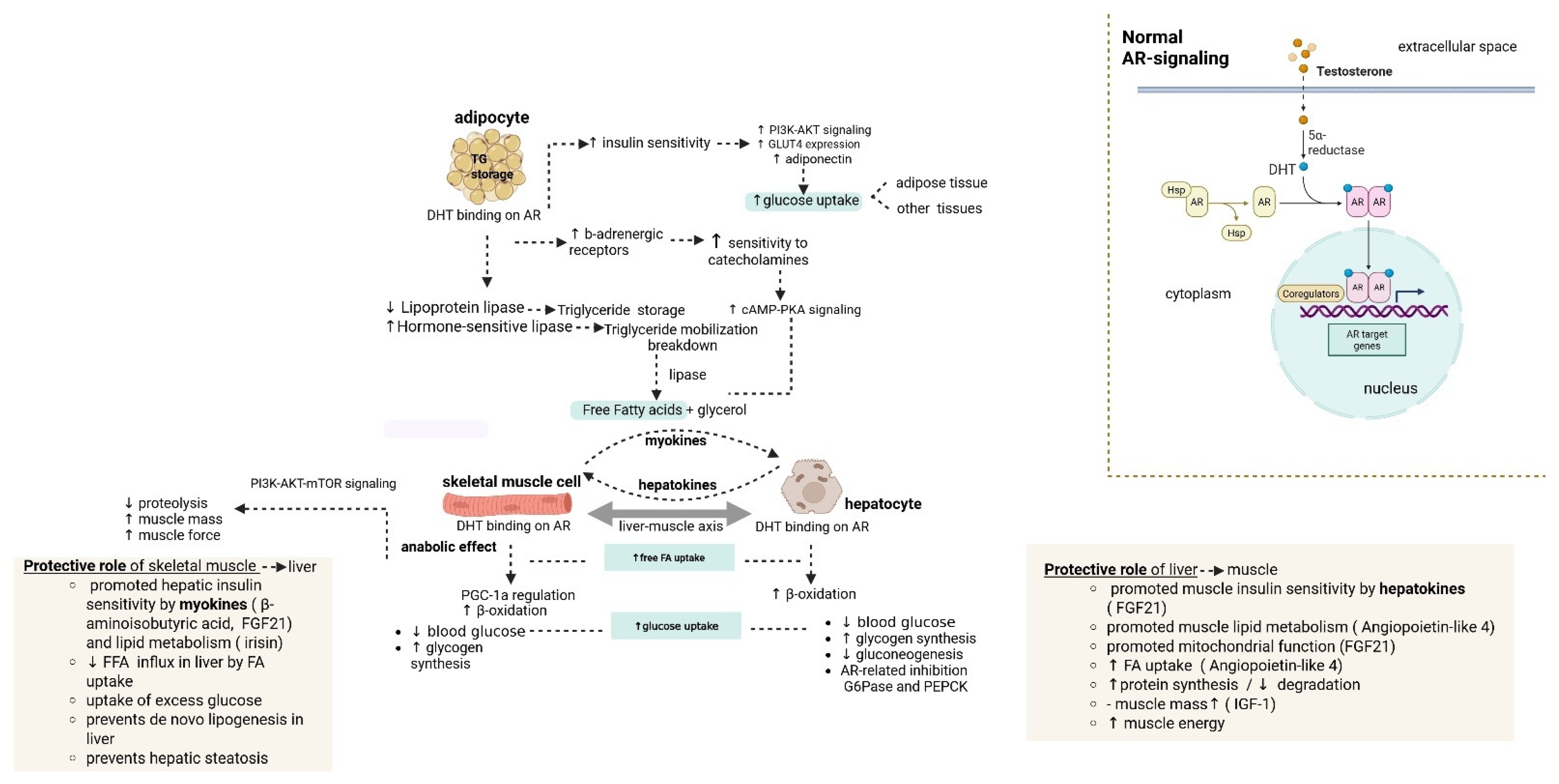
Figure 1. Liver-muscle axis regulation under physiological AR function. Created in BioRender. Trifylli, E. (2025) https://BioRender.com/pirs6nj (Agreement license: BY28SS00T2) (accessed on 13 November 2025). () increase; () decrease.
Livers 05 00065 g001
Figure 2. Liver-muscle axis dysregulation under AR signaling dysfunction. Created in BioRender. Trifylli, E. (2025) https://BioRender.com/pirs6nj (Agreement license: VN28SS9PZN) (accessed on 13 November 2025). () increase; () decrease.
Livers 05 00065 g002
Table 1. Laboratory and imaging findings at the time of diagnosis.
Test CategoryTest/InvestigationTime of Diagnosis ResultPost-Treatment ModificationReference Range/Notes
Liver Function TestsAlanine aminotransferase (ALT)122 IU/L56 IU/L7–56 IU/L
Aspartate aminotransferase (AST)80 IU/L39 IU/L5–40 IU/L
Lipid ProfileTriglycerides443 mg/dL116 mg/dL<150 mg/dL
Total Cholesterol209 mg/dL171 mg/dL<200 mg/dL
LDL-C97 mg/dL104 mg/dL<100 mg/dL
HDL-C43 mg/dL45 mg/dL>40 mg/dL
Glucose MetabolismFasting Glucose90 mg/dL98 mg/dL70–100 mg/dL
Muscle EnzymesCreatine Phosphokinase (CPK)1163 IU/L560 IU/L30–200 IU/L
Genetic Testing (qPCR/NGS)AR gene CAG repeat expansion>38 repeats in exon 1 Consistent with Kennedy’s Disease
Viral Hepatitis ScreeningHepatitis B, C, HIV, CMV, EBV, HSVNegative
Autoimmune/Metabolic Exclusion TestsWilson’s disease, Hemochromatosis, α1-antitrypsin
deficiency, Autoimmune hepatitis
Negative
Ceruloplasmin/a1-antitrypsin Within normal range
TM6SF2, PNPLA3 polymorphismsNegative
Complementary hormonal testing Testosterone, LH, FSH, TSHWithin normal range Within normal range
Total Blood Count White/Red blood cells, hemoglobin, hematocrit, Platelets Within normal rangeWithin normal range
C-reactive protein/ESRCRP: Normal (<5 mg/L) in most labs.
ESR: Normal (<20 mm/h in men)
ImagingAbdominal UltrasoundMild hepatic steatosis
Transient ElastographyLiver stiffness: 5.27 kPa (F1) F0–F4 staging
Neurological examinationExclusion of common myopathies
Table 2. We demonstrate a summary of the protective and non-protective roles of hepatokines and myokines [39,40,41,42,43,44,45,46,47,48,49,50,51,52,53].
Signaling MoleculeSourceRole in Muscle/LiverProtective/Non-Protective
FGF21LiverIncreased glucose uptake
Increased fatty acid oxidation and mitochondrial function
Increased muscle insulin sensitivity
Protective
IGF-1/activin ELiverIncreased muscle protein synthesis and muscle mass
Decreased protein degradation
Protective
Angptl4LiverRegulation of lipid metabolism
Increased fatty acid uptake and oxidation
Protective
Selenoprotein P
Fetuin-ALiverDecreased insulin sensitivity in the muscleNon-Protective
β-aminoisobutyric acid
FGF21
MuscleIncreased hepatic insulin sensitivity/lipid metabolismProtective
SPARCMuscleIncreased liver metabolism
Prevents fibrotic injury
Reduction in liver fibrosis
Protective
Irisin Muscle Improved lipid metabolism in the liver
Prevention of hepatic steatosis development
Increased hepatic insulin sensitivity
Protective
BDNFMuscleIncreased hepatic glucose metabolism
Prevention against liver injury
Protective
IL-6 MuscleSecreted during exercise and promotes hepatic glucose production versus chronic elevation (non-protective)Protective (acute elevation)
Non-protective
(chronic elevation)
IL-15MuscleIncreased hepatic lipid metabolismProtective
Myostatin Muscle Decreased hepatic insulin sensitivity
Promotes hepatic steatosis
Non-Protective
TNF-aMuscle Promotes hepatic steatosis and lipotoxicity
Decreased hepatic insulin sensitivity
Non-Protective
Table 3. Effects of AR dysfunction and its consequences [16,55,56,57,58,59,60,61,62,63,64,65,66,67,68,69,70,71,72,73].
Effects of AR dysfunction Consequence
↑ de novo lipogenesis—↑ activity of lipogenic genes (ACC1, SREBP-1c, and FASN) [16,58,59,61]↑ Triglyceride storage in liver parenchyma
↓ Fatty acid oxidation [67,68,69,70,71,74]↑ Lipid accumulation in liver parenchyma
↑ triglycerides storage in hepatocytes
↑Hepatic Insulin resistance [16,58,59,60,61]↑ Lipid accumulation and ↑ inflammation
↑ de novo lipogenesis and ↓ fat export
↑ Inflammatory cytokines promote MASH
AR phosphorylation by mTORC1 [72,73]↑ de novo lipogenesis, hepatocarcinogenesis (HCC development)
↓ mitochondrial activity [70,74]↑ Lipid accumulation via suppression of fatty acid breakdown
↑ androgens in females (PCOS, obesity/T2DM independent) [71]↑ de novo lipogenesis
(↑) increase; (↓) decrease.
Table 4. Genetic and non-genetic causes of lean-MASLD [6,76,80,81,82].
CategoryTypes Mechanism/Effects/Epidemiology
Genetic FactorsPNPLA3 (I148M variant)TG accumulation and inflammation
Most common among other genetic factors for lean MASLD
Epidemiology: Latin America (50–63%) > East Asia (35–45%) > South Asia (24–30%) < Europe (23–38%) > Sub-Saharan Africa (12%)
MBOAT7 polymorphismsSubjects are prone to steatosis and fibrosis development, modified phospholipid remodeling mechanism
Higher frequency in Europe and lowest in East Asia
Altered phospholipid remodeling → increased susceptibility to steatosis and fibrosis.
TM6SF2 (E167K variant)Altered VLDL secretion; steatosis despite the lean phenotype
Uncommon genetic variant.
GCKR (P446L variant)Increased hepatic glucose uptake and DNL
Patients with this variant usually have lower fasting plasma glucose, higher TG,
Decreased risk of T2DM
Other loci: APOC3, LYPLAL1 Modified lipid metabolism and intrahepatic fat accumulation
Moderate effects
Non-Genetic FactorsEthnicity Asians have a higher prevalence
High intake of carbohydrates Increased glucose uptake by the liver and DNL, irrespective of lean phenotype
Sedentary lifestyle Reduced insulin sensitivity and steatosis development
Iatrogenic (drug-related steatosis)Methotrexate, corticosteroids, tamoxifen
Endocrine abnormalities Polycystic ovarian syndrome, hypothyroidism, hypopituitarism
Visceral obesityReduces insulin sensitivity and steatosis development despite a lean phenotype and normal BMI
Dysbiosis Aberrations in the bile acid signaling pathway, dysbiosis lead to altered intestinal permeability, bacterial translocation
Low % of muscle mass Insulin resistance
Sarcopenia Insulin resistance
MASLD (metabolic dysfunction–associated steatotic liver disease); VLDL (very-low-density lipoprotein); TG (triglyceride); BMI (body mass index).
Table 5. Therapeutic approaches for AR dysfunction-related hepatic steatosis [16,35,57,58,59,67,68,72,82,83,84,85,86,87,88,89,90,91,92,93,94,95,96,97,98,99,100,101,102,103,104,105,106,107,108,109,110,111,112,113,114,115,116,117].
CategoryDrug/ClassMechanismTrial StatusLimitations
Currently Used/ApprovedMetformin↑ insulin sensitivity, ↓ hepatic gluconeogenesis, mild effect on ↓ hepatic fatClinicalGI adverse effects are generally well-tolerated
Thiazolidinediones (pioglitazone)↑ insulin sensitivity, Activates PPARγ, ↓ hepatic steatosis, and steatohepatitis (histological improvement)ClinicalIncrease in body weight, fluid retention, and cardiac complications
Statins (simva-, atorva-, rosuvastatin)↓ LDL-c (HMG-CoA reductase inhibition, ↑ LDL receptor), liver enzyme improvementClinicalRisk of SAMS, rhabdomyolysis, and monitoring liver enzymes
Ezetimibe↓ intestinal cholesterol absorption, additional ↓ LDL-c (in combination with statins)ClinicalMay increase SAMS risk with statins
Fibrates (fenofibrate)↓ Triglycerides, ↑ HDL, activate PPARα, ↑ fatty acid oxidationClinicalCautious use in liver impairment
Omega-3 Fatty Acids↓ Triglycerides (↓ synthesis), ↓ inflammationClinicalWell tolerated, usually in combination
PCSK9 inhibitors (Inclisiran, Alirocumab, Evolocumab)Inclisiran: siRNA suppressing PCSK9, ↑ LDL receptor, ↓ LDL-c; Alirocumab/Evolocumab: monoclonal antibodiesClinicalEffective in statin-intolerance (SAMS), costly, injectable
GLP-1 Receptor Agonists (Semaglutide)↑ insulin secretion, ↓ appetite, ↓ body weight, delayed gastric emptying, ↓ hepatic fat, MASH improvement, no worsening of fibrosis, liver enzyme improvement/normalizationPhase 3 ESSENCE trial (NCT04822181)GI adverse effects, injectable form
Androgen Replacement Therapy for low testosteroneRestore disrupted signaling pathways, improve metabolic imbalances, ↓ and reduce steatosis.Clinical Potential adverse effects: hypertension, cardiovascular events, prostate hyperplasia, high-risk prostate cancer
Clinical/InvestigationalSurvodutidePhase 2/3 NCT06309992
Tirzepatide↓ hepatic fat accumulation, MASH improvement, improved fibrosis, and improvement of steatohepatitis in F2/F3Phase 2 SYNERGY-NASH NCT04166773
SCD1 Inhibitor (Aramchol)↓ hepatic lipogenesis, ↓ triglyceride accumulationPhase 3 ARMOR trial (NCT04104321)Ongoing status
FXR Agonists (Cilofexor)Activates FXR, ↓ hepatic fat & inflammation, ↓ bile acid synthesisPhase 2 clinical trialsSafety concerns for OCA, EDP-305, and Tropifexor favorable effects
PPAR Agonists (Lanifibranor, Elafibranor, Saroglitazar)Lanifibranor: activates PPAR α/γ/δ, ↑ insulin sensitivity, ↓ hepatic fat, inflammation, fibrosis; Elafibranor: activates PPAR α/δ; Saroglitazar: dual PPAR α/γ agonistPhase 3 NATiV3, RE-SOLVE-IT, Phase 4 NCT05872269Elafibranor: no primary endpoints met; Lanifibranor/Saroglitazar: ongoing status
Thyroid Hormone Receptor β Agonists (Resmetirom)↑ mitochondrial β-oxidation, ↑ FA oxidation, cholesterol/phospholipids exported into bilePhase 3 MAESTRO trials (NCT03900429, NCT05500222)
HU6Mitochondrial uncoupler, ↓ hepatic fat (>30%)Phase 2
FGF21 Analogs (Efruxifermin, Pegozafermin)↓ hepatic fat, inflammation, fibrosisPhase 2/2b; Phase 3 ongoing
NamodenosonA3 adenosine receptor agonistPhase 3 NCT04697810
CenicrivirocCCR2/CCR5 inhibitorPhase 2b CENTAUR; ongoing Phase 3 AURORA
BelapectinGalectin-3 inhibitionPhase 2b/3 NAVI-GATE NCT04365868
LPCN 1144Endogenous testosterone prodrug, beneficial in non-cirrhotic hypogonadal males with MASHClinical
SARMs (Enobosarm, RAD-140, LGD-4033, S-23)No role in hepatic steatosis or lipid metabolism; can cause DILI, aggravate metabolic dysfunction.ClinicalCase reports: 29- and 52-year-old males developed DILI, which resolved after discontinuation.
PreclinicalAR-lowering miRNAs (miR196a, miR-298)Potential AR suppressionPreclinical
mTORC1-AR axis blockade (Salinomycin, Rapamycin)Suppresses mTORC1/AR, stimulates autophagy, and decreases AR transcriptional activity.PreclinicalNo adequate studies for AR-mTORC1 in AR-dysfunction SLD
Liver-specific AR modulators (EP-001)AR receptor suppressor reduces hepatic steatosis via CYP2E1 inhibition, modulates PPAR, and blocks fat in hepatocytes.PreclinicalPreclinical evidence only
Liver-muscle axis modulators (Clenbuterol)↑ glucose uptake in skeletal muscles, alleviate hepatic steatosis, improve neuromuscular/metabolic functionPreclinicalNo direct effect on AR signaling
Myostatin inhibitors (Bimagrumab)Improving insulin resistance and muscle mass is a potential benefit for hepatic steatosis.Preclinical
(↑) increase; (↓) decrease.
Disclaimer/Publisher’s Note: The statements, opinions and data contained in all publications are solely those of the individual author(s) and contributor(s) and not of MDPI and/or the editor(s). MDPI and/or the editor(s) disclaim responsibility for any injury to people or property resulting from any ideas, methods, instructions or products referred to in the content.