Skip Content
You are currently on the new version of our website. Access the old version .
  • Indexed in
    Scopus
  • 27 days
    Time to First Decision

Grasses

Grasses is an international, peer-reviewed, open access journal on all fundamental and applied fields of grass, published quarterly online by MDPI.

All Articles (111)

There is an urgent demand for sustainable agricultural practices that minimize environmental impacts and reduce the reliance on synthetic pesticides and fertilizers. Endophytes represent a largely untapped resource of beneficial microorganisms with multiple potential applications as natural biocontrol agents and promoters of plant growth and development. This paper aimed at identifying new fungal strains and performing a series of preliminary in vitro screenings to evaluate their potential use for plant-growth promotion and antifungal activity. A total of 102 fungal endophytes were isolated from different plant tissues of seven wild relatives of barley (Brachypodium sylvaticum, Bromus hordeaceus, Bromus sterilis, Elymus farctus, Elymus repens, Leymus arenarius and Lolium perenne) that were sourced from 22 contrasting wild habitats. Fungal endophytes were isolated using standard culture-based methods and identified via DNA barcoding of the nrITS marker. Based on a literature search, a sub-group of endophytes were selected and evaluated for indole-3-acetic acid (IAA) synthesis, ammonia production and phosphorous (P) solubilization. From these, 15 endophytes were also tested for antifungal activity against Ramularia collo-cygni, Pyrenophora teres, and Gaeumannomyces tritici. All the endophytes were positive for ammonia production at variable rates, but no P solubilization nor IAA synthesis without L-tryptophan were observed. On the contrary, five promising isolates (2 Daldinia concentrica, Metapochonia suchlasporia, Chaetomium sp., and Ophiocordyceps sinensis) had mean pathogen growth inhibition rates above 80%, compared to the untreated negative controls. To the best of our knowledge, this study is the first published report that investigates natural antagonism against Ramularia collo-cygni and expands the list of endophytic strains with natural antagonism on the tested cereal pathogens. Results are discussed in the context of endophytes application to barley cultivation within the European regulatory framework.

5 February 2026
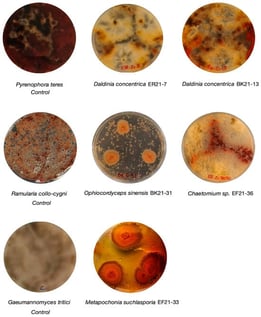
Positive antifungal assays in dual cultures with Pyrenophora teres, Ramularia collo-cygni and Gaeumannomyces tritici. Bottom view of Petri plates after 14 days.

African grasses deliberately introduced for cattle forage have become among the most destructive invaders of tropical wetlands globally, yet invasion mechanisms and management strategies remain poorly understood. We conducted field experiments examining competition dynamics between the invasive African grass Echinochloa pyramidalis and native wetland species in La Mancha, Mexico—a Ramsar site of international importance. Experiment 1 tested invasion potential within native Sagittaria lancifolia zones using four treatments: control, herbicide removal, E. pyramidalis transplant, and combined removal + transplant. Repeated-measures ANOVA showed significant treatment and time effects on invasion success, with vegetation removal facilitating invasion (relative importance value increasing from 0 to 149.4 ± 26.6 after 18 months) while transplants alone failed to establish (RIV < 7.0). Sagittaria maintained 35–48% biomass across treatments, demonstrating coexistence capacity. Experiment 2 examined natural invasion of the vegetation ecotone over 49 months. Mixed-effects models revealed that E. pyramidalis increased dominance in its zone (β = 9.98, z = 4.77, p < 0.001) but showed minimal expansion into the adjacent Sagittaria habitat, indicating propagule limitation rather than competitive exclusion as the invasion constraint. Sagittaria removal within E. pyramidalis zones significantly reduced invasion temporal increase (β = −6.44, z = −2.18, p = 0.030), suggesting biotic resistance. Results demonstrate that E. pyramidalis possesses invasion potential but requires disturbance to overcome establishment barriers. These findings support prevention-based management prioritizing disturbance limitation in intact wetlands and demonstrate that hydrological management maintaining permanent flooding (>30 cm depth) can effectively control established invasions by exploiting C4 photosynthetic limitations. Conservation implications for Mexican coastal wetlands—which lack legal protection equivalent to mangroves despite comparable ecosystem services—are discussed. These findings inform evidence-based management of African grass invasions in tropical wetlands worldwide.

4 February 2026

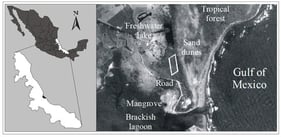
The study area. The white box within the photograph indicates the location of the study area.

Selection of Morphoagronomic Traits for Screening Tropical Forage Genotypes for Waterlogging Tolerance Under Controlled Conditions

  • Clemeson Silva de Souza,
  • Marcio de Oliveira Martins and
  • Giselle Mariano Lessa de Assis
  • + 4 authors

Poorly drained pastures in tropical America are recurrently degraded by Marandu Death Syndrome (MDS), affecting beef and dairy production. This study screened genotypes of Megathyrsus maximus and Urochloa spp. for waterlogging tolerance under controlled conditions to identify discriminant, easily measurable morphoagronomic traits suitable for breeding programs. Four experiments were conducted in factorial arrangement (five genotypes × two water regimes, with four replications), where morphoagronomic and physiological variables were analyzed using multivariate techniques. The first two principal components explained 75.17–88.60% of the total variation and stayed above 70% after variable reduction, without significantly altering genotype dispersion. Physiological responses showed a strong correlation with morphoagronomic traits. The most informative traits were the number of yellow and senescent leaves, number of tillers, SPAD index, leaf dry mass, and root dry mass. Genotypes were grouped by tolerance level. Among M. maximus, ‘Mombaça’ was the most tolerant, while PM13 and PM21 were the least. In Urochloa spp., U. humidicola cv. Tully was the most tolerant and ‘Marandu’ the least tolerant. Screening under controlled conditions is an alternative to distinguish genotypes with contrasting tolerance; however, because controlled environments do not fully reproduce the multifactorial nature of MDS, this approach is recommended only for early stages of breeding programs. Nevertheless, field evaluations on poorly drained soils under grazing remain essential to confirm tolerance to MDS.

15 January 2026

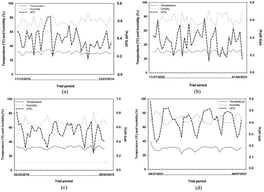
Daily means of temperature (°C), relative air humidity (%), and vapor pressure deficit (VPD, kPa) inside the screen house at Embrapa Acre: Experiment 1 with M. maximus (a); Experiment 2 with M. maximus (b); Experiment 3 with Urochloa spp. (c); Experiment 4 with Urochloa spp. (d).

Grasses of Campos Rupestres: Diversity, Functions and Perspectives for Seedling Production and Ecological Restoration

  • Alessandra Rodrigues Kozovits,
  • Maurílio Assis Figueiredo and
  • Maria Cristina Teixeira Braga Messias

The Campos Rupestres, ancient and nutrient-poor mountaintop ecosystems in Brazil, harbor exceptional biodiversity and endemism but face severe threats from mining and urban expansion. Native grasses (Poaceae), represented by nearly 300 documented species—many of them poorly studied—are fundamental elements of these ecosystems. They provide critical ecological services, including soil stabilization, enhancing carbon storage and nutrient cycling, regulating water availability, and resilience to disturbances. This review synthesizes current knowledge on the diversity, functions, and propagation of Campos Rupestres grasses, with emphasis on their potential in ecological restoration. Despite their ecological importance, large-scale use of native grasses remains incipient, constrained by limited knowledge of reproductive biology, low seed viability, and scarce commercial seed availability. Advances in propagation include seedling and plug production, vegetative propagation, and rescue/reintroduction strategies, which have shown promising results in post-mining restoration. However, reliance on seed collection from natural populations risks depleting already limited genetic resources, highlighting the need for ex situ production systems. Expanding research on taxonomy, ecology, and cost-effective propagation methods, alongside supportive policy and market development, is crucial for integrating native grasses as cornerstone species in restoration programs. Bridging these gaps will enhance biodiversity conservation and restoration in one of the world’s most threatened megadiverse systems.

13 January 2026

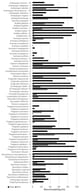
Minimum (grey) and maximum (black) germination percentages obtained in various experiments with native grass species from Campos Rupestres in Brazil. The numbers following the species names represent the assessments conducted for each species and considered in this study. Evaluations that included germination in darkness, seed scarification with H2SO4, germination stimulation with KNO3, or seed preheating were not considered to determine the minimum and maximum germination, since depending on the species, these treatments can reduce germinability. For further details, and citation of the studies from which the data were taken, see Supplementary Materials Table S2.

News & Conferences

Issues

Open for Submission

Editor's Choice

Get Alerted

Add your email address to receive forthcoming issues of this journal.

XFacebookLinkedIn
Grasses - ISSN 2813-3463