Article

Isolation of Novel Fungal Endophytes from Wild Relatives of Barley (Hordeum vulgare L.) and In Vitro Screening for Plant Growth Promotion and Antifungal Activity


by
Diego D. Bianchi
and
Trevor R. Hodkinson
*
School of Natural Sciences, Botany, Trinity College Dublin, D02 PN40 Dublin, Ireland
*
Author to whom correspondence should be addressed.
Submission received: 1 October 2025 / Revised: 29 November 2025 / Accepted: 2 February 2026 / Published: 5 February 2026

Abstract

There is an urgent demand for sustainable agricultural practices that minimize environmental impacts and reduce the reliance on synthetic pesticides and fertilizers. Endophytes represent a largely untapped resource of beneficial microorganisms with multiple potential applications as natural biocontrol agents and promoters of plant growth and development. This paper aimed at identifying new fungal strains and performing a series of preliminary in vitro screenings to evaluate their potential use for plant-growth promotion and antifungal activity. A total of 102 fungal endophytes were isolated from different plant tissues of seven wild relatives of barley (Brachypodium sylvaticum, Bromus hordeaceus, Bromus sterilis, Elymus farctus, Elymus repens, Leymus arenarius and Lolium perenne) that were sourced from 22 contrasting wild habitats. Fungal endophytes were isolated using standard culture-based methods and identified via DNA barcoding of the nrITS marker. Based on a literature search, a sub-group of endophytes were selected and evaluated for indole-3-acetic acid (IAA) synthesis, ammonia production and phosphorous (P) solubilization. From these, 15 endophytes were also tested for antifungal activity against Ramularia collo-cygni, Pyrenophora teres, and Gaeumannomyces tritici. All the endophytes were positive for ammonia production at variable rates, but no P solubilization nor IAA synthesis without L-tryptophan were observed. On the contrary, five promising isolates (2 Daldinia concentrica, Metapochonia suchlasporia, Chaetomium sp., and Ophiocordyceps sinensis) had mean pathogen growth inhibition rates above 80%, compared to the untreated negative controls. To the best of our knowledge, this study is the first published report that investigates natural antagonism against Ramularia collo-cygni and expands the list of endophytic strains with natural antagonism on the tested cereal pathogens. Results are discussed in the context of endophytes application to barley cultivation within the European regulatory framework.

1. Introduction

Endophytes are microorganisms, such as bacteria, fungi and unicellular eukaryotes, which live at least part of their life cycle inter- or intracellularly inside plants, from roots to seeds, usually without inducing pathogenic symptoms. This niche of microorganisms includes commensal, facultative, obligate, opportunistic and passenger endophytes, some of which have demonstrated symbiotic relationships with their hosts including a wide range of natural and domesticated grasses [1]. Mutualistic endophytes are well-known for covering a broad spectrum of beneficial functions during their hosts life cycle, following direct or indirect mechanisms. Among the direct mechanisms, there are processes including phytohormone production, nitrogen fixation, phosphate solubilization, siderophore production and anti-microbial metabolite production [2]. On the other hand, indirect mechanisms work through a multitude of induced physiological changes and modified gene expression in the plant host, resulting in increased stress tolerance to abiotic factors such as drought, salinity, high temperature, high CO2, metal toxicity, and biotic factors such as pathogens and pests [3,4]. There is some evidence (although not comprehensive) that elite crop cultivars have lost part of their core microbiome compared with their wild relatives, as a result of plant breeding and intensive agricultural processes. Such loss has been linked with a consequent reduction in plant health and stress resistance [5]. For this reason, endophytes isolated from plant tissues of wild relatives of agricultural and horticultural crops represent an untapped source of beneficial microbes with great potential for agricultural applications [6,7,8]. So far, many fungal endophytes have been extracted from healthy plants and incorporated artificially into host crops as biofertilizers and biocontrol agents [9,10,11,12]. Although research on fungal endophytes has grown considerably in recent years, studies specifically addressing their application in barley cultivation remain relatively scarce despite an extensive body of literature on the topic [13].
Over the past three decades, research exploring biostimulation (in normal and abiotic stress conditions) and bioprotection potential of fungal endophytes in barley examined approximately 50 distinct fungal species, with Penicillium spp., Serendipita indica, Thricoderma spp., Epichloë bromicola, Cladosporium spp., and Fusarium spp. being the most frequently reported species [14,15,16,17,18]. Less commonly reported fungi belong to genera such as Cadophora, Chaetomium, Clonostachys, Epicoccum, Exophiala, Humicola, Lophiostoma, Metarhizium, Neocamarosporium, Paecilomyces, Plectosphaerella, Pochonia, and Viridispora, to mention a few [13,19,20,21,22,23]. These studies highlighted that some fungal endophytes can indeed significantly enhance barley growth and resilience, with significant improvements in yield, shoot and root growth promotion correlated with fungal-induced proteomic and metabolomic changes under optimal conditions and in response to biotic and abiotic stresses. Key benefits mediated by fungal endophytes reported in the literature include increased expression of stress-related proteins such as superoxide dismutase and catalase, which strengthen antioxidant defenses [24], as well as higher levels of heat shock proteins and chaperones, enhancing the ability to cope with drought stress [25]. Furthermore, improved physiological performance in reduced nitrogen and phosphorous applications has been attributed to the upregulation of proteins linked to photosynthesis and energy metabolism [26]. Other studies indicated that barley colonized by fungal endophytes produced higher concentrations of osmolytes like proline and sugars, which help maintain cellular stability during drought and salt stress [21]. Enhanced production of secondary metabolites, including flavonoids and alkaloids, has also been observed, suggesting stronger defense mechanisms against drought and salt stress [23]. Modifications in lipid metabolism mediated by fungal endophytes have been linked to improved membrane stability and enhanced stress resistance, while altered amino acid profiles [25] and increased synthesis of polyamines improved nitrogen assimilation, growth regulation and abiotic stress adaptation [23]. These findings collectively demonstrate the potential of fungal endophytes to support barley growth and stress resilience, underscoring their value in sustainable agriculture practices to maintain yields and quality traits.
In this study, a library of new endophytic fungal strains was built from wild relatives of barley that are naturally found growing in contrasting habitats in Ireland. Crop wild relatives were selected based on ecological niche and taxonomic relationship to cereal crops, and associated fungal endophytes were preliminary identified using the universal fungal DNA barcode, i.e., the nrITS region (internal transcribed spacer region of nuclear ribosomal DNA). A literature review was conducted on this collection of fungi to identify the species of greatest relevance for agricultural applications, focusing on those previously reported to exhibit phosphorus solubilization, indole-3-acetic acid (IAA) synthesis, ammonia production, and antifungal properties. Based on this, 25 endophytic fungi were selected and subjected to preliminary in vitro assays that are commonly used as part of high-throughput screenings that lead to the selection of agriculturally beneficial microorganisms.

2. Materials and Methods

2.1. Sampling Sites

Field sampling was undertaken between March–June 2021 in urban parks and coastal areas within County Dublin (Ireland). Plants were collected from contrasting habitats, including foredunes, dunes, and mesotrophic, calciferous, oligotrophic and halophytic grasslands. Twenty-two major sampling sites were selected: Phoenix Park, Tymon Park, Tolka Valley Park, Marlay Park, Fairview Park, Saint Anne’s Park, Griffeen Valley Park, Saint Catherine’s Park, Seagrange Park, Corkagh Park, North Bull’s Island, Portmarnock, Malahide Beach, Clontarf promenade, Merrion Strand, Baldoyle to Portmarnock promenade, Donabate Beach, Rush North Beach, Balbriggan Beach, Sandymount Strand, Killiney Beach and Portrane Beach (Table 1). Exact coordinates can be accessed and exported in CSV or KML/KMV (Supplementary Figure S1).

2.2. Target Plant Species

The sampled plant species are relatives of barley (sensu lato) that can be found growing in the wild (uncultivated). The definition of a crop wild relative varies [27]. Sometimes it is limited to the same taxonomic genus, but a broader definition has been applied here to include closely related grasses belonging to the same grass subfamily and closely related tribes. This selection included Brachypodium sylvaticum, Bromus hordeaceus, Bromus sterilis, Elymus farctus, Elymus repens, Leymus arenarius, and Lolium perenne. Identification of the target plants was assessed through morphological keys on site, or in the herbarium at the Botany Department, Trinity College Dublin. At each site, multiple samples of the target plant species were collected. For each target species, one healthy and fully extended leaf/plant was taken from 5 to 25 plants/site, while the whole root system was taken from five plants/site. Samples were collected in the morning, placed in plastic zip-lock bags and processed on the same day or stored overnight at 4 °C until processing the following day.

2.3. Isolation of Endophytic Fungi

Fungal endophytes were isolated from cleaned and surface-sterilized samples of leaves, stems, roots, rhizomes and seeds. Plant tissues were first cut into shorter fragments of 5 cm length (except for the seeds), then grouped according to tissue type and sample origin. Samples were vortexed for 1 min on the at maximum speed, in 50 mL centrifuge tubes filled with 30 mL of ultra-pure water containing Tween 20 (0.03%), to wash the material. After that, tubes were rinsed twice with ultra-pure water, likewise on the vortex at maximum speed (10 s/rinse). To sterilize plant samples, snap-ball tea strainers were used to group together the tissues belonging to the same sample, synchronize exposure to the sterilizing agent and speed up the process. Plant tissues were first soaked in beakers containing 70% ethanol (30 s for leaves and stems; 1 min for roots, rhizomes and seeds) and then in 5% sodium hypochlorite (1 min for leaves and stems; 1.5 min for roots, rhizomes and seeds). After surface-sterilization, strainers were rinsed three times in three separate beakers with sterile ultra-pure water to remove residual traces of the solvents. At this point, all surface-sterilized samples were cut into smaller pieces (1 cm) inside sterile Petri plates with sterile scalpels. Sterile forceps were used to transfer each plant tissue into one of the 25 compartments of a sterile, square Petri plate. Plates were previously poured with half-strength potato dextrose agar (½ PDA) or half-strength malt dextrose agar (½ MEA). Samples were left in the incubator at 21 °C in continuous darkness and checked daily for 14 days. All fungal endophytes that emerged from the excisions of sterilized plant samples were aseptically transferred onto a fresh Petri plate with the same media as it was first isolated. All isolates were subcultured until a pure culture was obtained. Fungi were stored as water stocks in sterile ultra-pure water at 4 °C and cryopreserved at −20 °C and −80 °C in 25% glycerol stocks.

2.4. Fungal DNA Extraction

Identification of the endophytic fungi was done through DNA barcoding of the full nrITS region [28]. Total genomic DNA was extracted using a modified-CTAB (hexadecyltrimethylammonium bromide) extraction. The extraction buffer was prepared by adding 1 mL of CTAB (2× solution and 0.2% β-mercaptoethanol into a sterile microcentrifuge tube (2 mL) that was pre-heated in a heat-block at 65 °C for 15 min. Fungal material (≃200 mg) was added to the pre-heated buffer with two titanium beads (1.5 mm ⌀) and the content was homogenized with a tissue lyser for 1.5 min at 30 Hz. Homogenized samples were then incubated in the heat-block at 65 °C for 1 h and the tubes were inverted 3–4 times during this time. After the incubation, 500 μL of chloroform:isoamylalcohol (24:1) were added into each tube and shaken vigorously for 15 s to mix the DNA with the solvent. Tubes were laid on a shaking plate at 220 rpm for 10 min. The samples were then centrifuged at 8000× g for 10 min and the upper CTAB phase (approximately 900 μL) was transferred to a new sterile 1.5 mL tube. A volume of 500 μL isopropanol (ice-cold) was added into each tube, mixed a few times by inversion and tubes were stored at −20 °C for 1 h to let the DNA precipitate. Tubes were centrifuged at 8000× g for 5 min to spin down the DNA. The supernatant was removed, and the pellet was washed with 800 μL of 70% ethanol. Tubes were centrifuged again at 8000× g for 3 min. The supernatant was removed, and the pellets were left to dry at room temperature under a chemical fume hood (≃20 min). Pellets were resuspended in 100 μL TE buffer and kept at 37 °C in a heat block for 30 min to allow the DNA to fully dissolve. The final concentration of DNA was measured with a Nanodrop UV spectrophotometer.

2.5. DNA Barcoding

Amplification of the full nrITS barcode regions was undertaken. The full nrITS region includes the partial 18S, ITS1 spacer, 5.8S, ITS2 spacer and partial 28S regions. Amplification was carried out using the primers ITS1F (5′-CTTGGTCATTTAGAGGAAGTAA-3′) [29] and ITS4 (5′-TCCTCCGCTTATTGATATGC-3′) [30]. The following PCR cycling parameters were applied: initial denaturation at 94 °C for 3 min; 33 cycles of denaturation at 94 °C for 1 min/cycle, annealing at 55 °C for 1 min/cycle, extension at 72 °C for 1 min/cycle; final extension phase at 72 °C for 10 min. PCR products were cleaned up using ExoSAP-IT™ PCR Product Cleanup Reagent (Thermo Fisher Scientific, Waltham, MA, USA) and purified PCR products were sequenced using the Sanger Sequencing Service offered by Source Bioscience. Forward and reverse sequences were trimmed and assembled with Geneious Prime software (v.2021.1.1). Consensus sequences were then BLASTed for species identification against nrITS accessions on NCBI (National Center for Biotechnology Information) and UNITE databases. Species names were manually checked for correct taxonomic assignment on Index Fungorum (https://www.indexfungorum.org, accessed on 7 January 2022) and on NCBI Taxonomy Browser (https://www.ncbi.nlm.nih.gov/Taxonomy/Browser/wwwtax.cgi, accessed on 11 August 2025). Cut-off values to assign fungal identity were set at ≥98% of sequence identity for the same species and within 95–97.9% for the same genus [31]. Where multiple hits with the same score values were hindering species identification, these isolates were assigned to the genus level (Supplementary Table S1).

2.6. Criteria for Selection of Potential Beneficial Fungi

Fungal endophytes from the new collection were examined through a literature review to identify potential candidates with previously reported traits relevant for agricultural use, including biostimulant, biofertilizer, and/or biocontrol activities. Peer-reviewed articles were searched, compiled, and assessed using Google Scholar and Web of Science with combinations of the following keywords: “endophyte species” + “entomopathogenic activity”, “antifungal activity”, “nematocidal activity”, “insecticidal activity”, “plant growth”, “phytohormones”, “abiotic stress”, “biotic stress”, “heavy metal”, “salinity” and “drought”. FUNGuild (https://www.github.com/UMNFuN/FUNGuild, accessed on 14 January 2022) was used as a complementary tool to predict fungal functions, trophic mode and lifestyle.

2.7. Screening for Phosphate Solubilization

The ability to solubilize inorganic phosphate was assessed using Pikovskaya medium (PVK). This is a qualitative method where a clear halo around the fungal colony develops in treatments positive for phosphate solubilization [32]. Three different sources of inorganic phosphate were tested: calcium, iron and aluminum phosphate. The PVK medium was prepared in 1 L of ultra-pure water as follows: glucose, 5 g; (NH4)2SO4, 0.5 g; NaCl, 0.2 g; MgSO4 7H2O, 0.1 g; KCl, 0.2 g; yeast extract, 0.5 g; MnSO4 H2O, 0.002 g, FeSO4 7H2O, 0.002 g, plus 10 g of one of the three sources of inorganic phosphate. PVK medium was autoclaved at 121 °C for 15 min, let to cool down (≃55 °C) and poured in Petri plates. Fungal endophytes were grown on ½ PDA plates for 7 days, then one plug/Petri (6 mm) from the youngest region of the fungal colony was transferred PVK plates and left to grow for 14 days at two different temperatures in dark conditions: 21 °C and 28 °C. Plates were checked for halo production every day. The experiment was performed in triplicate.

2.8. Screening for Ammonia Production

The ability to metabolize nitrogen sources and release ammonia was assessed using Nessler’s reagent, a widely adopted spectrophotometric method with high accuracy and reproducibility, low detection limits, and simplicity [33,34]. Upon reacting with ammonia, Nessler’s reagent forms a colored complex that ranges from yellow to yellow-orange or reddish-brown as the ammonia concentration increases. Nessler’s reagent was prepared by adding the following reagents together and diluting the solution to 1 L: 50 g of potassium iodide in 50 mL of cold ultra-pure water, 22 g of mercuric chloride in 350 mL of ultra-pure water and 200 mL of 5N NaOH. Fungal endophytes were grown on ½ PDA plates for 7 days, then one plug/Petri (6 mm) from the youngest region of the fungal colony was transferred into 50 mL centrifuge tubes containing 30 mL of Czapek broth. Fungi were kept growing for 7 days at room temperature on continuous rotation (140 rpm). After that, tubes were centrifuged for 10 min at 4000 rpm, 1 mL of the supernatant were pipetted into a sterile microcentrifuge tube (1.5 mL) and mixed with 0.5 mL of Nessler’s reagent. Ammonia was quantified after 10 min of incubation with the reagent by measuring the absorbance with a spectrophotometer at 415 nm. A curve with standard ammonium (NH4+-N) was used for calibration. Non-inoculated Czapek broth was used as a negative control. The experiment was performed in triplicate.

2.9. Screening for IAA Synthesis

The ability to synthesize IAA was preliminarily assessed using Salkowski’s reagent [35]. This widely used colorimetric method works on the premise that, in the presence of indole compounds such as IAA, a chemical reaction happens driving a color change in the solution to pink-red. For exact quantification of IAA among positive treatments, this assay is followed by liquid chromatography, as the Salkowski’s reagent has affinity with similar auxins. Fungal endophytes were grown on ½ PDA plates for 7 days, then one plug/Petri (6 mm) from the youngest region of the fungal colony was transferred into a 50 mL centrifuge tube containing 30 mL of Czapek broth. Fungi were kept growing for 7 days at room temperature on continuous rotation (140 rpm). After that, tubes were centrifuged for 10 min at 4000 rpm, 0.5 mL of the supernatant were pipetted into a sterile microcentrifuge tube (1.5 mL) and mixed with 25 μL of orthophosphoric acid and 1 mL of Salkowski’s reagent (300 mL sulfuric acid, 500 mL distilled water, 15 mL 0.5M FeCl3). Color change was assessed after 30 min of incubation at room temperature in the dark. Non-inoculated Czapek broth was used as a negative control. The experiment was performed in triplicate.

2.10. Screening for Antifungal Activity

Screening for natural antagonism was studied with the dual culture method [36] against three major pathogens of barley: Gaeumannomyces tritici (GT), Ramularia collo-cygni (RCC) and Pyrenophora teres (PT). All cultures were kindly obtained from the library of pathogenic isolates at BiOrbic Research Centre (University College Dublin, Ireland). Cultures of GT were grown on ½ PDA plates at 21 °C in continuous darkness, while RCC and PT with a photoperiod of 16:8 h light:darkness, for 14 days. The inoculum of pathogens was prepared as follows: the mycelium was scraped with sterile scalpels and ≃400 mg were placed in a sterile microcentrifuge tube (1.5 mL) containing two titanium beads (1.5 mm ⌀). Then, tubes were placed in a tissue lyser for 1.5 min at 30 Hz and fungal mycelium was diluted to 1 × 10⁴–5 hyphae/mL in sterile ultra-pure water. Fungal endophytes were grown on ½ PDA at 21 °C in continuous darkness, and their inoculum was prepared in sterile ultra-pure water by scraping the cultures with sterile scalpels and diluted to 1 × 10⁵–6 spores/mL or 1 × 10⁴–5 hyphae/mL in absence of spores. Antifungal assays were performed as follows: 55 μL of pathogenic inoculum were spread homogeneously on ½ PDA Petri with a sterile L-shaped stick and left to dry for 10–15 min. After that, 15 μL of fungal endophytes were applied in three equally distant spots. Plates were incubated for 14 days at 21 °C in continuous darkness. Fungal growth (%) for GT and PT was determined with ImageJ (v.1.54c; Colony Area plugin) by measuring the area covered by the mycelium, while for RCC it was manually determined according to the number of colony forming units (CFUs). The antagonistic inhibition percentage (I%) was calculated after 14 days as follows:
I% = [(A1 − A2)/A1] × 100
  • A1 = represents the area of the pathogen in the control group
  • A2 = represents the area of the pathogen in the treatment group

2.11. Statistical Analysis

Data analysis (ammonia production and growth inhibition) was performed on StatPlus:mac (v8; https://www.analystsoft.com/en/). Differences between groups were analyzed with one-way ANOVA and significant differences with a post hoc Tukey’s HSD test (p < 0.05). Compliance with the assumptions of normality (Shapiro–Wilk test) was verified prior to data analysis.

3. Results

3.1. Identification of Fungal Endophytes

The field sampling of wild relatives of barley generated 930 samples from seven plant species (Table 1, Supplementary Figure S1). Most samples were taken from two halophyte species, i.e., E. farctus and L. arenarius (250 samples each), due to their high abundance during the whole sampling season. Respectively, 145 samples were collected from B. sterilis, 80 from E. repens, 85 from B. sylvaticum, 70 from B. hordeaceus and 50 from L. perenne. Sample size varied according to the relative abundance of target plants at each sampling site. A total of 102 fungal endophytes from surface-sterilized leaves, roots, stems, seeds and rhizomes were successfully cultured, isolated, purified and long-term stored. Overall, 34 isolates were recovered from L. arenarius, 28 from E. fractus, 19 from B. sylvaticum, 8 from B. sterilis, 6 from B. hordeaceus, four from E. repens and three from L. perenne. Fungal endophytes were almost equally recovered from leaves and roots (45 and 39, respectively), with fewer samples from rhizomes (10), stems (5) and seeds (3). The recovery efficiency of culturable fungal endophytes (total isolates/total plant samples×100) was calculated at 10.96%. Fungal endophytes were identified by analyzing consensus sequences of the nrITS DNA region using BLASTn (v.2.12) on the NCBI and UNITE databases (Supplementary Table S1). GenBank numbers for the sequences are from PQ145973 to PQ145999 and from PV070177 to PV070254. Isolates were mainly Ascomycota (98.04%) and belonged to 11 taxonomic orders of fungi, including some well-known endophytic species and four highly uncharacterized species (two Agaricales and two Pleosporales isolates—all identified at order level only). Overall, Pleosporales was the most abundant order (48 isolates), followed by Hypocreales (18) and Eurotiales (9). The five most common genera of fungi belonged to Alternaria (13), Penicillium (9) Fusarium (9), Cladosporium (6) and Phaeosphaeria (5). FUNGuild was used as a preliminary tool to understand our endophytes lifestyle and trophic and specific literature searches were run to confirm predicted ecological properties and retrieve known interactions with the host and/or other microorganisms. This search revealed a high abundance of recognized phytopathogens (either weak, opportunistic or severe) and general saprotrophs over a few putative symbiotic microorganisms. After having discarded a significant number of potential pathotrophs (including Alternaria, Cladosporium, Colletotrichum, Dactylonectria, Diaporthe, Didymella, Fusarium, Ilyonectria, Ophiosphaerella, Phaeosphaeria, Phoma, Pyrenophora and Stemphylium species), 24.5% of the endophytic fungi were selected from the whole collection to perform further in vitro screenings (Table 2). This selected group accounted for 25 endophytes and included fungi that were previously reported with plant growth promotion traits (phytohormone production, abiotic stress amelioration, solubilization of nutrients) and/or able to induce protection from phytopathogens and pests. Among these putative symbiotic/beneficial microorganisms, a number of endophytes were highlighted, namely Beauveria bassiana, Cladosporium sp., Chaetomium spp., Daldinia concentrica, Epicoccum nigrum, Exophiala spp., Metapochonia suchlasporia, Penicillium spp., Periconia macrospinosa, Ophiocordyceps sinensis and Sarocladium strictum.

3.2. Antifungal Activity

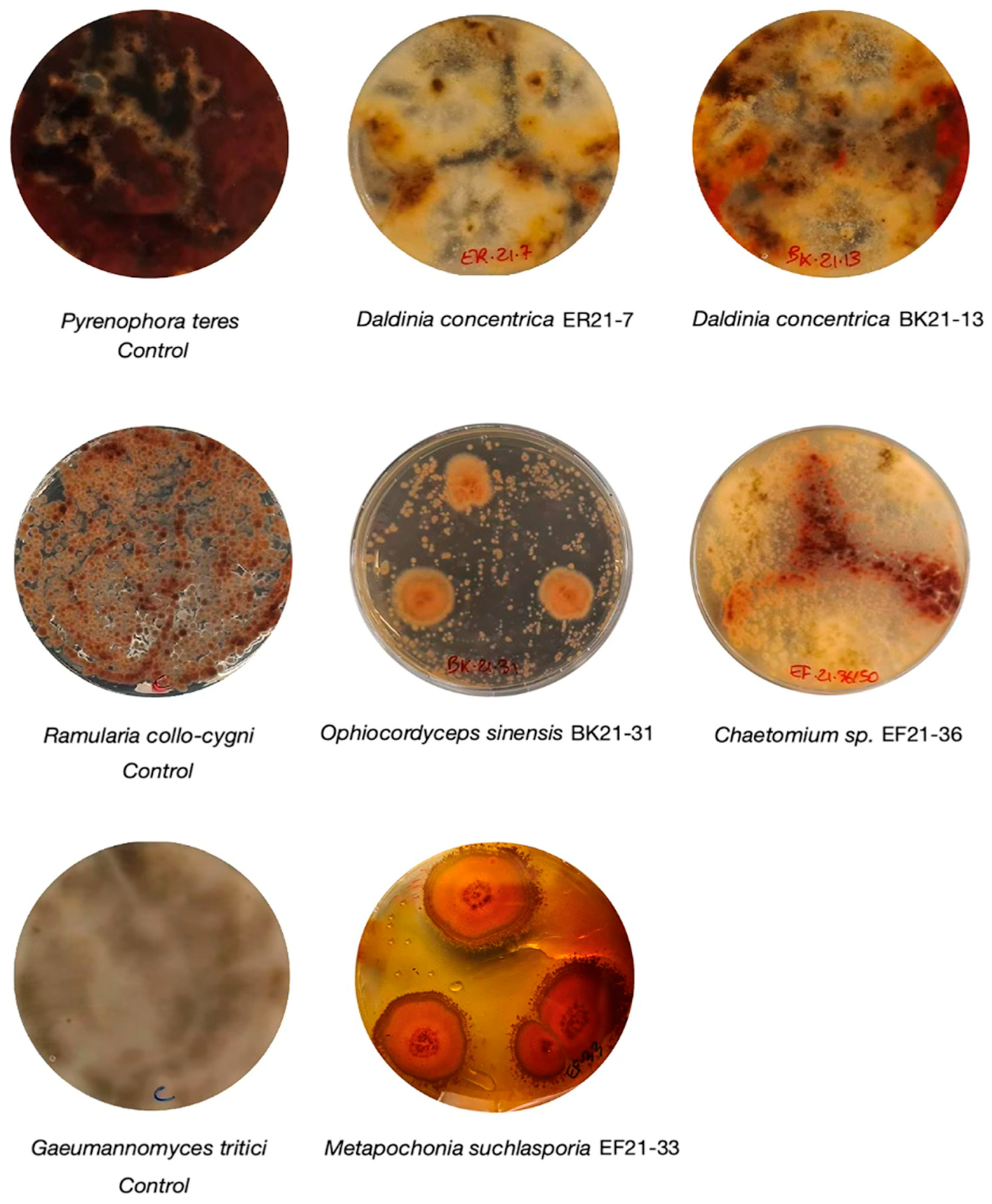
Natural antagonism against three fungal pathogens of barley was assessed via the dual culture method (Figure 1) using 15 of the isolates. Positive growth inhibitions (%) in the number of CFUs developed by RCC were observed with Chaetomium sp. EF21-36 (86.23 ± 9.13) and O. sinensis BK21-31 (81.38 ± 8.86). A strong color change in the media to bright yellow was observed with isolate BK21-31, which is likely due to the presence of certain secreted compounds involved in the antagonism. Treatments against PT showed that almost complete growth inhibition could be achieved with D. concentrica BK21-13 (91.52 ± 6.14) and D. concentrica ER21-7 (94.47 ± 5.13). Finally, a clear weak halo was observed with M. suchlasporia (LP21-2). Finally, only one endophyte was able to inhibit the development of GT. Almost complete inhibition was achieved in the presence of M. suchlasporia EF21-33 (94.26 ± 4.23), and a strong color change in the media to bright yellow was also observed.

3.3. Ammonia Production, Phosphorous Solubilization and IAA

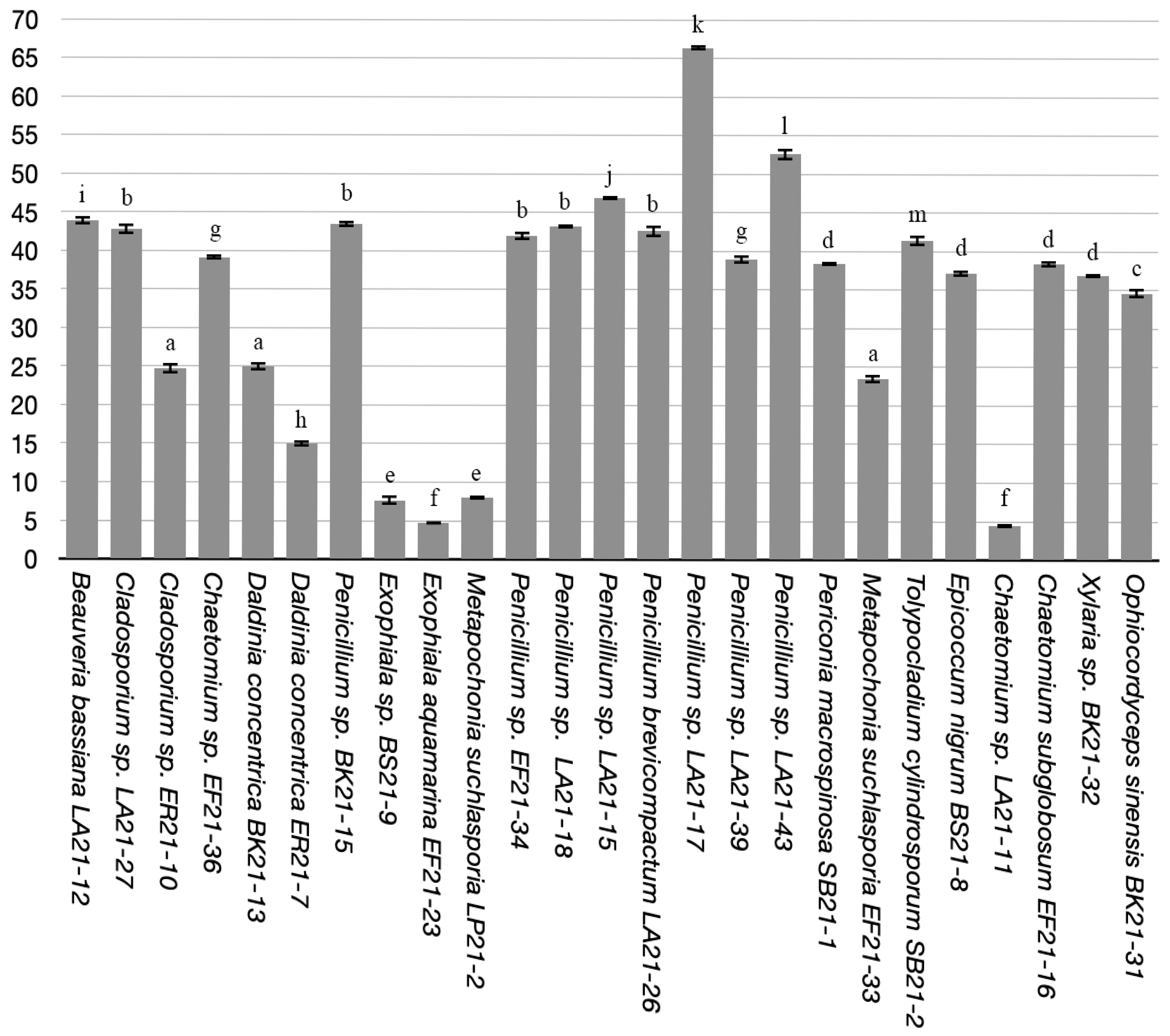
All fungal endophytes screened in this study tested positive for ammonia production, although with widely variable concentrations (Figure 2). The most prominent producers were members of the genus Penicillium, with Penicillium sp. LA21-17 standing out as the highest producer (66.38 mg/L). Other Penicillium isolates consistently produced high levels of ammonia, ranging from 41 to 47 mg/L, highlighting this genus as a reliable source of ammonia producers. At the opposite end of the spectrum, no visible color change was observed in cultures of M. suchlasporia LP21-2, Chaetomium sp. LA21-11, and Exophiala isolates (EF21-23 and BS21-9), and indeed these showed the lowest ammonia concentrations (4.38–8.01 mg/L). Several genera exhibited intraspecific variability. For example, ammonia production among Chaetomium isolates ranged from only 4.38 mg/L (LA21-11) to nearly 39.08 mg/L (EF21-36). Similarly, Cladosporium isolates varied between 24.70 mg/L (ER21-10) and 42.75 mg/L (LA21-27), likewise among M. suchlasporia and D. concentrica isolates. No correlation was detected between fungal biomass or spore density and final ammonia concentrations. In contrast, regardless of the phosphate source or the incubation temperature, all endophytes tested negative for phosphate solubilization as no clear halos could be observed around the colonies over 14 days of incubation. Similarly, no color change was detected in any of the culture broths tested for IAA, and spectrophotometer readings confirmed the absence of the phytohormone.

4. Discussion

In this study, fungal endophytes were isolated, cloned and long-term stored to create a collection from wild relatives (sensu lato) of barley with the purpose of bioprospecting new isolates of interest for sustainable agricultural practices that implement microbial-based formulations, such as biostimulant, biofertilizer and biocontrol products. The list of new isolates here presented adds up to a larger collection of other fungal endophytes isolated across Ireland and that have been maintained and studied in our laboratory over the last 15 years (unpublished data; [28,44]). In agreement with previous isolations of endophytes, the results showed that Ascomycota tend to dominate the culturable fungal diversity within host plants. Only two out of 102 isolates were Basidiomycota, i.e., two unidentified Agaricales isolates which could be characterized only at the order level when sequencing the nrITS DNA barcode (despite a consensus sequence with quality >97.5%). However, several recent metagenomic studies highlight that basidiomycetes are more common than that determined by culture-dependent sampling [44], and the inclusion of benomyl and dichloran to the growth medium is suggested to slow down fast-growing fungi, increasing the chance of isolating more Basidiomycota species [71,72]. Most of the endophytes isolated during this campaign are ecologically ubiquitous and very commonly found in a broad range of plant hosts and tissues [73,74,75,76], including species of the genera Alternaria, Cadophora, Chaetomium, Cladosporium, Epicoccum, Fusarium, Penicillium and Phoma (Supplementary Table S1). More than half of the entire collection was characterized by either weak, latent or severe plant pathogens, which is a frequent aspect related to the isolation of plant-associated fungi. Indeed, many phytopathogenic species can be highly competitive for nutrients and space, thus hindering the emergence of slow-growing and potentially plant-beneficial isolates. Despite a relatively low recovery success of culturable fungal endophytes from the processed plant samples (10.96%), it was possible to successfully select promising candidates representing 24.5% of the isolates from the whole collection to perform a series of in vitro screenings. Three noteworthy fungal species were isolated for the first time in more than a decade of sampling in County Dublin, namely the following: B. bassiana, a species not only renowned for its entomopathogenic properties but also commercially registered and widely applied as a biocontrol agent in the European market [77]; O. sinensis, a well-known entomopathogenic fungus with also a long history of use in traditional Chinese medicine dating back more than a millennium [48,78]; and S. strictum, which has recently been highlighted for its promising insecticidal activity against Spodoptera littoralis, a polyphagous plant pest [46,47]. These endophytes, together with 22 additional isolates selected on the basis of previous reports demonstrating positive effects relevant to this investigation, were subjected to preliminary screenings for plant growth promotion and protection. Europe has set ambitious targets under its Farm to Fork strategy, aiming to reduce overall fertilizer use by at least 20% and pesticide use by 50% by 2030 [79]. In this context, the focus in this paper was on nitrogen and phosphorus, the two most critical macro-nutrients for plant growth [80], as well as on the antifungal activity against selected phytopathogens, for which chemical treatments, cultivar choice and/or crop rotation currently remain the primary control strategy in Ireland [81,82].
It is known that certain species of microorganisms in the soil, including fungi, such as Penicillium, Aspergillus, Chaetomium, Trichoderma, Purpureocillium, Metarhizium, Paecilomyces are capable of solubilizing inorganic phosphate, thereby converting it into forms that are more readily taken up by plants [83,84]. Likewise, some fungi can metabolize sources of nitrogen into readily accessible forms, effectively enhancing nitrogen availability in the rhizosphere and/or transfer it to the plant host [85,86]. Considering these capabilities, the fungi isolated in this paper were evaluated for their potential to improve the accessibility of nitrogen and phosphorus. Herein, none of the selected isolates was able to solubilize three common forms of inorganic phosphorous usually present in the soil, i.e., calcium, aluminum and iron phosphate. The capability of solubilizing phosphorous is species dependent and can be variable among different strains of the same fungal species [32,87,88]. This is one of the possible reasons why the findings are in contrast with previous screenings on B. bassiana, Cladosporium spp., E. nigrum, Exophiala spp., Penicillium spp., P. macrospinosa and S. strictum, for example [89,90,91,92,93]. To the best of our knowledge, this is the first report of phosphorous solubilization screenings on D. concentrica, M. suchlasporia and O. sinensis.
In contrast, all endophytes tested positive for ammonia production, results that were consistent with other similar studies [94,95], even though different fungal endophyte species were investigated. Only four isolates among the treatments were significantly weakly active for this feature, and small traces close to null values were found (LA-11, EF-23, BS-9, LP-2). Because screenings on the ammonia production by fungi are primarily presented in the literature using qualitative data, this investigation advances understanding of the spectrum between weak and strong nitrogen metabolizers in a long-term perspective. Beside the screenings related to increasing nutrients availability, the selected endophytes were assessed for phytohormone production (in particular, IAA). The interest behind exogenous sources of IAA stands out because this phytohormone can improve plant growth both under normal and stressed conditions. IAA is the main auxin that controls several physiological processes including cell division, tissue differentiation, and responses to light and gravity [96,97]. All treatments revealed that the selected endophytes tested negative for this feature, at least without the addition of L-tryptophan. Spectrophotometric analysis confirmed the absence of the phytohormone in samples without color change after incubation with the Salkowski’s reagent. This amino acid, L-tryptophan, is a fundamental precursor of IAA, and even though it is essential for humans, fungi are known to possess the biosynthetic pathway for its synthesis [98,99]. To enhance IAA biosynthesis, L-tryptophan can be supplemented to the growth medium and lead fungi with relatively low concentrations of IAA to synthesize significantly higher amounts of the phytohormone with the addition of the precursor in concentrations as little as 0.1 g/L [100,101]. Thus, the endophytes tested here might be triggered to synthesize in such conditions.
Finally, the fungal endophytes were tested for antifungal properties against three pathogens that severely affect barley cultivation in Ireland and globally. According to an extensive literature survey that was recently published [13], the study presented here is the first report in the literature to investigate in vitro natural antagonism of fungi (generally speaking, including endophytes) against RCC, which causes the leaf spot of barley. Similarly, only one study in the same survey mentioned the specific use of fungal endophytes to control PT (C. globosum), and only two studies evaluated fungal endophytes against GT (Furcasterigmium furcatum, Dactylaria sp. Fusarium equiseti, Phoma herbarum, Pochonia chlamydosporia). This survey also includes other biocontrol agents, including both non-endophytic bacterial and fungal isolates. When the literature-based review was extended (as of 18 November 2025), it became evident that peer-reviewed studies specifically addressing biocontrol of PT in barley are limited [8,102,103,104,105,106]. For GT, most available work focuses on wheat rather than barley and has primarily investigated bacterial antagonists, particularly Bacillus and Pseudomonas spp. [107,108,109,110,111,112,113]. The present study therefore adds further information on potential fungal antagonists relevant to these pathogens. Among all treatments, the strongest antagonistic effects (mean growth inhibition > 80%) were observed in dual cultures with five fungal isolates. Interestingly, their inhibitory activity varied depending on the pathogen tested, indicating that these fungal endophytes displayed a degree of selectivity. These endophytes included two D. concentrica (ER21-7 and BK21-13), Chaetomium sp. (EF21-36), 1 O. sinensis (BK21-31) and M. suchlasporia (EF-33), and provide a promising set of strains for further in planta investigations.
Irrespective of the results presented here, from the high-throughput screenings, there are important commercial aspects to consider with the use of fungal strains in agriculture. Currently, in the European context, according to the Annex II in the Fertilizing Products Regulation (FPR) (Regulation EU 2019/1009) [114], there are only four genera of microorganisms that are currently permitted to be used as components of microbial plant biostimulants (Azotobacter spp., Azospirillum spp., Rhizobium spp. and mycorrhizal fungi). However, there are many other microorganisms that are currently being used as components of microbial plant biostimulants, but they do not yet fall under the harmonized CE-marked category. This is the case for some EU Member States, according to national rules or mutual recognition, or like microorganisms that are already sold in third countries, while other ones are in the research and development phase [115]. The European Biostimulants Industry Council (EBIC) first highlighted these challenges in 2021, pointing out that the FPR’s CMC 7 “positive list” was too restrictive, recognizing only four microorganisms and offering no mechanism for adding new strains. Over the years, this has left many safe and effective microorganisms unable to access the EU market, despite their use elsewhere or ongoing R&D. By 2025, surveys revealed that 88% of companies cannot CE-mark certain products, with small and medium-sized enterprises particularly affected. Although the Austrian Institute of Technology (AIT) is developing a methodology to evaluate new strains, under the current process updates may still take 5–7 years, meaning 2026/2027 at the earliest for market entry. EBIC continues to advocate for a transparent, criteria-based system to facilitate innovation and maintain Europe’s competitiveness in sustainable agriculture [116]. Likewise, microbial biopesticides face a similarly complex regulatory landscape. According to the European Pesticides Database (accessed 12 September 2025), 98 microbial active substances are currently listed at the strain level: 73 are approved for use, while 25 are still under review. In this list, 54 active substances are fungal strains (representing 25 species overall), of which 13 are pending for approval. Among the whole list of approved substances, none has been identified as a candidate for substitution, and 30 meet the low-risk criteria defined in Regulation 1107/2009 [117,118]. This highlights the growing but still limited set of fungal species formally recognized for biopesticide applications in the EU.
Therefore, the introduction of new fungal strains as commercial biological products remains constrained by a demanding regulatory framework that covers only a limited number of species. Both commercial and academic research institutions must navigate these restrictions to reach the current market. While greater regulatory flexibility and faster decision-making are needed, research must continue to generate high-quality data on novel organisms not yet included in the European Community’s approved lists. Such efforts are essential to develop alternative biological tools that promote sustainable agriculture and reduce reliance on chemical inputs. This study contributes valuable data to support this ongoing work.

5. Conclusions

This study revealed through DNA barcoding (full length nrITS) the diversity of 102 culturable fungal endophytes that were isolated in Ireland from seven wild relatives of barley. According to the literature, most of the isolates were found to be crop-related plant pathogens and only 25 endophytes were selected for further screenings for biostimulant and antifungal activity. Although the selected endophytes did not express desirable profiles for plant growth promotion, antifungal assays in dual cultures highlighted five promising candidates having mean growth inhibition rates above 80%, including: two D. concentrica (ER21-7 and BK21-13), Chaetomium sp. (EF21-36), O. sinensis (BK21-31) and M. suchlasporia (EF21-33). Our preliminary findings suggest that further validations in biocontrol experiments shall be investigated in planta in the presence of the barley’s pathogens here investigated.

Supplementary Materials

The following supporting information can be downloaded at: https://www.mdpi.com/article/10.3390/grasses5010007/s1, Figure S1. Map of all the sampling sites selected for the field sampling of wild relatives of barley in County Dublin; Table S1. Identity of culturable fungal endophytes according to BLAST results against NCBI accessions.

Author Contributions

Conceptualization, D.D.B. and T.R.H.; methodology, D.D.B.; investigation, D.D.B.; resources, T.R.H.; data curation, D.D.B.; writing—original draft preparation, D.D.B.; writing—review and editing, T.R.H.; supervision, T.R.H. All authors have read and agreed to the published version of the manuscript.

Funding

This research was funded by DAFM (Department of Agriculture, Food and the Marine), grant number 2019PROG705, BioCrop Project.

Data Availability Statement

Data is contained within the article or Supplementary Materials.

Conflicts of Interest

The authors declare no conflicts of interest. The funders had no role in the design of the study; in the collection, analyses, or interpretation of data; in the writing of the manuscript; or in the decision to publish the results.

References

  1. Waqar, S.; Bhat, A.A.; Khan, A.A. Endophytic fungi: Unravelling plant-endophyte interaction and the multifaceted role of fungal endophytes in stress amelioration. Plant Physiol. Biochem. 2024, 206, 108174. [Google Scholar] [CrossRef] [PubMed]
  2. Watts, D.; Palombo, E.A.; Jaimes Castillo, A.; Zaferanloo, B. Endophytes in agriculture: Potential to improve yields and tolerances of agricultural crops. Microorganisms 2023, 11, 1276. [Google Scholar] [CrossRef]
  3. Gowtham, H.G.; Hema, P.; Murali, M.; Shilpa, N.; Nataraj, K.; Basavaraj, G.L.; Singh, S.B.; Aiyaz, M.; Udayashankar, A.C.; Amruthesh, K.N. Fungal endophytes as mitigators against biotic and abiotic stresses in crop plants. J. Fungi 2024, 10, 116. [Google Scholar] [CrossRef]
  4. Muthu Narayanan, M.; Ahmad, N.; Shivanand, P.; Metali, F. The role of endophytes in combating fungal- and bacterial-induced stress in plants. Molecules 2022, 27, 6549. [Google Scholar] [CrossRef]
  5. Elhady, A.; Abbasi, S.; Safaie, N.; Heuer, H. Responsiveness of elite cultivars vs. ancestral genotypes of barley to beneficial rhizosphere microbiome, supporting plant defense against root-lesion nematodes. Front. Plant Sci. 2021, 12, 721016. [Google Scholar] [CrossRef]
  6. Aleynova, O.A.; Nityagovsky, N.N.; Suprun, A.R.; Ananev, A.A.; Dubrovina, A.S.; Kiselev, K.V. The diversity of fungal endophytes from wild grape Vitis amurensis Rupr. Plants 2022, 11, 2897. [Google Scholar] [CrossRef]
  7. Gladysh, N.S.; Bogdanova, A.S.; Kovalev, M.A.; Krasnov, G.S.; Volodin, V.V.; Shuvalova, A.I.; Ivanov, N.V.; Popchenko, M.I.; Samoilova, A.D.; Polyakova, A.N.; et al. Culturable bacterial endophytes of wild white poplar (Populus alba L.) roots: A first insight into their plant growth-stimulating and bioaugmentation potential. Biology 2023, 12, 1519. [Google Scholar] [CrossRef]
  8. Høyer, A.K.; Jørgensen, H.J.L.; Hodkinson, T.R.; Jensen, B. Fungal endophytes isolated from Elymus repens, a wild relative of barley, have potential for biological control of Fusarium culmorum and Pyrenophora teres in barley. Pathogens 2022, 11, 1097. [Google Scholar] [CrossRef]
  9. Mantzoukas, S.; Papantzikos, V.; Katsogiannou, S.; Papanikou, A.; Koukidis, C.; Servis, D.; Eliopoulos, P.; Patakioutas, G. Biostimulant and bioinsecticidal effect of coating cotton seeds with endophytic Beauveria bassiana in semi-field conditions. Microorganisms 2023, 11, 2050. [Google Scholar] [CrossRef] [PubMed]
  10. Csótó, A.; Tóth, G.; Riczu, P.; Zabiák, A.; Tarjányi, V.; Fekete, E.; Karaffa, L.; Sándor, E. Foliar spraying with endophytic Trichoderma biostimulant increases drought resilience of maize and sunflower. Agriculture 2024, 14, 2360. [Google Scholar] [CrossRef]
  11. Soytong, K.; Kahonokmedhakul, S.; Song, J.; Tongon, R. Chaetomium application in agriculture. In Technology in Agriculture; IntechOpen: London, UK, 2021. [Google Scholar] [CrossRef]
  12. Liu-Xu, L.; Vicedo, B.; García-Agustín, P.; Llorens, E. Advances in endophytic fungi research: A data analysis of 25 years of achievements and challenges. J. Plant Interact. 2022, 17, 244–266. [Google Scholar] [CrossRef]
  13. Høyer, A.K.; Jørgensen, H.J.L.; Jensen, B.; Murphy, B.R.; Hodkinson, T.R. Emerging methods for biological control of barley dis- eases including the role of endophytes. In Endophytes for a Growing World; Springer: Cambridge, UK, 2019; pp. 93–119. [Google Scholar] [CrossRef][Green Version]
  14. Liu, J.; Wang, Z.; Chen, Z.; White, J.F.; Malik, K.; Chen, T.; Li, C. Inoculation of Barley (Hordeum vulgare) with the endophyte Epichloë bromicola affects plant growth, and the microbial community in roots and rhizosphere soil. J. Fungi 2022, 8, 172. [Google Scholar] [CrossRef] [PubMed]
  15. Achatz, B.; von Rüden, S.; Andrade, D.; Neumann, E.; Pons-Kühnemann, J.; Kogel, K.-H.; Franken, P.; Waller, F. Root colonization by Piriformospora indica enhances grain yield in barley under diverse nutrient regimes by accelerating plant development. Plant Soil 2010, 333, 59–70. [Google Scholar] [CrossRef]
  16. Murphy, B.; Hodkinson, T.; Doohan, F. Method for Improving the Mean Dry Shoot Weight, Mean Dry Grain Weight, and Suppressing Seed-Borne Infection in a Cereal Crop. U.S. Patent US10765084B2, 8 September 2020. Available online: https://patents.google.com/patent/US10765084B2/en (accessed on 18 November 2025).
  17. Murphy, B.; Doohan, F.; Hodkinson, T. Endophytes from Wild Populations of Barley Increase Crop Yield. EP3723474A1, 20 June 2019. Available online: https://patents.google.com/patent/EP3723474A1/en (accessed on 18 November 2025).
  18. Kouadria, R.; Bouzouina, M.; Lotmani, B.; Soualem, S. Unraveling the role of endophytic fungi in barley salt-stress tolerance. Hell. Plant Prot. J. 2023, 16, 12–22. [Google Scholar] [CrossRef]
  19. Moya, P.; Pedemonte, D.; Amengual, S.; Franco, M.E.E.; Sisterna, M.N. Antagonism and modes of action of Chaetomium globosum species group, potential biocontrol agent of barley foliar diseases. Boletin Soc. Argent. Bot. 2016, 51, 569–578. [Google Scholar] [CrossRef]
  20. Pašakinskienė, I.; Stakelienė, V.; Matijošiūtė, S.; Martūnas, J.; Rimkevičius, M.; Būdienė, J.; Aučina, A.; Skridaila, A. Growth-promoting effects of grass root-derived fungi Cadophora fastigiata, Paraphoma fimeti and Plectosphaerella cucumerina on spring barley (Hordeum vulgare) and Italian ryegrass (Lolium multiflorum). Microorganisms 2025, 13, 25. [Google Scholar] [CrossRef]
  21. Tiwari, M.; Devi, B.; Sinha, S.; Yadav, N.; Singh, P. Intergenerational priming by Trichoderma alleviates drought stress in barley. Environ. Exp. Bot. 2024, 223, 105772. [Google Scholar] [CrossRef]
  22. Murphy, B.R.; Doohan, F.M.; Hodkinson, T.R. Fungal root endophytes of a wild barley species increase yield in a nutrient-stressed barley cultivar. Symbiosis 2015, 65, 1–7. [Google Scholar] [CrossRef]
  23. Hosseyni Moghaddam, M.S.; Hagh-Doust, N.; Safaie, N.; Rahimlou, S. Inducing tolerance to abiotic stress in Hordeum vulgare L. by halotolerant endophytic fungi associated with salt lake plants. Front. Microbiol. 2022, 13, 906365. [Google Scholar] [CrossRef]
  24. Ghabooli, M.; Khatabi, B.; Shahriary Ahmadi, F.; Sepehri, M.; Mirzaei, M.; Amirkhani, A.; Jorrín-Novo, J.V.; Hosseini Salekdeh, G. Proteomics study reveals the molecular mechanisms underlying water stress tolerance induced by Piriformospora indica in barley. J. Proteom. 2013, 94, 289–301. [Google Scholar] [CrossRef]
  25. Ghaffari, M.R.; Mirzaei, M.; Ghabooli, M.; Khatabi, B.; Wu, Y.; Zabet-Moghaddam, M.; Mohammadi-Nejad, G.; Haynes, P.A.; Hajirezaei, M.R.; Sepehri, M.; et al. Root endophytic fungus Piriformospora indica improves drought stress adaptation in barley by metabolic and proteomic reprogramming. Environ. Exp. Bot. 2019, 157, 197–210. [Google Scholar] [CrossRef]
  26. Lang, M.; Zhou, J.; Chen, T.; Chen, Z.; Malik, K.; Li, C. Influence of interactions between nitrogen, phosphorus supply and Epichloё bromicola on growth of wild barley (Hordeum brevisubulatum). J. Fungi 2021, 7, 615. [Google Scholar] [CrossRef]
  27. Maxted, N.; Ford-Lloyd, B.V.; Jury, S.; Kell, S.; Scholten, M. Towards a definition of a crop wild relative. Biodivers. Conserv. 2006, 15, 2673–2685. [Google Scholar] [CrossRef]
  28. Soldi, E.; Casey, C.; Murphy, B.R.; Hodkinson, T.R. Fungal endophytes for grass-based bioremediation: An endophytic consor- tium isolated from Agrostis stolonifera stimulates the growth of Festuca arundinacea in lead contaminated soil. J. Fungi 2020, 6, 254. [Google Scholar] [CrossRef]
  29. Gardes, M.; Bruns, T.D. ITS primers with enhanced specificity for basidiomycetes—Application to the identification of mycorrhizae and rusts. Mol. Ecol. 1993, 2, 113–118. [Google Scholar] [CrossRef] [PubMed]
  30. White, T.J.; Bruns, T.D.; Lee, S.B.; Taylor, J.W. Amplification and direct sequencing of fungal ribosomal RNA genes for phylogenetics. In PCR Protocols: A Guide to Methods and Applications; Innis, M.A., Gelfand, D.H., Sninsky, J.J., White, T.J., Eds.; Academic Press: New York, NY, USA, 1990; pp. 315–322. [Google Scholar] [CrossRef]
  31. Murphy, B.R.; Martin Nieto, L.; Doohan, F.M.; Hodkinson, T.R. Profundae diversitas: The uncharted genetic diversity in a newly studied group of fungal root endophytes. Mycology 2015, 6, 139–150. [Google Scholar] [CrossRef] [PubMed]
  32. Doilom, M.; Guo, J.-W.; Phookamsak, R.; Mortimer, P.E.; Karunarathna, S.C.; Dong, W.; Liao, C.-F.; Yan, K.; Pem, D.; Suwannarach, N.; et al. Screening of phosphate-solubilizing fungi from air and soil in Yunnan, China: Four novel species in Aspergillus, Gongronella, Penicillium, and Talaromyces. Front. Microbiol. 2020, 11, 585215. [Google Scholar] [CrossRef]
  33. Utomo, W.P.; Wu, H.; Ng, Y.H. Quantification methodology of ammonia produced from electrocatalytic and photocatalytic nitrogen/nitrate reduction. Energies 2023, 16, 27. [Google Scholar] [CrossRef]
  34. Mehmood, A.; Hussain, A.; Irshad, M.; Hamayun, M.; Iqbal, A.; Khan, N. In vitro production of IAA by endophytic fungus Aspergillus awamori and its growth promoting activities in Zea mays. Symbiosis 2019, 77, 225–235. [Google Scholar] [CrossRef]
  35. Khalil, A.M.A.; Hassan, S.E.-D.; Alsharif, S.M.; Eid, A.M.; Ewais, E.E.-D.; Azab, E.; Gobouri, A.A.; Elkelish, A.; Fouda, A. Isolation and characterization of fungal endophytes isolated from medicinal plant Ephedra pachyclada as plant growth-promoting. Biomolecules 2021, 11, 140. [Google Scholar] [CrossRef]
  36. Balouiri, M.; Sadiki, M.; Ibnsouda, S.K. Methods for in vitro evaluating antimicrobial activity: A review. J. Pharm. Anal. 2016, 6, 71–79. [Google Scholar] [CrossRef]
  37. Usuki, H.; Toyo-oka, M.; Kanzaki, H.; Okuda, T.; Nitoda, T. Pochonicine, a polyhydroxylated pyrrolizidine alkaloid from fungus Pochonia suchlasporia var. suchlasporia TAMA 87 as a potent β-N-acetylglucosaminidase inhibitor. Bioorganic Med. Chem. 2009, 17, 7248–7253. [Google Scholar] [CrossRef] [PubMed]
  38. Suminto, S.; Takatsuji, E.; Iguchi, A.; Kanzaki, H.; Okuda, T.; Nitoda, T. A new asteltoxin analog with insecticidal activity from Pochonia suchlasporia TAMA 87. J. Pestic. Sci. 2020, 45, 81–85. [Google Scholar] [CrossRef] [PubMed]
  39. Wakelin, S.A.; Anstis, S.T.; Warren, R.A.; Ryder, M.H. The role of pathogen suppression on the growth promotion of wheat by Penicillium radicum. Australas. Plant Pathol. 2006, 35, 253–258. [Google Scholar] [CrossRef]
  40. Nath, R.; Sharma, G.D.; Barooah, M. Efficiency of tricalcium phosphate solubilization by two different endophytic Penicillium sp. isolated from tea (Camellia sinensis L.). Eur. J. Exp. Biol. 2012, 2, 1354–1358. [Google Scholar]
  41. Radhakrishnan, R. IAA-producing Penicillium sp. NICS01 triggers plant growth and suppresses Fusarium sp.-induced oxidative stress in sesame (Sesamum indicum L.). J. Microbiol. Biotechnol. 2013, 23, 856–863. [Google Scholar] [CrossRef]
  42. Babu, A.G.; Kim, S.W.; Yadav, D.R.; Hyum, U.; Adhikari, M.; Lee, Y.S. Penicillium menonorum: A novel fungus to promote growth and nutrient management in cucumber plants. Mycobiology 2015, 43, 49–56. [Google Scholar] [CrossRef]
  43. Moghaddam, M.S.; Safaie, N.; Soltani, J.; Hagh-Doust, N. Desert-adapted fungal endophytes induce salinity and drought stress resistance in model crops. Plant Physiol. Biochem. 2021, 160, 225–238. [Google Scholar] [CrossRef]
  44. Høyer, A.K.; Hodkinson, T.R. Hidden fungi: Combining culture-dependent and -independent DNA barcoding reveals inter-plant variation in species richness of endophytic root fungi in Elymus repens. J. Fungi 2021, 7, 466. [Google Scholar] [CrossRef]
  45. Rojas, E.C.; Jensen, B.; Jørgensen, H.J.L.; Latz, M.A.C.; Esteban, P.; Ding, Y.; Collinge, D.B. Selection of fungal endophytes with biocontrol potential against Fusarium head blight in wheat. Biol. Control 2020, 144, 104222. [Google Scholar] [CrossRef]
  46. El-Sayed, A.S.A.; Moustafa, A.H.; Hussein, H.A.; El-Sheikh, A.A.; El-Shafey, S.N.; Fathy, N.A.M.; Enan, G.A. Potential insecticidal activity of Sarocladium strictum, an endophyte of Cynancum acutum, against Spodoptera littoralis, a polyphagous insect pest. Biocatal. Agric. Biotechnol. 2020, 24, 101524. [Google Scholar] [CrossRef]
  47. Błaszczyk, L.; Waśkiewicz, A.; Gromadzka, K.; Mikołajczak, K.; Chełkowski, J. Sarocladium and Lecanicillium associated with maize seeds and their potential to form selected secondary metabolites. Biomolecules 2021, 11, 98. [Google Scholar] [CrossRef]
  48. Sangeetha, C.; Krishnamoorthy, A.S.; Nakkeeran, S.; Ramakrishnan, S.; Amirtham, D. Evaluation of bioactive compounds of Ophiocordyceps sinensis [Berk.] Sacc. against Fusarium spp. Biochem. Cell. Arch. 2015, 15, 431–435. [Google Scholar]
  49. Jaihan, P.; Sangdee, K.; Sangdee, A. Selection of entomopathogenic fungus for biological control of chili anthracnose disease caused by Colletotrichum spp. Eur. J. Plant Pathol. 2016, 146, 551–564. [Google Scholar] [CrossRef]
  50. Pravin, A.; Durgadevi, D.; Srivignesh, S.; Subramanian, K.S.; Nakkeeran, S.; Amirtham, D.; Krishnamoorthy, A.S. Antifungal activity of Chinese caterpillar fungus (Ophiocordyceps sinensis Berk.) against anthracnose disease on banana. Int. J. Curr. Microbiol. Appl. Sci. 2020, 9, 848–859. [Google Scholar] [CrossRef]
  51. Akshaya, S.B.; Krishnamoorthy, A.S.; Sangeetha, C.; Nakkeeran, S.; Thiribhuvanamala, G. Investigation on antifungal metabolites of Chinese caterpillar fungus Ophiocordyceps sinensis (Berk.) against wilt causing pathogen, Fusarium spp. Ann. Phytomed. 2021, 10, 195–201. [Google Scholar] [CrossRef]
  52. Ownley, B.H.; Pereira, R.M.; Klingeman, W.E.; Quigley, N.B.; Leckie, B.M. Beauveria bassiana, a dual-purpose biocontrol organism, with activity against insect pests and plant pathogens. In Emerging Concepts in Plant Health Management; Lartey, R.T., Caesar, A.J., Eds.; The University of Tennessee: Knoxville, TN, USA, 2004; pp. 255–269. [Google Scholar]
  53. Griffin, M.R. Beauveria bassiana, a Cotton Endophyte with Biocontrol Activity Against Seedling Disease. Ph.D. Thesis, University of Tennessee, Knoxville, TN, USA, 2007. Available online: https://trace.tennessee.edu/utk_graddiss (accessed on 5 August 2024).
  54. Ownley, B.H.; Gwinn, K.D.; Vega, F.E. Endophytic fungal entomopathogens with activity against plant pathogens: Ecology and evolution. BioControl 2010, 55, 113–128. [Google Scholar] [CrossRef]
  55. Abdel-Baky, N.F. Cladosporium spp. An entomopathogenic fungus for controlling whiteflies and aphids in Egypt. Pak. J. Biol. Sci. 2000, 3, 1662–1667. [Google Scholar] [CrossRef]
  56. Wang, X.; Radwan, M.M.; Taráwneh, A.H.; Gao, J.; Wedge, D.E.; Rosa, L.H.; Cutler, H.G.; Cutler, S.J. Antifungal activity against plant pathogens of metabolites from the endophytic fungus Cladosporium cladosporioides. J. Agric. Food Chem. 2013, 61, 4551–4555. [Google Scholar] [CrossRef]
  57. Abdelaziz, O.; Senoussi, M.M.; Oufroukh, A.; Birgücü, A.K.; Karaca, İ.; Kouadri, F.; Bensegueni, A. Pathogenicity of three entomopathogenic fungi to the aphid species, Metopolophium dirhodum (Walker) (Hemiptera: Aphididae), and their alkaline protease activities. Egypt. J. Biol. Pest Control 2018, 28, 30. [Google Scholar] [CrossRef]
  58. Islam, T.; Gupta, D.R.; Surovy, M.Z.; Mahmud, N.U.; Mazlan, N.; Islam, T. Identification and application of a fungal biocontrol agent Cladosporium cladosporioides against Bemisia tabaci. Biotechnol. Biotechnol. Equip. 2019, 33, 1698–1705. [Google Scholar] [CrossRef]
  59. Seethapathy, P.; Sankarasubramanian, H.; Lingan, R.; Thiruvengadam, R. Chaetomium sp.: An insight into its antagonistic mechanisms, mass multiplication, and production cost analysis. In Agricultural Microbiology Based Entrepreneurship; Amaresan, N., Dharumadurai, D., Babalola, O.O., Eds.; Springer: Singapore, 2023; pp. 269–292. [Google Scholar] [CrossRef]
  60. Luo, D.; Tang, H.; Yang, X.; Wang, F.; Liu, J. Fungicidal activity of L-696,474 and cytochalasin D from the ascomycete Daldinia concentrica against plant pathogenic fungi. Eur. PMC 2010, 113–122. Available online: https://europepmc.org/article/CBA/636850 (accessed on 5 August 2024).
  61. Liarzi, O.; Bar, E.; Lewinsohn, E.; Ezra, D. Use of the endophytic fungus Daldinia cf. concentrica and its volatiles as bio-control agents. PLoS ONE 2016, 11, e0168242. [Google Scholar] [CrossRef]
  62. Liarzi, O.; Bucki, P.; Miyara, S.B.; Ezra, D. Bioactive volatiles from an endophytic Daldinia cf. concentrica isolate affect the viability of the plant parasitic nematode Meloidogyne javanica. PLoS ONE 2016, 11, e0168437. [Google Scholar] [CrossRef]
  63. Hashem, M.; Ali, E. Epicoccum nigrum as biocontrol agent of Pythium damping-off and root-rot of cotton seedlings. Arch. Phytopathol. Plant Protect. 2004, 37, 283–297. [Google Scholar] [CrossRef]
  64. Larena, I.; Melgarejo, P. Development of a new strategy for monitoring Epicoccum nigrum 282, a biological control agent used against brown rot caused by Monilinia spp. in peaches. Postharvest Biol. Technol. 2009, 54, 63–71. [Google Scholar] [CrossRef]
  65. Ogórek, R.; Pląskowska, E. Epicoccum nigrum for biocontrol agents in vitro of plant fungal pathogens. Commun. Agric. Appl. Biol. Sci. 2011, 76, 691–697. [Google Scholar]
  66. Fávaro, L.C.L.d.; Sebastianes, F.L.S.d.; Araújo, W.L. Epicoccum nigrum P16, a sugarcane endophyte, produces antifungal compounds and induces root growth. PLoS ONE 2012, 7, e36826. [Google Scholar] [CrossRef]
  67. Li, T.; Liu, M.J.; Zhang, X.T.; Zhang, H.B.; Sha, T.; Zhao, Z.W. Improved tolerance of maize (Zea mays L.) to heavy metals by colonization of a dark septate endophyte (DSE) Exophiala pisciphila. Sci. Total Environ. 2011, 409, 1069–1074. [Google Scholar] [CrossRef] [PubMed]
  68. Khan, A.L.; Hamayun, M.; Ahmad, N.; Waqas, M.; Kang, S.M.; Kim, Y.H.; Lee, I.J. Exophiala sp. LHL08 reprograms Cucumis sativus to higher growth under abiotic stresses. Physiol. Plant. 2011, 143, 329–343. [Google Scholar] [CrossRef] [PubMed]
  69. Khan, A.L.; Hamayun, M.; Waqas, M.; Kang, S.M.; Kim, Y.H.; Kim, D.H.; Lee, I.J. Exophiala sp. LHL08 association gives heat stress tolerance by avoiding oxidative damage to cucumber plants. Biol. Fertil. Soils 2012, 48, 519–529. [Google Scholar] [CrossRef]
  70. Xu, R.; Li, T.; Shen, M.; Yang, Z.L.; Zhao, Z.W. Evidence for a dark septate endophyte (Exophiala pisciphila, H93) enhancing phosphorus absorption by maize seedlings. Plant Soil 2020, 452, 249–266. [Google Scholar] [CrossRef]
  71. Rungjindamai, N.; Jones, E.B.G. Why are there so few basidiomycota and basal fungi as endophytes? A review. J. Fungi 2024, 10, 67. [Google Scholar] [CrossRef]
  72. Molina, L.; Rajchenberg, M.; de Errasti, A.; Aime, M.C.; Pildain, M.B. Sapwood-inhabiting mycobiota and Nothofagus tree mortality in Patagonia: Diversity patterns according to tree species, plant compartment and health condition. For. Ecol. Manag. 2020, 462, 117997. [Google Scholar] [CrossRef]
  73. Srinivasan, R.; Prabhu, G.; Prasad, M.; Mishra, M.; Chaudhary, M.; Srivastava, R. Role of beneficial microbes in agro-ecology. In Beneficial Microbes in Agro-Ecology; Elsevier: Amsterdam, The Netherlands, 2020; pp. 651–667. [Google Scholar] [CrossRef]
  74. Yang, N.; Zhang, W.; Wang, D.; Cao, D.; Cao, Y.; He, W.; Lin, Z.; Chen, X.; Ye, G.; Chen, Z.; et al. A novel endophytic fungus strain of Cladosporium: Its identification, genomic analysis, and effects on plant growth. Front. Microbiol. 2023, 14, 1287582. [Google Scholar] [CrossRef]
  75. Patriarca, A.; Fernández Pinto, V. Alternaria. In Reference Module in Food Science; Elsevier: Amsterdam, The Netherlands, 2018. [Google Scholar] [CrossRef]
  76. Ekwomadu, T.I.; Mwanza, M. Fusarium fungi pathogens, identification, adverse effects, disease management, and global food security: A review of the latest research. Agriculture 2023, 13, 1810. [Google Scholar] [CrossRef]
  77. Swathy, K.; Parmar, M.K.; Vivekanandhan, P. Biocontrol efficacy of entomopathogenic fungi Beauveria bassiana conidia against agricultural insect pests. Environ. Qual. Manag. 2024, 34, e22174. [Google Scholar] [CrossRef]
  78. Chellapandi, P.; Saranya, S. Ophiocordyceps sinensis: A potential caterpillar fungus for the production of bioactive compounds. Explor. Res. Hypothesis Med. 2024, 9, 236–249. [Google Scholar] [CrossRef]
  79. Wesseler, J. The EU’s Farm-to-Fork Strategy: An Assessment from the Perspective of Agricultural Economics. Appl. Econ. Perspect. Policy 2022, 44, 1826–1843. [Google Scholar] [CrossRef]
  80. Krouk, G.; Kiba, T. Nitrogen and Phosphorus interactions in plants: From agronomic to physiological and molecular insights. Curr. Opin. Plant Biol. 2020, 57, 104–109. [Google Scholar] [CrossRef]
  81. Teagasc. Controlling Disease in Winter Barley. Available online: https://teagasc.ie/news--events/daily/controlling-disease-in-winter-barley/ (accessed on 1 September 2025).
  82. Teagasc. Diseases. Available online: https://teagasc.ie/crops/crops/cereal-crops/winter-cereals/diseases/ (accessed on 1 September 2025).
  83. Vassileva, M.; de Oliveira Mendes, G.; Deriu, M.A.; di Benedetto, G.; Flor-Peregrin, E.; Mocali, S.; Martos, V.; Vassilev, N. Fungi, P-solubilization, and plant nutrition. Microorganisms 2022, 10, 1716. [Google Scholar] [CrossRef]
  84. Vera-Morales, M.; López Medina, S.E.; Naranjo-Morán, J.; Quevedo, A.; Ratti, M.F. Nematophagous Fungi: A review of their phosphorus solubilization potential. Microorganisms 2023, 11, 137. [Google Scholar] [CrossRef] [PubMed]
  85. Moonjely, S.; Zhang, X.; Fang, W.; Bidochka, M.J. Metarhizium robertsii ammonium permeases (MepC and Mep2) contribute to rhizoplane colonization and modulates the transfer of insect derived nitrogen to plants. PLoS ONE 2019, 14, e0223718. [Google Scholar] [CrossRef]
  86. Luo, X.; Liu, Y.; Li, S.; He, X. Interplant carbon and nitrogen transfers mediated by common arbuscular mycorrhizal networks: Beneficial pathways for system functionality. Front. Plant Sci. 2023, 14, 1169310. [Google Scholar] [CrossRef]
  87. Wang, X.; Wang, C.; Sui, J.; Liu, Z.; Li, Q.; Ji, C.; Song, X.; Hu, Y.; Wang, C.; Sa, R.; et al. Isolation and characterization of phosphofungi, and screening of their plant growth-promoting activities. AMB Express 2018, 8, 63. [Google Scholar] [CrossRef]
  88. Mehta, P.; Sharma, R.; Putatunda, C.; Walia, A. Endophytic fungi: Role in phosphate solubilization. In Advances in Endophytic Fungal Research; Singh, B., Ed.; Springer: Cham, Switzerland, 2019; pp. 149–171. [Google Scholar] [CrossRef]
  89. Yakti, W.; Kovács, G.M.; Vági, P.; Franken, P. Impact of dark septate endophytes on tomato growth and nutrient uptake. Plant Ecol. Divers. 2018, 11, 637–648. [Google Scholar] [CrossRef]
  90. Rajini, S.B.; Nandhini, M.; Udayashankar, A.C.; Niranjana, S.R.; Lund, O.S.; Prakash, H.S. Diversity, plant growth promoting traits and biocontrol potential of fungal endophytes of Sorghum bicolor. Plant Pathol. 2020, 69, 131–142. [Google Scholar] [CrossRef]
  91. Barra-Bucarei, L.; González, M.G.; Iglesias, A.F.; Aguayo, G.S.; Peñalosa, M.G.; Vera, P.V. Beauveria bassiana multifunction as an endophyte: Growth promotion and biologic control of Trialeurodes vaporariorum (Westwood) (Hemiptera: Aleyrodidae) in tomato. Insects 2020, 11, 591. [Google Scholar] [CrossRef]
  92. Surendirakumar, K.; Pandey, R.R.; Muthukumar, T. Distribution, molecular characterization and phosphate solubilization activity of culturable endophytic fungi from crop plant roots in North East (NE) India. Vegetos 2023, 37, 2400–2412. [Google Scholar] [CrossRef]
  93. Echeverria, M.; Izzi, Y.S.; Criado, M.V.; Caputo, C. Isolation and characterization of dematiaceous endophytic fungi isolated from barley (Hordeum vulgare L.) roots and their potential use as phosphate solubilizers. Microbe 2024, 3, 100058. [Google Scholar] [CrossRef]
  94. Suebrasri, T.; Harada, H.; Jogloy, S.; Ekprasert, J.; Boonlue, S. Auxin-producing fungal endophytes promote growth of sunchoke. Rhizosphere 2020, 16, 100271. [Google Scholar] [CrossRef]
  95. Gateta, T.; Nacoon, S.; Seemakram, W.; Ekprasert, J.; Theerakulpisut, P.; Sanitchon, J.; Suwannarach, N.; Boonlue, S. The potential of endophytic fungi for enhancing the growth and accumulation of phenolic compounds and anthocyanin in Maled Phai Rice (Oryza sativa L.). J. Fungi 2023, 9, 937. [Google Scholar] [CrossRef]
  96. Ait Bessai, S.; Bensidhoum, L.; Nabti, E. Optimization of IAA production by telluric bacteria isolated from northern Algeria. Biocatal. Agric. Biotechnol. 2022, 41, 102319. [Google Scholar] [CrossRef]
  97. Basile, B.; Brown, N.; Valdes, J.M.; Cardarelli, M.; Scognamiglio, P.; Mataffo, A.; Rouphael, Y.; Bonini, P.; Colla, G. Plant-Based Biostimulant as Sustainable Alternative to Synthetic Growth Regulators in Two Sweet Cherry Cultivars. Plants 2021, 10, 619. [Google Scholar] [CrossRef]
  98. Martins, N.F.; Viana, M.J.A.; Maigret, B. Fungi tryptophan synthases: What is the role of the linker connecting the α and β structural domains in Hemileia vastatrix TRPS? A molecular dynamics investigation. Molecules 2024, 29, 756. [Google Scholar] [CrossRef]
  99. Seibold, P.S.; Dörner, S.; Fricke, J.; Schäfer, T.; Beemelmanns, C.; Hoffmeister, D. Genetic Regulation of L-Tryptophan metabolism in Psilocybe mexicana supports psilocybin biosynthesis. Fungal Biol. Biotechnol. 2024, 11, 4. [Google Scholar] [CrossRef] [PubMed]
  100. Turbat, A.; Rakk, D.; Vigneshwari, A.; Kocsubé, S.; Thu, H.; Szepesi, Á.; Bakacsy, L.; Škrbić, D.; Jigjiddorj, E.-A.; Vágvölgyi, C.; et al. Characterization of the plant growth-promoting activities of endophytic fungi isolated from Sophora flavescens. Microorganisms 2020, 8, 683. [Google Scholar] [CrossRef]
  101. Ikram, M.; Ali, N.; Jan, G.; Jan, F.G.; Pervez, R.; Romman, M.; Zainab, R.; Yasmin, H.; Khan, N. Isolation of endophytic fungi from halophytic plants and their identification and screening for auxin production and other plant growth promoting traits. J. Plant Growth Regul. 2023, 42, 4707–4723. [Google Scholar] [CrossRef]
  102. Khan, M.R.; Brien, E.O.; Carney, B.F.; Doohan, F.M. A fluorescent Pseudomonas shows potential for the control of net-blotch disease of barley. Biol. Control 2010, 54, 41–45. [Google Scholar] [CrossRef]
  103. Backes, A.; Vaillant-Gaveau, N.; Esmaeel, Q.; Ait Barka, E.; Jacquard, C. A biological agent modulates the physiology of barley infected with Drechslera teres. Sci. Rep. 2021, 11, 8330. [Google Scholar] [CrossRef]
  104. Dutilloy, E.; Arguëlles Arias, A.; Richet, N.; Guise, J.-F.; Duban, M.; Leclère, V.; Selim, S.; Jacques, P.; Jacquard, C.; Clément, C.; et al. Bacillus velezensis BE2 controls wheat and barley diseases by direct antagonism and induced systemic resistance. Appl. Microbiol. Biotechnol. 2024, 108, 64. [Google Scholar] [CrossRef]
  105. Moya, P.; Barrera, V.; Cipollone, J.; Bedoya, C.; Kohan, L.; Toledo, A.; Sisterna, M. New isolates of Trichoderma spp. as biocontrol and plant growth–promoting agents in the pathosystem Pyrenophora teres-barley in Argentina. Biol. Control 2020, 143, 104152. [Google Scholar] [CrossRef]
  106. Moya, P.; Girotti, J.R.; Toledo, A.V.; Sisterna, M.N. Antifungal activity of Trichoderma VOCs against Pyrenophora teres, the causal agent of barley net blotch. J. Plant Prot. Res. 2018, 58, 45–53. [Google Scholar] [CrossRef]
  107. Méndez, I.; Fallard, A.; Soto, I.; Tortella, G.; de la Luz Mora, M.; Valentine, A.J.; Barra, P.J.; Durán, P. Efficient biocontrol of Gaeumannomyces graminis var. tritici in wheat: Using bacteria isolated from suppressive soils. Agronomy 2021, 11, 2008. [Google Scholar] [CrossRef]
  108. Zhao, G.; Sun, T.; Zhang, Z.; Zhang, J.; Bian, Y.; Hou, C.; Zhang, D.; Han, S.; Wang, D. Management of take-all disease caused by Gaeumannomyces graminis var. tritici in wheat through Bacillus subtilis strains. Front. Microbiol. 2023, 14, 1118176. [Google Scholar] [CrossRef] [PubMed]
  109. Xu, W.; Xu, L.; Deng, X.; Goodwin, P.H.; Xia, M.; Zhang, J.; Wang, Q.; Sun, R.; Pan, Y.; Wu, C.; et al. Biological control of take-all and growth promotion in wheat by Pseudomonas chlororaphis YB-10. Pathogens 2021, 10, 903. [Google Scholar] [CrossRef] [PubMed]
  110. Gholami, M.; Amini, J.; Abdollahzadeh, J.; Ashengroph, M. Basidiomycetes fungi as biocontrol agents against take-all disease of wheat. Biol. Control 2019, 130, 34–43. [Google Scholar] [CrossRef]
  111. Saberi-Riseh, R.; Moradi-Pour, M. A novel encapsulation of Streptomyces fulvissimus Uts22 by spray drying and its biocontrol efficiency against Gaeumannomyces graminis, the causal agent of take-all disease in wheat. Pest Manag. Sci. 2021, 77, 4357–4364. [Google Scholar] [CrossRef]
  112. Moradi Pour, M.; Hassanisaadi, M.; Kennedy, J.F.; Saberi Riseh, R. A novel biopolymer technique for encapsulation of Bacillus velezensis BV9 into double-coating biopolymer made by in alginate and natural gums to biocontrol of wheat take-all disease. Int. J. Biol. Macromol. 2024, 257, 128526. [Google Scholar] [CrossRef]
  113. Vera Palma, C.A.; Madariaga Burrows, R.P.; Gerding González, M.; Ruiz Sepúlveda, B.; Moya-Elizondo, E.A. Integration between Pseudomonas protegens strains and fluquinconazole for the control of take-all in wheat. Crop Prot. 2019, 121, 163–172. [Google Scholar] [CrossRef]
  114. Regulation (EU) 2019/1009 of the European Parliament and of the Council of 5 June 2019 Laying Down Rules on the Making Available on the Market of EU Fertilising Products. Off. J. Eur. Union 2019, L 170/1, 1–114. Available online: http://data.europa.eu/eli/reg/2019/1009/oj (accessed on 10 September 2025).
  115. European Biostimulants Industry Council (EBIC). Faster, Safer Access to Microbial Plant Biostimulants: A Criteria-Based Simplification of CMC 7 (EBIC Position Paper). 6 June 2025. Available online: https://biostimulants.eu/wp-content/uploads/2025/06/20250606-EBIC-MO-PositionPaper-v7-final.pdf (accessed on 5 September 2025).
  116. European Commission. EU Pesticides Database: Active Substances. Available online: https://ec.europa.eu/food/plant/pesticides/eu-pesticides-database/start/screen/active-substances (accessed on 16 September 2025).
  117. Bejarano, A.; Puopolo, G. Bioformulation of microbial biocontrol agents for a sustainable agriculture. In How Research Can Stimulate the Development of Commercial Biological Control Against Plant Diseases; De Cal, A., Melgarejo, P., Magan, N., Eds.; Progress in Biological Control; Springer: Cham, Switzerland, 2020; Volume 21. [Google Scholar] [CrossRef]
  118. Köhl, J. Use of beneficial microorganisms in crop production: Do current regulatory frameworks in the EU fit for purpose? BioControl 2025, 70, 433–450. [Google Scholar] [CrossRef]
Figure 1. Positive antifungal assays in dual cultures with Pyrenophora teres, Ramularia collo-cygni and Gaeumannomyces tritici. Bottom view of Petri plates after 14 days.
Grasses 05 00007 g001
Figure 2. Mean ammonia production (mg/L) by selected fungal endophytes after 7 days. Values followed by different letters are significantly different (p < 0.05). Error bar equals standard deviation.
Grasses 05 00007 g002
Table 1. Summary of the locations selected in County Dublin for the field sampling and respective number of samples collected per site for each target plant species.
LocationsLAEFERBHBSBKLPSamples Collected
Phoenix Park XX 50 BK; 15 BS
Sandymount StrandXX 25 LA; 25 EF
Tymon Park XX X15 BH; 20 BS; 10 LP
Corkagh Park X X X25 ER; 10 BS; 10 LP
Malahide BeachXX 25 LA; 25 EF
Saint Ann’s Park XX X10 BH; 10 BS; 10 LP
St. Catherine’s Park X 10 BS
Killiney BeachXX 25 LA; 25 EF
Clontarf Walk XX 10 BS; 10 BH
Fairview Park X X10 BS; 10 LP
Portrane BeachXX 25 LA; 25 EF
North Bull’s Island XX 25 LA; 25 EF
Tolka Valley Park XXXX 20 ER; 15 BH; 10 BS; 15 BK
Marlay Park X XX 25 ER; 5 BS; 20 BK
PortmarnockXXXXX 25 LA: 25 EF; 10 ER; 10 BH; 10 BS
Donabate BeachXX 25 LA; 25 EF
Rush North BeachXX 25 LA; 25 EF
Seagrange Park X 10 BS
Balbriggan BeachXX 25 LA; 25 EF
Griffeen Valley Park X X 15 ER; 15 BS
Merrion StrandXX 25 LA; 25 EF
Baldoyle to Portmarnock
Promenade
XX X10 LP; 10 BH; 10 BS
Legend: BK = Brachypodium sylvaticum; BH = Bromus hordeaceus; BS = Bromus sterilis; EF = Elymus farctus; ER = Elymus repens; LA = Leymus arenarius; LP = Lolium perenne.
Table 2. Selected fungal endophytes for high throughput in vitro screenings.
Isolate CodeIsolate SpeciesSelected Functions According
to Literature
References
LP21-2; EF21-33Metapochonia suchlasporiaNematode egg-parasite[37,38]
EF21-34; LA21-18
LA21-15; LA21-26
LA21-17; LA21-39
LA21-43; BK21-15
Penicillium sp. Phytohormone production
Abiotic stress amelioration
Solubilization of nutrients
Antifungal activity
[39,40,41,42]
SB21-1Periconia macrospinosaAbiotic stress amelioration
Solubilization of nutrients
[43,44,45]
LA21-22Sarocladium strictumInsecticidal activity
Antifungal activity
[46,47]
BK21-31Ophiocordyceps sinensisEntomopathogen[48,49,50,51]
LA21-12Beauveria bassianaEntomopathogen
Antifungal activity
[52,53,54]
LA21-27; ER21-10Cladosporium sp.Entomopathogen
Antifungal activity
[55,56,57,58]
EF21-36; LA21-11; EF21-16Chaetomium sp.
Chaetomium subglobosum
Antifungal activity[11,59]
BK21-13; ER21-3;
ER21-7
Daldinia concentricaAntifungal activity[60,61,62]
BS21-8Epicoccum nigrumAntifungal activity[63,64,65,66]
BS21-9; EF21-23Exophiala sp.
Exophiala aquamarina
Abiotic stress amelioration
Solubilization of nutrients
[67,68,69,70]
Disclaimer/Publisher’s Note: The statements, opinions and data contained in all publications are solely those of the individual author(s) and contributor(s) and not of MDPI and/or the editor(s). MDPI and/or the editor(s) disclaim responsibility for any injury to people or property resulting from any ideas, methods, instructions or products referred to in the content.