


Abstract
Functional properties of coastal halophytes are important for development of salt-tolerant cash crop cultures. The study of salt tolerance in coastal dune-building grass Leymus arenarius holds significant importance for its application in land reclamation, soil stabilization, and enhancing crop resilience to salinity stress. We used two accessions (LA1 and LA2) of L. arenarius to compare effects of salinity caused by NaCl and NaNO3 on growth, ion accumulation and mineral nutrition in controlled conditions. L. arenarius plants exhibited high tolerance to sodium salts, with distinct effects on growth and development observed between chloride and nitrate treatments. While both salts negatively impacted root biomass, nitrate treatment (50–100 mmol L−1) increased leaf number and biomass in LA2 plants, whereas chloride treatment decreased tiller and leaf sheath biomass. Despite individual variations, salinity treatments showed comparable effects on traits like tiller and leaf count, as well as leaf blade and sheath biomass. Salinity increased water content in leaf blades, sheaths, and roots, with LA2 plants showing the most pronounced effects. Chlorophyll a fluorescence measurements indicated a positive impact of NaNO3 treatment on photosynthesis at intermediate salt concentrations, but a decrease at high salinity, particularly in LA2 plants. The accumulation capacity for Na+ in nitrate-treated plants reached 30 and 20 g kg−1 in leaves and roots, respectively. In contrast, the accumulation capacity in chloride-treated plants was significantly lower, approximately 10 g kg−1, in both leaves and roots. Both treatments increased nitrogen, phosphorus, and manganese concentrations in leaves and roots, with varying effects on calcium, magnesium, iron, zinc, and copper concentrations depending on the type of salt and tissue. These findings highlight the potential of L. arenarius for restoring saline and nitrogen-contaminated environments and position it as a valuable model for advancing research on salt tolerance mechanisms to improve cereal crop resilience.
1. Introduction
Halophytes have garnered considerable scientific attention due to their potential role in developing economically valuable crops for saline soils and in ecological land reclamation efforts [1,2,3]. One of the research directions focuses on plant species specific to coastal regions, as there are numerous species exhibiting halophytic characteristics among them [4]. In contrast to dicotyledonous halophyte species, the salt tolerance of halophyte grasses has received less attention in scientific research [5,6]. The number of grass species exhibiting a high degree of coastal specificity is relatively low [7]. Among the most functionally intriguing species with relatively high specificity for coastal environments are the dune-forming species Calamagrostis arenaria (syn. Ammophila arenaria) and Leymus arenarius. These species are characterized by morphophysiological adaptations that enable them to thrive in conditions of rapidly changing substrate levels [8]. Several species of the genus Leymus are typical coastal dune-building grasses, as Leymus mollis in East Asia and North America, and Leymus arenarius in Northern Europe [9]. In contrast, Leymus chinensis is a distinctive species in temperate grasslands in China [10]. Salinity tolerance of both coastal and inland accessions of L. arenarius from Iceland has been investigated in controlled conditions [11]. However, no effects of salinity on ion accumulation and mineral nutrition have been examined.
In grasses, salt tolerance has evolved more than 70 times, with 200 identified halophyte species, but it remains an evolutionary labile trait in Poaceae [6]. Salt-tolerant grass species are typically distinguished by the presence of a salt exclusion mechanism, which results in enhanced tolerance in high-salinity environments [12]. Research conducted in wild coastal habitats indicates that L. arenarius regulates the electrolyte levels of leaf tissue by modulating the potassium ions concentration, while sodium ion levels remain relatively low and stable [13]. In that study, the typical leaf Na+ concentration for L. arenarius was below the middle 50% values among all the analyzed coastal species. Consequently, it can be hypothesized that the salt tolerance exhibited by L. arenarius is associated with the accumulation of sodium in its roots, as observed in other halophytic grass species [14,15,16].
In addition to osmotic stress, direct ion toxicity and endogenous oxidative stress, nutritional disorders are among the detrimental effects of salinity on plants [17,18,19]. Salinity can influence nutrient availability in soil, disrupt nutrient transport mechanisms, or lead to an elevated demand for specific elements [20]. In contrast, halophytes have evolved physiological adaptations that enable them to adjust mineral nutrition to conditions of high soil salinity, facilitating selective uptake of ions by the roots [20,21,22]. Halophytic grasses serve as pivotal models for elucidating the intricate underlying mineral adaptation to soil salinity, as this knowledge holds significant value in the breeding of salt-tolerant cereals [16,23,24,25].
Numerous coastal beach species exhibit a specific association with the zones of sea wrack accumulation [26], serving as a rich source of plant-available nitrogen and other mineral nutrients. These species often possess nitrophilic characteristics, as they require supplemental nitrogen for optimal growth. According to ecological indicator values for Sweden, L. arenarius has realized niche value for salinity at the level 2 out of 5 (“moderately salt tolerant, but preferring non-saline conditions”), with that for nitrogen being 6 out of 9 (“moderately–very N-rich”) [27]. In contrast, in Central European inland salt marshes, L. arenarius are prevalent in relatively highly saline soils (with a maximum ECe of 118 dS m−1), suggesting the species’ high salinity tolerance [28]. The nitrophilic nature of the species is further evidenced by the observation that fertilizer treatments with nitrogen increased seed yield of L. arenarius growing on Icelandic dunes [29].
The aim of this study was to compare effects of salinity caused by NaCl and NaNO3 on growth, ion accumulation and mineral nutrition of L. arenarius plants of two accessions in controlled conditions of a vegetation experiment. It was hypothesized that nitrate would have a more favorable impact on plant growth compared to chloride. In addition, it was especially asked whether the changes in mineral nutrition are caused by sodium or are anion specific. Understanding how L. arenarius responds to different types of salinity stress and how this affects its growth, physiology, and nutrient dynamics can inform both ecological restoration efforts and breeding programs aimed at enhancing tolerance in cereal crops.
2. Materials and Methods
2.1. Seed Material and Plant Establishment
Mature seeds were collected in 2023 from Leymus arenarius plants on a sand non-accumulating beach on the Island of Kihnu, Estonia (LA1), and moderately accumulating dunes in Lielupe, Jūrmala, Latvia (LA2) (Figure S1). The experiment was performed in 2024. The seeds were dried at room temperature for one month and subsequently kept at 4 °C until use. The experimental plant material was obtained and cultivated until the start of the experiment according to the previously described protocol [8]. Briefly, seeds were surface sterilized, imbibed in deionized water and were planted in a mixture of autoclaved commercial garden soil (Biolan, Eura, Finland) and quartz sand (Saulkalne S, Saulkalne, Latvia) in a ratio of 1:1 (v/v) on January 5. Containers were kept in a growth cabinet with a thermoperiod of 15/20 °C (night/day) and a 12 h photoperiod.
At the stage of the second true leaf (13 February), seedlings were individually transplanted into 0.2 L plastic containers containing the same substrate as previously described and placed in an experimental greenhouse with supplemental lighting (photon flux density of 380 μmol m−2 s−1 of photosynthetically active radiation) with a 16 h photoperiod. Day/night temperature was 23/15 °C, relative air humidity 60 to 70%. On March 12, seedlings were planted in 2 L plastic containers (11.3 × 11.3 × 21.5 cm) filled with the same substrate as described above.
Daily soil moisture monitoring was conducted using an HH2 moisture meter equipped with a WET-2 sensor (Delta-T Devices, Burwell, UK). The soil moisture was maintained at 50–60% using deionized water. The plants were cultivated under conditions where mineral supply was not growth-limiting, and regular supplementary fertilization was provided. For fertilization, a stock solution (100 g L−1) was prepared for Yara Tera Kristalon Red and Yara Tera Calcinit fertilizers (Yara International, Oslo, Norway). The working solution contained 25 mL of stock solution of each fertilizer per 10 L deionized water, which was used weekly (50 mL per plant).
2.2. Salinity Treatment
Treatments with two sodium salts, NaCl and NaNO3, were started on March 21 and performed twice a week, each time using an amount of salt per container to ensure 50 mmol L−1 substrate. Five individual plants of each accession were used for each treatment. The resulting final salt concentrations in individual treatments were 50, 100, 200, and 400 mmol L−1 substrate. The treatment for 400 mmol L−1 plants lasted until April 16. The experiment was terminated after an additional 6 weeks.
2.3. Measurement of Chlorophyll a Fluorescence
Chlorophyll a fluorescence analysis was conducted on the two photosynthetically most important (the longest) leaves of each individual plant (10 measurements per treatment for each accession). The leaves were dark-adapted using designated clips for a minimum of 20 min. Fast fluorescence induction and measurement was performed using a Handy PEA fluorometer (Hansatech Instruments, King’s Lynn, UK). Fluorescence data analysis was performed using PEA plus software (v. 3.11, Hansatech Instruments, King’s Lynn, UK). The Performance Index Total was used to characterize photochemical efficiency of photosynthesis. These parameters integrate information regarding the status of both photosystems and the electron flow between them on an absorption basis and can be used as an indicator of plant vitality [30].
2.4. Termination of the Experiment and Nutrient Analysis
At the termination of the experiment, aboveground parts were separated into leaf blades and leaf sheaths with stems. Belowground parts were carefully washed from any substrate particles and separated into rhizomes and roots. The plant material was weighed before and after drying in an oven at 60 °C until a constant mass was achieved. The water content was calculated as g of H2O per g of dry mass.
Triplicate measurements of sodium, chloride, and mineral nutrients in leaf blades were conducted on dried and mineralized samples, as previously described [31]. The analysis was performed using a microwave plasma atomic emission spectrometer for sodium, potassium, calcium, magnesium, iron, copper, zinc, and manganese. Phosphorus was analyzed by colorimetry with ammonium molybdate using spectrophotometer, and chloride was estimated by AgNO3 titration.
2.5. Experimental System
The results were analyzed using KaleidaGraph software (v. 5.0.6, Synergy Software, Reading, PA, USA). The statistical significance of differences was evaluated by one-way ANOVA using the Tukey post hoc test with honestly significant difference (p < 0.05). Principal component analysis and heat map generation were performed using ClustVis (http://biit.cs.ut.ee/clustvis/, accessed on 15 October 2025), a freely available web program [32]. Hierarchical clusters were generated using the average linkage method with correlation distance.
3. Results
3.1. Growth and Biomass Distribution
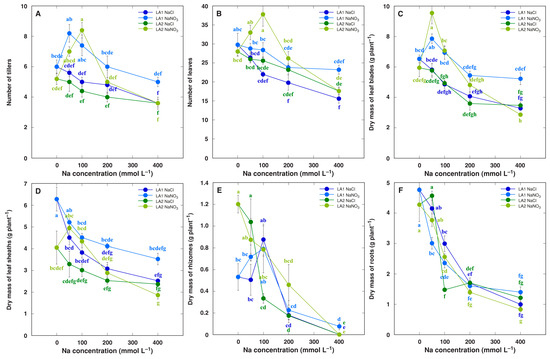
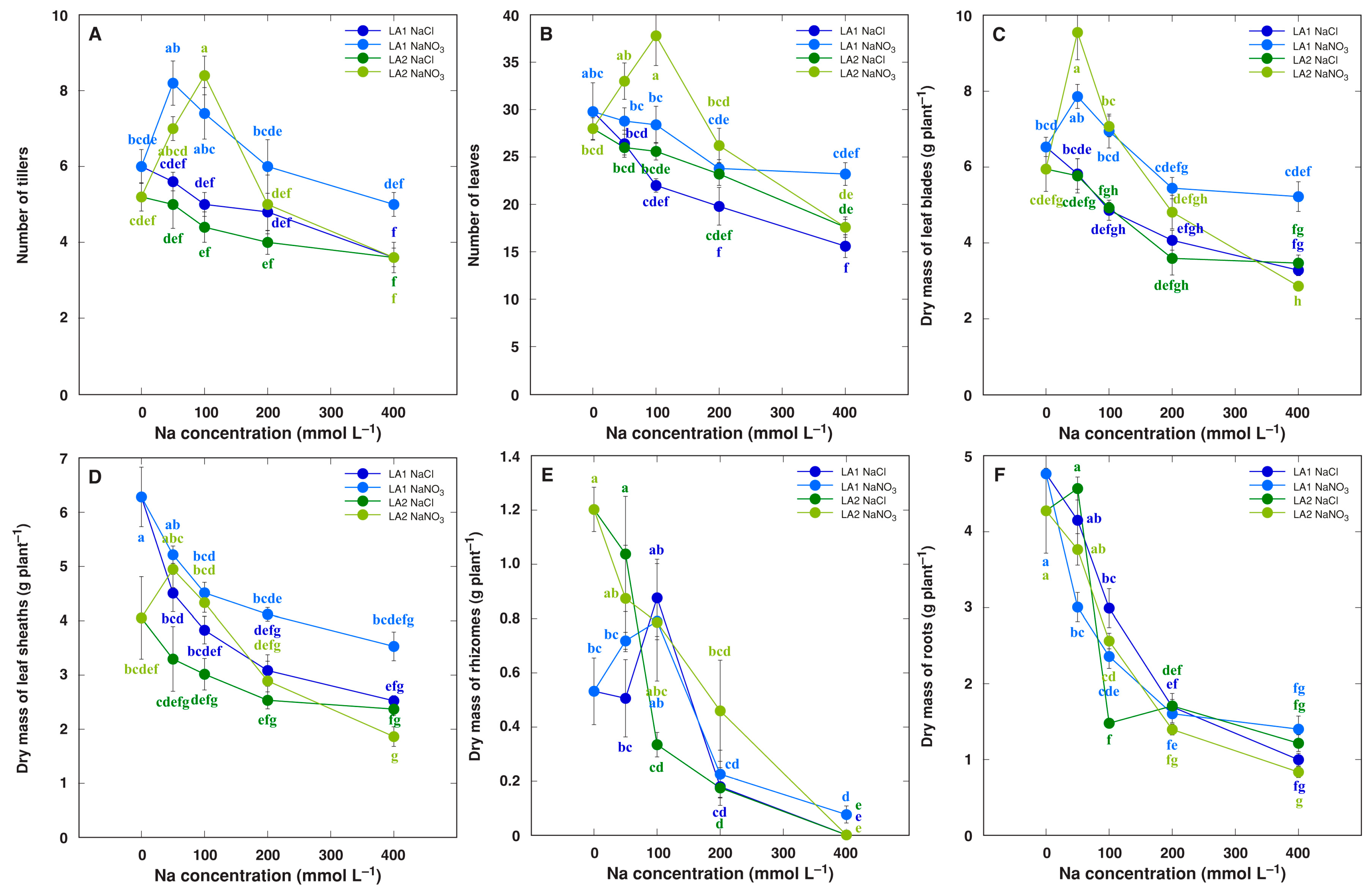
In general, both accessions of L. arenarius plants exhibited a high tolerance to the salts used in the treatment (Figure S2). However, greater morphological distinctions appeared in the latter phase of the experiment (Figure S3). No visual indications of toxicity on plant parts were observed due to the influence of salinity. At the end of the experiment, it was observed that treatment with different sodium salts (chloride and nitrate) yielded distinct effects on both plant growth and development. The most pronounced difference was observed in the number of tillers, which exhibited a steady decline with increasing NaCl concentration. Conversely, there was a marked increase under the influence of 50 and 100 mmol L−1 NaNO3 (Figure 1A). Despite the observed regularities regarding the increase in salt concentration, the effect was not significant in all individual concentration treatments due to pronounced individual variations. A significant increase in leaf number under the influence of NaNO3 was observed exclusively in LA2 plants (Figure 1B). Biomass alterations in various plant parts demonstrated varying effects of salinity. Thus, leaf blade dry mass increased under the influence of 50 mmol L−1 NaNO3 treatment, but only for LA2 plants did these differences attain statistical significance (Figure 1C). In NaCl-treated plants, leaf blade biomass exhibited a gradual decline with increasing salt concentration. Regarding leaf sheaths, a significant difference was observed in their biomass between the control plants of the different accessions (Figure 1D). Furthermore, with increasing salinity, the mass of sheaths in both accessions decreased under the influence of NaCl. However, NaNO3 treatment had different effects depending on the plant accession; at a 50 mmol L−1 treatment, sheath mass tended to increase exclusively for LA2 plants, but this effect was not statistically significant.
Figure 1.
Number of tillers (A), number of leaves (B), dry biomass of leaf blades (C), dry biomass of leaf sheaths (D), dry biomass of rhizomes (E), and dry biomass of roots (F) of Leymus arenarius plants from different accessions (LA1 and LA2) under the effect of increasing concentration of NaCl and NaNO3 in substrate. Data are means ± SE from five replicates. Different letters indicate statistically significant differences according to the Tukey HSD test (p < 0.05).
The impact of salinity on rhizome biomass exhibited distinct patterns for LA1 and LA2 plants, albeit with limited statistical significance due to substantial individual variations in rhizome size (Figure 1E). Consequently, control plants of LA1 had significantly lower rhizome biomass compared to those of LA2 plants, while their biomass exhibited a tendency to increase at 100 mM salinity for both salt types. Conversely, LA2 plants demonstrated a decline in rhizome biomass as salinity increased for both salts. The effect of salinity on root biomass was more unequivocal and exhibited a pronounced negative trend for both NaCl- and NaNO3-treated plants of both accessions (Figure 1F).
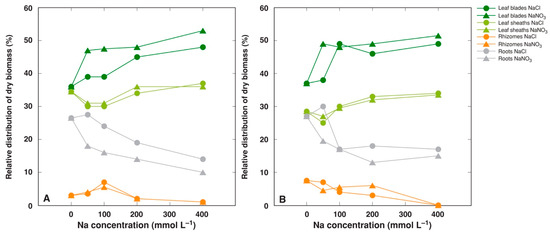
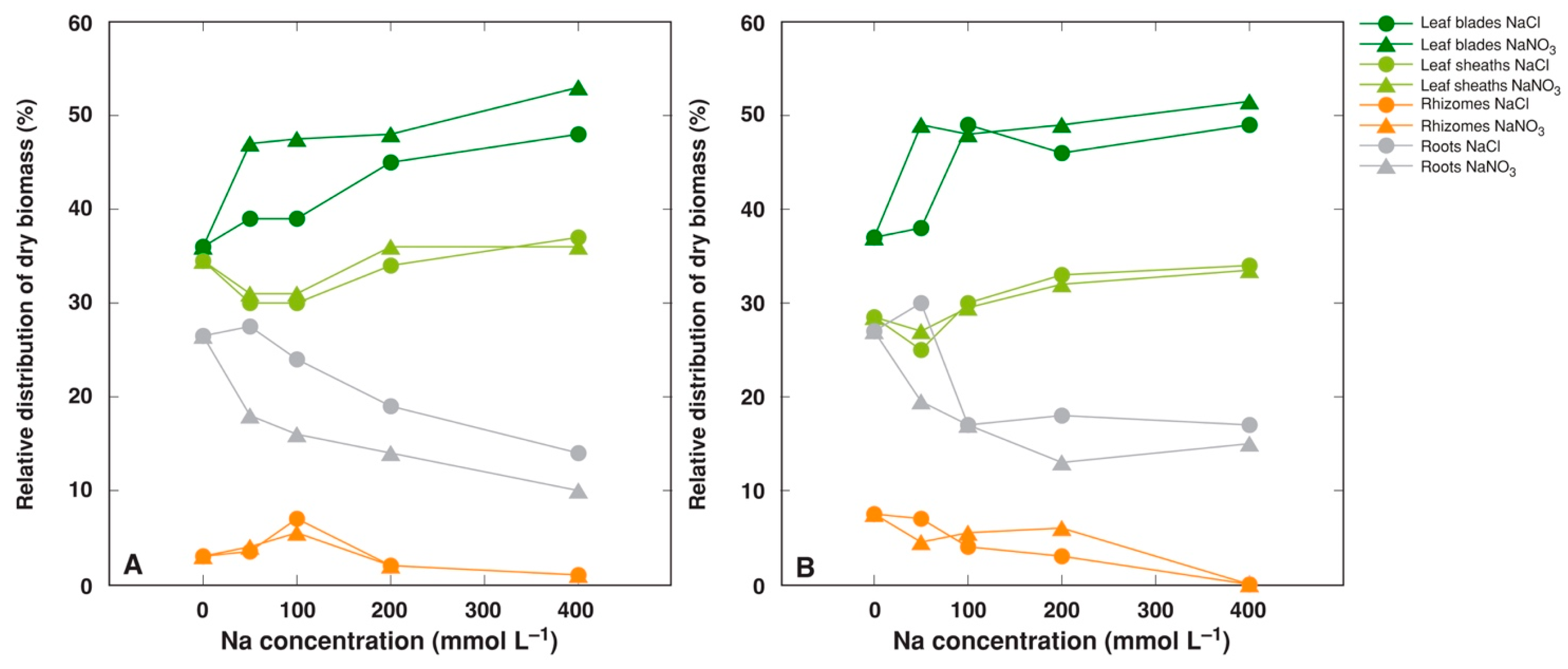
The relative distribution of biomass across various plant parts with increasing salinity showed consistent patterns for both plant accessions and the specific salt types (Figure 2). Notably, the allocation to leaf blades increased, while that to roots and rhizomes decreased. Overall, total plant mass changes did not reveal significant differences between the salt types and plant accessions considering the background reduction in biomass with increasing salinity (Figure S4).
Figure 2.
Relative distribution of dry biomass in different parts of Leymus arenarius plants from different accessions ((A) LA1; (B) LA2) under the effect of increasing concentration of NaCl and NaNO3 in substrate. Data are means from five replicates.
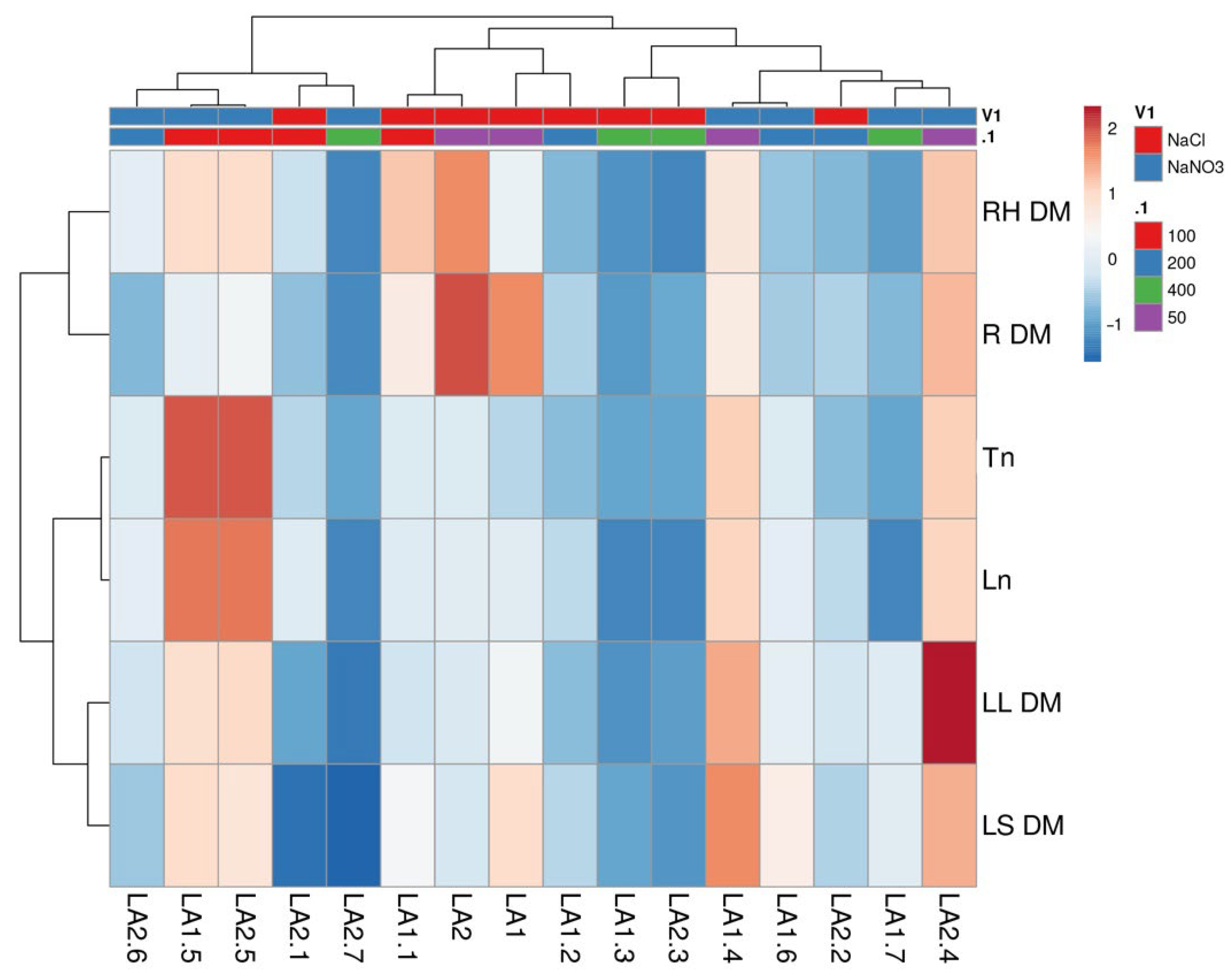
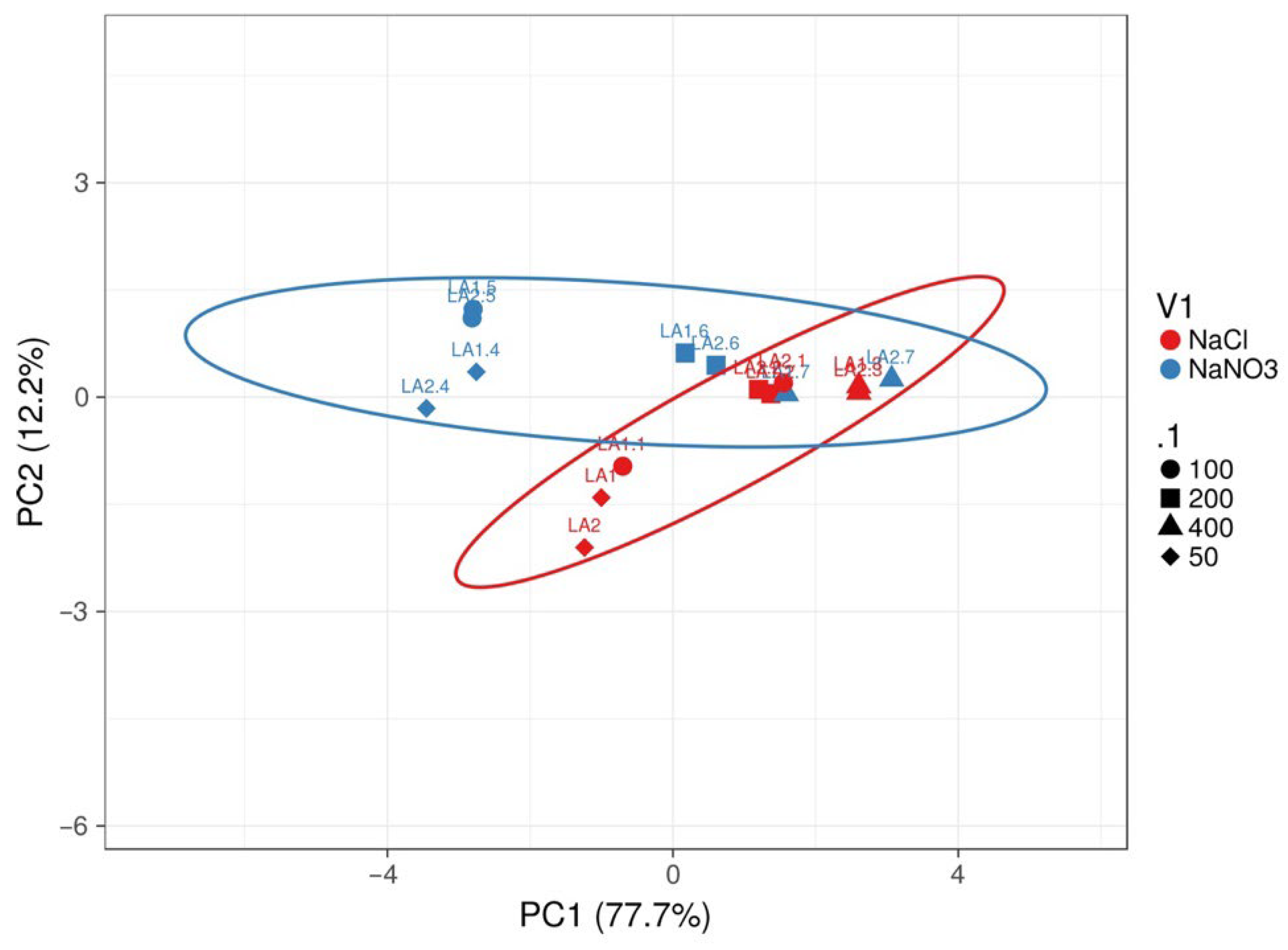
The heat map and cluster analysis of morphological effects of salinity demonstrated no distinct clustering of responses between salt types or plant accessions (Figure 3). However, at the trait level, salinity treatments exhibited comparable effects, particularly on tiller and leaf count. Similarly, leaf blade and sheath biomass exhibited similar alterations. Additionally, there was some overlap in salinity-induced changes in rhizome and root biomass. Principal component analysis facilitated the validation of the previously observed concentration-dependent differences between the effects of chloride and nitrate at low and medium concentrations (Figure 4).
Figure 3.
Generated heat map and cluster analysis on the effect of soil salinity on morphological parameters of Leymus arenarius plants from different accessions. Hierarchical clusters were generated by average linkage method with correlation distance; color scale shows relative intensity of normalized parameter values. LA1, accession 1; LA2, accession 2; RH DM, rhizome dry mass; R DM, root dry mass; Tn, number of tillers; Ln, number of leaves; LL DM, leaf lamina dry mass; LS DM, leaf sheath dry mass. The final salt concentrations in mmol L−1 substrate are indicated by 50, 100, 200, 400.
Figure 4.
Principal component analysis on the effect of soil salinity on morphological parameters of Leymus arenarius plants from different accessions. Prediction ellipses are such that with a probability of 0.95, a new observation from the same group will fall inside the ellipse. Unit variance scaling was applied to rows; singular value decomposition with imputation was used to calculate principal components. X and Y axes show principal component 1 and principal component 2 which explain 77.7% and 12.2% of the total variance, respectively. LA1, accession 1; LA2, accession 2. The final salt concentrations in mmol L−1 substrate are indicated by 50, 100, 200, 400.
3.2. Physiological Parameters
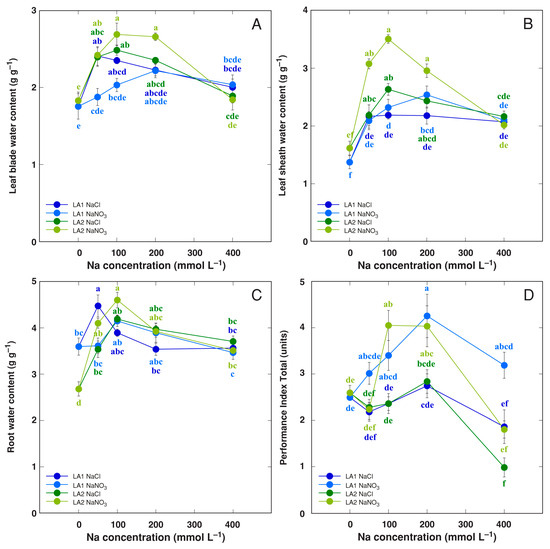
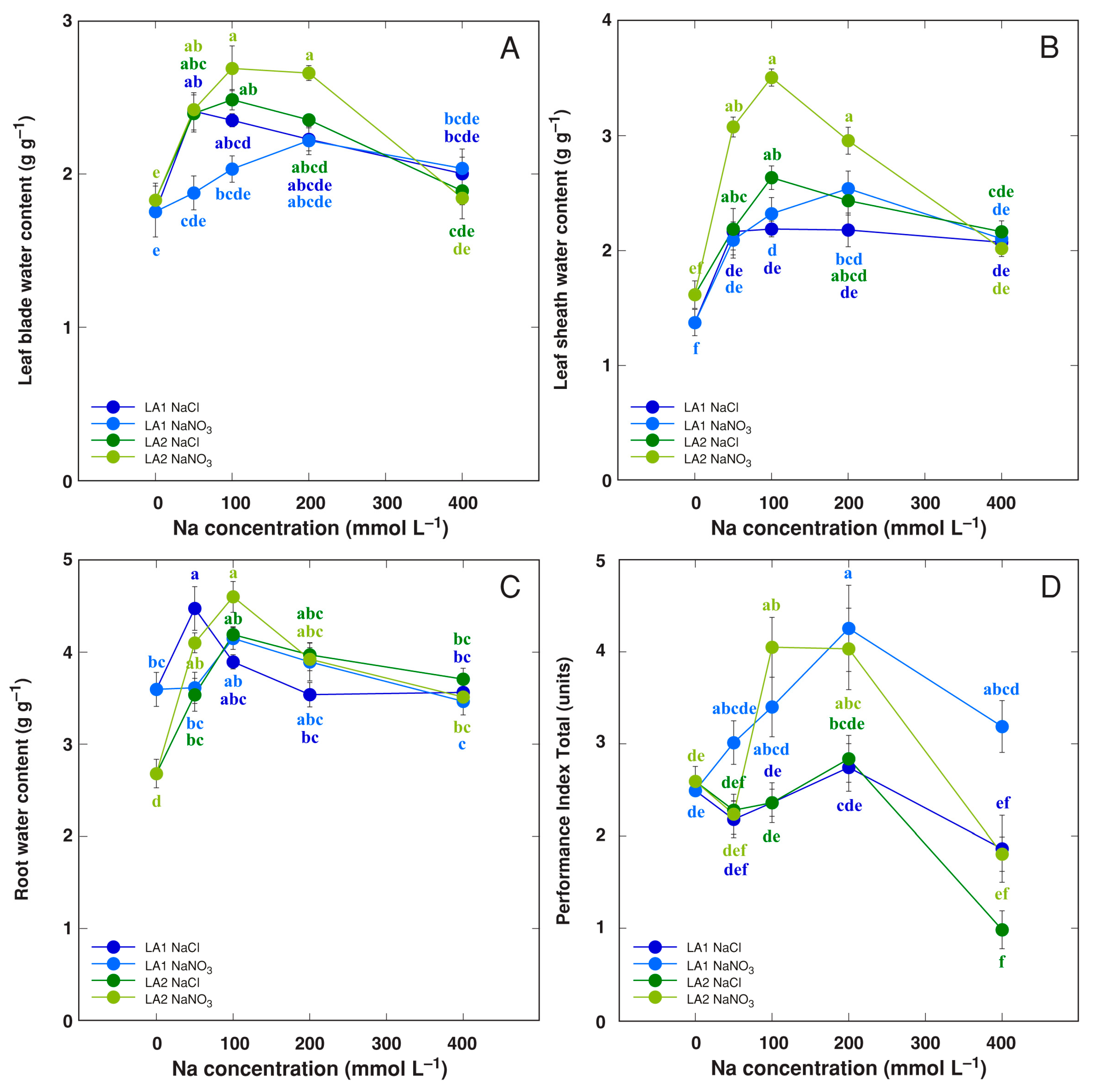
A significant increase in water content was observed in leaf blades and sheaths at both low and medium salt concentrations (Figure 5). The effect was particularly pronounced in leaf sheaths of LA2 plants. Notably, water content did not decline below control levels even in the highest salt treatments. Regarding root water content, significant differences were observed between the plant accessions in the control group (Figure 5C). However, both plant accessions exhibited a significant increase in root water content at both low and/or medium salinity levels.
Figure 5.
Water content in leaf blades (A), leaf sheaths (B), and roots (C), and chlorophyll a fluorescence parameter Performance Index Total (D) in leaves of Leymus arenarius plants from different accessions (LA1 and LA2) under the effect of increasing concentration of NaCl and NaNO3 in substrate. Data are means ± SE from five replicates. Different letters indicate statistically significant differences according to the Tukey HSD test (p < 0.05).
Potential alterations in the photochemical reactions of photosynthesis under the influence of salinity were only evaluated in plants shortly before the conclusion of the experiment by measuring chlorophyll a fluorescence (Figure 5D). The results demonstrated the positive impact of NaNO3 treatment on Performance Index Total at intermediate salt concentrations. However, at high salinity, this indicator exhibited a decrease, albeit only in LA2 plants treated with 400 mmol L−1 NaCl did it decrease significantly.
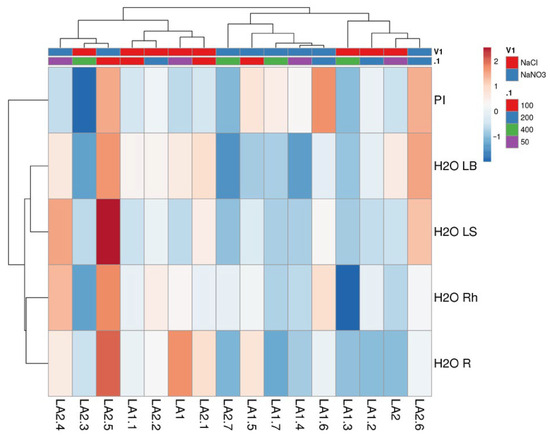
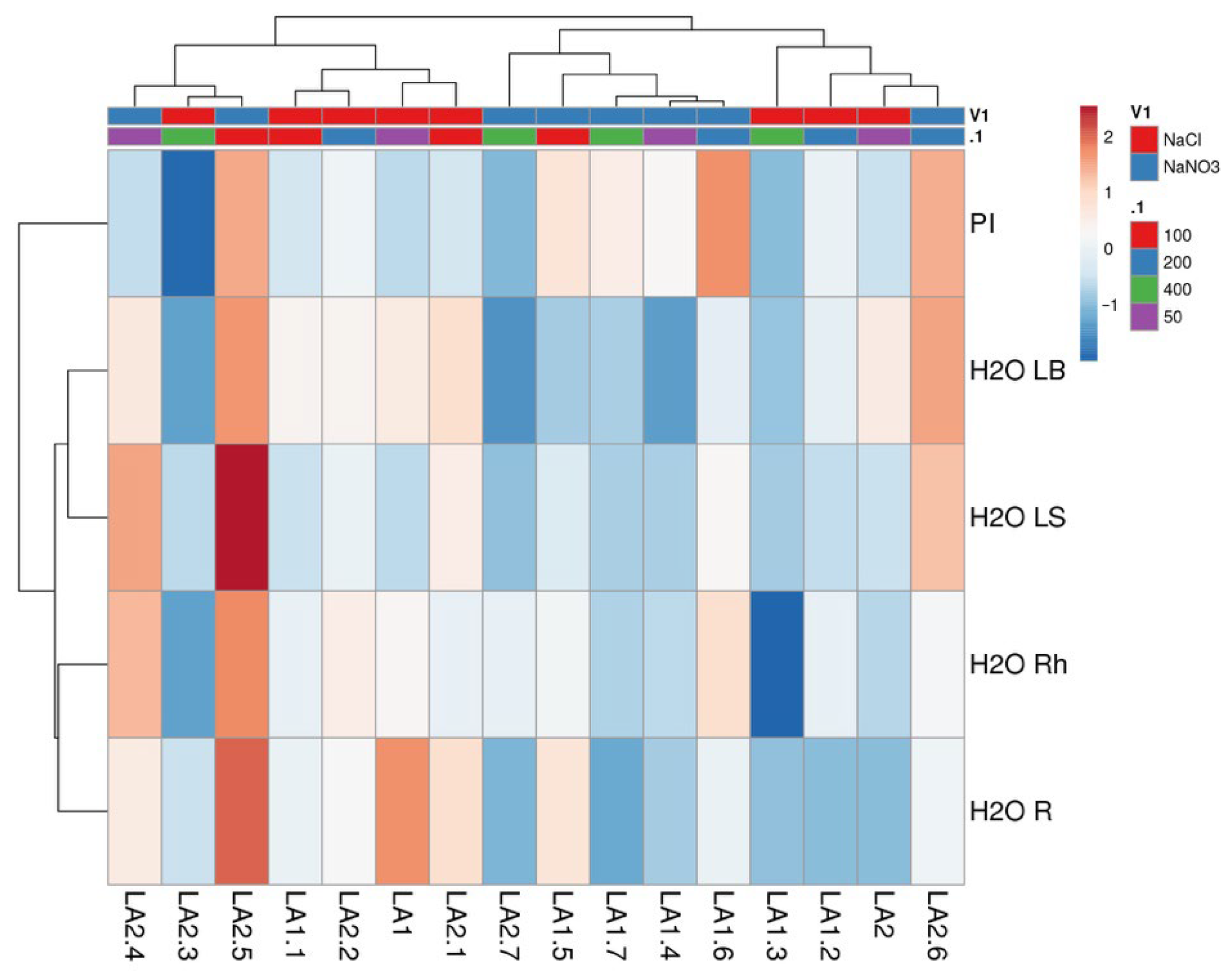
Heat map and cluster analysis of physiological parameter changes in response salinity did not indicate any pronounced clustering based on salt type or plant accession (Figure 6).
Figure 6.
Generated heat map and cluster analysis on effect of soil salinity on physiological parameters of Leymus arenarius plants from different accessions. Hierarchical clusters were generated by average linkage method with correlation distance; color scale shows relative intensity of normalized parameter values. LA1, accession 1; LA2, accession 2; PI, chlorophyll a fluorescence parameter Performance Index; H2O LB, water content in leaf blades; H2O LS, water content in leaf sheath; H2O Rh, water content in rhizome; H2O, water content in roots. 50, 100, 200, 400 indicate the final salt concentration in mmol L−1 substrate.
3.3. Ion Accumulation and Mineral Nutrition
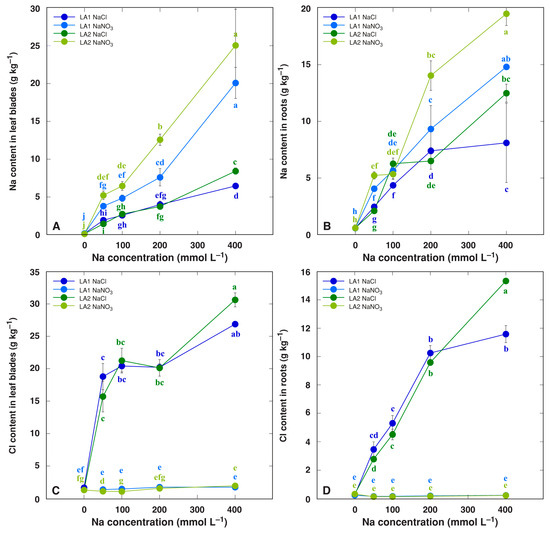
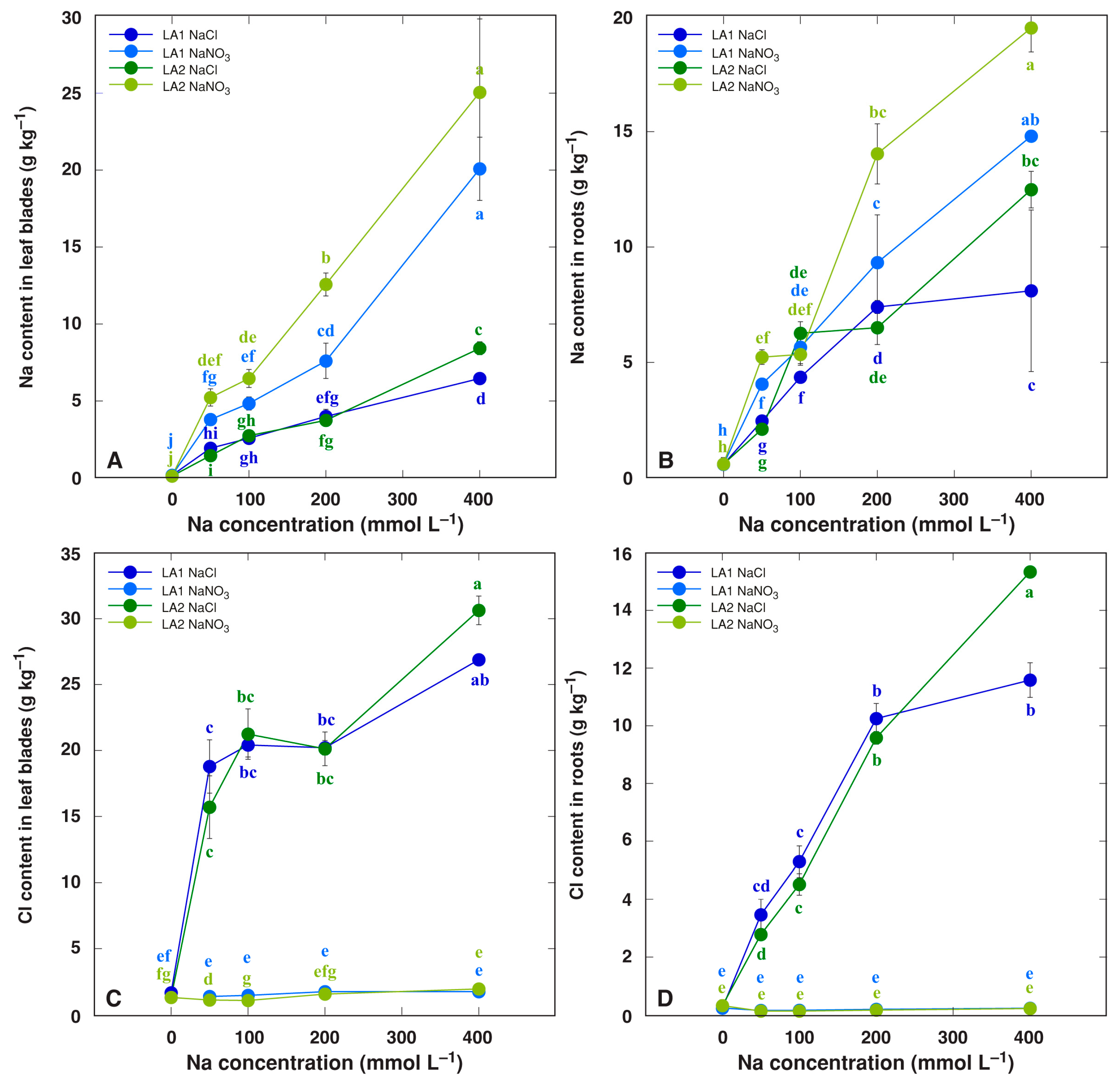
Sodium accumulation in leaf blades was significantly enhanced by nitrate treatment compared to that in chloride-treated plants (Figure 7A). This effect was particularly pronounced at high salinity. In the roots of NaCl-treated plants, sodium accumulation capacity was comparable to that observed in leaf blades (Figure 7B). In contrast to chloride treatment, nitrate-treated plants exhibited higher sodium accumulation in their roots, although this level remained below that observed in leaf blades. Chloride accumulation capacity was characteristically higher in leaf blades, particularly at moderate salinity levels (Figure 7C,D).
Figure 7.
Content of Na+ in leaf blades (A) and roots (B), and content of Cl− in leaf blades (C) and roots (D) of Leymus arenarius plants from different accessions (LA1 and LA2) under the effect of increasing concentration of NaCl and NaNO3 in substrate. Data are means ± SE from three replicates. Different letters indicate statistically significant differences according to the Tukey HSD test (p < 0.05).
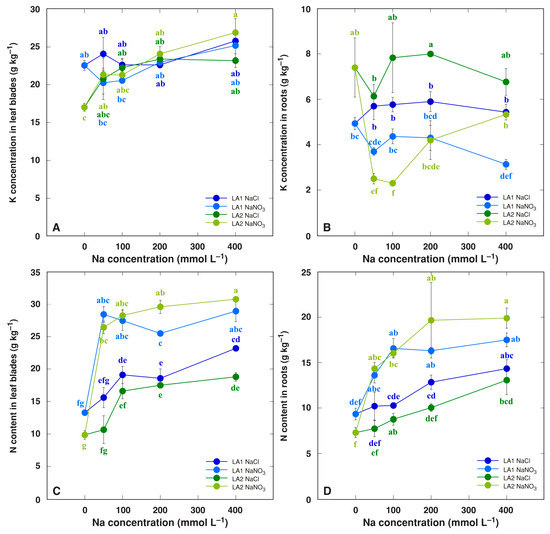
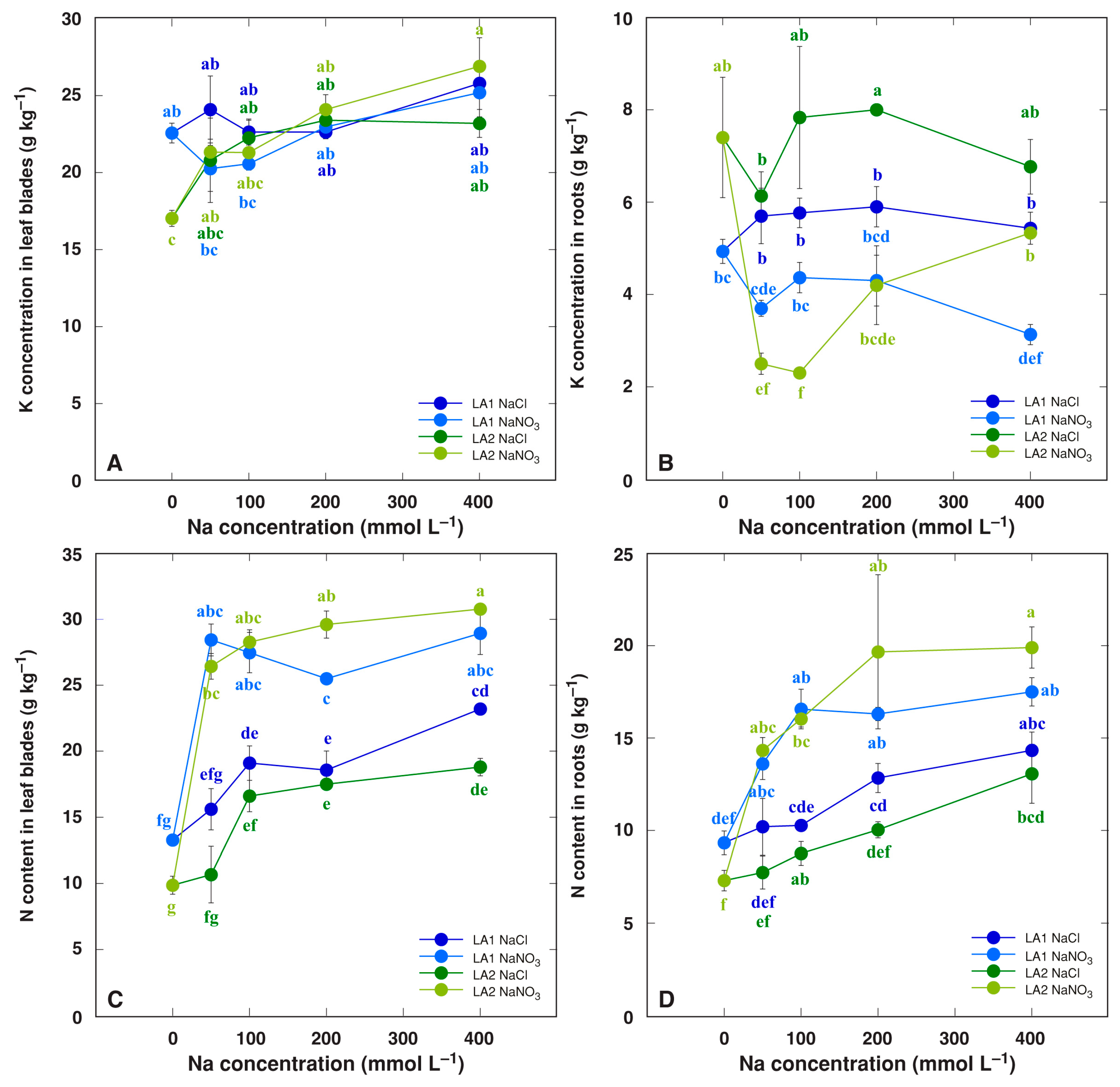
Both leaf and root potassium contents were relatively unaffected by salinity (Figure 8A,B). While there were some variations in potassium content between control plants from different accessions, these differences diminished with increasing salinity. Nitrate treatment causally increased nitrogen content in both leaf blades and roots (Figure 8C,D). This effect was independent of exogenous nitrate concentration. However, NaCl treatment also induced a salt concentration-dependent increase in nitrogen content in leaves and roots.
Figure 8.
Content of K+ in leaf blades (A) and roots (B), and content of N in leaf blades (C) and roots (D) of Leymus arenarius plants from different accessions (LA1 and LA2) under the effect of increasing concentration of NaCl and NaNO3 in substrate. Data are means ± SE from three replicates. Different letters indicate statistically significant differences according to the Tukey HSD test (p < 0.05).
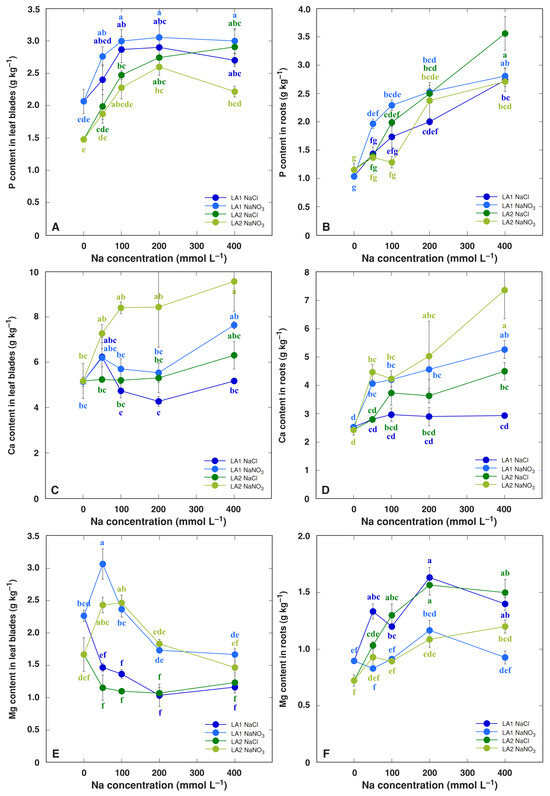
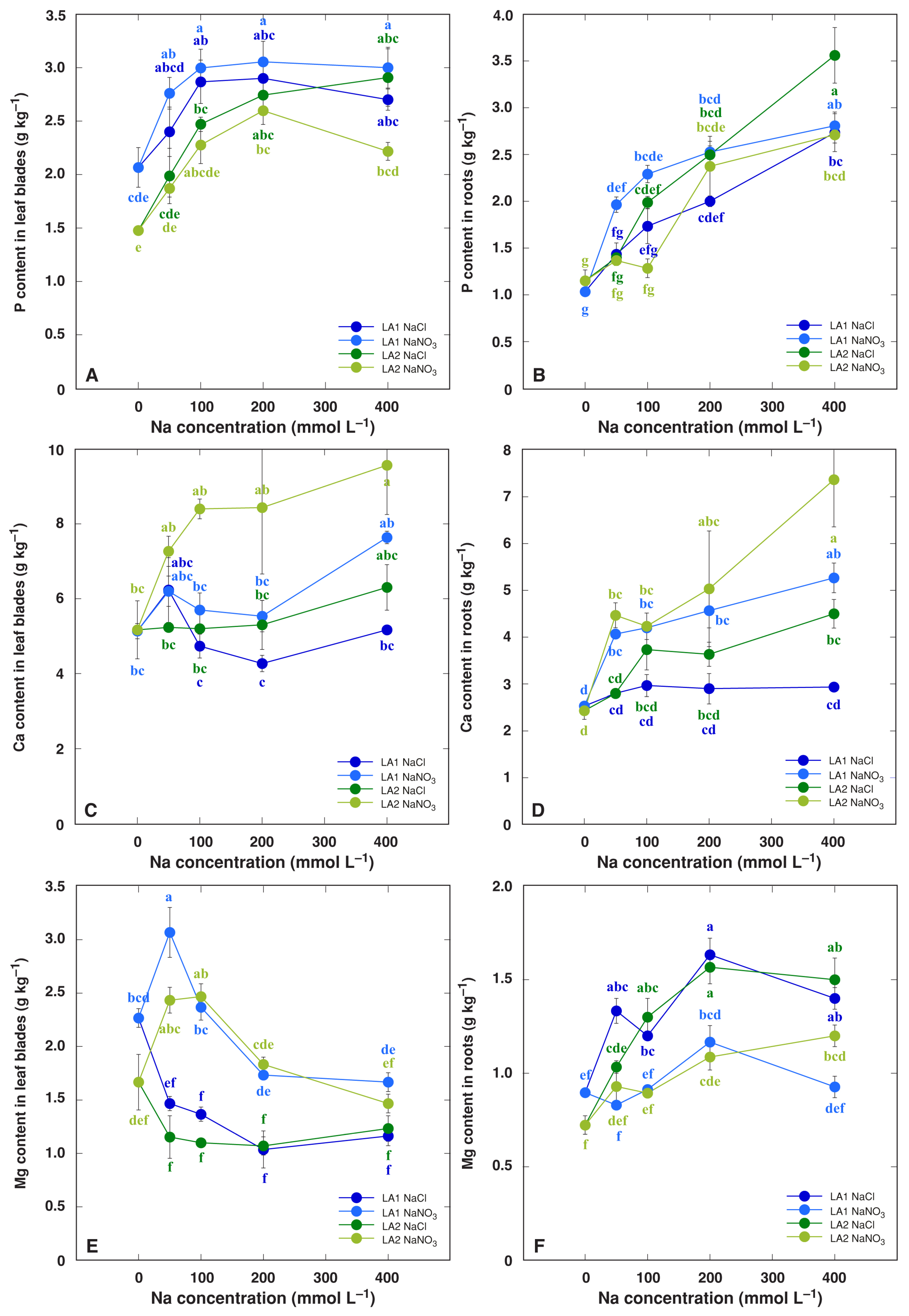
Both leaf and root phosphorus content also increased due to the elevated substrate salinity (Figure 9A,B). While the dependence of phosphorus increase on salt concentration was less pronounced in leaves, it was significantly more pronounced in roots. In reference to tissue calcium content, the impact of salinity exhibited ambiguity (Figure 9C,D). Notably, only LA2 plants, subjected to NaNO3 treatment, showed a pronounced elevation in leaf calcium content (Figure 9C). Conversely, the increase in root calcium content was more pronounced, and was exclusive only for LA1 plants in the case of NaCl treatment (Figure 9D). Regarding tissue magnesium content, salt treatment manifested distinct effects on leaves and roots, contingent on the type of anion (Figure 9E,F). Treatment with NaCl resulted in a decline in magnesium content in leaves and an increase in magnesium content in roots. Conversely, treatment with NaNO3 induced an increase in magnesium in leaves at low salinity and an increase in root magnesium at high salinity.
Figure 9.
Content of P in leaf blades (A) and roots (B), content of Ca in leaf blades (C) and roots (D), and content of Mg in leaf blades (E) and roots (F) of Leymus arenarius plants from different accessions (LA1 and LA2) under the effect of increasing concentration of NaCl and NaNO3 in substrate. Data are means ± SE from three replicates. Different letters indicate statistically significant differences according to the Tukey HSD test (p < 0.05).
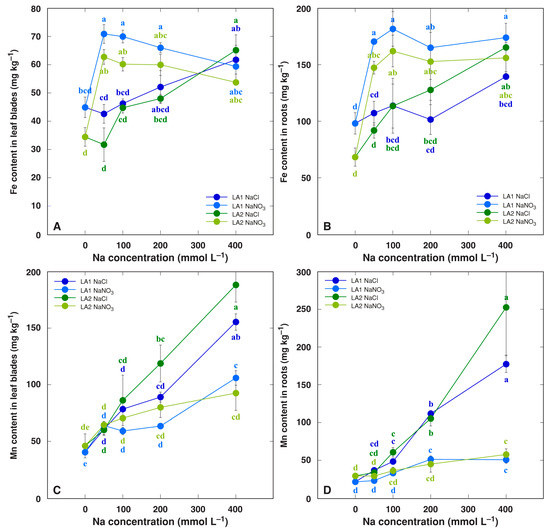
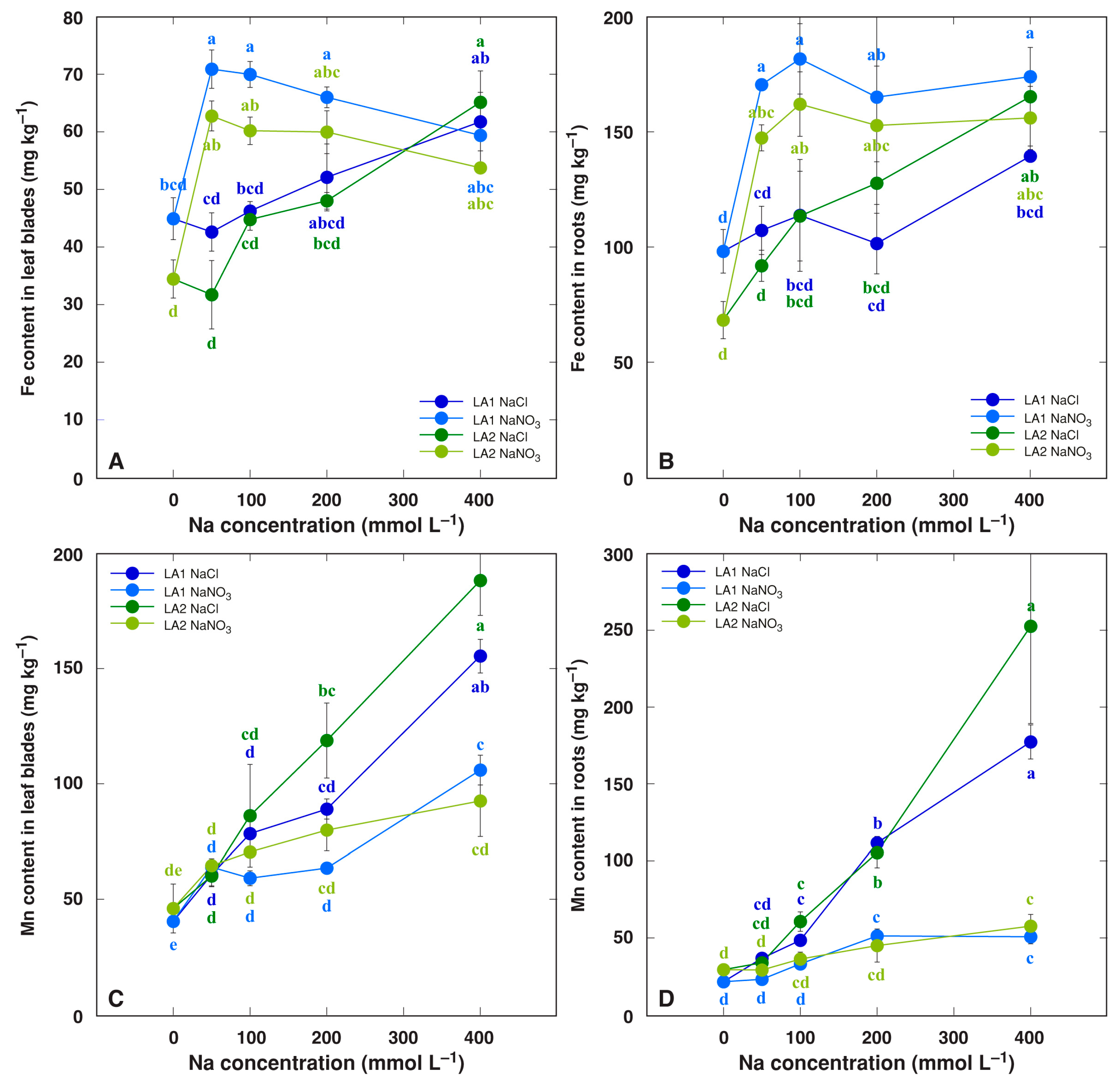
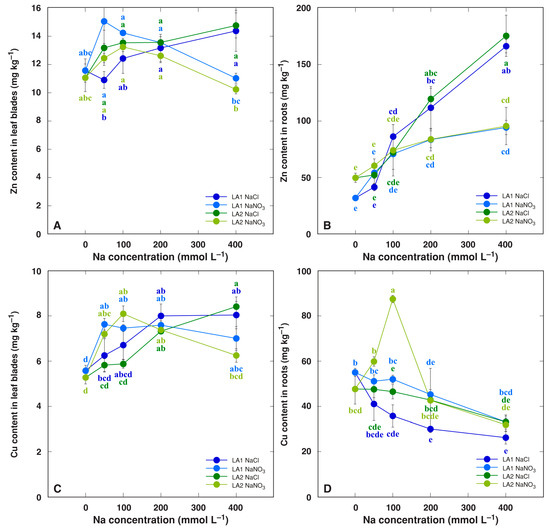
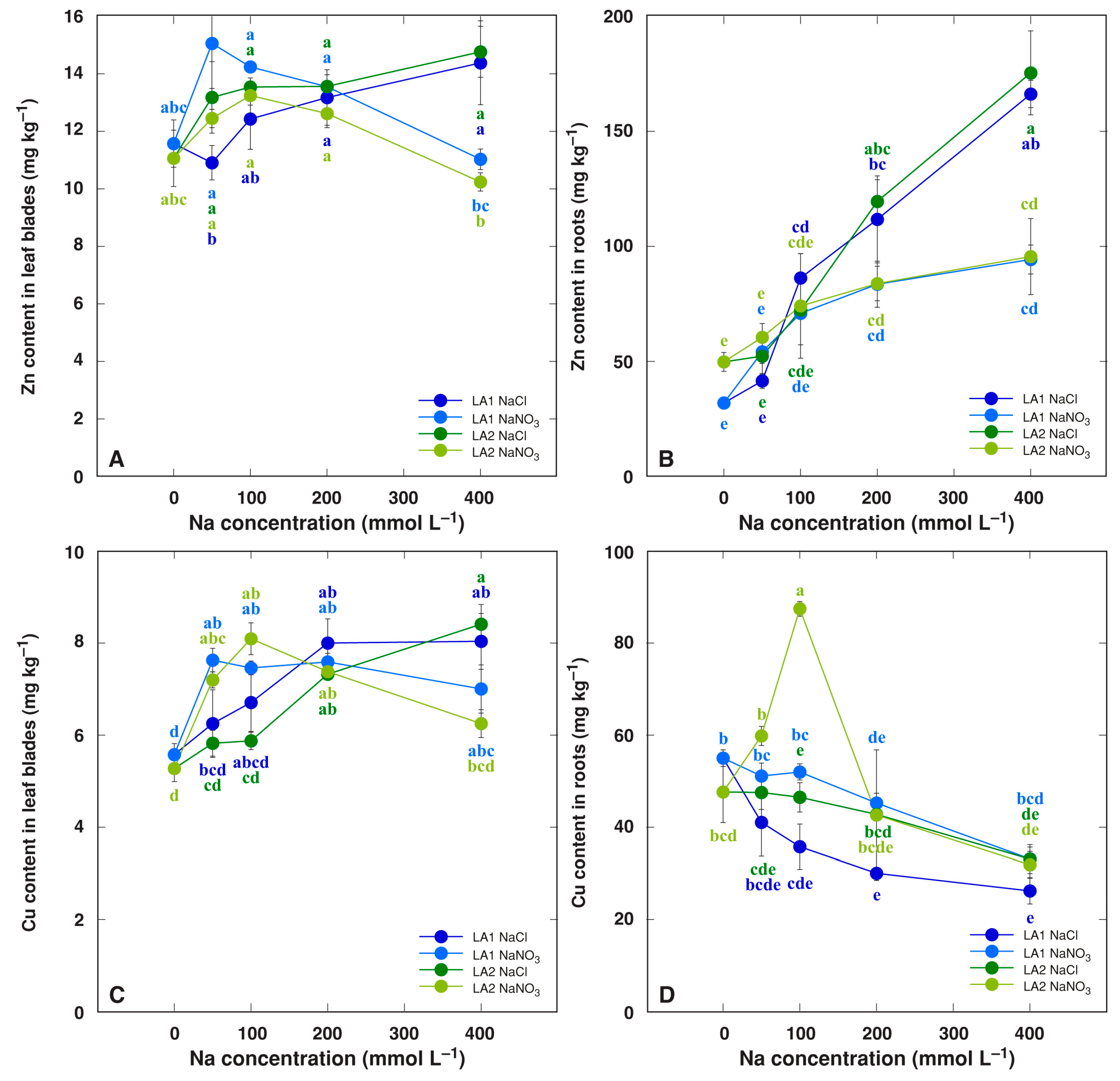
The effect of salinity on tissue iron content was comparable in leaf blades and roots, with rapid increases at low NaNO3 concentrations and gradual increases in NaCl-treated plants (Figure 10A,B). In contrast, manganese content exhibited a linear increase in both leaves and roots with increasing NaCl concentration in substrate, although the increase due to NaNO3 concentration was less pronounced (Figure 10C,D). The effect of salinity on zinc content was relatively minor in leaves (Figure 11A), while zinc content increased in roots with increase in salinity (Figure 11B). Copper content also underwent changes in leaves under salinity, but with slightly different patterns for both types of salts (Figure 11C). Nitrate treatment resulted in the most significant increase at low salinity, while chloride treatment resulted in a greater increase at high salinity. A consistent decrease in copper content was observed in roots with increasing salinity, except for LA2 plants treated with nitrate, which showed an increase in copper content in the 100 mmol L−1 treatment (Figure 11D).
Figure 10.
Content of Fe in leaf blades (A) and roots (B), and content of Mn in leaf blades (C) and roots (D) of Leymus arenarius plants from different accessions (LA1 and LA2) under the effect of increasing concentration of NaCl and NaNO3 in substrate. Data are means ± SE from three replicates. Different letters indicate statistically significant differences according to the Tukey HSD test (p < 0.05).
Figure 11.
Content of Zn in leaf blades (A) and roots (B), and content of Cu in leaf blades (C) and roots (D) of Leymus arenarius plants from different accessions (LA1 and LA2) under the effect of increasing concentration of NaCl and NaNO3 in substrate. Data are means ± SE from three replicates. Different letters indicate statistically significant differences according to the Tukey HSD test (p < 0.05).
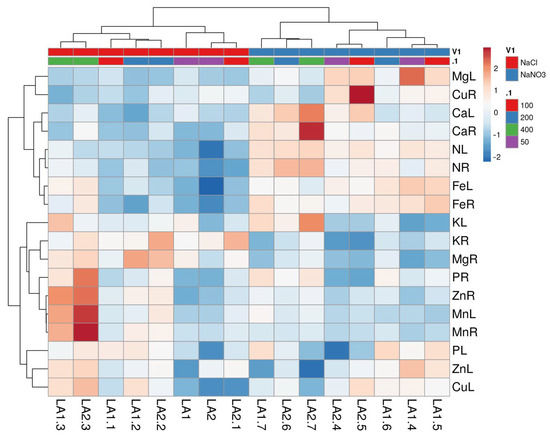
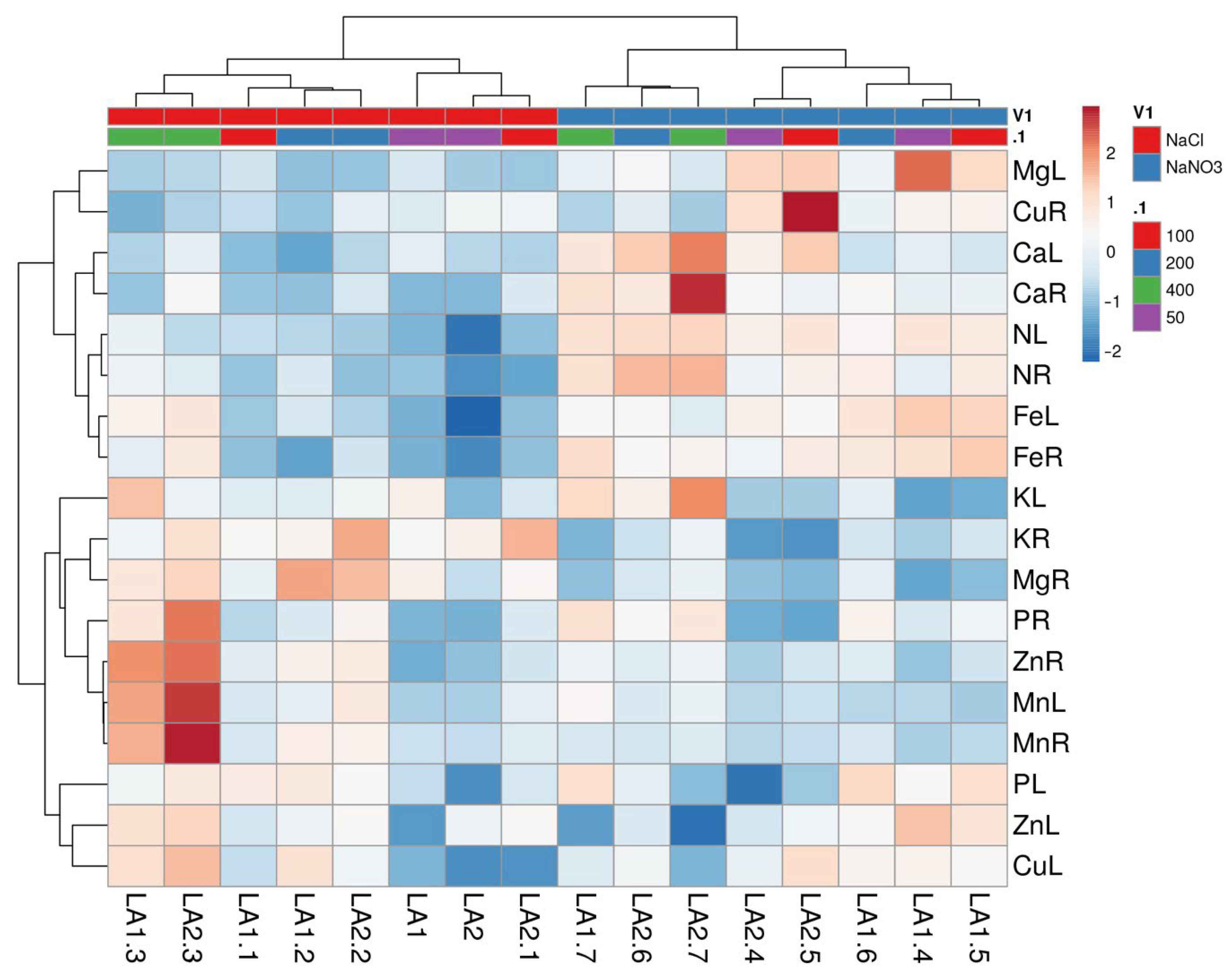
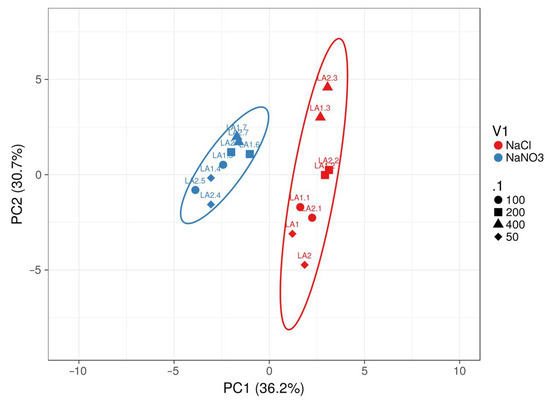
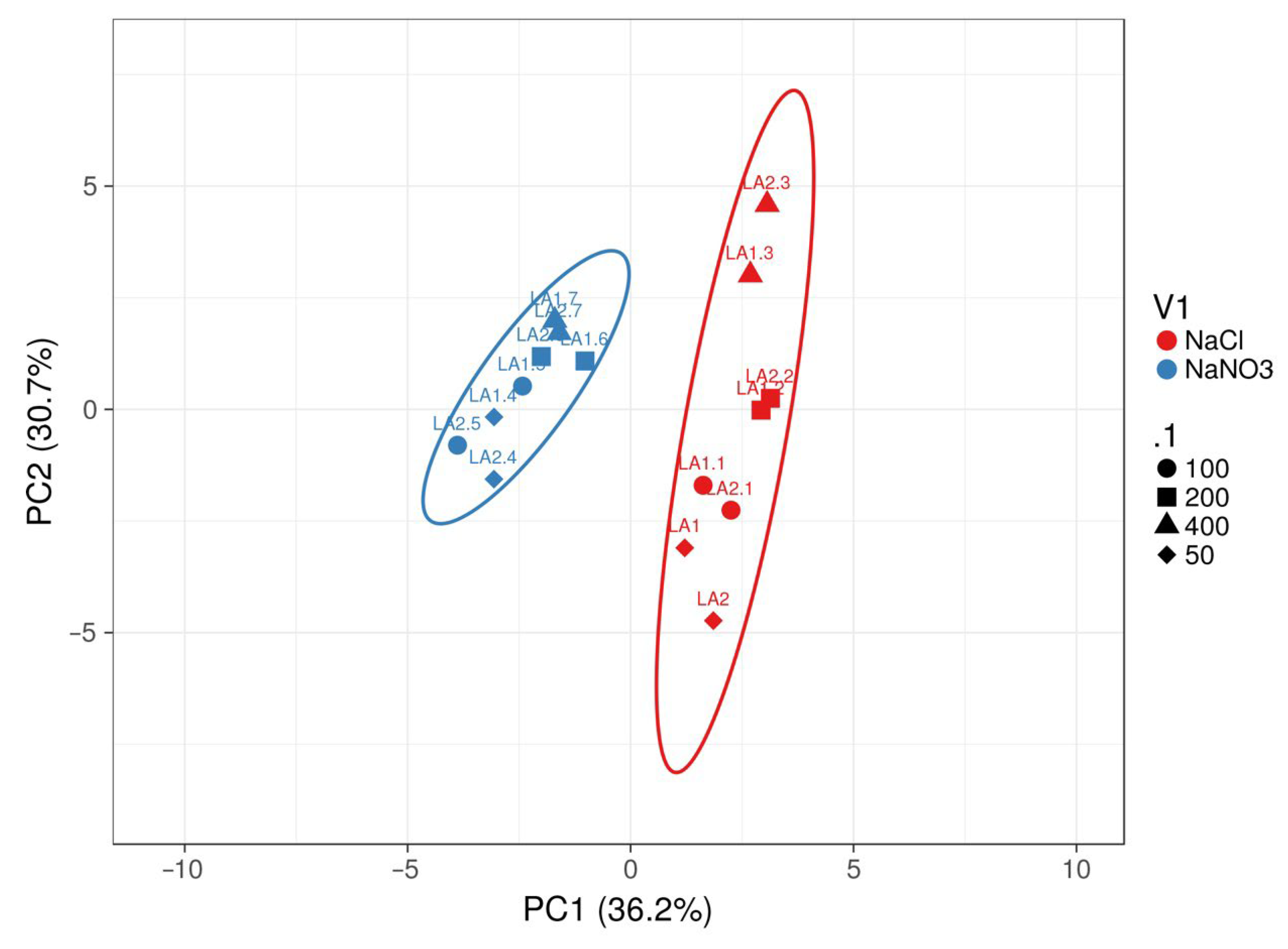
The generated heat map and cluster analysis confirmed the clustering of samples based on the types of salts used. Notably, the effects of NaCl were distinctly divergent from those of NaNO3 on the mineral composition of leaves and roots (Figure 12). Cluster analysis further revealed a correlation between alterations in the content of individual minerals under the influence of salt. Three groups of relationships were observed, which included (i) Fe (leaves and roots), N (leaves and roots), Ca (leaves and roots), Cu (roots) and Mg (leaves); (ii) Mn (leaves and roots), Zn (roots), P (roots), Mg (roots), K (leaves and roots); (iii) Cu, Zn, and P in leaves. Additionally, principal component analysis elucidated the variations in mineral content under salinity in relation to the nature of the anion utilized (Figure 13).
Figure 12.
Generated heat map and cluster analysis on effect of soil salinity on mineral nutrition parameters of Leymus arenarius plants from different accessions. Hierarchical clusters were generated by average linkage method with correlation distance; color scale shows relative intensity of normalized parameter values. LA1, accession 1; LA2, accession 2; MgL, Mg in leaves; CuR, Cu in roots; CaL, Ca in leaves; CaR, Ca in roots; NL, N in leaves; FeL, Fe in leaves; FeR, Fe in roots; KL, K in leaves; KR, K in roots; MgR, Mg in roots; PR, phosphorus in roots; ZnR, Zn in roots; MnL, Mn in leaves; MnR, Mn in roots; PL, P in leaves; ZnL, Zn in leaves; CuL, Cu in leaves. The final salt concentrations in mmol L−1 substrate are indicated by 50, 100, 200, 400.
Figure 13.
Principal component analysis on the effect of soil salinity on mineral nutrition parameters of Leymus arenarius plants from different accessions. Prediction ellipses are such that with a probability of 0.95, a new observation from the same group will fall inside the ellipse. Unit variance scaling was applied to rows; singular value decomposition with imputation was used to calculate principal components. X and Y axes show principal component 1 and principal component 2 which explain 36.2% and 30.7% of the total variance, respectively. LA1, accession 1; LA2, accession 2. The final salt concentrations in mmol L−1 substrate are indicated by 50, 100, 200, 400.
4. Discussion
In the present study, the effect of two types of sodium salts, chloride and nitrate, on the growth, biomass allocation and mineral nutrition of Leymus arenarius plants from two different coastal sites of the Baltic Sea were compared. NaCl, the most prevalent form of salt that causes salinity, is the subject of most salinity studies. However, it is evident that sodium and chloride ions, individually, may produce distinct effects in the context of salinity responses [33]. Notably, while chloride treatment leads to chlorophyll degradation, resulting in a reduction in photosynthetic yield, sodium interferes with potassium and calcium nutrition, disturbing stomatal regulation and consequently causing diminished carbon fixation and growth. The original hypothesis that nitrate would have a more favorable impact on plant growth compared to chloride was only partially fulfilled. Nitrate had a growth stimulation effect on L. arenarius plants at low and moderate concentrations, but the negative effect of nitrate at high concentration was similar to that of chloride.
Furthermore, several recent studies have demonstrated that the type of anion plays a pivotal role in the impact of sodium salts on plant growth [34,35]. Consequently, the generally negative effect of sodium on plant growth can be enhanced or diminished depending on the metabolic fate of the anion within the plant. Alkaline sodium salts, such as carbonates and bicarbonates, are generally considered more toxic compared to chloride [36,37,38]. In contrast, it is plausible that the effect of NaNO3 on plant growth could be positive at low or even moderate concentrations, given that nitrate is the primary source of nitrogen for plants [39]. This indicates that the variation in growth and mineral nutrition is driven mainly by anion specificity rather than sodium per se. At high concentrations, however, growth inhibition by both salts was similar, suggesting that sodium toxicity becomes the dominant factor under severe salinity. A growth stimulation by NaNO3 has been observed in several halophyte species, including Salicornia europaea [40] and Sesuvium portulacastrum [41]. In the case of nitrophilic plants, such as various wetland Rumex species and Ranunculus sceleratus, nitrates in the form of sodium salts do not exhibit detrimental effects on plant growth, in comparison to sodium salts containing a different anion [34,42].
Despite its salt tolerance, the accumulation of ions in L. arenarius plants has not been studied to date. However, L. arenarius was tested among other species to assess their potential to remove Cl− from salt-polluted waters [43]. In this study, L. arenarius accumulated approximately 300 mg Cl kg−1 within 5 days in conditions of saline hydroponics, confirming its suitability for phytodesalination. In the present study, root Na+ accumulation potential of L. arenarius plants tended to be slightly higher in comparison to that in shoots in NaCl-treated plants. Conversely, the opposite trend was observed for NaNO3-treated plants (Figure 7A,B). However, accumulation potential for Cl− in NaCl-treated plants was noticeably greater in leaves compared to roots (Figure 7C,D). Salt-excreting grasses exhibited a higher concentration of Na+ in roots in comparison to that in shoots, but relatively similar Na+ concentration in roots and shoots was found for non-excreting grasses [44]. This trend is generally consistent with the observations in this study with L. arenarius plants. The differential accumulation of Na+ and Cl− between roots and leaves likely reflects distinct physiological mechanisms [45,46,47]. Chloride, being highly mobile, is readily translocated to leaves for osmotic adjustment and is actively sequestered into vacuoles via chloride channels to prevent toxicity. Sodium, on the other hand, is more restricted; plants deploy selective root-level exclusion and vacuolar compartmentalization mechanisms to limit Na+ buildup in photosynthetic tissues. Therefore, it is plausible that the sequestration and storage of Na+ and Cl− involve distinct low molecular weight ligands, as evidenced in the homeostasis of various metals [48,49].
In terms of absolute values, Na+ concentration in leaf blades reached 30 g kg−1 (Figure 7A) with comparable levels of that for K+ (approximately 25 g kg−1; Figure 8A). In contrast, in natural conditions growing in saline coastal soils, leaves of L. arenarius plants accumulated relatively low levels of Na+ (mean value 4.1 g kg−1), with noticeably higher levels for K+ (mean value 22.4 g kg−1) [13]. Since the plants in this study were grown under optimal mineral supply conditions, which is not always the case in natural conditions, it appears that mineral supply is critical in increasing the potential for Na accumulation. Importantly, increased nitrogen application in the NaNO3 treatment also resulted in a significant increase in Na accumulation.
The detrimental effects of salinity are frequently linked to the adverse consequences of ballast ion (sodium and chloride) accumulation on mineral nutrition, both at the level of mineral uptake and metabolism. For instance, chloride is regarded as an inhibitor of nitrate uptake, as it utilizes the same anion channels as nitrate [50]. Antagonism between chloride and nitrate is associated with chloride competition for transporter systems involved in nitrate uptake or with a direct inhibitory effect on nitrate transporters [51]. However, it is argued that the selectivity for nitrate for these transporters is superior to that for chloride [52]. In the present study, there was no negative impact of chloride salinity on nitrogen accumulation in leaf and root tissues of L. arenarius (Figure 13). Instead, nitrogen accumulation was significantly stimulated by an increasing concentration of substrate NaCl in both leaf blades and roots.
In addition, negative effects of salinity on mineral nutrition have been associated with competition between sodium and potassium, primarily at the level of uptake in root cells [53]. The potassium content in L. arenarius did not decrease under chloride and nitrate salinity because this species exhibits strong ion homeostasis and selective uptake mechanisms. This is achieved through efficient K+ transporters and active exclusion of Na+ at the root level, preventing displacement of K+ from cytosolic sites [46]. Additionally, chloride and nitrate ions do not directly compete with K+ for uptake channels, and the plant’s osmotic adjustment relies on accumulating compatible solutes rather than sacrificing essential cations like K+ [54]. Therefore, K+ levels remain stable to support enzyme activity and stomatal regulation under stress.
Also, sodium competition with uptake of magnesium has been noted [20], leading to salinity-dependent nutrient deficiency. Notably, magnesium was the only element exhibiting a decrease in leaf concentration in conditions of NaCl salinity (Figure 9E). However, the decrease itself was not NaCl concentration dependent. Furthermore, the lowest concentration of manganese, 1 g kg−1 (0.1%), represents an optimal value for manganese for a majority of grass species [55]. For a halophytic rhizome-forming grass species, Sporobolus virginicus, 300 and 450 mM salinity in hydroponics also resulted in a decrease in shoot magnesium concentration [56].
In the salt-tolerant beach species Mertensia maritima, no adverse effects of salinity were observed on leaf mineral nutrient concentrations despite a significant decrease in shoot and root growth [57]. Instead, the accumulation of potassium, phosphorus, magnesium, manganese, zinc and copper was significantly enhanced by increasing salinity. However, even for obligate halophytes, which exhibit growth stimulation at low and moderate salinity levels, negative alterations in mineral content can occur due to salt treatment. Thus, for Mesembryanthemum crystallinum treated with NaCl and KCl at growth-stimulating concentrations, a significant reduction in leaf concentrations was observed for phosphorus, magnesium, iron, manganese, zinc, and partially for copper [31]. Overall, these findings indicate that the reduction in L. arenarius plant growth under the influence of NaCl and high NaNO3 concentrations was not associated with deficiencies in mineral supply. This confirms the general assumption that, for halophytic species, changes in mineral nutrient concentrations within plant tissues in saline conditions most likely reflect regulated metabolic adaptations aimed at maintaining homeostasis in conditions of elevated salinity [58].
Our findings demonstrate that nitrate treatments, particularly at low to moderate concentrations, exert a more favorable effect on plant growth compared to chloride treatments. This growth advantage is associated with enhanced uptake and accumulation of calcium, magnesium, and iron in leaves—cations known to support cell wall stability, photosynthetic enzyme functions, and metabolic processes [59,60]. Chloride treatments, in contrast, led to elevated levels of manganese and zinc in both roots and leaves, indicating that anion type significantly influences nutrient uptake patterns. Importantly, the observed mineral composition differences appear to be driven primarily by anion specificity rather than sodium concentration; Na+ levels remained relatively constant across treatments, while nutrient profiles varied substantially based on whether nitrate or chloride was supplied. This supports the hypothesis that nitrate facilitates divalent cation uptake more effectively than chloride [61].
Reduced cation uptake resulting from high nitrate uptake can lead to deficiencies of certain minerals such as potassium, calcium, and magnesium [62,63]. Alternatively, additional nitrogen-induced growth promotion can cause a nutrient “dilution” effect if the root uptake capacity for a specific mineral remains unchanged [64,65]. However, it appears that the observed plant growth stimulation by low and moderate nitrate concentration may be related to increased stimulation of calcium, magnesium, and iron uptake and their accumulation in the leaves, resulting in net nutrient enrichment rather than depletion.
Maintenance of tissue water homeostasis is a crucial characteristic of salt-accumulating halophytes. In these plants, water content and degree of succulence are directly proportional to the concentration of electrolytically active ionic substances [66]. Increase in water content was a characteristic response of L. arenarius plants at low and moderate salinity, and no negative effect on tissue water content was observed even at 400 mmol L−1 salinity (Figure 5). Interestingly, leaf water content (in g g−1 dry weight, termed as “leaf succulence”) increased only in salt-excreting grass species under NaCl salinity, but decreased in non-excreting species [44]. However, L. arenarius is suggested as using salt inclusion strategy instead of salt excretion through specialized glands [67]. In a study conducted with three halophytic perennial grass species, contrasting effects of salinity on leaf water content were revealed [15]. Specifically, only the highly salt-tolerant species Aeluropus lagopoides exhibited increased tissue water content at both low and moderate salinity, but for similarly tolerant species Urochondra setulosa and relatively less tolerant species Sporobolus ioclados, tissue water content already decreased at 300 or 400 mM, respectively. Therefore, it is evident that the ability to maintain high water content in the leaves of grass species is not directly correlated with their salt tolerance. Instead, it reflects genotype-specific differences in ion/water accumulation strategies.
Mechanisms underlying ecologically adaptive salinity tolerance in coastal plants have only recently attracted sustained attention [68]. In this context, comparative analyses of wild halophyte accessions collected from distinct sites—even when geographically proximate—can reveal functional divergence consistent with putative ecotypic differentiation [69]. Moreover, comparisons between coastal and inland populations of the same species have repeatedly shown trait combinations that reflect adaptation to coastal salinity regimes [58,70,71]. Initial work on L. arenarius also indicated marked differences in salt tolerance between coastal and inland accessions [11]. Building on this foundation, we assessed two coastal accessions (LA1 and LA2) from the Gulf of Riga and, despite expectations of minimal divergence due to the similarity of their environments, we observed consistent morphological and physiological contrasts that bear on adaptive strategy.
Three patterns stand out. First, LA1 tended to increase rhizome biomass under moderate salinity (≈100 mmol L−1 NaNO3; Figure 1E), whereas LA2 exhibited a pronounced increase in leaf sheath biomass at moderate salinity (50 mmol L−1 NaNO3; Figure 1D). Second, LA2 accumulated significantly more water in both leaf blades and sheaths than LA1 across 50–200 mmol L−1 NaNO3 (Figure 5A,B). Third, the modest differences detected in mineral nutrient concentrations were inconsistent and likely influenced by sampling variance due to the relatively low number of biological replicates. Taken together, these findings suggest distinct allocation strategies. LA1’s greater investment in belowground biomass under stronger osmotic stress is consistent with a persistence strategy emphasizing clonal maintenance, resource storage, and stress buffering via rhizome systems.
5. Conclusions
This study compared the effects of sodium chloride (NaCl) and sodium nitrate (NaNO3) on the growth and mineral nutrition of Leymus arenarius plants. While both salts inhibited growth at high concentrations, NaNO3 stimulated growth at lower concentrations due to the beneficial effects of nitrate, partially confirming the initial hypothesis. L. arenarius accumulated significantly more sodium in its leaves than in its roots when treated with NaNO3, suggesting distinct sequestration mechanisms for sodium and chloride. L. arenarius plants exhibited reduced growth under NaCl and high NaNO3 concentrations, but this was not attributed to mineral deficiencies. Instead, changes in mineral nutrient concentrations likely reflect metabolic adaptations to maintain homeostasis in saline conditions. Notably, chloride and nitrate salts had distinct effects on mineral nutrient composition, with chloride increasing manganese and zinc levels, while nitrate increased calcium and iron levels. Overall, the study results provide a basis for the potential use of L. arenarius plants for the restoration of saline and nitrogen-contaminated sites or wastewater. In addition, the plant could serve as a model for further research into the molecular mechanisms of salt tolerance, which could be used to improve salt tolerance in cereal crops.
Supplementary Materials
The following supporting information can be downloaded at: https://www.mdpi.com/article/10.3390/grasses5010003/s1, Figure S1: Map of the eastern Baltic Sea region indicating sites for collection of different accessions of Leymus arenarius. LA1, accession 1 from a sand non-accumulating beach on Island of Kihnu, Estonia; LA2, accession from a moderately accumulating dunes in Lielupe, Jūrmala, Latvia; Figure S2: Typical Leymus arenarius plants at the time of the last treatment; Figure S3: Typical Leymus arenarius plants 2 weeks after the last treatment; Figure S4: Total dry biomass of Leymus arenarius plants from different accessions (LA1 and LA2) under the effect of increasing concentration of NaCl and NaNO3 in substrate.
Author Contributions
Conceptualization, G.I.; methodology, A.O., U.A.-O. and G.I.; investigation, A.K., A.O., A.J., U.A.-O. and G.I.; writing—original draft preparation, G.I.; writing—review and editing, A.J. All authors have read and agreed to the published version of the manuscript.
Funding
This research received no external funding.
Data Availability Statement
All data generated during this study are included in this paper and its Supplementary Files.
Acknowledgments
During the preparation of this manuscript, the authors used Apple Intelligence Writing tools (macOS Sequoia 15.7.1) for the purposes of proofreading. The authors have reviewed and edited the output and take full responsibility for the content of this publication.
Conflicts of Interest
The authors declare no conflicts of interest. The funders had no role in the design of the study; in the collection, analyses, or interpretation of data; in the writing of the manuscript; or in the decision to publish the results.
Abbreviations
The following abbreviations are used in this manuscript:
| LA1 | Leymus arenarius accession 1 from the Island of Kihnu, Estonia |
| LA2 | Leymus arenarius accession 2 from Lielupe, Jūrmala, Latvia |
References
- Ventura, Y.; Eshel, A.; Pasternak, D.; Sagi, M. The development of halophyte-based agriculture: Past and present. Ann. Bot. 2015, 115, 529–540. [Google Scholar] [CrossRef] [Scilit] [PubMed]
- Bazihizina, N.; Papenbrock, J.; Aronsson, H.; Ben Hamed, K.; Elmaz, Ö.; Dafku, Z.; Custódio, L.; Rodrigues, M.J.; Atzori, G.; Negacz, K. The sustainable use of halophytes in salt-affected land: State-of-the-art and next steps in a saltier world. Plants 2024, 13, 2322. [Google Scholar] [CrossRef] [Scilit] [PubMed]
- Boorboori, M.R.; Zhang, H. The role of halophytes in phyto-desalination: Mechanisms and potential. Environ. Pollut. Bioavailab. 2025, 37, 2552171. [Google Scholar] [CrossRef] [Scilit]
- Medina, E. Physiological ecology of psammophytic and halophytic plant species from coastal plains in northern South America. In Sabkha Ecosystems Volume V: The Americas; Khan, M.A., Boër, B., Özturk, M., Clüsener-Godt, M., Gul, B., Breckle, S.-W., Eds.; Springer International Publishing: Cham, Switzerland, 2016; pp. 29–56. [Google Scholar]
- Bennett, T.H.; Flowers, T.J.; Bromham, L. Repeated evolution of salt tolerance in grasses. Biol. Lett. 2013, 23, 20130029. [Google Scholar] [CrossRef] [Scilit]
- Atia, A.; Debez, A.; Rabhi, M.; Barhoumi, Z.; Haouarim, C.C.; Gouia, H.; Abdelly, C.; Smaoui, A. Salt tolerance and potential uses for saline agriculture of halophytes from Poaceae. In Sabkha Ecosystems Volume VI: Asia/Pacific; Gul, B., Boër, B., Khan, M.A., Clüsener-Godt, M., Hameed, A., Eds.; Springer Nature AG: Cham, Switzerland, 2019; pp. 223–237. [Google Scholar]
- Ievinsh, G. Creating a conceptual framework for analysis of vascular plant diversity in a coastal landscape: Functional aspects and ecosystem services for plants at the Baltic Sea. Environ. Exp. Biol. 2024, 22, 201–244. [Google Scholar] [CrossRef] [Scilit]
- Ievinsh, G.; Andersone-Ozola, U. Variation in growth response of coastal dune-building grass species Ammophila arenaria and Leymus arenarius to sand burial. Botanica 2020, 26, 116–125. [Google Scholar] [CrossRef] [Scilit]
- Wiedemann, A.M.; Pickart, A.J. Temperate zone coastal dunes. In Coastal Dunes, Ecology and Conservation; Martinez, M.L., Psuty, N.P., Eds.; Springer: Berlin/Heidelberg, Germany, 2004; pp. 53–65. [Google Scholar]
- Zhang, X.; Wen, Z.; Gu, R.; Dong, L.; Chen, X.; Chun, X.; Zhou, H.; Zhang, W. Warming increases ecological niche of Leymus chinensis but is detrimental to species diversity in Inner Mongolia temperate grasslands. Agronomy 2024, 14, 2425. [Google Scholar] [CrossRef] [Scilit]
- Greipsson, S.; Davy, A.J. Sand accretion and salinity as constraints on the establishment of Leymus arenarius for land reclamation in Iceland. Ann. Bot. 1996, 78, 611–618. [Google Scholar] [CrossRef] [Scilit]
- Flowers, T.J.; Colmers, T.D. Salinity tolerance in halophytes. New Phytol. 2008, 179, 945–963. [Google Scholar] [CrossRef] [Scilit]
- Ievinsh, G.; Ieviņa, S.; Andersone-Ozola, U.; Samsone, I. Leaf sodium, potassium and electrolyte accumulation capacity of plant species from salt-affected coastal habitats of the Baltic Sea: Towards a definition of Na hyperaccumulation. Flora 2021, 274, 151748. [Google Scholar] [CrossRef] [Scilit]
- Marcum, K.B. Growth and physiological adaptations of grasses to salinity stress. In Handbook of Plant and Crop Physiology; Pessarakli, M., Ed.; Marcel Dekker: New York, NY, USA, 2001; pp. 623–636. [Google Scholar]
- Gulzar, S.; Khan, A. Comparative salt tolerance of perennial grasses. In Ecophysiology of High Salinity Tolerant Plants; Khan, M.A., Weber, D.J., Eds.; Springer: Berlin/Heidelberg, Germany, 2006; pp. 239–253. [Google Scholar]
- Roy, S.; Chakraborty, U. Salt tolerance mechanisms in Salt Tolerant Grasses (STGs) and their prospects in cereal crop improvement. Bot. Stud. 2014, 55, 31. [Google Scholar] [CrossRef] [Scilit] [PubMed]
- Mushtaq, Z.; Faizan, S.; Gulzar, B. Salt stress, its impacts on plants and the strateggies plants are employing against it: A review. J. Appl. Biol. Biotechnol. 2020, 8, 81–91. [Google Scholar]
- Hao, S.; Wang, Y.; Yan, Y.; Liu, Y.; Wang, J.; Chen, S. A review on plant responses to salt stress and their mechanisms of salt resistance. Horticulturae 2021, 7, 132. [Google Scholar] [CrossRef] [Scilit]
- Zhou, H.; Shi, H.; Yang, Y.; Feng, X.; Chen, X.; Xiao, F.; Lin, H.; Guo, Y. Insights into plant stress signaling and tolerance. J. Genet. Genom. 2024, 51, 16–34. [Google Scholar] [CrossRef] [Scilit]
- Grattan, S.R.; Grieve, C.M. Mineral element acquisition and growth response of plants grown in saline environments. Agric. Ecosyst. Environ. 1992, 38, 275–300. [Google Scholar] [CrossRef] [Scilit]
- Koyro, H.-W.; Geissler, N.; Seenivasan, R.; Huchzermeyer, B. Plant stress physiology: Physiological and biochemical strategies allowing plants/crops to thrive under ionic stress. In Handbook of Plant and Crop Stress, 3rd ed.; Pessarakli, M., Ed.; Taylor & Francis: Boca Raton, FL, USA, 2011; pp. 1051–1093. [Google Scholar]
- Mann, A.; Lata, C.; Kumar, N.; Kumar, A.; Kumar, A.; Sheoran, P. Halophytes as new model plant species for salt tolerance strategies. Front. Plant Sci. 2023, 14, 1137211. [Google Scholar] [CrossRef] [Scilit]
- Munns, R.; Gilliham, M. Salinity tolerance in crops—What is the cost? New Phytol. 2015, 208, 668–673. [Google Scholar] [CrossRef] [Scilit]
- Xu, C.; Tang, X.; Shao, H.; Wang, H. Salinity tolerance mechanism of economic halophytes from physiological to molecular hierarchy for improving food quality. Curr. Genom. 2016, 17, 207–214. [Google Scholar] [CrossRef] [Scilit]
- Rahman, M.M.; Mostofa, M.G.; Keya, S.S.; Siddiqui, M.N.; Ansary, M.M.I.; Das, A.K.; Rahman, M.A.; Tran, L.S.P. Adaptive mechanisms of halophytes and their potential in improving salinity tolerance in plants. Int. J. Mol. Sci. 2021, 22, 10733. [Google Scholar] [CrossRef] [Scilit]
- Ievinsh, G. Where land meets sea: Biology of coastal soils. In Structure and Functions of Pedosphere; Giri, B., Kapoor, R., Wu, Q.-S., Varma, A., Eds.; Springer Nature Pte Ltd.: Singapore, 2022; pp. 151–172. [Google Scholar]
- Tyler, T.; Herbertsson, L.; Olofsson, J.; Olsson, P.A. Ecological indicator and traits values for Swedish vascular plants. Ecol. Indic. 2021, 120, 106923. [Google Scholar] [CrossRef] [Scilit]
- Piernik, A. Ecological Pattern of Inland Salt Marsh Vegetation in Central Europe; Nicolaus Copernicus University Press: Toruń, Poland, 2012. [Google Scholar]
- Greipsson, S.; Davy, A.J. Responses of Leymus arenarius to nutrients: Improvement of seed production and seedling establishment for land reclamation. J. Appl. Ecol. 1997, 34, 1165–1176. [Google Scholar] [CrossRef] [Scilit]
- Tsimilli-Michael, M. Revisiting JIP-test: An educative review on concepts, assumptions, approximations, definitions and terminology. Photosynthetica 2020, 58, 275–292. [Google Scholar] [CrossRef] [Scilit]
- Jēkabsone, A.; Karlsons, A.; Osvalde, A.; Ievinsh, G. Effect of Na, K and Ca salts on growth, physiological performance, ion accumulation and mineral nutrition of Mesembryanthemum crystallinum. Plants 2024, 13, 190. [Google Scholar] [CrossRef] [Scilit] [PubMed]
- Metsalu, T.; Vilo, J. ClustVis: A web tool for visualizing clustering of multivariate data using Principal Component Analysis and heatmap. Nucleic Acids Res. 2015, 43, W566–W570. [Google Scholar] [CrossRef] [Scilit]
- Tavakkoli, E.; Rengasamy, P.; McDonald, G.K. High concentrations of Na+ and Cl− ions in soil solution have simultaneous detrimental effects on growth of faba bean under salinity stress. J. Exp. Bot. 2010, 61, 4449–4459. [Google Scholar] [CrossRef] [Scilit]
- Ievinsh, G.; Landorfa-Svalbe, Z.; Andersone-Ozola, U.; Karlsons, A.; Osvalde, A. Salinity and heavy metal tolerance, and phytoextraction potential of Ranunculus sceleratus plants from a sandy coastal beach. Life 2022, 12, 1959. [Google Scholar] [CrossRef] [Scilit]
- Jēkabsone, A.; Kuļika, J.; Romanovs, M.; Andersone-Ozola, U.; Ievinsh, G. Salt tolerance and ion accumulation in several halophytic plant species depending on the type of anion. Int. J. Plant Biol. 2023, 14, 1131–1154. [Google Scholar] [CrossRef] [Scilit]
- Chen, S.; Xing, J.; Lan, H. Comparative effects of neutral salt and alkaline salt stress on seed germination, early seedling growth and physiological response of a halophyte species Chenopodium glaucum. Afr. J. Biotechnol. 2012, 11, 9572–9581. [Google Scholar] [CrossRef] [Scilit]
- Guo, R.; Shi, L.X.; Yan, C.; Zhong, X.; Gu, F.X.; Liu, Q.; Xa, X.; Li, H. Ionomic and metabolic responses to neutral salt or alkaline salt stresses in maize (Zea mays L.) seedlings. BMC Plant Biol. 2017, 17, 41. [Google Scholar] [CrossRef] [Scilit]
- Li, J.; Hussain, T.; Feng, X.; Guo, K.; Chen, H.; Yang, C.; Liu, X. Comparative study on the resistance of Suaeda glauca and Suaeda salsa to drought, salt, and alkali stresses. Ecol. Eng. 2019, 140, 105593. [Google Scholar] [CrossRef] [Scilit]
- Crawford, N.M. Nitrate: Nutrient and signal for plant growth. Plant Cell 1995, 7, 859–868. [Google Scholar] [PubMed]
- Ushakova, S.A.; Kovaleva, N.P.; Tikhomirova, N.A.; Gribovskaya, I.V.; Kolmakova, A.A. Effect of photosynthetically active radiation, salinization, and type of nitrogen nutrition on growth of Salicornia europaea. Russ. J. Plant Physiol. 2006, 53, 785–793. [Google Scholar] [CrossRef] [Scilit]
- Wang, D.; Wang, H.; Han, B.; Wang, B.; Guo, A.; Zheng, D.; Liu, C.; Chang, L.; Peng, M.; Wang, X. Sodium instead of potassium and chloride is an important macronutrient to improve leaf succulence and shoot development for halophyte Sesuvium portulacastrum. Plant Physiol. Biochem. 2012, 51, 53–62. [Google Scholar] [CrossRef] [Scilit] [PubMed]
- Landorfa-Svalbe, Z.; Andersone-Ozola, U.; Ievinsh, G. Type of anion largely determines salinity tolerance in four Rumex species. Plants 2023, 12, 92. [Google Scholar] [CrossRef] [Scilit]
- Schück, M.; Greger, M. Chloride removal capacity and salinity tolerance in wetland plants. J. Environ. Manag. 2022, 308, 114553. [Google Scholar] [CrossRef] [Scilit]
- Moinuddin, M.; Gulzar, S.; Ahmed, M.; Gul, B.; Koyro, H.-W.; Khan, M.A. Excreting and non-excreting grasses exhibit different salt resistance strategies. AoB Plants 2014, 6, plu038. [Google Scholar] [CrossRef] [Scilit]
- Liu, L.; Li, X.; Wang, C.; Ni, Y.; Liu, X. The role of chloride channels in plant responses to NaCl. Int. J. Mol. Sci. 2024, 25, 19. [Google Scholar] [CrossRef] [Scilit]
- Malakar, P.; Chattopadhyay, D. Adaptation of plants to salst stress: The role of the ion transporters. J. Plant Biochem. Biotechnol. 2021, 30, 668–683. [Google Scholar] [CrossRef] [Scilit]
- Wu, H.; Li, Z. The importance of Cl− exclusion and vacuolar Cl− sequestration: Revisiting the role of Cl− transport in plant salinity tolerance. Front. Plant Sci. 2019, 10, 1418. [Google Scholar] [CrossRef] [Scilit]
- Carillo, J.T.; Barthakur, D. Methods for metal chelation in plant homeostasis: Review. Plant Physiol. Biochem. 2021, 163, 95–107. [Google Scholar] [CrossRef] [Scilit]
- Seregin, I.V.; Kozhevnikova, A.D. The role of low-molecular-weight organic acids in metal homeostasis in plants. Int. J. Mol. Sci. 2024, 25, 9542. [Google Scholar] [CrossRef] [Scilit] [PubMed]
- Lin, S.-H.; Kuo, H.-F.; Canivenc, G.; Lin, C.-S.; Lepetit, M.; Hsu, P.-K.; Tillard, P.; Lin, H.-L.; Wang, Y.-Y.; Tsai, C.-B.; et al. Mutation of the Arabidopsis NRT1.5 nitrate transporter causes defective root-to-shoot nitrate transport. Plant Cell 2008, 20, 2514–2528. [Google Scholar] [CrossRef] [Scilit] [PubMed]
- Leidi, E.; Lips, S. Effect of NaCl salinity on photosynthesis, 14C translocation, and yield in wheat plants irrigated with ammonium or nitrate solutions. Irrig. Sci. 2004, 11, 155–161. [Google Scholar] [CrossRef] [Scilit]
- Wen, Z.; Tyerman, S.D.; Dechorgnat, J.; Ovchinnikova, E.; Dhugga, K.S.; Kaiser, B.N. Maize NPF6 proteins are homologs of Arabidopsis CHL1 that are selective for both nitrate and chloride. Plant Cell 2017, 29, 2581–2596. [Google Scholar] [CrossRef] [Scilit]
- Schachtman, D.; Liu, W. Molecular pieces to the puzzle of the interaction between potassium and sodium uptake in plants. Trends Plant Sci. 1999, 4, 281–287. [Google Scholar] [CrossRef] [Scilit]
- Raddatz, N.; de los Rios, L.M.; Lindahl, M.; Quintero, F.J. Coordinated transport of nitrate, potassium, and sodium. Front. Plant Sci. 2020, 11, 247. [Google Scholar] [CrossRef] [Scilit]
- Hauer-Jákli, M.; Tränkner, M. Critical leaf magnesium thresholds and the impact of magnesium on plant growth and photo-oxidative defense: A systematic review and meta-analysis on 70 years of research. Front. Plant Sci. 2019, 10, 766. [Google Scholar] [CrossRef] [Scilit]
- Marcum, K.B.; Murdoch, C.L. Salt tolerance of the coastal marsh grass, Sporobolus virginicus (L.) Kunth. New Phytol. 1992, 120, 281–288. [Google Scholar] [CrossRef] [Scilit]
- Purmale, L.; Osvalde, A.; Karlsons, A.; Ievinsh, G. Comparison of two subspecies of a halophytic multi-use plant Mertensia maritima in vitro and ex vitro: Propagation, salinity tolerance and mineral nutrition. Envrion. Exp. Biol. 2024, 22, 29–40. [Google Scholar] [CrossRef] [Scilit]
- Jēkabsone, A.; Andersone-Ozola, U.; Karlsons, A.; Romanovs, M.; Ievinsh, G. Effect of salinity on growth, ion accumulation and mineral nutrition of different accessions of a crop wild relative legume species, Trifolium fragiferum. Plants 2022, 11, 797. [Google Scholar] [CrossRef] [Scilit]
- Qu, S.; Li, H.; Zhang, X.; Gao, J.; Ma, R.; Ma, L.; Ma, J. Effects of magnesium imbalance on root growth and nutrient absorption in different genotypes of vegetable crops. Plants 2023, 12, 3518. [Google Scholar] [CrossRef] [Scilit] [PubMed]
- Sardans, J.; Lambers, H.; Preece, C.; Alrefaei, A.F.; Peñuelas, J. Role of mycorrhizas and root exudates in plant uptake of soil nutrients (calcium, iron, magnesium, and potassium): Has the puzzle been completely solved? Plant J. 2023, 114, 1227–1243. [Google Scholar] [CrossRef] [Scilit] [PubMed]
- Nazir, F.; Mahajan, M.; Khatoon, S.; Albaqami, M.; Ashfaque, F.; Chhillar, H.; Chopra, P.; Khan, M.I.R. Sustaining nitrogen dynamics: A critical aspect for improving salt tolerance in plants. Front. Plant Sci. 2019, 14, 1087946. [Google Scholar] [CrossRef] [Scilit] [PubMed]
- de Bang, T.C.; Husted, S.; Laursen, K.H.; Persson, D.P.; Schjoerring, J.K. The molecular–physiological functions of mineral macronutrients and their consequences for deficiency symptoms in plants. New Phytol. 2021, 229, 2446–2469. [Google Scholar] [CrossRef] [Scilit]
- Grebisz, W.; Zielewicz, W.; Przygocka-Cyna, K. Deficiencies of secondary nutrients in crop plants—A real challenge to improve nitrogen management. Agronomy 2023, 13, 66. [Google Scholar]
- Mao, J.; Mao, Q.; Zheng, M.; Mo, J. Responses of foliar nutrient status and stoichiometry to nitrogen addition in different ecosystems: A meta-analysis. J. Geophys. Res. Biogeosci. 2020, 125, e2019JG005347. [Google Scholar] [CrossRef] [Scilit]
- Mo, Q.; Wang, W.; Lambers, H.; Chen, Y.; Yu, S.; Wu, C.; Fan, Y.; Zhou, Q.; Li, Z.; Wang, F. Response of foliar mineral nutrients to long-term nitrogen and phosphorus addition in a tropical forest. Funct. Ecol. 2021, 35, 2329–2341. [Google Scholar] [CrossRef] [Scilit]
- Ma, F.; Barrett-Lennard, E.G.; Tian, C.Y. Changes in cell size and tissue hydration (‘succulence’) causes curvilinear growth responses to salinity and watering treatments in euhalophytes. Environ. Exp. Bot. 2018, 159, 87–94. [Google Scholar] [CrossRef] [Scilit]
- Yuan, F.; Leng, B.; Wang, B. Progress in studying salt secretion from the salt glands in recretohalophytes: How do plants secrete salts? Front. Plant Sci. 2016, 7, 977. [Google Scholar] [CrossRef] [Scilit]
- Busoms, S.; Fischer, S.; Yant, L. Chasing the mechanisms of ecologically adaptive salinity tolerance. Plant Commun. 2023, 4, 100571. [Google Scholar] [CrossRef] [Scilit]
- Wang, X.; Rao, H.; Ma, J.; Chen, X.; Li, G.; Zhao, G. Genomic variation landscape of the model salt cress Eutrema salsugineum. Front. Plant Sci. 2021, 12, 700161. [Google Scholar] [CrossRef] [Scilit]
- Ohga, K.; Muroi, M.; Hayakawa, H.; Yokoyama, J.; Ito, K.; Tebayashi, S.-I.; Arakawa, R.; Fukuda, T. Coastal adaptation of Adenophora triphylla var. japonica (Campanulaceae). Am. J. Plant Sci. 2013, 4, 596–601. [Google Scholar] [CrossRef]
- Zambiasi, T.; Lowry, D.B. Ocean exposure and latitude drive multiple clines within the coastal perennial ecotype of the yellow monkeyflower, Mimulus guttatus. Am. J. Bot. 2024, 111, e16402. [Google Scholar] [CrossRef] [Scilit]
Disclaimer/Publisher’s Note: The statements, opinions and data contained in all publications are solely those of the individual author(s) and contributor(s) and not of MDPI and/or the editor(s). MDPI and/or the editor(s) disclaim responsibility for any injury to people or property resulting from any ideas, methods, instructions or products referred to in the content. |
© 2026 by the authors. Licensee MDPI, Basel, Switzerland. This article is an open access article distributed under the terms and conditions of the Creative Commons Attribution (CC BY) license.