Skip Content
You are currently on the new version of our website. Access the old version .

Geographies

Geographies is an international, peer-reviewed, open access journal on geography published quarterly online by MDPI.

Quartile Ranking JCR - Q2 (Geography)

All Articles (250)

The role of poverty, specifically the urban poor, in shaping the urban landscape is often solely linked to slums and informal settlements in urban centers. However, contrary to this common perception, this study aims to elucidate how urban poor residents contribute to shaping urban sprawl in developing countries. After identifying patterns of urban sprawl and poverty in the Jakarta Metropolitan Area (JMA) in Indonesia, the study used the Structural Equation Model (SEM) method to analyze survey data from 195 respondents with a per capita income of less than USD 2.15 (IDR 34,000) daily in Tangerang Regency, a western suburb of the JMA. This study shows that urban sprawl and poverty concentration overlap. The urban poor contribute to urban sprawl by purchasing affordable land on the urban periphery, traveling there with their motorized vehicles, and taking advantage of government subsidies. However, rather than gaining more land, they face increased public service costs, a lack of basic facilities, and habitat destruction. Most respondents own their own homes, but almost half of the respondents (41.54%) state that these homes are less than 48 m2 in size. It can be concluded that economically vulnerable populations can contribute to urban sprawl when confronted with ineffective planning institutions.

7 February 2026
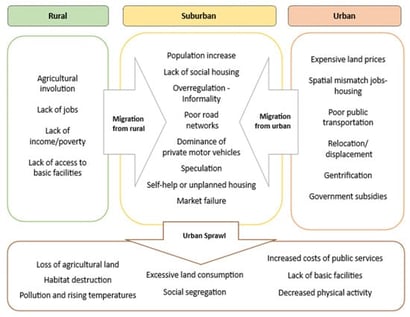
Conceptual framework of the potential relationship between poverty and urban sprawl.

Climate Study Insights for the Tourism Sector: Analysis of Selected Pilot Regions in Croatia

  • Mira Zovko,
  • Izidora Marković Vukadin and
  • Tanja Likso
  • + 1 author

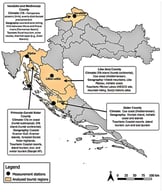
Understanding the impact of climate change on tourism is vital for the economies that rely on it. The tourism sector in Croatia, a country with diverse climatic regions, but also diverse features of tourism, is particularly sensitive to changes in climate variables such as 2 m air temperature and precipitation totals. This study analyzes trends in these two key climate variables from 1961 to 2024 across five representative climatic regions: the-mountainous Lika region (Ličko-senjska County), the Kvarner region on the northern Adriatic coast (Primorsko-goranska County), the Zadar region on the central Adriatic coast (Zadarska Counties), and northern continental Croatia (Varaždinska and Međimurje Counties). Linear trends, 5-year moving averages, and comparisons between two standard climate periods (1961–1990 and 1991–2020) were conducted. Using these data, the monthly self-calibrated Palmer Drought Severity Index (sc-PDSI) and Standardized Precipitation Index (SPI) for seven-time scales were calculated for the period 1961–2024 to assess drought conditions and their implications for tourism across the selected destinations. Frequencies of dry, near normal and wet months, estimated by SPI for a nine-month time scale (SPI-9) and a monthly sc-PDSI, were compared for two subperiods, 1961–1992 and 1993–2024. Meteorological data were contextualized for tourism stakeholders, with a focus on adaptation measures. Semi-structured interviews were conducted with tourism professionals in the study regions, providing qualitative insights into observed changes in climate and tourist behavior, operational challenges, adaptation strategies, level of community engagement, and opportunities envisioned. Objective climatological data were compared with the subjective perceptions of tourism experts using the principle of mixed methods, which allows for triangulation. The climatological data indicated a continuous trend of increasing mean annual air temperatures, as well as anomalies of average precipitation amount. The interviews revealed signals of emerging climate shifts, such as changes in the seasonality of visitors, concerns about water scarcity and heat stress. These findings were interpreted in the context of potential threats and opportunities for the tourism sector, highlighting region-specific adaptation strategies. By combining objective climate data with insights from tourism professionals, this study provides a comprehensive assessment of climate change impacts on tourism and informs for resilient tourism development across Croatia’s diverse regions. This paper presents a methodological framework for developing adaptation recommendations that draw on both empirical climate data and the lived experiences of tourism work practitioners.

6 February 2026

Geographical distribution of the studied pilot regions of Croatia.

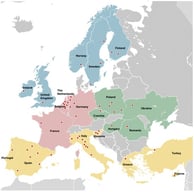
The growing recognition of the need for systemic approaches to urban climate transitions calls for comprehensive monitoring and evaluation frameworks that extend beyond Greenhouse Gas emissions to include measures that impact human behaviours, as well as process indicators that enable timely adjustments to climate action pathways. The extant literature offers limited insights into EU regional patterns and differences in the assessment of actions toward climate neutrality. This study examines indicators of process and co-benefit selected for the pilot projects of cities that aim to be climate neutral by 2030 in 21 European countries, and it aligns the indicators set utilised in the NetZeroCities pilot projects with the international frameworks of United Nations Sustainable Development Goals and New European Bauhaus. The findings highlight the relevance accorded by cities in all European regions to learning, awareness and participation, and inform on potential regional differences in the prioritisation of specific sustainability goals across North, West, South and East Europe. The methodology contributes to the sustainability science and transdisciplinary literature by aligning cities’ indicators with the SDG and NEB frameworks. Findings suggest that the EU focus on engagement, participation and social learning is being taken up by cities; furthermore, they contribute insights for a potentially more geographically and culturally aware design of European urban climate transitions.

5 February 2026

Map of cities analysed (the red dots visually indicate the cities which have been analysed).

Management Evaluation of a Semi-Urban Beach in Northwestern Mexico

  • Gisela García-Morales,
  • María Sara Burrola-Sánchez and
  • José Alfredo Arreola-Lizárraga
  • + 1 author

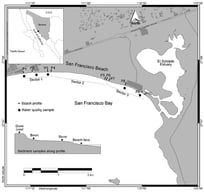
Evaluations of recreational beaches are necessary to guide their management. In this study, we conducted a socio-ecological evaluation to propose management guidelines for San Francisco beach in northwestern Mexico, using a beach quality index and recording user perceptions. The results showed that the beach quality is high, based on the recreational, natural, and protection functions considered in the beach quality index. This finding was consistent with user perceptions of beach services, environmental conditions, and cleanliness. The findings of this study can be applied to strategies focused on the use and preservation of San Francisco Beach, aiming to maintain the natural landscape and sanitary quality, provide public services, ensure cleanliness, subdivide recreational areas, and implement year-round surveillance.

5 February 2026

Location of San Francisco beach in the municipality of Guaymas, indicating the location of beach profiles and water and sediment sampling sites.

News & Conferences

Issues

Open for Submission

Editor's Choice

Reprints of Collections

Geovisualization
Reprint

Geovisualization

Current Trends, Challenges, and Applications
Editors: Vassilios Krassanakis, Andriani Skopeliti, Merve Keskin, Paweł Cybulski

Get Alerted

Add your email address to receive forthcoming issues of this journal.

XFacebookLinkedIn
Geographies - ISSN 2673-7086