Article

Management Evaluation of a Semi-Urban Beach in Northwestern Mexico

by
Gisela García-Morales
,
María Sara Burrola-Sánchez
,
David Urías-Laborín
and
José Alfredo Arreola-Lizárraga
*
Centro de Investigaciones Biológicas del Noroeste, S.C. Estero de Bacochibampo, Km. 2.35 Camino al Tular, Guaymas C.P. 85464, Sonora, Mexico
*
Author to whom correspondence should be addressed.
Geographies 2026, 6(1), 15; https://doi.org/10.3390/geographies6010015
Submission received: 8 November 2025 / Revised: 17 January 2026 / Accepted: 27 January 2026 / Published: 5 February 2026

Abstract

Evaluations of recreational beaches are necessary to guide their management. In this study, we conducted a socio-ecological evaluation to propose management guidelines for San Francisco beach in northwestern Mexico, using a beach quality index and recording user perceptions. The results showed that the beach quality is high, based on the recreational, natural, and protection functions considered in the beach quality index. This finding was consistent with user perceptions of beach services, environmental conditions, and cleanliness. The findings of this study can be applied to strategies focused on the use and preservation of San Francisco Beach, aiming to maintain the natural landscape and sanitary quality, provide public services, ensure cleanliness, subdivide recreational areas, and implement year-round surveillance.

1. Introduction

Beaches are considered socio-ecological systems of great importance [1], where biophysical, social, economic, and governance components interact [2]; due to the recreation services provided by beaches, tourism is an economically and socially significant activity [3]. In addition to promoting recreational activities, beaches mitigate storm impacts, support nutrient recycling, provide sand and minerals as raw materials, and constitute hotspots for economic and cultural development [4]. Therefore, maintaining the ecological functions and services of beaches requires sustainable management [5].
Beaches are subject to anthropogenic pressures and natural phenomena that affect them on different spatial and time scales [6]. Causal factors include the effects of climate change—such as rising mean sea level, storm waves, extreme rainfall events, and increased sea surface temperatures—as well as unregulated urbanization, pollution from wastewater discharges, solid waste, and microplastics [7]. Therefore, beaches require evaluations and management strategies that incorporate recreational or conservation priorities, recognizing their specific characteristics to develop targeted management objectives [8,9].
Beach management has been supported by methods based on recreational fitness indices [5,10,11,12,13,14], comprehensive evaluations based on the opinion of users on recreational use management [15,16,17,18]. Other contributions have provided elements for beach management, including the physical safety of users [19,20,21], the sanitary quality of water and sand to determine public health risks [22,23,24,25,26], provision of tourism services [27,28,29], ecosystem-based management [8,9,28,30,31], as well as the integration of recreational fitness and carrying capacity [32,33]. These studies have documented the importance of gaining knowledge to address problems affecting recreational use and the healthy maintenance of beaches; however, they also highlight the need to strengthen management tools to achieve a balance between conservation and recreational needs [34].
This study combines the application of a beach quality index with user perceptions at a semi-urban beach in a coastal tourist destination undergoing vigorous real estate development in northwest Mexico. Our objective was to evaluate this beach from a socio-ecological perspective and to propose management guidelines for sustainable recreational activities.

2. Materials and Methods

2.1. Study Area

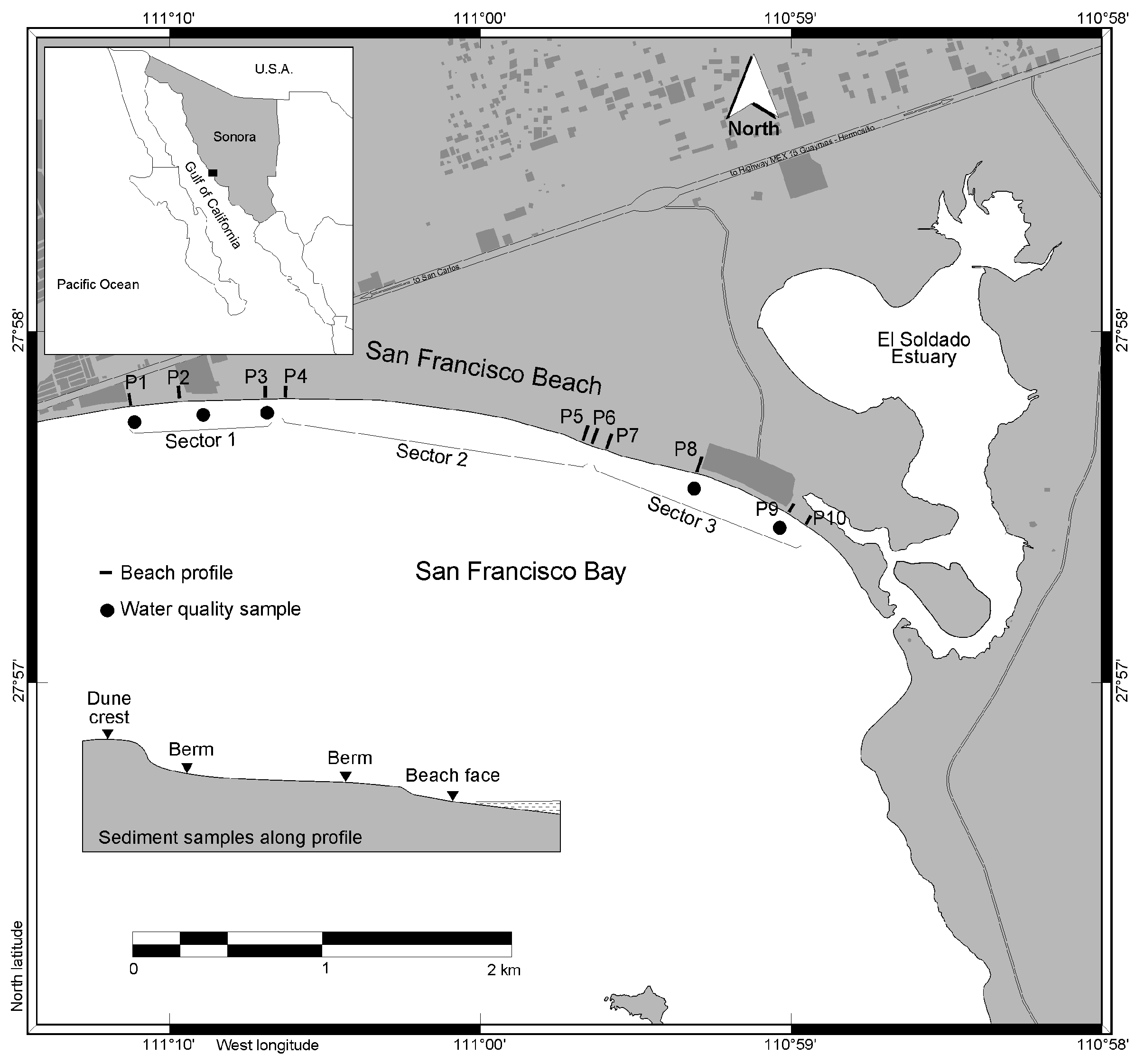
The San Francisco beach (~3.5 km long) is located in the San Carlos tourist destination, municipality of Guaymas, Sonora, Mexico (Figure 1). This municipality has a population of 156,863 and grew at a rate of 0.5% between 2010 and 2020. However, San Carlos doubled its population between 1990 and 2010, and in 2020 it had 2508 inhabitants [35]. San Carlos is a tourist town whose growth has been based on the development of marinas, hotels, condominiums, and residences for foreigners. The local economy is sustained by retail trade, recreational services, and real estate activities linked to temporary residents and retirees [36]. This is important because San Francisco Beach is located between the population centers of Guaymas and San Carlos and qualifies as a semi-urban beach, whereas an urban beach is located within the city and a rural beach is located outside the city [37]. The local climate is warm and dry (BW (h) w (e), with mean temperatures of 10 °C in January and 38 °C in July [38]. The mean precipitation is approximately 300 mm year−1, with the rainy season from July to October. The highest precipitation occurs in August and the lowest in May; the heaviest rains are associated with the “Mexican monsoon” in summer [39]. San Francisco beach is characterized by quartz sand, a gentle slope, and several berms that change with the seasons.

2.2. Beach Quality Index

The environmental quality of the beach was estimated using the Beach Quality Index (BQI) proposed by [40]. The BQI is made up of three subindices: (1) Recreational Function (RF), (2) Natural Function (NF), and (3) Protection Function (PF), which integrate the three main functions of beaches (Equations (1)–(4)).
In turn, the three subindices contribute different partial indices, each composed of individual components that respond to specific functions. In the BQI formulation, the scores of the three subindices and their partial indices were normalized to a range of 0 (poor) to 1 (good). Each partial index was also assigned a coefficient ( t 1   t o   t 8 for the FR subindex and u 1   t o   u 3 for the NF subindex) (Table 1). The PF subindex is a single partial indicator and does not require coefficients.
The sum of each set of coefficients will always be equal to 1. The weight of the p-coefficients was assigned according to the typology of a semi-urban beach. The information for each index was generated from the description of the beach characteristics through field visits, existing data, and literature information.
B Q I = p 1 B R F + p 2 B N F + p 3 B P F
R F = α t 1 I C + t 2 I E Q + t 3 I S e r F + t 4 I A c t + t 5 I A c P a r + t 6 I C o m f + t 7 I S + t 8 I B S  
N F = u 1 I N + u 2 I W S P + u 3 I P Q
P F = I P P
For the RF subindex, 15 water samples were collected in the intertidal zone during June-July 2023 corresponding to the first months of the summer vacation period (Figure 1). For the FP subindex, 10 beach profiles were measured from the dune area to the intertidal and breaker zones, and the area was classified into three sectors based on the degree of disturbance from coastal use according to areas of higher and lower user influxes. The profiles were measured with a fixed level, a rod, and a 50 m tape measure. We used sea level and tide predictions from the CICESE Mar Version 1.0 software. The level was transferred to a vertex of each support polygon with a fixed Sokkia model C32 (Atsugi, Japan) level and a rod, using the differential-leveling technique [41] (Figure 1).
The granulometry of the beach sediments was determined. To this end, 36 sediment samples were collected from the dune crest, berm, intertidal zone, and wet zone, coinciding with the measured profiles (Figure 1). The sediment samples were analyzed using the sieve method [42]; the size distribution of the sediments was analyzed using HORIBA LA-960 equipment, and the granulometry was described according to [43].

2.3. User Perception

Information about user perception was recorded by applying a survey that addressed three aspects: (1) user profile, (2) recreational habits, and (3) environmental conditions and beach infrastructure (Table 2). These aspects are useful criteria for guiding beach management based on information about tourists’ perceptions, including their motivations and recreational expectations. The survey design was taken from [5,32], where 80 surveys were conducted on each beach. In this study a total of 91 surveys were administered (face-to-face and via Google Forms) during the summer vacation season (July and August) of 2023, on weekends, given the greater influx of tourists during this period.
The population surveyed included beach users of both sexes aged 18 or older. In the survey, each response to questions about environmental and infrastructure conditions was assigned a value on a 1-to-5 scale, with the ideal beach characteristics as a reference, as suggested by [44].
We calculated the mean score for each question. The values ranged from 0.2 (very poor recreational aptitude) to 1 (very good recreational aptitude), as suggested by [45,46] to evaluate environmental indicators. Based on the above, beach quality was assessed based on user perceptions. The data obtained were captured in an Excel spreadsheet, and the results were displayed graphically.

3. Results

3.1. Beach Quality Index

3.1.1. Recreational Function Subindex (RF)

The recreational function subindex recorded a high mean score (0.63). The beach received a rating of “very good”, equivalent to an α value of 1, as the mean value of enterococci during the vacation season based on water quality data was 2.25 enterococci MPN/100 mL.
The partial crowding index (CI) was 1 because the available beach area per person exceeded 12 m2. The partial environmental quality index (IEQ) scored 0.94. The evaluation of sand quality showed a low garbage density/100 m2 along the beach, mainly consisting of garbage from beach users and the remains of marine plants. No garbage was found in the water, but 0.4 points were subtracted from the maximum score due to the presence of marine plant detritus.
The partial services and facilities index (ISerF) received a very low score (0.033) due to a lack of services and facilities. The partial activity index (IAct) received a score of 0.80, with 0.2 points deducted from the maximum value due to unwanted activities on the beach.
The partial access and parking index (IAcPar) obtained a score of 0.73 due to the absence of some attributes. The partial comfort index (IComf) was rated 0.85 due to adequate beach morphology (Table 3).
The environmental quality index (IS) was awarded a score of 0.33 because it lacks coastal defense structures. The Beach Safety Index (IBS) received a very low rating (0.08) due to the absence of most components (Table 4).

3.1.2. Natural Function Subindex (NF)

The natural function of the beach was given a high score (0.81). The partial natural conditions index (NI) obtained a score of 0.70 due to the low representation of plant species in the dunes compared to the total plant species in the locality.
The partial water-and-sand pollution index (IWSP) obtained a score of 0.75. Beach closures due to fecal pollution events were not recorded; however, 0.25 points were deducted from the maximum score due to the average number of events exceeding the upper limit for enterococci allowed by the regulations. The partial physical quality index (CPI) received a score of 1, as no changes in grain size, beach surface, or wave regime were identified due to human activities over the past 10 years (Table 4).

3.1.3. Protection Function Subindex (PF)

The beach protection function was scored at 0.154, indicating a very low ability to dissipate wave energy (Table 4).
  • Integration of Recreational, Natural, and Beach Protection Functions
San Francisco is a semi-urban beach, and the p-coefficients used correspond to this type.
The formula for calculating the ICP for the San Francisco beach is exemplified below.
I C P = 0.40 0.638 + 0.30 0.81 + 0.30 0.154
I C P = 0.255 + 0.243 + 0.0462
I C P = 0.544
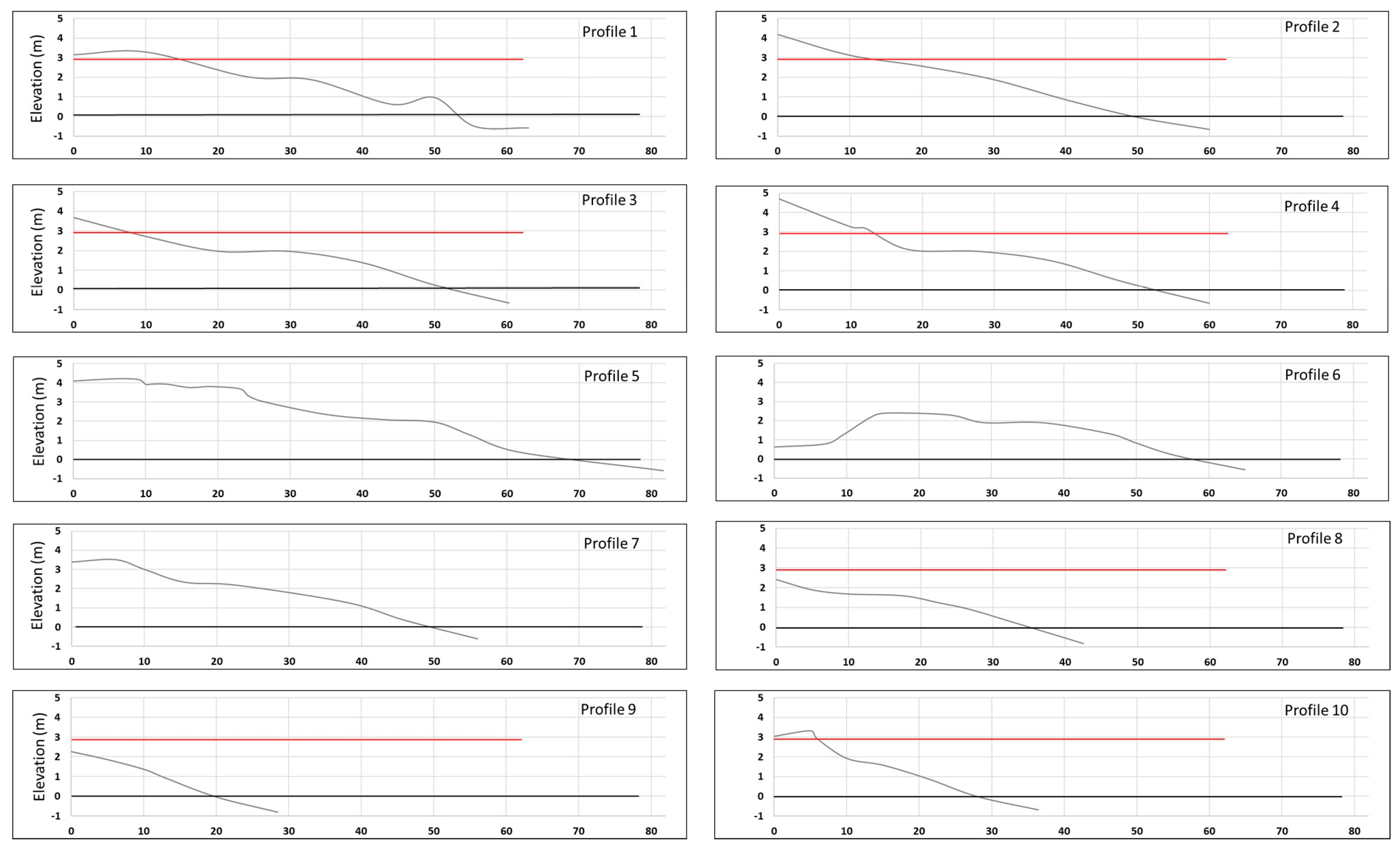
The profile survey showed a beach in the cold-warm transition between winter and spring, with gentle slopes and an intermediate morphodynamic profile (Figure 2). In Sector 1, the elevations in the dune area ranged from +3.281 m to +4.697 m. This area is characterized by an inland alluvial valley with a flood marsh above mean sea level due to the effect of the tidal water table. Sector 2 is characterized by a stabilized dune strip, with a maximum elevation of +4.697 m at the beginning of Profile 4, which decreases to +2.389 m at Profile 6. From the land to the sea zone, the central area of this strip has a flood lagoon after the dune zone, with an elevation of +0.622 m and a slope reaching +2.389 m towards the dune strip. Sector 3, located between the flood lagoon and the area adjacent to the residential and tourist condominium area, showed profiles with elevations at the top of the dune from +2.264 m to +3.508 m. The location of the berm and intertidal zone with respect to the transverse axis was variable, with the wet or intertidal zone between +0.345 and −0.8 m.
The granulometric analysis showed that beach dunes are composed of medium to coarse sand with diameters of 0.45 to 1.88 mm (Ø). Comparatively, Sector 1 showed coarser sand (0.26 to 1.88 mm Ø) than the other sectors, likely due to its location on the coastal strip and the perpendicular incidence of dominant waves in the bay (Table 5).

3.2. User Perception

3.2.1. User Profile

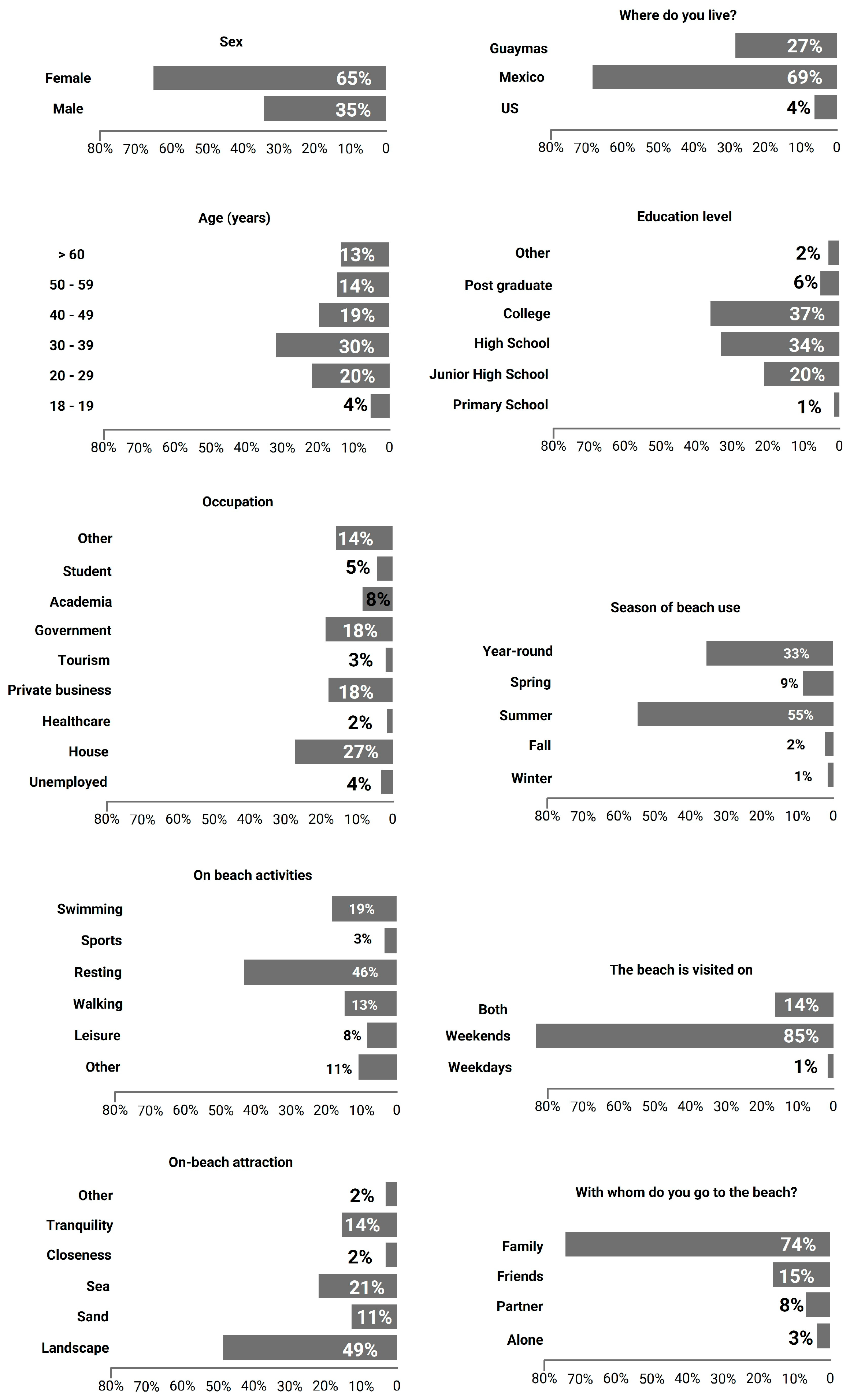
Twenty-seven percent of the respondents were residents of the municipality of Guaymas, 69% were from other locations in Mexico, and 4% were from USA (Figure 3). The influx of tourists to the beach included 65% women. The most frequent age groups were 30–39 years (30%) and 20–29 years (20%). The education level of most beach users was college (37%) and high school (34%) (Figure 3).

3.2.2. Recreational Habits

Most users prefer to go to the beach in summer (55%) and during weekends (85%). The main activities of users on the beach include resting (46%) and swimming (19%). Most people go to the beach accompanied by family members (74%). The main reasons to visit this beach are the surroundings and landscape (49%), water (21%), and tranquility (14%) (Figure 3).

3.2.3. Facilities and Services, Environmental Health, and Beach Condition

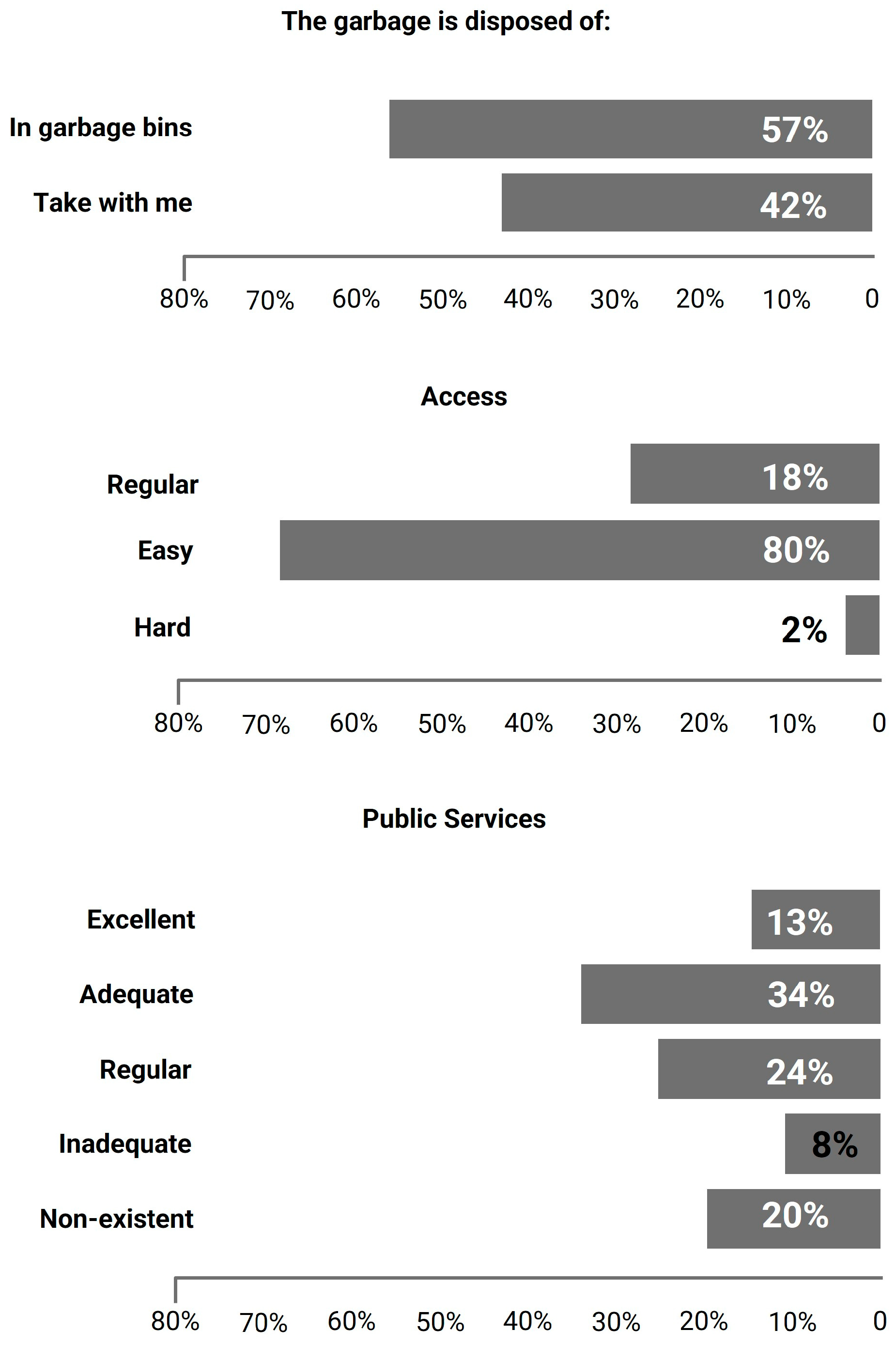
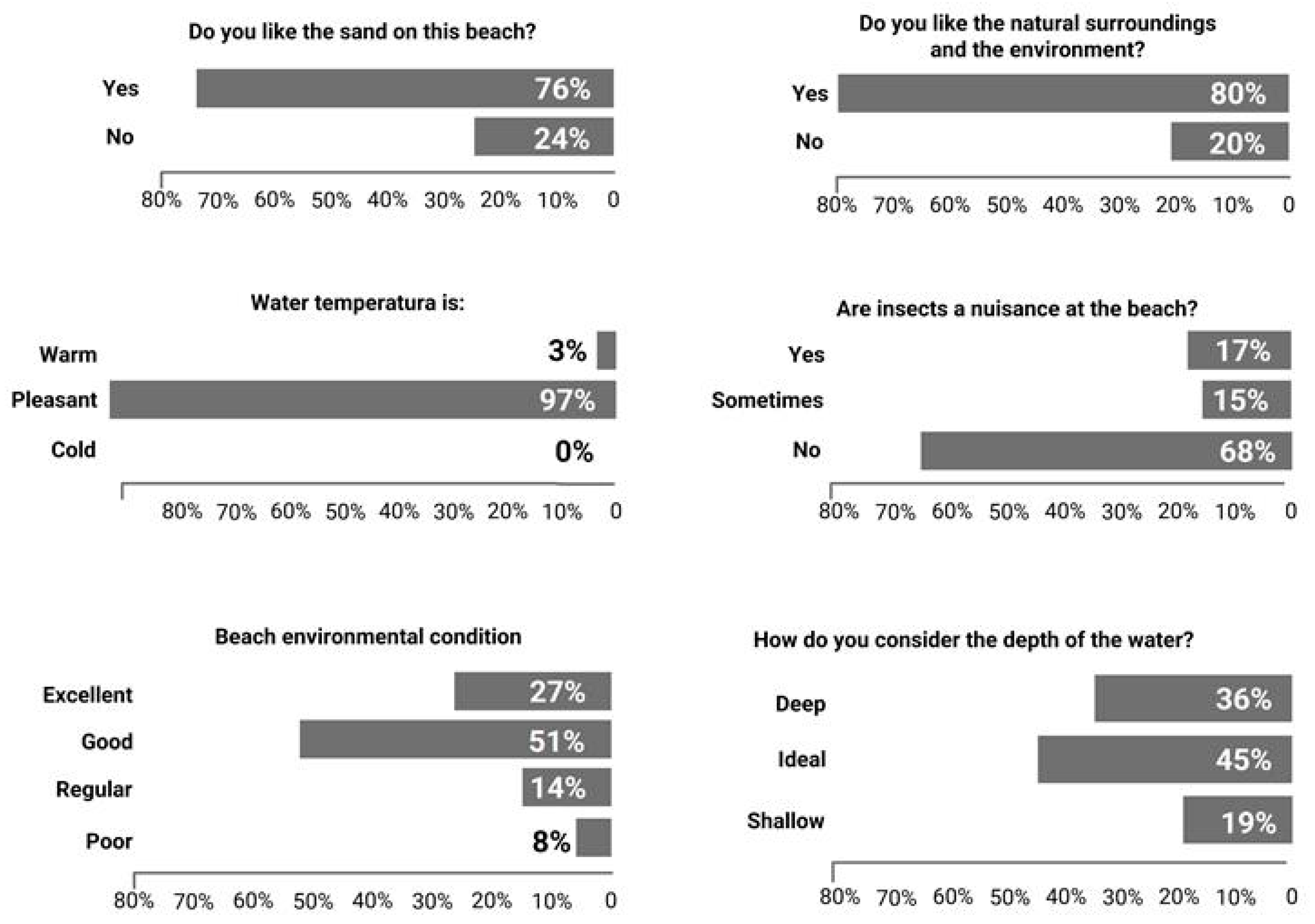
Beach users reported that they dispose of their garbage in on-site containers (57%) or take it home (42%). Most users (80%) reported that access to the beach is easy but noted the lack of concrete or wooden walkways from the parking lot to the tent area. They also mentioned the lack of public services (toilets, showers, information) (20%) or that the only available services (portable toilets and tents) are adequate (34%) or regular (24%) (Figure 4).
Seventy-six percent of users said they like the sand and conditions of the natural environment in terms of safety, such as waves and currents, which are pleasant to 80% of users. The beach depth was considered ideal by many users (45%), although a considerable number (36%) thought it was deep. Regarding the environmental beach health, 51% of respondents believe it is good (Figure 5).
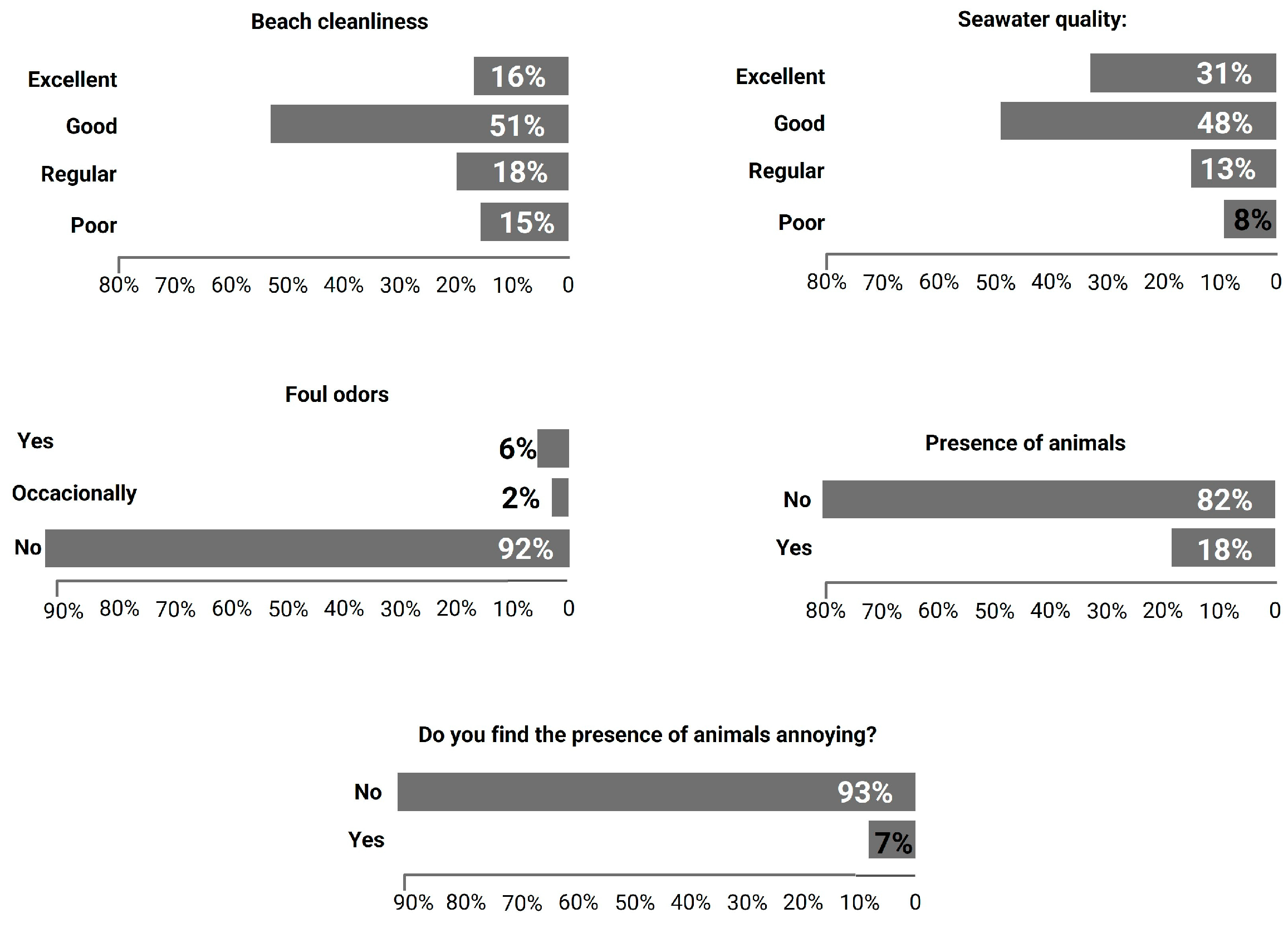
The majority of the users mentioned that sand cleanliness and water quality are good (51% and 48%, respectively). Also, most users (92%) reported not perceiving unpleasant odors and not being bothered by the presence of domestic animals (Figure 6).
Public services, according to user perception, are sufficient and were rated high (0.93). The environmental component was rated high (0.96) based on the biophysical characteristics of the beach: water, sand, depth, and environmental conditions. Cleanliness received a high score (0.92) based on the perception of users regarding water and sand cleanliness. The overall beach quality evaluation based on user perception received a high score (0.93).

4. Discussion

The socio-environmental evaluation of the San Francisco beach was based on its recreational, natural, and protective functions, which comprise the beach quality index, provided evidence of high quality. This outcome was consistent with user perceptions of beach services, environmental conditions, and cleanliness. The elements provided by the beach quality index and user perceptions help guide beach management.

4.1. Beach Quality Index

The sanitary quality of the water was suitable for recreational activities, in accordance with the Mexican Standard NMX-AA-120-SCFI-2016, which establishes a maximum limit of 100 MPN/100 mL for enterococci [47]. Enterococci concentrations < 10 MPN/100 mL were observed, consistent with the records of the Federal Commission for Protection against Sanitary Risks (COFEPRIS) [48] at the beginning of the vacation season on year studied (<10 MPN/100 mL). These results do not coincide with the findings of [49], who reported enterococci concentrations > 1500 MPN/100 mL during summer at this beach, attributed to occasional wastewater discharges, a massive influx of users with insufficient toilets, the presence of domestic animals, and rainwater runoff. No rainfall occurred during our study period, and the beach has mobile toilets, which may explain the differences in sanitary conditions. Currently, COFEPRIS performs monitoring before the Easter, summer, and winter vacation periods. Regular monitoring of beach sanitary quality is crucial to prevent public health risks.
The partial crowding index showed that the beach was not overcrowded in summer. This feature is important because overcrowded beaches tend to exhibit physical-ecological and sociocultural problems, with direct effects on beach management, economic development, and environmental condition; in addition, it contributes to defining how attractive a beach can be for visitors [50]. However, in San Francisco, overcrowding during the Easter holiday period adversely affects water quality [49]. Setting a maximum limit for visitors based on the actual carrying capacity of the beach favors recreational use [32]. In addition, a low or moderate tourism density may be compatible with the preservation of the beach and dune vegetation [51].
San Francisco lacks basic public services and facilities (surveillance, showers, facilities for children, permanent toilets, paved parking, walkways, and others), which affects its tourist appeal because public facilities and services favor beach recreation [52]. This is because San Francisco is a semi-urban beach and, in a few years, based on projected urban growth, it will be an urban beach, so providing it with infrastructure will support recreation for tourists who choose this beach. It is important to consider that tourists have different preferences depending on whether the beaches are located in urban or rural environments. For example, a study revealed that tourists who choose rural beaches tended to have higher income levels, spent more per trip, and had higher levels of overall satisfaction than tourists who choose urban beaches, but in any case, a beach will be managed more effectively if a healthy ecosystem is balanced with positive recreational use [37].
The environmental quality of the San Francisco beach was good, with no litter reported on most of it. However, the presence of pets (dogs) is not pleasant for all users, especially because pet feces are left on the sand (according to survey data), which has been identified as a source of fecal pollution on this beach [49]. This is a management issue that requires the implementation of regulatory measures (e.g., fines) for failure to collect feces; education and awareness-raising through clear signage and pictograms, and information campaigns on health risks.
The morphological characteristics of the San Francisco beach make it suitable for aquatic and recreational activities. Beaches with medium-sized golden sand, intermediate morphodynamic profile, shallow depth, gentle waves, and a microtidal regime provide safe conditions for recreational use [32]. San Francisco is characterized by stable depositional variations; therefore, there is no prolonged erosion, favoring a long, wide sandy beach line that prevails year-round. The width of the beach is important because it is the most frequented area and can accommodate an adequate tourist carrying capacity [53] have highlighted the importance of this indicator, noting that wider beaches entail a lower risk of loss as a tourist resource and a lower vulnerability to storm events.
The environmental quality index of the San Francisco beach showed little artificial surface area relative to its natural area. The natural environment of beaches should be maintained to the extent possible, limiting the construction of coastal infrastructure, given that the expansion of unplanned urban development frequently has adverse environmental consequences [30]. Similarly, as coastal environments change, the recreational experience is adversely affected [54], so that the unregulated development of urban and coastal infrastructure, and the environmental changes it entails, can be counterproductive for tourism [20].
The value obtained for the RF subindex highlights aspects that deserve attention. It suggests implementing a monthly monitoring program of water sanitary quality; investing in infrastructure (with due planning) and basic public services (toilets, showers, parking lots, walkways, environmental information, lifeguards, and rescue teams); implementing a solid waste collection and management program that includes the installation of garbage containers along the beach and at its main access points; implementing an environmental education strategy focused on beach care; training in environmental care and beach management to tourism service providers and municipal public employees. According to [55], promoting environmental awareness of beach quality is essential to advancing towards sustainable tourism.
On the other hand, although San Francisco did not record overcrowding during the study period, it is important to determine its carrying capacity based on desirable conditions rather than the maximum tolerable capacity to minimize impacts on the ecosystem and optimize the use of recreational areas.
The partial natural conditions index showed that the natural ecosystem behind San Francisco beach is in good condition, with dune ridges and abundant vegetation that contribute to its stability and to the protection of the area adjacent to the beach. The presence of coastal dunes directly adjacent to the beach has been found to guarantee its persistence; therefore, the dunes and the beach should not be affected by constructions that interfere with wind flow because this interference will result in a narrowing of the beach, increasing its vulnerability [56,57]. The above was not taken into account at the north and south ends of San Francisco beach, where constructions were built on the dunes. Further construction works should be avoided to maintain the coastal protection service provided by the beach and preserve the value of the landscape.
It is important to consider that decreased beach availability will lead to reduced social carrying capacity, lower beach quality, and decreased recreational capacity [7], affecting its suitability as a tourist recreation area. There is evidence that on beaches where infrastructure has been built at a distance of just 20 m from the coastline, the influx of users during the periods of greatest affluence has caused severe damage to the natural balance of the beach-dune system, resulting in erosion due to interruption of coastal transport and problems to the local ecosystem [34,58].
On the other hand, the results showed that the beach has not been closed due to health risks associated with water quality, although these risks have been documented in previous years [24,49]. It is important to implement permanent seawater quality surveillance as a preventive approach measure to alert users to any potential health risks [59].
The San Francisco beach did not show alterations in the composition/grain size of its sediments, beach surface, or wave regime as a result of human activities. However, the beach profiles reflected the effects of various leisure activities in the upper substrate layers, which modify sediment compaction. It is necessary to bear in mind that grain type and size on a beach are relevant physical attributes from ecological and aesthetic perspectives, in addition to serving as indicators in studies of sediments on tourist beaches [60,61,62]. Particularly in San Francisco, a reduction in particle diameter was observed in Sectors 2 and 3 compared to Sector 1, demonstrating that wind-related redeposition is relevant in this area, as well as compaction due to ATV or 4 × 4 vehicle traffic. The presence of motor vehicles on land and water is a negative indicator that reflects poor beach management, according to [63].
The results of the granulometric analysis in this study roughly coincide with the observations for this same beach reported by [5]. Differences were observed at some sampling points, with a large accumulation of fine sand recorded in 2017, which was explained by beach morphodynamics. Therefore, the observed BQI did not vary.
Based on the evidence provided by the NF subindex, it is recommended to establish a zoning plan for San Francisco beach areas using an ecosystem approach, with decision-making on real estate and maritime-coastal construction projects oriented toward preserving the natural balance of the beach. Additionally, the recreational use of the beach should be regulated based on its characteristics and applicable legislation, to prohibit and penalize bonfires, vehicle transit on the beach and the dunes, garbage burning, excessive noise, and wastewater discharge on the beach.
The capacity of San Francisco beach to dissipate wave energy under normal conditions is good. However, the partial protection index indicates that during extreme weather events (such as storms or hurricanes), it can be highly vulnerable in some areas, depending on the height of the storm wave. The coastal profiles showed that Sector 1 (from Profile 1 to Profile 4), one of the most used beach sectors for recreational activities, would be highly vulnerable to extreme events. The IPP indicated that a wave height of 2.95 m would result in potentially eroded beach areas ranging from 35 to 41 m long (Figure 2). Construction of real estate infrastructure (condominiums and commercial areas) has started in dune areas, particularly between Profiles 2 and 3. Further construction works must be regulated to mitigate potential consequences in case of extreme events. Likewise, the wave height mentioned above would cause beach erosion (20–35 m) between Profiles 8 and 10, affecting the area and housing infrastructure and leading to vulnerability to storm events. On the San Francisco beach, coastal morphology is influenced by wind action and wave-driven sediment washout. These dynamics highlight the importance of establishing beach sectors based on the incidence of dominant waves on the beach line.
Schoeman et al. (2014) [64] indicate that, globally, the expectation is that coastlines will experience sea-level rise; likewise, warm air and water can increase the frequency and intensity of coastal winds. In particular, assessing the vulnerability of coastal systems to storm impacts provides decision-makers with information on their potential consequences, which is used to develop and implement climate change mitigation or adaptation strategies in the coastal zone [65]. Therefore, future buildings on the San Francisco beach should consider the morphological characteristics of the site and the analysis of flood prediction models and their effects in the event of storms. In addition, the beach must have safety and safeguarding services available throughout the year, and establish restrictions on entry to the sea, when necessary, as requested by the local authorities. These actions will help prevent infrastructure damage and ensure user security.

4.2. User Perception

User preferences regarding the characteristics of recreational beaches can vary significantly, depending on factors such as culture, education level, local and national traditions, social status, gender, and age. These factors determine the configuration of individual preferences and the way people enjoy beaches [15,26]. The present study showed that more than 70% of users visit the beach with their families on weekends, preferably during the summer vacation period, illustrating the social benefits of the beach as a place for recreation, leisure, and family coexistence. To note, one-third of users stated they visit the beach year-round; this information is valuable because it suggests the need to design an annual operational program for beach maintenance, monitoring, and promotion of citizen participation.
The preferences of the San Francisco beach visitors reflect a common pattern observed for recreational beaches worldwide [66]. The users stated that factors such as the environment and landscape, the water, and the tranquility are the main reasons for choosing to visit this particular beach. These elements are considered essential for visitors seeking beach experiences in a clean and safe environment. This observation not only allows us to better understand the preferences of users in the study area but is also consistent with previous studies on this beach [5] and similar rural and semi-urban beaches [67,68,69]. Given that user preferences are useful for guiding management, municipal authorities must consider preserving the natural landscape of this beach when planning for territorial and urban development.
The opinions regarding public services and infrastructure, which ranged from adequate (34%) to regular (24%), were more focused on the need for improvement. However, 20% of the people surveyed believed that services were non-existent, which was reflected in the low scores of the Services and Facilities (ISerF) and Beach Safety (IBS) indices that make up the BQI. This finding implies potentially adverse effects on health quality and public health risks [49,70]. Adequate beach services and infrastructure are relevant issues for beach users and tourists [17,52] and should be a priority in the sustainable management plan needed for this beach.
Opinions on biophysical environmental conditions, such as sand, waves, water temperature, and environmental health, were favorable. Based on the wave regime, wind, and water temperature conditions, and according to the perception of most users (80%), San Francisco beach was rated as suitable for recreational purposes most of the year. Waves are considered an indicator of user safety in the bathing area, as they impact the comfort and safety of bathers, as well as the stability of the beach and coastline [71]. Thirty-six percent of respondents said the beach is deep, which they found dangerous, since it lacks surveillance and lifeguard services. This is also common on other beaches in Mexico, where surveillance in the bathing area is minimal or non-existent [16], representing a hazard, especially on beaches with morphological features that could give rise to rip currents [72]. Surveillance and lifeguard services are essential and should be considered when planning tourist development [73].
Most users shared favorable responses on beach cleanliness, water quality, and the presence of pets. In general, the San Francisco beach maintains an attractive visual appearance, free of pets and foul odors. On days with a peak influx of users, a fraction of the garbage is deposited in on-site bins (privately owned), and the rest is deposited in garbage bins located in the parking area, which are insufficient. The presence of littered solid waste and pet feces is an unattractive or unhealthy indicator [62]. The problems and adverse impacts associated with poor sanitation systems affect the local economies of communities that depend on tourism and recreational activities on beaches [4,24,74].
An additional element of interest is that the region’s beaches, including San Francisco, are nesting and birthing sites for olive ridley sea turtles (Lepidochelys olivacea), which occurs from [75], meaning that conservation and environmental education measures must be considered.
There are no management plans or certifications for San Francisco Beach or other beaches in the municipality. Currently, management measures in San Francisco consist of occasional cleanup campaigns before the Easter and summer vacation periods, monitoring of olive ridley turtle nesting sites from June to December [76], and monitoring of water quality before the vacation periods [7]. The municipal urban development program [35]. establishes as an environmental strategy the protection of the coastal system through guidelines that prevent the removal of vegetation from the dunes, as a way to protect the coast from erosion.
The Beach Quality Index was useful for identifying the biophysical characteristics of the beach related to recreation, environmental conditions, protection, and coastal vulnerability. Therefore, the information provided in this study can be used to develop formal management plans with local authorities and tourism service providers. Information on user perceptions allows for proposing management strategies focused on maintaining the cleanliness of the beach and preserving the natural environment, as well as a year-round surveillance and lifeguard program. In addition, investing in infrastructure and basic services for users is a priority to prevent public health risks. Recently, state government authorities announced plans for a 2.4 km tourist boardwalk on San Francisco Beach, which will include bike lanes and urban transport routes, an inclusive park, viewpoints, an amphitheater, ecological areas, playgrounds, shopping areas, parking lots, and street furniture [76]. This will be located behind the beach’s dune cordon, and the project is currently undergoing an environmental impact assessment. This will mean a significant increase in tourist numbers, but also in infrastructure investment. It is important to provide visitors with information on codes of conduct, water and sand quality, safety, and risk warnings, among others.

5. Conclusions

The combination of a beach quality index with user perception suggests consistency in management decisions. The index showed that San Francisco Beach has an adequate and safe morphology, as well as good water quality, and was therefore classified as suitable for recreational use. Considering the beach’s vulnerability to extreme events, elements were provided to assign suitable areas for infrastructure, recreational areas, and tourism and real estate development. User perception showed that this beach is a destination for leisure and family life throughout the year. Evidence was also provided of the need to establish public services, maintain cleanliness, encourage citizen participation, and carry out surveillance throughout the year.
It is clear that beach management should be based on the preservation of natural capital and have an impact on social well-being. Considering that this semi-urban beach is located in a tourist destination with growing urban development, our results can be applied to management with favorable implications for the sustainable use of the beach. The planned tourist boardwalk aims to improve the beach as a space for leisure and recreation, but the development of a management plan is emerging as a priority. The approach of combining the environmental characteristics of beaches and user perceptions may be useful as a starting point for management and certification processes, considering that most recreational beaches in various regions of the world face urban growth, tourism development, and lack planning and management.

Author Contributions

G.G.-M.: Writing—original draft, Conceptualization, Data collection, Formal analysis. M.S.B.-S.: Writing—review and editing. D.U.-L.: Writing—review and editing, Map and Beaches profiles;. J.A.A.-L.: Writing—review and editing, Writing—original draft, Supervision, Resources, Investigation, Formal analysis, Conceptualization. All authors have read and agreed to the published version of the manuscript.

Funding

GGM was a recipient of a SECIHTI student fellowship No. 3762631. This research was funded by Centro de Investigaciones Biológicas del Noroeste, S.C., supported by project PPAC-10043.

Informed Consent Statement

Verbal informed consent was obtained from the participants. Verbal consent was obtained rather than written because beach users were interviewed directly on the beach.

Data Availability Statement

The original contributions presented in this study are included in the article. Further inquiries can be directed to the corresponding author.

Acknowledgments

Gisela García acknowledge the Secretariat of Science, Humanities, Technology and Innovation (SECIHTI, Mexico) for its financial support through a postgraduate scholarship (3762631). María del Refugio López Tapia is acknowledged for her support in the collection and analysis of water samples at CIBNOR’s Water Quality Laboratory. Guillermo Padilla assisted with fieldwork. Manuel Trasviña and Myriam Hernández performed sediment analyses at CIBNOR’s Soil Science Laboratory. María Elena Sánchez-Salazar translated the manuscript into English.

Conflicts of Interest

The authors declare no conflicts of interest.

References

  1. McLachlan, A.; Defeo, O. Human Impacts. In The Ecology of Sandy Shores; McLachlan, A., Defeo, O., Eds.; Elsevier Academic Press: London, UK, 2018; pp. 375–420. [Google Scholar]
  2. Cabioch, B.; Robert, S. Integrated beach management in large coastal cities. A review. Ocean Coast. Manag. 2022, 217, 106019. [Google Scholar] [CrossRef]
  3. Li, H.; Wang, J.; Zhu, C. Assessment and application of beach quality based on analytic hierarchy process in Yangkou Beach, Qingdao. J. Ocean Univ. China 2023, 22, 151–160. [Google Scholar] [CrossRef]
  4. Nel, R.; Campbell, E.; Harris, L.; Hauser, L.; Schoeman, D.S.; McLachlan, A.; du Preez, D.R.; Bezuidenhout, K.; Schlacher, T.A. The status of sandy beach science: Past trends, progress, and possible futures. Estuar. Coast. Shelf Sci. 2014, 150, 1–10. [Google Scholar] [CrossRef]
  5. García-Morales, G.; Arreola-Lizárraga, J.A.; Mendoza-Salgado, R.A.; García-Hernández, J.; Rosales-Grano, P.; Ortega-Rubio, A. Evaluation of the recreational aptitude of beaches as perceived by users. J. Environ. Plan. Manag. 2017, 61, 161–175. Available online: https://www.tandfonline.com/doi/full/10.1080/09640568.2017.1295924 (accessed on 26 January 2026). [CrossRef]
  6. Defeo, O.; McLachlan, A.; Schoeman, D.; Schlacher, T.; Dugan, J.; Jones, A.; Lastra, M.; Scapini, F. Threats to sandy beach ecosystems: A review. Estuar. Coast. Shelf Sci. 2009, 81, 1–12. [Google Scholar] [CrossRef]
  7. Arreola-Lizárraga, J.A.; García-Morales, G.; León-López, C.E.; Ortega-Rubio, A. Playas recreativas de México: Vulnerabilidad y gestión. In Gobernanza y Manejo de las Costas y Mares ante la Incertidumbre: Una Guía para Tomadores de Decisiones; Azuz-Adeath, E., Cervantes-Rosas, O., Espinoza-Tenorio, A., Silva-Casarín, A., Ortega-Rubio, A., Botello, A., Vega-Serratos, B., Eds.; Rivera-Arriaga, Universidad Autónoma de Campeche—RICOMAR: Campeche, Mexico, 2020; pp. 193–220. [Google Scholar]
  8. Harris, L.; Nel, R.; Holness, S.; Schoeman, D. Quantifying cumulative threats to sandy beach ecosystems: A tool to guide ecosystem-based management beyond coastal reserves. Ocean Coast. Manag. 2015, 110, 12–24. [Google Scholar] [CrossRef]
  9. Sardá, R.; Valls, J.F.; Pintó, J.; Ariza, E.; Lozoya, J.P.; Fraguell, R.M.; Marti, C.; Rucabado, J.; Ramis, J.; Jiménez, J.A. Towards a new integrated beach management system: The ecosystem-based management system for beaches. Ocean Coast. Manag. 2015, 118, 167–177. [Google Scholar] [CrossRef]
  10. Espejel, I.; Espinoza-Tenorio, A.; Cervantes, O.; Popoca, I.; Mejía, A.; Delhumeaux, S. Proposal for an integrated risk index for the planning of recreational beaches: Use at seven Mexican arid sites. J. Coast. Res. 2007, 50, 47–51. [Google Scholar] [CrossRef]
  11. Botero, C.; Pereira, C.; Anfuso, G.; Cervantes, O.; Williams, A.T.; Pranzini, E.; Silva, C.P. Recreational parameters as an assessment tool of beach quality. J. Coast. Res. 2014, 70, 556–562. [Google Scholar] [CrossRef]
  12. Semeoshenkova, V.; Newton, A.; Contin, A.; Greggio, N. Development and application of an Integrated Beach Quality Index (BQI). Ocean Coast. Manag. 2016, 143, 74–96. [Google Scholar] [CrossRef]
  13. Ocaña, F.; Cuevas, E.; Sauma-Castillo, L.; López-Castro, M.; Guerra-Castro, E. A quantitative three-step approach for guiding sandy beach management. Ocean Coast. Manag. 2022, 229, 106337. [Google Scholar] [CrossRef]
  14. Cervantes, O.; Espejel, I. Design of an integrated evaluation index for recreational beaches. Ocean Coast. Manag. 2008, 51, 410–419. [Google Scholar] [CrossRef]
  15. Vaz, B.; Williams, A.T.; Pereira, C.; Phillips, M. The importance of user’s perception for beach management. J. Coast. Res. 2009, 56, 1164–1168. [Google Scholar]
  16. Navarro, R.C.; Espejel, I.; Calderón de la Barca, G.; Cervantes, O.; Leyva, A. Incorporación de la percepción de los usuarios en la certificación de playas limpias. SSRN Electron. J. 2012, 1, 140–146. [Google Scholar] [CrossRef]
  17. Dadon, J.R. Beach Management, Beyond the Double Standard for Client Demands and Environmental Sustainability. In Beach Management Tools: Concepts, Methodologies and Case Studies; Botero, C.M., Cervantes, O.D., Finkl, C.W., Eds.; Springer Coastal Research Library: Berlin/Heidelberg, Germany, 2018; pp. 619–634. [Google Scholar]
  18. Micallef, A.; Williams, A.T.; Radic, M.; Ergin, A. Application of a novel bathing area evaluation technique—A case study of Croatian Island beaches. World Leis. J. 2004, 46, 4–21. [Google Scholar] [CrossRef]
  19. De Serio, F.; Armenio, E.; Mossa, M.; Petrillo, A. How to Define Priorities in Coastal Vulnerability Assessment. Geosciences 2018, 8, 415. [Google Scholar] [CrossRef]
  20. Lithgow, D.; Martínez, M.L.; Gallego-Fernández, J.B.; Silva, R.; Ramírez-Vargas, D.L. Exploring the co-occurrence between coastal squeeze and coastal tourism in a changing climate and its consequences. Tour. Manag. 2019, 74, 43–54. [Google Scholar] [CrossRef]
  21. Duvat, V. Public Perception of Beach Quality: Lessons Learnt from a French Case Study; Universidad de Magdalena: Santa Marta, Colombia, March 2012; Available online: https://hal.science/hal-00821861v1 (accessed on 4 November 2025).
  22. Rippy, M.A.; Franks, J.P.S.; Feddersen, F.; Guza, R.T.; Warrick, J.A. Beach nourishment impacts on bacteriological water quality and phytoplankton Bloom dynamics. Environ. Sci. Technol. 2013, 47, 6146–6154. [Google Scholar] [CrossRef] [PubMed]
  23. Quilliam, R.S.; Kinzelman, J.; Brunner, J.; Oliver, D.M. Resolving conflicts in public health protection and ecosystem service provision at designated bathing waters. J. Coast. Res. 2015, 161, 237–242. [Google Scholar] [CrossRef] [PubMed]
  24. León-López, C.E.; García-Morales, G.; Chávez-Villalba, J.E.; Mendoza-Salgado, R.A.; García-Hernández, J.; Méndez-Rodríguez, L.C.; Arreola-Lizárraga, J.A. Carrying capacity and the effect of bathers on the sanitary quality of water at a rural recreational beach. FEB-Fresenius Environ. Bull. 2021, 7, 8549–8558. [Google Scholar]
  25. Kaviarasan, T.; Dhineka, K.; Sambandam, M.; Sivadas, S. Impact of multiple beach activities on litter and microplastic composition, distribution, and characterization along the southeast coast of India. Ocean Coast. Manag. 2022, 223, 106–177. [Google Scholar] [CrossRef]
  26. Botero, C.; Anfuso, G.; Williams, A.T.; Zielisnky, S.; Da Silva, C.P.; Cervantes, O.; Silva, L.; Cabrera, J.A. Reasons for Beach Choice: European and Caribbean Perspectives. J. Coast. Res. 2013, 65, 880–885. [Google Scholar] [CrossRef]
  27. Merlotto, A.; Verón, E.M. Evaluación de los servicios culturales de recreación y turismo del ecosistema playa en la ciudad de Mar del Plata, Argentina. Rev. Univ. Geogr. 2019, 28, 35–56. [Google Scholar]
  28. Cruz-Estrada, I.; Miranda-Zavala, A.; Ramírez-Torres, M. Gestión inteligente de playas desde la percepción del visitante: Caso Rosarito, Baja California, México. Rev. Cienc. Soc. 2021, 27, 504–520. [Google Scholar]
  29. González, S.; Holtmman, G. Quality of tourist beaches of northern Chile: A first approach for ecosystem-based management. Ocean Coast. Manag. 2017, 137, 154–164. [Google Scholar] [CrossRef]
  30. Merlotto, A.; Verón, E.; Bértola, G. Servicios ecosistémicos de regulación en playas del partido de General Alvarado, Buenos Aires, Argentina. Rev. Geogr. Norte Gd. 2019, 73, 113–131. [Google Scholar] [CrossRef]
  31. Shi, Q.; Chen, H.; Liu, D.; Geng, T.; Zhang, H. Identifying the Spatial Imbalance in the Supply and Demand of Cultural Ecosystem Services. Int. J. Environ. Res. Public Health 2022, 19, 6661. [Google Scholar] [CrossRef] [PubMed]
  32. García-Morales, G.; Arreola-Lizárraga, J.A.; Rosales-Grano, P. Integrated Assessment of Recreational Quality and Carrying Capacity of an Urban Beach. Coast. Manag. 2018, 46, 316–333. [Google Scholar] [CrossRef]
  33. Murillo, N.; Pérez-Cayeiro, M.L.; Del Río, L. Ecosystem carrying and occupancy capacity on a beach in southwestern Spain. Ocean Coast. Manag. 2023, 231, 106400. [Google Scholar] [CrossRef]
  34. Prisco, I.; Acosta, A.; Stanisci, A. A bridge between tourism and nature conservation: Boardwalks effects on coastal dune vegetation. J. Coast. Conserv. 2021, 25, 14. [Google Scholar] [CrossRef]
  35. PMDU_Guaymas. Programa Municipal de Desarrollo Urbano de Guaymas, Sonora. 2024. Available online: https://smt.guaymas.gob.mx/archivo/2025/03/ID27944-AG71-FG1-IGA-DCU-FE03-2025-PLAN-MUNICIPAL.DE.DESARROLLO.URBANO.CONTROL.URBANO.2025.PDF (accessed on 24 October 2025).
  36. SECTUR. Secretaría de Turismo Sistema Nacional de la Información Estadística del Sector Turismo de México (Datatur): Compendio Estadístico del Turismo en México. 2023. Available online: https://datatur.sectur.gob.mx/SitePages/CompendioEstadistico.aspx (accessed on 1 December 2025).
  37. Dodds, R.; Holmes, M.R. Preferences at City and Rural Beaches Are the Tourists Different? J. Coast. Res. 2020, 36, 393–402. [Google Scholar] [CrossRef]
  38. García-Medina, G.; Ruiz-Corral, J.A.; Martínez-Parra, R.A. Los Climas de México: Una estratificación Ambiental Basada en el Componente Climático; Centro de Investigación Regional del Pacífico Centro, INIFAP, SAGAR: Guadalajara, Mexico, 1998. [Google Scholar]
  39. Douglas, M.W.; Maddox, R.A.; Howard, K.; Reyes, S. The Mexican Monsoon. J. Clim. 1993, 6, 1665–1677. [Google Scholar] [CrossRef]
  40. Ariza, E.; Jiménez, J.A.; Sarda, R.; Villares, M.; Pinto, J.; Fraguell, R.; Roca, E.; Marti, C.; Valdemoro, H.; Ballester, R.; et al. Proposal for an integral quality index for urban and urbanized beaches. Environ. Manag. 2010, 45, 998–1013. [Google Scholar] [CrossRef]
  41. Casanova-Matera, L. Topografía Plana (Flat Topography); Taller de Publicaciones de Ingeniería, Universidad de Los Andes: Mérida, Venezuela, 2002; ISBN 980-11-0672-7. [Google Scholar]
  42. Folk, R.L.; Ward, W.C. Brazos River Bar: A study on the significance of grain size parameters. J. Sediment. Res. 1957, 27, 3–26. [Google Scholar] [CrossRef]
  43. Wentworth, C.K. A Scale of Grade and Class Terms for Clastic Sediments. J. Geol. 1922, 30, 377–392. [Google Scholar] [CrossRef]
  44. Popoca, E.; Espejel, I. Propuesta de una metodología para evaluar playas recreativas con destino turístico. Rev. Medio Ambiente Tur. Sustentabilidad 2009, 2, 119–130. [Google Scholar]
  45. Micallef, A.; Williams, A.T. Application of a Novel Approach to Beach Classification in the Maltese Islands. Ocean Coast. Manag. 2004, 47, 225–242. [Google Scholar] [CrossRef]
  46. Cendrero, A.; Fisher, D.W. A Procedure for Assessing the Environmental Quality of Coastal Areas for Planning and Management. J. Coast. Res. 1997, 13, 732–744. [Google Scholar]
  47. Diario Oficial de la Federación. Norma Mexicana, que Establece los Requisitos y Especificaciones de Sustentabilidad de Calidad de Playas. NMX-AA 120-SCFI-2016. Diario Oficial de la Federación 7 Diciembre 2016. Available online: http://legismex.mty.itesm.mx/normas/aa/aa120-06.pdf (accessed on 25 May 2023).
  48. Comisión Federal Contra la Protección y Riesgos Sanitarios (COFEPRIS). Resultados de Calidad de Agua de Mar 2023. Available online: https://gisviewer.semarnat.gob.mx/aplicaciones/Playasv22/destino.html?destino=26_2&anio=2023&periodo=2 (accessed on 23 October 2024).
  49. León-López, C.E.; Arreola-Lizárraga, J.A.; Padilla-Arredondo, G.; Chávez-Villalba, J.E.; Mendoza-Salgado, R.A.; Méndez-Rodríguez, L.C.; García-Hernández, J. Temporal variability of enterococci and associated sources at three subtropical recreational beaches. Oceanol. Hydrobiol. Stud. 2018, 47, 327–336. [Google Scholar] [CrossRef]
  50. Navarro-Jurado, E.; Mihaela, I.D.; Fernández-Morales, A. Carrying capacity model applied in coastal destinations. Ann. Tours. Res. 2013, 43, 1–19. [Google Scholar] [CrossRef]
  51. Pérez-Maqueo, O.; Martínez, M.L.; Sánchez-Barradas, F.; Kolg, M. Testing nature-based coastal protection against disasters derived from extreme hydrometeorological events in Mexico. Sustainability 2018, 10, 1317. [Google Scholar] [CrossRef]
  52. Oh, C.O.; Draper, J.; Dixon, A.W. Comparing resident and tourist preferences for public beach access and related amenities. Ocean Coast. Manag. 2010, 53, 245–251. [Google Scholar] [CrossRef]
  53. De Ruyk, M.; Soares, C.; Mclachlan, A. Social carrying capacity as a management tool for sandy beaches. J. Coast. Res. 1997, 13, 822–830. [Google Scholar]
  54. Petrosillo, I.; Zurlini, G.; Corlianò, M.E.; Zaccarelli, N.; Dadamo, M. Tourist perception of recreational environment and management in a marine protected area. Landsc. Urban Plann. 2007, 79, 29–37. [Google Scholar] [CrossRef]
  55. De Oliveira, E.B.; Newton, A.; Botero, C. Development of a management-based ranking of beaches. Anthr. Coasts 2024, 7, 6. [Google Scholar] [CrossRef]
  56. Díaz-Cuevas, M.D.; Ojeda-Zújar, J.; Álvarez-Francoso, J.I. Sensibilidad de las playas en función de la accesibilidad de los potenciales usuarios turísticos (plazas regladas) en la costa andaluza y los procesos de erosión. In Tecnologías de la Información para Nuevas Formas de ver el Territorio, Proceedings of the XVI Congreso Nacional de Tecnologías de la Información Geográfica, Alicante, Spain, 25–27 June 2014; Zaragozí Zaragozí, B., Ramón Morte, A., Eds.; Universidad de Alicante: Alicante, Spain, 2014; pp. 954–966. [Google Scholar]
  57. Carranza-Edwards, A.; Rosales-Hoz, L. Mexican Beach Sands: Composition and Vulnerability. In Beach Management Tools: Concepts, Methodologies and Case Studies; Botero, C.M., Cervantes, O.D., Finkl, C.W., Eds.; Coastal Research Library 24; Springer: Berlin/Heidelberg, Germany, 2018; Volume 24, pp. 273–292. [Google Scholar]
  58. Rodrigues da Silva, I.; Carneiro, L.; Nascimento, T.; Magalhães, A.; Marinho da Costa, R. Natural and anthropogenic processes on the recreational activities in urban Amazon beaches. Ocean Coast. Manag. 2013, 76, 75–84. [Google Scholar] [CrossRef]
  59. Comisión Federal contra la Protección y Riesgos Sanitarios (COFEPRIS). Manual Operativo: Vigilancia de Agua de Contacto Primario en Playas y Cuerpos de Agua Dulce; Secretaría de Salud, Comisión Federal contra la Protección y Riesgos Sanitarios: Ciudad De México, Mexico, 2015. Available online: https://apps1.semarnat.gob.mx:8443/dgeia/gob-mx/playas/pdf/lineamientos.pdf (accessed on 26 January 2026).
  60. Leatherman, S.P. Beach Rating: A Methodological Approach. J. Coast. Res. 1997, 13, 253–258. [Google Scholar]
  61. Pereira, C.C.; Jiménez, J.A.; Medeiros, C.; Costa, R.M. The influence of the environmental status of Casa Caiada and Rio Doce beaches (NE-Brazil) on beaches users. Ocean Coast. Manag. 2003, 46, 1011–1030. [Google Scholar] [CrossRef]
  62. Roig I- Munar, F.X. Análisis de la relación entre capacidad de carga física y capacidad de carga perceptual en playas naturales de la Isla de Menorca. Investig. Geogr. 2003, 31, 107–118. [Google Scholar] [CrossRef]
  63. National Healthy Beaches Campaign (NHBC). Dr. Beach’s 50 Criteria. 2023. Available online: https://www.drbeach.org/fiftycriteria (accessed on 26 January 2026).
  64. Schoeman, D.S.; Schlacher, T.A.; Defeo, O. Climate-change impacts on sandy-beach biota: Crossing a line in the sand. Glob. Change Biol. 2014, 20, 2383–2392. [Google Scholar] [CrossRef]
  65. Bosom, E.; Jiménez, J.A. Probabilistic coastal vulnerability assessment to storms at regional scale—Application to Catalan beaches (NW Mediterranean). Nat. Hazards Earth Syst. Sci. 2011, 11, 475–484. [Google Scholar] [CrossRef]
  66. Programa de las Naciones Unidas para el Medio Ambiente. Sustainable Coastal Tourism: An Integrated Planning and Management Approach; United Nations Environment Programme: Paris, France, 2009; Available online: https://www.researchgate.net/publication/305636718_Sustainable_Coastal_Tourism_an_integrated_planning_and_management_approach (accessed on 26 January 2026).
  67. Martínez, M.L.; Intralawan, A.; Vázquez, G.; Pérez-Maqueo, O.; Sutton, P.; Landgrave, R. The coasts of our world: Ecological, economic and social importance. Ecol. Econ. 2007, 63, 254–272. [Google Scholar] [CrossRef]
  68. Perez-Verdin, G.; Sanjurjo-Rivera, E.; Galicia, L.; Hernández-Diaz, J.C.; Hernández-Trejo, V.; Marquez-Linares, M.A. Economic valuation of ecosystem services in Mexico: Current status and trends. Ecosyst. Serv. 2016, 21, 6–19. [Google Scholar] [CrossRef]
  69. Arcos-Aguilar, R.; Favoretto, F.; Kumagai, J.A.; Jiménez-Esquivel, V.; Martínez-Cruz, A.L.; Aburto-Oropeza, O. Diving tourism in Mexico-Economic and conservation importance. Mar. Policy 2021, 126, 1044010. [Google Scholar] [CrossRef]
  70. Molina-López, M.; García-Ruiz, E.; Espigares-Rodríguez, E.; Espigares-García, M.; Fernández-Crehuet, M.; Moreno-Roldán, E. Valoración del riesgo de contaminación de aguas recreativas. Vigil. Sanit. Play. España Hig. Sanid. Ambient. 2014, 14, 1191–1195. [Google Scholar]
  71. Li-Ming, L.; Zhen-Li, H. Water quality prediction of marine recreational beaches receiving watershed baseflow and stormwater runoff in southern California, USA. Water Res. 2008, 42, 2563–2573. [Google Scholar] [CrossRef] [PubMed]
  72. Cervantes, O.; Verduzco-Zapata, G.; Botero, C.; Olivos, O.; Ortiz, J.C.; Chávez, C.; Galicia-Pérez, M. Determination of risk to users by the spatial and temporal variation of rip currents on the beach of Santiago Bay, Manzanillo, Mexico: Beach hazards and safety strategy as tool for coastal zone management. Ocean Coast. Manag. 2015, 118, 205–214. [Google Scholar] [CrossRef]
  73. Barrio-Ramos, M.; Castro-Castro, V. Aptitud y potencial recreativo de playas del municipio de Tapachula, Chiapas, México. Cienc. Agropecu. Biocienc. 2012, 1, 1–9. [Google Scholar]
  74. Mensah, M.; Fusu-Mensah, B.Y.; Yirenya-Tawiah, D. Assessing Public Perception of Beach Quality for Ecotourism Development: A Case Study in Kokrobite Beach in the Greater Accra Region, Ghana. J. Environ. Earth Sci. 2014, 4, 58–66. [Google Scholar]
  75. CRRIFS. Centro de Rescate, Rehabilitación e Investigacion de Fauna Silvestre. Available online: https://crrifs.org/anidacion/ (accessed on 16 December 2025).
  76. SIDUR-Sonora. Secretaría de Infraestructura y Desarrollo Urbano, Gobierno del Estado de Sonora. Acciones de Gobierno. Available online: https://sidur.sonora.gob.mx/acciones/noticias/gobernador-durazo-impulsa-economia-regional-con-inversion-de-800-millones-en-malecones-de-empalme-guaymas-y-san-carlos.html (accessed on 17 December 2025).
Figure 1. Location of San Francisco beach in the municipality of Guaymas, indicating the location of beach profiles and water and sediment sampling sites.
Geographies 06 00015 g001
Figure 2. Profiles of the San Francisco beach measured from north to south. The zero line (thick line) marks the mean sea level; the red line marks a storm surge height of 2.95 m.
Geographies 06 00015 g002
Figure 3. Profile and recreational habits of beach users in San Francisco.
Geographies 06 00015 g003
Figure 4. Opinion of users about the facilities and services on the San Francisco beach.
Geographies 06 00015 g004
Figure 5. Opinion of users about the environment of the San Francisco beach.
Geographies 06 00015 g005
Figure 6. Opinion of users about the cleanliness of the San Francisco beach.
Geographies 06 00015 g006
Table 1. Coefficients of semi-urban beaches for each subindex.
p-CoefficientsCategory
Semi-Urban Beach
RF (recreational function)p1(B) = 0.40
NF (natural function)p2(B) = 0.30
FP (protection function)p3(B) = 0.30
t-coefficients
α: microbiological water quality
IC (crowding)t1 = 0.12
IEQ (environmental quality)t2 = 0.20
ISerF (services and facilities)t3 = 0.06
IAcT (activities)t4 = 0.12
IAcpPar (access and parking)t5 = 0.08
Icomf (comfort)t6 = 0.12
IS (surrounding quality)t7 = 0.12
IBS (beach safety)t8 = 0.18
u-coefficients
IN (natural conditions)u1 = 0.20
IWSP (water and sand pollution)u2 = 0.50
IPQ (physical quality)u3 = 0.30
Source: Own preparation following the criteria of [40].
Table 2. Survey administered to obtain information on user perceptions.
Perspectives on Environmental Health and Beach Conditions
SubjectQuestionAnswerScore
Services and facilitiesHow do you dispose of your garbage?Use of beach trash cans is adequate for this purpose.5
Take it back home3
Bury on the beach2
Leave it lying on the beach 1
In your opinion, the access to the beach is:Easy5
Regular3
Hard to access1
On-beach public services (e.g., restrooms, information, restaurants, etc.) are:Excellent5
Adequate4
Regular3
Inadequate2
Not available1
Environment Do you like the sand on this beach? Yes5
No1
Regarding the natural environment (e.g., waves, dangerous animals, currents), do you consider the beach to be safe?Yes5
No1
In your opinion, the water temperature is: Pleasant5
Warm3
Cold1
Are insects a nuisance? No5
Occasionally 3
Yes1
In your opinion, the water depth is: Ideal5
Shallow3
Deep1
How would you rate the environmental quality of the beach? (How healthy do you think the natural environment of this beach is?)Excellent5
Good4
Regular3
Poor1
CleanlinessRegarding the amount of garbage on the beach, sand cleanliness is: Excellent5
Good4
Regular3
Poor1
In your opinion, the water quality on this beach is: Excellent5
Good4
Regular3
Poor1
Do you perceive bad odors?No5
Yes 1
Are there domestic animals roaming the beach?No5
Yes1
Do you consider the presence of animals on the beach to be a nuisance? No
Yes
5
1
Table 3. The partial comfort index.
Comfort IndexConditionScore
Width (m)20 to 35 m1.00 (good)
Beach slope 0°–4°1.00 (good)
ObstaclesNo obstacles1.00 (good)
Abrasive materialsNo1.00 (good)
Water temperature21–23 °C or 27–29 °C0.50 (regular)
% sunny days 0.60
Overall score 0.85
Table 4. Overall Beach Quality Index scores, including the overall score for each subindex.
IndexSubindicesPartial IndicesScores
ICP:
Beach Quality Index
RF:
Recreational function
α: Microbiological water quality 1
IC: Saturation index 1
IEQ: Environmental quality 0.94
ISerF: Services and facilities0.033
IAct: Activities0.80
IActPar: Access and parking 0.73
IComf: Comfort index 0.85
IS: Surrounding quality 0.33
IBS: Beach safety 0.08
Overall RF 0.638
NF:
Natural Function
IN: Natural conditions 0.70
IWSP: Water and sand pollution 0.75
IPQ: Physical quality1
Overall NF 0.81
PF:
Protection Function
IPP: Protection0.154
Overall PF 0.154
Overall ICP 0.544
Table 5. Morphological and sediment characteristics of the San Francisco beach.
ProfileDistance from the Starting Point of the ProfileMaximum Elevation Relative to the Mean Sea Level
(m)
LocationSediment Type
Sector 1
10.00+3.281Dune topCoarse sand (1.88 mm Ø)
24.00+2.022BermCoarse sand (1.75 mm Ø)
44.00+0.623Intertidal zoneVery fine gravel (2.36 mm Ø)
63.00−0.584Breaking areaMedium sand (0.30 mm Ø)
20.00+4.187Dune topMedium sand (0.45 mm Ø)
20.00+2.574BermCoarse sand (1.53 mm Ø)
40.00+0.059Intertidal zoneMedium sand (0.52 mm Ø)
60.00−0.661Breaking areaMedium sand (0.26 mm Ø)
30.00+3.685Dune topMedium sand (0.52 mm Ø)
20.00+1.971BermCoarse sand (0.68 mm Ø)
40.00+1.391Intertidal zoneCoarse sand (1.34 mm Ø)
60.30−0.662Breaking areaMedium sand (0.30 mm Ø)
Sector 2
40.00+4.697Dune topMedium sand (0.45 mm Ø)
12.00+3.186BermCoarse sand (0.89 mm Ø)
38.00+1.508Intertidal zoneCoarse sand (0.68 mm Ø)
60.00−0.675Breaking areaMedium sand (0.34 mm Ø)
50.00+4.220Dune topMedium sand (0.45 mm Ø)
26.00+3.053BermMedium sand (0.34 mm Ø)
54.85+1.289Intertidal zoneMedium sand (0.45 mm Ø)
81.60−0.579Breaking areaMedium sand (0.45 mm Ø)
615.20+2.389Dune topMedium sand (0.45 mm Ø)
29.08+1.891BermMedium sand (0.45 mm Ø)
46.30+1.314Intertidal zone Medium sand (0.45 mm Ø)
65.00−0.568Breaking areaMedium sand (0.52 mm Ø)
Sector 3
76.00+3.508Dune topMedium sand (0.39 mm Ø)
15.50+2.335BermMedium sand (0.52 mm Ø)
38.00+1.274Intertidal zone Medium sand (0.45 mm Ø)
56.00−0.615Breaking areaMedium sand (0.52 mm Ø)
80.00+2.414Dune topMedium sand (0.39 mm Ø)
10.00+1.680BermMedium sand (0.45 mm Ø)
22.50+1.234Intertidal zone Medium sand (0.30 mm Ø)
42.50−0.828Breaking areaMedium sand (0.45 mm Ø)
90.00+2.264Dune topMedium sand (0.52 mm Ø)
10.00+1.369BermMedium sand (0.34 mm Ø)
20.00−0.036Intertidal zone Medium sand (0.30 mm Ø)
28.45−0.803Breaking areaMedium sand (0.39 mm Ø)
Disclaimer/Publisher’s Note: The statements, opinions and data contained in all publications are solely those of the individual author(s) and contributor(s) and not of MDPI and/or the editor(s). MDPI and/or the editor(s) disclaim responsibility for any injury to people or property resulting from any ideas, methods, instructions or products referred to in the content.