
Chelmos Vouraikos UNESCO Global Geopark: Links Between Geological and Landscape Diversity with Biodiversity in the Context of Geotourism

 , , , , and
Abstract
1. Introduction
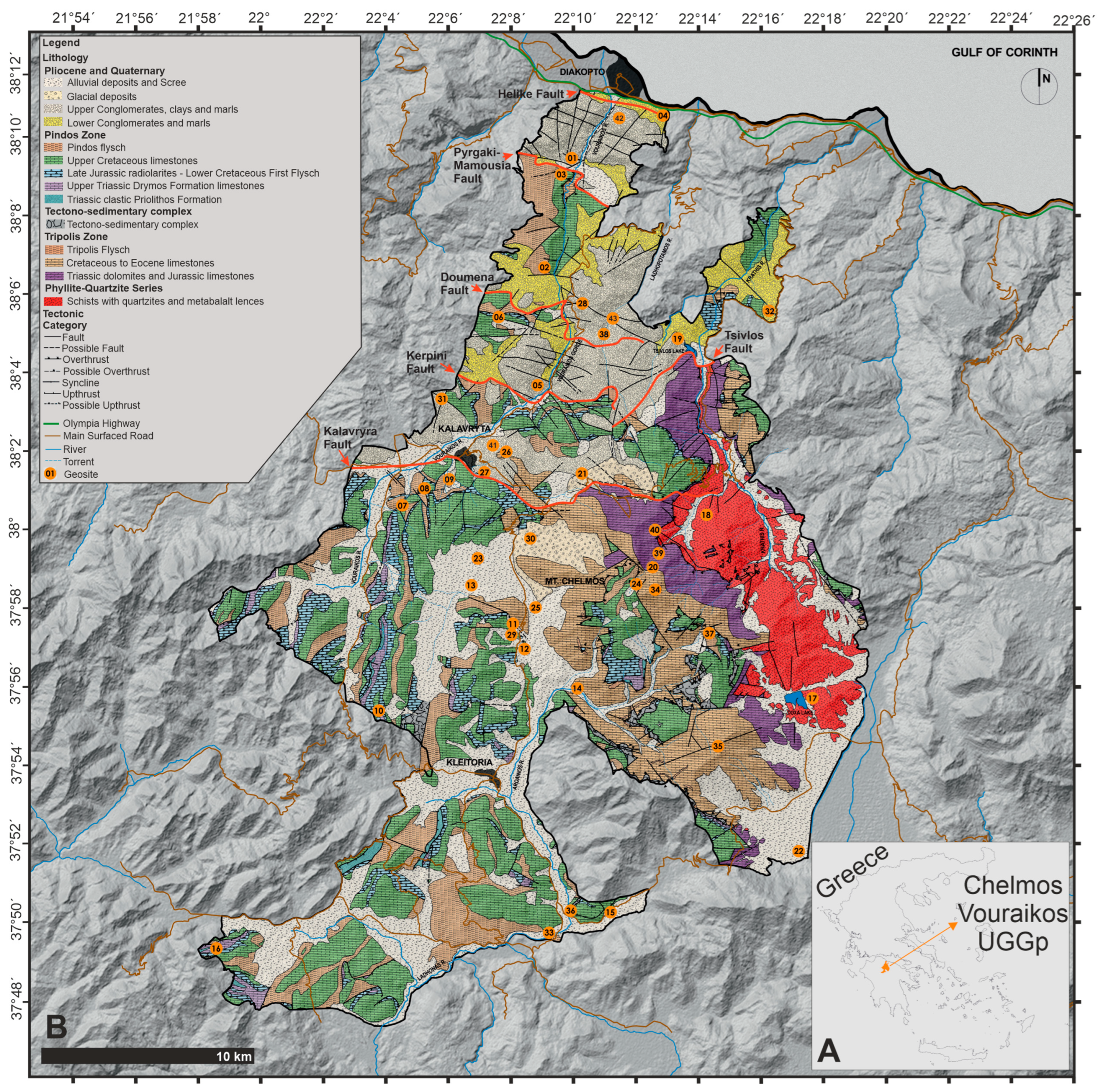
Study Area
2. Important Features of Geodiversity and Biodiversity of Chelmos Vouraikos UNESCO Global Geopark
2.1. Geology of the Geopark
- Lower Group (Phase 1: 4–1.8 Ma; [12]): Deposited in the half-graben basins of the Kalavryta, Kerpini–Tsivlos, and Doumena fault blocks, these formations consist of alluvial, fluvial, and lacustrine deposits, including massive conglomerates (Kalavryta and Mega Spilaio Formations), alternating marls and muds, and interbedded lignite layers [13,19]. Northward, these successions transition laterally into finer-grained sediments.
2.2. Vegetation and Flora of the Geopark
3. Methodology
4. Results
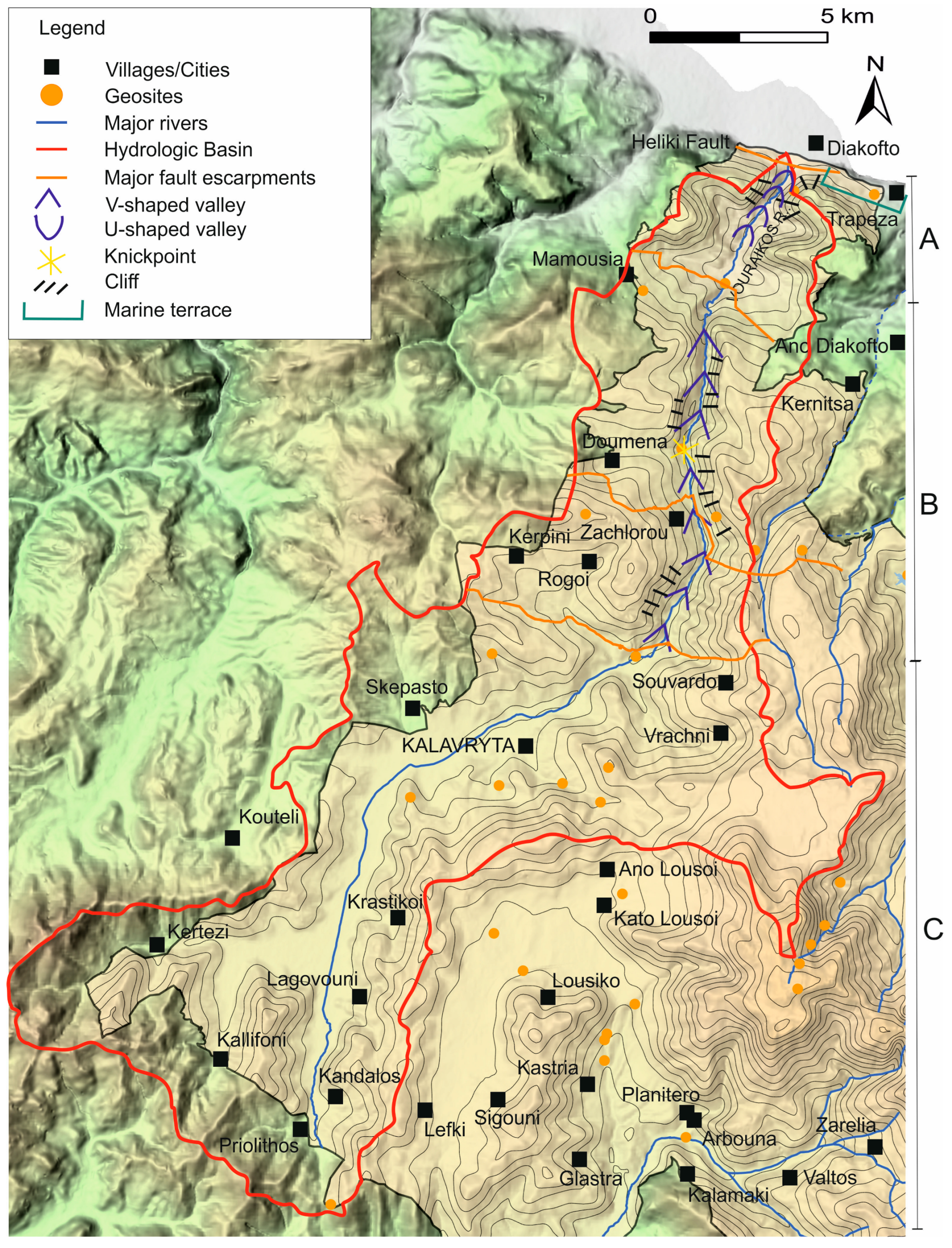
4.1. Landscapes and Landforms in the Area of the Geopark
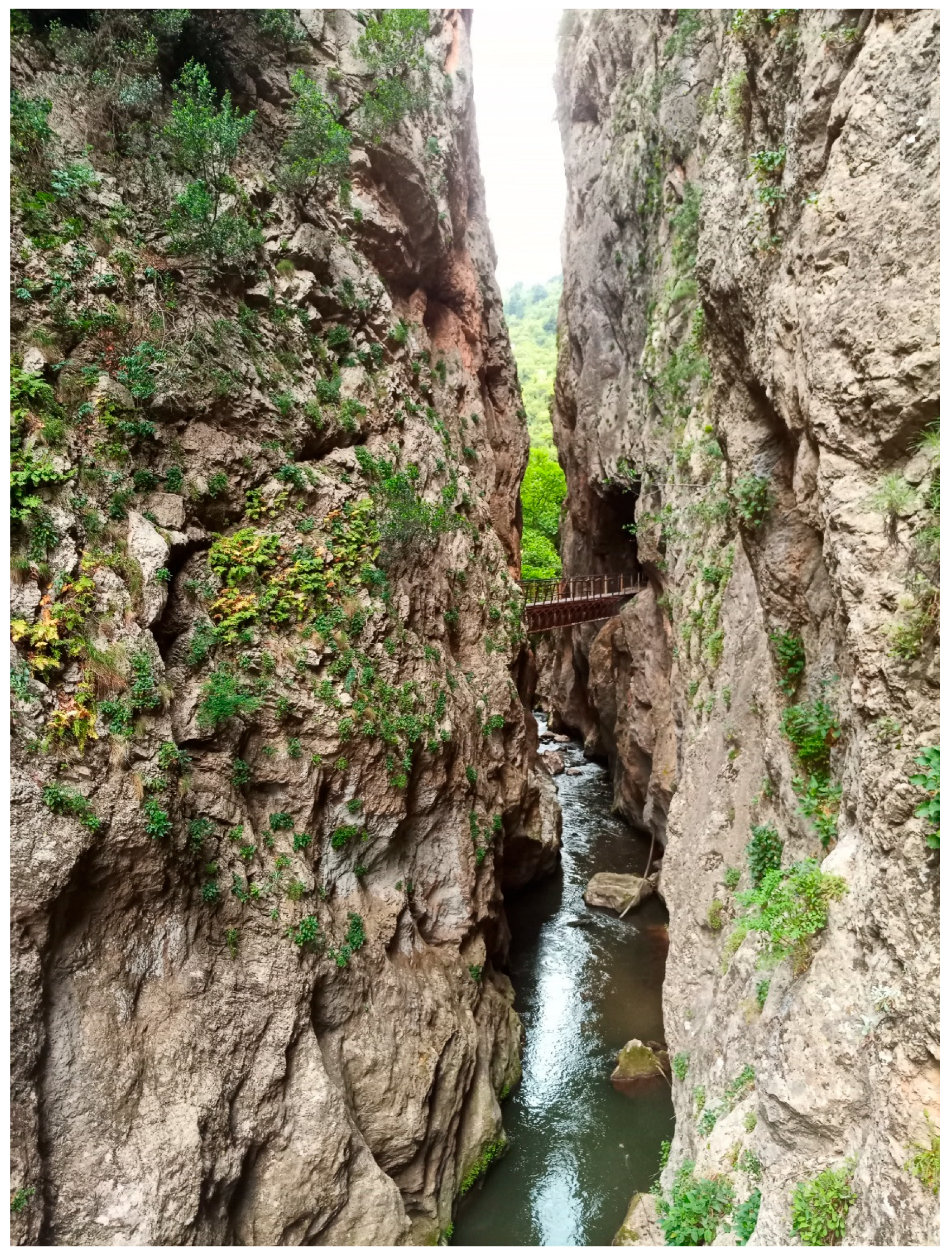
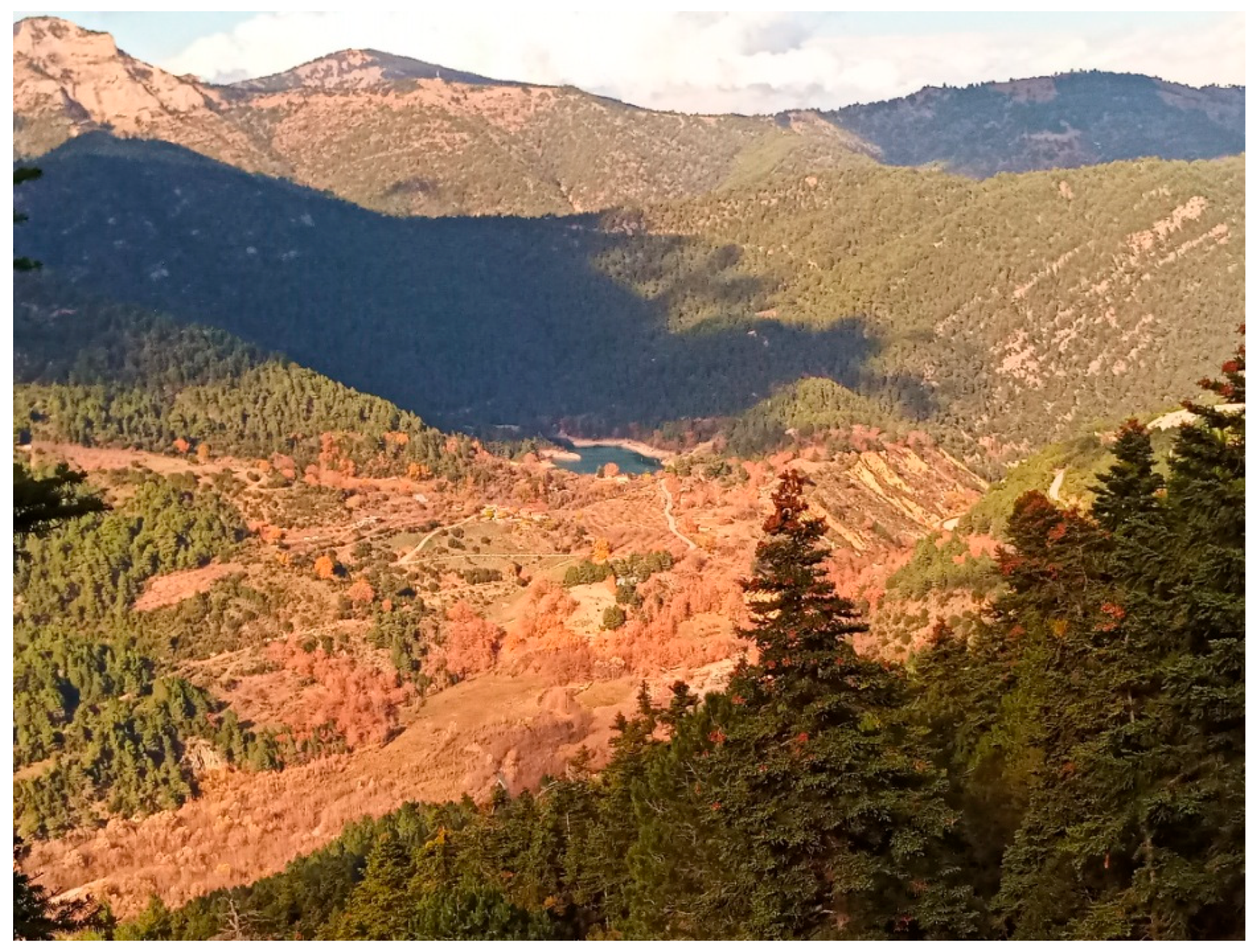
4.1.1. Vouraikos Basin
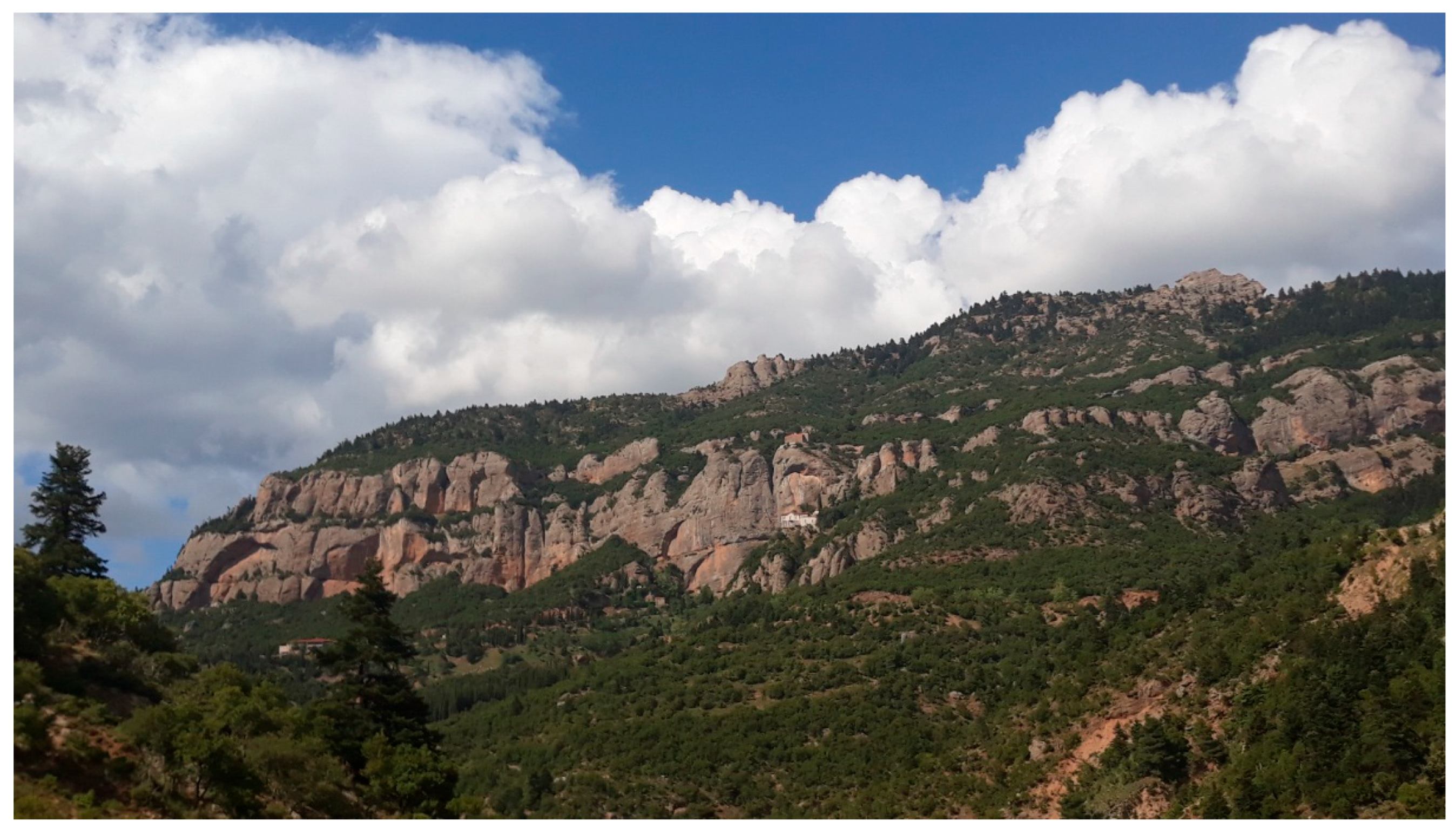
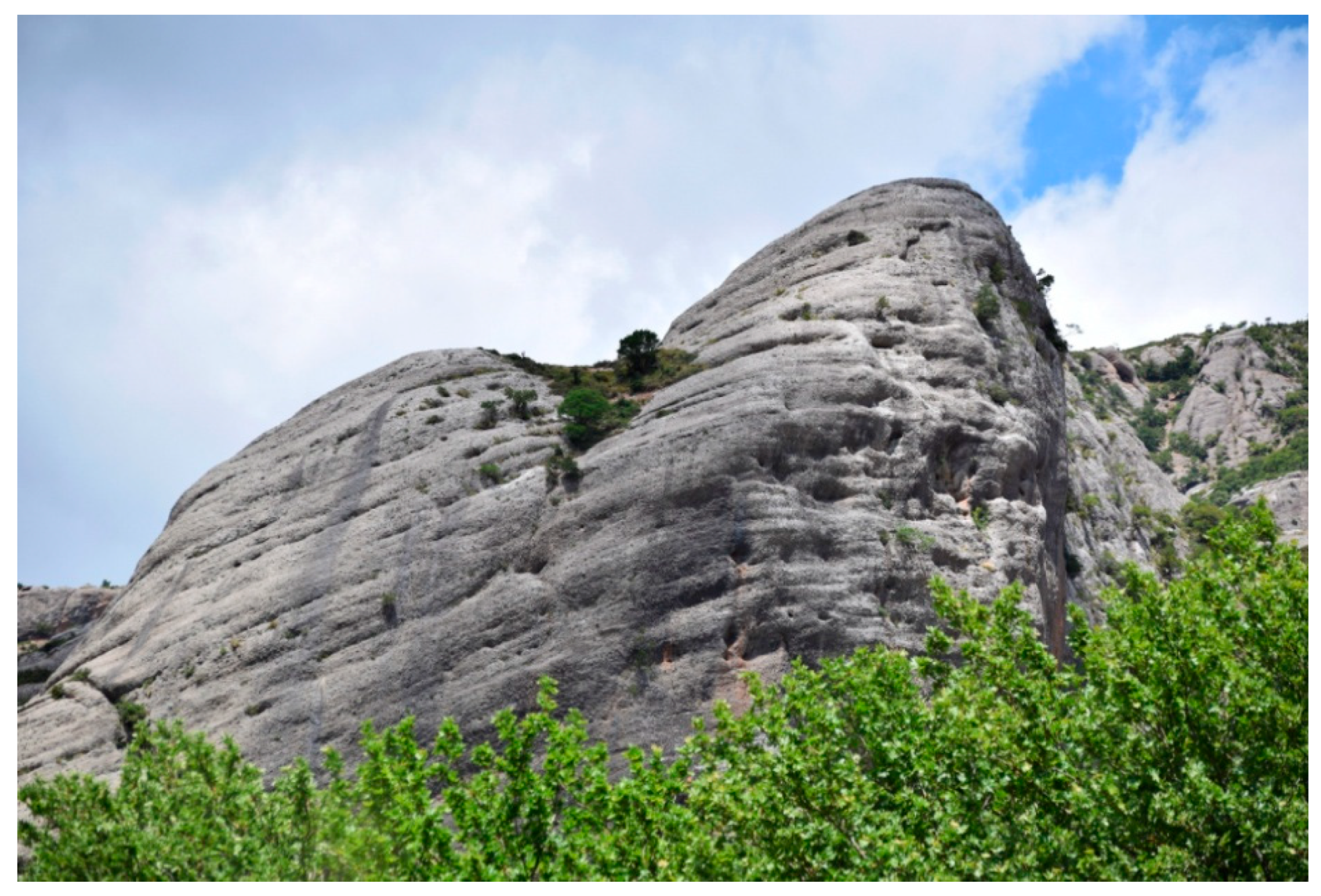
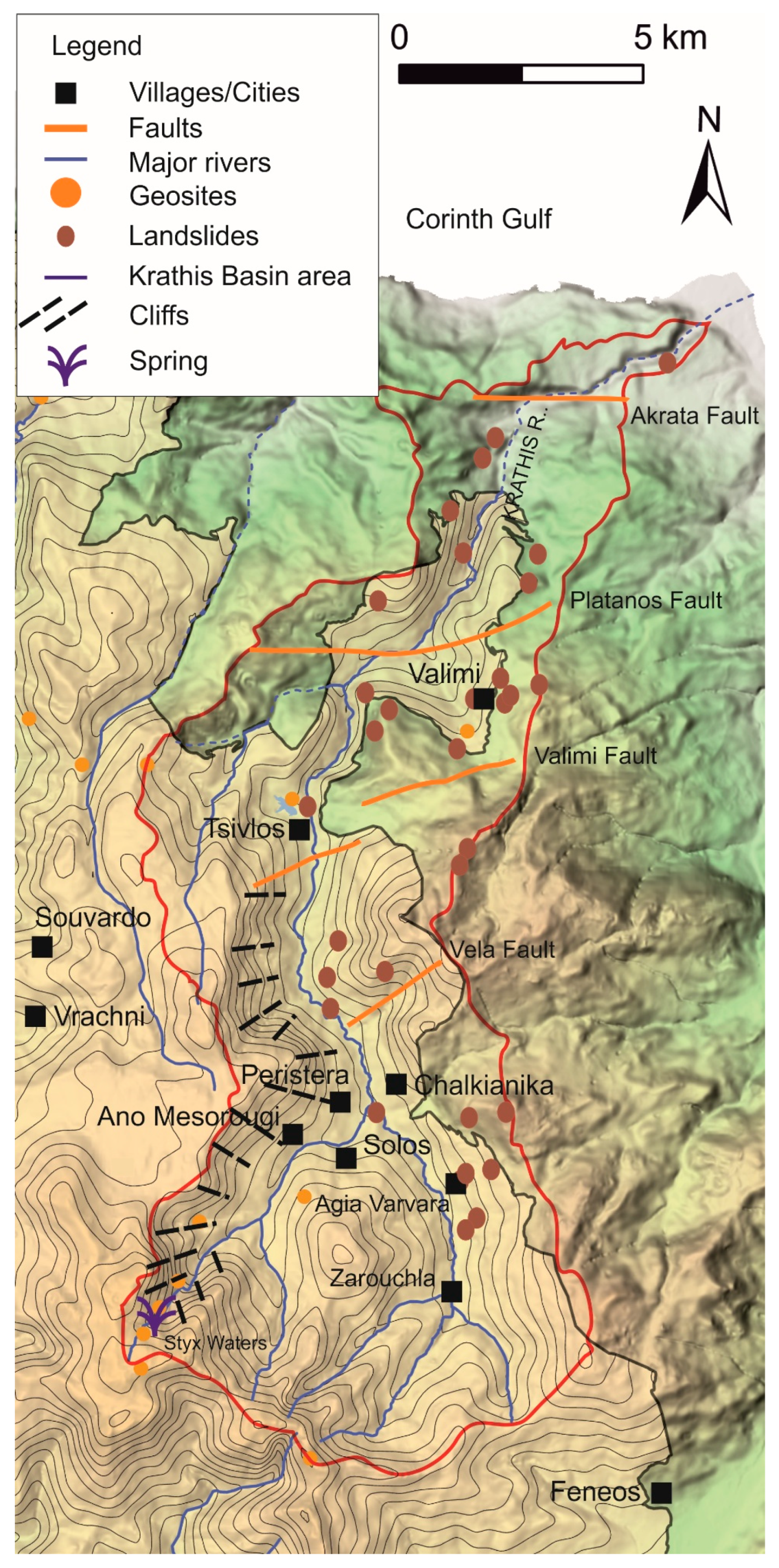
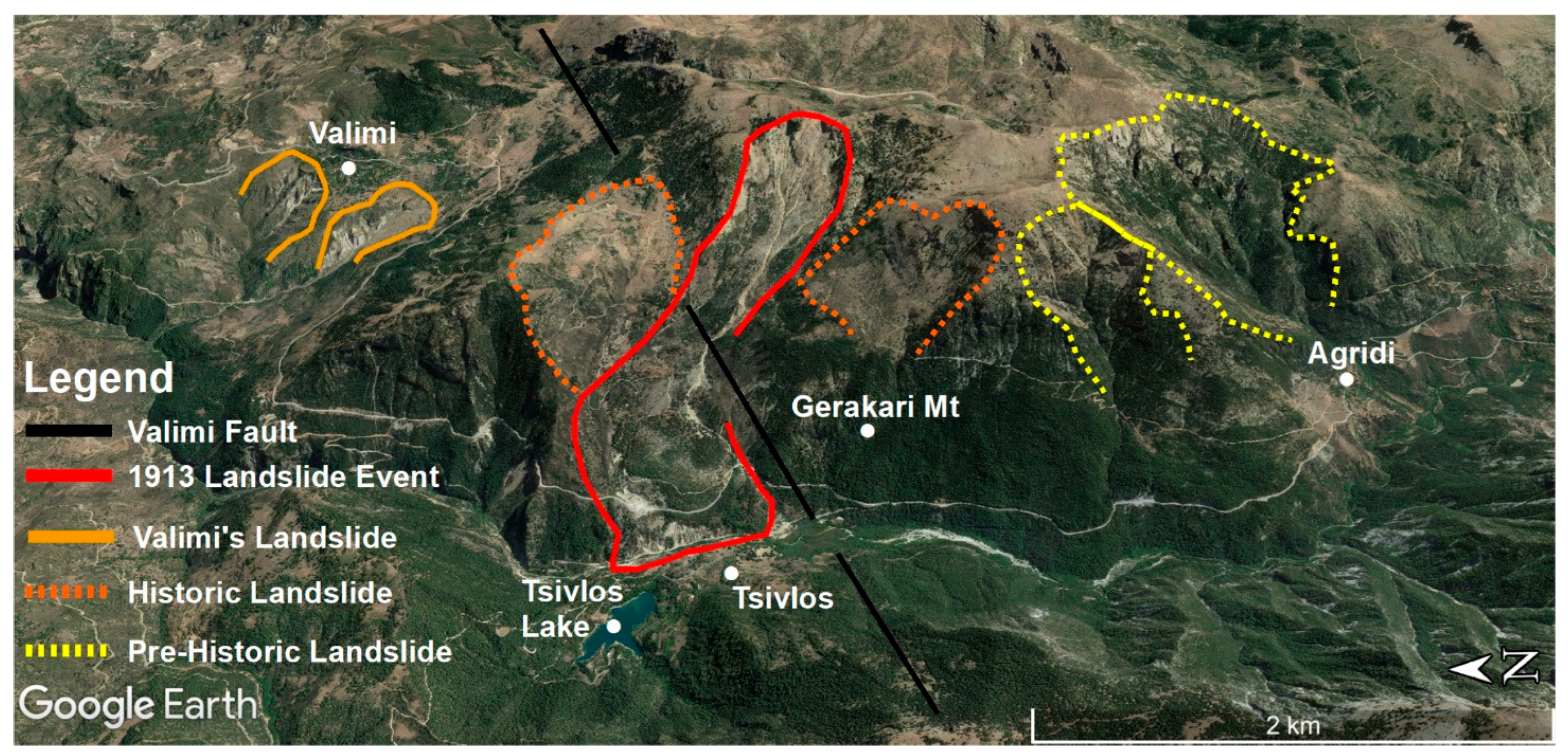
4.1.2. Krathis River Area
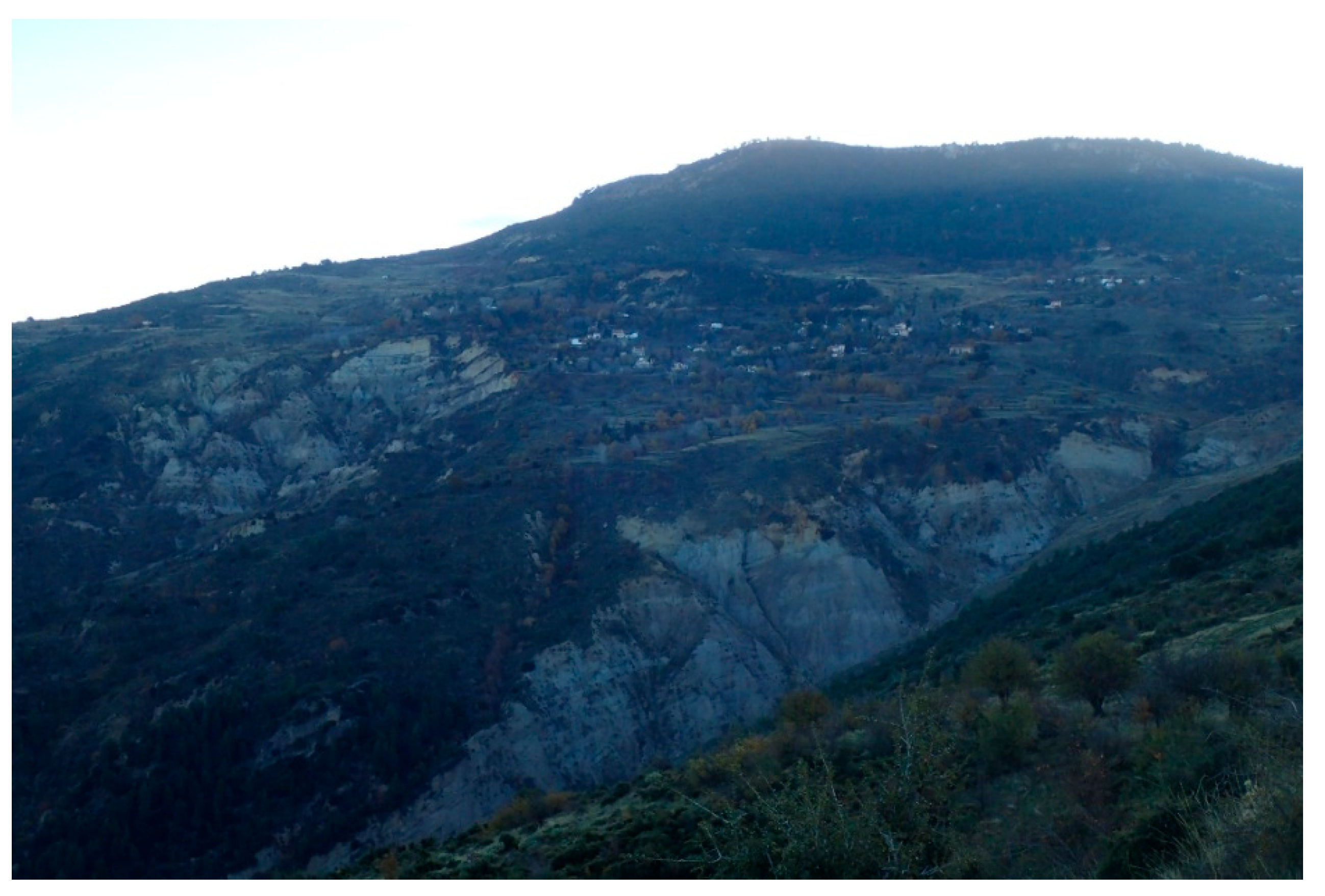
4.1.3. Kalavryta Basin
Area South of Kalavryta
Area East of Kalavryta
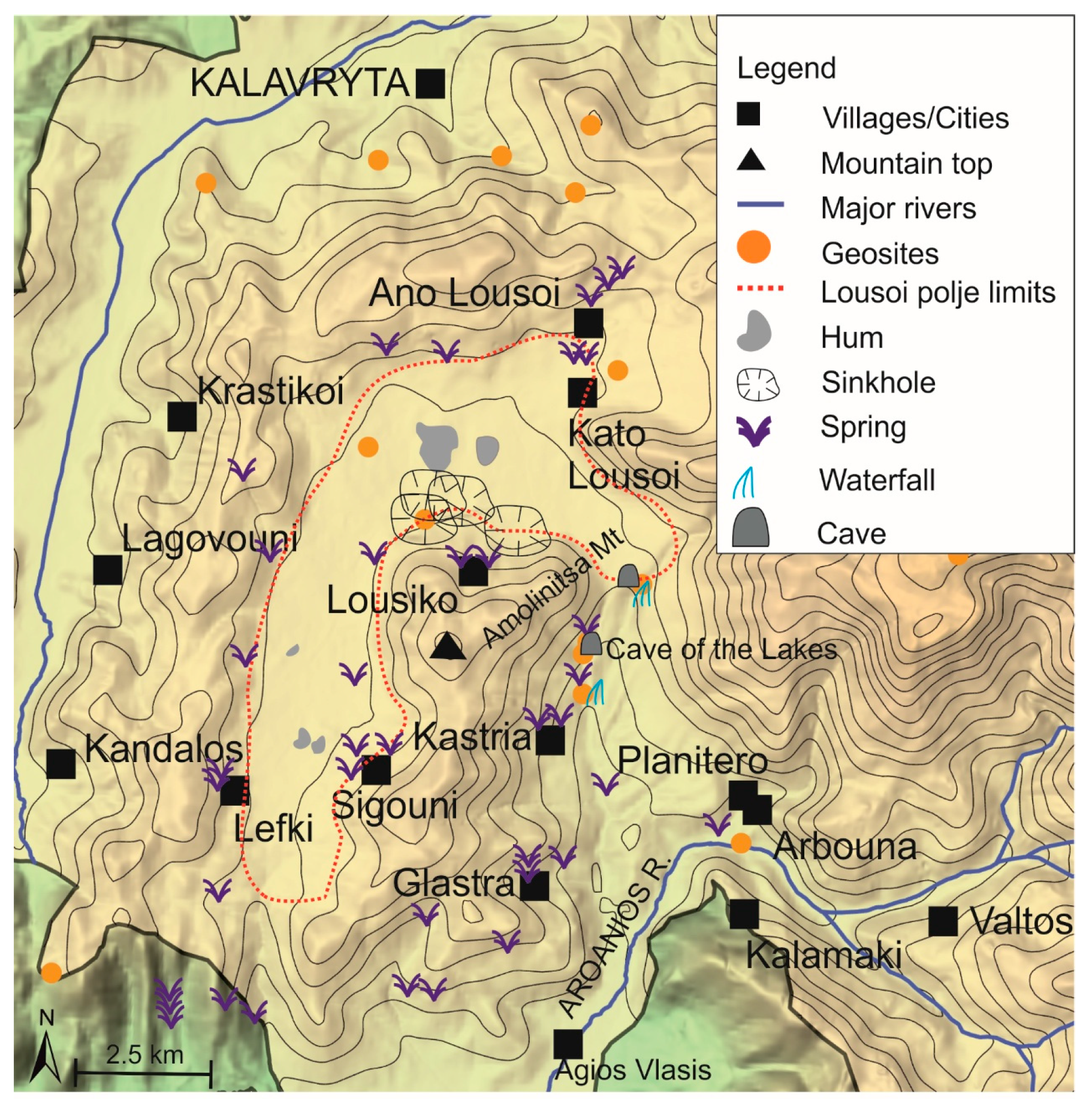
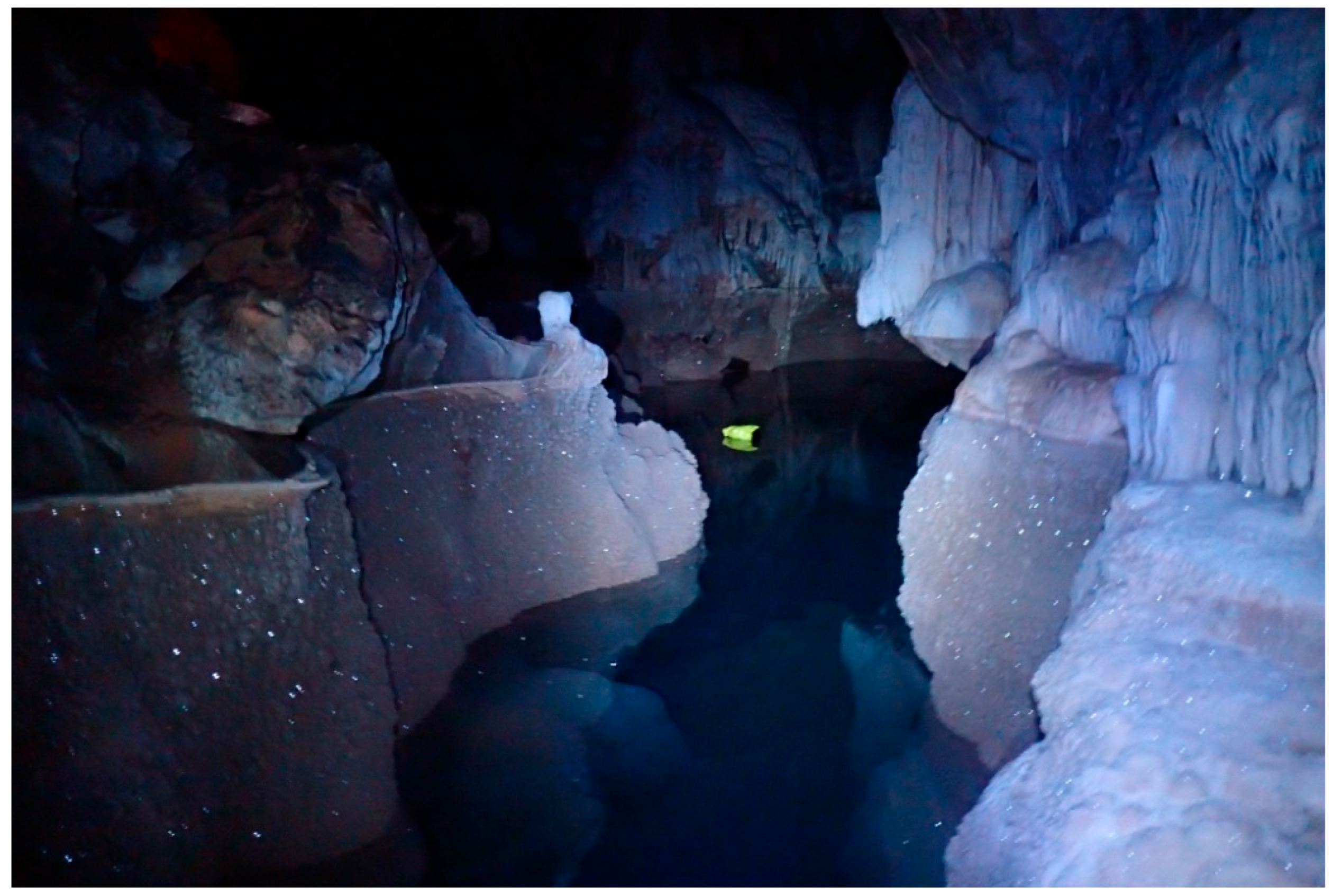
4.1.4. Loussoi Karstic System
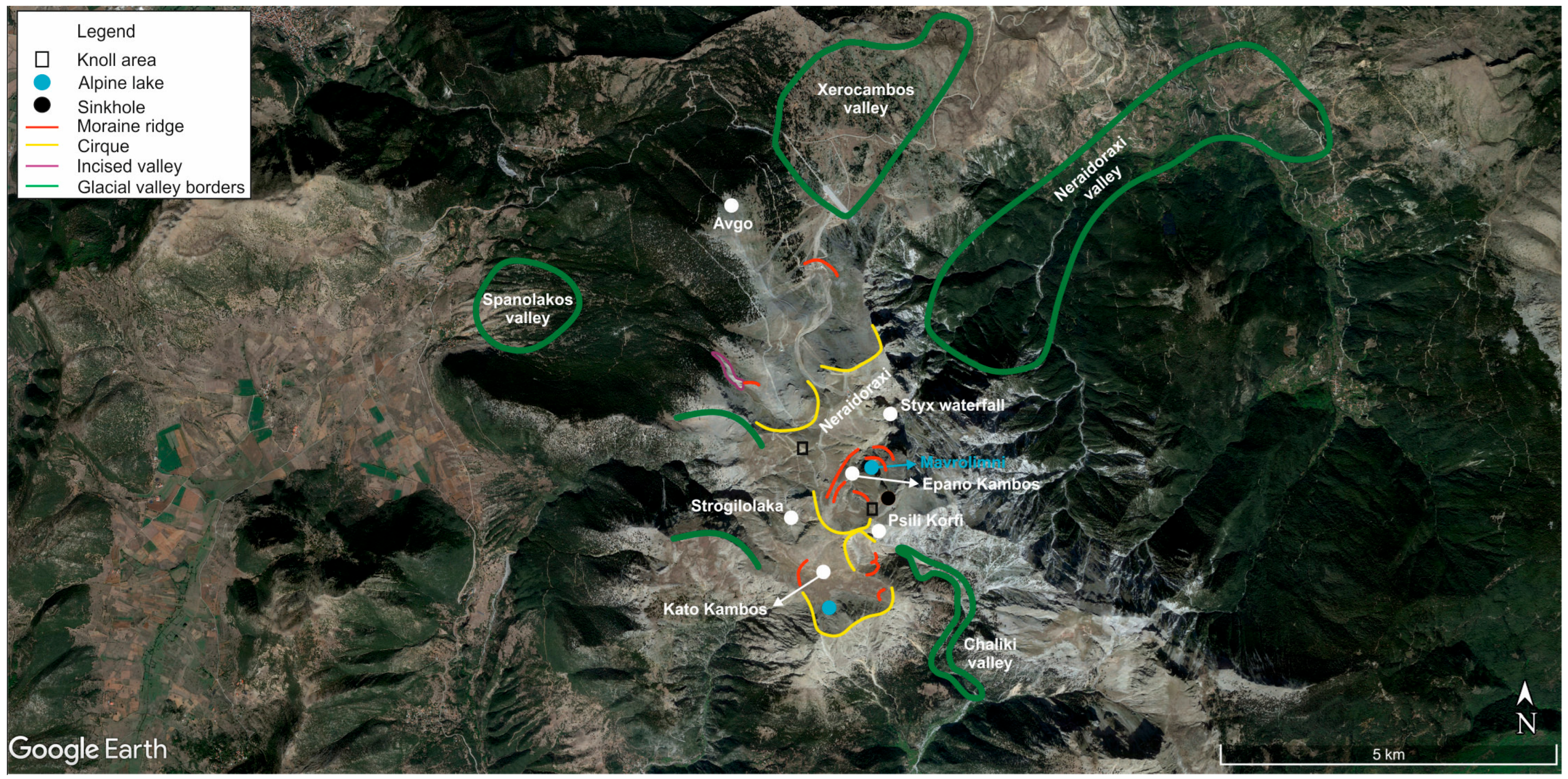
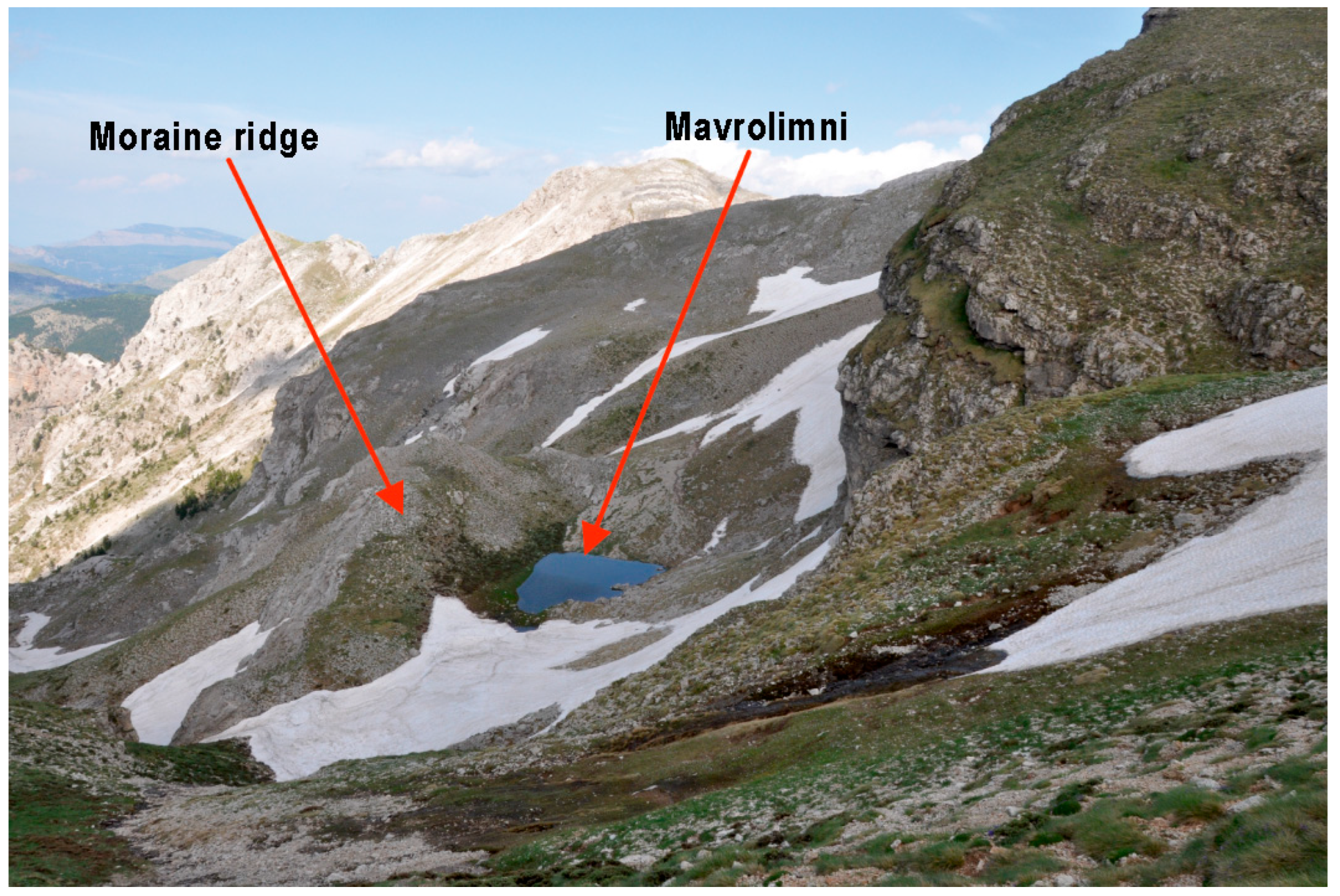
4.1.5. Mt Chelmos
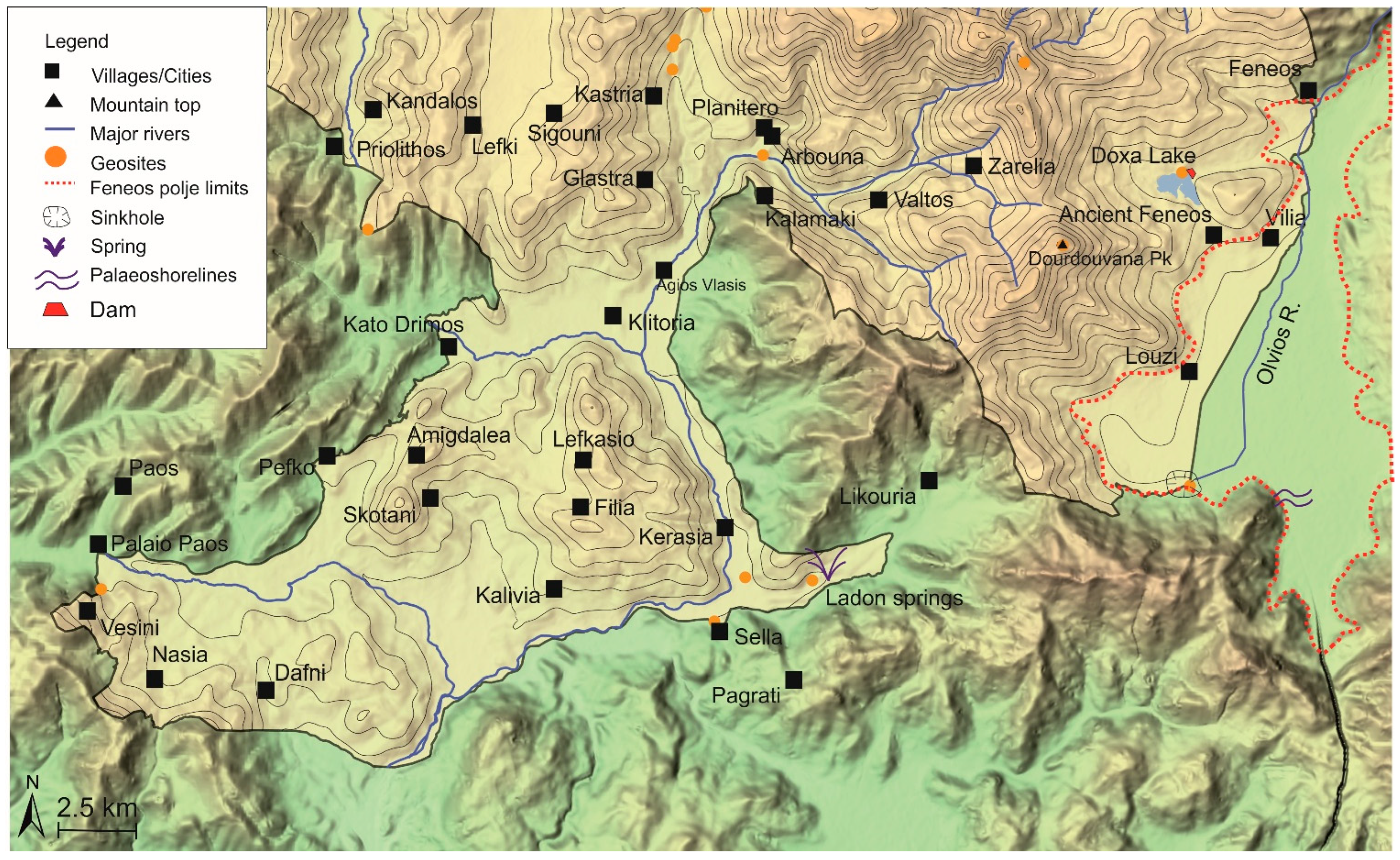
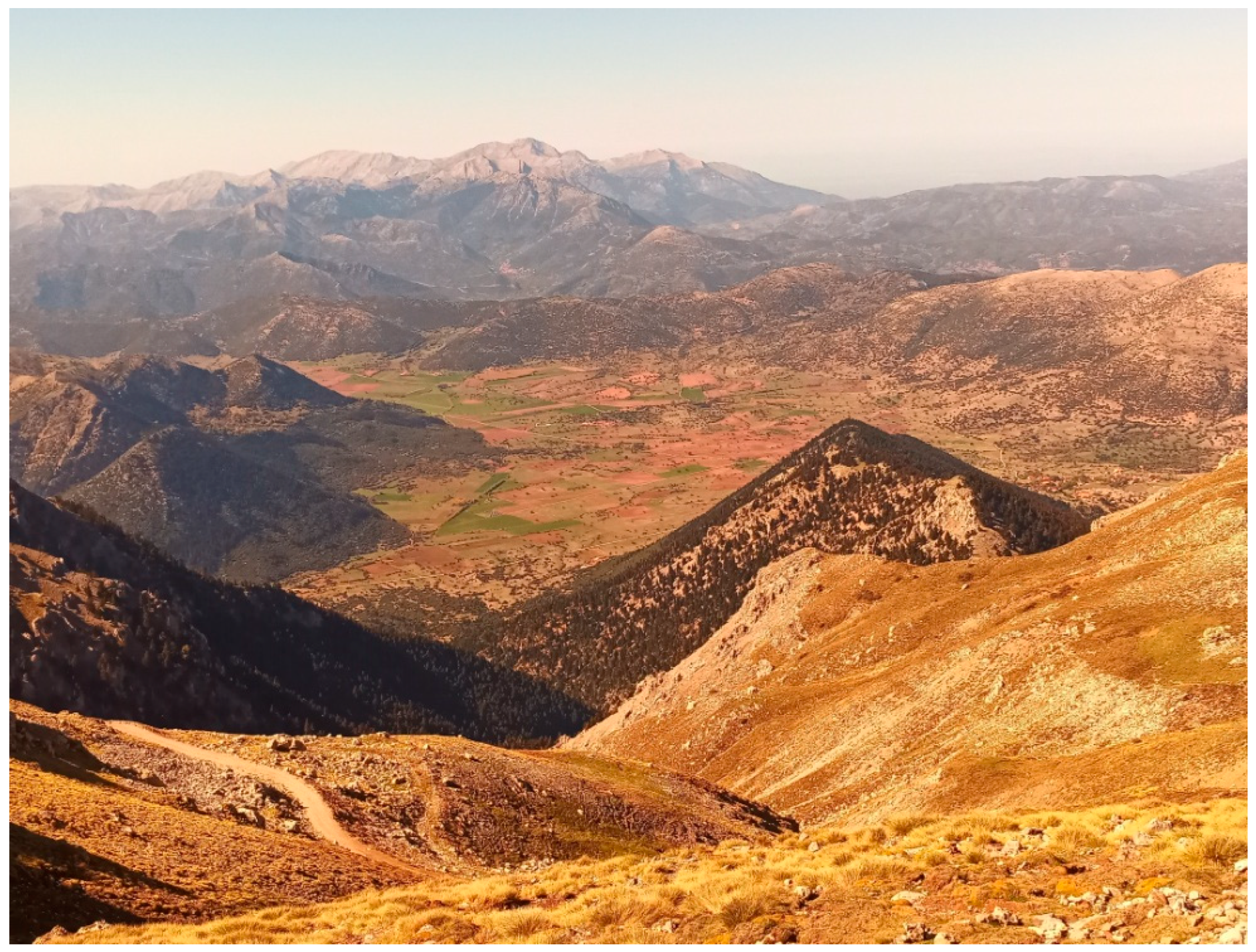
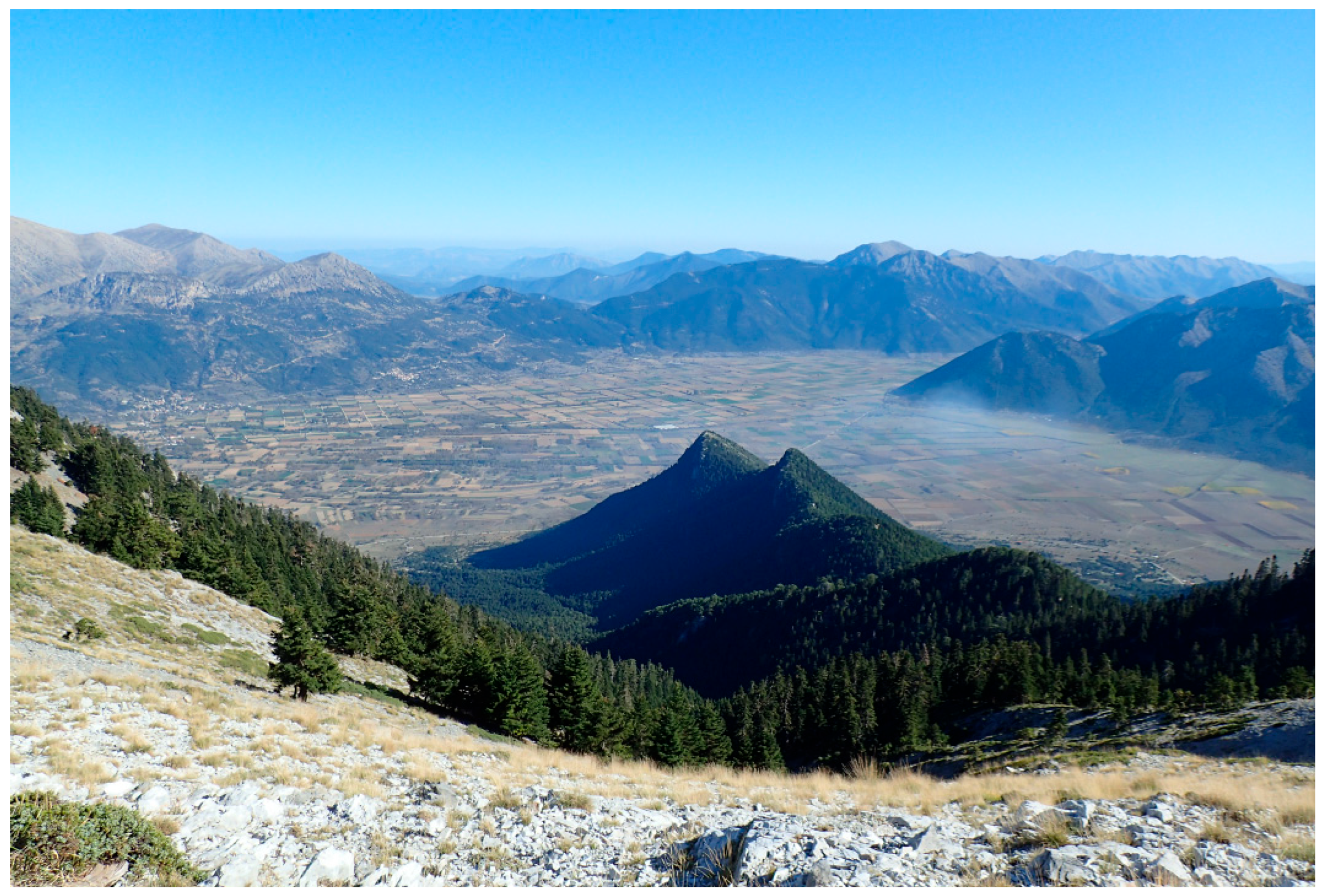
4.1.6. Feneos Valley
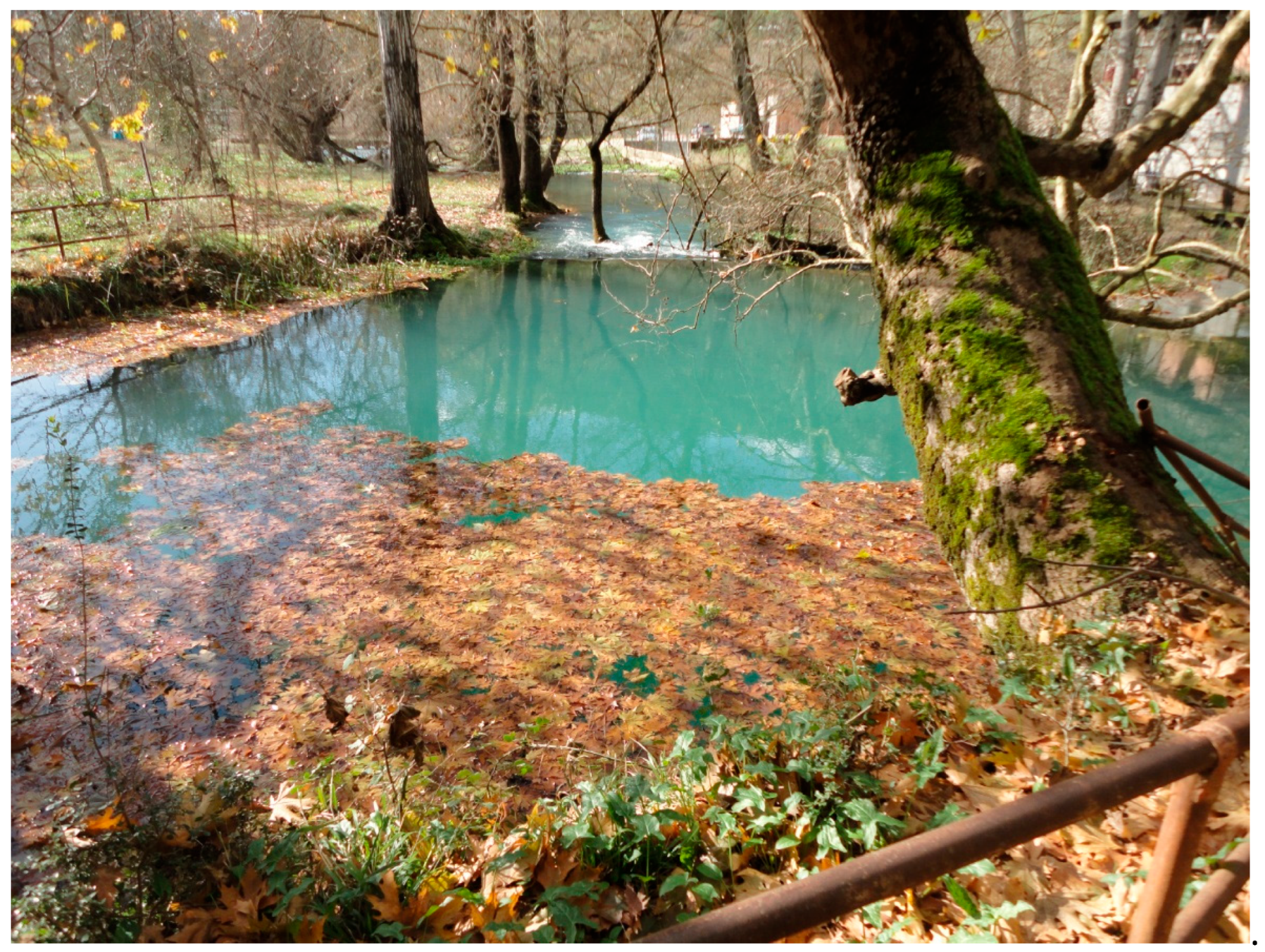
4.1.7. South Part of the Geopark
5. Discussion
6. Conclusions
- Geomorphology is a dominant component of the geopark, with nearly half of its geosites exhibiting primary or secondary geomorphological significance, reinforcing the area’s status as an important geomorphological destination.
- Many geosites not officially classified as geomorphological sites still display strong geomorphological controls, influencing their floristic characteristics and cultural development. This highlights geomorphology as a key driver shaping both natural and cultural evolution in the geopark.
- Ecological importance is closely linked to geomorphology, with more than half of the geomorphological geosites receiving high scores for ecological and protection criteria, demonstrating the strong interplay between landforms and biodiversity.
- Cultural values associated with geomorphological sites are underrepresented by existing assessment indices, as these metrics often fail to capture deeper or site-specific geo-cultural relationships. Examples such as Xerocambos breccia and Waters of Styx geosites, show that unique cultural significance rooted in geomorphology is not adequately reflected in aggregated scores.
- Educational (Vedu) values of geomorphological sites remain moderate mainly due to the influence of low cultural scores, rather than limited educational potential. Several geosites possess significant geocultural or geomythological interest that is not fully captured by standardized indices.
- Geotouristic value (Vtour) scores for geomorphological sites range from low to medium, primarily due to factors such as moderate visual appeal, accessibility, infrastructure, or visitor readiness. Only a few geomorphological sites surpass a high geotouristic threshold, though emblematic sites like Cave of the Lakes and Portes-Triklia perform well.
- Geomorphological features are among the primary drivers of tourist interest, often outweighing ecological values, as seen in Chelmos Vouraikos UGGp.
- The high visibility and appeal of geomorphological sites contribute significantly to environmental awareness, encouraging conservation of both geological and ecological heritage.
- Overall, the large number and diversity of geomorphological sites reflect the Geopark’s strong commitment to geoscience, underscoring its importance as a region with outstanding geomorphological heritage, scientific value, and geotourism potential.
Author Contributions
Funding
Data Availability Statement
Acknowledgments
Conflicts of Interest
Abbreviations
| UGGp | Unesco Global Geopark |
References
- Coratza, P.; Hobléa, F. The Specificities of Geomorphological Heritage. In Geoheritage; Elsevier: Amsterdam, The Netherlands, 2018; pp. 87–106. [Google Scholar]
- Ruiz-Pedrosa, R.M.; González-Amuchástegui, M.J.; Serrano, E. Geomorphosites as Geotouristic Resources: Assessment of Geomorphological Heritage for Local Development in the Río Lobos Natural Park. Land 2024, 13, 128. [Google Scholar] [CrossRef]
- Zouros, N.C. Geomorphosite Assessment and Management in Protected Areas of Greece Case Study of the Lesvos Island—Coastal Geomorphosites. Geogr. Helv. 2007, 62, 169–180. [Google Scholar] [CrossRef]
- Reynard, E.; Fontana, G.; Kozlik, L.; Scapozza, C. A Method for Assessing” Scientific” and” Additional Values” of Geomorphosites. Geogr. Helv. 2007, 62, 148–158. [Google Scholar] [CrossRef]
- Golfinopoulos, V.; Papadopoulou, P.; Koumoutsou, E.; Zouros, N.; Fassoulas, C.; Zelilidis, A.; Iliopoulos, G. Quantitative Assessment of the Geosites of Chelmos-Vouraikos UNESCO Global Geopark (Greece). Geosciences 2022, 12, 63. [Google Scholar] [CrossRef]
- Dercourt, J. Contribution à l’étude Géologique d’un Secteur Du Péloponnèse Septentrional; Laboratoire de géologie et paléontologie; Faculté des sciences: Villeurbanne Cedex, France, 1964. [Google Scholar]
- Degnan, P.J.; Robertson, A.H.F. Mesozoic-Early Tertiary Passive Margin Evolution of the Pindos Ocean (NW Peloponnese, Greece). Sediment. Geol. 1998, 117, 33–70. [Google Scholar] [CrossRef]
- Skourlis, K.; Doutsos, T. The Pindos Fold-and-Thrust Belt (Greece): Inversion Kinematics of a Passive Continental Margin. Int. J. Earth Sci. 2003, 92, 891–903. [Google Scholar] [CrossRef]
- Dornsiepen, U.; Gerolymatos, E.; Jacobshagen, V. Die Phyllit-Quarzit-Serie Im Fenster von Feneos (Nord Peloponnes). Geōlogikai Kai Geōfusikai Meletai 1986, 3, 99–105. [Google Scholar]
- Jolivet, L.; Labrousse, L.; Agard, P.; Lacombe, O.; Bailly, V.; Lecomte, E.; Mouthereau, F.; Mehl, C. Rifting and Shallow-Dipping Detachments, Clues from the Corinth Rift and the Aegean. Tectonophysics 2010, 483, 287–304. [Google Scholar] [CrossRef]
- Kydonakis, K.; Kostopoulos, D.; Poujol, M.; Brun, J.-P.; Papanikolaou, D.; Paquette, J.-L. The Dispersal of the Gondwana Super-Fan System in the Eastern Mediterranean: New Insights from Detrital Zircon Geochronology. Gondwana Res. 2014, 25, 1230–1241. [Google Scholar] [CrossRef]
- Ford, M.; Hemelsdaël, R.; Mancini, M.; Palyvos, N. Rift Migration and Lateral Propagation: Evolution of Normal Faults and Sediment-Routing Systems of the Western Corinth Rift (Greece). Geol. Soc. Lond. Spec. Publ. 2017, 439, 131–168. [Google Scholar] [CrossRef]
- Ford, M.; Rohais, S.; Williams, E.A.; Bourlange, S.; Jousselin, D.; Backert, N.; Malartre, F. Tectono-sedimentary Evolution of the Western Corinth Rift (Central Greece). Basin Res. 2013, 25, 3–25. [Google Scholar] [CrossRef]
- Doutsos, T.; Kokkalas, S. Stress and Deformation Patterns in the Aegean Region. J. Struct. Geol. 2001, 23, 455–472. [Google Scholar] [CrossRef]
- Leeder, M.R.; Mack, G.H.; Brasier, A.T.; Parrish, R.R.; McIntosh, W.C.; Andrews, J.E.; Duermeijer, C.E. Late-Pliocene Timing of Corinth (Greece) Rift-Margin Fault Migration. Earth Planet. Sci. Lett. 2008, 274, 132–141. [Google Scholar] [CrossRef]
- Moretti, I.; Sakellariou, D.; Lykousis, V.; Micarelli, L. The Gulf of Corinth: An Active Half Graben? J. Geodyn. 2003, 36, 323–340. [Google Scholar] [CrossRef]
- Rohais, S.; Eschard, R.; Ford, M.; Guillocheau, F.; Moretti, I. Stratigraphic Architecture of the Plio-Pleistocene Infill of the Corinth Rift: Implications for Its Structural Evolution. Tectonophysics 2007, 440, 5–28. [Google Scholar] [CrossRef]
- Backert, N.; Ford, M.; Malartre, F. Architecture and Sedimentology of the Kerinitis Gilbert-Type Fan Delta, Corinth Rift, Greece. Sedimentology 2010, 57, 543–586. [Google Scholar] [CrossRef]
- Trikolas, K. Geological Study of the Wider Area of Aegialia and Kalavryta. Ph.D. Thesis, National Technical University of Athens, Athens, Greece, 2008. [Google Scholar]
- Pope, R.J.; Hughes, P.D.; Skourtsos, E. Glacial History of Mt Chelmos, Peloponnesus, Greece. Geol. Soc. Lond. Spec. Publ. 2017, 433, 211–236. [Google Scholar] [CrossRef]
- Natura Environment and Climate Change Agency Natural Environment and Climate Change Agency. Available online: https://necca.gov.gr/en/mdpp/management-unit-of-chelmos-vouraikos-national-park-and-protected-areas-of-the-northern-peloponnese/ (accessed on 4 December 2025).
- Vlami, V.; Kokkoris, I.P.; Zogaris, S.; Cartalis, C.; Kehayias, G.; Dimopoulos, P. Cultural Landscapes and Attributes of “Culturalness” in Protected Areas: An Exploratory Assessment in Greece. Sci. Total Environ. 2017, 595, 229–243. [Google Scholar] [CrossRef] [PubMed]
- European Environment Agency (EEA). Mediterranean Mountain Abies Forests (G1.7A). EUNIS Habitat Classification; European Environment Agency: Copenhagen, Denmark, 2016. [Google Scholar]
- European Environment Agency (EEA). Eastern Mediterranean Base-Rich Scree (H3.2E). EUNIS Habitat Classification; European Environment Agency: Copenhagen, Denmark, 2016. [Google Scholar]
- European Environment Agency (EEA). Phrygana and Garrigue on Calcareous Substrates (F6.2). EUNIS Habitat Classification; European Environment Agency: Copenhagen, Denmark, 2016. [Google Scholar]
- Kokkoris, I.P.; Dimopoulos, P.; Xystrakis, F.; Tsiripidis, I. National Scale Ecosystem Condition Assessment with Emphasis on Forest Types in Greece. One Ecosyst. 2018, 3, e25434. [Google Scholar] [CrossRef]
- Kokkoris, I.P.; Drakou, E.G.; Maes, J.; Dimopoulos, P. Ecosystem Services Supply in Protected Mountains of Greece: Setting the Baseline for Conservation Management. Int. J. Biodivers. Sci. Ecosyst. Serv. Manag. 2018, 14, 45–59. [Google Scholar] [CrossRef]
- Maes, J.; Teller, A.; Erhard, M.; Liquete, C.; Braat, L.; Berry, P.; Egoh, B.; Puydarrieux, P.; Fiorina, C.; Santos, F. Mapping and Assessment of Ecosystems and Their Services. Anal. Framew. Ecosyst. Assess. Under Action 2013, 5, 1–58. [Google Scholar]
- Kokkoris, I.P.; Mallinis, G.; Bekri, E.S.; Vlami, V.; Zogaris, S.; Chrysafis, I.; Mitsopoulos, I.; Dimopoulos, P. National Set of MAES Indicators in Greece: Ecosystem Services and Management Implications. Forests 2020, 11, 595. [Google Scholar] [CrossRef]
- Tsakiri, M.; Koumoutsou, E.; Kokkoris, I.P.; Trigas, P.; Iliadou, E.; Tzanoudakis, D.; Dimopoulos, P.; Iatrou, G. National Park and UNESCO Global Geopark of Chelmos-Vouraikos (Greece): Floristic Diversity, Ecosystem Services and Management Implications. Land 2021, 11, 33. [Google Scholar] [CrossRef]
- Directive, H. Council Directive 92/43/EEC of 21 May 1992 on the Conservation of Natural Habitats and of Wild Fauna and Flora. Off. J. Eur. Union 1992, 206, 50. [Google Scholar]
- Dimopoulos, P.; Georgiadis, T. Floristic and Phytogeographical Analysis of Mount Killini (NE Peloponnisos, Greece). In Phyton: Annales Rei Botanicae; Ferdinand Berger Soehne: Horn, Austria, 1992; Volume 32. [Google Scholar]
- Kokkoris, I.P.; Dimitrellos, G.; Kougioumoutzis, K.; Laliotis, I.; Georgiadis, T.; Tiniakou, A. The Native Flora of Mountain Panachaikon (Peloponnese, Greece): New Records and Diversity. J. Biol. Res. Thessalon 2014, 21, 9. [Google Scholar] [CrossRef] [PubMed]
- Trigas, P.; Tsiftsis, S.; Tsiripidis, I.; Iatrou, G. Distribution Patterns and Conservation Perspectives of the Endemic Flora of Peloponnese (Greece). Folia Geobot. 2012, 47, 421–439. [Google Scholar] [CrossRef]
- Koumoutsou, E. Species, Habitats, Ecosystem Diversity and Ecocystem Services Assessment at the Chelmos-Vouraikos National Park. Ph.D Thesis, University of Patras, Patras, Greece, 2021. [Google Scholar]
- Tan, K.; Iatrou, G.; Johsen, B. Endemic Plants of Greece: The Peloponnese; Gads Forlag: Copenhagen, Denmark, 2001; Volume 1. [Google Scholar]
- Cheminal, A.; Kokkoris, I.P.; Strid, A.; Dimopoulos, P. Medicinal and Aromatic Lamiaceae Plants in Greece: Linking Diversity and Distribution Patterns with Ecosystem Services. Forests 2020, 11, 661. [Google Scholar] [CrossRef]
- Fassoulas, C.; Mouriki, D.; Dimitriou-Nikolakis, P.; Iliopoulos, G. Quantitative Assessment of Geotopes as an Effective Tool for Geoheritage Management. Geoheritage 2012, 4, 177–193. [Google Scholar] [CrossRef]
- Briole, P.; Rigo, A.; Lyon-Caen, H.; Ruegg, J.C.; Papazissi, K.; Mitsakaki, C.; Balodimou, A.; Veis, G.; Hatzfeld, D.; Deschamps, A. Active Deformation of the Corinth Rift, Greece: Results from Repeated Global Positioning System Surveys between 1990 and 1995. J. Geophys. Res. Solid Earth 2000, 105, 25605–25625. [Google Scholar] [CrossRef]
- Le Pichon, X.; Chamot-Rooke, N.; Lallemant, S.; Noomen, R.; Veis, G. Geodetic Determination of the Kinematics of Central Greece with Respect to Europe: Implications for Eastern Mediterranean Tectonics. J. Geophys. Res. Solid Earth 1995, 100, 12675–12690. [Google Scholar] [CrossRef]
- Karalis, S.; Karymbalis, E.; Tsanakas, K. Estimating Total Sediment Transport in a Small, Mountainous Mediterranean River: The Case of Vouraikos River, NW Peloponnese, Greece. Z. Geomorphol. 2021, 63, 279–294. [Google Scholar] [CrossRef]
- Pavlopoulos, K.; Fouache, E. Geomorphological Challenges and Mapping of the Vouraikos Basin North Peloponnesus, Greece. In Proceedings of the 33rd International Geographical Congress, Beijing, China, 21–25 August 2016. [Google Scholar]
- Saroglou, H.; Marinos, V.; Tsiambaos, G.; Marinos, P.; Lykoudi, E.; Zarris, D. Erosion Hazard Assessment in “Natura” Regions Affected by Wildfires: A Case from Peloponnese, Greece. In Proceedings of the Geologically Active Proceedings of the 11th IAEG Congress, Auckland, New Zealand, 5–10 September 2010; pp. 5–10. [Google Scholar]
- Frydas, D. Biostratigraphic Investigations from the Neogen of the NW and W Peloponnes, Greece. Neues Jahrb. Für Geol. Und Paläontologie-Monatshefte 1989, 1989, 321–344. [Google Scholar] [CrossRef]
- Kontopoulos, N.; Doutsos, T. Sedimentology and Tectonic of the Antirion Area (Western Greece). Boll. Della Soc. Geol. Ital. 1985, 104, 479–489. [Google Scholar]
- Ori, G.G. Geologic History of the Extensional Basin of the Gulf of Corinth (? Miocene-Pleistocene), Greece. Geology 1989, 17, 918–921. [Google Scholar] [CrossRef]
- McNeill, L.C.; Collier, R.E.L.; De Martini, P.M.; Pantosti, D.; D’Addezio, G. Recent History of the Eastern Eliki Fault, Gulf of Corinth: Geomorphology, Palaeoseismology and Impact on Palaeoenvironments. Palaeoenvironments. Geophys. J. Int. 2005, 161, 154–166. [Google Scholar] [CrossRef]
- McNeill, L.C.; Collier, R.E.L. Uplift and Slip Rates of the Eastern Eliki Fault Segment, Gulf of Corinth, Greece, Inferred from Holocene and Pleistocene Terraces. J. Geol. Soc. Lond 2004, 161, 81–92. [Google Scholar] [CrossRef]
- Ford, M.; Williams, E.A.; Malartre, F.; Popescu, S. Stratigraphic Architecture, Sedimentology and Structure of the Vouraikos Gilbert-Type Fan Delta, Gulf of Corinth, Greece. In Sedimentary Processes, Environments and Basins; Wiley: Hoboken, NJ, USA, 2007; pp. 49–90. [Google Scholar]
- Zondervan, J.R.; Whittaker, A.C.; Bell, R.E.; Watkins, S.E.; Brooke, S.A.S.; Hann, M.G. New Constraints on Bedrock Erodibility and Landscape Response Times Upstream of an Active Fault. Geomorphology 2020, 351, 106937. [Google Scholar] [CrossRef]
- Tzoraki, O.; Nikolaidis, N.P. A Generalized Framework for Modeling the Hydrologic and Biogeochemical Response of a Mediterranean Temporary River Basin. J. Hydrol. 2007, 346, 112–121. [Google Scholar] [CrossRef]
- Kyriou, A.; Nikolakopoulos, K.G.; Papadopoulou, P.; Tzortzi, M.; Golfinopoulos, V.; Tsoni, M.; Iliopoulos, G. 3D Mapping of Geological Heritage: The Case of the Mythical Waterfall of Styx. In Proceedings of the Earth Resources and Environmental Remote Sensing/GIS Applications XV, Edinburgh, UK, 16–20 November 2024; Schulz, K., Nikolakopoulos, K.G., Michel, U., Eds.; SPIE: Bellingham, WA, USA, 2024; p. 45. [Google Scholar]
- Poulimenos, G.; Albers, G.; Doutsos, T. Neotectonic Evolution of the Central Station of the Corinth Graben. Z. Dtsch. Geol. Ges. 1989, 140, 173–182. [Google Scholar]
- Rohais, S.; Eschard, R.; Guillocheau, F. Depositional Model and Stratigraphic Architecture of Rift Climax Gilbert-Type Fan Deltas (Gulf of Corinth, Greece). Sediment. Geol. 2008, 210, 132–145. [Google Scholar] [CrossRef]
- Zygouri, V.; Verroios, S.; Kokkalas, S.; Xypolias, P.; Koukouvelas, I.K. Scaling Properties within the Gulf of Corinth, Greece; Comparison between Offshore and Onshore Active Faults. Tectonophysics 2008, 453, 193–210. [Google Scholar] [CrossRef]
- Horafas, D.; Gkeki, T. Applying Logistic Regression for Landslide Susceptibility Mapping. The Case Study of Krathis Watershed, North Peloponnese, Greece. Am. J. Geogr. Inf. Syst. 2017, 6, 23–28. [Google Scholar]
- Zygouri, V.; Koukouvelas, I.K. Landslides and Natural Dams in the Krathis River, North Peloponnese, Greece. Bull. Eng. Geol. Environ. 2019, 78, 207–222. [Google Scholar] [CrossRef]
- Finnesand, S. Analysis of Structural Control in Fault Interactions and Their Sediment Accumulation in the Gulf of Corinth Rift, Greece; University of Stavanger: Stavanger, Norway, 2013. [Google Scholar]
- Ioakeim, C. Stratigraphic-Palynological Study of the Drilling I.P.5 in the Area of Kalavryta; Institute of Geology and Mineral Exploration (IGME): Athens, Greece, 1991. [Google Scholar]
- Papanicolaou, C.; Dehmer, J.; Fowler, M. Petrological and Organic Geochemical Characteristics of Coal Samples from Florina, Lava, Moschopotamos and Kalavryta Coal Fields, Greece. Int. J. Coal Geol. 2000, 44, 267–292. [Google Scholar] [CrossRef]
- Malartre, F.; Ford, M.; Williams, E.A. Preliminary Biostratigraphy and 3D Geometry of the Vouraikos Gilbert-Type Fan Delta, Gulf of Corinth, Greece. Comptes Rendus. Géoscience 2004, 336, 269–280. [Google Scholar] [CrossRef]
- Liapi, E. Study of Plant Macro-Remains from the Upper Miocene–Lower Pliocene Lignite Deposits of Kalavrita Basin. Master’s Thesis, University of Patras, Patras, Greece, 2020. [Google Scholar]
- Trikolas, Κ.; Alexouli-Licaditi, A. Geological Structure of the Wider Area of Aegialia and Kalavryta (North Peloponnesus). Bull. Geol. Soc. Greece 2004, 36, 1568. [Google Scholar] [CrossRef]
- Koutsi, R.; Stournaras, G. Hydrochemical Investigation of Water at Loussi Polje, N Peloponnesus, Hellas. In Advances in the Research of Aquatic Environment; Springer: Berlin/Heidelberg, Germany, 2011; pp. 219–227. [Google Scholar]
- Koutsi, R. The Role of Epikarst in the Estimation and Mapping of Karstic Aquifers’ Vulnerability, Using the Newly Developed European Method. Ph.D. Thesis, National and Kapodistrian University of Athens, Athens, Greece, 2007. [Google Scholar]
- Ioannou, I. Cave Kaliakoudotripa. Bull. Soc. Speleol. Grece 1972, 7, 143–150. [Google Scholar]
- Pavlopoulos, K.; Leontaritis, A.; Athanassas, C.D.; Petrakou, C.; Vandarakis, D.; Nikolakopoulos, K.; Stamatopoulos, L.; Theodorakopoulou, K. Last Glacial Geomorphologic Records in Mt Chelmos, North Peloponnesus, Greece. J. Mt. Sci. 2018, 15, 948–965. [Google Scholar] [CrossRef]
- Armijo, R.; Meyer, B.; King, G.C.P.; Rigo, A.; Papanastassiou, D. Quaternary Evolution of the Corinth Rift and Its Implications for the Late Cenozoic Evolution of the Aegean. Geophys. J. Int. 1996, 126, 11–53. [Google Scholar] [CrossRef]
- Collier, R.E.L.; Leeder, M.R.; Rowe, P.J.; Atkinson, T.C. Rates of Tectonic Uplift in the Corinth and Megara Basins, Central Greece. Tectonics 1992, 11, 1159–1167. [Google Scholar] [CrossRef]
- Mariolakos, I.; Fountoulis, I.; Marcopoulou-Diacantoni, A.; Mirkou, M.R. Some Remarks on the Kinematic Evolution of Messinia Province (SW Peloponnesus, Greece) during the Pleistocene Based on Neotectonic Stratigraphic and Paleoecological Observations. Münster. Forsch. Geol. Paläontol. 1994, 76, 371–380. [Google Scholar]
- Palyvos, N.; Lemeille, F.; Sorel, D.; Pantosti, D.; Pavlopoulos, K. Geomorphic and Biological Indicators of Paleoseismicity and Holocene Uplift Rate at a Coastal Normal Fault Footwall (Western Corinth Gulf, Greece). Geomorphology 2008, 96, 16–38. [Google Scholar] [CrossRef]
- Pirazzoli, P.A.; Stiros, S.C.; Fontugne, M.; Arnold, M. Holocene and Quaternary Uplift in the Central Part of the Southern Coast of the Corinth Gulf (Greece). Mar. Geol. 2004, 212, 35–44. [Google Scholar] [CrossRef]
- Mistardis, G. Recherches Géomorphologiques Dans La Partie Supérieure Des Monts Aroania (Chelmos). Proc. Athens Acad. 1937, 12, 94–103. [Google Scholar]
- Zelilidis, A. Drainage Evolution in a Rifted Basin, Corinth Graben, Greece. Geomorphology 2000, 35, 69–85. [Google Scholar] [CrossRef]
- Fouache, E.; Pavlopoulos, K. The Interplay between Environment and People from Neolithic to Classical Times in Greece and Albania. In Landscapes and Societies; Springer: Dordrecht, The Netherlands, 2010; pp. 155–166. [Google Scholar]
- Connors, C.; Clendenon, C. Mapping Tartaros: Observation, Inference, and Belief in Ancient Greek and Roman Accounts of Karst Terrain. Class. Antiq. 2016, 35, 147–188. [Google Scholar] [CrossRef]
- Elliott, M.M. Paleoclimate Investigation in the Feneos Basin, Southern Greece. Bachelor’s Thesis, Whitman College, Walla Walla, WA, USA, 2019. [Google Scholar]
- De Wever, P. Données Stratigraphiques Nouvelles Sur La Série de Tripolitza: Du Trias à l’Éocène (Péloponnèse Septentrional, Grèce). Ann. Soc. Géologique 1976, 96, 79–87. [Google Scholar]
- Ilinca, V.; Comănescu, L. Aspects Concerning Some of the Geomorphosites with Tourist Value from Vâlcea County (Romania). Geoj. Tour. Geosites 2011, 7, 22–32. [Google Scholar]

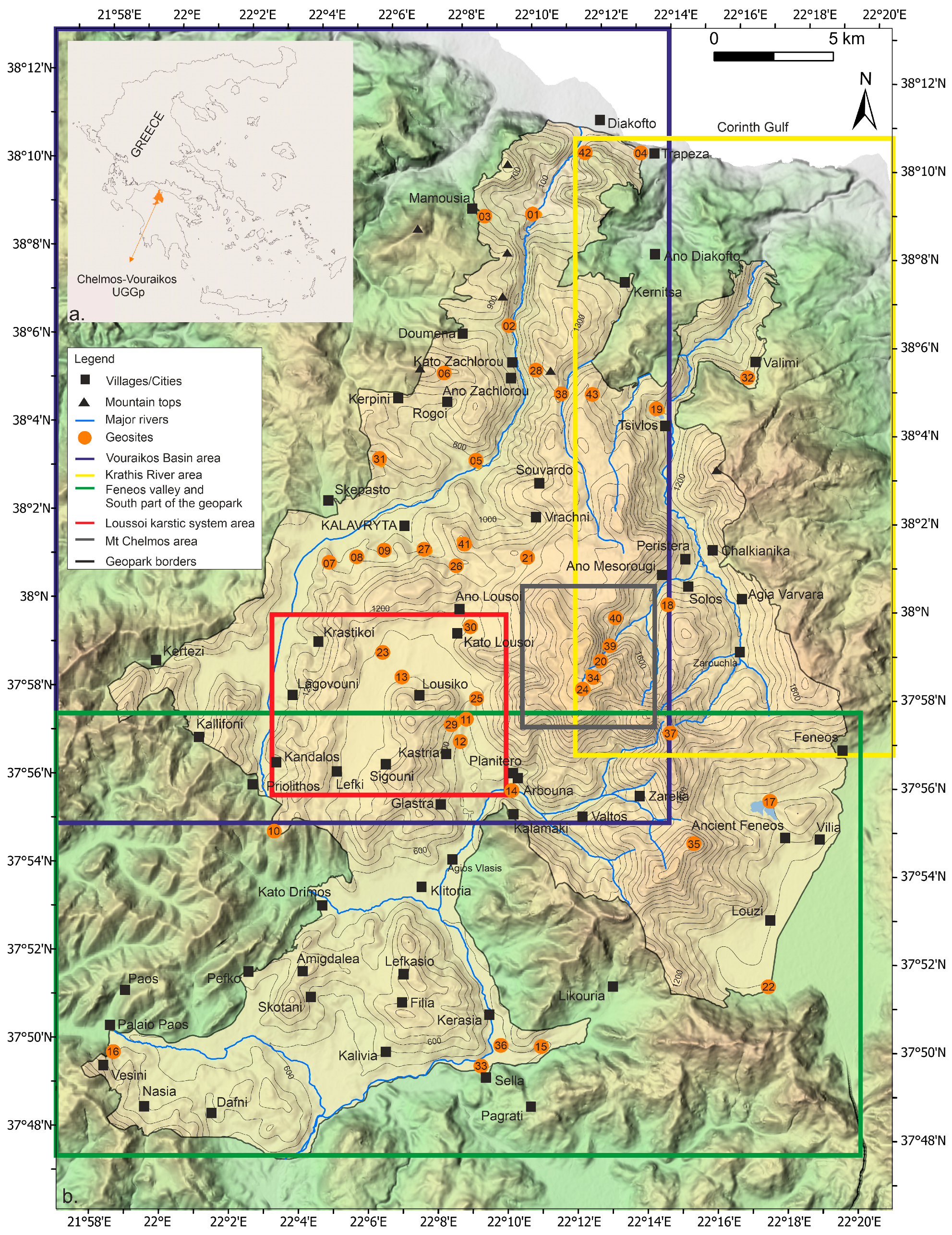






| ID | Geosite | Category |
|---|---|---|
| 1 | Niamata | T, L, S |
| 2 | Portes—Triklia | K, L, T |
| 3 | Mamousia—Rouskio | L, S |
| 4 | Trapeza Marine terrace | Gm, T |
| 5 | Kerpini Conglomerates | L, Gm |
| 6 | Roghi | L, S |
| 7 | Tectonic graben Kalavrita | T, Gm |
| 8 | Agia Lavra | T |
| 9 | Xidias Lignites | L, S |
| 10 | Priolithos | L, S |
| 11 | Cave of the Lakes | K |
| 12 | Mavri Limna | Gm, T |
| 13 | Lousoi sinkhole | K |
| 14 | Aroanios Springs | K |
| 15 | Mati tou Ladona | K |
| 16 | Vesini radiolarites | L, S |
| 17 | Doxa lake | H, Gt, L |
| 18 | Solos | L |
| 19 | Tsivlos Lake | H, Gm |
| 20 | Water of Styx | Gm, S, K |
| 21 | Xerocambos breccias | Gm, L |
| 22 | Feneos sinkholes | K |
| 23 | Lousoi polje | K |
| 24 | Mavrolimni | Gm |
| 25 | Analipsi | L, K |
| 26 | Valvousi | K, Gm |
| 27 | Keramidaki | L, T |
| 28 | Mega Spilaio | Gm, L, P |
| 29 | Kastria spring | K |
| 30 | Spanolakkos | Gm, L |
| 31 | Palaeochori lignites | P, L |
| 32 | Valimi landslide | Gm |
| 33 | Pausanias Vine | L |
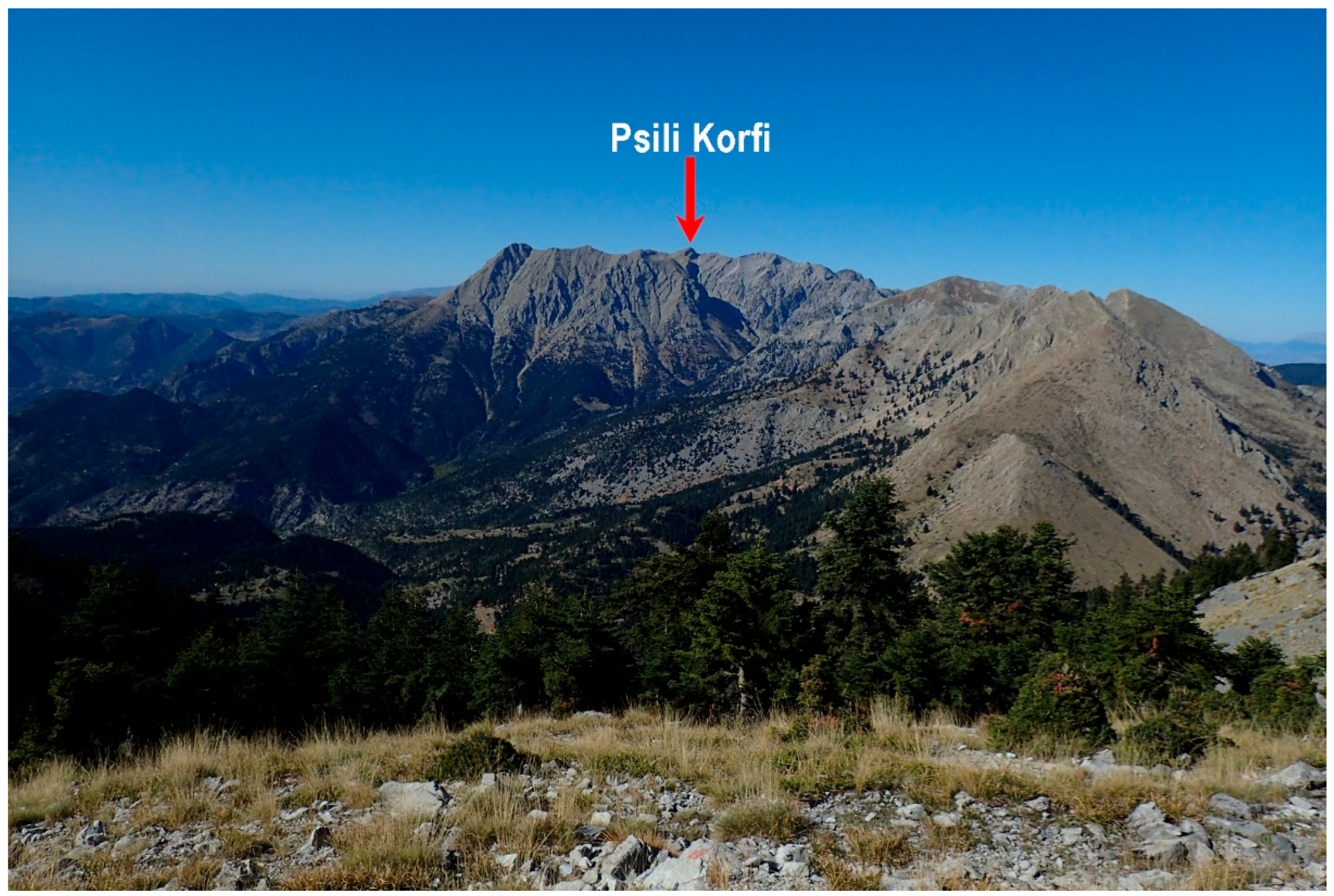
| 34 | Psili Korfi | Gm, T, K |
| 35 | Ntourntourvana | Gm, S, P, K |
| 36 | Chelonospilia | Gm |
| 37 | Madero | Gm, S |
| 38 | Eroded Conglomerates | Gm, L |
| 39 | “Balcony” of Styx | Gm, S |
| 40 | Tessera Elata | Gm, L |
| 41 | Vouraikos Delta fans | L |
| 42 | Kalavryta Castle of Orias | Gm |
| 43 | Petrouchi | Gm |
Disclaimer/Publisher’s Note: The statements, opinions and data contained in all publications are solely those of the individual author(s) and contributor(s) and not of MDPI and/or the editor(s). MDPI and/or the editor(s) disclaim responsibility for any injury to people or property resulting from any ideas, methods, instructions or products referred to in the content. |
© 2026 by the authors. Licensee MDPI, Basel, Switzerland. This article is an open access article distributed under the terms and conditions of the Creative Commons Attribution (CC BY) license.
Share and Cite
Iliopoulos, G.; Papadopoulou, P.; Golfinopoulos, V.; Koumoutsou, E.; Kokkoris, I.P.; Pappa, I.; Dimopoulos, P. Chelmos Vouraikos UNESCO Global Geopark: Links Between Geological and Landscape Diversity with Biodiversity in the Context of Geotourism. Geographies 2026, 6, 4. https://doi.org/10.3390/geographies6010004
Iliopoulos G, Papadopoulou P, Golfinopoulos V, Koumoutsou E, Kokkoris IP, Pappa I, Dimopoulos P. Chelmos Vouraikos UNESCO Global Geopark: Links Between Geological and Landscape Diversity with Biodiversity in the Context of Geotourism. Geographies. 2026; 6(1):4. https://doi.org/10.3390/geographies6010004
Chicago/Turabian StyleIliopoulos, George, Penelope Papadopoulou, Vasilis Golfinopoulos, Eleni Koumoutsou, Ioannis P. Kokkoris, Irena Pappa, and Panayotis Dimopoulos. 2026. "Chelmos Vouraikos UNESCO Global Geopark: Links Between Geological and Landscape Diversity with Biodiversity in the Context of Geotourism" Geographies 6, no. 1: 4. https://doi.org/10.3390/geographies6010004
APA StyleIliopoulos, G., Papadopoulou, P., Golfinopoulos, V., Koumoutsou, E., Kokkoris, I. P., Pappa, I., & Dimopoulos, P. (2026). Chelmos Vouraikos UNESCO Global Geopark: Links Between Geological and Landscape Diversity with Biodiversity in the Context of Geotourism. Geographies, 6(1), 4. https://doi.org/10.3390/geographies6010004