


Special Issue "Hydrogen and Fuel Cell Technology, Modelling and Simulation"

A special issue of Energies (ISSN 1996-1073). This special issue belongs to the section "Hydrogen Energy".

Deadline for manuscript submissions: 31 December 2021.

Special Issue Editor

Dr. Ahmad Baroutaji
E-Mail Website
Guest Editor
School of Engineering, University of Wolverhampton, Wolverhampton TF29NT, UK
Interests: renewable and sustainable energy; hydrogen fuel cell; design optimization
Special Issues and Collections in MDPI journals

Special Issue Information

Dear Colleagues,

Fuel cells are devices that generate electricity through an electrochemical reaction with only heat and water as by-products. Nowadays, fuel cell devices are receiving increased attention as clean energy sources for various practical applications—from small electronic devices to vehicles. Effective design and development of the various components of a fuel cell require an in-depth understanding of the influence of different design variables on the performance of these components. Fuel cell operation involves simultaneous and multiphysics complex processes, and due to the highly reactive, compact nature of the fuel cell, it is challenging to conduct in-situ measurements of critical parameters, such as temperature, pressure and potential gradients, or species concentration. Various computational and modelling techniques, which allow systematic simulation, design, and optimization of fuel cell systems, are valuable tools that provide insight into the phenomena occurring within the cell, reducing the development cycles, and enabling to build the next generation of fuel cells.

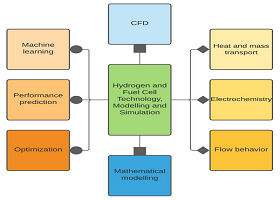
Thus, this Special Issue focuses on the recent developments and applications of modelling, simulation, and optimisation tools for the design and development of different types of fuel cell devices.

Dr. Ahmad Baroutaji
Guest Editor

Manuscript Submission Information

Manuscripts should be submitted online at www.mdpi.com by registering and logging in to this website. Once you are registered, click here to go to the submission form. Manuscripts can be submitted until the deadline. All papers will be peer-reviewed. Accepted papers will be published continuously in the journal (as soon as accepted) and will be listed together on the special issue website. Research articles, review articles as well as short communications are invited. For planned papers, a title and short abstract (about 100 words) can be sent to the Editorial Office for announcement on this website.

Submitted manuscripts should not have been published previously, nor be under consideration for publication elsewhere (except conference proceedings papers). All manuscripts are thoroughly refereed through a single-blind peer-review process. A guide for authors and other relevant information for submission of manuscripts is available on the Instructions for Authors page. Energies is an international peer-reviewed open access semimonthly journal published by MDPI.

Please visit the Instructions for Authors page before submitting a manuscript. The Article Processing Charge (APC) for publication in this open access journal is 2000 CHF (Swiss Francs). Submitted papers should be well formatted and use good English. Authors may use MDPI's English editing service prior to publication or during author revisions.

Keywords

  • CFD
  • Matlab
  • modelling
  • simulations
  • optimisation
  • PEM
  • SOFC
  • DMFC
  • fuel cell

Published Papers (3 papers)

Order results
Result details
Select all
Export citation of selected articles as:

Research

Jump to: Review

Article
Research on Online Diagnosis Method of Fuel Cell Centrifugal Air Compressor Surge Fault
Energies 2021, 14(11), 3071; https://doi.org/10.3390/en14113071 - 25 May 2021
Viewed by 360
Abstract
Stable operation of fuel cell air compressions is constrained by rotating surge in low flowrate conditions. In this paper, a diagnosis criterion based on wavelet transform to solve the surge fault is proposed. First of all, the Fourier transform was used to analyze [...] Read more.
Stable operation of fuel cell air compressions is constrained by rotating surge in low flowrate conditions. In this paper, a diagnosis criterion based on wavelet transform to solve the surge fault is proposed. First of all, the Fourier transform was used to analyze the spectral characteristics of the outlet flowrate. Before wavelet transform was used, the data are standardized. This step eliminated the influence of the flowrate’s absolute value. Then, the wavelet coefficients under characteristic frequencies were extracted. Finally, the diagnosis criterion’s threshold, which indicates the surge occurrence, was defined from the perspective of safety margin. The criterion threshold alerted a surge only 1 s after it occurred. The analysis results show that the criterion meets with the expectation, and it can be used for the control of anti-surge valve. Full article
(This article belongs to the Special Issue Hydrogen and Fuel Cell Technology, Modelling and Simulation)
Show Figures

Figure 1

Article
Adaptive Fuzzy PID Based on Granular Function for Proton Exchange Membrane Fuel Cell Oxygen Excess Ratio Control
Energies 2021, 14(4), 1140; https://doi.org/10.3390/en14041140 - 21 Feb 2021
Cited by 1 | Viewed by 439
Abstract
An effective oxygen excess ratio control strategy for a proton exchange membrane fuel cell (PEMFC) can avoid oxygen starvation and optimize system performance. In this paper, a fuzzy PID control strategy based on granular function (GFPID) was proposed. Meanwhile, a proton exchange membrane [...] Read more.
An effective oxygen excess ratio control strategy for a proton exchange membrane fuel cell (PEMFC) can avoid oxygen starvation and optimize system performance. In this paper, a fuzzy PID control strategy based on granular function (GFPID) was proposed. Meanwhile, a proton exchange membrane fuel cell dynamic model was established on the MATLAB/Simulink platform, including the stack model system and the auxiliary system. In order to avoid oxygen starvation due to the transient variation of load current and optimize the parasitic power of the auxiliary system and the stack voltage, the purpose of optimizing the overall operating condition of the system was finally achieved. Adaptive fuzzy PID (AFPID) control has the technical bottleneck limitation of fuzzy rules explosion. GFPID eliminates fuzzification and defuzzification to solve this phenomenon. The number of fuzzy rules does not affect the precision of GFPID control, which is only related to the fuzzy granular points in the fitted granular response function. The granular function replaces the conventional fuzzy controller to realize the online adjustment of PID parameters. Compared with the conventional PID and AFPID control, the feasibility and superiority of the algorithm based on particle function are verified. Full article
(This article belongs to the Special Issue Hydrogen and Fuel Cell Technology, Modelling and Simulation)
Show Figures

Figure 1

Review

Jump to: Research

Review
Flow Configurations of Membraneless Microfluidic Fuel Cells: A Review
Energies 2021, 14(12), 3381; https://doi.org/10.3390/en14123381 - 08 Jun 2021
Viewed by 560
Abstract
Membraneless microfluidic fuel cells (MMFCs) are being studied extensively as an alternative to batteries and conventional membrane fuel cells because of their simple functioning and lower manufacturing cost. MMFCs use the laminar flow of reactant species (fuel and oxidant) to eliminate the electrolyte [...] Read more.
Membraneless microfluidic fuel cells (MMFCs) are being studied extensively as an alternative to batteries and conventional membrane fuel cells because of their simple functioning and lower manufacturing cost. MMFCs use the laminar flow of reactant species (fuel and oxidant) to eliminate the electrolyte membrane, which has conventionally been used to isolate anodic and cathodic half-cell reactions. This review article summarizes the MMFCs with six major categories of flow configurations that have been reported from 2002 to 2020. The discussion highlights the critical factors that affect and limit the performance of MMFCs. Since MMFCs are diffusion-limited, most of this review focuses on how different flow configurations act to reduce or modify diffusive mixing and depletion zones to enhance the power density output. Research opportunities are also pointed out, and the challenges in MMFCs are suggested to improve cell performance and make them practical in the near future. Full article
(This article belongs to the Special Issue Hydrogen and Fuel Cell Technology, Modelling and Simulation)
Show Figures

Figure 1

Back to TopTop