





Topical Collection "Encyclopedia of ZEMCH Research and Development"

Editors

Dr. Masa Noguchi
E-Mail Website
Lead Collection Editor
Faculty of Architecture, Building and Planning, The University of Melbourne, 757 Swanston Street, Melbourne, VIC 3010, Australia
Interests: ZEMCH Network; zero energy mass custom home design engineering; environmental experience design analysis; mass personalisation; machine learning; value analysis; vertical subdivision plug-in housing system
Special Issues and Collections in MDPI journals
Prof. Dr. Antonio Frattari
E-Mail Website
Collection Editor
Department of Civil, Environmental and Mechanical Engineering, University of Trento, 38123 Trento, Italy
Interests: building automation; ecological design; universal design; smart home; vernacular architecture; wooden architecture; life cycle assessment
Special Issues and Collections in MDPI journals
Prof. Dr. Carlos Torres Formoso
E-Mail Website
Collection Editor
Building Innovation Research Unit (NORIE), Federal University of Rio Grande do Sul, Porto Alegre 90040-060, Brazil
Interests: mass customisation; lean construction; design management; BIM; social housing development; healthcare projects
Special Issues and Collections in MDPI journals
Prof. Dr. Haşim Altan
E-Mail Website
Collection Editor
Department of Architecture, Faculty of Design, Arkin University of Creative Arts and Design, Girne 9935, Cyprus
Interests: building performance and simulation; indoor environmental quality; passive design; sustainable architecture; architectural engineering; urban regeneration; building information modelling; healthy buildings
Special Issues and Collections in MDPI journals
Dr. John Odhiambo Onyango
E-Mail Website
Collection Editor
School of Architecture, University of Notre Dame, Notre Dame, IN 46556, USA
Interests: green architecture; emerging technologies and material; sustainable environment; green building performance measurement; thermal comfort; indoor air quality; dementia care facilities; climate change adaptation; community engagement
Special Issues and Collections in MDPI journals
Prof. Dr. Jun-Tae Kim
E-Mail Website
Collection Editor
Department of Architectural Engineering, Kongju National University, Cheonan 1123-254, Korea
Interests: building-integrated photovoltaic (BIPV); solar photovoltaic-thermal (PVT) system; building energy conservation; vacuum insulation material
Special Issues and Collections in MDPI journals
Prof. Dr. Kheira Anissa Tabet Aoul
E-Mail Website
Collection Editor
Architectural Engineering Department, College of Engineering, United Arab Emirates University, Al Ain, United Arab Emirates
Interests: human factors in the built environment; green architecture; high performance architecture; building occupant behaviour and energy; retrofitting; resilience
Special Issues and Collections in MDPI journals
Dr. Mehdi Amirkhani
E-Mail Website
Collection Editor
Faculty of Architecture, Building and Planning, The University of Melbourne, Melbourne, Australia
Interests: retrofitting; renewable energy; innovative technology; indoor environmental comfort; lighting system; sustainability planning; architectural design
Special Issues and Collections in MDPI journals
Prof. Dr. Sara Jane Wilkinson
E-Mail Website
Collection Editor
School of Built Environment, Faculty of Desgin Architecture & Building, University of Technology Sydney, Sydney, NSW 2007, Australia
Interests: building sustainability; retrofit; adaptive reuse
Special Issues and Collections in MDPI journals
Prof. Dr. Shaila Bantanur
E-Mail Website
Collection Editor
Department of Architecture, BMS School of Architecture, Bengaluru 560064, India
Interests: traditional housing; socio-economic sustainability; sustainable built environment; habitat design; building performance evaluation; energy efficient building
Special Issues and Collections in MDPI journals

Topical Collection Information

Dear Colleagues,

We are pleased to invite you to this ZEMCH design engineering knowledge depository, in which the term ZEMCH stands for zero energy mass custom home. Designing built environments is influential. Homes need to be mass-customised to accommodate today’s diverse needs and demands of individuals and societies for humans’ sound living conditions and activities. Social justice and climatic change within built environments in global contexts are a significant part of ZEMCH R&D action. Due to growing housing needs and demands, the global market required the initiation of the ZEMCH R&D movement so as to ensure the delivery of socially, economically, environmentally, and humanely sustainable built environments to privileged and unprivileged families, communities, and nations that are sharing our common future.

This Collection aims to encompass a wide spectrum of ZEMCH research and development knowledge that concerns design engineering, construction management, material innovation, renewable energy technology, community planning, marketing strategy, and education.

Dr. Masa Noguchi
Prof. Dr. Antonio Frattari
Prof. Dr. Carlos Torres Formoso
Prof. Dr. Haşim Altan
Dr. John Odhiambo Onyango
Prof. Dr. Jun-Tae Kim
Prof. Dr. Kheira Anissa Tabet Aoul
Dr. Mehdi Amirkhani
Prof. Dr. Sara Jane Wilkinson
Prof. Dr. Shaila Bantanur
Collection Editors

Manuscript Submission Information

Manuscripts should be submitted online at www.mdpi.com by registering and logging in to this website. Once you are registered, click here to go to the submission form. Manuscripts can be submitted until the deadline. All papers will be peer-reviewed. Accepted papers will be published continuously in the journal (as soon as accepted) and will be listed together on the collection website. Research articles, review articles as well as short communications are invited. For planned papers, a title and short abstract (about 100 words) can be sent to the Editorial Office for announcement on this website.

Submitted manuscripts should not have been published previously, nor be under consideration for publication elsewhere (except conference proceedings papers). All manuscripts are thoroughly refereed through a single-blind peer-review process. A guide for authors and other relevant information for submission of manuscripts is available on the Instructions for Authors page. Encyclopedia is an international peer-reviewed open access quarterly journal published by MDPI.

Please visit the Instructions for Authors page before submitting a manuscript. The Article Processing Charge (APC) for publication in this open access journal is 1000 CHF (Swiss Francs). Submitted papers should be well formatted and use good English. Authors may use MDPI's English editing service prior to publication or during author revisions.

Keywords

  • zero energy mass custom home
  • sustainable community
  • design engineering
  • construction technology
  • marketing strategy
  • value management
  • planning analysis
  • prefabrication
  • housing affordability
  • occupant health and wellbeing

Published Papers (6 papers)

2021

Entry
Age-Friendly Built Environment
Encyclopedia 2021, 1(3), 781-791; https://doi.org/10.3390/encyclopedia1030060 - 10 Aug 2021
Viewed by 418
Definition
Age-friendly built environments have been promoted by the World Health Organisation (WHO, Geneva, Switzerland) under the Global Age-friendly Cities (AFC) movement in which three domains are related to the built environment. These are: housing, transportation, outdoor spaces and public buildings. The aim is [...] Read more.
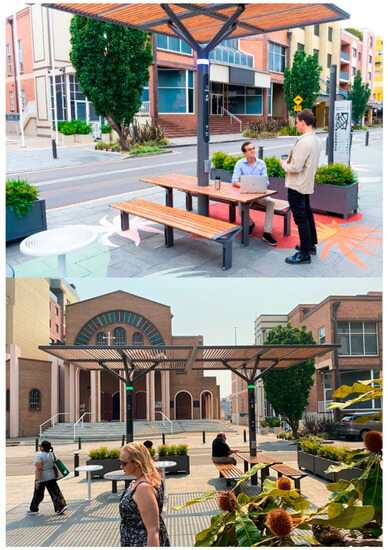
Age-friendly built environments have been promoted by the World Health Organisation (WHO, Geneva, Switzerland) under the Global Age-friendly Cities (AFC) movement in which three domains are related to the built environment. These are: housing, transportation, outdoor spaces and public buildings. The aim is to foster active ageing by optimising opportunities for older adults to maximise their independent living ability and participate in their communities to enhance their quality of life and wellbeing. An age-friendly built environment is inclusive, accessible, respects individual needs and addresses the wide range of capacities across the course of life. Age-friendly housing promotes ageing in familiar surroundings and maintains social connections at the neighbourhood and community levels. Both age-friendly housing and buildings provide barrier-free provisions to minimise the needs for subsequent adaptations. Age-friendly public and outdoor spaces encourage older adults to spend time outside and engage with others against isolation and loneliness. Age-friendly public transport enables older adults to get around and enhances their mobility. For achieving an age-friendly living environment, a holistic approach is required to enable independent living, inclusion and active participation of older adults in society. The eight domains of the AFC movement are not mutually exclusive but overlap and support with one another. Full article
Entry
Social Housing Customization in Brazil
Encyclopedia 2021, 1(3), 589-601; https://doi.org/10.3390/encyclopedia1030049 - 21 Jul 2021
Viewed by 485
Definition
Social housing customization in Brazil refers to the current processes of development and evolution of government-funded neighborhoods for the lowest-income population. The mass production of small housing units that do not satisfy family needs instigates a self-design and self-construction process post-occupancy to customize [...] Read more.
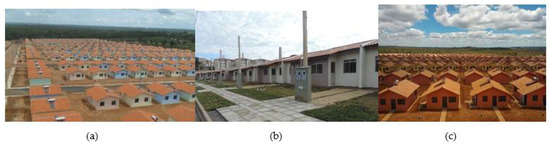
Social housing customization in Brazil refers to the current processes of development and evolution of government-funded neighborhoods for the lowest-income population. The mass production of small housing units that do not satisfy family needs instigates a self-design and self-construction process post-occupancy to customize the units. Ultimately, these changes to the units bring unintended negative consequences for the families and the city. In this context, mass customization is seen as an alternative to address some of the problems related to unit design. Full article
Show Figures

Figure 1

Entry
Domestic Environmental Experience Design
Encyclopedia 2021, 1(2), 505-518; https://doi.org/10.3390/encyclopedia1020042 - 21 Jun 2021
Viewed by 689
Definition
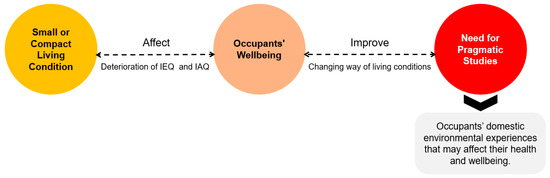
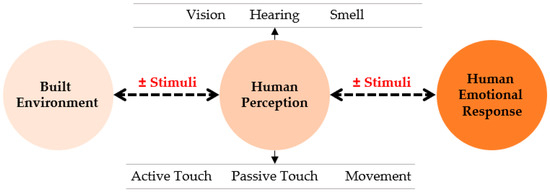
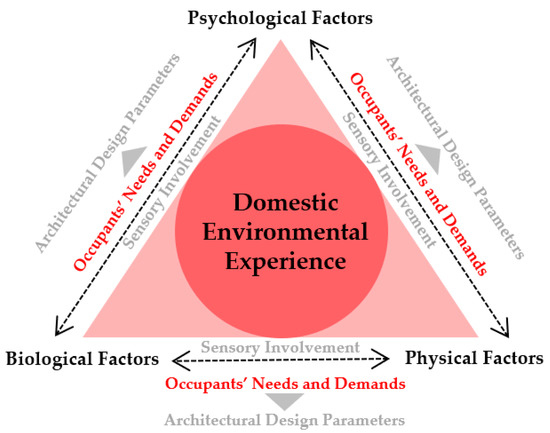
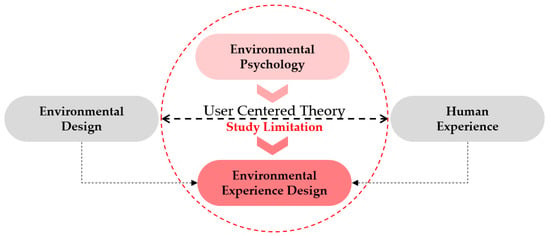
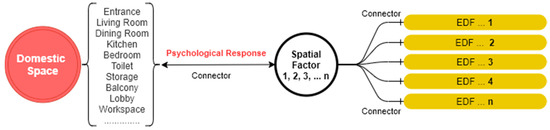
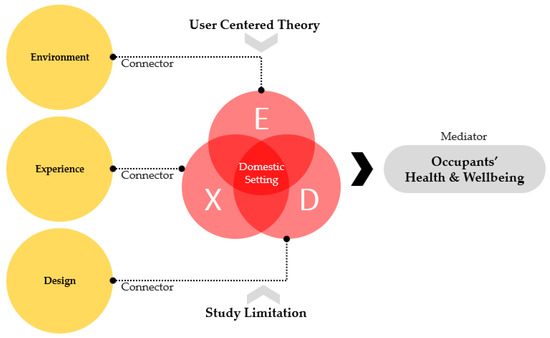
The term ‘domestic environmental experience’ was defined as users’ experiences of cognitive perceptions and physical responses to their domestic built environments. Domestic environments can be enriched through the implementation of environmental experience design (EXD) by combining users’ environmental, spatial and contextual factors that [...] Read more.
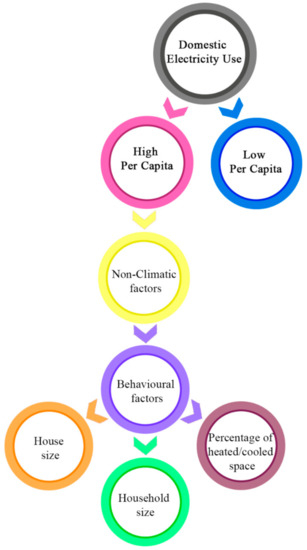
The term ‘domestic environmental experience’ was defined as users’ experiences of cognitive perceptions and physical responses to their domestic built environments. Domestic environments can be enriched through the implementation of environmental experience design (EXD) by combining users’ environmental, spatial and contextual factors that may accommodate occupants’ needs and demands as well as their health and wellbeing. Here, an EXD theoretical concept has been developed based on the ‘User-Centred Design’ thematical framework. Full article
Show Figures

Figure 1
Entry
SEM-PLS Approach to Green Building
Encyclopedia 2021, 1(2), 472-481; https://doi.org/10.3390/encyclopedia1020039 - 18 Jun 2021
Viewed by 547
Definition
Green buildings refer to buildings that decrease adverse environmental effects and maintain natural resources. They can diminish energy consumption, greenhouse gas emissions, the usage of non-renewable materials, water consumption, and waste generation while improving occupants’ health and well-being. As such, several rating tools [...] Read more.
Green buildings refer to buildings that decrease adverse environmental effects and maintain natural resources. They can diminish energy consumption, greenhouse gas emissions, the usage of non-renewable materials, water consumption, and waste generation while improving occupants’ health and well-being. As such, several rating tools and benchmarks have been developed worldwide to assess green building performance (GBP), including the Building Research Establishment Environmental Assessment Method (BREEAM) in the United Kingdom, German Sustainable Building Council (DGNB), Leadership in Energy and Environmental Design (LEED) in the United States and Canada, Comprehensive Assessment System for Built Environment Efficiency (CASBEE) in Japan, Green Star in Australia, Green Mark in Singapore, and Green Building Index in Malaysia. Energy management (EM) during building operation could also improve GBP. One of the best approaches to evaluating the impact of EM on GBP is by using structural equation modelling (SEM). SEM is a commanding statistical method to model testing. One of the most used SEM variance-based approaches is partial least squares (PLS), which can be implemented in the SmartPLS application. PLS-SEM uses path coefficients to determine the strength and significance of the hypothesised relationships between the latent constructs. Full article
Show Figures

Figure 1
Entry
Solar Chimney Applications in Buildings
Encyclopedia 2021, 1(2), 409-422; https://doi.org/10.3390/encyclopedia1020034 - 27 May 2021
Viewed by 932
Definition
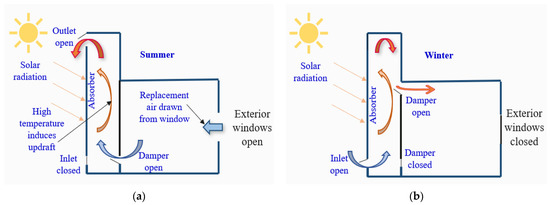
A solar chimney is a renewable energy system used to enhance the natural ventilation in a building based on solar and wind energy. It is one of the most representative solar-assisted passive ventilation systems attached to the building envelope. It performs exceptionally in [...] Read more.
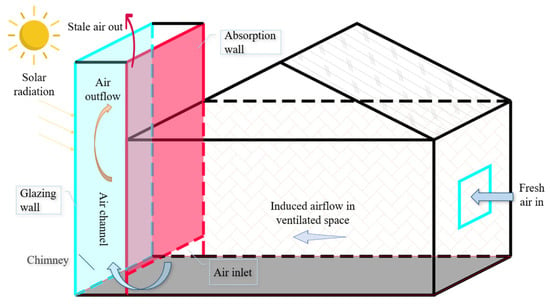
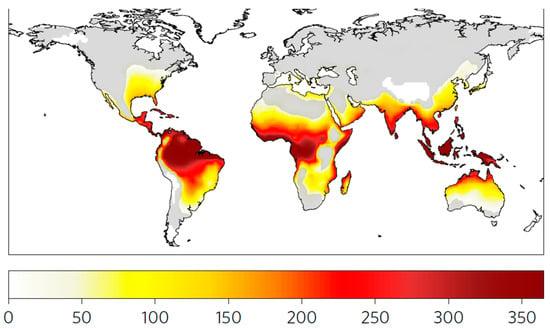
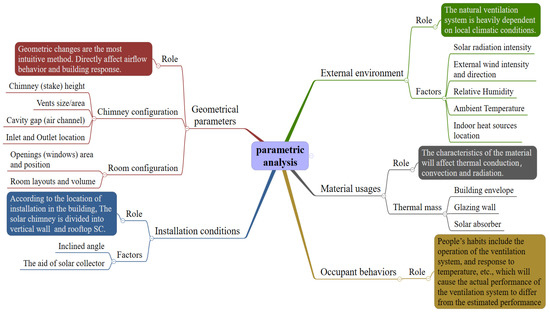
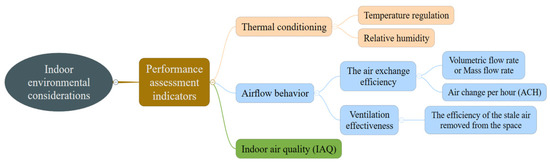
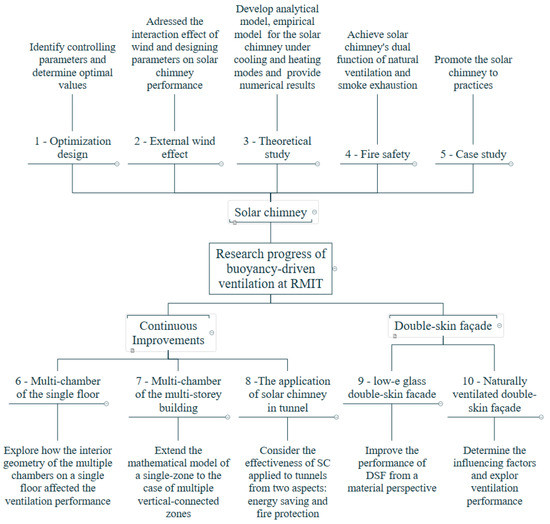
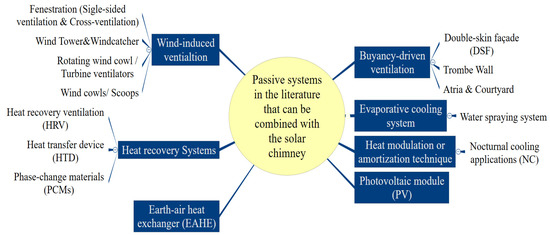
A solar chimney is a renewable energy system used to enhance the natural ventilation in a building based on solar and wind energy. It is one of the most representative solar-assisted passive ventilation systems attached to the building envelope. It performs exceptionally in enhancing natural ventilation and improving thermal comfort under certain climate conditions. The ventilation enhancement of solar chimneys has been widely studied numerically and experimentally. The assessment of solar chimney systems based on buoyancy ventilation relies heavily on the natural environment, experimental environment, and performance prediction methods, bringing great difficulties to quantitative analysis and parameterization research. With the increase in volume and complexity of modern building structures, current studies of solar chimneys have not yet obtained a unified design strategy and corresponding guidance. Meanwhile, combining a solar chimney with other passive ventilation systems has attracted much attention. The solar chimney-based integrated passive-assisted ventilation systems prolong the service life of an independent system and strengthen the ventilation ability for indoor cooling and heating. However, the progress is still slow regarding expanded applications and related research of solar chimneys in large volume and multi-layer buildings, and contradictory conclusions appear due to the inherent complexity of the system. Full article
Show Figures

Figure 1
Entry
Sustainable Architecture—What’s Next?
Encyclopedia 2021, 1(1), 293-313; https://doi.org/10.3390/encyclopedia1010025 - 23 Mar 2021
Viewed by 829
Definition
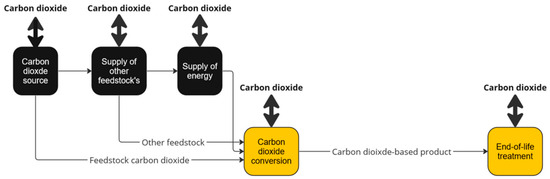
Sustainable architecture encompasses more than energy efficiency, zero carbon dioxide (CO2) emission or renewable energy use in the built environment. It also needs to alleviate overall impacts on the natural environment or ecosystem that surrounds it. It may be argued that [...] Read more.
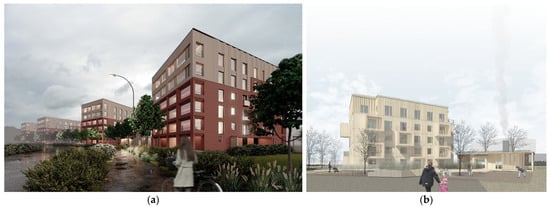
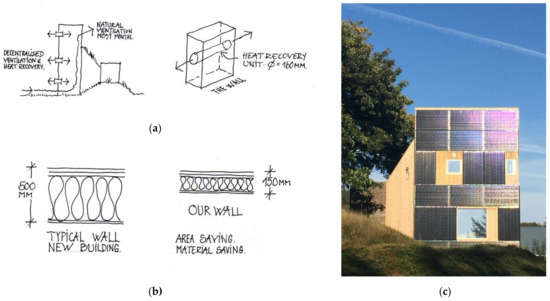
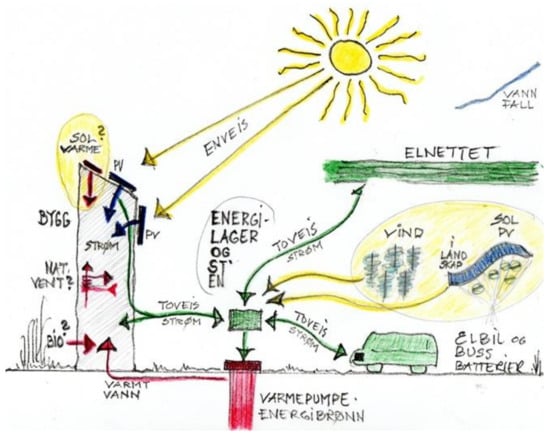
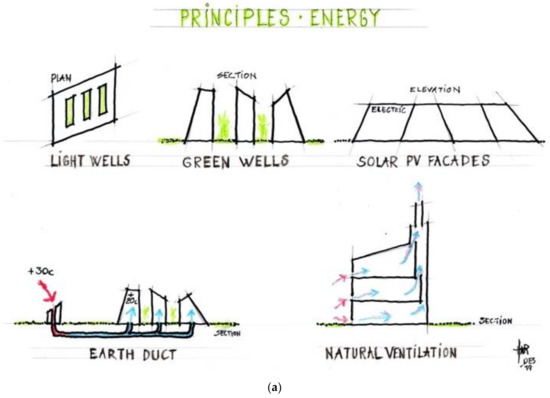
Sustainable architecture encompasses more than energy efficiency, zero carbon dioxide (CO2) emission or renewable energy use in the built environment. It also needs to alleviate overall impacts on the natural environment or ecosystem that surrounds it. It may be argued that primitive vernacular architecture (architecture without architects) built and operated using local techniques and resources alone can be considered to be sustainable. Yet later, after the 1992 Rio Conference and its declarations, more specific definitions emerged putting weight on the rational use of land area, materials and energy, preferably local, as well as area efficient planning, economy and recyclability. The advantage of this is to reduce the ecological footprint of buildings and the climate gas emissions from a sector that represents 35–50 percent of global climate gas emissions, depending on how one counts. This paper clarifies concepts, questions cemented truths and points a way forward by asking; what’s next? Full article
Show Figures

Figure 1
Planned Papers

The below list represents only planned manuscripts. Some of these manuscripts have not been received by the Editorial Office yet. Papers submitted to MDPI journals are subject to peer-review.

Title: Sustainable Architecture – What’s Next?
Author: Harald Røstvik
Professor, City- and Regional Planning, Institute of Safety, Economics and Planning (ISØP), Faculty of Science and Technology, University of Stavanger, Norway

Title: Age-Friendly Built Environment
Authors: Hing-Wah Chau, Elmira Jamei
Built Environment Discipline Group, College of Engineering and Science, Institute for Sustainable Industries and Liveable Cities, Victoria University, Melbourne, Australia

Title: SEM-PLS Approach to Green Building
Authors: Nasim Aghili 1 and Mehdi Amirkhani 2
1. School of Civil Engineering and Surveying, Faculty of Health, Engineering, and Sciences, University of Southern Queensland, Australia
2. ZEMCH EXD Lab, Faculty of Architecture, Building and Planning, The University of Melbourne, Australia

Title: Domestic Environmental Experience Design
Author: Sajal Chowdhury
ZEMCH EXD Lab, Faculty of Architecture, Building and Planning, The University of Melbourne, Australia

Title: Low Cost Neighbourhood Development in Brazil
Authors: Luisa Félix Dalla Vecchia and Nirce Saffer Medvedovski
Faculty of Architecture and Urban Design, Universidade Federal de Pelotas, Brazil

Title: Solar Chimney
Authors: Haihua Zhang, Yao Tao and Long Shi
School of Engineering, RMIT University, Australia

Title: Sustainable Built Environment
Authors: Lars-Åke Mikaelsson
Mid Sweden University, Sweden

Title: Vertical Plug-in Micro-compact Housing Systems
Authors: Yee Kee Ku and Masa Noguchi
Affiliation: ZEMCH EXD Lab, Faculty of Architecture, Building and
Planning, The University of Melbourne, Australia

Title: Mass Customisation in Low Cost Housing
Authors: Carlos T. Formoso, Patrícia A. Tillmann, and Cynthia S. Hentschke
Building Innovation Research Unit (NORIE), Federal University of Rio Grande do Sul, Brazil

Title: Green Buildings Rating Systems (GBRS)
Authors: Stefano Politi, Lia Marchi and Ernesto Antonini
University of Bologna, Bologna, Italy

Back to TopTop