- 5.2Impact Factor
- 10.5CiteScore
- 16 daysTime to First Decision
Emerging Roles of Neutrophil in Inflammation and Immunity
This special issue belongs to the section “Cellular Immunology“.
Special Issue Information
Dear Colleagues,
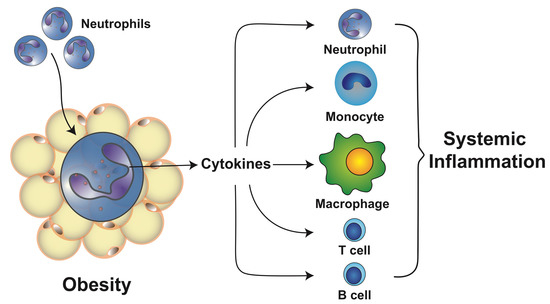
PMNs are indispensable cells in the innate immune system. They are produced in the bone marrow and released into the circulation. Blood neutrophils are a complex population of polymorphonuclear leukocytes that are recruited in response to inflammatory mediators released by an inflamed tissue. Neutrophil functions are associated with their physiological status. Neutrophil heterogeneity has been highlighted in pathological conditions including infections, inflammation, autoimmunity and cancers. The ability of neutrophils to change their phenotypes, acquire new functions and adapt to the microenvironment in which they are attracted includes antigen presentation and a variety of anti-inflammatory and pro-revolving properties. Furthermore, energy production in PMNs depends on glycolysis and less on the oxidative phosphorylation pathway because they have only a few mitochondria. Though glycolysis supports the enhanced energy demand of activated PMNs, the cells must rewire their metabolism to adapt the microenvironment and sustain their transition from a pro-inflammatory towards a pro-resolving phenotype.
In this Topical Collection of Cells, we invite you to contribute original research articles, reviews, or shorter perspective articles on all aspects related to the theme of “Emerging Roles of Neutrophil in Inflammation and Immunity”. Articles describing neutrophil heterogeneity in health and diseases, immunometabolism, acquisition of new functions, or general aspects of neutrophil physiology are highly welcome. Relevant topics include but are not limited to:
Prof. Dr. Sylvain G. Bourgoin
Prof. Dr. Martin Pelletier
Prof. Dr. Patrice E. Poubelle
Collection Editors
Manuscript Submission Information
Manuscripts should be submitted online at www.mdpi.com by registering and logging in to this website. Once you are registered, click here to go to the submission form. Manuscripts can be submitted until the deadline. All submissions that pass pre-check are peer-reviewed. Accepted papers will be published continuously in the journal (as soon as accepted) and will be listed together on the special issue website. Research articles, review articles as well as short communications are invited. For planned papers, a title and short abstract (about 250 words) can be sent to the Editorial Office for assessment.
Submitted manuscripts should not have been published previously, nor be under consideration for publication elsewhere (except conference proceedings papers). All manuscripts are thoroughly refereed through a single-blind peer-review process. A guide for authors and other relevant information for submission of manuscripts is available on the Instructions for Authors page. Cells is an international peer-reviewed open access semimonthly journal published by MDPI.
Please visit the Instructions for Authors page before submitting a manuscript. The Article Processing Charge (APC) for publication in this open access journal is 2700 CHF (Swiss Francs). Submitted papers should be well formatted and use good English. Authors may use MDPI's English editing service prior to publication or during author revisions.
Keywords
- neutrophil heterogeneity
- plasticity
- reprogramming
- low density neutrophils
- functions
- signaling
- Autoimmunity
- Inflammation
- Resolution of inflammation
- Immunometabolism
- Adaptive immunity
- Translational medicine
- Culture of neutrophil progenitors.
Benefits of Publishing in a Special Issue
- Ease of navigation: Grouping papers by topic helps scholars navigate broad scope journals more efficiently.
- Greater discoverability: Special Issues support the reach and impact of scientific research. Articles in Special Issues are more discoverable and cited more frequently.
- Expansion of research network: Special Issues facilitate connections among authors, fostering scientific collaborations.
- External promotion: Articles in Special Issues are often promoted through the journal's social media, increasing their visibility.
- e-Book format: Special Issues with more than 10 articles can be published as dedicated e-books, ensuring wide and rapid dissemination.