Skip Content
You are currently on the new version of our website. Access the old version .

Catalysts

Catalysts is an international, peer-reviewed, open access journal of catalysts and catalyzed reactions, published monthly online by MDPI.
The Romanian Catalysis Society (RCS) is affiliated with Catalysts and its members receive discounts on the article processing charges.
Quartile Ranking JCR - Q2 (Chemistry, Physical)

All Articles (11,170)

This study presents a novel multifunctional Lac@CMC-Cu@Fe3O4 nanocomposite for the efficient immobilization of laccase designed to overcome limitations in enzyme stability, reusability, and catalytic performance. The nanocomposite integrates magnetite (Fe3O4) for rapid magnetic separation, carboxymethyl cellulose (CMC) as a biocompatible matrix for covalent enzyme attachment, and copper nanoparticles to enhance catalytic activity. The immobilization achieved an impressive yield of 87%, with comprehensive characterization by XRD, FT-IR, FESEM, EDX, BET, and VSM confirming successful synthesis and enzyme attachment. Kinetic analysis revealed a remarkable 37% increase in maximum reaction velocity (Vmax = 111 µmol/min) compared to free laccase (81.3 µmol/min), despite a moderate increase in Km from 1.54 to 3.22 mM. The immobilized biocatalyst demonstrated superior thermal stability, retaining 53% activity at 60 °C versus 17% for the free enzyme, and exhibited a broader pH tolerance, maintaining 41% activity at pH 8.0. Notably, the biocatalyst showed enhanced performance in organic solvents, with 153% activation in acetone. Operational reusability was exceptional, retaining 84% activity after 15 cycles, and storage stability was significantly improved, maintaining 68% activity after 90 days compared to only 11% for free laccase. This magnetically separable nanobiocatalyst represents a promising, scalable platform for sustainable industrial and environmental applications.

11 February 2026
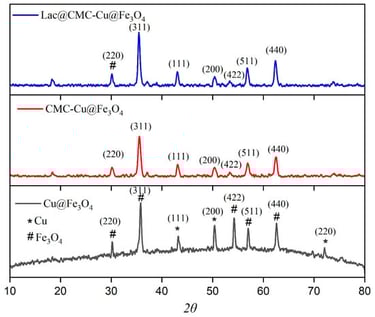
XRD pattern of functionalized material before and after immobilization.

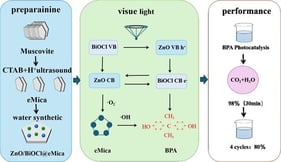
In this study, exfoliated mica nanoparticle particles were utilized to reduce the band gap of mica nanoparticles, and the loading of ZnO and BiOCl enhanced the photocatalytic performance. Within the mica nanosheets, exfoliation led to a decrease in band gap energy from 7 eV to 2.5 eV, thereby improving the semiconductor properties of the material. It is more suitable for photocatalysis research and the improvement in photocatalytic capabilities. This research prepared exfoliated mica nanoparticle particles (eMica) via ultrasonic exfoliation combined with CTAB intercalation and acid treatment. Subsequently, a ZnO/BiOCl ternary composite photocatalyst supported on eMica (ZnO/BiOCl@eMica) was synthesized using a hydrothermal method. The crystal structure, chemical composition, morphology, and optical properties of the materials were systematically characterized by X-ray diffraction (XRD), X-ray photoelectron spectroscopy (XPS), scanning electron microscopy (SEM), transmission electron microscopy (TEM), and Fourier-transform infrared spectroscopy (FT-IR). The effects of reaction conditions (ZnO/BiOCl molar ratio, catalyst dosage, initial BPA concentration, and solution pH) on photocatalytic performance were investigated through BPA degradation experiments. The results showed that when the molar ratio of eMica:ZnO:BiOCl was 1:3:3, the catalyst dosage was 0.1 g/50 mL, the initial BPA concentration was 20 mg/L, and pH = 10, the composite achieved a BPA degradation efficiency of 98% within 30 min. Free radical trapping experiments confirmed that superoxide anions (·O2), hydroxyl radicals (·OH), and holes (h+) were the primary active species. The excellent performance of the composite is attributed to the high specific surface area and electron transfer capability of eMica, as well as the synergistic charge separation effect of the ZnO/BiOCl heterojunction. Furthermore, the composite maintained nearly 80% degradation efficiency after four cycles, demonstrating good stability and practical potential. Two-dimensional (2D) mica nanoparticles open new opportunities for exploring the photocatalytic properties of 2D materials and show promise in the field of 2D photocatalysis.

11 February 2026

Schematic illustration of the mica exfoliation mechanism.

The sustainable synthesis of valuable noncanonical amino acids from renewable raw materials holds significant importance. This research developed a viable chemical–biological coupling process, leveraging the synergistic effect of a solid acid catalyst and the whole cell of E. coli PpLTA to selectively synthesize β-(2-furanyl) serine from corncob. Initially, a novel magnetic solid acid catalyst, Fe3O4/C-SO3H, was successfully fabricated and employed to catalyze the degradation of corncob in a toluene–water biphasic system for furfural production. Under the optimal conditions (catalyst loading of 2.0% w/w and reaction at 170 °C for 20 min), the furfural yield could attain 62.3%. After ten cycles of use, the yield of furfural remained at 44.7% and the retention rate of catalytic activity was 71.7%. Furthermore, the biocompatibility verification results demonstrated that the furfural derived from corncob could be completely transformed by E. coli PpLTA at a concentration of 50 mM, and this furfural system did not generate any by-products that hindered the biotransformation process. This chemical–biological coupling approach offers a technical solution for the efficient production of noncanonical amino acids from biomass resources.

11 February 2026

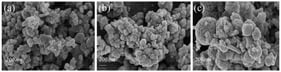
SEM images of solid acid. (a) nano-sized Fe3O4; (b) Fe3O4/C; and (c) Fe3O4/C-SO3H.

The effect of palladium addition to a hybrid Co/SiO2 + HZSM-5 + Al2O3 catalyst on the combined Fischer–Tropsch (FT) synthesis and hydrocarbon hydroconversion process was studied. Catalysts with a Pd content of 0.075–0.3 wt.% were characterized by a complex of physicochemical methods, including synchrotron radiation X-ray diffraction (SR-XRD), temperature-programmed reduction with hydrogen (H2-TPR), temperature-programmed desorption of hydrogen with oxygen titration (H2-TPD/O2 titration), IR spectroscopy of adsorbed pyridine, and STEM-EDX analysis. It was found that the addition of palladium decreases the cobalt oxide reduction temperature due to interphase hydrogen transfer. Tests in hydrocarbon synthesis at 240–250 °C, a pressure of 2 MPa, and an H2/CO ratio of 2 showed that the sample with 0.15% Pd exhibits the highest selectivity for C5+ hydrocarbons (66.8% at 240 °C) and stability for 150 h. Analysis of the synthesis products revealed a fivefold decrease in the proportion of alkenes and an increase in isoalkanes with increasing Pd concentration. This effect enables the in situ hydroprocessing of primary FT products in a single reactor. The results demonstrate that the targeted introduction of palladium into the hybrid system is an effective strategy for regulating its functionality, allowing for the one-stage production of high-quality fuels with a controlled hydrocarbon composition from syngas.

11 February 2026

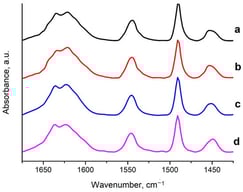
IR spectra of adsorbed pyridine over Pd/ZSM-5 zeolite samples after desorption at 150 °C: (a) ZSM-5 (Pd/0.0), (b) ZSM-5 (Pd/0.075), (c) ZSM-5 (Pd/0.15), and (d) ZSM-5 (Pd/0.3).

News & Conferences

Issues

Open for Submission

Editor's Choice

Reprints of Collections

Catalysts in Chemical Looping Technology for Energy Storage and Carbon Emission Reduction
Reprint

Catalysts in Chemical Looping Technology for Energy Storage and Carbon Emission Reduction

Editors: Chuande Huang, Bo Jiang, Xin Tian, Jiawei Hu
Effect of the Modification of Catalysts on the Catalytic Performance
Reprint

Effect of the Modification of Catalysts on the Catalytic Performance

2nd Edition
Editors: Florica Papa, Anca Vasile, Gianina Dobrescu

Get Alerted

Add your email address to receive forthcoming issues of this journal.

XFacebookLinkedIn
Catalysts - ISSN 2073-4344