
Review

Advanced Oxidation Techniques and Hybrid Approaches for Microplastic Degradation: A Comprehensive Review


by
Muhammad Nur
1,2,*,
Sumariyah Sumariyah
1,
Muhammad Waiz Khairi Nizam
3,
Harry Lik Hock Lau
3,
Rusydi R. Sofian
3,
Nurul Fadhilah Zayanah
1,
Much Azam
1,
Qidir Maulana Binu Soesanto
1,
Zaenul Muhlisin
1,
Eko Yulianto
2 and
Anwar Usman
1,*
1
Department of Physics, Faculty of Science and Mathematics, Universitas Diponegoro, Tembalang Campus, Semarang 50275, Indonesia
2
Center for Plasma Research, Integrated Laboratory, Universitas Diponegoro, Tembalang Campus, Semarang 50275, Indonesia
3
Department of Chemistry, Faculty of Science, Universiti Brunei Darussalam, Jalan Tungku Link, Gadong BE1410, Brunei
*
Authors to whom correspondence should be addressed.
Catalysts 2026, 16(1), 71; https://doi.org/10.3390/catal16010071
Submission received: 29 November 2025 / Revised: 26 December 2025 / Accepted: 31 December 2025 / Published: 7 January 2026

Abstract

Microplastics (MPs) have emerged as persistent environmental pollutants with adverse effects on ecosystems and human health. Conventional removal methods, such as filtration and sedimentation, primarily rely on physical separation without addressing the degradation of MPs, leading to their accumulation and the risk of secondary pollution. This review explores the potential of advanced oxidation processes (AOPs), including photocatalysis, electrochemical oxidation, Fenton processes, sulfate radical-based oxidation, sonochemical treatment, ozonation, and plasma technologies, which generate reactive oxygen and nitrogen species capable of promoting polymer chain scission, microbial biodegradation, and the oxidative fragmentation and mineralization of MPs into non-toxic byproducts. Hybrid AOP systems combined with biological treatments or membrane-based filtration are also examined for their effectiveness in degrading MPs, as well as for scalability and the environmental impacts of their byproducts when integrated into existing wastewater treatment systems. The review further discusses challenges related to operational parameters, energy consumption, and the formation of secondary pollutants. By identifying current knowledge gaps and future research directions, this review provides insights into optimizing AOPs and integrations of AOPs with biological treatments or membrane-based processes for sustainable MP remediation and water treatment applications.

1. Introduction

Plastics are ubiquitously used for a wide variety of purposes. Due to their resilience and resistance to degradation by physical processes, the presence of plastics in the environment becomes a serious threat to both terrestrial and marine ecosystems. In the environment, plastics break down into small fragments through the action of waves, sunlight, and mechanical wear [1]. These microplastics (MPs) have emerged as pervasive environmental pollutants, infiltrating oceans, freshwater systems, soils, and even the atmosphere. MPs are characterized by their persistence and their ability to adsorb hazardous chemicals, including additives such as amides and phthalates [2,3]. Their small size and chemical resilience not only make them difficult to remove from the environment but also raise concerns about their impacts on ecosystems, animals, and human health [4,5]. A diverse array of marine invertebrates and fish have been affected by MPs. Several toxic compounds have been identified in MPs, which can undergo bioaccumulation and biomagnification, and pose potential health risks to human [6]. MPs can also be transported to various environments by wind, runoff, and animal activity, significantly increasing the scope of their impact across vast, and often remote areas.
From a policy perspective, regulatory authorities have increasingly focused on mitigating MP contamination. Many countries have enacted bans on MPs in personal care products and imposed stricter discharge limits on industrial effluents containing plastic particulates [5,7]. For example, initiatives under the European Green Deal have prompted member states to develop comprehensive strategies that include stricter monitoring and reporting of emissions of MPs from wastewater treatment plants. In the United States and other developed countries, similar regulatory pressures have been strictly imposed to tighten environmental standards, compelling wastewater treatment facilities to adopt advanced technologies and stimulating research and investment in scalable and cost-effective solutions for remediation of MPs [8].
Typical conventional removal methods, including mechanical filtration, sedimentation, and coagulation, have been widely employed for removing MPs in water treatment processes. Mechanical filtration is performed by pumping wastewater through semipermeable membranes with specific pore sizes. As filtration of MPs relies solely on size exclusion, its effectiveness is limited by the small dimensions of MPs. Although membrane filtration shows great potential for efficiently separating MPs from wastewater and is efficient in terms of energy consumption, the sizes of some MPs can fall below the membrane pore sizes, allowing them to escape from filtration. Even if MPs are captured by the filtration, they are accumulated on the membrane surfaces rather than being destroyed in situ, causing membrane fouling, which requires frequent replacement and results in high operational costs. Moreover, the disposal of accumulated MPs is challenging, and their potential re-release into the environment remains a concern [9].
Sedimentation and coagulation processes involve the addition of coagulants, such as aluminum sulfate (Al2(SO4)3), ferric sulfate (Fe2(SO4)3), or calcium hydroxide (Ca(OH)2) to destabilize suspended small particles of plastics in contaminated water. The effectiveness of these processes depends strongly on the density and aggregation behavior of MPs [10]. In particular, flocs of MPs are difficult to form, because many types of MPs are buoyant in water, have densities similar to water, are difficult to settle, and do not have ionic functional groups needed to react with the counter ions generated from through dissociation of the coagulants. Therefore, additional chemicals are often required to promote aggregate and micro-floc formations. If MPs are not chemically modified into micro-flocs which can settle more easily during sedimentation process, they may be released back into the water at different conditions, leading to secondary contamination. As a result, some MPs may persist or even migrate between different environmental compartments, exacerbating ecological and health risks.
Activated sludge is a common biological process applied in wastewater treatment to degrade MPs, employing a suspension of microbial biomass that commonly contains bacteria and protozoa. The microorganisms in the activated sludge decompose organic compounds and can degrade MPs through metabolic processes. Although this method has potential for the degradation of MPs, it still has several disadvantages, including high oxygen consumption, the requirement of complicated subsequent aeration, agitation, and separation steps, the need for large installation space, the generation of substantial waste sludge, vulnerability to external disturbances, and high operational costs [11].
As the conventional methods described above face several challenges and are not effective at fully removing and eliminating MPs from wastewater and natural water systems, the development of advanced technologies is indispensable. Given their diverse physicochemical properties, such as polymer composition, surface charge, and hydrophobicity, MPs are unlikely to be eliminated using a single, one-method-fits-all removal strategy. In this context, advanced oxidation processes (AOPs) and related techniques offer promising treatment technologies that combine physical capture with chemical degradation of MPs representing a more sustainable and practical approach to mitigating these emerging pollutants and their associated environmental impacts and health risks. The most promising AOPs effectively generate reactive oxygen species and reactive nitrogen species (ROS and RNS), such as carbonate anion (CO3), hydrogen (H), hydroxyl (OH), hydroperoxyl (HO2), nitric oxide (NO), nitroxyl ion (NO), ozone (O3), nitrous oxide (NO), singlet oxygen (1O2), sulfate anion (SO4), and superoxide anion (O2) radicals, which are capable of degrading MPs. These AOPs include photocatalysis, electrochemical oxidation, Fenton processes, sulfate radical-based oxidation, sonochemical treatment, ozonation, and plasma technologies [12,13,14,15,16]. These reactive species oxidize MPs, and the resulting redox reactions break them down and transform them into products with lower degrees of polymerization, or even achieve complete mineralization to carbon dioxide (CO2) and water (H2O). This effectively reduces the concentration of MPs in water, neutralizes their environmental impacts, and mitigates the risks associated with MPs and secondary pollution due to their degradation byproducts [17,18].
This review article covers the fundamental concept and recent advancements in the degradation of polystyrene, polyethylene, polypropylene, and polyvinyl chloride MPs. The aim is to provide a comprehensive overview on photocatalysis, electrochemical oxidation, Fenton processes, sulfate radical-based oxidation, sonochemical treatment, ozonation, and plasma treatments for the degradation of MPs. Degradation efficiencies and mechanistic insights, as well as environmental considerations, including matrix effects, catalyst recovery, the environmental implications of degradation byproducts, and energy consumptions, are critically examined. Finally, we propose future research directions focused on visible-light activation, hybrid photocatalyst architectures, continuous-flow reactor design, standardized assessment protocols, and integrated toxicological evaluations to guide the development of scalable, sustainable, and practical application of these advanced treatment technologies for mitigating MP pollution.

2. Sources and Environmental Impact of Microplastics

MPs in the environment originate primarily from a variety of anthropogenic sources. They are generated through the degradation of larger plastic items and from direct discharges associated with domestic activities, industrial effluents, manufacturing processes, and other sources of plastic waste [19]. Retail products such as personal care items and plastic packaging, which undergo fragmentation during use or disposal, are among the direct contributors to MP contamination [20]. Fragmentation of larger plastics into MPs occurs through physical, chemical, and biological processes, including mechanical abrasion, photodegradation from sunlight, and microbial activity, further exacerbating the prevalence of MPs in the environment.
MPs are small plastic particles, typically in the range from 1 mm to 5 mm in diameter, and often retain harmful chemical additives from their parent materials, making them hazardous to both aquatic and terrestrial ecosystems [3,21,22]. Wastewater treatment plants (WWTPs) serve as major pathways through which MPs enter natural water bodies. Despite existing treatment technologies, significant quantities of MPs escape capture due to their small size and diverse physical properties. Once released, MPs travel into freshwater and marine ecosystems, where they persist and accumulate over time. Industrial sources, such as the shedding of synthetic fibers from textiles, runoff from plastic waste disposal, and tire wear, also contribute substantially to the ongoing increase in MP contamination.
The physical and chemical properties of MPs in natural environments depend on their particle size, shape, density, and polymer composition and can therefore be readily modified by sunlight, wind, runoff, and microorganisms [23]. The polymer composition, such as polystyrene, polyethylene, polypropylene, polyvinyl chloride, or their combinations, as well as additional additives, including phthalates, plasticizers, and flame retardants that can readily leach into aquatic solutions, determines the surface area, hydrophobicity, mobility, and ability of MPs to form biofilms in the environment. Moreover, MPs can act as adsorbents and transport other emerging pollutants across ecosystems [24]. In this context, chemical composition is an intrinsic characteristic that controls the adsorption capacity of MPs for other emerging pollutants. More importantly, the chemical composition of MPs is a key factor governing their chemical reactivity, particularly polymer bond cleavage, leading to polymer degradation or molecular breakdown through either direct photolysis or treatment by AOPs [25], as described in the following section.
The environmental and health risks associated with MPs are multifaceted. Within aquatic ecosystems, MPs pose significant threats to organisms such as invertebrates and fish that ingest these particles. Ingestion can cause physical harm, including tissue damage and blockage of the digestive tract [26]. More concerning, however, is the chemical exposure associated with MPs. As MPs can adsorb harmful pollutants, including heavy metals, persistent organic pollutants, and pharmaceuticals, they act as vectors for toxic substances entering the food chain, with substantial impacts on marine biodiversity. These imply that MPs are a result of multiple pollution sources and present serious challenges for environmental tracking and pollution reduction. Furthermore, MPs can migrate through terrestrial systems, entering soil and even the atmosphere, where their effects are still being investigated.
For human health, exposure pathways include the ingestion of contaminated seafood and the inhalation of MP fibers present in the air. Although the precise health impacts of MPs at the cellular level are not yet fully understood, studies suggest that MPs may lead to inflammation, immune system disruption, and other health issues when they accumulate in the body [22]. Tracking and mitigating MP contamination present substantial challenges. Detecting MPs, particularly in complex environments such as water, sediment, and air, is difficult due to variations in particle size, shape, and polymer composition [27]. Advances in analytical methodologies, including imaging techniques and mass spectrometry, have improved detection capabilities [28]; however, consistently identifying and quantifying MPs in environmental media remains a significant technical challenge. Additionally, managing the vast quantities of MPs disseminated globally and preventing their entry into the environment require coordinated efforts across industries, governments, and research sectors. Without effective regulatory authorities and large-scale mitigation strategies, MPs will continue to pose a growing threat to ecological and human health [29]. While the ecological and health risks posed by MPs are of concern, advancements in treatment technologies, particularly those that focus on the degradation and removal of these particles, offer promising pathways for mitigating their long-term environmental impacts.
As MPs originate from a multitude of sources, they are ubiquitous pollutants in natural environments. Major contributors include wastewater treatment plants, where conventional processes often fail to efficiently capture small-sized MPs, leading to their discharge into water bodies. Industrial activities, such as the production of synthetic textiles, plastic manufacturing, and the use of microbeads in consumer products, also contribute significantly to the environmental load. Furthermore, the fragmentation of larger plastic items under the influence of weathering, UV radiation, and mechanical forces continuously generates secondary MPs, further exacerbating environmental contamination [30].
The environmental and health risks associated with MP pollution are significant. Due to their small size and persistence, MPs can be easily ingested by aquatic organisms, leading to physical blockages and the potential bioaccumulation of toxic substances [31]. They also act as vectors for hazardous additives, such as phthalates, and can adsorb persistent organic pollutants that may be transferred through the food chain, posing risks to both ecosystems and human health [32]. Moreover, the diverse physicochemical properties of MPs complicate their detection and removal, making it challenging to track and mitigate their presence effectively in the environment. Consequently, there is an urgent need for advanced treatment technologies that not only capture MPs but also degrade them into less harmful byproducts or mineralize them to carbon dioxide and water. These innovative approaches, combined with improved analytical methods and robust regulatory frameworks, are critical for addressing the pervasive issue of MP pollution.

3. Advanced Oxidation Processes for Microplastic Degradation

In general, degradation removal of MPs from the aquatic environment using AOPs, such as photocatalysis, persulfate, sonochemical, ozonation, and plasma treatments offers unique pathways to break down persistent polymers. The pathways differ considerably in terms of degradation efficiency, energy consumption, and scalability. The basic principles are the generation of ROS or RNS that can effectively scission polymer chains in MPs [5,33]. While the AOPs methods can achieve high degradation efficiencies of MPs under controlled laboratory conditions, they often require high-intensity UV light and intricate catalyst recovery systems. These requirements not only raise operational costs but also pose significant challenges when scaling up to treat large volumes of water, as described in detail in the following sections.

3.1. Photocatalysis

Photocatalysis has emerged as a promising technique for degrading MPs due to its ability to generate highly reactive ROS that can attack the polymer chains of plastic materials. This process involves the use of semiconductors activated by light to produce ROS, such as OH and O2 radicals, which are highly effective at breaking down complex organic compounds [34], polymers found in MPs. Photocatalytic degradation is efficient and environmentally friendly, as it occurs under mild conditions without the need for high temperatures or pressures. The primary mechanism of photocatalytic degradation is the generation of electron–hole pairs within the photocatalyst upon light excitation, typically in the UV region [35]. These electron–hole pairs lead to the formation of ROS that attack the carbon–hydrogen bonds of polymer chains, initiating polymer chain scission and resulting in smaller, less persistent intermediates or even complete mineralization to non-toxic byproducts such as carbon dioxide and water.
While photocatalysis offers significant advantages in terms of environmental compatibility and the ability to break down MPs, several limitations remain. These include relatively slow degradation rates, especially for complex and highly durable plastics, as well as challenges related to optimizing reaction conditions, such as light intensity, catalyst concentration, and pH. Additionally, the scalability of photocatalytic processes for treating large volumes of contaminated water is hindered by catalyst deactivation, caused by the accumulation of byproducts on the catalyst surface. Therefore, photocatalytic degradation presents a promising approach for mitigating MP pollution. However, further research is needed to enhance its efficiency, broaden its applicability to a broader range of plastic polymers, and to optimize its performance under practical field conditions. The development of highly active, durable, and cost-effective photocatalysts is essential for advancing this method into a viable large-scale solution for addressing environmental contamination caused by MPs [36].
Various metal oxides and perovskite-type metal oxides have been explored as photocatalysts [35,36,37]. When exposed to UV or visible light, these semiconductors undergo electron excitation from the valence band to the conduction band, generating electron–hole pairs. It is well documented that the photocatalytic activity of such materials depends on the suppression of electron–hole recombination, the efficient migration of charge carriers to the catalyst surface, and subsequent redox reactions with water and dissolved oxygen to produce OH and O2 radicals [38], which are responsible for the photocatalytic degradation of MPs. Because these redox reactions are controlled by the reduction potentials of the valence and conduction bands of the photocatalysts, TiO2, BiVO4, and SrTiO3 nanoparticles are among the most promising photocatalysts, as they are capable to generate both O2 and OH radicals [39]. In contrast, WO3 and ZnO nanoparticles typically generate only one of these radical species. This highlights the superior photocatalytic activity of TiO2, BiVO4, and SrTiO3 nanoparticles, which makes them particularly promising for the degradation of MP pollutants.
Supporting the above notion, several photocatalysts have been investigated for the photocatalytic degradation of MPs, with TiO2 nanoparticles being the most widely used due to its high photocatalytic activity, stability, and non-toxic nature [40,41]. BiVO4 nanoparticles have also been explored for their visible-light-responsive photocatalytic properties [42]. However, these materials are not without challenges. For instance, TiO2 nanoparticles are highly efficient under UV light, but their activity under visible light or under natural sunlight is limited, necessitating modifications to extend its utility for practical applications. To overcome this limitation, strategies such as doping, forming heterojunctions, and surface modifications have been employed to enhance charge separation and prolong ROS lifetime, thereby increasing the overall degradation efficiency of MPs. As summarized in Table 1, chemically doped TiO2 nanoparticles, TiO2-based composite materials, or TiO2 films have demonstrated enhanced efficiency by exhibiting improved photocatalytic activity under visible light for the degradation of various types of MPs [40,41,43,44,45,46,47,48,49].
When photocatalysts such as TiO2 nanoparticles- or BiVO4 nanoparticles-based systems are exposed to UV or visible light, electrons in the semiconductors are excited from the valence band to the conduction band, leaving behind holes in the valence band. The photogenerated electrons can reduce dissolved oxygen on the photocatalyst surface to form O2 radicals, whereas the holes can oxidize water or hydroxide ions to produce highly reactive OH radicals [50]. These radicals are the primary reactive species responsible for attacking and oxidizing the polymer chains of MPs. In principle, ROS attack the robust polymer chains of MPs, inducing chain scission and progressively degrading the plastic into smaller fragments. Ultimately, with sufficient reaction time and optimized conditions, this process can achieve complete mineralization of MPs into carbon dioxide and water.
The degradation rates of polystyrene, polyethylene, and polypropylene MPs treated by photocatalysis using TiO2 NPs as photocatalysts generally increase when TiO2 NPs are blended with ZnO [44] or α-Fe2O3 [43], as summarized in Table 1. In photocatalytic systems, a trade-off exists between photocatalytic performance and light exposure time, which is directly related to energy consumption. Irrespective of the higher degradation rates of MPs at longer irradiation times, the enhanced photocatalytic degradation observed for TiO2-ZnO and TiO2-α-Fe2O3 compared with bare TiO2 can be attributed to their larger surface areas, more efficient electron transfers, suppressed electron–hole recombination within the nanocomposite photocatalysts. Similar trends have also been observed when TiO2 NPs were doped with C and N [46] or La [48]. In these cases, the dopant is typically introduced during sol–gel or hydrothermal synthesis at an optimal concentration of 0.8–1.5 atomic percent within the TiO2 crystal structure. As with metal-doped TiO2 NPs, the incorporated dopant inhibits the growth of TiO2 grains during calcination, resulting in smaller crystallite sizes and a significantly higher surface area-to-volume ratio [51]. Such structural improvements facilitate the adsorption of hydrophobic MPs onto active sites on the photocatalyst surface. In addition, metallic ions such as La3+ ions introduce defect sites within the TiO2 lattice that can create trapping states and act as efficient electron traps [48]. These trapping sites prolong the lifetime of photogenerated charge carriers by suppressing rapid electron–hole recombination. As confirmed by electron spin resonance studies, this superior charge separation leads to an approximately 30% increase in the generation of OH radicals [52].
As summarized in Table 1, photocatalytic degradation represents a promising technology for the remediation of MPs. Laboratory-scale studies have shown that photocatalysis can significantly reduce the mass and modify the structure of various types of MPs under well-controlled conditions. Researchers have observed substantial breakdown of various types of MPs, demonstrating the fundamental potential of photocatalysis to address persistent plastic pollutants in water. However, it is important to note that the degradation rate of MPs is highly sensitive to operational conditions. Therefore, the design and selection of photocatalysts, optimization of operational parameters, characterization of the specific MP pollutants, and assessment of resulting byproducts must be thoroughly investigated to ensure that both the degradation process and its byproducts are environmentally benign.
The photocatalytic degradation rate strongly depends on light intensity, catalyst dosage, particle size of MPs, and exposure duration. Even slight variations in these parameters can lead to markedly different outcomes, making it difficult to maintain consistent performance across diverse treatment scenarios [53]. Another challenge lies in the issue of incomplete mineralization. It is always anticipated that photocatalytic processes are effective at fragmenting MPs into smaller pieces and ultimately achieve complete mineralization, converting them into carbon dioxide and water. However, this goal is difficult to realize in practice. Moreover, intermediate byproducts generated during partial degradation may be toxic or persistent, raising concerns about the overall safety and environmental implications of the treatment process. Light penetration is a critical factor, particularly in large or turbid water bodies, as it can significantly reduce the effectiveness of photocatalytic processes. Restricted light penetration allows only a small portion of the photocatalyst to be exposed to irradiation, thereby reducing the overall degradation efficiency of MPs [54]. Addressing this challenge is essential for optimizing photocatalytic systems and ensuring their effective scalability for real-world environmental remediation.
The scalability and overall cost of photocatalytic processes of MPs remain important technical considerations, as significant gaps exist in translating laboratory-scale experiments to full-scale wastewater treatment facilities. In this context, key challenges include recovering and reusing catalysts over multiple cycles and minimizing the energy required to sustain efficient photocatalytic reactions at larger scales. These aspects are critical for the practical deployment of this technology in widespread applications [55].

3.2. Electrochemical Oxidation

Electrochemical oxidation has attracted considerable attention for the degradation of MPs in water treatment systems. Electrochemical oxidation involves an electrical current through electrodes submerged in contaminated water. At the anode, water oxidation generates OH radicals that can directly attack the robust polymer chains of MPs, initiating degradation. Materials such as boron-doped diamond electrodes are commonly utilized due to their high over potential for oxygen evolution and excellent stability, which enhances the generation of OH radicals. In specific configurations, the process also involve direct electron transfer to oxidize MPs, and hybrid techniques, such as electrocoagulation, may be integrated to enhance pollutant capture and degradation efficiency [56,57].
In electrochemical oxidation, OH radicals generated at the electrode surface enable both direct oxidation of MPs and indirect oxidation via secondary reactive species, progressively breaking long-chain polymers into smaller fragments that can ultimately be mineralized into carbon dioxide and water. Electrochemical oxidation faces challenges in terms of energy consumption and operational costs. Electrochemical oxidation, particularly when high-performance boron-doped diamond electrodes were utilized, can be an energy-intensive process. Several issues such as electrode fouling, maintenance, and electrode replacement further increase operational expenses, potentially limiting the scalability of electrochemical oxidation for large-scale applications.

3.3. Fenton Processes

The Fenton process relies on the catalytic reaction between ferrous ions (Fe2+) and hydrogen peroxide (H2O2) under acidic conditions (optimally around pH 2.5–3), generating highly reactive OH radicals. These radicals initiate the breakdown of MPs through a series of oxidation reactions that lead to chain scission and fragmentation. An electro-Fenton process further enhances this method by generating H2O2 in situ through electrochemical reactions and continuously regenerating Fe2+ ions. This integration can improve degradation efficiency while potentially reducing the need for continuous chemical dosing [58].
Similarly to electrochemical oxidation, in Fenton processes the degradation of MPs begins with the attack of OH radicals on the polymer chains. The Fenton reaction initiates a cascade of oxidation reactions, where radical attack results in intermediate compounds that are subsequently degraded. Despite promising laboratory results, both approaches may sometimes result in incomplete mineralization, leaving behind stable intermediates if reaction conditions are not fully optimized.
In the Fenton process, maintaining the necessary acidic conditions leads to high acid consumption, and the continuous supply of reagents, such as H2O2 and iron salts, increases chemical costs. Additionally, the formation of secondary waste, such as iron sludge, requires further treatment and disposal efforts. Electro-Fenton systems, which generate H2O2 in situ and regenerate Fe2+, offer a potential route to reduce chemical consumption and improve overall efficiency [59]. However, further optimization is needed to balance energy inputs, chemical dosing, and treatment costs for practical implementation.

3.4. Sulfate Radical-Based Oxidation

Emerging advanced oxidation processes utilizing SO4 radicals are gaining attraction as an innovative solution for degrading MPs in water [60]. This approach offers a distinct mechanism to overcome the limitations of OH radical-based processes, while it also introduces unique challenges related to scalability and complete mineralization. The SO4 radicals can be produced from persulfate compounds, such as peroxymonosulfate or persulfate, through various treatments, such as heating, UV light irradiation, transition metal catalysts, or alkaline activations. With a reduction potential of +2.6 V, SO4 radicals are strong oxidizing agent, and offer certain advantages over OH radicals, including a broader effective pH range and higher selectivity towards specific organic pollutants [61]. In the context of photocatalytic degradation of MPs, these radicals can attack the polymer backbone, leading to chain scission and fragmentation of the plastic particles.
However, this SO4-based process is not without challenges. The efficiency of persulfate activation is highly dependent on reaction conditions and the nature of the catalyst used. The high costs associated with persulfate reagents and catalysts may also limit practical implementation of this method. Furthermore, although sulfate radicals are effective in fragmenting MPs, achieving complete mineralization remains challenging, as small fragments of MPs may persist if reaction conditions are not fully optimized. Scaling up from the laboratory experiments to real-world applications involves overcoming hurdles, such as high operational costs, energy consumption, and the need for precise control of reaction conditions to prevent incomplete degradation and the formation of potentially harmful byproducts.

3.5. Sonochemical Oxidation and Contact-Electro Catalysis

Sonochemical oxidation is another method for degrading MPs in water. It harnesses the phenomenon of acoustic cavitation, where ultrasonic waves generate microbubbles that rapidly collapse, creating localized hotspots with extremely high temperatures and pressures. This intense microenvironment facilitates the dissociation of water molecules, generating highly reactive radicals, such as OH and of H radicals [62]. These radicals then attack the chemical bonds within MPs, promoting degradation and fragmentation of the polymers.
The sonochemical approach offers the advantage of being a non-thermal, chemical-free process that can be applied to complex wastewater matrices. However, its scalability remains a significant challenge. The energy requirements for effective ultrasonic cavitation are substantial, and ensuring uniform treatment in larger volumes of water is difficult. In addition, like other AOPs, complete mineralization of MPs is often difficult to achieve, and partial degradation may result in intermediate compounds that require further treatment. While the sonochemical technique shows significant potential for MPs remediation without the need for extensive chemical additives, further research is needed to optimize reactor designs, reduce energy consumption, and ensure that the degradation products are environmentally benign before it can be widely implemented in large-scale water treatment systems.
The sonochemical technique has been extended to contact-electro catalysis, in which charge transfer is induced in contaminated water through dielectric catalytic materials under ultrasonic wave radiation [63,64]. This novel AOP technology has been successfully applied to the removal of organic pollutants [65], and shows potential for degrading MPs in wastewater treatment. However, a key limitation of this method is that dielectric catalytic materials often require complex preparation processes, exhibit relatively low catalytic activity, and may pose potential environmental risks. In addition, the dielectric catalytic materials are susceptible to corrosion and dissolution during operation.

3.6. Ozonation

Ozonation is a robust AOP that harnesses the strong oxidizing properties of ozone. When ozone dissolves in water, it decomposes to form ROS, such as OH and O2 radicals [66], which can initiate rapid scission of polymeric chains. Its strong oxidative properties make it an attractive option for breaking down MPs. These ROS attack the chemical bonds within the polymer chains of MPs [18]. The degradation efficiency of MPs depends strongly on the dissolution of ozone in water, and is heavily influenced by operational parameters such as ozone dosage and contact time. Under optimized conditions, ozonation can facilitate the partial or complete mineralization of MPs.
The effectiveness of ozonation in degrading MPs is significantly enhanced when combined with complementary treatment methods. For example, the addition of hydrogen peroxide catalyzes the formation of OH radicals through the peroxone process, resulting in a more aggressive oxidation environment [67]. Similarly, coupling ozonation with ultrasonic treatments exploits acoustic cavitation to generate localized hotspots, which further promote ROS production and enhance mass transfer. These synergistic effects not only accelerate the breakdown of MPs but also improve the overall degradation efficiency. Comparative studies have indicated that combined ozonation and hydrogen peroxide or ultrasonic treatments surpasses standalone ozonation in degrading MPs. The enhanced oxidation conditions results in more extensive chain scission and a greater reduction in the mass and size of MPs [68].
However, it is important to note that while the combined treatments improve degradation rates of MPs, they can also affect the formation of byproducts. Ozonation tends to produce oxygenated byproducts that are generally less toxic, but incomplete oxidation may result in the formation of intermediate compounds that require further treatment. Overall, combined ozonation with other treatments within AOPs offers a promising route for MPs remediation. Their ability to generate high concentrations of ROS facilitates effective polymer degradation. The interplay between ozonation and hydrogen peroxide or ultrasonic treatments can significantly enhance performance. Nevertheless, for scalable applications, optimizing operational parameters is critical to ensure high degradation efficiencies of MPs.

3.7. Plasma-Based Treatment

Plasma-based treatments, particularly those employing low-temperature plasma systems such as surface dielectric barrier discharge (SDBD), offer an alternative and environmentally friendly approach for addressing the persistent challenge of degrading MPs in water [5]. SDBD plasma systems operate at ambient temperatures, minimizing thermal damage while generating high-energy electrons and radicals. These systems typically consist of electrodes separated by a dielectric barrier, which ensures that the plasma discharge remains non-equilibrium and stable [69,70]. Such configurations enable the generation of reactive species in air and water, making them suitable for treating MPs in contaminated aquatic environments without requiring high thermal energy inputs.
Operating at ambient temperatures, plasma treatments generate a spectrum of ROS and RNS that not only directly break down polymer chains but also modify the surfaces of MPs to promote microbial colonization that is capable of indirect biodegradation processes. The reactive species produced by plasma treatment can attack the chemical bonds within MPs, leading to oxidation and scission of the polymeric chains. This process shortens the long polymer chains in MPs, resulting in simpler and smaller fragments [71]. This direct degradation reduces the molecular weight of the plastics and introduces oxygen-containing functional groups on their surfaces. These surface modifications then enhance hydrophilicity, thereby increasing the susceptibility of MPs to further degradation. In parallel, plasma treatment has been shown to activate plastic-degrading microorganisms. In this context, chemical degradation induced by plasma degrades MPs into fragments which are more accessible for biological attack, thereby enhancing the overall remediation process. For instance, several studies have demonstrated that exposure to plasma-treated water can stimulate the proliferation and metabolic activity of the bacterial strain Pseudomonas putida. Enhanced microbial colonization on oxidized plastic surfaces further accelerates biodegradation.
The potential of SDBD plasma has been shown in enhanced microbial activity, where optimized conditions led to significant surface oxidation of MPs and improved degradation rates [4,5]. This dual-action, combining direct chemical breakdown with biostimulation, offers a synergistic pathway for MPs remediation. The integration of plasma treatment with microbial degradation has shown that plasma-induced oxidation promotes microbial colonization and activity, resulting in significantly higher degradation efficiencies. This synergistic interplay makes the combined treatment more effective than the sum of those of individual processes, underscoring the potential of coupling advanced oxidation with biological processes to overcome MPs pollution. However, plasma-based treatments face challenges in a large scale, and integrating them into existing wastewater infrastructure remains an active area of research.
Plasma-based techniques, particularly those utilizing SDBD, provide a compelling alternative for MPs remediation. By harnessing the dual capabilities of direct polymer oxidation and microbial activation, these methods represent a versatile and sustainable approach to mitigating the environmental impact of MP contaminant [72]. Several key studies on degrading MPs in water using plasma treatments have been focused on optimizing the operational parameters to achieve high degradation efficiencies. Operational parameters such as discharge voltage, frequency, treatment time, and distance between the plasma source, as well as the nature and reactivity of MPs, are critical in the degradation rate and reactive species produced.
It is interesting to note that plasma treatments have shown a remarkable ability to modify the surface of MPs particles [71,72]. The reactive species generated by plasma increase the oxygen content on MPs surfaces, a process known as enhanced surface oxidation. This modification transforms from MPs from hydrophobic to more hydrophilic and creates a byproducts favorable for biodegradation by microorganisms which colonize the oxidized surfaces of MPs.
The plasma-based methods also stand out for their impressive energy efficiency. By operating at low temperatures, these treatments require substantially less energy than traditional high-temperature processes, while still achieving efficient degradation of MPs. This reduced energy demand makes plasma techniques particularly attractive for integration into existing wastewater treatment systems, where sustainability and cost-effectiveness are critical. It is worth noting that low-temperature plasma treatment has been successfully applied to modify biodegradation process and polymer surfaces [73]. In this sense, plasma treatment significantly enhanced mechanical strength through inter-polymeric integrations, and induced distinct structural changes in cellulose fibers and polypropylene-cellulose composite fibers. Overall, plasma-based technologies highlight multifaceted benefits, offering a promising avenue for the effective and environmentally friendly mitigation of MP contamination.

3.8. Hybrid Advanced Oxidation Processes

As mentioned above, all AOPs are capable of generating ROS or RNS, which attack polymer backbones and trigger oxidization reactions, leading to the fragmentation of polystyrene, polyethylene, polypropylene, and polyvinyl chloride MPs. The role of radicals should be experimentally confirmed by observing the degradation of MPs by AOPs in the addition of scavengers in the degradation of MPs. Considering that OH and SO4 radicals have the highest reduction potentials (+2.8 V and +2.6 V, respectively), it is reasonable to conclude that they are the most important species to oxidize MPs. Therefore, as representative examples, degradation pathways of MPs in AOPs are illustrated in Figure 1.
Although all AOPs generate ROS or RNS, they are based on different approaches and mechanisms. Consequently, the various AOPs require different operating conditions, generate various amounts of sludge, and pose different environmental impacts, as summarized in Table 2. Despite these differences, all AOPs can be effectively integrated not only with each other but also with other environmentally friendly remediation methods [74]. In particular, when considering the balance of treatment efficiency, energy consumption, environmentally friendliness, and scalability, photocatalysis and plasma treatment are the most promising for integration with biological treatments or membrane-based filtration, as environmentally friendly remediation methods for the removal and degradation of MPs.
Hybrid AOPs that combine multiple AOP technologies, such as integrating ozone with ultrasound and UV light, have emerged as a promising solution to overcome the limitations of individual methods. For example, a combination of ozone, ultrasound, and UV irradiation (O3/US/UV) utilizes the high oxidation potential of ozone, ultrasonic cavitation to enhance mass transfer, and UV irradiation to boost ROS generation [5]. The O3/UV and O3/US/UV have attracted attention to remove emerging contaminants in trace polluted organic matter, industrial wastewater, and drinking water [75,76]. Therefore, this synergistic combination not only accelerates the degradation of MPs but also reduces the formation of persistent intermediate byproducts by ensuring a more complete oxidation process. Such hybrid approaches are particularly promising for real-world applications, as they can be tailored to degrade MPs in various wastewater.
Beyond degradation efficiency, energy consumption, and environmental impacts are critical factors in assessing the viability of these treatment technologies. Combinations of photocatalytic and ozonation processes can be energy-intensive due to the need for sustained light or ozone generation. In contrast, incorporation of plasma treatments, which operate at low temperature, must overcome challenges related to stable plasma generation. Furthermore, careful management of byproducts is essential. Incomplete degradation of MPs may result in the accumulation of potentially harmful intermediates, necessitating additional post-treatment steps or integrated systems designed to ensure complete mineralization into benign end products such as carbon dioxide and water. Overall, while each technology presents its own strengths and challenges, a balanced hybrid approach appears to be the most promising path forward. By combining the high oxidative power of ozone, the catalytic precision of photocatalytic systems, and the energy efficiency of plasma treatments, researchers advanced a new frontier in MPs remediation [68,77]. However, integrating these combined AOPs treatments into existing wastewater treatment systems requires a multifaceted strategy that builds on current infrastructure.
Traditional wastewater treatment plants typically employ primary and secondary treatments that focus on mechanical and biological separation. By incorporating tertiary treatment stages, such as photocatalytic reactors, plasma chambers, or ozonation units, the overall systems become more effectively to degrade target MPs that persist through conventional processes [5,33]. In this context, for example, retrofitting photocatalytic reactors into the final disinfection phase can ensure that residual MPs which escape from the conventional processes are not only captured but also undergo chemical breakdown into harmless end products. Similarly, plasma systems can be employed in subsequent steps to modify the surface chemistry of MPs, making them more amenable to biodegradation by naturally occurring or enhanced microbial communities [7,77].
The integration of the combined AOPs treatment, as innovative degradation steps, into existing wastewater treatment systems carries important implications for environmental safety and public health. By achieving complete degradation of MPs, the combined AOPs techniques reduce the risk of plastic particles entering natural water bodies and accumulating in the food chain, which has been an issue linked to adverse health effects. The improved wastewater treatment systems can lead to cleaner effluent discharges, thereby ultimately protecting aquatic ecosystems and reducing exposure of communities to harmful contaminants [18]. Furthermore, coordinated approaches that combine advanced technological innovation with robust regulatory policies can support a sustainable step for long-term environmental management. In this way, advancements in treatment technologies not only address the immediate challenges posed by MPs as emerging contaminants but also contribute to broader public health and environmental protection goals [7].

4. Research Directions and Challenges in Degrading Microplastics

AOPs show great promise to be integrated into existing methods in wastewater treatment systems to enhance the degradation of MPs, especially as concerns grow over these emerging contaminants. Despite significant advancements, several critical aspects still require deeper exploration, particularly the development of highly efficient and stable catalysts for improving photocatalysis, ozonation process, and plasma-based treatments. However, several challenges and knowledge gaps remain [5,33]. Addressing these gaps are essential for optimizing AOP technologies and making their integration into existing methods in wastewater treatment systems in degrading MPs more cost-effective, scalable, and environmentally sustainable. Key future research directions include the development of innovative catalytic materials, improved understanding of reaction mechanisms, and advances in scalability and process optimization.
The design and synthesis of innovative materials play a vital role in attempt to integrate AOPs into wastewater treatment systems, as existing catalysts, including metal oxides and carbon-based materials, exhibit varying levels of efficiency. Research into novel nanostructured catalysts with enhanced surface area, reactivity, and durability can significantly improve photocatalytic activity, ozone activation, and the degradation of emerging MPs contaminants. Understanding catalyst deactivation mechanisms is also crucial to anticipate catalyst lifespan and to maintain process efficiency in long term. Fouling, poisoning, and sintering can lead to performance deterioration, necessitating regeneration strategies or the development of more resilient catalyst materials. Furthermore, exploring synergistic effects in multi-component catalysts, such as metal–organic frameworks or doped oxides, can enhance ozone activation and radical generation. Optimizing catalyst composition and structure can create more effective and durable catalytic systems, ultimately improving the integration of AOPs for large-scale wastewater treatment applications in degrading emerging MPs contaminants.
A deeper understanding of oxidation reaction mechanisms of MPs is essential for optimizing AOP-based degradation of MPs in wastewater treatment systems. The roles of radical pathways, particularly OH, O2, SO4, and O2 radicals, in breaking down various polymeric chains of MPs require further clarification, particularly regarding their reactivity, selectivity, and efficiency under different wastewater conditions. Additionally, byproduct formation remains a significant challenge, as partial oxidation can sometimes produce intermediates that are more toxic than the original pollutants. Identifying these byproducts and ensuring their complete mineralization into harmless end products is therefore a key priority for making the process safer and more effective. Moreover, most studies focus on model pollutants under controlled laboratory settings, which do not fully represent the complexity of real wastewater matrices. Investigating real wastewater matrices containing MPs alongside other contaminants, including pharmaceuticals, pesticides, and industrial effluents, are crucial to ensure that AOP-based treatments remain effective under diverse and realistic conditions. By addressing these research gaps, the technology can be better adapted for practical large-scale applications.
For the integration of AOPs to degrade MPs in wastewater treatment systems to become a viable large-scale solution, improvements in scalability and process optimization are essential. In this context, the most important challenge is energy efficiency, as AOPs typically involve specialized reactors and high energy consumptions. Optimizing operational parameters, such as amount of photocatalysts, concentration of Fenton reagent, concentration of persulfates, flow rate of ozone, and discharge power, frequency, and gas flow rates of plasma, can help reduce energy consumption while maintaining their high oxidation efficiencies [78]. Overcoming mass transfer limitations is also crucial for optimizing degradation rates of MPs.

5. Future Perspectives

5.1. Process Optimization

The primary step in process optimization is to address fundamental research gaps, particularly the mechanisms and degradation of MPs by ROS and RNS attack. It always is important to develop an AOP system capable of generating ROS and RNS with redox potentials higher than those of the chemical structures of MPs, ensuring that the reactive radicals can efficiently oxidize and mineralize them. The next step involves addressing engineering challenges, such as the development of hybrid systems and reactor design. One successful hybrid system is contact-electro catalysis, a recently developed approach that integrates charge transfer through dielectric catalytic materials, while ultrasonic irradiation acts as an AOP to generate ROS [63,64]. Upon optimizing operational parameters, this hybrid system has the potential to effectively degrade MPs.
Generally, hybrid systems that combine AOPs with biological treatments or membrane-based filtration can provide a more comprehensive and sustainable approach to wastewater treatment. These integrated systems can be scaled up efficiently, making them practical, viable, and energy-efficient solution for industrial and municipal wastewater management aimed at degrading MPs. Optimizing the combined treatments is crucial for reducing operational costs and enhancing overall efficiency. One of key aspects in optimizing AOPs and their hybrid systems is reactor design. Developing optimized reactor geometries can improve mass transfer and enhance the degrading polymeric chains by AOPs, followed by biodegradation by naturally occurring microbial communities ensuring complete degradation of MPs. Effective reactor configurations can make the process more economical. Additionally, energy recovery strategies, such as the applications of pulsed power supply, microwave-assisted plasma, and AI-driven process control, play a critical role in reduce power consumption [79].
Furthermore, reducing the production costs of catalysts is crucial for large-scale applications. By focusing on these optimizations, the combination of AOPs with biological treatments or membrane-based filtration can become a more economically viable solution for the complete degradation of MPs in wastewater treatment, thereby accelerating its industrial adoption and sustainability in long term.

5.2. Environmental Safety of Degradation Products

The quantities of MPs released into the environment remain largely unpredictable, mainly due to the lack of standardized protocols of sample collection, purification, chemical digestion, and separation, as well as quantification and identification methods. Several studies have proposed analytical protocols for MPs in granular shapes, microfilaments, or fibers with certain lengths (typically around 100 μm) [80,81]. However, standardized method for separating and counting MPs is still challenging, despite being indispensable for enabling direct comparison between reported studies.
Identification of MPs is commonly based on standardized characterization methods such as attenuated total reflection-Fourier transformed infrared spectroscopy, Raman spectroscopy, Fourier transformed infrared spectroscopy [82]. Scanning electron microscopic imaging to assess the surface morphology of MPs has also become a widely adopted standard characterization technique. Degradation products of MPs should also be identified at least using the same spectroscopic and microscopic imaging methods. However, further evaluation of these degradation products of MPs is essential to ensure their environmental safety. Critical aspects include toxicity assessments, which involve chemical and biological assays to evaluate the impact of treated water on aquatic life and human health. Such assessments help identify any potentially harmful byproducts that may form during the oxidation of MPs. Additionally, post-treatment monitoring is necessary to maintain water quality and ensure continuous degradation process of MPs [68,77].

5.3. Pilot-Scale Demonstration

Transforming from laboratory-scale experiments to industrial applications requires an important intermediate step, namely pilot-scale demonstrations. It is critical to evaluate the real-world performance of AOPs and their combinations with biological treatments or membrane-based filtration for degrading MPs in wastewater treatment systems. Field trials in wastewater treatment facilities help assess long-term efficiency, durability, and operational challenges under actual environmental conditions. These trials provide valuable data on the performance of AOPs and their combinations in degrading MPs, energy consumption, and maintenance requirements, ensuring that the process is both effective and practical.
Scale-up plans using computational modeling and machine learning of fluid dynamics, AOPs, and MP degradation can optimize reactor design, catalyst selection, and performance prediction at larger scales. It is worth mentioning that machine learning and computational chemistry play a crucial role in catalyst design and process optimization for MP degradation using AOPs. In the catalyst design, these approaches can predict electronic structure, transition states, and reaction mechanisms [83,84]. This pre-laboratory screening significantly reduces the need for time-consuming and expensive trial-and-error experiments to identify new catalysts. Machine learning and computational chemistry can also predict optimum reaction conditions, such as solvent, reaction time, temperature, and catalyst dosage to degrade MPs prior to actual experiments. Optimizing the catalyst and degradation process allows researchers to refine operational parameters before investing in expensive infrastructure. These optimum operational conditions also enhance MP degradation, reduce waste, and minimize energy consumption and costs, making AOPs more sustainable. These viewpoints should be evaluated through techno-economic analysis and life cycle assessment which are crucial for determining the financial viability of large-scale deployment [85]. This evaluation includes assessing capital expenditures, operational cost analysis, maintenance requirements, energy efficiency, and return on investment. By systematically addressing these factors, pilot-scale demonstrations can pave the way for a smooth transition from laboratory research to full-scale commercial applications.

5.4. Industry and Policy Collaboration

Successful large-scale adoption of AOPs combined with biological treatments or membrane-based filtration also requires strong collaboration between industry and policymakers. Public–private partnerships play a crucial role in bridging the gap between research and commercialization by engaging water treatment companies, regulatory authorities, and policymakers to develop viable and scalable solutions. These collaborations can help align technological advancements with industry needs and regulatory requirements, ensuring smoother market entry.
Standardization efforts are also crucial for establishing clear operational guidelines for AOPs, safety standards, and environmental compliance for integrated AOP–biological or membrane-based systems. By creating standardized protocols, regulatory approval processes can be streamlined, making it easier for industries to adopt the technology. With coordinated efforts among academia, industry, and policymakers, the promising technologies can become mainstream solutions for sustainable and efficient wastewater treatment. Establishing wastewater treatment plants that integrate AOPs with biological treatments or membrane-based filtration will provide real-world validation of their efficiency, operational feasibility, and long-term benefits. Such facilities can serve as case studies to attract investors and secure regulatory approval while demonstrating their ability in degrading complex MPs pollutants. Additionally, developing innovative commercialization pathways is crucial for successful market adoption. In particular, industries and municipalities can adopt the technology with minimal financial risk.
Furthermore, global scalability must also be considered by assessing the performance of integrated AOP systems across different geographic regions and water quality conditions. Factors such as climate, industrial effluent composition, and regulatory standards vary depending on countries, necessitating adaptable and region-specific implementation strategies. By addressing these aspects, the integrated AOP technologies for MPs degradation can progress from advanced laboratory innovations to widely adopted solutions for wastewater treatment worldwide, offering a viable and environmentally sustainable solution to mitigating emerging MPs contaminants.

6. Conclusions

Several advanced oxidation processes (AOPs), particularly photocatalysis, electrochemical oxidation, Fenton processes, sulfate radical-based oxidation, sonochemical treatments, ozonation, and plasma technologies have been critically evaluated in this review for their ability to generate reactive oxygen and nitrogen species, promoting scission of polymer chains, microbial biodegradation, and oxidative fragmentation and mineralization of MPs in wastewater into non-toxic byproducts. Considerable advancements in AOPs, as well as improved performance of hybrid AOP systems combined with biological treatments or membrane-based filtration, were discussed in terms of degradation rates of MPs, scalability, and environmental impacts of their byproducts. This synergy between AOPs and biological treatments offers a more effective and sustainable approach to water purification. The key findings suggest that optimizing reactor design, catalyst development, and energy efficiency are crucial for enhancing process performance and scalability. The integration of hybrid treatments into existing wastewater treatment systems were discussed with respect to degradation rates of MPs, scalability, operational feasibility, and environmental sustainability. The importance of integrated treatment strategies is particularly relevant for addressing emerging contaminants, including MPs, at large scales and with high degradation rates while minimizing the formation of harmful byproducts. Based on this critical review, considering the balance of treatment efficiency, energy consumption, environmentally friendliness, and scalability, the most promising AOPs for integration with biological treatments or membrane-based filtration are photocatalysis and plasma treatment. In the future, nevertheless, continuous research and innovation in this field will be essential for developing cost-effective catalysts, high-efficiency reactors, economic feasibility, energy-efficient processes, and scalable solutions for sustainable MPs remediation and advanced water treatment applications. These advancements will play a critical role in addressing global wastewater management challenges.

Author Contributions

Conceptualization, M.N. and A.U.; resources, S.S., M.W.K.N., H.L.H.L., R.R.S. and A.U.; data curation, M.W.K.N., Q.M.B.S., Z.M., N.F.Z., M.A. and E.Y.; writing—original draft preparation, M.N., H.L.H.L. and A.U.; validation, M.N. and A.U.; writing—review and editing, H.L.H.L. and A.U.; supervision, M.N. and A.U. All authors have read and agreed to the published version of the manuscript.

Funding

M. Nur would like to thank the Faculty of Science and Mathematics, Universitas Diponegoro, for financial support of this research through Research Grant No. 23.F/UN7.F8/PP/II/2025.

Data Availability Statement

No new data was created or analyzed during this study. Data sharing does not apply to this article.

Conflicts of Interest

The authors declare no conflicts of interest.

References

  1. Webb, H.K.; Arnott, J.; Crawford, R.J.; Ivanova, E.P. Plastic degradation and its environmental implications with special reference to poly(ethylene terephthalate). Polymers 2013, 5, 1–18. [Google Scholar] [CrossRef]
  2. Osman, A.I.; Hosny, M.; Eltaweil, A.S.; Omar, S.; Elgarahy, A.M.; Farghali, M.; Yap, P.-S.; Wu, Y.-S.; Nagandran, S.; Batumalaie, K.; et al. Microplastic sources, formation, toxicity and remediation: A review. Environ. Chem. Lett. 2023, 21, 2129–2169. [Google Scholar] [CrossRef]
  3. Thompson, R.C.; Courtene-Jones, W.; Boucher, J.; Pahl, S.; Raubenheimer, K.; Koelmans, A.A. Twenty years of microplastics pollution research—What have we learned? Science 2024, 386, eadl2746. [Google Scholar] [CrossRef]
  4. Kumar, A.; Indhur, R.; Bux, F.; Kumari, S. Recent advances in mechanistic insights into microplastics mitigation strategies via emerging advanced oxidation processes: Legislation, challenges, and future direction. Sci. Total Environ. 2024, 957, 177150. [Google Scholar] [CrossRef]
  5. Ki, S.H.; Ji, S.H.; Kim, S.B.; Park, S. Characteristics of low-temperature plasma for activation of plastic-degrading microorganisms. Sci. Rep. 2024, 14, 19749. [Google Scholar] [CrossRef] [PubMed]
  6. Hirai, H.; Takada, H.; Ogata, Y.; Yamashita, R.; Mizukawa, K.; Saha, M.; Kwan, C.; Moore, C.; Gray, H.; Laursen, D.; et al. Organic micropollutants in marine plastic debris from the open ocean and remote and urban beaches. Mar. Pollut. Bull. 2011, 62, 1683–1692. [Google Scholar] [CrossRef] [PubMed]
  7. Hu, J.; Lim, F.Y.; Hu, J. Ozonation facilitates the aging and mineralization of polyethylene microplastics from water: Behavior, mechanisms, and pathways. Sci. Total Environ. 2023, 866, 161290. [Google Scholar] [CrossRef]
  8. Palmisano, G.O.; Rocchi, L.; Negri, L.; Piscitelli, L. Evaluating the progress of the EU countries towards implementation of the European Green Deal: A multiple criteria approach. Land 2025, 14, 141. [Google Scholar] [CrossRef]
  9. Puteri, M.N.; Gew, L.T.; Ong, H.C.; Ming, L.C. Technologies to eliminate microplastic from water: Current approaches and future prospects. Environ. Int. 2025, 199, 109397. [Google Scholar] [CrossRef]
  10. Wang, Z.; Sedighi, M.; Lea-Langton, A. Filtration of microplastic spheres by biochar: Removal efficiency and immobilisation mechanisms. Water Res. 2020, 184, 116165. [Google Scholar] [CrossRef] [PubMed]
  11. Raj, S.; Mahanty, B.; Hait, S. Coagulative removal of polystyrene microplastics from aqueous matrices using FeCl3-chitosan system: Experimental and artificial neural network modeling. J. Hazard. Mater. 2024, 468, 133818. [Google Scholar] [CrossRef]
  12. Jiang, R.; Lu, G.; Yan, Z.; Liu, J.; Wu, D.; Wang, Y. Microplastic degradation by hydroxy-rich bismuth oxychloride. J. Hazard. Mater. 2020, 405, 124247. [Google Scholar] [CrossRef]
  13. Cao, B.; Wan, S.; Wang, Y.; Guo, H.; Ou, M.; Zhong, Q. Highly-efficient visible-light-driven photocatalytic H2 evolution integrated with microplastic degradation over MXene/ZnxCd1−xS photocatalyst. J. Colloid Interface Sci. 2021, 605, 311–319. [Google Scholar] [CrossRef]
  14. Tofa, T.S.; Kunjali, K.L.; Paul, S.; Dutta, J. Visible light photocatalytic degradation of microplastic residues with zinc oxide nanorods. Environ. Chem. Lett. 2019, 17, 1341–1346. [Google Scholar] [CrossRef]
  15. Tsering, T.; Sillanpää, M.; Viitala, M.; Reinikainen, S.-P. Variation of microplastics in the shore sediment of high-altitude lakes of the Indian Himalaya using different pretreatment methods. Sci. Total Environ. 2022, 849, 157870. [Google Scholar] [CrossRef]
  16. Ariza-Tarazona, M.C.; Siligardi, C.; Carreón-López, H.A.; Valdéz-Cerda, J.E.; Pozzi, P.; Kaushik, G.; Villarreal-Chiu, J.F.; Cedillo-González, E.I. Low environmental impact remediation of microplastics: Visible-light photocatalytic degradation of PET microplastics using bio-inspired C,N-TiO2/SiO2 photocatalysts. Mar. Pollut. Bull. 2023, 193, 115206. [Google Scholar] [CrossRef]
  17. Kye, H.; Yoon, Y.; Hwang, T.M. Changes in physical and chemical properties of microplastics by ozonation. Process Saf. Environ. Prot. 2024, 192, 1062–1072. [Google Scholar] [CrossRef]
  18. Ziembowicz, S.; Kida, M. The effect of water ozonation in the presence of microplastics on water quality and microplastics degradation. Sci. Total Environ. 2024, 929, 172595. [Google Scholar] [CrossRef]
  19. Matavos-Aramyan, S. Addressing the microplastic crisis: A multifaceted approach to removal and regulation. Environ. Adv. 2024, 17, 100579. [Google Scholar] [CrossRef]
  20. Basumatary, T.; Biswas, D.; Boro, S.; Nava, A.R.; Narayan, M.; Sarma, H. Dynamics and impacts of microplastics (MPs) and nanoplastics (NPs) on ecosystems and biogeochemical processes: The need for robust regulatory frameworks. ACS Omega 2025, 10, 17051–17069. [Google Scholar] [CrossRef]
  21. Pattanateeradetch, A.; Sakulthaew, C.; Lin, Y.-T.; Watcharenwong, A.; Žgajnar Gotvajn, A.; Chen, Y.-C.; Xu, Q.; Chokejaroenrat, C. Efficient activation of UV-driven ozonation using ultrasonics for LDPE decomposition. J. Water Process Eng. 2025, 69, 106800. [Google Scholar] [CrossRef]
  22. Campanale, C.; Massarelli, C.; Savino, I.; Locaputo, V.; Uricchio, V. A detailed review study on potential effects of microplastics and additives of concern on human health. Int. J. Environ. Res. Public. Health 2020, 17, 1212. [Google Scholar]
  23. An, X.; Wang, Y.; Adnan, M.; Li, W.; Zhang, Y. Natural factors of microplastics distribution and migration in water: A review. Water 2024, 16, 1595. [Google Scholar] [CrossRef]
  24. Torres, F.G.; Dioses-Salinas, D.C.; Pizarro-Ortega, C.I.; De-la-Torre, G.E. Sorption of chemical contaminants on degradable and non-degradable microplastics: Recent progress and research trends. Sci. Total Environ. 2021, 757, 143875. [Google Scholar] [PubMed]
  25. Ibrahim, N.; Rahman, A.M.N.A.A.; Shafiq, M.D.; Lockman, Z.; Jaafar, M.; Kameda, Y. Microplastic pollution: Sources, degradation mechanisms, analytical advances, and mitigation strategies for environmental sustainability. Rev. Environ. Contam. Toxicol. 2025, 263, 27. [Google Scholar] [CrossRef]
  26. Banaee, M.; Multisanti, C.R.; Impellitteri, F.; Piccione, G.; Faggio, C. Environmental toxicology of microplastic particles on fish: A review. Comp. Biochem. Physiol. C Toxicol. Pharmacol. 2025, 287, 110042. [Google Scholar] [CrossRef]
  27. Song, J.; Pashazadeh, A.; Wu, S.; Greene, V.R.; Hallee, K.O.; Tannehill, A.M.; Saxon, T.M.; Potter, M.; Beneke, Z. Advances in microplastic detection and interception: A state-of-the-art review. Cleaner Water 2025, 4, 100141. [Google Scholar] [CrossRef]
  28. Khan, A.L.; Zaidi, S.A. Separation and detection of microplastics in human exposure pathways: Challenges, analytical techniques, and emerging solutions. J. Xenobiot. 2025, 15, 154. [Google Scholar] [CrossRef] [PubMed]
  29. Wu, B.; Yu, H.; Lei, P.; He, J.; Yi, J.; Wu, W.; Wang, H.; Yan, Q.; Zeng, G.; Sun, D. Microplastics in aquatic ecosystems: Detection, source tracing, and sustainable management strategies. Ecotoxicol. Environ. Saf. 2025, 291, 117883. [Google Scholar] [CrossRef]
  30. Yousafzai, S.; Farid, M.; Zubair, M.; Naeem, N.; Zafar, W.; Asam, Z.Z.; Farid, S.; Ali, S. Detection and degradation of microplastics in the environment: A review. Environ. Sci. Adv. 2025, 4, 1142. [Google Scholar] [CrossRef]
  31. Ziani, K.; Ioniță-Mîndrican, C.-B.; Mititelu, M.; Neacșu, S.M.; Negrei, C.; Moroșan, E.; Drăgănescu, D.; Preda, O.-T. Microplastics: A real global threat for environment and food safety: A state of the art review. Nutrients 2023, 15, 617. [Google Scholar] [CrossRef] [PubMed]
  32. Ali, S.S.; Alsharbaty, M.H.M.; Al-Tohamy, R.; Schagerl, M.; Al-Zahrani, M.; Kornaros, M.; Sun, J. Microplastics as persistent and vectors of other threats in the marine environment: Toxicological impacts, management and strategical roadmap to end plastic pollution. Environ. Chem. Ecotoxicol. 2025, 7, 229–251. [Google Scholar] [CrossRef]
  33. Yang, Z.; Li, Y.; Zhang, G. Degradation of microplastic in water by advanced oxidation processes. Chemosphere 2024, 357, 141939. [Google Scholar] [CrossRef]
  34. Suhaimi, N.A.A.; Kong, C.P.Y.; Shahri, N.N.M.; Nur, M.; Hobley, J.; Usman, A. Dynamics of diffusion- and immobilization-limited photocatalytic degradation of dyes by metal oxide nanoparticles in binary or ternary solutions. Catalysts 2022, 12, 1254. [Google Scholar] [CrossRef]
  35. Kong, C.P.Y.; Suhaimi, N.A.A.; Shahri, N.N.M.; Lim, J.-W.; Nur, M.; Hobley, J.; Usman, A. Auramine O UV photocatalytic degradation on TiO2 nanoparticles in a heterogeneous aqueous solution. Catalysts 2022, 12, 975. [Google Scholar] [CrossRef]
  36. Habib, I.Y.; Burhan, J.; Jaladi, F.; Lim, C.M.; Usman, A.; Kumara, N.T.R.N.; Tsang, S.C.E.; Mahadi, A.H. Effect of Cr doping in CeO2 nanostructures on photocatalysis and H2O2 assisted methylene blue dye degradation. Catal. Today 2021, 375, 506–513. [Google Scholar] [CrossRef]
  37. Lau, H.L.H.; Yussof, N.A.S.; Roslan, N.N.; Kusrini, E.; Prasetyo, A.B.; Taha, H.; Thongratkaew, S.; Faungnawakij, K.; Nur, M.; Usman, A. Photocatalytic degradation of cephalexin and rifampicin antibiotics on cubic SrTiO3 nanoparticles: Kinetics, rate limiting steps, thermodynamics, degradation pathways, and bioactivities of photocatalytic degradation products. React. Kinet. Mech. Catal. 2025. [Google Scholar] [CrossRef]
  38. Roslan, N.N.; Lau, H.L.H.; Jali, N.D.R.; Yussof, N.A.S.; Nur, M.; Taha, H.; Kusrini, E.; Thongratkaew, S.; Faungnawakij, K.; Nur, M.; et al. Photocatalytic degradation of cephalexin antibiotic on TiO2 nanoparticles: Insights from kinetics, thermodynamics, liquid chromatography-mass spectrometry, degradation pathways, and antibacterial activities. React. Kinet. Mech. Catal. 2025, 138, 1175–1196. [Google Scholar]
  39. Roslan, N.N.; Lau, H.L.H.; Suhaimi, N.A.A.; Shahri, N.N.M.; Verinda, S.B.; Nur, M.; Lim, J.W.; Usman, A. Recent advances in advanced oxidation processes for degrading pharmaceuticals in wastewater—A review. Catalysts 2024, 14, 189. [Google Scholar] [CrossRef]
  40. Wang, D.; Zhang, P.; Yan, M.; Jin, L.; Du, X.; Zhang, F.; Wang, Q.; Ni, B.; Chen, C. Degradation mechanism and properties of debris of photocatalytically degradable plastics LDPE-TiO2 vary with environments. Polym. Degrad. Stab. 2022, 195, 109806. [Google Scholar] [CrossRef]
  41. Jeyaraj, J.; Baskaralingam, V.; Stalin, T.; Muthuvel, I. Mechanistic vision on polypropylene microplastics degradation by solar radiation using TiO2 nanoparticle as photocatalyst. Environ. Res. 2023, 233, 116366. [Google Scholar] [CrossRef]
  42. Wang, S.; Li, C.; Qi, Y.; Zhang, J.; Wang, N.; Liu, M.; Zhang, B.; Cai, X.; Zhang, H.; Wei, S.-H.; et al. Etched BiVO4 photocatalyst with charge separation efficiency exceeding 90%. Nature Commun. 2025, 16, 3776. [Google Scholar]
  43. Stancu, A.; Pătroescu, M.; Li, H. Degradation of polystyrene microplastics using TiO2 films with α-Fe2O3 nanoflowers under visible and UV light. Molecules 2025, 30, 3186. [Google Scholar]
  44. He, Y.; Rehman, A.U.; Xu, M.; Not, C.A.; Ng, A.M.C.; Djurišić, A.B. Photocatalytic degradation of different types of microplastics by TiOx/ZnO tetrapod photocatalysts. Heliyon 2023, 9, e22562. [Google Scholar] [CrossRef] [PubMed]
  45. Shang, J.; Chai, M.; Zhu, Y. Photocatalytic degradation of polystyrene plastic under fluorescent light. Environ. Sci. Technol. 2003, 37, 4494–4499. [Google Scholar] [CrossRef]
  46. Ariza-Tarazona, M.C.; Villarreal-Chiu, J.F.; Hernández-Lopéz, J.M.; De la Rosa, J.R.; Barbieri, V.; Siligardi, C.; Cedillo-González, E.I. Microplastic pollution reduction by a carbon and nitrogen-doped TiO2: Effect of pH and temperature in the photocatalytic degradation process. J. Hazard. Mater. 2020, 395, 122632. [Google Scholar]
  47. Llorente-García, B.E.; Hernández-Lopéz, J.M.; Zaldívar-Cadena, A.A.; Siligardi, C.; Cedillo-González, E. First insights into photocatalytic degradation of HDPE and LDPE microplastics by a mesoporous N-TiO2 coating: Effect of size and shape of microplastics. Coatings 2020, 10, 658. [Google Scholar]
  48. Zhang, Y.; Sun, T.; Zhang, D.; Li, C.; Liu, J.; Li, B.; Shi, Z. Ball-milling preparation of La3+/TiO2 photocatalyst and application in photodegradation of PVC plastics. Coatings 2023, 13, 317. [Google Scholar] [CrossRef]
  49. Nabi, I.; Bacha, A.-U.-R.; Li, K.; Cheng, H.; Wang, T.; Liu, Y.; Ajmal, S.; Yang, Y.; Feng, Y.; Zhang, L. Complete photocatalytic mineralization of microplastic on TiO2 nanoparticle film. iScience 2020, 23, 101326. [Google Scholar] [CrossRef]
  50. Fajar, A.B.N.; Safitri, N.; Naufal, W.M.; Fadhillah, A.M.; Arsenalia, S.; Nugrahaningtyas, K.D.; Kusrini, E.; Usman, A. ZnO/Bentonite composites for environmental remediation: The influence of preparation method on composite structural characteristics and dye removal effectivity. Next Mater. 2025, 9, 101332. [Google Scholar] [CrossRef]
  51. Zulmajdi, S.L.N.; Zamri, N.I.I.; Mahadi, A.H.; Rosli, M.Y.H.; Ja’afar, F.; Yasin, H.M.; Kusrini, E.; Hobley, J.; Usman, A. Sol-gel preparation of different crystalline phases of TiO2 nanoparticles for photocatalytic degradation of methylene blue in aqueous solution. Am. J. Nanomater. 2019, 7, 39–45. [Google Scholar] [CrossRef]
  52. Toloman, D.; Stefan, M.; Pana, O.; Rostas, A.M.; Silipas, T.D.; Pogacean, F.; Pruneanu, S.; Leostean, C.; Barbu-Tudoran, L.; Popa, A. Transition metal ions as a tool for controlling the photocatalytic activity of MWCNT-TiO2 nanocomposites. J. Alloys Compd. 2022, 921, 166095. [Google Scholar] [CrossRef]
  53. Suhaimi, N.A.A.; Umar, M.K.H.; Lau, H.L.H.; Roslan, N.N.; Lim, J.-W.; Hobley, J.; Nur, M.; Usman, A. An insight into the photocatalytic degradation of the antibiotic rifampicin by titanium dioxide nanoparticles in aqueous solution under UV light irradiation. React. Kinet. Mech. Catal. 2024, 137, 1105–1123. [Google Scholar] [CrossRef]
  54. Ramírez-Escárcega, K.J.; Amaya-Galván, K.J.; García-Prieto, J.C.; Silerio-Vázquez, F.d.J.; Proal-Nájera, J.B. Advancing photocatalytic strategies for microplastic degradation in aquatic systems: Insights into key challenges and future pathways. J. Environ. Chem. Eng. 2025, 13, 115594. [Google Scholar] [CrossRef]
  55. McCullagh, C.; Skillen, N.; Adams, M.; Robertson, P.K.J. Photocatalytic reactors for environmental remediation: A review. J. Chem. Technol. Biotechnol. 2011, 86, 1002–1017. [Google Scholar] [CrossRef]
  56. Valenzuela, L.; Villajos, B.; Medina, S.M.; Faraldos, M. An overview of the advantages of combining photo- and electrooxidation processes in actual wastewater treatment. Catalysts 2025, 15, 14. [Google Scholar] [CrossRef]
  57. Ojo, B.O.; Arotiba, O.A.; Mabuba, N. A review on reactive oxygen species generation, anode materials and operating parameters in sonoelectrochemical oxidation for wastewater remediation. Chemosphere 2024, 364, 143218. [Google Scholar] [CrossRef] [PubMed]
  58. El Fels, L.; Boutafda, A.; Zegzouti, Y.; Laghmiri, N.; Neffa, M.; Kouisni, L.; Taourirt, M.; Hafidi, M. Fenton oxidation using Fe2+/Fe3+/H2O2 to improve the DCO removal and to degrade the phenolic compounds in olive oil mill wastewater. Desalin. Water Treat. 2019, 152, 252–260. [Google Scholar] [CrossRef]
  59. Deng, F.; Olvera-Vargas, H.; Zhou, M.; Qiu, S.; Sirés, I.; Brillas, E. Critical review on the mechanisms of Fe2+ regeneration in the electro-Fenton process: Fundamentals and boosting strategies. Chem. Rev. 2023, 123, 4635–4662. [Google Scholar] [CrossRef]
  60. Camargo-Perea, A.L.; Rubio-Clemente, A.; Peñuela, G.A. Use of ultrasound as an advanced oxidation process for the degradation of emerging pollutants in water. Water 2020, 12, 1068. [Google Scholar] [CrossRef]
  61. Li, X.; Jie, B.; Lin, H.; Deng, Z.; Qian, J.; Yang, Y.; Zhang, X. Application of sulfate radicals-based advanced oxidation technology in degradation of trace organic contaminants (TrOCs): Recent advances and prospects. J. Environ. Manag. 2022, 308, 114664. [Google Scholar]
  62. Gasmi, I.; Hamdaoui, O.; Ferkous, H.; Alghyamah, A. Sonochemical advanced oxidation process for the degradation of furosemide in water: Effects of sonication’s conditions and scavengers. Ultrason. Sonochem. 2023, 95, 106361. [Google Scholar]
  63. Wang, Z.; Berbille, A.; Feng, Y.; Li, S.; Zhu, L.; Tang, W.; Wang, Z.L. Contact-electro-catalysis for the degradation of organic pollutants using pristine dielectric powders. Nat. Commun. 2022, 13, 130. [Google Scholar]
  64. Wang, Z.; Dong, X.; Tang, W.; Wang, Z.L. Contact-electro-catalysis (CEC). Chem. Soc. Rev. 2024, 53, 4349–4373. [Google Scholar]
  65. Yang, H.; Jing, X.; Ju, P.-H.; Guo, M.; Guan, P.; Yu, H.; Wan, Y.; Zeng, H.; Wang, J.; Xie, H.; et al. Contact-electro-catalysis with rare-earth oxides for antibiotic degradation and direct synthesis of H2O2. J. Hazard. Mater. 2026, 501, 140875. [Google Scholar]
  66. Verinda, S.B.; Muniroh, M.; Yulianto, E.; Maharani, N.; Gunawan, G.; Amalia, N.F.; Hobley, J.; Usman, A.; Nur, M. Degradation of ciprofloxacin in aqueous solution using ozone microbubbles: Spectroscopic, kinetics, and antibacterial analysis. Heliyon 2022, 8, e10137. [Google Scholar] [CrossRef]
  67. Verinda, S.B.; Amalia, N.F.; Gunawan, G.; Farida, H.; Yulianto, E.; Usman, A.; Nur, M. Mitigation of emerging contaminants in hospital wastewater: Ozone microbubbles as an innovative treatment approach. E3S Web Conf. 2024, 503, 01005. [Google Scholar] [CrossRef]
  68. Solís-Balbín, C.; Sol, D.; Laca, A.; Laca, A.; Díaz, M. Destruction and entrainment of microplastics in ozonation and wet oxidation processes. J. Water Process Eng. 2023, 51, 103456. [Google Scholar] [CrossRef]
  69. Nur, M.; Supriati, A.; Setyaningrum, D.H.; Gunawan, G.; Munir, M.; Sumariyah, S. Ozone generator by using dielectric barrier discharge plasma technology with spiral-cylinder configuration: Comparison between oxygen and air as sources. Berkala Fisika 2009, 12, 69–76. [Google Scholar]
  70. Nur, M.; Susan, A.I.; Muhlisin, Z.; Arianto, F.; Kinandana, A.W.; Nurhasanah, I.; Sumariyah, S.; Wibawa, P.J.; Gunawan, G.; Usman, A. Evaluation of novel integrated dielectric barrier discharge plasma as ozone generator. Bull. Chem. React. Eng. Catal. 2017, 12, 24–31. [Google Scholar] [CrossRef]
  71. Vassallo, E.; Pedroni, M.; Aloisio, M.; Pietralunga, S.M.; Donnini, R.; Saitta, F.; Fessas, D. Plasma treatment of different biodegradable polymers: A method to enhance wettability and adhesion properties for use in industrial packaging. Plasma 2024, 7, 91–105. [Google Scholar] [CrossRef]
  72. Lee, H.; Im, S.-J.; Kim, Y.; Lee, G.; Jang, A. Effects of microplastics on the removal of trace organic compounds during ozonation: Oxidation and adsorption of trace organic compounds and byproducts. Environ. Pollut. 2021, 280, 116878. [Google Scholar] [CrossRef]
  73. Nyssanbek, M.; Kuzina, N.; Kondrashchenko, V.; Azimov, A. Effects of plasma treatment on biodegradation of natural and synthetic fibers. NPJ Mater. Degrad. 2024, 8, 23. [Google Scholar] [CrossRef]
  74. Lau, H.L.H.; Sofian, R.R.; Aewandy, S.N.A.; Idris, N.D.B.A.; Munir, N.A.A.; Roslan, N.N.; Majid, A.F.A.; Usman, A.; Nur, M. Pharmaceuticals as emerging contaminants in the environment: Impacts and remediation processes. In Latest Research in Contaminants of Emerging Concern; Di Paola, D., Faggio, C., Eds.; IntechOpen: London, UK, 2025; pp. 1–23. [Google Scholar]
  75. Lu, H.; Li, Q.; Feng, W. Application progress of O3/UV advanced oxidation technology in the treatment of organic pollutants in water. Sustainability 2022, 14, 1556. [Google Scholar] [CrossRef]
  76. Wen, D.; Chen, B.; Liu, B. An ultrasound/O3 and UV/O3 process for atrazine manufacturing wastewater treatment: A multiple scale experimental study. Water Sci. Technol. 2022, 85, 229–243. [Google Scholar] [CrossRef] [PubMed]
  77. Adeel, M.; Maniakova, G.; Rizzo, L. Tertiary/quaternary treatment of urban wastewater by UV/H2O2 or ozonation: Microplastics may affect removal of E. coli and contaminants of emerging concern. Sci. Total Environ. 2024, 907, 167940. [Google Scholar] [CrossRef] [PubMed]
  78. Sumariyah, S.; Nugraha, R.; Suhartono; Yulianto, E.; Fuskhah, E.; Al-Baarri, A.N.; Usman, A.; Nur, M. Analysis of Low frequency on dielectric barrier discharge plasma reactor for ozone production. Trends Sci. 2025, 22, 9335. [Google Scholar] [CrossRef]
  79. Verinda, S.B.; Yulianto, E.; Koagouw, W.; Farida, H.; Gunawan, G.; Usman, A.; Sumariyah, S.; Nur, M. Optimizing dissolved ozone in the water by using micro-nano bubble technology as preliminary study for sustainable hospital wastewater treatment. Power Syst. Technol. 2024, 48, 2121–2134. [Google Scholar] [CrossRef]
  80. Mossotti, R.; Fontana, G.D.; Anceschi, A.; Gasparin, E.; Battistini, T. Preparation and analysis of standards containing microfilaments/microplastic with fibre shape. Chemosphere 2021, 270, 129410. [Google Scholar] [CrossRef]
  81. de Carvalho, A.R.; Van-Craynest, C.; Riem-Galliano, L.; ter Halle, A.; Cucherousset, J. Protocol for microplastic pollution monitoring in freshwater ecosystems: Towards a high-throughput sample processing—MICROPLASTREAM. MethodsX 2021, 8, 101396. [Google Scholar] [CrossRef]
  82. Villegas-Camacho, O.; Francisco-Valencia, I.; Alejo-Eleuterio, R.; Granda-Gutierrez, E.E.; Martinez-Gallegos, S.; Villanueva-Vasquez, D. FTIR-based microplastic classification: A comprehensive study on normalization and ML techniques. Recycling 2025, 10, 46. [Google Scholar] [CrossRef]
  83. Sanosa, N.; Dalmau, D.; Sampedro, D.; Alegre-Requena, J.V.; Funes-Ardoiz, I. Recent advances of machine learning applications in the development of experimental homogeneous catalysis. Artif. Intell. Chem. 2024, 2, 100068. [Google Scholar] [CrossRef]
  84. Liu, W.; Zhu, Y.; Wu, Y.; Chen, C.; Hong, Y.; Yue, Y.; Zhang, J.; Hou, B. Molecular dynamics and machine learning in catalysts. Catalysts 2021, 11, 1129. [Google Scholar] [CrossRef]
  85. Leong, W.H.; Lim, J.W.; Rawindran, H.; Liew, C.S.; Lam, M.K.; Ho, Y.C.; Khoo, K.S.; Kusakabe, K.; Abdelghani, H.T.M.; Ho, C.-D.; et al. Energy balance and life cycle assessments in producing microalgae biodiesel via a continuous microalgal-bacterial photobioreactor loaded with wastewater. Chemosphere 2023, 341, 139953. [Google Scholar] [CrossRef]
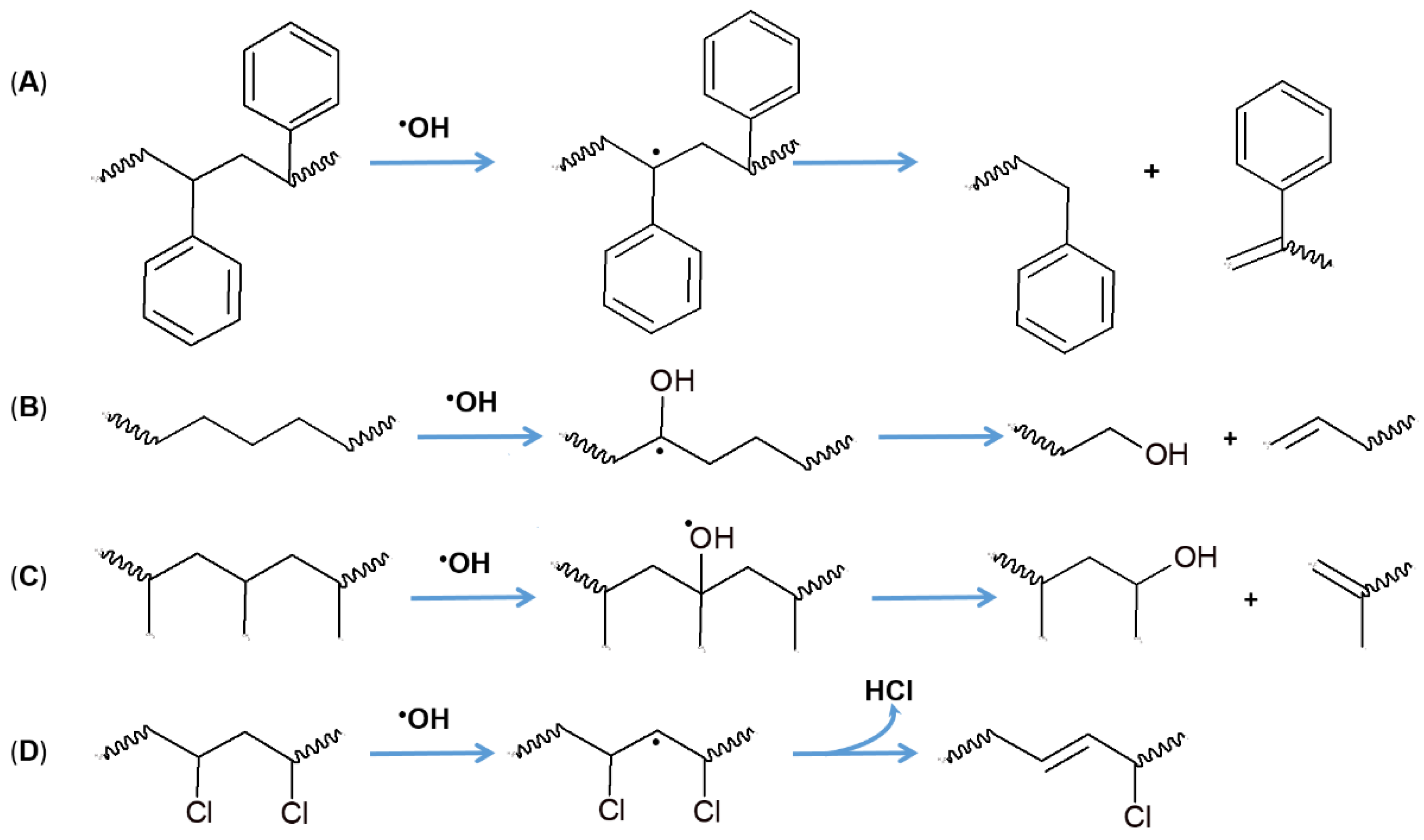
Figure 1. Proposed degradation pathways of (A) polystyrene, (B) polyethylene, (C) polypropylene, and (D) polyvinyl chloride MPs in AOPs.
Catalysts 16 00071 g001
Table 1. Recent studies on photocatalytic degradation of MPs using TiO2-based nanoparticles as photocatalysts, summarizing the target polymers, photocatalysts, light sources, exposure times, and resulting degradation efficiencies.
MPsCatalyst Light SourceDurationEfficiencyReferences
PolyethyleneTiO2UV120 h68%Wang et al., 2022 [40]
PolypropyleneTiO2Solar radiation50 h50%Jeyaraj et al., 2023 [41]
Polystyrene TiO2-α-Fe2O3 nanocompositeUV
Visible
5 h
8 h
100%
100%
Stancu et al., 2025 [43]
PolyethyleneTiO2/ZnOUV 480 h100%He et al., 2023 [44]
Polystyrene TiO2/copper phthalocyanine sensitized TiO2UV-Visible-100%Shang et al., 2003 [45]
High-density polyethyleneC, N-TiO2 powdersVisible LED50 h71.8%Ariza-Tarazona 2020 [46]
Low-density polyethylene
High-density polyethylene
Mesoporous N-TiO2 coatingVisible LED50 h4.65%
1.38%
Llorente-García et al., 2020 [47]
Polyvinyl chlorideLa-doped TiO2UV30 h17.8%Zhang et al., 2023 [48]
Solid polystyreneTiO2 filmUV24 h44.7%Nabi et al., 2020 [49]
Liquid Polystyrene TiO2 filmUV12 h100%Nabi et al., 2020 [49]
Table 2. Comparative advantages and limitations of AOPs in degradation of MPs.
AOPsAdvantagesDisadvantagesRemarks
Photocatalysis
-
Versatile in photocatalyst design
-
High efficiency
-
Environmentally friendly
-
Reusable photocatalysts
-
High cost of photocatalyst synthesis
-
Limited light absorption
-
Incomplete mineralization
Effectively integrated with other environmentally friendly remediation methods.
Electrochemical Oxidation
-
High efficiency
-
Controllable process
-
Minimal secondary pollution
-
Expensive electrodes
-
High energy consumption
-
Electrode fouling
Easily integrated with photocatalysis and Fenton processes.
Fenton Processes
-
Accessible reagents
-
Simple equipment
-
Simple operation
-
Acidic solution (pH 3) requirement
-
High sludge production
-
Low efficiency
-
Potential harmful byproducts
Effectively integrated with light irradiation, electrochemical, and other AOPs.
Sulfate Radical-Based
Oxidation
-
High efficiency
-
Controllable process
-
Minimal sludge production
-
Potential harmful byproducts
-
Incomplete mineralization
-
Toxic catalyst and activator
-
High operational cost
Potentially integrated with other AOPs.
Sonochemical Oxidation
-
No reagent consumption
-
Environmentally friendly
-
No sludge production
-
High operational cost
-
Low efficiency
-
Potential harmful byproducts
-
Incomplete mineralization
Potentially integrated with other AOPs.
Ozonation
-
No sludge production
-
Environmentally friendly
-
Minimum reagent consumption
-
High operational cost
-
Low efficiency
-
Potential harmful byproducts
-
Incomplete mineralization
Potentially integrated with other AOPs and other remediation methods.
Plasma-Based Treatment
-
High efficiency
-
Environmentally friendly
-
Compatible with a wide range of MPs
-
Not cost-effective
-
Possible formation of by-products
Effectively synergistically integrated with other environmentally friendly remediation methods.
Disclaimer/Publisher’s Note: The statements, opinions and data contained in all publications are solely those of the individual author(s) and contributor(s) and not of MDPI and/or the editor(s). MDPI and/or the editor(s) disclaim responsibility for any injury to people or property resulting from any ideas, methods, instructions or products referred to in the content.