Dear Colleagues,
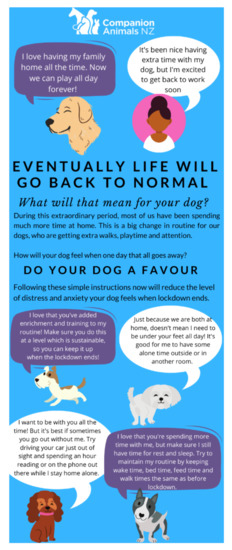
The current coronavirus (COVID-19) pandemic represents a significant international challenge due to a lack of existing innate immunity or availability of an effective vaccine (Wang et al., 2020). The novelty of the virus and its clinical presentation have spurred research and publication at a previously unprecedented speed. Although the primary focus of much of this research is on clinical management in humans (World Health Organisation, 2020) and the likely origin of the virus (Rothan and Byrareddy, 2020), other areas of research importance, including the economic and ecological impacts of this global pandemic, are rapidly emerging. The necessary implementation of social distancing measures to reduce infection rates in populations has already had unintended consequences on animal management and welfare.
Understanding the current impact of this crisis on animal management and welfare, at local and global levels, is essential to reflect on the success of approaches implemented to protect animal welfare. Lessons learnt can help identify the ongoing impact of COVID-19 and inform future strategies to support animals, their owners and keepers, and the broader animal industries to emerge successfully from this pandemic. This Special Issue of Animals seeks papers that address this challenge.
Original manuscripts, research or review papers, that relate to any aspects of the impact of COVID-19 on animal management, conservation or welfare in companion animals, exotic animals, equids, farm animals, wild animals and zoo animals; or that consider the dynamic relationship between animals and their owners/keepers; or that consider the impact of the pandemic within wider animal industry contexts are welcomed for this Special Issue.
Topics of interest include evidence-based studies focused on the impact of COVID-19 on animal management and welfare, or those that evaluate the impact of the pandemic on companion, wild or zoo animals, including applied studies. Alongside this, we also invite studies that consider challenges arising from the pandemic to different sectors of the animal industry or that consider the impact of social distancing measures on human–animal relationships. All studies must use objective measurement to ensure reliable and valid evaluation of outcomes.
Guest Editors
Dr. Jane M. Williams
Dr. Hayley Randle
Dr. David Marlin
Guest Editors
Manuscript Submission Information
Manuscripts should be submitted online at www.mdpi.com by registering and logging in to this website. Once you are registered, click here to go to the submission form. All submissions that pass pre-check are peer-reviewed. Accepted papers will be published continuously in the journal (as soon as accepted) and will be listed together on the collection website. Research articles, review articles as well as short communications are invited. For planned papers, a title and short abstract (about 250 words) can be sent to the Editorial Office for assessment.
Submitted manuscripts should not have been published previously, nor be under consideration for publication elsewhere (except conference proceedings papers). All manuscripts are thoroughly refereed through a single-blind peer-review process. A guide for authors and other relevant information for submission of manuscripts is available on the Instructions for Authors page. Animals is an international peer-reviewed open access semimonthly journal published by MDPI.
Please visit the Instructions for Authors page before submitting a manuscript.
The Article Processing Charge (APC) for publication in this open access journal is 2400 CHF (Swiss Francs).
Submitted papers should be well formatted and use good English. Authors may use MDPI's
English editing service prior to publication or during author revisions.