


Highlights
Please indicate how your work links to systems science via your contributions to systems practice, theory, and/or methodology.
- The Recursive Metasystem Governance Framework integrates concepts from systems theory, cybernetics, management cybernetics, holonic theory, metacybernetics, and complex system governance to formalize recursion as a purposeful cybernetic governance capability.
- The framework provides a systems-theory-based foundation for governance design and diagnosis by relating governability to recursive structure, communication, intelligence, cybernetic control, and paradigmatic sufficiency, and suggests a basis for future governance maturity assessment.
What are the main findings and/or the implications of the main findings?
- The Recursive Metasystem Governance Framework identifies six interdependent theoretical pillars through which purpose, intelligence, structure, communication, and control can be coherently coordinated across recursive levels to sustain viability under increasing complexity and governance opacity.
- The RMGF conceptualizes purposeful recursion as a means to reduce governance opacity by generating deeper operational understanding or enabling higher-order reframing when the existing governing paradigm becomes inadequate.
Abstract
Modern systems of systems increasingly operate through distributed authority of heterogeneous constituent systems, increasing governance complexity through accelerated technology insertion; increasing organizational ambiguity; and shifting political, social, economic, and policy contexts. These conditions contribute to governance opacity, in which the governing system continues to make decisions through an interpretive model that no longer provides sufficient knowledge, decision capacity, or regulatory variety. This article presents a theoretical framework for recursion in Complex System Governance and examines its implications for system of systems governance. The study used constructivist grounded theory applied to scholarly literature sources through iterative data collection; initial, focused, and theoretical coding; memoing; theoretical sampling; peer review; and face validation. The principal result is the Recursive Metasystem Governance Framework, a six-pillar theoretical framework that conceptualizes recursion as a governable capability for sustaining viability under increasing complexity and opacity. The framework is built upon the recursive architecture of the Viable System Model, concepts from metacybernetics, and the precepts of CSG by making metasystem duality, recursive intelligence, autopoietic and autogenetic process–intelligence couplings, reflexive recursion gatekeeping, and metametasystemic governance explicit. Its central contribution is a proposed paradigmatic homeostat integrating recursive intelligence, reflexive recursion gatekeeping, and metametasystemic governance to assess governance adequacy.
1. Introduction
Systems of systems (SoSs) are characterized by operationally and managerially independent constituent systems, emergent behavior, and evolutionary development, creating governance challenges that extend beyond the coordination of technical interfaces [1]. Their governance must reconcile multiple centers of authority, purpose, accountability, and environmental interpretation across organizational and technical boundaries. This broader context is precisely where traditional program oversight, control logic, and governance models become insufficient.
Within this context, the purpose of this research was to construct an original theoretical framework for understanding recursion in Complex System Governance (CSG), grounded in the propositions and axioms of systems theory and management cybernetics [2]. CSG evolved from system of systems engineering and is defined as the ‘design, execution, and evolution of the nine metasystem functions necessary to provide control, communication, coordination, and integration of a complex system’ [3,4]. CSG is grounded in management cybernetics, systems theory, and governance, and focuses on the metasystemic nature of governance. While the nine metasystem functions and their interrelationships are defined, the operation and purposeful regulation of governance functions across recursive levels remain insufficiently theorized.
This article argues that governance of modern complex SoSs requires a recursive form of governance: a mode of governance capable of observing, modeling, regulating, and adapting itself across levels of system organization. Furthermore, an SoS is a pairwise hierarchy, network, or holarchy of system–metasystem relationships in which each level may simultaneously operate as a system in one context and a component of a higher-order system in another [5,6,7]. Governance failures in such settings frequently arise when the governing metasystem lacks sufficient visibility into operational activity; when communication or information is attenuated, distorted, or inadequately transduced across levels; or when the dominant interpretive frame prevents decision makers from recognizing that the current governance model has become inadequate [8,9].
The central premise developed here is that SoS governance must continuously balance three interdependent questions: what can the governance system know, what can it decide, and what can it regulate. What can be known is shaped by sensing, modeling, communication, and interpretive frames. What can be decided is shaped by authority, purpose, policy, and governance structure. What can be regulated is shaped by cybernetic control, requisite variety, feedback, and operational autonomy. When these domains are balanced, governance can evolve to sustain system viability with environmental changes. When they become misaligned, governance may continue to issue decisions that are procedurally valid but systemically inadequate.
The Recursive Metasystem Governance Framework (RMGF) [2] addresses this problem by theorizing recursion as a governable capability. The RMGF frames recursive depth, recursive intelligence, and recursive communication as governance resources that can be purposefully invoked when the existing governance model comes into question. In this sense, recursion becomes a way to reduce governance opacity by authorizing deeper modeling through stronger cross-level communication, and, when necessary, higher-order reframing of the assumptions guiding governance interpretation and action. Governance opacity in the context refers to limitations in the governing metasystem’s knowledge and understanding of the operations, relationships, and conditions of the systems within its responsibility [5,10]. Central to this is the foregrounding of governance opacity as an inherent epistemic condition of complex systems [5,11]. The RMGF does not seek to eliminate opacity, but to manage it through recursive learning, feedback, and adaptive movement across levels of recursion. As Beer repeatedly emphasizes, metasystems govern their System 1 units as muddy boxes, indicating that opacity is the norm rather than an exception. Accordingly, within the RMGF, transparency is not the objective; rather, the goal is sufficient understanding to enable effective governance.
Opacity is distinct from complexity. Complexity concerns the variety, interdependencies, and dynamic behavior of the system and its environment [5,12,13], whereas opacity concerns the adequacy of knowledge and understanding relative to its governing responsibilities. Although increasing complexity may exacerbate governance opacity, the two represent different governance challenges. The RMGF addresses opacity through recursive intelligence, communication, and reflexive recursion gatekeeping, enabling governance to seek additional knowledge through recursive inquiry or by initiating higher-order reconsideration of governing assumptions when existing paradigmatic bounds are deemed inadequate [2].
The framework is grounded in cognitive modeling [14,15], CSG [3,13,16,17,18,19,20,21,22], management cybernetics [5,11,23,24,25,26,27,28,29,30,31,32,33,34], systems theory [35,36], holonic and holarchic theory [6,7,37], cybernetics [12,38,39,40], and metacybernetics [41,42,43,44,45,46,47]. CSG contributes the concept of a governance metasystem that provides control, communication, coordination, and integration. The VSM contributes recursive system–metasystem coupling, requisite variety, and the idea that viable systems contain and are contained in other viable systems. Holonic theory contributes the whole-part logic of recursive organization including the duality of the Janus effect. Metacybernetics contributes cybernetic orders, process intelligence, the ideate, assimilation and accommodation, and the concept of the metametasystem. Synthesized together, these foundations support a third-order cybernetic view of CSG in which governance itself becomes an object of governance.
The third-order cybernetic perspective in CSG adopted by the RMGF builds upon the first- and second-order cybernetic capabilities already present within the VSM [5]. In particular, VSM Systems 4 and 5 support environmental intelligence, organizational self-reference, reconsideration of identity and purpose, and adaptation of governing arrangements [5]. Drawing upon Yolles’ metacybernetics [15,41,42], the RMGF distinguishes the autopoietic process intelligence coupling (PI(1)) between the operational system and its governing metasystem from the autogenetic coupling (PI(2)) through which a metametasystem conditions the governing metasystem itself. The latter establishes a higher-order governance perspective by treating the governing metasystem, including its cognitive interpretive assumptions, governing paradigms, and adaptive limits shaping those decisions, as an object of governance [2].
This third-order standpoint is functional rather than necessarily being associated with a separate observer or a higher organizational level of recursion. It represents an additional reflexive perspective through which the governing metasystem and its underlying assumptions become objects of governance. The RMGF integrates this metametasystemic governance function with intelligence operating across levels of recursion and a reflexive recursion gatekeeper to assess whether governance opacity can be addressed through additional recursive understanding within existing bounds, or whether higher-order reconsideration of those bounds is required. The RMGF provides a theoretical integration of these capabilities into a framework for governing the adequacy of governance itself.
The article makes three contributions. First, it synthesizes VSM recursion, holonic theory, CSG, and metacybernetic process intelligence to conceptualize CSG as a third-order cybernetic system where governance itself becomes a reflexively governed process. Second, it defines and formalizes autopoietic adaptation within existing plastic bounds and the autogenetic adaptation of the rules, assumptions, plasticity limits, and paradigms of governance by integrating the metametasystem into CSG. Third, it introduces a reflexive recursion gatekeeping function and paradigmatic homeostat through which governance can anticipate increasing opacity and determine whether increased operational understanding, higher-order paradigmatic reframing, or improvement of governance functions is warranted. These contributions provide a basis for governance diagnosis including architecture and communication analysis, cybernetic control assessment, and adaptive intervention. They also suggest a foundation for the further development of recursive governance maturity models.
2. Materials and Methods
This research employed a qualitative, inductive methodology grounded in constructivist grounded theory (CGT) to develop a systems-theory-based theoretical framework for recursion in CSG. Grounded theory is a research methodology for generating an explanatory theory through iterative phases of data collection and analysis [48,49,50,51,52,53,54,55,56,57,58,59]. Grounded theory was selected because of its explicit purpose of theory construction through iterative data collection, constant comparison, and theoretical sampling, allowing abstract theoretical categories to emerge from systematic engagement with the data.
Two distinct literature reviews were constructed for this research as indicated in Figure 1. The initial broad literature review was conducted as this research was being planned, the synthesis of which contributed to the formulation of research questions based on identified literature gaps. The subsequent literature-based CGT analysis was conducted during the execution of the CGT research design, where selected scholarly sources were treated as qualitative data and subjected to iterative coding, constant comparison, theoretical sampling, and synthesis. The CGT research design had the researcher conduct initial and focused coding, constant comparison, iterative purposive and theoretical sampling, analytic memoing, and abductive integration of emerging theoretical categories.
Figure 1.
High-level research design used to construct and evaluate the RMGF [1].
The employment of CGT for this research relied on the extant published literature as source data rather than the more traditional interviews or field observations. While nontraditional, the use of published studies as source material is not without precedent. Charmaz [50] explicitly treats extant documents as a major form of data. Her discussion includes the published literature and recognizes that such documents can serve as primary or supplementary grounded theory data. Furthermore, Ralph et al. [60] examine the interpretive positioning required when documents serve as grounded theory data, and Yarwood-Ross and Jack [61] discuss the use of the extant literature across grounded theory traditions. The extant scholarly literature has been used as source material for theory-generating research based on grounded theory in previous works. For example, Complex System Governance research was undertaken by Katina [62], which coded qualifying studies in the scholarly literature to develop a systems theory-based construct of identifying metasystem pathologies. Similarly, Baugh [63] used the scholarly literature as source material in his application of CGT to develop a systems theory-based framework for Environmental Scanning in CSG. Accordingly, the present research used selected scholarly works as primary qualitative data for iterative coding, constant comparison, theoretical sampling, memoing, and abductive integration, and distinguished this use from the preliminary (traditional) literature review, which framed the research problem.
The objective of this research was to construct a theoretical framework for recursion in CSG from the existing scholarly literature across systems theory, management cybernetics, CSG, holonic theory, agency theory, and metacybernetics. This entailed evaluating the literature sources to ensure they met the minimum criteria for inclusion in the research study, critically reviewing acceptable studies in the literature, breaking it into its atomic parts, and assigning each atomic part a unique initial code. This initiated an iterative process of data collection and analysis, constant comparison, memoing, theoretical sampling, and the development of categories that were grounded in data but interpreted through the researcher’s theoretical sensitivity. The research sought concepts, relationships, and recurring patterns in the literature that could explain recursion in CSG and support construction of an original framework.
The database of literature sources used for this CGT research contained 337 documents collected during preliminary literature review and subsequent research activities. This collection included preliminary background literature, methodological references, theoretical source material, and case-study evidence. Literature sources used as coding material in the CGT analysis were evaluated against the acceptance criteria identified in Table 1. Sixty-eight files were coded across two research activities—60 for the CGT analysis and 8 additional for the case-study face validation. The non-coded files were classified as grounded theory or case-study reference material (106), sources found not relevant to the research question (77), duplicative of previously coded material (56), or not meeting the applicable publication entrance criteria (30). Sources identified during the preliminary literature review were assessed against these criteria as a starting point, with additional sources being purposively sought when coding exposed conceptual gaps and theoretically sampled to challenge or elaborate emerging categories. These literature sources were primarily obtained through the search of four research databases—Google Scholar, Web of Science, Scopus, and the Old Dominion University (ODU) Monarch Onesearch.
Table 1.
Literature acceptance criteria.
Figure 1 illustrates the high-level phases of the research design. The figure shows that the study began with a body-of-knowledge search and gap identification, proceeded through research-method review and detailed literature-based grounded theory coding, iterative development of the framework through CGT, and then evaluation of the resulting framework in a limited practical setting before contributing the results to the body of knowledge. The atomic codes generated during Phase 3 were iteratively evaluated, combined, and recombined, both inductively and abductively, to form a theoretical framework for recursion in CSG during Phase 4. This was a highly iterative process between Phases 3 and 4, which included focused literature searches to answer questions that emerged but were not supported by the existing coded data. Any additional data collected was taken through the same coding phases and constantly compared with other codes and with higher-level theoretical categories. A peer review was conducted during Phase 4 to gather feedback from grounded theory scholarly experts on the employment of the methodology for this research. This feedback was incorporated into the research design. Phase 5 evaluated the emerging theoretical framework in a limited practical setting to determine its utility as a form of face validation. Phase 6 represents the completed theoretical framework for recursion in CSG, and is the subject of this article.
Three stages of coding were performed as defined by Charmaz [50], namely initial, focused, and theoretical, using NVivo 12 Plus. The coding process began with initial coding, which broke relevant literature passages into conceptual units and assigned code names that conceptually described the data, using terms from the data sources. The study then moved to focused coding, in which more analytically useful and recurrent initial codes were consolidated into focused codes and categorical areas. Focused coding enabled the research to move from a large number of low-level observations toward a smaller number of explanatory concepts supported by larger related data sets.
The next phase synthesized focused codes into core categories. Core categories represented the highest level of inductive synthesis. Theoretical coding then moved beyond induction toward abductive integration. At this stage, the researcher asked how the categories related to one another, what patterns of relationships explained recursive governance, and how those relationships could be organized into a coherent theoretical framework. The resulting theoretical categories were then synthesized into six theoretical pillars based on repeated analysis of the theoretical categories and their associated core categories and focused codes. Memoing was used extensively as the interpretive bridge between coding and theory construction. Memos recorded comparisons, category meanings, theoretical questions, candidate relationships, theoretical interpretations, and decisions about saturation and integration.
The CGT analytic workflow required adaptation as the coding progressed. The researcher first used Descriptive Coding [64] as a naming convention, with the descriptor being subject-oriented. This led to aggregation challenges that could not be overcome, prompting the researcher to recode all material using Concept Coding [64], where code names summarized the meaning inferred by the data. While this solved the aggregation challenge, it created another for analytic scale. Coding the literature sources generated over 1300 initial codes, the sheer number of which was not readily manageable in a single focused coding cycle. This challenge was resolved by performing two rounds of focused coding to enable iterative sensemaking. In the first round, the researcher organized the initial codes into 52 concept-related categorical bins through repeated constant comparison and descriptive naming. Focused coding was then conducted within each bin as a first analytical pass. This round of focused coding both exposed gaps that prompted purposive sampling and also created additional occasions for comparison within the source material. Focused coding within the categorical bins resulted in 153 focused codes, which were then compared across categorical bins as a second round of focused coding. This second round of focused coding led to 28 inductively synthesized core categories. These core categories informed theoretical coding and subsequent abductive integration.
Figure 2 summarizes the upward integration of the coding process. More than 1300 initial codes were consolidated into 153 focused codes across 52 categorical areas, then synthesized into 28 core categories, 8 theoretical categories, 6 theoretical pillars, and ultimately the RMGF. The figure is useful because it makes visible the constant-comparison logic through which descriptive codes were progressively transformed into an integrated theoretical framework.
Figure 2.
Progressive grounded theory code integration leading to the RMGF [1].
Theoretical sampling was used to pursue concepts that emerged during analysis. As categories developed, additional studies were sampled to elaborate, challenge, or clarify the emerging theory. Theoretical saturation was interpreted constructively: the research reached a point where additional samples of the literature could be accommodated within the existing focused codes and categories without requiring new theoretical categories. The inductively derived theory was declared fully saturated when new literature sources had no impact on its explanatory adequacy. Figure 3 illustrates the process of theoretical saturation across analytic levels for this CGT research.
Figure 3.
Theoretical saturation approach [1].
Configuration control was maintained across successive coding and abstraction cycles using separate but linked NVivo 12 Plus folders. Earlier coding configurations preserved as initial codes were organized into focused codes, core categories, theoretical categories, and theoretical pillars. This permitted the researcher to revisit prior coding decisions, compare emerging interpretations with their original source passages, and maintain an auditable chain of evidence across iterative theory construction. Analytic memos recorded all interpretations and decisions. These practices supported the canons of credibility, dependability, and confirmability by making the progression from source evidence to theoretical constructs inspectable [65].
Methodological quality was considered against Charmaz’s CGT criteria of credibility, originality, resonance, and usefulness [49,50], alongside the constructivist canons of credibility, confirmability, dependability, and transferability discussed by Brewer and Souse-Poza [65]. Credibility was supported through a documented 60-source dataset, iterative coding, constant comparison, sampling, and analytic memoing. Originality was considered in relation to the integrative theoretical contribution of the RMGF, while Resonance was assessed through the interpretation of recursive governance constructs across the source domains. Usefulness was considered through the framework’s proposed diagnostic implications and limited retrospective case assessment. Confirmability and dependability were supported through the preservation of coding configurations, source-to-category traceability, and documented analytical decisions, while transferability remains subject to further investigation across additional governance contexts.
3. Results
3.1. Recursive Metasystem Governance Framework
The principal result of this research is the RMGF. It conceptualizes recursion as a governable capability through which recursive intelligence feeds a higher-order paradigmatic homeostat to enable governance to anticipate increasing opacity and evaluate whether the governing model remains adequate. The RMGF explains how the governance of complex systems can sustain viability under conditions of increasing complexity and opacity through recursively coordinated purpose, intelligence, structure, communication, and control. It does this by treating recursion as a governable capability for knowledge generation. The framework is composed of six interdependent theoretical pillars synthesized from eight theoretical categories through the coding process summarized in Figure 2 and Figure 3 and integrated in the RMGF depicted in Figure 4. These pillars and their associated interactions provide the conceptual systems-theory-based framework for understanding recursion in CSG.
Figure 4.
Recursive Metasystem Governance Framework [1].
Figure 4 depicts one recursive instantiation of the RMGF. The six theoretical pillars are designated by color, with the red outer square boundary depicting the Recursive Structure and Communications Infrastructure (TP3). TP3 represents the invariant framework within which all recursive operations of the RMGF exist. The orange oval situated at the bottom right of the diagram represents Recursive Operations and Cybernetic Control (TP4). TP4 is a whole system-metasystem couple, or holonic entity, that is responsible for operating within a local environment to fulfill all or part of the system’s purpose and is aligned with the System 1 from the VSM. The orange line connecting the TP4 oval with the shape labeled “Environment” indicates this embedded operation. The green oval in the middle of the diagram represents Metasystem Duality & Cohesion (TP2). Its primary purpose is governance of TP4 operations, and as such is aligned with the VSM metasystem. The traditional VSM has several connections between the System 1 and the Metasystem; in this diagram those are collectively represented by the PI(1) Autopoietic Couple via the blue curved dotted arrow connecting TP2 to TP4 [41]. The dark red oval at the top left represents the Metasystem Hierarchy (TP1), which provides oversight of governance operations. The connections between the TP1 and TP2 are collectively represented by the PI(2) Autogenetic Couple via the blue curved dotted arrow connecting TP1 and TP2 [41]. PI(2) also connects TP1 with PI(1) as illustrated by the PI(1) and PI(2) intersection at TP2.
The RMGF is informed by recursive intelligence operations. This is represented by Recursive Intelligence (TP5), the blue oval intersecting both TP4 and TP2. This is a recursive function that integrates environmental signals and internal feedback into cognitive maps through assimilation and accommodation, enabling weak anticipation of processes and operations [42,43,44,45,66]. A key aspect of TP5 is a Reflexive Recursion Gatekeeper (TP6), which samples the PI couples and provides feedback to stimulate adaptation. TP5 and TP6 are shown twice on the diagram, once between TP2 and TP4, and again between TP1 and TP2. These recursive intelligences are sampling their respective environments along with PI(1) and PI(2), enabling evaluation of governance performance and stimulation of additional recursions for complexity reduction.
The RMGF formalizes VSM- and metacybernetic-inspired recursion for CSG. It builds on this foundation by asking how governance should know when its own governing model of the system is no longer sufficient. This question is crucial for complex systems, where the governance system may face multiple autonomous organizations, evolving technology, dynamic missions, ambiguous boundaries, and chaotic environmental conditions.
The RMGF recognizes that the VSM provides a continual reconsideration of purpose, identity, and governance arrangements via the System 3-4-5 homeostat. The interaction of Systems 4 and 5 enables the metasystem to reconsider and adapt these arrangements as conditions change. These capabilities are foundational to the RMGF.
The RMGF also recognizes that governance decisions are conditioned by the paradigmatic assumptions through which information is interpreted and evaluated. Yolles [11] characterizes a paradigm as a shared worldview comprising propositions, values, beliefs, norms, and language that shape what is accepted as knowledge, appropriate behavior, and legitimate solutions. Within the RMGF, this paradigmatic context influences the metasystem’s cognitive interpretations and the formulation of decisions through the interaction of Systems 3, 4, and 5. The RMGF builds upon these established VSM capabilities by explicitly elaborating the paradigmatic dimension of governance and theorizing how the adequacy of the governing paradigm can itself be evaluated through a higher-order homeostatic relationship. Where existing interpretations remain sufficient, governance may pursue adaptation within established paradigmatic bounds via the 3-4-5 homeostat. Where those bounds constrain effective governance, the framework provides for higher-order reconsideration through the metametasystem via the theorized paradigmatic homeostat. In this way, the RMGF provides an explicit theoretical elaboration of how the paradigms conditioning governance decisions may be reflexively assessed and adapted.
3.2. RMGF Theoretical Pillars
The RMGF is composed of six interacting theoretical pillars as briefly described in the subsequent subsections and summarized in Table 2. The six pillars are metasystem hierarchy, metasystemic duality and cohesion, recursive structure and communications infrastructure, recursive operations and cybernetic control, recursive intelligence, and reflexive recursion gatekeeper [2].
Table 2.
Summary of RMGF Theoretical Pillars.
3.2.1. Theoretical Pillar 1 (TP1): Metasystem Hierarchy
Consistent with the third-order cybernetic RMGF standpoint described earlier, TP1 provides the higher order, metametasystemic governance function within the RMGF [2]. It represents the metasystem hierarchy and functions as the higher-order metasystemic capability through which the governing metasystem is evaluated, conditioned, and when necessary, adapted. TP1 therefore conditions what lower-level governance considers valid, acceptable, and legitimate for sensemaking and decision making.
This function is especially important for SoS governance because a system of systems frequently operates across multiple organizations, policy regimes, technical domains, stakeholder communities, and dynamic operating environments [67]. In such conditions, the adequacy of the governing model itself may become a source of governance strain when prevailing assumptions and interpretive frames no longer provide sufficient explanatory capacity for changing system and environmental conditions. TP1 represents the RMGF function through which the governing model and its paradigmatic bounds can be evaluated and, when necessary, conditioned or reframed. It assesses whether the prevailing governance model still provides adequate purpose, identity, legitimacy, and interpretive capacity as conditions change. TP5 (Recursive Intelligence) supplies intelligence concerning environmental change, learning, and model adequacy, while TP6 (Reflexive Recursion Gatekeeper) evaluates whether observed opacity or governance strain can be addressed within existing governance bounds or should be escalated to TP1. TP1 then conditions higher-order change in the governing model, assumptions, paradigmatic frame, or adaptive limits.
TP1 also operates on a slower temporal scale than operational or regulatory processes. Operational systems may need to respond quickly to disturbances, and metasystemic control may need to adjust coordination, communication, or decision authority. TP1, by contrast, provides a relatively stable orientation for the system by maintaining the governing identity and paradigmatic boundaries of the whole. These boundaries also establish the system’s plastic limits: the range within which the system can adapt, alter behavior, and reorganize while maintaining stability, identity, and viability [11,66]. However, this stability is not absolute. Under conditions of persistent opacity, repeated governance failure, or paradigmatic mismatch, TP1 reflexively evaluates the governing assumptions, models, and control logic through which TP2 (Metasystem Duality and Cohesion) governs the system. From the next higher recursion level, TP1 may itself become the object of reflexive reconsideration. This is the basis for recursive governance: at each recursive level, the governance system must be able to assess whether its own governing assumptions and adaptive limits remain viable while itself remaining subject to examination from the next higher level.
3.2.2. TP2: Metasystemic Duality and Cohesion
TP2 provides the integrative governance function that binds vertical and horizontal recursion into a coherent whole by making the dual role of the metasystem explicit [2,5]. From one perspective, it is a vertical governor of lower-level operations [5]. From another perspective, it is a horizontal management unit within the System 1 cluster of a higher-level recursion [5]. This duality is central to recursive governance because the same entity may be both governor and governed, autonomous whole and dependent part, and local decision authority and contributor to a larger system purpose [2,5,6,7].
In SoS governance, this duality is characteristic of entities operating within nested governance structures. TP2 functionally corresponds to the integrative governance role of the VSM metasystem while making the metasystem’s simultaneous vertical and horizontal roles across recursive levels explicit. A constituent system, program office, technical authority, regulatory body, or operational command may govern its own domain while simultaneously being governed by, and remaining coherent with, a larger enterprise, mission, policy, or regulatory structure. TP2 explains how coherence can be maintained across these levels without eliminating local autonomy. It translates higher-level purpose and downward constraints while integrating operational feedback and recursive intelligence upward into a coherent metasystemic view. In doing so, TP2 supports the balance between autonomy and integration that is central to SoS viability.
3.2.3. TP3: Recursive Structure and Communications Infrastructure
TP3 provides the structural and communicative coupling infrastructure, set by the metasystem, through which recursive governance becomes possible [2]. This pillar represents the self-similar holonic architecture within which systems are instantiated and the channels through which information is transmitted, translated, interpreted, and coordinated within and across recursive levels. The structural aspect of TP3 reflects the whole-part nature of complex systems: each operational unit may be a system in its own right while also functioning as part of a larger system. The communication aspect reflects the fact that recursive governance depends on the movement of meaningful information across boundaries.
For SoS governance, TP3 is essential because complexity is generated both by the number and diversity of constituent systems and by the difficulty of preserving meaning across the associated formal and tacit boundaries. Signals generated at the operational level must be transduced into forms that are meaningful to engineering, programmatic, executive, regulatory, and policy decision makers. Each boundary crossing creates the possibility of distortion, attenuation, delay, or reinterpretation. TP3 therefore conditions what forms of coordination, learning, escalation, and control are possible within the SoS.
3.2.4. TP4: Recursive Operations and Cybernetic Control
TP4 constitutes the operational and regulatory core of the RMGF [2]. It encompasses the holonic operational entities (VSM System 1 operational units) that perform system functions and the cybernetic mechanisms that regulate those functions through feedback, coordination, and variety management. TP4 is concerned with how systems respond to perturbations, how operational deviations are detected and corrected, how feedback is generated, and how dynamic stability is maintained within local autonomous limits.
In SoS governance, TP4 is especially important because SoS governance cannot practically absorb or directly regulate all of the operational variety generated by constituent systems. Constituent systems possess local knowledge, authority, and constraints that must be managed at the level where that variety occurs. Effective governance must therefore balance vertical and horizontal variety. Vertical governance provides purpose, constraints, and coherence, while horizontal operations provide local adaptation, execution, and experiential feedback. TP4 explains how this balance is maintained through semi-autonomous horizontal cybernetic control operating within vertically imposed purpose and constraints, with feedback exchanged across recursive levels through the communications infrastructure of TP3. Consistent with the VSM, the RMGF therefore applies the principle of requisite variety recursively across system–metasystem levels.
3.2.5. TP5: Recursive Intelligence
TP5 provides the sensing, modeling, learning, and anticipatory capability that underpins the other RMGF pillars [2]. Recursive intelligence shapes what the system can perceive, what it can model, what it can learn, and what it can anticipate. It conditions the quality of governance, control, and adaptation by generating the knowledge upon which they depend. TP5 converts operational experience, environmental signals, and internal feedback into evolving cognitive models that support informed adjustment across recursive levels.
This pillar is central to SoS governance because governance can become ineffective when it continues to act through an incomplete or outdated model of the SoS and its environment [14]. Data may be available but not converted into usable intelligence. Signals may be detected but not interpreted as relevant to governance. Local concerns may be known but not integrated into an enterprise understanding of risk. TP5 addresses this problem through continuous sensing, modeling, and cognitive learning across recursive levels, providing the generative basis for recursive operational and process intelligence [41]. Through these capabilities, the system and its metasystem are able to learn from operations, model the environment and internal dynamics, and anticipate emerging conditions.
3.2.6. TP6: Reflexive Recursion Gatekeeper
TP6 provides the reflexive gatekeeping function that evaluates when additional recursion may be required to restore or preserve governability under conditions of opacity [2]. It assesses whether the existing governance system has sufficient knowledge, communication, structure, and control to address the situation, or whether deeper inquiry or higher-level reconsideration is warranted. TP6 is therefore the mechanism that converts recursion from a passive structural feature into an actively governed capability.
The gatekeeper function draws on metasystemically synthesized feedback, operational experience, and recursive intelligence to evaluate whether observed opacity can be mitigated within existing paradigmatic and plasticity bounds. When this evaluation indicates that opacity can be reduced within the current governance frame, TP6 stimulates additional recursive instantiation through TP3 (Recursive Structure and Communications Infrastructure) and TP5 (Recursive Intelligence) to gain deeper operational understanding. Where such recursive extensions are judged insufficient for opacity reduction, TP6 escalates reflexive feedback to TP1 (Metasystem Hierarchy). This is the point at which the framework moves from governance adaptation within existing governing bounds to higher-order governance adaptation, or the governance of governance, by initiating an evaluation of whether the governing assumptions, paradigmatic frame, identity, purpose, or adaptive limits require reconsideration.
3.3. Theoretical Pillar Interactions and Interdependencies
The RMGF is formed by the interoperation of the six theoretical pillars. The interdependencies between the pillars can be grouped into four recurring patterns: constraint and enabling, feedback and amplification, reflexive and metametasystemic, and duality and cohesion. The theoretical pillar interdependencies associated with each pattern are briefly described below.
3.3.1. Constraint and Enabling Interdependencies
Downward constraint and enablement interdependencies are primarily driven by conditioning from TP1 (metasystem hierarchy) and TP2 (metasystem duality and cohesion), with TP4 (recursive operations & cybernetic control) enforcing cybernetic regulation within those bounds. TP1 establishes the paradigmatic, cultural, and purposive reference frame that defines what counts as valid knowledge, acceptable variation, and legitimate adaptation, thereby establishing the plasticity and epistemic bounds within which all recursive processes operate. TP2 governs TP4 within these bounds and establishes TP3 (Recursive Structure and Communications Infrastructure) as necessary for viable coordination, control, communication, and integration. TP6 (reflexive recursion gatekeeper), informed by TP5 (recursive intelligence), evaluates whether governance intelligence indicates that the existing governing frame and recursive capabilities remain sufficient. When current epistemic, structural, or cognitive capacity is insufficient to reduce governance opacity, TP6 stimulates deeper recursion through TP3 and TP5 within existing governance bounds. If such extensions remain insufficient, TP6 escalates reflexive feedback to TP1, triggering higher-order adaptation through reconsideration of purpose, identity, plastic limits, or paradigmatic reframing. TP4 continuously regulates holonic behavior within the newly conditioned governance bounds, but changes in those bounds may require corresponding adaptation of its regulatory mechanisms and variety-handling capacity. Requisite variety is therefore not assumed to be immediately restored; TP4 progressively adjusts its regulatory response as the system adapts to the new governing conditions.
3.3.2. Feedback and Amplification Interdependencies
Feedback and amplification interdependencies connect operational behavior to regulation, integration, and oversight. TP4 (recursive operations & cybernetic control) generates variety through its operations, uses this variety for local regulation, and supplies operational feedback to TP2 (metasystem duality and cohesion) reflecting coordination demand, emerging strain, regulatory adequacy, and adaptation demands. TP2 integrates these signals into a coherent metasystemic view [15] and provides reflexive governance status information to TP1 (metasystem hierarchy) for metametasystemic evaluation. In parallel, TP4 provides internal operational state information to TP5 (recursive intelligence), enabling TP5 to integrate operational feedback with environmental sensing. TP5 then returns interpreted intelligence to TP4, allowing cybernetic control to adapt its regulatory behavior within prevailing epistemic and plasticity limits. Where TP1 subsequently conditions or revises those governing bounds, TP4 must progressively adapt its regulatory behavior and variety-handling capacity to the changed governance context. Regulatory adequacy and variety absorption therefore remain subject to continued feedback and recursive adjustment.
3.3.3. Reflexive and Metametasystemic Interdependencies
Reflexive and metametasystemic interdependencies constitute the system’s capacity to evaluate and adapt its own governance operations under conditions of opacity. TP2 (metasystem duality and cohesion) continuously integrates performance, coordination, and control information from operational and regulatory processes and provides governance-status signals to TP1 (metasystem hierarchy) for metametasystemic evaluation of the effectiveness, coherence, and adequacy of current metasystem operations. In parallel, TP2 supplies homeostatic-strain feedback to TP6 (reflexive recursion gatekeeper), identifying when existing structural, regulatory, or communicative capacities are approaching their limits of governability. TP6 evaluates whether such strain can be resolved through additional recursion within existing paradigmatic and plasticity bounds and, when it cannot, escalates reflexive feedback concerning the adequacy of those bounds to TP1, signaling that higher-order adaptation may be required. TP5 (recursive intelligence) provides a cognitive reflexive channel by supplying upward intelligence regarding environmental change, learning, and model adequacy, informing TP1′s evaluation of governance assumptions, strategic orientation, and structural design when higher-order reconsideration is indicated by TP6. Together, these reflexive loops allow TP1 to govern the governors by supporting continued alignment of recursion, structure, and control with evolving complexity and environmental conditions.
3.3.4. Cohesion and Duality Interdependencies
Cohesion and duality interdependencies describe how the system is integrated into a coherent, governable whole across recursive levels through the metasystem’s shifting vertical and horizontal roles. TP5 (recursive intelligence) supplies intelligence to TP4 (recursive operations and cybernetic control) to guide local decision-making and adaptive action, and upward intelligence to TP2 (metasystem duality and cohesion) to support metasystemic coordination and governance alignment within existing paradigmatic and plasticity bounds. At each recursive level, TP2 uses this intelligence in its dual role as both a vertical governor of a System 1 cluster and a horizontal management unit accountable to higher metasystems, governing and integrating TP4 locally while maintaining coherence with higher-level governance. Through this structural and functional duality, TP2 integrates distributed learning and operational variation into coordinated and cohesive governance action across recursive levels. This duality enables the system to remain both locally adaptive and systemically coherent under conditions of complexity and opacity.
3.4. The Recursive Metasystem Governance Framework
The six theoretical pillars and their interdependencies form the RMGF, which explains how complex system governance coherently sustains system viability under conditions of increasing complexity and opacity through recursively coordinated purpose, intelligence, structure, communications, and control, paradigmatically conditioned by a metametasystemic governance hierarchy. As depicted in Figure 4, the framework distinguishes three interrelated domains of governance: operational regulation, metasystemic governance and cohesion, and metametasystemic evaluation of governance itself. Recursive intelligence and reflexive recursion gatekeeping connect these domains by developing knowledge across recursive levels and evaluating whether governance deficiencies can be addressed within existing governing bounds or require higher-order reconsideration of those bounds. Recursive structure and communications provide the invariant architecture through which these interactions occur.
Two forms of process intelligence provide the principal couplings among these domains. Process intelligence of the first order, PI(1), consists of first-order processes that support improvement within the confines of existing system structure [41]. PI(1) connects Metasystem Duality & Cohesion (TP2) with Recursive Operations & Cybernetic Control (TP4), and constitutes the autopoietic couple. Within the RMGF, PI(1) supports self-production, learning, and adaptation within governing bounds conditioned by the Metasystem Hierarchy (TP1) and operationalized through TP2 [2].
Process intelligence of the second order, PI(2), is defined as a network of second-order processes that permits “novel forms of adaptation to occur through processes of learning that allow for adaptation or creativity” [41]. PI(2) constitutes the autogenetic couple linking Metasystem Hierarchy (TP1) with Metasystem Duality & Cohesion (TP2) and conditions the rules within which PI(1) operates. Within the RMGF, PI(2) provides the process coupling through which higher-order changes in governing assumptions, plasticity limits, and paradigmatic framing can condition metasystem governance and, through TP2, the autopoietic couple. Recursive Intelligence (TP5) and Reflexive Recursion Gatekeeper (TP6) sample the PI couplings to provide intelligence and evaluate whether existing governing bounds remain sufficient, while TP1 performs higher-order evaluation and conditioning when reframing is required. PI(1) and PI(2) therefore provide complementary process couplings for adaptation within existing governing bounds and adaptation of those bounds themselves.
3.5. RMGF Relationship to the Viable System Model and Complex System Governance Metasystem
The RMGF synthesizes the structural principles of the VSM with holonic principles, metacybernetics, systems theory, and CSG to provide a theoretical framework for cybernetic recursion in complex system governance. The VSM provides the foundational architecture by establishing the invariant recursive organization of viable systems, in which each system–metasystem couple is simultaneously composed of and embedded within other viable systems [5]. Building upon this architecture, the RMGF integrates concepts from metacybernetics and holonic theory to make explicit implications for recursive governance that remain distributed or underdeveloped in the literature. It formalizes metasystem duality, the generation and movement of intelligence across recursive levels, the distinction among operational, governance, and paradigmatic adaptation, and the reflexive regulation of recursive depth for knowledge generation. The RMGF integrates these recursive mechanisms within the functional orientation of CSG, thereby conceptualizing recursion as a purposeful governance capability for sustaining viability under increasing complexity and governance opacity.
The RMGF provides an explicit account of the cognitive and reflexive processes through which recursive governance can occur. It incorporates key concepts from metacybernetics, including process intelligence, assimilation and accommodation, the ideate, cybernetic orders, and the metametasystem, to explain how governance develops, evaluates, and revises its understanding of the system and the environment. Recursion is therefore treated as a governable capability of systems and not merely as a structural property of viable systems. When a governing metasystem encounters increasing complexity or opacity, it may purposefully invoke deeper recursion to generate additional operational understanding or engage a higher cybernetic order to reconsider the assumptions, purposes, or paradigms guiding governance actions. It is important to note that invoking additional recursion does not necessarily require adding another organizational layer; it may involve examining subordinate operations at a greater resolution, improving sensing or modeling, strengthening transduction across boundaries, or engaging higher-level governance.
The recursion represented by the RMGF is contextually variant while remaining structurally invariant. The six RMGF theoretical pillars are present and interact in the same way at each recursive level, while the local environment, knowledge, purpose, authority, and paradigmatic frame are specific to the local system-in-focus [2,5,41]. This preserves structural and functional invariance without assuming contextual equality across recursive levels.
CSG provides the governance context for this framework. CSG focuses on the purposeful design, execution, and evolution of the metasystem functions needed to provide control, communication, coordination, and integration for a complex system [3,4,13]. While the CSG metasystem [4,13] elaborates and extends the functions of the VSM metasystem, the recursive operation of those functions remains insufficiently theorized. The RMGF addresses this gap by explaining how CSG functions interact across recursive levels and how governance can adapt when its existing knowledge, models, or regulatory variety become insufficient.
Figure 5, which is structurally identical to Figure 4, has been modified only to depict the relationship of the RMGF theoretical pillars to salient elements of the VSM and the CSG metasystem. The orange TP4 oval (Recursive Operations and Cybernetic Control) encompasses the operational system represented by the VSM System 1 cluster. The green TP2 oval (Metasystem Duality and Cohesion) corresponds to the governing metasystem represented by VSM Systems 3, 4, and 5. System 3 occupies a fulcrum position between these domains [5] by participating in the metasystem while maintaining direct responsibility for the internal regulation and operational coherence of System 1. TP4 and TP2 therefore collectively constitute the system–metasystem couple that forms the viable system at a particular level of recursion.
Figure 5.
Relationship of the RMGF Theoretical pillars to Salient VSM and CSG Metasystem Functions [2].
The red TP1 oval (Metasystem Hierarchy) represents the metametasystemic capability through which governance itself is observed and regulated. It reflects the influence of the next-higher cybernetic order on the system–metasystem couple, including the capacity to reconsider governance assumptions, purposes, paradigms, and structural arrangements. The blue TP5 ovals (Recursive Intelligence) span the boundaries among TP4, TP2, and TP1, while TP6 (Reflexive Recursion Gatekeeper) evaluates the adequacy of these intelligence relationships and determines whether deeper recursion or higher-order reframing is required. Between TP4 and TP2, recursive intelligence conveys operational and environmental knowledge upward and informs metasystemic direction downward, contributing to the System 3–4–5 homeostat through which current operations, future conditions, and system identity are reconciled. Between TP2 and TP1, recursive intelligence supplies information concerning the adequacy of governance itself, including the models, assumptions, and paradigms used by the metasystem, contributing to a paradigmatic homeostat for governance. This higher-order feedback supports metametasystemic intervention when adaptation cannot be accomplished within the existing governance paradigm. Recursive intelligence thus connects operational learning, metasystemic adaptation, and paradigmatic change across cybernetic orders. As in Figure 4, the curved dotted blue arrows represent two orders of process intelligences present in the RMGF.
The distinctive theoretical contribution of the RMGF lies in integrating the established cybernetic principles of recursive organization, reflexive learning, and higher-order governance into an explicit framework through which metametasystemic governance, recursive intelligence, and reflexive recursion gatekeeping interact to assess and adapt the adequacy of governance itself. Their interaction establishes a proposed paradigmatic homeostat that complements the VSM System 3-4-5 homeostatic relationship by explicitly evaluating the interpretive and paradigmatic assumptions through which metasystemic decisions are formulated. As a result, recursion is purposefully employed as a means of developing knowledge across recursive levels to reduce governance opacity and inform paradigmatic reconsideration where needed.
The RMGF conceptualizes recursive inquiry and higher-order reframing as distinct but potentially complementary responses to perceived limitations in governance knowledge or paradigmatic adequacy. Building upon the intelligence and anticipatory functions of VSM System 4 [5], and drawing upon Yolles’ formulation of weak anticipation [41,43,44,45,66,68], Recursive Intelligence (TP5) develops cognitive representations of internal and environmental conditions across recursive levels that may inform expectations about emerging governance challenges before they manifest as persistent operational failures. The Reflexive Recursion Gatekeeper (TP6) uses this intelligence to assess whether additional recursive understanding or adaptation within existing governance bounds is sufficient, or whether metametasystemic reconsideration through TP1 is warranted. Building upon the anticipatory and adaptive capabilities of the VSM System 3–4–5 homeostat, the RMGF explicitly elaborates the anticipatory evaluation of governing adequacy, whereby cross-recursive intelligence informs the reflexive evaluation of existing governing arrangements and their underlying assumptions before emerging governance inadequacies result in systemic failures.
Schwaninger’s Model of Systemic Control (MSC) [69,70,71] provides an established framework for organizational viability through the simultaneous regulation of three interdependent logical levels of control-operative, strategic, and normative management. MSC emphasizes the coordinated regulation of present operational performance, the development of future (strategic) capabilities, and the (normative) maintenance of organizational identity, culture, and legitimacy to ensure long-term viability [69,70,71]. The normative management layer seeks ‘viability beyond survival’ by thinking beyond current boundaries [30]. The MSC specifies interactions between the three levels, with higher logical levels exerting influence, or pre-control, on lower levels. These pre-controls are anticipatory in that higher-level management conditions the possibilities for control and performance at lower logical levels [69,70,71].
The MSC levels exhibit important parallels with the RMGF’s system–metasystem–metametasystem hierarchy. Both formulations recognize differentiated governance responsibilities and temporal orientations, the conditioning of lower-level activities by higher-level governing functions, and the need to reconsider organizational purpose, culture, and governing arrangements over time to sustain viability. Both also recognize the importance of a higher-order perspective capable of reconsidering assumptions and boundaries that constrain governance and operations.
Despite these similarities, the two frameworks differ in their theoretical emphasis and functional specification. The MSC’s operative, strategic, and normative levels represent interdependent logical domains of management, whereas the RMGF’s system–metasystem–metametasystem relationships represent recursive cybernetic governance functions. The MSC emphasizes the interdependent control variables associated with operative, strategic, and normative management, and their coordinated regulation to sustain organizational effectiveness, adaptability, legitimacy, and long-term viability [69,70]. The RMGF focuses on the recursive evaluation and adaptation of governance itself, particularly through the interaction of metametasystemic governance, recursive intelligence, and reflexive recursion gatekeeping [2]. Through the proposed paradigmatic homeostat, the RMGF provides a complementary theoretical integration and functional elaboration focused specifically on evaluating and adapting governing assumptions and arrangements under conditions of increasing complexity and opacity.
3.6. The Metametasystem: Governing Governance
The explicit integration of the metametasystem into recursive CSG is a distinctive feature of the RMGF because it makes governance itself an object of observation and regulation. Whereas the metasystem governs the operational system, the metametasystemic governance capability evaluates and conditions the operation of the metasystem. The metasystem assesses whether operations are sufficiently coordinated, controlled, integrated, and aligned to sustain viability. At a higher order, the metametasystem assesses whether governance is interpreting and regulating the system through an adequate model, paradigm, and set of governing assumptions. In this sense, the metametasystem represents a third-order cybernetic capability, or a controller for the controller.
This capability becomes particularly important when governance opacity arises from the metasystem’s own assumptions or dominant paradigm. Feedback operating within the prevailing governance paradigm may be insufficient when information is filtered, interpreted, or rejected through the same paradigm contributing to the governance inadequacy. The metametasystemic capability therefore evaluates not only whether governance processes are operating, but also how the metasystem is making sense of the system and its environment. It can stimulate adaptation in governing models, assumptions, purposes, or paradigms when those foundations no longer provide sufficient regulatory or interpretive variety. The RMGF thereby conceptualizes governance as reflexive: governance monitors and adapts operations, while metametasystemic governance monitors and adapts governance. Within the RMGF, this metametasystemic capability complements the CSG metasystem by combining CSG’s monitoring and correction of governance operations with the reflexive and paradigmatic adaptation associated with higher-order cybernetics.
3.7. Practical Application and Face Validation of the RMGF
The RMGF was retrospectively applied to the organizational and regulatory system associated with the Boeing 737 MAX 8 airline crashes as a limited assessment of its practical applicability. The case was selected because it involved multiple recursive governance levels and interacting entities, including Boeing, the Federal Aviation Administration (FAA), suppliers, airlines, pilots, and passengers. It also provided a substantial body of literature examining the failure from several perspectives, including systems, safety, risk-management, ethical, legal, and corporate-governance. Eight published sources were evaluated to provide multiple forms of evidence and support triangulation [72,73,74,75,76,77,78,79]. Evidence from these sources was analyzed inductively and then mapped to the eight theoretical categories underlying the six RMGF pillars. The application assessed whether RMGF-related mechanisms were evident in the case, whether the framework was relevant to observed conditions, and whether its mechanisms could plausibly have contributed to mitigation had they functioned effectively.
The published case-relevant sources were subjected to two levels of inductive coding, informed by sensitizing concepts from the RMGF, followed by abductive mapping of the resulting codes to the RMGF theoretical categories using CGT methods. Initial coding of this source material resulted in 128 initial codes using Concept Coding [64]. The initial codes were subsequently synthesized into 14 focused codes through constant comparison, which were then abductively compared to the eight RMGF theoretical categories to assess face validity by assessing whether the RMGF’s pillars were reflected in, or resonated with, the patterns present in the documented case evidence. All 14 focused codes were mapped to one or more of the eight RMGF theoretical categories, with none remaining unmapped. This indicated that the framework accommodated the governance-related conditions identified through the case analysis. The researcher was the sole coder and analyst and functioned as the primary interpretive instrument for face validation. To mitigate unchecked subjectivity, the rationale connecting the case evidence to the RMGF theoretical categories was documented in memos, supporting traceability and transparency in the researcher’s interpretive assessments.
Each mapped focused code/RMGF category relationship was assessed on three distinct dimensions—observed empirical effectiveness (E), hypothetical relevance (HR), and hypothetical practical value (HPV). Empirical Effectiveness assessed how effectively the governance mechanisms represented by the theoretical categories functioned in the documented case. Each mapped relationship was assigned an interpretive score using a five-band rubric: 0 (mechanism absent), 0.1–0.3 (mechanism present but failing or contributing to failure), 0.4–0.6 (mechanism present and partially effective), 0.7–0.9 (mechanism present and mostly effective), and 1 (mechanism present and fully effective). The rubric was derived deductively from the intended recursive governance functions specified by the RMGF, such that effectiveness scoring reflected the degree to which each theoretical category was realized in practice. RMGF Theoretical Category E-level scores were calculated as the mean of the respective focused-code effectiveness assessments for each theoretical category. The overall E-score was computed as an average of the E-scores across all TCs. To illustrate the empirical effectiveness assessment process, Table 3 presents a condensed example of the assessment conducted for TC1 (Metasystem Hierarchy). Each assigned score represents the researcher’s interpretive judgement of the functional effectiveness of the corresponding RMGF theoretical category within the documented Boeing 737 Max 8 case.
Table 3.
E-Scoring Example for TC1—Metasystem Hierarchy.
Hypothetical Relevance (HR) assessed the theoretical applicability of each RMGF theoretical category (TC) to the Boeing 737 MAX 8 case, independently of whether the corresponding governance functions were successfully performed. The researcher evaluated the focused codes and their associated initial codes mapped to each TC to determine whether the category’s concepts and mechanisms were logically applicable to the governance, design, oversight, and operational conditions documented in the case. Each focused-code/TC intersection received a binary interpretive judgment: Yes indicated clear conceptual relevance to the case condition, whereas No indicated marginal, absent, or implausible relevance. The HR-score for each TC was computed as the number of Yes judgments divided by the total number of assessed focused-code mappings for that category, producing a normalized value between 0 and 1. The resulting aggregate score was interpreted using the following three-level rubric: 0 (Not Applicable to the Case), 50% (Indirectly Applicable), and 100% (Directly Applicable).
Hypothetical Practical Value (HPV) assessed the estimated potential of each RMGF theoretical category (TC) to improve governance and safety outcomes had its associated functions been present and operating effectively in the Boeing 737 MAX 8 case. Using abductive counterfactual evaluation of the mapped focused codes and their associated initial codes, the researcher assessed whether the corresponding RMGF functions could reasonably have prevented or mitigated the documented failure conditions. Each focused-code/TC intersection received a binary counterfactual judgment: Yes indicated plausible preventive or mitigating value, whereas No indicated limited or no plausible value. The HPV-score for each TC was computed as the number of Yes judgments divided by the total number of assessed focused-code mappings for that category, producing a normalized value between 0 and 1. The resulting aggregate score was interpreted using the following three-level rubric: 0 (Would not change outcome), 50% (Would reduce severity or likelihood), and 100% (Would likely prevent failure). HPV therefore represents researcher-assessed counterfactual potential. It is important to note that the HR and HPV rubrics only provide qualitative interpretive anchors for the aggregated proportions of affirmative assessments.
The integrated Face Validation Composite (iFVC) was calculated for each theoretical category across all three assessments (E, HR, HPV) and also for the composite RMGF. The iFVC-score was computed by using a normalized root-sum-squared formulation using . This approach treated the three assessments as a 3-dimensional validity vector. The normalized RSS yields a value on a 0 to 1 scale that was compared to the following researcher-defined rubric: 0 (no empirical, conceptual, or practical support); 0.1–0.3 (weak or limited integrated value); 0.31–0.6 (partial support, at least one dimension present but integration incomplete); 0.61–0.9 (strong integrated value, two or more dimensions substantially active); and 0.91–1 (near complete alignment). Note that iFVC is a descriptive measure combining the E, HR, and HPV assessments. Because HR and HPV represent researcher-derived interpretive and counterfactual judgements, the composite score should not be interpreted as an empirical measure of RMGF effectiveness, a probability of preventing documented failures, or statistical validation of the framework. It instead provides a consolidated indication of the framework’s explanatory relevance and assessed practical utility in the retrospective case analysis.
The application indicated that the failure conditions were distributed across multiple recursive levels of the system in focus. The analysis identified deficiencies in higher-order governance and oversight, organizational intelligence, communication and transduction, recursive control, and the maintenance of cohesion across organizational and regulatory boundaries. In particular, the case evidence was interpreted as reflecting a dominant organizational paradigm in which cost and schedule pressures constrained the interpretation and escalation of safety information [73,74,78]. Governance structures existed, but the mechanisms needed to challenge the governing assumptions and evaluate the adequacy of the governance model were weak or dormant [79].
The case also illustrated the explanatory importance of recursive intelligence and communication. Safety-relevant information existed within engineering, certification, operational, and external environments, but it was not consistently transformed into a coherent governance understanding [78]. Signals were fragmented across organizational boundaries, attenuated as they moved upward, or interpreted through assumptions that reduced their perceived significance [72]. The application therefore supported the RMGF premise that governance opacity may persist even when substantial data and formal oversight processes are present.
Further findings were related to metasystem duality and cohesion. Boeing and the FAA each performed multiple and partly conflicting recursive roles. Organizational entities operated as local governors while also serving as components of a broader certification and aviation-safety system [72]. The analysis indicated that delegation of certification authority blurred the distinction between regulated operations and regulatory oversight, weakening independent challenge and allowing locally rational decisions to accumulate into broader systemic risk [72,76]. The RMGF lens helped expose this as a recursive governance problem involving role duality, insufficient separation of governance functions, and loss of whole-system coherence.
The aggregate face validation results reflected this pattern as indicated in Table 4. The core RMGF theoretical categories were largely absent or dysfunctional in practice (low E-score), yet they exhibited near-universal conceptual alignment (high HR-score) and near-universal hypothetical practical value (high HPV-score). The RMGF exhibited a high integrated face-validation composite score (0.78) driven by strong conceptual alignment with the failure dynamics of the 737 Max 8 case and strong hypothetical practical usefulness. The only moderately scored theoretical capability was TC6—Recursive Cybernetic Control—which was assessed high organizationally but low in the cockpit. Of the six focused codes mapped to TC6, two concerned loss of control in the cockpit. This distinction highlights an important boundary of the RMGF’s intended application. The framework addressed the governance processes through which safety-critical deficiencies may be identified, evaluated, and mitigated before entering operation; it did not directly model or regulate real-time aircraft control. Accordingly, the case assessment suggests potential relevance to the organizational governance conditions preceding the crashes, while recognizing that cockpit-level control dynamics require complementary technical and human-factors explanations.
Table 4.
Integrated Face Validation Composite Scores.
The application therefore provided limited face-validation support for the conceptual relevance and hypothetical practical usefulness of the RMGF as an explanatory and diagnostic framework. It showed that the framework could organize diverse technical, organizational, regulatory, and operational evidence into a coherent recursive-governance account and distinguish among failures in operations, governance, intelligence, communication, and governing assumptions. These findings do not demonstrate that use of the RMGF would have prevented the crashes. The analysis was retrospective and relied on counterfactual judgment. It does, however, support further investigation of the RMGF as a means for identifying governance deficiencies before they propagate into operational failure. These results informed the broader theoretical and practical implications discussed in the following section and reinforced the need to distinguish conceptual relevance and hypothetical value from demonstrated effectiveness.
4. Discussion
The RMGF has several potential implications for the governance of systems of systems. As an explanatory theoretical framework, it reframes SoS governance as a recursive, cybernetic, and reflexive activity in which governance adequacy is itself subject to observation and adaptation. Its implications therefore extend beyond the design of roles, authorities, processes, metrics, and interfaces to include mechanisms for assessing whether the governing metasystem retains sufficient knowledge, regulatory variety, and paradigmatic adequacy as conditions change. This is particularly relevant to SoSs characterized by operational autonomy, distributed authority, emergence, and rapid technological change that all contribute to incomplete governance knowledge. Under such conditions, the central governance risk is not only failure within the SoS itself, but delayed recognition that the governance model itself has become insufficient.
4.1. Implications for SoS Governance Theory
The RMGF contributes to SoS governance theory by framing governance as a recursive system–metasystem problem. Constituent systems possess operational autonomy and local knowledge, and must regulate locally generated variety. The governing metasystem must coordinate and integrate those systems without overly constraining their autonomy, while higher-order governance must assess whether the metasystem’s integrative logic remains adequate as conditions change.
This framing offers a cybernetic interpretation of a persistent tension in SoS governance. It does this by distinguishing three depths of adaptation. Operational adaptation occurs when constituent systems adjust within existing governance bounds. Governance adaptation occurs when the metasystem changes the structures, processes, communication channels, or controls through which it governs. Metametasystemic adaptation occurs when the assumptions, purposes, models, or paradigms conditioning the metasystem are reconsidered. This distinction is important because governance interventions may fail when they are directed at the wrong recursive level. Operational corrections may be applied to problems rooted in governance design, while procedural changes may be used to address deficiencies arising from an obsolete governing paradigm. Systemic coherence must be maintained as these adaptations occur, and the RMGF addresses this as interacting requirements whose balance must be sustained through recursive communication, intelligence, control, and governance.
This distinction also reflects the autopoietic and autogenetic nature of the RMGF. Operational and metasystemic adaptation can occur autopoietically within existing governing rules and plasticity limits, whereas adaptation recommendations emanating from the metametasystemic become autogenetic when those rules, models, or paradigms must themselves be revised to maintain viability. This identifies different cybernetic modes of adaptation within a third-order governance architecture.
The RMGF therefore adds a reflexive dimension to SoS governance. Governance is concerned not only with whether the SoS is performing adequately, but also with whether the governance system has sufficient capacity to sense, interpret, and regulate the SoS as environmental conditions change. By rendering recursive principles in management cybernetics more explicit and integrating them with CSG, metacybernetics, and holonic theory, the RMGF provides a theoretical account of how governance may recognize and adapt to its own limits under increasing complexity and the resulting governance opacity.
The RMGF also provides a complementary theoretical perspective on organizational pathologies defined within the VSM and CSG traditions. Existing VSM pathology research distinguishes structural, functional, and information and communication pathologies that may undermine organizational viability [5,23,30,33]. Structural pathologies include missing or inadequately developed recursive levels, insufficient vertical unfolding of complexity, and deficiencies at the initial level of recursion, which may compromise regulatory capacity and higher-order governance evaluation [5,29,33]. Related CSG research examines metasystem pathologies as conditions that constrain governance system performance and viability [3,8,62,80]. These provide a foundation for identifying deficiencies in organizational structure, governance functions, and communication.
During the grounded theory analysis underlying the RMGF, initial codes suggested that potential useful perspectives on governance pathologies concern the cognitive and paradigmatic foundations of governance. Beer [5] identifies recursive cohesion and the adequacy of regulatory models as fundamental considerations of viability. Yolles [11,41] describes how inaccurate ideates and impaired process–intelligence relationships can produce inappropriate regulatory responses or compromise higher-order cybernetic functioning, and that paradigmatic and linguistic incompatibilities between systems and metasystems can become sources of dysfunction. These concepts are related to the RMGF’s treatment of governance opacity, recursive intelligence, and paradigmatic adequacy. Although these codes were not developed further during this research, they suggest a potential application of the RMGF in examining how governance deficiencies arise, interact, and persist across recursive levels. Potential future research topics on recursive failure modes include excessive or insufficient recursion, inadequate recursive cohesion, ineffective process intelligence coupling, cognitive or paradigmatic misalignment, paradigmatic rigidity, inappropriate paradigm shifts, and metametasystem overreach. These potential deficiencies should be systematically compared with established VSM and CSG pathology classifications to determine whether they represent distinct higher-order governance pathologies or manifestations of existing structural, functional, or communication deficiencies. Further empirical research could evaluate their implications for recursive governability and the diagnostic utility of the RMGF.
4.2. Practical Implications for Governance Assessment and Diagnosis
In practice, the RMGF may serve as a framework for assessing an existing SoS governance arrangement. Each theoretical pillar directs attention to a different aspect of recursive governability:
- TP1—Metasystem Hierarchy: Are purpose, identity, paradigmatic conditioning, and higher-order governance coherently arranged across recursive levels?
- TP2—Metasystemic Duality and Cohesion: Does governance preserve cohesion while balancing constituent-system autonomy and integration?
- TP3—Recursive Structure and Communications Infrastructure: Do structures, communication channels, and transduction mechanisms preserve meaning across organizational and recursive boundaries?
- TP4—Recursive Operations and Cybernetic Control: Do operations and control mechanisms possess sufficient variety, feedback, and responsiveness for their local environments while adjusting to higher-level conditioning?
- TP5—Recursive Intelligence: Do sensing, modeling, interpretation, and learning generate sufficient intelligence for operational and governance decisions?
- TP6—Reflexive Recursion Gatekeeper: Is there a mechanism for determining whether governance opacity can be adequately reduced within existing bounds or requires deeper inquiry, governance adaptation, or paradigmatic reframing?
These questions shift governance assessment from examining only formal structures and compliance to examining whether the governance system can maintain viability under changing conditions. A governance arrangement may contain defined roles, reporting relationships, and review processes yet remain cybernetically weak if information does not retain meaning across boundaries, weak signals are filtered out, governance lacks requisite variety, or contextual changes render existing governing assumptions inadequate.
The RMGF also suggests a reflexive interpretation of governance maturity. Beyond defined and managed governance processes, mature SoS governance may require the capacity to recognize when its own governing model, assumptions, or adaptive limits have become inadequate and to initiate appropriate higher-order adaptation. This interpretation provides a basis for future development and validation of RMGF-informed governance maturity models.
4.3. Potential Application Domains
The RMGF is potentially useful across several SoS domains in which complexity, distributed authority, rapid change, and governance opacity are prominent. One promising domain is advanced technology governance, particularly AI-enabled SoS [33]. AI-enabled systems can redistribute sensing, analysis, and decision functions across human and automated actors, creating governance concerns involving human oversight, interpretability, model or data drift, harmful bias, accountability, and operational risk [81]. An RMGF-informed assessment would examine not only whether AI-enabled functions or models are performing as intended, but also whether governance is interpreting their outputs through an adequate model and set of assumptions. TP5 (Recursive Intelligence) and TP6 (Reflexive Recursion Gatekeeper) are especially relevant when discrepancies emerge among environmental signals, AI-enabled interpretations, operational understanding, and the prevailing governance model. TP5 supports additional sensing, modeling, interpretation, and learning to clarify the source and meaning of such discrepancies, while TP6 evaluates whether they can be adequately understood and addressed through deeper inquiry or adaptation within existing governing bounds, or whether the governing assumptions or broader governance regime themselves require reconsideration.
Another potential domain is crisis and resilience governance. Public health emergencies require governance decisions under evolving conditions, substantial uncertainty, and frequently incomplete information [82]. Comparable conditions may arise in cyber incidents, infrastructure failures, and other rapidly developing disruptions where early signals may be ambiguous, knowledge incomplete, and stakeholder interpretations inconsistent. The RMGF provides a basis for distinguishing whether the emerging condition requires stronger operational control, improved communication, deeper situational modeling, governance redesign, or higher-order reframing.
A third potential domain is mission engineering and SoS architecture analysis. Mission engineering analyzes missions through mission threads and mission engineering threads, mission architectures, operational contexts and scenarios, mission measures, and comparisons of alternative capabilities or approaches [83]. The RMGF adds a governance perspective by asking whether the modeling and decision enterprise is itself recursively governed. This includes whether mission-level knowledge is coherently integrated across constituent-system and organizational boundaries and whether changes in mission context are recognized and translated into appropriate changes in sensing and modeling, governance arrangements, or the governing assumptions through which the mission is understood.
Across these domains, the same central implication applies: the RMGF provides a basis for investigating whether an apparent anomalous condition reflects a deficiency in local operations, cross-system coordination, governance structure, recursive intelligence, or the governing assumptions and paradigms through which SoS is interpreted and regulated.
4.4. Limitations
The RMGF has important limits. It is a first-generation theoretical framework, not a fully operational diagnostic or predictive instrument. Its theoretical pillars and constructs must be translated into observable indicators, model elements, assessment rubrics, and decision procedures before they can support routine application. It should therefore be viewed as a framework for structuring governance inquiry. Further, the RMGF is itself bounded by the adaptive capacity of the system in which it operates. Recursive inquiry and paradigmatic reframing can expand the range of conditions the governance system can understand and regulate, but they cannot eliminate fundamental limits on internal adaptation. Environmental variety may ultimately exceed the system’s capacity to restore requisite variety, even when the RMGF mechanisms are functioning effectively.
The framework also carries a risk of over-abstraction. Concepts such as metametasystem, recursive intelligence, governance opacity, and paradigmatic adaptation must be connected to concrete governance practices. Practical application requires questions such as: Who monitors the adequacy of governance assumptions? What evidence would cause leadership to revise its model? How are weak signals escalated? What independent communication or audit channels exist? And how is the balance between constituent autonomy and SoS coherence maintained? Without this translation, the framework may remain conceptually useful but difficult to apply.
Another limitation is that the RMGF was developed through literature-based CGT and face validation rather than broad empirical testing. Its practical value should therefore be evaluated through additional case studies, comparative analyses, action research, simulation, and operationalized governance assessments. Future work should test whether RMGF-guided diagnostics produce better identification of governance deficiencies than existing methods and whether interventions derived from RMGF improve SoS viability, resilience, or decision quality.
4.5. Future Research
Future research should proceed in several directions. First, the RMGF should be translated into operational assessment mechanisms. This could include diagnostic rubrics, maturity models, governance architecture representations, and candidate measures of recursive governability. These mechanisms should be applied and evaluated across multiple SoS domains, including defense SoS, AI-enabled systems, cyber-physical infrastructure, transportation networks, public health response systems, and enterprise digital transformation. Such studies should examine the extent to which RMGF constructs are observable across different contexts and whether RMGF-informed approaches improve governance diagnosis, decision quality, resilience, and sustained system viability.
A second research direction is further investigation of the relationship between the CSG metasystem and the metametasystem. The CSG System Development function is a particularly relevant area for examining how governance monitoring, recursive intelligence, and paradigmatic adaptation might interact and whether metametasystemic capabilities can be incorporated into existing CSG mechanisms.
A third direction is to define and investigate recursive governance pathologies and boundary conditions. Potential pathologies include insufficient or excessive recursion, premature or delayed escalation, paradigm rigidity, unwarranted reframing, and metametasystemic overreach. Research should also examine negative cases in which deeper recursion is unnecessary, opacity is bounded and tolerable, or additional governance increases complexity without improving viability. Of particular importance is identifying conditions under which environmental complexity or variety exceeds the adaptive capacity of the system and its governance, even when recursive governance mechanisms are functioning effectively.
Finally, research should clarify how specific VSM functions, communication channels, and homeostats participate in the RMGF’s cross-level intelligence and reflexive governance mechanisms. Particular attention should be given to the relationship between the System 3–4–5 homeostat and the paradigmatic homeostat, including how higher-order changes in governing assumptions, purpose, identity, or adaptive bounds are interpreted and instantiated through Systems 3, 4, and 5. This could also include examination of command, coordination, audit, and algedonic channels and their participation in the two levels of process intelligence described in the framework.
5. Conclusions
Governance itself can become a source of systemic instability when governing models and assumptions no longer adequately interpret or respond to environmental complexity. The governance of complex systems of systems therefore requires more than the coordination and control of constituent-system operations toward a common purpose. It also requires the capacity to assess whether governance retains sufficient knowledge, regulatory variety, and interpretive adequacy as constituent systems and their environments evolve. The RMGF addresses this by conceptualizing SoS governance as a recursive, cybernetic, and reflexive process in which governance itself becomes an object of observation, evaluation, and adaptation. This is accomplished through six interdependent theoretical pillars: Metasystem Hierarchy, Metasystemic Duality and Cohesion, Recursive Structure and Communications Infrastructure, Recursive Operations and Cybernetic Control, Recursive Intelligence, and Reflexive Recursion Gatekeeping. Together, these pillars explain how purpose, intelligence, structure, communication, and control may be coordinated across recursive levels to sustain viability under conditions of increasing complexity and governance opacity. The RMGF conceptualizes the six pillars and their interactions as a third-order cybernetic architecture for governance.
The RMGF is grounded in the recursive architecture of the VSM, systems theory, CSG, and holonic principles and focuses specifically on their implications for governance. It makes explicit the dual role of the metasystem as both governor of lower-level operations and governed participant within a higher-level viable system. It also integrates metacybernetic concepts to explain how intelligence and learning move across recursive levels and how a metametasystemic capability can evaluate the assumptions, models, purposes, and paradigms through which governance operates. Recursion is thereby treated as a governance capability that may be purposefully extended when existing understanding is insufficient, while metametasystemic governance provides a means for reconsidering the governing assumptions or bounds themselves. Within this architecture, PI(1) constitutes an autopoietic coupling supporting adaptation within established governing bounds, whereas PI(2) constitutes an autogenetic coupling through which changes in governing rules, assumptions, plasticity limits, or paradigms can condition the system–metasystem couple.
For SoS governance, the principal implication is that deficiencies must be diagnosed at the recursive level at which they arise. Some disturbances may be resolved through local operational adaptation. Others may require changes to communication, coordination, control, authority, or governance structure. Still others may indicate that the governing assumptions or interpretive paradigms have become inadequate. By distinguishing among operational, metasystemic, and metametasystemic adaptation, the RMGF provides a basis for aligning the depth of intervention with the depth of the governance deficiency.
The RMGF should be understood as a first-generation theoretical framework whose constructs must be translated into observable indicators, governance-architecture representations, assessment rubrics, and decision mechanisms. Further case studies, comparative research, action research, simulation, and empirical testing are needed to determine whether RMGF-informed assessments improve the identification of governance deficiencies and contribute to better decision quality, resilience, and sustained system viability. Such adaptation is not assumed to be unlimited; environmental complexity may ultimately exceed the adaptive and regulatory capacity of the governed system and its governance.
The central contribution of the RMGF is therefore the explicit theoretical integration of recursive intelligence, reflexive recursion gatekeeping, and metametasystemic governance into a proposed paradigmatic homeostat for assessing and adapting the adequacy of governance itself. Building upon the established recursive and reflexive capabilities of the VSM, the RMGF conceptualizes recursion as a purposeful mechanism for generating additional knowledge and determining whether adaptation is needed in operations, governance, or the governing paradigm. As SoS complexity increases, governance may become opaque to itself; the RMGF provides an integrated theoretical framework for evaluating whether additional recursive inquiry within existing governing bounds is sufficient or whether higher-order paradigmatic reconsideration is warranted. Within this process, the Reflexive Recursion Gatekeeper provides the higher-order gatekeeping function through which these alternate responses to governance opacity are evaluated.
Funding
This research received no external funding.
Institutional Review Board Statement
Not applicable.
Informed Consent Statement
Not applicable.
Data Availability Statement
The full dissertation, including the supporting coding and analytical appendices from which this article is derived, is available through ProQuest at A Theoretical Framework for Recursion in Complex System Governance—ProQuest (A Theoretical Framework for Recursion in Complex System Governance-ProQuest. Available online: https://shibboleth.odu.edu/idp/profile/SAML2/POST/SSO?execution=e2s1 accessed on 15 November 2026).
Acknowledgments
During the preparation of this article, the author used ChatGPT (OpenAI) version 5.6 to help with organization and editorial revision of material derived from the author’s previously completed doctoral dissertation. The tool was not used in the original study design, data collection, grounded-theory coding or analysis, theory construction, theoretical saturation assessment, or face-validation analysis. The author reviewed and edited all AI-assisted recommendations and takes full responsibility for the content of this article.
Conflicts of Interest
The author declares no conflicts of interest.
Abbreviations
The following abbreviations are used in this article:
| SoS | System of Systems |
| RMGF | Recursive Metasystem Governance Framework |
| CSG | Complex System Governance |
| VSM | Viable System Model |
| CGT | Constructivist Grounded Theory |
| TP | Theoretical Pillar |
| PI | Process Intelligence |
| WHO | World Health Organization |
| OUSD | Office of the Under Secretary of Defense |
| ODU | Old Dominion University |
| FAA | Federal Aviation Administration |
References
- Keating, C.B.; Katina, P.F. Systems of systems engineering—Prospects and challenges for the emerging field. Int. J. Syst. Syst. Eng. 2011, 2, 234–256. [Google Scholar] [CrossRef] [Scilit]
- Goddin, G. A Theoretical Framework for Recursion in Complex System Governance; Old Dominion University: Norfolk, VA, USA, 2026. [Google Scholar]
- Keating, C.B. Complex System Governance. In Complex System Governance: Theory and Practice; Springer: Berlin/Heidelberg, Germany, 2022; pp. 151–186. [Google Scholar]
- Keating, C.B.; Bradley, J.M. Complex system governance reference model. Int. J. Syst. Syst. Eng. 2015, 6, 33–52. [Google Scholar] [CrossRef] [Scilit]
- Beer, S. The Heart of the Enterprise; Wiley: Chichester, UK, 1979. [Google Scholar]
- Koestler, A. Beyond atomism and holism—The concept of the holon. Perspect. Biol. Med. 1970, 13, 131–154. [Google Scholar] [CrossRef] [Scilit]
- Mella, P. The Holonic Revolution: Holons, Holarchies, and Holonic Networks: The Ghost in the Production Machine; Pavia University Press: Pavia, Italy, 2009. [Google Scholar]
- Katina, P.F.; Keating, C.B. Metasystem Pathologies: Towards A Systems-Based Construct for Complex System Deficiencies. In Proceedings of the American Society for Engineering Management International Annual Conference 2014, Virginia Beach, VA, USA, 15–18 October 2014. [Google Scholar]
- Katina, P.F. Metasystem pathologies (M-Path) method: Phases and procedures. J. Manag. Dev. 2016, 35, 1287–1301. [Google Scholar] [CrossRef] [Scilit]
- Whitney, K.W.; Bradley, J.M.; Baugh, D.E.; Chesterman, C.W., Jr. Systems theory as a foundation for governance of complex systems. Int. J. Syst. Syst. Eng. 2015, 6, 15–32. [Google Scholar] [CrossRef] [Scilit]
- Yolles, M. Management Systems: A Viable Approach; Financial Times Pitman: London, UK, 1999; p. 533. [Google Scholar]
- Ashby, W.R. An Introduction to Cybernetics; Martino Publishing: Mansfield Centre, CT, USA, 1956. [Google Scholar]
- Keating, C.; Katina, P. Complex system governance: Concept, utility, and challenges. Syst. Res. Behav. Sci. 2019, 36, 687–705. [Google Scholar] [CrossRef] [Scilit]
- Bulz, N. Systemic and cybernetic knowingness: Relating “(a) symmetry” and “subtleness”? Project onto the contemporary complexity versus the information-knowledge dynamics. Kybernetes 2009, 38, 1121–1161. [Google Scholar]
- Yolles, M. Consciousness, Sapience and Sentience—A Metacybernetic View. Systems 2022, 10, 254. [Google Scholar] [CrossRef] [Scilit]
- Carter, B. A metasystem perspective and implications for governance. Int. J. Syst. Syst. Eng. 2015, 6, 90–100. [Google Scholar] [CrossRef] [Scilit]
- Carter, B. Systems Theory Based Architecture Framework for Complex System Governance. Ph.D. Thesis, Old Dominion University, Norfolk, VA, USA, 2016. [Google Scholar] [CrossRef]
- Katina, P.F.; Pyne, J.C.; Keating, C.B.; Komljenovic, D. Complex system governance as a framework for asset management. Sustainability 2021, 13, 8502. [Google Scholar] [CrossRef] [Scilit]
- Keating, C.B.; Katina, P.F. Complex system governance development: A first generation methodology. Int. J. Syst. Syst. Eng. 2016, 7, 43–74. [Google Scholar] [CrossRef] [Scilit]
- Walters, D.C. Complex System Governance Leadership. Ph.D. Thesis, Old Dominion University, Norfolk, VA, USA, 2022. [Google Scholar] [CrossRef]
- Keating, C.B. Complex System Governance: Confronting ‘System Drift’; White Paper; Old Dominion University: Norfolk, VA, USA, 2015. [Google Scholar]
- Chesterman, C.W., Jr.; Walters; David, C. Metasystem communication in governance of complex systems. Int. J. Syst. Syst. Eng. 2015, 6, 101–111. [Google Scholar] [CrossRef] [Scilit]
- Beer, S. The Viable System Model Its Provenance, Development, Methodology and Pathology. J. Oper. Res. Soc. 1984, 35, 7–25. [Google Scholar] [CrossRef] [Scilit]
- Hildbrand, S.; Bodhanya, S. The potential value of the Viable System Model as a managerial tool. Manag. Dyn. 2013, 22, 2–15. [Google Scholar]
- Beckford, J.L. Towards a participative methodology for viable system diagnosis. Systemist 1995, 17. Available online: https://beckfordconsulting.com/wp-content/uploads/2019/11/Towards-a-Participative-Methodology-for-Viable-System-Diagnosis.pdf (accessed on 15 November 2026).
- Espinosa, A.; Harnden, R.; Walker, J. Beyond hierarchy: A complexity management perspective. Kybernetes 2007, 36, 333–347. [Google Scholar] [CrossRef] [Scilit]
- Espinosa, A.M.; Walker, J.; Martinez-Lozada, A.C. The Viable System Model: An Introduction to Theory and Practice. J. Syst. Think. 2023, 1–19. [Google Scholar] [CrossRef] [Scilit]
- Mella, P.; Gazzola, P. Capitalistic firms as cognitive intelligent and explorative agents. The Beer’s VSM and Mella’s most views. Manag. Dyn. Knowl. Econ. 2015, 3, 645–674. [Google Scholar]
- Pérez Ríos, J. Design and Diagnosis for Sustainable Organizations: The Viable System Method; Springer: Berlin/Heidelberg, Germany, 2012. [Google Scholar] [CrossRef] [Scilit]
- Pérez Ríos, J.; Schwaninger, M. Models of organizational cybernetics for diagnosis and design. Kybernetes 2010, 39, 1529–1550. [Google Scholar] [CrossRef] [Scilit]
- Espejo, R.; Reyes, A. Organizational Systems: Managing Complexity with the Viable System Model; Springer: Berlin/Heidelberg, Germany, 2011. [Google Scholar]
- Jenkinson, A.; Pfiffner, M.; Rios, J.P.; Brewis, S.J. Service Units in VSM: Rethinking Viability in Action. Syst. Pract. Action Res. 2025, 38, 22. [Google Scholar] [CrossRef] [Scilit]
- Rios, J.P. The Viable System Model and the Taxonomy of Organizational Pathologies in the Age of Artificial Intelligence (AI). Systems 2025, 13, 749. [Google Scholar] [CrossRef] [Scilit]
- Beer, S. Brain of the Firm, 2nd ed.; Wiley: Chichester, UK, 1995. [Google Scholar]
- Bertalanffy, L.V. General Systems Theory; George Braziller, Inc.: New York, NY, 1969; p. 295. [Google Scholar]
- Adams, K.M.; Hester, P.T.; Bradley, J.M.; Meyers, T.J.; Keating, C.B. Systems Theory as the Foundation for Understanding Systems. Syst. Eng. 2014, 17, 112–123. [Google Scholar] [CrossRef] [Scilit]
- Van Brussel, H.; Bongaerts, L.; Wyns, J.; Valckenaers, P.; Van Ginderachter, T. A conceptual framework for holonic manufacturing: Identification of manufacturing holons. J. Manuf. Syst. 1999, 18, 35–52. [Google Scholar] [CrossRef] [Scilit]
- O’Grady, L. What is knowledge and when should it be implemented? J. Eval. Clin. Pract. 2012, 18, 951–953. [Google Scholar] [CrossRef] [Scilit] [PubMed]
- Laws, A.; Taleb-Bendiab, A.; Wade, S. Towards a viable reference architecture for multi-agent supported holonic manufacturing systems. J. Appl. Syst. Stud. 2001, 2, 61–81. [Google Scholar]
- Herrera, C.; Berraf, S.B.; Thomas, A. Viable System Model Approach for Holonic Product-Driven Manufacturing Systems. In Service Orientation in Holonic and Multi-Agent Manufacturing Control; Borangiu, T., Thomas, A., Trentesaux, D., Eds.; Studies in Computational Intelligence; Springer: Berlin, Heidelberg, Germany, 2012; Volume 402, pp. 169–181. [Google Scholar] [CrossRef] [Scilit]
- Yolles, M. Metacybernetics: Towards a General Theory of Higher Order Cybernetics. Systems 2021, 9, 34. [Google Scholar] [CrossRef] [Scilit]
- Yolles, M.; Frieden, B.R. Autopoiesis and Its Efficacy—A Metacybernetic View. Systems 2021, 9, 75. [Google Scholar] [CrossRef] [Scilit]
- Yolles, M.; Fink, G. A general theory of generic modelling and paradigm shifts: Part 2–cybernetic orders. Kybernetes 2015, 44, 299–310. [Google Scholar] [CrossRef] [Scilit]
- Yolles, M.; Fink, G. A general theory of generic modelling and paradigm shifts: Part 1–the fundamentals. Kybernetes 2015, 44, 283–298. [Google Scholar] [CrossRef] [Scilit]
- Yolles, M.; Fink, G. A general theory of generic modelling and paradigm shifts: Part 3–the extension. Kybernetes 2015, 44, 311–328. [Google Scholar] [CrossRef] [Scilit]
- Yolles, M.; Fink, G. The changing organisation: An agency modelling approach. Int. J. Mark. Bus. Syst. 2015, 1, 217–243. [Google Scholar] [CrossRef] [Scilit]
- Schwarz, E. Autogenesis. 2021. Available online: https://ssrn.com/abstract=3826203 (accessed on 15 November 2026).
- Birks, M.; Mills, J. Grounded Theory: A Practical Guide; SAGE Publications Inc.: Thousand Oaks, CA, USA, 2015; p. 200. [Google Scholar]
- Charmaz, K. Constructing Grounded Theory (A Practical Guide Through Qualitative Analysis); SAGE Publications: London, UK, 2006. [Google Scholar]
- Charmaz, K. Constructing Grounded Theory (Introducing Qualitative Methods Series), 3rd ed.; SAGE Publications: London, UK, 2025. [Google Scholar]
- Creswell, J.W.; Creswell, J.D. Research Design: Qualitative, Quantitative, and Mixed Methods Approaches, 5th ed.; SAGE Publications: Thousand Oaks, CA, USA, 2018. [Google Scholar]
- Glaser, B.G. The Grounded Theory Institute. Available online: https://groundedtheory.com/ (accessed on 15 November 2026).
- Glaser, B.G.; Strauss, A.L. The Discovery of Grounded Theory: Strategies for Qualitative Research; Routledge: London, UK, 2017; p. 271. [Google Scholar]
- Tie, Y.C.; Birks, M.; Francis, K. Grounded Theory Research: A Design Framework for Novice Researchers. SAGE Open Med. 2019, 7, 2050312118822927. [Google Scholar] [CrossRef] [Scilit] [PubMed]
- Urquhart, C.; Lehmann, H.; Myers, M.D. Putting the ‘theory’ back into grounded theory: Guidelines for grounded theory studies in information systems. Inf. Syst. J. 2009, 20, 357–381. [Google Scholar] [CrossRef] [Scilit]
- Charmaz, K.; Bryant, A. Grounded Theory. In International Encyclopedia of Education, 3rd ed.; Peterson, P., Baker, E., McGaw, B., Eds.; Elsevier: Oxford, UK, 2010; pp. 406–412. [Google Scholar]
- Leedy, P.D.; Ormrod, J.E. Practical Research: Planning and Design, 12th ed.; Pearson Education, Inc.: New York, NY, USA, 2019. [Google Scholar]
- Gliner, J.A.; Morgan, G.A.; Leech, N.L. Research Methods in Applied Settings; Routledge: New York, NY, USA, 2017. [Google Scholar]
- Alammar, F.M.; Intezari, A.; Cardow, A.; Pauleen, D.J. Grounded Theory in Practice: Novice Researchers’ Choice Between Straussian and Glaserian. J. Manag. Inq. 2018, 28, 228–245. [Google Scholar] [CrossRef] [Scilit]
- Ralph, N.; Birks, M.; Chapman, Y. Contextual positioning: Using documents as extant data in grounded theory research. Sage Open 2014, 4, 2158244014552425. [Google Scholar]
- Yarwood-Ross, L.; Jack, K. Using extant literature in a grounded theory study—A personal account. Nurse Res. 2015, 22, 8–12. [Google Scholar] [CrossRef] [Scilit] [PubMed]
- Katina, P.F. Systems Theory-Based Construct for Identifying Metasystem Pathologies for Complex System Governance. Ph.D. Thesis, Old Dominion University, Norfolk, VA, USA, 2015. [Google Scholar]
- Baugh, D. A Systems Theory-Based Framework for Environmental Scanning in Complex System Governance. Ph.D. Thesis, Old Dominion University, Norfolk, VA, USA, 2022. [Google Scholar]
- Saldaña, J. The Coding Manual for Qualitative Researchers, fourth edition (2021); SAGE Publications: London, UK, 2021. [Google Scholar]
- Brewer, V.; Sousa-Poza, A. Generalized Research Canons for JTB(+) Knowledge. In Proceedings of the International Symposium on Peer Reviewing (ISPR 2009), Orlando, FL, USA, 10–13 July 2009. [Google Scholar]
- Yolles, M. Anticipatory viable systems. Int. J. Comput. Anticip. Syst. 2001, 9, 3–20. [Google Scholar]
- Keating, C.B.; Rogers, R.; Unal, R.; Dryer, D.; Sousa-Poza, A.; Safford, R.; Peterson, W.; Rabadi, G. System of Systems Engineering 2003. Eng. Manag. J. 2003, 15, 36–45. [Google Scholar]
- Yolles, M.; Fink, G. Generic Agency Theory, Cybernetic Orders and New Paradigms. 2014. Available online: https://ssrn.com/abstract=2463270 (accessed on 15 November 2026).
- Schwaninger, M. Intelligent organizations: An integrative framework. Syst. Res. Behav. Sci. Off. J. Int. Fed. Syst. Res. 2001, 18, 137–158. [Google Scholar] [CrossRef] [Scilit]
- Schwaninger, M. Intelligent Organizations: Powerful Models for Systemic Management; Springer: Berlin/Heidelberg, Germany, 2006. [Google Scholar]
- Schwaninger, M.; Ott, S. What is variety engineering and why do we need it? Syst. Res. Behav. Sci. 2024, 41, 235–246. [Google Scholar] [CrossRef] [Scilit]
- Kuczynski, J.; Wang, C.; Glass, M.; Hoffman, F. Boeing 737 MAX: A case study of failure in a supply chain using system of systems framework. Issues Inf. Syst. 2021, 22, 51–62. [Google Scholar] [CrossRef] [Scilit]
- Appicharla, S.K. Resident Pathogens in Systems Engineering: Boeing 737 Max 8 Crashes Case Study. Contemp. Ergon. Hum. Factors 2025, 132–145. [Google Scholar]
- Conner, Q.; Shiminski, K.; Taylor, P.; Vaughan, J. Ethical Groundings: Uncovering Boeing’s Moral Responsibility for the 737 MAX Crashes. In Proceedings of the 2024 Systems and Information Engineering Design Symposium (SIEDS), Charlottesville, VA, USA, 3 May 2024; pp. 354–359. [Google Scholar]
- Federal Aviation Administration. Summary of the FAA’s Review of the Boeing 737 MAX; Federal Aviation Administration: Washington, DC, USA, 2020.
- Lengyel, D.M.; Newman, J.S.; Yurovich, D. Examining Risk Management Failures: The Case of the Boeing 737 MAX Program. Enterp. Risk Manag. 2023, 8, 131–160. [Google Scholar] [CrossRef] [Scilit]
- Malunga, M.; Ahmed, R.; Raynard, A.; Stoyanova, M.; Chisala, K. Key lessons from the Boeing 737 MAX 8 accidents. Loss Prev. Bull. 2022, 287, 24–26. [Google Scholar]
- Pardilla, C. Beyond the Crash: Boeing’s 737 Max Crisis, Corporate Governance Failures and the Imperative Need for Enhanced Oversight and Whistleblower Protections. Nova L. Rev. 2025, 49, 131–160. [Google Scholar]
- Appicharla, S. The Boeing 737 Max 8 Crashes: System-based Approach to Safety—A Different Perspective. Saf.-Crit. Syst. eJournal 2023, 2, 1–22. [Google Scholar] [CrossRef] [Scilit]
- Katina, P.F. Emerging systems theory-based pathologies for governance of complex. Int. J. Syst. Syst. Eng. 2015, 6, 144–159. [Google Scholar] [CrossRef] [Scilit]
- NIST. Artificial Intelligence Risk Management Framework (AI RMF 1.0). Available online: https://nvlpubs.nist.gov/nistpubs/ai/NIST.AI.100-1.pdf (accessed on 15 November 2026).
- WHO. World Health Organization Outbreak Communication Planning Guide; World Health Organization: Geneva, Switzerland, 2008. [Google Scholar]
- OUSD (R&E). Department of Defense Mission Engineering Guide, Version 2.0; Office of the Under Secretary of Defense for Research and Engineering: Washington, DC, USA, 2023.
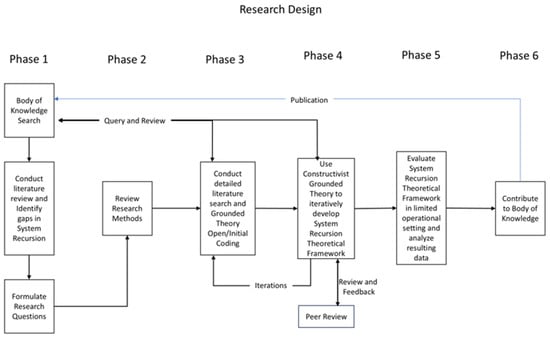
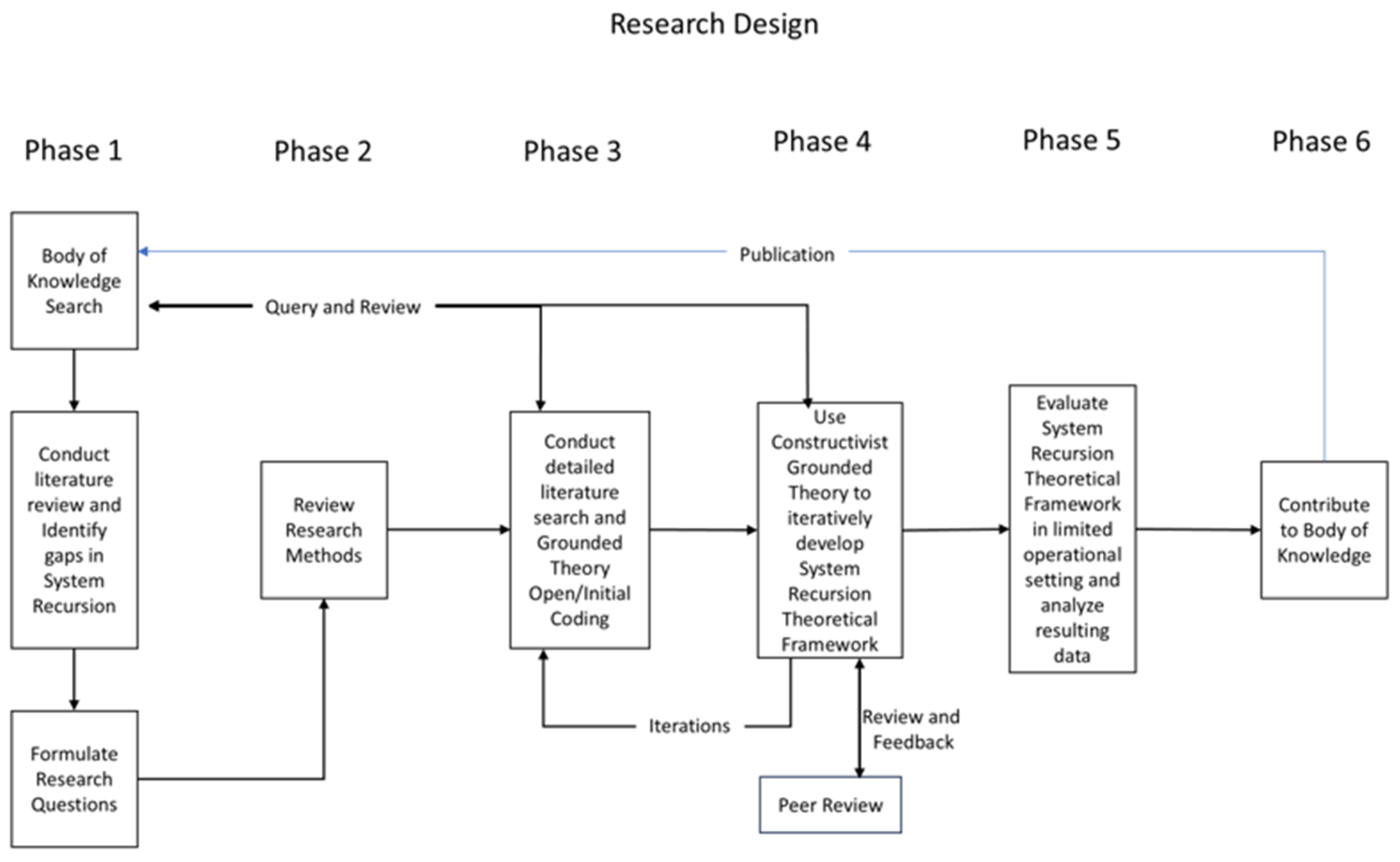
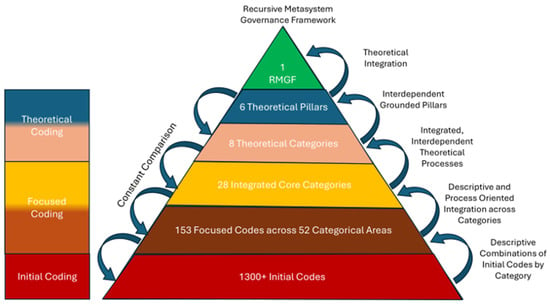
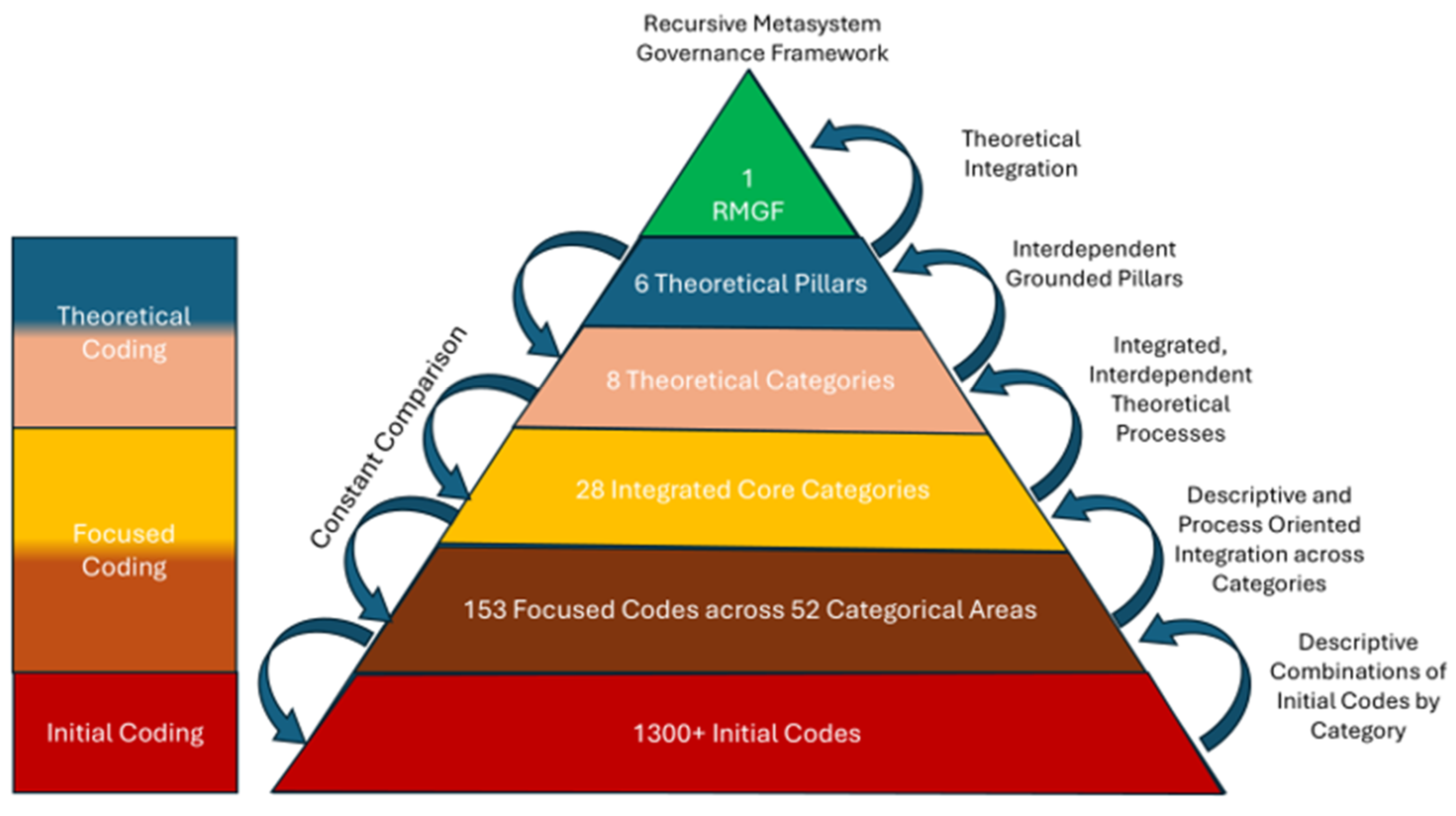
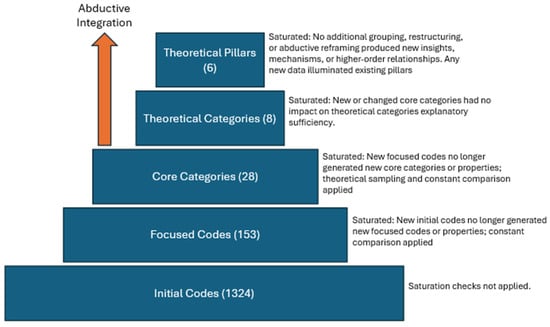
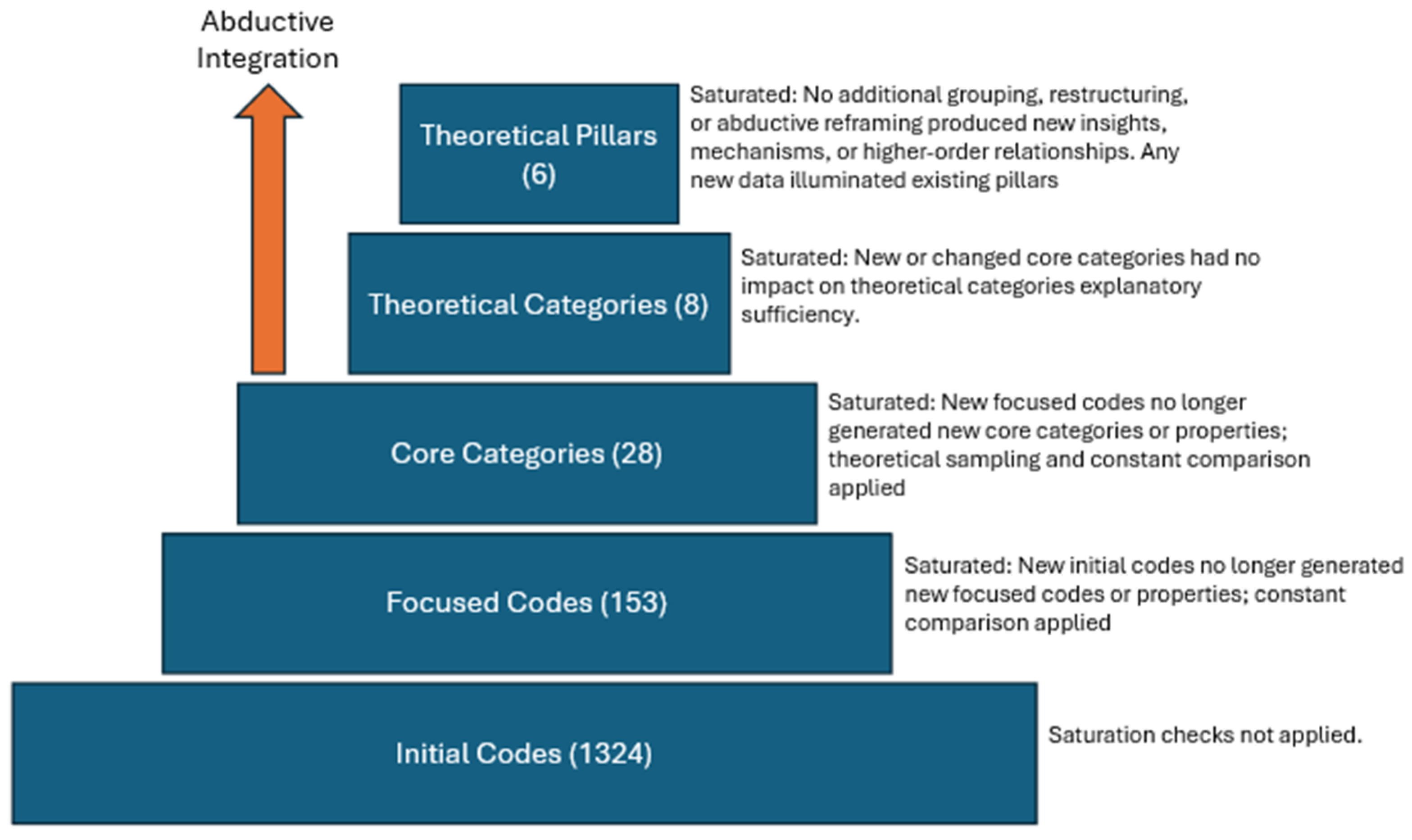
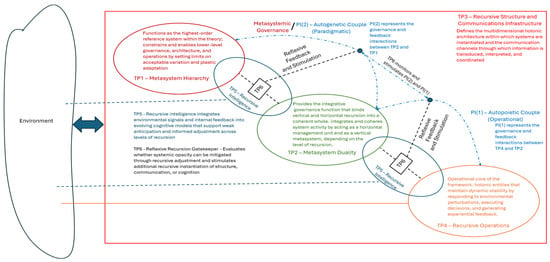
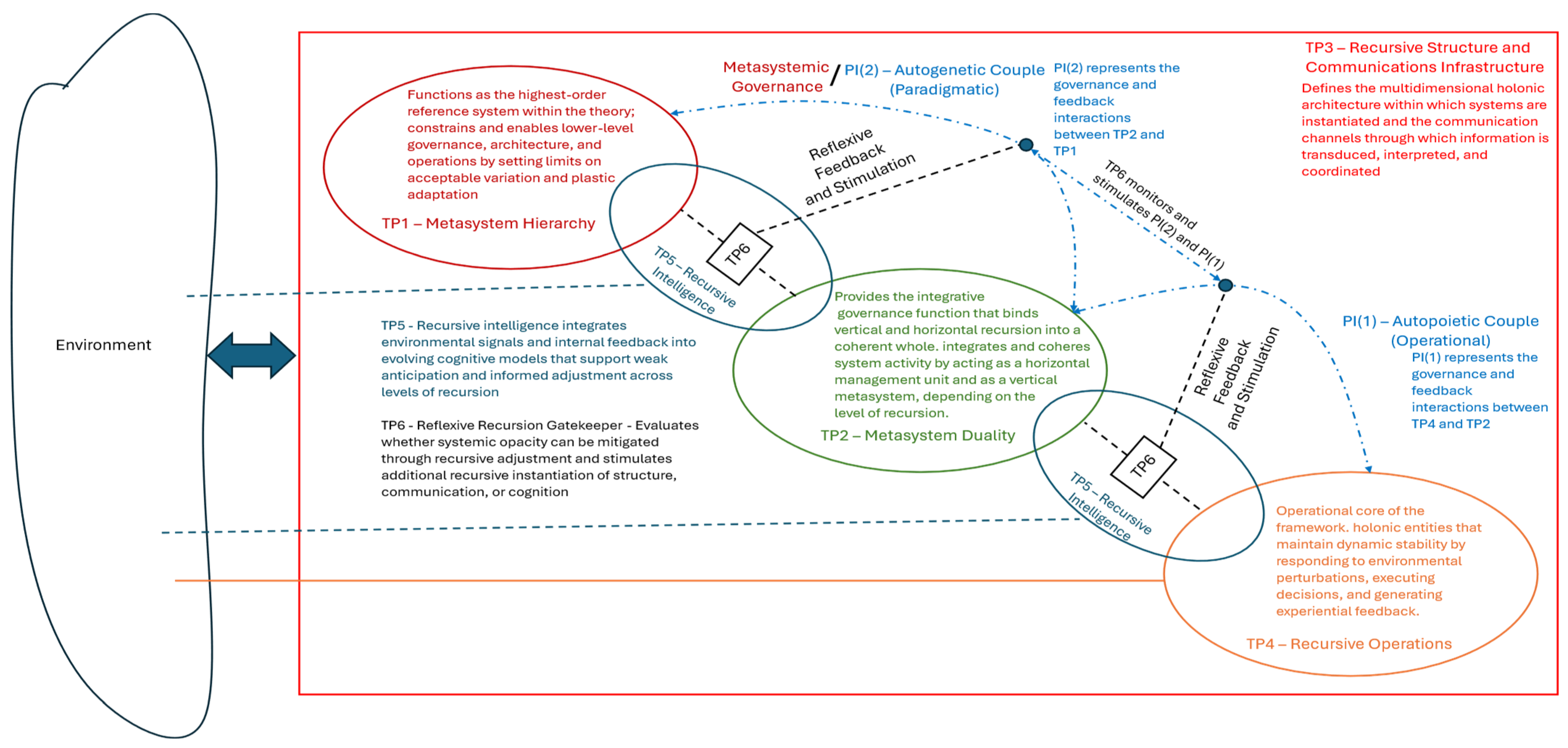
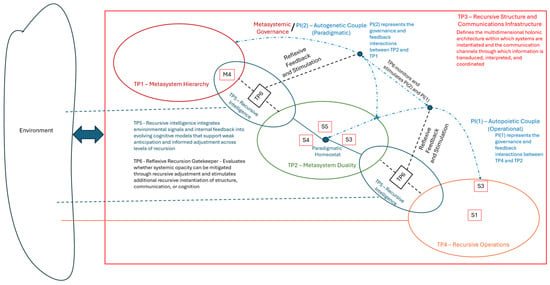
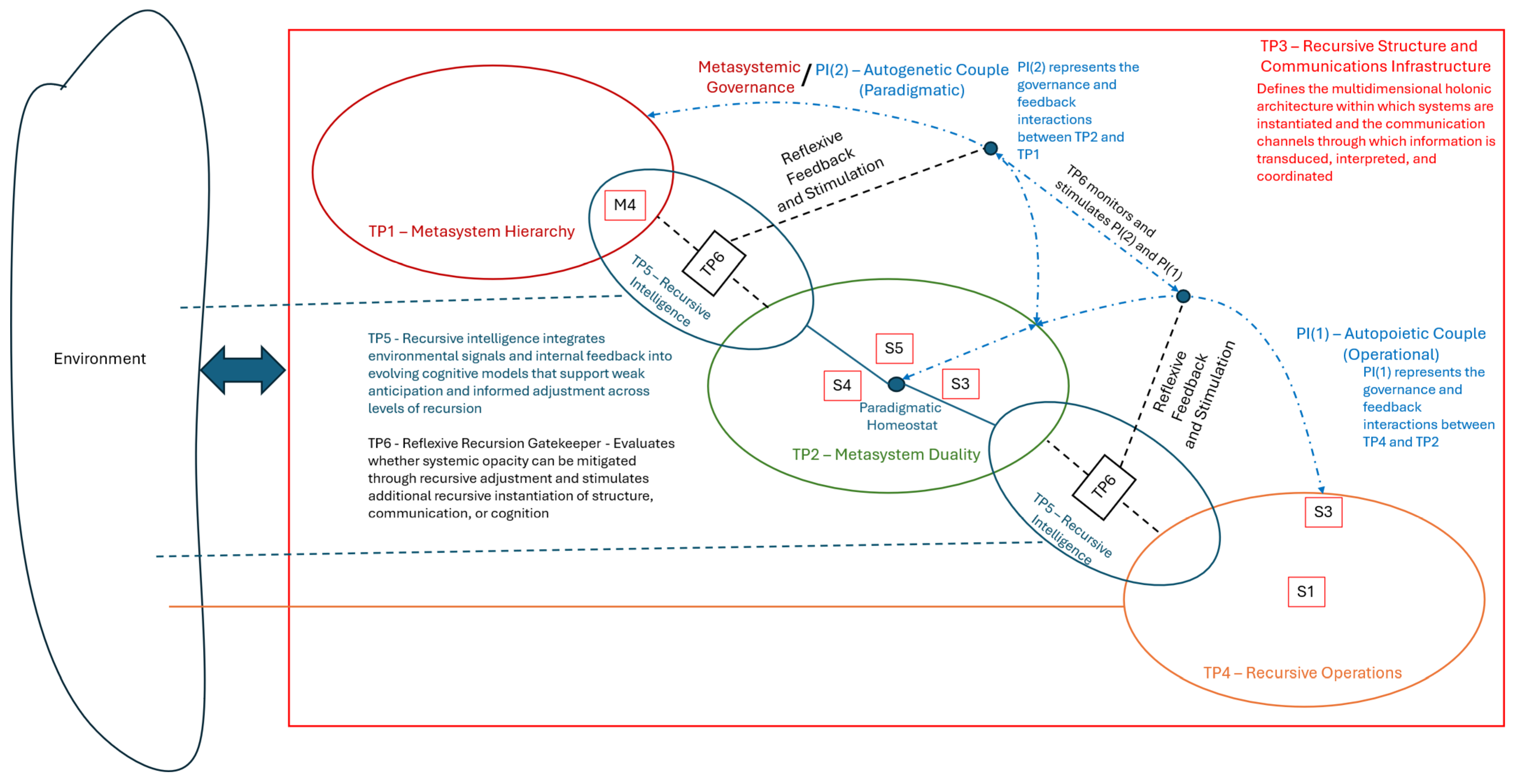

Disclaimer/Publisher’s Note: The statements, opinions and data contained in all publications are solely those of the individual author(s) and contributor(s) and not of MDPI and/or the editor(s). MDPI and/or the editor(s) disclaim responsibility for any injury to people or property resulting from any ideas, methods, instructions or products referred to in the content. |
© 2026 by the author. Licensee MDPI, Basel, Switzerland. This article is an open access article distributed under the terms and conditions of the Creative Commons Attribution (CC BY) license.